Introduction
As the numbers of refugees and asylum seekers increase world-wide – 50% of whom are typically children under the age of 18 years – research is increasingly considering how to best provide care and support for newly arrived children as they enter resettlement countries (e.g., Newbigging & Thomas, Reference Newbigging and Thomas2011). One of the primary sites in which care and support may occur is within school environments, where children and young people from either refugee or migrant backgrounds may first develop relationships with both peers and adults in their new country (Block, Cross, Riggs, & Gibbs, Reference Block, Cross, Riggs and Gibbs2014; Correa-Velez, Gifford, & Barnett, Reference Correa-Velez, Gifford and Barnett2010; de Heer, Due, Riggs, & Augoustinos Reference de Heer, Due, Riggs and Augoustinos2016; Due, Riggs, & Mandara, Reference Due, Riggs and Mandara2015; Keddie, Reference Keddie2012). Moreover, teachers themselves are increasingly indicating that ‘caring for’ their students – including those with refugee or migrant backgrounds – is becoming an expected and explicitly identified component of their work (Chapman, Buckley, Sheehan, & Shochet, Reference Chapman, Buckley, Sheehan and Shochet2013) although many teachers report feeling under-equipped to engage with ‘care’ in this way (Due et al., Reference Due, Riggs and Mandara2015). Given these two converging issues in schools (specifically, the location of schools as at the forefront of providing care for refugee students, and the challenges teachers may face in providing such care), this paper explores the concept of care at school from the perspective of both refugee or migrant students and their teachers, primarily through the lens of the student–teacher relationship. As such, an overarching aim of this paper is to consider how care may look for students with refugee or migrant backgrounds and their teachers in terms of their relationships, and how such definitions of care can be drawn upon in policy and practice.
Before examining the literature concerning the educational experiences of refugee or migrant students and their teachers, it is important to first consider the concept of care. As noted, one of the aims of the current paper is to consider how care may look from the perspective of teachers and children with refugee or migrant backgrounds; therefore, we do not explicitly adopt a model of care in the introduction of this paper. Nevertheless, it is important to engage with the body of literature on care to provide context to our own research. Like the psychological construct of wellbeing, care frequently remains undefined in academic literature (Held, Reference Held2006; Monchinski, Reference Monchinski2010). Where care is explicitly defined, definitions frequently revolve around issues such as best practice at an organisational level, meeting individual needs, and enabling people to do well in their environment (Barnes, Reference Barnes2007; Steckley & Smith, Reference Steckley and Smith2011). As such, available definitions of care typically reflect the importance of social relationships in enabling people to develop positive levels of wellbeing, as well as a focus on how organisations responsible for care can meet their requirements for service delivery.
In addition to the small amount of literature concerning definitions of care, there is very little literature that considers the concept of care for refugee or migrant children specifically. One example, however, does focus on the aforementioned institutional best-practice for care, of refugee children in the United Kingdom (Newbigging & Thomas, Reference Newbigging and Thomas2011). In this paper, Newbigging and Thomas highlight the importance of models of good care for refugee children, outlining six elements for organisational delivery of good social care. These are: (1) organisational commitment to promoting wellbeing, (2) multi-agency partnerships, (3) local strategies developed according to specific needs assessments, (4) engaging with and involving refugees in the development of services, (5) workforce development, and (6) monitoring and review. Whilst these guidelines offer useful outlines for the provision of (in this case social) care for refugee children, they do not provide an overview of precisely what they mean by care at an individual level. Indeed, there remains very little literature which explicitly outlines care for refugee or migrant children, with most related literature focussing on either an institutional level, or an individual level in the form of mental health and wellbeing, or mental health interventions (e.g., Ehntholt, Smith, & Yule, Reference Ehntholt, Smith and Yule2005). Whilst such research covers elements of care for refugee or migrant children, there remains a gap in the literature that focusses on care in and of itself, particularly from the perspective of children with refugee or migrant backgrounds themselves.
In terms of research concerning care in schools, authors such as Noddings (Reference Noddings1992) have noted that schools play an important role in care for children, and that care is as important as achievement. Noddings suggests that schools should modify practice such that caring school environments involve structures such as small classes, a curriculum that involves a focus on students’ unique interests, skills, or needs, and time and space for students to become familiar with the school environment and the other people within it. Similarly, a review of the literature conducted by Velasquez, West, Graham, and Osguthorpe (Reference Velasquez, West, Graham and Osguthorpe2013) found that much of the literature concerning care in schools has highlighted the need to create caring spaces that may reflect students’ identities and allow them to develop nurturing relationships with others. Importantly, much of this research notes that consideration should be given to student understandings of care, and student perceptions of their relationships with their teachers. This focus on care in terms of relationships is particularly important for students with refugee backgrounds, who may bring particular expectations (such as those relating to forms of punishment and control) that may impede relationships if time is not put into getting to know individual students (Baak, Reference Baak, Sullivan, Johnson and Lucas2016).
As such, the central feature of care at school involves relationships between the student and their teacher (Velasquez et al., Reference Velasquez, West, Graham and Osguthorpe2013). There is a relatively large body of literature which highlights that positive student–teacher relationships are critical for wellbeing at school, and can go some way towards counteracting the effects of poor family relationships or other risk factors for all children (Hamre & Pianta, Reference Hamre and Pianta2005). Furthermore, good relationships between students and teachers have been found to contribute to emotional regulation and pro-social behaviour (Dockett & Perry, Reference Dockett and Perry2004), as well as high levels of school belonging and engagement (Isik-Ercan, Reference Isik-Ercan2015; Klem & Connell, Reference Klem and Connell2004; Ryan & Patrick, Reference Ryan and Patrick2001). In the case of refugee or migrant students specifically, teacher relationships at school may be one of the first community connections formed in a new country, and may be particularly important (Baker, Reference Baker2006; Bedir, Reference Bedir2010; Due et al., Reference Due, Riggs and Mandara2015; Martin, Reaume, Reeves, & Wright, Reference Martin, Reaume, Reeves and Wright2012; Walton, Priest, & Paradies, Reference Walton, Priest and Paradies2013). Indeed, previous research with refugee or migrant students and teachers has found that positive relationships between this cohort of students and their teachers are critically important for students’ sense of belonging and academic outcomes in their new school, and facilitate peer relationships within the classroom (de Heer et al., Reference de Heer, Due, Riggs and Augoustinos2016; Pugh, Every, & Hattam, Reference Pugh, Every and Hattam2012). Furthermore, research from both Australia and elsewhere has found that, when teachers hold negative or discriminatory attitudes, students are likely to receive lower grades and leave school earlier than their peers (Isik-Ercan, Reference Isik-Ercan2015; Walton et al., Reference Walton, Priest and Paradies2013; Zine, Reference Zine2006).
However, despite the importance of student–teacher relationships, previous research has found that teachers often report challenges in relation to working with students with refugee or migrant backgrounds, particularly in the context of increasingly diverse classrooms (Due et al., Reference Due, Riggs and Mandara2015). For example, whilst teachers are often encouraged to create positive relationships with students, they report receiving little support or training in how to do so, particularly in relation to balancing relationship-building with keeping professional levels of ‘distance’ from students (Chapman et al., Reference Chapman, Buckley, Sheehan and Shochet2013; Gilligan, Reference Gilligan2000). Previous research that has considered the experiences of educators working with refugee or migrant students has shown that teachers frequently report feeling ill-equipped to provide education to students from culturally diverse backgrounds, particularly where they may have complex backgrounds of trauma and little previous formal education (Brown, Miller, & Mitchell, Reference Brown, Miller and Mitchell2006; Due et al., Reference Due, Riggs and Mandara2015; Matthews, Reference Matthews2008; Whiteman, Reference Whiteman2005). It is plausible that such difficulties faced by teachers may translate into difficulties with building relationships with students with refugee or migrant backgrounds, which may, in turn, impact upon the level of care provided to these students in the school environment.
Whilst individual student–teacher relationships are important for a range of outcomes in refugee or migrant students, research has also highlighted the importance of whole-school approaches. Within whole-school approaches to education, the broader school community incorporate care for refugee and migrants students into its everyday policy and practice. For example, Taylor and Sidhu (Reference Taylor and Sidhu2012) found that the schools in Australia that are committed to refugee education provided holistic approaches to supporting students, including homework clubs, material support, and extra learning support. Similar findings have been found in other research (see, for example, Keddie, Reference Keddie2012; Pugh et al., Reference Pugh, Every and Hattam2012). Whilst these researchers do not specifically mention ‘care’, it is possible that such holistic approaches play an important role in ensuring that refugee and migrant students feel ‘cared for’ in the school environment. Indeed, Newbigging and Thomas (Reference Newbigging and Thomas2011) specifically suggest that holistic education models are an example of best-practice in relation to social care.
Whilst there is a relatively large body of research which has considered student–teacher relationships for refugee and migrant students, and some research which has theorised how ‘care’ might look for marginalised young people, there is very little research which has engaged with calls for ‘care’ within education for students with migrant or refugee backgrounds. This is problematic since, as argued by Noddings (Reference Noddings1992), one of the challenges of exploring care is that understandings and behaviours relating to care differ greatly depending on context. For some people, and in some circumstances, care will require toughness and adherence to rules and structure, which in others it may require tenderness. As such, an examination of care from the perspective of those being cared for is important. As such, this paper reports on the student–teacher relationships for students with migrant or refugee backgrounds in an Intensive English Language Program (IELP) in South Australia, with the aim of considering how students and teachers define ‘care’, and the implications of this for educational service provision.
Method
This paper forms part of a larger study which aimed to explore broad experiences of education, wellbeing, and identity for students with migrant or refugee backgrounds in South Australia. The methodology relevant to the current paper is provided here, although reference to the larger study is made as appropriate.
The Setting: The Intensive English Language Program in South Australia
Education provision for students for whom English is an additional language and who arrive as a migrant or refugee in Australia is varied. In South Australia, the Department of Education and Child Development (DECD) run an IELP, consisting of Intensive English Language Classes (IELCs) within state-run primary schools. The primary emphasis in these centres is on the acquisition of English for social interaction, cultural training, and academic English literacy skills, provided by specialist teachers. Time spent in the IELC before transition into a mainstream class varies, depending on a child's readiness in relation to their English language competency. Typically, children spend 12 months in the programme if they are from a migrant background, and students from refugee backgrounds are eligible for an automatic extension on this time if required.
Three IELP sites participated in this study. It should be noted that the three sites in question were all located in metropolitan Adelaide with 15 kilometres from the Central Business District and, whilst their student numbers and site environments are typical of all schools with IELCs, the schools are situated in medium socio-economic areas and therefore may not be representative of all schools in South Australia.
Participants
Teacher participants were 14 IELP educators (teachers, principals, and support staff), all of whom were in close contact with migrant and refugee students in their IELC (defined as working with students in classrooms on a daily basis). Four of the participants were in leadership positions, whilst the remaining 10 were teachers or support staff (for example, bi-lingual school support officers). Ten teacher participants were women, and four were men.
The refugee and migrant student sample consisted of 63 children (15 with refugee backgrounds, and 48 with migrant backgrounds). Student participants came from 22 countries of origin: Afghanistan, Bangladesh, China, Columbia, the Democratic Republic of the Congo, India, Indonesia, Iraq, Malaysia, Mongolia, Nepal, Pakistan, Papua New Guinea, the Philippines, Russia, Saudi Arabia, South Korea, Sri Lanka, Syria, Venezuela, Vietnam, and Zambia. The mean age of participants was 7.4 years, ranging from 5 to 13 years of age at the start of the study. Twenty-eight were female and 35 were male.
As a matter of terminology, we also wish to acknowledge in this paper that we are examining two potentially very different groups of children – children with migrant backgrounds, and children with refugee backgrounds (and see Ogbu, Reference Ogbu1978 for a discussion of the important differences between minority or marginalised groups in relation to culture and education). However, given that the context in which they are educated provides English language tuition for both groups of children (that is, they are in the same class rather than different ones), this paper, for the most part, does not differentiate between these two groups.
Procedure and Materials
Ethics approval was granted by The University of Adelaide's Human Research Ethics Committee, and the DECD in South Australia. It is important to note that the authors are aware of the ethical issues of working with this vulnerable group of young people, including issues such as gaining ongoing assent from children in addition to informed consent from parents and caregivers (Crivello, Camfield, & Woodhead, Reference Crivello, Camfield and Woodhead2009; Due, Riggs & Augoustinos, Reference Due, Riggs and Augoustinos2014; Gifford, Bakopanos, Kaplan, & Correa-Velez, Reference Gifford, Bakopanos, Kaplan and Correa-Velez2007). As such, the first author (who undertook the data collection) spent a term at each school as a way of building rapport with participants, informing them of the aims of the study, and gaining ongoing assent from them for their participation (see Crivello et al., Reference Crivello, Camfield and Woodhead2009; Due et al., Reference Due, Riggs and Augoustinos2014; Gifford et al., Reference Gifford, Bakopanos, Kaplan and Correa-Velez2007).
In terms of participant recruitment, information sheets and consent forms (translated into first languages) were sent home to the parents or caregivers of all students enrolled in the IELC, with the exception of some families where it was considered inappropriate to do so (for example, where teachers were aware of family violence within the home, or where families were from a refugee background with very high levels of trauma present). With respect to the recruitment of school staff, all teachers and principals at the three schools in question were provided with an information sheet and invited to participate in the study.
Student data collection
The data collection relevant to this paper consisted of a photo elicitation methodology, with accompanying interviews. Photo elicitation, or PhotoVoice, is a research technique which has been identified as a child-focussed, flexible approach to research that allows children's views to be communicated on their own terms in the research process (Darbyshire, MacDougall, & Schiller, Reference Darbyshire, MacDougall and Schiller2005; Due et al., Reference Due, Riggs and Augoustinos2014). Photo elicitation involves participants being provided with a camera (in this case, a digital camera) and asked to take photos according to a particular theme that relates to the research aims.
For the purposes of this research, students were asked to take photographs that represented their experiences at school, particularly in relation to place or people where they felt safe. The students were then shown their photographs on a laptop, and invited to discuss their images in either a focus group of up to three children or in an individual interview. Whether discussions took place in focus groups or individual interviews was determined by external factors, such as what was happening in the classroom at the time, whether or not an interpreter was needed, and ensuring that the discussion did not disrupt the child's lessons. All discussion took place at the child's school. Focus groups and interviews relating to the photographs were audio recorded and transcribed, with student's names changed for anonymity.
Teacher data collection
Teacher data was collected through questionnaire (n = 14 responses) and face-to-face interviews (n = 6 interviews). The questionnaires were administered first, with interviews following, as a way of gathering more in-depth data. A total of 24 staff (including Principals and IELC directors) were invited to complete the questionnaire and participate in an interview, leading to a response rate of 58% for the questionnaire and 25% for the interview. In order to preserve anonymity for the questionnaire (given the small participant cohort), demographic data was not requested. Participants who completed an interview included one male and five females, with an average of over 5-years experience working in an IELP. Participants returned their questionnaires in a reply-paid envelope, and interviews were conducted on the school grounds at a time convenient to the participant.
The interview questions were designed to stimulate discussion regarding the educators’ experiences and perceptions of the IELP. A semi-structured interview schedule was developed in order to meet the broader research aims (Braun & Clarke, Reference Braun and Clarke2006), and included questions such as: ‘What are some of the strengths or challenges of having an IELC site at the school’?, ‘What types of support do children from in the IELC need?’, and ‘How does your school provide support to children in the IELC’?. In addition, open-ended questions included in the questionnaire specifically sought responses concerning educators’ thoughts on the IELP, cultural diversity, and on identifying and meeting the needs of newly arrived students. For the purposes of the current paper, the interviews and open-ended written survey responses were combined and treated as one data-set.
Analysis
A deductive thematic analysis was used to analyse the data. The data was analysed specifically in relation to the research aim of considering how participants might define ‘care’. The thematic analysis pertaining to definitions of care was conducted following Braun and Clarke's (Reference Braun and Clarke2006) six analytic stages including: reading and familiarisation, coding, searching for themes, reviewing themes and producing a thematic map, naming and defining themes, and finalising the analysis through writing. As with most qualitative research, this process was not linear but iterative, and stages were revisited as analysis progressed. The final thematic structure received consensus from all authors. Representative extracts illustrating these themes are provided below. Participants were given pseudonyms.
Results
The results section of this paper is divided into two sections: one detailing the results from the interviews and photo elicitation with students with migrant or refugee backgrounds, and one detailing the results from teacher interviews. Within each of these sections, we also outline sub-themes.
Interviews and Photo Elicitation with Students with Refugee or Migrant Backgrounds
Students with refugee or migrant backgrounds highlighted two themes that related to ‘care’ within the school environment – Relationships with classroom teachers and other staff make students feel safe and A caring environment is one in which students can see that their identities and experiences are reflected in school practice.
These themes are outlined below with representative photographs and extracts. As we cannot show faces due to ethical concerns, photographs which are not identifiable have been chosen for use in this paper.
Relationships with classroom teachers and other staff make students feel safe
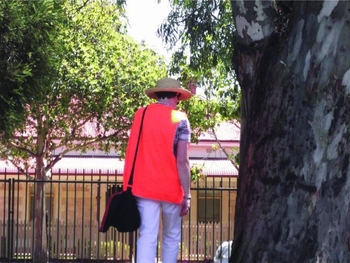
In terms of teacher relationships, almost all the students in the study took either photographs of their classroom teachers or spoke about them in a positive way in the interviews. When asked to tell the researchers about photographs that contained images of teachers, the students explained that they had taken them because they liked their teachers, enjoyed spending time with them, or looked forward to seeing them in the yard or after recess or lunchtime. An example of this can be seen in Figure 1 and Extract 1 below:
Extract 1:
Interviewer: Can you tell me about this photograph?
Peng: That is Miss Julie!!! I like to see her in the yard.
Interviewer: That's great! Can you tell me why you like to see her?
Peng: Yes. It makes me feel safe to see her. She is kind to me.
A classroom teacher.

Here, Peng (a 6-year old boy from China with a migrant background) indicates that seeing his classroom teacher in the yard makes him feel safe, and explains that this is because she is kind to him. Whilst many students similarly identified their classroom teachers as being particularly important in making them feel safe, some students also took photographs of other teachers they knew (such as teachers who taught their siblings), and similarly noted that they liked to see these teachers in the yard because it made them feel ‘safe’ or ‘happy’. This finding is important because the students in the study occasionally reported finding recess and lunchtime difficult because it was an unstructured time (see Due & Riggs, Reference Due and Riggs2011 for another example of newly arrived students finding recess and lunch times challenging), and that the presence of their classroom teacher or another teacher who they were familiar with added to their sense of safety outside the classroom environment. Of course, this would only be relevant when a familiar teacher is ‘on duty’ and in the yard and, as such, building relationships with all teachers in the school may be an important step to facilitating care for students with migrant and refugee backgrounds at school.
A further example concerning the importance of relationships between students and their teachers is seen in Extract 2 below, this time taken from an interview with Qaseem, a 7-year old boy with a refugee background from Iraq:
Extract 2
Interviewer: What do you like best about school?
Qaseem: I like my teacher! That is a big thing that I like about school. The… the big thing. She always gives me stickers. And then we get to have…. when we finish our work we get to have a toy. It makes me feel excited to think I might be able to get a toy for my work from her.
It is important to note that Qaseem did not speak the same language as any other student in his class, and required an interpreter for his interview. As such, we argue that his relationship with his classroom teacher was particularly important since he had limited peer relationships at the time. Furthermore, it is important that this relationship could be established based on areas that did not rely on English. This is seen in the extract above whereby Qaseem points to actions which do not rely on English – stickers and a toy reward – as evidence for why he likes his teacher, presumably because these actions allow him to build a relationship which may otherwise be difficult due to English language constraints. Of course, stickers and a toy reward may also be important to Qassem as recognition of his school work and for their intrinsic value as a reward, thereby highlighting other important elements of the student–teacher relationships, namely, the importance placed by students on their relationships with teachers who employed positive strategies in the classroom to build relationships, and to reward good work and behaviour.
A caring environment is one in which students can see that their identities and experiences are reflected in school practice
As noted by the authors elsewhere (de Heer et al., Reference de Heer, Due, Riggs and Augoustinos2016), we found that students frequently took photographs of spaces within the school that reflected their identities as refugees or migrants, or foregrounded their own skills and expertise. Such photographs included photos of posters that reflected refugee experiences (such as posters promoting refugee day), and spaces in the school where they could showcase their strengths, such as music, art, or sport. This finding is also relevant to the current paper on care within the school environment, such that students indicated that not only did they feel that such spaces gave them a sense of belonging, but also that they made them feel cared for. An example of this can be seen in Extract 3 below, from Maryam, a 9-year old student with a migrant background from Pakistan, discussing a photograph she took of her classroom:
Extract 3:
Interviewer: Is this a photograph of your classroom? Why did you take a photo of your classroom?
Maryam: Because I like talking to new persons, my teacher. I like sharing stuff from home too. To tell people about me.
Interviewer: So do you get to bring things from home and share things in your classroom sometimes?
Maryam: Yes, I bring today some science. First I put water and then things and see if they sink. And then I put three teaspoons and in the glass and then the egg in and it float.
Interviewer: Wow! That's very tricky. And in your class do you have fun?
Maryam: Yes, like when I get to show the people things that I can do. Like my teacher.
Here, Maryam indicates that she feels a sense of connection to her school when she is able to share information about herself. This is particularly the case for her teacher, with Maryam indicating that she enjoyed participating in the sharing activity because it allowed her to show her teacher things that she ‘can do’. Whilst Maryam does not directly discuss feeling cared for, we suggest that the relationship-building capacity of sharing information about students also builds on a sense of ‘care’ at school.
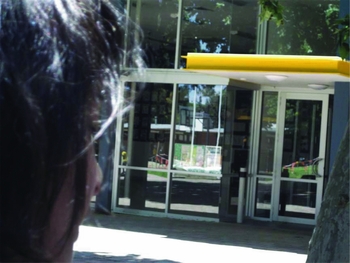
A further example of the importance of the environment in relation to feeling ‘cared for’ at school can be seen in Figure 2 and Extract 4 below, from Ali, a 7-year old student with a refugee background from Iran:
Extract 4:
Interviewer: Why did you take this photograph?
Ali: It's the art room. I love art. I want to be an artist when I grow up. It is good for me to do art because I could do it before I came to Australia.
Interviewer: So do you like doing art at school?
Ali: Yes! I love art. Art is the best thing for me to do at school. I have friends in the art room. I like to come to school on art days.
A student look at the art room.

As noted elsewhere (de Heer et al., Reference de Heer, Due, Riggs and Augoustinos2016; Gifford, Correa-Velez, & Sampson, Reference Gifford, Correa-Velez and Sampson2009), subjects such as art and sport are particularly important for students with migrant or refugee backgrounds because they allow them to share their knowledge and skills in the school context. This photograph and extract illustrates this point and also highlights that these subjects can facilitate the development of friendships at school, as stated by Ali above. Ali notes that art is the ‘best thing’ for him at school, and that he ‘likes to come to school on art days’, indicating that the ability to share skills in areas such as art allows students to feel a sense of connection to school which they may otherwise not be able to establish through subjects in which their skills may not be as well developed (such as English). Again, whilst not directly about care, we argue that this extract points to the importance of being able to share skills or values at school to students with migrant or refugee backgrounds feeling ‘cared for’ at school.
Interviews with Teachers
The interview with teachers returned four main themes: Relationship-building with students takes time and space, It is important that the broader school environment provides ‘care’ for children, The IELP offers a best-practice environment for ‘care’ for children with migrant or refugee backgrounds due to specialist teacher knowledge, and, It is important to provide extra care for refugee children. Again, these themes are outlined below with representative extracts.
Relationship-building with students takes time and space
The teachers interviewed in the study all noted that it was very important that they had the time and space to build relationships, and that this often required specialist skills – particularly in relation to cross-cultural safety and understanding trauma. Examples of this are seen in Extracts 5 and 6 below:
Extract 5:
Intensive English Language Centre teachers are a really committed, positive group of people. They have the skills to build relationships with the children and to share this knowledge with other teachers so that they know how to teach and look after children for whom English is an additional language (Intensive English Language Program director).
Extract 6:
So long as I have smaller class sizes, I can make sure I really get to know my students individually. It's really important because they all have individual needs, and especially with trauma, sometimes you just don't know what is going on for them in the classroom (Intensive English Language Program teacher).
Here, the teacher and director highlight the importance of ensuring that teachers within the IELP are able to build individual relationships, and understand the specific needs of their students – and this is noted in Extract 6 as being particularly important for students who may be experiencing the ongoing effects of psychological trauma. As such, and similarly to the students themselves, teachers in the IELP noted the central value of relationships for providing care for students.
Whilst these two extracts do not specify feelings of safety (which were seen as central to the students themselves), teachers were aware that students needed time to work through any issues they were facing. For example:
Extract 7:
Each child is an individual and needs individual support and care. And that child will not be the same child in 6 months. We've had children who run, who kick, who hide under tables, who just shut down when you speak to them. We've had children who cried for 3 months. You know, all of those settlement issues, and once they work out some language they settle down and the real child comes out. The challenge is to understand that – that is not necessarily a naughty child. It's a child that is working things out (Intensive English Language Program teacher).
Here, an IELP teacher discusses the importance of teachers who work with students from refugee or migrant backgrounds being aware of the individual differences and impact of trauma which may lead to particular behaviours. In addition to noting that relationship-building required time and space to develop, teachers in the study also highlighted the importance of understanding what might influence individual student behaviours. Again, whilst all teachers did not specify these actions as being about care per se (although the teacher in Extract 7 does specifically use the word ‘care’), we would argue that this knowledge and attitudes are central to the care of refugee and migrant students at school, and form an integral part of student-teacher relationships.
It is important that the broader school environment provides ‘care’ for children
In addition to discussing individual factors, the teachers also commented on the systematic challenges to parents and children in the school context, and the ways in which the school attempted to provide support to families at a holistic level. For example:
Extract 8:
…we invest quite a bit of time and effort in helping parents to understand the school system in Australia. For example, parents might have particular expectations about how school should be – how they are used to – and that can create difficulties, although we do anticipate that and hold sessions that explain what we do and how we do it. We find that if parents understand the school system it makes it much easier for the kids to settle in (Intensive English Language Program Director).
It is worth noting that these programmes or information sessions were school-based rather than conducted at Department level, and were therefore up to individual IELP staff to organise and run. However, all three of the individual schools included in this study highlighted the development of these sessions and the importance of them to relationship-building. Correspondingly, teachers noted the importance of holistic approaches that include staff, parents, and children, as a way of ensuring a smooth transition to school for children with migrant or refugee backgrounds. This aspect of ‘care’ for this cohort of children echoes the importance of institutional responses highlighted by Newbigging and Thomas (Reference Newbigging and Thomas2011), which are discussed in more detail later.
The IELP offers a best-practice environment for ‘care’ for children with migrant or refugee backgrounds due to specialist teacher knowledge
Consistent with the importance placed on institutional responses, the IELP itself was seen as being particularly well-placed to provide education and care for children with migrant and refugee children. For example:
Extract 9:
… I've always thought of it as being a ‘safe landing’. When they come straight off the plane or the boat, and they are not hitting a mainstream school straight away, they are hitting a school which scaffolds everything they do. And they are coming into a school with other children who are experiencing the same issues with regard to cultural change and potentially trauma. So they don't feel like a goldfish in a bowl so much. That, and the fact that there are smaller classes, and the sharing of the issues that are quite unique to them. You know, other children understand (Intensive English Language Program teacher).
Another teacher described this as a lovely ‘ease-in’ for students, with consensus amongst the research participants that the IELP was the optimal place in which to both care and educate students with migrant or refugee backgrounds. This was mostly due to the programme having specialised staff who understood students’ needs. For example:
Extract 10:
The important part of having a new arrivals program is that settlement period for every child. You know, those children haven't chosen to come here. They are happy, excited, scared, but we need to know how to support them. It takes a special teacher to be able to do that, teachers with experience in knowing that it will take some time to get to know a child, especially if they don't speak English (Intensive English Language Program teacher).
Again, whilst ‘care’ is not specifically mentioned in these extracts, the teachers do discuss ‘support’ and knowledge concerning cultural differences and trauma. Here, it is arguable that care is seen as best-practice in relation to knowledge about students with refugee or migrant backgrounds, and an environment which is designed to meet their needs. As such, teachers identified that the IELP provided a good mix of both individual and institutional responses to best-practice to support and ‘scaffold’ students with migrant or refugee backgrounds – a response we argue provides one definition of care for this cohort of young people.
It is important to provide extra ‘care’ for refugee children
Finally, the teachers in the study also discussed the importance of providing extra care and support for children with refugee backgrounds, particularly in relation to possible trauma. For example:
Extract 11:
…with refugee kids you also have the effects of trauma. You know, children who are really withdrawn and quiet or on the other hand, children who are really hyper-aroused. Here, the classes are really settled, we are lucky. So when students come with a really traumatic background, they tend to experience that calm and support which makes a big difference. In other classes I've been in, there can be a lot of unsettled behaviour and it can be like putting out spot-fires all day long. You don't know what it was that sparked behaviour or a child being upset – it could just be a look. Here, we can prepare and protect them which is really important to looking after them… (Intensive English Language Program teacher).
In this case, ‘care’ is arguably defined in the last sentence of the extract, specifically in relation to being able to ‘prepare and protect’ children with refugee backgrounds. Again, care is seen as a mix of both institutional and individual responses, here seen in relation to the need to consider the broader culture within a given classroom (that is, it being ‘calm’ and ‘settled’) when attempting to work with refugee students.
Interesting, whilst IELP was seen by some people as the right environment for students because it provided a ‘safe landing’, other participants did highlight that this was not the case for refugee students. Indeed, one participant noted quite the opposite:
Extract 12:
For refugee students, it's not a soft landing for them. It's really challenging. If they have trauma, once they are settled here they still have all of that to cope with. Our teachers need to be able to support them, and recognise when those triggers start, [and] how to deal with those.
The response to the challenge facing students with refugee backgrounds is seen here as lying in teacher knowledge and expertise (that is, knowing how to deal with triggers for trauma). As such, we would argue that ‘care’ for refugee students is seen as lying predominately in trained staff, presumably including staff with an individual capacity and desire to ‘care’ for refugee students.
Discussion
As noted above, the students with migrant or refugee backgrounds overwhelmingly reported positive relationships with their teachers whilst in the IELP, and highlighted that these relationships both increased their enjoyment at school, and their sense of safety. Based on the photographs and concomitant interviews with students, it would appear that teachers played a strong and positive role in students’ sense of community, safety, and care at school. Whilst students did not specifically use the word ‘care’ in their language, we suggest here that relationships with classroom and support staff play a central role in ensuring that children with migrant or refugee backgrounds feel ‘cared for’ at school, which supports previous research (Velasquez et al., Reference Velasquez, West, Graham and Osguthorpe2013). This was also reflected in teacher responses, which highlighted the importance of being able to support students, and to understand the impact that experiences of trauma may have on their behaviour. This is perhaps not a surprising finding, and supports a large amount of previous research concerning the importance of student–teacher relationships in both refugee and migrant students (Baker, Reference Baker2006; Bedir, Reference Bedir2010; Due et al., Reference Due, Riggs and Mandara2015; Martin et al., Reference Martin, Reaume, Reeves and Wright2012; Walton, Priest, & Paradies, Reference Walton, Priest and Paradies2013) and other groups of students more generally (Hamre & Pianta, Reference Hamre and Pianta2005).
As noted above, students in the IELP reported feeling particularly safe at recess and lunchtime if their classroom teacher was in the yard. Other research has indicated that students from migrant or refugee backgrounds may find ‘play times’ at school particularly challenging (Due & Riggs, Reference Due and Riggs2011), and whilst the students in this study did not specify this per se, their responses indicated that they felt most cared for when they could see someone they recognised in the school yard. Whilst the practice varied across schools, most schools with IELPs used a ‘buddy class’ system (e.g., pairing an IELP class with a ‘mainstream’ class). The findings of this study suggest that initiatives like these might be particularly important for students with migrant and refugee backgrounds, to help them build positive relationships with teachers across the school, and feel safe in all school contexts.
Students also spoke about the development of the teacher–student relationship that did not rely on English language knowledge – in this case, the use of stickers and toys as rewards. Previous research has similarly highlighted the importance of building relationships through non-English speaking subjects or elements of school (e.g., de Heer et al., Reference de Heer, Due, Riggs and Augoustinos2016; Gifford et al., Reference Gifford, Correa-Velez and Sampson2009,). The current paper adds to this body of research with respect to care, indicating that ‘care’ for refugee and migrant students at school is likely to rely (at least at first) on ensuring that students have ways to communicate and share their knowledge and expertise in the school environment (Baak, Reference Baak, Sullivan, Johnson and Lucas2016). Indeed, this was specifically reflected in the second theme taken from the interviews and photo elicitation with students: A caring environment is one in which students can see that their identities and experiences are reflected in school practice, which indicated that care for students with refugee or migrant backgrounds is likely to revolve heavily around their ability to see themselves as central to the broader school community, rather than only on the periphery of it.
A notable finding, and one found in earlier research (Keddie, Reference Keddie2012; Pugh et al., Reference Pugh, Every and Hattam2012), was teachers’ emphasis on the role of both individual student–teacher relationships, and the role of the whole school as an institutional community. The teachers frequently discussed the role of teachers in understanding student behaviour – particularly when trauma may be involved – and noted that such understandings required specialist knowledge (see Baak, Reference Baak, Sullivan, Johnson and Lucas2016 for a discussion of this issue specifically in relation to punishment at school). Indeed, previous research has suggested that support and training for teachers in relation to trauma may be an important element in providing appropriate education to students with refugee backgrounds (Cassity & Gow, Reference Cassity and Gow2005; Woods, Reference Woods2009), and we would suggest here that this is similarly the case with care. If student–teacher relationships play the central role in care then we suggest that training and support for teachers become a crucial aspect of providing care for refugee and migrant students in the school context.
Taken together, our research indicates that ‘care’ may look somewhat different for students with refugee or migrant backgrounds, and their teachers – albeit with some overlap. Our findings indicate that for students, care revolved around relationships in which they felt safe, valued and connected, and spaces in which they felt they could contribute their knowledge and values. For teachers, care for children with migrant or refugee backgrounds involved relationships in which teachers understood the support needs of students (with specific emphasis on the impact of trauma), and spaces where students felt involved and supported. These definitions primarily reflect existing definitions of care in the broader literature, which, as noted in the introduction, has typically focussed on care at an organisational level, the importance of meeting individual needs, and enabling people to do well in their environment (Barnes, Reference Barnes2007; Steckley & Smith, Reference Steckley and Smith2011). It is noteworthy that, whilst teachers focussed on recognising and correctly understanding student behaviours, the students themselves looked for aspects of the school in which they could flourish and contribute – indicating that it was these aspects which made them feel a sense of ‘care’. This reflects previous research findings by Noddings (Reference Noddings2013) and Velasquez and colleagues (Reference Velasquez, West, Graham and Osguthorpe2013), which similarly indicates that care in schools must reflect students’ individual strengths and needs. As such, we argue, like Matthews (Reference Matthews2008), that in order for schools to play a central role in the care of students with refugee or migrant backgrounds, they must be able to recognise their strengths as well as areas in which they may need further support or guidance.
Whilst this research has been able to provide some working understandings of how care may look for refugee or migrant students and their teachers, it is not without its limitations. These include the relatively small sample sizes for both groups of participants, and the specific context of the research (that is, the IELP). As such, the understandings of care provided in this paper may not be indicative of the experiences of all students with refugee or migrant backgrounds or their teachers. Furthermore, we did not examine the themes in relation to student age, and we therefore recommend further research that explores whether age impacts upon definitions of care. In addition, whilst we have proposed some potential understandings of care in the school context, these definitions overlap with other constructs – particularly that of ‘support’ – and thus future research which aims to explicitly explore the concept of care for this group of young people is required. Nevertheless, in providing some preliminary exploration of how care might look for students with refugee or migrant backgrounds, we hope to contribute to their care at school, particularly in ensuring that schools are able to provide care which focusses not only on their needs for support and assistance, but also on the positive contribution and central role that these groups of children can play in the school environment.
Acknowledgements
We acknowledge the Kaurna people on whose lands we live and work in South Australia. We would also like to acknowledge all the children and teachers who gave up their time to complete this research with us – we have learnt and experienced so much as a result of their generosity.
Financial Support
This research was funded by the Australian Research Council, grant number DP110100732.