Introduction
Moving into a care home is a major transition often precipitated by increasing decline in physical or cognitive function, loss of a care-giver, and the failure of other support and interventions in the older person's usual place of residence. Whilst it may bring positive relief, the loss of social status or independence coupled with other risks relating to mental health in later life may contribute to an enhanced sense of vulnerability for the individual concerned (Podgorski et al., Reference Podgorski, Langford, Pearson and Conwell2010). If not recognised and supported, the psychological adjustment required for transition into institutional living can contribute to or exacerbate depression, and in some situations escalate towards suicide ideation and behaviours in the form of self-neglect and self-harm (Suominen et al., Reference Suominen, Henriksson, Isometsa, Heila and Lonnqvist2003; Rurup et al., Reference Rurup, Pasman, Goedhart, Deeg, Kerkhof and Onwuteaka-Philipsen2011).
In 2011, 3.2 per cent of the total population were living in a care home in England and Wales, of which 59.2 per cent were over 85 years (Office for National Statistics, 2011). Studies exploring older people's anticipation of dependence and institutional living (Froggatt et al., Reference Froggatt, Hockley, Parker and Brazil2011; Wijngaarden et al., Reference Wijngaarden, Leget and Goossensen2015) have suggested that some people would be ready to ‘give up on life’ if they were left in a situation which went against their wishes, even in the absence of serious physical illness and/or a diagnosed mental health problem (Kjølseth et al., Reference Kjølseth, Ekeberg and Steihaug2010). Whilst this appears dramatic, the lay term ‘giving up’ is not unknown within the discourse of dying in long-term care settings in many developed countries. The inevitability of dying as a process, and death as an outcome in these settings, is still subject to a ‘discourse of silence’ (Osterlind et al., Reference Osterlind, Hanseboh, Anderssons, Ternested and Hellstrooms2011), particularly since care homes are a significant place of care until death for older people and where one in five of the United Kingdom (UK) population dies (Office for National Statistics, 2011). This differential attention to older people's dying and death may also be an expression of ageism (World Health Organization, 2004). The aim of this study was to explore the discourse of ‘giving up’ from the perspective and understanding of care home staff, to identify factors they perceived to either prevent or contribute to such situations emerging, and to highlight best practice responses.
Responding to older people at risk of suicide ideation and behaviour in care homes
In layperson terms, a scenario of an older person expressing a desire to die or refusing care is sometimes described as ‘giving up’ or ‘turning to the wall’. This means of ending life through self-neglect or self-harm may reflect the reduced physical ability and opportunities faced by older people to complete suicide within institutional environmental conditions (Murphy et al., Reference Murphy, Bugeja, Pilgrim and Ibrahim2018). Qualitative studies exploring suicide feelings in older people (Crocker et al., Reference Crocker, Clare and Evans2006; Harwood et al., Reference Harwood, Hawton, Hope and Jacoby2006; Kjølseth et al., Reference Kjølseth, Ekeberg and Steihaug2010; Rurup et al., Reference Rurup, Pasman, Goedhart, Deeg, Kerkhof and Onwuteaka-Philipsen2011) highlight the impact of age-related losses, decreasing sociality, personal characteristics and beliefs associated with the development of a wish for the end of life.
The ‘wish to die’ may be more aligned to existential suffering and is not necessarily always related to the presence of a depressive disorder (Kjølseth et al., Reference Kjølseth, Ekeberg and Steihaug2010). However, depression remains a common factor frequently cited in relation to the expressed wish to die in older people. For care home residents with depression, the lack of support from specialist services can result in further negative impacts to their cognitive and physical health (Azulai and Walsh, Reference Azulai and Walsh2015). The high rates of suicide intent and depression in those that self-harm along with particularly high intent in depressed self-harmers in studies of older people, supports the need for policies that emphasise the importance of receiving an appropriate assessment of both risk and need by an experienced mental health professional, skilled at recognising these issues in later life.
However, being able to detect, recognise and respond to suicide ideation and behaviour, and ensuring that the right professionals are involved for those living in care homes, often relies on the observations and capabilities of care staff in daily contact with older residents who may not have the right knowledge and skills required (Lyne et al., Reference Lyne, Moxon, Sinclair, Young, Kirk and Ellison2006). Whilst more research is required to increase our knowledge of the relationship between the different factors that impact on self-harm and suicide ideation, the care home workforce have an important role to play in how these issues are conceptualised and acknowledged in the first instance, as well as the actions they take themselves and the ways in which they involve people who can give the relevant support and quality of care.
More generally, suicide ideation and suicide behaviours in later life remain a relatively under-researched topic (Froggatt et al., Reference Froggatt, Hockley, Parker and Brazil2011). Determining the true prevalence of suicide is problematic and this is recognised internationally (Shah and Erlangsen, Reference Shah and Erlangsen2014), with a tendency to under-report deaths by suicide where the methods used in later life might be different from those in other age groups (Deuter et al., Reference Deuter, Procter, Evans and Jaworski2016). As our understanding of the epidemiology of suicide in later life develops, little is known about how this manifests within the comparative situation for older people living in care homes, except that it tends to be under-reported (Murphy et al., Reference Murphy, Bugeja, Pilgrim and Ibrahim2015).
A body of knowledge is beginning to emerge. A systematic review and metasynthesis of international data (Murphy et al., Reference Murphy, Bugeja, Pilgrim and Ibrahim2015) identified just eight studies on completed suicide among nursing home residents. Findings indicated that males, those who have resided in the home for less than one year and having prior diagnosis of depression were the most consistent risk factors for completed suicide. Hanging or falling from a height constituted the most common means of suicide. Another systematic review of the prevalence of and responses to depression, self-harm and suicide among older people living in nursing homes and care homes (Gleeson et al., Reference Gleeson, Hafford-Letchfield, Quaife, Flynn and Collins2019) identified just seven studies reporting on prevalence rates, and 17 studies on the evaluation of interventions or programmes designed to tackle these issues. This review reported a lack of research on self-harm and suicide in care homes, contrasted with a larger body of research into the measurement of depression and training of staff in recognising symptoms in residents. None of the studies included in this review, however, reported on the effects of staff training on resident mental health. They did not include the views of either staff or residents in understanding the reasons behind relatively high rates of depression within care homes, or subjective perspectives on those older people who expressed a wish to die where this was not directly associated with a serious physical or diagnosed mental illness. The review undertaken by Murphy et al. (Reference Murphy, Bugeja, Pilgrim and Ibrahim2015) noted that only one study completed over 20 years ago had examined organisational factors in relation to suicide (Osgood and Brant, Reference Osgood and Brant1990). Osgood and Brant (Reference Osgood and Brant1990) particularly highlighted the significance of high staff turnover and size of the care facility. Murphy et al. (Reference Murphy, Bugeja, Pilgrim and Ibrahim2015) further comment on the value of the participation of older people in making decisions about their own health and mental health and wellbeing in these critical situations.
Study aim and design
This was a descriptive and exploratory study given some of the limitations in the research literature on the topic. Three broad research questions were framed to facilitate an inductive approach to gathering data directly from staff working in care homes capable of throwing light on the topic:
(1) What is meant by the term ‘giving up’ from the perspective of care staff working in care homes and how is this described, conceptualised and understood by those who are involved?
(2) What happens in care homes when an older person is identified as ‘giving up’ and what can we learn from care staff experiences about their needs and the needs of care staff looking after them within these situations?
(3) What factors are commonly identified by care staff in relation to prevention, early intervention and support for older people ‘giving up’ and their loved ones?
The study was co-designed through engagement of local stakeholders in the form of a half-day workshop where practice concerns on mental health in care homes were discussed. Stakeholders included commissioners, care quality staff, care home managers, social workers, community and mental health professionals, the voluntary sector, service users and paid carers (care workers). The research team subsequently developed a study design which utilised a qualitative approach to explore the main themes emerging from the workshop outcomes. This process included a brief literature review; identifying potential domains and constructs; and the framing of broad topics that reflected those emerging from the stakeholder seminar. This was also where the concept of ‘giving up’ initially emerged.
Data collection and sample
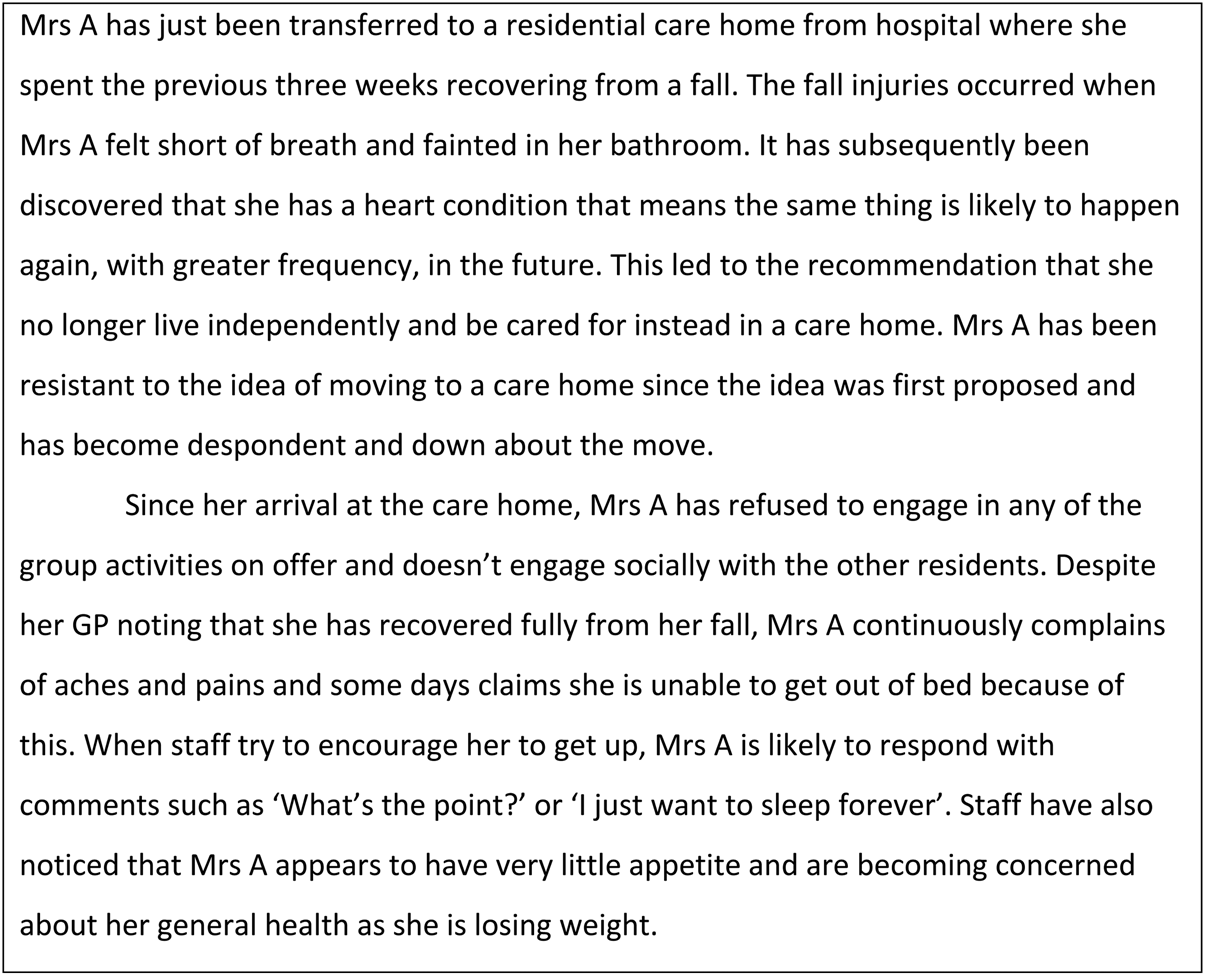
The research team was comprised of four members with expertise in social work, mental health nursing and ageing, and three peer researchers comprising two older people and a family carer with recent experience of having both parents in a care home. The team trained together on interview techniques for the peer researchers, instruction in using recording devices, information on processes of consent and ethical considerations, and data analysis. Focus group discussions were chosen as the key method of data collection to gain access to care home staff's everyday communication and for collecting data from several staff at the same time concerning how and why they talk and think about the topic. This everyday communication in a care home can help to increase our understanding of care worker's acknowledged or hidden knowledge of the topic and the context it reflects (Morgan, Reference Morgan1997). Given that this topic may evoke unspoken experiences and be seen as taboo, a broad topic guide (see Figure 1) and a vignette (see Figure 2) were developed by the research team as tools to enable staff to talk more abstractly about the issues if required.
Topic guide for focus group leaders.

Vignette.

These research tools were piloted by the team with a small group of staff volunteers within the university hosting the research study. Following this, a final research protocol was developed to guide the focus group process, which contained prompts for researchers on how to facilitate discussion.
The target population was care staff selected using a convenience sample from care homes in the South-East region of England. Four focus group discussions from four different care homes were held with a total of 33 staff who were on duty on the days when care homes gave the researchers access.
The managers were invited to include themselves or not, and in three groups, one manager and two deputy managers were present. Two further focus groups were recruited but fell through twice due to competing priorities. Each focus group was conducted by a peer researcher in partnership with an experienced focus group moderator in social care research. The group took place in a private meeting room to ensure confidentiality. Following introductions, participants were first asked to read through the vignette followed by a prompt which invited them to comment individually on what they thought was happening to the person described and whether they recognised any similar experiences in their own work. Participants were then facilitated to share some of their own experiences of working with older people with the facilitator providing prompts for them throughout the discussion to talk about their views on how they related to the issues of ‘giving up’ within their own practice contexts. The discussion was audio-recorded with prior participant permission. Each group lasted between 45 and 90 minutes and was transcribed verbatim. The researchers also took brief notes and made additional notes arising from the debriefing process immediately upon the focus group conclusion.
Ethical approval was provided by Middlesex University. Participation in the study was completely voluntary and the groups were hosted on-site in a private and confidential area at the end of the shift, so as not to interfere with care routines.
Data analysis
Following data transcription, team members read and coded transcripts individually and then in pairs where they identified preliminary themes. The team then came together as a group to discuss and interpret themes within the context of the overarching research questions. This inductive method drew on constant comparison, an approach to grounded theory (Miles and Huberman, Reference Miles and Huberman1994), and was suited for systematically uncovering our participants’ meanings and furthering interpretive understandings, enriched by our peer team member insights (Charmaz, Reference Charmaz2006). We focused on understanding the breadth of experiences and building a picture of the ‘giving up’ phenomenon grounded in the care home staff data. We now present the findings within the three main research questions framed.
Findings
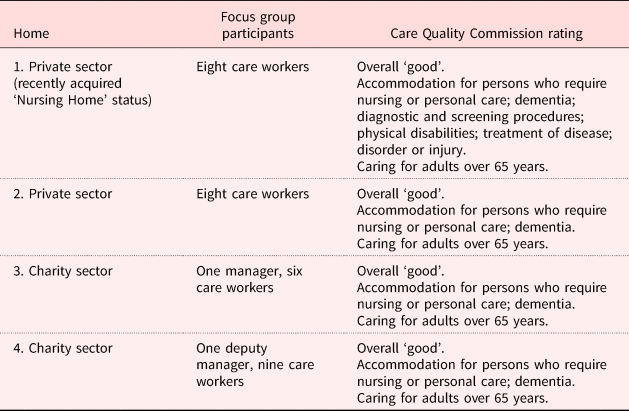
Table 1 gives an overview of the focus group participants.
Characteristics of focus group sample

Note: N = 33.
The meaning of ‘giving up’: recognition and understanding
The vignette provided a trigger for staff to be able to share a range of descriptions from their own experiences of older residents in a similar situation. Without exception, they all recognised this type of scenario in their care homes. However, within the focus group interview they tended not to discuss the vignette in any detail but quickly moved on to talk about their own related experiences.
What they described was an individual going through a distinct period of withdrawal which did not always appear to coincide with the onset of any specific physical illness or deterioration in their mental health:
They tend to not say so much that they are giving up, but you notice that they start to give up. You know they'll eat less and less and less until they've not eaten anything and then they'll stop talking and then just things like that until eventually they do pass on. (Care worker, focus group 1)
Staff gave examples of statements made by the individual about wishing to end their lives prematurely, such as ‘I'm ready to go now’, ‘I want to pack it all in’, ‘I don't want to be here anymore’, or in the form of a direct question such as ‘what's the point of living?’ Individuals were also described as withdrawing from personal care, by refusing to be washed or taken to the toilet. This would sometimes fluctuate and/or be accompanied by refusal of food and fluids. Other actions included individuals depriving themselves of sleep to speed up the process:
he was determined, he wouldn't get out the bed, the family were brought in here, and I thought it might help. He was really charming, you'd sit with him and he just made you feel warm inside you know. But he thought that his wife should have looked after him though and she shouldn't have given up on him. Then he went to hospital and that was it … The son used to get mad and cross with him, because he'd got the grandkids, but that wasn't, it was his time he'd decided, and that was it. (Care worker, focus group 2)
This reference to attempts by the older person to exercise both agency and control emerged in several examples given. One described an older woman who refused to take any medication but would not allow staff to take it away. This, she stated, was ‘her decision’ and that she would communicate her decision when ‘ready’. This was a relatively new resident clearly struggling with her dependence and trying to assert her identity and power over a new situation. Other examples included individuals expressing anger and, in some cases, aggression about their circumstances. This was particularly evident for those residents who felt that they had been given no option but to move to a care home against their wishes:
He used to say to me, you go back and tell those bloody people, I didn't fight in the RAF [Royal Air Force] for six years for them to tell me that I can't live in my own home … He used to get so frustrated and then he'd get his skin would flare up and we'd have to cream him. (Care worker, focus group 2)
The staff identified many triggers to ‘giving up’, e.g. the loss of a partner whilst in care and a forced reduction in previous interests and social activities, which staff recognised as ‘boredom’ in their new environment. Staff used metaphors such as ‘it's like being in a prison’ or ‘trapped like an animal’. Some put themselves in the shoes of the older people and embodied their voice in their responses:
I had my friends and now I'm here with strangers, I don't know who they are. I'm here with people who have to look after me yes. When I was in my own home it would take me two and a half hours to get myself washed and dressed but I did it myself. Here somebody is washing me. It could be somebody who could be my granddaughter's age … It's a lot to take on board when you go into a residential home. (Care worker, focus group 1)
There were numerous references to the person losing their sight or hearing: a final straw or devastating blow for someone struggling to maintain their independence or identity in a new setting. Another trigger mentioned by two focus group participants was the perceived loss of financial assets and income as a result of the older person having to fully fund their own residential care. Care workers referred to two residents who explicitly expressed their anger and resentment of having worked and saved hard to leave something for their families. The anticipation of the financial losses over time which would impact on this desired legacy was directly associated with their frustration of paying high fees whilst ‘waiting to go’:
what he normally says he thinks life is no more worth living. He'll be here paying for his care. He is thinking it's wasted and he rather would die and leave the money to the family … So what he says to me, I'm not going to get better, so why don't I die now and save the money for the loved ones, yeah. (Care worker, focus group 3)
Staff also referred to residents who were more reflective and positive about their lives and expressed the need to die in a positive way, particularly if they were very old:
Yeah at the beginning he used to chat about his days in the Navy and this, that and the other, but then as the weeks went by, he was talking less and less and less and not really interacting with us at all and he really went down … I think he just missed his wife so much that he didn't want to be here when she wasn't. (Care worker, focus group 2)
Responding to a ‘giving up’ situation: distraction and resistance
The second theme related to how staff articulated their responses to older residents who they recognised as entering or being in a phase of ‘giving up’. These ranged from the provision of diversionary and distraction activities as well as denial of, or resistance to, the situation both to themselves and to the individual through silence, avoidance or the giving of false reassurance. There were also many examples of sensitive and tender care-giving acts and expressions of deep compassion.
In relation to distraction, care workers talked about residents needing to be ‘taken out of themselves’ (in focus group 1) and the need to combat any negative statement with reassurance that they (the staff) would help to ‘sort the person’ by taking exceptional care of them. They spoke about the need to offer distraction opportunities such as singing, dancing and going out in the fresh air. Staff acknowledged that it was sometimes difficult to know what to say and how they felt responsible for trying to offer something:
Most time what staff does is to try to prompt him, divert his attention from there. We will never accept that fact, oh you want to die, okay oh go on with it – no we will try to get him out of it, if there is a football or TV show going on, how to catch their focus and get them out of their … or do you want a cup of tea, to make them happy. But this strategy we always use. (Care home deputy manager, focus group 3)
Here the care worker was clearly conflicted about her duty to care and the need to be seen to be active in combating any negativity. Staff talked about trying to ‘get through’ to people as well as giving space and showing respect, particularly if the person was expressing anger. Others openly acknowledged their insecurities about not being sure what to do and feeling torn about the seen aspects of their work with showing respect and dignity to the individuals with whom they were familiar. This could also involve leaving people alone and doing nothing, which felt alien to expectations:
So I'm just thinking of R and all that when he was feeling down obviously we had to help him and get him up and as I say there was a time when his bed was really wet and we had to help him up and he was really angry about that and I felt better knowing that we had changed his bed, rather than having to get him out when he was feeling quite down. So I don't know whether, because you don't want to leave him in his room, so if he was feeling that he just wants to stay in his room, then let him, give him his meals in his room and stuff like that. (Care worker, focus group 2)
One care worker gave an example of a blind woman more than 100 years old. She was described as often praying out loud for God to take her and heard asking why it was taking so long. The resident was also experiencing increasing pain from arthritis:
I used to tease her, when she said oh God come and take me, come and take me, I said you better stop calling God because as you pick your phone calling God, God will stop answering your call. If you stop calling God, God will come and take you. (Care worker, focus group 3)
The use of visiting pastoral support was discussed here and some of the care workers indicated difficulty in offering the person pastoral support in case it was misunderstood that they were giving permission to die, or that the staff had given up on them. Care workers with religious beliefs were more likely to recognise and meet these needs. One care worker referred to her belief as a reason for direct intervention in relation to the person's wishes to ‘go’:
I always quote the Bible by saying would God say this, would God want you to give up, no … God created you for a purpose and your purpose is still not yet finished … I'd probably get a pastor come in once a week or once a month, if he's able to go to church and have one of the staff to accompany to church, so at least he feels like he can still partake in religion and go to church and services. So that should give them more faith in Jesus keeping them alive. (Care worker, focus group 4)
Not all responses were distractions, but care workers cited many instances of intimacy and compassion. They spoke about giving love and affection through ‘cuddles’, ‘gentle touches’ and whispering ‘to let them know you're there’, as well as coaxing people and providing special treats. They picked up on other motivators such as grandchildren, capitalising on the relationships built with residents over time ‘we know every bit of them’. Care workers referred to feeling low themselves and referred to the pressure of expectations that they are used to residents dying, a comment made frequently to them by families. The use of self-disclosure was frequently mentioned:
It's sharing and not to come in and say to burden a resident with your personal problem that isn't the point, but it's to say you know last night when I went home I was tired, I couldn't cook so I had this or I had that, and I went to bed, but how did your night go? (Care worker, focus group 1)
Care workers were very reflective during the focus group discussion about the death of residents and shared their own experiences of expressing grief and the significance of peer support. They talked about how they were often put on the spot and having to respond in the moment which was difficult for them:
You never get used to it, I said you find ways of dealing with it, but I said I never think of this job that this is their last stop before they go on to heaven or wherever, you don't think of the job like that. (Care worker, focus group 2)
Intervention: pride and prejudices
Within each focus group staff expressed an awareness of processes and procedures to be followed when an older person was noted as being depressed, withdrawn and showing other manifestations of any deterioration in their mental health. This was something that they referred back to their team leader or manager for further investigation. Resources were not put forward as the main barrier in caring for people in these situations, with strong evidence in two of the care homes of a team working around the older person to make space for one of its members to deliver more tailored care. Home care workers spoke about the challenges that came with not having a better ratio of staff to service users and how this impacted on them being able to provide care in a more timely way. Other examples were given of being able to pick up on cues and having the flexibility in the team to respond to people's needs. These small interventions were seen as important and a key source of satisfaction:
I mean take for instance today what did I say to you – take somebody out up to um, the road and let them sit outside and have a cup of coffee, because I could see she was getting very low. So I said to her what's the matter, I don't know I'm just very low and I thought yeah okay take her out, walk around, look into the shops and have a cup of coffee and she came back and she seems a lot better. (Care worker, focus group 1)
This care worker also commented on the value of people contributing their skills and resources within the team, e.g. where someone has a vehicle and another will go the extra mile to cover their work whilst this type of intervention takes place. One group of staff spoke about the importance of their observations within a medical assessment which included their personal knowledge about whether the person was more agitated or not, and of their usual mood as well as giving a detailed description of the gradual, physical withdrawal from care. They expressed pride in being able to share this information which reflected their relationship with the older individual. The majority of care workers described referring individuals to the general practitioner (GP) or community mental health team and actively sought support from nurses where there were developing skin integrity issues as a result of refusing care. Such referrals would commonly result in a mental capacity assessment:
He had that capacity. So he stopped eating. Then he started deteriorating. He wasn't on any medication, so his weight came down, he started changing. We were worried, we keep prompting the GP, so it came to a time when the GP said if he's got to that stage, they need to come and assess his mental capacity again. So the GP came down with the CPN [community psychiatric nurse], social worker and … I think there were a couple of questions that they asked him and the feedback wasn't good. So they took advantage of that and said look at this point we think you lack the capacity and you have to go to hospital. (Care home deputy manager, focus group 4)
Staff pride in giving support
In the discussion about the above person, staff alluded to their concerns for people going into hospital where they could be further adversely impacted by the unfamiliar surroundings. They apologised for using the word ‘stubborn’ in a way that acknowledged the persons own agency and recognised how the older person would minimise their self-harm in any assessment to avoid this type of professional attention. They gave examples of keeping in touch with people who were admitted to hospital to keep an eye on how their situations developed and to supplement care. Care workers also spoke of the challenges in getting support from the community mental health team and managing delays whilst trying to meet everyone's needs. This could involve getting a urine sample, supporting the family and managing the anger of the older person, including physical aggression:
But what we feel, I think all of us together, we feel that if just someone would listen to us, instead of all this, there's a medical thing, there's a psychiatric thing, and they'd come together and work together, because this gentleman needs help and help now and things need to be put in place which would stabilise him. (Care worker, focus group 2)
They felt that the issue was one of getting the right professional to take responsibility where there were co-existing physical and mental health concerns.
Preventative interventions
Many of the individuals cited were already on anti-depression medication before self-harm or suicide ideation developed. Staff identified preventative interventions which might involve making frequent checks on the person, taking care not to leave anything nearby which might be used by the individual for self-harm. They reduced any opportunities to save up medication which might lead to the individual taking an overdose or by not leaving the individual alone with their medication. They also talked about the importance of sitting back and facilitating residents in talking to each other, and the value of small talk within this context of peer support where practical and emotional advice could be exchanged. They particularly observed the impact of people being admitted to the care home as an emergency from home or direct from hospital and stressed the need for more opportunities to prevent depression in particular through planned admissions. They suggested that building up relationships before moving into a care home as important for developing trust and support, e.g. pre-admission visits with families before making a commitment to institutional living. The design of care environments was particularly noted as mitigating factors in achieving community living.
As indicated earlier, some care workers used self-disclosure to provide a stimulus for the older person to talk about their own parents and their childhood or other memories, and to encourage communication about their current mood and spirits. The expectation that a discussion about the end of life would take place within the admission process was particularly challenging, mostly because it was inappropriately timed and caused care workers a dilemma about when and how to develop a care plan which included consulting the older person about their end of life. There were many tensions around these ‘procedures’, e.g. establishing preferences for funeral arrangements, particularly with families or older people who would cry when these subjects were broached. Care workers thus felt ill-equipped to deal with the topic and implement any policies on the ground. They wanted to align themselves with the organisation's values of care but acknowledged unspoken conflicts, e.g. in the face of more open debates in the media about euthanasia seen as taboo. Sometimes the resident expressed their wish that they did not want their family to be put under any pressure and therefore presented different faces to the staff and then to their family. This made it difficult for staff when consulted by the older person about what to say and do in the presence of their family members.
Valuing staff contributions: combating prejudice
Care workers acknowledged a perceived lack of skills and knowledge in navigating complex areas such as where people who developed further physical needs were subsequently in the wrong care environment. Moving people to meet these needs versus respecting the person's own wishes to stay in their current care home was described as a real dilemma, given the importance of relationships and familiarity where the person had established themselves towards the end of life. They gave one example of insisting that a person came back to the home from hospital even though her needs had increased substantially. Another example concerned an older woman seen to improve her eating once she was back in a familiar environment. Their distress about an older person being moved when in poor physical and mental health came across strongly and provoked strong feelings of advocacy:
Care worker 1: How many times do we have to go to the hospital, they say they won't eat and we go up there and sit with them and they eat?
Care workers: Yes (talking together).
Care worker 2: The other day she had a nasty fall and we called the ambulance, she never went, she said I would like to die here, I'm not moving. (Focus group 1)
These feelings of not feeling valued, of being in receipt of unfair criticism and the lack of recognition of their ‘expertise’ on the older person came across powerfully. They spoke of the need for appreciation when somebody dies and the need to work through some of the guilt that families might experience. It was common for families to bypass them by going ‘straight to the office’ on issues of care, whereas care workers preferred more direct communication between care workers and family members and were willing to be accountable for these issues. One care home identified pressure from the relatives to ignore a person's wishes about dying. They recognised how difficult it was for families to accept that their loved one was giving up even when the person had full mental capacity and was able to explain himself:
And then coming to us and trying to tell us to ignore what he's saying. They also expect more from him. (Deputy manager, focus group 3)
Focus group discussions on depression, self-harm and suicide provoked care workers to touch on their own fears, taboos and prejudices. They drew parallels with their own lives and took inspiration and advice from older people they cared for who were able to express regrets and sadness which were facilitative and cathartic. Finally, care workers expressed a strong desire for more training in recognising and being able to respond to people with developing mental health issues in care homes. They suggested having more structured discussions within the staff team and with visiting professionals, and felt that more opportunities could be provided for expressing their own concerns and emotions in order to improve caring for people ‘giving up’. It was noted that there were not any differences in practice or philosophy between the four participating care homes and the experiences shared by individuals relating to this topic appeared to be improvisatory rather than relating to an explicit philosophy, clear protocols or any practice guidelines.
Discussion
Conceptualising ‘giving up’ and its discourse
The aim of this exploratory study was to gather the observations and perceptions of care home staff on residents’ expressions of ‘giving up’ through their behaviour and/or speech. The findings illustrate that depression, self-harm and suicide ideation in care homes is a real and present event, and needs attention to how this process is managed for the older person, their family and care staff in close contact with them which optimises engagement and consultation about the care needed. Across those participating, we found both recognition and understanding, consensus on what ‘giving up’ looks like, with many rich descriptions of situations and insights of what happens in care homes and how staff experience and respond to older people presenting to them in these situations. The passage from life to death of older people described whilst living in care homes took many forms. These reflected many of the themes as cited in the literature earlier (Froggatt et al., Reference Froggatt, Hockley, Parker and Brazil2011; Wijngaarden et al., Reference Wijngaarden, Leget and Goossensen2015), which was reflected in both passive and active withdrawal and refusal of care. The care home workforce are at the forefront of witnessing these situations and this study highlights the important role they play in how these issues are conceptualised and acknowledged in the first instance, as well as the actions they take both by themselves and by involving people who can give the relevant support and quality of care.
Responding to ‘giving up’
Despite some residents explicitly expressing a wish to die or ‘go’, their feelings about how and when they wanted to die were generally left unrecognised. For our participants, having a conversation about death or dying in these circumstances was extremely difficult and uncomfortable, again reflecting the discourse of silence cited earlier (Osterlind et al., Reference Osterlind, Hanseboh, Anderssons, Ternested and Hellstrooms2011). Care was not always flexible enough to reflect the perspectives and priorities of the older person. Instead of openness around death and dying, with residents able to discuss their wishes about and towards their end of life, institutional preferences for care were executed or the issue was avoided altogether. In many of the examples given, care remained functional or practical which denies residents a dynamic, social or spiritual relationship and voice required to give meaning to their experiences. Thus, residents remained in a contested state whilst striving to maintain their own identities within a wider system dynamic (Froggatt et al., Reference Froggatt, Hockley, Parker and Brazil2011).
The participants in our focus groups also spoke at length about the personal relationships they had with residents and the power of these in facilitating their understanding of the individual's changing moods and behaviour. They were able to identify measures that may help, e.g. by recognising the need for privacy and increasing opportunities for intimacy, or by giving space away from the institutional environment. Interestingly, hardly any references were made to the relationships older people may have developed with other residents. Group activities were sometimes mentioned, but these were proposed as ways of keeping residents ‘busy’ and distracted. Likewise, there were very few examples given of collaborating with loved ones or other external support services outside referrals to specialist services. It is unclear if these omissions were due to the focus of our topic guide and the perceived need of participants to showcase positive experiences. Engagement with specialist services tended to result in hospital admissions rather than any other in-house interventions, which were not always welcomed by care staff who sometimes felt that their contribution was under-valued, as well as leading to compensatory personal or team actions on behalf of the older person.
Care workers in our study referred to the lack of clarity about when and how information about risk of self-harm and suicide should be gathered and by whom, combined with challenges in older people communicating their needs, and the timing of their move to a care home. All of these circumstances make self-harm and suicide difficult to recognise, reinforced by an absence of analysis of contributory organisational factors (see Osgood and Brant, Reference Osgood and Brant1990). The lack of consistent guidelines on end-of-life care, and different discourses at play, all manifested through the actions of staff around the older person and may also be interpreted in the context of society's attitudes to older people and their death and dying.
Finally, participants acknowledged that they wanted and needed to know more about mental health in their work and highlighted the role of training in being able to recognise how this impacted on the residents with whom they worked. They observed a cycle of resistance, adaptation, realignment of expectations, boredom and depression in individual residents. Medication and mental capacity assessments were offered, but participants indicated the need for a more combined response and holistic strategy which draws on skills and relationships within a wider context to develop support that complimented their own contributions to care.
Extending current knowledge of ‘giving up’ in care homes
There are enormous inequalities in support for older people with mental health issues which coincide with an ageist response to depression as a normal part of ageing. This is recognised as an international phenomenon, particularly in care homes (World Health Organization, 2004). Inequalities are perpetuated by the neglect of adequately supporting staff who interface with residents, which is an important ingredient in combating this form of ageism. The literature relating to recognising triggers which cause people to give up on life, regardless of reason, were reflected in the findings from this small study by highlighting how it may be more difficult for care staff to disentangle the causes and effects of mental health in older people in these situations (Azulai and Walsh, Reference Azulai and Walsh2015). Transitioning to long-term care can be a difficult experience and the process itself may contribute to producing depression, rather than being an effect of the depression or of other physical or mental impairments. Wilkes (Reference Wilkes2005) reminds us that care homes are more than places of care. They are also spaces where meaning is experienced and created in the relationships between people and wider social processes, and these were reflected in the care staff descriptions of their relationships, which were both enabling and resistant. Previous research has also highlighted the importance of feeling connected to peers within care home settings to create positive feelings of identity, emotional wellbeing and belonging (Bradshaw et al., Reference Bradshaw, Playford and Riazi2012), and this was lacking in the data collected for this particular study.
Conclusion
Older people living in care are among the most vulnerable in our community because of their physical frailty, cognitive impairments and dependency on others (Spector et al., Reference Spector, Fleishman, Pezzin and Spillman2001). There is a need to maintain and review research and knowledge about ‘giving up’ which may involve depression, self-harm, suicide ideation and behaviours impacting on older people living in care homes, to understand and predict risk better (Nock and Kessler, Reference Nock and Kessler2006), particularly from the perspectives of those who live and work there. Whilst this study was conducted in England, the issues addressed and the findings resonate with many of those in other developed countries internationally. Recognising changes to mental health in the context of the institutional environment in which it occurs can be used to develop appropriate and applicable prevention strategies (Murphy et al., Reference Murphy, Bugeja, Pilgrim and Ibrahim2015). Despite increasing evidence for staff training in recognising and responding to mental health needs of care home residents outside dementia, there are currently no training protocols that meet this need (Gleeson et al., in press). In caring for people who may be depressed and giving up, staff can find themselves facing difficulties around end-of-life decision-making and communication with those involved. An emphasis on functional aspects of care as well as the duties to care can lead to a culture which denies recognition of their process and wishes around dying and relegates any support to the periphery of care. There will always be dying work in care homes, yet the care workers in our sample saw this as separate to their work and very infrequently discussed or embodied in the care home culture.
Guidelines by the UK National Institute for Clinical Excellence (2011) on the hospital management of self-harm recommend that older people should be seen by mental health professionals who are skilled with this population and in recognising depression in later life. These refer to the importance of asking directly about thoughts of self-harm and hopelessness as an important discriminator for those at high risk and knowing the history of the person, their previous experiences of mental health, and their experiences of support from services and the impact of any serious life events within the aetiology of depression and self-harm. Life events as precipitating factors for self-harm in an older person with depression may act as precipitating factors in particularly predisposed individuals. Their interaction with other factors, in particular social support, could be influential.
The findings of this study echo those found in earlier literature (Murphy et al., Reference Murphy, Bugeja, Pilgrim and Ibrahim2015) which call for targeted interventions for older people identified as high risk and staff education to promote greater awareness. The transitional period of moving to a care home is a particularly vulnerable period. Giving emphasis to person-centred care during transition to alleviate personal stressors, facilitate investment in relationships within which the older person can confide and express themselves, and building a team around them with appropriate expertise and support for older people who may be vulnerable to giving up, would make best use of the skills and abilities of everyone involved. More large-scale research is required using standardised methods for reporting the incidence and methods of self-harm and suicide, and the contributory risk factors (Murphy et al., Reference Murphy, Bugeja, Pilgrim and Ibrahim2015). This fundamental information is essential to designing and testing effective prevention strategies to reduce depression and its severity leading to self-harm and suicide in this vulnerable population.
Limitations
This small study utilised a convenience sample of care homes in one geographical area of South-East England and so findings can only be applied to these homes. They are resonant, however, with previous studies investigating mental ill-health and suicide in care home settings. The focus of the study was to explore how staff understood the experience of ‘giving up’ among residents and, as such, we may not have opened up the discussion to a broader range of positive interventions and actions that occur on a daily basis within care homes that potentially act as protective factors. As with most qualitative research our sample was relatively small but included the views of staff with diverse experiences, giving us a broad overview of their views. We specifically focused on the lay phenomena of ‘giving up’ and understanding how this sits within the care worker's knowledge of depression, self-harm and suicide. More empirical enquiry and research is also needed locally, regionally and internationally to increase our understanding of giving up from both individual and organisational perspectives, and a collaborative approach is needed to support those involved, including the diverse voices of older people themselves and their loved ones.
Implications for practice
There is a need to maintain and review research and knowledge about depression, self-harm, and suicide ideation and behaviours impacting on older people living in care homes to understand and predict risk better (Nock and Kessler, Reference Nock and Kessler2006), and to understand mental health in the context of the institutional environment in which it occurs in order to develop appropriate and applicable prevention strategies (Murphy et al., Reference Murphy, Bugeja, Pilgrim and Ibrahim2015). Other researchers have argued that there is more to preventing suicide in older people than measuring risk and that there is also a need to understand better potentially unique motivators that should also be addressed (e.g. Crocker et al., Reference Crocker, Clare and Evans2006). Increased standardisation of recording suicide behaviour in care homes is needed to be able to understand fully the extent of ‘giving up’ in residents and to plan and understand ways to respond to it. In line with Murphy et al. (Reference Murphy, Bugeja, Pilgrim and Ibrahim2015) and Gleeson et al. (Reference Gleeson, Hafford-Letchfield, Quaife, Flynn and Collins2019), we found little consistency within the literature on the methods, related factors, or prevalence of suicide or suicide ideation in care home residents which makes it difficult to understand this phenomenon fully. In order to develop effective prevention or intervention strategies for older people residing in care homes and to promote their human rights, these data need to be collected and analysed systematically in order to stimulate greater creativity and commitment by those involved.
According to Gleeson et al. (Reference Gleeson, Hafford-Letchfield, Quaife, Flynn and Collins2019), there are numerous studies reporting on training interventions for staff in care homes for recognising or measuring depression or other mental health issues. However, beyond measuring staff confidence in identifying mental illness and reports of perceptions of the usefulness of training, little is known about the impacts of such programmes on residents. More longitudinal research on how skills learned through training programmes are used in practice and whether they are effective in addressing the mental health needs of care home residents is needed. Wider involvement of residents themselves in designing and evaluating impact would be a welcome step forward with the potential to lead to new approaches to supporting older people living their final years in care home settings.
Author ORCIDs
Hafford-Letchfield T http://orcid.org/0000-0003-0105-0678. Zanone Poma S http://orcid.org/0000-0002-7084-6357. Helen Gleeson http://orcid.org/0000-0003-0505-5281
Acknowledgements
The members of the research team wish to acknowledge the contributions of colleagues in the care home sector and stakeholders who attended the two workshops who made this study possible. They also wish to thank Middlesex University for funding this project.
Author contributions
All of the authors were involved in the design of the study and development of the research tools. SZP and SV provided the stimulus material for the stakeholder workshop and provided mentoring to the Principal Investigator, TH-L, for the duration of the study. TH-L, HG, PR, BB, RT and MQ were responsible for conducting the fieldwork. TH-L, HG, PR, BB, RT, MQ and AF were responsible for the data analysis. TH-L and HG were responsible for the write-up of the study with critical commentary from the team.
Financial support
This work was supported by a small grant from Middlesex University Department of Mental Health, Social Work and Integrative Medicine.
Conflict of interest
The authors declare no known conflicts of interest.
Ethical standards
This study was approved by the Ethics Committee of the School of Health and Education, Middlesex University (reference ECHEC 1391).