Children with low cognitive ability are disproportionally more likely to exhibit mental health difficulties such as internalizing (emotional) and externalizing (behavioral) symptoms, compared to those without (Cheng, Palta, Kotelchuck, Poehlmann, & Witt, Reference Cheng, Palta, Kotelchuck, Poehlmann and Witt2014; de Ruiter, Dekker, Verhulst, & Koot, Reference de Ruiter, Dekker, Verhulst and Koot2007; Emerson, Reference Emerson2003; Emerson & Hatton, Reference Emerson and Hatton2007). The substantial body of developmental and educational psychology research to date on the links between mental health difficulties and cognitive ability in children is perhaps equally divided between observational studies examining mental health difficulties as “predictors” of cognitive skills and those examining the latter as predictors of the former. Causal links are certainly plausible. For example, elevated levels of behavioral problems interfere with a child's normative development and consequently with the acquisition of age-appropriate cognitive skills (Campbell, Reference Campbell2002). Children with high levels of externalizing problems are also more difficult to teach than their peers because they are not interested in learning, have trouble following directions, and often lack the self-control to cooperate (Rimm-Kaufman, Pianta, & Cox, Reference Rimm-Kaufman, Pianta and Cox2000), and so have fewer opportunities to strengthen a broad range of cognitive abilities. Children with internalizing difficulties may also have fewer opportunities to strengthen their cognitive abilities. Socially withdrawn and anxious children, for example, tend to take fewer risks, which affects learning negatively. At the same time, there is much evidence in support for the opposite direction of the link between cognition and mental health in children. For example, there is strong evidence for the causal role of primarily frontally mediated deficits in executive functions (e.g., attention, planning, working memory, and response inhibition) in a range of externalizing behaviors or disorders (Sergeant, Geurts, & Oosterlaan, Reference Sergeant, Geurts and Oosterlaan2002; Van der Meere, Marzocchi, & De Meo, Reference Van der Meere, Marzocchi and De Meo2005). There is also evidence for the role of memory dysfunction and poor language skills in internalizing problems (Price & Drevets, Reference Price and Drevets2010; Toren et al., Reference Toren, Sadeh, Wolmer, Eldar, Koren, Weizman and Laor2000).
Longitudinal evidence suggests dynamic associations too, especially between cognitive and behavioral difficulties (Glaser et al., Reference Glaser, Gunnell, Timpson, Joinson, Zammit, Smith and Lewis2011; Van der Ende, Verhulst, & Tiemeier, Reference Van der Ende, Verhulst and Tiemeier2016). The notion that cognitive and mental health difficulties may be mutually reinforcing is further supported by evidence suggesting that neurocognitive deficits can be both risk factors (Koenen et al., Reference Koenen, Moffitt, Roberts, Martin, Kubzansky, Harrington and Caspi2009; Moffitt, Reference Moffitt, Lahey, Moffitt and Caspi2003; Zammit et al., Reference Zammit, Allebeck, David, Dalman, Hemmingsson, Lundberg and Lewis2004) and outcomes of psychopathology (Wood et al., Reference Wood, Brewer, Koutsouradis, Phillips, Francey, Proffitt and Pantelis2007). There is comparatively more longitudinal research into how internalizing and externalizing symptoms codevelop in children (Boylan, Georgiades, & Szatmari, Reference Boylan, Georgiades and Szatmari2010; Flouri et al., Reference Flouri, Papachristou, Midouhas, Joshi, Ploubidis and Lewis2018; Gooren, van Lier, Stegge, Terwogt, & Koot, Reference Gooren, van Lier, Stegge, Terwogt and Koot2011; Herrenkohl et al., Reference Herrenkohl, Kosterman, Mason, Hawkins, McCarty and McCauley2010; Morin et al., Reference Morin, Arens, Maïano, Ciarrochi, Tracey, Parker and Craven2017; Rogosch, Oshri, & Cicchetti, Reference Rogosch, Oshri and Cicchetti2010; van Lier & Koot, Reference van Lier and Koot2010; Wiesner, Reference Wiesner2003). For example, many studies (usually situated in social developmental psychology) have shown positive longitudinal effects of externalizing on internalizing symptoms in childhood, in line with expectations from the failure theory, whereby noxious behaviors and lack of social skills alienate peers, which, in turn, increases vulnerability to internalizing symptoms (Gooren et al., Reference Gooren, van Lier, Stegge, Terwogt and Koot2011). In general, most studies exploring the developmental cascades of internalizing and externalizing symptoms in childhood show positive unidirectional effects of externalizing on internalizing symptoms or positive reciprocal associations (Boylan et al., Reference Boylan, Georgiades and Szatmari2010; Flouri et al., Reference Flouri, Papachristou, Midouhas, Ploubidis, Lewis and Joshi2019; Gooren et al., Reference Gooren, van Lier, Stegge, Terwogt and Koot2011; Moilanen, Shaw, & Maxwell, Reference Moilanen, Shaw and Maxwell2010; Morin et al., Reference Morin, Arens, Maïano, Ciarrochi, Tracey, Parker and Craven2017; Van der Ende et al., Reference Van der Ende, Verhulst and Tiemeier2016).
Although to our knowledge only two studies to date have examined how all three domains (internalizing symptoms, externalizing symptoms, and cognitive ability) are interrelated over time in the general child population (Flouri et al., Reference Flouri, Papachristou, Midouhas, Joshi, Ploubidis and Lewis2018, Reference Flouri, Papachristou, Midouhas, Ploubidis, Lewis and Joshi2019), many studies have examined longitudinal links between internalizing and externalizing symptoms and constructs related to cognitive ability such as academic competence (Weeks et al., Reference Weeks, Ploubidis, Cairney, Wild, Naicker and Colman2016) or, usually, academic performance. Most have shown not only a negative direct link from externalizing problems to later academic performance but also a mixed picture of how academic performance is associated with externalizing and internalizing problems longitudinally (Englund & Siebenbruner, Reference Englund and Siebenbruner2012; Masten et al., Reference Masten, Roisman, Long, Burt, Obradović, Riley and Tellegen2005; Moilanen et al., Reference Moilanen, Shaw and Maxwell2010; Riglin, Frederickson, Shelton, & Rice, Reference Riglin, Frederickson, Shelton and Rice2013; Vaillancourt, Brittain, McDougall, & Duku, Reference Vaillancourt, Brittain, McDougall and Duku2013; Van der Ende et al., Reference Van der Ende, Verhulst and Tiemeier2016; van Lier et al., Reference van Lier, Vitaro, Barker, Brendgen, Tremblay and Boivin2012; Verboom, Sijtsema, Verhulst, Penninx, & Ormel, Reference Verboom, Sijtsema, Verhulst, Penninx and Ormel2014). In addition, by focusing on academic performance, these studies have excluded the early years, when knowledge about causal processes, and therefore recommendations about interventions, may be particularly important. Finally, although related, cognitive ability and academic performance are distinct constructs (Johnson, McGue, & Iacono, Reference Johnson, McGue and Iacono2006). Cognitive ability is one of the stronger predictors of academic performance, but the latter is also independently associated with other genetic and environmental factors, including executive functioning, self-regulation, socioeconomic and schooling characteristics, and the home learning environment (Blair, McKinnon, & Family Life Project Investigators, Reference Blair and McKinnon2016).
Of course, cognitive ability, internalizing symptoms, and externalizing symptoms may be interlinked in children simply because they share causes. Among the most powerful risk factors for all three are low socioeconomic status (Christensen, Schieve, Devine, & Drews-Botsch, Reference Christensen, Schieve, Devine and Drews-Botsch2014; Flouri & Midouhas, Reference Flouri and Midouhas2017; Hair, Hanson, Wolfe, & Pollak, Reference Hair, Hanson, Wolfe and Pollak2015; Hanson et al., Reference Hanson, van den Bos, Roeber, Rudolph, Davidson and Pollak2017), low parental education (Noble et al., Reference Noble, Houston, Brito, Bartsch, Kan, Kuperman and Sowell2015; Ormel et al., Reference Ormel, Raven, van Oort, Hartman, Reijneveld, Veenstra and Oldehinkel2015), maternal depression (Bjornebekk et al., Reference Bjornebekk, Siqveland, Haabrekke, Moe, Slinning, Fjell and Walhovd2015; Goodman et al., Reference Goodman, Rouse, Connell, Broth, Hall and Heyward2011), low birth weight (Anderson, Doyle, & Victorian Infant Collaborative Study Group, Reference Anderson and Doyle2003; Farajdokht et al., Reference Farajdokht, Sadigh-Eteghad, Dehghani, Mohaddes, Abedi, Bughchechi and Mahmoudi2017), and being non-breastfed (Oddy et al., Reference Oddy, Kendall, Li, Jacoby, Robinson, de Klerk and Stanley2010; Park et al., Reference Park, Kim, Kim, Shin, Yoo and Cho2014). The proposed mechanisms via which these risk factors can impact on cognitive ability and internalizing or externalizing symptoms in children are also similar. Socioeconomic status and parental education are thought to exert their impacts not only directly on brain development but also via their effects on parenting style, quality of parent–child interactions, parent involvement in learning, and parent stress (Flouri & Midouhas, Reference Flouri and Midouhas2017; Guo & Harris, Reference Guo and Harris2000; Linver, Brooks-Gunn, & Kohen, Reference Linver, Brooks-Gunn and Kohen2002; Ormel et al., Reference Ormel, Raven, van Oort, Hartman, Reijneveld, Veenstra and Oldehinkel2015; Tong, Baghurst, Vimpani, & McMichael, Reference Tong, Baghurst, Vimpani and McMichael2007). Breastfeeding is thought to enhance mother–infant interactions and can be considered an indicator of secure attachment status, an established predictor of a child's behavioral and emotional development (Crowell & Waters, Reference Crowell, Waters, Grossmann, Grossmann and Waters2005). The maternal contact occurring during breastfeeding has also been shown in animal models to have a beneficial effect on the development of neuroendocrine aspects of stress response (Liu et al., Reference Liu, Diorio, Tannenbaum, Caldji, Francis, Freedman and Meaney1997), which can, in turn, affect later mental health and cognition (Guerry & Hastings, Reference Guerry and Hastings2011; Juster, McEwen, & Lupien, Reference Juster, McEwen and Lupien2010; Weinstock, Reference Weinstock2005). Finally, low birth weight and maternal mental illness are risk factors of both poor cognitive skills (Bjornebekk et al., Reference Bjornebekk, Siqveland, Haabrekke, Moe, Slinning, Fjell and Walhovd2015; Farajdokht et al., Reference Farajdokht, Sadigh-Eteghad, Dehghani, Mohaddes, Abedi, Bughchechi and Mahmoudi2017) and poor mental health (Chou, Wu, Chen, & Yang, Reference Chou, Wu, Chen and Yang2016; Weinstock, Reference Weinstock2005), via several routes including by their direct impacts on brain development and morphology. For example, a systematic review by Farajdoht et al. (Reference Farajdokht, Sadigh-Eteghad, Dehghani, Mohaddes, Abedi, Bughchechi and Mahmoudi2017) provides evidence for a delay in the cortical thinning among preterm children, possibly due to disturbance in the neuronal development in the third semester of pregnancy. Children born to mothers with mental health problems, in contrast, have been shown to have smaller putamen volume on average relative to controls (Bjornebekk et al., Reference Bjornebekk, Siqveland, Haabrekke, Moe, Slinning, Fjell and Walhovd2015).
From a methodological point of view, the available studies to date on the associations over time between mental health difficulties and academic or cognitive skills in children have followed statistical analysis techniques—most commonly cross-lagged panel modeling (CLPM) when reciprocal associations are of special interest—which do not allow for the differentiation of intraindividual patterns of change over time (within-variation) from interindividual (between-variation) differences in this codevelopment (e.g., Boylan et al., Reference Boylan, Georgiades and Szatmari2010; Gooren, van Lier, Stegge, Terwogt, & Koot, Reference Gooren, van Lier, Stegge, Terwogt and Koot2011; Morin et al., Reference Morin, Arens, Maïano, Ciarrochi, Tracey, Parker and Craven2017). Albeit informative, the developmental cascades described in these studies do not reflect “pure” longitudinal change because of the conflation of within-child changes with between-child differences across the measures over time (Berry & Willoughby, Reference Berry and Willoughby2017). Recent critiques of CLPM suggest the introduction of random intercepts as a way to segregate the between-person, “traitlike” aspects of a behavior from the within-person deviations from one's own overall longitudinal trajectory (Hamaker, Kuiper, & Grasman, Reference Hamaker, Kuiper and Grasman2015). This approach was successfully implemented in a recent study of developmental cascades of cognitive ability and problem behavior across childhood (Flouri et al., Reference Flouri, Papachristou, Midouhas, Ploubidis, Lewis and Joshi2019), which found bidirectional associations between externalizing symptoms and cognitive ability in males and between externalizing and internalizing symptoms in females. Nevertheless, the interpretation of such effects is limited to claims about how one variable is associated with change in another variable measured at the subsequent assessment, without allowing for inferences about the overall longitudinal development across assessments. An additional limitation of CLPM is that the effects of the time-varying covariates are conditioned on the growth of the outcome variables, but not on their own overall growth, as this is not directly modeled (Muniz-Terrera et al., Reference Muniz-Terrera, Robitaille, Kelly, Johansson, Hofer and Piccinin2017). (We should note that it is possible to model such effects in CLPM, but computationally such models are extremely intensive and thus, most commonly, fail to converge.) Finally, models that include lagged effects can be sensitive to the time elapsed between measurement occasions.
Given the above, in this study we examined for the first time how cognitive, emotional, and behavioral difficulties combine in the general child population over time using a statistical technique that allows for the separation of the between- from the within-person variation, that is, parallel-process latent growth curve modeling. In addition, we attempted to quantify more adequately the impact of key time-varying and time-invariant covariates on this parallel unfolding. Based on findings from studies employing CLPM to study developmental cascades of internalizing symptoms, externalizing symptoms, and cognitive ability (Flouri et al., Reference Flouri, Papachristou, Midouhas, Ploubidis, Lewis and Joshi2019), we hypothesized that externalizing symptoms at baseline will be cross-sectionally correlated with internalizing symptoms (positively) and cognitive ability (negatively). We also expected an inverse correlation, albeit of smaller size, between internalizing symptoms and cognitive ability at baseline. We also hypothesized that the slope of externalizing symptoms would be the strongest predictor of the slope of both internalizing symptoms (positively) and cognitive ability (negatively). Moreover, we theorized that the time-invariant covariates would have a significant impact on the growth parameters of all three outcome measures. Finally, in the absence of evidence about the associations, modeled this way, between our time-varying covariates and outcomes, we expected that the estimates of the covariance between the growth parameters reflecting intraindividual change would become weaker after adjustments, albeit they would remain significant.
Method
Sample
The data for this study came from the first six sweeps of the Millennium Cohort Study (MCS), an ongoing population-based cohort study following children born in the United Kingdom in 2000 or shortly thereafter. The children were on average 9 months old at Sweep 1, and 3, 5, 7, 11, and 14 years old at Sweeps 2, 3, 4, 5, and 6, respectively. At the six sweeps, the number of participating families was 18,522, 15,590, 15,246, 13,857, 13,287, and 11,714, respectively. Our analytic sample included children (singletons and first-born twins or triplets) with valid data on externalizing symptoms, internalizing symptoms, and cognitive ability in at least one of Sweeps 2 to 6 (N = 17,318; 51% male), when the MCS had data on all three outcomes. Ethical approval was gained from NHS Multi-Centre Ethics Committees, and parents and children gave informed consent before interviews took place.
Measures
Cognitive ability at ages 3, 5, 7, 11, and 14 years
Cognitive ability was calculated for each age by using the age-adjusted ability assessments that were available in the MCS. At age 3, there were two cognitive assessments, the Bracken School Readiness Assessment—Revised, (BAS) measuring children's “readiness” for formal education by testing their knowledge and understanding of basic concepts (Bracken, Reference Bracken1998), and the second edition of the British Ability Scales (Elliott, Smith, & McCulloch, Reference Elliott, Smith and McCulloch1996) for naming vocabulary, which measures expressive language. At age 5, ability was assessed with three scales, BAS naming vocabulary, BAS pattern construction (measuring spatial problem solving), and BAS picture similarities (measuring nonverbal reasoning). At age 7, it was measured with BAS pattern construction, BAS word reading (measuring educational knowledge of reading) and the National Foundation for Educational Research Progress in Maths. At age 11, it was measured with BAS verbal similarities, which assesses verbal reasoning and verbal knowledge. Finally, at age 14 it was measured with a word activity task assessing the understanding of the meaning of words. This task, used in other general population studies in the United Kingdom (e.g., at the age 16 sweep of the 1970 British Birth Cohort Study), is based on standardized vocabulary tests devised by the Applied Psychology Unit at the University of Edinburgh in 1976 (Elliott & Shepherd, Reference Elliott and Shepherd2006).
When multiple cognitive assessments were available (i.e., at ages 3, 5, and 7), we measured cognitive ability by using the scores derived from a principal components analysis of the various assessment scores. Each component score was then transformed into a standardized score with a mean of 100 and a standard deviation of 15 (Hanscombe et al., Reference Hanscombe, Trzaskowski, Haworth, Davis, Dale and Plomin2012). These multiple well-validated assessments are thought to be able to capture a general cognitive ability factor, which is not dependent on the use of specific mental ability tasks (Johnson, Bouchard, Krueger, McGue, & Gottesman, Reference Johnson, Bouchard, Krueger, McGue and Gottesman2004). (For ages 11 and 14, when only one measure of ability was available in the MCS, we transformed the age-adjusted ability score into a standardized cognitive ability score.)
Internalizing and externalizing symptoms at ages 3, 5, 7, 11, and 14 years
Internalizing and externalizing symptoms were measured with the parent-reported Strengths and Difficulties Questionnaire (SDQ), a short behavioral screening tool for children aged 2 to 17 years old (Goodman, Reference Goodman1997). The 20 difficulties and symptoms assessed by the SDQ are equally divided in four subscales: emotional symptoms, conduct problems, hyperactivity/inattention, and peer problems. In line with recommended practice for community samples (Goodman, Lamping, & Ploubidis, Reference Goodman, Lamping and Ploubidis2010), the internalizing problems scale comprised the 10 items from the emotional and peer problems subscales, and the externalizing problems scale the 10 items from the hyperactivity and conduct problems subscales. Scores on each of these two scales range from 0 to 20, with higher scores indicating more problems or symptoms. In the analytic sample the Cronbach's αs for the internalizing and externalizing problem scales ranged from .61 (age 3) to .77 (ages 11 and 14) and from .78 (ages 3 and 5) to .81 (ages 11 and 14), respectively, suggesting adequate reliability. In this study we considered internalizing and externalizing symptom scores as continuous variables, yet we also used the widely used banding by cutoff score proposed by Goodman (Reference Goodman1997). According to this, children's scores are “borderline” if they lie in the upper 80%–90% of the distribution (internalizing symptom scores ≥ 7; externalizing symptom scores ≥ 9) and “abnormal” if they are in the upper decile (internalizing symptom scores ≥ 9; externalizing symptom scores ≥ 11).
Covariates
We evaluated the effect of several time-varying and time-invariant factors that are known to be associated with both cognitive ability and externalizing and internalizing symptoms. The time-invariant covariates were birth weight (dummy coded as <2.5 kg or not), breastfeeding status (dummy coded as yes or no), ethnicity (one dummy variable for each of the following, UK Census classified, ethnic groups: white, Indian, Pakistani/Bangladeshi, black, mixed, and other), maternal education (dummy coded as having obtained a university degree or not), and maternal age at birth. The time-varying (at ages 3, 5, 7, 11, and 14) covariates were maternal psychological distress (measured using the Kessler K6; Kessler et al., Reference Kessler, Andrews, Colpe, Hiripi, Mroczek, Normand and Zaslavsky2002) and socioeconomic disadvantage. This was measured using a four-item summative index comprising overcrowding (>1.5 people per room excluding bathroom and kitchen), lack of home ownership, receipt of income support, and income poverty (equivalized net family income below 60% of the national median household income; Malmberg & Flouri, Reference Malmberg and Flouri2011).
Statistical analysis
All models were stratified by sex to account for differences in the childhood developmental trajectories of the three main measures between males and females (Carter et al., Reference Carter, Godoy, Wagmiller, Veliz, Marakovitz and Briggs-Gowan2010; Douma, Dekker, de Ruiter, Tick, & Koot, Reference Douma, Dekker, de Ruiter, Tick and Koot2007; Leve, Kim, & Pears, Reference Leve, Kim and Pears2005; Richer, Lachance, & Côté, Reference Richer, Lachance and Côté2016). Our analytic approach was as follows. We examined sex differences in the main measures and the covariates at baseline (age 3 years). Next, we used parallel-process latent growth curve modeling (LGCM) to describe the parallel unfolding of cognitive ability and mental health from ages 3 to 14 years. The basic LGCM estimates not only intraindividual patterns of change over time (within-variation) but also interindividual heterogeneity in growth parameters (between-variation), by yielding standard errors and significance levels for the variance estimates of the intercept and slope. The parallel-process LGCM, however, can also estimate the covariance between the growth parameters of the different outcomes, which provides information on their parallel development (Bollen & Curran, Reference Bollen and Curran2006; Curran, Obeidat, & Losardo, Reference Curran, Obeidat and Losardo2010; Wickrama, Lee, O'Neal, & Lorenz, Reference Wickrama, Lee, O'Neal and Lorenz2016).
We ran three parallel-process LGCMs. A baseline model estimated model fit to the data prior to including any covariates. The second model adjusted for the time-invariant covariates. For each of the ethnic groups considered, we created a dummy-coded variable, as explained above, and we did not include in the models the variable for white ethnic group, which, thus, served as the reference category. The third model made further adjustments for the time-varying covariates of maternal psychological distress and socioeconomic disadvantage. We parameterized the latter two models in such a way that we allowed time-invariant covariates to predict the growth parameters directly. For the time-varying covariates, we modeled their growth trajectories and estimated the regression paths between their growth parameters and those for the three outcomes (internalizing symptoms, externalizing symptoms, and cognitive ability). Using this model specification, the correlations between the intercepts and the slopes of the three trajectories represented intraindividual developmental changes. The residual variance of the intercepts and slopes of the trajectories as well as the residual correlations between the growth parameters reflected interindividual differences.
All analyses were performed in Stata/SE 14.2 (StataCorp, 2011) and Mplus 7.4 (Muthén & Muthén, Reference Muthén and Muthén2009). LGCMs were run using the maximum likelihood with robust standard errors estimator, which provides maximum likelihood parameter estimates with robust standard errors and takes into account the skewed distributions of variables. Model fit was assessed using three indices: the comparative fit index (CFI), the root mean square error of approximation (RMSEA), and the standardized root mean square residual (SRMR). CFI values ≥.95, RMSEA values ≤.06, and SRMR values ≤.05 are indicative of good model fit (Hooper, Coughlan, & Mullen, Reference Hooper, Coughlan and Mullen2008). All missing data were handled using full information maximum likelihood, which estimates parameters using any available information that is contained in the analytic model. The MCS stratum was controlled to account for the disproportionate stratification of the MCS survey design (Plewis, Calderwood, Hawkes, Hughes, & Joshi, Reference Plewis, Calderwood, Hawkes, Hughes and Joshi2007). Attrition and nonresponse were taken into account by using weights.
Results
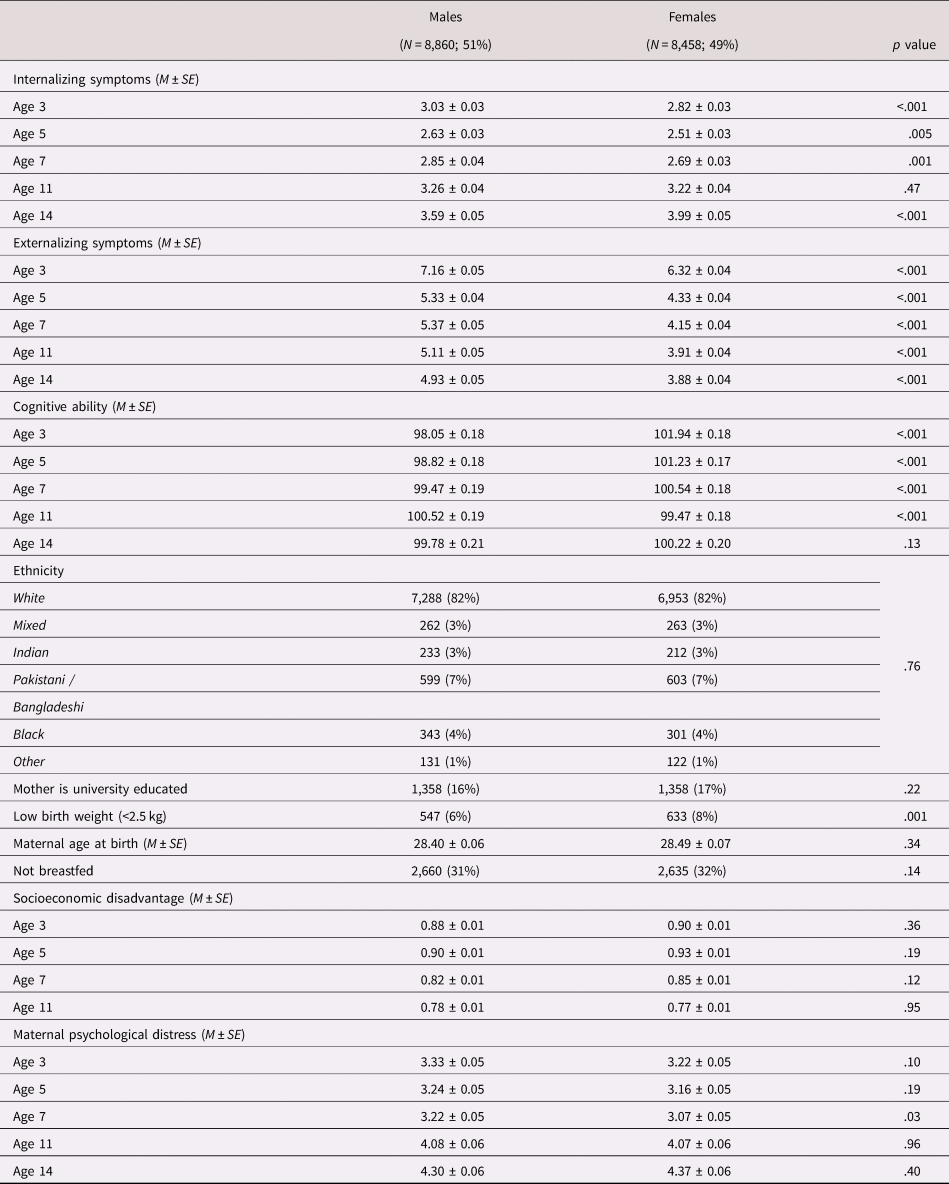
Table 1 summarizes the characteristics of the sample stratified by sex. At baseline, males scored significantly higher in internalizing and externalizing symptoms compared to females, had lower cognitive ability, and were less likely to have been of low birth weight, but did not differ with respect to the remaining characteristics considered.
Unweighted estimates of internalizing symptoms, externalizing symptoms, cognitive ability, and covariates across sexes

Note: Values presented as N (%) unless otherwise specified.
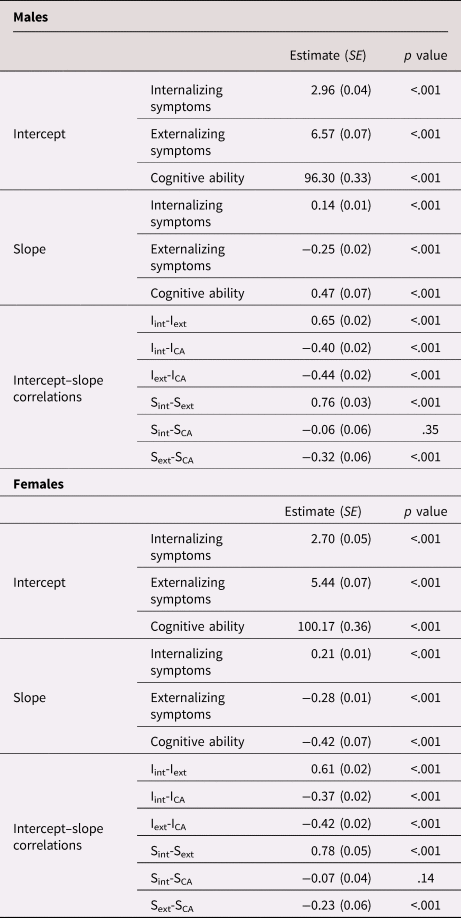
Model fit was relatively poor for the baseline LGCM (CFI = .88; RMSEA = .05; SRMR = .08) but improved for the model including the time-invariant covariates (CFI = .89; RMSEA = .04; SRMR = .05) and especially for the one including both the time-invariant and the time-varying covariates (CFI = .91; RMSEA = .03; SRMR = .04). Using Wald tests, we tested whether the growth parameters (intercepts and slopes) of internalizing symptoms, externalizing symptoms, and cognitive ability differed between sexes in the fully adjusted model. The results showed that there were no sex differences in the growth parameters of the internalizing and externalizing symptom trajectories. However, the intercept of the cognitive ability trajectory was significantly lower in males (intercept = 96.30, SE = 0.33) compared to females (intercept = 100.17, SE = 0.36); χ2 (1) = 7.92, p = .005, while the slope was positive in males (slope = 0.47, SE = 0.07) and negative in females (slope = –0.42, SE = 0.07); χ2 (1) = 12.07, p < .001.
As can be seen in Table 2, the positive correlations between the intercepts of internalizing and externalizing symptoms for both males and females in the fully adjusted model (rs around .60 for both sexes) suggest that children with more internalizing symptoms are also more likely to present with externalizing symptoms at baseline, and vice versa. In addition, the positive correlations between their slope estimates (rs around .75 for both sexes) suggest that the two symptom types develop in parallel. Higher levels of symptoms at baseline were additionally associated with lower cognitive ability at baseline although the correlations were lower (rs around .40 for both sexes and across both symptom types). Nonetheless, only the slope of externalizing symptoms, but not that of internalizing symptoms, was associated with the slope of cognitive ability (rs around .30 and .20 for males and females, respectively).
Mean growth parameter estimates (intraindividual development) of parallel-process latent growth curves of internalizing symptoms, externalizing symptoms, and cognitive ability adjusted for time-invariant and time-varying covariates

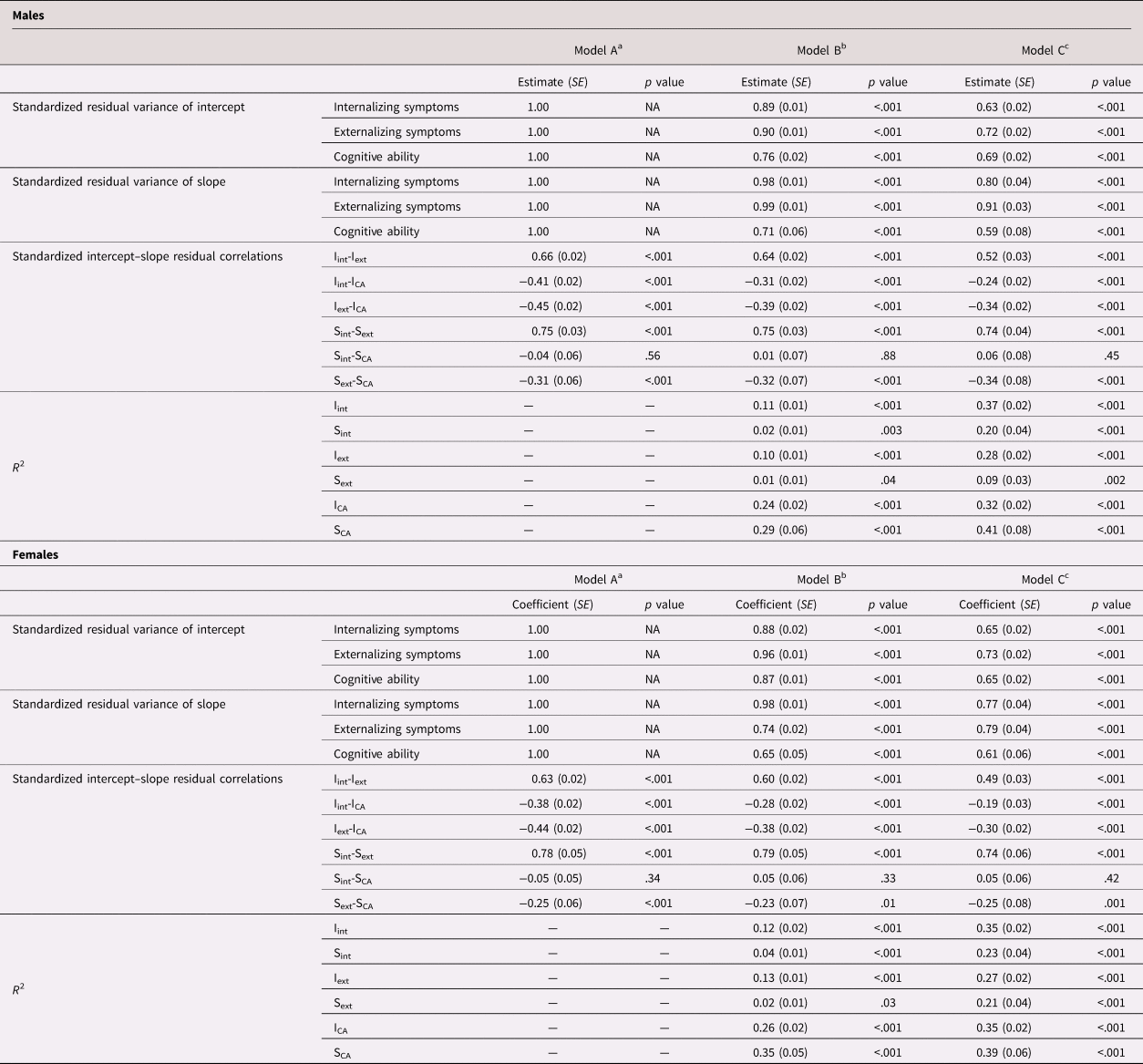
Table 3 summarizes the standardized residual variance estimates of the growth parameters, the correlations between the three intercepts, and the correlations between the three slopes, before and after adjustments for covariates (Models A–C). The significant variance estimates of the intercepts and slopes as well as the significant correlations in the fully adjusted model, with the exception of the correlation between the slopes of the trajectories of internalizing symptoms and cognitive ability, suggest that interindividual differences in the growth parameters as well as in the codevelopment of the outcomes persist even after adjustments for covariates. Nevertheless, a significant amount of variance in the growth parameters was explained by the covariates. This ranged, in males, from 9% for the slope of the externalizing symptom trajectory to 41% for the slope of the cognitive ability trajectory. The estimates in females were 21% and 39%, respectively. Noticeably, the time-invariant covariates—ethnicity, breastfeeding status, birth weight, maternal education and maternal age at birth—explained much of the between-child variance in the growth parameters of cognitive ability (females: 26% of the variance in the intercept and 35% of the variance in slope; males: 24% and 29%, respectively). By contrast, the proportion of variance explained in the intercepts and slopes of the internalizing and externalizing symptom trajectories increased substantially after adjustments for the time-varying covariates, that is, socioeconomic disadvantage and maternal psychological distress. For example, the between-child variance in the intercept of internalizing changed from 11% (in the model adjusting for time-invariant covariates only) to 37% (in the model adjusting for both time-invariant and time-varying covariates) in males, and from 12% to 35% in females. The between-child variance in the slope of internalizing changed from 2% to 20% in males, and from 4% to 23% in females. For externalizing, the between-child variance in the intercept changed from 10% to 28% in males and from 13% to 27% in females; the between-child variance in the slope changed from 1% to 9% and from 2% to 21% in males and females, respectively.
Crude and adjusted residual variance estimates (interindividual differences) of parallel-process latent growth curves of internalizing symptoms, externalizing symptoms, and cognitive ability

aCrude model.
bModel adjusted for the time-invariant covariates of ethnicity, maternal education, birth weight, maternal age at birth, and breastfeeding status.
cModel adjusted for the time-invariant covariates as in Model B, and also the time-varying covariates of socioeconomic disadvantage and maternal psychological distress.
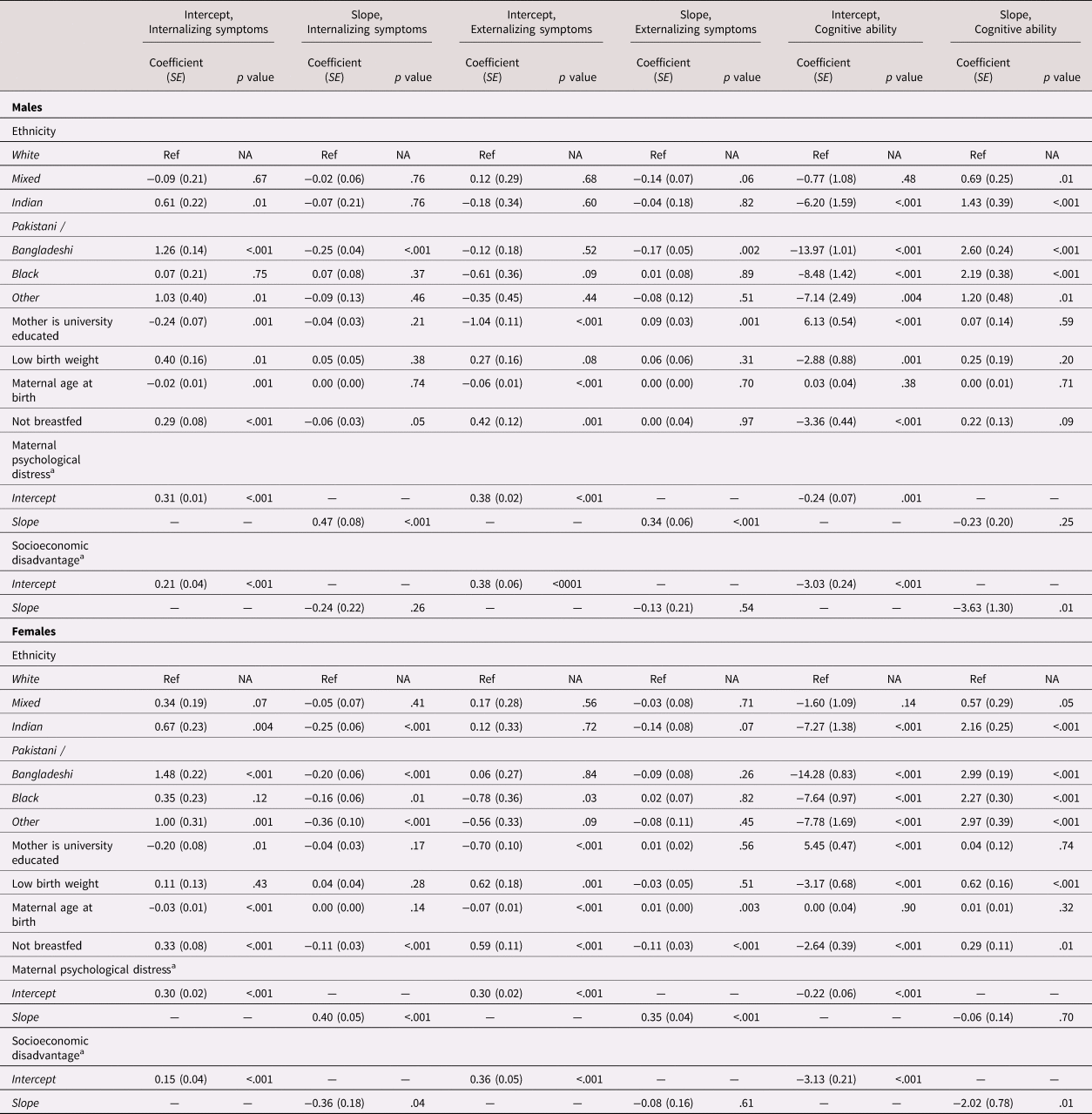
Table 4 shows the unstandardized regression coefficients of the covariates on the growth parameters of the trajectories stratified by sex. Ethnic minority children had lower cognitive ability at baseline than their white counterparts, but their cognitive skills changed at a faster pace throughout childhood and adolescence. In addition, children of mothers with a university degree, the breastfed, and those of normal birth weight had fewer internalizing and externalizing symptoms and higher cognitive ability. Breastfeeding status was also related to the rate of change in internalizing and externalizing symptoms in females, while maternal age at birth only in internalizing symptoms in females. With respect to the time-varying covariates, their effects on the growth parameters of the outcomes were comparable between sexes. At baseline, higher levels of maternal psychological distress and socioeconomic disadvantage were correlated with higher levels of internalizing and externalizing scores and with lower levels of cognitive ability. The slope of maternal psychological distress was significantly predictive of the slopes of internalizing and externalizing symptoms, but not cognitive ability, suggesting that increases in maternal psychological distress during childhood and adolescence are associated with increases in externalizing and internalizing symptoms in children. By contrast, the slope of socioeconomic disadvantage was significantly predictive of the slope of cognitive ability (and internalizing symptoms in females only) but not externalizing symptoms, suggesting that increases in the level of socioeconomic disadvantage are associated with decreases in cognitive ability in both sexes and with increases in internalizing symptoms in females.
Unstandardized regression coefficients (SE) of covariates on the growth parameters of the fully adjusted parallel-process latent growth curve model of internalizing symptoms, externalizing symptoms, and cognitive ability

aTime-varying covariates.
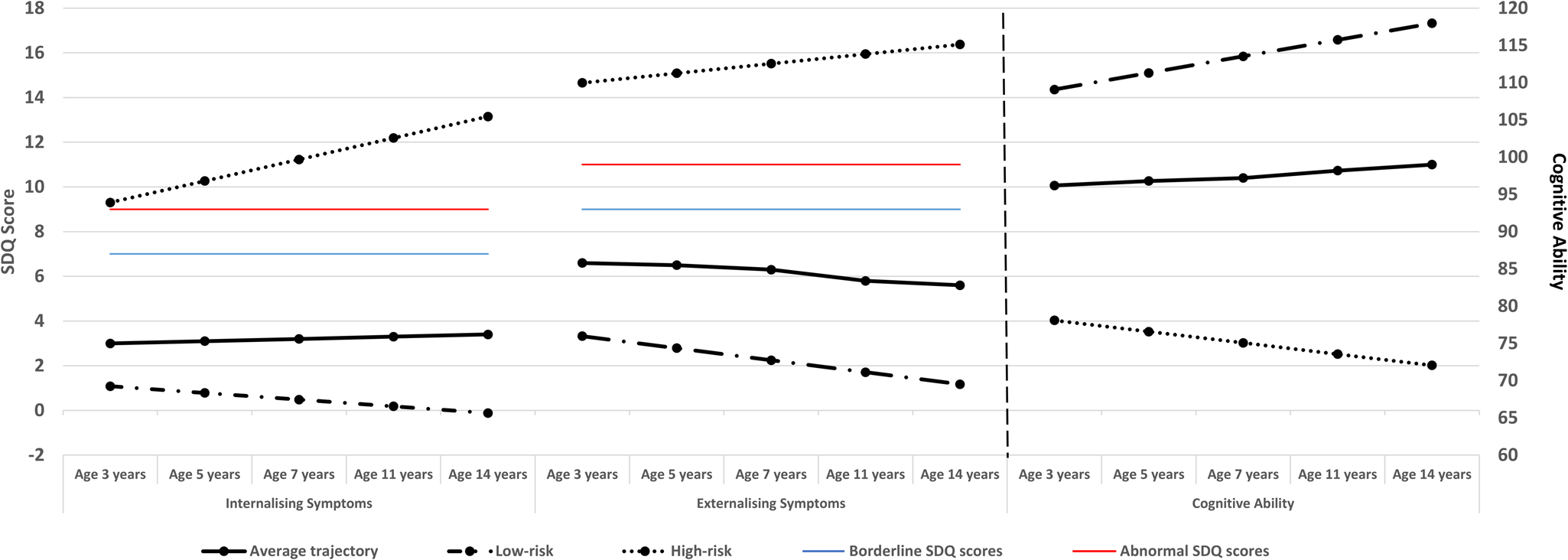
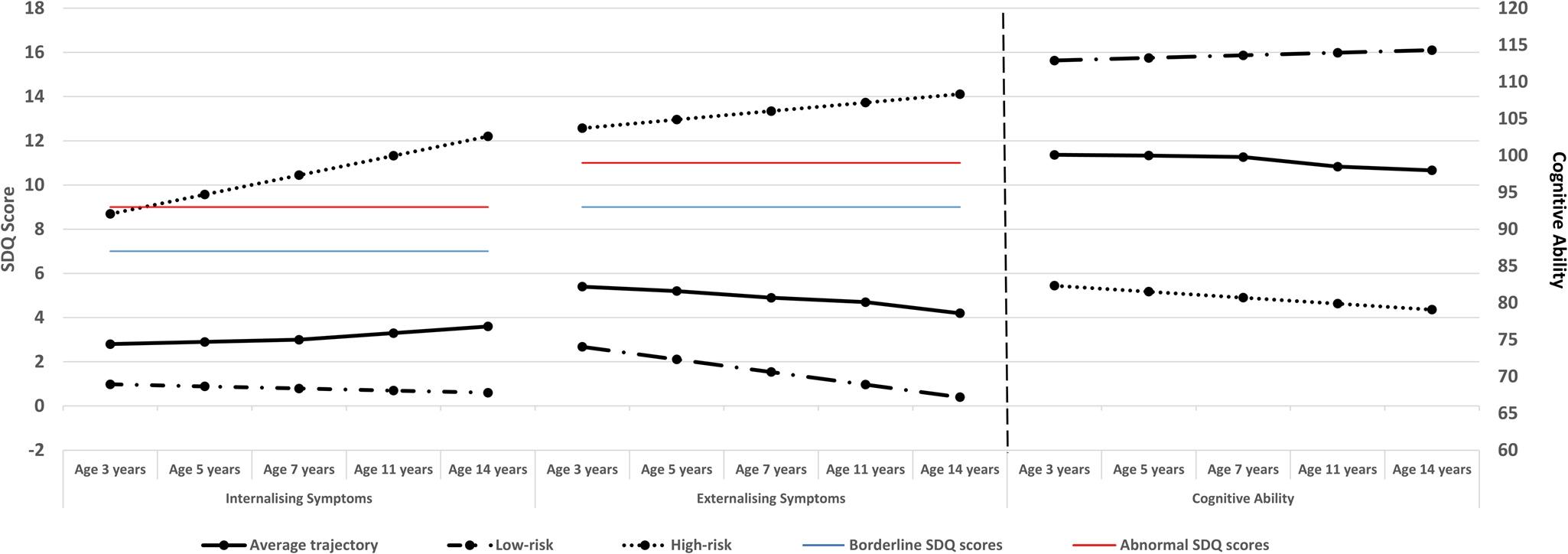
To illustrate the cumulative effect of the covariates that are arguably modifiable risk factors, we plotted the predicted values of the trajectories of the three domain scores after restricting covariate values to their mean, their minimum, and their maximum. We considered modifiable risk factors to be maternal education, birth weight, breastfeeding status, maternal psychological distress, and socioeconomic disadvantage. Plotted this way, the trajectories for which covariates were held at their extreme high and low values illustrate, respectively, the effects of absence and accumulation of risk. Figures 1 and 2 illustrate these trajectories for males and females, respectively. Children scoring high on all risk factors (termed high-risk in the figure) show high and increasing levels of internalizing and externalizing symptoms as well as low and decreasing cognitive ability. By contrast, children scoring low on all risk factors (termed low-risk in the figure) are characterised by a near absence of symptoms and by cognitive ability scores almost 1 SD above the population mean at baseline, which increased even further during the study period.
Predicted latent growth curve trajectories of internalizing symptom scores, externalizing symptom scores, and cognitive ability scores in males with time-varying and time-invariant covariates held to their mean (average) and to their extreme (low-risk and high-risk) values.

Predicted latent growth curve trajectories of internalizing symptom scores, externalizing symptom scores, and cognitive ability scores in females with time-varying and time-invariant covariates held to their mean (average) and to their extreme (low-risk and high-risk) values.

Bias analysis
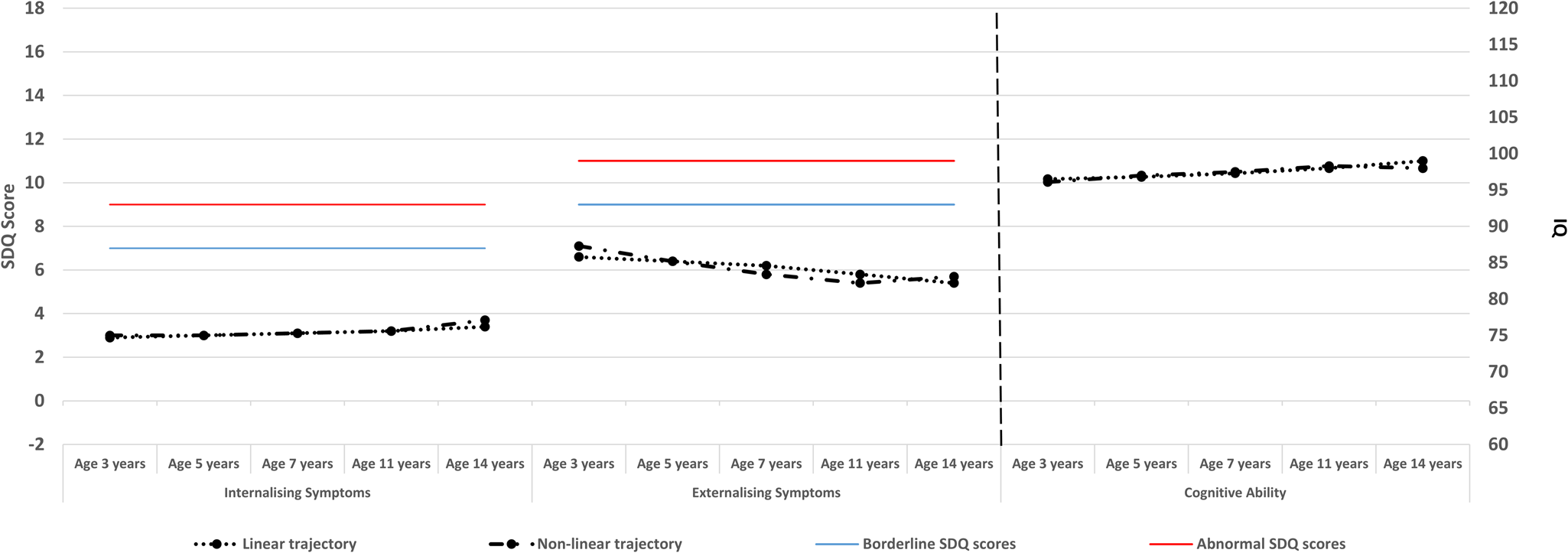
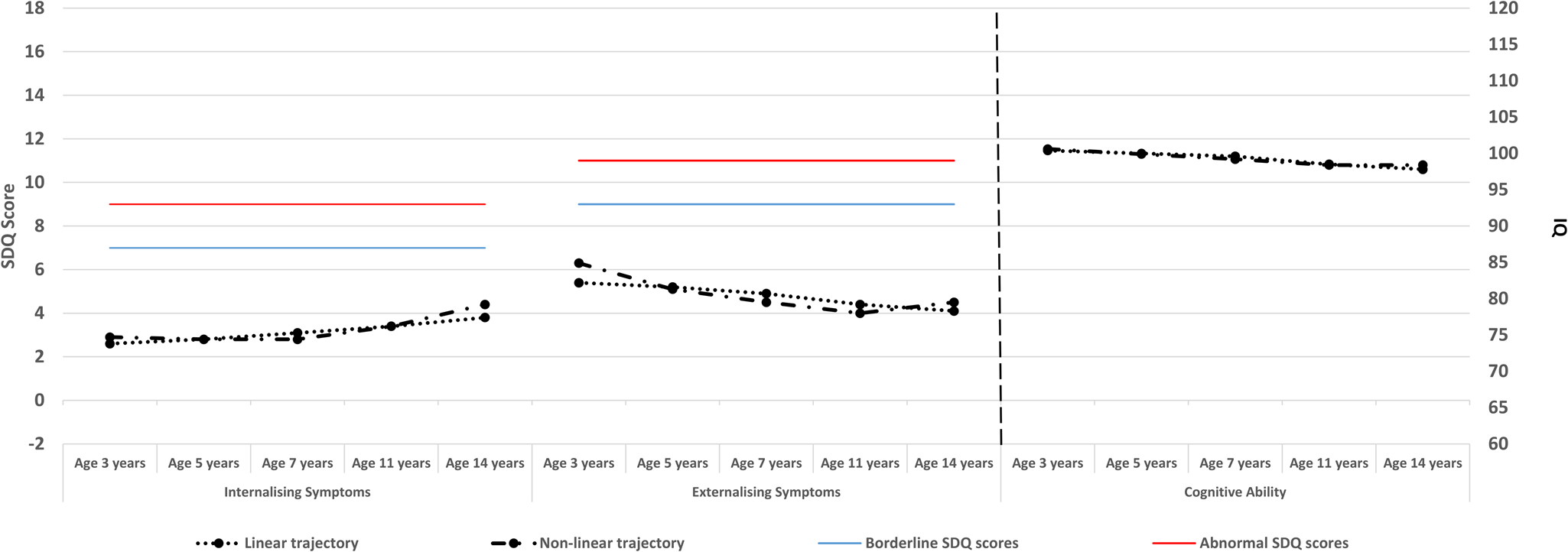
We performed a bias analysis to test whether the three domain scores follow nonlinear trajectories by fitting a fully adjusted (as in Model C) LGCM including a quadratic term for age. Visual inspection of the data showed that the linear and nonlinear LGCMs extracted almost identical trajectories for the three outcomes (Figures 3 and 4). In addition, the nonlinear LGCM ran into convergence problems, including the identification of a linear relationship between the slope estimates of internalizing and externalizing symptoms, suggesting model inadmissibility and therefore preference for the better fitting and more parsimonious linear LGCM.
Linear and nonlinear trajectories of internalizing symptom scores, externalizing symptom scores, and cognitive ability scores in males.

Linear and nonlinear trajectories of internalizing symptom scores, externalizing symptom scores, and cognitive ability scores in females.

Discussion
This study adds to the evidence that internalizing symptoms, externalizing symptoms, and cognitive ability are interrelated in the general child population. However, it also provides support for important specificity in these associations. We showed that although all interdomain associations at baseline were significant, those with externalizing symptoms were clearly stronger. In addition, increasing levels of externalizing symptoms throughout childhood and until middle adolescence were associated both with increases in internalizing symptoms and with declines in cognitive ability. Together, these findings suggest that children on an increasing trajectory of externalizing symptoms are likely both increasing in internalizing symptoms and decreasing in cognitive skills as well, and are thus an important group to target for intervention. Of course, as the relationships we identified are associative and not causative, it is not clear if declines in cognitive skills and/or increases in internalizing symptoms cause increases in externalizing symptoms, if increases in externalizing symptoms cause declines in cognitive skills (Glaser et al., Reference Glaser, Gunnell, Timpson, Joinson, Zammit, Smith and Lewis2011; Van der Ende et al., Reference Van der Ende, Verhulst and Tiemeier2016) and increases in internalizing symptoms, or if third variables are responsible for externalizing symptoms changing in parallel with both internalizing and cognitive difficulties.
Another important finding, in particular from a public health perspective, is that factors easily identified in the early years, such as birthweight, maternal education, maternal age, and breastfeeding status, explain much of the between-child variation in the trajectory of cognitive ability from the preschool period to middle adolescence. As discussed above, low birth weight and not being breastfed are independently associated with the child's neurological development and might explain their strong effects on cognitive ability (Farajdokht et al., Reference Farajdokht, Sadigh-Eteghad, Dehghani, Mohaddes, Abedi, Bughchechi and Mahmoudi2017; Juster et al., Reference Juster, McEwen and Lupien2010; Liu et al., Reference Liu, Diorio, Tannenbaum, Caldji, Francis, Freedman and Meaney1997). A mother's educational attainment, in contrast, is a proxy of her cognitive ability and thus also a proxy of genetic influences on a child's ability in biological mother–child pairs, the vast majority of mother–child pairs in the MCS. At the same time, maternal education is typically a very reliable indicator of parental human capital. Greater levels of parental human capital are, in turn, linked to more favorable cognitive outcomes for children. For example, more educated parents are able not only to afford higher quality education but also to invest more time and effort in basic care and play (Kalil, Ryan, & Corey, Reference Kalil, Ryan and Corey2012), thus creating and fostering more cognitively stimulating environments for their children. By contrast, between-child differences in externalizing and internalizing symptom trajectories were mostly explained by the two time-varying covariates we considered, maternal psychological distress and socioeconomic disadvantage. Regarding maternal psychological distress, we would argue that, due to the genetic basis of psychopathology, a large part of its effect on child emotional and behavioral symptoms in our study captures genetic influences. Nonetheless, there are also several other, environmental and neurobiological, pathways through which maternal depression is associated with child psychopathology (Goodman et al., Reference Goodman, Rouse, Connell, Broth, Hall and Heyward2011) and that, as will be discussed later in detail, we could not test. Socioeconomic disadvantage likely impacts on children's internalizing and externalizing symptoms via its effects on parental mental health but also more proximally via the environmental influences of poor parenting and psychosocial stressors (Roubinov & Boyce, Reference Roubinov and Boyce2017). There was some evidence for specificity in the effects of the time-varying covariates on slopes. We found that increasing levels of maternal psychological distress during childhood and adolescence were associated with increasing levels of both internalizing and externalizing symptoms, but not with decreased cognitive ability. Increases in socioeconomic disadvantage decreased cognitive skills, but did not change externalizing symptoms. This risk specificity notwithstanding, our study established the importance of risk accumulation for all three domains. As we showed, the trajectories of children exposed to all the risk factors we considered diverged significantly from those of the children exposed to some or no risk factors. Further, the predicted scores were above the “abnormal” cutoff for SDQ scores, thus suggesting that such children would represent an ultra high-risk group for later adverse outcomes, including poor decision-making skills, low self-esteem, engagement in antisocial behaviors, and psychiatric morbidity (Flouri et al., Reference Flouri, Papachristou, Midouhas, Joshi, Ploubidis and Lewis2018; Lancefield, Raudino, Downs, & Laurens, Reference Lancefield, Raudino, Downs and Laurens2016).
Nonetheless, even after accounting for the effects of the covariates, the initial score (intercept) as well as the rate of change (slope) of trajectories differed significantly between children. This unexplained variation is likely due to other covariates, not controlled here. Likely candidate variables include peer relationships (particularly important in adolecsence) and schooling characteristics, such as school quality (Sisco et al., Reference Sisco, Gross, Shih, Sachs, Glymour, Bangen and Manly2015) or academic perfomance (Metsäpelto et al., Reference Metsäpelto, Pakarinen, Kiuru, Poikkeus, Lerkkanen and Nurmi2015; Moilanen et al., Reference Moilanen, Shaw and Maxwell2010), which we did not consider given that we started following our sample at preschool age. Likely candidate variables of course also include family and parenting (Flouri & Midouhas, Reference Flouri and Midouhas2017; Guo & Harris, Reference Guo and Harris2000; Linver et al., Reference Linver, Brooks-Gunn and Kohen2002; Ormel et al., Reference Ormel, Raven, van Oort, Hartman, Reijneveld, Veenstra and Oldehinkel2015; Tong et al., Reference Tong, Baghurst, Vimpani and McMichael2007) characteristics, which we could not consider in as much detail as we would wish, as will be discussed below. Genetic factors are also likely candidate variables, as explained (Hagenaars et al., Reference Hagenaars, Harris, Davies, Hill, Liewald, Ritchie and Malik2016; Hill, Davies, Liewald, McIntosh, & Deary, Reference Hill, Davies, Liewald, McIntosh and Deary2016; Martin, Hamshere, Stergiakouli, O'Donovan, & Thapar, Reference Martin, Hamshere, Stergiakouli, O'Donovan and Thapar2015; McGrath et al., Reference McGrath, Braaten, Doty, Willoughby, Wilson, O'Donnell and Hill2016). Anatomical factors too could be important (Kanai & Rees, Reference Kanai and Rees2011; Whittle, Vijayakumar, Simmons, & Allen, Reference Whittle, Vijayakumar, Simmons and Allen2019). A review of magnetic resonance imaging studies of the brain emphasized their potential for formulating a neural basis of human behavior and cognition (Kanai & Rees, Reference Kanai and Rees2011). As a case in point, interindividual variability in intelligence has been demonstrated to correlate with cortical thickness and white matter integrity (Kanai & Rees, Reference Kanai and Rees2011), also associated with internalizing and externalizing problems: increasing levels of internalizing symptoms in childhood are associated with reduced thinning in the orbitofrontal cortex, whereas increases in levels of externalizing symptoms are associated with reduced thinning in the postcentral gyrus (Whittle et al., Reference Whittle, Vijayakumar, Simmons and Allen2019).
Our study has limitations, too. First, we could not determine the direction of the associations we established. Second, the fully adjusted LGCM was a computationally intensive model, and in order to achieve convergence we had to omit inclusion of several family characteristics, such as parental involvement, discipline, and warmth, all of which could have been covariates. Third, SDQ-based internalizing and externalizing symptoms were parent (overwhelmingly mother) reported, with no triangulation from other reporters such as teacher or child. This may be particularly problematic for internalizing symptoms in view of the evidence for higher levels of agreement between parent and self-reports on the SDQ for externalizing than for internalizing disorders (Van der Meer, Dixon, & Rose, Reference Van der Meer, Dixon and Rose2008). A fourth source of bias in our study could be introduced by using information stemming from different sources as cognitive ability was based on observational tests while internalizing and externalizing symptoms were both measured using parental reports. Fifth and finally, cognitive ability was not measured with the same tasks at each assessment, and hence we could not test for measurement invariance across time points. Nonetheless, we used a validated approach to derive a general cognitive ability score at each assessment (Johnson et al., Reference Johnson, Bouchard, Krueger, McGue and Gottesman2004), which has already been successfully implemented in previous studies (Basatemur et al., Reference Basatemur, Gardiner, Williams, Melhuish, Barnes and Sutcliffe2013; Flouri, Midouhas, & Joshi, Reference Flouri, Midouhas and Joshi2015). For the same reason, we could not run the growth curve models on the raw cognitive ability scores, which is the recommended practice. However, we believe that to the extent that the latent growth parameters capture within-person variation, the estimated values obey the rank order of raw scores across assessment points, and hence, the estimates of the cognitive ability trajectories presented are reliable.
Conclusion
This study explores for the first time the joint development of internalizing symptoms, externalizing symptoms, and cognitive ability across childhood and adolescence in the general population. The results suggest that, within children, cognitive ability and, particularly, externalizing symptoms are inversely correlated in early childhood and develop in parallel over time. Internalizing symptoms in childhood are also associated with both externalizing symptoms and cognitive ability, but the growth trajectory of internalizing symptoms unfolds in parallel only to the trajectory of externalizing symptoms. Overall, our findings suggest that children on an increasing trajectory of externalizing symptoms are an important group to target for intervention, as they are also likely to both increase in internalizing symptoms and decrease in cognitive skills. Investigating the causes of the codevelopment of externalizing symptoms with both cognitive and emotional difficulties in children should be an important priority for future research.
Another important finding is that a significant amount of the between-child variation in the growth trajectories of the three domains is accounted for by modifiable risk factors, such as low maternal education, socioeconomic disadvantage, not being breastfed, low birthweight, and maternal psychological distress. In general, the risk factors we examined explained more variance in the intercepts, rather than the slopes, of internalizing and externalizing symptom trajectories. This suggests that interventions targeting these time-varying and time-invariant risk factors have the potential to reduce the initial level of mental health symptomatology in childhood and, thus, alleviate some of the burden associated with it. Similar to the above, the effects of these risk factors appeared to be lowering mainly the residual correlations between the intercepts of the three domains, while their effects on the residual correlations between the slopes were less prominent. Accordingly, early prevention strategies or interventions to reduce these risk factors might not only reduce the initial level of children's mental health symptomatology directly but also could disrupt the mutually reinforcing relationships between poor mental health and low cognitive skills early in life. The potential of such interventions becomes clear with the quantification of risk that we attempted: setting the risk factors at their minimum and maximum values predicted internalizing, externalizing, and cognitive ability scores more than 1.5 SD away from the average estimated trajectories with risk factors set at their default values. Hence, it appears that the potential of such prevention and intervention programs is immense.
Financial Support
This study was supported by Grant ES/N007921/1 from the Economic and Social Research Council.