INTRODUCTION
Some psychiatric illnesses tend to predispose patients to metabolic syndrome. In addition, some of the medications used in the treatment of psychiatric illnesses have been linked with an elevated risk of metabolic syndrome or can exacerbate it, including various antipsychotics, antidepressants and mood stabilizers (Mendelson, Reference Mendelson2008). Lamberti and colleagues confirmed this link, noting that the prevalence of the metabolic syndrome exceeds 50% in their clozapine-treated sample: more than twice the rate reported for an epidemiological normal comparison group from the National Health and Nutrition Examination Survey (NHANES) (Remington, Reference Remington2006).
Metabolic syndrome is a cluster of four cardiovascular risk factors: diabetes and raised fasting plasma glucose, abdominal obesity, high cholesterol and high blood pressure. Those with metabolic syndrome are twice as likely to die from and three times as likely to have a heart attack or stroke and they have a five-fold greater risk of developing type 2 diabetes (International Diabetes Federation, 2006).
AUDIT STANDARDS
There are currently no specific metabolic syndrome NICE guidelines. The International Diabetes Federation (IDF) Standards were used. According to these, metabolic syndrome is defined as:
• Central obesity* defined as waist circumference with ethnicity specific values:
• Waist circumference ≥ 90 cm for males of South Asian, Japanese, Chinese or ethnic South and Central American origin
• Waist circumference ≥ 94 cm for all other males
• Waist circumference ≥ 80 cm for females
*If BMI > 30 kg m−2, central obesity can be assumed and waist circumference does not need to be measured.
They must also have 2 of the following 4 criteria:
• Raised triglycerides ≥ 1.7 mmol/l or on treatment for this lipid abnormality
• Reduced HDL cholesterol < 1.03 mmol/l in males or < 1.29 mmol/l in females or on treatment for this lipid abnormality
• Raised blood pressure: systolic BP ≥ 130 mmHg or diastolic BP ≥ 85 mmHg or on treatment of previously diagnosed hypertension
• Raised fasting plasma glucose ≥ 5.6 mmol/l or previously diagnosed type 2 diabetes.
The guidelines state that once a diagnosis of metabolic syndrome has been made, the future management of the condition should be aggressive and uncompromising in its aim to reduce the risk of cardiovascular disease and type 2 diabetes. Patients should undergo a full cardiovascular risk assessment (including smoking status) in conjunction with the following:
Primary intervention
A healthy lifestyle including:
• Moderate calorie restriction (to achieve 5–10% loss of body weight in the first year) and change in diet
• Moderate increase in physical activity.
Secondary intervention
Drug therapy may be required in people for whom lifestyle change is not enough and who are considered to be at high risk for cardiovascular disease. As the underlying mechanisms for metabolic syndrome as a whole are not fully known, specific pharmacological treatments are not yet available. It is currently necessary instead to treat the individual components of the syndrome as defined below in order that a lower individual risk associated with each component will reduce the overall impact on cardiovascular disease and diabetes risk.
• Atherogenic dyslipidaemia: fibrates, statins or a combination of both
• Elevated blood pressure: antihypertensive drugs, ACE inhibitors and angiotensin receptor blockers may carry advantages over other drugs in people with diabetes
• Insulin resistance and hyperglycaemia: there is growing interest in the possibility that drugs that reduce insulin resistance will delay the onset of type 2 diabetes and will reduce cardiovascular risk when metabolic syndrome is present. An option is metformin therapy, which in people with prediabetes will prevent or delay the development of diabetes.
The target is that these standards are met for all patients.
METHOD
Stage 1
The medical notes of all current inpatients in two rehabilitation units (10- and 12-bed) were examined in order to find and document evidence of the following assessments/investigations, in the last 6 months:
• Waist circumference in cm
• Blood pressure
• Fasting blood tests: triglycerides, HDL cholesterol and glucose
• Psychiatric and medical diagnoses and all current medication
• The reason (where this was available) for any missing data was documented.
Metabolic syndrome was diagnosed if appropriate.
Stage 2
Any missing data was obtained. Guidelines were developed for action based on the full information. The following additional data were also documented:
• Smoking information: Smoker? If so, how many cigarettes, for how long? How many pack years? If non-smoker, ever smoked? When stopped?
• Exercise information: Frequency? Intensity? Intensity was measured using Borg’s Rated Perceived Exertion (RPE) 0–10 Scale (Borg, Reference Borg1998, Chapter 6). Type of exercise? Time per session?
• Age and sex.
The percentage of patients who already had the 5 diagnostic criteria measured and available to look at was calculated. The percentage of patients who met the diagnostic criteria for metabolic syndrome was calculated and then re-calculated after missing information was obtained.
RESULTS
All 21 current inpatients on the two units were audited. Two patients declined to have a fasting blood test but agreed to participate in the rest of the audit. 52% of the total patient sample were male and 48% were female. The mean age of patients was 34 years and the median age was 31 years. The age ranged from 18 years to 65 years. 81% of the patients had paranoid schizophrenia, 14% had schizoaffective disorder and 5% had severe depression and anxiety.
Clozapine was the most frequently prescribed antipsychotic; 52% of the patients were on this medication. 29% of patients were on amisulpride. 14% of patients were on depakote (semisodium valproate) and 14% of patients were on citalopram. 10% of patients were on quetiapine XL, 10% were on lithium, 10% were on fluoxetine and 10% were on diazepam. 5% were on each of the following medications: depixol depot, haloperidol depot, modecate depot, olanzapine, risperidone, aripiprazole, venlafaxine, mirtazapine, paroxetine, sodium valproate, clonazepam, pregabalin and lorazepam.
57% were prescribed as required lorazepam, 43% as required zopiclone, 19% as required haloperidol and 10% as required diazepam.
19% were on a statin, 14% were on antihypertensive medication and 5% were on diabetic medication.
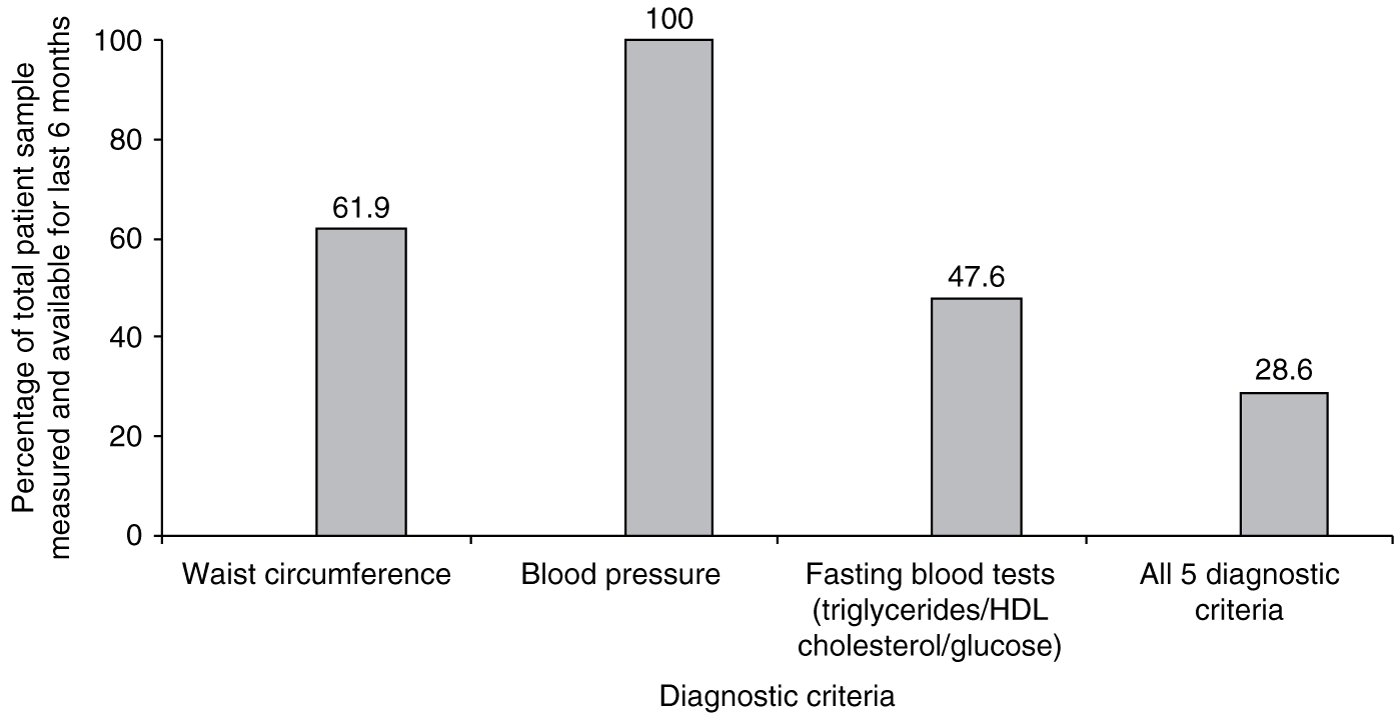
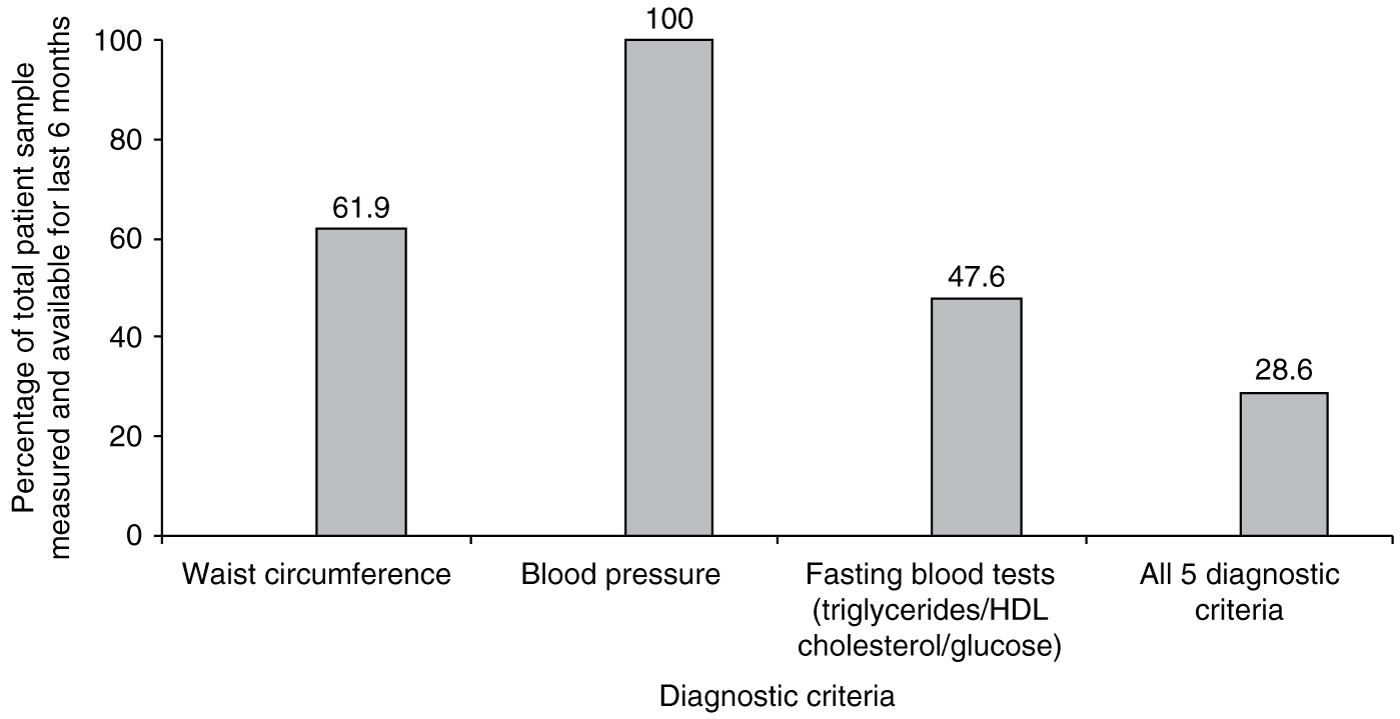
Figure 1 shows the percentage of measured and available diagnostic criteria in the last 6 months. Waist circumference measurement was documented in 62% of the patients. Blood pressure measurement was documented in all cases. Generally the fasting blood tests of triglycerides, HDL cholesterol and glucose were not done frequently, with only just under half the patients done in the last 6 months. Only 29% had all 5 diagnostic criteria measured and available. Of the total sample, 19% were found to meet the diagnostic criteria for metabolic syndrome as far as the information was available.
Percentage of measured and available diagnostic criteria in the last 6 months
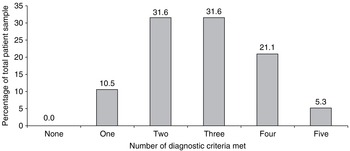
The missing information was then obtained. Figure 2 shows that 58% of patients met the criteria for metabolic syndrome, when all the information was available. 32% were one criterion short of a diagnosis of metabolic syndrome, however did meet the core diagnostic criterion of central obesity. 11% met one diagnostic criterion, but not the core central obesity diagnostic criterion in each case.
Percentage of metabolic syndrome diagnostic criteria met

Regarding the patients’ smoking history, pack year is a way to measure the amount a person has smoked over a long period of time and one pack year is defined as 20 cigarettes smoked everyday for a year. It can be calculated as follows (assuming 20 cigarettes in a pack): Number of pack years = (packs smoked per day) × (years as a smoker).
72% were smokers, 10% were ex-smokers and 19% had never smoked. The number of pack years smoked varied from 0 to as many as 57.
76% did some kind of regular exercise, 24% did no exercise at all. Various types of exercise were carried out including walking, tai chi, badminton, cycling, swimming, baseball and football. The frequency varied from daily to once a week with the time per exercise session typically being between 20 minutes and an hour. The exercise intensity on the Borg’s Rated Perceived Exertion (RPE) 0–10 Scale ranged from 1 (very light) to 5 (hard/heavy).
DISCUSSION
This audit showed that a high proportion (58%) of patients in the two rehabilitation inpatient units met the diagnostic criteria for metabolic syndrome. A further 32% were one criterion short of a diagnosis of metabolic syndrome. However, due to the lack of appropriate physical monitoring in some cases, only 19% had previously been given the diagnosis of metabolic syndrome. Therefore not all the patients with metabolic syndrome were being appropriately treated or monitored, with subsequent risk of cardiovascular disease and type 2 diabetes.
This study suggests a need for a systematic approach to assessment and management of physical health needs in people with severe mental illness who are receiving antipsychotic treatment. The audit was reasonably straightforward and easy to implement and the potential benefits to service users are substantial. We would recommend this method (which has been accepted for publication as an audit recipe in a forthcoming Royal College of Psychiatrists’ publication) to others working in similar settings or potentially in forensic units or community psychiatric teams.
A number of changes have taken place in the services described over recent years, as we have become more aware of the risks of physical health problems, in those receiving treatment for severe mental illness. We have started a number of groups including gym, walking and badminton, which are popular. Several residents are supported to swim regularly. All service users are encouraged to try to eat healthily and the diet is balanced, with good access to fresh fruit and vegetables. Smokers are encouraged and supported to reduce smoking and to access smoking cessation programmes. Physical health issues are reviewed as part of the Care Programme Approach (CPA) review cycle (Department of Health, 1990), which is three-monthly in general.
The 2009 NICE Guidelines on Schizophrenia advise clinicians to ensure that people with schizophrenia receive a comprehensive multidisciplinary assessment, including a physical health assessment (NICE, 2009). It is advised that all teams providing services for people with schizophrenia should offer social, group and physical activities to people with schizophrenia and arrangements should be recorded in their care plan. Information should be provided and the benefits and side-effects of each drug should be discussed with the patient when starting medication for people with newly diagnosed schizophrenia. The choice of drug should be made taking into consideration also the relative potential of individual antipsychotic drugs to cause metabolic side-effects, including weight gain. The choice of drug for people with an acute exacerbation or recurrence of schizophrenia, or for promoting recovery, should be influenced by these same criteria. An ECG should generally be offered prior to starting antipsychotic medication; when specific cardiovascular risk (such as diagnosis of high blood pressure) has been found on physical examination; when there is a history of cardiovascular disease; or if the patient is being admitted as an inpatient. It is recommended that the physical health is monitored and recorded regularly and systematically throughout antipsychotic medication treatment, especially during titration. GPs and other primary healthcare professionals should monitor the physical health of people with schizophrenia at least once a year. Cardiovascular disease risk assessment as described in ‘Lipid modification' (NICE clinical guideline 67) should be focussed on. However, it should be taken into consideration that people with schizophrenia are at higher risk of cardiovascular disease than the general population. A copy of physical test results should be sent to the care coordinator and/or psychiatrist, and put in the secondary care notes. People with schizophrenia at increased risk of developing cardiovascular disease and/or diabetes (for example, with high blood pressure, raised lipid levels, smokers or increased waist circumference) should be identified at the earliest opportunity and their care should be managed using the appropriate NICE guidance for prevention of these conditions. People with schizophrenia who have diabetes and/or cardiovascular disease should be treated in primary care according to the appropriate NICE guidance. Healthcare professionals in secondary care should ensure that, as part of the CPA, people with schizophrenia receive physical healthcare from primary care as described in the above recommendations.
Hasnain et al. (Reference Hasnain, Vieweg, Fredrickson, Beatty-Brooks, Fernandez and Pandurangi2009) reported that individuals with major mental illness are a high-risk group for cardio-metabolic disturbances due to genetic predisposition, developmental and environmental factors, and lifestyle and that this risk is compounded when they receive antipsychotic medication. Despite guidelines for screening, monitoring, and managing these patients for metabolic problems being in place for several years, they noted that recent reports document that this population continues to receive poor physical health care. Hu et al. (Reference Hu, Lakka, Lakka and Tuomilehto2006) found that being overweight or weight gain is an important risk factor for the development of type 2 diabetes and the metabolic syndrome. Clinical trials have shown that lifestyle changes, such as dietary adjustment and increase in physical exercise, can prevent type 2 diabetes. Prospective studies have shown that at least 30 minutes a day of moderate to vigorous physical exercise can prevent type 2 diabetes and that a healthy diet can effectively and safely prevent type 2 diabetes and the metabolic syndrome. They advise that public health messages, healthcare professionals and the healthcare system should aggressively promote physical activity and responsible nutritional habits in order to prevent overweight and obesity.
The following are suggestions for improvement, following an audit of this kind: circulate findings and highlight the importance of physical monitoring; encourage healthy lifestyle, smoking cessation and diet; refer all patients with metabolic syndrome to the GP for treatment; optimize current psychiatric treatment, to consider issues relating to mental health. We recommend the following physical health monitoring protocol: monitor waist circumference, fasting lipids and glucose four times a year if patient has ≥ 3 criteria; or twice yearly if patient has 0–2 criteria. Monitor blood pressure monthly for all patients.
Re-audit is a good means to ensure that the lessons are learned within the organisation and that the culture develops in favour of greater awareness of physical health concerns. This process aims to improve the service, to prevent metabolic syndrome if possible or to identify it as soon as possible and to minimise the risk of developing cardiovascular disease or type 2 diabetes.
Acknowledgements
William Evans is gratefully acknowledged for his help during the preparation of this manuscript.