Are humans unique? This is a frequently asked question (just Google it, you’ll see). But it’s not really the right question because it doesn’t have a clear answer. Yes, humans are unique, but so is every other species on the planet. Or, no, humans are no unique because no species is truly unique. Humans have a lot of odd characteristics, so to do other species. Humans have big brains, elephants have trunks, and indigo buntings do stellar navigation. But every species is linked to every other one in the tree of life.
A much better question is: Are we outliers in the natural world? Outliers are data points that are way outside the pattern of variation in the rest of a data set. They are important because they sometimes indicate that something different is going on. This suggests that thinking carefully about whether humans are outliers might tell us a lot about human evolution.
So are we outliers? The problem is how should we measure? People are prone to self-congratulation, and often pick criteria like tool use and language that guarantee in advance that we are different from other creatures. The problem is to choose criteria that really tell us something about how humans evolved. I think the answer is to use the zoological criteria that are used to compare other species—things like species range, biomass, and energy processing, and on these criteria, humans are clear outliers. We have the largest geographical and ecological ranges of any terrestrial vertebrate. Most terrestrial vertebrates occupy part of a continent and are limited to a modest range of habitats. Big predators have the largest ranges—gray wolves are the likely runners up to humans occupying most of Eurasia and North America outside of the tropics. Even before agriculture, human groups, that made a living by hunting and gathering plant foods, lived in every kind of environment from the rain forests of Africa to the deserts of Central Asia to the edge of the Arctic Ocean. Other standard zoological criteria tell the same story. Among vertebrates human biomass is only exceeded by that of our domesticates, and is many times the biomass of all wild terrestrial vertebrate species combined. Humans are also more variable in our way of life than other species. For example, we live in a wide range of social systems compared to other mammals.
There is no doubt that every one of us is descended from another unique, but otherwise unremarkable primate that lived in Africa several million years ago. There is also no doubt that the genetic changes that distinguish us from that ancestor are the result of ordinary Darwinian processes, most importantly natural selection. So what is it that allows humans to adapt to such a wide range of environments with such great success?
Superior cognition alone is not the answer
The standard answer to this question is: We are successful because we are so smart. Most treatments of human evolution take this account for granted. More complex tools, more sophisticated foraging, symbolic behavior all are taken as indicators of increases in cognitive abilities (e.g., Klein, Reference Klein2009).
Being brainy may well be part of the recipe for human success. But it is not enough. Two other ingredients are essential. The first is culture. Unlike other animals people adapt culturally, not as individuals, but as populations. The second is cooperation. People are much more cooperative than other vertebrates. Culture and cooperation played crucial roles in our expansion across the globe.
Cultural adaptation
Most people studying human evolution aren’t very clear about exactly how intelligence translates into behavior and what intelligence really means in evolutionary terms. The simplest idea would be that we adapt to our environments like other species, just better. To a first approximation, in other species each individual learns what it needs to learn on its own, not from others. True, lots of vertebrate species have traditions maintained by social learning mechanisms. However in every case, the traditions involve behaviors that individuals can and do acquire on their own. Social information is helpful, but not essential. There is no doubt that individual learning can produce highly adaptive behavior including the production of artifacts. Hand-raised woodpecker finches use tools to extract grubs from under bark—exposure to competent adults is completely unnecessary. Maybe people are just an extreme outlier of a similar process.
However, people do not adapt in the same way as other animals. The package of tools, foraging techniques, ecological knowledge, and social arrangements used by even the simplest foraging groups is far, far too complex for any individual to create on his or her own. People are able to learn all of the things they need to know in the vast range of environments in which they live because they acquire information from others. We are much better at learning from others than other species, and equally important, we are motivated to learn from others even when we do not understand why our teachers are doing what they are doing. This psychology allows human populations to accumulate pools of adaptive information that far exceed the inventive capacities of individuals.
This claim is supported by what I call the “lost European explorer experiment.” This natural experiment has been repeated many times during the past several centuries with similar results. A small group of European explorers get stranded in an unfamiliar habitat in which an indigenous population is flourishing. Despite desperate efforts, and ample learning time, the lost explorers cannot figure out how to feed themselves. They often die, and if they do survive, it’s frequently due to the hospitality of the indigenous population.
The Burke-Wills expedition provides a good example (Cathcart, Reference Cathcart2014). In 1860, the worthies of the city of Melbourne organized an expedition to explore Australia’s interior. They recruited Robert Burke, a dashing former military man, as the leader and 18 others including William Wills, a scientist and cartographer. On August 20, the expedition set off with 26 camels, 23 horses, enough food for two years, and much Victorian impedimenta. The lead elements of the party, including both Burke and Wills, reached Cooper’s Creek, a long string of ephemeral ponds about a third of the away across Australia, by November 11 and waited there for the rest of the party. By mid-December they still hadn’t arrived and Burke, Wills and two others set off hoping to reach the Gulf of Carpentaria. Burke ordered the remainder of the party to wait for them until March 15. Unfortunately Burke and his companions didn’t return to Cooper’s Creek until mid-April where they found the camp abandoned. They were exhausted and low on provisions, and knew that they had no chance of getting back to Melbourne. After a couple of weeks, they encountered a group of Yandruwandha, a local tribe, and accepted an invitation to their camp where they were provided with fish and cakes made from the seeds (technically sporocarps) of an aquatic fern called nardoo. The three white men really liked the cakes, and decided that if they were to survive they must learn how to make nardoo flour. However, they had no idea what plant the seeds came from, and by then Yandruwandha were nowhere to be found. After two weeks of desperate searching, Wills discovered the source of the nardoo seeds and the three men began to collect and grind the seeds to make nardoo flour in quantity. However, despite having plenty of nardoo to eat, they gradually weakened and by early July both Burke and Wills were dead. King was found by a Yandruwandha band and they fed and cared for him for several months until a relief party arrived in September.
So why did Burke and Wills starve in what for the Yandruwandha was a land of plenty? The white men would probably never have discovered nardoo on their own, but after seeing the Yandruwandha process the nardoo seeds into flour they were able to do the same. What they did not know is that nardoo contains an enzyme that degrades vitamin B1 in the intestine, and even though they were getting plenty of calories, they were dying of B1 deficiency disease. The Yandruwandha processed the nardoo by rinsing it in large amounts of water. Many plants contain toxins of this kind, and people living on plant-rich diets have detoxification methods to deal with them. Burke and Wills were as smart as you and me, but learning that nardoo is toxic and how to detoxify it is a hard problem, and without access to this culturally transmitted knowledge, nardoo was worse than useless—it was poison.
Unlike other vertebrates, people in every human group depend on a diverse set of foraging skills. The large predators, the other type of creature with large ranges, hunt a small number of species using one of two methods: they wait in ambush, or combine stealthy approach and fast pursuit. Once the prey is captured, it is processed with tooth and claw. In contrast, human hunters use a vast number of methods to capture and process a huge range of prey species. For example, the Aché, a group of foragers who live in Paraguay take 78 different species of mammals, 21 species of reptiles, 14 species of fish, and over 150 species of birds using a large number of techniques depending on the prey, the season, the weather, and many other factors. Some animals are tracked, a difficult skill that entails a great deal of ecological and environmental knowledge. Others are called by imitating the prey’s mating or distress calls. Still others are trapped with snares or smoked out of burrows. Animals are captured and killed by hand, shot with arrows, clubbed, or speared (Kaplan, Hill, Lancaster, & Hurtado, Reference Kaplan, Hill, Lancaster and Hurtado2000).
For the Yandruwandha the land around Cooper’s Creek was a land of plenty because they had a rich trove of culturally transmitted knowledge about how to make a living there. A Yandruwandha “Natural History Handbook” would run to hundreds of pages with sections on the habits of game, efficient hunting techniques, how to find water, how to process toxic yams and cycads, and so on. Australian aborigines are famous among archaeologists for the simplicity of their technology. Nonetheless, an “Instruction Manual for Technology” would have to cover the manufacture and proper use of nets, baskets, houses, boomerangs, fire drills, spears and spear throwers, shields, bark boats, ground stone tools, and much more. Plus, as we’ll see later, cooperation plays a crucial role in human subsistence. To become a competent Yandruwandha you’d also need to master the “Social Policies and Procedures”, “Grammar and Dictionary”, and “Beliefs, Stories, and Songs”, volumes of comparable length.
But why is culturally evolved knowledge any good?
So, humans do not adapt in the same way as other animals. Instead of re-inventing everything for themselves they can access a pool of adaptive cultural knowledge. But, how exactly does this work? Why is the knowledge stored in the cultural pool adaptive?
There has been surprisingly little explicit analysis of this problem. But I think the common understanding goes like this: Innovation is hard. It not easy to learn that nardoo is poisonous, and maybe even harder to figure out how to detoxify it. Determining whether behaviors are beneficial is relatively easy. So, once an innovation occurs, people in a population understand why it is beneficial, and it spreads.
In this view, culture is like a library. Libraries preserve knowledge created in the past. Librarians shape the contents of libraries, but the quality of the books depends on the cognitive abilities of the authors. Like libraries, culture preserves innovations, but the nature of the innovations depends on the minds of innovators. Without superior human cognitive abilities, there wouldn’t be any complex adaptations to preserve. This is how many evolutionary psychologists think about culture. In a classic paper, Tooby and DeVore (Reference Tooby, DeVore and Kinzey1987) argue that humans have shifted into the “cognitive niche”—a way of life predicated on solving problems that other animals cannot solve (see Barrett, Cosmides, & Tooby, Reference Barrett, Cosmides, Tooby, Gangestad and Simpson2007; Pinker, Reference Pinker2010 for updates of this argument). We can invent new tools and foraging techniques needed in novel environments because we are better at causal reasoning and other forms of mental simulation than any other animal. The fact that we can learn from others means that everybody doesn’t have to invent everything for themselves, and thus the cost of innovation can be spread over many individuals.
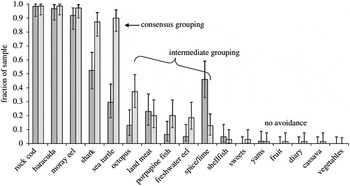
So, is this picture of cultural adaptation correct? For example, did the Yandruwandha understand why they processed nardoo? We will never know because the Yandruwandha and their way of life disappeared only a decade or so after Burke and Wills died. However, we do know something about food processing techniques in a number of contemporary populations. Fijian food taboos provide a well-studied example. People there live in mainly a subsistence economy and depend heavily on marine resources like fish, turtle and invertebrates. Many of the marine species in the Fijian diet contain toxins. Henrich and Henrich (Reference Henrich and Henrich2010) studied one of these toxins called ciguatera, a fat-soluble toxin that reaches highest concentration in animals at the top of the food chain, predators like barracuda, shark, and moray eels, and in long lived organisms like turtles. Ciguatera poisoning has severe, long-lasting symptoms including joint pain, reversal of hot and cold sensation, diarrhea, vomiting, and is especially harmful to fetuses and nursing infants. Interviews reveal that that most people at the Henrichs’ field site, a small rural village, believe that pregnant and lactating women should avoid eating exactly those species that create the greatest risk of ciguatera poisoning (Figure 1).
The fraction of a sample of Fijian women who said that pregnant (light bars) or lactating (dark bars) should not eat each of the species listed. Women were presented with a list of foods and asked to answer whether the food was suitable for pregnant or lactating women. A free list sample produced similar results (Henrich & Henrich, Reference Henrich and Henrich2010).

Several kinds of evidence indicate that these beliefs are a culturally transmitted adaptation that reduces the risk of ciguatera poisoning in the most vulnerable segment of the population. People in the villages know that eating fish can make you sick, but they do not believe that eating turtles or moray eels can give rise to the same sickness, and so the beliefs about these species are not the result of more general beliefs about fish poisoning and are specific to pregnancy and lactation. The taboos are important because these species form an important part of the diet. They are fattier than other fish and marine invertebrates and are also highly valued for their flavor. They are also specific to those species that carry high risk of ciguatera toxicity. Other species like parrot fish and unicorn fish are consumed much more often, but are not tabooed. Most people learn these taboos from others. Henrich and colleagues asked a sample of Fijians how they acquired their taboos. Personal experience played only a small role. Almost everybody acquired their beliefs from family members or from yalewa vuku (“wise women”), women explicitly recognized as being experts in traditional medicine, child birth, and parenting.
But why did the Fijians believe what their parents, relatives and the wise women told them? On the “culture-is-a-library” view, the answer should go something like this: the person they learned from provided evidence that women shouldn’t eat moray eels, turtles and the like, and they then act on those beliefs. This evidence needs to be sufficiently compelling that a woman who normally savors the rich taste of turtle will nonetheless stick to boiled cassava when she is pregnant because she is concerned about the effects on her unborn child. These beliefs would be maintained because the world gives evidence that they are true. Somebody in the village notices that a woman who gorged on turtle before she knew she was pregnant subsequently gave birth to a child with developmental problems.
But this account does not fit the facts. Henrich and his team interviewed many women about what they believed would happen when a pregnant or lactating woman consumed one of the tabooed species. There was little consensus about the answer to this question. Many women said they did not know, and others said nothing would happen. Some thought there would be negative health consequences for the baby, but there was little agreement about what these consequences might be—“rough skin” or “smelly joints” are among the answers that women provided, a pattern consistent with the hypothesis that people first learn the taboo socially, and then when asked to provide a reason, infer that there must be some kind of negative consequences. So, it doesn’t seem that people have good reasons to believe the food taboos.
Fijians seem to eat what they eat, in part, just because this is what other people do. Or more formally, people seem to be intrinsically motivated to adopt the beliefs of others. Can such a psychology ever be favored by natural selection?
The evolution of imitation
Quite a bit of modeling work indicates that the answer to this question is, yes, selection can favor a psychology that causes most people to adopt beliefs just because others hold those beliefs (Boyd & Richerson, Reference Boyd, Richerson, Zentall and Galef1987, Reference Boyd and Richerson1995, Reference Boyd and Richerson1996; Perreault, Moya, & Boyd, Reference Perreault, Moya and Boyd2012). Here’s the basic idea behind these models. Suppose that the quality of cues available vary. Is it sensible for pregnant women to eat large fish? Some people get high quality cues, evidence that allows them to reliably infer the correct answer (no in Fiji, but yes in temperate environments), but other people get less reliable cues. Then a strategy that used environmental cues when they were reliable, but imitated others when they are not could be favored by selection because the occasional use of reliable cues spread by blind copying would cause the most commonly observed behavior to be the best behavior.
This verbal argument is supported by a number of mathematical models. Here is a particularly simple one. Consider a very large population of people that lives in an environment that has only two states. You can think of these as “large fish OK” and “large fish toxic” but I’m going just label them state 1 and state 2. The environment switches states randomly in time—sometimes large fish are OK and sometimes they are toxic. On average, the environment stays in a single state for T generations, and then switches to the alternative state. There are two possible behaviors, behavior 1 and behavior 2. Behavior 1 results in higher fitness in when the environment is in state 1 than behavior 2, and behavior 2 results in higher fitness than behavior 1 in when the environment is in state 2. The adaptive problem for the actor is to determine which environment it is living in now so it can choose the best behavior.
Individuals have two sources of information about the state of their environment. The first is an environmental cue that gives them information about the environment. Assume that each individual gets an independent signal from the environment. On average signals have positive values in when the environment is in state 1 and negative values when it is in state 2. So, positive signal values support the inference that the environment is in state 1, and negative values support the inference that the environment is in state 2. However, the signals are noisy, so that sometimes individuals living in state 2 receive a positive signal. If individuals depend on that signal, they will make the wrong inference and adopt the inferior behavior.
The second source of information comes from the behavior of a sample of n other individuals in the population, who act as “models”. Suppose that an individual believes that the probability that an individuals in the previous generation has made the correct inference is p. Further suppose that this individual gets an environmental cue value, x, and observes j individuals in its sample of n models performing behavior 1.
So, these individuals must decide how to behave without knowing for sure which behavior is best. They know the payoffs and the probability that they are in each environment. They have to bet. Bayesian decision theory tells us how to choose the payoff maximizing bet. Applying this theory says expected fitness is maximized by choosing behavior 1 if
 $$j - {n \over 2} > - gx$$
Where g is a parameter that governs the relative importance of the two sources of information. If the left hand side of this inequality is positive, then behavior 1 is in the majority, a social cue that it is the best behavior. If the value of x is also positive, indicating the environment is in state 1, both sources of information point in the same direction, and the rule says choose behavior 1. If the left hand side of the inequality and x are both negative, it says choose behavior 2. The interesting cases arise when the two sources of information conflict. For example, suppose that more than half of the models perform behavior 1 indicating that behavior 1 is best, but the environmental cue is negative indicating that behavior 2 is best. Now the decision depends on the parameter g which governs the relative importance of the two sources of information. For example, if g = 0, then the environmental cue is ignored and the individual copies the majority of its models. If g is a large positive number, then only environmental information matters, and the individual ignores the behavior of others. In this simple model, the value of g is a representation of the learning psychology of the individual. To determine whether natural selection can lead to the evolution of “blind imitation” we need to let g evolve.
To do this we need to model the co-evolution of genes that affect learning psychology and the cultural transmission of behaviors that provide an input to this psychology. Suppose that the value of g is a haploid genetic trait. Each individual inherits a value of g from its single parent, perhaps slightly changed by mutation, acquires an environmental cue, observes the behavior of n models, and then chooses a behavior according the rule given above. This choice determines its behavior and therefore its fitness, and selection adjusts the distribution of g in the population. At the same time the distribution of g determines the fraction of individuals with each behavior which shapes the choices made by individuals in the next generation. We iterate this system until it reaches a stationary state. We are interested in the mean value of g at the stationary state because that tells us how individuals in the population balance social and environmental cues in the long run.
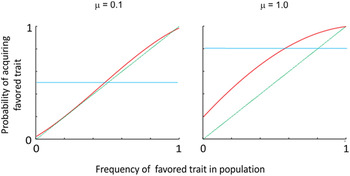
Figure 2 shows the results of the model for two different sets of parameters. The raw values of g are tricky to interpret, so I have plotted the probability of acquiring the best behavior in the current environment in relation to the frequency of that behavior when g is reached a stationary state. When it easy to learn the best behavior, social information plays only a minor role in making a decision about which behavior to adopt. However, when learning is hard, most organisms copy the majority behavior among their set of models.
The probability of acquiring the favored trait at evolutionary steady state when the environmental cue is low quality (right) and high quality (left) as a function of the frequency of the favored trait in the population. The horizontal blue line gives the probability of acquiring the best behavior using the environmental cue alone—that is only using individual learning. In the left panel individuals have a 55% chance of choosing the best behavior while in the right panel they have an 80% chance. The green 45 line gives the probability of acquiring the best behavior blindly imitating a member of the previous generation. The red line gives the probability when using the optimal rule at evolutionary steady state. When individual learning is accurate, social learning plays a relatively minor role, but when it is inaccurate most individuals adopt the behavior they see in a majority of 3 models. In both cases T = 100. Redrawn from Perreault et al. (Reference Perreault, Moya and Boyd2012).

Every individual has a learning psychology that identifies the best behavior in the local environment. When individual learning is hard, this cue tells a little more than half of the people to do the right thing, and a little less than half of the people to do the wrong thing. Almost all of them ignore this inference—in effect, they ignore reason—and instead just copy what the individuals they see are doing. Put another way, the individuals in this model are intrinsically motivated to do what others are doing. Of course, they are also motivated to follow the dictates of their experience, but this must be very strong to overcome the motivation to imitate.
A population using this decision rule has higher average fitness that a population that depends completely on individual learning, especially when individual learning is difficult. The problem with individual learning is that it is error prone. Social learning allows learners to be selective—to rely on the individual learning when it is likely to produce the right answer, and otherwise imitate. The more that people imitate, the higher the average quality of information created by individual learning. The problem with social learning is that environments change, and so individuals may copy the behavior of somebody who is not adapted to the current environment. This means that as individuals imitate more, the population tracks environmental changes less accurately. So, imitation produces the biggest fitness boost when learning is very difficult and environments don’t change very quickly.
It seems to me that solving this kind of problem is exactly what has made people so successful. Figuring out that nardoo is toxic is hard, and figuring out how to process it is also hard. The probability that any individual will be able to do this is small. The same goes for making twine, weaving nets, making boomerangs, fire sticks, and all of the complex lore that made Cooper’s Creek a land of plenty for the Yandruwandha. People depend on hard to learn knowledge. However, the utility of this knowledge changes slowly as people move and the climate changes.
Complex artifacts without causal understanding
Many people find it hard to believe that our technical accomplishments can arise from such a dumb and simplistic process. Don’t people have to adjust their recipes in response to contingencies? Think about a tool like a bow. The evolved recipe for constructing a bow might specify yew as the wood to use. But every piece of wood is different. Size and density vary; there may be knots, and so on. To make a real bow, the bow maker has to be able to adjust to these differences. Doesn’t this require a causal understanding of bow making?
This is a common intuition, but I think that it is wrong. Many animals make complex artifacts without any causal understanding. Bird’s nests, spider webs, termite mounds, beaver dams are just a few of the familiar constructions made by non-human animals (Hansell, Reference Hansell2005). Many of these are highly designed, and require elaborate construction techniques. The construction of nests by African weaver birds (Collias & Collias, Reference Collias and Collias1964) does not depend on causal understanding. Rather, it results from a genetically transmitted algorithm that links simple, stereotyped behaviors into a sequence that generates a nest. Even more telling, invertebrates such as termites, funnel wasps, and spiders make complex, highly functional artifacts without any representation of their final form (Gould & Gould, Reference Gould and Gould2007; Hansell, Reference Hansell2005).
The same argument applies to the things that humans make. Complex artifacts like houses and bows rely on causal principles that are very difficult to understand. They have many dimensions that interact in complicated ways to produce the desired goals. So, copying what others do, even if you don’t understand why they are doing it, may often be a good strategy. Of course, there is some danger of having a bad outcome if environmental conditions change and causal principles are violated. However, it may be a fairly good strategy under a fairly wide range of conditions.
Cooperation
Specialization and exchange play a vital role in modern human society. Virtually every aspect of your life—your clothes, shelter, food, and transportation—depends on a complex worldwide web of specialization and exchange. As societies become smaller, the opportunity for specialization and exchange is reduced. Nonetheless, exchange plays a crucial role in even the simplest foraging societies. In virtually every foraging group that has been carefully studied, food is shared widely in the band. In a landmark study of two South American foraging groups, Kaplan and their collaborators measured the contributions to subsistence made by men and women of different ages (Kaplan et al., Reference Kaplan, Hill, Lancaster and Hurtado2000). Young men and older men consume more than they produce, while middle-aged men produce large surpluses. Young women also consume more than they produce while middle-aged and older women about break even. Thus, the foraging economy of these groups is rooted in specialization and exchange.
Specialization and exchange are fundamentally cooperative. Specialization allows increases in the efficiency in the production of good and services and exchange allows these benefits to be shared. However exchange also creates opportunities for free riding. Except for the simplest exchanges, there is a time lag. You produce something now, and I compensate you later. In many exchanges there are information asymmetries, the seller often knows more about the product than the buyer. As a result, exchange requires cooperation.
Public goods are another crucial form of cooperation. Things like roads, public education, public order, and collective defense create very large benefits that are shared by all members of a modern society independent of how much they contributed to the costs of producing these goods. As we all know, this motivates people to free-ride, to take the benefits without contributing. For some goods like roads, education, and collective defense, modern states have institutions, such as taxes backed by criminal penalties, designed to motivate people to contribute, but for others like public radio people contribute voluntarily. The existence of all modern societies depends completely on the production of public goods.
Public goods also play an important role in small-scale hunter-gatherer societies. People in many foraging societies undertake activities aimed at increasing the productivity the local habitat. A simple and very widespread example is the use of fire to create more productive plant communities, a public good. The individuals who manage the burning experience costs, and everybody benefits. Foragers make many other more costly investments in habitat improvement (Smith, Reference Smith2011). Perhaps the most spectacular example comes from the Owens Valley Paiute in California who built canals, some more than 6km long, whose construction required the cooperative effort of virtually the entire local population.
Foragers also invested in large scale constructions to aid in the capture of game and fish. Drive lines, fence-like constructions that concentrate animals like caribou and pronghorn so that they can be killed more easily, were widely used in western North America (Wilke, Reference Wilke2013). For example, the Whiskey Flat pronghorn trap in Nevada (Wilke, Reference Wilke2013) includes a 2.3 km long fence built from about 5000 juniper posts. The labor necessary to fell these trees, dig post holes, collect and place bracing stones must have been immense. Coastal and riverine foragers all over the world constructed weirs to harvest fish. These varied in size from small fish traps to large constructions that spanned substantial rivers. For example, the Yurok build a weir across the Klamath River in Northern California (Swezey & Heizer, Reference Swezey and Heizer1977) that required the coordinated effort of more than 150 men.
There is disagreement about whether intergroup conflict creates important public goods in foraging societies. The key problem is that size matters. There is no doubt that hunter-gatherers engage in intergroup conflict, and that the resulting mortality rates are high (Gat, Reference Gat2015). However, some authors think that forager conflict is limited to ambushes and raids in which war parties are small, and conflict is avoided unless one side has substantial numerical superiority (e.g., Fry, Reference Fry2006). I believe that historical accounts strongly suggest that under the right circumstances foragers did engage in large scale conflict in which individual costs were substantial. The best data comes from Australia, a continent of foragers until the arrival of Europeans at the beginning of the 19th century. A review of scholarly accounts of Aboriginal life (Gat, Reference Gat2015) indicates that war was common, war parties were sometimes large, and death rates were substantial throughout Aboriginal Australia. Historical accounts of peoples in Western North America tell a similar story. Linguistic evidence suggests that Numic speakers had spread across the Great Basin during the last millennium, and at contact groups on the periphery engaged in large scale infantry combat with their Great Plains neighbors (Sutton, Reference Sutton, Allen and Jones2014). Later one of these groups, the Comanche, acquired horses and mounted large scale cavalry raids on their neighbors both Indian and white (Hamalainen, Reference Hämäläinen2008; Smith, Reference Smith1938). In the western Arctic people belonging to different Inupiaq ethnolinguistic groups conducted regular large scale warfare against members of other groups (Darwent & Darwent, Reference Darwent, Darwent, Allen and Jones2014).
The puzzle of human cooperation
We have seen that humans are highly cooperative. Every human society depends on division of labor and delayed exchange and the production of public goods. This includes nomadic foraging societies that are likely similar to the societies of modern humans over the last few hundred thousand years. Many other animal species also have specialization and exchange and produce public goods. These include a few vertebrates like naked mole rats and banded mongoose, and many other species including social insects like ants, bees, termites, and social spiders and many microorganisms.
Non-human cooperation differs from human cooperation because it occurs among relatives, often quite close relatives. Natural selection can be thought of as maximizing “inclusive fitness” which weights the effect of a marginal change in a focal individual’s phenotype on a second individual by the degree of relatedness between the focal and the second individual. So selection acts as if actors place a positive value on the fitness of others. The societies of most of the highly cooperative species are composed of close kin and so the evolution of cooperation is easy to understand. There are species of social insects in which relatedness is low, but there is good evidence that when extensive cooperation originally evolved in these lineages, social groups were composed of closely related individuals (Boomsma et al., Reference Boomsma, Beekman, Cornwallis, Griffin, Holman, Hughes and Ratnieks2011). So, the bottom line is that specialization and production of public goods is widespread in nature and it evolved because interacting individuals were closely related.
Humans are a big exception to this rule because they cooperate with large numbers of unrelated people. This is obviously true in modern societies. Think of the vast number of people across the globe who cooperate to provide you with food, clothing and tools—all unrelated to you. The same goes for public good production. The half a million Russians who perished at the Battle of Stalingrad were unrelated. Contemporary human societies are testimony to the human ability to cooperate with very large numbers of unrelated people. The same goes for human hunter-gatherers. People often picture hunter-gatherers cooperating in small bands mainly made up of closely related individuals. However, two recent papers by Hill and colleagues make it clear that this picture is wrong for ethnographically well-studied foragers. First, band members are not particularly closely related. Hill et al. (Reference Hill, Walker, Božičević, Eder, Headland, Hewlett and Wood2011) found that the average relatedness within 60 Aché bands was 0.054 which means benefits have to be about 20 times cost for altruistic behaviors to be favored by natural selection. Second, mutually beneficially social interactions are not limited to band members, but extend to virtually all members of the ethnolinguistic group typically numbering between 500 and 2000 people. We have already seen that hunter-gatherers can mobilize people from many different bands to construct drive lines, fish weirs, and irrigation works, and they can muster war parties of hundreds of fighters. Detailed quantitative data on inter-band cooperation among two contemporary foraging groups the Aché and the Hadza support this claim (Hill, Wood, Baggio, Hurtado, & Boyd, Reference Hill, Wood, Baggio, Hurtado and Boyd2014).
So here’s the puzzle: Three or four million years ago our ancestors lived in ape-like societies. Males were much bigger than females and there was probably little specialization or exchange. Groups were small, relations between members of different groups were hostile, and there was no production of public goods. By the time that modern human behavior emerged, probably between 100,000 and 200,000 years ago, people were committed to cooperative exchange and the production of public goods within ethnolinguistic groups of roughly 1000 people, and today people cooperate in gigantic numbers. The changes in human psychology that make this possible must have been created by natural selection.
Size matters
A few years ago I shared the stage at a public panel discussion with a young evolutionary psychologist. I spent my allotted minutes describing how people cooperate with unrelated people, posing it as an evolutionary puzzle. When his turn came, this fellow said something like, “There are two explanations for the evolution of cooperation: kin selection and reciprocal altruism. So, reciprocal altruism must explain human cooperation.” While they rarely put it so baldly, this view is shared by most evolutionary psychologists, human behavioral ecologists, and their fellow travelers.
The evolutionary theory of reciprocal altruism began with a paper by Trivers (Reference Trivers1971). The basic idea is simple. I help you in the expectation that you help me in the future. If, when the time comes, you don’t help me, then I stop helping you. As long as the benefits of a long term partnership exceed the short term gain associated with cheating, selection can favor cooperative behavior. This can only work if individuals interact repeatedly, can recognize their partners, and remember their previous interactions. Clearly reciprocal altruism is not in the least bit altruistic—if cooperators are successful, it is because they get paid back in the long run. So, a much better label is reciprocity, and that is the term I will use here.
Reciprocity is not a very plausible explanation for the provision of public goods. To see why, suppose that you are a forager who lives in the Australian desert and shares several water holes with several hundred other people. Every once in a while people from neighboring groups attempt to seize one of the water holes you use (this really happened in Australia). To prevent this from happening, men in your group have to join together and drive off the invaders. Sometime the invaders resist, and this can lead to lethal combat. Everybody is afraid, but having the waterhole is worth the risk if everybody fights. Now suppose that one guy in your group runs away when the fighting starts, but the rest of you manage to drive off the invaders. The coward reduced his chance of getting killed, but still gets to use the water hole. Defense is a public good. So unless something is done, cowards will prosper.
One possibility is reciprocity. Suppose people in the group are reciprocators who use the rule, I’ll fight as long as everybody else fights. A single coward causes everyone to avoid fighting too. When the coward runs, he is worse off because nobody defends the water hole. In theory, this can allow cooperation to be evolutionarily stable. In reality, two big problems arise. The first problem occurs if there is any uncertainty or error about who is cooperating. A brave man might mistakenly think that a signal to retreat was given and turn back in error, or somebody might mistakenly think that a courageous man ran away, when he was actually hidden from their view. If groups are of any size, this will happen often. These kinds of errors will produce waves of defection. A second, even bigger problem is that strategies of this kind can never increase when rare. If the world is mainly composed of defectors, then cooperation cannot get started unless groups are very small because there is essentially no chance that any group will have enough cooperators to sustain cooperation even if groups are composed of close relatives (Boyd, Schonmann, & Vicente, Reference Boyd, Schonmann and Vicente2014).
What about direct sanctions? Suppose that instead of refusing to cooperate, people impose sanctions on the coward directly. Such sanctions could take many forms. You and the other cooperators could physically punish the coward. Australian aborigines threw spears at the legs of the offending individuals (Hart & Pilling, Reference Hart and Pilling1960). You could ostracize the offender denying him access to water holes and other benefits of living in the group’s territory, a form of punishment used by the Hadza (Marlowe, Reference Marlowe2009). Finally, the offender can be denied the privileges that are sustained by various forms of reciprocity. The next time he is ill or injured nobody feeds him; when he comes home empty-handed from a hunt no one gives him meat.
There are several reasons that direct sanctions are more effective than reciprocity in public goods settings. First, they can be targeted at defectors. Errors or uncertainty do not set off a cascade of defection, and this means that cooperation can be stable in a noisy world. Second, a minority of punishers can guarantee that cooperation pays. If the cost of being sanctioned is larger than the cost of cooperating, even a single sanctioner can motivate others to cooperate. This means that even when sanctioners are fairly rare in the population, they may be able to motivate others to cooperate, and, sanctioning can increase when rare (Boyd et al., Reference Boyd, Schonmann and Vicente2014; Schonmann & Boyd, in press). Third, sanctions act as a deterrent. If the threat of sanctions motivates people to follow the rules, then sanctions will be imposed only when people defect in error, and this means that it may not cost much to prevent defections. Finally, with reciprocity the maximum cost to the individual being sanctioned by a single actor is limited to the loss of benefit associated with the withdrawal of cooperation by that actor. The magnitude of direct sanctions can be much damage as a sanctioner can afford to administer.
This argument fits with what we all know about cooperation in everyday life. Cooperation on small scales is regulated by reciprocity. If I invite you to my house for dinner, and you don’t reciprocate you won’t be invited again. If you belong to a small committee, and some other members stop contributing, you may do the same. Cooperation on large scales is regulated by direct sanctions, not reciprocity. If a thousand union members go on strike, free riding is not deterred by the threat that others will free ride in response. More direct sanctions are necessary. The same goes with many public goods whose provision is guaranteed by coercive institutions like police and courts.
A number of authors have doubted that direct sanctions, especially costly ones, play much role in cooperation in societies without coercive institutions like police and courts (e.g., Guala, Reference Guala2012; Marlowe, Reference Marlowe2009). So, let’s consider the evidence from one well-studied case, Turkana warfare.
Why Turkana men fight
We cannot study how hunter-gatherer societies solve the collective action problem inherent in warfare because contemporary foraging groups are surrounded by powerful food producing neighbors and none engages large scale conflict. However, there are contemporary groups like the Turkana of northern Kenya that do engage in warfare, and that are similar enough to foragers that they give us some picture of how it might have worked.
The Turkana are nomadic subsistence pastoralists who live in the arid savanna of East Africa. The live in temporary camps with many unrelated individuals and frequently move from one camp to another. There is no centralized authority or coercive institutions. Leadership roles are taken on by men who acquire prominence through their ability as diviners, their status as warriors, or their capacity to make wise migration decisions. While they play a role in coordinating action, these leaders have no recognized coercive authority. Nonetheless, the Turkana mount large scale raids to capture cattle from members of other ethnolinguistic groups.
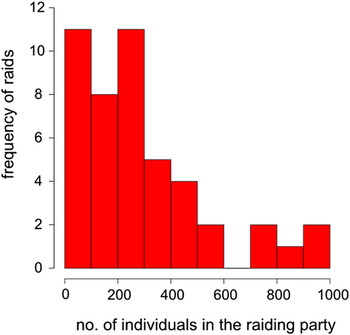
Our knowledge of Turkana warfare comes from a study by Sarah Mathew (Mathew & Boyd, Reference Mathew and Boyd2011, Reference Mathew and Boyd2014). Turkana raids often involve many people. Some raids involve only a few men who aim to find poorly-guarded livestock, but the Turkana also organize force raids that involve larger numbers of men who plan to engage in combat (Figure 3). On average, 315 men participate in the 47 force raids in Mathew’s sample.
A histogram of the size of raiding parties in force raids in the Turkana dataset. Estimated group sizes over 1000 were lumped in the 900–1000 bin. The mean group size is 315 men. Redrawn from Mathew and Boyd (Reference Mathew and Boyd2011).

Warriors experience substantial costs. A warrior who participates in a raid must leave his family and herds behind and runs some risk of being injured or killed. Mathew estimates that warriors have a 1.1% chance of being killed on each force raid. Data from Mathew’s life history interviews indicate that 20% percent of all male deaths are due to warfare, 54% of these deaths occur when men are raiding other groups and 46% occur when men are defending their own property against raids launched by members of neighboring ethnic groups.
These large-scale raids create collective benefits that flow to everyone in the war party and sometimes everybody in the community. In successful raids, the war party acquires livestock which is divided among all of the participants in the raid. Some raids are also motivated by a desire for revenge against groups who have raided them in the past. Such raids produce deterrence, a non-excludable good. For example, one raid was initiated very soon after a settlement was attacked so that the enemy would know it was meant as retaliation. The warriors set out knowing that they were not likely to acquire animals, and they considered the raid a success even though they returned empty handed. Large-scale raids can also increase access to grazing areas and crucial dry-season watering holes. The precipitating event for one of the largest raids in Mathew’s sample was the discovery that herders from another ethnic group had settled at a watering site that is typically used by the Turkana. Mathew’s informants said that their goal was to drive the intruders away from Turkana territory.
You can see that Turkana raids have all of the elements of a public good. They produce collective benefits at a substantial cost to individuals. Raiding parties are large, so individual warrior’s incremental effect on the outcome is small, and therefore the private cost exceeds the private benefit. So, why do Turkana men participate? Why doesn’t the whole system collapse under the weight of free-riders, men who don’t join raiding parties or shirk during battle? And free riding does occur. Men sometimes desert or endanger their companions through battlefield cowardice. On a successful raid, men may sometimes take more than their fair share of the spoils. Nonetheless, year after year the Turkana risk their lives fighting in large groups to produce collective benefits. What is it that allows them to solve this collective action problem?
It’s very unlikely to be relatedness or reciprocity. Raiding parties are composed of men who are not related and nor are they close associates. Rather norms enforced by direction sanctions allow the Turkana to solve the collective action problem in warfare. In 47% of the force raids in desertions occurred, deserters were sanctioned and in 67% of the force raids in which cowardice was reported, cowards were sanctioned. These sanctions are graded, ranging from verbal abuse to fines and corporal punishment. The latter can be severe—the offender is tied to a tree and beaten by his age-mates. Community consensus determines whether and how someone is sanctioned. Local people, especially age-mates, discuss the violator’s behavior. Once a consensus emerges, members of the violator’s age-group are responsible for administering punishment, even if they did not participate in the raid and did not experience the consequences of the violation.
It is very likely that positive incentives like rewarding bravery also play a crucial role in sustaining cooperation, but it is hard to know for sure. Rewards for bravery are not associated with a single act, but instead accumulate over a life-time. Measuring these diffuse benefits is difficult, and distinguishing the effect of behavior during warfare from other factors that affect a person’s value as a social or mating partner was beyond the scope of Mathew’s study. However, we can conclude from the rate of direct punishment that, important as indirect sanctions and rewards may be, they cannot be the full story: if they created sufficient incentives, there would be no need for direct punishment.
Why punish?
In pairwise and small group interactions, there is an easy answer to this question. People punish to create incentives that motivate others to behave in ways that increase the punisher’s fitness. You reject in the ultimatum game even though it is costly because the next time you play, you will get a better offer. In this case, there is a direct causal connection between how much you punish and how it affects your own future payoffs.
There seems to be a big problem with punishment in collective action settings. Punishing is costly to the individual punisher and creates a benefit for everybody who also benefits from the public good. Punishment may effectively motivate contributions to a public good, but creates another version of the same problem: why punish? This is the infamous “second-order free-rider problem,” and has been the subject of much puzzlement. Some authors think it means that punishment is unlikely to occur, while others explain punishment as a side effect of other motives, or the result of psychological machinery that evolved when people lived in small groups.
I think this puzzlement is misplaced. The solution to the second order free rider problem is the same as the solution to the first order free rider problem—norms enforced by third party punishment. In models and laboratory experiments involving punishment, typically the only option is how much to punish. But in real life, punishment is embedded in a culturally transmitted system of moral norms that specifies what constitutes a punishable offense, what are mitigating circumstances, whether the evidence is sufficient, what level of punishment is appropriate, and who is obligated to administer the punishment. If you are responsible for punishing someone and don’t do so, you have violated a norm. If you punish an innocent person, you have violated a norm. If you administer a harsher punishment than is justified, you have violated a norm. And, if you violate a norm, you risk sanctions and this creates and incentive to follow the norm.
We know this is true in complex industrial societies in which punishment for many offenses is a state monopoly administered by coercive institutions. Judges who fail to administer the law because they have personal relationships with the accused or the accused are rich or famous are morally reprehensible, and in societies with robust institutions they often end up in jail themselves. To my knowledge there is no published research indicating the extent of such punishment in small scale societies.
Pick an ESS, any ESS
According to the argument that I have made, the ultimate motivation for norm enforcement is that norm enforcement itself is normative. The psychology that causes people to internalize and enforce norms was favored by selection because people who failed to enforce their society’s norms when they were responsible for doing so suffered disapproval and sanctions. If this is correct, it means that the content of norms is not constrained by the enforcement mechanism. The same psychology can stabilize a vast range of norms. For example, the Turkana go to war in large groups; free-riders are punished by age mates, and people who do not punish appropriately are also sanctioned. It’s easy to see that if the cost of being punished is high enough, the behavior observed among Turkana would be evolutionarily stable. But, and this is a big but, this fact doesn’t explain Turkana behavior. Systems of rewards and punishments can stabilize a vast range of outcomes, including non-cooperative ones, on a wide range of scales. Mutually enforced sanctions could maintain the norm: “You may steal your neighbor’s cows to feed your family”, or “You may not steal your neighbor’s cows to feed your family”. Similarly, punishment can maintain norms at different scales. “Do not steal a clan member’s cattle, but the cattle of the rest are for brave men to steal” or “Do not steal the cattle of someone from your tribe, but the cattle of other tribes are for brave men to steal”, are both group-beneficial norms, but one norm benefits clans and the other benefits tribes. The same goes for virtually all normative systems. Norms can specify that you are obligated to give a job to the best candidate, or they can specify you must give the job to a fellow clan member. They can specify that you must marry your brother’s widow, or that marrying you brother’s widow is incest. The list goes on and on and on.
When a vast range of outcomes are evolutionary stable, knowing that a norm is an ESS doesn’t tell you very much. Knowing what social arrangements are stable, tells us what is possible, but doesn’t make any real predictions about what will actually occur. Evolutionary biologists sometimes cite the match between the properties of an equilibrium in some model and observed behavior as evidence that processes posited in the model account for the evolution of the behavior. For example, costly signaling models suggest that flamboyant, seemingly maladaptive traits like the peacock tail can be equilibria in models of the evolution of female choice. But in many cases, non-signaling equilibria are also stable. Something else is needed to explain the details. Economists often add the idea that “efficient” equilibria that yield high average utility are more likely, but only rarely provide any explicit causal explanation of why this should be the case.
It seems to me that any real account of human cooperation (and in fact cultural evolution of normative systems more generally) needs to specify the processes that give rise to the norms that are actually observed—an equilibrium selection mechanism in the jargon of evolutionary game theory. Competition among culturally different groups is one such mechanism, and in the next section I will explain how this works and present evidence that this process has influenced some of the norms we see in the world. However, I also think that it is very likely other equilibrium selection mechanisms are important, and will speculate a bit about these further on.
Cultural group selection
In the Origin of Species, Darwin showed that natural selection will generate cumulative adaptation any time a population satisfies three conditions:
-
a. There must be a struggle for existence, so that not all individuals reproduce.
-
b. There must be variation so that some types of individuals reproduce at a higher rate than other types.
-
c. Variation must be heritable so that the offspring resemble their parents.
Darwin thought that these three conditions also applied to human groups, and in Chapter 5 of the Descent of Man, he argued that the distinctive features of human sociality resulted from selection among groups with different standards of morality. While biologists tend to revere Darwin, many (maybe most) reject the idea that selection among groups explains the evolution of cooperative behavior. The key problem with Darwin’s idea is that selection among groups can be effective only if some process maintains sufficient heritable variation among groups, and this seems implausible to many scholars focused on the evolution of human behavior.
Pete Richerson, Joe Henrich and I have argued at length that Darwin was right when it comes to cultural evolution. We have just seen that norms can create incentives that act to stabilize a vast range of behaviors. Often, these incentives are strong enough to maintain differences in norms between neighboring groups even though people and ideas move between groups. This means that differences will be stable through time, and when groups split, daughter groups resemble their parent. Neighboring groups often compete—militarily, economically, and for prestige. When they do, competition among groups can lead to the spread of some norms at the expense of others. In what follows, I will sketch a bit of the evidence that this process, which we term “cultural group selection”, has played a role in shaping the kinds of culturally transmitted norms we observe in human societies (see in Reference Richerson, Bell, Demps, Frost, Hillis, Matthew and ZeffermanRicherson et al., in press for an extended treatment).
The spread of the Nuer at the expense of the Dinka in the 19th century Sudan provides an example of how differences in norms can affect group expansion. The Nuer and Dinka each consisted of a number of politically independent groups (Kelly, Reference Kelly1985). There were differences among the Nuer and Dinka in subsistence practices, norms surrounding marriage and bride-price, and political systems. The latter were especially important. A Dinka tribe was the group of people who lived together in a wet season encampment, and the size of Dinka tribes was constrained by geography. Membership in Nuer tribes was based on kinship through the male line allowing Nuer tribes to grow to about three to four times the size of Dinka tribes. These differences gave the Nuer a distinct advantage in conflicts with the Dinka. The Nuer were able to recruit larger armies because their tribes were larger and because warfare typically occurred during the dry season when Nuer encampments were larger than those of the Dinka. In the aftermath of these conflicts, about 130,000 Dinka were incorporated into Nuer polities and eventually assimilated Nuer norms.
This example illustrates the requirements for cultural group selection by intergroup competition. There must be persistent cultural differences between groups, and these differences must affect their competitive ability. Losing groups must be replaced by the winning groups, but the losers do not necessarily have to be killed. They only need to disperse or be assimilated into the victorious group.
A propensity to imitate the successful can also lead to the spread of group beneficial cultural norms. People often know a lot about the norms that regulate behavior in neighboring groups. They know that we can marry our cousins, but in the neighboring group they cannot; anyone is free to pick fruit here, while individuals own fruit trees there. Suppose different norms are common in neighboring groups and that one set of norms causes people to be more successful than other sets of norms. There is considerable evidence that people have a strong tendency to imitate the successful (Henrich & Gil-White, Reference Henrich and Gil-White2001; McElreath et al., Reference McElreath, Bell, Efferson, Lubell, Richerson and Waring2008). This means that beliefs can spread from successful groups to their less successful neighbors over in a wide range of conditions (Boyd & Richerson, Reference Boyd and Richerson2002).
The rapid spread of Christianity in the Roman Empire may be an example of this process. In the 260 years between the death of Christ and the conversion of Constantine, the number of Christians increased from a small number to between 6 and 30 million people. According to the Stark (Reference Stark1997), many Romans converted to Christianity because they were attracted to what they saw as a better quality of life in the early Christian community. Pagan society had weak traditions of mutual aid, and the poor and sick often went without any help. Mutual aid was particularly important during the severe epidemics that struck the Roman Empire during the late Imperial period. Pagan Romans refused to help the sick or bury the dead. As a result, cities devolved into anarchy. In Christian communities, strong norms of mutual aid produced solicitous care of the sick, and reduced mortality.
Selective migration is a yet another mechanism that can lead to the spread of some kinds of group beneficial traits. In the modern world, streams of migrants flow between societies. The extensive literature on this topic (e.g., Alba & Nee Reference Alba and Nee2003; Martin, Reference Martin2005) supports two generalizations: (1) migrants flow from societies where their prospects are poor to ones where they believe their prospects will be better, and (2) most immigrant populations assimilate to the host culture within a few generations. Ethnographic evidence suggests that selective immigration is likely to be an ancient phenomenon (e.g., Cronk, Reference Cronk2002). The spread of cultural institutions associated with ancient complex societies, such as China, Rome, and India also supports the idea that this process is not new. Ancient imperial systems often expanded militarily but the durable ones, like Rome, succeeded partly by inducing a flow of migrants across their boundaries who assimilated Roman norms (Beard, Reference Beard2015). Although the Roman Empire as a political entity eventually faded, it’s most attractive institutions were adapted by successor polities and persist in modified form to this day.
Cultural group selection can’t be the whole story
I think cultural group selection is a plausible mechanism, and there is much evidence to support the idea that it is one of the processes that shape the distribution of norms we see in the world. However, it also seems to me that there are many clear examples of norm shifts that cannot be explained as a consequence of group competition. The shift in norms about dueling provides a good example (Appiah, Reference Appiah2010). Up until the first part of the 19th century, norms of honor required upper class European men to challenge one another to duels. For example, in 1829 the sitting prime minister of the UK, the Duke of Wellington, challenged the Earl of Winchilsea to duel because the Earl had accused him of dishonesty in the parliamentary debate over the Catholic Emancipation Bill. (It is as if President Obama felt obligated to risk his life defending his honor against Ted Cruz) As it turned out, Wellington, a famously poor shot, missed, and Winchilsea then discharged his pistol into the air. Twenty-five years later dueling had completely disappeared from British society (Appiah, Reference Appiah2010). In the US over the last few decades there have been shifts in norms about smoking, about sex and giving birth to children out of wedlock, about same sex marriage, and many other significant social norms. It seems implausible that any of these shifts were caused by competition between groups. There has been no group extinction or spread, and we did not copy the new norms from anybody else.
I don’t think that we have a very good theory explaining such norm shifts. Historians provide plausible narratives for particular cases. For example, Appiah (Reference Appiah2010) argues that dueling disappeared as the result of the growth of importance of commercial and manufacturing interests among British elites. Game theorists (e.g., Young, Reference Young2001) offer models similar to “peak shift” models in population genetics (e.g., Barton & Rouhani, Reference Barton and Rouhani1993) in which drift-like processes cause random walks in trait frequencies. A population at one equilibrium eventually drifts to an alternative equilibrium, and then back again. I don’t think that these models fit the facts. First, the waiting times for norm shifts are extremely long in large populations, especially if there are substantial costs to deviating from existing norms. Second, they are reversible. Shifts in one direction may be more probable than shifts in the opposite direction, but eventually every population will shift back and forth many times. Changes in the model that make this less likely (bigger populations, lower error rates) also increase the waiting times until a shift occurs.
Conclusion
Let’s rewind the tape of human evolution back 3 million years. Except for a peculiar way of getting around on the ground, our ancestors were a lot like the other apes around them. They ranged across much of sub-Saharan Africa, but not beyond, and lived in groups that are much like those of the other apes. They had no large scale cooperation and very little specialization and exchange. Now, fast forward to the end of Pleistocene 10,000 years ago. Now modern humans have become outliers in the natural world. They have expanded across the globe. They thrive in a wide range of habitats, exploit a wider range of different kinds of foods, and form more diverse kinds of groups than any other mammal. Humans also became much more cooperative than any other mammal. On small scales, they relied on specialization and exchange, and this enabled them to rear slow-growing and very expensive children. On larger scales, they worked together in large groups to produce public goods. Fast forward to the present, and we are here trying to figure out how and why this remarkable transition occurred.
My thesis is that the evolution of cultural adaptation was an essential ingredient in our ecological success and our ability to cooperate. It wasn’t the only factor, but it was a crucial one. We were able to spread across the globe because we were able to culturally evolve adaptations to local conditions. The ability make nardoo cakes and verbine twine nets was essential in central Australia, and the ability to make caribou skin clothing and seal oil lamps was equally necessary in the high Arctic. Humans are probably smarter than other creatures, but such complex local adaptations are beyond the inventive capacities of individual people. They are the result of gradual cultural accumulation of knowledge. The ability to accumulate cultural knowledge comes with a built in trade-off. Cultural accumulation works best when people are inherently motivated to adopt the beliefs of people around them, even when those beliefs conflict with their own experience. And this makes people partly creatures of their local culture. They believe the things that they believe, and do the things they do, in part, because that is what people around them believe and do. And this, in turn, opens the door for social norms to influence human behavior.
I was invited to a conference several years ago where I was asked to speak under the title, “Does culture override biology?” When I gave the talk, I changed the title because culture can’t override biology. It can’t because culture is as much a part of human biology as our large brains or the thick enamel on our molars. Three million years ago, culture likely played a minor role in the life of our ancestors. Today, we are culture-saturated creatures, completely dependent on information acquired from others. Culture has allowed us to evolve highly refined adaptations that completely changed human subsistence and life history. It also allowed us to evolve complex, highly cooperative social arrangements quite unlike those of any other creature. But there is nothing unnatural or non-biological about any of this. The morphological, physiological, and psychological changes that make human culture possible evolved over the last several million years as a consequence of the usual evolutionary processes. Culture has made us outliers in the natural world, but without doubt, we are still part of it.
Some of the research discussed in these lectures was made possible through the support of a grant (ID: 48952) from the John Templeton Foundation to the Institute of Human Origins at Arizona State University. The opinions expressed in this publication are those of the authors and do not necessarily reflect the views of the John Templeton Foundation.