


Armenian Manuscipt of the Pauline Letters with Euthalian material and the Apocraphal Letter of the Corinthians to St Paul and the 3rd Letter of Paul to the Corinthians, Akner (Cilicia) dated 1246.
Royal Asiatic Society MS. no. 443 [Armenian MS. no. 1]
Paper; 274 folios +4 vellum flyleaves two at each end of the manuscript, made up of 24 gatherings each of 12 leaves signed in Armenian letters in the margins below. Collation is as follows: ii (end signature on fol.23b), iii(24b), iv(36), v(48), vi(59), vii(71), viii(83), [ix](missed out), x(95a), xi(107), xii(119), xiii(131), xiv(143), xv(155), xvi(167), xvii(179), xviii(191), xix(203), xx(215), xxi(227), xxii(fl.239), xxiii(fl.251b) and xxiv(fl.283). A later hand has paginated the entire manuscript in Armenian letters beginning with letter ա [1] to շլթ [539]. By scribal error quire xviii is signed as xii but the end signature is corrected to xviii.
Text is in regular bolorgir (round hand) arranged in two columns of 17 lines all in black ink except the headings which are in red. The introductory section up to folio 48 is in a single column. The principal text beginning with the Epistle of St Paul to the Romans has a quarter page head piece.
Size 17 x 12 cm (written surface 12 x 8cm).
Binding
Leather covers over wooden boards. The front and back tooled with geometrical patterns. A rectangular surface with two dissecting diagonal lines filled with floral design. The outer frame is of guilloche pattern, and the inside corners are fan-shaped quadrants. The flap is in place but the fasteners and the metal pegs are missing. Three holes on the front cover mark the places for the pegs. The inside of the covers are lined with green colour silk doublures.
The spine is raised at the head and tail; the headbands are embroidered in white and red threads. There are two labels pasted on the spine. The larger of the two has the inscription ‘443 An Armenian Ms containing the Epistles of St Paul copied in ad 1280’and another label below is inscribed ‘Armenian’.Footnote 1
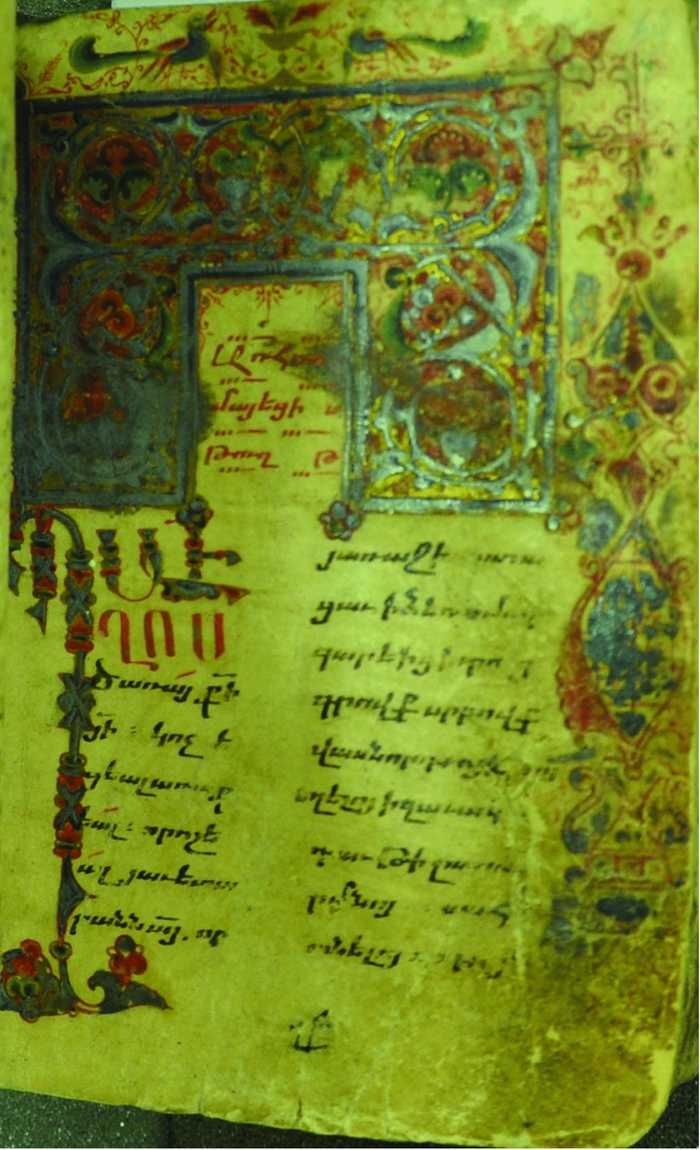
Vellum fly leaves, two in both front and back. The text is in small bolorgir in a single column, 21 lines to the page. The front folios contains extract from the Gospel of Saint Matthew I:vv.16 to II:17.Begins «Որում խօսեցեալ զՄարիամ կոյս յորմէ ծնաւ Յիսուս,որ անուանեցաւ Քրիստոս.[ends] «. . .կատարեցաւ ասացեալն ի ձեռն Երեմիայ մարգարէի» [‘Mary of whom Jesus was born, who is called Christ . . . then was fulfilled what was spoken by the prophet Jeremiah].
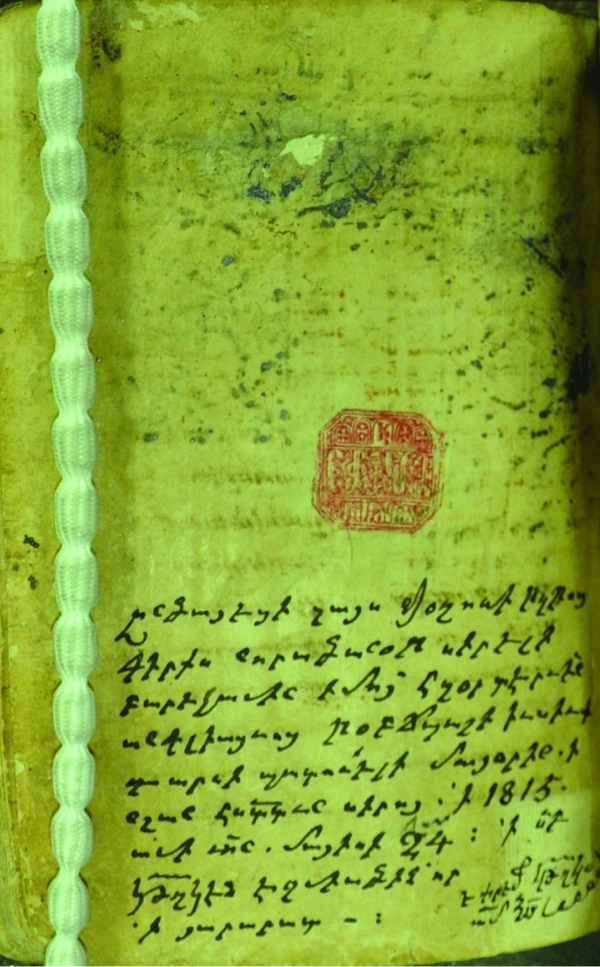
The end two folios contains an extract from the Gospel of St John: XVIII: 2–29 [Begins] « . . .անգամ ժողովեալ էր անդր Յիսուսի աշակերտօքն հանդերձ: Եւ Յուդայի առեալ ընդ իւր զգունդ. . .[end] « Ել առ նոսա Պիղատոս արտաքս եւ ասէ, զինչ՞ չարախօսութիւն մատուցանէք»[Jesus had assembled there with his disciples. . .So Pilate went out to them and said “ what accusations do you bring against this man”].
Condition – The manuscript is in fine condition.
Provenance –
The principal colophon begins with the customary eulogy called « Փառք» (literally, “Glory be”) dedicated to the Holy Trinity. This in essence is a statement of the Trinitarian theology of the Armenian Church, containing references to the first three Ecumenical Councils- the only ones accepted by the Armenian Church.Footnote 2 This introductory section is followed by remarks eulogising the teaching of the St Paul through his Epistles. Next the scribe mentions the names of the three sponsors of the manuscript Barsegh and his ‘spiritual’ brothers Hanes and Matt'eos from the province of Ekegheats’. Footnote 3 The scribe asks the readers, and those who will benefit from the manuscript, to remember in their prayers Tiratsu father of the three brothers, ‘who has departed from this life leaving them in deep sorrow and disconsolate’. The scribe of the manuscript is named as being Nerses, and the priest Vardan who is the ‘polisher’ [կոկող] of the paper.
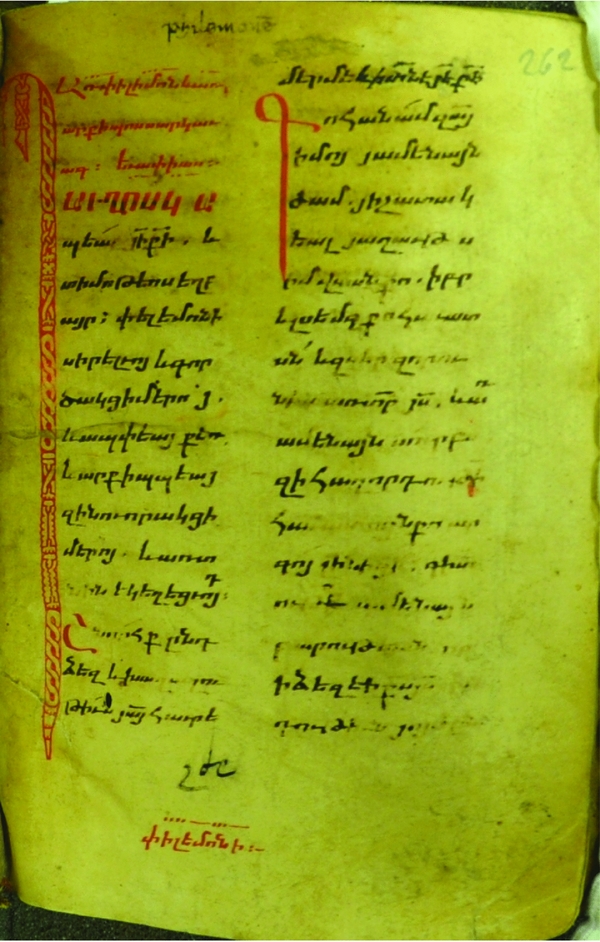
In the final section of the colophon the scribe provides the details surrounding the circumstances under which he laboured. The scribe Nerses confirms that he copied the manuscript in the land of Cilicia in the monastery of Akner also known Awag Anapat [Աւագ Անապատ]Footnote 4 in the Armenian era 696[+ 551 = 1246 ad] during the reign of King Het'um [1st] of the Armenian Kingdom of Cilicia (1226–1269) and his father Kostandin and his brothers and during the Catholicate of Kostandin [1st Barjrberdtsi, 1221–1267).Footnote 5 The scribe Nerses is also the scribe of another manuscript of the Epistles of St Paul copied in 1247, with identical details now in the Matenadaran collection (MS.no.6273).Footnote 6
The final 12 line of the colophon occupying the 2nd column on folio 273a, which has been retouched (probably in the XIVth) mentions the names of the priests T'adeos and Grigor who ‘to the best of their ability corrected the defects and faults’ [զթերութիւն պակասութեանն]found in the text.
In the manuscript there are two colophons by later hands which provide important data concerning the later history of the manuscript. On fol.174a, a fifteen line beautifully written inscription in regular bolorgir states that the manuscript was restored by Step'anos in the village called Nor Giwgh [New Village], for the pleasure of Archbishop Manuel of the Convent of Saghmosavank’ [Սաղմոսավանու] located in the province of yArarat. The colophon also mentions the priest Yovanes, who after the death of his wife retired into a monastery and was elevated to the rank of archbishop.This memorial is dated in the Armenian era ՌՁԴ [1084=1635].Footnote 7
The inscription on folio 48b brings the history of the manuscript up to 19th century. Below his red seal His Holiness Ep'rem I Jorageghtsi, Catholicos of All ArmeniansFootnote 8 at the Holy See of Ejmiadsin from 1809–30, has written his dedication of affection for his ‘newly found friend representing the powerful Empire of the British Major Joseph D'Arcy’, to whom he presented the manuscript on 24th of May 1815.
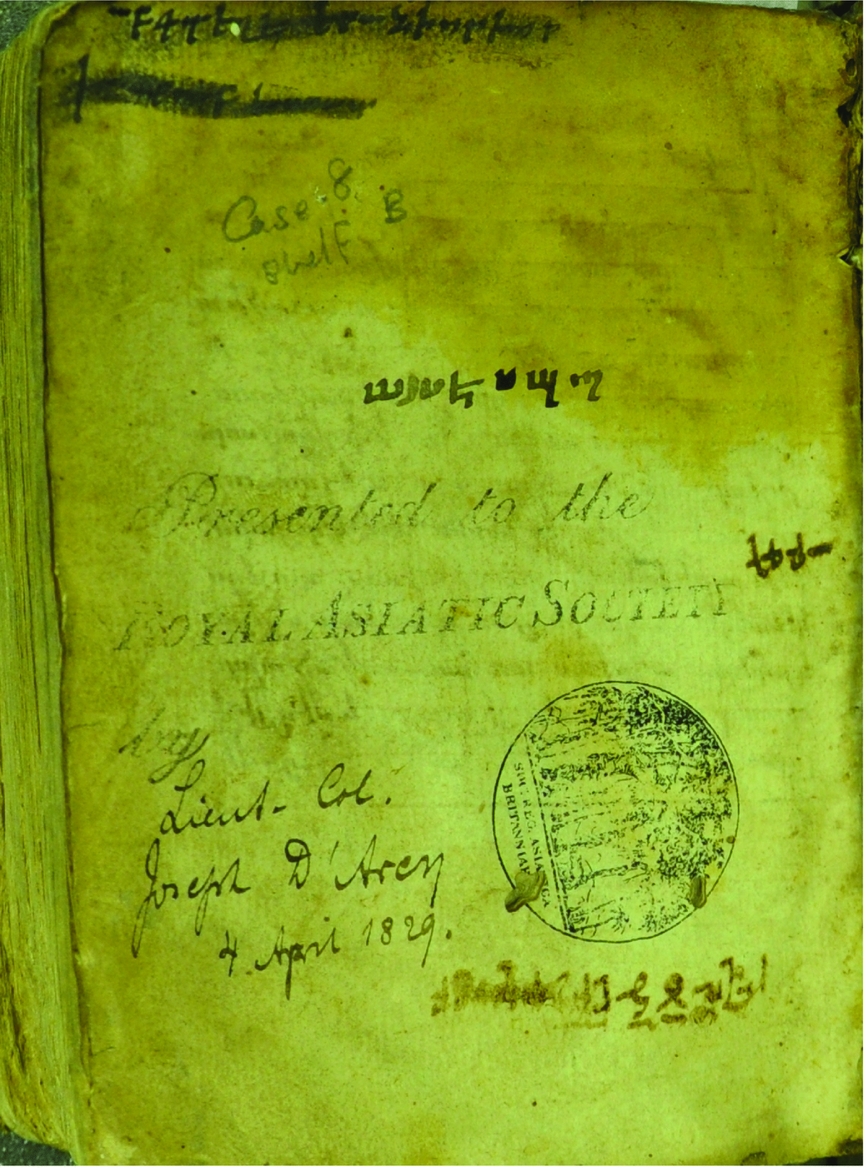
The Royal Asiatic Society Register of Donations covering the period from April 1823 to March 1831, confirms the name of the recipient mentioned on fol.48b ‘Presented to the Royal Asiatic Society by Lieut. Col. Joseph D'Arcy on 4th April 1829’. The library seal is stamped on folios 24b and 164b.
Contents
Fols.1-13a.(իա-իբ) Յառաջաբանութիւն Պաւղոսի առաքելոյ նախակար գեալ ի գլուխ գրոցս: Ընդ ուսումնասէր եւ ընդ փոյթ քոյոյ սիրոյդ զարմանամ ո Հայր պատուական. . .[Preface to the Pauline Epistles by Euthalius]
-
Fol.13b. Յառաջաբանութիւնս տունք Յ [300]
Վկայութիւն Պաւղոսի առաքելոյ[Testimonies for the Apostle St Paul]
«Առ Ներոնիւ կայսեր Հռոմայեցւոց վկայեաց անդ Պաւղոս
Առաքեալ կտրեալ զգլուխս. . .Եւ ես ստոյգ նշանակեցի զժամանակ եւ քարոզութեանն Պաւղոսի [The execution of St Paul in Rome during the reign of Emperor Nero(Martyrium Pauli)]:
-
Fols.14a (իբ-ձթ) Բովանդակութիւն ընթերցուածոց եւ որոց ի նոսա
գլուխք եւ վկայութիւնք ըստ իւրաքանչիւր թղթոցն առա-
քելոյ. . .Եւ որչափ իւրաքանչիւր ի նոցանէ տունք իցեն:
[Chapters and witnesses in each of the Epistles and the
number of verses]
-
Fol.14a. Ի Հռոմայեցւոց Թղթին[Romans]
-
Fol.14b. Ի Կորթա[ց]ւոց Առաջի Թղթին[1 Corinthians]
-
Fol.15a. Առ նոսին Յերկրորդ Թղթին [2 Corinthians]
Ի Գաղատացւոց Թղթին[Galatians]
-
Fol.15b. Յեփեսացւոց Թղթին [Ephesians]
Ի Փիլիպեցւոց Թղթին[Philippians]
-
Fol.16a. Ի Կողոսացւոց Թղթին[Colossians]
Ի Թեսաղոնիկեցւոց Թղթին[1Thessalonians]
Առ նոյն երկրորդ Թղթին[2 Thessalonians]
Յեբրայեցւոց Թղթին [Hebrews]
-
Fol.16b. Առ Տիմոթեոս Առաջի Թղթին [1Timothy]
Առ նոյն երկրորդ Թղթին [2 Timothy]
Առ Տիտոսի Թղթին [Titus]
Առ Փիլիմոնի Թղթին ոչ ուրեք [Philemon]
-
Fol.17a. Յառաջագիր [Prologue]
ՃԽԵ[145] վկայութիւնք ՃԻԵ[125] տունք
Բաժանեցին զընթերցուածս եւ ստքսեցի զամենայն
առաքելական գիրս. . .եւ զայն եւ թե որչափ տունք իցեն:
Որ թղտով թիւս եւ զքանակութիւն միայն յայտ առնէ
Զիւրաքանչիւր[145 witnesses,125 verses. . . The division of the Lections]
Գլխոցն վկայութեանց [witnesses by Chapters]
-
Fol.17b. Բովանդակութիւն Աստուածեղեն վկայութեանց
[Contents of the Divine witnesses]
Ի Հռովմայեցւոց թղթի վկայութիւնք [Romans]
Ի Կորնթացւոց Ա թղթին վկայութիւնք[1Corinthians]
-
Fol.18b. Առ նոսին երկրորդ թղթին վկայութիւնք[2 Corinthians]
Ի Գաղատացւոց թղթին վկայութիւնք[Galatians]
-
Fol.19a. Յեփեսացւոց թղթին վկայութիւնք [Ephesians]
Ի Փիլիպեցւոց թղթին եւ ի Կողոսացւոց եւ ի Թեսա
ղոնիկեցւոց յառաջնումն եւ յերկրորդումն ոչ ուստեք ինչ
յիշատակեաց Պաւղոս առաքեալ
[No scriptural witnesses is by Paul in the Epistles to Philip
Pians Colossians, 1 and 2 Thessalonians]
Յեբրայեցւոց թղթին վկայութիւնք [Hebrews]
-
Fol.20a. Առ Տիմոթեոս յառաջնում թղթին վկայութիւնք[1 Timothy]
Յերկրորդում թղթին առ նմոյն վկայութիւնք[2 Timothy]
Առ Փիլիմոնի թղթին ոչ ուրեք յիշատակեաց բան ինչ
[No scriptural witnesses in the Epistle to Philemon]
Պաւղոս զուրուք առաքեալ. . .միանգամայն ամենայն վկայու-
թիւնք ՃԻԵ[125] եւ են այսոքիկ – Յարարածոց
-
Fol.21a. Միանգամայն վկայութիւնք ՃԻԲ [122]
-
Fol.21b. Եւ գրեցան յայլ եւ յայլ քաղաքաց թուղթք չորեքտասանք
որպէս եւ ի ներքոյս կարգեալ են- ի Կորնթոսէ մի
-
Fol.22a. Եւ գրեցան ի Պաւղոսէ երեսաց միայնւոյ թուղթէ
-
Fol.22b. Յառաջագիր: Զամենայն թուղթս Պաւղոսի ընթերցայ եւ աո ի
նոցանէ զամենայն բանս վկայութեանցն. . .Յանձնարարու թիւնս իմոյ ծառայի փախուցելոյ եւ աղաչանք վասն նորին փրկելոց ի ձեռն հաւատոցն:
-
Fol.23a- 35a. Ի Հռոմայեզւոց թղթիս վկայութիւնք. . . Յամբակումայ: Համաւրեն գլխոցն դիր ըստ իւրաքանչիւր թղթոցն Պաւղոսի առաքելոյ եւ են ի նոցանէ [տունք իցեն]
-
Fol.35b-36b. Գլուխք Հռովմայեցւոց թղթոյն Պաւղոսի:«Աւետարանական վարդապետութիւն վասն առ արտաքինսն շնորհացն Քրիստոսի. . .
-
Fol.36b-38a. Գլուխք առաջնոյ թղթոյն Կորնթացւոց
-
Fol.38a-39a. Գլուխք երկրորդ թղթոյն Կորնթացւոց
-
Fol.39a-39b. Գլուխք Գաղատացւոց թղթոյն
-
Fol.39b-40a. Գլուխք Եփեսացւոց թղթոյն
-
Fol.40b. Գլուխք Փիլիպեցւոց թղթոյն
-
Fol.40b-41b. Գլուխք Կողոսացւոց թղթոյն
-
Fol.41b-42a. Գլուխք Թեսաղոնիկեցիս Ա թղթոյն
-
Fol.42a-42b. Գլուխք Թեսաղոնիկեցիս Բ թղթոյն
-
Fol.42b-45b. Գլուխք Եբրայեցիս թղթոյն
-
Fol.45b-46b. Գլուխք առ Տիմոթէոս առաջին թղթոյն
-
Fol.46b-47a. Գլուխք երկրորդ թղթոյն Տիմոթէոսի
-
Fol.47a-47b. Գլուխք թղթոյն որ առ Տիտոս
-
Fol.47b. Գլուխք որ առ Փիլիմոն
-
Fol 48a. Blank
-
Fol. 48b Catholicos Ep'rem I Jorageghtsi's dedication and stamp
-
Fol.49a-. Առ Հռոմայեցիս Թուղթ [Romans]
-
Fol.88a-. Առ Կորնթացիս Թուղթ Առաջին [1 Corinthians]
-
Fol.125b-. Առ Կորնթացիս Երկրորդ Թուղթ[2 Corinthians]
-
Fol.150b- (2nd col) Առ Գաղատացիս [Galatians]
-
Fol.164a-. Առ Եփեսացիս [Ephesians]
-
Fol. 177a-. Թուղթ առ Փիլիպեցիս [Philippians]
-
Fol.186a-. Առ Կողոսացիս Թուղթ [Colossians]
-
Fol.195a- (2nd col) Առ Թեսաղոնիկեցիս Թուղթ Ա [1Thessalonians tefal]
-
Fol.203a- (2nd col) Առ Թեսաղոնիկեցիս Թուղթ Բ [2 Thessalonians tefal]
-
Fol.208a-. Թուղթ առ Եբրայեցիս [Hebrews Ebro]
-
Fol.239b-. Առ Տիմոթեոս Թուղթ Ա [Timothy timothe]
-
Fol.249b-. Առ Տիմոթեոս Թուղթ Բ [2 Timothy timothe ii]
-
Fol.257a-. (2nd col) Առ Տիտոս [Titus tirum]
-
Fol.262a. Առ Փիլիմոն եւ առ Արքիպոս սարկաւագ եւ Ափիաս:
[Letter to Philon, deacon Argipos and Aphias Philonono]
Fol.264a(1st col). « Գրեցի եւ կարգեսցի ըստ կարի ըստիքերոն (stixiron) զքիրս Պաւղոսի առաքելոյ. . .»[I wrote out and arranged as far as possible verse by verse the writings of Paul the Apostle,. . .]
Fol. 264a (2nd col). «Ընդաւրինակեցաւ գիրք սոցա ընդ Կեսարացւոց աւրինակաց, որ կան յարկեղս գրոց սրբոյն Պափիւլեայ իւրումք ձեռաւք գրեալ»:[Copied from the codex of Pamphili of Paul, found in the Eusebian Libaray of Caesarea]
Fol.264b. «Թելադրութիւն.Գլխաւոր եմ եւ ածային զգիրս Պաւղոսի առաքելոյ. . . Պատասխանի. . .գանձ ունիմ զքեզ հոգեւոր»:
-
Fol.264b(2nd col). Նաւարկութիւն Պաւղոսի առաքելոյ ի Հռովմ.«Հարիւ
րապետին,որ տանէր զՊաւղոս ի. . .»[The Shipwreck of Paul]
-
Fol.265a (2nd col). Թուղթ Կորնթացն առ Սուրբ առաքեալն Պաւղոս:
Ստեփաննոս եւ որք ընդ նմա. . .[The Letter of the Corinthians to Paul]
[In red ink] « Աւելի է (This is extra) »
-
Fol.271b « Պատասխանի թղթոյն եւ Կորնթացւոց գրեալ ի Պաւղոսէ
առաքելոյ մինչեւ ի կապանսն էր[The reply letter of Paul to the Corinthians (3rd Corinthians]:
Memorial notices by the scribe
Fol.35a. «Բարեխաւսութեամբ սրբոյն Պաւղոսի Ա[ստուա]ծախաւս վարդապետի Տէր Յիսուս ողորմեա ստացողաց գրոցս եւ յառաջար կողացն: Ամէն»
Fol.47b. «Բարեխաւսութեամբ եւ աղաւթիւք սրբոյն Պաւղոսի առաքելոյն եւ տիեզերաց Լուսաւորչի Տէր Ա[ստուա]ծ ողորմեաց ստացողաց այսմ լուսազարդ եւ բազմազան մատենիս Բարս[ե]ղի հաւատարիմ եւ սիրելի եղբաւր մերոց եւ ծնողաց իւրից:Ընդ նմին եւ շնորհազարդ հաւրն մերոյ Տիրացուի, որ յայսմ ամի կոչեցաւք ի Քրիստոսէն եւ ձեռնասուն աշակերտաց նոցա Հանիսին եւ Մաթիոսին [մեղ]ապարտ գրչիս»:
Fol.176b(2nd col). «Ստացողի գրոց եւ աշխատեցելոց սորա եւ յառաջար կողաց ողորմեա Տէր Ք[րիստո]ս եւ անպիտան գրչիս»
Fol.177a. « Ստացողի սորա եւ մեղապարտ գրողիս Ներս[էս] ողորմեա տէր»
Fol.249a(2nd col.in red ink). « Ըստ առատ ողորմութեան քո Ք[րիստո]ս
Ա[ստուա]ծ ողորմեա ստացողաց այսմ հոգելից տառիս եւ քեզ փառք յաւիտեան»
Fol.264b (2ndcol).«Համազոյգ ստացողաց հոգեմատեան տառիս ողորմեսցի Տէր Ք[րիստո]ս.Ամէն»
Principal Colophon-
Fols.271b(2nd col) – «Փառք քեզ անսկիզբն եւ անժամանական երբ եւ անուստ էք:Գերաբուն եւ համագոյ եռակի եւ եզական ի տէրութեանդ եւ Միածութեանդ հաւր եւ որդւոյ եւ հոգւոյդ սրբոյ այժմ եւ միշտ եւ յաւիտեանս յաւիտենից:Ամէն:Աստանաւր յանգ ելեալ կատարեցաւ լուսեղէն եւ հոգեպատում ս[ուր]բ վարդապետութիւնս Պաւղոսի առաքելոյն, ի խնդրոյ երից համաշունչ եղբարց մերոց՝ Բարսղի հոգեզուարթ եւ բարեբուն քահանայի, եւ երկու համաբնակ եւ միանձն ճգնազարդ եւ միասնունդ եղբարց Հանիսի եւ Մատթեոսի որ էն գաւառականք իմ յԵկեղեաց գաւառէ, եւ ստացան զսա ի վայելս եւ ի զբոսանս անձանց իւրեանց, եւ յետ մահուան՝ յիշատակ հոգւոյ իւրեանց եւ ծնողաց իւրեանց.վասն որոյ աղաչեմ զամենեսեան հարք եւ եղբարք որք աւգտիք եւ լուսաւորիք յայսմ հոգելից տառես յիշեսջիք ի մաքրափայլ եւ արդիւնական աղաւթս ձեր զյառաջսասացեալ եղբարքս մեր զԲարսեղ քահանայն եւ ըստ հոգւոյ աւագ եղբայր մեր, ընդ նմին եւ զՀանեսն եւ զՄատթէոս խաչակրաւն միանձունք.եւս առաւել յիշման արժանի արասջիք զհոգեւոր հայր իւրեանց եւս մեր ամենեցուն զՏիրացուն՝ զվեհից վեհագոյնն եւ զբարի աւրինակն ամենայն առաջնորդաց, որ էր սպասաւոր սուրբ ուխտիս Ակներոյն եւ յանցելում տարւոջս յայսմիկ վերափոխեալ կոչեցաւ ի Տէր ի խորանսն լուսոյ, եւ եթող մեզ սուգ մեծ եւ անմխիթար:Յիշեսջիք եւ զտառապեալ գծողս Ներսէս եւ ծնաւղսն իմ եւ զուսուցիչսն իմ եւ զամենայն համազինսն իմ: Յիշեսջիք եւ զՎարդան քահանայն զկոկող նիւթիսն, եւ ծնաւղսն իւր եւ Ա[ստու]ծ, որ մեծն է եւ առատ ի տուրս բարեաց ամենեցուն ողորմեսցի եւ նմա փառք յաւիտեանըս յաւիտենից:Ամէն:
Գրեցաւ ի թվիս հայոց ի ՈՂԶ ձեռամբ Ներսէսի յաշխարհիս Կիւլիկեցւոց,յուխտս որ կոչի Աւագ Անապատ ի թագաւորութեան հայոց Հեթմոյ եւ հայր նորա պարոն Կոստանդեա.եւ եղբարց իւրոց, եւ իկաթողիկոսութեան երջանիկ հայրապետիԿոստանդեայ.որոց հայ- ցեմք ի յամենողորմ տեառնէն երկայնաձիգ եւ առանց յամենայն փորձութեան ժամանակս, եւ նմա փառք յաւիտեանս յաւիտենից:Ամէն:
This concluding section has been retraced by a later hand
Ընդ սոսայ եւ զիս զեղկելիս զԹադէոս յիշման արժանի արարէք զի որ յիշէ յիշեալ լիցինք.եւ որ արհնեալ յաւիտեանս: Զի թերութիւն պակասութեանն, որ ի սման լցաք որչափ եւ կարողացաք զԳրիգոր քահանայ[ս] յիշեցէք եւս զսոսա աշխատեցաւ ի սմա
A later hand has inserted this ending
«567 տարէն գրեցեալ է 1815 յամի Տեառն»
-
• There is an English note in the inner margin “Written in 1280 at Jerusalem”.
Fol.273b. Previously a blank page has several later inscriptions. A five line inscription in red ink has been rubbed out.
-
(a) Է մեղադիր լինի բամբասէ պարտաւորե[ա]լ Առաջի Ք[րիստոս]ի
-
(b) Another owner has added into the above note this « Ես Գրիգոր [Քրիստոսի] աշակերտ թվին ՌՃՁէ [1187+551= 1738]
-
(c) Ի սմի զաւուր տ[է]ր Ոհանս գրիցի թվին ՌՃԾԸ [1158 +551= 1709].
-
(d) Ի ի թվականիս ՌՁ [1080+ 551= 1631].
-
(e) 5 line inscription in Arabic
Colophon of the restorer of the manuscript in 1636.
Fol.274a. Վերըստին նորոգեցաւ Պաւղոսի ձեռամբ ոգնամեղ եւ երկնամեռ Ստեփանոս իրիցու ի Գիւղս Նորս ընդ հովանեաւ սրբոցս, որ աստ կան հաւագեալ(sic)Ի վայելումն քաղցրաբարոյ եւ կակղասիրտ եւ Արտասու աթոռն, որ հանապազ հեղու առաջի սըրբոյ խաչին Մանուէլ ահրեպիսկոպոսին Սաղմոսավանու. զի եւ ի գիրքս Սաղմոսավանու է վախմ անջինջ:Նա եւ վայելող սորա յիշեսցէ զնորոգաւղս եւ նորոգել տուողս զՄանուէլ եպ[ի]սկ[ոպոս] եւ նորին հոգէկիր Յովանէս այրի երիցոյնն, որ տղա տիաւղ որոշեցօ կենակցէն ապաւինեցաւ սուրբ ուխտս Սղմցս [Սաղմոսավանացս] եւ յարեցաւ ահրեպս [ահրեպիսկոպոս] առ հասարակ Ա[ստուա]ծ ողորմի ասէք ամենեցուն.ձեզ յիշողացդ եւ մեզ յիշելոցս Թվս ՌՁԴ[1084+551=1635] ամէն Հայր մե[ր]:
A later hand has added
« մեք ձեզ ողորմի ասենք»
Fol.48b. In mid page there is a bright red seal bearing the monogram of Catholicos Ep'rem I Jorageghtsi, Catholicos of All Armenians of the Holy See of Ejmiadsin incumbency from 1809–1830.
The inscription on the seal reads:
« Է Եփրեմ Կաթողիկոս ՌՄԾԹ» [Armenian era 1259 = ad 1810].
Below is a ten line inscription in the hand of the Catholicos:
« Ընծայեցի զայս Պօղոսի Թղթոց Գիրքս նորածանօթ սիրելիբարեկամին իմոյ հզոր տէրութեանն Անգլիացւոց րօբճաշի Իւսիւփ Դարսի պատուելի մայօրին ի նշան հաստատուն սիրոյ:Ի 1815 ամի տեառն Մայիսի 24ի Սուրբ Կաթողիկէն Էջմիածին որ ի Յարարատ:
Եփրեմ Կաթողիկոս Ամենայն Հ[ա]յ[ո]ց
Fol.24b. Presented to the Royal Asiatic Society by Lieut. Col. Joseph D'Arcy 4 April 1829 accompanied by the round black seal of the Royal Asiatic Society Library. Another seal of the library is stamped on fol.154b.
The characteristic features of the text
This is an exceptional manuscript in terms of its contents and provenance. I shall first comment on its content and then on its provenance.
The manuscript contains the 14 Epistles of St Paul prefaced by Prologues of EuthaliusFootnote 9 which are found in majority of Armenian manuscripts. These are also found in the printed Bibles of Zohrabian(1805) and Bagratuni (1860) In In British Library's collection of manuscripts the Euthalian material is found in Mss.Add.19,730(AD1270),Or.8833(AD1646),Or.14101(1661-62)Footnote 10 indicated, as in our manuscript, with this notice appended to the Epistle of St Paul to Philemon-
‘I wrote out and arranged as far as possible verse by verse (= kata dunamiv stixiron) the writings of Paul the Apostle, disposing(them)also in easily understood (or ‘grasped’) readings (anagnwseis) for (or ‘of ’) our brethren. From all of whom I crave indulgence for my boldness; in order that by means of the prayers, to be offered on our behalf. I may receive your condescension towards me. This book was copied according to (or; ‘from’) an example from Caesarea, which lies there in the chest of books, and which was written with his own hand by the holy Pamphilus’.
The so called Euthalian apparatus [Աղերս Եւթաղի or Եւթաղեան կազմած] consists of -
-
a) Prologue to the Pauline Epistles by Euthalius
-
b) Notices of the Biblical citations in the Epistles of Paul compiled by Euthalius
-
c) Chapters and sections attributed to Pamphilus the martyr
-
d) Finally the Epistle to Philimon (fl.264) ending with the inscription of Euthalius with a reference to an exemplar copy found in the library at Caesarea (Cappadocia)
-
e) There follows in red the heading ‘Advice’(aviso), and then in the same large script this: ‘I am master and teacher of the divine religion. If thou lend me to anyone, thou shalt take a goodly copy in my stead, for those who (?+ have to) restore (i.e books) are evil’.
After this aviso follows this paragraph, still in the large hand with the heading in red letters: ‘Reply’: ‘I keep thee a treasure of spiritual blessings, adorned with embellishments, desired of all men and with all sorts of ornaments. Yes, I speak truly. I will not vainly lend thee to anyone. Nor another time will I be jealous of [or? for] the weal of anyone. But when I shall lend thee to my friends, I will take a goodly copy [or exemplar] in exchange for thee’.Footnote 11 These two notices clearly refer to the Greek copy of the Pauline Epistles, which was transcribed from Pamphilus’ own copy.
The entire Euthalian apparatus in classical Armenian version was published by Rev Aristakes Vardanian of the Mkhitarian Congregation first as a series of articles and then as a study, accompanied by the critical text.Footnote 12
Rev. Vardanian agrees with F. C. Conybeare that the Euthalian corpus was completed at a time before 412.Vardanian summarising the conclusions arrived at by Conybeare and writes ‘In the year 396 Euthalius took the Codex of Pamphili of Paul, which lay in the Eusabian library of Caesarea, and made a copy of it steixirws, adding prologues, testimonies, summaries of chapters. . . the Armenian Fathers translated the Epistles of Paul early in the fifth century along with the rest of the Bible . . .what we may call the new edition by Euthalius, which comprised the text of Pamphilius with new ‘adornments desired by all men’.Footnote 13 Conybeare and Robinson agree that all the studies show that the Euthalian apparatus was completed before 396 and were rendered into Armenian in the first half of the fifth century and then to Syriac in the sixth century’.Footnote 14 Vardanian is in no doubt that the Armenian translation is from the Greek text, were brought to Armenia from Caesarea he dates the translation to 448 and, on the basis of its linguistic features, assigns the translation to Koriwn. It is not inconceivable that the students of Mesrop Mashtots who translated the Letter of Eusebius to Carpianus into Armenian also translated the Euthalian Prologues as necessary and supplementary additions to their translation of the New Testament. The translation of the Bible into Armenian was accomplished in two stages. The first translation was partly from the Greek and partly from the Syriac original achieved in the period from the invention of the Armenian alphabet (405/406) up to the Ecumenical Council of Ephesus (431) and the revised translation on the basis of the ‘authentic copies of the God given book’ (i.e.Septuagint) [Armenian sources never employ the term Եօթանասնից ‘seventy’]. From this it is evident that up to the Council of Ephesus, held in 431, there was a translation of the Bible done in ‘Փուտանակի’ meaning ‘hastily’,which was improved and perfected after the Council on the basis of ‘the authentic copies’.Footnote 15
A distinctive feature of the text of the Armenian Canon of the New Testament is the inclusion of some apocryphal texts such as:
-
(a) The secondary, later ending of Mark's Gospel (16:9-20).Footnote 16
-
(b) the story of the Woman taken in adultery (8:1-11); in some of the ancient texts placed in Luke(21:38).
-
(c) Repose of Saint John the Apostle placed after the Book of Revelations.Footnote 17 A common feature of this manuscript with the list of the books of the New Testament canon attributed to Yovhannes Sarkavag (1050-1129) and Grigor Tat'evatsi (1344-1409) and with the majority of Armenian manuscripts and the three major recensions of the Armenian Bible is the inclusion of the: (d) Epistle of the Corinthians to Paul and a Third Epistle of Paul to the Corinthians.Footnote 18 The two are incorporated among the Epistles of Paul located at the end of the texts. In these two Epistles the author insists on the authority of the Old Testament, the resurrection of the flesh, the birth of Christ from Mary, and the creation of man, facts which indicate that its purpose was anti-Gnostic.Footnote 19 Zohrabian's ‘Appendix’ to the apocryphal literature provides this comment on Third Corinthians:
‘For these letters are found in almost all the manuscripts of the Bible in many of them, as in ours, at the end of the 14 letters of Paul, and in some following Two Corinthians. Becasue of this, probably, some people risked inserting the two letters in the list of the Lectionary readings following the ‘Fast of the Catechumens’ at the end of the reading from Titus’.Footnote 20 The Armenian church has kept these Epistles in their canon to defend its doctrine of Christ's Ascension ‘into heaven with the same body’ [«նովին մարմնով»] and his return ‘with the same body’[«գալոց է նովին մարմնովն»]. Fr. Augustin Szekula (Sek'ulian) is convinced that these Epistles were included in the Armenian Canon by Mesrop Mashtots during the first stage of the translation of the Bible and he anchors his arguments on the witness of T'eodoros K'rt'enavor who confirms that the Third Epistle to the Corinthians was in the ‘first translation’[« հնապատում »] and the followers of Mayragometsi excluded the text from the ‘new revised’ [«նորապատում»] translation of the New Testament. Szekula identifies the ‘new revised’ translation done on the bases of the ‘authentic copies’ [«հաստատուն », «ստոյգ»] brought to Armenian after the Council of Ephesus. The inclusion of these texts in majority of Armenian manuscripts is evidence that they belong to the Sahak-Mesropian classical recension.Footnote 21
The existence of Third Corinthians was first made known to European scholars through an Armenian manuscript from Smyrna to which Archbishop James Ussher called attention in 1644. From this manuscript, which is incomplete, David Wilkens (1685-1745), Librarian at Lambeth Palace, published the Armenian text with a Latin translation (Amsterdam, 1715).William and George Whiston, sons of William Whiston, in an appendix to their History of Moses of Chorene (London, 1736). Lord Byron made an English translation of the Epistle and published it with the original texts in his Armenian Grammar and Chrestomathy (Venice, 1819).Footnote 22
Finally The Epistle of Paul to the Hebrews (fl.208a) is placed between Thessalonians and I Timothy.
A valuable document to the history of Anglo -Armenian relations
The history of this manuscript is a powerful evidence of the triangular Russian-Persian-Ottoman rivalry over the Caucasus, most notably Britain and France, each with its own imperial ambitions but with the common geopolitical objective of preventing any of the three powers from becoming too powerful in the region. The expansion of Russia into the Caucasus beginning in 1801 were legitimised by the Russo-Turkish Treaty of Bucharest in 1812 and by the Russian-Persian Treaty of Golestan concluded in 1813, largely through the mediation of the British Ambassador to Persia Sir Gore Ouseley.Footnote 23 The war between Persia and Russia was renewed in 1825. This time it resulted in the Russian conquest of the khanates of Erevan (the modern capital of Armenia) and Nakhijevan. The Treaty of Turkmenchaye was concluded, which, in addition to these new territories, secured for Russia economic and political concessions in Persia. In both the Russo-Persian war of 1804–10 and that of 1826–27, the Armenians lent military and political support to the Russians in anticipation not only of liberating from the rule of the Persians and the local khans, but also of achieving a base for an independent Armenia.
The history of this manuscript is a tangible evidence of the role of the Armenian Church in the person of its Catholicos Ep'rem I Jorageghtsi’ (1809-1830), the British Ambassador Sir Gore Ouseley (1770-1844) and the recipient of the Royal Asiatic Society's Armenian manuscript Lieutenant-Colonel Joseph D'Arcy also known as D'Arcy Todd (1780–1848)in the events leading to the signing of the Treaty of Golestan.Footnote 24
Among the British Library's collection of Armenian manuscripts there is an Encyclical from Catholicos of All Armenians Ep'rem I addressed to Sir Gore Ouseley dated 3 August 1813(BL MS.Or.15957)Footnote 25 prior to the signing of the Treaty of Golestan in September of 1813.The defeat of the Persians and the humiliating Treaty of Golestan ushered a period of hostility towards the Armenians in Persia instigated by anti–Armenian leaders such as Hasan Khan, brother of the governor and rival of ‘Abbas Mirza who exploited the Persian defeat as well as the pro-Russian sentiments of the Armenians displayed in Karabagh and Ganje as a pretext to withdraw from Eastern Armenia. The situation worsened in 1814, when Archbishop Nerses Ashtaraketsi became the primate of the Armenian community in Tiflis and openly began anti-Persian activities there.Footnote 26 Although the official benevolent policy of the Persian government did not cease altogether, this marked the beginning of a period of strained relations which ended with the annexation of Armenia by Russia in 1828. The letter of thanks by the Catholicos suggests that he had petitioned Sir Gore Ouseley to have in his mind the affairs of the Armenians in Persia when negotiating the Treaty of Golestan. Sir William Gore Ouseley brother and private secretary of the ambassador records this in his memoirs:
‘Friday January 13,1815. Had a visit from the Archbishop, who came to wish me many happy new years and thank me in the name of his nation for the protection and immunities I had obtained for the Armenians in Persia’.Footnote 27 When Ouseley's mission had reached the ancient capital, Isfahan, on 2nd August, Ouseley was approached by the heads of Isfahan's Armenian community of 300 houses asking for his protection, presumably against the local Persian authorities.Footnote 28 We have no evidence that he was in any position to give any solid assurances, but it may be that the Armenians benefited a little from the fact that the embassy had to halt at Isfahan for several weeks because of exhaustion, weakness and sickness affecting nearly all its members, one of whom, Thomas Adkins, the ambassador's coachman, died and was buried in the Armenian cemetery.Footnote 29 Another source confirming the relations of Catholicos Ep'rem and Sir Gore Ouseley on the question of securing ‘protection’ for the Armenians in Persia is a manuscript of the Four Gospels (ad 1668) in the collection of the Chester Beatty library, Dublin (MS.No.581), which has the following dedication-
‘His High Excellency Sir Gorozoli [i.e. Sir Gore Ouseley],the ambassador of the English, who had come to the Shah of Persia Fatali [i.e. Fath ‘Ali-Shah 1797-1834],while returning to his country with his family, passed by this Holy See of Ararat. He showed much solicitude for us and all our congregation. Because of this, as a token of unforgettable love and perpetual memorial, and as an occasion for blessings on the victorious kingdom of Britain, we offered this small Gospel to His Excellency June 14,1814, at Holy Etchmiadzin (signed) Ep'rem Patriarch and Catholicos of All the Armenians’. His seal with the date 1259 (551+1810) is affixed’. This is the date when Sir Gore Ouseley was appointed British Ambassador Extraordinary and Plenipotentiary to Persia and returned to England in 1814.Footnote 30 We have two accounts of this visit, one written by Sir William Ouseley, brother and private secretary of the Ambassador and the other by James Morier, the Secretary of the Embassy.Footnote 31
In 1810 Lord Richard Wellesley, the Foreign Secretary appointed Sir Gore Ouseley as the new Ambassador to Persia. Among the group of British officers who enlisted to join the Mission in early 1812, was Major Joseph D'Arcy. D'Arcy commanded the Mission whose task was to introduce reform and equip the Persian army. He with more than thirty officers, also accompanied Persian forces led by ‘Abbas Mirza against Russian attacks on Talesh and Kharabagh. The ensuring victory over the Russians at Soltanabad, on 29 February 1812, was attributed mainly to D'Arcy's artillery force, which destroyed the Russian magazine. In August, however, Britain and Russia made peace, and in October Ouseley ordered total withdrawal of the British forces from the Persian army. Sir Gore Ouseley returned home in 1814, travelling via Russia and on his way also visited Holy Ejmiadsin meeting Catholicos Ep'rem on June 1814.Footnote 32 By late 1815 the British government had lost interest in the military mission in Persia. When orders came for the mission's withdrawal their commanding officer, Joseph D'Arcy, wrote to James Morier, then minister in Tehran, suggesting that as army regulations prevented them from taking their wives back to Britain or India, he should approach the Armenian Catholicos in Ejmiadsin and secure for their men a dispensation allowing them to remarry when they got home. On 12 January 1815, he wrote ‘You are not ignorant that many of the N.C.O.s of H.M. regiments on this service have married Armenian women [and Georgian], and neither the good of the service nor their wives’ connexions in this country will admit of their taking their families with them back to India or England now that they are ordered to join there without delay. The prospect therefore, for both parties must be very miserable, in fact not less than a certain widowhood for the remainder of their lives as neither party can marry again, and there is no chance of their meeting after the present separation. This prospect was never considered by the individuals when they formed these intimacies, nor was the measure ever sufficiently weighed in by the British authorities’. To remedy the situation D'Arcy suggests-
‘The Calipha or Patriarch of the Armenians at Itchmiazin [i.e Ejmiadsin] possesses as high a dispensing power amongst his own people as the Pope at Rome, and upon the strength of this surmise I have consulted the Armenian clergy in this place, and they all agree that the power of annulling marriages after a specified period, as a year or more, and permitting the parties to remarry after it is evident that they will not meet again – remained in his hands, but not in theirs, and that the application must be made to him in a formal way and through the highest authority’. Upon this advice from the Armenian clergy at Isfahan, D'Arcy asks Morier to write and use his influence with the head of the Armenian clergy at Ejmiadsin that a separation from the ties of marriage take place between such parties as I shall furnish a list of (whenever, I am favoured with your order to do so) to enable them hereafter to form connexion amongst their own countrymen, and thereby prevent much distress, inconvenience and probable immorality’.Footnote 33
‘There is no record of Morier's reply to D'Arcy's request nor does history record whether they ever secured their freedom in this way’ concludes Sir Denise Wright.Footnote 34 On the basis of this newly discovered evidence, I would venture to suggest that James Morier gave D'Arcy ‘the highest authority’ to make the application himself in person. The presentation of the said manuscript by Catholicos Ep'rem to his ‘new friend’ [նորածանoթ] Major D'Arcy on 24th May 1815 may have also been the occasion when the dispensation was offered.
Lieutenant-Colonel D'arcy says very little about his own situation. Berta Ruck (great-grandaugther of D'Arcy) in her biography of Colonel D'Arcy gives a very moving picture of the situation in which his soldiers and he himself found themselves while in Iran. In the chapter called ‘My peculiar situation’ says ‘to say nothing of the N.C.O's and gunners under his command, might get the impression on that their colonel D'Arcy R.A was a querer’ (p.108) and continues ‘I was therefore obliged to accept a female on the part of the Prince Royal as part of the establishment in the same way as had previously favoured other British officers in his service’. From this female he had a child. ‘When I left the country she (the Georgian) was married to a man of her country and they were left at Tiflis, well provided for, and the little child with them’. At the age of nine ‘when I thought it best for it to be sent to England to be brought up in the language and religion of its father. I have made every arrangement in my power for her comfort. . .I confide her to you and your other brothers care’. On 20th August 1830 he wrote a letter to his eldest son George Abbas Kooli D'Arcy, marked ‘to be opened only in the event of my demise’. . .Dilara is my daughter, consequently your sister . . .not to let this innocent creature who has your father's blood in her veins suffer want or neglect. Be to her what you really are – a brother! and consequently deserve the blessings of your father’. There is nothing in the Persian or Russian or Chancery Lane records about the child being brought to England.Footnote 35


