In the summer of 1877, Francis Galton (1822–1911) – a writer on anthropology and travel who had recently begun to establish himself as an authority on human heredity and statistics – was asked to prepare a report for a committee created by the council of the British Association for the Advancement of Science. Formed in response to complaints about the proceedings of the BAAS's Section F (Economic Science and Statistics), the committee was considering ‘the possibility of excluding unscientific or otherwise unsuitable papers and discussions’ from the association's annual meetings.Footnote 1 In his report on this issue, Galton argued that ‘usage [had] drawn a strong distinction between knowledge in its generality and science’. The latter was confined, he wrote, ‘to precise measurements and definite laws, which lead by such exact processes of reasoning to their results, that all minds are obliged to accept the latter as true’.Footnote 2 Consequently, and despite the new focus of his own work, Galton believed that the BAAS should close Section F because too few of its participants conformed to this account of good scientific practice. For many scholars, this controversy has seemed marginal amongst the issues that concerned Galton during this period, when he was busy developing the ideas and methods that would later inspire new approaches to biology.Footnote 3 However, as this paper shows, far from being a distraction, social-science debates played a major role in shaping the identity of Galton's research programme.
Galton – who conceived of and championed eugenics in Britain during the last four decades of the nineteenth century – has always been a historiographically complex figure. Although he briefly trained to be a medical practitioner, he was neither educated in the natural sciences nor was he ever the holder of an academic post. Indeed, when compared to his professionalizing contemporaries, such as T.H. Huxley, Galton has often seemed out of step with the trends historians usually identify with late nineteenth-century science.Footnote 4 Yet in the generation that followed his own, Galton's work was embraced, appropriated and developed by scientists – particularly biologists and statisticians such as William Bateson, Karl Pearson and W.F.R. Weldon – who shaped the content and methodology of the natural, mathematical and social sciences during the first half of the twentieth century.Footnote 5 Nevertheless, it is as the ‘founder of the faith’ of eugenics – the biosocial science of human breeding – that we are most likely to encounter Galton.Footnote 6 In this sense, a significant part of Galton's historical identity is linked to two points of early twentieth-century reference: the state-sanctioned biosocial programmes, such as forced sterilization, which were implemented in Europe and the USA, and the same period's research on genetics and evolutionary biology, which was frequently entangled with eugenic ideas.Footnote 7
The fact that Galton was inspired by his cousin Charles Darwin's theory of evolution and subsequently influenced practices in the biological sciences should not deflect attention from the other and often far more important contexts in which his eugenics programme was forged. To be sure, existing scholarship has much to offer in this respect. For example, whilst scholars such as Donald MacKenzie and Ruth Schwartz Cowan have convincingly related aspects of Galton's programme for social reform to his socio-economic background, Galton's many biographers, including Pearson, have furnished us with rich accounts that convey the multifaceted character of his work.Footnote 8 However, the main focus of this paper – the social-science context in which Galton developed his eugenics research – has largely been overlooked. Yet, as we will see, that context is crucial if we are to understand Galton's project as he himself did.
Building on suggestions first made by Cowan, as well as work that has considered the ways in which eugenics interacted with ongoing conversations about human differences, the five sections that follow offer a new high-altitude survey of how Galton put together his programme for eugenics during the late nineteenth century.Footnote 9 Beginning with how his first writings on human heredity during the mid-1860s were conditioned by a heated debate about political economy – the leading social science in mid-Victorian Britain – the paper then moves through the most significant episodes in Galton's efforts to discover the laws governing the transmission of traits from generation to generation. Taking in his early 1870s dispute with Darwin about the theory of pangenesis, as well as the innovative statistical methods and data-gathering techniques that Galton developed during the fifteen years after that debate, the paper traces the trajectory of Galton's research through to the early twentieth century, when he engaged in his most famous and well-received efforts to promote eugenics. In so doing, the paper not only restores the meaning that eugenics originally held for Galton as a social-scientific agenda, it also draws attention to the way that his programme took off only once he had marginalized, rather than embraced, conventional biological science.
Having outlined this account, it is important to explain that the argument for the importance of social science to Galton's programme for eugenics is mainly contextual. There is no ‘smoking gun’ linking Galton's ideas about human heredity with the 1860s British debate about the doctrines of political economy. Nevertheless, the argument is convincing for a number of reasons. First, the social-science context helps explain the timing and character of a number of Galton's moves and interventions, including his decision to begin publishing on heredity during the mid-1860s and his involvement in the dispute at the BAAS ten years later, which are not sufficiently understood through existing accounts. Second, the seldom-considered context that is explored here throws fresh light on events that have largely passed without comment in the literature on Galton and British eugenics. In particular, looking at Galton from the perspective of his involvement with the social sciences helps us to see why he used an organization called the Sociological Society to launch eugenics as a national programme.
More generally, though, the recovery of the social-science context enables us to sharpen our sense of the nature of the connections between Galton's work and the practices of biologists. To explore this issue, the conclusion of the paper takes the counterfactual turn and asks what would have been different about Galton's early twentieth-century programme for eugenics if biologists had not embraced his ideas and methods during the 1890s. The point of those considerations will not be to suggest that eugenics and biology are or ever have been mutually exclusive; rather, the point will be to tease out the implications of the fact that, as Peter Bowler has observed, Galton only made significant progress with his eugenics research once he had divorced it from the kinds of questions about heredity that interested biologists during the late nineteenth century.Footnote 10 However, in order to appreciate these points, we must now turn to the late nineteenth-century debate about political economy that conditioned Galton's first statements about eugenics.
Political economy: the British social science
‘Our foreign trade, our colonial policy, our poor-laws, our fiscal system’, argued J.E. Cairnes, professor of political economy at University College London, in 1873, ‘each has in turn been reconstructed from the foundation upwards under the aspiration of economic ideas’. As a consequence, Cairnes went on, ‘the population and the commerce of the country, responding to the impulse given by the new principles operating through those changes, have within a century multiplied themselves manifold’.Footnote 11 Three years later, Walter Bagehot, political commentator and editor of The Economist, concurred: ‘the life of almost everyone in England … is different and better’ because of political economy.Footnote 12 On account of opinions such as these, British social science during the first three-quarters of the nineteenth century often meant one thing: political economy.
The methods and ideas of political economy that captured the imagination of Victorians such as Cairnes and Bagehot were what we now know as its ‘classical’ system of thought. As most nineteenth-century political economists understood it, their discipline had begun with the work of the Scottish moral philosopher Adam Smith in the late eighteenth century but been given a formal analytic framework by the English political economist David Ricardo in the 1810s and 1820s.Footnote 13 In essence, this tradition of thought was rooted in a conception of political economy as an enterprise that discovered the rules according to which public life should be governed. Building on the writings of Smith, Ricardo, and others, the political economists of the mid-nineteenth century aimed to understand the interaction of economic, social and political life and, in so doing, they developed a highly deductive system of thought, rooted in a limited number of propositions, which depicted society as a largely self-regulating entity in which the interaction of members was guided, in the great Smithean phrase, as if by an invisible hand. For example, whilst T.R. Malthus's principle of population explained the relationship between a people and its means of subsistence as a matter of natural law, the wages-fund doctrine described the earnings of labourers as fixed in relation to a specific allocation of capital in the economy as a whole.Footnote 14
In mid-nineteenth-century Britain, these ideas about the power of self-regulating markets were celebrated by many – in particular the rising class of industrial capitalists – as a philosophically and politically radical alternative to the mercantalism of the traditional ruling elite. Symbolic in this respect was the repeal in 1846 of the Corn Laws – a long-time cause célèbre of the free-trade movement – which many commentators identified as the beginning of the ‘halcyon days’ of classical political economy in Britain.Footnote 15 As scholars such as Stefan Collini and Lawrence Goldman have shown, political economists played an important role in the embrace of free trade in the decades immediately after 1846 because of the entwinement of political economy, business and government in public life. For example, leading figures from each field met regularly in forums such as the Political Economy Club of London – a seldom-studied dining club founded in 1821 by a group including Ricardo, Malthus and James Mill to ‘support the principles of Free Trade’ – and the National Association for the Promotion of the Social Sciences, which was widely known as the Social Science Association.Footnote 16 Through these networks, political economists contributed to a wide range of political debates, from those about education and moral reform to those about the adulteration of food and drink.Footnote 17
By the final quarter of the nineteenth century, though, British attitudes towards classical political economy had changed. Addressing the Social Science Association at its 1878 meeting in Cheltenham, Bonamy Price, Drummond Professor of Political Economy at Oxford, was brought to comment on how ‘political economy at the present hour is undergoing a crisis. Both in the region of thought amongst its teachers and its students, as well as in the great world, in the practical life of mankind’.Footnote 18 Indeed, ten years later, the economic historian James E. Thorold Rogers reflected on how ‘political economy [was] in a bad way: its authority is repudiated; its conclusions … assailed, its arguments … compared to the dissertations held in Milton's Limbo, [and] its practical suggestions … conceived to be not much better than those of the philosophers in Laputa’.Footnote 19 According to the philosopher Henry Sidgwick, the moment that this change began was in 1869, when John Stuart Mill – amongst the most widely read of the classical political economists – reassessed his stance on the wages-fund theory and wrote in the Fortnightly Review that the doctrine was ‘deprived of its scientific foundation and must be thrown aside’.Footnote 20 The period that followed this recantation, which is associated with the ‘marginal revolution’ in economic thought, saw the decline of the classical system of political economy.Footnote 21 Yet these developments were also part of a wider debate that catalysed the rise of new disciplines, including economics and sociology, which helped redraw the intellectual map for twentieth-century social science.
A prominent forum for these changing attitudes towards political economy was Section F (Economic Science and Statistics) of the British Association for the Advancement of Science. Since its creation after the BAAS meeting in Cambridge in 1833, Section F's activities had been a major headache for the gentlemen of science who controlled the association.Footnote 22 Concerned by both the scientific credentials of Ricardian political economy and its potential to divide, rather than unite, people through political debate, the gentlemen of science of the BAAS had endeavoured to keep a close eye on Section F – requesting, for example, that its members only deal with facts and numbers and not opinions.Footnote 23 However, classical political economy, driven on by its popularity outside the BAAS, came to dominate Section F, which forced the gentlemen of science to tolerate its activities in exchange for the substantial sums of money it brought to the association via the large crowds that were drawn to its meetings.
Yet, after decades of tension, the uneasy relationship between Section F and the rest of the BAAS broke down in 1876 when the council of the association decided to form a committee to ‘seriously … consider whether the time has not now arrived when [Section F] might cease to form a part of the British Association’.Footnote 24 As part of its enquiries, the BAAS's committee commissioned two reports – one in favour of closing Section F and the other against – which were circulated at the association's 1877 meeting in Plymouth. According to the author of the first report, the statistician William Farr, Section F was the site of important discussions by prominent social-science thinkers whose work, despite its occasional faults, fitted with the aims and scope of the BAAS. However, for Francis Galton – the leading critic of Section F – Farr's points failed to address a bigger concern: the scientific credentials of Section F as a whole. Indeed, in his report for the committee, Galton argued that ‘the general verdict of scientific men would be that few of the subjects treated [by Section F] fall within the meaning of the word “scientific”’.Footnote 25 As we noted at the outset, Galton defined science as being confined to ‘precise measurements and definite laws’ and he saw neither of these things in the activities of those who participated in the proceedings of Section F. For this reason, he urged the BAAS to dispense with Section F, whose members could find a home, Galton suggested, in another organization, such as the Social Science Association.
As the Irish political economist J.K. Ingram put it in his presidential address to Section F in 1878, ‘the low estimate of the studies of [Section F] which [was] entertained by some members of the Association [was] no isolated phenomenon’. The opinions expressed by Galton and others were ‘only the counterpart … of a crisis in the history of economic science’ because, Ingram explained, if ‘the general mass of the intelligent public entertained strong convictions as to the genuinely scientific character’ of political economy then there would have been no debate about Section F.Footnote 26 However, much to the relief of Ingram and others, Section F was not disbanded – no doubt because it drew large audiences in an organization that relied on subscriptions. Why, though, was it Galton who led the charge against Section F and why had he done so with a view of social science that Karl Pearson would subsequently describe as that of a ‘mathematical physicist’?Footnote 27 The key to understanding the answer to these questions is in the programme for social reform that Galton had set out twelve years earlier and in the nature of the breakthroughs he had made in his efforts to legitimate it. As we will now see, Galton's emergence as an authority on heredity in the 1860s had been conditioned by questions raised during the debates about political economy. Indeed, the terms of the debate about political economy help explain not only why he would lead the charge against Section F in 1877 but also the trajectory of the research that he would soon call ‘eugenics’.
Linking heredity with social progress
When Francis Galton first turned his attention to the subject of heredity in 1864 he was middle-aged and most widely known for writing a popular travel companion called The Art of Travel.Footnote 28 Of the reasons that had led him to explore new intellectual terrain, the most important, he recalled in his autobiography, was ‘the publication in 1859 of the Origin of Species’, which ‘made a marked epoch in [his] own mental development, as it did in that of human thought generally’. His cousin Charles Darwin's theory of evolution by means of natural selection ‘demolish[ed] a multitude of dogmatic barriers by a single stroke’, Galton wrote, ‘arous[ing] a spirit of rebellion against all ancient authorities whose positive and unauthenticated statements were contradicted by modern science’.Footnote 29 Yet the species-question that concerned Darwin was of no interest to Galton. Instead, it was the idea of evolution and Darwin's scientific naturalism that inspired Galton to ‘pursue many inquiries which had long interested’ him. Most of these subjects were focused, Galton wrote, on ‘the central topics of Heredity and the possible improvement of the Human Race’.Footnote 30 Possessing a clear sense of what an investigation of the former would uncover, he set out a research agenda in his first writings on heredity shaped around his prescriptions for the latter. Indeed, ‘on re-reading these articles’ at the beginning of the twentieth century, he was struck by ‘their justness and comprehensiveness’.Footnote 31
The basis for Galton's enthusiasm for and speculations about heredity was the observation, as he put it in a two-part article entitled ‘Hereditary talent and character’, which appeared in the general periodical Macmillan's Magazine in 1865, that ‘the power of man over animal life, in producing whatever varieties of form he pleases, is enormously great’, with ‘the physical structure of future generations [seeming] almost as plastic as clay’. Although little was known about the biology underpinning the process, Galton argued that such evidence strongly supported the belief that there were laws governing the inheritance of physical characteristics to be discovered. It was his ‘desire’, though, ‘to show more pointedly than … [had] been attempted before, that mental qualities are equally under control’.Footnote 32 Thus, in these first writings on the subject, he focused on outlining a vision of humans as organisms whose physical and intellectual capacities could be manipulated in much the same way that they held those of animals to be.
Using information he had gathered from biographical dictionaries about high-profile individuals of the past four centuries, Galton outlined his case that talent and character are inherited by showing the frequency with which men who had risen through the ranks of professions such as law were related to one another. If understood and harnessed correctly, he suggested, this fact was one that had the potential to transform the world in which they lived. After all, he asked his readers, just imagine what could happen if society were able to unite continuously ‘in marriage those who possessed the finest and most suitable natures, mental, moral, and physical’.Footnote 33 Indeed, if a test of ‘every important quality of mind and body’ were devised then governments could use the results to encourage particular individuals to marry by promising to ‘defray the cost of maintaining and educating’ their children, who would more than likely ‘grow into eminent servants of the state’.Footnote 34 Within only a few generations, he claimed, the result would be ‘a galaxy of genius’ whose skills and talents would enrich society and drive it forwards.Footnote 35
According to Donald MacKenzie, it is unsurprising that Galton – an independently wealthy Victorian gentlemen who was not only the son of a Darwin and an entrepreneur member of Birmingham's famed Lunar Society but also a relative of the Wedgwoods – should have thought about inheritance in this way.Footnote 36 Indeed, as Galton admitted in his autobiography, his interest in the subject was stirred having first ‘been immensely impressed by many obvious cases of heredity among … men who were’ at Cambridge University with him during the 1840s.Footnote 37 Yet however retrospectively suitable they seem to a man of his standing, Galton's ideas about inheritance, as well as the social and political programme that accompanied them, were, as he wrote at the time, in almost complete ‘contradiction to general opinion’ in the middle decades of the nineteenth century.Footnote 38
For Galton, the most objectionable aspect of contemporary ideas about human beings and their capacities was that generally associated with classical political economy. Underpinning the self-regulating view of society that political economists had developed since the late eighteenth century was a view of humans as rational agents exercising roughly equal faculties in a variety of ways that helped explain social patterns, the distribution of wealth, and the workings of the economy as a whole.Footnote 39 Whilst the status of this figure – that is, whether what John Stuart Mill called Homo economicus was a useful fiction or a depiction of reality – had always been the subject of debate, the draining of confidence in the classical system of political economy had the effect of rendering such speculations obsolete. Fiction or not, many people – including Galton – concluded that the assumptions political economists made about human behaviour were, like the wages-fund doctrine, wrong. As he wrote in 1869 in Hereditary Genius – the book in which he expanded on the content of ‘Hereditary talent and character’ – Galton had ‘no patience with the hypothesis occasionally expressed, and often implied … that the sole agencies in creating differences between boy and boy, and man and man, are steady application and moral effort’. Indeed, it was in ‘the most unqualified manner’ that he ‘object[ed] to pretensions of natural equality’ and it was towards countering such beliefs that his work on heredity was marshalled.Footnote 40
Galton's objections to the then-ruling ideas about humans and society also help explain something that interpretations such as MacKenzie's do not: why Galton's programme for social improvement based on heredity first appeared when it did. As we have seen, it was during the mid-1860s that the rise of classical political economy had begun to falter in Britain. Accompanying this shift was a growing sense of unease in some quarters of British society about the direction in which the country was heading and the prospects for economic and social progress in the future – a set of concerns that dovetailed with worries about the prospects for human evolution in the wake of the publication of the Origin.Footnote 41 In this sense, as Ruth Schwartz Cowan has briefly noted, Galton's emergence as a writer on heredity during the mid-1860s was bound up with wider concerns about the state of the nation.Footnote 42 More specifically, his new direction was a response, inspired by his cousin's work on evolution, to the feeling that what was going wrong in Britain was attributable to the principles that had been used to guide the country during the previous two decades. In Galton's account, it was the widespread assumption that there was little natural inequality between humans that was most to blame because, in following it, the population had proven incapable of meeting the challenges of modern life. ‘We are living in a sort of intellectual anarchy’, he wrote in ‘Hereditary talent and character’, ‘for the want of master minds’:
We want abler commanders, statesmen, thinkers, inventors, and artists. The natural qualifications of our race are no greater than they used to be in semi-barbarous times, though the conditions amid which we are born are vastly more complex than of old. The foremost minds of the present day seem to stagger and halt under an intellectual load too heavy for their powers.Footnote 43
Thus, in the mid-1860s, Galton had outlined his belief that what little was known and could be reasonably inferred about heredity had the potential to solve the problems that were then starting to engulf political, economic and social-scientific debate. However, the vision of a society engineered by people who were in control of the processes by which they themselves had been created was in need of much more evidence to substantiate it – certainly more than the twenty pages offered in Macmillan's Magazine. Galton's next move was therefore to greatly expand on his writings of 1865 and to try and make good his promise that there were laws of heredity waiting to be discovered.
Making sense of the data and trying to prove the case: the law of frequency of error and pangenesis
Writing under the title ‘Hereditary improvement’ in the general periodical Fraser's Magazine in 1873, Galton reminded his readers of the reasons he believed his ongoing research into heredity to be of such importance. It was not the case, he argued, that ‘philosophise as you will, men and women will continue to marry as they have hitherto done, according to their personal likings’ and that, consequently, the ‘prospect of improving the race of man is absurd and chimerical’. On the contrary, it was ‘feasible’, he argued, ‘to improve the race of man by a system which shall be perfectly in accordance with the moral sense of the present time’.Footnote 44 Nevertheless, he went on, it was a challenge to create a population capable of meeting the demands of modern industrial society through the introduction of ‘influences which shall counteract and overbear’ the processes that were holding society back.Footnote 45 To that end, between 1865 and this restatement of his programme for social improvement in 1873, he had engaged in testing and elaborating his hypothesis about heredity in ways that both substantiated what he had done so far and shaped the direction of his project in the future.
The first major development of Galton's project came in 1869 with the publication, previously mentioned, of Hereditary Genius – a book already in progress when he wrote the Macmillan's articles.Footnote 46 At over 380 pages, with thirteen chapters devoted to different professions, from English judges to wrestlers of the north country, Hereditary Genius was a massive expansion on the empirical base of the argument he had offered in ‘Hereditary talent and character’. To interpret that evidence, Galton had focused on those he called ‘eminent’ – that is, those he considered ‘a leader of opinion … an originator … a man to whom the world deliberately acknowledges itself largely indebted’ – and the familial connections between them.Footnote 47 According to Galton, these eminent men represented just the one-in-four-thousand people whom he believed he could show were often related to one another, a quite compelling case, he thought, for his argument about the power and importance of heredity.Footnote 48
To build this case, Galton had experimented with statistical techniques that he hoped would convey more precisely the meaning of eminence. Specifically, he had utilized the ‘extraordinarily beautiful law’ known as the law of frequency of error, to which the mathematician William Spottiswoode had introduced him.Footnote 49 Originally a mathematical tool used by astronomers, the law had shown that repeated attempts to take a single measurement produced figures that clustered around a central point and became less frequent at the extremities. During the middle decades of the nineteenth century, though, some writers, in particular the Belgian astronomer and mathematician Adolphe Quételet, had argued that the law had wider applications – in particular, to humans.Footnote 50 However, while such applications were pursued with great enthusiasm, there were conceptual problems with those uses of the law that needed to be addressed. For example, it was unclear if the measurements of humans could be treated in the same way as the errors encountered by astronomers. After all, as Galton recognized, there could be no such a thing as a correct height.
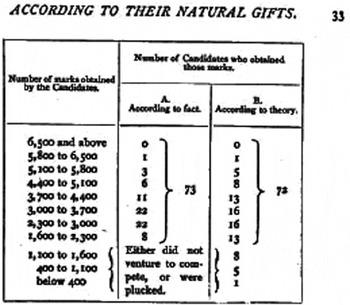
Despite these issues, Galton saw the law of frequency of error as a potentially significant method for his work, since it offered a way of explaining how men of eminence related to the rest of the populations of which they were a part. Nevertheless, to use the law, he had to find a way of measuring the talents that led to success in the professions he had examined. Galton did so by obtaining a set of exam results from the Royal Military College at Sandhurst. Dividing the possible scores into classes of equal size, he produced a table with two columns: the first showing how many students would fall into each class according to the law of error, and the second recording the numbers that actually did (see Figure 1). According to Galton, what this comparison showed was that if ‘everybody in England had to work up some subject and then to pass before examiners … their marks would be found to range, according to the law of deviation from average’, with his men of eminence in the highest class and the majority of people bunched around the middle.Footnote 51 He therefore argued that physical and intellectual qualities are not just inherited but are inherited throughout the population according to the pattern predicted by the law of frequency of error.
Galton's comparison of exam scores from Sandhurst with results predicted by the law of frequency of error. From Francis Galton, Hereditary Genius, London: Macmillan, 1869, p. 33.

Whilst Galton's case was certainly novel and thought-provoking, it was, as reviewers of Hereditary Genius frequently remarked, far from being as convincing as he liked to think it was.Footnote 52 To be sure, the book did not quite meet with the ‘cool reception’ that Karl Pearson described, but its rough edges and argumentative flaws were all noted, including the way that Galton's data, which featured a high number of siblings brought up in the same households, seemed to lend itself as much to an environmental interpretation as to his own.Footnote 53 Galton had attempted a pre-emptive strike on these criticisms, though, by adding a chapter to Hereditary Genius during the very final stages of the writing process. This chapter dealt with his cousin Charles Darwin's recent ‘hypothetical’ theory of pangenesis – a physiological account of inheritance – which Galton believed to have the potential to provide an insurmountable biological defence of his argument.
Darwin had introduced his pangenesis hypothesis in 1868, in the second volume of his The Variation of Plants and Animals under Domestication. Outlining the range of phenomena that any theory of heredity had to account for, including the apparent inheritance of acquired characters and ‘reversion’, whereby some offspring were thought to return to ancestral types or forms, Darwin proposed that heredity in plants and animals be conceptualized as a particulate process that began with each part of an organism ‘throw[ing] off minute granules or atoms’, called ‘gemmules’, over the course of its lifetime.Footnote 54 These gemmules, which alter according to any modifications of the corresponding body parts, ‘circulate freely throughout the system’, he suggested, until they are drawn towards the sexual organs or buds for the purpose of reproduction.Footnote 55 Thus, in Darwin's account, offspring are created from a selection of the gemmules contained within each parent, whilst the unused gemmules lie dormant within progeny ready for transmission and potential realization in future generations.Footnote 56
Even though it allowed for the transmission of acquired characteristics, Galton was drawn to pangenesis because he saw the theory as bringing ‘all the influences that bear on heredity into a form … that is appropriate for the grasp of mathematical analysis’.Footnote 57 Indeed, as he argued in Hereditary Genius, he believed that by using the assumptions of pangenesis there should not be
any serious difficulty … stand[ing] in the way of mathematicians, in framing a compact formula … to express the composition of organic beings in terms of their inherited and individual peculiarities … giv[ing] us, after certain constants had been determined, the means of foretelling the average distribution of characteristics among a large multitude of offspring whose parentage was unknown.Footnote 58
For this reason, having seized on Darwin's somewhat vague proposition that gemmules ‘circulate freely throughout the system’, Galton set about testing pangenesis in a series of experiments, which took place in London between December 1869 and June 1870.Footnote 59
With the advice and practical assistance of Darwin and others, Galton extracted small amounts of blood from rabbits of one breed and colour and injected it into rabbits of a different kind.Footnote 60 Galton's assumption was that if pangenesis were true then the fur colouring of the offspring of the rabbit into which blood had been injected would deviate from what would be expected ordinarily. However, in what Darwin's wife, Emma, described to a correspondent as ‘a dreadful disappointment’ to both Galton and Darwin, the experiments were a failure.Footnote 61 Even after Galton had modified his procedure and completely exchanged the blood between two rabbits, there was still no evidence, as he later put it, of ‘any alteration of breed’.Footnote 62 Thus, when he went public with his findings at the Royal Society of London in March 1871, Galton announced ‘the conclusion’ that he believed was ‘not to be avoided’: ‘the doctrine of Pangenesis, pure and simple, as I have interpreted it, is incorrect’.Footnote 63
Darwin was furious with this public rejection of pangenesis – especially as Galton appears not to have informed him in advance of his plans to do so – and immediately composed a letter of response to Nature in which he took his cousin's claims apart. ‘I have not said one word about the blood, or any fluid proper to any circulating system’, Darwin wrote in April 1871, because
it is … obvious that the presence of gemmules in the blood can form no necessary part of my hypothesis; for [in the Variation] I refer in illustration of it to the lowest animals, such as the Protozoa, which do not possess blood or any vessels; and I refer to plants in which the fluid … cannot be considered as true blood. The fundamental laws of growth, reproduction, inheritance, etc., are so closely similar throughout the whole organic kingdom, that the means by which the gemmules (assuming for the moment their existence) are diffused through the body, would probably be the same in all beings; therefore the means can hardly be diffusion through the blood.Footnote 64
No doubt confused by Darwin's failure to mention this objection during the course of the experiments, Galton was forced to concede his cousin's point in a letter of response, which was published in Nature the following week. In his defence, Galton argued that Darwin's ‘inappropriate use’ of the words ‘circulate’, ‘freely’, and ‘diffused’ meant his interpretation was the one that the ‘published account of Pangenesis … [was] most likely to convey to the mind of the reader’.Footnote 65 Although he could have forced such points further, Galton did not, no doubt because he realized that he was involved in a debate he was never going to win. As his earlier work had made clear, Galton's interest in pangenesis was shaped by a highly specific set of issues – humans and social improvement – which made his view of the subject far narrower than Darwin's.
Yet despite these shortcomings, Galton continued his pursuit of a physiological account of inheritance until 1875, during which time he and Darwin even persevered with the rabbit experiments.Footnote 66 Moreover, rather than dropping pangenesis, Galton remodelled the theory to meet his expectations of what such a theory should show. Whilst he maintained Darwin's notion of heredity as particulate, Galton played down the impact that changes in the parents’ lifetime could have on offspring and insisted that all patent and latent elements are inherited via what he called the ‘stirp’, which, he explained in an 1875 paper, ‘A theory of heredity’, is ‘the sum-total of the … gemmules … found … in the newly fertilized ovum’. From the moment of conception, he argued, the stirp is almost totally immune from the influence of the environment and receives ‘nothing further from its parents, not even from its mother, than mere nutriment’.Footnote 67
Yet having formulated a new theory of inheritance, and one that many historians have seen as an anticipation of ideas that would subsequently become scientific orthodoxy, Galton gave little, if any, thought to the physiological mechanism of heredity again.Footnote 68 Although Galton's ideal scenario was for his experiments to have proven pangenesis true, the fact that they did not was not a disaster because his research programme was not dependent on the theory. Stung by the experience of arguing with Darwin, Galton knew that he was ill-equipped to go any further with his revised theory. Galton therefore refocused on the issue that had driven his work during the 1860s: demonstrating that, rather than how, characteristics are inherited. In so doing, he developed his research programme in a way that enabled him to study heredity without reference to questions about heredity of the kind that interested biologists.
Statistics, sweet peas and Natural Inheritance
From the mid-1870s onwards, Galton's efforts to legitimate his views about heredity were defined by his return to the statistical methods with which he had experimented in Hereditary Genius. Pursuing heredity as a statistical, rather than physiological, phenomenon and formulating research strategies that had the comprehension of human heredity as their ultimate aim, Galton enjoyed a series of successes that transformed the fortunes of his project. Indeed, whilst not everything he tried delivered the results he hoped for, his breakthroughs in the study of human physical characteristics enabled him to develop the evidential and methodological content of his programme to the extent that, in 1883, he finally gave it a name: ‘eugenics’, which he had derived from the Greek word eugenes, meaning ‘good in stock, hereditarily endowed with noble qualities’.Footnote 69
As he explained in a letter to Nature in 1874, Galton's decision to return to the law of frequency of error meant that he needed to deal with some of the problems that were associated with its application to humans.Footnote 70 Whilst astronomers wanted to eliminate error, Galton was interested in the differences between people, which required a subtly different approach that could capture comparative ideas such as tall and short. He therefore suggested that the way in which he wished to apply the law of error required humans first to be scaled according to the amount or intensity they possess of the quality or attribute being investigated. Then, by picking out the individuals sitting at each quarter point in the scale, it was possible not only to calculate what was ‘technically and rather absurdly called “probable error”’, but also to compare two different data sets.Footnote 71 Yet to utilize this insight, which he called ‘statistics by intercomparison’, Galton needed data that was of higher quality and came in much greater quantities than it did in the biographical dictionaries he had used during the 1860s. With suitable information about human heredity seeming somewhat far off, his stopgap solution was to gather measurements from an alternative organism: the sweet pea, which he believed to be durable and reliable enough to be cultivated on a large scale and then subjected to statistical analysis.
As he explained in a Friday Night Discourse at the Royal Institution in 1877, Galton ‘weighed [mother and daughter sweet pea] seeds individually, by thousands’ in 1875, treating ‘them as a census officer would treat a large population’, and then distributed them in packets to friends and associates, including Darwin, who grew them and returned the results.Footnote 72 The following year, Galton was able to take stock of ‘the more or less complete produce of … 490 carefully weighed seeds’ in which the ‘only processes … that can affect the characteristics of a sample of a population are those of Family Variability and Reversion’.Footnote 73 To both his relief and his delight, Galton found that the law of frequency of error, which he was by then also calling the law of deviation and the normal distribution, accurately described not only the way the weights of the seeds were distributed about the population mean but also how the weights of progeny from a single family were distributed. Furthermore, the data revealed something still more significant: reversion in sweet peas was a tendency that ‘followed the simplest possible law’.Footnote 74 As he explained to the Royal Institution audience, the mean weight of offspring from a particular family was always a third closer to the population mean than the weight of their parent. The bell-shaped curve of the normal distribution could therefore be understood, he argued, as resulting from a combination of natural variation throughout the population and what he would later call law-like regression to the mean in each generation.
Buoyed by his uncovering of one instance of a regularity governing inheritance, of which he had predicted ten years earlier there were many, Galton's confidence both in the power of statistical analysis and in the direction of his project grew. As we have already seen, one outcome of this confidence boost was his leading role in the moves to close Section F of the BAAS, which reached its height in 1877 – the very year he announced his breakthroughs with the sweet peas. However, another consequence was Galton's decision to dispense altogether with stopgap measures and focus on the ultimate goal of his project – the application of his statistical innovations to humans – which required him to devise data-gathering techniques every bit as innovative as his new methods of analysis.
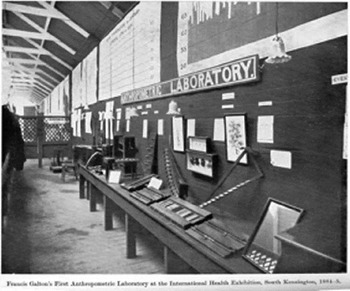
The first of Galton's fresh approaches to data gathering, which he announced in a letter to The Times in January 1884, was a questionnaire, entitled Record of Family Faculties. Offering a total of £500 in prizes – approximately £40,000 in early twenty-first century terms – as an incentive, Galton asked respondents to his questionnaire to provide a range of information about their families, such as heights and weights, stretching back four generations.Footnote 75 The second new approach was what Galton called the ‘anthropometric laboratory’, which he unveiled at the International Health Exhibition in the Royal Horticultural Society's gardens in South Kensington, London (see Figure 2). In this laboratory, which cost threepence to enter, were a superintendent and a series of instruments that were used to measure things such as height, weight and reaction times. Under the supervision of the superintendent, visitors moved through the laboratory, using each instrument as if it were a test, and exited with a card listing their scores, of which Galton kept an anonymous copy.Footnote 76
The anthropometric laboratory at the International Health Exhibition. From Karl Pearson, The Life, Letters and Labours of Francis Galton, 3 vols., Cambridge: Cambridge University Press, 1914–1924, vol. 2, Plate L.

Between them, the Record of Family Faculties and the anthropometric laboratory supplied Galton with the large body of data about humans that he had craved since the 1860s. From the Record he obtained ‘upwards of 150 good records of different families’, many of which were ‘concise, full of information, and offering numerous opportunities of verification’, providing him, he estimated, with references to over five thousand people.Footnote 77 The anthropological laboratory, however, furnished Galton with an even greater volume of information as a total of 9,337 people passed through it.Footnote 78 Indeed, it was so successful that when the International Health Exhibition closed in 1885 he moved the laboratory to a number of other locations, eventually settling in the Science Galleries of the South Kensington Museum, where he had collected a further 3,678 sets of measurements by 1892.Footnote 79
As he announced on the occasion of his presidential address to the anthropological section of the BAAS in 1885, Galton also developed a new tool to analyse this data. The ‘mid-parent’, which dealt with the problem posed by the fact that each human has two parents, was a hypothetical entity that he created by putting men and women on the same comparative scale and then calculating the average values of specific pairs of parents.Footnote 80 Although he had created these mid-parents more through a sense of hope than expectation, when he examined an attribute such as height he had discovered that ‘the stature of … children depends [so] closely on the average stature of the two parents’ that it ‘may be considered in practice as having nothing to do with their individual heights’.Footnote 81
With the aid of the mid-parent, Galton was able, he told the BAAS, to establish a number of points that were crucial for the research programme he was working on. First, by examining ‘930 adult children and their respective parentages’, he was able to demonstrate that the normal distribution applied to humans in the way that it did to other organisms and data sets.Footnote 82 Second, he was able to show that the regression to the mean he had observed in sweet peas was true of human parents and their offspring as well. ‘The height-deviate of the offspring is, on average’, Galton told the BAAS, ‘two-thirds of the height-deviate of its mid-parentage’.Footnote 83 Moreover, he was able to elaborate on the consequences of this law for his audience. Although it legislated ‘heavily against the full hereditary transmission of any rare and valuable gift’, it is a reassuringly ‘even-handed’ law, he explained, in that ‘it levies the same heavy succession-tax on the transmission of badness as well as of goodness’.Footnote 84
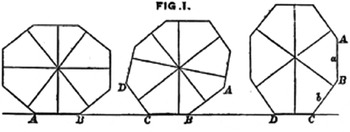
Whilst these discoveries initially provided the basis for a series of papers that not only made his empirical evidence widely available but also indicated how his methodological insights might also apply to attributes other than height, Galton wanted to paint on a broader canvas and thus he started work on a book that could be considered the intellectual successor to Hereditary Genius.Footnote 85 However, unlike Hereditary Genius, Natural Inheritance, which was published in 1889, did not carry an explicit statement of his wider commitments. Instead, Galton focused on his statistical methods and the overall view of evolution that he believed them to entail. As he explained in the opening chapters of Natural Inheritance, his discovery of the equilibrium between the forces of variation and regression, which resulted in the bell-shaped curve of the normal distribution, had led him to reject his cousin Darwin's account of evolution as a slow process of tiny, accumulative steps. For Galton, an evolving population or group was much like the polygons shown in Figure 3: stable around a central point but capable of being so on any one of their many surfaces. In this sense, whilst ‘a long established race habitually breeds true to its kind … every now and then’, Galton argued, ‘the offspring of these deviations do not tend to revert, but possess some small stability of their own’. In fact, he went on, these non-reverting offspring, which are known as ‘sports’, are so distinct that they are ‘capable of becoming the origin of a new race with very little assistance on the part of natural selection’.Footnote 86
Galton's polygon of organic stability. From Francis Galton, Natural Inheritance, London: Macmillan, 1889, p. 27.

Yet despite Galton's decision to steer clear of his wider programme of eugenics, anyone familiar with his work during the past two decades could not have failed to note the connections between this account and his ideas for social change. In his eyes, if people felt empowered to identify and foster these sports in society, the stability he had uncovered might not be an enemy of social progress but instead an ally with which to work. As he had put it in 1883 in the conclusion to Inquiries into Human Faculty and Its Development – the book in which he introduced the word eugenics – Galton wanted people to look at themselves as
more of a freeman, with the power of shaping the course of future humanity, and … less as the subject of a despotic government, in which case it would be his chief merit to depend wholly upon what had been regulated for him, and to render abject obedience.Footnote 87
However, even with all of his successes, Galton knew that a great deal more research needed to be done before eugenics could be fully realized. As we shall now see, although it was biologists who proved to be the greatest enthusiasts for his ideas and methods, Galton did not deviate from the path he had been pursuing since the early 1870s. In fact, when it came to launching eugenics as a national campaign in 1903, it was at an organization called the Sociological Society that he chose to do so.
Galton, biology and the Sociological Society
In common with all of Galton's enquiries after the pangenesis dispute, Natural Inheritance featured little that could be classed as ‘biological’ when compared with approaches to evolution and heredity of the kind that were utilized across the biological sciences. However, as has been documented extensively, that situation changed when various aspects of his work were embraced and approved by two groups of practitioners, which came to be known as the biometricians and the Mendelians after the ‘rediscovery’ of Gregor Mendel's work on plant hybridization in 1900.Footnote 88 That the late nineteenth- and early twentieth-century dispute between these two groups with seemingly incompatible approaches to evolution was frequently bad-tempered did not matter to Galton, though. What was important to him was that his research had attracted supporters who were using his ideas to set a new agenda in the study of evolution. Indeed, whilst the Mendelians and biometricians appropriated, developed and expanded on his work, Galton renewed his efforts to promote the social programme of eugenics in the social-science context in which it had been conceived.
In general terms, the biometricians, led by the statistician Karl Pearson and the biologist W.F.R. Weldon, and the Mendelians, whose most prominent member was William Bateson, reacted differently to two aspects of Galton's work. Whilst the biometricians supported Galton's statistical approach but retained Darwin's gradualist view of evolution, the Mendelians played down the importance of statistics in biology and placed more emphasis on the discontinuous elements of evolutionary change. However, for Galton, this sudden enthusiasm for his work in the biological community was primarily a potential means to an end. As Pearson wrote of Galton's activities during the 1890s and early 1900s, ‘a very fundamental characteristic of Galton's mind was his desire that our progressive knowledge of natural law should at once be turned to practical service in attempts to elevate the race of man’. Galton therefore could not
think of the doctrine of evolution merely as a contribution to academic biology; for him the type of ‘sport’ of greatest interest and value was that embracing the human moral or intellectual ‘sports’ and he desired at once to know how we might perpetuate for the service of mankind such supermen as might appear.Footnote 89
For this reason, Galton – who was entering his eighties in the first decade of the twentieth century – did not take sides in the debate between the two groups who were inspired by different aspects of his work and instead concentrated on what he no doubt knew was his final opportunity to promote his eugenic programme.Footnote 90 As has been well documented, Galton's efforts to do so were assisted by a series of political debates, including that about the poor physical fitness of volunteers for the British army during the Boer War, which helped create a much wider audience for scientifically grounded ideas about social improvement.Footnote 91 What has been less well documented by historians of science, though, is how those concerns frequently manifested themselves as an enthusiasm for social, not just biological, science. In Britain, this enthusiasm was demonstrated in 1903 when a group of natural and social scientists, including T.H. Huxley's former protégée, the Scottish biologist and sociologist Patrick Geddes, his close associate Victor Branford, and the anthropologist A.C. Haddon, came together to form the Sociological Society – Britain's first organization for sociology.Footnote 92
At the heart of the Sociological Society's activities were its monthly public meetings, which were held at the recently founded London School of Economics and recorded in a series called Sociological Papers – the forerunner of today's Sociological Review. The point of these meetings was not only to promote sociology to the British scientific and intellectual communities but also to provide a forum in which men and women of science could debate what they understood sociology to be. To achieve these aims, the founders of the Sociological Society assembled a series of high-profile presentations, including a paper from the eminent French sociologist Emile Durkheim.Footnote 93 However, despite their interest in such foreign luminaries, the founders of the Sociological Society were initially most enthusiastic about Galton's work. The reason for the society's interest in Galton was twofold. On the one hand, the society knew that the rich and heirless Galton was ‘prepared to endow with a considerable fund some form of eugenic research’, which made him an attractive financial proposition.Footnote 94 On the other, Galton, who had received the Royal Society's Darwin Medal in 1902, possessed the kind of reputation that was attractive to an organization looking to establish its scientific credentials. Consequently, Victor Branford – acting secretary of the Sociological Society – spent much of late 1903 and early 1904 canvassing Galton on behalf of the burgeoning British sociology community.
After a prolonged correspondence and a ‘searching cross-examination’ by Galton that recalled his concerns about Section F in the late 1870s, Branford persuaded Galton that the Sociological Society was the ideal place to launch his new campaign for eugenics to be taken up as a national concern.Footnote 95 Galton appeared before the Sociological Society on 16 May 1904 in the company of Pearson, who chaired the meeting, and Weldon, who sat in an audience that included, amongst others, the writers and eugenicists George Bernard Shaw and H.G. Wells and the future first British professor of sociology, L.T. Hobhouse.Footnote 96 What Branford and the rest of the audience heard from Galton was a presentation entitled ‘Eugenics: its definition, scope, and aims’ – a general overview of the methods and intent behind Galton's programme, which has since become renowned as a classic statement of the eugenic creed.Footnote 97 However, despite the fact that publications of this presentation, including Galton's own 1909 collection, Essays in Eugenics, cited the forum in which it had been delivered, historians of science have subsequently lost sight of the context in which it originally existed and the purpose it was meant to serve.
Galton began his presentation to the Sociological Society by defining what he meant when he used the term ‘eugenics’. Eugenics, he explained, was ‘the science which deals with all influences that improve the inborn qualities of a race’ as well as ‘those that develop them to the utmost advantage’.Footnote 98 However, he went on, it was important that this definition was not taken to mean that his programme was devoted to breeding humans according to a single archetype. Building on what he had learned from his work on the distribution of populations, Galton told the Sociological Society that ‘there are a vast number of conflicting ideals, of alternative characters, of incompatible civilizations but they are wanted to give fullness and interest to life’. After all, ‘society would be very dull’, he reasoned, ‘if every man resembled the highly estimable Marcus Aurelius or Adam Bede’. The point of eugenics was therefore to create the conditions in which people could realize a variety of different capacities, from the artistic and the scientific to the practical and the theoretical. Indeed, after educating people about the laws governing reproduction, a eugenically aware society would leave them, Galton asserted, ‘to work out their common civilisation in their own way’.Footnote 99
Whilst this overview of eugenics was an important part of the message that Galton wanted to deliver to his audience, the focus of ‘Eugenics: its definition, scope, and aims’ was the part that the Sociological Society could play in making eugenics a set of guiding principles for British life. It was important first, he told the society, to make eugenics an ‘academic question’ because it was only through such means that its ‘exact importance [would be] understood and accepted as a fact’. The reason, Galton went on, was that the second phase of development, during which eugenics would be ‘recognised as a subject whose practical development deserves serious consideration’, was dependent on sufficient scientific and technical knowledge of inheritance being acquired first. Only then could eugenics ‘be introduced into the national conscience, like a new religion’, because there would be relative parity between the enthusiasm for his eugenic vision and the practical means of achieving it.Footnote 100 In this sense, Galton urged the Sociological Society to make eugenics the intellectual centre of gravity of British sociology and thus signal the beginning of the first of the three stages he had outlined.
Galton's practical suggestion for the Sociological Society was for it to help collect the data on which stage one of the eugenics enterprise rested. Specifically, he believed that the society should devote its resources to the compilation of information about ‘thriving’ families; that is, those in which ‘the children have gained distinctly superior positions to those who were their class-mates in early life’.Footnote 101 Indeed, in a turn of phrase that was no doubt directed towards the Sociological Society's desire for scientific respectability, Galton told his audience that whilst the ‘golden book’ of thriving families would be a significant material contribution to the eugenic cause, it would ‘have the further advantage of familiarising the public with the fact that Eugenics had at length become a subject of serious scientific study by an energetic Society’.Footnote 102 Thus, as he brought one of his most famous presentations to a close, Galton – as is seldom recognized – had made the case for eugenics as the template for a new social science in the UK and outlined what needed to be done to make this a reality. Indeed, he had done so without reference to the physiological mechanisms underpinning the process of inheritance, which, as many of his listeners, including Hobhouse, observed, was notable in its absence from his account of the subject matter of eugenics.Footnote 103
Eugenics, biology and social science: reassessing Galton's programme
Having traced how Galton developed his eugenics research programme, we have seen that although his work intersected with biology at a number of points, a whole range of important issues – from why it was established during the mid-1860s to why an organization called the Sociological Society was the venue for one of his most famous presentations – make sense only in light of the social-science context explored in this paper. An important part of this process has been to chart the dynamics of Galton's relationship with biology during the two decades between the pangenesis dispute with Darwin during the early 1870s and the embracing of his work by biologists and statisticians from the 1890s onwards. Whilst that observation might seem relatively unproblematic in some respects, it is significant when we consider that, having taken one of his cues from his cousin Darwin and subsequently influenced the methods, scope and aims of biological science, Galton features prominently in histories of biology. In this respect, by sharpening of our sense of the relationship between Galton and the biological sciences during the period when he was making his most significant advances in his study of heredity, this paper has posed an important question: would it have made much difference to the substance and identity of Galton's programme if biologists had not embraced his ideas during the 1890s?
As Gregory Radick, John Henry, Peter Bowler, Steven French and Steve Fuller have convincingly argued in a recent Isis focus section, counterfactual questions such as these have an important role to play in history of science.Footnote 104 Indeed, far from being trivial fictions, counterfactuals, which are taken far more seriously by natural and social scientists than they are by scholars in the humanities, are of great value when it comes to establishing the significance of the history we have experienced and why we have experienced it thus.Footnote 105 In terms of the argument that has been put forward here, the counterfactual proposition is that very little about Galton's programme of eugenics would have been different if Pearson, Bateson, Weldon and other early Mendelians and biometricians had eschewed his work in the late nineteenth and early twentieth centuries. Without the biologists, it has been argued, Galton would have most likely continued along the path he had been travelling since the early 1870s and still arrived at the Sociological Society in 1904 with precisely the same presentation.
As we have seen, after the controversy and, to a certain extent, embarrassment of the pangenesis dispute with Darwin, Galton had pursued his research with the intention of excluding questions about inheritance of the kind that concerned biologists. Instead of investigating the mystery of how, in a physiological sense, traits are passed from one generation to the next, Galton reframed his research as a study dedicated to showing that characteristics are inherited in a law-like fashion. The consequence was a fifteen-year period of immense creativity when he developed innovative statistical methods and applied them to masses of fresh data he had acquired, which enabled him to uncover the first evidence of laws governing heredity. It was these successes that brought Galton to the attention of biologists and biostatisticians, which established the significant connection between his research and their practices. However, despite enjoying and welcoming the attention of Pearson, Bateson, Weldon and others, Galton had not set out with the intention or major aim of courting biologists. Whilst Galton's work obviously did not exist in splendid isolation from biology, its anthropometric character and marginalization of questions – especially physiological questions – that concerned biologists mean that it was not, in its own context, a biologically minded project. In this sense, the fact that it was biologists who appropriated his work is important because it means that the strong link between biology and Galton's eugenic programme was only established when biological practice came to look like what he had been doing for the previous three decades.
The point of these speculations is not to deny that eugenics became a biologically grounded project during the twentieth century, but to throw fresh light on Galton's own role in it becoming so and the inevitability of the union taking place at all. Furthermore, and building on a point made recently by Steven Shapin in a review of the New Dictionary of Scientific Biography, the hope is that this reinterpretation of Galton's work will highlight how historians of science, despite their enthusiasm for contemporary sociology and social theory, frequently neglect the social sciences when it comes to examining the contexts in which their subjects of study were working.Footnote 106 When trying to make sense of the projects for social reform that emerged during the late nineteenth century, it is important to recognize that whilst the findings of biologists provided much inspiration for the social sciences, the flow of ideas was not in one direction only. Indeed, as this account of Galton's work has shown, by taking the role of the social sciences in shaping the agenda of late nineteenth- and early twentieth-century science seriously, we can learn a great deal about both why and how men and women of science pursued the questions that they did.