Introduction
Accessing a patient’s airway through the use of laryngoscopy is often a necessary life-saving measure for critically ill patients. The standard procedure for endotracheal intubation is to use direct laryngoscopy (DL), for which the success rate approaches 85%. Reference Mallick, Verma and Jaiswal1,Reference Griesdale, Liu, McKinney and Choi2 In recent years, video laryngoscopy (VL) was developed in an effort to improve patient outcomes and limit errors caused by physicians and other health care professionals. Innovations in video-guided laryngoscopy include the development of delayed sequence intubation, rapid sequence intubation, and awake intubation. Reference Tayal, Riggs, Marx, Tomaszewski and Schneider3,4
A variety of studies have established the advantages of VL compared to DL, including a higher intubation efficiency, Reference Smereka, Ladny, Naylor, Ruetzler and Szarpak5 a faster learning curve, Reference Aghamohammadi, Massoudi, Fathi, Jaffari, Gharaei and Moshki6 better glottic visualization, and a higher overall success rate. Reference Griesdale, Liu, McKinney and Choi2 Yet in the prehospital setting, in which paramedics are responsible for performing emergency laryngoscopy, there is a higher risk of complicated laryngoscopy and intubation, which potentially lead to undesired patient outcomes. Reference Graham, Beard, Henry and McKeown7 Other studies have reported the occurrence of major immediate adverse events, including hypotension, hypoxemia, and dysrhythmia Reference Tayal, Riggs, Marx, Tomaszewski and Schneider3,4 due to multiple attempts at intubation.
There is some literature discussing the utility and effectiveness of VL in the context of emergency medicine and in intensive care settings by non-expert providers. Reference Griesdale, Liu, McKinney and Choi2,Reference Smereka, Ladny, Naylor, Ruetzler and Szarpak5,Reference Aghamohammadi, Massoudi, Fathi, Jaffari, Gharaei and Moshki6,Reference Gordon, Bertram, Cavallin, Parotto and Cooper8 Studies have been conducted retroactively on large patient populations and on manikins to better understand the utility of DL in the prehospital emergency setting. For example, one manikin study established that the median force applied to the concave surface of the laryngoscope during intubation attempts using VL was lower than the force applied during DL to achieve >80% of glottic opening aperture, indicating one advantage of using VL by Emergency Medical Services personnel. Reference Gordon, Bertram, Cavallin, Parotto and Cooper8 For VL to become the standard practice for endotracheal intubations in the prehospital setting, there needs to be more evidence that it is effective for non-expert users. However, there is a dearth of systematic reviews and meta-analyses of the data regarding the effectiveness of VL by non-expert users, including paramedics, on critically ill adult patients in the prehospital setting.
The systematic review and meta-analysis of VL versus DL reported here was designed to compare the first-pass success rates and overall success rates of the procedures when performed by paramedics on adult patients in prehospital settings.
Methods
Search Strategy and Study Selection
This systematic review and meta-analysis was conducted according to the 2020 Preferred Reporting Items for Systematic Review and Meta-Analyses (PRISMA). Reference Page, McKenzie and Bossuyt9 PubMed (National Center for Biotechnology Information, National Institutes of Health; Bethesda, Maryland USA) and Scopus (Elsevier; Amsterdam, Netherlands) databases were searched from their beginning through March 1, 2022 using Covidence software (Melbourne, Australia) to manage the search, including the identification of duplicate titles. The protocol developed for this search was submitted to PROSPERO, and there was no change of the protocol once the screening process commenced (CRD42022328959).
Detailed Search Strategy
The following terms were searched on PubMed and Scopus databases: ((emergency medical services) OR (paramedic) (emergency medical technicians)) AND (videolaryngoscopy) Filters: English, Adult: 19+ years, English, Adult: 19+ years, “Emergency Medical Technicians”[Mesh] video laryngoscopy Filters: Adult: 19+ years, English, “Emergency Medical Services”[Mesh] videolaryngoscopy Filters: Adult: 19+ years, English.
On March 1, 2022, the following searches were conducted on Scopus: TITLE-ABS-KEY ({videolaryngoscopy} AND “prehospital”) AND (LIMIT-TO (LANGUAGE, “English”)), TITLE-ABS-KEY ({videolaryngoscopy} AND “emergency medical services”) AND (LIMIT-TO (LANGUAGE, “English”)), TITLE-ABS-KEY ({videolaryngoscopy} AND “paramedic*”) AND (LIMIT-TO (LANGUAGE, “English”)), TITLE-ABS-KEY ({videolaryngoscopy} AND “emergency medical technician*”), TITLE-ABS-KEY ({video laryngoscopy} AND “emergency medical technician*”), TITLE-ABS-KEY ({video laryngoscopy} AND “emergency medical services*”) AND (LIMIT-TO (LANGUAGE, “English”)), TITLE-ABS-KEY ({video laryngoscopy} AND “prehospital*”) AND (LIMIT-TO (LANGUAGE, “English”)). This review was registered in PROSPERO (CRD42022328959).
All studies involving prehospital personnel intubations and adult patients were considered eligible. Experimental studies (any randomized trials), quasi-experimental studies, and observational studies (prospective and retrospective) were included. Excluded were studies not available in the English language, not available as full text (eg, abstracts, conference reports), and non-original studies (eg, systematic reviews, meta-analyses). Because the focus of the review and analysis was the efficacy of VL versus DL in real-life clinical practice, studies involving human subjects during clinical scenarios were included, but studies that used other advanced video-assisted intubation modalities such as fiberoptic devices were excluded. Also excluded were studies of intubations performed in prehospital settings by anesthesiologists, surgeons, any physicians, or any care providers other than paramedics. Finally, studies involving pediatric patients (as defined by the authors) or non-human subjects (eg, manikins, animals, simulators) were excluded. The references of included studies were searched for additional eligible studies, but authors of included studies were not contacted for more information.
Two investigators independently reviewed each title and abstract for satisfaction of the inclusion criteria. Any discrepancy was adjudicated by a third investigator. Any title and abstract required agreement between two investigators before advancing to full-text review.
Outcome Measures
The primary outcome was the first-pass success rate of VL versus DL, defined as the proportion of intubations that were successful on the first attempt in a given patient. Other outcomes included overall success rate and the mean number of intubation attempts for a given intubation encounter.
Risk of Bias and Heterogeneity
Cochrane’s Risk of Bias (RoB) tool Version 2 was applied to assess the risk of bias for randomized trials, and the Newcastle-Ottawa Scale (NOS) was used to assess quality of observational studies. Reference Higgins, Altman and Gøtzsche10,Reference Wells, Shea and O’Connell11 The Cochrane’s RoB tool assesses each study’s five domains (randomization process, deviations from intended interventions, missing outcome data, measurement of outcome, and selection of reported results) and grades a study according to the domain with the highest risk of bias. The NOS assesses each study’s three domains (quality of outcomes, comparability of groups, and cohort selection) and assigns a maximum of nine points. High-quality studies were assigned scores ≥seven; moderate- and low-quality studies were assigned scores of four-to-six and ≤three, respectively.
The I Reference Griesdale, Liu, McKinney and Choi2 values and Q-statistics were used to assess the heterogeneity of the meta-analysis. The Q-statistic tests for the null hypothesis (ie, that all studies within this study would have similar effect size), and the I2 value shows the percentages of the differences between studies’ effect size were not due to chance.
Data Extraction
Two investigators independently extracted data into a standardized Excel spreadsheet (Microsoft Corp.; Redmond, Washington USA). Data discrepancies between the investigators were adjudicated by a third investigator. The final result was reported as the consensus of the group.
Investigators collected the following information: year of publication, study design (retrospective versus prospective), study type (randomized controlled trial, case studies), age of patients, gender of patients (% females), Mallampati score, Cormack grade, operator experience, VL models, first-pass success rate, overall success rate, number of intubation attempts for VL versus DL, time to first-pass success, and operator satisfaction with VL versus DL. If the success rates were not explicitly reported, they were calculated using the reported number of successes and failures. The percentage of female patients was also calculated by dividing the reported number of female patients by the total number of participants. The Mallampati scores, Cormack grades, operator experience, and operator satisfaction were rarely reported in these studies. Because these measurements were not consistently available, they were not included in the analysis or the results.
Statistical Analysis
Continuous data were described as mean (SD). Where the authors reported data as median (interquartile range [IQR]), the median was converted to mean as previously reported. Reference Hozo, Djulbegovic and Hozo12 Random-effects meta-analysis was performed for any two studies reporting the same outcome. Comparisons of prevalence results (first-pass success rates, overall success rates) between VL versus DL were expressed as risk ratio with 95% confidence interval (95% CI). Comparison of continuous outcomes (number of intubation attempts) was expressed as difference in means with 95% CI.
Anticipating that there was heterogeneity among the included studies, moderator analyses were performed to identify potential sources of heterogeneity of the primary outcome. Categorical demographic data were used from individual studies as the moderators: study design (retrospective versus prospective), type of operators (paramedics versus combination of paramedics and nurses), mode of transport teams (air versus ground), and type of VL design that was used by the authors (hyperangulated device [King Vision; Ambu Inc.; Columbia, Maryland USA] versus standard geometry device [C-MAC; Ronse, Belgium]).
Additional Analyses
Sensitivity analysis was performed to assess whether any single study would affect the overall result of the study, since large studies with more robust methods may have smaller effect size when compared to small studies, due to the so-called “small study effect.” Reference Borenstein, Hedges and Higgens13 The sensitivity analysis utilized one-study-removed random-effect meta-analysis, in which each individual study is systematically removed to perform meta-analysis on the rest of the studies.
To measure the chronological trend of the efficacy of using VL in prehospital settings, random-effects cumulative meta-analysis was performed. In this method, a random-effects meta-analysis of the earliest published study was performed. Then a meta-analysis of two studies was performed when the second earliest study was added to the first earliest study. The process was repeated until the last study was added.
The funnel plot was not applied to assess publication bias because of the small number of included studies, but both Begg’s and Egger’s tests were used. When the P values for both Begg’s and Eggers’ tests applied to the meta-analysis are greater than .05, that study is less likely to have publication bias. Publication bias was assessed further using Orwin’s Fail-safe N test, which predicted the number of missing studies or future studies that might have changed the meta-analysis’ effect size.
All random-effect meta-analyses and publication bias tests were performed with Comprehensive Meta-Analysis software (www.meta-analysis.com; Englewood, New Jersey USA). Tests with two-tailed P values <.05 were considered statistically significant.
Results
Study Description
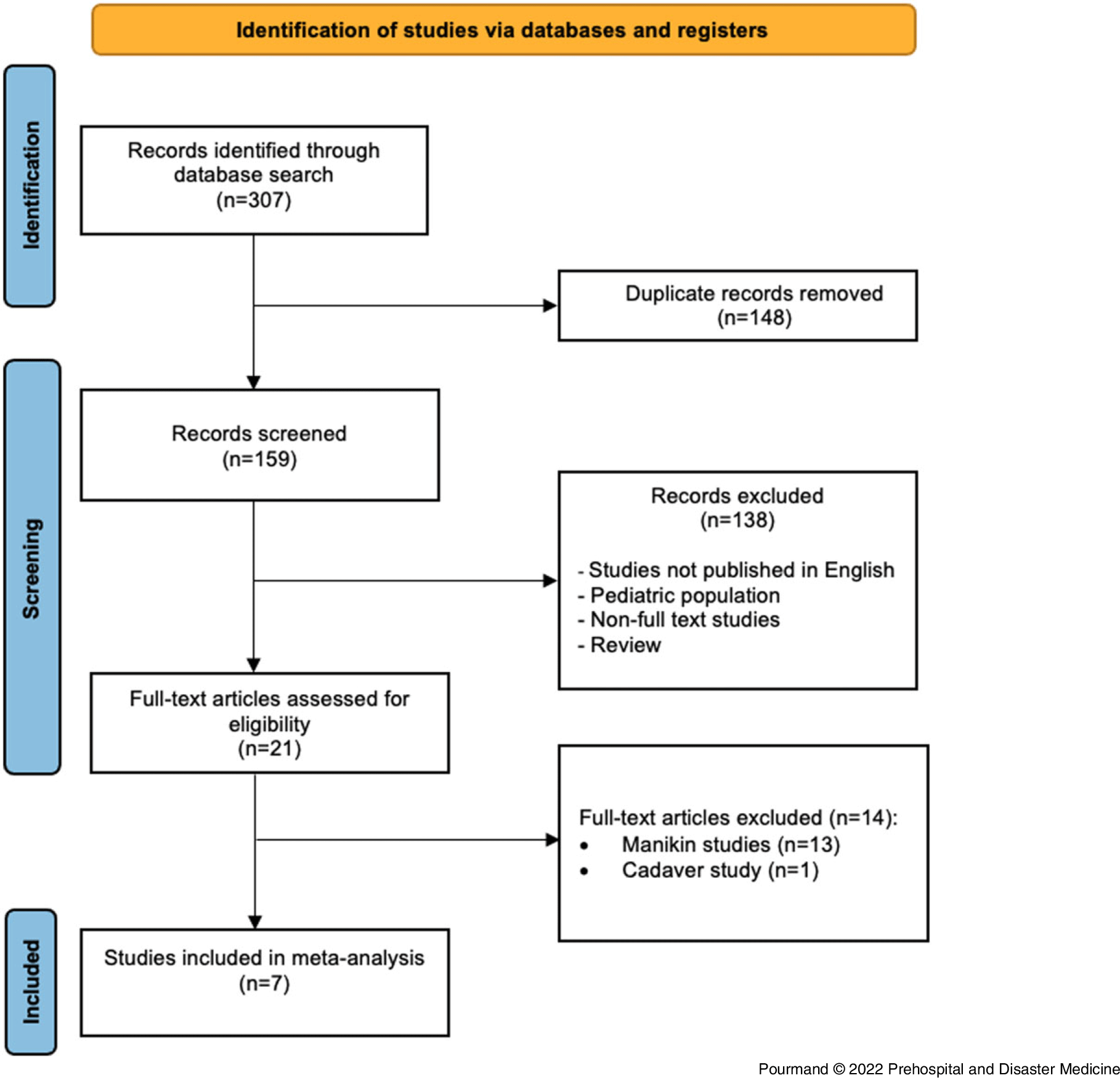
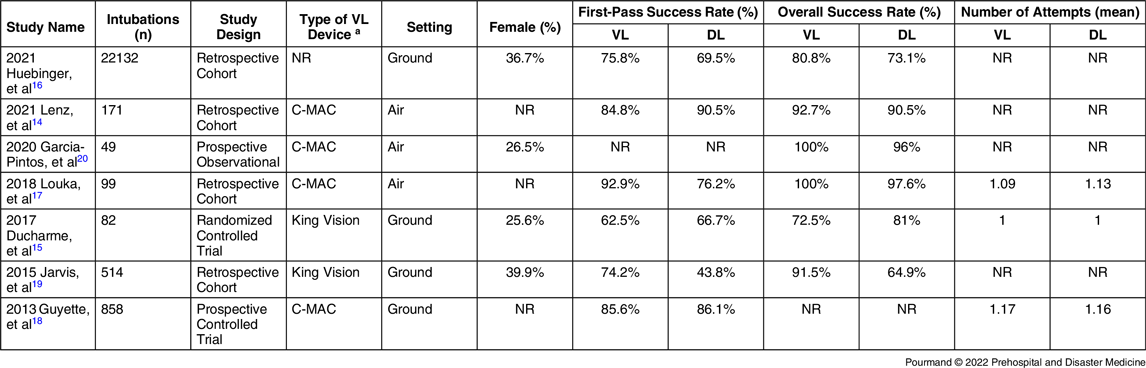
This study began with an electronic search that identified 307 studies. After reviewing 21 full-text studies, seven studies met the inclusion criteria for final analysis (Figure 1). Two were randomized control trials (2013 Guyette, 2017 Ducharme), one was a prospective study (2020 Garcia-Pintos), and four were retrospective studies (2015 Jarvis, 2018 Louka, 2021 Huebinger, 2021 Lenz). Reference Lenz and Olsen14–Reference García-Pintos, Erramouspe and Schandera20 Three studies enrolled fewer than 100 patients (2017 Ducharme, 2018 Louka, 2020 Garcia-Pintos), while the 2021 Huebinger study involved a large population (22,132 patients). Reference Ducharme, Kramer, Gelbart, Colleran, Risavi and Carlson15–Reference Louka, Stevenson, Jones and Ferguson17,Reference García-Pintos, Erramouspe and Schandera20 In all the studies, a total of 6,674 patients underwent intubation via VL and 17,279 patients underwent DL (Table 1). Fourteen of 21 studies reported the outcomes of interest but were excluded because they used cadaver Reference Truszewski, Czyzewski and Smereka21 or manikin conduits and not living adult patients. Reference Gok, Ozakin and Acar22–Reference Boedeker, Berg, Bernhagen and Murray33
PRISMA Flow Diagram.

Characteristics of the Studies Included in the Meta-Analysis

Abbreviations: VL, video laryngoscopy; DL, direct laryngoscopy; NR, not reported.
a Brand names of devices were reported by the studies’ authors.
Risk of Bias and Quality Assessment
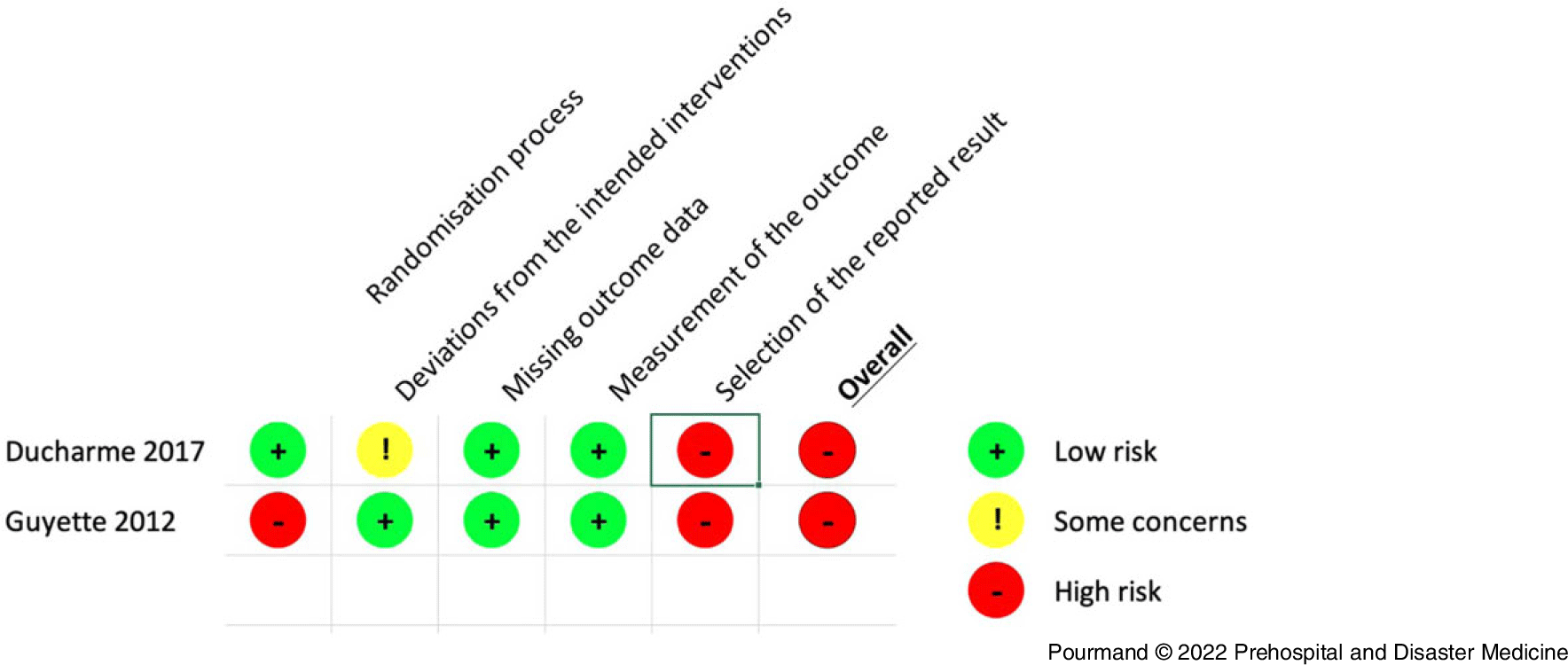
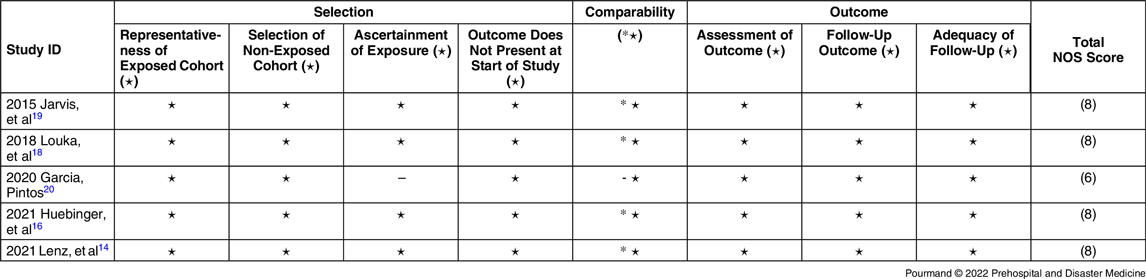
The two randomized trials (2013 Guyette, 2017 Ducharme) were graded as having a high risk of bias due to their high risk of bias in the domain of Selection of Reported Results (Figure 2). Among the observational studies, 2020 Garcias Pintos was assigned six points, reflecting a moderate study quality (Table 2).
Risk of Bias of Randomized Trial using the Cochrane Collaboration’s Risk of Bias Tool Version 2.

Study Quality Assessment Using the Newcastle-Ottawa Scale of Observational Studies Included in the Meta-Analysis

Note: Number reported in the Total column is the Newcastle-Ottawa Scale score.
For quality assessment of the observational studies, each of the other observational studies received eight points on the NOS, indicating high study quality (Table 2).
Primary Outcome: First-Pass Success Rate
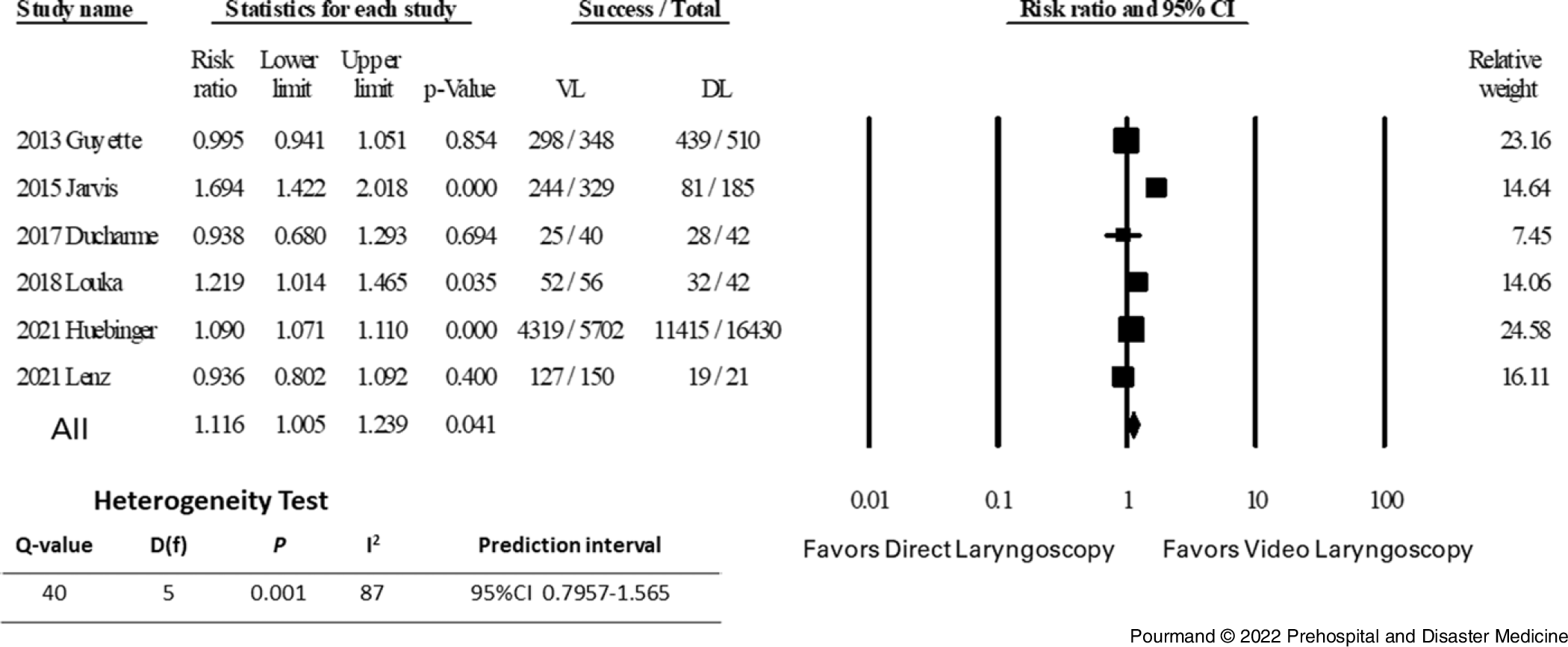
Six studies reported first-pass success rate as one of the outcomes. Overall, VL was associated with a statistically higher risk ratio of first-pass success (Risk Ratio [RR] = 1.116; 95% CI, 1.005-1.23; P = .041); Figure 3A. The P value for the Q-statistic was less than .001, which rejected the null hypothesis and suggested that the included studies did not share similar effect sizes. In addition, I2 value was 87%, suggesting that 87% of difference of effect size between the included studies was due to sampling errors. In other words, there was significant heterogeneity among the included studies within the meta-analysis.
Forest Plot of Random-Effects Meta-Analysis Comparing First-Pass Success Rates between Video Laryngoscopy versus Direct Laryngoscopy.

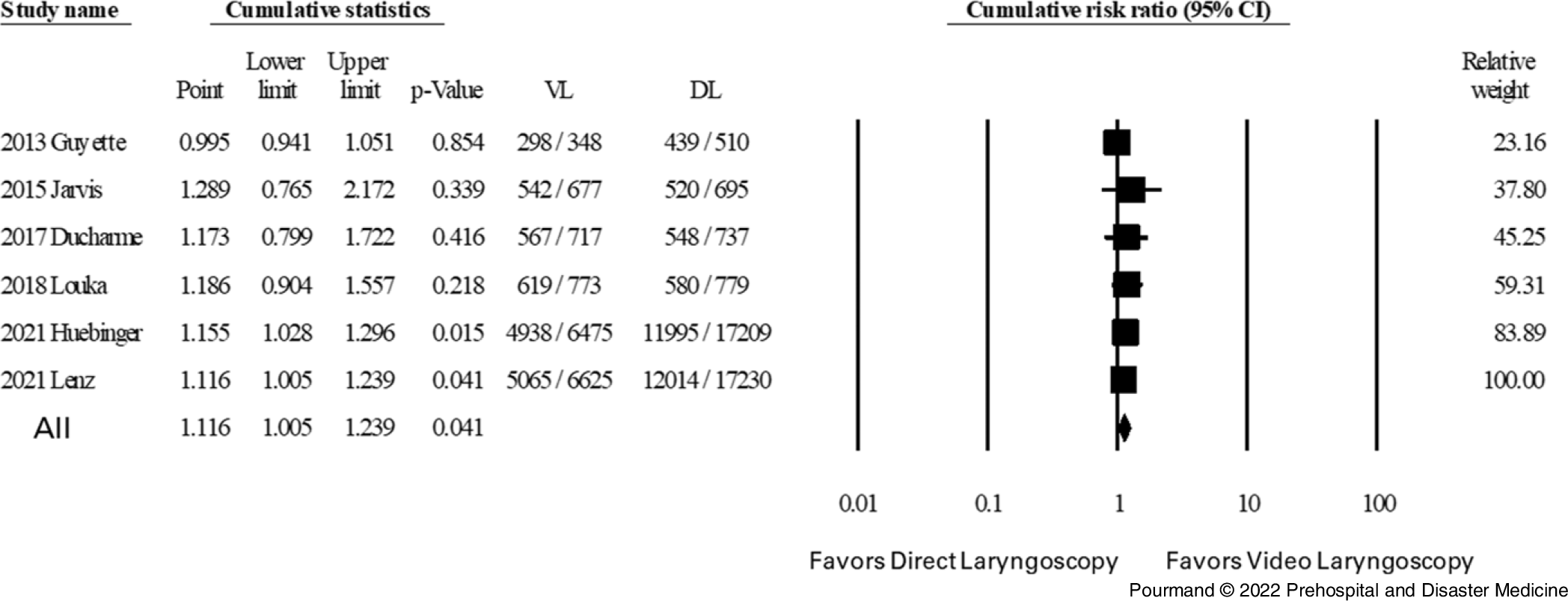
The cumulative meta-analysis showed that since Guyette, et al’s study in 2013, the risk ratio for first-pass success initially started to favor the use of VL devices with the addition of Ducharme, et al’s study in 2017 (Figure 3B). Reference Ducharme, Kramer, Gelbart, Colleran, Risavi and Carlson15,Reference Guyette, Farrell, Carlson, Callaway and Phrampus18 However, the use of VL was not associated with greater first-pass success until the last study by Lenz, et al in 2021 was added. Reference Lenz and Olsen14
Cumulative Meta-Analysis Comparing First-Pass Success Rate between Video Laryngoscopy versus Direct Laryngoscopy According to Chronological Order of Published Studies.

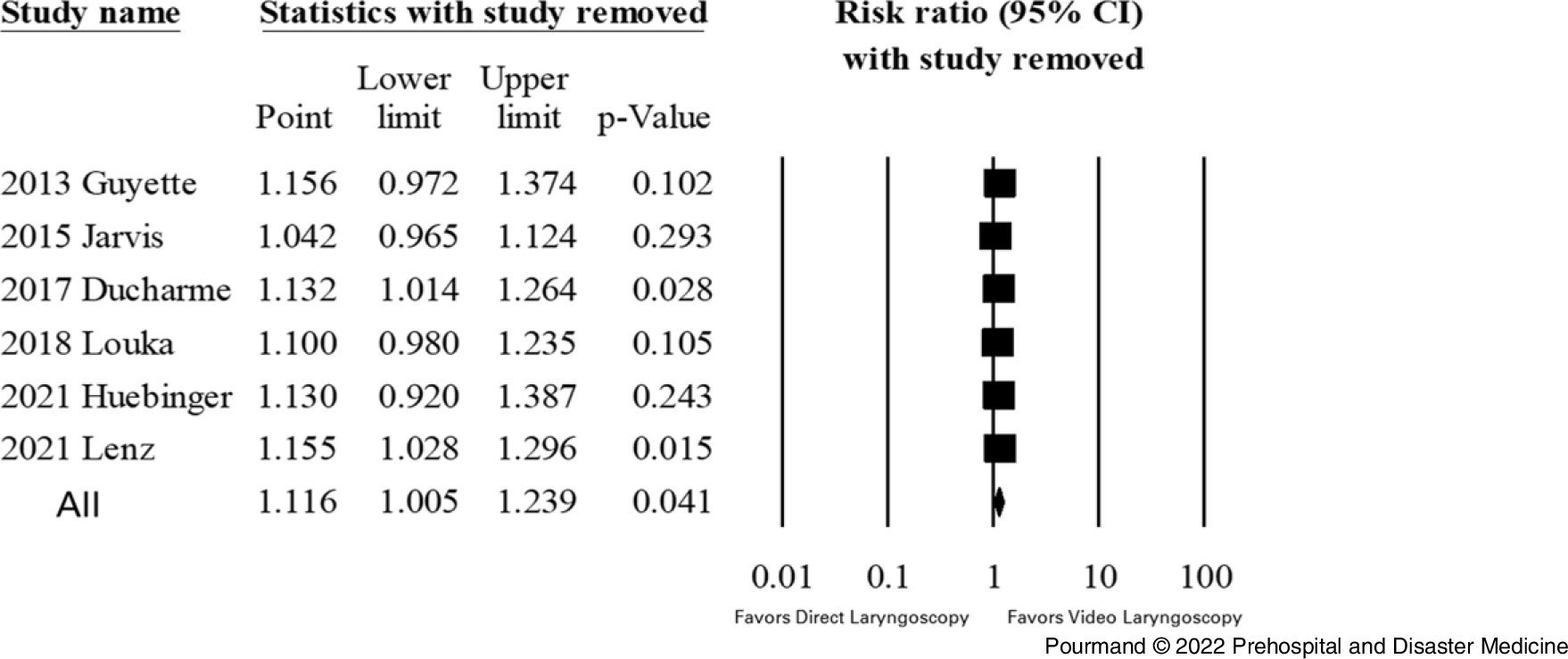
For sensitivity analysis, after each individual study was removed from the meta-analysis, the risk ratio for first-pass success rate remained between 1.042 and 1.156 (Figure 3C), which was well within the 95% CI for the study’s 95% CI. This result suggested that effect size was not overly influenced by any individual study.
Sensitivity Analysis of First-Pass Success Rate, using One-Study-Removed Random-Effects Meta-Analysis.

The Egger’s and Begg’s P values for random-effect meta-analysis were .86 and .99, respectively, which indicated low likelihood of publication bias. Orwin’s Fail-safe N test showed that at least eight missing studies or future studies with a risk ratio of 0.94 favoring DL are needed to bring the risk ratio for first-pass success rate to 1.00.
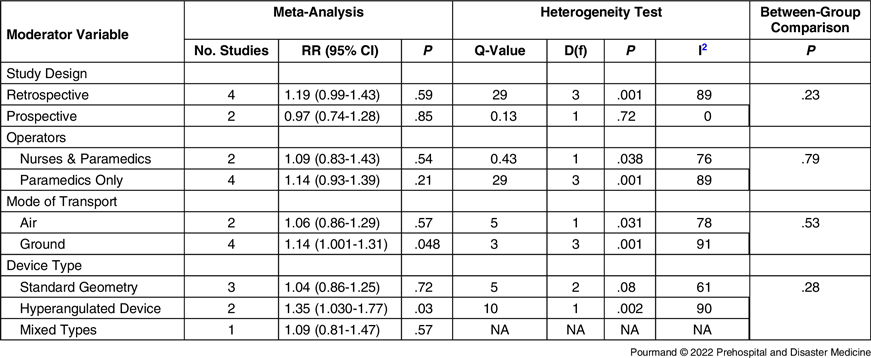
Moderator analyses showed that only prospective studies (I2 = 0) were associated with low heterogeneity for the first-pass success rate compared to retrospective studies (I2 = 89%; Table 3). None of the other categorical characteristics was associated with low heterogeneity between studies.
Moderator Analysis for Potential Heterogeneity of Primary Outcome of First-Pass Success Rate Using Categorical Variables to Compare Subgroups

Note: 95% CI indicates 95% confidence interval; RR, risk ratio; and NA, not applicable.
Secondary Outcome 1: Overall Success Rate
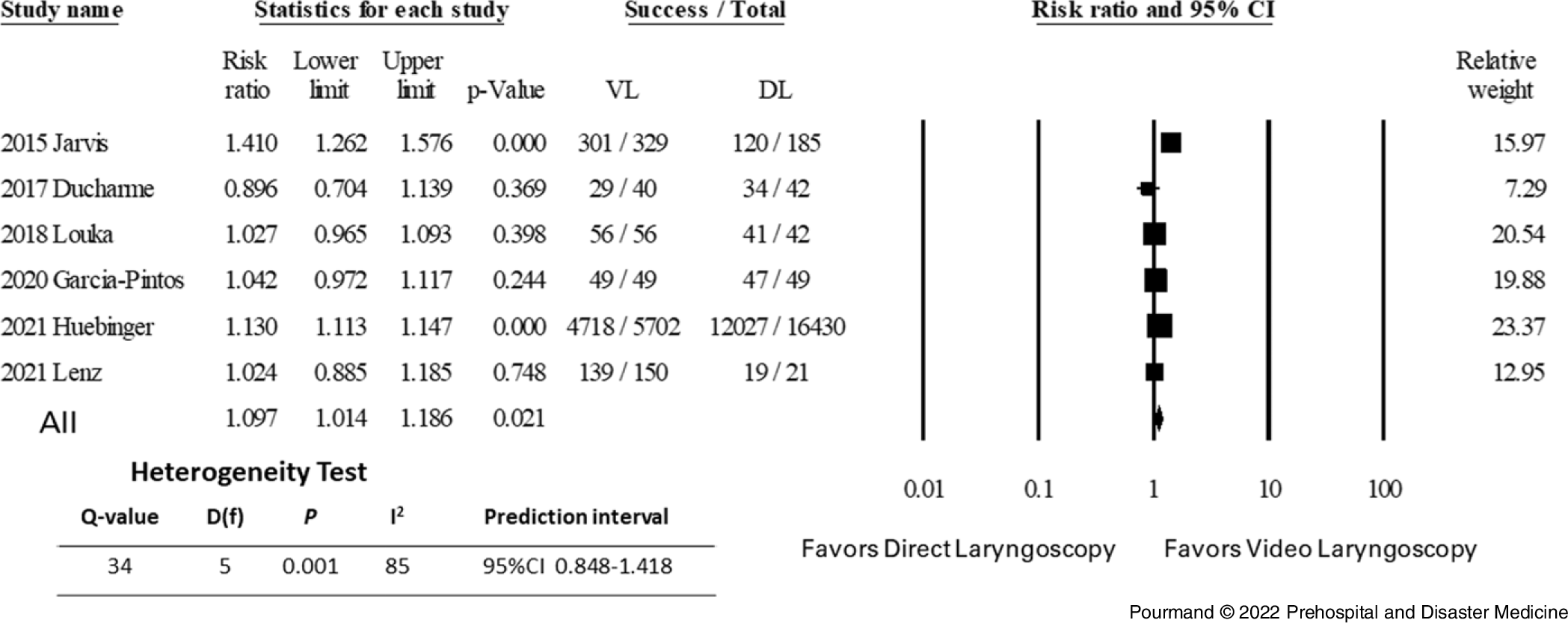
The random-effects meta-analysis of six studies for overall success rate showed that the use of a VL device in the prehospital setting was associated with higher risk ratio for overall intubation success rate (RR = 1.097; 95% CI, 1.01-1.18; P = .021); Figure 4A. The P value for the Q-statistic was <.001 and the I2 value was 85%, indicating high heterogeneity among studies within this meta-analysis.
Forest Plot of Random-Effects Meta-Analysis Comparing Overall Success Rate between Video Laryngoscopy versus Direct Laryngoscopy.

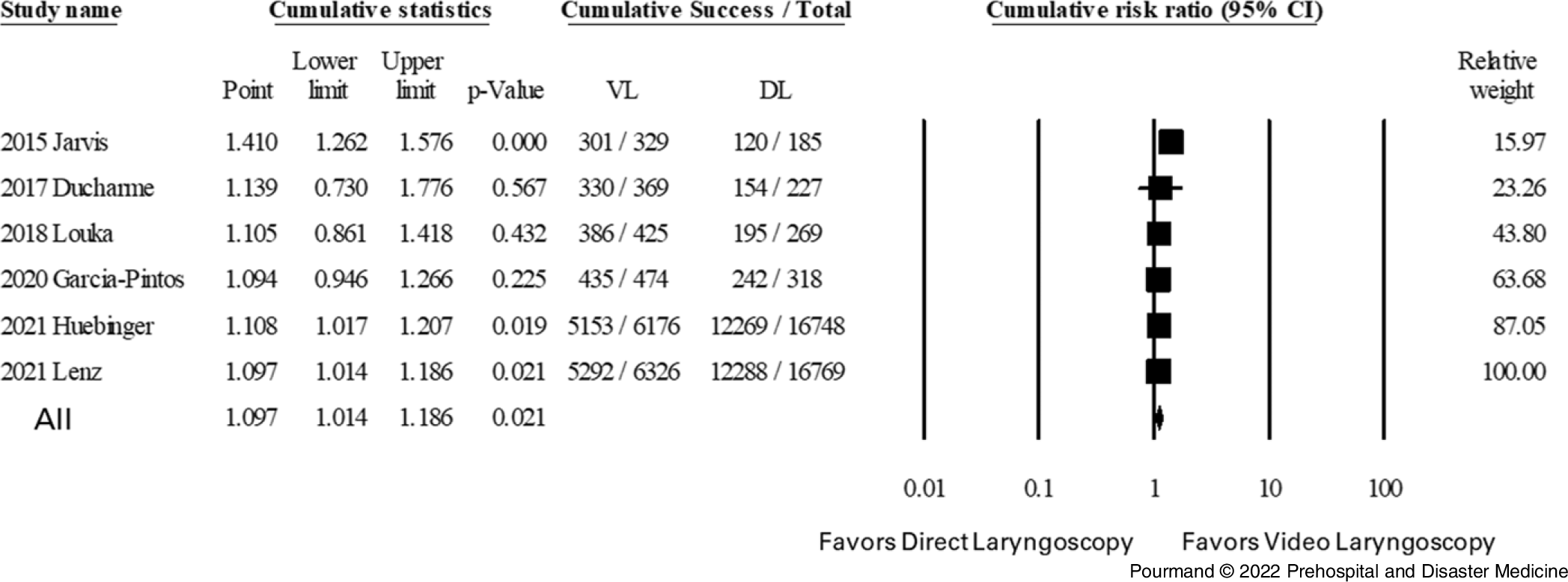
Cumulative analysis showed that the risk ratio for overall success rate favoring VL was initially significant with the earlier study, Jarvis, et al (Figure 4B), but it became non-significant with the addition of the next three studies. Reference Jarvis, McClure and Johns19 The risk ratio for overall success rate became statistically significant in 2021 with the addition of Huebinger, et al and more recent studies. Reference Huebinger, Stilgenbauer, Jarvis, Ostermayer, Schulz and Wang16
Cumulative Meta-Analysis Comparing the Overall Success Rate between Video Laryngoscopy versus Direct Laryngoscopy.

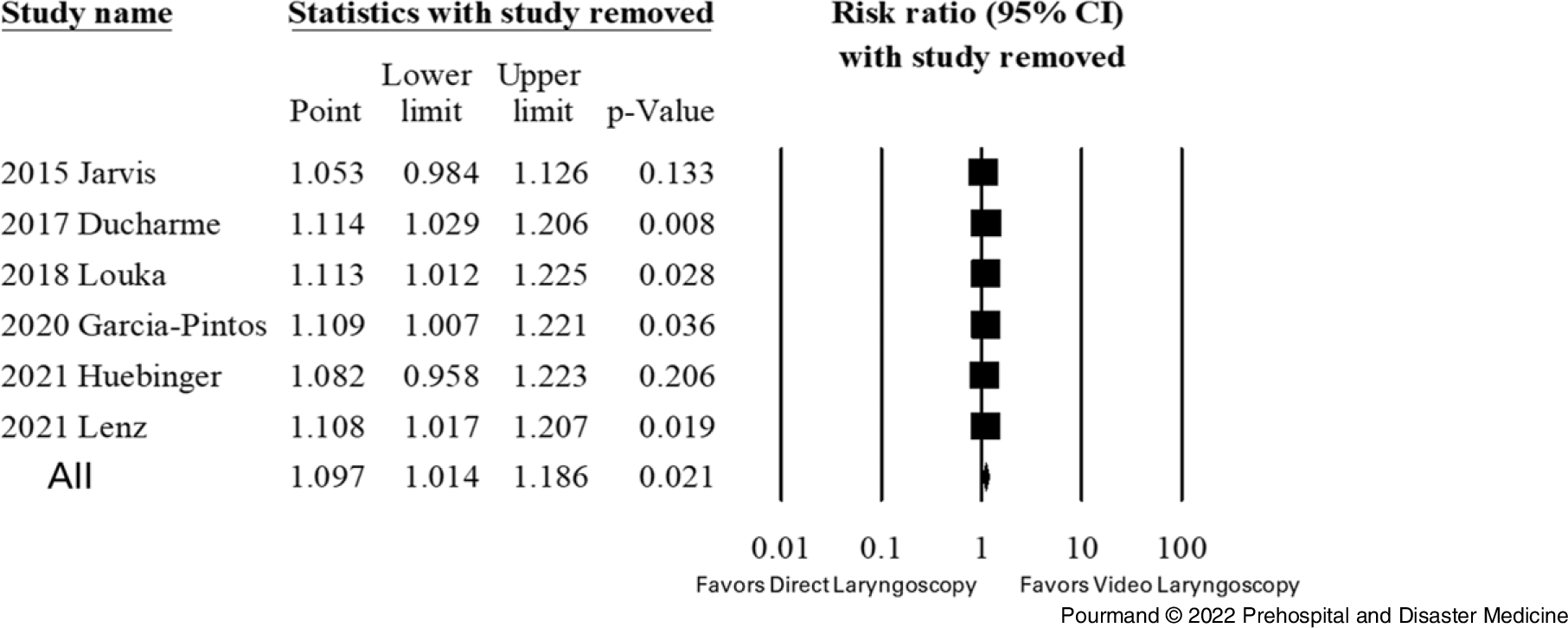
The sensitivity analysis also showed that no single study overly influenced the effect size of overall success rate, as the risk ratio for one-study-removed meta-analysis ranged from 1.05 to 1.11 (Figure 4C), well within the 95% CI for the overall meta-analysis.
Sensitivity Analysis of Overall Success Rate, using One-Study-Removed Random-Effects Meta-Analysis.

The Egger’s and Begg’s P values were .56 and .85, respectively, suggesting low likelihood of publication bias for the overall success rate meta-analysis. Orwin’s Fail-safe N test showed that seven missing studies or future studies favoring DL are needed to bring the risk ratio between VL versus DL for overall success rate to 1.0.
Secondary Outcome 2: Number of Attempts
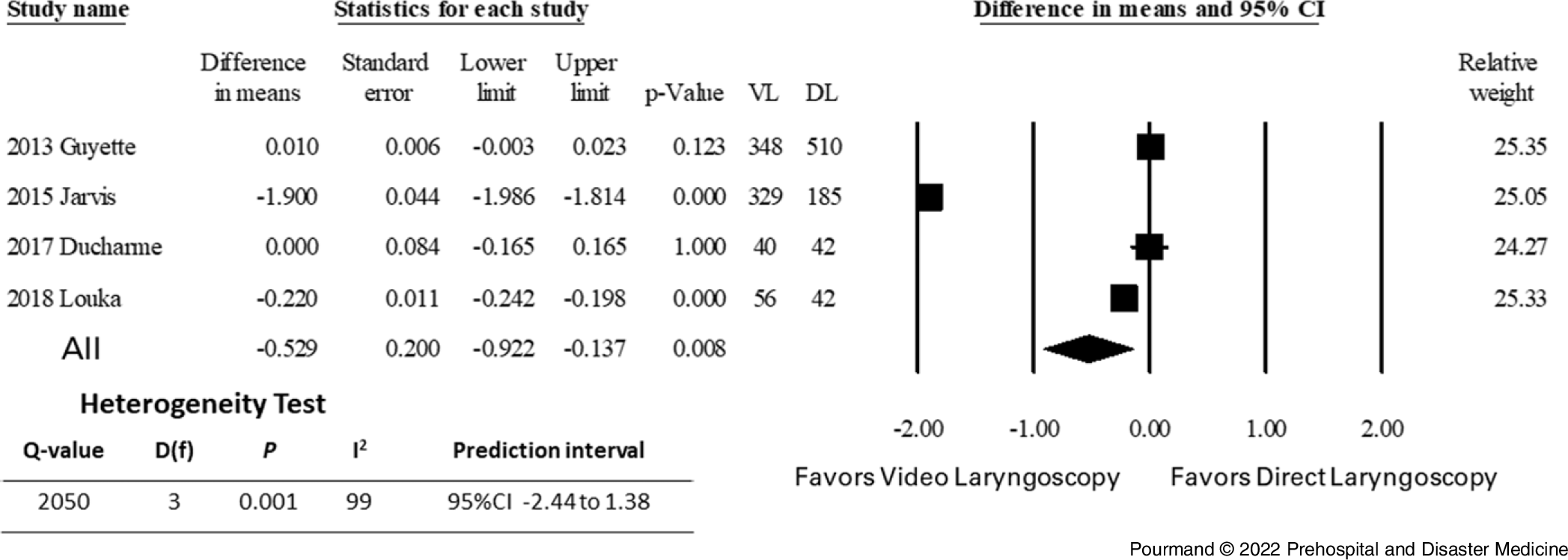
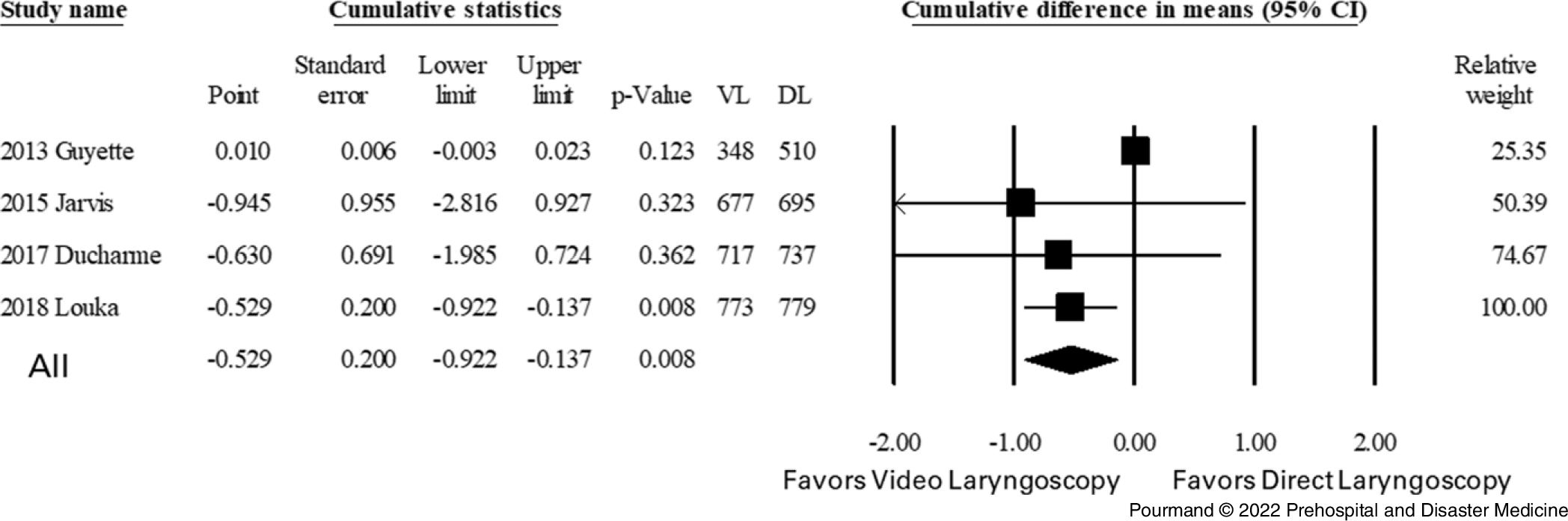
Four studies reported the outcome of number of attempts. Use of VL was associated with lower mean number of attempts (difference in means -0.529; 95% CI, -0.92 to -0.13; P = .008); Figure 5A.
Forest Plot of Random-Effects Meta-Analysis Comparing the Number of Attempts between Video Laryngoscopy versus Direct Laryngoscopy.

The number of attempts for VL was not significantly less than for DL until 2018, with the publication of Louka, et al, according to the cumulative analysis (Figure 5B). Reference Louka, Stevenson, Jones and Ferguson17
Cumulative Meta-Analysis Comparing the Number of Attempts between Video Laryngoscopy versus Direct Laryngoscopy According to Chronological Order of Published Studies.

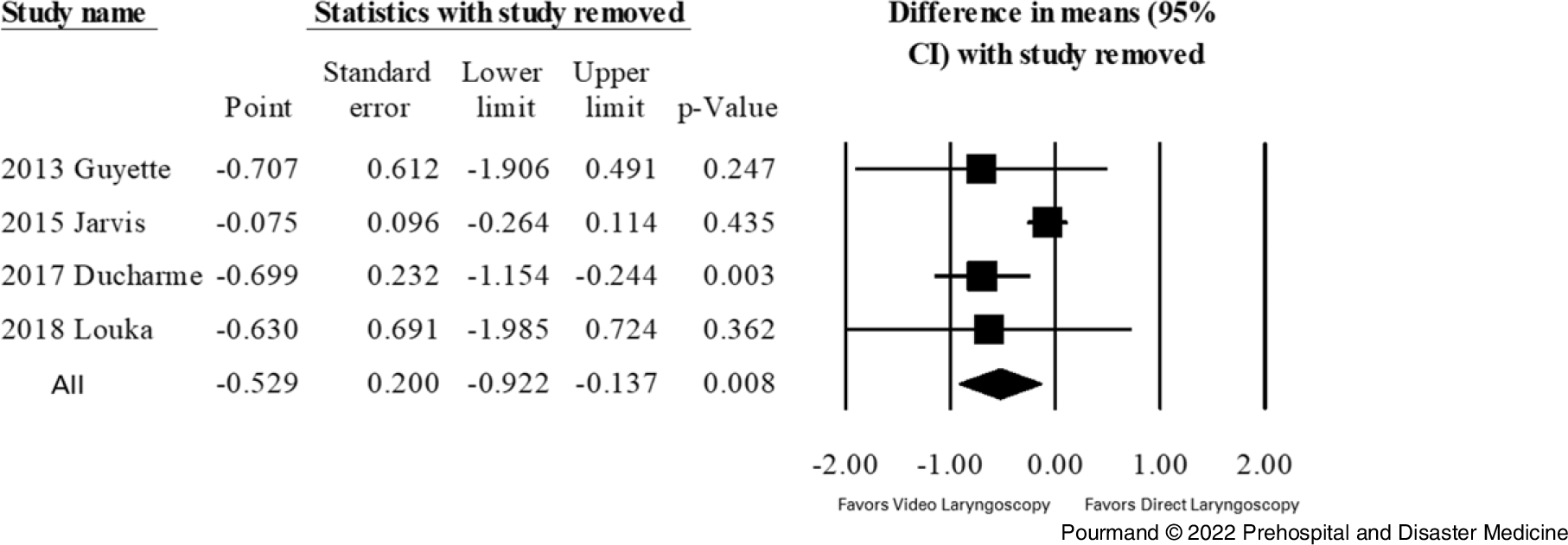
From the sensitivity analysis for the number of attempts (Figure 5C), the difference in means ranged from a very small difference (-0.075) to a larger difference in mean (-0.707). This suggested that effect size was affected by the 2015 Jarvis, et al study. Reference Jarvis, McClure and Johns19 When it was not present in the meta-analysis, VL was associated with a small difference in means (-0.075).
Sensitivity Analysis of Number of Attempts between Video Laryngoscopy versus Direct Laryngoscopy, using One-Study-Removed Random-Effects Meta-Analysis.

For publication bias for mean number of intubation attempts, the Egger’s and Begg’s P values were .31 and .49, respectively, suggesting low likelihood of publication bias. Orwin’s Fail-safe N test showed that four missing studies or future studies favoring DL (higher mean difference of 0.1 attempt than VL) are needed to bring the mean difference between VL versus DL to zero.
Discussion
The meta-analysis presented here suggests that VL performed by paramedics in the prehospital setting is associated with a higher likelihood of first-pass success, a higher likelihood of overall success, and a lower mean number of attempts per intubation encounter as compared to DL.
While prior analyses have addressed VL versus DL in the prehospital setting, Reference Savino, Reichelderfer, Mercer, Wang and Sporer34,Reference Paul Weng, Zakaria, Gek Ching and Wong35 this is the first meta-analysis to the authors’ knowledge to exclusively assess efficacy of VL performed by paramedics. Previous studies have observed that VL is more helpful for first-pass success among non-expert intubators, which is in line with the results of this meta-analysis. Savino 2017 found a statistically significant increase in first-pass success rates for nonphysician providers with the use of VL (RR = 1.83; 95% CI, 1.18-2.84). Reference Savino, Reichelderfer, Mercer, Wang and Sporer34 Those results were not limited to paramedics, but the findings presented here show a similar pattern and help to establish a benefit to VL use by emergency medical personnel in the prehospital setting. First-pass success in endotracheal intubation has been shown to limit adverse events for patients, which tend to occur with successive intubation failures. Reference Bernhard, Becker, Gries, Knapp and Wenzel36,Reference Sakles, Chiu, Mosier, Walker and Stolz37 This suggests that VL use in the prehospital setting may reduce adverse patient outcomes. Further studies are needed to investigate whether the use of VL in the prehospital setting would be associated with lower rates of peri-intubation adverse events and improved outcomes.
However, there was significant heterogeneity for all collected outcomes. The studies presented in this meta-analysis differed greatly in study type, study design, and reported study outcomes. Due to this large heterogeneity, 95% CIs for the prediction intervals for all outcomes were wide, as the studies included in this meta-analysis did not agree about the overall efficacy of VL in the prehospital setting. For example, the prediction interval for the first-pass success rate (95% CI, 0.795-1.56; Figure 3A) predicted that VL in the prehospital setting could be associated with 50% likelihood of a higher first-pass rate, but it could also be associated with approximately 20% likelihood of a lower first-pass rate.
One potential source for this heterogeneity is the lack of information on patient airway difficulty and on intubation operator experience with both VL and DL. Because many of the studies in this meta-analysis were conducted retrospectively, there is less control of the availability of study participant data. In fact, moderator analyses identified the subgroup of retrospective studies as the major source of heterogeneity for this meta-analysis. Therefore, effect sizes from prospective studies were more likely to be similar to one another, thus producing low heterogeneity. Well-defined patient selection criteria that distinguish between patients with perceived difficult airway and other patients are advisable for future studies in order to better identify the characteristics of patients who may benefit more from VL.
Another source of potential heterogeneity is the use of different VL devices among different studies. However, the relevance of these differences is still controversial in the current literature. Findings from Pieters, et al 2016 suggest that VL devices differ in terms of user satisfaction, adverse events (ie, dental clicks), speed of intubation, and success rates. Reference Pieters, Wilbers, Huijzer, Winkens and van Zundert26 Nelson and colleagues in 2012 Reference Nelson, Wewerka, Woster, Burnett, Salzman and Frascone28 found no difference in first-attempt and overall success rates between VL versus DL devices. In contrast, the authors of Huebinger 2021, the largest study included in this analysis, did not specify the type(s) of VL devices utilized in their large retrospective analysis. Reference Huebinger, Stilgenbauer, Jarvis, Ostermayer, Schulz and Wang16 Nonetheless, the current moderator analysis comparing three studies using standard geometry (C-MAC) video laryngoscopes and two studies using hyperangulated (King Vision) video laryngoscopes Reference Ducharme, Kramer, Gelbart, Colleran, Risavi and Carlson15,Reference Louka, Stevenson, Jones and Ferguson17–Reference García-Pintos, Erramouspe and Schandera20 showed no difference in the first-pass success rate (Table 3), although this could be due to low power. Because this link is unclear, further studies are needed to elucidate whether certain devices are better suited for the prehospital setting.
Implications for Future Studies
The results of this meta-analysis suggest that for prehospital intubations, VL may have outcomes superior to those for DL. However, factors including cost, operator experience and training, maintenance, and specialized intubation situations have limited the implementation of VL in the field. Further research is needed to examine the linkage between VL use and patient outcomes and to determine VL’s optimal use in the prehospital setting.
Most of the studies included in this meta-analysis were observational studies. Authors of the analyzed studies mostly performed descriptive analyses to compare the success rate between the groups, and they did not perform advanced hypothesis testing analyses to take into account confounding factors such as operators’ experience and whether patients had difficult airways. Furthermore, studies included in this meta-analysis did not report adverse events during attempted intubations. For these reasons, there is a need for further studies with more robust methodology and more patient-related outcomes to provide the evidence base for decision making and guidance for clinicians in the field.
Limitations
This meta-analysis examined only seven studies, of which only two (2013 Guyett, 2017 Ducharme) were randomized controlled trials. Only 82 intubations were examined in 2017 Ducharme, which has a much smaller sample size compared to some of the larger cohort or observational studies. The ability to obtain informed consent in emergency situations is extremely limited, so this review relied largely on retrospective cohort studies, which were found to be a large source of heterogeneity in this meta-analysis. Second, there was a large variation in study settings: some were conducted in a ground ambulance and others in a helicopter. The different modes of transportation present unique challenges (ie, space limitations, smoothness of ride) that may lead to variability of results, which is not accounted for in these studies or this meta-analysis. Finally, many patient characteristics were not reported in detail, which may introduce some confounding or uncontrolled factors into the analysis presented here. Most notably, only 2013 Guyette and 2020 Garcia-Pintos reported the Mallampati score or Cormack grade, Reference Guyette, Farrell, Carlson, Callaway and Phrampus18,Reference García-Pintos, Erramouspe and Schandera20 and no studies reported operator experience. It was not possible to assess for the effects of differences in airway difficulty or learning processes that may have contributed to the large heterogeneity found in this analysis.
Conclusions
Video laryngoscopy was associated with higher first-pass success rate, overall success rate, and fewer intubation attempts compared with DL in the prehospital clinical settings. This meta-analysis found high heterogeneity, and the included studies were, collectively, at risk for bias because most of them were observational studies. Future studies that collect data and apply methodologies better tailored to measure the variables relevant to non-experts’ performance of intubation and laryngoscopy are needed to refine practice and training in this field.
Conflicts of interest/funding
The authors do not have a financial interest or relationship to disclose regarding this research project. This is a non-funded study, with no compensation or honoraria for conducting the study.
Supplementary Materials
To view supplementary material for this article, please visit https://doi.org/10.1017/S1049023X22002254