Adolescence is a critical developmental period characterized by an increased risk for developing psychiatric disorders including internalizing disorders, externalizing disorders, and thought problems (Beauchaine, Zisner, & Sauder, Reference Beauchaine, Zisner and Sauder2017; Caspi et al., Reference Caspi, Houts, Belsky, Goldman-Mellor, Harrington, Israel and Poulton2014; Kotov et al., Reference Kotov, Krueger, Watson, Achenbach, Althoff, Bagby and Clark2017). Given the detrimental outcomes associated with early onset psychopathology (Copeland, Shanahan, Costello, & Angold, Reference Copeland, Shanahan, Costello and Angold2009; Nock et al., Reference Nock, Green, Hwang, McLaughlin, Sampson, Zaslavsky and Kessler2013; Whalen et al., Reference Whalen, Luby, Tilman, Mike, Barch and Belden2016), comprehensive research on the bio-psycho-social factors explaining or contributing to the general risk for development of psychopathology is needed. Although indispensable research has been couched within a disorder-specific framework, a recent review of Aldao, Gee, De Los Reyes, and Seager (Reference Aldao, Gee, De Los Reyes and Seager2016) suggested that integrating a transdiagnostic approach within a developmental psychopathology framework may be useful for a thorough understanding of youth psychopathology. This is in line with the novel NIMH guidelines (Insel et al., Reference Insel, Cuthbert, Garvey, Heinssen, Pine, Quinn and Wang2010) on the Research Domain Criteria (RDoC) framework, proposing a dimensional model to uncover also transdiagnostic dysfunctions across multiple units of analyses such as psychophysiology and self-reports, as well as functional domains such as positive and negative valence systems, cognitive and regulatory systems, and social processes. Within the field of developmental psychopathology, several elements and processes have been proposed to serve a transdiagnostic role in youth mental health, one of which is emotion regulation (ER; Fernandez, Jazaieri, & Gross, Reference Fernandez, Jazaieri and Gross2016). Given its central role, disentangling ER in adolescents across multiple units of analyses and functional domains is the central goal of the current study.
ER has been previously defined as “the processes by which individuals influence which emotions they have, when they have them, and how they experience and express these emotions” (Gross, Reference Gross1998, p. 275) and can occur at both the intrapersonal and interpersonal levels (e.g., Zaki & Williams, Reference Zaki and Williams2013). Emotion dysregulation occurs when ER processes have failed to influence the experienced emotion in the desired way and is defined as a pattern of emotional experience and/or expression that interferes with appropriate goal-directed behavior (Beauchaine & Gatzke-Kopp, Reference Beauchaine and Gatzke-Kopp2012; Fernandez et al., Reference Fernandez, Jazaieri and Gross2016). Transdiagnostically, most forms of psychopathology are characterized by emotion dysregulation of negative emotions (for review, see Aldao, Nolen-Hoeksema, & Schweizer, Reference Aldao, Nolen-Hoeksema and Schweizer2010; Schäfer, Naumann, Holmes, Tuschen-Caffier, & Samson, Reference Schäfer, Naumann, Holmes, Tuschen-Caffier and Samson2017). For example, internalizing disorders are marked by continued experience of sadness, dysphoria, or anxiety, whereas externalizing disorders are often marked by anger.
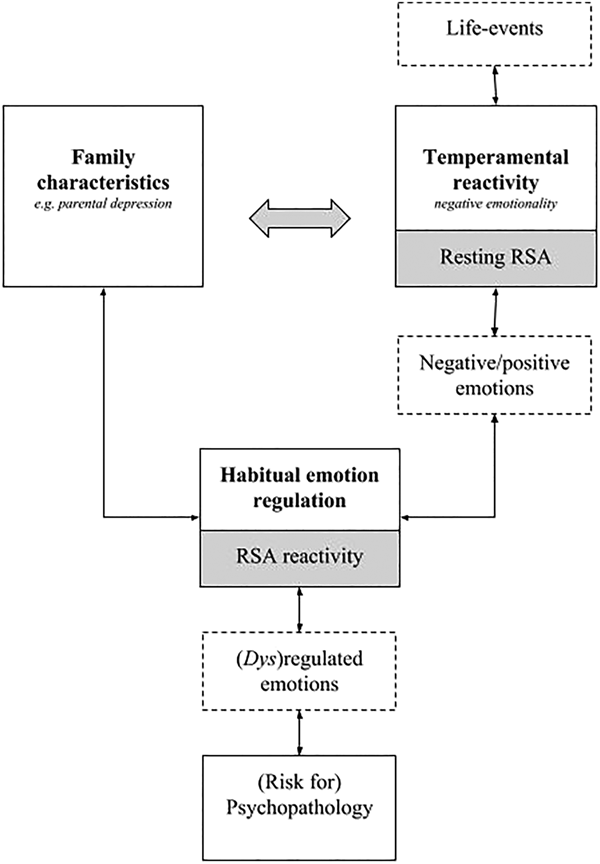
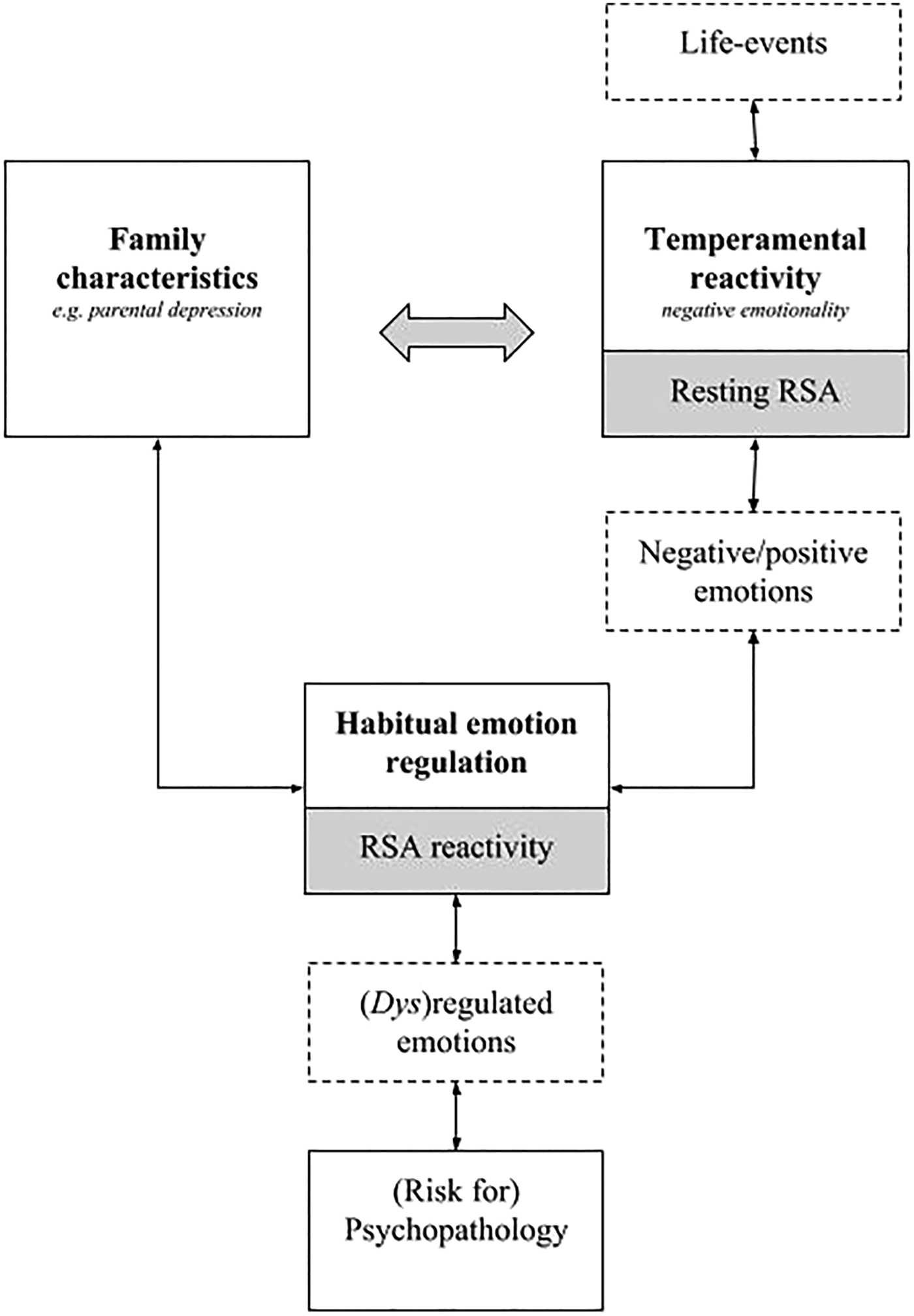
Research on the role of ER in normative and psychopathological development has been mushrooming in the last two decades (see e.g., Aldao et al., Reference Aldao, Nolen-Hoeksema and Schweizer2010, Reference Aldao, Gee, De Los Reyes and Seager2016; Braet et al., Reference Braet, Theuwis, Van Durme, Vandewalle, Vandevivere, Wante and Goossens2014; Zimmermann & Iwanski, Reference Zimmermann and Iwanski2014). However, bio-psycho-social factors for understanding ER development are far less studied in adolescence than during childhood and adulthood (Aldao et al., Reference Aldao, Nolen-Hoeksema and Schweizer2010) and results are rather scattered. Although several theoretical models for understanding ER have been proposed within the field of developmental psychopathology, particularly emphasizing (rightly) the role of temperament and family characteristics (e.g., Hyde, Mezulis, & Abramson, Reference Hyde, Mezulis and Abramson2008; Morris, Silk, Steinberg, Myers, & Robinson, Reference Morris, Silk, Steinberg, Myers and Robinson2007; Yap, Allen, & Sheeber, Reference Yap, Allen and Sheeber2007), these models are presently lacking a component addressing physiological underpinnings and thereby neglect the call for including multiple units of analysis (Beauchaine, Reference Beauchaine2015a; Cicchetti, Reference Cicchetti, Beauchaine and Hinshaw2008). When used in conjunction with psychophysiological theories on emotion-related physiological responding (i.e., Boyce & Ellis, Reference Boyce and Ellis2005; Ellis & Boyce, Reference Ellis and Boyce2008; Porges, Reference Porges1995, Reference Porges1996, Reference Porges2009; Thayer & Lane, Reference Thayer and Lane2000), developmental psychopathology models can further our understanding on the physiological substrates of ER within a bio-psycho-social perspective (see Figure 1).
Integrative developmental psychopathology model for understanding the psychophysiological substrates of emotional regulation within a bio-psycho-social perspective. RSA, respiratory sinus arrhythmia.
Physiological indicators of autonomous nervous system functioning such as respiratory sinus arrhythmia (RSA) have been found to be a promising and cost-effective method to objectively assess the body's response to, and regulatory efforts when, experiencing emotions. They are advantageous, because they require little in the way of cognitive abilities or insight (Porges, Reference Porges1995, Reference Porges1996). In brief, RSA refers to the periodic fluctuations in heart rate that are linked to breathing and is thought to reflect the parasympathetic influence on heart rate variability (HRV). When adequately measured, RSA serves as a measure through which the parasympathetic nervous system (PNS), or the so-called rest and digest system, can be usefully examined as it indexes PNS-linked cardiac activity (Berntson et al., Reference Berntson, Bigger, Eckberg, Grossman, Kaufmann, Malik and Stone1997). As suggested by physiological theory (Porges, Reference Porges1995, Reference Porges1996; Santucci et al., Reference Santucci, Silk, Shaw, Gentzler, Fox and Kovacs2008; Thayer & Lane, Reference Thayer and Lane2000), and supported by research (e.g., Beauchaine, Reference Beauchaine2015b; Butler, Wilhelm, & Gross, Reference Butler, Wilhelm and Gross2006), RSA figures prominently in emotional responding and is of clinical importance given its associations with psychiatric disorders. Generally speaking, low levels of resting RSA and large reductions in RSA reactivity (ΔRSA), specifically to emotionally evocative stimuli, are observed across psychiatric disorders characterized by emotion dysregulation in children, adolescents, and adults alike (e.g., Beauchaine, Reference Beauchaine2015b; Calkins, Graziano, & Keane, Reference Calkins, Graziano and Keane2007; Hastings et al., Reference Hastings, Nuselovici, Utendale, Coutya, McShane and Sullivan2008; Rottenberg, Clift, Bolden, & Salomon, Reference Rottenberg, Clift, Bolden and Salomon2007; Rottenberg, Wilhelm, Gross, & Gotlib, Reference Rottenberg, Wilhelm, Gross and Gotlib2002; Vasilev, Crowell, Beauchaine, Mead, & Gatzke-Kopp, Reference Vasilev, Crowell, Beauchaine, Mead and Gatzke-Kopp2009). Whereas various researchers have argued that resting RSA and ΔRSA are differentially related to emotional processes (Beauchaine, Reference Beauchaine2001; Butler et al., Reference Butler, Wilhelm and Gross2006; Porges, Doussard-Roosevelt, Portales, & Greenspan, Reference Porges, Doussard-Roosevelt, Portales and Greenspan1996), most contemporary research does not discriminate between these two types (Beauchaine, Reference Beauchaine2001; Butler et al., Reference Butler, Wilhelm and Gross2006). Lumping both components as RSA masks important distinctions in the aspects of emotional functioning marked by each.
Based on available evidence, first, resting RSA is supposed to indicate physiological flexibility in responding to an emotional challenge (Beauchaine, Reference Beauchaine2001; Butler et al., Reference Butler, Wilhelm and Gross2006; Porges, Reference Porges1995, Reference Porges1996; Thayer, Hansen, Saus-Rose, & Johnsen, Reference Thayer, Hansen, Saus-Rose and Johnsen2009). Therefore, between-person differences in tonic levels of RSA obtained during periods of relative quiescence are theorized to be a measure of one's characteristic level of arousal and thus may reflect temperament, a trait-like individual characteristic (Beauchaine, Reference Beauchaine2001; Butler et al., Reference Butler, Wilhelm and Gross2006). However, the specific link between temperament and RSA functioning remains to be characterized. Given that especially negative emotions are experienced either too intensely or too persistently in nearly all forms of psychopathology (Beauchaine, Gatzke-Kopp, & Mead, Reference Beauchaine, Gatzke-Kopp and Mead2007), one robust temperament dimension of interest is negative emotionality (NE; Watson & Clark, Reference Watson and Clark1984). NE refers to one's generally stable tendency to experience distress as well as the susceptibility to experience negative emotions (Rothbart, Ahadi, & Evans, Reference Rothbart, Ahadi and Evans2000) and encompasses the constructs of negative affectivity (Clark & Watson, Reference Clark and Watson1991), the behavioral inhibition system (Corr, Reference Corr2002), and neuroticism (Eysenck, Reference Eysenck1967). NE has been robustly correlated with a wide range of mental and physical health problems (Lahey, Reference Lahey2009; Meijer et al., Reference Meijer, Conradi, Bos, Thombs, van Melle and de Jonge2011; Tackett et al., Reference Tackett, Lahey, Van Hulle, Waldman, Krueger and Rathouz2013; Watson, Clark, & Harkness, Reference Watson, Clark and Harkness1994) and may represent/is often recognized as a nonspecific, transdiagnostic vulnerability factor (Lahey, Reference Lahey2009; Tackett et al., Reference Tackett, Lahey, Van Hulle, Waldman, Krueger and Rathouz2013).
A handful of studies on the specific association between NE and resting RSA exist. One study in typically developing young children (ages 2–3 years) found that high resting RSA was associated with less readily negative responses to a frustration task compared to children with lower resting RSA (Calkins, Reference Calkins1997). Moreover, parents of boys (ages 6–8 years) with high resting RSA rated their children as more emotionally regulated than were boys with low resting RSA (Eisenberg et al., Reference Eisenberg, Fabes, Murphy, Maszk, Smith and Karbon1995). Finally, Blandon, Calkins, Keane, and O'Brien (Reference Blandon, Calkins, Keane and O'Brien2008) found some evidence that resting RSA might serve as a resilience factor; that is, in their longitudinal study in children ages 4–7 years, higher resting RSA was associated with lower levels of NE 1 year later. Although tentative, these findings provide some evidence for the assertion that lower levels of resting RSA reflect higher NE. Yet, parallel research in adolescents is practically nonexistent.
By contrast, ΔRSA during a situation where emotional of behavioral regulation is required is theorized to be a key indicator of one's physiological capacity to adaptively regulate emotions and thus serves as a biomarker of ER (Beauchaine, Reference Beauchaine2001; Butler et al., Reference Butler, Wilhelm and Gross2006; Frazier, Strauss, & Steinhauer, Reference Frazier, Strauss and Steinhauer2004; Kettunen, Ravaja, Näätänen, & Keltikangas-Järvinen, Reference Kettunen, Ravaja, Näätänen and Keltikangas-Järvinen2000; Porges, Reference Porges1995, Reference Porges1996; Thayer & Lane, Reference Thayer and Lane2000). Similar to resting RSA, empirical evidence for this association in adolescents is also scarce given that ΔRSA is rarely addressed in developmental psychophysiology studies (Shader et al., Reference Shader, Gatzke-Kopp, Crowell, Reid, Thayer, Vasey and Beauchaine2018), with little attention to whether ΔRSA is related to informant-reported ER difficulties (Vasilev et al., Reference Vasilev, Crowell, Beauchaine, Mead and Gatzke-Kopp2009). One available longitudinal study revealed that youth whose physiological responding to emotional change improved (as indicated by more moderate ΔRSA decreases) also experienced fewer difficulties with ER as they matured (Vasilev et al., Reference Vasilev, Crowell, Beauchaine, Mead and Gatzke-Kopp2009). Yet, findings on ΔRSA are not uniform. Whereas one study documented higher levels of adaptive ER and decreases in ΔRSA during a negative mood induction (Gentzler, Santucci, Kovacs, & Fox, Reference Gentzler, Santucci, Kovacs and Fox2009), another study found maladaptive ER to be associated with lower RSA recovery following a negative mood induction in children ages 4–7 years (Santucci et al., Reference Santucci, Silk, Shaw, Gentzler, Fox and Kovacs2008). Of note, most studies so far typically assess ΔRSA during either a positive or a negative emotion-evocation film (e.g., Gentzler et al., Reference Gentzler, Santucci, Kovacs and Fox2009; Yaroslavsky, Rottenberg, & Kovacs, Reference Yaroslavsky, Rottenberg and Kovacs2014). Reward and frustration tasks that have been used to elicit both positive and negative emotions in both healthy and clinical youths (Derryberry & Reed, Reference Derryberry and Reed1994; Lugo-Candelas, Flegenheimer, Harvey, & McDermott, Reference Lugo-Candelas, Flegenheimer, Harvey and McDermott2017; Pérez-Edgar & Fox, Reference Pérez-Edgar and Fox2005; Pérez-Edgar, Fox, Cohn, & Kovacs, Reference Pérez-Edgar, Fox, Cohn and Kovacs2006; Rich et al., Reference Rich, Schmajuk, Perez-Edgar, Pine, Fox and Leibenluft2005) could provide a more sensible way to assess ΔRSA with regard to both valence systems.
As alluded to earlier, external factors such as family characteristics also play a crucial role in ER development (Morris et al., Reference Morris, Silk, Steinberg, Myers and Robinson2007; Thompson, Reference Thompson1994; Yap et al., Reference Yap, Allen and Sheeber2007). Presently available research has focused on parents' mental health (most often maternal depression), suggesting that the mechanisms for successful ER development may be disrupted in families with depressed mothers. For example, depressed mothers display atypical affective interaction patterns with their offspring (Field, Healy, Goldstein, & Guthertz, Reference Field, Healy, Goldstein and Guthertz1990; Gotlib & Goodman, Reference Gotlib and Goodman1999; Weinberg & Tronick, Reference Weinberg and Tronick1998) while also experiencing emotion dysregulation themselves (Bradley, Reference Bradley2003; Gross & Muñoz, Reference Gross and Muñoz1995). Furthermore, several studies on the direct effects of parental depression have found evidence for problems in ER among offspring of depressed mothers (Blandon et al., Reference Blandon, Calkins, Keane and O'Brien2008; Garber, Braafladt, & Weiss, Reference Garber, Braafladt and Weiss1995; Radke-Yarrow, Nottelmann, Belmont, & Welsh, Reference Radke-Yarrow, Nottelmann, Belmont and Welsh1993; Silk, Shaw, Skuban, Oland, & Kovacs, Reference Silk, Shaw, Skuban, Oland and Kovacs2006). Such detrimental effects of parental psychopathology and dysfunctional ER of the adolescent are likely to be apparent at the physiological level (Ellis & Boyce, Reference Ellis and Boyce2008). On the one hand, low levels of resting RSA (Ashman, Dawson, & Panagiotides, Reference Ashman, Dawson and Panagiotides2008) and large reductions in ΔRSA in response to a sad film clip (Field & Diego, Reference Field and Diego2008) have been reported in offspring of major depressive disorder patients. On the other hand, in a mediation/moderation model in mothers with internalizing problems, it emerged that even mild presence of maternal problems already influenced physiological responding and consequent ER abilities in their offspring (De Witte, Sütterlin, Braet, & Mueller, Reference De Witte, Sütterlin, Braet and Mueller2016), whereas others failed to find such evidence (Shannon, Beauchaine, Brenner, Neuhaus, & Gatzke-Kopp, Reference Shannon, Beauchaine, Brenner, Neuhaus and Gatzke-Kopp2007; Srinivasan, Ashok, Vaz, & Yeragani, Reference Srinivasan, Ashok, Vaz and Yeragani2002). In spite of the considerable documentation of the risk environments generated by depressed mothers, it should be kept in mind that the effects of parental psychopathology discussed above may represent, at least partially, genetic risk. Still, given the complexity of the aforementioned relations and the fact that the impact of parental psychopathology on RSA responding is still insufficiently addressed in previous work, future studies on ER within a bio-psycho-social perspective are warranted.
The Current Study
Given that research on psychophysiological processes related to emotional responding and regulation in adolescents is still in its infancy, the current study had three goals. First, we aimed to examine the relationship between temperament and RSA in adolescents. Second, we aimed to investigate the relationship between emotion (dys)regulation (adaptive, maladaptive, and external) and ΔRSA (i.e., the change in RSA from baseline) toward positive and negative affective states, evoked using a previously validated task, the affective Posner task (Rich et al., Reference Rich, Schmajuk, Perez-Edgar, Pine, Fox and Leibenluft2005). Third, we aimed to investigate the influence of parental depressive symptoms on ER-related physiological responding in their offspring. Based on prior work (Blandon et al., Reference Blandon, Calkins, Keane and O'Brien2008; Calkins, Reference Calkins1997; Eisenberg et al., Reference Eisenberg, Fabes, Murphy, Maszk, Smith and Karbon1995), we hypothesized that individuals high in temperamental NE would show lower resting levels of RSA. In addition, we anticipated (based on Gentzler et al., Reference Gentzler, Santucci, Kovacs and Fox2009; Santucci et al., Reference Santucci, Silk, Shaw, Gentzler, Fox and Kovacs2008; Vasilev et al., Reference Vasilev, Crowell, Beauchaine, Mead and Gatzke-Kopp2009) that moderate decreases in ΔRSA, especially toward negative affective states, would indicate a greater reliance on adaptive ER and external ER strategies, whereas large reductions in ΔRSA would be indicative of greater maladaptive ER strategies. Finally, we expected (based on De Witte et al., Reference De Witte, Sütterlin, Braet and Mueller2016; Field & Diego, Reference Field and Diego2008) that offspring of parents reporting more depressive symptoms would show large reductions in ΔRSA, particularly toward negative affective states.
Method
Participants
Fifty-five adolescents between the ages of 11 and 17 years (M = 13.69, SD = 1.61; 60% girls) volunteered for this study. These adolescents were selected from a screening sample of youth who participated in a larger, school-based study and assented on taking part in possible follow-up studies. Given our interest in the role of NE, we aimed to provide an optimal context for studying the effects of NE by capturing individuals falling at the extremes of the NE dimension through oversampling, instead of constraining most of the variance in NE to the middle of the dimension (Van Beveren, Mezulis, Wante, & Braet, Reference Van Beveren, Mezulis, Wante and Braet2019; Vasey et al., Reference Vasey, Harbaugh, Fisher, Heath, Hayes and Bijttebier2014). Therefore, individuals from the screening sample were recruited with the aim of filling the spectrum with vulnerable individuals (high in NE) on one end of the spectrum and relatively resilient individuals (low in NE) on the other end of the spectrum while respecting the role of positive emotionality (PE) in determining vulnerability (Clark & Watson, Reference Clark and Watson1991). Individuals were assigned to the vulnerable tail of the dimension if they scored high (≥38) on the negative emotionality (PANAS-NE) scale and low (≤43) on the positive emotionality (PANAS-PE) scale of the Positive Affect and Negative Affect Schedule for Children (PANAS-C; Laurent et al., Reference Laurent, Catanzaro, Joiner, Rudolph, Potter, Lambert and Gathright1999), whereas the resilient individuals scored low (≤28) on the PANAS-NE scale and high (≥50) on the PANAS-PE scale. These scores refer to the 30th (low scores) and 70th (high scores) percentile PANAS-C scores from a large community-based sample of Flemish youth (see Van Beveren, Harding, Beyers, & Braet, Reference Van Beveren, Harding, Beyers and Braet2018) consisting of 1,646 adolescents ranging from 7 to 16 years (M = 11.41, SD = 1.88; 54% girls) who filled out the PANAS-C, as well as measures on ER and depressive symptoms. Note that these cutoff scores are considerably higher (and thus stricter) than previously established preliminary PANAS-C cutoff scores in schoolchildren (Laurent, Joiner, & Catanzaro, Reference Laurent, Joiner and Catanzaro2011). The research protocol of the current study was approved by the faculty ethical committee of the authors’ institution. Adolescents signed informed assent, and legal guardians signed informed consent. After completing the lab study, participants were compensated with two cinema tickets.
Procedure
All participants were invited to the lab at the Faculty of Psychology and Educational Sciences of Ghent University. One week beforehand, all youth completed self-report questionnaires on a secure online platform hosted by the Department of Developmental, Personality, and Social Psychology on their own computer at home. On the day of testing, adolescents were instructed to first explore the lab with the aim of familiarizing themselves with the lab setting. During this time, the investigator guided the parent(s) to a waiting room. Parents were asked to fill out questionnaires on the online platform on an iPad while waiting for their sons or daughters. After signing assent/consent forms, adolescents were seated in front of a computer and prepared for physiological recordings (see below). To assess resting RSA, adolescents watched an 8-min clip from the film Alaska's Wild Denali (Hardesty, Reference Hardesty1997). To assess ΔRSA to the positive/negative valence systems, adolescents completed the affective Posner paradigm, which consisted of three conditions that induced reward and frustration in blockwise fashion (for methods see below). In between these conditions, adolescents watched 3-min clips from the Denali film to reinduce neutral mood. After the paradigm, adolescents took a short break, then completed a questionnaire on physical activity, the block design and vocabulary subtests of the fourth edition of the Wechsler Intelligence Scale for Children (Wechsler, Reference Wechsler2003), and the Structured Clinical Interview for DSM-5 Disorder for Children—Junior interview (Braet, Wante, Bögels, & Roelofs, Reference Braet, Wante, Bögels and Roelofs2015), adapted to assess DSM-5 symptoms (American Psychiatric Association, 2013). This order of testing prevented priming effects that could be induced by self-reports and ensured that questionnaires did not overburden adolescents before the task. Subsequently, adolescents were weighed and measured. In addition to receiving two cinema tickets, adolescents could choose a prize out of our prize pool, using the money they earned when completing the affective Posner paradigm. All adolescents were told that they reached the high score and could pick whatever prize they liked.
Affective Posner task
The affective Posner paradigm (see Rich et al., Reference Rich, Schmajuk, Perez-Edgar, Pine, Fox and Leibenluft2005) was implemented as a mood-induction procedure to answer the research questions pertaining to our second and third aim. In the present study, we only report the physiological data recorded during the task. In brief, the paradigm consists of three conditions comprising 100, 60, and 60 trials. Trials consisted of (a) a fixation cross (750 ms), (b) two white squares (300 ms), (c) a blue cue appearing in one of the white squares (200 ms), (d) a target appearing in the white squares (1260 ms), and (e) feedback (100 ms with response; 500 ms without response). Adolescents were instructed to identify the target's location as quickly and accurately as possible using the W and X keys on a keyboard. All conditions included the same stimuli and instructions but differed in feedback and contingencies. The first condition served as a nonemotional baseline in which participants are informed about their response accuracy (“Incorrect!” or “Good job!”) without feedback contingencies. Physiological data from these trials are not reported herein. In the second, reward condition, participants won or lost 10 cents on each trial based on their performance (“Great Job! Win 10 Cents” or “Wrong! Lose 10 Cents”). The third, frustration condition, had the same contingencies as the second condition, but with “rigged” feedback. On 44% of correct trials, correct responses resulted in monetary reward and accurate feedback (“You are Quick! You win 10 Cents”), but on 56% of correct trials, rigged feedback informed participants that they were too slow and lost 10 cents (“Too Slow! You lose 10 Cents”). Incorrect responses always resulted in punishment feedback (“Wrong! Lose 10 Cents”). The order of conditions was fixed in order to heighten arousal progressively and avoid carryover arousal from frustration to neutral to reward condition. In addition, adolescents watched 3-min clips from the Denali film in between conditions to reinduce neutral mood.
Physiological assessment
Autonomic responses were recorded using a Porti 16-channel-amplifier (TMSi, Twente Medical Systems International, EJ Oldenzaal, the Netherlands) and the software Polybench 1.2 (TMSi). Electrocardiogram (ECG) was assessed by means of disposable 55-mm diameter Ag/AgCl solid-gel electrodes attached to cleansed skin sites. Electrodes were placed on the right upper sternum and lowest rib on the left side (Lead-II, with ground electrode fixed over the dorsum of the wrist using a ground wristband). In brief, resting ECG was recorded during 8 consecutive minutes while watching the Denali film clip (Rottenberg, Ray, Gross, Coan, & Allen, Reference Rottenberg, Ray, Gross, Coan and Allen2007). To increase reliability, only the final 5 min of the resting baseline were used for further analyses to ensure participants were habituated to their surroundings (De Witte et al., Reference De Witte, Sütterlin, Braet and Mueller2016). In addition, ECG was recorded throughout the reward and frustration conditions of the affective Posner paradigm.
Computation of RSA
Signals were digitized with a 1000 Hz-sampling rate and further processed using ANSLAB software, a customized computer program writen in MATLAB (Blechert, Peyk, Liedlgruber, & Wilhelm, Reference Blechert, Peyk, Liedlgruber and Wilhelm2016). R waves were determined automatically, followed by a visual check and editing of occasional misdetections, ectopic beats, and artifacts. In a next step we analyzed the root mean square of successive differences between normal heartbeats to estimate the vagally mediated changes reflected in HRV (Shaffer, McCraty, & Zerr, Reference Shaffer, McCraty and Zerr2014). In a first step, the root mean square of successive differences between normal heartbeats was calculated in 60-s epochs and normalized through common log (log10) transformations for the Denali baseline (5 epochs), as well as the reward (4 epochs) and frustration (4 epochs) Posner conditions. Next, following established guidelines (Berntson et al., Reference Berntson, Bigger, Eckberg, Grossman, Kaufmann, Malik and Stone1997), we calculated ΔRSA scores during the reward and frustration Posner conditions, by subtracting the average resting RSA score (mean of the 5 baseline epochs) from each of the 60-s reward and frustration Posner condition epochs, resulting in four change scores for each Posner condition.
Self-report questionnaires
Temperament
The trait version of the PANAS-C (Laurent et al., Reference Laurent, Catanzaro, Joiner, Rudolph, Potter, Lambert and Gathright1999) was used to assess temperament. The PANAS-C is a self-report instrument that contains emotion items. Adolescents rate the extent to which they usually experience each specific emotion on a 5-point Likert scale ranging from 1 = very slightly to 5 = very much. The questionnaire consists of two subscales, each containing 15 items that assess NE and PE. The PANAS-C demonstrated good convergent and discriminant validity with child self-reports of depression and anxiety (Laurent et al., Reference Laurent, Catanzaro, Joiner, Rudolph, Potter, Lambert and Gathright1999). Cronbach's alphas for the NE and PE subscale in the current study were 0.83 and 0.88, respectively.
Emotion regulation strategies
ER strategies were measured using the FEEL-KJ (Braet, Cracco, Theuwis, Grob, & Smolenski, Reference Braet, Cracco, Theuwis, Grob and Smolenski2013; Grob & Smolenski, Reference Grob and Smolenski2005). The FEEL-KJ is a 90-item measure assessing various adaptive, maladaptive, and external ER strategies in response to anger, fear, and sadness in youth aged 8 to 18 years. Adolescents rate each item on a 5-point Likert scale from 1 = almost never to 5 = almost always. In the present study, the total adaptive (FEEL-KJ-AS), total maladaptive (FEEL-KJ-MS), and the total external (FEEL-KJ-EXT) ER strategies subscales were considered. Total scores on these scales comprise the separate scores on all three emotions and reflect general dispositions to cope with negative emotions. The FEEL-KJ-AS comprises the behavioral problem solving, cognitive problem solving, forgetting, acceptance, distraction, positive refocusing, and reappraisal ER strategies. The FEEL-KJ-MS subscale includes the ER strategies giving up, aggression, rumination, self-devaluation, and withdrawal. Finally, the FEEL-KJ-EXT subscale consists of interpersonal ER strategies and is represented by the ER strategies social support seeking, expression, and emotional control. While the subscale expression refers to openly displaying how you feel, emotional control concerns to what extent emotions are being concealed from others and is consequently reverse scored. The FEEL-KJ has proven to be a valid and reliable questionnaire (Braet et al., Reference Braet, Cracco, Theuwis, Grob and Smolenski2013; Schmitt, Gold, & Rauch, Reference Schmitt, Gold and Rauch2012). Internal consistency for the FEEL-KJ-AS, FEEL-KJ-MS, and FEEL-KJ-EXT subscales in the current study was 0.96, 0.94, and 0.79, respectively.
General fitness and pubertal development
As RSA can be influenced by the level of physical fitness (Task Force of the European Society of Cardiology and the North American Society of Pacing and Electrophysiology, 1996), adolescents were asked to rate their general fitness on a 5-point Likert scale ranging from 1 = not fit to 5 = very fit. In addition, pubertal development may impact RSA (Gentzler, Rottenberg, Kovacs, George, & Morey, Reference Gentzler, Rottenberg, Kovacs, George and Morey2012). Therefore, a self-report version of the Pubertal Development Scale (Petersen, Crockett, Richards, & Boxer, Reference Petersen, Crockett, Richards and Boxer1988) was used. The Pubertal Development Scale comprises 9 items for girls and 8 items for boys and has proven to be a good scale for the assessment of physical maturity (Hibberd, Hackney, Lane, & Myers, Reference Hibberd, Hackney, Lane and Myers2015).
Affective states and manipulation check
Adolescents completed a paper-and-pencil rating of valence and arousal, the Self-Assessment Manikin (McManis, Bradley, Berg, Cuthbert, & Lang, Reference McManis, Bradley, Berg, Cuthbert and Lang2001) to provide self-report mood data. These consisted of unlabeled line drawings of manikins along a 9-point visual analogue scale (VAS) ranging from 1 = negative to 9 = positive (valence) and 1 = calm to 9 = aroused (arousal). Adolescents provided a valence and arousal rating after the neutral mood induction (T1), as well as a valence and an arousal rating before (T2) and after (T3) the reward Posner condition and before (T4) and after (T5) the frustration Posner condition. In addition, feelings of frustration were measured using a 9-point VAS scale before (T4) and after (T5) the frustration Posner condition ranging from 1= not frustrated to 9 = frustrated.
Parent-report questionnaires
Temperament
Parents completed the Emotionality Activity and Shyness Temperament Questionnaire (EAS) Temperament Survey (Boer & Westenberg, Reference Boer and Westenberg1994; Buss & Plomin, Reference Buss, Plomin, Buss and Plomin1984) to report on their offspring's temperament. The EAS measures four temperament domains: emotionality (EAS-Emo; tendency to show distress), which was used to assess the NE temperament dimension in the current study; activity (EAS-Act; preferred level of activity); shyness (EAS-Shy; tendency to be inhibited with unfamiliar people); and sociability (EAS-Soc; tendency to prefer the company of others). Whereas only the EAS-Emo dimension was of specific interest, we included all dimensions to ensure a comprehensive temperament picture. The EAS consists out of 20 items answered on a 5-point Likert-type scale ranging from 1 = strongly disagree to 5 = strongly agree. The EAS has been associated with several measures of psychological adjustment (e.g., Beyers & Goossens, Reference Beyers and Goossens1999; Chen, Xu, Jing, & Chan, Reference Chen, Xu, Jing and Chan2011; Fuhrman & Holmbeck, Reference Fuhrman and Holmbeck1995; Lamborn & Steinberg, Reference Lamborn and Steinberg1993) and has good stability over time (Bould, Joinson, Sterne, & Araya, Reference Bould, Joinson, Sterne and Araya2013). Cronbach's alphas in the current study was 0.81 for EAS-Emo, 0.82 for EAS-Act, 0.77 for EAS-Shy, and 0.85 for EAS-Soc.
Emotion regulation strategies
Parents rated their offspring's ER strategy use by filling out the parent version of the FEEL-KJ (see self-report questionnaires; Van Beveren, Cracco, & Braet, Reference Van Beveren, Cracco and Braet2018). Internal consistency for the Parent-FEEL-KJ-AS (adaptive ER), Parent-FEEL-KJ-MS (maladaptive ER), and Parent-FEEL-KJ-EXT (external ER) subscales in current study was 0.97, 0.93, and 0.66, respectively.
Parental depressive symptoms
Parental depressive symptoms were assessed via the Beck Depression Inventory (BDI-II; Beck, Steer, & Brown, Reference Beck, Steer and Brown1996) The BDI-II is a 21-item measure used to assess depressive symptoms in adults. Parents rated items describing their own symptoms of depression on a 3-point scale, with higher scores indicating greater depressive symptoms. The BDI-II has good psychometric qualities in terms of internal consistency, reliability, and validity (Dozois & Covin, Reference Dozois, Covin, Hilsenboth and Segal2004). Cronbach's alphas in the present study was 0.88.
Data analyses
Two sets of analyses were performed. First, bivariate correlations were calculated to evaluate the relations between self- and parent-reported measures of ER and temperament, and parental depressive symptoms.
Second, data were analyzed by constructing multilevel models using Hierarchical Linear Modeling, version 7.03 (HLM; Raudenbush, Bryk, & Congdon, Reference Raudenbush, Bryk and Congdon2007) to investigate the correspondence between RSA and self- and parent-reported measures of ER, as well as relations with temperament and parental depressive symptoms. One advantage of HLM is that it provides simultaneous estimation for both within- and between-person effects. Two-level models were constructed for both resting RSA and ΔRSA. Full maximum likelihood models followed from the random slope models depicted below. The random slope model for resting RSA was
Level-1 Model:
 $${\rm resting} \, {\rm} {\rm RS}{\rm A}_{{\rm ti}} = {\rm \pi} _{0{\rm i}} + {\rm \pi} _{1{\rm i}}{^\ast}\lpar {{\rm epoc}{\rm h}_{{\rm ti}}} \rpar {\rm} + {\rm e}_{{\rm ti}}$$
Level-2 Model:
 $${\rm \pi} _{0{\rm i}} = {\rm \beta} _{00} + {\rm r}_{0{\rm i}}$$
 $${\rm \pi} _{1{\rm i}} = {\rm \beta} _{10} + {\rm r}_{1{\rm i}}$$
The random slope model for RSA reactivity was
Level-1 Model:
 $$\Delta {\rm RS}{\rm A}_{{\rm ti}} = {\rm \pi} _{0{\rm i}} + {\rm \pi} _{1{\rm i}}{^\ast}\lpar {{\rm epoc}{\rm h}_{{\rm ti}}} \rpar {\rm} + {\rm e}_{{\rm ti}}$$
Level-2 Model:
 $${\rm \pi} _{0{\rm i}} = {\rm \beta} _{00} + {\rm r}_{0{\rm i}}$$
 $${\rm \pi} _{1{\rm i}} = {\rm \beta} _{10} + {\rm r}_{1{\rm i}}$$
At Level 1 (60-s epochs), resting RSA and ΔRSA toward reward and frustration were modeled separately as random effects (in three separate models) for each participant. Epoch was included at Level 1 as a time-varying covariate. At Level 2 (individual), temperament, ER, and parental psychopathology were modeled consecutively as predictors of Level 1 intercepts and slopes (if significant) in resting RSA and ΔRSA scores. If significant, sex, age, general fitness, and pubertal development were included as covariates. Note that, in addition to testing the hypotheses pertaining to NE using continuous temperament scores, we also performed by-group analyses (vulnerable group vs. resilient end of the spectrum). However, given the small sample size and thus limited power (MacCallum, Zhang, Preacher, & Rucker, Reference MacCallum, Zhang, Preacher and Rucker2002), these analyses were not the main focus of the current study.
Results
Descriptive statistics and bivariate correlations
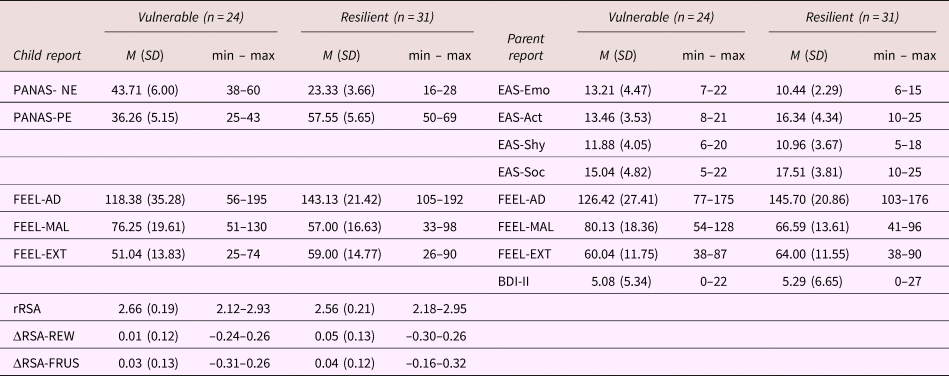
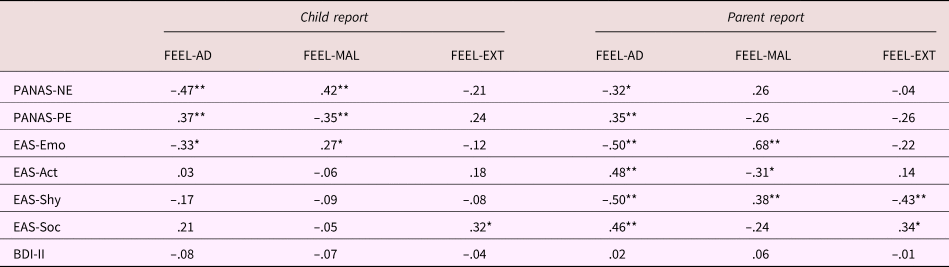
Table 1 provides an overview of the means, standard deviations (SD), and range of the variables of interest in the current sample. We also evaluated the correspondence between self- and parent-reported ER and temperament measures, as well as parental depressive symptoms (see Table 2). Our findings indicate that higher self-reported NE was significantly related to self- and parent-reported adaptive ER, as well as self-reported maladaptive ER. In addition, parent-reported NE was significantly related to self- and parent-reported adaptive and maladaptive ER, indicating that higher scores of NE were related with the deficient use of adaptive ER strategies and the use of more maladaptive ER strategies. Finally, no significant associations were found between parental depressive symptoms and ER.
Descriptive statistics

Note: PANAS-NE, negative emotionality. PANAS-PE, positive emotionality. FEEL-AD, adaptive emotion regulation strategies. FEEL-MAL, maladaptive emotion regulation strategies. FEEL-EXT, external emotion regulation strategies. rRSA, mean resting respiratory sinus arrhythmia (RSA). ΔRSA-REW, mean RSA reactivity during the reward Posner condition. ΔRSA-FRUS, mean RSA reactivity during the frustration Posner condition. EAS-Emo, emotionality. EAS-Act, activity. EAS-Shy, shyness. EAS-Soc, sociability. BDI-II, parental depressive symptoms.
Bivariate correlations between FEEL-KJ and temperament and parental depressive symptoms
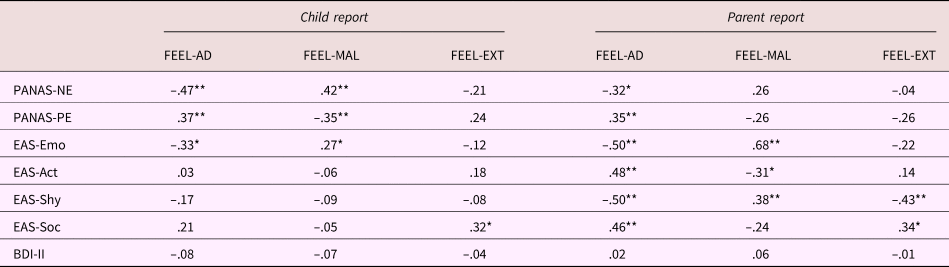
Note: FEEL-AD, adaptive emotion regulation. FEEL-MAL, maladaptive emotion regulation. FEEL-EXT, external emotion regulation. PANAS-NE, negative emotionality. PANAS-PE, positive emotionality. EAS-Emo, emotionality. EAS-Act, activity. EAS-Shy, shyness. EAS-Soc, sociability. BDI-II, parental depressive symptoms. * p < .05. **p < .01.
Mood induction (manipulation) check
Results revealed that the Denali film was successful in inducing a neutral mood t (54) = 22.19, p < .001, d = 2.99. The effects on mood of the incentive conditions of the affective Posner conditions were evaluated by comparing the change on the VAS for the affective states (and frustration ratings) before and after the reward (T2 and T3) and the frustration (T4 and T5) conditions with paired-sample t tests. As for the reward condition, results indicated a nonsignificant increase in (positive) affect between T2 and T3, t (54) = –0.63, p = .533, d = 0.08. However, tension significantly increased between T2 and T3, t (54) = –4.21, p < .001, d = 0.57. With regard to the frustration condition, participants reported more negative affect, t (54) = 5.69, p < .001, d = 0.76, higher tension, t (54) = 5.69, p < .001, d = 1.07, and more frustration, t (54) = 5.69, p < .001, d = 1.01, between T4 and T5, indicating successful mood induction.
Similarly, analyses of RSA also revealed successful mood induction at the physiological level. Paired-sample t tests were used to compare RSA during the Denali baseline with the reward and frustration condition of the Posner task. RSA in both the reward, t (54) = –3.78, p < .001, d = 0.53, and the frustration, t (54) = –3.55, p ≤ .001, d = 0.47, conditions was significantly decreased from the Denali baseline. No significant difference was found between the reward and frustration Posner conditions in RSA (p > .98).
Correspondence between physiological and informant-report measures
Random slope models
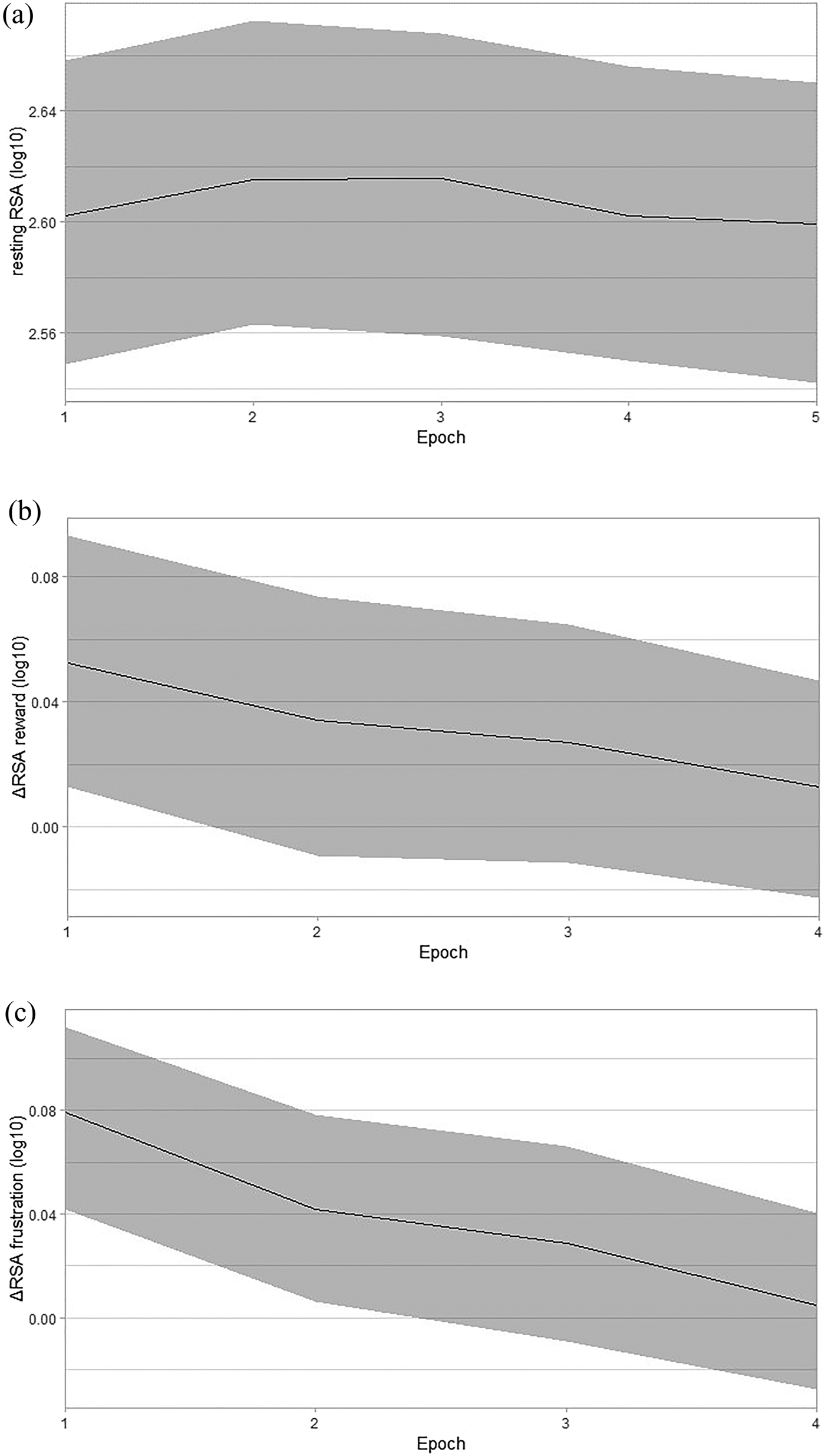
HLM results pertaining to the resting RSA model revealed that the intercept term was significant, b = 2.61, t (54) = 91.91, p < .001, whereas the slope term was not (p = .516), indicating that RSA did not change across epochs (see Figure 2a). By contrast, ΔRSA during the reward (Figure 2b), intercept b = .07, t (54) = 2.62, p = .012; slope term b = –0.01, t (54) = –2.18, p = .034, and frustration (Figure 2c), intercept b = 0.10, t (54) = 4.75, p < .001; slope term, b = –0.02, t (54) = –5.04, p < .001, Posner conditions revealed that ΔRSA decreased across epochs (see Figure 1b and 1c).
RSA and RSA reactivity (a) at rest, (b) during the reward Posner condition, and (c) during the frustration Posner condition. RSA, respiratory sinus arrhythmia. ΔRSA, RSA reactivity.

RSA and temperament
Consistent with our first hypothesis, NE scores as reported by the parent were significantly associated with intercepts in resting RSA, b = –0.08, t (53) = –2.24, p = .029, d = 0.30, so that higher levels of EAS-Emo were associated with lower resting RSA at the first epoch.
Unexpectedly, EAS-Soc was significantly associated with slopes of ΔRSA during the reward condition, b = 0.01, t (53) = 2.20, p = .033, d = 0.29. Youth who were rated higher in EAS-Soc by their parents showed larger reductions in ΔRSA at Epoch 1 and a slower decrease in ΔRSA throughout the reward condition. Effects of the other EAS temperament traits, PANAS-NE or PANAS-PE scores, were not significantly associated with intercepts/slopes for resting RSA (all ps ≥ .151) or ΔRSA in the reward/frustration conditions (all ps ≥ .050).
In addition, exploratory group-based analyses revealed a significant difference between individuals on the vulnerable and the resilient end of the spectrum in slopes of ΔRSA in the frustration Posner condition, b = –0.03, t (53) = –2.92, p = .005, d = 0.39, showing that individuals at the vulnerable end of the spectrum showed larger reductions in ΔRSA at Epoch 1 and a slower decrease in ΔRSA throughout the frustration condition compared to individuals at the resilient end. No other effects were significant (all ps ≥ .069).
ΔRSA and emotion (dys)regulation
Consistent with our second hypothesis and cross-validating informant measures, both self-reported, b = 0.01, t (53) = 2.59, p = .012, d = 0.34, and parent-reported, b = 0.01, t (53) = 2.45, p = .018, d = 0.33, maladaptive ER was significantly related to slopes of ΔRSA in the frustration condition. Youth who reported the use of more maladaptive ER showed larger reductions in ΔRSA at Epoch 1 and a slower decrease in ΔRSA throughout the frustration condition. No significant associations were found between ER and resting RSA (all ps ≥ .275). Contrary to our expectations, neither intercepts nor slopes of ΔRSA for either reward/frustration condition was significantly related to adaptive or external ER (all ps ≥ .053).
RSA and parental depressive symptoms
In contrast with our third hypothesis pertaining to the relationship between parental depressive symptoms and RSA, relationships between BDI-II scores of the parent and resting RSA or ΔRSA of their offspring did not meet traditional thresholds (all ps ≥ .062).
Discussion
This study explored the putative role of RSA as a biomarker of cardiac responsivity to enhance our understanding of emotion (dys)regulation in adolescents using RSA resting state but also ΔRSA to positive/negative valence states. Overall, the current study had three main findings pertaining to our aims. First, as predicted (based on Blandon et al., Reference Blandon, Calkins, Keane and O'Brien2008; Calkins, Reference Calkins1997; Eisenberg et al., Reference Eisenberg, Fabes, Murphy, Maszk, Smith and Karbon1995), parent-reported NE scores were significantly associated with resting RSA, as assessed during a neutral film clip. Second, also as predicted (based on Gentzler et al., Reference Gentzler, Santucci, Kovacs and Fox2009; Santucci et al., Reference Santucci, Silk, Shaw, Gentzler, Fox and Kovacs2008; Vasilev et al., Reference Vasilev, Crowell, Beauchaine, Mead and Gatzke-Kopp2009) and providing converging evidence, both self- and parent-reported maladaptive ER was significantly related to ΔRSA during the frustration Posner condition. Moreover, adolescents’ sociability was unexpectedly related to ΔRSA during the reward Posner condition. Third, no significant relationships were found between parental depressive symptoms and RSA functioning in their offspring. These results highlight the role of RSA as a biomarker of individual differences in emotion (dys)regulation, as well as temperamental vulnerability, and lend further support to the notion that parasympathetic function is a critical physiological component of emotional processes.
The first aim sought to explore a possible relationship between temperament and RSA in adolescents. According to Porges (Reference Porges1995, Reference Porges1996) and Thayer and Lane (Reference Thayer and Lane2000), high levels of resting RSA indicate optimal flexibility of the vagal brake (i.e., physiological flexibility; Beauchaine, Reference Beauchaine2001; Butler et al., Reference Butler, Wilhelm and Gross2006; Porges, Reference Porges1995, Reference Porges1996; Thayer et al., Reference Thayer, Hansen, Saus-Rose and Johnsen2009). If resting RSA is an index of physiological flexibility, higher resting RSA is expected to be associated with more effective deployment of the vagal brake, or in other words, with less extreme emotional responses (Friedman & Thayer, Reference Friedman and Thayer1998a, Reference Friedman and Thayer1998b; Thayer, Friedman, & Borkovec, Reference Thayer, Friedman and Borkovec1996). Consistent with these theories and in line with our hypothesis, adolescents high in NE exhibited lower resting RSA, as assessed while watching a neutral film clip. This finding is in accordance with evidence in young children (Blandon et al., Reference Blandon, Calkins, Keane and O'Brien2008; Calkins, Reference Calkins1997; Eisenberg et al., Reference Eisenberg, Fabes, Murphy, Maszk, Smith and Karbon1995) and provides further support for the assertion that lower levels of resting RSA reflect higher NE in both children and adolescents. Of note, no such evidence was found when NE was assessed via self-report. One explanation for this finding is that some adolescents yet lack the introspective ability to provide an exact estimate of their temperament (Critchley, Reference Critchley2005; Spear, Reference Spear2000). Another potential concern pertaining to self-report measures of temperament is that concurrent emotions, which are often rapidly fluctuating during adolescence (Steinberg, Reference Steinberg2005), may influence how adolescents answer items concerning their overall reactivity toward emotions (Wetter & Hankin, Reference Wetter and Hankin2009). Alternatively, some youth may lack emotional awareness (i.e., experience difficulties identifying and describing, as well as differentiating between, emotions; Sendzik, Schäfer, Samson, Naumann, & Tuschen-Caffier, Reference Sendzik, Schäfer, Samson, Naumann and Tuschen-Caffier2017; Van Beveren, Goossens, et al., Reference Van Beveren, Goossens, Volkaert, Grassmann, Wante, Vandeweghe and Braet2018). Nevertheless, the discrepancy in findings underlines the necessity to include multiple units of analyses to uncover vulnerability to emotional dysfunctions (Cicchetti, Reference Cicchetti, Beauchaine and Hinshaw2008; Insel et al., Reference Insel, Cuthbert, Garvey, Heinssen, Pine, Quinn and Wang2010), at least in developmental samples. Additional exploratory correlational analyses revealed that NE was also related to maladaptive and adaptive ER strategies across informants, adding further support to developmental psychopathology models and evidence of empirical studies revealing a link between high NE and a shortage of adaptive ER strategies such as reappraisal (Gross & John, Reference Gross and John2003) and the enhanced use of more maladaptive ER strategies such as suppression and rumination in youth (Gross & John, Reference Gross and John2003; Mezulis, Priess, & Hyde, Reference Mezulis, Priess and Hyde2011). Overall, the findings pertaining to the first aim support the theoretical proposition that resting RSA reflects an individual's characteristic level of arousal and as such reflects individual differences in trait NE, which predisposes individuals toward negative affect, and add to the literature on NE as a putative trait characteristic for ER processes.
The second goal was to assess the relationship between emotion (dys)regulation and RSA in adolescents. In contrast to resting RSA, ΔRSA is theorized to be a biomarker of ER (Beauchaine, Reference Beauchaine2001; Porges, Reference Porges1995, Reference Porges1996; Thayer & Lane, Reference Thayer and Lane2000) and central to understanding how individuals respond cognitively or behaviorally when encountering negative emotions at the state level. During an encounter with an affective stimulus, the PNS, whose goal is to modulate emotional arousal and return the body to homeostasis, may aid one's ability to avoid being overwhelmed with negative emotions and consequently rely on constructive ER strategies (Porges, Reference Porges1995). While some evidence supports this hypothesis, research on the physiological components of ER is still in its infancy (Shader et al., Reference Shader, Gatzke-Kopp, Crowell, Reid, Thayer, Vasey and Beauchaine2018). To address some of the shortcomings of previous studies (see Beauchaine, Reference Beauchaine2001), we assessed ΔRSA with regard to both positive and negative affective states, in addition to assessing self- and parent-reported ER using the FEEL-KJ, a measure that was designed specifically to estimate the use of a youngsters’ overall adaptive and maladaptive ER strategies. ΔRSA toward negative affective states, as assessed during the frustration Posner condition, was associated with both self- and parent-reported maladaptive ER. Specifically, youth who reported the use of more maladaptive ER strategies showed larger reductions in ΔRSA (compared to baseline) and a slower decrease in ΔRSA during the frustration condition of the affective Posner task. This finding is partially in line with findings in young children (Santucci et al., Reference Santucci, Silk, Shaw, Gentzler, Fox and Kovacs2008) and implies that adolescents who lack physiological flexibility to modify vagal tone in response to negative affective states also lack abilities required for successful management of emotions. Furthermore, this finding converges with the previous finding that maladaptive ER strategies characterized by perseverative cognition such as worry and rumination are associated with decreased parasympathetic activity (see Brosschot, Gerin, & Thayer, Reference Brosschot, Gerin and Thayer2006). Nevertheless, ΔRSA did not correlate with informant-reported adaptive and external ER, a finding that is contrary to what other research has suggested (Gentzler et al., Reference Gentzler, Santucci, Kovacs and Fox2009; Segerstrom & Nes, Reference Segerstrom and Nes2007; Vasilev et al., Reference Vasilev, Crowell, Beauchaine, Mead and Gatzke-Kopp2009). Given the positive correlations between ΔRSA and deficient medial prefrontal cortex functioning (e.g., Lane et al., Reference Lane, McRae, Reiman, Chen, Ahern and Thayer2009), the reductions in ΔRSA found in the current study may also reflect deficient top-down executive control over the negative emotion impulses elicited by one's temperament during the frustration Posner condition, and thus emotion dysregulation (i.e., maladaptive ER) rather than the ability to regulate one's emotions adaptively. This finding aligns with the results of De Witte, Sütterlin, Braet, and Mueller (Reference De Witte, Sütterlin, Braet and Mueller2017), signifying an imbalanced exertion of cognitive control as indicated by a larger difference in the ΔHRV when upregulating positive, versus downregulating negative, emotions in youth with lower resting HRV in comparison to those high in resting HRV. In view of the results pertaining to the exploratory group-based analyses revealing a significant difference between individuals on the vulnerable and the resilient ends of the spectrum in ΔRSA during the frustration condition, another possible explanation for the discrepancy between current and previous research is that the sampling method may have driven the results.
Although not totally unexpected, no significant relations were found between ER and ΔRSA during the reward condition of the affective Posner task. Given the differential (and beneficial) effects of positive emotions on attention, physiological functioning, and ER (Fredrickson & Joiner, Reference Fredrickson and Joiner2002; Fredrickson, Mancuso, Branigan, & Tugade, Reference Fredrickson, Mancuso, Branigan and Tugade2000), ΔRSA toward positive affective states may be reflective of ER strategies for regulating positive emotions (Carl, Soskin, Kerns, & Barlow, Reference Carl, Soskin, Kerns and Barlow2013), such as dampening or savoring. This is in line with theory stating that positive cognition and behavior are more likely to arise from the experience of positive emotions states (Tarrier, Reference Tarrier2010). Unfortunately, we did not include a measure of positive ER in the current study, so it was not possible to differentiate between negative (as assessed via the FEEL-KJ) and positive ER. In conclusion, the aforementioned findings pertaining to the first two aims of the current study provide further evidence for the assertion that resting RSA and RSA reactivity are differentially related to emotional processes (Beauchaine, Reference Beauchaine2001; Butler et al., Reference Butler, Wilhelm and Gross2006; Porges, Reference Porges1995, Reference Porges1996) and underline the importance of making a clear distinction between both types of RSA.
The third and final aim concerned identifying the role of parental depressive symptoms in psychophysiological correlates of ER. While several theories underline the importance of parental factors in child ER (Morris et al., Reference Morris, Silk, Steinberg, Myers and Robinson2007; Thompson, Reference Thompson1994), research on the effects of parental psychopathology on ER-related physiological responding in adolescents is rather scarce. In the present study, parental depressive symptoms were nonsignificantly related to psychophysiology of the adolescent, nor to self- and parent-reported ER. Whereas such a finding is opposite to previous work reporting altered physiological functioning in infants of prenatally depressed mothers (Field & Diego, Reference Field and Diego2008), as well as in offspring of subclinically (De Witte et al., Reference De Witte, Sütterlin, Braet and Mueller2016) and chronically (Ashman et al., Reference Ashman, Dawson and Panagiotides2008) depressed mothers, others also failed to find clear evidence linking parental symptomatology to adolescents’ RSA responding (Gentzler et al., Reference Gentzler, Santucci, Kovacs and Fox2009; Shannon et al., Reference Shannon, Beauchaine, Brenner, Neuhaus and Gatzke-Kopp2007; Srinivasan et al., Reference Srinivasan, Ashok, Vaz and Yeragani2002). Perhaps the adverse effects of parental psychopathology on ER-related physiological responding of their offspring may be rather indirect and thus mediated by other factors such as parents’ emotion socialization practices (Williams & Woodruff-Borden, Reference Williams and Woodruff-Borden2015). Furthermore, studying the consequences of parental psychopathology in youth's physiological functioning may require a more fine-grained characterization of parental psychopathology given the heterogeneity in the course and type of affective disorders (e.g., taking into account the number or the course of episodes, chronicity, and symptom presentation). Relatedly, results may differ depending on the indices used for quantifying RSA (i.e., spectral vs. nonlinear techniques; see Srinivasan et al., Reference Srinivasan, Ashok, Vaz and Yeragani2002). Finally, because the current sample size was smaller than the one previously studied, it is likely that we lacked statistical power to discover moderate or weaker effects of parental symptomatology.
Adolescents’ sociability was unexpectedly related to ΔRSA during the reward Posner condition. Youth who were rated high on this temperament trait by their parents showed larger reductions in ΔRSA during the reward Posner condition. Sociable adolescents are theorized to show low sensitivity of the behavioral inhibition system and high sensitivity of the behavioral approach motivation system (Asendorpf, Reference Asendorpf1990, Reference Asendorpf1993; Gray, Reference Gray1987). Of interest here, the behavioral approach system motivation is engaged when the opportunity for reward presents, whereas the behavioral inhibition system, which is conceptually related to NE, controls avoidance tendencies. Although not hypothesized, our unexpected finding is in line with theory that ΔRSA toward reward is a physiological index of behavioral approach motivation system activation (Fowles, Reference Fowles1988) and aligns with previous findings showing that blunted ΔRSA in response to positive affective states is associated with lower behavioral approach motivation system activity (Colder & O'connor, Reference Colder and O'connor2004; Heponiemi, Keltikangas-Järvinen, Kettunen, Puttonen, & Ravaja, Reference Heponiemi, Keltikangas-Järvinen, Kettunen, Puttonen and Ravaja2004). Overall, this finding underlines the importance of taking into account both the positive and the negative valence systems for understanding the role of RSA in characterizing the nature of the deficits in emotion responding and regulation.
As with any research, some limitations deserve mention. Whereas we aimed to provide an optimal context for studying the effects of NE by capturing individuals falling at the extremes of this dimension through oversampling (Van Beveren et al., Reference Van Beveren, Mezulis, Wante and Braet2019; Vasey et al., Reference Vasey, Harbaugh, Fisher, Heath, Hayes and Bijttebier2014), a drawback to such a sampling procedure is that we disregarded individuals falling in the middle of the NE dimension. Therefore, future replication efforts may utilize community-based samples. Second, baseline conditions in adults usually consist of them focusing on a fixation point with no auditory or visual stimulation. By contrast, participants in the current study were asked to watch a neutral film clip with the aim of evoking stronger task compliance, avoiding boredom, annoyance, or fidgetiness, and ensuring stillness to avoid potential confounds related to movement (Bush, Alkon, Obradović, Stamperdahl, & Boyce, Reference Bush, Alkon, Obradović, Stamperdahl and Boyce2011). Although we cannot exclude that some emotional response was elicited, the Denali film clip has been validated and is favored for most purposes, including resting RSA, because it is well tolerated by participants and perceived as relaxing (Rottenberg, Ray, et al., Reference Rottenberg, Ray, Gross, Coan and Allen2007). Moreover, previous authors have also opted for using a neutral film clip to assess resting RSA in adolescents for these reasons (e.g., Blandon et al., Reference Blandon, Calkins, Keane and O'Brien2008; Calkins et al., Reference Calkins, Graziano and Keane2007; De Witte et al., Reference De Witte, Sütterlin, Braet and Mueller2016). Relatedly, we used an emotional Posner task to assess ΔRSA toward both the positive and the negative valence systems with the goal to provide valuable information for the RDoC's units of analysis. Finally, results should be interpreted with caution due to the relatively small sample size, which may have constrained the power of detecting significant relations and thus may have mistakenly led to null findings. Future research may wish to replicate the current study's findings in a larger sample.
In conclusion, the current study is novel in investigating the associations between temperament, emotion (dys)regulation, parental depressive symptoms, and RSA functioning in adolescents. Specifically, the results provide evidence that NE, which is considered a traitlike individual characteristic, is associated with low resting RSA, which predisposes individuals to emotion dysregulation, whereas ΔRSA is reflective of one's actual ER abilities, here maladaptive ER. Contrary to prior work, there was no evidence for an association between parental depressive symptoms and physiological indices of ER in their offspring. Finally, the unexpected association between sociability and ΔRSA toward reward indicates the importance of considering both positive and negative valence systems when studying emotional responding. The current study opens the door to the question of mechanisms potentiating biological vulnerabilities to emotion dysregulations, by evaluating patterns of emotion (dys)regulation within social relationships, and sets the stage for future research to replicate these findings in adolescents with psychiatric disorders, examine how temperament and parental characteristics provide risk or resilience factors longitudinally by elucidating developmental trajectories of ER, and combine multiple levels of analysis, including biological correlates of emotion (dys)regulation such as event-related potentials and functional magnetic resonance imaging.
Acknowledgments
We would like to thank the editors for their valuable comments on the earlier version of the manuscript.