INTRODUCTION
Mugilids occur in both coastal marine and brackish waters of all tropical and temperate seas (Nelson et al., Reference Nelson, Grande and Wilson2016). The striped mullet, Mugil liza is a pelagic fish distributed in the western Atlantic Ocean from Venezuela to Argentina (González-Castro et al., Reference González-Castro, Ibáñez, Heras, Roldán and Cousseau2012; Whitfield et al., Reference Whitfield, Panfili and Durand2012). It is commercially exploited in Argentina where it supports a small-scale fishery conducted by an artisanal fleet, which operates mainly in Bahía Samborombón (56°45′W 35°27′S to 56°35′W 36°22′S) (González-Castro et al., Reference González-Castro, Abachian and Perrotta2009a). Commercial catches were between 5.4 and 78.8 t from 2000 to 2010, with a maximum capture of 194.0 t in 2004 (Navarro et al., Reference Navarro, Rozycki and Monsalvo2014). This fishery resource, shared between Argentina, Brazil and Uruguay, was declared overexploited by the Brazilian Ministry of Environment in 2004 (Ministério do Meio Ambiente, 2004). No specific regulation for the exploitation of this resource has been established so far in the region due to the lack of information regarding the structure and dynamics of the mullet population (González-Castro et al., Reference González-Castro, Vieira, Brick Peres, Albieri, Mendonça, Villwock de Miranda, Fadré, Padovani-Ferreira, da Silva, Rodrigues and Chao2015).
Although the white mullet Mugil curema has been occasionally recorded in Argentinean waters (González-Castro et al., Reference González-Castro, Díaz de Astarloa and Cousseau2006), M. liza is the only permanent mullet occurring in Argentina. It is regarded as an estuarine-dependent marine fish (González-Castro et al., Reference González-Castro, Abachian and Perrotta2009a) inhabiting estuaries, coastal lagoons and some freshwater beds (Cousseau et al., Reference Cousseau, González-Castro, Figueroa and Gosztonyi2005; González-Castro, Reference González-Castro2007).
Mugil liza is classified as a total spawner (González-Castro, Reference González-Castro2007; Albieri & Araújo, Reference Albieri and Araújo2010; González-Castro et al., Reference González-Castro, Macchi and Cousseau2011; Lemos et al., Reference Lemos, Varela, Schwingel, Muelbert and Vieira2014), and a hypothetical life-history model for adult stocks based on ovarian maturity stages, gonadosomatic index (GSI), allometric growth coefficient b, and border analyses of otoliths, has been proposed (González-Castro et al., Reference González-Castro, Macchi and Cousseau2011). This model, which is correlated with preparation for spawning, includes a reproductive migration from the Argentine estuaries or coastal lagoons (~36°S) towards southern Brazil (~26°S) from May to the end of June. The spawning season of the southern population of M. liza takes place from May to August, and appears to have a peak in June in offshore waters in Santa Catarina and Paraná states, as indicated by the presence of hyaline oocytes (Lemos et al., Reference Lemos, Varela, Schwingel, Muelbert and Vieira2014). From August to September, the reproductive events end, and probably, the mullet start feeding and migrating to estuaries and coastal lagoons. Eggs and larvae drift towards the surf zone by surface currents generated by the wind (Vieira & Scalabrin, Reference Vieira and Scalabrin1991). However, a small secondary spawning event (probably in more southern latitudes than the main spawning event) cannot be disregarded, as the presence of females in advanced sexual maturity during November and December were observed uninterruptedly over several years (González-Castro, Reference González-Castro2007; González-Castro et al., Reference González-Castro, Macchi and Cousseau2011). Several authors (Bruno & Acha, Reference Bruno and Acha2015; Bruno et al., Reference Bruno, Delpiani, Cousseau, Díaz de Astarloa, Blasina, Mabragaña and Acha2014, Reference Bruno, Cousseau, Díaz de Astarloa and Acha2015) have conducted studies on the recruitment of fish larvae and juveniles in Mar Chiquita coastal lagoon. These studies were carried out at 1.6 km offshore from the mouth to the inner continental shelf, the Surf zone adjacent to Mar Chiquita lagoon's mouth and the lagoon's inlet channel, using a conical net with a 300 µm mesh net to collect larval stages and a 4 m long, 1 m height nylon beach seine-net with a 5 mm stretch mesh size for juveniles. The results of these studies show that M. liza individuals of less than 22 mm were not detected in the lagoon.
In Mugilidae, young mullet usually ranging between 23 and 40 mm are commonly known as Querimana, this stage being characterized by the presence of two anal-fin spines. When the third anal-fin spine develops, then this individual can be consider to be a juvenile (Jacot, Reference Jacot1920; Thomson, Reference Thomson1997).
The daily growth and age information obtained from fish otoliths can be used to understand the factors affecting the recruitment (Stevenson & Campana, Reference Stevenson and Campana1992). Quantifying the age range of Querimana and juvenile stages of M. liza, can be an important step to generate useful and valuable information to manage the fishery resource in the region, a difficult task due to the shared nature of the stock.
A strong recruitment of Querimana captured in summer from Mar Chiquita coastal lagoon has been observed (Acha, Reference Acha1990). According to the current life-history model, a delay is therefore expected between the date of hatching and the entry into the estuaries of Querimana, depending on the distance between spawning sites (southern Brazil) and the areas of recruitment. Two recruitment peaks would be expected according to the spawning periods proposed by González-Castro (Reference González-Castro2007) and the González-Castro et al. (Reference González-Castro, Macchi and Cousseau2011) life cycle model. Moreover, it is important to correlate these facts with the distribution, abundance and age of larvae that were recruited in estuaries or related environments, in order to know if these match the model.
The aim of the present study was to assess the recruitment periods and estimate the hatching dates of Querimana and juvenile of M. liza that inhabit the coastal area of Buenos Aires province (Argentina), employing otolith readings and age-growth models. The final purpose was to contrast the current hypothetical life-history model, in order to improve the knowledge of this ecologically and economically important South American species.
MATERIALS AND METHODS
Study area
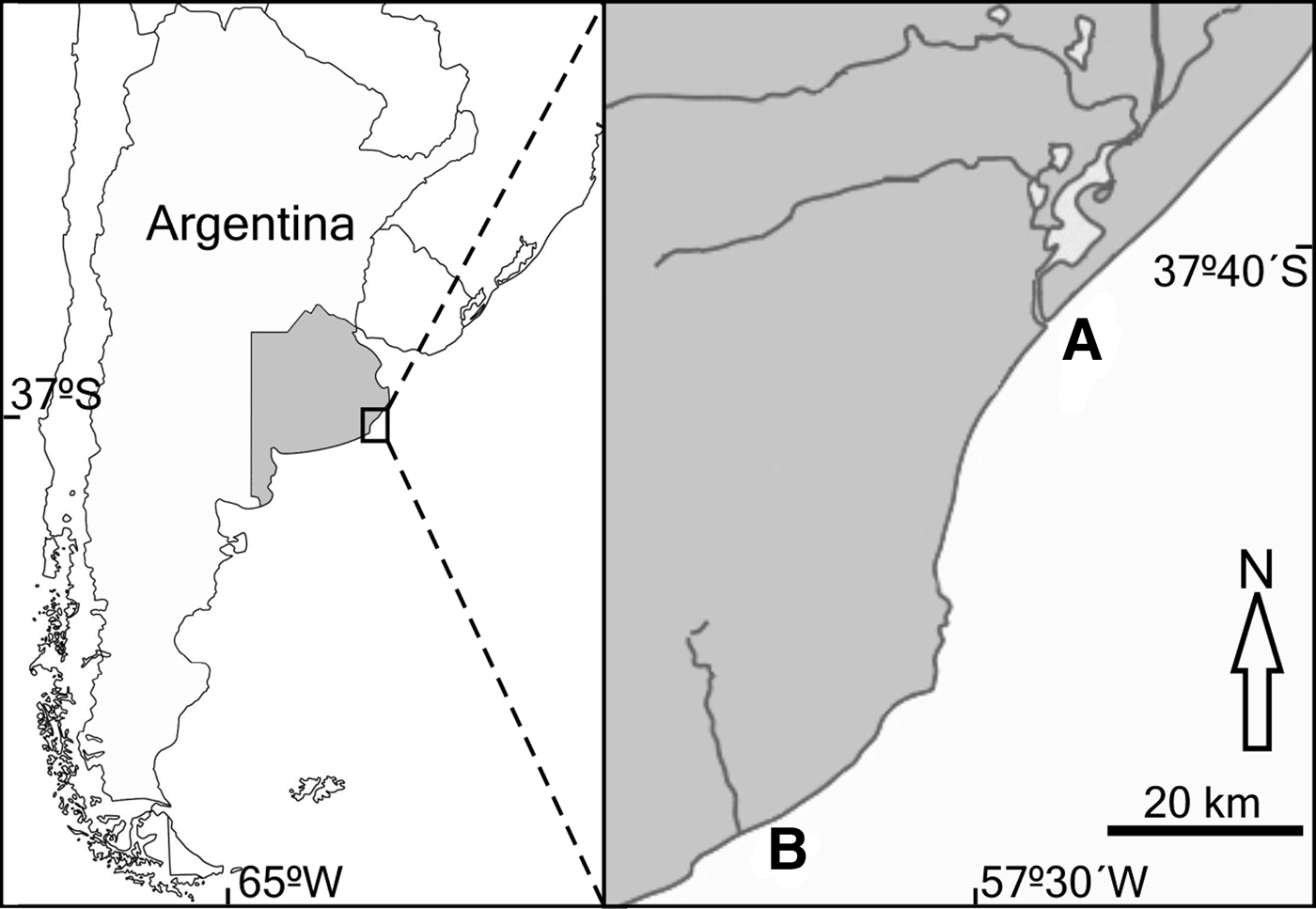
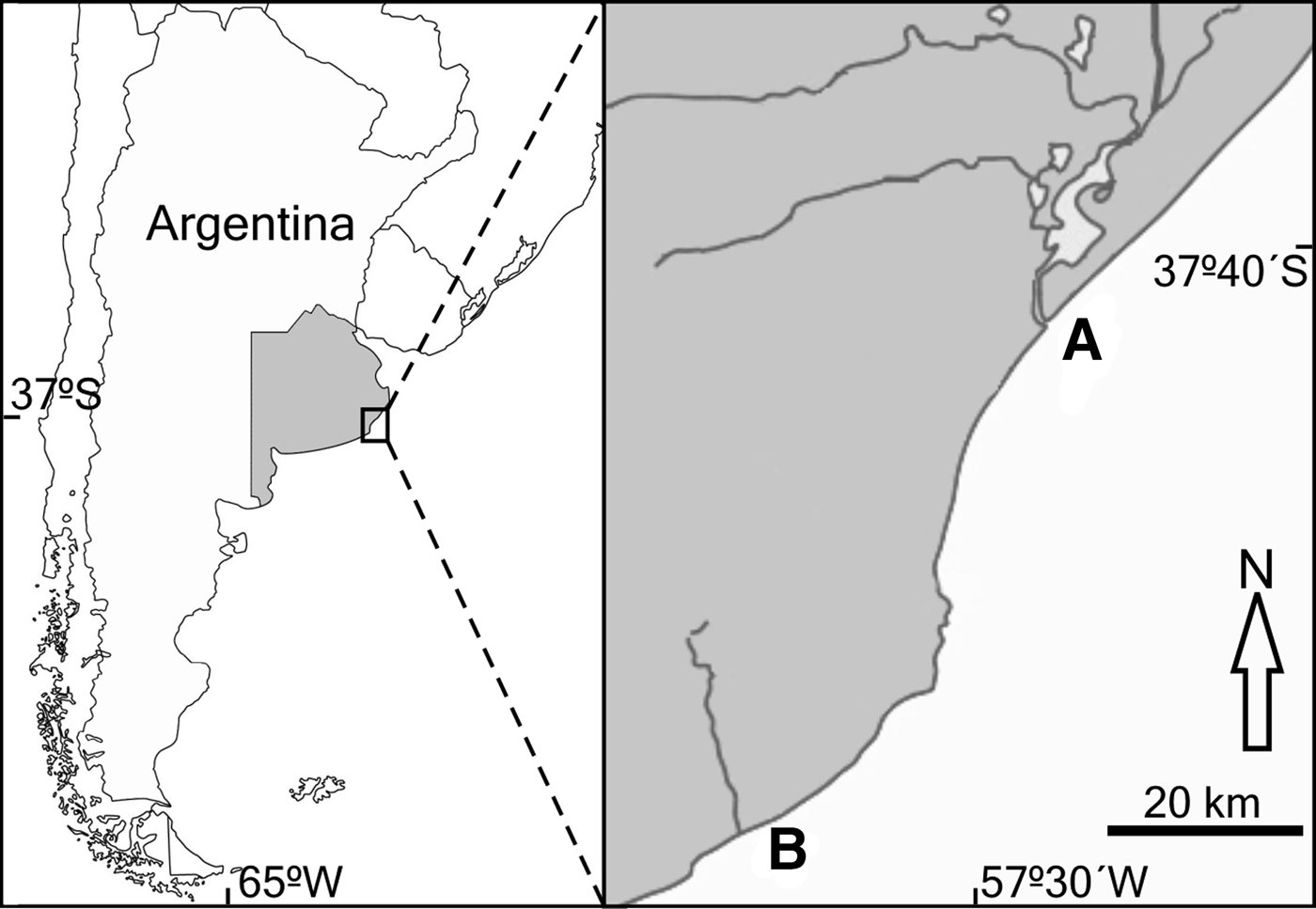
Two sampling sites were chosen: Mar Chiquita coastal lagoon and an exoreic creek called Las Brusquitas. Mar Chiquita coastal lagoon is located on the South-west Atlantic Ocean in Buenos Aires province, Argentina (37°32′–37°45′S 57°19′–57°26′W) (Figure 1). It is a shallow estuarine system with a maximum length of 25 km and a maximum width of 4.5 km, delimiting a total area of 46 km2 (Rivera Prisco et al., Reference Rivera Prisco, García de la Rosa and Diaz de Astarloa2001). Depth varies between 0.5 and 3 m. Seawater enters in the lagoon with the high tides, and the volume depends on wind direction and intensity. Freshwater inflow comes from several streams and artificial channels. Water temperature usually varies from 9.1 to 21.3°C throughout the year and salinity values from 0 to 35 PSU daily (Reta et al., Reference Reta, Martos, Perillo, Piccolo, Ferrante and Iribarne2001). Mar Chiquita is regarded a World Reserve of Biosphere since 1996 by the Coordination Council of the Man and Biosphere Program (MaB) of UNESCO (Iribarne, Reference Iribarne2001). Las Brusquitas creek is located 64 km south of Mar Chiquita (38°14′40″S 57°46′40.5″W) (Figure 1). This exoreic creek belongs to the south of the basin slope of Tandil and receives scarce tributary inflow. It is regarded as a subhumid-humid mesothermal area without water deficiency. It has a significant flow of overall runoff, a combination of surface and underground water. It also has regular rainfall patterns of about 800 mm year−1, the summer season being the rainiest (Kruse, Reference Kruse1986).
Sampling sites of M. liza. Mar Chiquita coastal lagoon (a) and Las Brusquitas creek (b).
Sampling design
The samples of M. liza (Querimana and juveniles) were collected from both the mouth of Mar Chiquita coastal lagoon (González-Castro et al., Reference González-Castro, Abachian and Perrotta2009a) and Las Brusquitas creek. Sampling was carried out monthly from January to December 2014. Trawls were performed by means of a 10 m beach seine (10 m in length × 1.8 m high; each wing measured 4 m in length and the cod-end was 3 m in length; the mesh in the lateral wings was 10 mm, and the mesh in the cod-end was 5 mm), covering approximately an area of 200 m2. Fish were taxonomically identified according to Cousseau & Perrotta (Reference Cousseau and Perrotta2013) and González-Castro et al. (Reference González-Castro, Ibáñez, Heras, Roldán and Cousseau2012). Standard length (SL) of the individuals was measured to the nearest 0.01 mm; body weight was registered to the nearest 0.01 g. In addition, water temperature (in °C), and salinity, measured in PSU, were recorded using an alcohol thermometer and a hydrobios refractometer, respectively.
The sagittal otoliths of Querimana and juveniles were removed, placed onto glass slides and covered with Pro-texx® (a transparent mounting medium) for examination by light microscopy. Otolith increments were observed under a Zeiss Axioscop binocular microscope (400×) connected to a computer equipped with an image analysis system. Image enhancement and analysis was conducted using the Kontron® software (Brown et al., Reference Brown, Leonarduzzi and Machinandiarena2004). The widths of daily increments were examined along the longest otolith radius. The increments were counted and measured from the otolith nucleus (hatch check) to the otolith edge (Campana & Jones, Reference Campana, Jones, Stevenson and Campana1992). Because the daily deposition of increments in otoliths has not been experimentally validated for this species so far, the process was assumed according to the observations made for the striped mullet M. cephalus (Radtke, Reference Radtke1984; Chang et al., Reference Chang, Tzeng and Lee2000). We considered the ring deposited immediately after the hatching mark as the first daily increment.
Data analysis
A linear relationship was established:
 $${\rm SL} = a \times {\rm OR} + b,$$
where SL was the standard length measured in mm, a and b the regression parameters, and OR was the longest otolith radius measured in μm.
Due to the absence of initial larvae, the growth was established by back-calculation methods. The biological intercept method (Campana, Reference Campana1990; Campana & Jones, Reference Campana, Jones, Stevenson and Campana1992) was used as follows: after verifying linearity between SL and OR, the fish size at a previous age of capture (L X) was estimated for each individual according to:
 $$L_{\rm X} = L_{\rm c} + ({\rm OR}_{\rm X} -{\rm OR}_{\rm c} ) \times (L_{\rm c} -L_0 ) \times ({\rm OR}_{\rm c} -{\rm OR}_0 )^{-{\rm 1}} $$
where L c is the fish length at capture time; L 0, 2.65 ± 0.23 mm, represents the mean larval size at first increment deposited, based on Kuo et al. (Reference Kuo, Shehadeh and Milisen1973) for M. cephalus. ORX is the otolith radius measured at previous ages, ORc is the otolith radius measured at capture time, and OR0 represents the otolith radius measured at first increment deposition. A linear model was fitted to the back-calculated sizes at previous ages.
The hatching dates of all specimens were determined by subtracting to the sampling dates the number of daily increments enumerated in the otoliths. For those specimens in whom otoliths were not analysed, the age of each individual was determined by converting its respective SL in days by using the linear model fitted to the back-calculated sizes, as a function of age. Because M. cephalus embryos hatch around 59–64 h after fertilization (Meseda & Samira, Reference Meseda and Samira2006; González-Castro & Minos, Reference González-Castro, Minos, Crosetti and Blaber2016), hatching dates were determined up to spawning period. Spawning period was grouped monthly.
RESULTS
Environmental data
Temperatures ranged between 12.8 and 23°C (Mar Chiquita) and between 9.8 and 21.5°C (Las Brusquitas). Salinity values were 0–6 PSU in Las Brusquitas, while in Mar Chiquita lagoon large variations were observed, from 0–33.5 PSU, as has been reported earlier by several authors (Cousseau et al., Reference Cousseau, Díaz de Astarloa, Figueroa and Iribarne2001; González-Castro et al., Reference González-Castro, Díaz de Astarloa, Cousseau, Figueroa, Delpiani, Bruno, Guzzoni, Blasina and Deli Antoni2009b). The average temperature was 20.3°C during the summer recruitment peak, and 20.0°C in spring.
Length frequency distribution
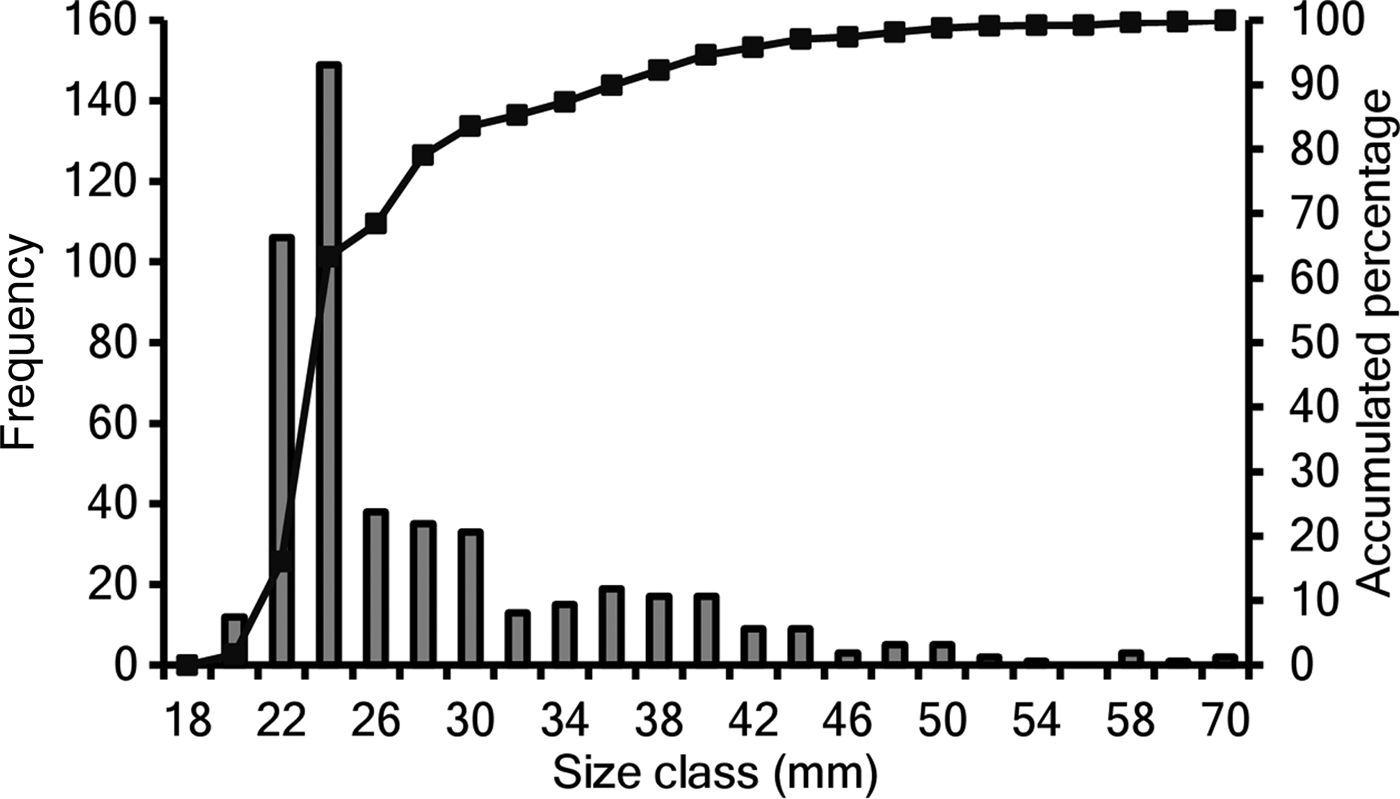
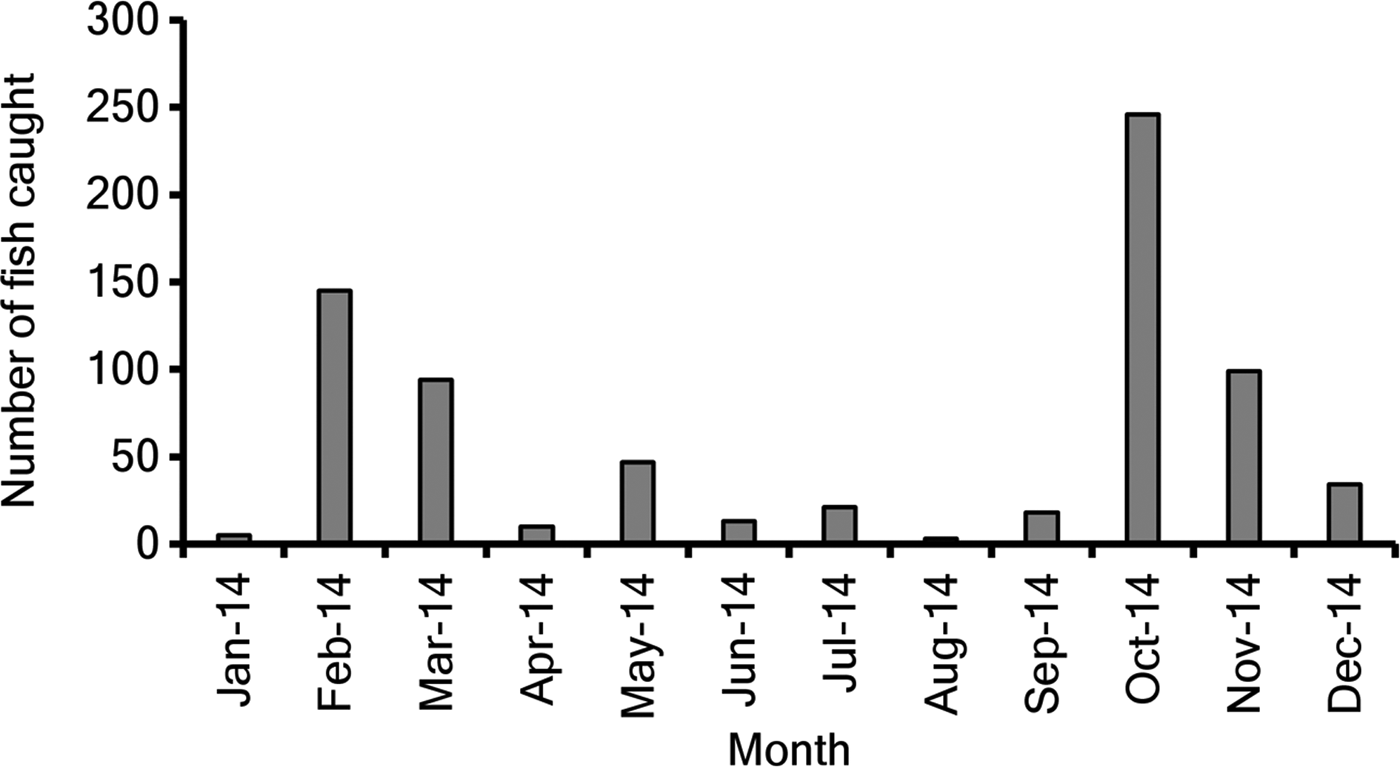
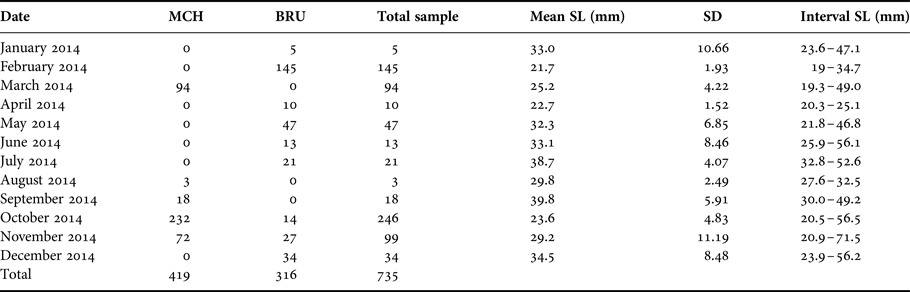
A total of 735 specimens ranging between 19 and 71.5 mm SL was collected from January to December 2014 (Table 1). The more representative size classes were 22 mm SL (N = 106) and 24 mm SL (N = 146) (Figure 2). The individuals between 18 and 40 mm SL represented more than 90% of the total catch. Two recruiting peaks were observed, the first one occurred from February to March 2014, and the second one, from October to November 2014 (Figure 3). Mean SL was 23.1 ± 3.5 mm for the first peak and 23.6 ± 4.8 mm for the second one.
Size class frequency distribution of M. liza specimens analysed in this study. Size classes are grouped in 2 mm intervals. N = 735. Solid line is accumulated percentage.

Monthly catches of M. liza specimens.

Total monthly catches of Querimana and juveniles of Mugil liza.

MCH, Mar Chiquita; BRU, Las Brusquitas creek; SD, standard deviation; SL, Standard length.
Age and growth
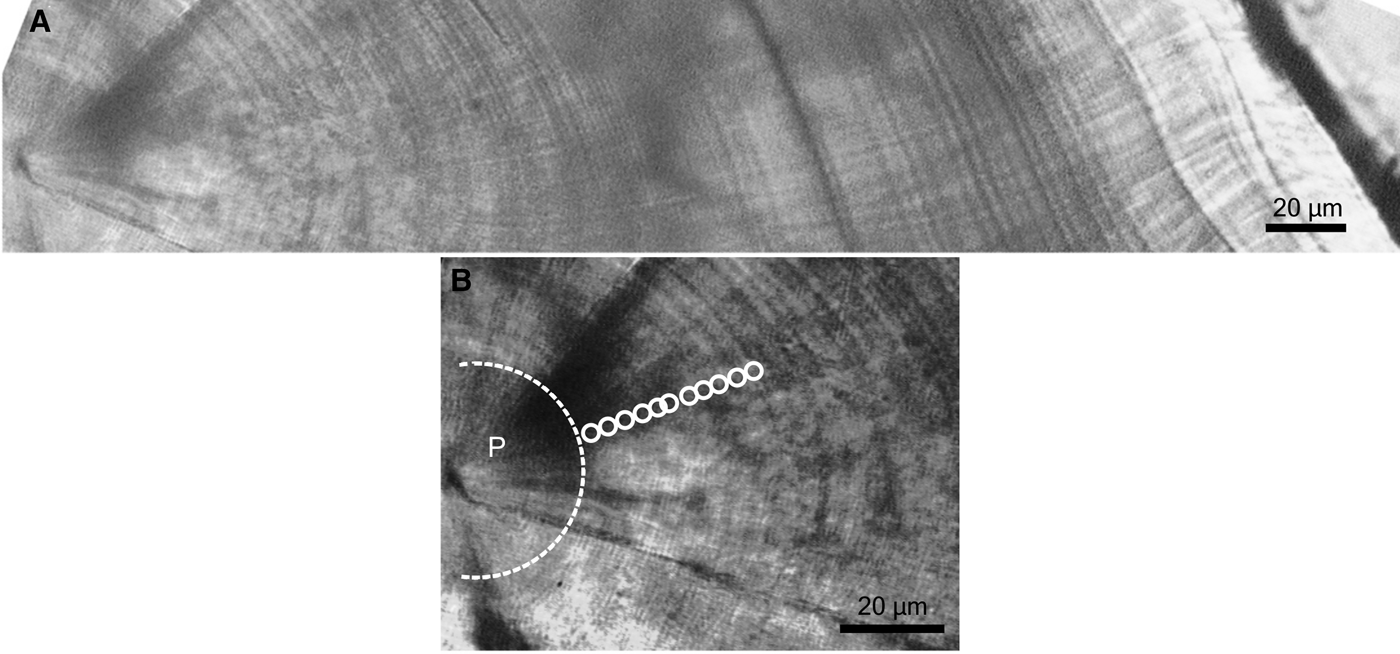
A successive pattern of alternating light and dark bands was microscopically observed; those bands define the daily growth increments (Figure 4).
Light microscope photographs of microstructure of daily growth increments in otoliths of M. liza Querimana (A, B). White circles: daily growth increments; white dotted line: primordium (P).

A total of 735 specimens were captured during a one-year sampling period. A representative sample was taken each month, thus 250 otoliths were extracted. After processing only 109 were in good condition for reading. Otolith radius ranged from 434.83 to 1377.29 µm. The linear relationship between otolith radius and SL was:
 $${\rm SL} = {\rm 22}.{\rm 41} \times {\rm OR} + {\rm 16}.{\rm 7}0;\quad R^{\rm 2} = 0.{\rm 89},\,P\;{\rm \lt}\; 0.00{\rm 1}.$$
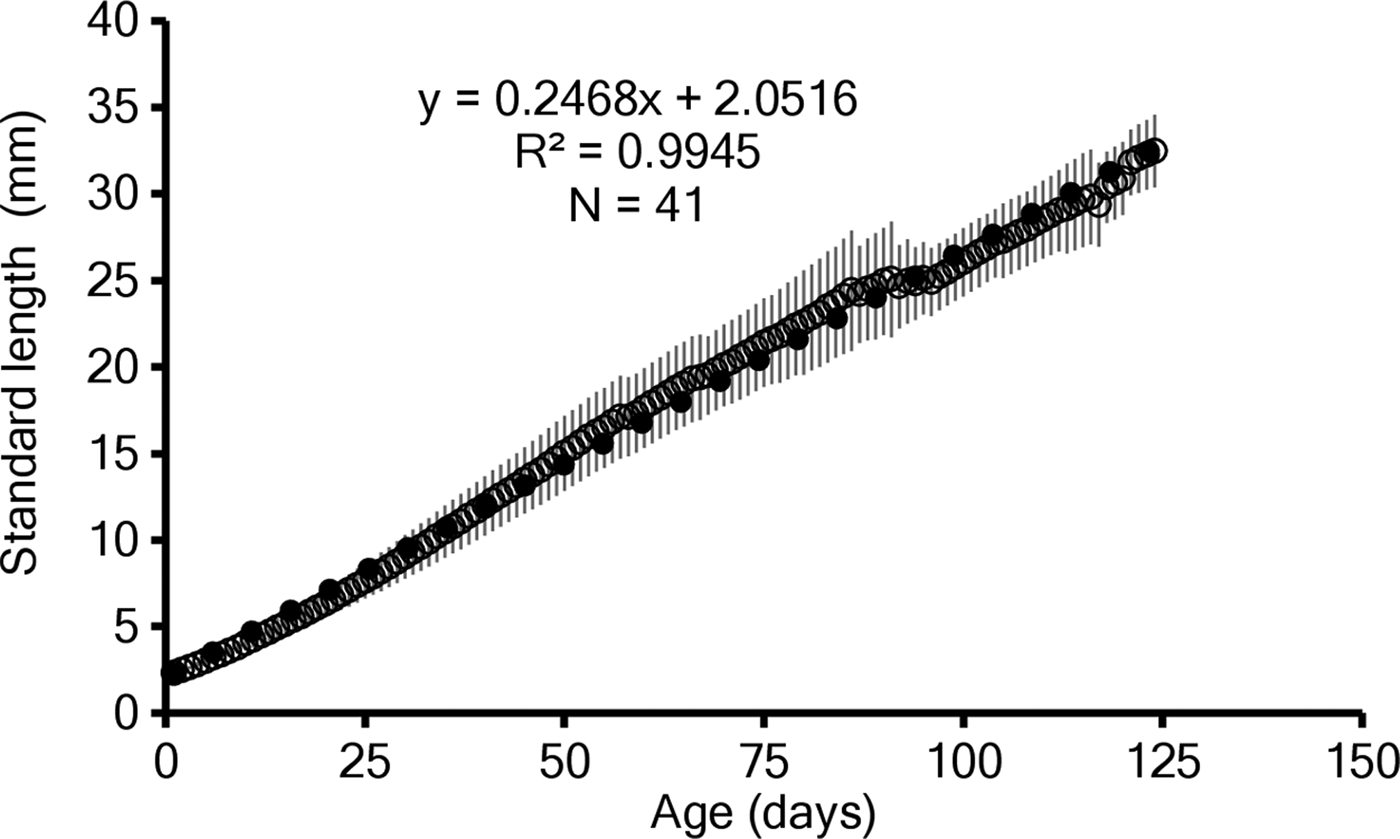
The mean ages of M. liza Querimana in the estuary were estimated by converting SL in larval age, using the linear model to the back-calculated ages (Figure 5).
Back-calculated standard length at age of Querimana and juvenile of Mugil liza (open circles) and linear model fitted to data (black dots).

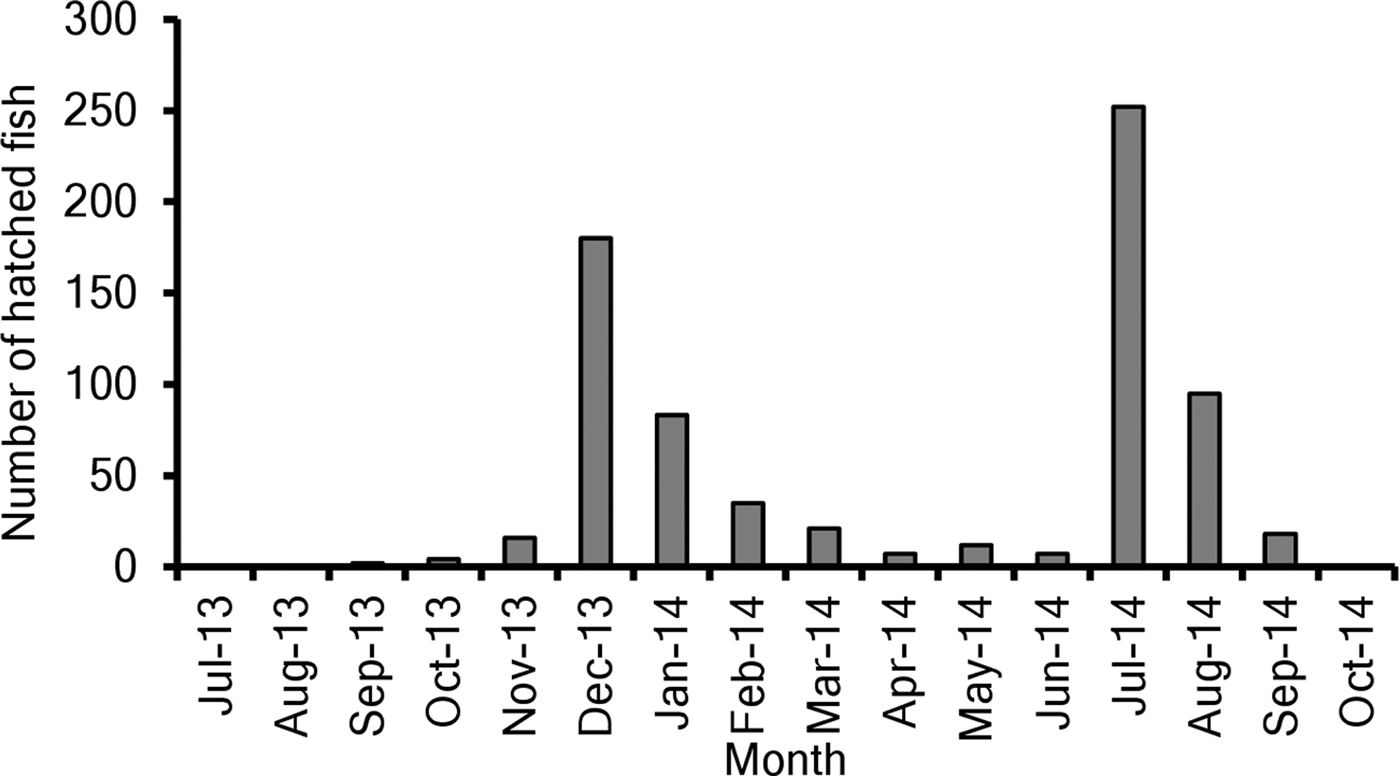
The estimated age of the total individuals ranged from 67 to 212 days old (N = 735). The mean daily ages of Querimana recruited at the study area were estimated to be 82.81 ± 10.96 days ranging from 67 to 117 days (February and March) and 84.31 ± 8.22 days ranging from 73 to 114 days (October and November). The determination of hatching dates of Querimana and juveniles of M. liza suggested two spawning seasons. The first one would occur from December (2013) to January (2014), and the second, from July to August (2014) (Figure 6). The linear model fitted to the back-calculated sizes at previous ages was: SL = 0.2468 + 2.0516; R 2 = 0.9945 (Figure 5).
Monthly distribution of hatching dates obtained by back-calculated length data of specimens of M. liza.

DISCUSSION
Estuaries and coastal lagoons are high fish productivity areas (Yáñez-Arancibia et al., Reference Yáñez-Arancibia, Sobéron-Chávez, Sánchez-Gil and Yáñez-Arancibia1985; Cousseau et al., Reference Cousseau, Díaz de Astarloa, Figueroa and Iribarne2001) and play an important role in biological and reproductive cycles of many marine species (Galván-Piña et al., Reference Galván-Piña, Galvan-Magaña, Abítia-Cardenas, Gutiérrez-Sánchez and Rodriguez-Romero2003; González-Castro et al., Reference González-Castro, Abachian and Perrotta2009a, Reference González-Castro, Díaz de Astarloa, Cousseau, Figueroa, Delpiani, Bruno, Guzzoni, Blasina and Deli Antonib, Reference González-Castro, Macchi and Cousseau2011; Lajud et al., Reference Lajud, Díaz de Astarloa and González-Castro2016). More than 30 fish species have been recorded in Mar Chiquita coastal lagoon, many of which constitute valuable resources for game fishing, such as mugilids, sciaenids, flatfishes and atherinopsids (Cousseau et al., Reference Cousseau, Díaz de Astarloa, Figueroa and Iribarne2001; González-Castro et al., Reference González-Castro, Díaz de Astarloa, Cousseau, Figueroa, Delpiani, Bruno, Guzzoni, Blasina and Deli Antoni2009b, Reference González-Castro, Rosso, Mabragaña and Díaz de Astarloa2016). Regarding M. liza, several studies have been conducted on taxonomy (Cousseau et al., Reference Cousseau, González-Castro, Figueroa and Gosztonyi2005; González-Castro et al., Reference González-Castro, Heras, Cousseau and Roldán2008), age and growth (González-Castro et al., Reference González-Castro, Abachian and Perrotta2009a), ecology (González-Castro et al., Reference González-Castro, Díaz de Astarloa, Cousseau, Figueroa, Delpiani, Bruno, Guzzoni, Blasina and Deli Antoni2009b; Bruno et al., Reference Bruno, Barbini, Díaz de Astarloa and Martos2013) and reproductive biology in Mar Chiquita (González-Castro et al., Reference González-Castro, Macchi and Cousseau2011). Mar Chiquita coastal lagoon constitutes an important area for juvenile recruitment, but also for feeding and growth of adults previous to the reproductive migration (González-Castro et al., Reference González-Castro, Abachian and Perrotta2009a, Reference González-Castro, Díaz de Astarloa, Cousseau, Figueroa, Delpiani, Bruno, Guzzoni, Blasina and Deli Antonib, Reference González-Castro, Macchi and Cousseau2011; Bruno et al., Reference Bruno, Barbini, Díaz de Astarloa and Martos2013).
In the present work, M. cephalus was utilized as a model species to make comparisons of the obtained results for M. liza. Mugil liza belongs to one of the 14 lineages within the M. cephalus species complex (González-Castro & Gasemsadeh, Reference González-Castro, Gasemsadeh, Crosetti and Blaber2016). Moreover, M. cephalus is the type-species of this genus, being the most studied taxon from a biological, genetic and taxonomic point of view.
Garbin et al. (Reference Garbin, Castello and Kinas2014) performed back-calculation on otoliths of adult individuals of M. liza, determining that the larval primordium would form around an average size of 21.2 mm total length. So far, no studies related to age determination and daily growth of M. liza at recruitment are reported for this species. Working in ideal conditions, it would be desirable to have specimens with a broader range size and larvae, to represent the daily growth of Querimana and juveniles of M. liza. Unfortunately, larvae were not available because the spawning sites are far away from the study site. Thus, the back-calculation procedures were employed in order to resolve this.
Most of the captured individuals in this study corresponded to Querimana, constituting more than 80% of the catch (Figure 2). It was also observed that 79.5% of the collected individuals belonged to catches of February, March, October and November (Table 1). These high values correspond to the recruitment of Querimana in the surveyed area (i.e. the entrance of Querimana of M. liza to diverse oligohaline systems). High abundance of juveniles and Querimanas has been observed in Mar Chiquita coastal lagoon, from January to February, and individuals between 18 to 60.8 mm total lengths have been collected throughout the year (Acha, Reference Acha1990). In the same study, larvae were collected between 4 mm and 14 mm SL in the Samborombón Bay throughout the year. Furthermore, Bruno et al. (Reference Bruno, Barbini, Díaz de Astarloa and Martos2013) recorded highest abundances of M. liza juveniles in summer and spring. Conversely, Vieira (Reference Vieira1991), recorded the highest recruitment of M. liza juveniles between July and October in dos Patos lagoon, Brazil. However, Rodrigues & Vieira (Reference Rodrigues and Vieira2013), found for the same lagoon a uniform recruitment of juveniles with a total length smaller than 50 mm throughout the year.
According to the present work, the spring recruitment (October to November) in the study area was constituted by Querimanas with sizes from 19 to 31.9 mm SL, whereas recruitment in summer (February to March) presented sizes between 20.5 to 31.2 mm SL, at ages from 67 to 117 and from 73 to 114 days, respectively. Chang et al. (Reference Chang, Tzeng and Lee2000) reported the recruitment of M. cephalus between 17 and 39 mm total length and ages between of 29 and 67 days in the Thanshui estuary. Hsu et al. (Reference Hsu, Chang, Iizuka and Tzeng2009) calculated the mean age and the total length at estuarine arrival in several estuaries of the north of Taiwan as 32.9 ± 5.5 days and 28.3 ± 2.8 mm. The differences between age and SL of the of M. liza captured during 2014 and the results registered in previous research for M. cephalus, could be attributed to the long distances that M. liza larvae must travel from Brazil (the hypothetical place where they were born, probably located in the south, Lemos et al., Reference Lemos, Varela, Schwingel, Muelbert and Vieira2014) to the area of recruitment (i.e. 1500 km from the study area and the spawning area in Brazil, vs 200 km between recruitment and spawning areas in Taiwan). Additionally, growth differences between both species could exist.
The presence of two annual peaks of recruitment agree with the existence of two reproductive populations, as outlined by González-Castro et al. (Reference González-Castro, Abachian and Perrotta2009a, Reference González-Castro, Macchi and Cousseau2011): a resident population (that would reproduce more locally) and a migrant one. This last group would be constituted by migrating adults from Argentina toward the coast of Brazil, as mentioned by González-Castro et al. (Reference González-Castro, Abachian and Perrotta2009a) and Lemos et al. (Reference Lemos, Varela, Schwingel, Muelbert and Vieira2014). The other reproductive group could be hypothetically constituted by adults that migrate to the area of the estuary of Rio de la Plata and they would spawn in summer. The results obtained in this work contribute to the knowledge of the early life history of the species, providing more accurate information to improve the management of the fishery resource which is being subject to overexploitation.
CONCLUSIONS
We conclude that during 2014 two recruitment peaks of M. liza were detected in the study area. Daily increments were easily identifiable under optical microscopy. A growth linear model was fitted: SL = 0.2468 + 2.0516, where slope represents the mean daily growth rate in mm day−1. Two hatching periods were detected; this information supports the hypothesis previously verified from the reproductive biology of adults, and it raises the question about the effect that the second reproductive event produces in recruitment and larval dynamic of M. liza. Further studies will be needed to understand the population dynamics of this species of the estuary of Rio de la Plata; inter-annual variations in recruitment should be tested.
ACKNOWLEDGEMENTS
The authors would like to thank Julio Mangiarotti (forest guard in the Mar Chiquita Biosphere Reserve) and the Mar Chiquita coastal lagoon authorities (Jorge Paredi, Luis Facca, Mónica Iza, Florencia Celesia and Gladys Eiras). We thank Matías Delpiani for helping in collecting specimens. Contribution INIDEP No. 2082.
FINANCIAL SUPPORT
This work was supported by UNMdP 15/E525, EXA 577/2 and UNMdP 15/E619, EXA 669/14 grants.