




No CrossRef data available.
Article contents
Major bleeding rates after prophylaxis against venous thromboembolism: Systematic review, meta-analysis, and cost implications
Published online by Cambridge University Press: 01 November 2004
Abstract
Objectives: The frequency and consequences of major bleeding associated with anticoagulant prophylaxis for prevention of venous thromboembolism is examined.
Methods: We conducted a systematic review and meta-analysis of controlled trials that reported rates of major bleeding after pharmaceutical thromboprophylaxis in patients undergoing major orthopedic surgery. Thromboprophylactic agents were divided into four groups:warfarin/other coumarin derivatives (WARF), unfractionated heparin (UFH), low molecular weight heparin (LMWH), and pentasaccharide (PS). Meta-analysis was conducted comparing LMWH with each of WARF, UFH, and PS. The frequency of re-operation due to major bleeding was reviewed and combined with published costs to estimate the mean cost of managing major bleeding events in these patients.
Results: Twenty-one studies including 20,523 patients met inclusion criteria for the meta-analysis. No evidence of significant between-trial heterogeneity in risk ratios was found. Combined (fixed effects) relative risks (RR) of major bleeding compared with LMWH were WARF – RR 0.59 (95 percent confidence interval [CI], 0.44–0.80); UFH – RR 1.52 (95 percent CI, 1.04–2.23); PS – RR 1.52 (95 percent CI, 1.11–2.09). Seventy-one studies including 32,433 patients were included in the review of consequences of major bleeding. We estimated that the average cost of major bleeding is $113 per patient receiving thromboprophylaxis.
Conclusions: LMWH results in fewer major bleeding episodes than UFH and PS but more than WARF. These events are costly and clinically important.
Information
- Type
- GENERAL ESSAYS
- Information
- International Journal of Technology Assessment in Health Care , Volume 20 , Issue 4 , November 2004 , pp. 405 - 414
- Copyright
- © 2004 Cambridge University Press
Venous thromboembolism (VTE) is a common complication of major orthopedic surgery. Patients undergoing total hip replacement (THR), total knee replacement (TKR), and surgery for correction of fracture of the upper femur (hip fracture) are at very high risk of VTE (35). In the absence of prophylaxis, between 40 percent and 80 percent of these patients will experience venographically demonstrable deep vein thrombosis, 4–10 percent will develop clinical pulmonary embolism (PE), and 0.2–5 percent of patients will die from PE (35).
The American College of Chest Physicians recommends that thromboprophylaxis should be routinely used in patients at highest risk of VTE (35). Prophylaxis against VTE with low dose unfractionated heparin, low molecular weight heparins, warfarin, and mechanical methods has been shown to be effective in reducing the incidence of VTE compared with placebo (2;3;9;53;75;79). More recently, pentasaccharide has been introduced into the United States and other countries as a new agent indicated for use in thromboprophylaxis in orthopedic surgery (5;20;57;99). Many orthopedic surgeons now use thromboprophylaxis for at least some of their patients undergoing major procedures (4;35;38).
However, use of anticoagulant drugs for thromboprophylaxis is associated with increased risk over placebo of clinically significant bleeding (64). Bleeding is particularly troublesome in joint replacement surgery, as hemorrhage at the surgical site may require re-intervention and an infected hematoma may threaten the viability of the joint graft. Perceived risk of bleeding may influence the choice of whether to give prophylaxis or influence choice between different prophylactic agents.
Several well-conducted clinical studies have evaluated the effectiveness and safety of thromboprophylactic agents. However, clinically significant bleeding and symptomatic VTE are uncommon, and even large studies may not have sufficient power to detect statistically significant differences between agents in these important events. Meta-analysis combines data from different studies to generate additional statistical power (18) and is an appropriate tool to research the frequency of uncommon events when the consequences of these events are serious. The purpose of our study was to compare rates of major, total, and fatal bleeding associated with different agents, and to examine the consequences and costs of major bleeding.
METHODS
Overview
We conducted a systematic review and meta-analysis of rates of major bleeding (74). We conducted secondary analyses to identify the consequences and estimate the costs of managing major bleeding episodes.
Search and Inclusion Criteria
All inclusion criteria for study selection were predefined. To be included in the meta-analysis studies had to: (i) describe patients undergoing major orthopedic surgery, defined as one or more of THR, TKR or hip fracture surgery; (ii) be controlled trials of thromboprophylactic agents; (iii) report rates of major bleeding; (iv) report currently licensed doses and recommended administration regimens of thromboprophylactic agents; (v) include comparisons between two or more of the following agents: low-molecular weight heparins (LMWH), warfarin or another coumarin derivative (WARF), unfractionated heparins (UFH), or pentasaccharide (PS); and, (vi) report rates of major bleeding during the period of acute hospitalization after surgery with up to 14 days of follow-up (i.e., studies reporting out of hospital prophylaxis only were excluded).
Studies were identified by a search conducted in September 2001. Databases searched included Medline; Pubmed; Embase; The Cochrane Library; Oldmedline; National Research Register; Medical Research Council trials; Science Citation Index; Health Technology Assessment database; Current Controlled trials; National Health Service Economic Evaluation Database (NHSEED); Econlit; and Database of Abstracts of Reviews of Effectiveness (DARE). Full details of the search strategy and protocol are available on request from the authors.
Data Extraction and Definitions
Data extraction and quality assessment were carried out by one reviewer and checked by a second reviewer. Any differences were resolved by consensus.
From each study, we extracted data on study setting; description of participants; number of patients; bleeding episodes; and thromboprophylaxis interventions used. We classified interventions into one of five groups: UFH (unfractionated heparin at a dose of 10,000–15,000 IU per day), LMWH (any low molecular weight heparin at a dose licensed in orthopedic surgery), WARF (adjusted dose warfarin or other coumarin derivative), PS (pentasaccharide at a licensed dose), OTH (other).
We abstracted data for major bleeding according to the criteria defined by Hull and colleagues (46): “Bleeding was classified as major if it was overt and associated with a fall in hemoglobin level of 2 grams per deciliter or more, if it led to transfusion of two or more units of blood, if it was retroperitoneal, if it occurred in a major prosthetic joint, or if it was intracranial.” When this definition was not used, we attempted to derive this measure from reported information. If this was not possible, the authors' definition of major bleeding was accepted. In particular, we accepted a Bleeding Index (99) of >2 as constituting a major bleeding event.
We assessed components of methodological quality separately (72;88), including details of randomization (generation of allocation sequence and allocation concealment), blinding, and recording of study withdrawals.
Statistical Methods
Major bleeding was the primary end point, and total and fatal bleeding were secondary end points. We combined results from individual studies on the risk ratio scale, using a fixed-effects model (Mantel–Haenszel method), and performed tests of heterogeneity (17). We also performed random effects analyses for comparison (DerSimonian and Laird method [17]). We examined publication bias and related biases in funnel plots and carried out tests of funnel plot asymmetry (6;19). Sensitivity analyses examined the importance of the methodological quality of studies, publication status (abstract or full publication), study size (trials with 300 or more patients), and the funding source (i.e., if funded by industry). L'Abbé plots and influence analyses were used to examine heterogeneity and to investigate whether the results are robust to exclusion of individual studies (92). All analyses were performed in Stata version 7.0 (Stata Corporation, College Station, TX).
Consequences and Costs of Major Bleeding
To explore the consequences and cost implications of major bleeding, we abstracted data on the site of major bleeding (wound site, gastrointestinal [GI], other) and action taken (surgery or medical management) in response to major bleeding events. Analysis of the cost of management of major bleeding included studies which reported: original estimates of cost or resource use, findings for the United States, costs in patients undergoing major orthopedic or other surgery and in which the definition of major bleeding was clearly reported. Data were inflated to 2002 US dollars using the Consumer Price Index to facilitate comparisons between studies.
We multiplied the pooled frequency of surgical and medical management by estimated cost to derive the mean cost of management of a major bleeding event. This value was multiplied by the estimated frequency of major bleeding events, pooled across all groups, to estimate the cost of major bleeding per patient given thromboprophylaxis.
RESULTS
Twenty-one studies including 20,523 patients satisfied the inclusion criteria for the meta-analyses. Three studies were identified as abstracts only: two of which subsequently have been published (57;99) with the other in press (39). Eight published studies reported direct comparisons between WARF and LMWH (11;25;30;42;48;51;52;61). Nine published and one unpublished study reported direct comparisons between UFH and LMWH (12;13;24;31;39;55;59;63;84;96), and four published studies reported direct comparisons between PS and LMWH (5;20;57;99).
Most studies reported major bleeding using the Hull et al. (46) or similar criteria, although not all studies reported rates of minor or total bleeding, and definitions of minor bleeding used were heterogeneous. Fatal bleeding was reported rarely (3/20,523 = 0.01 percent of patients given prophylaxis). All twenty-one studies were included in the meta-analysis.
Risks of Bleeding
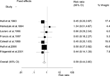
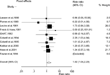
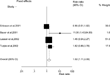
Compared with LMWH, we estimate the relative risk of major bleeding with WARF to be 0.59 (95 percent CI, 0.44–0.80), with UFH to be 1.52 (1.04–2.23), and with PS to be 1.52 (1.11–2.09). Forest plots corresponding to these analyses (fixed effects models) are shown in Figures 1–3. There was little evidence of between-study heterogeneity (p>.10). Relative risks of total bleeding (all compared with LMWH) were estimated to be 0.77 (0.68–0.88) with WARF, 1.17 (0.92–1.48) with UFH, and 1.27 (1.04–1.55) with PS, again with little evidence of heterogeneity (p>.10). L'Abbé plots did not reveal clear outliers and funnel plots were symmetrical, with statistical tests of funnel plot asymmetry nonsignificant (p>.10). Influence analysis showed little impact of excluding studies one-by-one.

Warfarin/other coumarin derivatives versus low molecular weight heparin, major bleeding. Heterogeneity chi-squared=4.55 (d.f.=6), p=.602.

Unfractionated heparin versus low molecular weight heparin, major bleeding. Test of heterogeneity chi-squared=4.02 (d.f.=8), p=.856.

Pentasaccharide versus low molecular weight heparin, major bleeding. Heterogeneity chi-squared=5.88 (d.f.=3), p=.118.
Sensitivity Analyses
Hull et al. (51) was identified as a possible outlier in the WARF vs LMWH analysis, as this study demonstrated higher rates of bleeding. Closer examination found that the definition of major bleeding used was consistent with the author's earlier work (46) and no other discrepancies were identified. Removing this study from the analysis resulted in an estimate RR for WARF vs LMWH of 0.60 (0.40–0.90) compared with 0.77 in the main analysis. The random effects results were similar to those from the fixed effects analyses, although confidence limits tended to be wider. Relative risks of major bleeding compared with LMWH were 0.59 for WARF (0.44–0.80), 1.55 for UFH (1.05–2.29), and 1.53 for PS (0.92–2.55). There was little evidence for differences in results according to methodological quality of studies, type of publication, study size, and source of funding. Full results of the sensitivity analyses are available on request from the authors.
Consequences of Major Bleeding
Seventy-one studies (32,433 patients), including the twenty-one studies in the meta-analysis, reported rates of major bleeding for at least one of the four agents (1;7;8;10;14–16;21–23;26–29;33;34;36;37;40;41;43;45;47;48;50;54;58;60;62;65;66;68;69;71;73;76;78;80–83;85–87;89;90;93–95;97;98;101). A total of 632 episodes of major bleeding were reported (632/32,433 = 1.95 percent of patients receiving thromboprophylaxis). Only five cases of fatal bleeding were identified.
The location of bleeding was reported for 60 percent (378/632) of major bleeding episodes, of which 71 percent (267/378) were at the wound site, 7 percent (28/378) in the GI tract, and the remainder at other sites. Action taken in response to bleeding was reported for only 19 percent (118/632) of major bleeding episodes, of which 20 percent (24/118) required re-operation at the wound site, 1 percent (1/118) other surgical intervention, and the remainder were managed medically.
We identified fifty-two studies describing costs of major bleeding: thirty-seven were secondary references (referring back to costs from other publications); seven did not report U.S. costs (six European, one South African); eight reported original estimates of the cost of bleeding in the United States. A summary of the studies is given in Table 1.
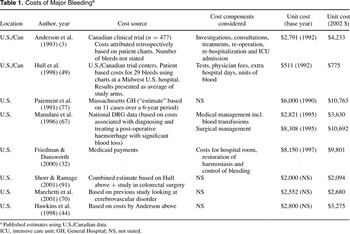
Combining the estimated frequency of surgery and medical management with the estimated cost per event from Mamdani et al. (67) resulted in an estimated cost of management of an episode of major bleeding of $5,801 (2002 prices), equal to approximately $113 per patient receiving prophylaxis.
DISCUSSION AND CONCLUSIONS
This systematic review and meta-analysis found significant differences in rates of bleeding after thromboprophylaxis in major orthopedic surgery. Compared with LMWH, WARF resulted in significantly fewer major and total bleeding episodes, UFH resulted in significantly more major bleeding episodes, and PS resulted in significantly more episodes of major and total bleeding.
Limitations of the study include the following: this study considered only the safety end points of major, total, and fatal bleeding and not the efficacy and effectiveness of agents in preventing VTE. Previous, good quality meta-analyses have reported that LMWH significantly reduced VTE compared with WARF (2;79) or UFH (2;3;53;75;79), although one study (56) reported a trend in favor of LMWH versus UFH and WARF, but this finding did not reach statistical significance. Since our analysis was performed, Turpie and colleagues (100) have published a meta-analysis of the four PS studies. The authors found a significant reduction in VTE with PS compared with LMWH and that major bleeding occurred significantly more frequently with PS (5;57).
We were unable to search non-English language sources and, therefore, may not have identified all published studies. This finding will introduce bias only if the results of trials published in other languages differ systematically from trials published in English. We are not aware of significant trials that have not been published in English, but the risk remains that we have overlooked material information.
Our study did not distinguish between different preparations of LMWH, and there may be differences in risk of bleeding, although current evidence is inconclusive (80;82;97). Similarly we did not distinguish between dosing regimens that initiate LMWH before and after surgery or between different dosing schedules for UFH, and we included studies reporting both twice and three times daily dosing. However, older studies reporting the use of adjusted dose UFH were excluded, as adjusted dosing is no longer recommended in prophylaxis (35). Finally, we pooled results for warfarin with those for other coumarin drugs, as we are not aware of any evidence that different coumarin derivatives have substantively different characteristics. We believe these simplifications are justified as they allow us to generate sufficient statistical power to show differences between therapies.
We did not include bleeding rates reported more than 2 weeks after surgery. This means that we have not considered the potential impact on bleeding rates of extending prophylaxis beyond the duration of hospitalization. This strategy is a particular limitation in the interpretation of the warfarin findings. Warfarin prophylaxis in practice often continues for more than 14 days (38), potentially extending the time for which patients are at elevated risk of bleeding. Extended warfarin regimens were not reported in the literature we reviewed, and insofar as extended prophylaxis is used in practice, the relevance of our finding may be ques-tioned.
Bleeding rates used in this analysis were those observed in the clinical trial setting. We included all controlled studies that reported major bleeding, in an attempt to include studies with pragmatic designs that may have been excluded from other analyses. However, clinical trials typically report data from selected patient populations, who are experiencing close monitoring in close to ideal circumstances. In ordinary practice bleeding rates may be increased by practical problems with administration and monitoring of prophylaxis and with food or drug interactions.
Finally, the estimate of the cost of major bleeding relied on published cost data from a group of patients not included in the main analysis and should be viewed as an order of magnitude rather than a definitive cost finding. As major bleeding events are infrequent in these patients, primary analysis of cost would have been a substantial undertaking, beyond the scope of this project. We believed that the included analysis was justified as it provides an indication of the scale of the economic consequences of major bleeding in these patients.
POLICY IMPLICATIONS
This analysis has shown that rates of major and total bleeding vary between classes of agents. These data and the costs of managing bleeding events should be taken into account by health-care decision-makers when selecting the appropriate method of thromboprophylaxis to be used.
This analysis considers in detail the risk and consequences of bleeding after prophylaxis against VTE. However, the economic implications of VTE prophylaxis also include expenditure on drugs and related administration and monitoring. Choice of prophylactic regimen should also consider impact on the occurrence and costs of management of VTE events and their sequelae. A full systematic review of all these factors was beyond the scope of this review. It is our hope that the findings of this review will be of use to other authors in subsequent economic analyses of VTE prophylaxis.
We thank Liz Payne of the Wessex Institute for Health Research & Development, University of Southampton, United Kingdom, for information support. We thank Professor Sylvia Haas, Institute for Experimental Oncology and Therapeutic Research, Technical University Munich, Germany, for provision of data in press. This analysis was funded by a grant from Aventis Pharma, Inc. The funding source had no role in study design, data collection, data analysis, data interpretation, or in the writing of the report.
References
Adolf J,
Fritsche HM,
Haas S, et al.
1999;
Comparison of 3,000 IU aXa of the low molecular weight heparin certoparin with 5,000 IU aXa in prevention of deep vein thrombosis after total hip replacement. German Thrombosis Study Group.
Int Angiol.
18:
122–
126.Google Scholar
Anderson DR,
O'Brien B, et al.
1998.
Economic evaluation comparing low molecular weight heparin with other modalities for the prevention of deep vein thrombosis and pulmonary embolism following total hip or knee arthroplasty.
Ottawa:
Canadian Coordinating Office for Health Technology Assessment (CCOHTA);
Anderson DR,
O'Brien BJ,
Levine MN, et al.
1993;
Efficacy and cost of low-molecular-weight heparin compared with standard heparin for the prevention of deep vein thrombosis after total hip arthroplasty.
Ann Intern Med.
119:
1105–
1112.Google Scholar
Anderson FAJ,
White K.
2002;
Prolonged prophylaxis in orthopedic surgery: Insights from the United States.
Semin Thromb Hemost.
28:
43–
46.Google Scholar
Bauer KA,
Eriksson BI,
Lassen MR, et al.
2001;
Fondaparinux compared with enoxaparin for the prevention of venous thromboembolism after elective major knee surgery.
N Engl J Med.
345:
1305–
1310.Google Scholar
Begg CB,
Mazumdar M.
1994;
Operating characteristics of a rank correlation test for publication bias.
Biometrics.
50:
1088–
1099.Google Scholar
Bergqvist D,
Benoni G,
Bjorgell O, et al.
1996;
Low-molecular-weight heparin (enoxaparin) as prophylaxis against venous thromboembolism after total hip replacement.
N Engl J Med.
335:
696–
700.Google Scholar
Borgstrom S,
Greitz T,
van der Linden W,
Molin J,
Rudics I.
1965;
Anticoagulant prophylaxis of venous thrombosis in patients with fractured neck of the femur. A controlled clinical trial using venous phlebography.
Acta Chir Scand.
129:
500–
508.Google Scholar
Brookenthal KR,
Freedman KB,
2001;
Lotke PA, Fitzgerald RH, Lonner JH. A meta-analysis of thromboembolic prophylaxis in total knee arthroplasty.
J Arthroplasty.
16:
293–
300.Google Scholar
Colwell CW,
Berkowitz SD,
Davidson BL, et al.
2001;
Randomized, double-blind, comparison of Ximelagatran, an oral direct thrombin indicator, and enoxaparin to prevent venous thromboembolism (VTE) after total hip arthroplasty (THA). Presented to ASH, Orlando, December 7-11, 2001. Abstract 2952.
Blood.
98.Google Scholar
Colwell CW,
Collis DK,
Paulson R, et al.
1999;
Comparison of enoxaparin and warfarin for the prevention of venous thromboembolic disease after total hip arthroplasty. Evaluation during hospitalization and three months after discharge.
J Bone Joint Surg Am.
81:
932–
940.Google Scholar
Colwell CW,
Spiro TE,
Trowbridge AA, et al.
1994;
Use of enoxaparin, a low-molecular-weight heparin, and unfractionated heparin for the prevention of deep venous thrombosis after elective hip replacement. A clinical trial comparing efficacy and safety. Enoxaparin Clinical Trial Group.
J Bone Joint Surg Am.
76:
3–
14.Google Scholar
Colwell CW,
Spiro TE,
Trowbridge AA, et al.
1995;
Efficacy and safety of enoxaparin versus unfractionated heparin for prevention of deep venous thrombosis after elective knee arthroplasty. Enoxaparin Clinical Trial Group.
Clin Orthop.
321:
19–
27.Google Scholar
Comp PC,
Spiro TE,
Friedman RJ, et al.
2001;
Prolonged enoxaparin therapy to prevent venous thromboembolism after primary hip or knee replacement. Enoxaparin Clinical Trial Group.
J Bone Joint Surg Am.
83-A:
336–
345.Google Scholar
Comp PC,
Voegeli T,
McCutchen JW, et al.
1998;
A comparison of danaparoid and warfarin for prophylaxis against deep vein thrombosis after total hip replacement: The Danaparoid Hip Arthroplasty Investigators Group.
Orthopedics.
21:
1123–
1128.Google Scholar
Dahl OE,
Andreassen G,
Aspelin T, et al.
1997;
Prolonged thromboprophylaxis following hip replacement surgery–results of a double-blind, prospective, randomised, placebo-controlled study with dalteparin (Fragmin).
Thromb Haemost.
77:
26–
31.Google Scholar
Deeks JJ,
Altman DG,
Bradburn MJ.
2001:
Statistical methods for examining heterogeneity and combining results from several studies in meta-analysis. In:
Egger M,
Davey Smith G,
Altman DG, eds.
Systematic reviews in health care: Meta-analysis in context.
London:
BMJ Publishing Group;
285–
312.
Egger M,
Davey Smith G,
Altman DG.
2001.
Systematic reviews in health care: Meta-analysis in context. 2nd ed.
London:
BMJ Publishing Group;
Egger M,
Davey Smith G,
Schneider M,
Minder CE.
1997;
Bias in meta-analysis detected by a simple, graphical test.
BMJ.
315:
629–
634.Google Scholar
Eriksson BI,
Bauer KA,
Lassen MR, et al.
2001;
Fondaparinux compared with enoxaparin for the prevention of venous thromboembolism after hip-fracture surgery.
N Engl J Med.
345:
1298–
1304.Google Scholar
Eriksson BI,
Ekman S,
Lindbratt S, et al.
1997;
Prevention of thromboembolism with use of recombinant hirudin. Results of a double-blind, multicenter trial comparing the efficacy of desirudin (Revasc) with that of unfractionated heparin in patients having a total hip replacement.
J Bone Joint Surg Am.
79:
326–
333.Google Scholar
Eriksson BI,
Wille-Jorgensen P,
Kalebo P, et al.
1997;
A comparison of recombinant hirudin with a low-molecular-weight heparin to prevent thromboembolic complications after total hip replacement.
N Engl J Med.
337:
1329–
1335.Google Scholar
Eskeland G,
Solheim K,
Skjorten F.
1966;
Anticoagulant prophylaxis, thromboembolism and mortality in elderly patients with hip fractures. A controlled clinical trial.
Acta Chir Scand.
131:
16–
29.Google Scholar
Fauno P,
Suomalainen O,
Rehnberg V, et al.
1994;
Prophylaxis for the prevention of venous thromboembolism after total knee arthroplasty. A comparison between unfractionated and low-molecular-weight heparin.
J Bone Joint Surg Am.
76:
1814–
1818.Google Scholar
Fitzgerald RHJ,
Spiro TE,
Trowbridge AA, et al.
2001;
Prevention of venous thromboembolic disease following primary total knee arthroplasty. A randomized, multicenter, open-label, parallel-group comparison of enoxaparin and warfarin.
J Bone Joint Surg Am.
83:
900–
906.Google Scholar
Fong YK,
Ruban P,
Yeo SJ, et al.
2000;
Use of low molecular weight heparin for prevention of deep vein thrombosis in total knee arthroplasty–A study of its efficacy in an Asian population.
Ann Acad Med Singapore.
29:
439–
441.Google Scholar
Francis CW,
Davidson BL,
Berkowitz SD, et al.
2001;
Randomised, double-blind, comparative study of ximelagatran (pINN, formerly H 376/95), an oral direct thrombin inhibitor, and warfarin to prevent venous thromboembolism (VTE) after total knee arthroplasty (TKA). Presented to ISTH, July 6-12, 2001 Paris.
Thromb Haemost.
86:
OC44.Google Scholar
Francis CW,
Marder VJ,
Evarts CM,
Yaukoolbodi S.
1983;
Two-step warfarin therapy. Prevention of postoperative venous thrombosis without excessive bleeding.
JAMA.
249:
374–
378.Google Scholar
Francis CW,
Pellegrini VD,
Leibert KM, et al.
1996;
Comparison of two warfarin regimens in the prevention of venous thrombosis following total knee replacement.
Thromb Haemost.
75:
706–
711.Google Scholar
Francis CW,
Pellegrini VD,
Totterman S, et al.
1997;
Prevention of deep-vein thrombosis after total hip arthroplasty. Comparison of warfarin and dalteparin.
J Bone Joint Surg Am.
79:
1365–
1372.Google Scholar
Freick H,
Haas S.
1991;
Prevention of deep vein thrombosis by low-molecular-weight heparin and dihydroergotamine in patients undergoing total hip replacement.
Thromb Res.
63:
133–
143.Google Scholar
Friedman RJ,
Dunsworth GA.
2000;
Cost analyses of extended prophylaxis with enoxaparin after hip arthroplasty.
Clin Orthop.
370:
171–
182.Google Scholar
Gallay S,
Waddell JP,
Cardella P,
Morton J.
1997;
A short course of low-molecular-weight heparin to prevent deep venous thrombosis after elective total hip replacement.
Can J Surg.
40:
119–
123.Google Scholar
Gallus AS,
Cade JF,
Mills KW,
Murphy W.
1992;
Apparent lack of synergism between heparin and dihydroergotamine in prevention of deep vein thrombosis after elective hip replacement: A randomized trial reported in conjunction with an overview of previous results.
Thromb Haemost.
68:
238–
244.Google Scholar
Geerts WH,
Heit JA,
Clagett GP, et al.
2001;
Prevention of venous thromboembolism.
Chest.
119:
132S–
175S.Google Scholar
Gent M,
Hirsh J,
Ginsberg JS, et al.
1996;
Low-molecular-weight heparinoid Orgaran is more effective than aspirin in the prevention of venous thromboembolism after surgery for hip fracture.
Circulation.
93:
80–
84.Google Scholar
Gerhart TN,
Yett HS,
Robertson LK, et al.
1991;
Low-molecular-weight heparinoid compared with warfarin for prophylaxis of deep-vein thrombosis in patients who are operated on for fracture of the hip. A prospective, randomized trial.
J Bone Joint Surg Am.
73:
494–
502.Google Scholar
Gross M,
Anderson DR,
Nagpal S,
O'Brien B.
1999;
Venous thromboembolism prophylaxis after total hip or knee arthroplasty: A survey of Canadian orthopedic surgeons.
Can J Surg.
42:
457–
461.Google Scholar
Haas S,
Fareed J,
Breyer HG, et al.
2001;
Prevention of severe venous thromboembolism after hip and knee replacement surgery—A randomized comparison of low-molecular weight heparin with unfractionated heparin. Presented to ASH, December 7-11, 2001. Orlando. Abstract 2957.
Blood.
98.Google Scholar
Hamilton HW,
Crawford JS,
Gardinier JH,
Wiley AM.
1970;
Venous thrombosis in patients with fracture of the upper end of the femur.
J Bone Joint Surg Br.
52:
268–
289.Google Scholar
Hampson WG,
Harris FC,
Lucas HK, et al.
1974;
Failure of low-dose heparin to prevent deep-vein thrombosis after hip-replacement arthroplasty.
Lancet.
2:
795–
797.Google Scholar
Hamulyak K,
Lensing AW,
van der Meer J, et al.
1995;
Subcutaneous low-molecular weight heparin or oral anticoagulants for the prevention of deep-vein thrombosis in elective hip and knee replacement? Fraxiparine Oral Anticoagulant Study Group.
Thromb Haemost.
74:
1428–
1431.Google Scholar
Harris WH,
Salzman EW,
DeSanctis RW.
1967;
The prevention of thromboembolic disease by prophylactic anticoagulation. A controlled study in elective hip surgery.
J Bone Joint Surg Am.
49:
81–
89.Google Scholar
Hawkins DW,
Langley PC,
Krueger KP.
1998;
A pharmacoeconomic assessment of enoxaparin and warfarin as prophylaxis for deep vein thrombosis in patients undergoing knee replacement surgery.
Clin Ther.
20:
182–
195.Google Scholar
Hoek JA,
Nurmohamed MT,
Hamelynck KJ, et al.
1992;
Prevention of deep vein thrombosis following total hip replacement by low molecular weight heparinoid.
Thromb Haemost.
67:
28–
32.Google Scholar
Hull R,
Hirsch J,
Jay R.
1982;
Different intensities of oral anticoagulant therapy in the treatment of proximal-vein thrombosis.
N Engl J Med.
307:
1676–
1681.Google Scholar
Hull R,
Pineo G.
2001;
A synthetic pentasaccharide for the prevention of deep-vein thrombosis.
N Engl J Med.
345:
291.Google Scholar
Hull R,
Raskob G,
Pineo G, et al.
1993;
A comparison of subcutaneous low-molecular-weight heparin with warfarin sodium for prophylaxis against deep-vein thrombosis after hip or knee implantation.
N Engl J Med.
329:
1370–
1376.Google Scholar
Hull RD,
Pineo GE,
Raskob GE, et al.
1998;
The economic impact of treating deep vein thrombosis with low molecular weight heparin: Outcome of therapy and health economics aspects.
Haemostasis.
28:
8–
16.Google Scholar
Hull RD,
Pineo GF,
Francis C, et al.
2000;
Low-molecular-weight heparin prophylaxis using dalteparin extended out-of-hospital vs in-hospital warfarin/out-of-hospital placebo in hip arthroplasty patients: A double-blind, randomized comparison. North American Fragmin Trial Investigators.
Arch Intern Med.
160:
2208–
2215.Google Scholar
Hull RD,
Pineo GF,
Francis C, et al.
2000;
Low-molecular-weight heparin prophylaxis using dalteparin in close proximity to surgery vs warfarin in hip arthroplasty patients: A double-blind, randomized comparison. The North American Fragmin Trial Investigators.
Arch Intern Med.
160:
2199–
2207.Google Scholar
Hull RD,
Raskob GE,
Pineo GF, et al.
1997;
Subcutaneous low-molecular-weight heparin vs warfarin for prophylaxis of deep vein thrombosis after hip or knee implantation. An economic perspective.
Arch Intern Med.
157:
298–
303.Google Scholar
Jorgensen LN,
Wille-Jorgensen P,
Hauch O.
1993;
Prophylaxis of postoperative thromboembolism with low molecular weight heparins.
Br J Surg.
80:
689–
704.Google Scholar
Josefsson G,
Dahlqvist A,
Bodfors B.
1987;
Prevention of thromboembolism in total hip replacement. Aspirin versus dihydroergotamine-heparin.
Acta Orthop Scand.
58:
626–
629.Google Scholar
Kakkar VV,
Howes J,
Sharma V,
Kadziola Z.
2000;
A comparative double-blind, randomised trial of a new second generation LMWH (bemiparin) and UFH in the prevention of post-operative venous thromboembolism. The Bemiparin Assessment group.
Thromb Haemost.
83:
523–
529.Google Scholar
Koch A,
Bouges S,
Ziegler S, et al.
1997;
Low molecular weight heparin and unfractionated heparin in thrombosis prophylaxis after major surgical intervention: Update of previous meta-analyses.
Br J Surg.
84:
750–
759.Google Scholar
Lassen MR,
Bauer KA,
Eriksson BI, et al.
2002;
Postoperative fondaparinux versus preoperative enoxaparin for prevention of venous thromboembolism in elective hip-replacement surgery: A randomised double-blind comparison.
Lancet.
359:
1715–
1720.Google Scholar
Lassen MR,
Borris LC,
Anderson BS, et al.
1998;
Efficacy and safety of prolonged thromboprophylaxis with a low molecular weight heparin (dalteparin) after total hip arthroplasty–The Danish Prolonged Prophylaxis (DaPP) Study.
Thromb Res.
89:
281–
287.Google Scholar
Lassen MR,
Borris LC,
Christiansen HM, et al.
1988;
Heparin/dihydroergotamine for venous thrombosis prophylaxis: Comparison of low-dose heparin and low molecular weight heparin in hip surgery.
Br J Surg.
75:
686–
689.Google Scholar
Leclerc JR,
Geerts WH,
Desjardins L, et al.
1992;
Prevention of deep vein thrombosis after major knee surgery–a randomized, double-blind trial comparing a low molecular weight heparin fragment (enoxaparin) to placebo.
Thromb Haemost.
67:
417–
423.Google Scholar
Leclerc JR,
Geerts WH,
Desjardins L, et al.
1996;
Prevention of venous thromboembolism after knee arthroplasty. A randomized, double-blind trial comparing enoxaparin with warfarin.
Ann Intern Med.
124:
619–
626.Google Scholar
Levine MN,
Gent M,
Hirsh J, et al.
1996;
Ardeparin (low-molecular-weight heparin) vs graduated compression stockings for the prevention of venous thromboembolism. A randomized trial in patients undergoing knee surgery.
Arch Intern Med.
156:
851–
856.Google Scholar
Levine MN,
Hirsh J,
Gent M, et al.
1991;
Prevention of deep vein thrombosis after elective hip surgery. A randomized trial comparing low molecular weight heparin with standard unfractionated heparin.
Ann Intern Med.
114:
545–
551.Google Scholar
Levine MN,
Raskob G,
Landefeld S,
Kearon C.
2001;
Hemorrhagic complications of anticoagulant treatment.
Chest.
119:
108S–
121S.Google Scholar
Leyvraz P,
Bachmann F,
Bohnet J, et al.
1992;
Thromboembolic prophylaxis in total hip replacement: A comparison between the low molecular weight heparinoid Lomoparan and heparin-dihydroergotamine.
Br J Surg.
79:
911–
914.Google Scholar
Leyvraz PF,
Bachmann F,
Hoek J, et al.
1991;
Prevention of deep vein thrombosis after hip replacement: Randomised comparison between unfractionated heparin and low molecular weight heparin.
BMJ.
303:
543–
548.Google Scholar
Mamdani MM,
Weingarten CM,
Stevenson JG.
1996;
Thromboembolic prophylaxis in moderate-risk patients undergoing elective abdominal surgery: Decision and cost-effective analyses.
Pharmacotherapy.
16:
1111–
1127.Google Scholar
Manganelli D,
Pazzagli M,
Mazzantini D, et al.
1998;
Prolonged prophylaxis with unfractioned heparin is effective to reduce delayed deep vein thrombosis in total hip replacement.
Respiration.
65:
369–
374.Google Scholar
Mannucci PM,
Citterio LE,
Panajotopoulos N.
1976;
Low-dose heparin and deep-vein thrombosis after total hip replacement.
Thromb Haemost.
36:
157–
164.Google Scholar
Marchetti M,
Pistorio A,
Barone M,
Serafini S,
Barosi G.
2001;
Low-molecular weight heparin versus warfarin for secondary prophylaxis of venous thromboembolism: A cost-effectiveness analysis.
Am J Med.
111:
130–
139.Google Scholar
Matzsch T,
Bergqvist D,
Fredin H, et al.
1991;
Comparison of the thromboprophylactic effect of low molecular weight heparin versus dextran in total hip replacement.
Thromb Haemorrh Dis.
3:
25–
29.Google Scholar
Moher D,
Cook DJ,
Jadad AR, et al.
1999;
Assessing the quality of reports of randomised trials: Implications for the conduct of meta-analyses.
Health Technol Assess.
3:
1–
98.Google Scholar
Morris GK,
Mitchell JRA.
1976;
Warfarin sodium in prevention of deep venous thrombosis and pulmonary embolism in patients with fractured neck of femur.
Lancet.
2:
869–
873.Google Scholar
2001.
NHS Centre for Reviews and Dissemination.
Undertaking systematic reviews of research on effectiveness: CRD guidelines for those carrying out of commissioning reviews. CRD Report No. 4. 2nd ed.
York:
NHS CRD.
Nurmohamed MT,
Rosendaal FR,
Buller HR, et al.
1992;
Low-molecular-weight heparin versus standard heparin in general and orthopaedic surgery: A meta-analysis.
Lancet.
340:
152–
156.Google Scholar
Oertli D,
Hess P,
Durig M, et al.
1992;
Prevention of deep vein thrombosis in patients with hip fractures: Low molecular weight heparin versus dextran.
World J Surg.
16:
980–
984.Google Scholar
Paiement GD,
Wessinger SJ,
Harris WH.
1991;
Cost-effectiveness of prophylaxis in total hip replacement.
Am J Surg.
161:
519–
524.Google Scholar
Paiement GD,
Wessinger SJ,
Waltman AC,
Harris WH.
1987;
Low-dose warfarin versus external pneumatic compression for prophylaxis against venous thromboembolism following total hip replacement.
J Arthroplasty.
2:
23–
26.Google Scholar
Palmer AJ,
Koppenhagen K,
Kirchhof B, et al.
1997;
Efficacy and safety of low molecular weight heparin, unfractionated heparin, and warfarin for thrombo-embolism prophylaxis in orthopaedic surgery: A meta-analysis of randomised clinical trials.
Haemostasis.
27:
75–
84.Google Scholar
Planes A,
Samama MM,
Lensing AW, et al.
1999;
Prevention of deep vein thrombosis after hip replacement–comparison between two low-molecular heparins, tinzaparin and enoxaparin.
Thromb Haemost.
81:
22–
25.Google Scholar
Planes A,
Vochelle N,
Darmon JY, et al.
1996;
Efficacy and safety of postdischarge administration of enoxaparin in the prevention of deep venous thrombosis after total hip replacement. A prospective randomised double-blind placebo-controlled trial.
Drugs.
52:
47–
54.Google Scholar
Planes A,
Vochelle N,
Fagola M,
Bellaud M.
1998;
Comparison of two low-molecular-weight heparins for the prevention of postoperative venous thromboembolism after elective hip surgery. Reviparin Study Group.
Blood Coagul Fibrinolysis.
9:
499–
505.Google Scholar
Planes A,
Vochelle N,
Fagola M, et al.
1991;
Prevention of deep vein thrombosis after total hip replacement. The effect of low-molecular-weight heparin with spinal and general anaesthesia.
J Bone Joint Surg Br.
73:
418–
422.Google Scholar
Planes A,
Vochelle N,
Mazas F, et al.
1988;
Prevention of postoperative venous thrombosis: A randomized trial comparing unfractionated heparin with low molecular weight heparin in patients undergoing total hip replacement.
Thromb Haemost.
60:
407–
410.Google Scholar
Powers PJ,
Gent M,
Jay RM, et al.
1989;
A randomized trial of less intense postoperative warfarin or aspirin therapy in the prevention of venous thromboembolism after surgery for fractured hip.
Arch Intern Med.
149:
771–
774.Google Scholar
Samama CM,
Clergue F,
Barre J, et al.
1997;
Low molecular weight heparin associated with spinal anaesthesia and gradual compression stockings in total hip replacement surgery. Arar Study Group.
Br J Anaesth.
78:
660–
665.Google Scholar
Schondorf TH,
Hey D.
1976;
Combined administration of low dose heparin and aspirin as prophylaxis of deep vein thrombosis after hip joint surgery.
Haemostasis.
5:
250–
257.Google Scholar
Schulz KF,
Chalmers I,
Haynes RJ,
Altman DG.
1995;
Empirical evidence of bias: Dimensions of methodological quality associated with estimates of treatment effects in controlled trials.
JAMA.
273:
408–
412.Google Scholar
Sevitt S,
Gallagher NG.
1959;
Prevention of venous thrombosis and pulmonary embolism in injured patients: A trial of anticoagulation prophylaxis with phenindione in middle-aged and elderly patients with fractured necks of femur.
Lancet.
2:
981–
989.Google Scholar
Shaieb MD,
Watson BN,
Atkinson RE.
1999;
Bleeding complications with enoxaparin for deep venous thrombosis prophylaxis.
J Arthroplasty.
14:
432–
438.Google Scholar
Shorr AF,
Ramage AS.
2001;
Enoxaparin for thromboprophylaxis after major trauma: Potential cost implications.
Crit Care Med.
29:
1659–
1665.Google Scholar
Song F.
2002;
Exploring heterogeneity in meta-analysis: Is the L'Abbe Plot useful?
J Clin Epidemiol.
52:
725–
730.Google Scholar
Spiro TE,
Johnson GJ,
Christie MJ, et al.
1994;
Efficacy and safety of enoxaparin to prevent deep venous thrombosis after hip replacement surgery. Enoxaparin Clinical Trial Group.
Ann Intern Med.
121:
81–
89.Google Scholar
Stulberg BN,
Francis CW,
Pellegrini VD, et al.
1989;
Antithrombin III/low-dose heparin in the prevention of deep-vein thrombosis after total knee arthroplasty. A preliminary report.
Clin Orthop Relat Res.
248:
152–
157.Google Scholar
1991;
The Danish Enoxaparin Study Group. Low molecular weight heparin (Enoxaparin) versus dextran 70 in the prevention of postoperative deep vein thrombosis after total hip replacement.
Arch Intern Med.
151:
1621–
1624.
1992;
The German Hip Arthroplasty Trial (GHAT) Group. Prevention of deep vein thrombosis with low molecular-weight heparin in patients undergoing total hip replacement: A randomized trial.
Arch Orthop Trauma Surg.
111:
110–
120.
1999;
The TIFDED Study Group. Thromboprophylaxis in hip fracture surgery: A pilot study comparing danaparoid, enoxaparin and dalteparin. The TIFDED Study Group.
Haemostasis.
29:
310–
317.
Turpie AG.
1991;
Efficacy of a postoperative regimen of enoxaparin in deep vein thrombosis prophylaxis. Am J Surg.
161:
532–
536.Google Scholar
Turpie AGG,
Bauer KA,
Eriksson BI, et al.
2002;
Postoperative fondaparinux versus postoperative enoxaparin for prevention of venous thromboembolism after elective hip-replacement surgery: A randomised double-blind trial.
Lancet.
359:
1726.Google Scholar
Turpie AGG,
Bauer KA,
Eriksson BI, et al.
2002;
Fondaparinux vs enoxaparin for the prevention of venous thromboembolism in major orthopedic surgery: A meta-analysis of 4 randomised double-blind studies.
Arch Intern Med.
162:
1833–
1840.Google Scholar
Wilson MG,
Pei LF,
Malone KM, et al.
1994;
Fixed low-dose versus adjusted higher-dose warfarin following orthopedic surgery. A randomized prospective trial.
J Arthroplasty.
9:
127–
130.Google Scholar
Warfarin/other coumarin derivatives versus low molecular weight heparin, major bleeding. Heterogeneity chi-squared=4.55 (d.f.=6), p=.602.
Unfractionated heparin versus low molecular weight heparin, major bleeding. Test of heterogeneity chi-squared=4.02 (d.f.=8), p=.856.
Pentasaccharide versus low molecular weight heparin, major bleeding. Heterogeneity chi-squared=5.88 (d.f.=3), p=.118.

Costs of Major Bleedinga
 You have
Access
- 30
- Cited by