The lights are off but the magic is not gone
— Big Telly, Macbeth (Big Telly 2020)
Am I as much as … being seen?
— Samuel Beckett, Play ([1964] Reference Beckett2006:317)
Cowabunga!
— Bart Simpson
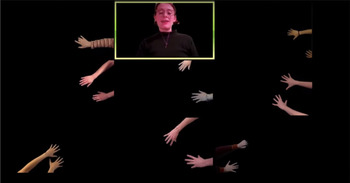
The Method Gun, Wesleyan University, directed by Katie Pearl, Reference Pearl2020. (Image courtesy of Katie Pearl)

I want to begin not with theatre, but with television, old-fashioned television that I’ve been watching, remediated to the internet: Star Trek, now known as Star Trek: The Original Series. It’s a pleasure to watch a show that I was allowed to see as a kid only incompletely and intermittently, since it was on after my bedtime. The cardboard-looking sets, the suburban LA scenery of various “planets,” the unconvincing “aliens,” the interstellar ubiquity of English, the often-troubling gender and racial politics are at once new and familiar, but one retro element of Star Trek is, for me, particularly striking. In later series, such as Star Trek: The Next Generation, the communications devices that the crew use to call the Enterprise are lodged in the metal insignia they wear on their chests: slap the insignia, speak, and Riker or Data or Worf will hear you back on the ship. But in the first series, they use an avatar of the flip phone, a handheld device that hinges open to broadcast. It was, of course, well ahead of its time then, magically summoning both the voice and the performing body, captured in the phrase unspoken on the show yet etched in popular memory, “Beam me up, Scotty.”
More arresting today, though, is how the communicators work. When Kirk or Spock flips one open, they’re wielding a two-handed engine, as one hand cradles the device while the other apparently turns a dial — tunes in. Much has been made of the ways emergent technologies are predicated on their predecessors: how the acting of early films appropriated the styles of the theatre; how the powerful computers in our pockets, bags, and backpacks today are still conceptualized as “phones.” Despite dilithium crystals and antimatter, for Kirk and the gang in 1966, to boldly go involved bringing a familiar technology along for the ride, a small, forward-leaning device that still required analog tuning: the transistor radio.
The surprising projection of analog technology into the digital future registers a principal theme undergirding Star Trek: the “human vs. the machine.” In several episodes, notably “The Return of the Archons” in the first season (Pevney Reference Pevney1967) and “The Ultimate Computer” in the second (Lucas Reference Lucas1968), Kirk outwits a computer by posing it with a self-cancelling choice, reframing the affectual language of ethical dilemma into the binaristic protocol of machine thinking (recall, too, the endless sparring between McCoy and Spock about emotion and logic). This tiny detail indexes the series’ conceptual mission to its technological imagination. Star Trek maps the future on the anxiously passing present, and particularly on retrogressive mechanical and social technologies: on analog radio, on the gender relations that make space Kirk’s, McCoy’s, and very occasionally Spock’s sexual playground, on design that often seems to clothe its “new civilizations” in the colorful cast-offs of Orientalist fantasy.
This temporality is where Star Trek is most closely dialed in to the stage, and most closely anticipates another, contemporary scene of technological performance, the conjunction of material, social, and aesthetic technologies constellated by “Zoom theatre.” Like Kirk’s analog communicators, theatre as a technology is always obsolescing. Writing in his landmark study Technics and Time, Bernard Stiegler notes the transformative interactivity of the categories of the human and the technological, the who and the what, a transformation especially suggestive of the interactive technologies of theatre, “the one, bio-anthropo-logical, the other, techno-logical,” creating a relation in which “the who redoubles […] the what: conditioned by the what, it is equally conditional for it” (Reference Stiegler and Barker2009:7). Theatre uses bodies (who) and things (what) that are mutually transformational; the who of an actor is also a what in relation to the audience, itself a who transformed into a what by the theatre. Long before the new materialism, things (what) onstage have often, perhaps always, had the potential vitality of a who: Philoctetes’s suppurating foot is a useful example of something that is part of a who that becomes a what, exerting its own action in the play, anticipating Othello’s handkerchief, Nora’s letter box, the Foundling Father’s nibblers. Moreover, theatre also depends on technologies of showing, of making visible and audible: the orchestra and the skene door; the pageant wagon heavens whence Lucifer falls to the audience’s hellish street; Hamlet’s sterile platform; the raked stage of the Restoration rake; the gilded box of the 1890s St. James’s society dramas; the Performing Garage festooned with mics and screens. It’s precisely its immersion in and foregrounding of technology that renders theatre always already obsolescent as a humanizing medium, that makes passing the temporal and medial condition of theatre.
Theatre’s constant passing is cognate with its constitutive penchant for auto remediation, recovery, or restoration framed within the affective force of nostalgia, inseparable from the motivation (and the experience, perhaps) of venues like the Teatro Olimpico in the 16th century, or of Shakespeare’s Globe, the Sam Wanamaker Playhouse in London, or the American Shakespeare Center’s Blackfriars Playhouse in Virginia today. Nostalgia promises return, but obsolescence is a creature of capitalism: it might be fun to dial up a transistor radio in a media archaeology lab, but it will operate only as long as analog broadcast remains profitable.Footnote 1 The invention of modern professional theatre is particularly marked by the production of a constitutive obsolescence; disdain for the passé is the mark of the salable. From Marlowe’s Tamburlaine in the 1580s scorning “the jigging veins of rhyming mother-wits” (Reference Marlowe and Steane1969:105) to Hamlet’s echo of Marlowe in his “Pyrrhus” speech (Shakespeare [1603] Reference Shakespeare, Thompson and Taylor2006:2.2.288), to say nothing of the jigging veins of The Mousetrap, this theatre urgently claims the value of the new by incorporating the technology of the old.
As these plays suggest, theatre marks its passing in the technologies that it uses, represents, and that represent it as well. Theatre attends to the passing of its technologies, perhaps, because its intermedia — writing, acting, scenography, costume, sound, movement, architecture — occupy different temporalities of social development. Like the mobile phone, theatre is “a highly convergent object,” construing “old media forms alongside new ones” and reconstituting “them in new ways” (Bassett Reference Bassett, Hall and Birchall2006:221). Acting is one of those technologies of passage, whether its performers are masked or not, literate or not, paid or not, professional or not, legal or not, live and/or recorded, and, now, onstage or virtual. Although it’s tempting to say that acting is essentially the embodied practice of representing fictional and nonfictional people in virtual action, acting is hardly imaginable outside the specific apparatus where it is practiced. As a technology, acting is inseparable both from its immediate social outside — how its conventions (the teapot stance, cheating out) engage the social world they represent — and its theatrical inside, the platform it shares with costume, scenography, and the opportunities afforded by dramatic writing. While actors today may well move from the stage to a television studio to a film location to a laptop in their bedrooms, what they do in each of these sites, as a practice, engages with and represents that medium on its own terms.
As I first write these words in July 2020, in the throes of a pandemic making the stage’s practices of in-person labor dangerous to all participants, the digital means long ago absorbed by the theatre (projections, the infrastructure of the modern house) are now on the verge of contributing precisely to a new mode of theatrical obsolescence. One instance of this interface between theatre and the media of recording is familiar: the online streaming of recorded performances, significantly amplified during the pandemic by productions from the archives of the National Theatre or the Metropolitan Opera or the Berlin Schaubühne, and by the most eagerly awaited “theatrical” production of summer 2020, an edited film of the musical Hamilton streaming on Disney+, shot from live performances shortly before Lin-Manuel Miranda and others of the original cast departed from the show. But the defining genre of theatre during the pandemic emerges from an alternative technology, in which actors in different places all perform live, but remotely, typically from their homes, gathered on a single screen: Zoom theatre. Zoom theatre’s inflection of obsolescence and nostalgia dramatizes the contemporary condition of theatre as technology.
At the explosive growth of the coronavirus in the US in March 2020 Zoom was widely adopted by theatres, colleges and universities, corporations, and artistic organizations as the instrument of remote communications. It also became a platform for “theatre,” as theatres were closed and actors put out of work, and many companies strove to retain their work, their artistic competence, and their incomes by putting plays on the Zoom platform, or on one of a series of platforms like Facebook or YouTube. “Zoom theatre” is the instrument for theatrical institutions to make performances they can sell, as a way to keep themselves, their staffs, and their performers alive during the pandemic. Yet as Caroline Bassett suggests, new media technologies “tend to be understood (given to us) as determinant and it is only later, when they are no longer new, when the next new media technology has come along, that they are reassessed and explored in terms of their social shaping” (Reference Bassett, Hall and Birchall2006:226).
Like the radio tuning dial on Kirk’s communicator, Zoom theatre reflects the nostalgic obsolescence of modern theatre, harnessing a new instrument to preserve a threatened technology of the human. On the one hand, as Stacy Keach and Edward Gero remarked of their 2020 reading of King Lear, “Zoom theatre is creating a whole new world”; on the other, “It’s our way to hold on to what we value most” (in Miller Reference Miller and Keach2020). Colleges and universities were well-positioned to chart a set of experimental forays into this emerging mode of production: funded to produce a semester of curricular performances, forced to send students home, and yet obliged to find ways to enable student actors, directors, designers, and stage managers to complete credited coursework, many departments (including my own) redirected materials and personnel budgets to invest in software, to ship equipment nationally and internationally, and to develop the technical expertise essential to live-remote production.Footnote 2 These productions were theatre for largely disciplinary and institutional reasons: theatre is what these academic departments were licensed to produce as a means to educate — and credentialize — their students. Some of these productions — Much Ado about Nothing in April (Ohio State English 2020) — were relatively straightforward, using the faces-in-the-box approach frequently taken by professional theatres for readings (see Play On 2020) or indeed for Shakespeare, as in the many The Show Must Go Online productions (Rob Myles Reference Myles2020–21); some — A Midsummer Night’s Zoom in August at the University of California, Irvine (New Swan Shakespeare 2020; see also UCI News 2020) — experimented actively with the virtual background feature to provide a consistent feeling of location, as well as a sense of midnight magic (the fairies’ virtual wings); several — Wesleyan University’s May production of the Rude Mechs’ Method Gun, first staged in Austin in 2007 (Pearl Reference Pearl2020; see Wesleyan Theatre Reference Theater2020; see also Tarbox Reference Tarbox2020; on Method Gun, see rudemechs.com); Barnard College’s The Other Shore in April (Xia Reference Xia2020), Anne Carson’s translation of Sophocles’s Electra in October (González Reference González and Carson2020), and Stupid Fucking Bird in December (Robert Reference Robert2020); the Bard College production of Caryl Churchill’s Mad Forest in April (Brantley Reference Brantley2020b) — used software to redesign the Zoom boxes as a visual collage, now one hallmark of Zoom production, asserting an engaging transformational visual field as a kind of index of the (lost) spatial complexity of embodiment.
The more pervasive strategies of experimentation with Zoom, though, have involved efforts to translate the familiar dynamics of theatrical realism to the production process. In one tactic, Richard Nelson’s What Do We Need to Talk About? (2020) via the Public Theater in April enabled the silent, invisible audience to tune into the Apple family’s Zoom calls with one another; in another, the figure of the cast sitting on the dark porch in Will Arbery’s 2019 Heroes of the Fourth Turning at Playwrights Horizons was reasserted in the October 2020 Zoom performance by having each of the five actors perform (remotely) before a black screen, remediating the sense of dark isolation in the stage production (McPhee Reference McPhee2020). In still another, the Zoom camera replicates the work of the usually unacknowledged film camera, voyeuristically watching actors who seem to play sideways toward the other “boxes” on the screen, as in the American Conservatory Theater’s In Love and Warcraft in September 2020 (Tran Reference Tran2020).
“Zoom theatre” is a kind of shorthand for a mode of production using a range of technologies: Zoom, YouTube, Vimeo, and various other software. And while it arises at the intersection of the artistic, the pragmatic, and the economic, in performance it represents theatre — and its constitutive functions of acting, directing, and design — through this technological interface. Most of the performances using this format, like the lectures and seminars I’ve been delivering in the “Zoom University,” are recorded for later broadcast/attendance, but begin as a live broadcast, and the distinctive format of most productions (actors working directly into their cameras, notionally speaking to one another in character while facing out to the equally virtualized audience) lends even the recorded performances the feeling of intimacy, the immediacy of, say, a recorded monologue. This mediatized immediacy stands apart, then, from broadcast films (the Disney+ streaming of a film of Hamilton), and also from prepandemic live broadcasts from the National Theatre or the Metropolitan Opera, in which the performers are working together in shared institutional space while the camera records that performance and sends it out to a simultaneous audience. The “theatre” of Zoom theatre has less to do with the performance having happened in a theatre or performance space than with the elusive category of liveness, of an event transpiring in the real time of its consumption, managed by a stage manager, for an audience watching the event as it happens now, both here on my screen, and there…well, in a lot of theres.
As is true of the broadcasts from the National Theatre or Berlin’s Schaubühne, sometimes this “theatre” is more akin to film or recorded television; sometimes other social media platforms (Facebook Live, Instagram) deliver the production. Ratatouille: The TikTok Musical (January 2021) evoked a TikTok aesthetic appropriate to its genesis, arising when school teacher Emily Jacobsen’s TikTok song based on the 2007 Pixar/Disney film generated a “viral” response, leading to the professional production of a “crowdsourced” musical. More or less at the same time, the urgently political and considerably more experimental Rich Kids: A History of Shopping Malls in Tehran, cocreated by Javaad Alipoor and Kirsty Housley, and performed by Alipoor and Peyvand Sadeghian, engaged viewers of New York’s Under the Radar Festival across a number of media platforms simultaneously, requiring audiences to use at least two devices to engage the production: one to watch the live narration by Alipoor and Sadeghian and the elegant videos with which they told their narrative, and another to take up an Instagram feed from the show directly (Alipoor and Housley Reference Alipoor and Housley2021).Footnote 3 Like theatre, social media represents a “public” and savvy content-makers often disseminate their work over several platforms, but theatre actually assembles its public: of citizens, of festive believers, of entertainment seekers bored with bearbaiting, of courtiers, of aesthetes, of the middlebrow mainstream, of the eggheaded elite, of Broadway and the community playhouse and the college theatre, a public performing itself in this (raucous, silent) way, in this (civic amphitheatre, multipurpose black box) space. This demarcated public, as Judith Butler suggests of other forms of bodily assembly, signifies politically and ideologically “in ways that are, strictly speaking, neither discursive nor prediscursive” (Reference Butler2015:8). Zoom theatre assembles a public of heads, in some (often visibly homebound) place, sometimes with virtual scenography, performers who are, like their audiences (who are almost always invisible, not screened), at once domestic and remote. Zoom theatre constellates a virtual assembly, a theatre of isolation that displays an atomized public, while summoning a public largely invisible to itself, a signifying public that can exist as a public because it is constituted as isolated, private.
Prepositions are revealing: theatre is on Zoom, in Zoom, through Zoom, as though theatre were a self-identical medium being represented rather than remediated through the work of the remote performance instrument. In this vision, “theatre” functions something like “the text” in literary representations of theatre, as though the mode of production were, finally, only a means of access to a site of prior, privileged, and superior value, disclosed by Zoom but not altered by it. Indeed, although Zoom performance is sometimes casually labeled “postdramatic” (Tarbox Reference Tarbox2020), much Zoom theatre evokes a rhetoric of textual determination taken by Hans-Thies Lehmann (Reference Lehmann and Jürs-Munby2006) to define “dramatic theatre.” For as Lehmann recognizes, simply using a dramatic text does not define a theatrical event as “dramatic”; rather, it’s whether the rhetoric of production constitutes the text as foundational, as the principal discourse supported and reiterated by other elements of the production cast as reproductive. Zoom theatre remediates the function of public participation to the dynamics of the screen, and in many cases renders the Zoom interface as transparent to a textually determined understanding of theatre, too. Since many of these productions use Zoom to create a show that is then broadcast as a webinar, the audience is “present” to itself or to the performers only as the number of registered attendees: on Zoom, no one can hear you scream, though they can sometimes read your chat.
How Zoom replays dramatic theatre is glancingly evoked in Bill Irwin’s In-Zoom, a two-hander with Christopher Fitzgerald, performed live in May 2020 and still available online (Irwin Reference Irwin2020). Fitzgerald (screen left) and Irwin (screen right) speak to one another on gallery view; the invisible audience is notionally overlooking this Zoom conversation rather than participating in it. Irwin and Fitzgerald play Zoom newbies; they experiment with turning their heads parallel to the camera to simulate conversation, and engage in a sight gag when Irwin’s arm appears to reach left into Fitzgerald’s box. It’s light, funny, and touching at the close where they each, in a now-familiar ritual, say “Leave Meeting?” and hold their hands up in a forlorn wave. The production accepts the technological framework of Zoom as its generic ground, and represents that technology by allowing the audience to view the conversation through the implied proscenium of the screen. And yet, one dimension of the performance that’s difficult to describe is how “theatrical” Irwin and Fitzgerald appear. I don’t mean that they’re stagey or overacted, though Irwin’s energetic befuddlement is, as ever, charming. Rather, they have a kind of clarity of presence to the camera, and to us. Much as the characters, say, in an Ibsen play are more articulate onstage vocally and gesturally than the real life Ekdals or Tesmans, the “acted” dimension of the performance is evinced by this special clarity, the focused melancholy of signaling through the screen.
A similar effect has been achieved by Richard Nelson’s Zoom trilogy for the Public Theater, an extension of his well-known, Chekhovian dramas of ordinariness (well, Chekhov’s plays are never really that) set in Rhinebeck, New York: What Do We Need to Talk About? (broadcast in April 2020), And So We Come Forth (July), and Incidental Moments of the Day (September). Here, again, the conventions of Zoom are deployed as the instrument of the audience’s effaced gathering: the characters dial up, share drinks, speak frontally to their cameras in gallery view and so to us, virtually “there” with them; they, too, project a vivid focus, but we are as much outside the action as we are outside the Helmers’ parlor or the Tyrones’. These productions, in virtualizing theatre on Zoom, also represent theatre; extending Nelson’s family cycle, they also represent Zoom realism as an extension of theatrical propriety. “Streamed theater can never be a total success”: most reviews gesture toward the frustrations of the medium, suggesting Zoom theatre most effectively uses its “available technology wisely” when it frames its “artifice” as both “pervasive and invisible” (Cote Reference Cote2020), echoing the realistic erasure of “theatricality” characteristic of Nelson’s writing for the dramatic stage. Here, Zoom theatre works when it replicates what “we” like in theatre: “we like seeing bodies move in space, bodies in dialogue, talking” who use “words and songs arranged, designed, and performed through the infinitely complex technology known as reality” (Cote Reference Cote2020). Zoom does what realist theatre is supposed to do (represent social reality without the intrusive awareness of artifice) even though the satisfactions it is said to provide are visibly absent; though there have been dance performances on Zoom, there’s precious little movement in most Zoom dramatic theatre. The ideology of theatre evoked here — captured by Göran Therborn as what exists, what is good, what is possible (Reference Therborn1980:18) — is identified precisely with the claim to realism, inscribed in the conventions of Zoom interaction, as “Nelson and his actors welcomed us into a kind of room that felt real. It was real. I’d like to go back” (Cote Reference Cote2020).
The triumph of realism is precisely its lamination to an ideology of theatre, in which the realist canons of emotional sincerity, sentimental storytelling, and a willful occlusion of the theatre-as-a-mode-of-production define what theatre is, what is good theatre, and what is possible as theatre.Footnote 4 Even the New York Times’s Ben Brantley hedges his praise by noting that the “natural flow” of the “rhythms of affection and irritation that propel interaction in any family” (theatre=real) onstage and off “is tempered and exaggerated by the technology through which it is channeled”; he implies that this tempering is perceptible on Zoom as it would not be onstage, where the theatre provides the appropriately invisible technology (it’s not technology, it’s just the real) for plays of this kind, particularly those in the tradition of “Chekhov, Nelson’s tutelary god” (Brantley Reference Brantley2020a). The disorienting broken string in The Cherry Orchard, or the clattering alarm while the stage clears in Three Sisters — to say nothing of Chekhov’s contentious correspondence with Konstantin Stanislavsky — suggest that Chekhov retained a skeptical regard for the licensed invisibility of the channels of theatrical production. Nelson’s Zoom deploys a theatre designed to replicate the audience/consumer of realist theatre, standing apart from involvement in or responsibility for the action other than “eavesdropping on the family’s chat” (Sommers Reference Sommers2020).
The theatrical values or ideology promoted by this form of Zoom theatre operates in large measure by discounting the medial specificity — and the specific social horizon — of Zoom and of the other conferencing platforms used in recent performance of this kind, an accent also heard in Greg Evans’s assertion that the “durability of theater” relies on “storytelling” and that “the stage — now and always, in person or otherwise — embraces innovation, talent, wit, and compassion” (Evans Reference Evans2020). And yet, much as David Román sees the production alertly showing “how the theatre patiently adjusts to the changes thrown at us” (Reference Román2020:517), theatre is precisely what is not here, the theatre of “communal experience” (Gardner Reference Gardner2020).Footnote 5 The reviews of What Do We Need to Talk About? articulate the desire to frame a recalcitrant medium as transparent, if not fully to the legitimate and legitimizing practices of realist theatre (though the “fourth wall” of the screen comes very close), then to the values of realist dramaturgy, the opportunity to see into the domestic lives and psychological space of others and to have that vision sustained as an innocent “reality,” one we watch not from within their space but from ours. As “theatre,” it replicates a particularly narrow kind of theatre: conventional theatre insisting on “no decimations of the fourth wall, no interactive or immersive shenanigans” (Gardner Reference Gardner2020). Even when the technological differences between Zoom and theatre are noted, as when Frank Rizzo avers that in this “first original internet play that deftly responds to the form,” what seems innovative is that these “characters are both actors and audience at once” (Rizzo Reference Rizzo2020), visibly watching one another as we, an implicit “we,” invisibly watch them. The public character of theatrical engagement is displaced into the technology of surveillance.
True, some productions enable the audience to “chat,” and others, such as Big Telly’s 2020 Macbeth, allow spectators to be intermittently visible, even to hold up a placard signaling their location. Nonetheless, the ideological freight of Zoom/theatre is most visible in the rhetorical assertion — well, the rhetorical occlusion — of its ideological work as a technology of representation. As Helen Shaw puts it, “Even if you tear away all its definitive parts” the theatre, and its makers — playwrights, actors, audiences — “adjust,” producing something that “tastes totally of theater.” Here, since “the camera gives us the proximity (and perfect audibility) we yearn for with such actors of subtle gifts,” this stripped-down experience is seen to convey a kind of preternatural theatricality, in which “we even see some characters more clearly,” more theatrically, than in the theatre (Shaw Reference Shaw2020). Rather than re-materializing or remediating “theatre” in the way that theatre remediates “writing,” effectively asserting its transformational power over the text, Zoom theatre is understood to replicate the values of conventional theatre, and to intensify them, to reframe the virtual proximity inscribed in theatrical distance as the proximity inscribed in electronic simultaneity, to “be just as intimate and revelatory as a play on stage” (Teeman Reference Teeman2020).
And yet, if we attend to the technological mode of production without immediately assimilating it to the humanizing rhetoric of theatre criticism, what’s distinctive about Zoom is that it both virtualizes the public and involves its actors in a level of technological performance distinct from stage, film, and television. Zoom acting often demands the actor’s involvement as designer, manipulating light, sound, and background image as part of the work, the practice of acting now diffused across a horizon of productive activities. In this sense, the actors’ evocation of the “essentially human” (Rizzo Reference Rizzo2020) closely approximates to the sociably human of 2020, the trained ability to reinforce the appearance of individualized expressive subjectivity at the intersection of a range of technologies, technologies represented as transparent, mainly forced into the background of the audience’s experience, but that must be engaged correctly for the illusion of subjective experience to be felicitously performed. Do you use a virtual background? A ring light? The Zoom “Touch up my appearance” feature?
Zoom theatre defines a genre of performance by straddling a critical dichotomy: it provides a way to do and show “theatre,” as it must be if it’s to be a means of saving closed theatres, of opening an alternate route for theatres and their personnel to deliver a performance commodity. At the same time, it’s something else, an alternative technology that represents “theatre” while absorbing its animating social and aesthetic relations. As a technological expedient, Zoom theatre also marks a moment of obsolescence, or feared obsolescence. For this reason, perhaps, it’s critical for Zoom to assert the “immersive” value of theatre, perhaps through a “multi-player online format” that resembles gaming, or by staging a remote version of Sleep No More’s one-on-ones, as Strange Bird Immersive of Houston has done in framing a Zoom tarot reading (Boffone Reference Boffone2020). In her celebration of the Wesleyan University production of The Method Gun, Jean Tarbox describes this Zoom performance as refusing to frame “talking heads that fail to establish connection with the viewer” (though it does plenty of that), instead producing “a new form of live theatre” that nonetheless “depends on the audience’s full participation” (Tarbox Reference Tarbox2020; see Wesleyan Theater Reference Theater2020). For Tarbox, the production’s “post-dramatic modernity” arises from making the audience “conscious of the process of interpretation and seeing,” but what this process entails is less postdramatic than hyperdramatic: in her account, seeing “the ‘stage’ through a screen made me the reader — I was interpreting the text via the connections I was making […] I was in direct relationship to the text itself” (Tarbox Reference Tarbox2020; emphasis added). Perhaps not surprisingly, then, one of the most striking moments in the production — in which the field of the screen is composed of blacked-out boxes that merge together forming the impression of a black screen on which the actors’ disembodied hands are choreographed below the yellow-framed (also black background) speaker’s box (fig. 1) — is characterized as “the most theatrical of the entire production,” a moving scene defining not only a moment of theatricality, but theatre itself: “We were in the ancient cave together in the dark, in the theatre” (Tarbox Reference Tarbox2020).
Zoom is valued not as a distinctive medium, but for the ways it reproduces/remediates a nostalgic fantasy of theatre. Tarbox asserts a mythic lineage from an ancient cave of storytelling — blithely swerving around that other cave, Plato’s metaphor for the theatre’s dangerous degradation of the real — to the modern darkened proscenium house (no one sat in the dark throughout most of Western theatre’s history), in which “interpreting the text” (also a modern, largely postprint notion) defines the purpose, legitimacy, and aesthetics of theatre. For the “talking heads” dimension of Zoom dismissed by Tarbox actually characterizes one of its means to capturing conventional theatricality: the delivery of a deeply psychologized rendering of character, handled with superb confidence in the Zoom performances both of Nelson’s Apple family plays, and especially of Will Arbery’s Heroes of the Fourth Turning. Zoom’s talking-heads business-meeting scenario effectively remediates a certain kind of theatre, by isolating and focusing on “character” as a fully individualized product, a speaking rather than an acting subject sustained by the “delivery” of its justifying commodity: the line. Both the domesticity of its transmission and its promotion of “the text” as an object of consumption tends to distinguish Zoom theatre from both television and film; as Ed Gero noted of the Zoom production of King Lear, it is more akin to another medium of performance aligned to delivering the text: “It’s more about vocal technique, like radio” (in Miller Reference Miller and Keach2020).Footnote 6
And, like radio, where live and recorded content are often difficult to distinguish, it’s suggestive that recorded Zoom theatre performances are considerably closer to, sometimes indistinguishable from, the real thing. Filmed theatre — even a classic like the 1964 Richard Burton Hamlet or the 2020 Disney+ Hamilton — always represents the live theatre as documented by the recording but also as its object, an event experienced live in different, though perhaps related ways. Using multiple cameras, close-up, and other techniques, such films provide a markedly mediated access to the performance event (“you are there,” as Theatrofilm by Electronovision marketing had it in the 1960s) while simultaneously marking theatre as an alternate medium. But a Zoom theatre production such as In-Zoom uses the webinar format to incorporate the spectator into its fiction of direct address, as though “I” am silently witnessing the Zoom conversation (actors facing front, speaking to one another on their screens and so speaking directly to me) on a “gallery view” setting that has merely refrained from uploading my Zoom box to the screen. In this regard, while live Zoom theatre gestures to an audience typically unrepresented in the field of performance, recorded Zoom performances do much the same, conveying a much stronger sense of the recorded performance’s identity with the original it re-presents.
Zoom theatre is conceptually dependent on the social relations of a narrow slice of modern theatricality, the practice of going to a theatre, purchasing a seat, and sitting in the (notional) dark, as though attending a theatrical performance were in some essential way a private, mostly individual, psychological experience of consuming the artwork. Historically, Western theatre has been considerably more public than that, from attending the City Dionysia in Athens as part of a visible display of civic value and imperial power, to the banter with the stage common among Shakespeare’s (again, daylight, illuminated) audiences at the Globe, to the well-known, contestatory social interactions between the “box, pit, and gallery” audiences of indoor theatres through the 18th and 19th centuries, in which the auditorium was illuminated as well as the stage. That is, for centuries, Western dramatic theatre was about a public interaction with and through performance, not a private one, and the rhetorical development of technology played a critical part in this shift of aesthetic ideology, urging theatre as a public mode for the private consumption of the subjective experience of an authorized artwork. The electrification of theatres in the late 19th century enabled the audience to be seated not in the dark (that’s against fire codes; fire technology improves at this time, too!), but in a space that is relatively much darker than the brightly illuminated stage, a space dramatizing the economically determined (rather than status determined) democracy of the modern house. Performance as a sentimentalized commodity to be privately consumed is distinctive to the technologies of realist theatricality and is extended, refunctioned, and magnified by Zoom theatre, perhaps not least because the actors are often performing solo, in a virtual relation to one another and to their remote, individuated viewers.
For over a century now, theatre has been threatened with extinction, with terminal obsolescence, by forms of recorded performance, a narrative that reflexively reveals the fallacy of the notion of inevitable media succession. Indeed, one of the signal innovations of contemporary theatrical practice — purpose-built restorations like Shakespeare’s Globe, the Wanamaker, and the American Shakespeare Center’s Blackfriars, and cognate approaches to performance labeled “Original Practices” — attempts to seize and preserve Shakespeare’s authentic theatrical experience by refusing, or seeming to refuse, modern technologies: OP represents an essential, artisanal theatre. Film and television have occasionally worked — again, the Theatrofilm by Electronovision film of the Burton Hamlet, shown simultaneously at hundreds of theatres around the US in 1964, but also the trend to broadcast musicals live from television studios over the holidays — to represent theatre, but the stage has also appropriated the technologies of recorded performance, from Erwin Piscator’s use of WWI footage onstage in The Good Soldier Schweik in 1927, to the staging of live-feed video in Ivo van Hove’s work, to the absorption of the rhythms of dialogue and dramatic action from television sitcoms by theatrical playwriting.Footnote 7 But there is a difference between theatre, an intermedial medium that always absorbs and represents “outside” technologies (as the Globe with its fireproof thatch and sprinklers or the Staunton Blackfriars with its hidden “sunlight” spot), and a technology that seems to refer or allude to the technology — theatre — that it re/displaces, as Zoom theatre may seem to do.Footnote 8 Granted, as Philip Auslander once remarked, it’s only the possibility of recorded performance that makes the notion of the “live” possible (Reference Auslander1999:52), and yet, as he remarks elsewhere, contemporary technological mediation works to define new forms of mediated liveness: texting, group chats, and teleconferencing (the original purpose of Zoom) are all ways of performing IRT with dispersed, remote others (2012:9). Rather than claiming to supersede theatre, to render it obsolete as film once seemed poised to do, Zoom performance claims to absorb theatre, to remediate it to a safer, socially distanced platform that may remain as part of “theatre” (if there is a) hereafter. And yet, as everyone with Zoom fatigue understands, Zoom enables an encounter that accomplishes some of the communicative goals of being there together while simultaneously occluding at least some of the power or pleasure, and most of the perils, of actual copresence. To recall Michael Goldman (Reference Goldman1975), it’s neither sacred nor blasphemous; it’s just safe.
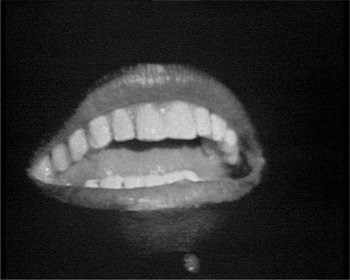
Voices nattering away in the dark, struggling to reproduce a detailed and recalcitrant text, often confined to a screen that shows little bodily movement, little of the body, “whole body like gone”: Zoom theatre gains in reflexive clarity against the example of another moment of medial friction, Samuel Beckett’s work for television, and especially the plays that moved from the stage to the studio under his guidance ([1972] 2006:381). Not I, for example, was written for the theatre, and first staged as a theatrical work in 1972. Beckett famously reimagined it for television (broadcast 1977), removing the character of the Auditor standing, draped in a gown, downstage of Mouth, apparently shrugging in response to the dominant refrain of her monologue: “what?..who?..no!..she!” (377). On television, the camera occupies the site of the focused spotlight illuminating Mouth, placed high on the rear of the stage; the TV viewer sees only a mouth filling the black-and-white screen, the actress’s skin blackened so that only the “lips … cheeks … jaws … tongue” (380) are visible. Here, the screen at once erases the actress (who, in stage productions, is also concealed, often blindfolded to prevent reflection from her eyes, and bound to keep her motionless, her mouth in the spot), while at the same time magnifying the virtuosity of her carceral performance (see Manufacturing Intellect [1973] 2017). The camera creates a double impression: the viewer is positioned both as Mouth’s inquisitor and as the silent Auditor, while Mouth’s words seem to emanate from a kind of nothingness, from the black at the back of her throat through “all those contortions” of the calisthenic tongue, and then “…. out …” into the surrounding darkness (376). The inner abyss reflects the outer abyss as the words tumble forth.
Billie Whitelaw in Not I by Samuel Beckett, staged for TV in 1977. (Image supplied by BBC Studios)

Not I occupies a space athwart the artifice of intimacy, an artifice differently mediated and so differently constituted in its two technologies of pre-internet production: theatre and television. Television viewers were, in one sense, close to Mouth, right up in her teeth, her lips swelling to the inhuman size of the screen. In the theatre, Mouth is life-sized, distant, small, and a bit difficult to see in the glare of the sharply focused spot. Bodily virtuosity is differently materialized and so differently embodied. The theatre enforces the awareness that this body is here, right now, hammering the words out nearly too fast to be followed, an invisible, unseen ground virtualized by the drama; television enforced the awareness of the actress’s body as both unseen and also as absented to the past of the recording (now literally “gone” in the case of the definitive performance of the late Billie Whitelaw), and still somehow fiercely occupying the here and now. And yet, the drop of spit that lands on Whitelaw’s blackened chin during the video performance witnesses the body’s recalcitrance to the image in ways that recall its constant weight in stage performance, weight that Beckett’s dramatic aesthetic — in any of his media — worked rigorously to excise, to subordinate to the visual field (see, of course, Catastrophe [1982]). Whole body like gone: Whitelaw is gone, as is the long-ago day of that recording, but here, today, the stunning image of teeth, lips, tongue remains marked by her discandying presence. That broadcast television production is past tense, just like Whitelaw’s or Jessica Tandy’s or Lisa Dwan’s stage performance of Not I: that body is, indeed, only here, across the virtualizing veil of the screen, a screen now — our performance technologies are not what Beckett’s were — no longer sharing the domestic space of television, but instead sharing virtual space with virtual documents, virtual performances on the computer screen. I watch Whitelaw on my laptop, jacked in through earphones, Mouth’s voice traveling across no space, a buzzing — “yes … all the time the buzzing …” ([1972] 2006:378) — signal pulsing directly in my head. The portability of new media perhaps also enables a different kind of liveness, the ability to make Not I occupy an alternative spatiality, to perform — unlike theatre, cinema, or TV — anywhere, just as Zoom theatre does. I often teach a graduate seminar in a windowless room and one time I loaded Whitelaw’s Not I onto an iPad, positioned it across the room, pressed play, and turned out the lights. It was striking, unnerving, to see Mouth, in this frame more or less life-size, the blackness of the video reaching into the blackness of the room, not a theatre but not a desktop screen either, a space organized and thematized, perhaps even theatricalized, by that virtual performance.
In most of its iterations, Zoom theatre translates the “play” as information delivered to its isolated subjects, their desktops littered with the iconized detritus of the office, sublating the seductive danger of performance to Zoom’s primal scene, the business meeting. Not I, on the other hand, stages the theatre’s use of distance (Weber Reference Weber2004), a socialized distance altered by the proxemics of TV, and altered again when TV is remediated to the digital screen, the laptop screen, and perhaps altered again when the recorded performance is relocated as Zoom theatre. Not I focuses an encounter with an absenting subject, hollowed against the blackness, and in siting the single spectator as the source and recipient of interrogation, similarly projects the spectator as a kind of vanishing point.Footnote 9 The theatre is remade as television is remade as internet broadcast is remade as mobile platform performance. Beckett’s work for the stage, film, and television often literalizes the circumstances of the medium, which provide the performative constraints for actors and audiences and the fictive constraints for the characters, an interplay with suggestively different ramifications in each of Not I’s production media. Not I uses the medium to refine and redefine the play’s obsession with a constantly displacing narrator, subject, and narration, its “vehement refusal to relinquish third person” ([1972] Reference Beckett2006:375) both an allegory and an instigation of the viewer’s reeling backward into absence. In one sense, Zoom theatre provides a fluffier analogy to Beckett’s rigor: Zoom’s actors, speaking in their domestic boxes, domesticate a subject who reflects us, as we watch from the uncertainty of our own usually unrepresented space. Zoom insists on the separability of who (the actor, the speaker, the viewer) from the what of the medium, cast as disclosing the plenitude of the subject, the character, the drama. Beckett’s example points instead to the impact of the medium, to the act of attention, of self-disclosure as an act of erasure, Mouth’s refusal to “relinquish third person” reciprocating her inability sensibly to inhabit the first, to be there even as she is, palpably if virtually, here. Who, What: perhaps that’s what the feeling of Zoom fatigue is all about — the anxious deliquescence of a confident hereness.
If Beckett helps us to clarify the disorienting subjection enacted by Zoom theatre in both its live and proximal recorded forms, its distinctive implication of the who and the what, Anne Washburn’s Mr. Burns, A Post-Electric Play (first performed in New York in 2013) takes a different tack, locating theatre as a social technology on the horizon of media succession. Anticipating the pandemic affect of Don DeLillo’s The Silence (“Seemingly all screens have emptied out, everywhere. What remains for us to see, hear, feel?” [Reference DeLillo2020:80]), Mr. Burns opens with the cast huddled over a fire, taking flight through the woods along the east coast of the US after some unnamed, still-mysterious disaster has brought down all electric power. Nuclear plants have failed, fallout is on the wind, and cities and towns have raised quarantines against a malevolent illness. Mr. Burns stages a prominent contemporary anxiety (now realized in the pandemic lockdown and vaccination crises), in which technological collapse leads to social and human cataclysm — think of zombie films, the 2012–2014 NBC television show Revolution, novels like Ben Marcus’s The Flame Alphabet (2012), even perhaps the dilithium-free dystopia of the distant future in the Star Trek: Discovery series — and is pendant to a reflexive fantasy in which technological advance also leads to a differently dehumanizing social cataclysm, feared in the original Star Trek series and now the gesture of The Hunger Games (2008–2010; 2012) and Divergent (2011; 2014) novels and films, The Matrix series (1999, 2003, 2003, 2021), and so on. Mr. Burns is, in this sense, part of a subgenre, shared with Emily St. John Mandel’s Station Eleven (2014) and now typically coupled with the “King Lear was written during the plague” meme, in which postdigital and postplague survival is sustained by art.
Anticipating and reciprocating “Zoom theatre,” in Mr. Burns survival takes the shape of restoring what Stiegler has called the technologies of memory, laminating an older performance technology — theatre — to newer forms, notably television.Footnote 10 The characters in the first scene want to entertain themselves, which they do by attempting to recall an episode from The Simpsons, the 1993 “Cape Feare” (parodying the 1962 film and 1991 remake), in which Sideshow Bob is released from prison and stalks Bart (Moore Reference Moore1993). If you’ve seen it, you’ll remember its signature musical accompaniment, the ominously descending chords, “whomp whomp whomp” recalled by Washburn’s refugees ([2014] Reference Washburn, Burns and Plays2017:134). The first act of Mr. Burns ends with the characters attempting to recall the exact order of events in the episode, the lines the characters speak, the specific music. Since the Simpsons sing Gilbert and Sullivan’s “Three Little Maids from School” (The Mikado) as they drive across the desert, one of Washburn’s survivors performs the song along with “the little orchestra bit” ([2014] Reference Washburn, Burns and Plays2017:162), and then teaches the cast to sing it (they recall other numbers from HMS Pinafore, performed by Sideshow Bob in The Simpsons episode). Zoom promotes a survival video that reanimates theatre; Mr. Burns promotes a survival theatre that reanimates, and is reanimated by, video.
In the second act, seven years later, the cast is now a “cast,” rehearsing a “commercial” to be performed between scenes of their reenactment of The Simpsons “Cape Feare” episode. There is still no power: the living-room set has candles under the lampshades. But the theatre of the switched-off future remains, as it does via Zoom theatre, part of knowledge-based capitalism, as proceeds from ticket sales to Zoom performances go to supporting theatre companies, and proceeds from “Cape Feare” go to buying memory, or more accurately, to buying lines, paying people who remember lines of dialogue to sell them to the company, enabling the performance to be more accurate, more faithful, more by the (lost) “book.” The players rehearse, discuss various technical problems, and perform a spectacular musical revue of remembered 1980s pop hits. But theatre is precarious, and some “sources” become threatening if they’re not paid for their material. The restored performance is “interrupted” by unwanted visitors who enter the back of the house, act 2 ending in a hail of gunfire between the cast and the unseen desperadoes. In the third act, another 75 years later, the cast, in eerie, slightly outsized Simpsons masks, reperform — with some omissions, elisions, additions — “Cape Feare.” When they take their bows, the back curtain drops and we see a man frantically pedalling a bicycle attached to a generator, powering a beautiful mishmashed array of flickering lights. It’s funny, a bit ghastly, and as many reviewers noted, suggests another fantasy, “something far older and more primal” (Brantley Reference Brantley2013), having to do with the imputed origins of drama in religious ritual.
Once again, that dark ancient cave. Both Zoom and Mr. Burns articulate theatre as a recessive technology: its ongoing obsolescence ritually reasserting, and reassuring, a vanishing mythological, human origin. Regression animates Mr. Burns and the TV programs, novels, films, and games it resembles, evoking a sense of contemporary civil society as only a step from lawless chaos, chaos perhaps more thinkable — in both political and viral terms — in 2021 than it was when the play premiered: the absence of lighting and communications technologies (or, as we now know, toilet paper) bringing about the descent into a Hobbesian war of all against all. As “one of the most affecting tributes to theater and tenacity you’re likely to see all year” (Vincentelli Reference Vincentelli2013), though, Mr. Burns locates theatre as essentially pretechnological, as “the most glorious and durable storyteller of all” (Brantley Reference Brantley2013). This mythic theatre, theatre as the innate practice of materializing the human through the act of memory, requires its own antitechnological mythos. Granted, teleplays of The Simpsons might be difficult to come by, but a book has a vigorous capacity to be operated in the absence of electricity, and to survive even when one hoard — a knapsack, a library, a city — is lost. Remember that appropriately Orwellian moment in 2009 when Amazon deleted digital editions of Animal Farm and 1984 from Kindle e-readers worldwide, having discovered it did not have the rights to electronic publication (Stone Reference Stone2009)? Print is a robust and widely disseminated medium: breaking into a forsaken library or an abandoned home is sure to provide texts, remembered popular culture texts (Harry Potter; Pride and Prejudice and Zombies), perhaps on occasion even plays, provided they haven’t all been burned for fuel. But in Mr. Burns, the theatre of the book is as dead as Homer (the Greek one), or maybe just forgotten (D’oh!).
Although Ben Brantley rather inanely asks, “Who knows what art will finally be remembered, or if the Simpsons will join the pantheon of those mainstream entertainers of another age, Homer and Shakespeare?” (Brantley Reference Brantley2013), Mr. Burns is not an epic narrative preserved as orature through the only partially stabilizing, restorative flexibility of formulaic recitation. Instead, Mr. Burns frames a distinctive assumption, one that celebrates the disciplinary reach of performance studies as much as it misrepresents theatrical technology, seeming to illustrate Richard Schechner’s “restoration of behavior,” yet with a significant retrenchment: while Schechner suggests that the “strips of behavior” that are the material of performance are “independent of the causal systems (psychological, social, technological) that brought them into existence” (Reference Schechner1985:35), Mr. Burns treats “Cape Feare” as a text, a text to be ritually reenacted, rather literally reanimated. After all, Washburn’s parable of the survival of the greasepaint after the death of the digital is a scripted, relatively conventional piece of “text-based theatre,” and it’s notable that for the characters the reanimation is mainly defined by getting the lines, the spoken dialogue, right. The ritual origins of drama that Mr. Burns proposes to restore are postprint origins: the performance will, apparently, only work if the characters speak the correct lines, all of them. A relatively conventional play celebrating the restoration of an obsolescent medium and an obsolescent meme of “human” essence, Mr. Burns indexes a theatre after the theatre of the book, a theatre restoring an electronically mediated entertainment yet imagined as a mode of textual reproducibility. A lost theatre mythologized as the site of an intrinsic humanity reflected by the plays it stages: Mr. Burns revealingly evokes the conservative force of an influential movement in the technicity of contemporary theatre, Original Practices Shakespeare production. OP and its venues are motivated to restore a technical apparatus taken as essential to the authentic dramatic experience, the humanizing experience of Shakespearean dramatic writing, experience occluded by later theatrical technologies and the social world they reflect and create.Footnote 11 Asserting Shakespeare’s alleged “invention of the human” (Bloom Reference Bloom1998), the new Globe again recalls that mythic cave, allowing Shakespeare’s plays to be “performed in their natural environment, stripped of technology,” and so enabling their “fundamental questions” to emerge (Carson and Karim-Cooper Reference Carson, Karim-Cooper, Carson and Karim-Cooper2008:8).
Mr. Burns also represents theatre as a residual cultural form, obsolete among other forms of performance, a technology usable only by a society undergoing forced devolution; it’s precisely theatre’s pastness that guarantees its survival when the lights go out, and perhaps its doom if and when they come back on. Representative of what N. Katherine Hayles calls “the legacy systems of speech and writing” (Reference Hayles2005:39), the theatre of the future past stages historical change less as an encounter “between technologies and perceptions, artifacts and ideas” that implicates the play’s projection of “how historical change occurs” (Hayles Reference Hayles1999:13, 14) than as a particularly regressive vision of the theatre’s distinctive practice of technological absorption. Theatre survives, in Washburn’s allegory, by cannibalizing other media as reperformance (here, contemporary popular culture like The Simpsons and Baha Men’s “Who Let the Dogs Out,” to say nothing of Cape Fear and Savoyard opera). That is indeed exactly how the intermedium of theatre works: it seizes, remakes, and represents material and social technologies as theatre, and in so doing represents theatre as technology. But where this medial complexity is cast as retrogressive is precisely in its evocation of obsolescence as the curative instrument of nostos, of a fantasized return to the sanctified, hieratic roots of “drama,” theatre staging a replay of iconic “stories,” of myth. Same as it ever was: absorbing electronic media into its parable of theatre’s intermediality, Mr. Burns finally proposes an essential theatre, a theatre oddly unchanged by history, even while its technologies are broken, replaced, and reinvented, enacting a kind of Cambridge School anthropology of ritual origins, a return to the presumed beginnings of drama in myths that can only be reiterated, a theology of the absent, always divine script.Footnote 12 Cowabunga!
In its collocation of theatre, restoration, and apocalypse, Mr. Burns articulates what Rebecca Schneider calls “a battle concerning the future of the past” (2011:4). The pulsing nostalgia that reciprocates theatrical obsolescence is itself ideologically cognate with the projection of a distinctive, disturbing origin fantasy, of an essential humanity at the eve of what is misconceived as its betrayal into technology. Like Bill Irwin’s poignant wave, Zoom theatre articulates the body as a site of performance, but — thinking of Whitelaw’s spit here making an alternative point — a body whose physicality is bracketed, boxed, safe. That’s the point, of course. Zoom theatre is driven by the fear and fatality of the public nature of theatre, and accommodates theatre by transforming it into a solo, individual, distanced activity in which the sociality enacted in the theatre is replaced by the actors’ and audiences’ safety before the solo screen. Not I locates the performer’s body as the vanishing interface of the virtual or represented and the actual or representing; this relational interface is differently defined and occupied as theatre is recomposed as video, and differently occupied as analog is recomposed as digital. The refusal of the first person, the moment of the theatrical spectator on the hinge of who/what, plays its painful vehemence out differently in the different technologies of engagement, its whos differently evacuated by different whats. Unlike Beckett, who moved between different simultaneous media, Washburn proposes a sequential regard, in which the theatre’s technological intermediality provides the vehicle to restore an idealized image of theatre as a zone of cultural nostalgia. Not I and Mr. Burns help to chart the space, the ideological space, of Zoom theatre: like Not I, though without Beckett’s intense insistence on the scarifying privative physicality of performance, Zoom’s recording replicates and displaces theatre while encoding and enacting, interpellating a cognate vision of a benignly isolated subject. Much as Washburn’s theatre of the future proposes a precarious theatrical sociality, Zoom theatre represents theatre as dangerous in its publicness: theatre is in danger because it is a danger, the shadows on the Zoom screen articulating with a long-running strain of antitheatricality. If theatre is unhealthy for the state, then what would Plato have made of the unsubstantial, virtual mimesis of theatre, a “theatre” that effaces the boundaries between the public and the private, here and there, as well as the theatre’s complex concatenation of the material toward the making of a materialized virtual?Footnote 13
As Judith Butler notes, we “cannot talk about a body without knowing what supports that body, and what its relation to that support — or lack of support — might be” (Reference Butler2015:65). Here, Butler is engaging the interface between the public and the private, how the (private) body, in all its materialities, affiliations, identities, “cannot be fully dissociated from the infrastructural and environmental conditions of its living and acting,” performative conditions that constitute the body in its precarity, potentiality, and power. Performatives both require and constitute a public, and like all performatives, theatre “‘works’ to the extent that it draws on and covers over the constitutive conventions by which it is mobilized” (Butler Reference Butler1995:205); Brecht understood the theatre precisely to reciprocate and so to extend the ways social subjects were maintained in their precarity through the power of aesthetic conventions and practices to reinforce social ideology. And for all his interest in the technological range of theatre, how the visual field of scenic design might be complicated by film or how the closure of dramatic process might be opened to an alternative episodic epistemology, the central technological innovation of Brecht’s theatre arises at this structural interface: the theatrical body behaving, singing, moving, acting, watching (and smoking) (Brecht [1940] Reference Brecht and Willett1974:139–40). Zoom theatre, like any new technological application, alters the relations between all technologies, in this case troubling the identities of film and television, and especially the interaction between film, television, theatre, social media, internet video, and the public private bodies they articulate. And as both Not I and Mr. Burns perhaps suggest, it also alters the body as a technology and the body in technology, the bodies of the performers suspended in the technological apparati of their work, and the bodies of the audience, safely watching them in a technologically mediated, palpable and yet palpably virtual intimacy. Theatrical bodies share a public intimacy mediated by spatial displacement and distance; Zoom bodies share a visual intimacy mediated by a privatizing technology, one that urges connection while enabling anonymity, a precarity represented as “safety” in the spectators’ distance from one another, and their virtual incorporation to the surveillance machine. Now, summer 2021, it seems that theatres may soon reopen for live performances to live audiences. Perhaps Zoom theatre will be remembered as a desperate, engaging gambit, a moment for media archaeologists of the future to exhume (not that media archaeology has any real engagement with theatre). And yet, insofar as media archaeology excavates the material traces of the ideology of media history and development, perhaps Zoom theatre will tell a different story. For like OP, another site for future excavation, Zoom theatre claims a kind of medial transparency, claims to deliver an essentially humanizing experience to its (unfortunately atomized and remote) public, the experience of something that’s not here, something that may never return, will surely never return the same as it never was: theatre.