Introduction
There is no doubt that relocating to another country comes with various challenges, and these, coupled with trying to age well in a country not of your birthplace, might further undermine adjustment. Nevertheless, poor adjustment among older immigrants is not inevitable. Indeed, those who are able to negotiate successfully their heritage and receiving cultures have tended to fare better post-migration and feel more integrated (for a discussion, see Berry, Reference Berry2005). This raises an important question about the processes or mechanisms through which such adjustment might be achieved and wellbeing supported as immigrants age in a foreign land. In addressing this question, we draw on both the cross-cultural and social identity literatures to develop and test a mediation model to understand psychological adjustment. Here we focus on the role of social group relationships acquired after migration to understand how new networks, in particular, contribute to successful adjustment and perceptions of integration. Moreover, supported by evidence that immigrants with diverse social networks experience better adjustment (Lee et al., Reference Lee, Hong, Zhou and Robles2019), our model examined the contribution that particular social group memberships – heritage and receiving cultures, in addition to wider social groups – made to older immigrants’ wellbeing. We predict that this occurs through enabling access to social support from those groups that are needed to strengthen perceptions of integration in the settlement culture. We test this model in a sample of older adult immigrants from a range of cultural backgrounds who have lived and aged in Australia.
Adjustment to migration in older adults
Of the acculturation strategies that immigrants have been proposed to adopt, it is integration or biculturalism – defined as the adoption of new and retention of old cultures – that researchers most consistently report to be associated with better adjustment (e.g. Szapocznik et al., Reference Szapocznik, Kurtines and Fernandez1980; Schwartz et al., Reference Schwartz, Zamboanga, Rodriguez and Wang2007; Chen et al., Reference Chen, Benet-Martinez and Bond2008; Nguyen and Benet-Martinez, Reference Nguyen and Benet-Martinez2013; but for arguments about more complex patterns of acculturation, see Birman and Simon, Reference Birman, Simon, Leong, Comas-Diaz, Nagayama Hall and Trimble2014; Genkova et al., Reference Genkova, Trickett, Birman and Vinokurov2014). In these studies, social resources, and in particular deficiencies in people's support networks, are one of a number of factors found to influence integration and adjustment (others include, for example, language, time since migration and access to health services). It is also the domain that is most consistently linked to integration and adjustment outcomes. To illustrate, a qualitative study of migration and ageing in older Somali men who had moved to England (Silveria and Allebeck, Reference Silveria and Allebeck2001) found that poor integration associated with social isolation had marked effects on health and wellbeing. However, those who fared better were able to draw on social and emotional support from their family and wider religious circles. Similar conclusions about the value of social ties in integration are drawn by Guo et al. (Reference Guo, Stensland, Li, Dong and Tiwari2018), who found weak relationships to be a key factor in poorer adjustment among older Chinese immigrants.
Social network diversity was not the primary focus of the above study from Silveria and Allebeck (Reference Silveria and Allebeck2001), but their findings suggest that having access to wider networks beyond family, alongside greater variation in roles, is important for successful adjustment. Many people migrate to be closer to family and, particularly for older adults, this can exacerbate feelings of isolation when family relations become interdependent and the primary or sole source of support (Kritz et al., Reference Kritz, Gurak and Chen2000; Katz, Reference Katz2009). When this happens, family integration can be detrimental to adjustment, with familial obligations, domestic responsibilities and dependence all contributing to isolating older migrants from developing relationships outside the family (Treas and Mazumdar, Reference Treas and Mazumdar2002). Acquiring new friendships and supportive ties can offer a means to overcome these challenges, and research indicates that where these are developed in the settlement country they have positive effects on immigrants’ wellbeing (e.g. Treas and Mazumdar, Reference Treas and Mazumdar2002; Jasinskaja-Lahti et al., Reference Jasinskaja-Lahti, Liebkind, Jaakkola and Reuter2006). Illustrating this is research by Djundeva and Ellwardt (Reference Djundeva and Ellwardt2019) on Polish immigrants in the Netherlands. Interrogating the structural dimensions of people's social support networks (i.e. size, contact frequency, received support, homogeneity, geographical distance), the researchers found that immigrants with restricted social networks (i.e. small, homogeneous, kin-based) experienced greater loneliness and worse adjustment. Moreover, immigrants who developed ties with ethnic institutions, such as the Roman Catholic Church which was important for this Polish population, tended to have more diverse social networks and, hence, better outcomes. As this research highlights, developing new and diverse social ties in the communities of receiving countries is important in achieving successful integration. This conclusion also accords well with research on successful ageing that similarly recognises the importance of diverse social capital in supporting older people to live a longer, healthier and happier life (e.g. Bennett et al., Reference Bennett, Schneider, Tang, Arnold and Wilson2006; Ertel et al., Reference Ertel, Glymour and Berkman2008; Giles et al., Reference Giles, Anstey, Walker and Luszcz2012).
These and other studies illustrate that the sense of social connectedness and support people draw from their settlement and heritage cultures is important in enhancing adjustment, irrespective of a person's stage in life (e.g. Treas and Mazumdar, Reference Treas and Mazumdar2002; Schwartz et al., Reference Schwartz, Unger, Zamboanga and Szapocznik2010; Genkova et al., Reference Genkova, Trickett, Birman and Vinokurov2014). Indeed, the relationships people acquire in the settlement country may play a pivotal role in light of social ties with one's homeland shrinking and changing over time. Consistent with this, Morosanu (Reference Morosanu2013) suggests that as time passes following migration, support from homeland ties is sought less often. The question this raises is how do these acquired relationships enhance perceptions of integration and adjustment? It is here that models of adjustment to life change might be informative. On this issue, the Social Identity Model of Identity Change (SIMIC; Jetten et al., Reference Jetten, Haslam, Haslam and Branscombe2009) has particular value given its emphasis on acquired ties as one means through which adjustment to life change, such as experiencing migration, is supported.
Understanding adjustment to migration in ageing
What makes SIMIC particularly relevant to understanding perceived integration and adjustment is its recognition that people's social group memberships (that include heritage culture, receiving culture and non-ethnic groups), together with the identities that underpin them (e.g. Spanish identity, Australian identity, neighbourhood identity), are central to successful negotiation of life changes. The model draws on two established and related social psychological theories of group process. Social Identity Theory (Tajfel and Turner, Reference Tajfel, Turner, Austin and Worcher1979) focuses on explaining why group memberships shape our responses and behaviour, and Self Categorization Theory (Turner et al., Reference Turner, Hogg, Oakes, Reicher and Wetherell1987) extends this to explain when and in which contexts social groups have this influence.
Central to both theories and to the present research is the idea that we can define ourselves not only in terms of the unique and idiosyncratic features that make us distinct from other people as individuals (e.g. as resilient or honest), but also by those features that we share with other people in the social groups we belong to as part of a collective. These groups are broadly defined and can be based on features such as ethnicity, family, religion, gender, the arts, community or social class. Nevertheless, not all group memberships have the power to shape our lives. According to these theories it is only those groups that are internalised to become part of a person's social identity (e.g. us as immigrants, Asians, women, Catholics) that have the capacity to influence a person's feelings, thoughts and behaviour, particularly when the identity is salient. Taking part in a Greek activity group, for example, can raise the salience of one's Greek identity, but fellow activity group members can also influence the language spoken and the practices engaged in this context, depending on what is normative and appropriate for the group. More important though, is what group membership and identification enables – specifically, access to a suite of psychological resources that are especially beneficial when people experience challenge and adversity that includes life change. The most studied of these is social support, with research showing that where group membership enables this resource it reduces stress (e.g. Haslam et al., Reference Haslam, O'Brien, Jetten, Vormedal and Penna2005; Frisch et al., Reference Frisch, Häusser, van Dick and Mojzisch2014), enhances work satisfaction (Kinman et al., Reference Kinman, Wray and Strange2011) and provides a basis for group co-operation and co-ordination (Drury and Winter, Reference Drury and Winter2004). Evidence is also growing of the importance of the other resources groups provide: enabling a greater sense of meaning and purpose, belonging and connectedness, perceived control and enhanced self-esteem (e.g. Greenaway et al., Reference Greenaway, Haslam, Branscombe, Cruwys, Ysseldyk and Heldreth2015; Jetten et al., Reference Jetten, Branscombe, Haslam, Haslam, Cruwys, Jones, Cui, Dingle, Liu, Murphy, Thai, Walter and Zhang2015; Muldoon et al., Reference Muldoon, Acharya, Jay, Adhikari, Pettigrew and Lowe2017). These factors have a profound influence on health (see Haslam et al., Reference Haslam, Jetten, Cruwys, Dingle and Haslam2018a), and this evidence provided the basis for extending the social identity approach to the domain of health. It is within this approach – the Social Identity Approach to Health (Jetten et al., Reference Jetten, Haslam and Haslam2012; Haslam et al., Reference Haslam, Jetten, Cruwys, Dingle and Haslam2018a) – that SIMIC was developed; primarily to account for the influence of social groups across a wide range of life-changing health conditions (depression, trauma, addiction) and contexts (e.g. disadvantage, ageing).
According to SIMIC, the social groups we belong to are fundamental to how we adjust and come to terms with life changes like migration and ageing. In the model it is argued that life changes, whether they are positive (e.g. having a child, starting university) or negative (e.g. experiencing trauma or illness, moving into care), create uncertainty, and this can compromise health and wellbeing. However, social group membership and belonging can counter such uncertainty through providing access to psychological resources of support and control, as noted above.
The processes that have been found to increase access to these resources are multiple groups, new groups and maintained group memberships, and their compatibility (see the review of SIMIC by Haslam et al., Reference Haslam, Haslam, Jetten, Cruwys and Steffensin press). Of these group memberships and processes, it is those newly acquired or gained after life change, and how they influence adjustment, that provide the focus for the present paper. According to this identity gain pathway of SIMIC, one way that people increase their capacity to cope and adjust to the uncertainties of life change is by joining new groups. This is key in countering any negative effects of social group loss that often occur in the context of life change. It is not uncommon, for example, to lose contact with groups from one's heritage culture through migration, and this has the effect of reducing the supports one has at hand to cope with the consequences of the move. Joining new groups provides a means to re-gain those resources, albeit from different sources, to support adjustment.
Evidence supporting the role of newly acquired groups in adjustment to life change is growing. For example, gaining new group memberships has been found to support the mental health and wellbeing of older adults living in retirement (Haslam et al., Reference Haslam, Lam, Branscombe, Ball, Fong, Steffens and Haslam2018b, Reference Haslam, Steffens, Branscombe, Haslam, Cruwys, Lam, Pachana and Yang2019) and in residential care (e.g. Haslam et al., Reference Haslam, Holme, Haslam, Iyer, Jetten and Williams2008, Reference Haslam, Cruwys, Milne, Kan and Haslam2016; Gleibs et al., Reference Gleibs, Haslam, Jones, Haslam, McNeil and Connolly2011), but also that of students adjusting to university study (Iyer et al., Reference Iyer, Jetten, Tsivrikos, Postmes and Haslam2009). Particularly relevant to the present research is investigation of SIMIC processes in a qualitative study of older migrants who had moved to Australia (Jetten et al., Reference Jetten, Dane, Williams, Liu, Haslam, Gallois and McDonald2018). In this qualitative research, the focus was on people's experiences of social group and identity change in the context of migration. On the one hand, participants highlighted the challenges they experienced maintaining old cultural ties, with disconnection being a common experience and one associated with increased feelings of nostalgia and a sense of loss. But a way of overcoming this was to regain a sense of continuity with their old culture, which they did by joining and engaging with new activity groups in Australia with people from their heritage culture. Thus, gaining new heritage culture ties was important in supporting the wellbeing of older migrants.
The present study provides a platform from which to interrogate SIMIC further, not only as it applies to acculturation as people age in the country they have settled in, but also to address two limitations. First, qualitative research, while being a rich source of data, has limited generalisability; the present study begins to address this issue by using quantitative methods with a larger sample of older immigrants. A second limitation relates to the inability of the study by Jetten et al. (Reference Jetten, Dane, Williams, Liu, Haslam, Gallois and McDonald2018) to show how group memberships might support acculturation strategies, and integration in particular, in protecting the wellbeing of immigrants. This demonstration of mechanism is important as it strengthens the case for using SIMIC, alongside the wider cross-cultural literature, to understand how adjustment is possible in the context of ageing in a settlement country. In this, the cross-cultural literature highlights the importance of accessing social support from both heritage and settlement cultures. Additionally, the social identity literature has shown repeatedly that social support is a vital resource that emerges from group membership (e.g. Frisch et al., Reference Frisch, Häusser, van Dick and Mojzisch2014, Inoue et al., Reference Inoue, Funk, Wann, Yoshida and Nakazawa2015; Steffens et al., Reference Steffens, Jetten, Haslam, Cruwys and Haslam2016); a relationship that has also been found to hold in older adults (Haslam et al., Reference Haslam, Cruwys, Milne, Kan and Haslam2016). How all these processes work together to support adjustment has not yet been evaluated and is the focus of the present research.
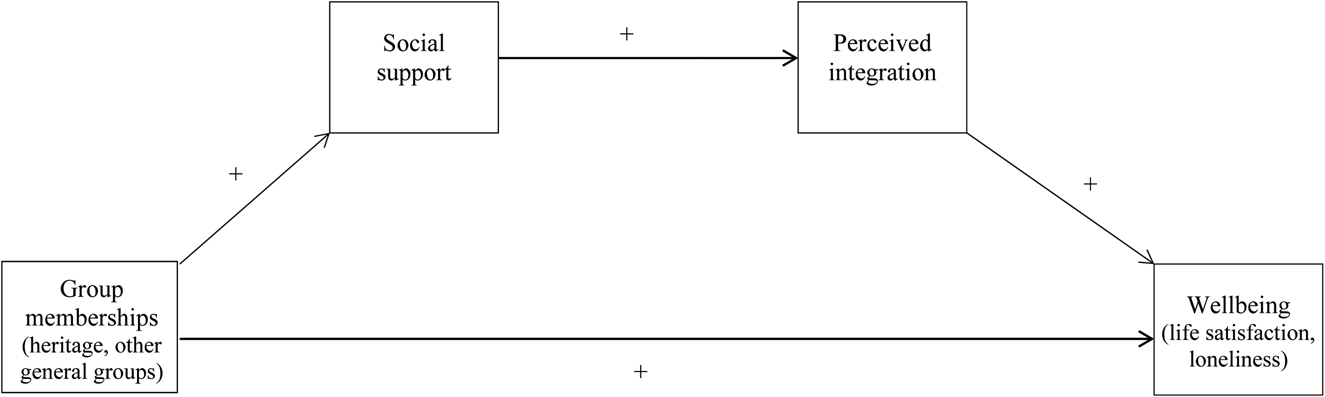
Drawing on these literatures and findings, in the present study we propose that the group memberships people gain in the settlement country provide a basis for social support which helps to strengthen perceptions of integration in the settlement culture (as predicted by the cross-cultural literature) to enhance adjustment and wellbeing. Moreover, we argue that the groups immigrants gain can take multiple forms – ethnocentric groups (e.g. Chinese activity group) that support one's heritage cultural identity, and other general, non-ethnic, groups (e.g. neighbourhood/community, exercise groups), that have the potential to support wider settlement cultural or other identities. These ethnocentric and wider groups may have a differential impact on adjustment strategies and outcomes, as some research suggests (Treas and Muzumdar, Reference Treas and Mazumdar2002), and so warrant separate examination. In the present study, we test this proposed pathway through which perceived integration is achieved and psychological wellbeing is protected (see Figure 1).
Proposed model of multiple serial mediation, in which new group memberships (both heritage culture and general) support wellbeing through providing a basis for social support that increases feelings of integration.

Present research
Previous research suggests that successful integration following migration is best achieved through adopting a bicultural stance that engages old and new cultural identities, and that successful adjustment to life change is achieved in part through gaining new social groups after the transition. In the present research, we test a new model that attempts to draw together acculturation and social identity theorising to offer an account of the processes through which social engagement with new groups acquired in the host culture influence adjustment. Our particular interest is on the longer-term adjustment of older immigrants who have lived and aged in Australia, and so we have focused on those who have been living in their settlement country for some years.
In our model, we predict that gaining membership in new social groups – not only heritage culture groups but all groups – should be associated (i.e. correlated) with better adjustment, as indicated through greater life satisfaction and reduced social disconnection or loneliness (Hypothesis 1 (H1)). This hypothesis draws on evidence in the social identity literature of the well-established relationship between membership in social groups and wellbeing outcomes. However, it extends on this literature to examine the potentially different contributions that heritage culture and wider groups may make. This is important in light of SIMIC highlighting the importance of all social group memberships to adjustment and not just those specific to ethnic culture. Second, and in line with the mediation path proposed in Figure 1, we predict that these acquired group memberships support adjustment and wellbeing through providing a basis for accessing meaningful social support which strengthens perceptions of integration with the settlement culture which, in turn, enhances life satisfaction (Hypothesis 2a (H2a)) and reduces perceived loneliness (Hypothesis 2b (H2b)). Previous social identity and acculturation theorising has focused on the separate contributions of social support and integration, respectively. The present research extends both these literatures to examine their combined serial influences in supporting wellbeing in the context of living through migration.
Method
Participants
Participants were clients of an independent agency in an urban area of south-east Queensland, Australia, that offered social activities to older people from diverse cultural backgrounds (particularly those from a non-English-speaking background) to link them better with their heritage and settlement cultures. The focus on this sample was deliberate to enable investigation of ethno-centric and wider social activities (which the organisation actively promoted) in our analysis of mechanisms. Initially 115 older adults were recruited to the study, but useable data were only available from 102 participants (84 female, 18 male), as the remaining 13 participants either answered less than half the survey (N = 3) or had missing data on key measures (N = 10). Participants in the final sample had migrated to Australia some years ago, on average 36.11 years previously (standard deviation (SD) = 17.04), which was important in enabling us to the test mechanism that contributed to settlement and adjustment in the longer term.
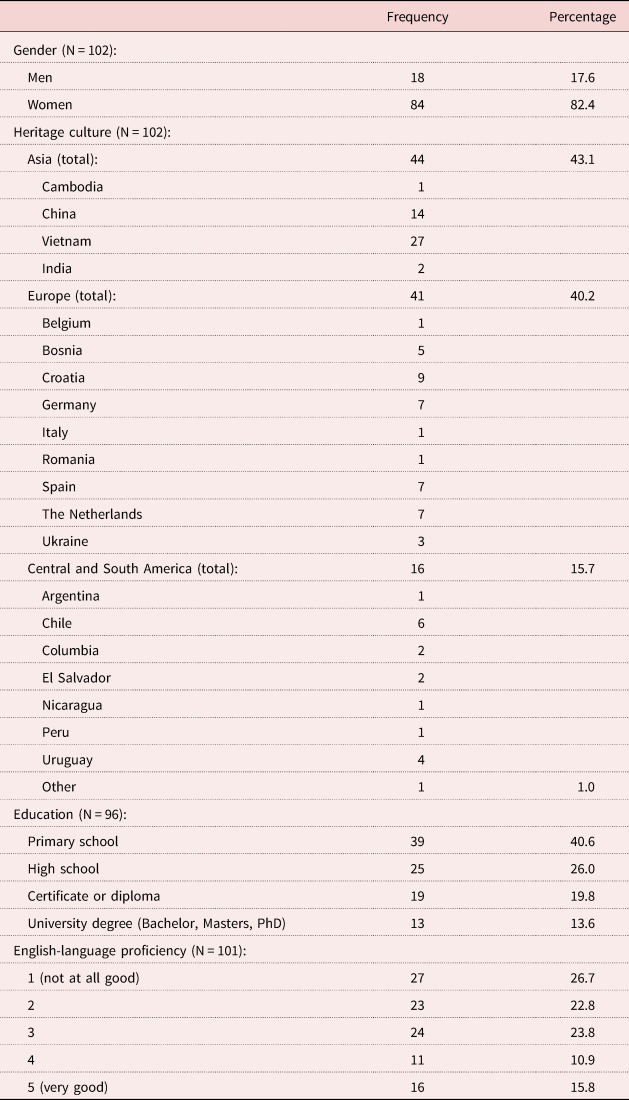
Table 1 provides a summary of the demographic profile of this sample. As it shows, our sample comprised primarily older-old adults, whose mean age was 80.33 years (SD = 8.73, range 54–100) based on the 89 who responded to this question. The majority came from Asia (43.1%) and Europe (40.2%). Based on the 96 participants who reported their highest level of education, the majority had completed primary school (40.6%), and fewer had completed high school, had a diploma or trade certificate, or a university degree. Most felt that their English-language proficiency was low, with 26.7 per cent reporting that they could ‘not at all’ understand or speak English, and another 22.8 per cent reporting their proficiency to be minimal.
Participants’ demographic information

Measures
A self-report questionnaire was developed to assess key constructs in Figure 1; notably (a) social group memberships, (b) perceptions of provided and received social support, (c) perceptions of integration into Australian society, and (d) psychological wellbeing. An additional brief index of cultural identity, while not part of the hypothesised model, was nevertheless included to understand participants’ strength of identification with their heritage and settlement cultures, in light of their having migrated some years previously.
The questionnaire was translated into four languages (Chinese, Vietnamese, Croatian and Spanish) and piloted with statements modified as needed to assist with item comprehension. Participants were then given the option of completing the questionnaire either in their ethnic language or in English, with the majority choosing their own language. Any modifications, primarily in individual wording, were minor, but retained the same general meaning when back-translated into English. The survey was kept brief to minimise the cognitive load for this sample, and the font was increased in size to facilitate reading. The response options for all measures, with the exception of psychological wellbeing (described below), ranged from 1 = strongly disagree to 5 = strongly agree.
Social group memberships
Two measures were used to index the extent to which participants had joined new social groups since migrating to Australia. Higher scores on these items indicated a greater affiliation with new group memberships, and the average of each was used in the analysis.
New heritage group memberships
This also comprised two items (r = 0.53, p < 0.001), adapted from the Exeter Identity Transition Scales (EXITS; Haslam et al., Reference Haslam, Holme, Haslam, Iyer, Jetten and Williams2008). These were: ‘Since moving to Australia, I have joined many social groups from my own ethnic culture’ and ‘Since moving to Australia, I have met many new people that I have become friends with from my own ethnic culture’.
New general group memberships
As SIMIC highlights the importance of other groups, in addition to those of ethnic cultural groups, we included a measure of new group memberships in general to capture all of people's social group capital (ethnic and wider group memberships). This comprised two items (r = 0.47, p < 0.001) taken from the EXITS (Haslam et al., Reference Haslam, Holme, Haslam, Iyer, Jetten and Williams2008). These were: ‘Since moving to Australia, I have joined many social groups’ and ‘Since moving to Australia, I have met many new people that I have become friends with’.
Social support
Two items (r = 0.64, p < 0.001) assessed the extent to which people felt they received social support from others (‘I get the help and support I need from other people’) and gave social support to others (‘I give help and support to people’) (see Haslam et al., Reference Haslam, O'Brien, Jetten, Vormedal and Penna2005). The average of these items was used in the analysis, with higher scores indicating greater perceived support.
Perceived integration
Two items (r = 0.24, p = 0.017) measured the extent to which participants, who had lived in Australia for some years, felt Australian and integrated with Australian society. These items (‘I feel I am well integrated into Australian society’, ‘I feel [ethnic]-Australian’) were averaged, with higher scores indicating greater perceived integration.
Psychological wellbeing
Two wellbeing measures were included in the analysis. The first assessed life satisfaction with a single item (‘All things considered, how satisfied are you with your life as a whole these days?’) with participants responding on a five-point scale (1 = not at all satisfied to 5 = completely satisfied). This item was taken from Cheung and Lucas (Reference Cheung and Lucas2014), who showed that responses to this single item were comparable to the multi-item Satisfaction with Life Scale (Diener et al., Reference Diener, Emmons, Larsen and Griffin1985).
The second measure was the Hughes et al. (Reference Hughes, Waite, Hawkley and Cacioppo2004) three-item loneliness scale: ‘How often do you feel you lack companionship?’, ‘How often do you feel left out?’ and ‘How often do you feel isolated?’ (α = 0.73). All items were rated on a five-point scale (1 = never to 5 = always), with the average used in the analysis and where a higher score indicated greater perceived loneliness.
Cultural identity
Two single-item measures were used to index participants’ current strength of identification with their heritage culture (‘I see myself as [inserted heritage culture]’) and with the Australian culture (‘I see myself as Australian’). These items were taken from the bi-dimensional Scales of Acculturation of Berry et al. (Reference Berry, Kim, Power, Young and Bujaki1989).
Procedure
Ethics approval for the study was provided by the researchers’ University Ethics Committee. Older immigrants were invited to take part on an agency activity group day. At this point agency staff delivered the information sheet and described the study and what involvement entailed in the participants’ heritage language. Clients interested in participating (on average 65%) were asked to sign the consent form, and were provided with the questionnaire. This was completed mostly during activity sessions, to ensure participants had support if any questions arose. It took participants about 20 minutes to complete the survey. They were then thanked and offered a Aus $10 shopping gift card.
Analysis strategy
There were two stages in analysis. The first stage of correlational analysis was conducted to test associations between demographic factors and key variables in our model. The second stage involved testing our proposed mediation model. The purpose of mediation is to test theoretically derived indirect mechanisms or processes through which an independent (or predictor) variable affects outcomes. In serial multiple mediation, as hypothesised in our model, two mediators are proposed, with one mediator proposed as influencing the other (Hayes, Reference Hayes2018). The advantage of this analysis relates to its purpose of testing theoretically derived serial hypotheses. The core conclusion that can be generated on the basis of this modelling is that the data are in line (or not in line) with the hypothesised pathway (Agler and De Boek, Reference Agler and De Boek2017).
In the present analysis, four serial multiple mediator models were conducted. These examined the specific indirect effects of membership in new social groups (both heritage culture groups specifically and all groups in general, typically referred to as X in the model) on wellbeing, as indexed through life satisfaction and loneliness (referred to as Y in the model) through the first mediator of social support (M1) and the second mediator of perceived integration (M2). For all four models, specific indirect effects were analysed using Hayes (Reference Hayes2018), PROCESS (version 3.1) for SPSS. The analyses of the completely standardised specific indirect effects (effect sizes) of X on Y were based on 5,000 bootstrap samples, providing the 95 per cent bias-corrected bootstrap confidence intervals. These intervals refer to the range of the indirect effect in the population, with 95 per cent confidence. The bootstrap method was applied to generate bias-corrected, percentile confidence intervals for testing the indirect effect, because this resampling technique does not require the assumption of normality and is effective in relatively small samples (Preacher and Hayes, Reference Preacher and Hayes2004, Reference Preacher, Hayes, Hayes, Slater and Snyder2008). This method has been demonstrated to be more accurate and powerful in estimating the indirect effect and its confidence limits in simple and complex mediation models with varying sample sizes (MacKinnon et al., Reference MacKinnon, Lockwood and Williams2004; Williams and MacKinnon, Reference Williams and MacKinnon2008). Previous research also suggests that, using the bootstrap method, a sample size of 71 is sufficient to achieve 0.80 power to detect a medium effect size (Fritz and MacKinnon, Reference Fritz and MacKinnon2007).
Results
Correlational analysis
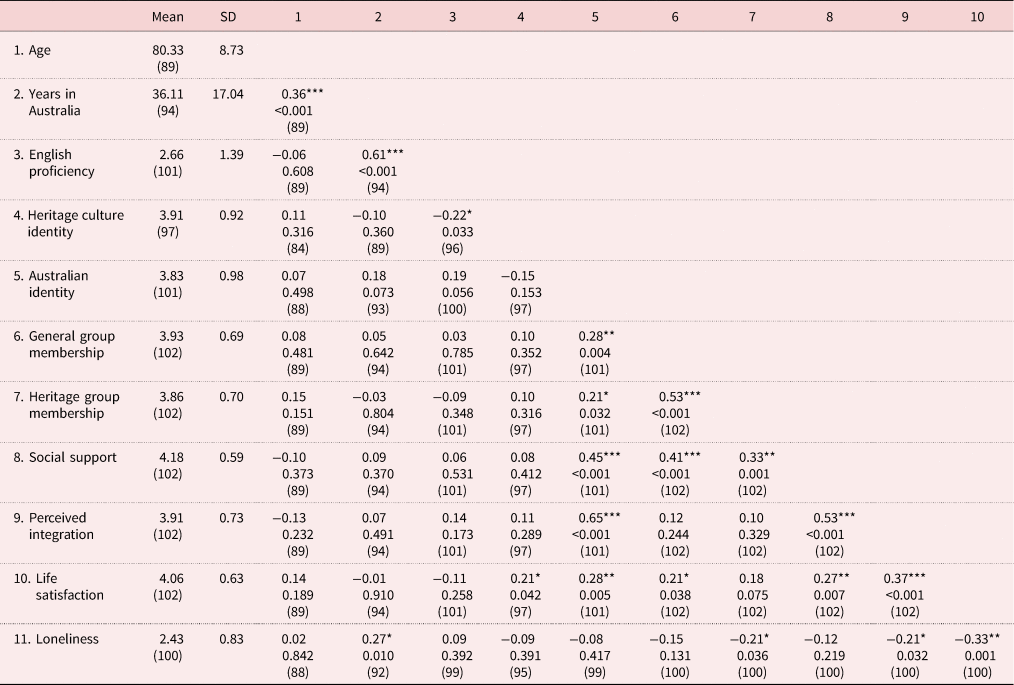
Table 2 shows the means, standard deviations and bivariate correlations of key measures and demographic variables. Among the demographic items, age was only positively associated with length of time in Australia, but it was not associated with social relationship, cultural identity or psychological wellbeing measures, including loneliness. Length of time in Australia was positively associated with loneliness, indicating that the longer people had lived in Australia, the more likely they were to feel isolated. English-language proficiency was positively associated with length of time living in Australia and negatively associated with strength of heritage culture identity. This indicates that the stronger participants’ heritage culture identity, the more likely they felt their English-language proficiency was low. Having a stronger heritage identity was also associated with greater life satisfaction. Having a stronger Australian identity was associated with a greater sense of belonging to social groups and perceived social support, integration and life satisfaction. Thus, in this analysis, strength of Australian identity was a stronger indicator of a range of variables indexing social group membership, support and wellbeing, than heritage identity.
Bivariate correlations, means and standard deviations (SD) of predictor and outcome variables

Notes: SD: standard deviation. Exact p-values are reported under correlations; figures in parentheses represent the number of participants. With the exception of Age and Years in Australia, all variables were measured on a 5-point scale.
Significance levels: * p < 0.05, ** p < 0.01, *** p < 0.001.
Similarly, there were some interesting associations between new group memberships, proposed mediators and outcome variables. Membership of general and heritage cultural groups were positively correlated, but only moderately so, which suggests that they likely tapped somewhat different group memberships. This relationship also suggests that the more groups that participants belonged to involving people from their own ethnic background in Australia, the more likely they were to belong to a broader network of groups in general. Interesting too was the finding that of the two cultural identities, the Australian one was more strongly associated with membership of newly acquired heritage and general groups. While both types of social group membership were positively correlated with greater perceived social support, they differed in other respects. A stronger sense of membership with all groups in general was associated with greater life satisfaction, and that with heritage culture was associated with feeling less lonely. This provides partial support for H1, with different groupings associated with different wellbeing outcomes. Finally, and unsurprisingly, feeling more integrated was associated with greater life satisfaction and reduced loneliness.
Mediation analyses
Despite the failure to find significant associations between general group memberships and perceived loneliness, and heritage culture group membership and life satisfaction, we proceeded to test our hypothesised serial mediation model. There were two reasons for this: first, it was an a priori hypothesis and, second, a simple association between independent and dependent variables is no longer a prerequisite for testing indirect effects (Hayes, Reference Hayes2018). Therefore, and in keeping with our hypotheses, we tested four separate serial mediation models, as described in the analysis strategy above. The standardised coefficients from ordinary least squares regression analyses are reported for all pathways presented in the figures.
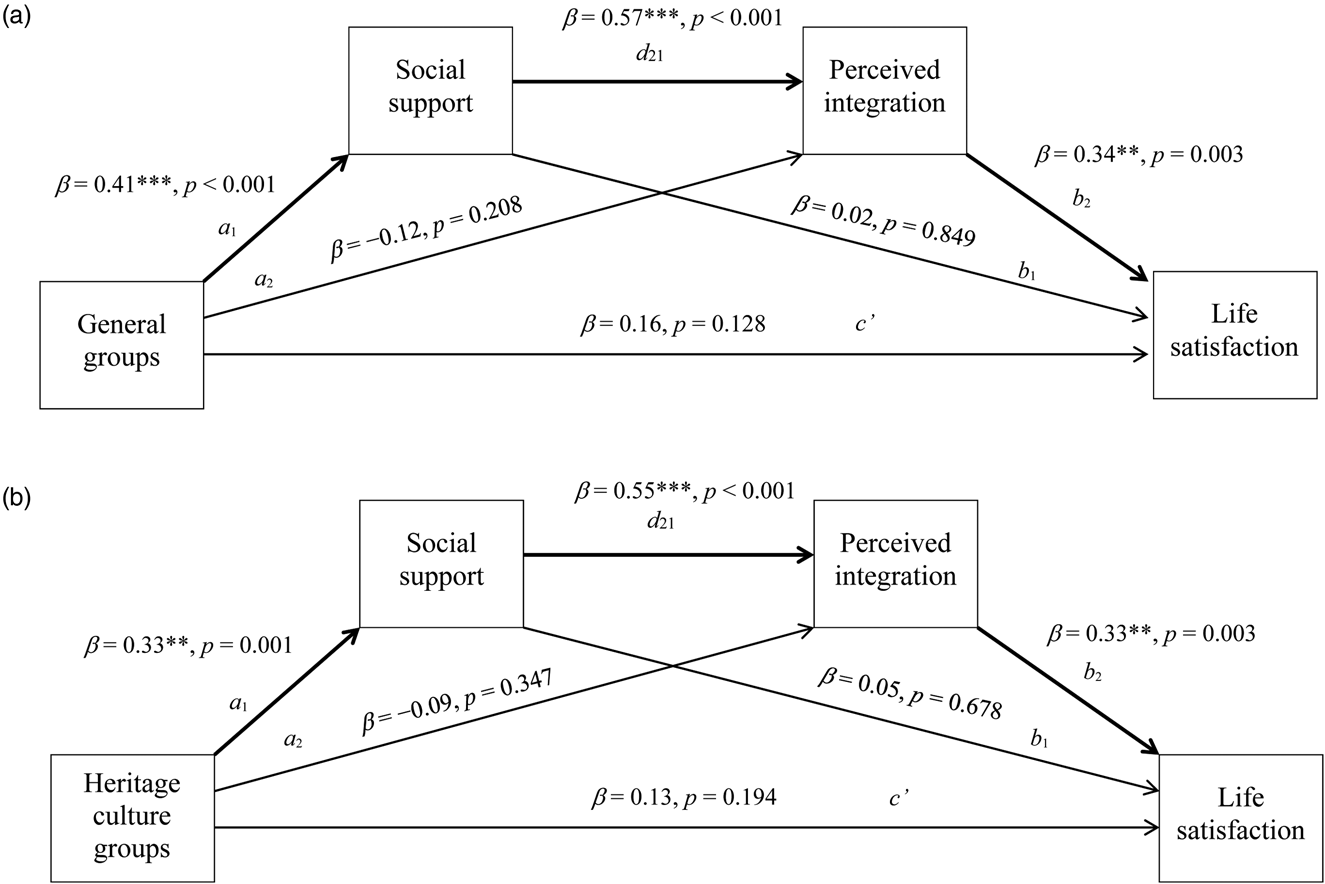
The first model tested the hypothesis that general group memberships would enhance life satisfaction through providing access to social support, which in turn increased feelings of integration. The results of this analysis are summarised in Figure 2a. In line with H2a, the indirect effect of X on Y through both mediators in serial (X → M1 → M2 → Y) was significant (β = 0.08, standard error (SE) = 0.05, bootstrap 95 per cent confidence interval (95% CI) = 0.010, 0.191), with the CI not including zero, and the direct effect was not significant (β = 0.16, SE = 09, p = 0.128, 95% CI = −0.042, 0.328). No other specific indirect pathways involving individual mediators were significant. This suggests that the hypothesised multiple mediation pathway best explained how general group membership enhanced life satisfaction, in this case through increased social support, which in turn enhanced perceived integration.
Mediation models for the effect of new social group memberships on life satisfaction.
Notes: N = 102. Indirect effect 1 = a 1b 1. Indirect effect 2 = a 2b 2. Indirect effect 3 = a 1d 21b 2.
Significance levels: * p < 0.05, ** p < 0.01, *** p < 0.001.

The second model tested the same relationships, but with new heritage culture group memberships as the independent variable. The findings are summarised in Figure 2b, but were essentially the same as those found for new general group memberships. The specific indirect effect through both social support and integration was significant (β = 0.06, SE = 0.03, bootstrap 95% CI = 0.009, 0.135), and the direct effect of heritage group on life satisfaction was not significant (β = 0.13, SE = 0.09, p = 0.194, bootstrap 95% CI = −0.060, 0.292). This provides further support for H2a, but this time for heritage culture group membership, which provided the basis for social support and, in turn, enhanced feelings of integration to support life satisfaction.
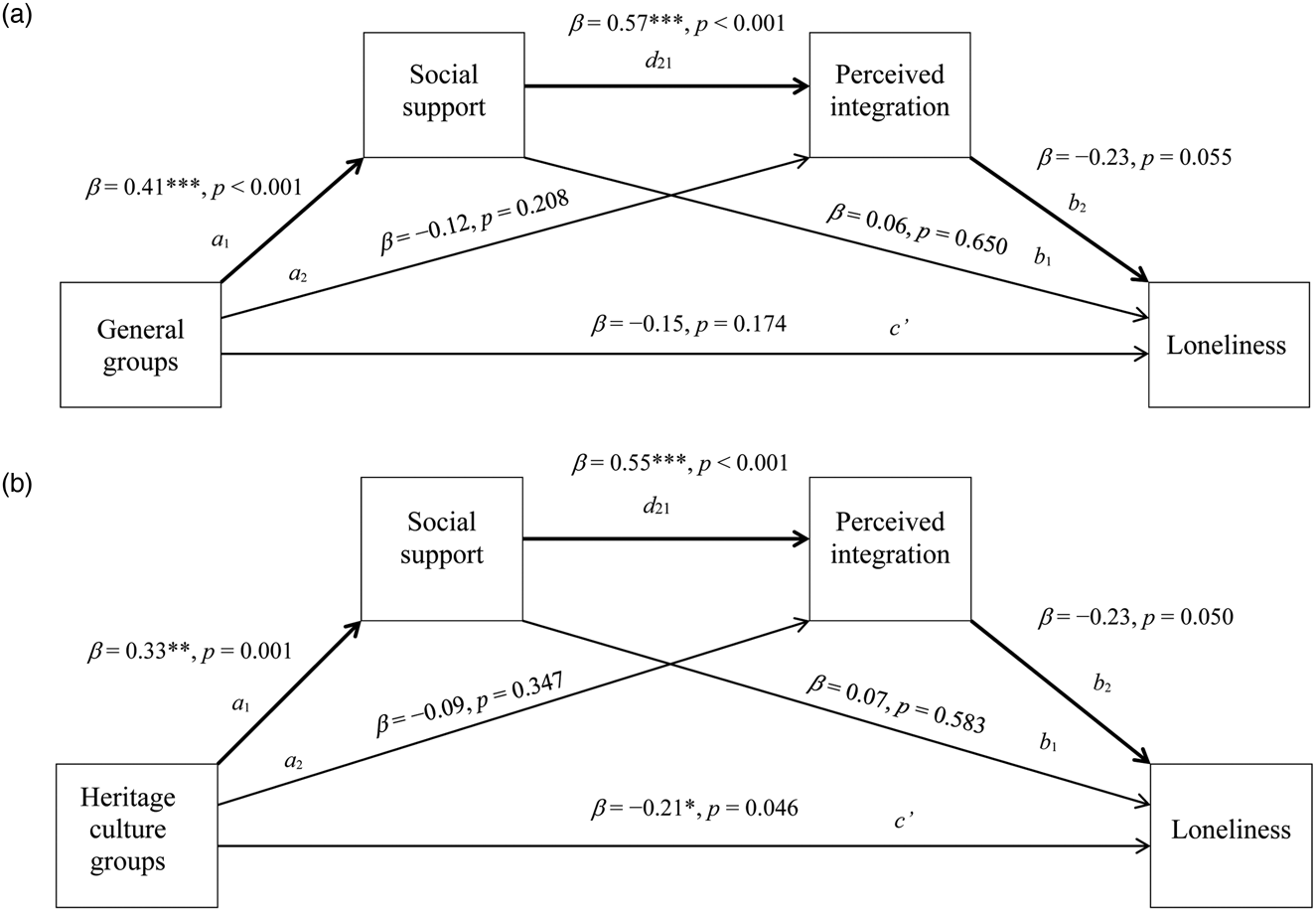
These analyses were repeated for the outcome of perceived loneliness (i.e. H2b) for general group memberships (i.e. Model 3; Figure 3a) and heritage culture group memberships (i.e. Model 4; Figure 3b). In Model 3, the serial-specific indirect effect was significant (β = −0.05, SE = 0.04, bootstrap 95% CI = −0.141, −0.001), and the direct effect was not significant (β = −0.15, SE = 0.13, p = 0.174, 95% CI = −0.440, 0.081). In Model 4, the serial-specific indirect effect was also significant (β = −0.04, SE = 0.03, bootstrap 95% CI = −0.119, −0.0002), and in this case so was the direct effect (β = −0.21, SE = 0.12, p = 0.046, 95% CI = −0.491, −0.005). These results provide support for H2b and indicate that both general and heritage culture group memberships reduced loneliness through increased social support, which in turn enhanced feelings of integration.
Mediation models for the effect of new social group memberships on loneliness.
Notes: N = 100. Indirect effect 1 = a 1b 1. Indirect effect 2 = a 2b 2. Indirect effect 3 = a 1d 21b 2.
Significance levels: * p < 0.05, ** p < 0.01, *** p < 0.001.

Sensitivity analyses
Several sensitivity analyses were conducted to consider possible alternative pathways in the hypothesised model. First, we tested an alternative serial mediation path with the two mediators reversed, to test the argument that group membership supported outcomes by providing a basis for perceived integration and then social support. The indirect effect in all models was not significant (Model 1: β = 0.00, SE = 0.01, bootstrap 95% CI = −0.029, 0.028; Model 2: β = 0.00, SE = 0.01, bootstrap 95% CI = −0.023, 0.023; Model 3: β = 0.00, SE = 0.01, bootstrap 95% CI = −0.021, 0.036; Model 4: β = 0.00, SE = 0.01, bootstrap 95% CI = −0.018, 0.032). This analysis also shows that our theorised model, where social support precedes perceived integration, provides the best account of the data.
Second, we conducted a further analysis to test the argument that the relationship between wellbeing and group membership might also operate in the reverse direction; with greater wellbeing increasing the likelihood that people join new groups. This involved testing all four models with predictor and outcome variables reversed. None of the hypothesised serial multiple mediator pathways were significant (Model 1: β = −0.02, SE = 0.02, bootstrap 95% CI = −0.064, 0.011; Model 2: β = −0.02, SE = 0.02, bootstrap 95% CI = −0.061, 0.012; Model 3: β = 0.01, SE = 0.01, bootstrap 95% CI = −0.008, 0.046; Model 4: β = 0.01, SE = 0.01, bootstrap 95% CI = −0.009, 0.048). Supporting H2, this indicates that the predicted model, in which group membership supported psychological wellbeing, provided a better account of the data. In addition, we repeated our analyses controlling for length of time in Australia, given its significant association with loneliness. However, doing so did not change our findings significantly for any of the four models.
Additionally, although received and provided support were significantly correlated (r = 0.64), there is evidence that the two forms tap different elements of support (e.g. Piferi and Lawler, Reference Piferi and Lawler2006; Reblin and Uchino, Reference Reblin and Uchino2008). For this reason, we repeated analyses to examine the contribution of these separate components. Consistent with results for the combined support measure, when the outcome variable was life satisfaction, the indirect effect of X on Y through the mediators in serial was significant in the case of both provided support (Model 1 (general groups), β = 0.07, SE = 0.04, bootstrap 95% CI = 0.010, 0.166; Model 2 (heritage cultural groups), β = 0.04, SE = 0.03, bootstrap 95% CI = 0.003, 0.110) and received support (Model 1 (general groups), β = 0.06, SE = 0.03, bootstrap 95% CI = 0.006, 0.130; Model 2 (heritage cultural groups), β = 0.06, SE = 0.03, bootstrap 95% CI = 0.008, 0.125). For the outcome variable loneliness, the indirect effect of the serial mediation pathway was significant only in the case of provided support and when the predictor variable was general group membership (Model 3: β = −0.05, SE = 0.03, bootstrap 95% CI = −0.129, −0.002; remaining models: all β values = −0.03, SE values = 0.02–0.03, bootstrap 95% CI values spanning 0). As with the combined support measure, no other specific indirect pathways involving individual mediators were significant, for life satisfaction or loneliness. As this shows, both forms of support remain significant predictors of life satisfaction, serially with feeling integrated. The findings are more mixed in explaining perceived loneliness, with provided support for all groups in general contributing serially to this outcome.
A final analysis tested the influence of general group memberships and heritage cultural group memberships in the same mediation model. This is because, conceptually, people's heritage cultural group memberships are part of their more general group memberships, and it is possible that each affects the other to influence outcomes. When we tested both general groups and heritage cultural groups in the same mediation model, the indirect effect of general groups remained significant when the outcome was life satisfaction (β = 0.06, SE = 0.04, bootstrap 95% CI = 0.003, 0.167). However, the other indirect effects were no longer significant (life satisfaction: β = 0.03, SE = 0.02, bootstrap 95% CI = −0.010, 0.084; loneliness (general): β = −0.04, SE = 0.03, bootstrap 95% CI = −0.125, 0.001; β = −0.02, SE = 0.02, bootstrap 95% CI = −0.075, 0.009). What this means is that after accounting for the effects of heritage cultural groups, general groups still made a unique contribution to the prediction of life satisfaction serially, through support and integration. Nevertheless, the effect of general and heritage culture groups on loneliness was less distinct, with these memberships appearing to have a shared influence on this aspect of wellbeing.
Discussion
The present research aimed to test the mechanisms through which social group memberships acquired in a settlement country supported the wellbeing of a sample of older immigrants living and ageing in Australia. In partial support of H1, we found that older adults who reported joining new groups after migrating to Australia experienced better psychological wellbeing, as indexed through life satisfaction and perceptions of loneliness. Correlational analysis showed that this varied as a function of both the nature of participants’ acquired group memberships and the aspect of wellbeing measured: joining more heritage culture groups was associated with reduced feelings of loneliness, and joining more cultural and other groups in Australia (i.e. general group memberships) was associated with enhanced life satisfaction. However, more rigorous testing through our mediation analyses provided evidence of heritage and all group memberships in general, with both having an effect on wellbeing through social support and feelings of integration. Specifically, for H2a, the analysis showed that new group memberships, irrespective of their cultural basis, supported life satisfaction through providing a basis for social support, which in turn enhanced perceptions of integration in Australia. Likewise, the analysis for H2b showed that these different groupings reduced loneliness through their capacity to both increase perceptions of social support and integration.
A key finding from our study is that all groups acquired mattered when it came to understanding longer-term adjustment. The acculturation literature highlights the importance of cultural groups and peers specifically (e.g. Silveria and Allebeck, Reference Silveria and Allebeck2001; Schwartz et al., Reference Schwartz, Zamboanga, Rodriguez and Wang2007), and we replicated this effect in finding that those who joined heritage culture groups reported better life satisfaction and reduced loneliness. However, we also found that all group memberships acquired in Australia – heritage and wider groups – enhanced both aspects of wellbeing. This supports previous research highlighting the importance of extending one's social ties to include friendships outside one's heritage cultural context to support immigrant adjustment (e.g. Treas and Mazumdar, Reference Treas and Mazumdar2002; Jasinskaja-Lahti et al., Reference Jasinskaja-Lahti, Liebkind, Jaakkola and Reuter2006; Nguyen and Benet-Martinez, Reference Nguyen and Benet-Martinez2013). We cannot say what those groups were, because their nature was not specified in our study, though it is likely they involved a range of friendship and activity groups in participants’ local neighbourhoods or communities. Of course, closer interrogation of these other groups that older immigrants joined over time would be useful in future to gain a better understanding of their role in supporting long-term adjustment. Nevertheless, the theoretical implications of this finding are clear in highlighting a need to draw on wider models of adjustment, of the form that social identity theorising and SIMIC offer, to understand the processes through which group memberships are protective of wellbeing in this context. As noted earlier, previous research examining SIMIC's group processes in older adults has demonstrated its relevance to understanding adjustment to a wide range of life-changing contexts that include retirement (e.g. Haslam et al., Reference Haslam, Lam, Branscombe, Ball, Fong, Steffens and Haslam2018b, Reference Haslam, Steffens, Branscombe, Haslam, Cruwys, Lam, Pachana and Yang2019) and moving into care (e.g. Gleibs et al., Reference Gleibs, Haslam, Jones, Haslam, McNeil and Connolly2011), in addition to migration (Jetten et al., Reference Jetten, Dane, Williams, Liu, Haslam, Gallois and McDonald2018). The present study shows that the model is also particularly relevant to understanding the role of group memberships gained following migration, and the mechanisms through which these can affect the longer-term adjustment of immigrants who have aged in a settlement country. In particular, our data emphasise the importance of acquiring group ties in the settlement country, irrespective of the form they might take, where these are ones that people identify with and to which they feel connected.
Looking at the mechanisms underlying this relationship between acquired group memberships and outcomes, all four models testing our proposed serial pathway through social support and integration were significant. Added to this, the fact that sensitivity analyses found no evidence of reverse directionality in the relationships provides greater confidence that our proposed serial multiple mediator model best accounted for the data.
These findings also provide support for social identity and cross-cultural frameworks, from which our model was derived. The relationship between group membership and social support is well established in the social identity literature (e.g. Haslam et al., Reference Haslam, Jetten, O'Brien and Jacobs2004, Reference Haslam, O'Brien, Jetten, Vormedal and Penna2005; Levine et al., Reference Levine, Prosser, Evans and Reicher2005; Frisch et al., Reference Frisch, Häusser, van Dick and Mojzisch2014). These results extend on this to show that social support is also a basis for feeling more integrated with the host culture, and that their combination in sequence is what supports ongoing adjustment to migration and ageing. The findings were more mixed when looking at the separate contributions of provided and received social support. Both components of support were consistently associated with the life satisfaction outcome, serially with perceived integration. However, this was not the case for loneliness, where only provided support and integration acted as a mechanism through which group membership in general supported this outcome. This may be due to the combined measure representing a more wholistic and reliable construct for analysis, suggesting that better measures of each component would be useful to integrate into research in future.
We also examined the influences of general group memberships and heritage cultural group memberships in the same mediation model. This analysis showed that only new general group memberships uniquely contributed to life satisfaction. This suggests that newly acquired groups, other than heritage culture, are important in supporting the wellbeing of these older migrants. This was not found for loneliness, suggesting that perceptions of loneliness might be best mitigated by engaging in groups with people of similar cultural heritage. However, as the analysis of these complex effects was based on a relatively small sample, this is clearly speculative and requires further examination in the future.
While our focus in these models was on social support and integration, this does not mean that they are the only mechanisms through which acquired group memberships facilitate adjustment. There might be other contributing mechanisms that we have not tested – for instance, other psychological resources that stem from group membership, such as perceived control and enhanced self-esteem (e.g. Greenaway et al., Reference Greenaway, Haslam, Branscombe, Cruwys, Ysseldyk and Heldreth2015; Jetten et al., Reference Jetten, Branscombe, Haslam, Haslam, Cruwys, Jones, Cui, Dingle, Liu, Murphy, Thai, Walter and Zhang2015), or other factors such as language or access to services as highlighted in the acculturation literature. What we know from the present study is that social support and perceived integration in combination are legitimate mechanisms through which groups support adjustment. Moreover, this has practical implications for how society should support older people to adjust to migration. Specifically, first we need to help people gain new groups in the context of migration, and for this goal all groups – heritage and wider groups – are important. Second, we need to help people draw effectively on the social support resources that stem from group membership, in ways that culturally and linguistically diverse (CALD) and wider community organisations facilitate, as this contributes both to enhancing feelings of integration and belonging to the host culture and psychological wellbeing.
Limitations
There are, nevertheless, a number of limitations that affect the strength of conclusions that can be drawn from this study. The first concerns measurement. Our measures were deliberately brief to be accessible and meaningful to older-old adult CALD populations and to support translation, as advised by the case workers in the services recruiting clients. For this reason, we focused on previously published single-item measures and shorter two- and three-item scales. The majority were significantly correlated or had sound scale integrity, for two- and three-item scales respectively, although that for the integration measure was weaker than anticipated. Thus, a better index of this construct should be sought in future research. Overall though, this general issue about measurement is not only a challenge for the present study but one for all researchers working with this population, and highlights the importance of directing efforts to develop validated measures to tap these constructs. Additionally, there were limitations in our assessment of ethnic culture. While we included a distinct measure of acquired heritage culture groups, the measure of general group memberships was not as clear, as it arguably includes heritage in addition to other groups. Thus, greater precision to distinguish more clearly heritage from other group memberships will be important in future.
There are also limitations with sample size, which has implications for the generalisability of our findings to the wider older adult CALD population. While support was found for our hypothesised model, a larger sample would have provided more convincing support. This sample also comprised older-old people from diverse cultural backgrounds. On the one hand, the cultural diversity is a strength, given that it speaks to the potential relevance of the findings across cultures. However, given the relatively small number of participants from some cultures, the extent to which the findings are generalisable across cultures can be questioned. Accordingly, while there was support for our model of adjustment to migration, it is important to test it further, not only to replicate the findings but also to extend them to immigrants across the lifespan, to determine the model's wider generalisability across age.
Relatedly, because we recruited from an organisation that offered social activity services to older immigrants, the sample comprised predominantly women, for whom these services might be more attractive, and there is a possibility that people in this sample were more motivated than others not seeking such services to engage with social groups. Even though this served our purpose, given the study's focus was to examine mechanisms underlying the positive effects of integration, this does not discount the importance of engaging in wider recruitment in the future. The implication of our findings for gender is that these relationships between key social processes and adjustment may not extend to men. Nevertheless, our model draws on theory that generalises across gender, and similar social processes have been shown to be relevant to understanding outcomes for older men (e.g. Gleibs et al., Reference Gleibs, Haslam, Jones, Haslam, McNeil and Connolly2011), albeit not from CALD populations. There is another reason why broader recruitment is important. Our sample comprised just over 40 per cent of people who had low settlement culture language skills, and this seems at odds with our sample feeling integrated. Typically, language is identified as a barrier to integration, but here the organisation is likely to have contributed to reducing its consequences. However, theoretically we would predict that the same processes would operate to support integration and adjustment outcomes in immigrants who were not linked with such agencies; of course, this requires demonstration.
Finally, it is worth noting again that our participants had lived in Australia for 36 years on average, and given their current age, this suggests that many would have migrated around the age of 50 years. As these participants were not recent migrants, the present results need to be interpreted in this context. Nevertheless, it was clear from participants’ responses that adjustment is something that is experienced over a long period of time for many, and that length of time in a receiving culture does not necessarily contribute to better adjustment.
Conclusions
There is no doubt that migration is challenging, and that ageing further exacerbates the effects of such change on adjustment. The present findings show that acquiring group memberships in a settlement country, whether they involve people from one's heritage culture or other groups, is a key contributor to longer-term adjustment outcomes. The novel advance in the present paper was to examine the contribution of social support and perceived integration as mechanisms supporting adjustment in older immigrants. In doing this, we found that both joining heritage culture and other group memberships in the settlement country improved life satisfaction and reduced loneliness through enabling access to social support, which in turn increased perceptions of integration. These findings provide the first demonstration of the means through which group processes and mechanisms derived from social identity frameworks facilitate perceptions of integration to support longer-term adjustment in older immigrants. Whether these effects generalise to other immigrants across the lifespan has yet to be tested, though these findings provide a sound platform from which to interrogate these effects further across various life domains.
Financial support
This work was supported by the Australian Research Council (grant number LP160100374).
Conflict of interest
The authors declare no conflicts of interest.
Ethical standards
Ethical approval was provided by the University of Queensland Human Research Ethics Committees (number 2016001115).