The growing child's brain can be adversely affected by exposures to a variety of physical and social risks during the pre-, peri-, and early postnatal periods, contributing to the emergence of neurodevelopmental problems that can last across the life span (Desplats, Reference Desplats2015; Gilman et al., Reference Gilman, Hornig, Ghassabian, Hahn, Cherkerzian, Albert and Goldstein2017). Different types of early risks may operate via unique mechanisms, and recent frameworks distinguish inadequate environmental input (e.g., neglect, deprivation) from unwanted input (e.g., threat, abuse), suggesting that the influence of each experience is characterized by specific neurodevelopmental consequences (Humphreys & Zeanah, Reference Humphreys and Zeanah2015; McLaughlin, Sheridan, & Lambert, Reference McLaughlin, Sheridan and Lambert2014). However, few studies differentiate between types of inadequate inputs or directly compare the developmental profiles of individuals that have been exposed to different forms of severe early adversity (Dong et al., Reference Dong, Anda, Felitti, Dube, Williamson, Thompson and Giles2004). Understanding whether different types of early adversity confer similar or different vulnerabilities for development is crucial for the design of preventive interventions (McCrory, Gerin, & Viding, Reference McCrory, Gerin and Viding2017). Comparing child outcomes after different types of adverse exposures may illuminate these mechanisms by identifying potentially shared neurodevelopmental pathways.
Preterm Birth
The earliest forms of developmental risk exposure may occur in utero and during the first few weeks of life. Preterm birth (<37 weeks gestation) is a marker for prenatal adversities and has been associated with various risk factors including maternal stress, social adversity, Black ethnicity, infection/inflammation, and preconception/prenatal smoking. Prematurity is also related to clinician decisions to deliver early and by caesarean section, for example, due to multiple fetuses after fertility treatment in often more socially advantaged women (Chawanpaiboon et al., Reference Chawanpaiboon, Vogel, Moller, Lumbiganon, Petzold, Hogan and Gülmezoglu2019). However, the mechanisms linking these factors to birth outcomes are not clear, and up to 78% of the variance in the risk of preterm birth remains unexplained (Goldenberg, Culhane, Iams, & Romero, Reference Goldenberg, Culhane, Iams and Romero2008; Raisanen, Gissler, Saari, Kramer, & Heinonen, Reference Räisänen, Gissler, Saari, Kramer and Heinonen2013). Preterm neonates often suffer from immaturity of organs, superimposed complications (Volpe, Reference Volpe2009), exposure to pain and stress due to medical treatment (Grunau, Reference Grunau2013), and restricted interactions with caregivers during the first weeks to months of life (Milgrom et al., Reference Milgrom, Newnham, Anderson, Doyle, Gemmill, Lee and Inder2010). As a consequence, preterm children are at risk for various neurodevelopmental problems (Cheong et al., Reference Cheong, Doyle, Burnett, Lee, Walsh, Potter and Anderson2017), and the risk is greatest for those born with lowest gestational age (Linsell, Malouf, Morris, Kurinczuk, & Marlow, Reference Linsell, Malouf, Morris, Kurinczuk and Marlow2015; Narberhaus et al., Reference Narberhaus, Segarra, Caldú, Giménez, Junqué, Pueyo and Botet2007). Children born very preterm (<32 weeks gestation; VP) or with a very low birth weight (<1,500 grams; VLBW) suffer from increased vulnerability to problems across cognitive, emotional, social, and behavioral domains (Wolke et al., Reference Wolke, Baumann, Strauss, Johnson and Marlow2015; Woodward et al., Reference Woodward, Moor, Hood, Champion, Foster-Cohen, Inder and Austin2009). Researchers agree that both biological vulnerability (such as brain injuries) and early environmental adversities (medical procedures and limited contact with parents) contribute to the emergence of these problems (Montagna & Nosarti, Reference Montagna and Nosarti2016).
Institutional Deprivation
Environments such as childhood institutions that lack adequate, loving caregivers and stimuli can also result in severe socioemotional deprivation in the first few months and years of life. In the sociopolitical context of the Ceausescu regime from the late 1960s to 1980s in Romania, antecedents of childhood institutionalization likely included severe maternal stress, in utero malnutrition, social adversity, and potential prenatal exposure to alcohol or other harmful substances (Morrison, Reference Morrison2004). Moreover, children who experienced institutionalization typically encountered malnutrition and significant psychosocial neglect due to high child-to-staff ratios, little opportunity to form lasting selective attachments, and limited cognitive stimulation (Castle et al., Reference Castle, Groothues, Bredenkamp, Beckett, O'Connor and Rutter1999; McCall, Reference McCall2013). Even after being adopted, postinstitutionalized children have been shown to be at risk for cognitive, behavioral, emotional, and social problems (Kreppner et al., Reference Kreppner, Rutter, Beckett, Castle, Colvert, Groothues and Sonuga-Barke2007). These vulnerabilities are most pronounced for children who were institutionalized for longer periods in early life (Kreppner et al., Reference Kreppner, Rutter, Beckett, Castle, Colvert, Groothues and Sonuga-Barke2007), suggesting that both the timing and duration of experiences are linked to adverse outcomes.
Comparing Phenotypes
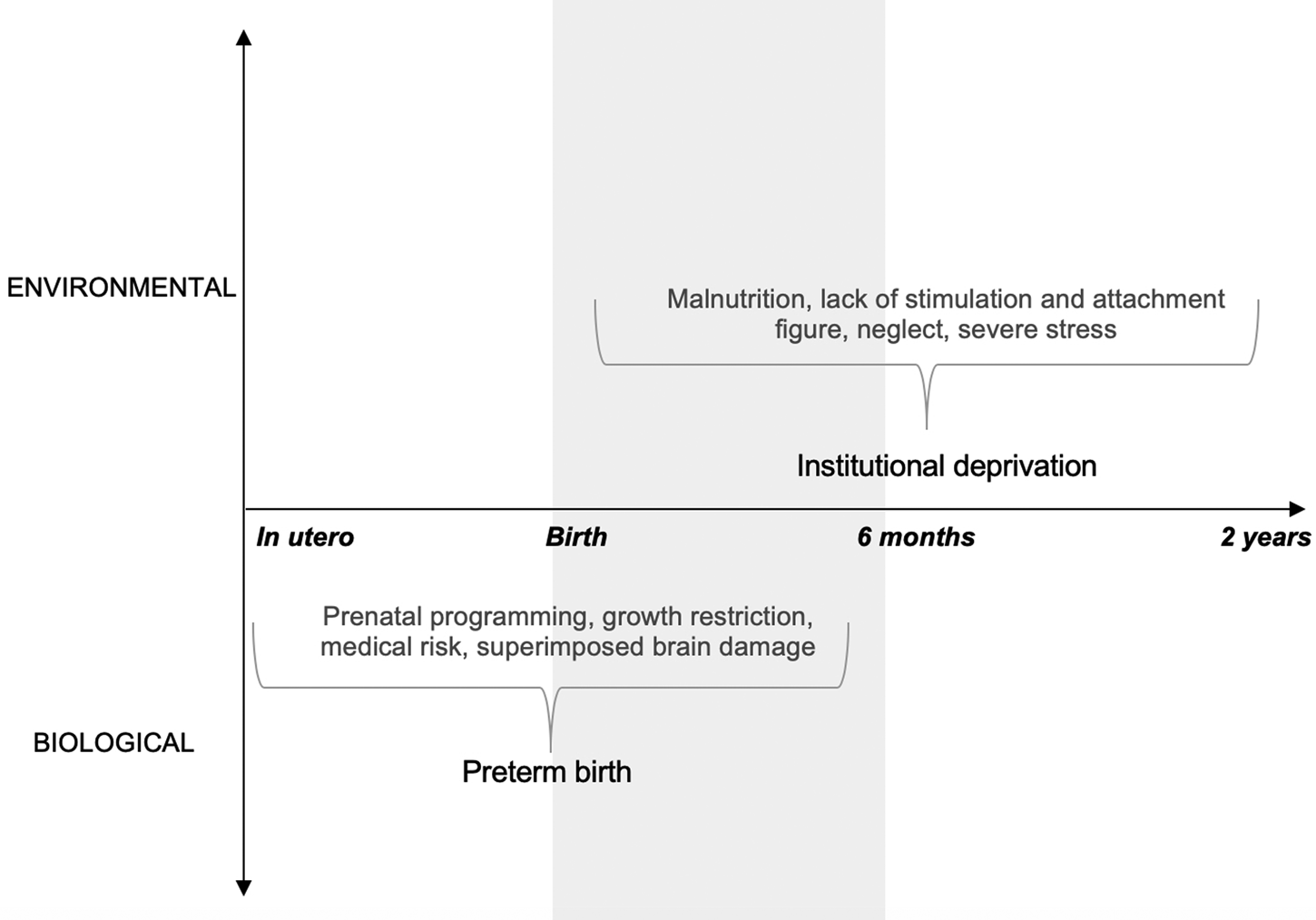
Despite clear differences in the nature of these experiences, both extreme prematurity and extended institutional deprivation involve severe stress during the first few months of life (Figure 1). Moreover, both experiences lead to strikingly similar socioemotional and cognitive problems that present during comparable developmental periods (Aarnoudse-Moens, Weisglas-Kuperus, van Goudoever, & Oosterlaan, Reference Aarnoudse-Moens, Weisglas-Kuperus, van Goudoever and Oosterlaan2009; Kreppner et al., Reference Kreppner, Rutter, Beckett, Castle, Colvert, Groothues and Sonuga-Barke2007; Ritchie, Bora, & Woodward, Reference Ritchie, Bora and Woodward2015). Prospective longitudinal studies of VP/VLBW and postinstitutionalized children report increased risks for inattention, cognitive difficulties, and underachievement (Breeman, Jaekel, Baumann, Bartmann, & Wolke, Reference Breeman, Jaekel, Baumann, Bartmann and Wolke2015; Breeman, Jaekel, Baumann, Bartmann, & Wolke, Reference Breeman, Jaekel, Baumann, Bartmann and Wolke2016; Kennedy et al., Reference Kennedy, Kreppner, Knights, Kumsta, Maughan, Golm and Sonuga-Barke2016; Sonuga-Barke et al., Reference Sonuga-Barke, Kennedy, Kumsta, Knights, Golm, Rutter and Kreppner2017). Additionally, both populations show deficits in social cognition (Tarullo, Bruce, & Gunnar, Reference Tarullo, Bruce and Gunnar2007; Williamson & Jakobson, Reference Williamson and Jakobson2014), peer problems (Delobel-Ayoub et al., Reference Delobel-Ayoub, Kaminski, Marret, Burguet, Marchand, N′Guyen and Larroque2006; Gunnar & Van Dulmen, Reference Gunnar and Van Dulmen2007; Sonuga-Barke, Schlotz, & Kreppner, Reference Sonuga-Barke, Schlotz and Kreppner2010; Wolke, Baumann, Strauss, Johnson, & Marlow, Reference Wolke, Baumann, Strauss, Johnson and Marlow2015), and less positive engagement in interactions with adults (Kreppner, O'Connor, Dunn, & Andersen-Wood, Reference Kreppner, O'Connor, Dunn and Andersen-Wood1999; Reyes, Jaekel, & Wolke, Reference Reyes, Jaekel and Wolke2019).
Hypothetical model of the type/quality and timing of early adverse influences on temperament formation. Shading represents potential overlap in timing of stressful experiences. Although this model presents preterm birth and institutional deprivation as distinguishable experiences at different time points, it is also possible that overlap existed in prenatal experiences of institutionalized children (e.g., influenced by maternal stress, in utero malnutrition, and/or exposure to harmful substances) with those of preterm children. Due to limited data on prenatal experiences for institutionalized children, this possibility could not be tested in the current study.

However, unique features of each phenotype have also been reported. For instance, individuals born preterm have been described as more shy and withdrawn than their full-term counterparts (Eryigit-Madzwamuse, Strauss, Baumann, Bartmann, & Wolke, Reference Eryigit Madzwamuse, Baumann, Jaekel, Bartmann and Wolke2015; Pyhälä et al., Reference Pyhälä, Räikkönen, Pesonen, Heinonen, Hovi, Eriksson and Kajantie2009; Schmidt, Miskovic, Boyle, & Saigal, Reference Schmidt, Miskovic, Boyle and Saigal2008), whereas postinstitutionalized children are at risk for indiscriminate friendliness and social disinhibition (Bruce, Tarullo, & Gunnar, Reference Bruce, Tarullo and Gunnar2009; Kumsta et al., Reference Kumsta, Kreppner, Rutter, Beckett, Castle, Stevens and Sonuga-Barke2010; Rutter et al., Reference Rutter, Colvert, Kreppner, Beckett, Castle, Groothues and Sonuga-Barke2007). Additionally, while both experiences have been linked to symptoms of attention-deficit/hyperactivity disorder (ADHD; Kreppner, O'Connor, Rutter, & English and Romanian Adoptees Team, Reference Kreppner, O'connor and Rutter2001; Lindström, Lindblad, & Hjern, Reference Lindström, Lindblad and Hjern2011), it has been emphasized that the ADHD phenotype in both samples may be distinct in contrast to highly heritable ADHD in normal population samples. Thus, VP/VLBW birth appears to be specifically related to the inattentive but not the hyperactive/impulsive subtype of ADHD (Jaekel, Wolke, & Bartmann, Reference Jaekel, Wolke and Bartmann2013; Johnson & Wolke, Reference Johnson and Wolke2013). Inattention appears to predominate in postinstitutionalized samples as well (Kennedy et al., Reference Kennedy, Kreppner, Knights, Kumsta, Maughan, Golm and Sonuga-Barke2016), but there is also considerable overlap with disinhibited social engagement (Kreppner et al., Reference Kreppner, O'connor and Rutter2001, Roy et al., Reference Roy, Rutter and Pickles2004). At the same time, the phenotypic characterization of deprivation-related inattention and overactivity also shared features with ADHD in nondeprived samples (Stevens et al., Reference Stevens, Sonuga-Barke, Kreppner, Beckett, Castle, Colvert and Rutter2008). Therefore, it is unclear whether these distinct risk experiences of VP/VLBW and early institutionalization share similar neurodevelopmental pathways to long-term socioemotional and behavioral outcomes, or whether different pathways may be implicated (Bendersky & Lewis, Reference Bendersky and Lewis1994; Rathbone et al., Reference Rathbone, Counsell, Kapellou, Dyet, Kennea, Hajnal and Edwards2011).
Temperament as a developmental pathway
The development of temperament may constitute a potential mechanism through which early adversity shapes long-term outcomes (Nigg, Reference Nigg2006). Temperament is a multidimensional construct thought to emerge from an interplay of biological and environmental influences (Groh et al., Reference Groh, Narayan, Bakermans-Kranenburg, Roisman, Vaughn, Fearon and Ijzendoorn2017). Temperamental dispositions reflect variation in both reactivity and regulation that modulate the expression of traits such as sociability, emotionality, effortful control, shyness, and activity levels (Buss & Plomin, Reference Buss and Plomin1984; Rothbart, Reference Rothbart2007; Shiner et al., Reference Shiner, Buss, Mcclowry, Putnam, Saudino and Zentner2012). These traits may underlie behavioral problems associated with VP/VLBW and institutional deprivation to different extents. Indeed, the literature described above suggests that VP/VLBW birth and institutional deprivation confer risks for similar problems in some aspects of regulation (e.g., effortful control; Jaekel et al., Reference Jaekel, Wolke and Bartmann2013; Stevens et al., Reference Stevens, Sonuga-Barke, Kreppner, Beckett, Castle, Colvert and Rutter2008), but it is also associated with different risks in other aspects (e.g., hyperactivity in postinstitutionalized samples, shyness in VP/VLBW samples; Eryigit-Madzwamuse et al., Reference Eryigit Madzwamuse, Baumann, Jaekel, Bartmann and Wolke2015; Rutter et al., Reference Rutter, Colvert, Kreppner, Beckett, Castle, Groothues and Sonuga-Barke2007). Despite evidence that preterm birth and prolonged institutional deprivation may influence temperamental profiles (Bos et al., Reference Bos, Zeanah, Fox, Drury, McLaughlin and Nelson2011; Hughes, Shults, McGrath, & Medoff-Cooper, Reference Hughes, Shults, McGrath and Medoff-Cooper2002), the degree to which these two experiences affect temperamental variation in similar or different ways has not been studied.
Longitudinal cohort studies present an avenue for the cross-validation of data across different types of childhood adversity. Specifically, the Bavarian Longitudinal Study (BLS) of preterm children and the English and Romanian Adoptees (ERA) Study of postinstitutionalized children share strikingly similar assessment methods and timing. Both studies have assessed early adversity and developmental outcomes across childhood. Thus, to identify the extent to which early biological (VP/VLBW birth) or environmental (institutional deprivation) adversities shape the development of temperament in similar or different ways (see Figure 1), the current study investigated the temperament of VP/VLBW and postinstitutionalized children at age 6 years. Based on the literature, we hypothesized the following: (1) VP/VLBW and postinstitutionalized children would show similarly aberrant temperamental profiles across three domains of temperament: effortful control, emotionality, and sociability, but (2) different profiles for activity (i.e., elevated in postinstitutionalized) and (3) shyness (i.e., elevated in VP/VLBW).
Method
Data from the BLS and ERA were harmonized (as described below) and compared. The studies of both unique cohorts have comparatively assessed early adversity, temperament, and developmental outcomes across childhood with similar methods and timing. The current study included data from both studies from birth until the age of 6 years.
Sample Description and Participants
English and Romanian Adoptees Study (ERA)
The original study drew from 324 Romanian children that had been adopted into English families between February 1990 and September 1992 through the UK Department of Health and the Home Office (Rutter, Reference Rutter1998). All children were younger than 42 months at time of entry to the UK, and stratified sampling was applied within specific 6-month age bands. The target number of children was 13 boys and 13 girls placed between 0 and 3 months, 13 boys and 13 girls placed between 3 and 6 months, and 10 children of each gender for each of the subsequent 6-month age band up to 42 months. Random selection was used within age bands, but older age bands had fewer children than the target, so all were included in these cases. The final sample consisted of 165 Romanian children, 144 of whom were adopted from institutions and 21 from very depriving family settings. Of the 144 postinstitutionalized children, 123 (85%) had spent their entire life in the institutional setting prior to entering the UK, so the time of placement typically indicated the amount of time in institutional rearing. A further 10% had spent at least half of their life in an institution, and another 5% had shorter periods of institutionalization. A comparison group of within-UK adoptees that had not experienced previous institutional care or other forms of severe abuse or neglect and had been placed with their families before six months of age was recruited through local authorities and voluntary adoption agencies. Further details regarding the sample are presented in Rutter, Sonuga-Barke, & Castle (Reference Rutter, Sonuga-Barke and Castle2010). Because prior research has established a distinction in the effects of institutional deprivation that lasts less than 6 months from deprivation that lasts longer (Kreppner et al., Reference Kreppner, Rutter, Beckett, Castle, Colvert, Groothues and Sonuga-Barke2007), the current study only included children that spent more than 6 months in depriving conditions and that were assessed at 6 years of age (n = 101) as well as the respective comparison group (n = 52).
Bavarian Longitudinal Study (BLS)
The Bavarian Longitudinal Study is a prospective geographically defined whole population study of neonatal at-risk children. Of all the infants born between January 1985 and March 1986 in Bavaria, 682 were VP/VLBW. One hundred and seventy-three of these children died during the initial hospitalization and 7 died during the first 6 years of life. Seven parents did not consent to participate, and 47 families were excluded because they could not be assessed due to language barriers. Of the VLBW/VP group, 316 participated in the 6-year follow up. In addition, from 916 healthy infants born after 36 weeks who received normal postnatal care in the same hospitals in Bavaria, 350 were recruited at birth during the same period and selected to match the overall distribution of child sex, family socioeconomic status, and maternal age of the VLBW⁄VP group. Of the comparison group, 342 participated in the 6-year follow up. Further details of the study design are outlined elsewhere (Jaekel, Wolke, & Chernova, Reference Jaekel, Wolke and Chernova2012). After matching BLS participants based on ERA demographics (see the Measures section), the final BLS sample included 299 VP/VLBW children and 311 healthy full-term controls.
Measures
Gestational age and birth weight
In the BLS, gestational age was determined from maternal reports of the last menstrual period and serial ultrasounds during pregnancy, and birth weight was obtained from hospital birth records. In the ERA, birth weight was obtained from children's adoption records. Gestational age data was not available.
Demographic variables
In the BLS, family socioeconomic status (SES) was based on maternal and paternal highest education and occupational status and coded into the following six categories: (a) lower lower class, (b) upper lower class, (c) lower middle class, (d) upper middle class, (e) lower upper class, and (f) upper upper class (Bauer, Reference Bauer1988). In the ERA, SES was determined from paternal and maternal occupational status with the register's general social class classifications, yielding the following “household status” categories: (a) unskilled occupations; (b) partly skilled occupations; (c) skilled occupations, manual; (d) skilled occupations, non-manual; (e) managerial and technical occupations; and (f) professional occupations. Because there were no individuals in the lowest SES category in the ERA, BLS individuals in the lowest SES category were excluded for the current analyses in order to match ERA demographics. Categories in both samples were then recoded to range from 1 (low SES) to 5 (high SES).
Parent report of child's temperament
When the children in each cohort were six years old, their parents completed the Emotionality, Activity, and Sociability (EAS) questionnaire, parent version (Buss & Plomin, Reference Buss and Plomin1984). Because the BLS and ERA used slightly different versions of the assessment, responses were harmonized at the item level for this comparison (for details, see the Appendix) and exploratory factor analyses were performed to ensure appropriate factor loadings. There was acceptable reliability for the temperament subscales in both samples (Cronbach alpha for sociability: BLS = .74, ERA = .79; shyness: BLS = .96, ERA = .71; activity: BLS = .75, ERA = .88; emotionality: BLS = .70, ERA = .70; effortful control: BLS = .82, ERA = .73), thus confirming construct validity across populations.
Statistical analyses
All of the analyses were performed using SPSS v. 24 (Chicago, IL). Continuous scores on the temperament assessment subscales were z-standardized based on each study's control group scores. Bootstrapped independent samples t tests were performed to compare the means and 95% confidence intervals for scores between index groups and their respective controls (Figure 2). Additionally, linear regressions, controlling for relevant study-specific confounders, were performed to estimate the difference in z-scores between each risk group and its respective control group within each study (i.e., BLS and ERA). Finally, linear regressions were performed to compare z-scores between both risk groups (VP/VLBW vs. postinstitutionalized) across studies, controlling for relevant confounders.
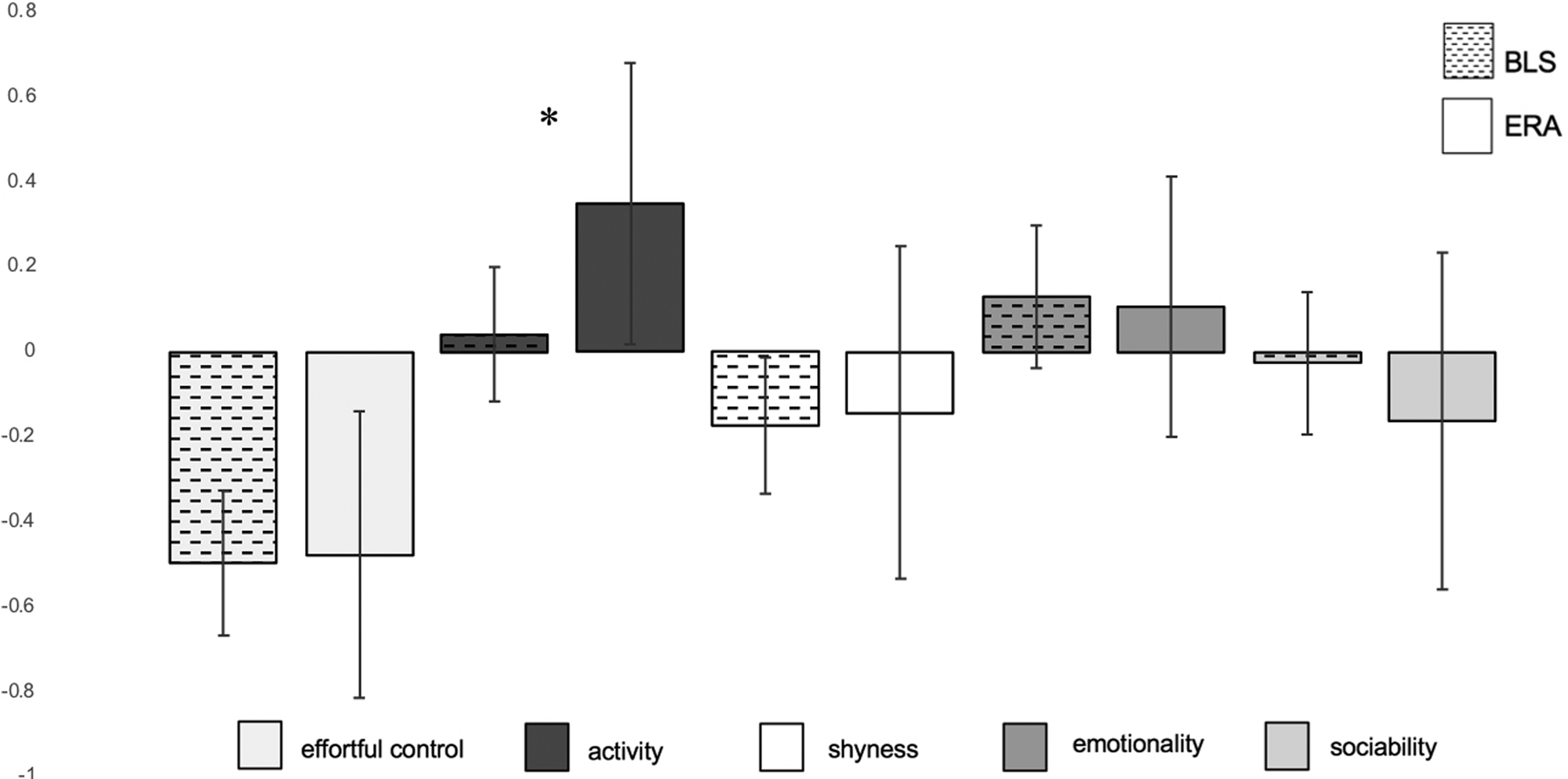
Comparison of temperament scores for VP/VLBW (BLS; n = 299) and postinstitutionalized (ERA; n = 101) children z-standardized according to respective controls (BLS n = 311; ERA n = 52). Error bars denote 95% confidence interval. *Indicates difference between risk groups (VP/VLBW vs. postinstitutionalized) is significant at the <.05 level controlled for socioeconomic status.

Results
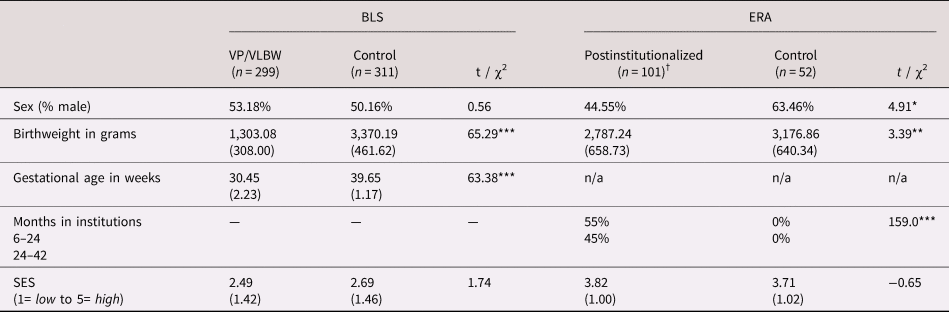
Descriptive characteristics for each risk sample and its respective control group are presented in Table 1. Per study design in the BLS, the VP/VLBW group differed from its respective control group in birth weight and gestational age, but there were no significant differences in child sex or SES. In the ERA, the postinstitutionalized group differed statistically from its respective control group in child sex and birth weight (i.e., fewer males and lower birth weight than controls) as well as history of institutionalization.
Descriptive background characteristics of VP/VLBW and postinstitutionalized children compared with their respective control groups

Note: BLS = Bavarian Longitudinal Study; ERA = English and Romanian Adoptees Study; VP/VLBW = very preterm and/or very low birthweight. The data are presented as Mean (Standard Deviation) for interval-scaled variables and as percentages for categorical variables. †Due to missing information, the size of the ERA postinstitutionalized sample for birthweight was n = 87. In the ERA, gestational age data were not available (n/a). None of the BLS participants experienced institutional deprivation. *p < .05 ** p < .01 ***p <. 001.
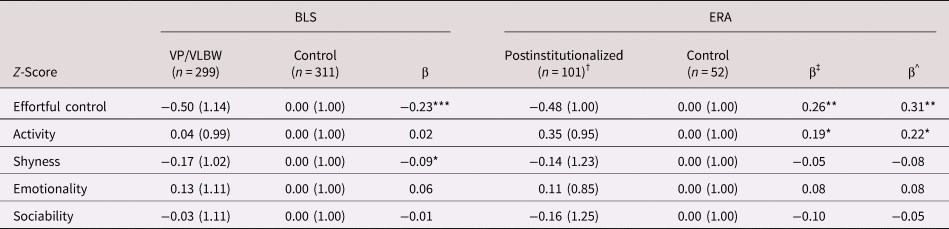
Table 2 displays the means of temperament z-scores and standardized regression coefficients, indicating differences in scores for each study's risk group compared with its respective control group. Sex and birthweight were controlled in the ERA regression analyses because these demographic variables were statistically different between the risk and control groups. Because there were missing data on birthweight for the postinstitutionalized group, the results are presented separately, controlling for sex only (i.e., full data; n = 101) and controlling for both sex and birthweight (n = 87). Table 2 shows that the significance of the results remained the same in both cases.
Z-scores in risk groups (VP/VLBW or postinstitutionalized) compared with their respective study-specific control group

Note: BLS = Bavarian Longitudinal Study; ERA = English and Romanian Adoptees Study; VP/VLBW = very preterm and/or very low birthweight. The data are presented as Mean (Standard Deviation). Z-scores are standardized on study-specific controls (BLS: n = 311; ERA: n = 52). ‡The standardized regression coefficient was controlled for sex. ^The standardized regression coefficient was controlled for both sex and birthweight. †Due to missing information, the sizes of the postinstitutionalized samples are as follows: effortful control n = 100, activity n = 94, emotionality n = 98, sociability n = 100, birthweight n = 87. *p < .05 ** p < .01 ***p < .001.
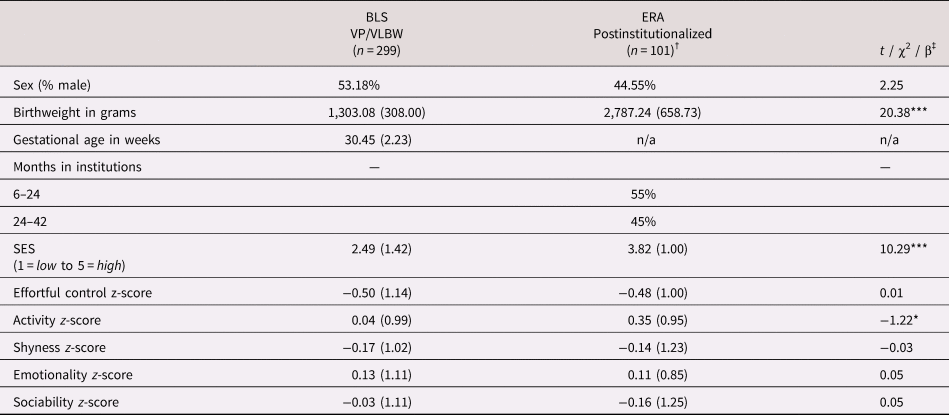
Table 3 presents the comparison of descriptive characteristics between both risk groups (VP/VLBW and postinstitutionalized) across studies. By study design, the risk groups differed in birth weight. Because the groups also differed in SES, the analyses were controlled for SES.
Comparison of background characteristics and z-scores between VP/VLBW and postinstitutionalized groups

Note: BLS= Bavarian Longitudinal Study; ERA= English and Romanian Adoptees Study; VP/VLBW= very preterm and/or very low birthweight. The data are presented as Mean (Standard Deviation) for interval-scaled variables and as percentages for categorical variables. Z-scores are standardized on study-specific controls (BLS: n = 311; ERA: n = 52). ‡The standardized regression coefficient was controlled for SES. †Due to missing information, the sizes of the ERA samples are as follows: effortful control n = 100, activity n = 94, emotionality n = 98, sociability n = 100, birthweight n = 87. None of the BLS participants experienced institutional deprivation. *p < .05 ***p <. 001.
Figure 2 displays the comparison of z-scores (a) for each risk group compared with its respective control group and (b) between both risk groups across studies. As hypothesized, VP/VLBW and postinstitutionalized children showed similarly aberrant temperamental profiles in terms of significantly lower effortful control, VP/VLBW = −0.50, 95% CI [−0.67, −0.33]; postinstitutionalized = −0.48, 95% CI [−0.82, −0.14], than their respective controls. There were no significant effects in either study for emotionality and sociability. In line with hypothesis 2, significantly higher activity than that found in the respective study-specific control group was seen only in the postinstitutionalized group, 0.35, 95% CI [0.02, 0.68]. Activity z-scores were also significantly higher in the postinstitutionalized group than in the VP/VLBW group, controlled for SES, -0.12, 95% CI [−0.53, −.04]. Interestingly, contrary to hypothesis 3, significantly lower shyness than in the study-specific control group was seen only in the VP/VLBW group, −0.17, 95% CI [−0.33 −0.01]; however, shyness z-scores were not statistically different between the VP/VLBW and postinstitutionalized groups.
Discussion
Uncovering mechanisms through which early adversity influences children's later functional outcomes is essential to the identification of risk factors and early interventions. This is the first study to directly compare the effects of severe preterm birth and extended institutional deprivation on children's temperament at 6 years. Consistent with our first hypothesis, our findings revealed that VP/VLBW and postinstitutionalized children showed similarly aberrant temperamental profiles in effortful control. In line with our second hypothesis, only postinstitutionalized children showed higher activity than their study-specific controls; these activity scores were also significantly higher when compared directly with the VP/VLBW group. In contrast and inconsistent with our hypothesis, only the VP/VLBW group showed significantly lower shyness than their respective controls, but these scores were not significantly different when compared with those of the postinstitutionalized group. These findings suggest that impaired effortful control abilities may underlie the similarities in long-term functional problems associated with both preterm birth and extreme institutional deprivation (Eryigit Madzwamuse, Baumann, Jaekel, Bartmann, & Wolke, Reference Eryigit Madzwamuse, Baumann, Jaekel, Bartmann and Wolke2015; Sonuga-Barke et al., Reference Sonuga-Barke, Kennedy, Kumsta, Knights, Golm, Rutter and Kreppner2017).
Consistent with previous work, our findings indicate that early adversity—including both preterm birth and institutional deprivation—is associated with poorer effortful control abilities (Anderson & Doyle, Reference Anderson and Doyle2004; Gunnar & Van Dulmen, Reference Gunnar and Van Dulmen2007; Jaekel, Eryigit-Madzwamuse, & Wolke, Reference Jaekel, Eryigit-Madzwamuse and Wolke2016). These findings suggest that effortful control abilities are more vulnerable to a sensitive period of development in the earliest months of life than are other dimensions of temperament (Henrichs & Van den Bergh, Reference Henrichs, Van den Bergh, Gendolla, Tops and Koole2015). Given that children and adolescents’ self-control has also been shown to be malleable (Diamond & Lee, Reference Diamond and Lee2011; Piquero, Jennings, & Farrington, Reference Piquero, Jennings and Farrington2010) and that even small increases in childhood self-control confer long-term benefits (Moffitt et al., Reference Moffitt, Arseneault, Belsky, Dickson, Hancox, Harrington and Sears2011), understanding its role in developmental cascades leading from early adversity to adulthood outcomes could shed light on optimal windows for intervention for preterm and postinstitutionalized children. For instance, in a large representative sample, Moffitt and colleagues (Reference Moffitt, Arseneault, Belsky, Dickson, Hancox, Harrington and Sears2011) found that decision-making in adolescence partially mediated the link between childhood self-control and adulthood functioning. Similarly, future studies could test whether comparable mechanisms are evident in preterm and postinstitutionalized samples, or whether different pathways characterize trajectories after such extreme early adverse experiences. Because childhood self-control has been shown to predict adulthood outcomes across various sectors of economic burden with strong effect sizes (Caspi et al., Reference Caspi, Houts, Belsky, Harrington, Hogan, Ramrakha and Moffitt2017), it is critical to understand how different types of early adverse experiences influence individual differences in effortful control and to what extent these may predict the increased difficulties that burden preterm and postinstitutionalized adults.
Furthermore, whether the overlap in the timing and nature of adversities in the two samples included in the current study underlie these similarities in poor effortful control abilities should be further explored. For instance, the restricted caregiver contact in the first few months of life that was likely experienced by both groups could present a shared pathway to similar risk for poor effortful control. Moreover, poor effortful control may have been influenced by common factors that potentially predated both adverse experiences, such as genetic predisposition (Saudino, Reference Saudino2005), maternal stress during pregnancy (Davis et al., Reference Davis, Glynn, Schetter, Hobel, Chicz-Demet and Sandman2007; Lewis, Austin, Knapp, Vaiano, & Galbally, Reference Lewis, Austin, Knapp, Vaiano and Galbally2015), and in utero malnutrition (Wachs et al., Reference Wachs, Pollitt, Cueto, Jacoby and Creed-Kanashiro2005). Identifying the role of these potential influences is especially warranted, given that our study had limited prenatal information for the postinstitutionalized group, so our analyses could not control for some prenatal characteristics, such as gestational age, prenatal maternal mental health, and in utero malnutrition or exposure to toxic substances. Despite such challenges in comparing two different types of early adversities, which have also been acknowledged by other researchers (e.g., Humphreys & Zeanah, Reference Humphreys and Zeanah2015), comparisons like the one in the current study are critical to illuminate the mechanisms by which inadequate inputs of different types lead to predictable patterns of functioning (Humphreys & Zeanah, Reference Humphreys and Zeanah2015).
On the other hand, only institutional deprivation seemed to significantly influence activity, whereas there were no significant differences in activity levels between the VP/VLBW group and their respective controls. These findings are consistent with previous studies of preterm children, which have shown that inattention rather than hyperactivity/impulsivity characterizes the preterm phenotype (Jaekel et al., Reference Jaekel, Wolke and Bartmann2013; Johnson & Wolke, Reference Johnson and Wolke2013). Thus, this evidence appears to support the proposition that ADHD's hyperactive/impulsive and inattentive symptoms may emerge from distinct determinants (Sonuga-Barke, Reference Sonuga-Barke2003). Dual-pathway models of ADHD suggest that deficits in executive (i.e., cognitive) control versus motivational control differentially lead to inattentive versus hyperactive/impulsive symptoms respectively (Martel & Nigg, Reference Martel and Nigg2006; Sonuga-Barke, Reference Sonuga-Barke2005). In the current study, two distinct putative risks appear to share a neurodevelopmental pathway associated with executive functioning (i.e., effortful control, which overlaps with attention) but show distinct patterns in what may be conceptualized as motivational control (i.e., high activity levels/impulsivity). Importantly, these findings provide support for capitalizing on the study of brain development in preterm children as a model for understanding the etiology of the ADHD inattentive subtype (and its distinctions from the hyperactive subtype) in the general population (Jaekel et al., Reference Jaekel, Wolke and Bartmann2013). Moreover, prolonged lack of adequate caregiving in early life may uniquely shape the development of reward and motivation-related brain circuitry (Dillon et al., Reference Dillon, Holmes, Birk, Brooks, Lyons-Ruth and Pizzagalli2009; Mehta et al., Reference Mehta, Gore-Langton, Golembo, Colvert, Williams and Sonuga-Barke2010), contributing to the differential effects of institutional deprivation on hyperactivity.
In contrast with previous work, which has found that adults born with extremely low birth weight self-report higher shyness and lower sociability than normal birth weight controls in their early and mid 20s (Eryigit-Madzwamuse et al., Reference Eryigit-Madzwamuse, Strauss, Baumann, Bartmann and Wolke2015b; Schmidt et al., Reference Schmidt, Miskovic, Boyle and Saigal2008), the results of the current study suggest that at 6 years of age, VP/VLBW children have lower levels of shyness and no differences in sociability compared with controls. While the effects in the current study were not strong, 95% CI [−0.33 −0.01], these findings suggest that the withdrawn personality factor seen in adults born VP/VLBW (Eryigit-Madzwamuse et al., Reference Eryigit Madzwamuse, Baumann, Jaekel, Bartmann and Wolke2015) may emerge from additional socialization challenges throughout life—such as increased bullying (Wolke et al., Reference Wolke, Baumann, Strauss, Johnson and Marlow2015) or difficulties making friends (Heuser, Jaekel, & Wolke, Reference Heuser, Jaekel and Wolke2018)—rather than from biologically programmed cautiousness or inhibition in early childhood alone. Environmental influences may be especially relevant for later social problems because VP/VLBW children appear to be more vulnerable to adverse social stimulation (Jaekel, Pluess, Belsky, & Wolke, Reference Jaekel, Pluess, Belsky and Wolke2015; Wolke, Jaekel, Hall, & Baumann, Reference Wolke, Jaekel, Hall and Baumann2013). Thus, studies that explore change and continuity in trajectories of preterm children's social functioning are necessary to disentangle the role of biological and environmental factors that lead to problematic outcomes in preterm adults.
Nevertheless, it should be noted that the current study explored temperamental variation by comparing risk groups to respective controls rather than exploring behavioral problems or clinical symptoms. Although temperamental variation does not inherently indicate impairment, it may indicate the presence of a “latent vulnerability” (McCrory et al., Reference McCrory, Gerin and Viding2017) that interacts with future stressful events resulting in later behavioral difficulties. Thus, future studies should explore whether the temperamental differences seen in children that have experienced specific early adversities persist into adolescence and adulthood and how they relate to later psychopathology (Martel & Nigg, Reference Martel and Nigg2006; Nigg, Reference Nigg2006) as well as considering the role of protective factors and resilience (Van Lieshout et al., Reference Van Lieshout, Boyle, Favotto, Krzeczkowski, Savoy, Saigal and Schmidt2018; Wolke, Reference Wolke2018).
This study has several strengths. The data came from two unique longitudinal studies of children who had specific abnormal experiences in early childhood and were assessed at the same age, and it included data from matched controls. The data were harmonized at the item level making it possible to compare the results from different versions of assessments completed in different countries. Nonetheless, there are some limitations. Although the EAS questionnaire is a widely used and validated instrument (Mathiesen & Tambs, Reference Mathiesen and Tambs1999), temperament data in the current study came from parent reports only. Thus, future replications should include multi-informant and observational measures to minimize the potential for bias in parent reports (Seifer, Sameroff, Dickstein, Schiller, & Hayden, Reference Seifer, Sameroff, Dickstein, Schiller and Hayden2004). Moreover, there were birth weight differences between the risk and the control group in the ERA (i.e., the postinstitutionalized children were not VLBW on average, but they weighed less at birth than the English adoptee controls), which were thought to be deprivation-related (e.g., maternal stress and malnutrition during the Ceausescu regime). Nonetheless, as presented in Table 2, controlling for birthweight did not change the significance of findings.
In conclusion, the results of the current study add to emerging evidence of potentially shared neurodevelopmental pathways between the effects of preterm birth and institutional deprivation on temperament, while pointing to additional differential pathways leading to phenotype-specific neurodevelopmental outcomes. Effortful control abilities may underlie the similar long-term social and behavioral problems associated with both risk experiences. Future studies should explore patterns of childhood temperamental differences as potential common mediators of long-term outcomes following early adversity.
Supplementary Material
The supplementary material for this article can be found at https://doi.org/10.1017/S0954579419001457.
Acknowledgments
We thank all group members, pediatricians, psychologists, and research nurses in the Bavarian Longitudinal Study and English and Romanian Adoptees Study. We are especially thankful to all study participants and their families. Data collection in the Bavarian Longitudinal Study was supported by grants PKE24, JUG14, 01EP9504, and 01ER0801 from the German Federal Ministry of Education and Science (BMBF). Data collection in the English and Romanian Adoptees Study was supported by grants 3700295 from the UK Medical Research Council and OPD/00248/G from the UK Department of Health.