


1. Introduction
The legal maxim ignorantia legis nonexcusat holds that ignorance does not excuse one from blame for violating legal dictates; it also admits, albeit somewhat inadvertently, that many remain unaware of applicable laws. Despite this, law literatureFootnote 1 has rarely explored the empirical relationship between legal knowledge and compliance (Reference FeestFeest 1968; Reference KimKim 1998; Reference Winter and MayRowell 2018; Winter and May 2001). A full understanding of this relationship is important: law is the primary means by which states create order and shift individuals from social norms to legal norms, or from old legal norms to new. If individuals are unaware of a legal norm, they are unlikely to comply with it and the state may fail to achieve desired outcomes. Knowledge of the law is, therefore, essential to compliance in the many situations in which law goes beyond social norm codification.
In this article, I explore how weak states achieve compliance in places where target populations have limited means to learn about the law themselves and the main channels through which the state communicates legal requirements are beset by principal–agent problems. To do so, I collected data in very similar, adjacent districts in India and Nepal; I then examined compliance in contexts in which legal norms and social norms differ—the only situation in which we can analytically determine whether a state has the independent ability to produce compliance. The India–Nepal border provides a context in which the legal rules and those targeted by them are similar, but state regulatory design and implementation strategies differ. Specifically, with respect to the conservation regulations examined in this article, the Indian state's approach was legally doctrinaire, emphasizing deterrence, whereas the Nepali state behaved pragmatically, implementing a system that worked around principal–agent problems between state and bureaucrats to foster accurate legal knowledge.
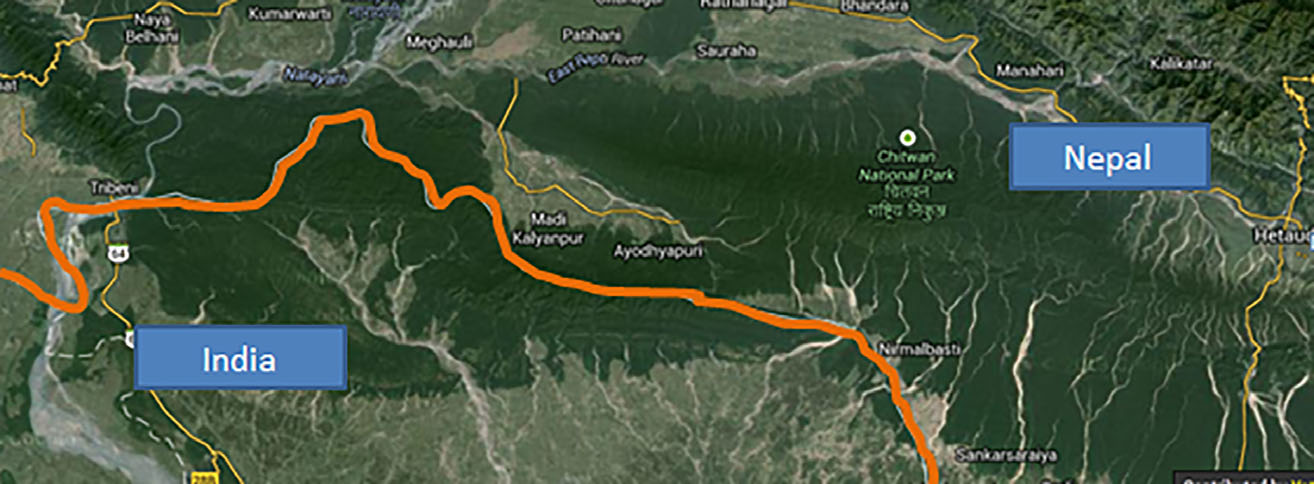
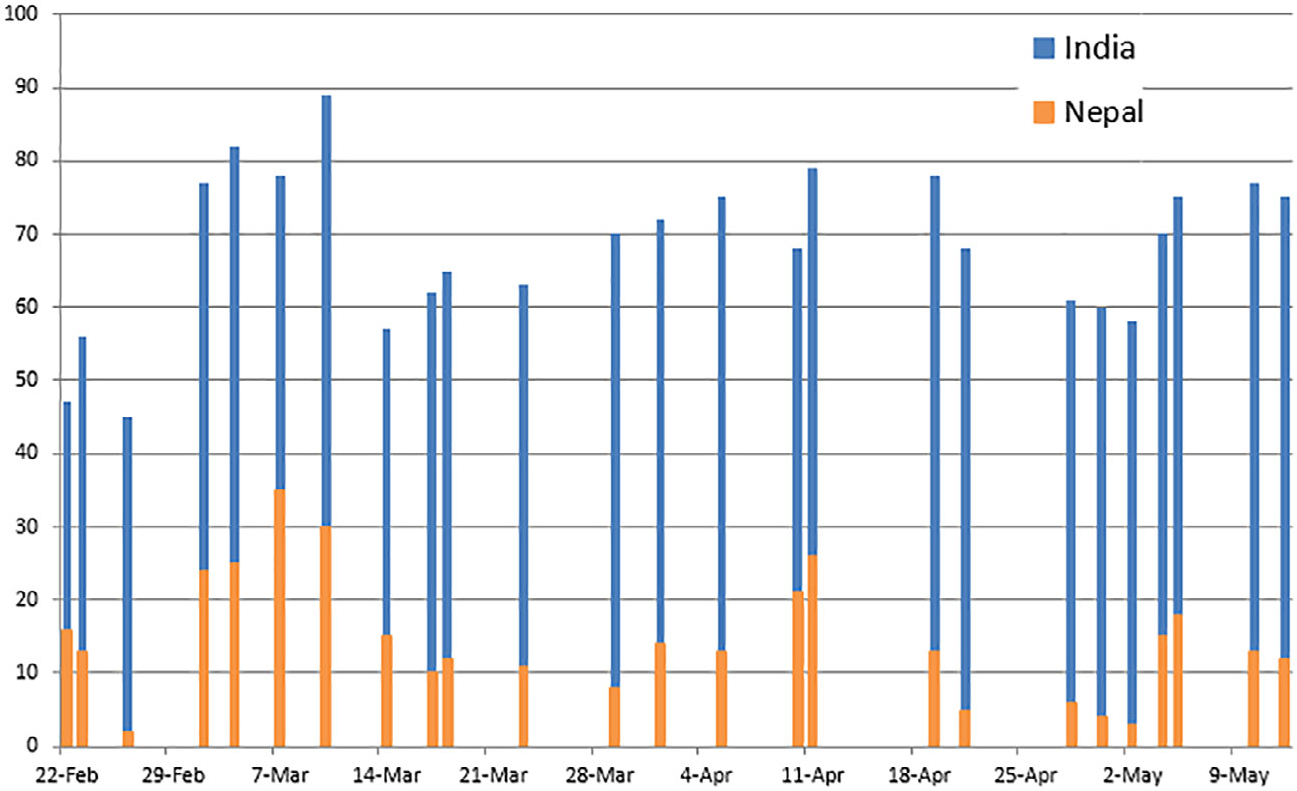
The specific compliance behavior I examine involves forest conservation policies in national parks that span the border between Nepal and India, as depicted in Figure 1 above. In both India and Nepal, the collection of wood on park land is prohibited, yet, as shown in Figure 2 below,Footnote 2 observed compliance rates are significantly higher in Nepal. What can explain this variation if many locals on both sides of the border rely on wood for cooking and heating and both the Nepali and the Indian states lack the capacity, at least in this area, to carry out large-scale enforcement operations?
Map of the Study Region. [Color figure can be viewed at wileyonlinelibrary.com]

Incidence of Observed Noncompliance with Wood Taking Prohibitions by Country (see footnote 1). [Color figure can be viewed at wileyonlinelibrary.com]

My data indicate that states that employ regulatory pragmatism—understood as a flexible approach to the design and implementation of a regulatory system that is specifically adapted to regulatory context—can foster legal knowledge, even in the absence of significant state capacity. Accurate legal knowledge is then strongly associated with compliance. The Nepali state's use of regulatory pragmatism led it to delegate its authority to implement policies related to the sustainable management of government-owned forests to unorthodox, nonstate actors whose interests were more aligned with the state's than those of the state's own bureaucrats. This, in turn, allowed the Nepali state to “punch above its weight” and foster widespread legal knowledge—and compliance—in a context in which the presence and power of the state is low. In contrast, the Indian state used a traditional enforcement approach and achieved only limited legal knowledge and compliance.
The article proceeds as follows: first, I examine legal knowledge acquisition and provide a foundation for the concept of “regulatory pragmatism.” I then go into detail regarding research design, demonstrate how this design can answer a long-standing question in the literature and lay out my hypotheses. Finally, I explain the methods used to test those hypotheses, present my findings regarding the efficacy of delegated enforcement and information transmission through local leaders, and discuss the implications of both.
1.1 Legal Knowledge
Legal knowledge is a prerequisite for compliance. Consider compliance with the U.S. tax code, particularly as applied to forms of income not encompassed by employer withholding. Although knowledge of the code itself is not widespread, tax preparation services and lawyers increase knowledge dissemination (Reference Klepper, Mazur and NaginKlepper et al. 1991; Reference Klepper and NaginKlepper and Nagin 1989). Then, ordinary individuals and businesses alike make decisions that both minimize their tax burden and achieve compliance (Reference PosnerPosner 2000). Some even overcomply in response to legal requirement uncertainty, as higher payments more likely constitute full compliance (Reference Alm, Jackson and McKeeAlm et al. 1992a, Reference Alm, Jackson and McKee1992b). They do so despite the fact that an IRS audit for all but the wealthiest individuals is exceedingly unlikely (the IRS audit rate in 2014 was 0.85 percent of returns). Seemingly, the vast majority attempt to comply with those tax regulations of which they are aware (Reference Andreoni, Erard and FeinsteinAndreoni et al. 1998; Reference PosnerPosner 2000; Reference Feld and FreyFeld and Frey 2007; Reference Hofmann, Hoelzl and KirchlerHofmann et al. 2008).
Undoubtedly, information helps foster compliance. This is perhaps why we often assume legal knowledge when we see compliance (Reference Carnes and CucciaCarnes and Cuccia 1996; Reference Webley, Robben, Elffers and HessingWebley et al. 1991; contra Reference Hofmann, Hoelzl and KirchlerHofmann et al. 2008; Reference FeestFeest 1968). As Feest explains, when someone stops at a stop sign, we often assume she is doing so because she knows the law, even if she stopped for other reasons, such as the presence of cross traffic. Similarly, when we see noncompliance, we often assume it is willful (Reference FeestFeest 1968; contra Reference SorgSorg 2005; Reference Brehm and HamiltonBrehm and Hamilton 1996). If someone renovates a home without securing government approval, we assume she did so intentionally, perhaps to save time or money, even if she was unaware of the requirement. These inferential problems highlight a fact first articulated by Reference Winter and MayWinter and May (2001): many do not know what the law requires and, as a result, some fail to comply with it.
How, then, do those who have accurate legal knowledge learn about the law? Legal knowledge is thought to be transmitted in three ways: (1) by the state itself, through printed materials, including statutes and case law, or public awareness campaigns (Reference FeestFeest 1968); (2) by experts, including lawyers (Reference HillmanHillman 1998; Reference Klepper, Mazur and NaginKlepper et al. 1991; Reference Klepper and NaginKlepper and Nagin 1989; Reference MuirMuir 1973); and (3) by the state's observable punishment of particular behaviors (Reference Thornton, Gunningham and KaganThornton et al. 2005).
But in order to fully understand legal knowledge acquisition, we need to consider the circumstances under which legal knowledge transmission breaks down. Here, an analogy is helpful: the assumption that the law is “widely known and understood” is similar to the perfect information assumptions in Economics. The literature suggests that asymmetries of information exist and undercut the efficient markets hypothesis, as well as some of the other bedrock principles of modern economic theory (Reference AkerlofAkerlof 1970; Reference Arnott and StiglitzArnott and Stiglitz 1988; Reference Greenwald and StiglitzGreenwald and Stiglitz 1987; Reference Radner, Stiglitz, Boyer and KihlstromRadner and Stiglitz 1984; Reference Stiglitz, Parkin and NobayStiglitz 1975). As Joseph Stiglitz, a pioneer of information economics, explains, information asymmetries can be exacerbated by agency problems (Reference StiglitzStiglitz 2000; Reference StiglitzStiglitz 2002). In Political Science, there is a well-recognized principal–agent problem between the state and its agents, those who do its bidding and through whom it accomplishes its prerogatives (Reference McCubbins, Noll and WeingastMcCubbins et al. 1987). Most agree that the state's agents are distinct from the state and have their own motivations (Reference CookCook 1988; Reference GailmardGailmard 2010; Reference PrendergastPrendergast 2007; Reference WeingastWeingast 1984). As a result, the state's agents can create and/or perpetuate information asymmetries about the law and the penalties associated with noncompliance. This is true in many legal contexts, but it is particularly true when the state is weak and cannot properly train and monitor its agents, or when corruption is rampant.
Agency problems are compounded when target populations have little independent ability to learn about the law, a condition that is common when the state is weak. Just as with the assumption of perfect information in Economics, research on compliance and rule of law often assumes perfect information, largely because this assumption simplifies analysis.Footnote 3 Stiglitz writes that, in Economics, it was hoped that “the same optimality properties… that held for economies with perfect information would hold for economies with imperfect information” (Reference StiglitzStiglitz 2000). There was, however, empirical evidence that this was not the case. The same is true with compliance (Reference Beck, Ogloff and CorbishleyBeck et al. 1994; Reference KimKim 1998; Reference Snortum, Berger and HaugeSnortum et al. 1988). The basic demographics of developing countries, with high poverty rates and substandard education, suggest that, for many, the costs of acquiring legal knowledge remain high. In addition, anyone who has tried to discern legal requirements, even when equipped with a law degree or other forms of specialist legal knowledge, knows that it is a costly endeavor. When legal experts are poorly trained, scarce and/or relatively expensive, the cost of legal knowledge acquisition becomes untenable for many.
Yet, there are circumstances in which legal knowledge is likely to be transmitted by state agents to target population. Information asymmetries and principal–agent problems are far less likely to develop when principal and agent—state and bureaucrat—share similar interests. In such cases, the state's agents have reason to transmit accurate legal information and to behave consistently when enforcing, thus accurately communicating information about the law in the same way behavior transmits information in Economics (Reference StiglitzStiglitz 2002). For instance, with respect to the U.S. tax code, it is assumed that everyone knows roughly what the law is, whether they acquire their knowledge via published materials, experts, or observation; it is also assumed that the interests of the state and IRS agents are similar. As a result, information asymmetries are limited. The high levels of compliance we see bear this out.
But what happens when the cost of acquiring legal knowledge is high and the interests of the state and its agents vary enormously? In such a situation, target populations become reliant on observation of state behavior for information about the law, although principal–agent problems make this problematical (Reference CookCook 1988; Reference RossRoss 1973; Reference StiglitzStiglitz 2002; Reference MoynihanMoynihan 1998; Reference WeingastWeingast 1984; Reference PrendergastPrendergast 2007; Reference GailmardGailmard 2010). When principal–agent problems exist, whether resulting from poor training or corruption, legal knowledge transmission can be low. Some agents' actions send one message, whereas others, behaving differently, send a different one (Reference StiglitzStiglitz 2002). Enforcement of a law that does not exist can lead target populations to believe that it does, whereas frequent nonenforcement of laws that do exist can cause the opposite understanding. As a result, legal information asymmetries grow and target populations often end up with inaccurate legal knowledge. If individuals do not know the state's demands and the penalties associated with noncompliance, they cannot decide whether or not to comply.
These parameters are common in many places, especially where state capacity is weak. Populations often have limited education and cannot read the law themselves; lawyers are poorly trained and typically too expensive to provide advice to average people; corrupt officials enforce the law capriciously, resulting in a lack of consistent behavior to watch and learn from. It should not be surprising, then, that we see little compliance with law in weak states, particularly when laws run counter to social norms.
And yet, there are cases in which laws, even ones that differ from customary norms, are indeed followed, despite weak state capacity. There is some compliance with wood collection prohibitions in Nepal's Chitwan National Park (Chitwan) and India's Valmiki National Park and Tiger Reserve (Valmiki). Individuals living in this area need fuelwood to cook and heat their homes, have been sourcing it for centuries from what is now park-land and have few other fuel sources. Wood taking prohibitions are, thus, an attempt by the Nepali and Indian states to shift individuals from social norms to legal norms. Unlike areas where the state is strong, however, neither the Nepali nor Indian state has the resources to engage in large-scale enforcement or has either conducted massive public awareness campaigns regarding these regulations. The populations living in this area have little means to learn about wood collection prohibitions on their own, as education levels are low and competent lawyers are expensive and rare. Despite this, in Nepal, my data indicate surprisingly high rates of both accurate legal knowledge, 65 percent, and compliance, 66 percent; in India, the corresponding figures are 10 and 29 percent.Footnote 4
Given that wood taking prohibitions require behavior that differs from that dictated by social norms and given the massive information asymmetries that exist between the Indian and Nepali states and relevant target populations, how do some people learn about and comply with the law?
1.2 Regulatory Pragmatism
Many may learn about the law because of the Nepali state's use of regulatory pragmatism, a flexible—rather than legally doctrinaire or dogmatic—approach to the design and implementation of a regulatory system that is specifically adapted to regulatory context. Such an approach prizes effectiveness and durability over other goals and accounts for on-the-ground realities of state capacity, the irregular behavior of state agents and the needs of target populations. Importantly, deterrence-based regulatory programs that overcome no known compliance barrier and happen to be effective do not represent pragmatic regulatory strategies; such tactics embody a default approach to regulation.
In the United States, regulatory pragmatism is behind income tax withholding requirements and the use of grandfather clauses for new regulations (Reference HuberHuber 2011). Regulatory pragmatism is absent from those approaches that largely rely on threat of legal sanction and fail to design for context. Examples of this latter category might include rules that were made for conditions that no longer exist, such as the persistence of 55 mph speed limits on rural interstate highways in the United States long after the oil crisis ended and despite dramatic improvements in highway and vehicle safety (Reference KeelerKeeler 1994). It might also include regulations that require individuals to desist from activities necessary to their basic survival (Reference OstermannOstermann 2016).
Although law has long been a province of absolutes and ideals, regulatory pragmatism suggests a middle path. According to Reference JamesJames (1907), pragmatism is a method of settling metaphysical disputes that otherwise might be interminable. Descended etymologically from the Greek word, pragma, for action, it has made inroads in legal theory and practice. Although the classical view of the law emphasizes argument by analogy and the need for judges to follow an abstract and consistent jurisprudence, legal pragmatism emphasizes the need to include a more diverse set of data and claims. For the legal pragmatist, all legal issues are grounded in a specific context. As Reference PosnerPosner (1995) explains, avoiding context “disconnects the whirring machinery of philosophical abstraction from the practical business of governing our lives and our societies.” Thus, legal pragmatists like Grey, Farber, Posner, and Radin emphasize: (1) the importance of context; (2) the instrumental nature of law; (3) the unavoidable presence of alternate perspectives; and (4) the problematical nature of utilizing any particular foundation for legal reasoning.
Regulatory pragmatism is an extension of this line of reasoning beyond the judge's chambers. A strong state is not required for an effective regulatory system. It must, however: (1) be grounded in a specific regulatory context and respond to on-the-ground challenges; (2) recognize that law is instrumental and that its purpose is to produce particular outcomes; (3) account for alternative perspectives, including those of individuals who believe the law should be different; and (4) be designed for effectiveness rather than consistency with a particular theory or set of foundations.
By way of example, consider cap-and-trade schemes—as opposed to strict pollution controls—as a means of reducing pollution. Cap-and-trade, so long as it is used where target populations are reasonably sophisticated, is consistent with regulatory pragmatism. It responds to on-the ground challenges, particularly those from the business community, by allowing those who can most cheaply reduce pollution to do so, whereas other actors can “pay to pollute.” Cap-and-trade recognizes that the law is instrumental and that the end goal is emission reduction, regardless of reduction source. It also accounts for alternative perspectives by allowing those who do not think there should be emission reductions to pay and continue their behavior. Finally, cap-and-trade is designed for effectiveness, in that it provides individuals or entities that might not comply with a relatively affordable way to keep their behavior within regulatory bounds while also reducing state monitoring expenditures (Reference Schmalensee and StavinsSchmalensee and Stavins 2017). Under a strict actor-level pollution control regime, there are often regular challenges to the law, both formal (attempts to change it) and informal (willful noncompliance), monitoring costs are higher and overall reductions in pollution are often not as significant (Reference Hahn and HesterHahn and Hester 1989).
There are many possible forms that a pragmatic regulatory strategy might take. In this article, I consider how a pragmatic state might respond to principal–agent problems between itself and its bureaucrats. One response, which is already being used by numerous states, is to empower diverse, nontraditional actors as bureaucrat alternatives. A state that proceeds in this manner should not replace one principal–agent problem with another and must choose agents whose interests align with or can be made to align with its own, but doing so is feasible. For instance, in the United States, the “private rights of action”—discussed at length in “The Litigation State” (Reference FarhangFarhang 2006)—are a paradigmatic example. In conservation, the environment cannot advocate for itself or hire a lawyer and a bureaucracy might not fill that role as effectively (or cheaply) as other actors. A “private right of action” in this context gives lawyers an incentive to act as environmental advocates; if they win, they are paid for time spent. Lawyers rather than bureaucrats become the state's agents and the interests of both are aligned. Regulatory pragmatism is also behind the U.S.'s amber alert system, which crowd-sources information about child abductions. The time and effort required for law enforcement to track down a missing child is enormous and costly. The population at large, however, is well-positioned to help and has reason to assist. Few are opposed, ideologically or otherwise, to resolving missing child cases and providing information is easy. Principal–agent problems are, thus, unlikely.
The above-described scenarios are, in many ways, relatively easy cases, however. It is useful, therefore, to briefly consider regulatory pragmatism at its margins. How do we know regulatory pragmatism when we see it? Is the avoidance of traditional enforcement in challenging contexts always pragmatic? Not necessarily. In an ideal world, we would be able to observe a state's regulatory approach and discern whether it behaved pragmatically in advance of implementation: ex ante regulatory pragmatism. In theory, regulatory pragmatism exists whenever a state considers context, recognizes that law is instrumental, accounts for alternative perspectives, and designs for effectiveness. However, with the possible exception of courts, which regularly publish the reasoning behind their decisions, we rarely have access to the internal deliberations of the government and the thought processes used by decision makers.
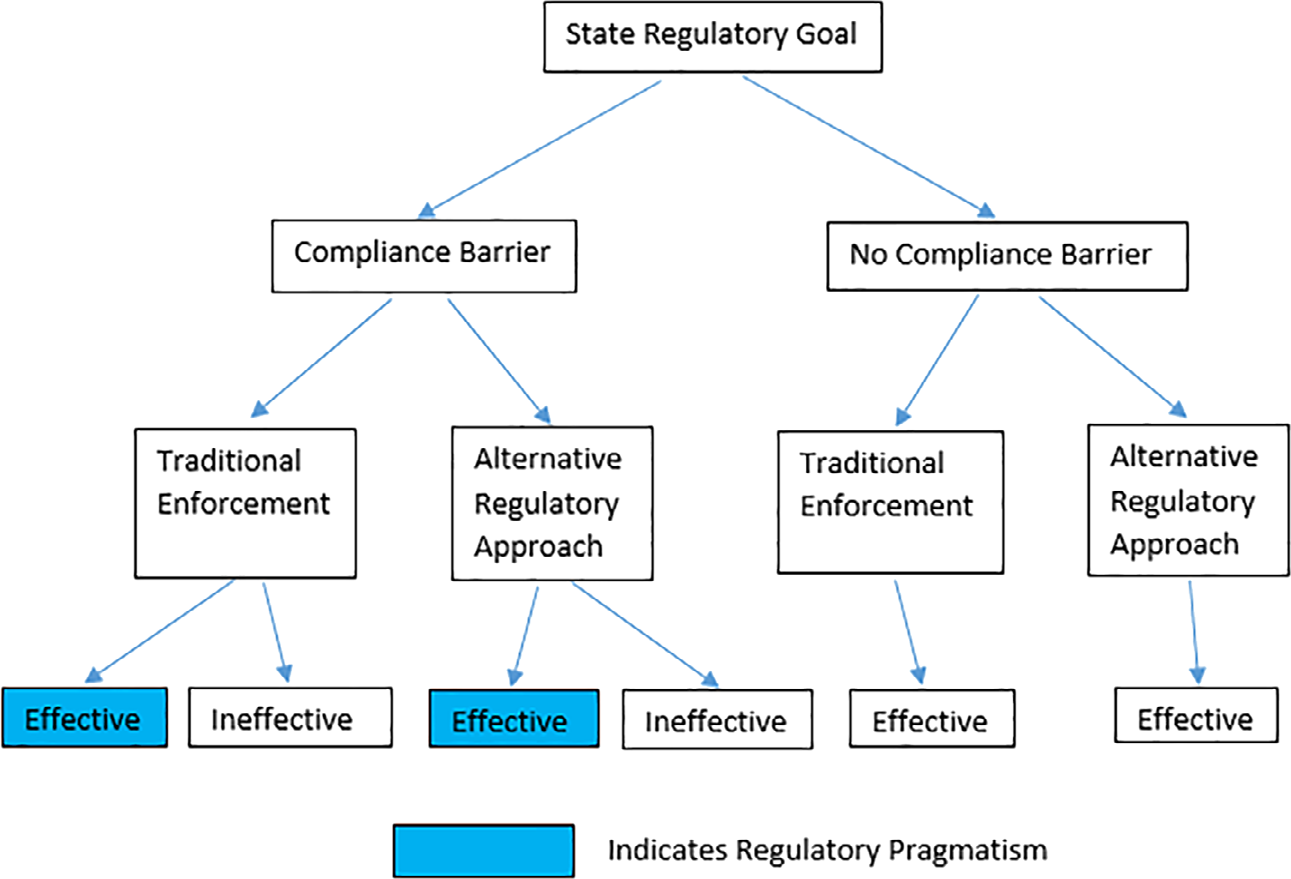
Thus, when we are trying to determine whether regulatory pragmatism has been used in the much more likely ex post scenario, additional consideration is required, as seen in Figure 3 above. Compromising on traditional enforcement is only “pragmatic” when a compliance barrier exists, when nondeterrence methods are used, and when the state's original regulatory purpose is achieved. Relatedly, traditional enforcement in a challenging context that nevertheless works, likely also involves regulatory pragmatism, but of a different variety. The pragmatic choice in this latter category is often to forgo traditional enforcement of other regulations. This is something we do see in the developing world from time to time. For instance, in Kathmandu, of late, a surprising number of motorcyclists are complying with helmet laws. Nepalis, for the most part, are not particularly inclined to wear helmets, even though many are aware that doing so might save their lives. This was reflected, in the past, by flagrant helmet law violations, even in the capital city. What changed? The bureaucracy made enforcing helmet laws a priority, likely at the expense of enforcement of other laws. Police are now visible at numerous major and minor intersections and can be seen handing out tickets for violations. The police force in Kathmandu has not expanded significantly, so the recent high rates of helmet law compliance have been achieved with traditional methods, but almost certainly at a cost, to the state, and possibly to the public, of traditional enforcement of other laws. Finally, the use of traditional or alternative methods when no known compliance barrier exists is not regulatory pragmatism because, by definition, the state did not have to design for context, around a known compliance barrier. Instead, it was able to choose a method of convenience, knowing that it would be effective regardless of its choice.
Identification Chart for Ex Post Regulatory Pragmatism. [Color figure can be viewed at wileyonlinelibrary.com]

What is a pragmatic regulatory strategy in the case at hand? In the forested border-lands between India and Nepal, where populations are generally uneducated and lack access to legal services, where bureaucrats are often corrupt and/or poorly trained, and where populations largely prefer to avoid the arbitrary and sometimes heavy hand of the state, regulatory pragmatism involves designing for legal knowledge transmission in nearly every context in which legal norms differ from social norms. This means resolving principal–agent problems by working around any obstacle to accurate legal knowledge—things like bureaucrats who behave inconsistently for their own material benefit. Given education levels and access to legal advice, it also means designing for observational learning. More specifically, regulatory pragmatism calls for: (1) recruiting unorthodox, nonstate agents who have reason to behave in accordance with state principles; and (2) delegating some enforcement authority to them, a strategy first recognized by Reference OstromOstrom (1990) in Governing the Commons.
2. Case Selection
This article uses the open and largely unmarked India–Nepal border to consider the consequences of different design and implementation strategies for the same basic regulation. Conducting research in adjacent and very similar districts, all of which are located next to two contiguous national parks that employ the same wood collection prohibition, facilitates an examination of regulatory pragmatism and whether strategies consistent with this approach foster legal knowledge and compliance more effectively than legally doctrinaire approaches.
The India–Nepal border was first formally delineated, like many other colonial borders: on a quasi-random basis by the British when they ceded back territory taken from Nepal during the Anglo-Nepal War (1814–1816).Footnote 5 The subsequent India–Nepal Peace and Friendship Treaty allows residents of this region to cross the border legally, without presenting documentation, and they do so to work, shop, and even marry. As a result of the unusual relationship that India and Nepal enjoy along their border and the absence of geographical features that “naturally” divide people, the populations living in this region do not differ significantly, particularly in the area surrounding Chitwan and Valmiki. The same ethnic group (Tharu) is dominant, residents generally speak the same set of languages (Bhojpuri, Nepali, and Hindi). Subsistence agriculture is the dominant form of work and rice is the dominant crop. Literacy rates are low, ranging from 55 to 77 percent in the five park-adjacent districts. Poverty is rampant, with 73 percent of respondents in India and 73 percent in Nepal reporting earnings of less than one dollar per day. Many of those living in Nepal are originally from India. Some Nepalese also live in India. The balance table below is further evidence of the cross-border similarity of these populations. Given these data, it is not surprising that many people in this region cannot say, when prompted, whether they are Indian or Nepali (Table 1).
Sample Balance Test for Location

Note: Although the sample is imbalanced on land ownership, this imbalance is well-documented and related to imperfect land-redistribution in India; it is not an artifact of the sample.
Although the border has been in place for some time and divergent legal and colonial histories exist on either side of it, with formerly colonized India incorporating the British common law and never-colonized Nepal taking a more “indigenous” approach, little knowledge of these traditions or the differences between them exists on the ground.Footnote 6 “The government” is a distant entity that most know little about and one is hard-pressed to find anyone, on either side of the border, who has interacted with a court. Those on both sides of the border also have a shared political and cultural history as Madeshis (those from an imagined “middle country” between India and Nepal that includes the Nepali Terai and much of northern Uttar Pradesh and Bihar).
Importantly, the India–Nepal border region is one in which the a priori likelihood that members of a target population will have knowledge of the law and feel a strong duty to obey it is low. This is, in part, because state capacity—at least at the local level—does not vary cross border. Until recently, this region was plagued, both in India and Nepal, by Maoist insurgency. During these conflicts, the state almost ceased to exist at the local level. Over the last 10 years, both states have reentered the region, but signs of the state remain limited. For instance, the police station near Singhai, India, bombed by Maoists a decade earlier, was only rebuilt in 2015, just after the fieldwork and data collection for this project were complete.
The most notable state projects in this region are Chitwan and Valmiki National Parks. Contiguous and divided only by the border, they are managed for the same purposes: to protect endangered big-game species and the environment in which they reside. As previously mentioned, both parks employ the same total prohibition on wood collection, which runs counter to both customary norms and the self-interest of many in the region.Footnote 7 Residents have been collecting wood from what is now park area for centuries; refraining from doing so means that they struggle to cook and heat their homes.
Distributing legal knowledge is challenging in this region. Implementation budgets are limited and rarely allow for large-scale awareness-raising campaigns. Individuals generally lack the means to read the law themselves or to acquire knowledge from experts. Meanwhile, neither state regularly punishes wood collection, behavior that would communicate this legal norm to target populations. Agents of the Indian and Nepali states are charged with enforcement across thousands of square kilometers of jungle with minimal infrastructure. Whether because of the difficult terrain, lack of will, poor training or corruption, these agents, in both India and Nepal, enforce wood-taking prohibitions inconsistently.
In contrast to those living in India, which uses a more traditional, deterrence-based approach in the area surrounding Valmiki, some individuals living near Chitwan have been exposed to a strategy consistent with regulatory pragmatism. The Nepali state, pursuant to a 1977 Forest Act amendment, effectively delegates management of Community ForestsFootnote 8 just outside Chitwan, as well as elsewhere in Nepal, to “User Groups,” groups of citizens who come forward with a viable plan to sustainably manage nearby forest resources. After a successful petition, “User Group” members—and just about anyone living near a Community Forest—can use forest resources, so long as they maintain forest cover, protect important wildlife and obey a number of other rules. On a day-to-day basis, this means that locals can enter the forest to collect wood and other forest products, including food and traditional medicinal ingredients. Community Forest access is sometimes secured by paying a modest fee, depending upon the forest. Importantly, although, if Community Forest rulesFootnote 9 are broken, the government can take the forest back and “User Group” members lose all associated benefits.Footnote 10
As Reference OstromOstrom (1990) recognized in her pioneering and eventually Nobel prize winning work on the commons, traditional state regulatory approaches in Nepal have largely been inadequate for the tasks allotted to them, whereas flexible, socially based institutions can sometimes fill regulatory gaps. Nepal's Community Forestry Program effectively allows citizens to create consistency where the state struggles to do so: on government-owned forest land just outside of Chitwan. This consistency communicates Community Forest rules and norms more effectively than the state might do on its own. Then the contrast between the state's inconsistent enforcement of wood collection prohibitions in Chitwan, where wood collection is illegal, and the consistent, penalty-free access to Community Forest wood, should, at least ex ante, help some target population members learn about the law. Community Forest accessFootnote 11 is somewhat limited, however; only 56 percent of those in my Nepal sample reported access.
This number is regrettable from a normative perspective, but methodologically fortuitous, as it is quite difficult to self-select into Community Forest access. With motorized transport extremely limited and only a handful of individuals involved in Community Forest formation, most with access are simply lucky to live within walking distance of one. The result is variation in exposure to regulatory pragmatism, both across the border and within Nepal. I exploit this variation to discern whether a policy consistent with regulatory pragmatism can improve legal knowledge and compliance rates.
3. Hypotheses
Along the India–Nepal border prevailing conditions suggest that misunderstandings of legal requirements should be pervasive. Individuals struggle to learn about the law and principal–agent problems prevent consistent state action. Under such conditions, is noncompliance with those legal norms that differ from social norms a foregone conclusion? I hypothesize that states employing regulatory pragmatism can circumvent these problems by delegating enforcement to nonstate agents whose interests can be aligned with those of the state. So long as these new agents behave consistently, legal knowledge should improve.
There are theoretical reasons why this might be the case. Constructivist learning theory, first introduced by Reference PiagetPiaget (1967), suggests that observation of contrast creates cognitive conflict. Individuals then resolve observed discrepancies into a new understanding of the world. Thus, in the case at hand, those with Community Forest access can observe, first hand, the consistent, penalty-free wood collection available in Community Forests and the state's inconsistent enforcement of wood-taking prohibitions in Chitwan. This contrast helps foster accurate legal understandings. In contrast, those without Community Forest access must resolve discrepancies between observed/reported enforcement behaviors over time, data which could just as easily lead to inaccurate understandings as accurate ones. Contemporaneous contrast is easier to resolve into an accurate legal understanding than longitudinal variation.
Thus, if there are groups at the local level that can consistently carry out certain prescribed tasks, possibly under government oversight, and have reason to want to take over these tasks, a state that employs regulatory pragmatism can get help in carrying out its prerogatives by outsourcing specific functions to nonstate actors. In this way, a state that has minimal capacity can “punch above its weight” and reap the associated benefits with minimal cost. So long as delegates benefit when they realize compliant behavior, we should see more accurate legal knowledge and higher compliance rates.
Given this, I hypothesize that low state capacity need not result in noncompliance, even when legal and social norms differ. In order for legal institutions to work under these circumstances, states must overcome the obstacle presented by principal–agent problems and attendant misunderstandings of the law. When a state cannot get its agents to behave consistently, it may nevertheless be able to disseminate legal knowledge if it designs systems that circumvent the bureaucracy. Regulatory pragmatism can guide state regulatory design and implementation decisions to maximize compliance.
More specifically, states that cannot behave consistently, but use regulatory pragmatism to guide design and implementation choices, can, in theory, disseminate legal knowledge although delegates, parties that have an incentive to get involved and abide by the state's rules. These delegates can take over state functions and create consistency in places where the state itself struggles to do so. States that delegate regulatory responsibility may be able to foster both accurate legal knowledge and compliance. In the case at hand, the Nepali state delegated management of forest areas just outside of Chitwan to “User Groups” from the community. I expect more accurate legal knowledge and higher rates of compliance on the Nepal side of the border, particularly among those who have been able to observe the contrast between the norms in place in Community Forests and in Chitwan through Community Forest access.
4. Research Methods
In addition to the observational data included in Figure 2 and described in Footnote 2 above, I utilize survey data and qualitative interviews with relevant actors to explain variation in compliance. All of these data, and all data used in this article, were collected by the author.
In order to gather the survey data, I trained and managed two teams of approximately 10 enumerators, one on each side of the border. All enumerators spoke the dominant language in the area, Bhojpuri/Tharu, in addition to Nepali or Hindi (depending upon context). As surveys were conducted simultaneously on both sides of the border, I also hired a local manager to handle day-to-day problems in India, while I ran the survey team in Nepal.
The resulting data set includes over 1300 respondents who come from 50 randomly sampled villages, evenly split between countries, located within walking distance of the parks (10 km). Respondents were chosen via a semirandom convenience sampleFootnote 12 of at least 25 people in each village.Footnote 13 Survey teams located respondents by starting from a common point (a crossroads, a well, etc.) and fanning out in multiple directions, stopping at every seventh house to conduct an interview; at any intersection, they made a right turn. Enumerators interviewed men and women in roughly equal proportions and consciously sought individuals of varying ages. Respondents were asked, in person, a series of questions that started with demographic information and proceeded to measures of variables of interest.Footnote 14
In order to ensure accurate data collection, all surveys and qualitative interviews were conducted in Hindi, the dominant language in Northern India, Nepali, the dominant language in Nepal, or Bhojpuri, the dominant language of the region (on both sides of the border). Local enumerators conducted all surveys. This approach was taken to facilitate trust and ensure accurate answers to questions about participation in activities that, although widespread, are against the law. In my observation, however, these ex ante worries may have been unfounded, as individuals were quite forthcoming when describing their activities in the national parks. This is may be because individuals were first asked about their firewood needs and collection sites, without any priming on the legality of their actions. Collecting firewood is something almost everyone does and people did not hesitate to describe their habits. Forthcoming responses were also made possible by way of anonymousFootnote 15 data collection and assurances that the research was not associated with any government.
In addition to the above-described large-N survey, I personally conducted 35 follow-up interviews using snowball sampling in three different locations to better understand the survey data. For the same purposes, I also convened a focus group of 43 women in Jagatpur VDC, Nepal—a village located just two kilometers away from Chitwan's park headquarters and immediately adjacent to a Community Forest. These latter data collection endeavors followed a semistructured interview format.
4.1 Variables & Measurement
The major dependent variable I investigate is compliance, which occurs when an individual acts or refrains from acting in such a way that his or her behavior is consistent with that required by law. Compliance of this variety, objective compliance, is distinct from subjective compliance, in which an individual believes that he/she is complying with the law but, because of his/her inaccurate legal understanding, is acting in a manner that is not actually in compliance with the law.Footnote 16 In the case at hand, objective compliance involves refraining from taking wood out of both Chitwan and Valmiki. For analysis, I use a sum of compliance-consistent responses at a given level of aggregation.
4.1.1 Independent Variable: Delegated Enforcement
If principal–agent problems prevent accurate transmission of legal knowledge from state to target population, a state employing a pragmatic regulatory approach must either solve these problems or find a way around them. If this state has limited capacity, it is not likely to be able to do the former, so it must attempt the latter. One way to circumvent principal–agent problems in the delivery of accurate legal knowledge is to delegate some regulatory responsibility to nonstate actors whose interests are aligned, or can be aligned, with those of the state.
The Nepali state took such an approach when it gave control over large swaths of government-owned forest land just outside of Chitwan to over 50 different Community Forest “User Groups.” Each of these groups—the executive committee of which comes forward from the community with a plan for the sustainable management of a tract of land—is responsible for ensuring compliance with applicable regulations in its Community Forest; if a group fails, the state may rescind the land-grant and all benefits associated with same. Thus, if we believe that delegation, as a strategy consistent with regulatory pragmatism, can solve the state's principal–agent problems and foster accurate legal knowledge, we should expect to see more accurate understandings when the state delegates.Footnote 17
This expectation should be true at all levels of analysis. Thus, I use both “presence in Nepal” and a respondent's statement that he/she has “Community Forest access” as alternative proxies for exposure to regulatory pragmatism. Doing so allows me to see whether a theoretically more accurate proxy, “Community Forest access,” can be used to explain variation among those present on the Nepal side of the border. Importantly, “Community Forest access” is broad and does not imply that an individual was involved in Community Forest creation. Individuals from many nearby villages have access to a Community Forest once it is constituted and very few would have been involved in its formation. Thus, we can say that assignment to the Community Forest access treatment is quasi-random. Analyzing the data in this way, with two proxies for exposure to regulatory pragmatism—one cross border and one within country—should alleviate any nagging methodological concerns.
4.1.2 Mechanism: Accurate Legal Understandings
If exposure to regulatory pragmatism via Community Forest access fosters accurate legal understandings and we believe that accuracy matters for compliance, these understandings become one mechanism by which pragmatic states can realize higher rates of compliance. Thus, compliance should increase with accurate legal understandings, regardless of whether these understandings result from consistent state action, delegated enforcement, or some other source. Along these lines, I expect that variation in the proportion of the population holding accurate legal knowledge explains a significant amount of the cross-border variation in compliance with wood-taking restrictions around Valmiki and Chitwan, as well as variation in compliance among different locations on the same side of the border. This is particularly true because the conduct required by law stands in contrast to cultural norms and customary practices and is costly to target populations. Although access to penalty-free wood in Community Forests may explain some cross-border variation in compliance, I also conduct within-Nepal analysis to see whether my variables of interest still retain their explanatory power.
I measure the accuracy of legal understandings by asking target population members a series of true–false questions regarding the conduct required or prohibited by law and then by aggregatingFootnote 18 responses geographically. For instance, I ask individuals whether it is true that “[p]eople must not collect fallen wood.” I also ask whether it is true or false that individuals “must stay on roadways at all times.” Responses allow me to get a fairly clear picture of what respondents believe is required or prohibited by law at various geographical levels of aggregation. Responses to the first question detailed above (“People must not collect fallen wood.”) are used for purposes of measurement in this article.
4.1.3 Possible Confounding Variables
In addition to measuring exposure to regulatory pragmatism (via “presence in Nepal” and “Community Forest access”), accuracy of legal knowledge, and compliance, my survey included measures for possible confounding variables including age, gender, income, education, firewood need, fear, duty, dependence on ecotourism, business ownership, land ownership, government employment, receipt of “goodwill program” benefits, and attitudes toward the park. The wording of these measures, in translation, is included in the Supporting Information.
5. Findings
Without accurate information, target populations often fail to shift from cultural norms to legal norms, even if motivated to comply with government-propounded rules and regulations. This does not mean that legal knowledge will always track education and communication of legal norms. If the state behaves consistently or delegates enforcement, it may still be able to benefit from high levels of legal knowledge. I find that individuals who are exposed to regulatory pragmatism, through delegated enforcement, hold more accurate legal understandings than those of their similarly situated counterparts who have not been exposed. Moreover, among individuals who possess accurate legal knowledge, regardless of origin, compliance is significantly higher than among those with inaccurate knowledge. A robustness check—a field experiment designed to test whether local leaders can affect legal knowledge directly—confirms my findings.
5.1 Problematical State-Led Dissemination of Legal Knowledge
Neither the Indian nor Nepali state has meaningfully attempted to inform ordinary individuals living near Chitwan or Valmiki about wood-taking prohibitions.
Chitwan's Annual Reports, which do contain information about awareness-raising campaigns conducted to prevent Rhino poaching, reveal no evidence of similar efforts for wood-taking regulations. Evidence from qualitative interview respondents supports this understanding. However, frontline bureaucrats did inform me that they have occasionally gone to village headmen in locations in which wood-collection was a problem (i.e., harming animal populations) and requested their assistance in achieving compliance. These efforts, per the bureaucrats involved in them, were isolated rather than widespread; perhaps more importantly, from the perspective of accurate legal knowledge dissemination, requests to move wood-collection elsewhere, when mediated by village headmen, may not appear to villagers to be government regulations. This evidence does speak, however, to the power of local leaders to foster change.
Awareness-raising efforts with respect to wood-taking regulations were also low near Valmiki. Valmiki's Annual Plans of Operation revealed that at least one recent budget did include line-items for awareness activities: “Brochure and handbills website of Valmiki TR” and “public awareness campaign in villages.”Footnote 19 It is unclear, however, if these relate to wood-taking. Subsequent budgets, including the one for 2014–2015,Footnote 20 do not include such allotments. Still, high-level park staff indicate that they have recently established more the 90 eco-development committees in villages near the park boundary and use these committees to communicate park “do's and don'ts.” Conversations with frontline staff indicate that these activities largely focus on wildlife rather than wood collection, however. Interviews with villagers living just outside of Valmiki also failed to turn up any evidence of wood-collection awareness-raising efforts, but this may be because such efforts were conducted through intermediaries, as was the case near Chitwan.
5.2 Exposure to Regulatory Pragmatism and Accurate Legal Knowledge
States that employ regulatory pragmatism, discovering obstacles to widespread compliance and designing around them, may be able to use law to change behavior. Delegation of regulatory responsibility is consistent with regulatory pragmatism because it is an effective alternative means by which the state can communicate legal norms when principal–agent problems are rampant. The data suggest that when a state delegates a task to interested parties, these parties can create consistent action in places where the state itself struggles to do so. Consistency, particularly when set against large-scale inconsistency, does communicate information about the law to relevant target populations. Indeed, my data indicate that those “present in Nepal” and those who have “Community Forest access” are significantly more likely to both hold accurate understandings of the law and conform their behavior to it. Among those in my sample who were “present in Nepal,” 66 percent were in compliance; in India, where individuals have not been exposed to regulatory pragmatism, compliance rates were only 29 percent.Footnote 21
The Indian and Nepali states, at least in this region, tend to behave inconsistently. Principal–agent problems between state and bureaucrats are rampant. When I spoke with high-level park staff in both Kathmandu and Chitwan, in Nepal, they explained that enforcement of wood-taking restrictions was not a priority, save for prevention of tree-felling by smugglers.Footnote 22 Chitwan's Annual Reports seem to reflect this fact. Although the reports detail enforcement of antipoaching laws, there is almost no mention of enforcement of wood-collection prohibitions. Conversations with frontline bureaucrats confirm that this is a fairly accurate depiction of park enforcement efforts: almost all bureaucrat respondents stated that they had handed out fines for wood collection, but not on a regular basis. Across the border, in Valmiki, high-level park staff stated that they also occasionally engage in enforcement of wood-taking restrictions, but when I visited the office of Bihar's Chief Wildlife Warden in Patna, India, I was told that enforcement of wood-taking prohibitions was impractical and that no major effort to do so in Valmiki had been made. When I spoke to frontline bureaucrats, forest guards in this case, they said that although they did occasionally enforce wood-taking regulations, they do not do so regularly.
Respondents' experiences also suggest that although deterrence-based enforcement is not common, it is also not absent. For example, one respondent, living about 100 yards from the Chiwan park boundary, described her experience as follows: “I go into the park sometimes. Many times I walk by the post and the guard is asleep or talking to another guard. I have not gotten into trouble, but my neighbor was bothered at the same post.”Footnote 23 When asked what might explain this variation, she stated: “Who knows? She is just like me.”Footnote 24 In other words, to her, the system seemed unpredictable and anything her neighbor, who is “just like [her],” may have been doing, could also get the respondent, herself, in trouble. She was unable to resolve these contradictory experiences into a single principle that would keep her clear of legal problems. Another respondent, this one on the Indian side of the border, explained to me that he regularly collects wood in the forest, but has only once gotten into trouble, in this case for removing a storm-felled tree from the park. Footnote 25 The forest guard threatened a fine, but, as my respondent put it, “he was a local man” and was swayed by the fact that the tree had fallen on its own and was not cut down.Footnote 26 This respondent did not end up paying a fine and the legal understanding he took from this encounter is both interesting and inaccurate: “It is okay to take small wood, but not big wood.”Footnote 27 In fact, neither is allowed, but it would be difficult for my respondent to be able to determine that based upon his experience. And if one generalizes from these experiences, and the many others I collected through semistructured interviews, it should not be surprising that many respondents' legal understandings were inaccurate.
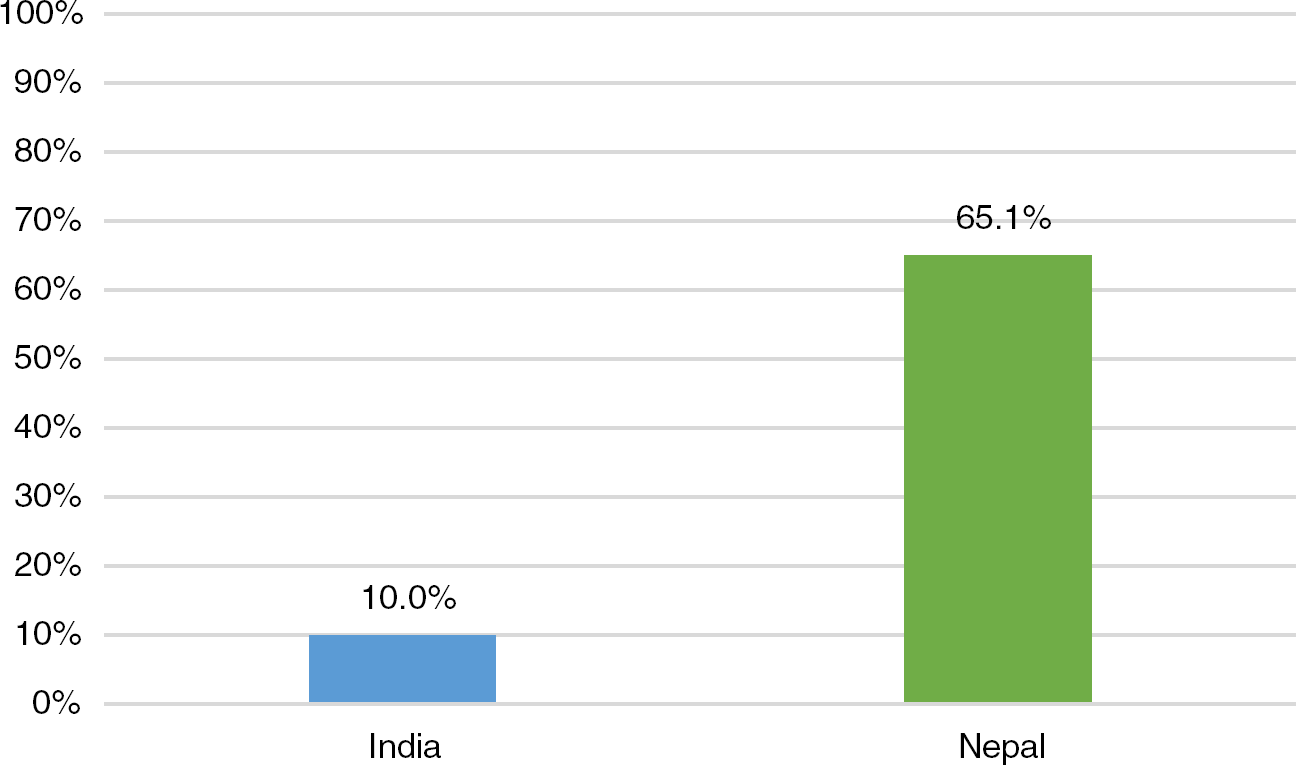
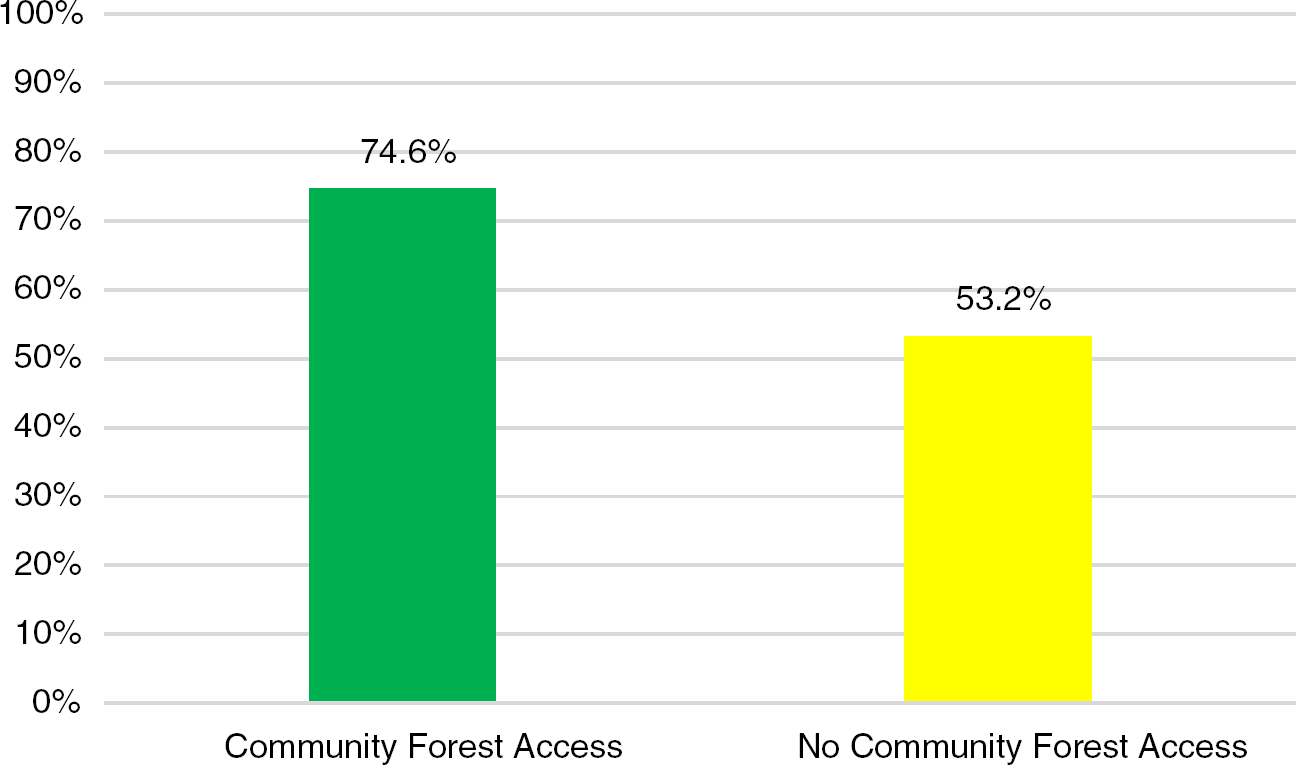
But they were not always inaccurate and the Indian and Nepali states did not always behave inconsistently. In fact, the Nepali state has been unswerving in its noninterference in Community Forest operations and its delegates, the “User Groups” who manage these forests, have largely allowed consistent access to local populations. Regulatory pragmatism and the consistency that can flow from the strategies it suggests, like delegated enforcement, seem to allow target populations to learn that taking wood from Community Forests is legal, whereas taking wood from Chitwan is not. As indicated above, I measure exposure to regulatory pragmatism in two ways: (1) “presence in Nepal,” where the state has taken a pragmatic approach to regulation by delegating enforcement; and (2) “Community Forest access”. Of those present in Nepal, 65.1 percent hold accurate legal understandings; the same measure in India is 10.0 percent. This is a significant difference (p < .000, s.e. = 0.014). Of those who reported Community Forest access, 74.6 percent hold an accurate understanding of wood-taking prohibitions; the same number among those who do not have access is 53.2 percent. A t test on accuracy of legal understandings indicates that there is a significant difference between these groups (p < .0001, s.e. = 0.019).Footnote 28 In other words, both of my measures for exposure to regulatory pragmatism are associated with significantly higher rates of accurate legal knowledge, regardless of whether the comparison is cross border or within country (Figure 4 and 5).
Rate of Accurate Legal Knowledge among those Present in India and Nepal. [Color figure can be viewed at wileyonlinelibrary.com]

Rates of Accurate Legal Knowledge among Those with Community Forest Access and Those Who Lack Community Forest Access. [Color figure can be viewed at wileyonlinelibrary.com]

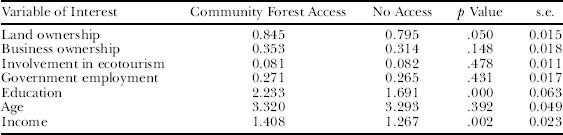
Moreover, there are few significant demographic differences across all seven control variables, suggesting that Community Forest access itself is related to accurate legal understandings and is not just a proxy for other variables. (See Table 2 below.) There are no significant differences for business ownership, involvement in ecotourism, government employment, or age.
Sample Balance Test for Community Forest Access
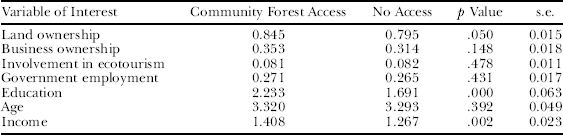
There are, however, significant differences on land ownership, education, and income. In particular, those who own land, are more educated and earn more are less likely to report that they have Community Forest access than their un-landed, less educated and lower earning counterparts. Along the India–Nepal border each of these variables is, to some degree, a proxy for the others, yet none of these variables appears to explain cross-border variation in compliance. As shown in Table 3 below (and in the regressions available in the Supporting Information), cross-border differences in compliance remain significant when comparing landed, educated, and higher income individuals on opposite sides of the border.
Comparison of Compliance Rates among Landed, Educated, and Higher Income Respondents in India and Nepal

Importantly, these variables capture population subsets that do not necessarily have more accurate information about the law. In fact, accuracy of legal knowledge among those who earn more or are more educated is lower than the sample average, whereas among those who own land it is very similar to that in the broader sample. Thus, although land ownership, education, and income may make an individual less likely to report access to a Community Forest, these variables do not automatically make that individual more likely to possess accurate legal knowledge. When taken together, these data indicate that Community Forest access is an important correlate of accurate legal understandings.
Although more research is required before we can understand exactly how legal knowledge acquisition occurs among a largely uneducated population faced with an often inconsistent state, delegated enforcement, an approach consistent with regulatory pragmatism, helps villagers to resolve a large array of different information into a legal understanding that has the potential to keep them from incurring costly penalties for noncompliance.
5.3 Accurate Legal Knowledge and Compliance
Target populations' legal understandings are important because they relate to another important relationship: the one between legal knowledge and compliance. I test the proposition that those who hold accurate legal understandings are more likely to be in compliance by first aggregating the data at different levels of geographical analysis: (1) the entire study region; (2) individual countries; and (3) replication villages in Nepal.Footnote 29 Then, within each of these geographical areas, I subset the data into two groups: those who hold an accurate legal understanding and those who do not (Table 4).
Comparison of Compliance Rates among Those with Accurate and Inaccurate Legal Knowledge at Different Levels of Geographical Aggregation

When I subset by accurate legal understanding in this manner, I find significant differences in compliance behavior at all levels of geographical aggregation. For the entire study region, I find that those who hold accurate legal understandings, regardless of location, report compliance-consistent behavior 70.2 percent of the time. Meanwhile, those who hold inaccurate understandings report behavior consistent with compliance 39.1 percent of the time. A t test run on these two groups reveals a significant difference (p < .000). And, importantly, this trend holds when I look at Nepal and India separately. In Nepal, the numbers are 70.9 and 56.6 percent, whereas in India, they are 55.0 and 28.0 percent; in the replication villages, the numbers are 63.4 and 43.9 percent. Each of these differences is significant as well (Nepal, p < .0001; India, p = .011; replication villages, p = .019).Footnote 30
When taken together, these findings suggest that the widespread accuracy of legal understandings in Nepal, which is driven at least in part by delegated enforcement (in the form of Community Forest access), has significant explanatory power in terms of cross-border variation in compliance. Those who have the ability to observe contrasting enforcement in Community Forests and the national park and gain accurate legal understandings in that manner are better situated to make a conscious choice to comply the law. Those in India, who have not been exposed to delegated enforcement, are at a significant disadvantage in terms of acquiring accurate legal knowledge and complying with wood collection prohibitions. My findings with respect to the relationship between legal knowledge and compliance also broadly indicate that many of those who are not in compliance may not be intentionally flouting the law. In fact, many likely believe that they are in compliance, even although they are not. This, in turn, implies that if those with inaccurate understandings were provided with better information, many would be motivated to comply.
6. Regulatory Pragmatism and Legal Knowledge Transmission
After initial analysis of the quantitative data revealed a strong relationship between legal knowledge and compliance, I conducted semistructured interviews with 35 different individuals to explore the mechanisms by which legal knowledge is transmitted. Many of these individuals suggested that all sources of information are not interpreted similarly when trying to gain accurate legal knowledge.
Ideally, individuals would read about the law themselves, but when education is limited, individuals often use second-hand information. In areas where lawyers are well-trained, plentiful, and affordable, the legal knowledge that they provide is considered trustworthy and they are an important source of second-hand legal knowledge (Reference MuirMuir 1973). These conditions are not always met, however, as in the case at hand. A dearth of lawyers does not mean that there is no one who can fill this role although. Where lawyers are not an effective source of legal knowledge, local leaders may be. My semistructured interviews suggest that people also look to their neighbors and friends for legal information, but they do not seem to privilege these sources over other more trustworthy ones when forming legal understandings. They do, however, trust information transmitted by local leaders.
Local leaders may or may not be elected, but are leaders, in part, because of their reliable connections to the state, be they formal or informal. Thus, the information they provide about the law, as long as it is provided in an accessible format, is considered more credible or trustworthy than information gleaned from other sources. As one respondent put it, as he was trying to explain why he believed his source of legal knowledge, “[t]he village headman is a savvy man and many in the government are known to him. We know his family.”Footnote 31 In situations in which ground-level bureaucrats may be corrupt, as is often the case in South Asia, the information local leaders provide may be privileged over that provided even by some state agents. For this reason, a state with limited capacity, which cannot behave consistently, can instead circumvent its principal–agent problem and the resulting information asymmetries, by circumventing state agents. In theory, it could do so through local leaders.
To determine whether and how local leaders can foster accurate legal knowledge in a location in which legal knowledge has been shown to have a significant effect upon compliance, I randomly selected three villages from the set of villages included in my larger survey of Nepal.Footnote 32 I had baseline data for approximately 25 individuals in each of these villages. After randomly assigning treatments,Footnote 33 I returned to each village to conduct an intervention. In the first (Village 1), I simply visited and said that I was there to research the park. In the second (Village 2), I distributed fliers to 40 individuals. These fliers accurately depicted Chitwan's wood collection prohibitions, explained the logic behind them, and described the importance of the park to the local economy and ecology. In a third (Village 3), I had a local leader convey the information included in the flier, including an elucidation of the logic behind wood collection prohibitions. He did so in an interactive session with 43 individuals present; I accompanied him and participated in this session. I then returned 2 months later to measure post-treatment effects in all villages. I did so using a condensed form of the survey used for pretreatment measures and with similar methodology: a survey of approximately 50 individuals in each location, but utilizing different starting points for right-hand rule randomization. This post-treatment survey also allowed me to partially replicate my findings from the larger survey.
My experimental findings indicate that local leaders, who often act as a conduit for communication from the state and/or local bureaucrats, are an important vector for legal knowledge. This is consistent with the psychology literature that indicates that length of relationship is predictive of whether individuals believe a source of information is trustworthy (Reference Levin, Whitener and CrossLevin et al. 2006; Table 5).
Comparison of Pretreatment and Post-Treatment Rates of Accurate Legal Knowledge among Those Who Received Control, Flier, and Local Leader Treatments

There are no significant differences in terms of the pretreatment and post-treatment accuracy of legal understanding in either Village 1 or 2. However, in Village 3, where a local leader was the conduit for knowledge dissemination, there is a significant difference (p = .017). Before my intervention, about 58.8 percent of my sample of villagers believed collecting wood in Chitwan to be illegal. After my intervention, this number stood at 78.7 percent, suggesting that local leaders can effectively disseminate accurate legal knowledge.
What local leaders say seems to matter; it is considered trustworthy and villagers update their legal understandings accordingly, with many privileging this information over both first-hand observation and information received from printed materials or from neighbors, family, and friends. This robustness check therefore indicates that even a weak state, so long as it employs regulatory pragmatism when considering how to disseminate information about the law, may be able to achieve both widespread legal knowledge and compliance.
7. External Validity
The data and argument I have presented thus far suggest that regulatory pragmatism can foster legal knowledge and compliance, in at least one regulatory context. Context is important here because my findings are potentially confounded by a concept that has been written about extensively over the years: that of the commons. In order to test the external validity of the argument, I engaged in a separate data collection exercise that examined compliance with teacher–student ratio regulations in private schools located in the twin border cities of Birgunj, Nepal, and Raxaul Bazaar, India.
In this article, I have argued that increasing traditional enforcement capacity is not the only means by which a relatively weak state can bring about regulatory compliance. A state need not have tremendous capacity if it employs regulatory pragmatism and designs around principal–agent problems by, for instance, delegating enforcement to interested parties. Teacher–student ratios, even in private schools, are regulated by both the Indian and Nepali governments. This regulatory effort on the part of both states is plagued by similar principal–agent problems to the ones discussed above with respect to the parks. Unlike the parks, however, there is no commons.
In this shadow case, and counter to the conservation case discussed above, it was the Indian government that engaged in regulatory pragmatism by delegating enforcement of teacher–student ratio regulations to parents via the 2009 Right to Education Act (RTE). The RTE allows parents to take their government funding with them from school to school, regardless of whether the school is government run or private. Parents' increased ability—held individually rather than in a commons—to remove students from poorly performing schools means that threats to private school administrators to remove students from schools with high teacher–student ratios are believable. Nepal has no analogous program.
The data, a census of all private schools in Birgung, Nepal, and Raxaul Bazaar, India, indicate that 83 percent of school administrators in India possess accurate legal knowledge, whereas that number in Nepal is only 59 percent. A t test on this subset indicates that the cross-border difference is significant (p = .044). Moreover, consistent with my findings in the conservation case above, accurate legal knowledge is in fact associated with higher levels of compliance. On the whole, 69 percent of schools in India and 47 percent in Nepal were in substantial compliance with teacher–student ratio regulations, which I consider to be having fewer than the maximum number of students allowed in all or most of their classrooms.Footnote 34 When I subset by accurate legal knowledge, these numbers change to 77 percent in India and 60 percent in Nepal. Although this change may not seem particularly large, when compared to compliance rates among those with inaccurate legal knowledge, 33 percent in India and 29 percent in Nepal, the differences are both pronounced and statistically significant.
The empirical evidence provided by this shadow case suggests that regulatory pragmatism is not confounded by the commons present in the main conservation case described above and that the efficacy of the concept extends into very different regulatory contexts.
8. Discussion and Implications
Above, I demonstrated that in places where the state is weak and inconsistent, strategies consistent with regulatory pragmatism are able to foster accurate legal knowledge and, in turn, compliance. I did so by examining two different strategies. The first, delegated enforcement, allows interested parties to foster accurate understandings of the law through the consistency of their actions. The second, transmission through trustworthy, nonprint sources, utilizes local leaders to convey accurate information about the law to target populations. These findings suggest that when state capacity is weak, a condition which many have assumed to be incompatible with rule of law, institutional design can positively affect regulatory compliance. Regulatory pragmatism helps to identify reasons for noncompliance and guide decisions toward alternative designs. These findings have important implications for both the rule of law and compliance literatures and for practitioners—be they bureaucrats, politicians or aid workers—trying to use law to change behavior throughout the world.
Indeed, even in areas of state weakness, states with meager resources can increase compliance rates. Consistent state action is the primary path to accurate legal knowledge, but achieving consistency is no small feat for weak states. The literature suggests that increased state capacity alone will allow states to achieve these ends. My findings suggest, however, that regulatory pragmatism can help states ensure that accurate legal knowledge is widespread; if states recognize principal–agent problems, they can then choose alternative legal knowledge dissemination strategies. Delegated enforcement is one such strategy. Through the consistent action of the state's delegates, populations receive information regarding what is allowed and not allowed by law. This is particularly true when education levels are low. Under delegated enforcement, interested parties, who must have an incentive to get involved and to pursue the state's agenda, communicate information about the law through the consistency of their actions.
Legal knowledge dissemination through local leaders operates somewhat differently but can still be effective. Leaders seem to fill the role that lawyers often play (Reference MuirMuir 1973) in locations in which lawyers are well-educated, plentiful, and affordable. The fact that local leaders are trustworthy and perceived to have accurate information about the state and its workings positions them, much like lawyers, to be able to amplify, translate and even interpret information about relevant regulations for local populations. When interested parties are present and enforcement responsibility has been delegated, or when local leaders have transmitted information, understandings of regulatory requirements at the local level become more accurate. When legal understandings become more accurate, compliance rates rise.
Delegation to interested parties is not always possible, however, particularly when interested parties cannot be found; the same is true of local leaders willing to get involved in legal knowledge transmission. If there are not individuals or groups present in civil society whose interests align with those of the state on a particular regulatory issue, delegated enforcement may fail. For instance, although one might enlist citizens to help with parking enforcement, as some stand to gain from turnover of cars in a particular location or from the removal of cars parked illegally across driveways, similarly situated populations are not always readily available. Take, for instance, compliance with child labor law in rural India and Nepal. Business owners facing tight margins can hire child labor and benefit from lower costs. Meanwhile, some poor parents will literally beg to have their children hired; their material existence is that tenuous, even although the long-term gain from school attendance is substantial. In situations such as this one, local leaders are not likely to be more effective than delegated enforcement in terms of securing compliance, although they could certainly increase awareness of particular laws. It follows that delegated enforcement and local leaders are not panaceas for inducing regulatory compliance in weak and/or underfunded states. Instead they should be seen as two solutions to the state's principal–agent problems if and when the regulatory scenario permits. For the state that is willing to behave pragmatically, there may be other solutions as well.
In addition, it bears mentioning that state delegation of criminal law enforcement to civil society is problematical. Although the state can engage with communities and get their assistance in criminal enforcement, via programs like neighborhood watch or the amber alert system in the United States, enlisting individuals and/or groups within society who have not been professionalized to wield the state's monopoly over force is problematical. Members of one group within civil society might use this power to treat other groups—groups which they do not like for one reason or another—poorly. Along the India–Nepal border, one can easily imagine high-caste groups wielding this power against lower caste groups, or vice versa. Now, of course, the same could happen with delegation of civil regulatory power, but in the case of the latter the consequences are often less dire and more avoidable with government oversight. In addition, there is the obvious problem that criminal law enforcement typically involves criminals and dealing with individuals or groups engaged in criminal activity requires sophistication and, often, weaponry. It is difficult to imagine how the state might delegate this type of authority to civil society in a way that was less costly or problematical than hiring additional police.
9. Conclusion
Many of the causal relationships built into the standard deterrence model of compliance remain appropriate across varied regulatory contexts, even when state capacity is weak. However, the assumption that the law is “widely known and understood” is problematical. Low compliance in areas of low state capacity appears to be driven, at least in part, by inaccurate legal knowledge. Although the compliance and rule of law literatures sometimes assume that these latter factors will only be ameliorated by either development or increased state capacity, two variables which are often correlated, I have presented evidence that neither of these is necessary to achieve widespread compliance. Instead, I have argued that states that employ regulatory pragmatism may be able to discern reasons for noncompliance and find solutions that work around these problems. In areas of state weakness, where principal–agent problems can result in imperfect legal knowledge and low levels of compliance, institutional implementation strategies that are consistent with regulatory pragmatism have the power to both foster accurate legal knowledge and raise compliance rates. Once knowledge is in place, fear and duty can work in the way that we understand them to and a whole range of regulatory options are suddenly available to states that previously struggled with even basic tasks.
Acknowledgements
This project was funded, in part, by the University of California, Berkeley and its Institute of International Studies, as well as by the American Institute of Indian Studies. I would like to thank and acknowledge Pradeep Chhibber, Bob Kagan, David Vogel and Sean Farhang, as well as three anonymous reviewers, for the tremendous positive impact they had on this piece.






 Open access

