Introduction
The South American fruit fly, Anastrepha fraterculus Wied., is a wide-raging (southern USA to central Argentina) pest species (Steck, Reference Steck and Hendrichs1999), which has been recognized as a complex of cryptic species composed of several different morphotypes (Hernández-Ortiz et al., Reference Hernández-Ortiz, Bartolucci, Frias, Moralles-Valles and Selivon2012; Rull et al., Reference Rull, Abraham, Kovaleski, Segura, Islam, Wornoayporn, Dammalage, Tomas and Vera2012 and references therein). Females infest about 80 fruit species (Norrbom, Reference Norrbom2004), including many commercial hosts, such as peach, plum, guava and mango. The success of the sterile insect technique (SIT) to control tephritid fruit fly pests such as Ceratitis capitata Wied., and some Bactrocera (Bactrocera dorsalis Hendel and Bactrocera tryoni Froggatt) and Anastrepha species (Anastrepha ludens Loew, Anastrepha obliqua Macquart and Anastrepha suspensa Loew) has prompted the development of this method against A. fraterculus (Ortiz, Reference Ortiz and Hendrichs1999; Guillén & Sánchez, Reference Guillén, Sánchez, Vreysen, Robinson and Hendrichs2007). The SIT involves mass rearing, sterilization and release of insects of the pest species and, therefore, is intended as an autocidal and species-specific control method. When sterile males mate with wild fertile females, they induce sterility in the wild population, which results in the decrease of the pest population over time (Knipling, Reference Knipling1959; Dyck et al., Reference Dyck, Reyes Flores, Vreysen, Regidor Fernández, Teruya, Barnes, Gómez Riera, Lindquist, Loosjes, Dyck, Hendrichs and Robinson2005). To be successful, the SIT requires a good knowledge of the sexual behaviour of the targeted species, to allow rigorous evaluation of the sexual competitiveness of mass-produced sterile insects (Lance & McInnis, Reference Lance, McInnis, Vreysen, Robinson and Hendrichs2005). This implies that the sterile males must be able to forage for food in nature, survive until sexual maturity, perform all the stages of a successful courtship, including pheromone emission as well as other visual and acoustical signals, and transfer their sperm.
Anastrepha fraterculus has been described as a lekking species (Malavasi et al., Reference Malavasi, Morgante and Prokopy1983; Segura et al., Reference Segura, Petit-Marty, Sciurano, Vera, Calcagno, Allinghi, Gómez Cendra, Cladera and Vilardi2007), with males aggregating into groups (termed ‘leks’) to release sexual pheromone, a phenomenon known as ‘calling’. Receptive females attend the lek, where they eventually choose one of the calling males. At the lek, female choice is related to, at least partially, morphological traits, such as wing width and thorax length (Sciurano et al., Reference Sciurano, Segura, Rodriguero, Gómez Cendra, Allinghi, Cladera and Vilardi2007). Although some males are also found performing pheromone calling individually (outside the leks), they exhibit a lower copulation probability than lekking males (Segura et al., Reference Segura, Petit-Marty, Sciurano, Vera, Calcagno, Allinghi, Gómez Cendra, Cladera and Vilardi2007).
Initial studies assessing SIT feasibility for A. fraterculus have shown promising results. Rearing methods on artificial diets have been developed and semi-mass production of flies has already been attained (Jaldo et al., Reference Jaldo, Gramajo and Willink2001; Vera et al., Reference Vera, Abraham, Oviedo and Willink2007; Braga Sobrinho et al., Reference Braga Sobrinho, Guimaraes, Araujo and Moreira2010; García Carrión, Reference García Carrión2010). Mating compatibility studies allowed establishing specific laboratory strains to be released in each target area (Vera et al., Reference Vera, Cáceres, Wornoayporn, Islam, Robinson, de la Vega, Hendrichs and Cayol2006; Segura et al., Reference Segura, Vera, Rull, Wornoayporn, Islam and Robinson2011; Rull et al., Reference Rull, Abraham, Kovaleski, Segura, Islam, Wornoayporn, Dammalage, Tomas and Vera2012). Evaluations of gamma-sterilized mass-reared males determined that A. fraterculus males are able to compete with wild males for wild females (Allinghi et al., Reference Allinghi, Calcagno, Petit-Marty, Gómez Cendra, Segura, Vera, Cladera, Gramajo, Willink and Vilardi2007a; García Carrión et al., Reference García Carrión, Alburqueque and Quintanilla2010) and that irradiation has no effect on male survival under field cage conditions (Gómez Cendra et al., Reference Gómez Cendra, Segura, Allinghi, Cladera and Vilardi2007). Moreover, male mating success was found to be positively influenced by male exposure to fruit (Vera et al., Reference Vera, Ruiz, Oviedo, Abraham, Mendoza, Segura, Kouloussis and Willink2010). However, in spite of all the advances performed so far, there is still much room for improvement of the SIT to control A. fraterculus, particularly on aspects that increase male sexual competitiveness.
During the last decade, there has been intense research on developing treatments to boost sterile males sexual performance in tephritid fruit flies (Pereira et al., Reference Pereira, Yuval, Liedo, Teal, Shelly, McInnis and Hendrichs2011b). In C. capitata males, protein intake during the first days of adult life affects a number of behavioural and physiological parameters that ultimately correlate with reproductive success (for reviews, see Yuval et al., Reference Yuval, Kaspi, Field, Blay and Taylor2002, Reference Yuval, Maor, Levy, Kaspi, Taylor and Shelly2007). Males that were fed a sugar-based diet containing protein increased their participation in leks (Yuval et al., Reference Yuval, Kaspi, Shloush and Warburg1998), release larger amounts of pheromone (Kaspi et al., Reference Kaspi, Taylor and Yuval2000), increase their mating competitiveness (Kaspi & Yuval, Reference Kaspi and Yuval2000; Shelly & Kennelly, Reference Shelly and Kennelly2002), transfer larger amounts of sperm (Taylor & Yuval, Reference Taylor and Yuval1999) and increase their ability to reduce female re-mating tendency (Blay & Yuval, Reference Blay and Yuval1997) when compared with males fed on sugar alone. Similar results have been found in other tephritids, such as B. dorsalis (Shelly et al., Reference Shelly, Edu and Pahio2005), Bactrocera cucurbitae Coquillett (Haq et al., Reference Haq, Cáceres, Hendrichs, Teal, Stauffer and Robinson2010a,Reference Haq, Cáceres, Hendrichs, Teal, Wornoayporn, Stauffer and Robinsonb), B. tryoni (Pérez-Staples et al., Reference Pérez-Staples, Prabhu and Taylor2007, Reference Pérez-Staples, Weldon and Taylor2009), A. obliqua Macquart, Anastrepha serpentina Wied., Anastrepha striata Schiner (Aluja et al., Reference Aluja, Jácome and Macías-Ordóñez2001) and A. suspensa Loew (Pereira et al., Reference Pereira, Sivinski and Teal2009, Reference Pereira, Sivinski and Teal2010).
Another field where extensive research on tephritids seeks improving the SIT is the use of juvenile hormone analogues, such as methoprene. It has been shown that this sesquiterpenoid enhances the sexual performance of young fruit fly males (Teal et al., Reference Teal, Gómez-Simuta and Proveaux2000; Haq et al., Reference Haq, Cáceres, Hendrichs, Teal, Stauffer and Robinson2010a; Pereira et al., Reference Pereira, Sivinski and Teal2010). This allows overcoming one limitation to SIT implementation for species with a long pre-copulatory period (Teal et al., Reference Teal, Pereira, Segura, Haq, Gómez-Simuta, Robinson and Hendrichs2011). When adult flies require several days to sexually mature, managers from operational programs are forced either to release sterile flies early (i.e. before they are sexually mature), thereby subjecting them to high mortality before reaching the mating age, or to keep them indoors until they are sexually mature, increasing costs due to the need for food, space and staff personnel to maintain sterile flies until sexually mature (Enkerlin, Reference Enkerlin2007). In insects, the pre-copulatory period is under hormonal control (Happ, Reference Happ1992), with juvenile hormone playing a key role in this process. In this regard, Teal et al. (Reference Teal, Gómez-Simuta and Proveaux2000) found that topical application of methoprene accelerates sexual signalling and copulation onset in A. suspensa. This effect was later described in other tephritids, such as A. ludens and B. cucurbitae (see Teal et al., Reference Teal, Pereira, Segura, Haq, Gómez-Simuta, Robinson and Hendrichs2011 for a review), where methoprene effects have been shown to be dependent on the simultaneous access to a proteinaceous source by the adult fly. Surprisingly, while the effect of methoprene on sexual maturation has been described in males of many tephritid species, its effect on female mating propensity has been relatively overlooked. This is particularly relevant for those species where no genetic sexing strains have been developed. In a genetic sexing strain (GSS), females can be eliminated before flies are sterilized; and, therefore, a GSS enables the release of only sterile males (Franz, Reference Franz, Dyck, Hendrichs and Robinson2005). If there is no way to massively separate sexes before release, both males and females will be exposed to methoprene and, hence, assessing its effect on female physiology becomes crucial.
Our previous studies on A. fraterculus have shown that methoprene topical application significantly accelerates sterile male sexual maturation, evaluated through pheromone calling and mating propensity under laboratory conditions (Segura et al., Reference Segura, Utgés, Liendo, Rodríguez, Devescovi, Vera, Teal and Cladera2010). In mating performance tests, six-day-old treated males were able to compete with ten- day-old untreated males, whereas this was not the case for six-day-old untreated males (Segura et al., Reference Segura, Cáceres, Vera, Wornoayporn, Islam, Teal, Cladera, Hendrichs and Robinson2009). Nevertheless, before recommending the use of methoprene, there are still important aspects that need further evaluation; for instance, methoprene topical application is not feasible at a large scale. Additionally, its effect should be evaluated in irradiated males subjected to a pre-release dietary regime and in competition with wild males under natural conditions. Moreover, although Segura et al. (Reference Segura, Cáceres, Vera, Wornoayporn, Islam, Teal, Cladera, Hendrichs and Robinson2009) found that methoprene had no effect on advancing female mating readiness at young ages, they found that ca. 20% of the seven-day-old females were ready to mate. This may impose a constraint on large-scale releases, as it suggests that about 20% of the sterile males would be diverted from seeking wild fertile females and depleting their sperm loads with sterile female, which are not their target under a SIT approach. These authors proposed that a reduction in the release age and the protein content of the pre-release diet may reduce this percentage.
In the present study, we evaluated the combined effect of methoprene treatment, applied at a large scale by pupal immersion, and different adult diets, on the sexual behaviour of sterile laboratory A. fraterculus males under field cage conditions. Our aim was identifying a pre-release treatment that enhances male sexual competitiveness of millions of sterile males minimizing operational procedures and costs. To achieve this, we compared mating success of sterile males when competing with wild males for wild females. Sterile males received six different treatments, differing in the way methoprene was applied and the amount and quality of the protein source provided. As protein is a rather expensive ingredient, we compared low quantities of an expensive protein source with higher proportions of a less refined one. For the treatment that proved to balance the best mating performance with the easiest and cheapest procedures, we evaluated sterile males' lekking behaviour and signalling efficiency to attract wild females in comparison with that of wild males. Additionally, we evaluated the effect of methoprene treatment and protein intake on sterile females' readiness to mate.
Materials and methods
Insects
Laboratory flies were obtained from the A. fraterculus colony kept at IGEAF laboratories (INTA Castelar, Buenos Aires, Argentina). This colony was established in 2007 and derived from a semi-mass rearing colony kept at Estación Experimental Agroindustrial Obispo Colombres, Tucumán, Argentina, which was originally initiated in 1997 with wild pupae recovered from infested guavas (Psidium guava L.) collected at Tafí Viejo (Tucumán, Argentina) (Jaldo et al., Reference Jaldo, Gramajo and Willink2001). All laboratory pupae were sterilized by gamma-radiation. Irradiation of pupae was carried out at the Centro Atómico Ezeiza (CNEA, Argentina) located in Buenos Aires province (one hour by ground transport from INTA Castelar). Pupae were kept under controlled environmental conditions (T: 24 ± 1 °C, RH: 65 ± 5%). Forty-eight hours before emergence, pupae were irradiated in a Gammacel-220 (Nordion, Ottawa, Canada) irradiator at a dose of 70 Gy in an oxygen atmosphere, following the conditions and procedures established to fully sterilize A. fraterculus without a negative impact on male sexual competitiveness (Allinghi et al., Reference Allinghi, Calcagno, Petit-Marty, Gómez Cendra, Segura, Vera, Cladera, Gramajo, Willink and Vilardi2007a,Reference Allinghi, Gramajo, Willink and Vilardib).
Wild flies used originated from infested guavas collected at Horco Molle, Tucumán, Argentina, during February and March 2009. Infested fruit were shipped to IGEAF (15 hours by ground transport), where they were placed on trays containing a pupariation substrate. Twice per week, pupae were recovered and placed under the same conditions as laboratory pupae until fly emergence. Wild fly pupae were not irradiated.
Experimental site
The study was carried out at the IGEAF experimental field between 24 March and 5 April 2009. Average mean temperature during this period was 20.1 °C and average minimum and maximum temperatures were 16.1 °C and 25.1 °C, respectively (Instituto de Clima y Agua, INTA Castelar, http://climayagua.inta.gob.ar/consulta_historica_castelar). All the experiments were performed in cylindrical cages 3 m in diameter and 2 m high placed in the experimental field. Within each cage, one or two (depending on the experiment, see below) Citrus sinensis Osbeck (Rutaceae) (L.) trees (1.7 m high with a canopy of about 1.5 m in diameter) provided an arena for the resting and mating activities of the flies. The experiments started within the first hour after sunrise and ended at noon, thus covering the entire period of sexual activity of A. fraterculus from Argentina (Petit-Marty et al., Reference Petit-Marty, Vera, Calcagno, Cladera, Segura, Allinghi, Rodriguero, Gómez Cendra, Viscarret and Vilardi2004; Vera et al., Reference Vera, Cáceres, Wornoayporn, Islam, Robinson, de la Vega, Hendrichs and Cayol2006; Segura et al., Reference Segura, Petit-Marty, Sciurano, Vera, Calcagno, Allinghi, Gómez Cendra, Cladera and Vilardi2007).
Experimental procedures
Mating competitiveness tests
Competitiveness assessment tests followed standard procedures (FAO/IAEA/USDA, 2003). This involved the release of 25 wild males, 25 laboratory males, 25 wild females and 25 laboratory females inside the cage. Males were released soon after sunrise, and females were released 20–30 min after the males. This allowed the males to locate suitable places to perform pheromone calling and aggregate into leks. Once both sexes were inside the cage, an observer recorded the occurrence of copulation. For each mating pair, the type of male and female, the time at which it was detected, and the duration of copulation were recorded. Mating pairs were gently transferred into a vial that was kept inside the field cage and were checked every five minutes until the flies separated. The test was repeated for nine days and for each date one replicate (cage) per treatment (see below) was carried out.
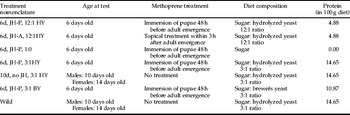
Sterile flies were treated with one of six different treatments which varied in the way the methoprene was applied and/or the proportion and source of protein they were provided in the adult diet (table 1). Methoprene treatment was performed either by applying 1 μl of a 5 μg μl−1 solution of methoprene (11-methoxy-3, 7, 11-trimethyl 2E, 4E-dodecadienoate) dissolved in acetone to the thorax of newly emerged (ca. 3 h) flies (following procedures in Teal et al., Reference Teal, Gómez-Simuta and Proveaux2000) or by immersing pupae in a methoprene solution 48 h before fly emergence. In the latter case, the methoprene solution consisted of a 1:100 dilution of a 5 μg μl−1 solution of methoprene in acetone. Pupae were immersed in this solution for five minutes and then dried by placing them onto a tissue paper for ten minutes. Pupae were then kept under controlled conditions until emergence. This procedure has proved to accelerate sexual maturation at the same rate as the topical application (Segura et al., Reference Segura, Utgés, Liendo, Rodríguez, Devescovi, Vera, Teal and Cladera2010). The adult diet contained either no protein (1:0, sugar:protein), a low protein content (12:1, sugar:protein) or a high protein content (3:1, sugar:protein). The type of proteinaceous sources used was either hydrolyzed yeast (HY) (MP Biomedical, San Francisco, CA, USA) or brewer's yeast (BY) (Calsa, Tucumán, Argentina). HY has higher protein content than BY (table 1) and is more expensive than BY. Protein ratios were chosen on the basis of previous studies in which we found that 12:1 (sugar:HY) and 3:1 (sugar:HY) diets were equally effective, under laboratory conditions, to enhance sexual maturation of laboratory, methoprene-treated males (unpublished data). Water and food were provided ad libitum. As a reference treatment (i.e. control), we used laboratory sterile flies, which were allowed to mature naturally (i.e. no methoprene treatment, ten-day-old males and 14-day-old females), and were fed HY at the highest dose (HY 3:1, table 1). This treatment resembles the one evaluated by Allinghi et al. (Reference Allinghi, Gramajo, Willink and Vilardi2007b), where mating competitiveness of the sterile laboratory males proved to be equal to that of wild males.
Treatments applied to sterile laboratory and wild Anastrepha fraterculus flies. Fly age on the day of the mating competitiveness test, the manner of methoprene application and the adult diet that was provided are presented.

For identification, flies were marked on the thorax with a dot of water-based paint 48 h before the test. We used a different randomly assigned colour for each kind of male and female. This procedure does not affect sexual performance of A. fraterculus (Petit-Marty et al., Reference Petit-Marty, Vera, Calcagno, Cladera, Segura, Allinghi, Rodriguero, Gómez Cendra, Viscarret and Vilardi2004).
The competitiveness of males and females was estimated using the male and female relative performance indices (MRPI and FRPI, respectively) (Cayol et al., Reference Cayol, Vilardi, Rial and Vera1999). These indices range from −1 to 1; a value of 0 means that both types of males/females (laboratory or wild) performed equally well, whereas values close to 1 or −1 mean that one type of male/female outcompeted the other. In our case, values below zero mean that wild males copulated significantly more frequently than laboratory males. Mean FRPI or MRPI data were compared among treatments by means of a one-way ANOVA, followed by Tukey's multiple comparison tests when significant differences among treatments were detected. The statistical significance of the FRPI and MRPI was evaluated using a Chi-square goodness of fit test, assuming equal performance for both types of males/females. This analysis was first conducted pooling data from all replicates within each treatment, and a global Chi-square was obtained. Then, we repeated the Chi-square test of goodness of fit using data from each replicate, so departure from equal mating performance was evaluated in each field cage.
In addition to evaluating the number of copulations achieved by each type of male, the effect of the treatment was evaluated by comparing the time when the copulation started and its duration. Mating start time (referred to as latency to mate) was calculated as the time elapsed from the release of the females to the detection of a copulation. Latency and mating duration were compared between sterile and wild males within each treatment by means of a Student t-test. In those cases in which a mild deviation from equal variances was found, a Mann-Whitney test was carried out; and, when heteroscedasticity was severe, data were transformed and a Student t-test was carried out with the transformed data (Zar, Reference Zar1996). Statistical analyses were performed using Statistica for Windows (Statsoft Inc., 2006).
Male lekking behaviour evaluation
In order to evaluate if the behaviour of six-day-old sterile males, treated with methoprene, was similar to that of mature (ten-day-old) wild males, we compared the lekking behaviour of the males under field cage conditions. Based on the results of the previous experiment, we chose the treatment that involved pupal immersion in methoprene and a diet with a 12:1 (sugar:HY) ratio (6d, JH-P, 12:1 HY). The lekking behaviour study followed the protocol described by Segura et al. (Reference Segura, Petit-Marty, Sciurano, Vera, Calcagno, Allinghi, Gómez Cendra, Cladera and Vilardi2007). Briefly, eight marked males of the selected treatment and eight wild males (same diet and age as before) were released in each cage. The mark consisted of a small piece of coloured paper glued with a dot of acrylic paint on their notothorax. A letter (Microsoft Word Arial, size 4) printed on the paper was used to individually recognize all the males. For A. fraterculus (Segura et al., Reference Segura, Petit-Marty, Sciurano, Vera, Calcagno, Allinghi, Gómez Cendra, Cladera and Vilardi2007), as well as for C. capitata (McInnis et al., Reference McInnis, Rendon and Komatsu2002; Vera et al., Reference Vera, Cladera, Calcagno, Vilardi, McInnis, Stolar, Segura, Peti-Marty, Krsticevic, Gómez Cendra, Rodriguero, Barborini, Heer, Allinghi, Bonpland, Hansen and Segade2003), this technique has shown not to affect the sexual behaviour of the flies. One hour after the males were released, a container housing eight virgin mature wild females was opened into each field cage. Fifteen minutes after male release, the position and activity of each male inside the cage was recorded by two observers who were inside the cage. This procedure was repeated every 15 minutes until noon. To determine the position of the males inside the tree, all trees were divided into 24 sectors in a three-dimensional arrangement: (i) according to the cardinal axes, we defined four horizontal quadrants; (ii) regarding tree height, we defined three evenly high vertical sectors (approximately 40 cm high) of the canopy; and (iii) according to the depth of the leaves in the canopy, we defined two sectors (‘P’ for leaves situated in a ∼5 cm peripheral layer of the canopy, and ‘C’ for central or core leaves). Both height and depth were relative to each tree and defined previously by all observers to avoid bias. The activities of the males were classified as: pheromone calling (visibly everted salivary glands and a protrusion at the tip of the anus, normally accompanied by intense wing fanning), mating, walking, interacting with other males (face to face encounters between males), and resting (motionless). Nine replicates were carried out.
The location of calling males was used to determine the sector in which leks (defined as groups of at least four calling males according to Segura et al. (Reference Segura, Petit-Marty, Sciurano, Vera, Calcagno, Allinghi, Gómez Cendra, Cladera and Vilardi2007)) were forming. We categorized the behaviour of each male in terms of its pheromone calling location as: 1, calling always within the lek; 2, calling always outside the lek; and 3, calling alternatively outside or inside the lek. According to Segura et al. (Reference Segura, Petit-Marty, Sciurano, Vera, Calcagno, Allinghi, Gómez Cendra, Cladera and Vilardi2007), males that call within the lek have higher mating success; therefore, we should expect that differences in the distribution of the different males around leks reflect differences in their mating ability.
In order to determine whether it was possible to pool the data from the nine replicates, differences among replicates for a number of males in each position (height, depth or cardinal position inside the tree) were analyzed using an ANOVA test. Non-significant differences were found (P > 0.05); and, as a consequence, the analysis was performed grouping data from all replicates.
The sexual behaviour of males was described considering: 1, the time elapsed between the release of the males and the beginning of calling behaviour (referred to as latency to call); 2, the percentage of time spent calling (referred to as calling activity), calculated as the number of observations at which an individual male was observed pheromone calling divided by the number of observations, then multiplying by 100; and 3, the percentage of calling males (referred to as calling rate), calculated as the number of males of each type that was found calling at least once, divided by the total number of males (i.e. eight), then multiplying by 100.
Latency to call and calling activity were compared between laboratory and wild males by means of Student t-tests. Calling rate was compared between types of males by means of a paired t-test. The percentages of males that called always inside, always outside or alternatively inside and outside the lek were compared between laboratory and wild males by means of a Chi-square test of heterogeneity. Statistical analyses were performed using Statistica for Windows (Statsoft Inc., 2006).
Male signalling efficiency
In order to compare the response of wild females to males from the selected treatment (see above) and wild males (same age and diet as previous tests), we followed the methodology proposed by Shelly (Reference Shelly2000). Wild and laboratory males were placed inside colourless plastic cylinders (10 cm in diameter, 12 cm in height). Each cylinder (‘artificial lek’) contained only wild or sterile males in groups of five (approximate size of leks in A. fraterculus according to Segura et al. (Reference Segura, Petit-Marty, Sciurano, Vera, Calcagno, Allinghi, Gómez Cendra, Cladera and Vilardi2007)), which were closed at both ends with mesh cloth, allowing air to pass through the calling males. Two artificial leks, one containing wild males and the other laboratory males, were placed inside the cage, each one hanging from an orange tree. The two trees were separated by ca. 2.5 m.
Twenty to 30 minutes after placing the artificial leks, 25 wild mature females were released in the centre of the field cage. Fifteen minutes after females were released, an observer recorded the number of females located in each tree and on each artificial lek. The number of females on the cylinders and the trees was recorded every 15 minutes until noon. Every time a female was detected on the surface of a cylinder, another observer recorded the time at which it was detected and the time the female flew away from the cylinder. Eleven replicates were conducted.
To determine whether females were able to orient themselves towards the cylinders containing calling males, we performed a preliminary test in which two trees were placed in the cages, one of them carrying a cylinder with mature (10–20-day-old) laboratory males and the other carrying an empty cylinder. Females were observed during two hours. Two replicates were conducted. In the two trials, females visited the tree containing the cylinder with males more frequently than the tree that contained an empty cylinder. Numbers of visits to the cylinders were too low as to be compared statistically. However, the cylinder that housed males received nine and seven visits (replicates 1 and 2, respectively), whereas the empty cylinder received zero and two visits (replicates 1 and 2, respectively). Therefore, we concluded that females were able to orient towards the calling males under this experimental set-up.
The numbers of females that visited each tree and each artificial lek were pooled across observations periods for each replicate, and these values were compared by means of a Student t-test for paired samples (Statsoft Inc., 2006). The data on female arrival and departure times were used to calculate the duration of each visit. Mean visit duration was obtained for each cylinder in each replicate, and the mean duration of the visit was then compared between cylinders containing wild males and cylinders containing laboratory males by means of a Student t-test for paired samples. Statistical analyses were performed using Statistica for Windows (Statsoft Inc., 2006).
Results
Mating competitiveness tests
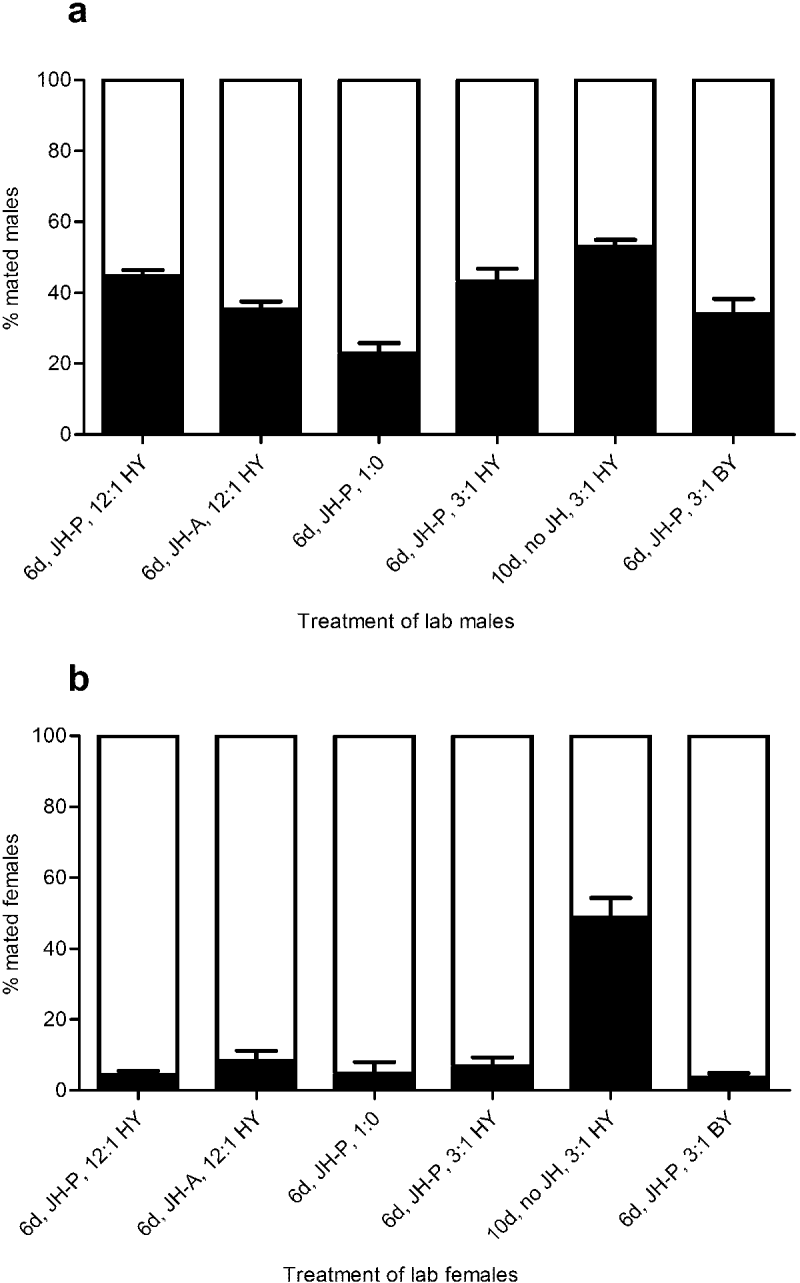
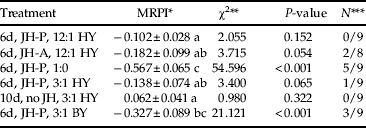
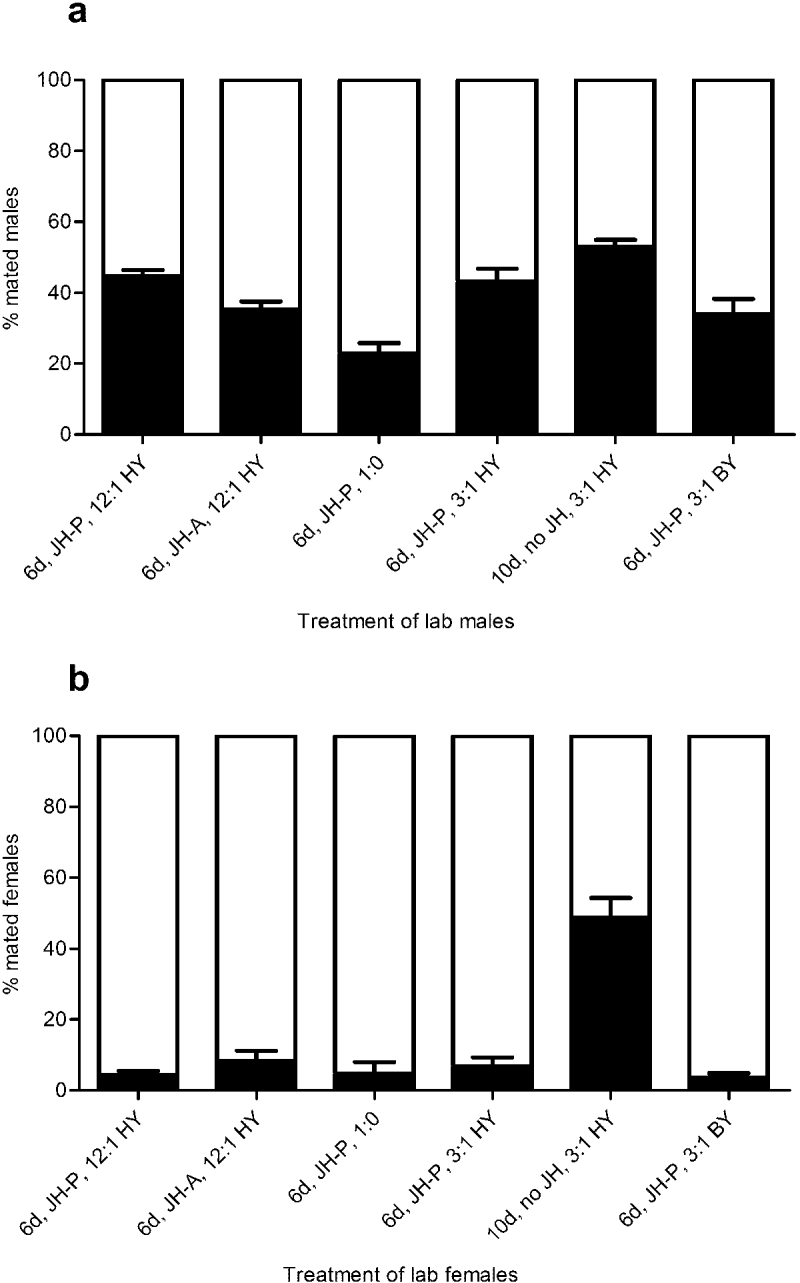
Mating activity within the field cages was higher than the minimum acceptable for field cage tests to be a reliable procedure to estimate mating competitiveness (at least 20% according to FAO/IAEA/USDA, 2003), except for one replicate that involved topically treated males, which was therefore eliminated from the data set. Male mating competitiveness was significantly affected by the pre-release treatment. MRPI values were statistically different among treatments (ANOVA: F = 10.172; df = 5,47; P < 0.001; table 2). Multiple comparisons showed that the lowest MRPI belonged to the treatment in which methoprene treated males were fed only sugar (6d, JH-P, 1:0), followed by the treatment in which treated males were fed sugar and brewer's yeast (6d, JH-P, 3:1 BY). The rest of the treatments (all of them with sugar plus hydrolyzed yeast) showed values close to zero (table 2). Chi-square tests confirmed a deviation from equal mating competitiveness between laboratory and wild males for the treatments that involved males fed only sugar, or sugar and BY. In both cases, laboratory males were involved in significantly fewer copulas than wild males (table 2). Tests that included topically treated males (6d, JH-A, 12:1 HY) and males treated by pupae immersion that received a 3:1 (sugar:HY) diet (6d, JH-P, 3:1 HY) did not show differences between males (laboratory and wild) when data from the replicates within each treatment were pooled for the analysis. However, in a few replicates (two out of eight and one out of nine, for 6d, JH-A, 12:1 HY and 6d, JH-P, 3:1 HY, respectively), the frequencies of mated males found in that cage deviated from random mating and wild males outcompeted laboratory males (table 2, fig. 1a). MRPI values for mature males (10d, no JH, 3:1 HY) and males treated by immersion that were fed a 12:1 (sugar:HY) diet (6d, JH-P, 12:1 HY) showed no differences between wild and laboratory males. This was found in all the replicates and is reflected in a percentage of mating close to 50% for both types of males (fig. 1a).
Mean percentage of sterile laboratory and wild Anastrepha fraterculus involved in copulation in the field cage tests for the different treatments (see table 1). (a) Mean percentages for male flies; (b) mean percentages for female flies. Bars represent standard errors ((a) ■, lab males; □, wild males; (b) ■, lab females; □, wild females).
Mating competitiveness of sterile laboratory of males Anastrepha fraterculus as expressed by the male relative performance index (MRPI). Tests were conducted under field cage conditions where competing with wild males for laboratory and wild females (mean ± SE).
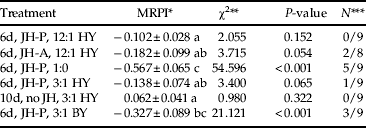
* Negative values indicate that wild males participated in more matings than laboratory males; positive values mean the opposite. Means followed by different letters showed significant differences after multiple comparison tests (P < 0.05).
** Global χ2 (and the associated P-value) refers to the Chi-square test of goodness of fit performed after pooling data from all replicates within each treatment.
*** Number of replicates in which Chi-square test of goodness of fit showed significant deviation from equal proportion of matings between laboratory and wild males relative to the number of replicates carried out for each type of laboratory flies.
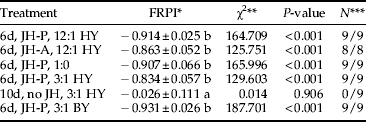
Female mating participation was also significantly affected by treatments. Mean FRPI values showed significant differences among treatments (ANOVA: F = 15.530; df = 5,47; P < 0.001; table 3). The FRPIs for all treatments that involved six-day-old methoprene-treated females were significantly lower (Tukey post hoc test, P < 0.05) than the untreated 14-day-old mature females, which in turn showed a mean FRPI close to zero (table 3). Chi-square tests revealed significant differences between laboratory and wild flies in every treatment that involved six-day-old females. This was found in all the replicates within each one of these treatments (table 3). Six-day-old laboratory females, irrespectively of the treatment they had received, engaged in less than 10% of the copulations taking place inside the cage (fig. 1b). On the other hand, mature laboratory females (14 days old) engaged in as many copulations as wild females (fig. 1b).
Mating participation of sterile laboratory females of Anastrepha fraterculus as expressed by the female relative performance index (FRPI). Tests were conducted under field cage conditions where sterile laboratory males competed with wild males for laboratory and wild females (mean ± SE).
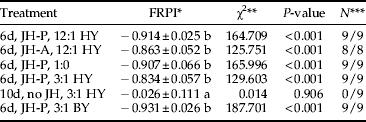
* Negative values indicate that wild females participated in more matings than laboratory females; positive values mean the opposite. Means followed by different letters showed significant differences after multiple comparison tests (P < 0.05).
** Global χ2 (and the associated P-value) refers to the Chi-square test of goodness of fit performed after pooling data from all replicates within each treatment.
*** Number of replicates in which Chi-square test of goodness of fit showed significant deviation from equal proportion of matings between laboratory and wild females relative to the number of replicates carried out for each type of laboratory flies.
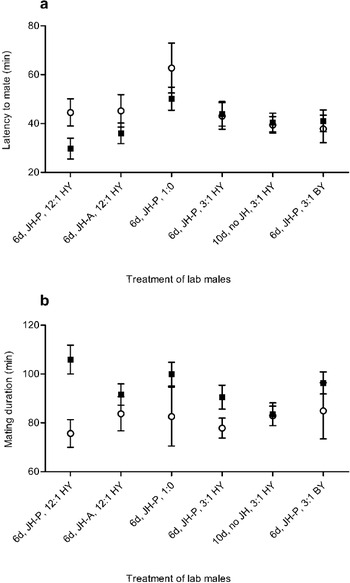
Laboratory and wild males differed significantly in latency to mate and mating duration only when laboratory males were six days old, treated with methoprene at the pupal stage, and were fed a 12:1 diet (6d, JH-P, 12:1 HY) (latency: t = 2.128, df = 163, P = 0.035; mating duration: t = 3.619, df = 153, P < 0.001). Only in this treatment did wild males begin to mate sooner and to copulate longer than laboratory males (fig. 2). For the remaining treatments, no differences were detected between laboratory and wild males, both for latency and mating duration (P > 0.05) (fig. 2).
Mating behaviour of sterile laboratory and wild Anastrepha fraterculus males under field cage conditions for each one of the different treatments (see table 1). (a) Mean latency to mate, measured as the time elapsed between the release of females into the field cage and the detection of each copulation; (b) mean mating duration, measured as the time elapsed between copulation couple detection and male and female separation. Bars represent standard errors ((a) ○, lab males; ■, wild males; (b) ○, lab males; ■, wild males).

Male lekking behaviour evaluation
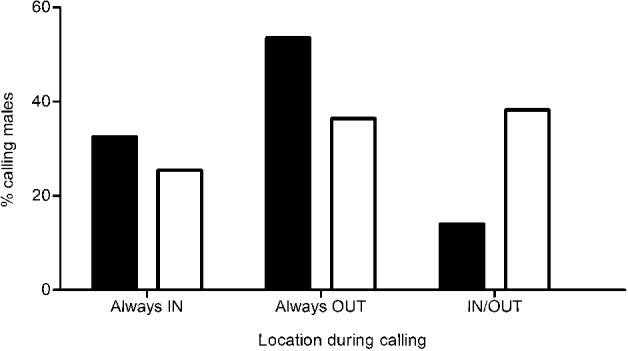
No significant differences were found between laboratory six-day-old males that were treated with methoprene at the pupal stage and fed a 12:1 diet (6d, JH-P, 12:1 HY) and mature wild males that were fed a diet with higher protein content in their calling rate, calling activity and latency to call (table 4). However, laboratory and wild males differed in the location where they performed pheromone calling in relation to the area in which the lek was formed (Chi-square test of homogeneity: χ2 = 15.257, df = 2, P < 0.001). Wild males called alternatively inside and outside the lek more frequently than laboratory males (fig. 3).
Choice of calling location by sterile laboratory and wild Anastrepha fraterculus males in relation to the lekking site. Percentage of males that were observed performing calling always, sometimes or never at the lekking site is shown for laboratory males (six days old, fed on a 12:1 diet and treated with methoprene at pupal stage) and wild males (sexually mature and fed on a diet with a higher protein content) ((a) ■, Lab males; □, Wild males; (b) ■, lab females; □, wild females).

Calling activity of sterile, six-day-old laboratory Anastrepha fraterculus males that were treated with methoprene at pupal stage and were fed a 12:1 diet and mature and protein-fed wild males under field cage conditions. Mean latency to call, mean calling activity, and mean calling rate are shown, with its standard error and the number of replicates between parentheses. Results from statistical analyses are also presented.

T, value of the statistic from the Student t-test for independent samples; Tp, value of the statistic from the Student t-test for paired samples.
Male signalling efficiency
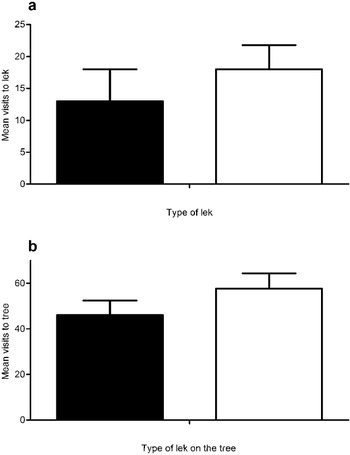
The artificial lek (cylinders hung in foliage) containing mature protein fed wild males showed a tendency to receive more visits of wild females than the artificial lek containing six-day-old, methoprene treated sterile laboratory males (6d, JH-P, 12:1 HY) (fig. 4a). However, these differences were marginally not statistically significant (Student t-test: t = 2.303, df = 6, P = 0.061). Visits to the trees into which the cylinders were hung showed a similar trend; there was a slight tendency towards a higher number of females visits observed on the trees from which the wild lek was hanging (fig. 4b), but no statistical differences were found between the two types of leks (Student t-test: t = 1.652, df = 10, P = 0.130). Accordingly, females spent a similar amount of time in each lek type (5.103 ± 0.451 min for wild males and 4.088 ± 0.586 min for laboratory males) (Student t-test: t = 1.396, df = 215, P = 0.164).
Female Anastrepha fraterculus attendance to artificial leks (males in cylindrical containers hung from field caged trees): (a) mean number of wild females recorded on cylinders containing either five sterile laboratory or five wild males; (b) mean number of wild females recorded on trees that hosted a cylinder containing either five sterile laboratory or five wild males. Sterile laboratory males were six days old, they were treated with methoprene by pupae immersion and then fed on a 12:1 (sugar:HY) diet as adults. Wild males were sexually mature (ten days old) and were fed on a diet with a higher protein content (3:1, sugar:HY). Bars represent standard errors ((a) ■, Lab lek; □, Wild lek; (b) ■, Lab lek; □, Wild lek).

Discussion
Regulation of sexual maturation in insects has been the focus of several studies during the last decades (Happ, Reference Happ1992; Ringo, Reference Ringo and Pfaff2002; Carhan et al., Reference Carhan, Allen, Armstrong, Goodwin and O'Dell2005). On this basis, it was postulated that exposing teneral insects to an external source of juvenile hormone (or an analogue) would result in a precocious sexual maturation (Teal et al., Reference Teal, Gómez-Simuta and Proveaux2000). This response has been intensely studied in tephritid fruit fly pests with a long pre-copulatory period (Teal et al., Reference Teal, Pereira, Segura, Haq, Gómez-Simuta, Robinson and Hendrichs2011), aiming at shortening this period to increase SIT efficiency. In the present study, we found that sterile males of A. fraterculus reached sexual maturity earlier in life (six days vs. ten days), due to juvenile hormone treatment, and exhibited the same lekking behaviour and mating competitiveness under semi-natural conditions as wild fertile males allowed to achieve sexual maturation naturally. However, this effect depended on the acquisition of protein at the adult stage and also on the type of protein ingested. On the contrary, females' readiness to mate was not accelerated by the use of methoprene, and this effect was irrespective of the presence and quality of the protein.
Previous studies have shown that A. fraterculus males exposed to methoprene via topical treatment not only matured faster but competed successfully with untreated mature laboratory males for laboratory females under field cage conditions (Segura et al., Reference Segura, Cáceres, Vera, Wornoayporn, Islam, Teal, Cladera, Hendrichs and Robinson2009). Here, we extended this result covering three aspects relevant to the SIT. First, we evaluated radiation sterilized males. Second, we used a methoprene delivery system that can be applied to millions of flies: pupal immersion. Third, we conducted studies under semi-natural conditions in which sterile males competed with wild males for wild females. Our results show that methoprene treatment enhanced young males' sexual performance after they had been fully sterilized by gamma irradiation (Allinghi et al., Reference Allinghi, Calcagno, Petit-Marty, Gómez Cendra, Segura, Vera, Cladera, Gramajo, Willink and Vilardi2007a). An earlier laboratory study (Segura et al., Reference Segura, Utgés, Liendo, Rodríguez, Devescovi, Vera, Teal and Cladera2010) showed that immersing pupae in a methoprene solution accelerates sexual maturation as efficiently as topical application. Here, we found that sterile six-day-old laboratory males treated at the pupal stage by immersing the pupae in methoprene competed effectively against wild males under field cage conditions. To our knowledge, this is the first study that evaluated the sexual competitiveness of sterile, methoprene treated, laboratory males against wild males in a semi-natural situation.
The impact of adult nutritional status on male sexual performance, as shown in other fruit flies (Aluja et al., Reference Aluja, Jácome and Macías-Ordóñez2001; Yuval et al., Reference Yuval, Kaspi, Field, Blay and Taylor2002, Reference Yuval, Maor, Levy, Kaspi, Taylor and Shelly2007; Pérez-Staples et al., Reference Pérez-Staples, Prabhu and Taylor2007; Shelly et al., Reference Shelly, Edu and Pahio2007; Pereira et al., Reference Pereira, Sivinski and Teal2009, Reference Pereira, Sivinski and Teal2010; Haq et al., Reference Haq, Cáceres, Hendrichs, Teal, Wornoayporn, Stauffer and Robinson2010b), was also documented for A. fraterculus. Protein intake was necessary in order for methoprene-treated males to obtain similar numbers of copulations to wild males fed on a protein-rich diet. Our results show that when competing against such wild males, feeding sterile males only sugar or a poorer quality proteinaceous source (brewer's yeast) resulted in reduced mating success. The differential effect of hydrolyzed yeast and brewer's yeast on mating competitiveness was marked; males fed on a diet with protein content of 8.33% (12:1 sugar:protein) of the former were more competitive than males fed on a diet containing 25% (3:1 sugar:protein) of the latter. In this regard, it should be noted that hydrolyzed yeast not only provides protein but also minerals, vitamins and other essential nutrients that may be responsible for the differences found between the two protein sources (Fanson & Taylor, Reference Fanson and Taylor2012). Future research aimed at finding alternative cheaper protein sources should include evaluation of chemically defined diets in order to improve our understanding of the role of the different nutrients on male sexual competitiveness. It could be argued that our experimental design was somewhat unrealistic given that it is dubious that wild males have access in nature to such a rich protein source as hydrolyzed yeast (Hendrichs et al., Reference Hendrichs, Katsoyannos and Prokopy1993a). However, by doing this, we aimed at providing wild flies the best food available, thus forcing sterile males to face the most vigorous wild males possible come across in nature. Interestingly, even under such challenging scenario, sterile males that were treated with methoprene required less protein to equal the performance of wild males.
For several fruit fly species, including A. fraterculus, the addition of protein in the adult diet negatively affects adults' lifespan (Kaspi & Yuval, Reference Kaspi and Yuval2000; Levy et al., Reference Levy, Shelly and Yuval2005; Prabhu et al., Reference Prabhu, Pérez-Staples and Taylor2008; Oviedo et al., Reference Oviedo, Nestel, Papadopoulos, Ruiz, Prieto, Willink and Vera2011; Utgés et al., Reference Utgés, Vilardi, Oropeza, Toledo and Liedo2011). The impact of this phenomenon to the overall success of the SIT is questionable because protein-fed flies are able to reach sexual maturity, disperse and mate with wild flies before they die (as shown for C. capitata sterile males by Gavriel et al. (Reference Gavriel, Gazit and Yuval2010, Reference Gavriel, Gazit, Leach, Mumford and Yuval2012)). Nonetheless, a reduced longevity caused by protein intake could create a compromise between mating competitiveness and longevity for other tephritids, especially for species like Anastrepha that required more days than C. capitata to achieve sexual maturity. In any case, most of these results were obtained after feeding the flies with high amounts of hydrolyzed yeast, relative to sugar (sugar:HY ratios were 1:1 in Prabhu et al. (Reference Prabhu, Pérez-Staples and Taylor2008); 2:1 in Kaspi & Yuval (Reference Kaspi and Yuval2000) and Levy et al. (Reference Levy, Shelly and Yuval2005); 3:1 in Gavriel et al. (Reference Gavriel, Gazit and Yuval2010, Reference Gavriel, Gazit, Leach, Mumford and Yuval2012) and Oviedo et al. (Reference Oviedo, Nestel, Papadopoulos, Ruiz, Prieto, Willink and Vera2011); and 5:1 in Utgés et al. (Reference Utgés, Vilardi, Oropeza, Toledo and Liedo2011)). Our results show that a diet enriched with only one-twelfth of hydrolyzed yeast was enough to induce high levels of competitiveness in methoprene-treated males. This is in agreement with Prabhu et al. (Reference Prabhu, Pérez-Staples and Taylor2008), who found, for B. tryoni males, that a protein content as low as 9% provided the same results in terms of mating competitiveness as diets with higher protein content.
Although differences between wild and sterile males, in terms of the time of copulation initiation and duration, were minor, data showed some general trends. In the three treatments where laboratory males were fed only sugar or a low protein ratio, there was a tendency for wild males to mate sooner than laboratory males. Previous work has reported a positive effect of protein on mating latency (Blay & Yuval, Reference Blay and Yuval1997; Haq et al., Reference Haq, Cáceres, Hendrichs, Teal, Wornoayporn, Stauffer and Robinson2010b) when comparing males fed on a diet with high protein content (3:1, sugar:protein) and males fed on sugar only. Our results are in agreement with this. However, Prabhu et al. (Reference Prabhu, Pérez-Staples and Taylor2008) found that B. tryoni males attained the minimum latency times when they fed on diets with low protein content, close to what we would expect for males fed on a 12:1 (sugar:protein) diet. These differences can be due to the fact that treated males matured faster and were tested when they were six days old, and they could still require more protein to sexually perform as well as a mature male fed on a 3:1 diet. We also found a general trend towards shorter copulations in couples that involved six-day-old laboratory males, irrespective of their nutritional status, than in couples involving wild males. Laboratory males had been irradiated; and, according to Allinghi et al. (Reference Allinghi, Gramajo, Willink and Vilardi2007b), irradiation negatively affects mating duration in A. fraterculus, a finding also reported for C. capitata (Cayol et al., Reference Cayol, Vilardi, Rial and Vera1999). However, the fact that mature laboratory males, which had also been irradiated, showed no difference in mating duration compared to wild males argues against this and suggests that irradiation had little effect on mating duration. Many studies have shown a positive association between protein intake and mating duration (Prabhu et al., Reference Prabhu, Pérez-Staples and Taylor2008; Haq et al., Reference Haq, Cáceres, Hendrichs, Teal, Wornoayporn, Stauffer and Robinson2010b; Pereira et al., Reference Pereira, Sivinski and Teal2010), and even when some of the six-day-old males received a diet with the same protein content as wild or mature sterile males (i.e. 3:1), young males had less time to consume food, and it might be the case that they had accumulated less protein. Based on the trends we found for latency and mating duration, the effect of protein intake on mating behaviour should be further studied in order to adjust the amount of protein in the pre-release diet that guarantees that sterile males mate as rapidly and for a similar amount of time as wild males. This is very relevant, especially since the aforementioned trends were in fact statistically significant for the treatment that best fits a cost/benefit relationship from an SIT perspective according to the MRPIs (i.e. pupae immersion in methoprene and a 12:1 diet). Furthermore, recent work by Abraham et al. (Reference Abraham, Goane, Cladera and Vera2011) showed that mating duration is correlated with female refractory period, strengthening the need to better understand the role of protein intake in copulation duration.
The evaluation of methoprene-treated females revealed interesting results given that, for A. fraterculus, there are no GSS yet available. With the use of methoprene, differences in the way males and females mature have been uncovered. Even though female sexual receptivity is tightly coordinated with ovarian development, which in turn is hormonally regulated (Ringo, Reference Ringo and Pfaff2002), studies evaluating the effect of methoprene on Anastrepha females showed contrasting results. While Aluja et al. (Reference Aluja, Ordano, Teal, Sivinski, García-Medel and Anzures-Dadda2009) found that females for four species seem to be unaffected by the treatment in terms of the onset of oviposition Pereira et al. (Reference Pereira, Teal, Conway, Worley and Sivinski2011a) reported that A. ludens females started to mate sooner if they were treated with methoprene. The different methods used to treat the flies could account for these differences. Aluja et al. (Reference Aluja, Ordano, Teal, Sivinski, García-Medel and Anzures-Dadda2009) treated flies topically (5 μg of methoprene per fly), while Pereira et al. (Reference Pereira, Teal, Conway, Worley and Sivinski2011a) immersed pupae in a methoprene solution, thereby increasing exposure to methoprene. For A. fraterculus, Segura et al. (Reference Segura, Cáceres, Vera, Wornoayporn, Islam, Teal, Cladera, Hendrichs and Robinson2009) found that topical treatment did not result in an acceleration of female sexual maturation. The present study extends the results found for topical application to pupal immersion and provides additional support to the use of methoprene in this species.
In terms of the lekking behaviour, the only difference found between laboratory and wild males was the higher percentage of wild males moving in and out of the lek during pheromone calling. Adaptation to laboratory conditions can affect many biological parameters, including behavioural traits (Briceño & Eberhard, Reference Briceño and Eberhard1998, Reference Briceño and Eberhard2002; Calcagno et al., Reference Calcagno, Vera, Manso, Lux, Norry, Munyiri and Vilardi1999; Liedo et al., Reference Liedo, Salgado, Oropeza and Toledo2007). Overcrowding could eventually lead to a loss of mobility, and this could explain why laboratory males showed a lower tendency to move around the tree than wild males. This reduced mobility of laboratory males was shown to also result in a significantly decreased capacity to respond to predator attacks (Hendrichs et al., Reference Hendrichs, Wornoayporn, Katsoyannos, Gaggl and Hendrichs1993b). In nature, a low response to predators can cause a large mortality among maturing sterile males, thereby seriously decreasing SIT effectiveness (Hendrichs et al., Reference Hendrichs, Wornoayporn, Katsoyannos and Hendrichs2007). However, the methoprene treatment of sterile males allows releasing them much closer to sexual maturity, hence reducing exposure to predators before they are ready to mate.
Nutritional status and juvenile hormone treatment affect male sexual signalling in other tephritid species (Teal et al., Reference Teal, Gómez-Simuta and Proveaux2000; Aluja et al., Reference Aluja, Ordano, Teal, Sivinski, García-Medel and Anzures-Dadda2009; Pereira et al., Reference Pereira, Sivinski and Teal2009; Haq et al., Reference Haq, Cáceres, Hendrichs, Teal, Stauffer and Robinson2010a). Our results show that six-day-old, methoprene-treated, laboratory sterile males that were fed a diet with reduced protein content generally exhibited a similar calling behaviour to mature fertile wild males that were fed on a higher protein content diet. Also, the fact that wild females visited artificial leks that grouped these two kinds of males at the same rate shows that the quality of the signal released is equally attractive to females, at least at short distances of the field cage. These observations suggest that pheromone release is not affected by laboratory rearing and irradiation and that methoprene treatment, along with a diet containing protein, will induce young sterile males to release pheromone at the same rate and of the same quality as wild males. Comparing pheromone quantification and chemical characterization of the main components among both male types would confirm this hypothesis.
In conclusion, the results of the experiments conducted so far fully support the combined use of methoprene and protein as tools to enhance mating competitiveness of sterile A. fraterculus males. Furthermore, we showed that in order to boost the sexual performance of young sterile males on the basis of methoprene treatment, a proteinaceous food source has to be made available. However, lower concentrations of protein than used in previous studies on tephritids were effective. The age at which flies are released can be selected so that sterile female participation in copulation is further reduced to ca. 5%, allowing sterile males to disperse in search of wild females. Further work should be directed at fine-tuning protein dosage and the evaluation of particular aminoacids or nutrients in order to find less expensive protein sources.
Acknowledgements
The authors thank Cecilia Giardini, Leonela Carabajal Paladino, María Hoiak, Marianela Juri, Claudia Conte, Alejandra Parreño and Germán Crippa for their collaboration during field cage tests. We want to especially thank Fabián Milla and Patricia Peralta for supplying laboratory flies, and Verónica Yusef for the irradiation of pupae. Financial support was provided by the International Atomic Energy Agency through the Research Contract N°12852 to JLC and the Agencia Nacional de Promoción Científica y Tecnológica (Argentina) through the project Foncyt-PICT 2006-148 to DFS.