A humanitarian emergency is an event, or series of events, that represents a critical threat to the health, safety, security, or well-being of a community or other large group of people, usually over a wide area. During such emergencies, maternal and child health continue to be overlooked, leading to staggering consequences and devastating health implications; the worst rates of preventable mortality and morbidity among women and children occur in humanitarian settings and other crises. 1,2 In 2015, over 75% of 84 million people in need of humanitarian assistance were women and children, the majority of whom were impoverished, which aggravates this scenario. Reference Sarah3
The need for high quality and timely information and research in humanitarian emergencies has been a topic of great discussion over the past several years. Recent high profile incidents have exposed gaps in knowledge about the health impacts of disasters or the benefits of specific interventions. Reference Miller, Yeskey, Garantziotis, Blake, Johnston and MacDonald4 In this context, besides funding an organized professional research network, reliable, easy-to-use, standardized, and efficient tools for data collection are needed to enable different organizations to plan and act in the most effective way.
In 2015, the World Health Organization (WHO) commissioned a review of data collection tools concerning the health of women and children in humanitarian emergencies. Reference Pyone, Dickinson and Kerr5 Tools that were available between 2000 and 2014 were identified and reviewed. For each study, the setting where tools were used, the types of data collected, and the type of tools used to collect the data were described. Recommendations were then proposed, including the development of a simplified, standardized tool. An update of the 2015 review to investigate whether this recommendation has been taken forward and to identify possible newly developed tools by type and purpose was conducted. This article describes data collection gaps and recommends the next steps to promote harmonized monitoring of the health status of mothers, newborns, and children under the age of 5 years in humanitarian settings and emergency situations. These tools and the data collected can be used to prioritize actions for programs. Differently from the previous review, this study does not include studies or tools on sexual and reproductive health because this subject will be studied separately for the sake of better clarity in each study field.
METHODS
Search Strategy
In order to update the previous review, the search strategy formerly used was reproduced and a systematic review according to the PRISMA guideline was conducted. 6 MEDLINE, Web of Knowledge, and POPLINE databases were searched for studies in all languages between July 1, 2014 and January 24, 2018. A search for the whole study period, that is, between January 1, 2000 and January 24, 2018, was conducted to amplify the search, adding new studies identified in all languages except English, because the previous review included studies in English only. LILACS was also searched in all languages for the whole study period, because this database had not been included in the previous review. The search incorporated the same medical subject heading (MeSH) terms, key words, and free text as in the 2015 review, excluding the terms regarding sexual and reproductive health. The terms used were “maternal,” “newborn,” “child/child health service*,” “pregnan*,” “neonat*,” under one search string and “disaster,” “post conflict,” “war,” “humanitarian,” “refugee,” “internally displaced” under another string. Similarly, the Boolean operator “OR” was used for the terms under each search string, and “AND” was used to combine both strings.
The website of organizations that work with humanitarian emergencies that were included in the previous search – CARE International, the Centers for Disease Control and Prevention, Harvard Humanitarian Initiative, the Inter-Agency Standing Committee, the International Federation of Red Cross and Red Crescent Societies (IFRC), Knowledge for Health (K4Health), Médecins Sans Frontières (MSF), the Office of the United Nations High Commissioner for Refugees, Oxfam, the Reproductive Health Response in Crises Consortium, Save the Children, the United Nations Population Fund (UNFPA), the Women’s Refugee Commission, WHO, and World Vision – were included in the search. Action Against Hunger, The Population Council, Surgeons Overseas, and The Measure Evaluation Program were also included. The snowballing process included reviewing the reference list and authors of the retained studies and the organizations websites and documents.
Inclusion and Exclusion Criteria
Only studies that described the development or use of data collection tools concerning maternal and child health in humanitarian emergency settings were included. This occurred even if the tools used were not specified or the methods were not described. Because sexual and reproductive health was not incorporated in the current study, sexual/gender-based violence, family planning, and sexually transmitted infections, including HIV/AIDS, were excluded from this review.
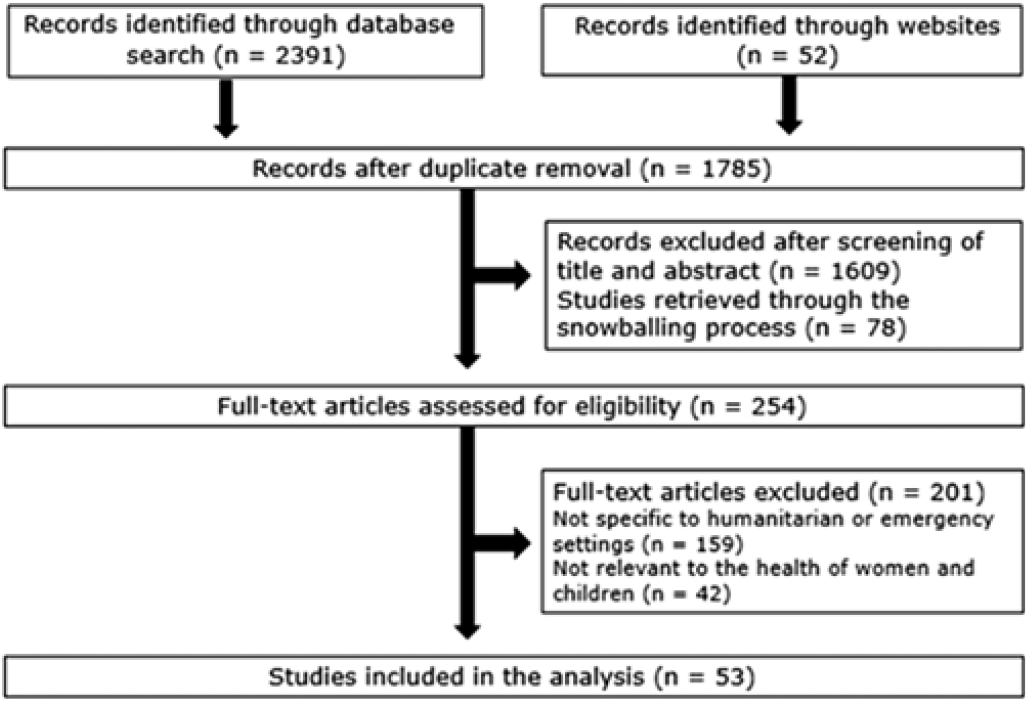
Two independent authors searched databases and websites, and if there was not consensus whether or not a study should be included, a third independent reviewer was consulted. First, the titles and abstracts of all studies were screened. Studies were then excluded if they did not meet the inclusion criteria. The ones that met the inclusion criteria were fully read to assess eligibility (Figure 1). Two reviewers summarized the information on tools used, type of data collected, and purpose of the study (Table 1). Data were classified into 2 categories: (1) maternal and newborn (0–28 days) health; and (2) infant (0–11 months) and child (12–59 months) health.
Flowchart for study selection.

Summary Table of Included Studies

ANC = antenatal care; COPE = Coping Orientation to Problems Experienced; FCHV = female community health volunteers; GSF = Gynecologie Sans Frontieres; IDP = internally displaced person; IPV = intimate partner violence; KI = key-informant; NA = not applicable; PTE = potentially traumatic events; SBA = skilled birth attendants; TT = tetanus toxoid.
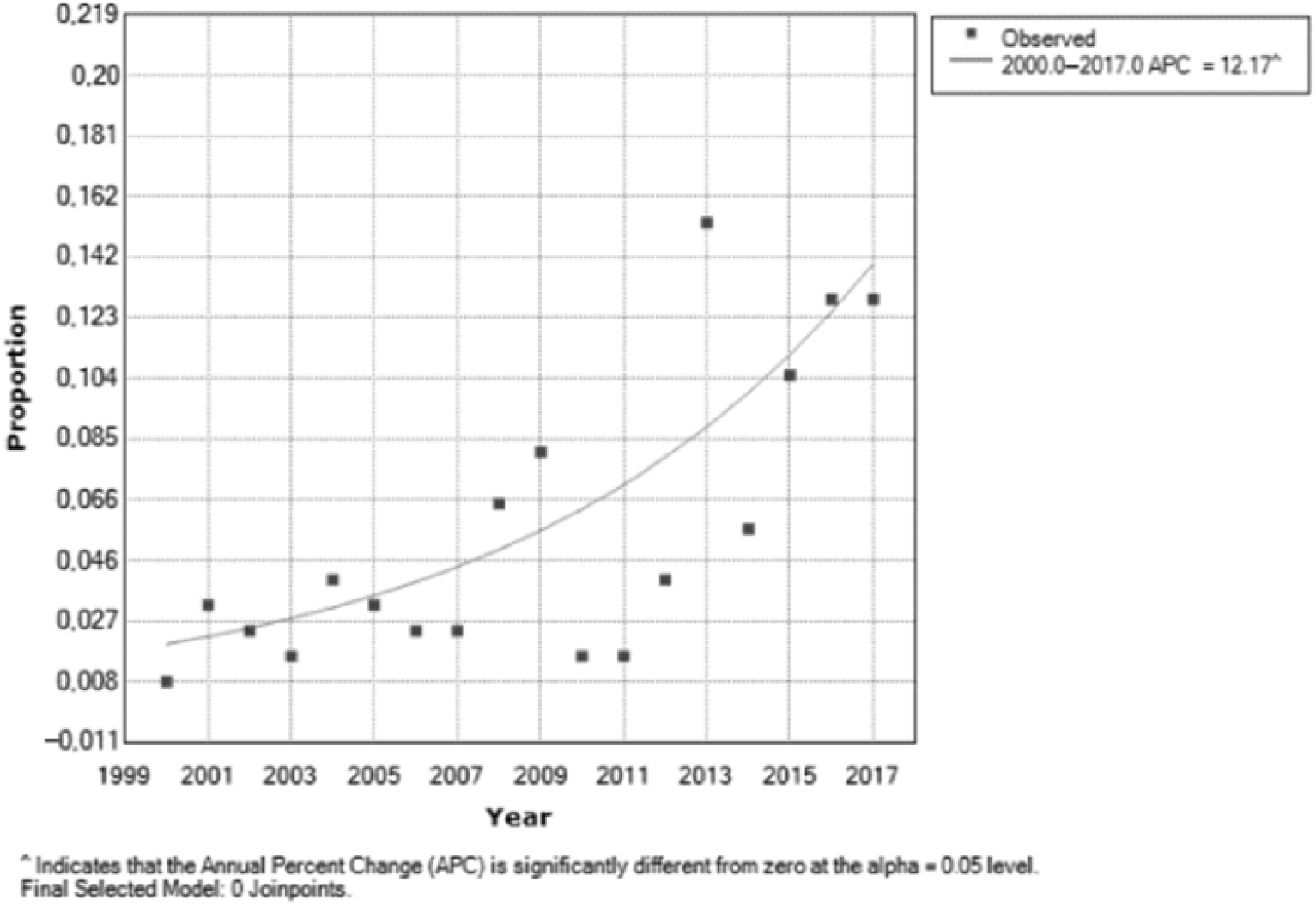
A narrative synthesis was used to summarize the studies that were included in our review. Reference Lucas, Baird and Arai7 A full report on the findings and methods was also prepared. The report also included a list of all studies that met and those that did not meet the inclusion criteria and all included tools. These are available upon request. Trends in the number of published studies from 2000 to 2017 were assessed statistically. The trend analysis was done using The Joinpoint Regression Analysis Program, version 4.6.0.0. 8
RESULTS
Of the 53 studies retained in the review, 49 reported the number of women and children included in the study sample. Of a total population of 134 889 individuals, 29 171 (22%) were women and 95 317 (71%) were newborns and children under age 5 years. The sample sizes varied from 11 (interviews with midwives regarding pregnant women health in Ebola centers) Reference Erland and Dahl9 to 28 996 (Technical report from the Food and Agriculture Organization of the United Nations assessing the prevalence of acute malnutrition amongst children and under-age-5 mortality rate). 10 Despite the inclusion of other languages, all studies that met the inclusion criteria and were retained were in English.
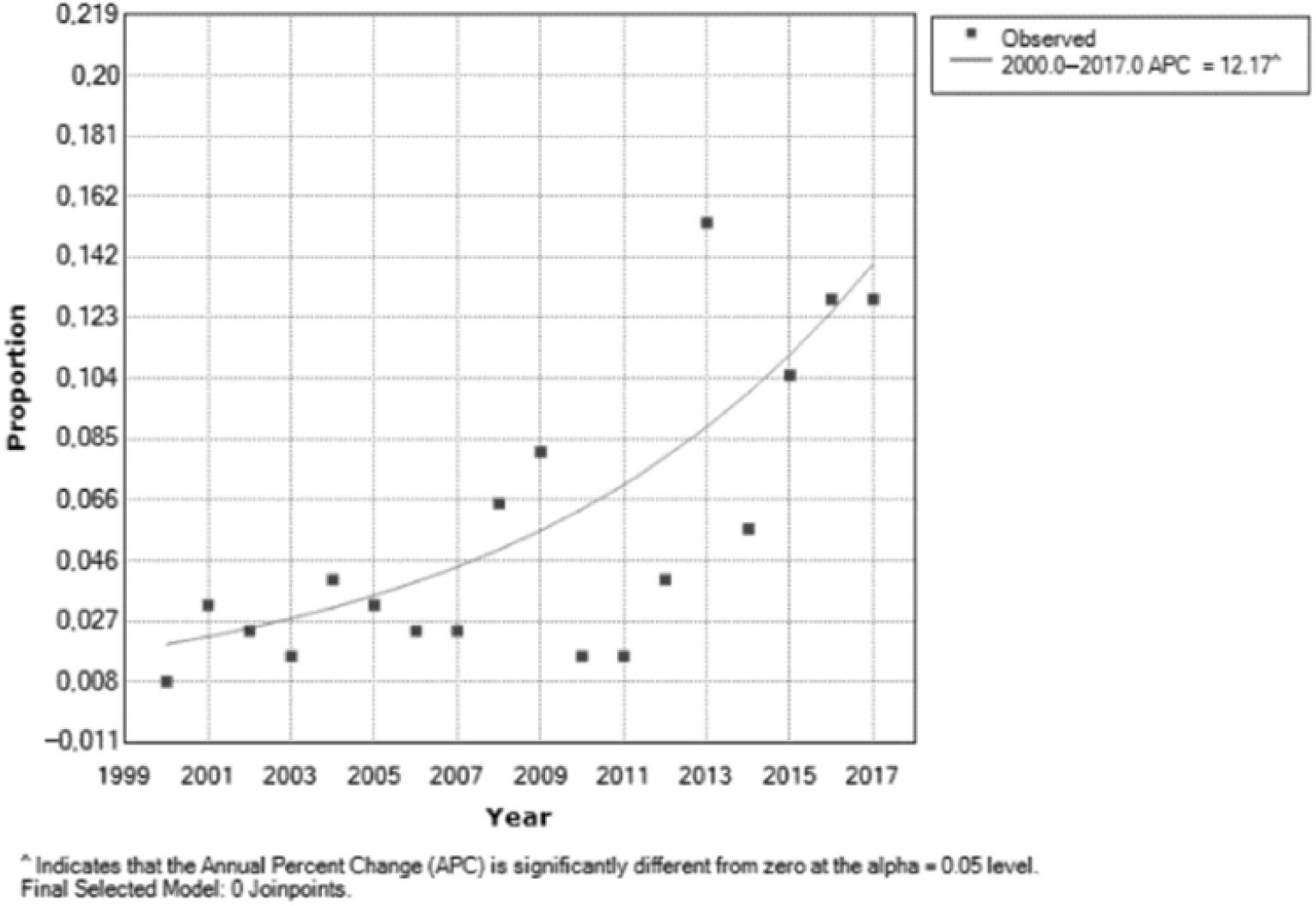
There was a mean of 5 studies published that used tools for the collection of data on maternal and child health in humanitarian settings per year during the period of January 2000 to July 2014. In the period of August 2014 to December 2017, the mean was of 15 studies per year. The trend analysis showed a significant 12% annual increase in the number of publications during the full period of 2000 to 2017 (Figure 2).
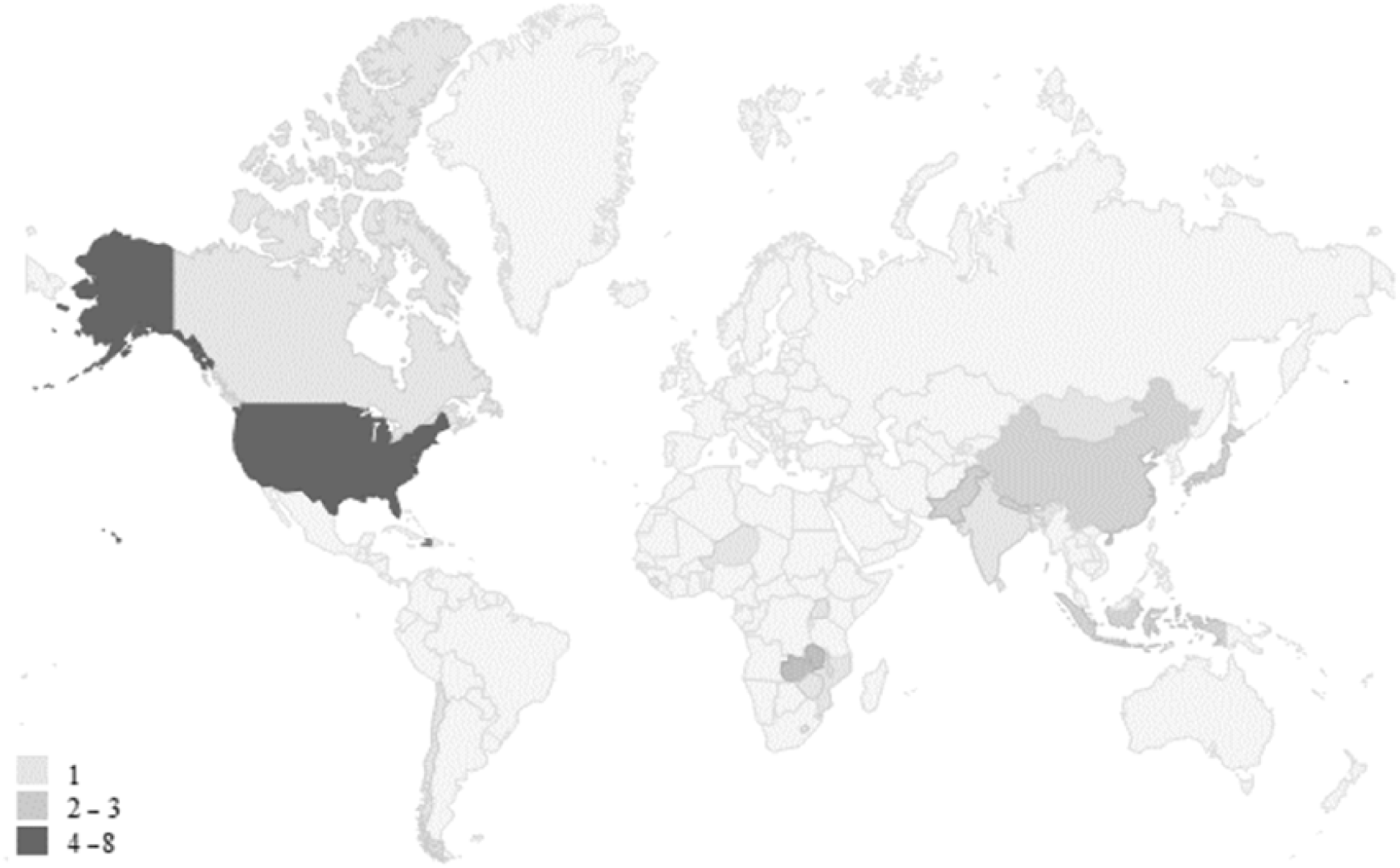
Distribution of natural disasters studies by country.
The previous review included 100 studies; however, 28 of them were not included in our analysis because they assessed only sexual and reproductive health. Among the total 125 studies on maternal, newborn, and child health (72 included in the previous review and 53 included in this one), 91 (73%) were related to manmade disasters, including armed conflicts, terrorist attacks, and nuclear accidents, whereas 33 (27%) were carried out following natural disasters or disease outbreaks, such as drought, earthquakes, floods, hurricanes, tsunami, ice storm, and Ebola outbreak. There was no difference in the proportion of the type of study between the 2 periods (74% manmade and 26% natural disaster in 2000–2014; and 73% manmade and 27% natural disaster in 2014–2017). That is, the nature of the emergency investigated remained similar through the years, with about 3 times more studies related to manmade disasters than to natural ones.
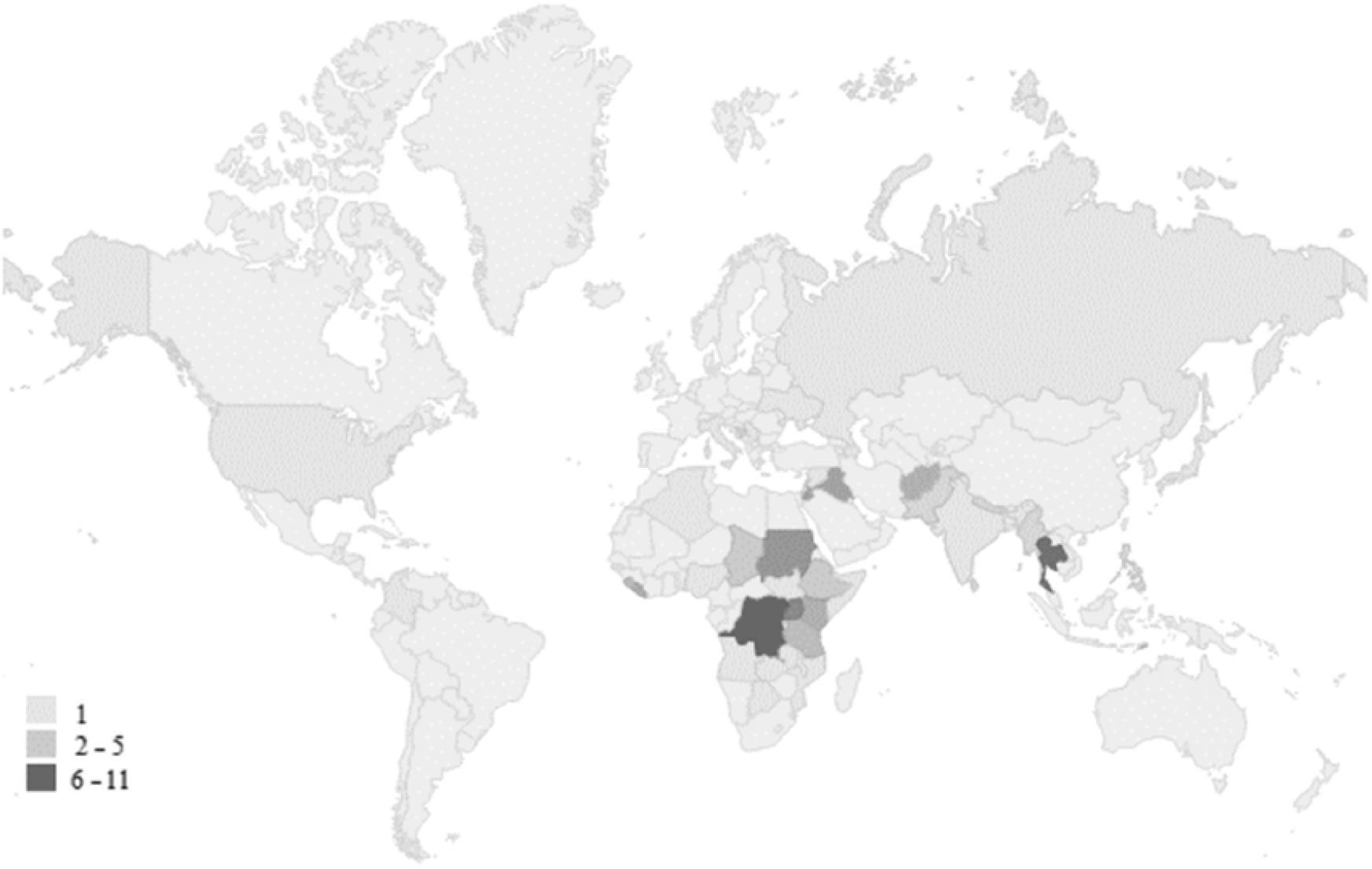
Table 1 and Figures 3 and 4 show the distribution of humanitarian emergency studies by country and type of emergency. Of the total 125 studies, only 2 (1.6%) were carried out in South America: 1 in Chile as a follow-up of the 2010 earthquake Reference Arbour, Murray, Yoshikawa, Arriet, Moraga and Vega11 and the other in Colombia regarding armed conflict and forced displacement settings. Reference Krause, Morris and McGinn12 Almost half (61/125) of the included studies were in Africa mostly on manmade disasters, and all referred to armed conflicts. Forty-three (34%) studies were in Asia and 10 (8%) in North America, mostly on natural disasters (9/10). The Democratic Republic of Congo was the single country with most studies regarding manmade disasters, a total of 11, whereas the United States was the country with the most reported studies on natural disasters, a total of 8 studies.
Distribution of natural disasters studies by country.

Distribution of natural disasters studies by country.

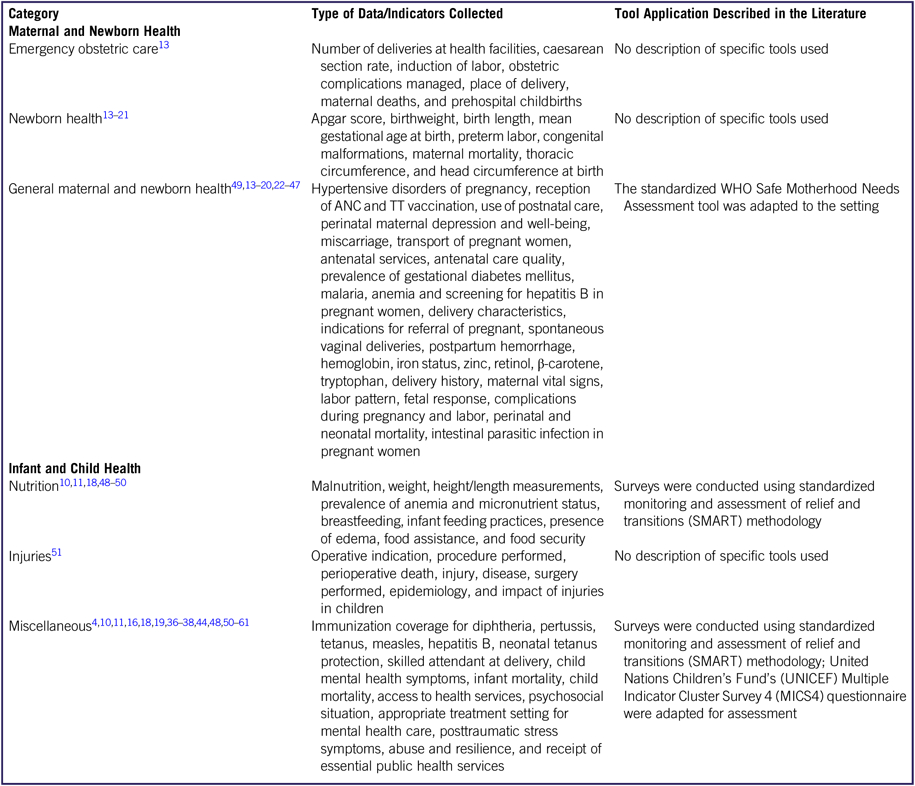
Similar to the findings from the previous review, studies that collected data during the disaster preparedness phase were not identified and were identified in the recovery phase only. Also, like the previous review, studies that had the primary aim of collecting data to support a funding request were not found. Table 2 shows that a variety of indicators were used in the collection of data in the included studies. Some used standardized toolkits for the monitoring and assessment of the situation; however, these tools were not necessarily specific to humanitarian emergencies.
Data Collection Tools Used and Type of Data Collected for Maternal and Child Health During Humanitarian Emergencies

ANC = antenatal care; TT = tetanus toxoid.
In this updated review, 45 studies focused on the health status of the affected population, and 8 examined the availability and coverage of health services before, during, or after the emergency. Forty-two studies collected data for monitoring and evaluation, 5 were operational research, and 6 studies collected data for needs assessment. One study described a program to create new tools, protocols, networks of researchers, training exercises, and outreach involving diverse groups of stakeholders to help overcome the challenges of disaster research. Reference Miller, Yeskey, Garantziotis, Blake, Johnston and MacDonald4
Data Collection Tools
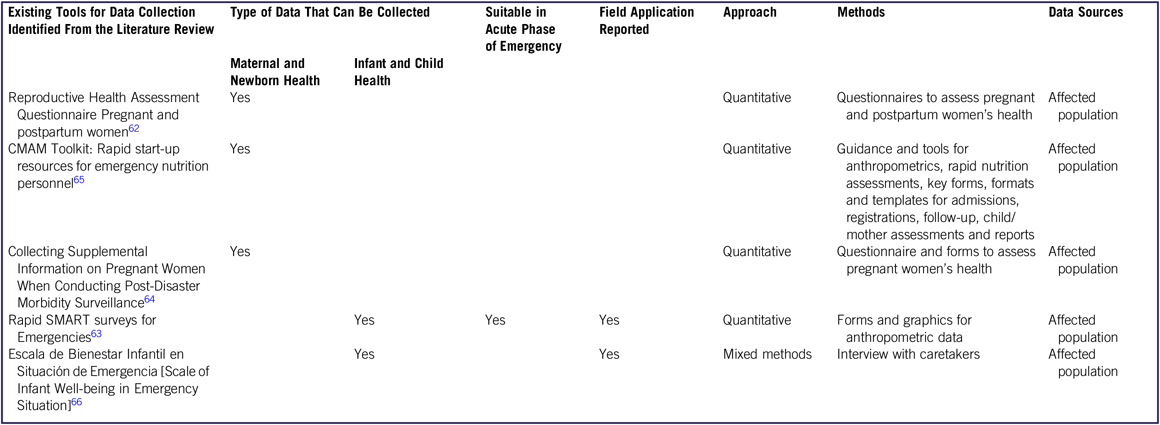
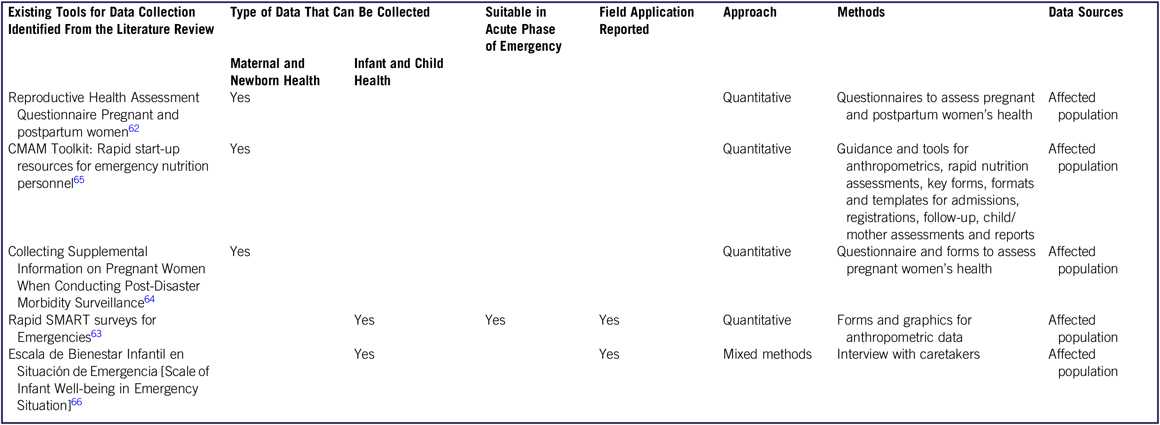
The previous review identified 17 data collection tools. Since then, 5 new tools were found, most of which consisted of questionnaires. 62-65 Four of the 5 new tools were identified through a search of organization websites; the fifth tool was used in 1 of the studies included in the review. One of the tools, which aimed to collect data on children’s well-being, used a qualitative approach 66 based on guided focus group discussions and interviews. One other tool was specific for post-disaster morbidity of pregnant women, 64 1 assessed both newborn and maternal health, 62 and 1 other focused on child health. 66 Two tools 63,65 were specific for the evaluation of the nutritional status of children during emergencies, including an easy-to-use compilation of tools to measure the nutritional needs during emergencies, at the onset of a crisis or during protracted crisis. 65 The only tool that focused on child health was in Spanish and was developed before 2014 but had not been included in the previous review. This tool, the Escala de Bienestar Infantil en Situación de Emergencia (Scale of Child Well-being in Emergency Situation), 66 was adapted from the Child Status Index 67 for use in Chile in areas affected by the earthquake in 2010. Reference Arbour, Murray, Yoshikawa, Arriet, Moraga and Vega11 In the previous review, no specific tool for children was identified, but rather 4 toolkits had questionnaires that included the collection of some data on child health data. Similar to what was found in the previous review, there was no specific tool identified for newborn health. For this group, data were collected together with those for maternal health.
Our review also identified documents that can be valuable for the development of a standardized data collection tool to be used in humanitarian emergencies, 68,69 because these instruments list essential indicators for women’s health during emergencies. However, only 1 Reference Arbour, Murray, Yoshikawa, Arriet, Moraga and Vega11 of the 53 newly identified studies reported the use of any of the 22 tools found in both reviews. Some studies based their research on the WHO Safe Motherhood Needs Assessment, the Countdown to 2015 indicators, the Surgeons OverSeas Assessment of Surgical Need, the Health Needs Assessment instrument, and the Field Tools and Monitoring and Evaluation Toolkit of the Reproductive Health Response in Conflict Consortium and the Inter-Agency Standing Committee guidelines. Table 3 describes the type of data collected, the approach, and methods of each tool.
Summary of Data Collection Tools for Maternal and Child Health, Approaches, and Methods of Data Collection in Humanitarian Emergencies
DISCUSSION
This review, together with the previous one, provides the current panorama of the existing tools for data collection in humanitarian settings, as well as the published experience of the use of these tools, regarding maternal and child health. Only tools that were specific to data collection in humanitarian emergencies were included; therefore, all tools that are used in these settings may not have been included. Although most of the tools identified had been reported to have some use in the field during humanitarian emergencies, only 1 of the 53 studies included in our review actually used 1 of the tools identified in our search. Thus, there is still the need to advocate for the harmonization, standardization, and use of existing tools, taking into consideration cultural alignments that may be necessary. Tools that might be useful in this harmonization process were identified, such as the Health Indicators for Disaster-Affected Pregnant Women, Postpartum Women, and Infants 68 and the Guideline for Timed and Targeted Counselling (TTC) Data Collection and Reporting. 69 These documents represent an advance in an agreed core set of indicators for maternal and child health. However, a similar core set of indicators for newborn health is still needed. A tool specific for newborn health would be of great importance because this population is especially vulnerable during emergencies. 70 The Newborn Health in Humanitarian Settings Field Guide 71 could be useful in the development of such a tool, because it provides a series of important indicators on newborn health in humanitarian settings.
The majority of the newly identified studies (42/53) were used to monitor and evaluate ongoing interventions in humanitarian settings. Forty-five (85%) of them focused on the evaluation of health status. The increase in mass emergencies in recent years has highlighted the importance of rapid assessment of health needs for a better allocation of resources and relief management. As a result, the development of techniques for the rapid assessment of health needs has been identified as a priority for effective emergency action. Reference Guha-Sapir72 Despite previous recognition of the need for data collection on disaster preparedness or disaster response, Reference Pyone, Dickinson and Kerr5 no tools or studies on the subject were identified. So, the need to adapt or develop such a tool for this specific phase remains. The Rapid Health Assessment of Refugee or Displaced Populations 73 provides adequate methods for carrying out rapid health assessments and support in the analysis and interpretation of the results.
In this review, only 1 of the 53 included studies used any of the specific tools for data collection. In the previous review, among the 72 included studies, only 12 specified the use of any of the 17 identified tools. Authors may not be aware of the availability of such tools and of the importance of documenting their data using the same methods as other researchers. Also, tools may not be suitable for use in humanitarian settings or may not include the specific domains of the authors’ interests.
A recent study showed that practical information relating to data collection obtained directly from experienced researchers and field workers gave important perspectives regarding the methodology used to obtain information; the importance of language in the development and use of data collection tools; the variety of and need for adaptation of existing data collection tools; and the capacity of staff for data collection in emergency and humanitarian settings. Reference Dickinson, Pyone and van den Broek74 As advocated in the previous review, to spread the use of these tools among researchers, educational programs or trainings should include the use of these toolkits.
CONCLUSIONS
Since the publication of the previous review, very little has been done in terms of the recommendation to evaluate, standardize, and harmonize existing tools. On the contrary, 4 additional tools, newly developed during the last 3 and a half years, were identified. Therefore, the need to advocate remains for the harmonization of existing tools for data collection, for the use of such harmonized tools in studies in the field, and for the alignment of such tools for different types of culture, languages, and populations.
Studies in the field should contain a description of their experience in the use of the chosen data collection tool, its applicability, and the cultural adaptations required. The development of new, easy-to-use, and standardized tools and the adaptation of the existing ones should be done with all key workers in the area, because sharing and comparing information allows a clearer and more consistent picture to emerge, and could be coordinated by WHO.
Funding Statement
This work was funded by the World Health Organization, contract number 201950488.
Conflict of Interest Statement
The authors have no conflicts of interest to declare.
Disclaimer
The authors alone are responsible for the views expressed in this article, which does not necessarily represent the views, decisions, or policies of the institutions with which the authors are affiliated.