





Introduction
The American Heart Association defines congenital heart defects (CHDs) as any abnormality in the development of the heart structures or adjacent blood vessels. Reference Stout, Daniels and Aboulhosn1 CHDs encompass a wide range of conditions, including but not limited to atrial septal defects, ventricular septal defects, and aortic valve stenosis, and they represent the most common congenital anomalies worldwide. Although the reported prevalence of CHDs has increased over the past four decades, this rise is largely attributed to advances in diagnostic technology and improved detection. Reference Liu, Chen and Zühlke2,Reference van der Linde, Konings and Slager3 This is clinically significant, as CHDs are associated with substantial morbidity and mortality, contributing to an estimated 261,247 deaths and nearly 12 million people living with the condition globally in 2017. 4 Enhancing detection and treatment capability is therefore essential to improving congenital cardiac care and reducing the associated disease burden.
Historically, surgical closure has been the primary treatment modality for structural heart defects such as atrial septal defects and ventricular septal defects. Reference Baskett, Tancock and Ross5 Open-heart surgery, performed with cardiopulmonary bypass, gained recognition as the gold standard because of its high success rate and wide clinical acceptance. Reference Baskett, Tancock and Ross5 However, the invasive nature of surgical closure, together with risks such as infection, prolonged hospitalisation, and extended recovery, fuelled the need for less invasive alternatives. Reference Faccini and Butera6
The late twentieth century marked a turning point with the emergence of transcatheter closure, a percutaneous, catheter-based technique that substantially reduced procedural risk and recovery time. Reference King and Mills7 Continued advances in device technology and procedural technique have further refined transcatheter closure, leading to modern occluder devices with improved safety and efficacy profiles. Reference Masura, Gavora, Formanek and Hijazi8 Innovations such as self-expanding nitinol devices, improved imaging, and growing operator experience have consolidated the role of transcatheter closure for many structural heart defects, including larger atrial septal defects and ventricular septal defects. Reference Masura, Gavora, Formanek and Hijazi8
These developments have shifted the paradigm in interventional cardiology towards minimally invasive techniques. Reference Chambault, Olsen and Brown9 Nevertheless, controversies and inconsistencies persist. Several syntheses have addressed this comparison, but each has been restricted to atrial septal defect and has expressed its findings as pooled effect estimates. Reference Chambault, Olsen and Brown9,Reference Butera, Biondi-Zoccai and Sangiorgi10,Reference de Liyis, Kosasih, Jagannatha and Dewangga27 Two limitations follow. First, it remains unknown whether the recovery-versus-durability trade-off documented in atrial septal defect recurs in other defects—such as patent ductus arteriosus, muscular ventricular septal defect, or coronary artery fistula—that are increasingly closed percutaneously in children. Second, pooled odds ratios collapse mechanistically distinct events (device embolisation, conduction block, bypass-related complications) into a single number, obscuring which kinds of harm each approach carries. To our knowledge, no prior synthesis has spanned this range of closable lesions while deliberately preserving the mechanistic texture of the complication data in a predominantly pediatric population.
A third consideration shapes the present review. Much of the published experience with transcatheter closure of these lesions consists of single-arm case series, which describe the outcomes of one approach but cannot, by construction, support inference about its comparative effectiveness. We therefore separated the evidence into two tiers from the outset: directly comparative studies, which alone inform statements about transcatheter closure relative to surgical closure, and single-arm series, which are reported descriptively and are used only to characterise the range and mechanism of events after transcatheter closure. This separation is applied consistently to the risk-of-bias assessment, the certainty ratings and the conclusions.
The choice between transcatheter and surgical closure is, moreover, never a free or randomised one. It is determined, before any outcome is observed, by the morphology and complexity of the lesion, the patient’s age and weight, associated cardiac anomalies, the haemodynamic burden, and the technical feasibility and anticipated risk of a device. Patients referred for surgery are therefore, by construction, enriched for the anatomy that a device cannot safely address, and any comparison of the two approaches is confounded by the indication that selected them. We treat this confounding by treatment indication as the central interpretive problem of the review: it governs the risk-of-bias and certainty assessments, and it is the reason we also examine which anatomical and clinical characteristics favour each approach, rather than presenting the two as interchangeable alternatives.
Objectives
This systematic review evaluates transcatheter versus surgical closure across the spectrum of closable CHDs in predominantly pediatric populations, with four aims: (i) to determine, using directly comparative studies only, whether the trade-offs in procedural success, length of hospital stay, adverse events, and reintervention are consistent across defect types; (ii) to characterise the distinct complication profile of each approach, distinguishing adverse events from expected perioperative resource use; (iii) to identify the lesions for which comparative evidence is absent; and (iv) to describe the anatomical and clinical characteristics that govern the choice between the two approaches, including the situations in which transcatheter closure is technically feasible and those in which surgical repair remains the preferred or only reasonable option.
Methods
This systematic review was conducted and reported in accordance with the Preferred Reporting Items for Systematic Reviews and Meta-Analyses (PRISMA 2020) statement. Reference Page, McKenzie and Bossuyt12 The protocol was registered with the International Prospective Register of Systematic Reviews (PROSPERO; CRD420261424579). Deviations from the registered protocol are reported in the Declarations.
Search strategy
PubMed, Embase, and the Cochrane Central Register of Controlled Trials were searched from inception to June 2026, with no initial restriction on language, publication date, or publication type. The PICO framework is summarised in Table 1, and the full search strategy is shown in Table 2.
PICO framework and evidence-tier assignment

Table 1. Long description
Two columns, element and eligibility criteria, with five rows. Population: patients with a congenital heart defect (atrial septal defect, ventricular septal defect, patent foramen ovale, patent ductus arteriosus, sinus venosus defect, atrioventricular septal defect or coronary artery fistula) in a predominantly pediatric cohort, defined as a mean or median age below 18 years or an age range wholly below 18 years; exclusively adult cohorts were excluded, and mixed-age cohorts were retained and flagged. Intervention: transcatheter, device-based closure. Comparison: surgical closure, conventional or minimally invasive. Outcomes: procedural success, major and minor adverse events, reintervention and long-term efficacy, with length of stay, intensive-care admission and mechanical ventilation reported as resource utilization. Study design: tier 1 studies report both approaches in the same cohort and are the only source of comparative inference; tier 2 single-arm series are descriptive only.
ASD = atrial septal defect; AVSD = atrioventricular septal defect; PDA = patent ductus arteriosus; PFO = patent foramen ovale; VSD = ventricular septal defect.
Search strategy (concept blocks combined with AND; adapted per database)

Table 2. Long description
Two columns, concept and search terms, with seven rows. In each row, free-text phrases and MeSH headings are combined with OR. Congenital heart defect: congenital heart defect, CHD, Heart Defects, Congenital. ASD: atrial septal defect, ASD, Heart Septal Defects, Atrial. VSD: ventricular septal defect, VSD, Heart Septal Defects, Ventricular. PDA: patent ductus arteriosus, PDA, Ductus Arteriosus, Patent. Transcatheter: transcatheter closure, catheter-based closure, device closure, Cardiac Catheterization. Surgical: surgical closure, open-heart surgery, Thoracic Surgery, Cardiac Surgical Procedures. Outcomes: procedural success, hospital stay, complications, reoperation, Treatment Outcome, Postoperative Complications, Length of Stay. The footnote states that PubMed, Embase and Cochrane CENTRAL were searched from inception to June 2026, and that outcome terms were applied as screening criteria and not within the Boolean string.
Databases: PubMed, Embase, Cochrane CENTRAL (inception to June 2026). The population and intervention/comparison blocks were combined with AND to maximise sensitivity; outcome terms were applied as screening criteria rather than within the Boolean string. The free-text string “CHD” was one OR-combined member of the population block and could therefore only add sensitivity; records retrieved on that string alone and concerning coronary heart disease were removed at title-and-abstract screening. The filter’s sensitivity and specificity were not formally validated (see Methods, Search strategy, and Limitations).
Handling of the abbreviation “CHD.” The abbreviation “CHD” is ambiguous and retrieves literature on coronary heart disease as well as congenital heart disease. In this search, it was used only as one free-text synonym inside an OR-combined population block that was anchored by the controlled vocabulary term Heart Defects, Congenital[MeSH] and by lesion-specific terms (atrial septal defect, ventricular septal defect, patent ductus arteriosus, and their MeSH equivalents). Because the block members were combined with OR, the inclusion of “CHD” could only increase sensitivity; it could not exclude relevant records, and it could not by itself admit an irrelevant record that the population block would otherwise have rejected. The specificity cost was borne at screening: records retrieved solely on the free-text string “CHD” and concerning coronary heart disease were removed at the title-and-abstract stage and form part of the 240 records excluded at that step (Figure 1). We did not perform a formal validation of the search filter’s sensitivity and specificity, and we report this as a limitation. Restricting the population block to controlled vocabulary and to fully spelled lesion terms would have improved precision at some cost to sensitivity.
PRISMA 2020 flow diagram of study identification, screening and inclusion, with the included studies assigned to the two evidence tiers.

Figure 1. Long description
Flow diagram with three stages. Identification: 375 records were identified from databases (PubMed 213, Embase 58, Cochrane CENTRAL 104), and 95 duplicate records were removed before screening. Screening: 280 records were screened and 240 were excluded; 40 reports were sought for retrieval and 2 were not retrieved; 38 reports were assessed for eligibility and 27 were excluded, for comparison of transcatheter devices (9), different transcatheter interventions (7), no outcome of interest (6), cost or utility focus (4), and population not predominantly pediatric (1). Included: 11 studies were included in the review. Tier 1 comprises 6 directly comparative studies with 1,158 transcatheter and 490 surgical patients. Tier 2 comprises 5 single-arm transcatheter series with 615 transcatheter patients, which provide descriptive evidence only.
Eligibility criteria
Inclusion criteria. Patients with a CHD—atrial septal defect, ventricular septal defect, patent foramen ovale, patent ductus arteriosus, sinus venosus defect, atrioventricular septal defect, or congenital coronary artery fistula—treated by transcatheter or surgical closure, in a cohort meeting the operational definition of a predominantly pediatric population set out below, and reporting at least one outcome of interest (procedural success, adverse events, length of hospital stay, reintervention, or long-term efficacy).
Exclusion criteria. Studies comparing different transcatheter interventions with one another; studies comparing transcatheter devices against one another where no non-device comparison or descriptive outcome of interest was reported; studies whose primary focus was cost or utility; and cohorts that were exclusively adult.
Operational definition of the pediatric population
The registered protocol specified a pediatric population but did not fix an age threshold. For this review, a pediatric patient was defined as a patient younger than 18 years at the time of the closure procedure. Because most published series in this field enroll mixed-age cohorts and few report age-stratified outcomes, cohort-level eligibility was operationalised as follows. A cohort was eligible if its reported mean or median age was below 18 years, or if the reported age range lay wholly below 18 years; cohorts that were exclusively adult were excluded; and mixed-age cohorts meeting the mean/median criterion were retained but flagged. The proportion of participants younger than 18 years is reported for every included study in Tables 5 and 6, where it is derivable from the published report.
Structure of the evidence base, by lesion and evidence tier

Table 3. Long description
Five columns: lesion; tier 1 directly comparative studies; comparative patients, transcatheter and surgical; tier 2 single-arm transcatheter series; and single-arm transcatheter patients. Secundum or oval-fossa atrial septal defect: 4 comparative studies (Formigari 2001, Du 2002, Butera 2007, Quek 2010) with 592 transcatheter and 257 surgical patients; 1 single-arm series (Houeijeh 2018) with 40 patients. Patent ductus arteriosus: 1 comparative study (Kuntz 2022, neonates and infants only) with 503 and 175 patients; 3 single-arm series (Thanopoulos 2008, Celebi 2013, Mumtaz 2023) with 568 patients. Congenital coronary artery fistula: 1 comparative study (Wang 2020) with 63 and 58 patients; no single-arm series. Muscular ventricular septal defect: no comparative study; 1 single-arm series (Al-Ata 2006) with 7 patients. Totals: 6 comparative studies with 1,158 transcatheter and 490 surgical patients, and 5 single-arm series with 615 patients.
SC = surgical closure; TC = transcatheter closure. The transcatheter total of 1,773 patients is the sum of both tiers (1,158 + 615) and is not a comparative denominator. No comparative statement in this review uses it. Formigari et al. contribute its percutaneous arm (n = 52) and its conventional sternotomy arm (n = 50); its third arm, minimally invasive minithoracotomy (n = 71), is a surgical strategy reported descriptively and is not merged into either arm (see Methods, Data synthesis).
Operational definitions applied to outcomes and events

Table 4. Long description
Three columns: category, definition, and the events so classified. Major adverse event: an event that caused death, was immediately life-threatening, required an unplanned surgical or percutaneous reintervention, or left a permanent sequela; examples are device embolization requiring retrieval, tamponade requiring drainage, complete atrioventricular block requiring a pacemaker, stroke and infective endocarditis. Minor adverse event: a transient or self-limiting event requiring no reintervention and leaving no permanent sequela, such as transient arrhythmia. Resource utilization, not an adverse event: intensive-care admission, mechanical ventilation, transfusion and length of stay, excluded from every adverse-event count. Procedural success: device deployment or completed repair with no significant residual defect. Reintervention: any unplanned repeat procedure on the target lesion or a complication of its closure. Long-term efficacy: sustained closure at latest follow-up.
Tier 1—directly comparative studies: paired outcomes by arm

Table 5. Long description
Nine columns: study, lesion, patients per arm, proportion aged under 18 years, procedural success, length of stay, major adverse events, minor adverse events and reintervention. In each pair below, transcatheter comes first and surgical second. Formigari 2001, atrial septal defect (ASD), 52 and 50 patients: stay 2.1 and 6.5 days; major events 2 and 0. Du 2002, ASD, 442 and 154: success 95.7% and 100%; stay 1.0 and 3.4 days; major events 9 (2.0%) and 8 (5.2%); reinterventions 7 and 4. Butera 2007, ASD, 88 and 38: success 98.8% and 100%; stay 1.2 and 4.8 days; major events 1 and 4. Quek 2010, ASD, 10 and 15: median stay 2 and 6 days; no major events. Wang 2020, coronary artery fistula, 63 and 58: stay 7.8 and 14.2 days; major complications 34.5% and 14.5% by the authors’ composite definition; reinterventions 9 and 0. Kuntz 2022, patent ductus arteriosus in neonates and infants, 503 and 175: median stay 1 and 6 days; surgical in-hospital mortality 1.7%; no other adverse-event data.
AF = atrial fibrillation; ASD = atrial septal defect; AV = atrioventricular; ECG = electrocardiogram; ICU = intensive care unit; LOS = length of hospital stay; NR = not reported; PDA = patent ductus arteriosus; SC = surgical closure; TC = transcatheter closure. Values are mean ± SD unless stated. Events are reclassified against the definitions in Table 4 and exclude resource-utilisation outcomes. “NR” in a reintervention cell means the outcome was not ascertained and must not be read as zero.
†Classified as minor complications by Du et al.; reclassified here as major because percutaneous retrieval is an unplanned reintervention.
‡Wang et al. define major complications as a composite of reintervention, postoperative infective endocarditis, medium-sized or larger residual fistula, coronary artery thrombosis, ischaemic electrocardiographic change and new moderate or severe valvular regurgitation; because that composite includes reintervention it is reported as the authors defined it rather than disaggregated. Formigari et al. reported three concurrent strategies; the transcatheter arm here is its percutaneous group (n = 52) and the comparator its conventional sternotomy group (n = 50). Its third arm, minimally invasive minithoracotomy (n = 71; LOS 2.8 ± 1.0 days; complications 7/71, 9.8%, including one patch dehiscence requiring reoperation), is a surgical strategy and is reported descriptively rather than merged into either arm.
Tier 2—single-arm transcatheter series: descriptive characteristics and outcomes

Table 6. Long description
Nine columns: study, lesion and device, number of patients, age, proportion aged under 18 years, success, length of stay, major adverse events with reintervention, and minor adverse events. Al-Ata 2006, muscular ventricular septal defect, 7 patients: success in 7 of 7; no major events or reintervention. Thanopoulos 2008, patent ductus arteriosus (PDA), 25 patients: success in 24 of 25; one residual shunt with haemolysis treated with coils, 1 reintervention. Celebi 2013, PDA, 167 patients: success 100%; device protrusion with mild coarctation in 2, embolization to the pulmonary artery in 1 and insignificant pulmonary artery stenosis in 4; no reintervention. Houeijeh 2018, large atrial septal defect, 40 patients: success in 39 of 40; atrioventricular block in 1 and inferior vena caval thrombosis in 1; 1 reintervention. Mumtaz 2023, PDA, 376 patients, median age 14 months: success 96.0%; device embolization or malposition in 15 (4.0%), 3 retrieved surgically and 12 percutaneously.
ASD = atrial septal defect; AV = atrioventricular; LOS = length of hospital stay; NR = not reported; PDA = patent ductus arteriosus; POD = postoperative day; PVC = premature ventricular contraction; VSD = ventricular septal defect. These series contribute descriptive evidence only. Their patients are never combined with surgical patients in a comparative denominator, and no outcome in this table informs a comparison between transcatheter and surgical closure. Saritas et al.19 does not meet the operational definition of a predominantly pediatric cohort (device-group mean ages 18.5 ± 15.6 and 21.0 ± 15.7 years) and has been excluded.
Applying this definition excluded one study. Saritas et al. Reference Saritas, Kaya and Lam19 reported mean ages of 18.5 ± 15.6 years and 21.0 ± 15.7 years in its two device groups, both above the 18-year threshold; the study therefore does not meet the population criterion and has been excluded at the full-text stage (Figure 1). Because it was a single-arm series, its exclusion removes no comparative data. Among the studies retained, the proportion aged under 18 was not derivable in three. Du et al. Reference Du, Hijazi, Kleinman, Silverman and Larntz16 enrolled children and adults (device arm mean age 18.1 ± 19.3 years, median 9.8, range 0.6–82.0; surgical arm mean 5.9 ± 6.2 years, median 4.1, range 0.6–38.2); Quek et al. Reference Quek, Hota, Tai, Mujumdar and Tok24 restricted enrollment to patients under 21 years, with reported ranges of 6–20 years in the device arm and 2–19 years in the surgical arm; and Mumtaz et al. Reference Mumtaz, Sagar, Sivakumar, Mohakud, Rajendran and Pavithran17 reported a median age of 14 months with an upper limit of 61 years. In each the reported age data are given in Tables 5 and 6 in place of a proportion. Because no included study reported outcomes separately for participants younger than 18 years, no outcome in this review is a purely pediatric estimate; every comparative outcome was therefore rated down for indirectness in the GRADE assessment (Table 7), and the review is described throughout as addressing predominantly pediatric rather than exclusively pediatric populations. Because the mean or median criterion can admit cohorts with a substantial adult component, and because age may differ between the arms of a single study, the influence of mixed-age cohorts was examined in two further ways: age was tabulated by arm for every comparative study in which it was reported (Table 5), and the comparative synthesis was repeated after excluding every cohort that did not lie wholly below 18 years of age (see Sensitivity analyses).
GRADE summary of findings—directly comparative evidence only

Table 7. Long description
Six columns: outcome, comparative studies contributing, single-arm studies reporting it, effect statement, certainty and reasons for the rating. Procedural success, 4 of 6 studies: high after both approaches (transcatheter 95.7 to 100%, surgical 100%); low certainty. Length of stay, 6 of 6: shorter after transcatheter closure in every study; low certainty. Major adverse events, 4 of 6: direction differs by lesion, less frequent after transcatheter closure in atrial septal defect (12 of 592 versus 12 of 257) and more frequent in coronary artery fistula (34.5% versus 14.5%); very low. Minor adverse events, 3 of 6: recorded more often in surgical arms (32 of 540 versus 42 of 207); very low. Intensive-care admission and mechanical ventilation, 1 study: more frequent after surgery (15.7% versus 31.4%; 19.3% versus 74.3%); very low. Reintervention, mortality and long-term efficacy: evidence insufficient for a comparison; very low. All studies were non-randomized, so certainty began low.
GRADE certainty: ●●●● high; ●●●○ moderate; ●●○○ low; ●○○○ very low. All included studies were non-randomized, so certainty began at low for every outcome. Patient numbers are the numbers actually supplying comparative data for that specific outcome, not review-level totals; they are smaller than the totals in Table 3 because not every comparative study reported every outcome in both arms. Single-arm studies are counted where they reported the outcome but contribute no comparative data and are not graded. SC = surgical closure; TC = transcatheter closure.
Structure of the evidence base and analytic approach
Each included study was assigned to one of two tiers before synthesis.
Tier 1—directly comparative studies. Studies in which transcatheter and surgical closure were both performed and reported within the same cohort. Only these studies were used to support any statement comparing transcatheter closure with surgical closure, and only these studies contributed to the GRADE assessment.
Tier 2—single-arm series. Studies reporting one approach only. These are used descriptively—to characterise the frequency, type, and mechanism of events after transcatheter closure and to describe the anatomical and age range in which the technique has been applied—and are not used to infer superiority or inferiority relative to surgery. Their patients are never combined with surgical patients in a comparative denominator.
Within Tier 1, synthesis was stratified by lesion, because atrial septal defect, patent ductus arteriosus, muscular ventricular septal defect, and coronary artery fistula differ in anatomy, indication, technique, device, and expected complication profile. Statements are made at lesion level wherever the comparative evidence permits, and lesions with no comparative evidence are identified as such.
Screening and data extraction
Following removal of duplicates, records were screened by title and abstract and then by full text against the eligibility criteria, independently by two reviewers, with a third resolving disagreements. The study-selection process is summarised in Figure 1. Two reviewers independently extracted study-level data using a standardised form, with discrepancies resolved by discussion. Data for every study considered in this review were subsequently re-verified in full against the text and tables of the primary report. Extracted items included study identifiers and design, tier assignment, defect type and device, number of patients in each arm, age and sex distribution, the proportion of participants younger than 18 years where derivable, procedural success, length of hospital stay, adverse events, resource-utilisation outcomes, reintervention, and long-term efficacy. Baseline anatomical descriptors reported by the primary studies—defect size, rim adequacy, device-to-weight ratio, body weight and associated cardiac lesions—were additionally sought at extraction to characterise baseline anatomical complexity and disease severity and are discussed under treatment selection in the Discussion. Because the included reports provide aggregate rather than patient-level data, these descriptors could be summarised and compared narratively but could not be used to adjust the comparative outcomes at the patient level; where a primary study applied multivariable or propensity adjustment for baseline differences, this is noted in the risk-of-bias assessment.
Outcome definitions and classification of events
The included studies used heterogeneous and largely unstated definitions of “major” and “minor” complications. We therefore applied a single set of definitions at the extraction stage and reclassified the events reported in each primary study against them; the definitions are set out in Table 4. Three features of this scheme are material to the interpretation of the results.
First, an event was classified as a major adverse event only if it caused death, was immediately life-threatening, required an unplanned surgical or percutaneous reintervention, or left a permanent sequela. Second, a minor adverse event was one that was transient or self-limiting, required no reintervention and left no permanent sequela. Third, and most consequential, expected perioperative management was removed from the adverse-event categories entirely and reported as a separate resource-utilisation domain. Admission to intensive care, the institution and duration of mechanical ventilation, transfusion and length of hospital stay are, in a neonate or infant undergoing cardiopulmonary bypass, part of the planned care pathway rather than complications of it. Counting them as major complications systematically inflates the apparent harm of surgery—the intensive-care and ventilation figures reported by Kuntz et al. Reference Kuntz, Staffa and Graham15 (intensive-care admission 15.7% after transcatheter closure versus 31.4% after SC; mechanical ventilation 19.3% versus 74.3%) are expected differences in perioperative management between a percutaneous procedure and a sternotomy with bypass, not evidence that surgery caused more harm. They are reported under resource utilisation (Table 7) and are excluded from every adverse-event count in this review. This classification is a judgement, and it is not intended to imply that these outcomes are clinically unimportant. In neonates and infants, intensive care and mechanical ventilation carry risks of their own, and an unplanned admission to intensive care, reintubation, or ventilation prolonged beyond the planned postoperative course would be an adverse event under the definitions in Table 4. The distinction drawn is therefore between planned and unplanned care, not between important and unimportant outcomes. Neither comparative study reporting intensive-care use distinguished planned from unplanned care, and in the youngest patients both intensive care and ventilation frequently precede the procedure and reflect baseline illness as well as the procedure chosen. In Kuntz et al., Reference Kuntz, Staffa and Graham15 both were recorded at any time during the admission, and the surgical patients were younger and more often born preterm (60% against 20%); intensive-care admission beginning on or after the day of the procedure did not differ significantly between the arms, and among ventilated patients ventilation began on or after the day of the procedure in 52% of surgical against 77% of transcatheter patients. In Quek et al., Reference Quek, Hota, Tai, Mujumdar and Tok24 every surgical patient was admitted to intensive care as routine postoperative care, whereas transcatheter patients were monitored there primarily because of their age. For these reasons they are reported in full as a separate, graded outcome (Table 7) rather than omitted, and the effect of counting them as major adverse events instead is shown in a sensitivity analysis (Table 8).
Sensitivity analyses: exclusion of mixed-age cohorts, and primary-study versus harmonized classification of adverse events

Table 8. Long description
Four columns: outcome, main analysis, sensitivity analysis and effect on the finding. Section A excludes cohorts not wholly below 18 years, leaving 4 comparative studies (706 transcatheter and 321 surgical patients) instead of 6 (1,158 and 490). Length of stay remains shorter after transcatheter closure in all 4. Major adverse events in atrial septal defect change from 12 of 592 versus 12 of 257 to 3 of 140 versus 4 of 88, and direction differs between the two remaining studies. Findings for procedural success, coronary artery fistula, resource utilization and mortality are unchanged; minor adverse events and long-term efficacy rest on one study each. Section B uses the primary studies’ own event classification. Directions are unchanged for atrial septal defect and coronary artery fistula. Counting intensive-care admission and mechanical ventilation as major adverse events would change the conclusion for patent ductus arteriosus, making transcatheter closure appear less harmful.
ASD. = atrial septal defect; ICU = intensive care unit; PDA = patent ductus arteriosus; SC = surgical closure; TC = transcatheter closure. Neither sensitivity analysis was specified in the registered protocol; both were added during peer review. Because no outcome was pooled, each analysis is judged by whether the direction and consistency of the study-level findings changed. Values are taken from Tables 5 and 6. Reintervention counts are recorded events; both arms were followed under a common protocol in three studies only. Reference Du, Hijazi, Kleinman, Silverman and Larntz16,Reference Formigari, Di Donato and Mazzera20,Reference Butera, Lucente and Rosti22 .
The harmonisation changes the classification of some events relative to the primary reports, and these changes are visible in Tables 5 and 6. The clearest example is device embolisation retrieved percutaneously, which Du et al. Reference Du, Hijazi, Kleinman, Silverman and Larntz16 classified as a minor complication because it requires an unplanned percutaneous reintervention it is a major adverse event under the definitions applied here, and the two such events in that study are counted accordingly. Conversely, intensive-care admission and mechanical ventilation are not adverse events at all under these definitions. Because no included study used a pre-specified severity taxonomy, the reclassification was necessarily performed on the event descriptions given in the primary reports, and events described too vaguely to classify were recorded as unclassifiable rather than assigned. This harmonisation reduces but does not remove the inconsistency, and it is one of the reasons that the certainty of evidence for the adverse-event outcomes is rated very low. The effect of the harmonisation on each comparison was examined in a sensitivity analysis that re-applied the primary studies’ own classifications (see Sensitivity analyses; Table 8).
Risk of bias
ROBINS-I is designed for non-randomised studies of interventions in which an intervention is compared with an alternative intervention or comparator, and its domains—in particular bias due to confounding and bias in the selection of participants into the study—presuppose the existence of a comparison group. It is therefore not an appropriate instrument for an uncontrolled single-arm series, and applying it to one implicitly treats that series as comparative evidence. ROBINS-I Reference Sterne, Hernán and Reeves13 was applied only to the six Tier 1 comparative studies, each appraised across the seven domains and assigned an overall judgement of low, moderate, serious, or critical risk of bias (Figure 2, panel A). The five Tier 2 single-arm series were appraised instead with the Joanna Briggs Institute critical appraisal checklist for case series, Reference Munn, Barker and Moola37 a ten-item instrument developed for uncontrolled series, and were assigned an overall judgement of low, moderate or serious methodological concern (Figure 2, panel B). The two assessments are reported separately and are not combined into a single figure or a single summary statement.
Methodological quality of the included studies, by evidence tier. Panel A: ROBINS-I assessment of the six directly comparative studies. Bias due to confounding (D1) was rated serious in all six, because allocation to transcatheter or surgical closure followed clinical indication rather than randomization; multivariable or propensity adjustment, where applied, was judged to reduce but not eliminate this concern. Panel B: Joanna Briggs Institute critical appraisal checklist for case series, applied to the five single-arm transcatheter series. The two assessments are reported separately and are not combined; ROBINS-I is not applied to uncontrolled series.

Figure 2. Long description
Two traffic-light charts with cells rated low, moderate or serious concern, or no information. Panel A, ROBINS-I: six comparative studies by seven domains. Confounding and overall judgement are serious in all six. Selection of participants is serious in Du 2002 and Wang 2020, moderate in Butera 2007, Quek 2010 and Kuntz 2022, and low in Formigari 2001, which is also serious for classification of interventions, missing data and selection of the reported result. Other ratings are low or moderate. Panel B, JBI checklist: five single-arm series by ten questions. Overall concern is low for Celebi 2013 and Houeijeh 2018, moderate for Al-Ata 2006 and Mumtaz 2023, and serious for Thanopoulos 2008, which is serious for demographics and has no information for consecutive inclusion, complete inclusion and statistical analysis; Al-Ata 2006 has none for consecutive inclusion and statistical analysis. Demographics are moderate in Celebi 2013 and outcomes in Mumtaz 2023. All other items are low.
Two consequences of confining ROBINS-I to the comparative tier deserve comment. First, allocation to transcatheter or surgical closure in every one of the six comparative studies was by clinical indication, anatomical suitability or patient preference rather than by randomisation, and no study reported an analysis that could plausibly remove this confounding; the confounding domain was therefore rated at serious risk of bias for all six studies, and multivariable or propensity adjustment, where applied, was judged to reduce but not eliminate the concern. Second, we rated the overall judgements for Du et al. Reference Du, Hijazi, Kleinman, Silverman and Larntz16 and Wang et al. Reference Wang, Pang and Liu25 as serious rather than critical. Under ROBINS-I, a rating of critical denotes a study so problematic that it should not be included in any synthesis; neither study meets that threshold, since both employed a concurrent comparison group drawn from the same clinical setting. The substantive concern in both—selection of the comparison group by treatment indication—is properly a serious rather than a critical judgement, and it is reflected in the certainty ratings rather than by exclusion. No comparative study was at critical risk of bias and all six were at serious risk, driven principally by confounding.
Certainty of the evidence
The certainty of the evidence for each outcome was rated with the GRADE approach Reference Guyatt, Oxman and Vist14 and is reported in Table 7. GRADE was applied only to the Tier 1 comparative evidence, because the certainty rating attaches to an estimate of a comparative effect and no such estimate can be derived from a single-arm series. For each outcome, Table 7 states the number of comparative studies contributing, the number of patients in each arm who actually contributed comparative data to that outcome, the number of single-arm studies that reported the outcome but were not graded, the specific effect statement being graded, and the reasons for the rating. Because all included studies were non-randomised, certainty began at low for every outcome. Confounding by treatment indication was treated as the dominant threat throughout: patients selected for transcatheter closure had, by construction, anatomy judged suitable for a device, whereas patients selected for surgery frequently had larger defects, deficient rims, associated lesions, or lower weight. The direction of this confounding cannot be determined with confidence from aggregate data, and it need not be the same for every outcome or lesion. Anatomical selection is likely to favour transcatheter closure for procedural success, and the younger age and lower weight of surgical patients may favour it for perioperative complications; conversely, where adults were concentrated in the transcatheter arm, as in the largest atrial septal defect study, Reference Du, Hijazi, Kleinman, Silverman and Larntz16 age-related events such as atrial arrhythmia and thromboembolism could be more frequent after transcatheter closure for reasons unrelated to the device. Confounding was therefore treated as a threat of uncertain direction and magnitude, and it was the principal reason for downgrading, and for declining to upgrade, throughout the assessment.
Data synthesis and the feasibility of meta-analysis
The feasibility of quantitative pooling was examined outcome by outcome rather than being rejected in advance. Four outcomes were considered for pooling, with the following candidate effect measures: procedural success (risk ratio or risk difference), major adverse events (risk ratio), reintervention (risk ratio), and length of hospital stay (mean difference in days). In making this judgement, we distinguished three considerations that are frequently conflated. Reference Deeks, Higgins, Altman, Higgins, Thomas and Chandler40 Clinical and methodological heterogeneity refers to differences between studies in participants, lesions, devices, eras, outcome definitions, and design; it determines whether the studies estimate a common, clinically meaningful quantity at all. Statistical heterogeneity refers to variation in the observed effects beyond what chance alone would produce, quantified here by τ2 and I 2; it is a consequence of clinical or methodological diversity, or of bias, rather than an independent reason to pool or not to pool. Confounding related to treatment selection is neither: it is a systematic error within each study, present even when the studies agree perfectly, and pooling does not reduce it. Reference Egger, Schneider and Davey Smith41 Feasibility was judged first on clinical and methodological grounds, then in the light of confounding, and only then on statistical heterogeneity, following the principle that statistical homogeneity does not license the pooling of clinically incommensurable or similarly biased studies and that statistical heterogeneity alone is not a sufficient reason to abandon a clinically coherent comparison.
One comparative study required a decision about arm structure. Formigari et al. Reference Formigari, Di Donato and Mazzera20 reported three concurrent strategies—percutaneous device closure (n = 52), minimally invasive minithoracotomy with cardiopulmonary bypass (n = 71), and conventional midline sternotomy (n = 50). The transcatheter arm for this review is the percutaneous group alone, and the comparator is the conventional sternotomy group. The minithoracotomy arm is a surgical strategy with a length of stay intermediate between the two (2.8 ± 1.0 days) and is reported descriptively rather than merged into either arm, because combining two surgical approaches whose lengths of stay differ by more than three days would obscure the comparison rather than strengthen it. On clinical and methodological grounds, pooling across the whole comparative tier was judged inappropriate for every outcome. The six comparative studies span three anatomically and procedurally distinct lesions; a single study contributes the entire comparative experience for patent ductus arteriosus and a single study for coronary artery fistula, so that any across-lesion pooled estimate would be dominated by the atrial septal defect studies while appearing to describe CHDs in general. The studies span 2001 to 2022 and therefore several device generations and eras of surgical and perioperative practice. Ages range from neonates to adults. Most decisively, the adverse-event outcomes are not commensurable: no included study pre-specified a severity taxonomy, and the harmonisation described above, while it improves comparability, cannot recover events that were never reported or reported only in aggregate. Reintervention was ascertained in both arms under a common protocol in only three studies and was not reported for either arm in two, so a pooled risk ratio across the tier for that outcome would be a formalised artefact of differential reporting rather than an estimate of a treatment effect.
Length of hospital stay was the only outcome for which the contributing studies were clinically commensurable. It is objectively measured, defined consistently across reports, and was reported with a mean and standard deviation in both arms by three of the four atrial septal defect comparative studies. Reference Du, Hijazi, Kleinman, Silverman and Larntz16,Reference Formigari, Di Donato and Mazzera20,Reference Butera, Lucente and Rosti22 We therefore examined this outcome in detail. An exploratory random-effects check (DerSimonian–Laird Reference DerSimonian and Laird38 ) across those three studies confirmed substantial statistical heterogeneity (τ2 = 1.43; χ2 = 44.8 on 2 degrees of freedom, P < 0.001; I 2 = 96% Reference Higgins and Thompson39 ), reflecting differences in discharge practice across centres and eras rather than any disagreement about direction, since the transcatheter arm had the shorter stay in every study. With three studies and this degree of heterogeneity, the 95% prediction interval from that model—the summary that a random-effects analysis properly supports when effects vary between settings Reference Riley, Higgins and Deeks42 —would extend from approximately 21 days shorter to 14 days longer after transcatheter closure, an interval compatible with either benefit or harm although every individual study favoured transcatheter closure. These statistics are reported for completeness. They were not, however, what determined the decision, and a low value would not have reversed it.
Three considerations, all turning on the nature of the quantity being estimated rather than on a threshold value of a heterogeneity statistic, led us not to report a pooled estimate for this outcome. First, and independently of any heterogeneity, pooling reduces random error but leaves systematic error untouched. Reference Egger, Schneider and Davey Smith41 All three contributing studies are at serious risk of bias from confounding by treatment indication, arising from the same selection process in each; a pooled estimate would therefore be a more precise estimate of a possibly confounded quantity, and its narrower confidence interval would convey a confidence that the underlying designs cannot support. Second, and reflecting clinical rather than statistical heterogeneity, the estimand is not transportable. Post-procedural length of stay is determined substantially by local discharge practice, staffing, and institutional protocol—which is why the study-level differences range from 2.4 to 4.4 days despite agreeing exactly on direction—so a summary figure would not describe a quantity that a reader could apply to their own institution. Third, no conclusion in this review turns on the magnitude of the difference: the finding most consistently observed is that stay is shorter after transcatheter closure, and that finding is carried by its consistency across all six comparative studies rather than by any summary figure. A pooled estimate would not have altered the GRADE rating for this outcome, which remains low.
We therefore report the study-level differences directly, in Figure 3 and in the text—2.4 days, Reference Du, Hijazi, Kleinman, Silverman and Larntz16 3.6 days, Reference Butera, Lucente and Rosti22 and 4.4 days, Reference Formigari, Di Donato and Mazzera20 with a median difference of 4 days in the fourth atrial septal defect study Reference Quek, Hota, Tai, Mujumdar and Tok24 —and do not combine them. Figure 3 displays the individual estimates and their confidence intervals without a pooled summary, so that the consistency of direction and the dispersion of magnitude are both visible. In place of a pooled magnitude, the consistency of direction across all six comparative studies was summarised by vote counting based on the direction of effect, a synthesis method appropriate when effect estimates cannot meaningfully be combined: Reference Campbell, McKenzie and Sowden43 all six favoured transcatheter closure (sign test, two-sided P = 0.03). This test addresses direction only; it carries no information about magnitude and does not correct for confounding.
Study-level differences in the mean length of hospital stay between transcatheter and surgical closure, in the four atrial septal defect comparative studies. Point estimates and 95% confidence intervals are shown for the three studies reporting a mean and standard deviation in both arms; the fourth study reported medians and is listed for completeness without a plotted estimate. The heterogeneity statistics are given for those three studies. No pooled estimate is presented: the studies agree on direction but not on magnitude, all three carry the same confounding by treatment indication, and post-procedural length of stay is determined substantially by local discharge practice, so a summary figure would be neither unconfounded nor transportable between institutions (see methods, data synthesis and the feasibility of meta-analysis).

Figure 3. Long description
Forest plot with one row per study, giving the numbers of transcatheter and surgical patients and the difference in mean length of stay in days with its 95% confidence interval. The horizontal axis runs from minus 6 to 1 day; values below zero favour transcatheter closure and a dashed vertical line marks zero. Du 2002, 442 and 154 patients: minus 2.40 days (minus 2.59 to minus 2.21). Butera 2007, 88 and 38 patients: minus 3.60 days (minus 4.40 to minus 2.80). Formigari 2001, 52 and 50 patients: minus 4.40 days (minus 5.00 to minus 3.80). All three intervals lie wholly below zero. Quek 2010, 10 and 15 patients, is listed without a plotted estimate: median difference minus 4.0 days, standard deviations not reported. Heterogeneity across the three plotted studies: tau-squared 1.43; chi-squared 44.8 with 2 degrees of freedom, P below 0.001; I-squared 96%. No pooled estimate is presented.
All outcomes were accordingly synthesised narratively, grouped by domain, and stratified by lesion. Study-level data are tabulated in Table 5 (comparative studies) and Table 6 (single-arm series). A formal assessment of publication or small-study bias was not feasible, because no effect estimates were pooled and few studies contributed to each outcome; this limitation is reflected in the certainty ratings.
Sensitivity analyses
Two sensitivity analyses, neither specified in the registered protocol and both added during peer review, examined whether the comparative findings depended on decisions made in this review. The first addressed the operational definition of a predominantly pediatric population. The comparative synthesis was repeated after excluding every study whose cohort did not lie wholly below 18 years of age—Du et al. Reference Du, Hijazi, Kleinman, Silverman and Larntz16 and Quek et al. Reference Quek, Hota, Tai, Mujumdar and Tok24 from the comparative tier and Mumtaz et al. Reference Mumtaz, Sagar, Sivakumar, Mohakud, Rajendran and Pavithran17 from the descriptive tier—so that the restricted analysis rested only on cohorts composed entirely of children. The second addressed the harmonised classification of adverse events. Each adverse-event comparison was restated under the classification used in the primary report and compared with the result under the definitions in Table 4; for intensive-care admission and mechanical ventilation, the alternative classification counted both as major adverse events. Because no outcome was pooled, each sensitivity analysis was judged by whether the direction and consistency of the study-level findings, and the effect statements graded in Table 7, changed. The results are given in Table 8.
Results
Included studies and the structure of the evidence base
The database search (completed June 2026) and the study-selection process are summarised in Figure 1. Searches of PubMed, Embase and Cochrane CENTRAL yielded 375 records (PubMed 213; Embase 58; Cochrane CENTRAL 104). After 95 duplicates were removed, 280 records were screened by title and abstract, of which 240 were excluded; 40 reports were sought for retrieval (2 could not be retrieved), and 38 full-text reports were assessed for eligibility. Twenty-seven reports were excluded—comparison of transcatheter devices against one another (9), comparison of different transcatheter interventions (7), no reported outcome of interest (6), cost or utility focus (4), and a population not meeting the operational definition of predominantly pediatric (1, Saritas et al. Reference Saritas, Kaya and Lam19 )—leaving eleven studies.
Six of the eleven were directly comparative (Tier 1), contributing 1,158 transcatheter and 490 surgical patients: Formigari et al., Reference Formigari, Di Donato and Mazzera20 Du et al., Reference Du, Hijazi, Kleinman, Silverman and Larntz16 Butera et al., Reference Butera, Lucente and Rosti22 Quek et al., Reference Quek, Hota, Tai, Mujumdar and Tok24 Wang et al., Reference Wang, Pang and Liu25 and Kuntz et al., Reference Kuntz, Staffa and Graham15 The remaining five were single-arm transcatheter series (Tier 2), contributing 615 transcatheter patients: Al-Ata et al., Reference Al-Ata, Arfi, Arif, Amjad and Omar23 Thanopoulos et al., Reference Thanopoulos, Tzannos, Eleptherakis and Stefanadis26 Celebi et al., Reference Celebi, Demir and Saritas18 Houeijeh et al., Reference Houeijeh, Hascoet and Bouvaist21 and Mumtaz et al., Reference Mumtaz, Sagar, Sivakumar, Mohakud, Rajendran and Pavithran17 Study designs were retrospective cohort and comparative observational studies, with one prospective multicentre non-randomised trial Reference Du, Hijazi, Kleinman, Silverman and Larntz16 and one large multicentre administrative-database analysis; Reference Kuntz, Staffa and Graham15 no randomised controlled trial was identified.
Table 3 sets out how this evidence is distributed across lesions, and the distribution is uneven in ways that constrain what can be concluded. Comparative evidence for atrial septal defect rests on four studies and 592 transcatheter versus 257 surgical patients. Comparative evidence for patent ductus arteriosus rests on a single administrative-database study restricted to neonates and infants, Reference Kuntz, Staffa and Graham15 and comparative evidence for congenital coronary artery fistula on a single centre-based study. Reference Wang, Pang and Liu25 For muscular ventricular septal defect, there is no comparative evidence at all: the only muscular ventricular septal defect study identified was a seven-patient single-arm series. Reference Al-Ata, Arfi, Arif, Amjad and Omar23 Any statement in this review about CHDs in general is therefore, in practice, a statement about atrial septal defect with limited corroboration from two single studies in two other lesions, and it is presented as such below.
Characteristics and outcomes of the comparative studies are given in Table 5 and of the single-arm series in Table 6.
Methodological quality
Risk of bias for the six comparative studies (ROBINS-I) and methodological concern for the five single-arm series (JBI checklist for case series) are shown in Figure 2, panels A and B, respectively.
All six comparative studies were judged at serious overall risk of bias. The dominant contributor in every study was bias due to confounding: allocation to transcatheter or surgical closure followed anatomical suitability, defect size, rim adequacy, patient weight and clinician or family preference, and no study reported an analysis capable of removing this. Du et al. Reference Du, Hijazi, Kleinman, Silverman and Larntz16 document the mechanism directly. Its device and surgical arms differed significantly in age (18.1 ± 19.3 versus 5.9 ± 6.2 years), height and weight (42.3 ± 27.3 versus 20.6 ± 15.2 kg; all P < 0.001), and the authors attribute the disparity to the referral of adult patients for device closure. Younger, lighter children undergoing cardiopulmonary bypass are at higher risk of perioperative complications for reasons unrelated to the choice of procedure, so the arms are not exchangeable and the difference in complication rates cannot be read as a treatment effect.
Bias in the selection of participants was additionally rated serious in Du et al. Reference Du, Hijazi, Kleinman, Silverman and Larntz16 and Wang et al., Reference Wang, Pang and Liu25 in both of which the comparison group was assembled by treatment indication rather than by a common eligibility frame. Formigari et al. Reference Formigari, Di Donato and Mazzera20 were rated serious for classification of interventions, missing data, and selection of the reported result: it reported three concurrent strategies rather than two, requiring the reviewers to define which arm constituted transcatheter closure, and it did not report sex distribution, age ranges, or arm-specific minor-event counts. No comparative study was rated at critical risk of bias; the rationale is given in the Methods.
Among the single-arm series, two were judged at low methodological concern (Celebi et al. Reference Celebi, Demir and Saritas18 and Houeijeh et al. Reference Houeijeh, Hascoet and Bouvaist21 ), two at moderate concern (Al-Ata et al., Reference Al-Ata, Arfi, Arif, Amjad and Omar23 where consecutive inclusion and the appropriateness of the statistical approach could not be determined in a seven-patient series, and Mumtaz et al., Reference Mumtaz, Sagar, Sivakumar, Mohakud, Rajendran and Pavithran17 whose outcome reporting was oriented towards the embolisation endpoint that was its primary focus), and one at serious concern (Thanopoulos et al., Reference Thanopoulos, Tzannos, Eleptherakis and Stefanadis26 which reported neither the age nor the sex distribution of its cohort and did not state whether inclusion was consecutive or complete). These judgements bear on how much weight the descriptive transcatheter findings can carry; they do not enter any comparison with surgery.
Certainty of the evidence
Table 7 reports the GRADE assessment. For each outcome, it states how many comparative studies contributed, how many patients in each arm supplied comparative data for that specific outcome, how many single-arm studies reported the outcome without being graded, and the exact effect statement to which the certainty rating attaches.
Certainty was low for length of hospital stay, where a large, uniformly directed effect across all six comparative studies offsets the serious risk of bias, and for procedural success, which is objectively defined and consistently high in both arms. It was very low for every other outcome. The recurring reasons were serious risk of bias from confounding by treatment indication, serious inconsistency arising from non-standardised adverse-event definitions and from a direction of effect that differs between lesions, serious indirectness because no study reported outcomes separately for participants younger than 18 years and because two of the three lesions are represented by a single study each, and serious imprecision for the infrequently reported outcomes.
Population characteristics and pediatric composition
Across the comparative tier, transcatheter arms comprised 1,158 patients and surgical arms 490. Eight of the eleven included cohorts lay wholly below 18 years of age. Three did not: Du et al., Reference Du, Hijazi, Kleinman, Silverman and Larntz16 whose device arm had a mean age of 18.1 ± 19.3 years (median 9.8; range 0.6–82.0) against 5.9 ± 6.2 years (median 4.1; range 0.6–38.2) in the surgical arm; Quek et al., Reference Quek, Hota, Tai, Mujumdar and Tok24 which enrolled patients under 21 years with reported ranges of 6–20 and 2–19 years by arm; and Mumtaz et al., Reference Mumtaz, Sagar, Sivakumar, Mohakud, Rajendran and Pavithran17 with a median age of 14 months and an upper limit of 61 years. None reported the proportion of participants younger than 18 years, and none reported outcomes stratified by age, so pediatric-specific estimates cannot be recovered from them. Of these, Du et al. and Quek et al. contribute comparative data; Mumtaz et al. is a single-arm series and is reported descriptively. Age also differed between arms within studies. All four atrial septal defect studies reported age by arm, and in each the transcatheter arm was the older: by a margin that was not statistically significant in three (median 7.0 against 5.1 years; Reference Formigari, Di Donato and Mazzera20 mean 4.5 against 4.0 years; Reference Butera, Lucente and Rosti22 median 14 against 9 years Reference Quek, Hota, Tai, Mujumdar and Tok24 ), and by a large and significant margin in the largest (median 9.8 against 4.1 years; P < 0.001). Reference Du, Hijazi, Kleinman, Silverman and Larntz16 The mixed-age cohorts therefore did not add adults evenly to both arms; in the largest of them the adult component was concentrated in the transcatheter arm, which its authors attribute to the referral of adults for device closure. Reference Du, Hijazi, Kleinman, Silverman and Larntz16 The effect of excluding the mixed-age cohorts is reported under Sensitivity analyses below.
The consequence is that the largest single contributor of comparative atrial septal defect data has a device arm whose mean age exceeds 18 years, and this is carried into the GRADE assessment as indirectness (Table 7) rather than being set aside. Sex distribution was broadly balanced with a female predominance in several cohorts, consistent with the known sex distribution of atrial septal defect. Sample sizes ranged from 7 patients in a single-centre series Reference Al-Ata, Arfi, Arif, Amjad and Omar23 to 503 in an administrative-database transcatheter arm. Reference Kuntz, Staffa and Graham15 Butera et al. Reference Butera, Lucente and Rosti22 reported sex only for the pooled transcatheter-plus-surgical cohort (74 female, 52 male), so arm-specific values are unavailable.
Comparative findings, by lesion
Atrial septal defect
Four comparative studies addressed secundum or oval-fossa atrial septal defect, Reference Du, Hijazi, Kleinman, Silverman and Larntz16,Reference Formigari, Di Donato and Mazzera20,Reference Butera, Lucente and Rosti22,Reference Quek, Hota, Tai, Mujumdar and Tok24 contributing 592 transcatheter and 257 surgical patients. Procedural success was high throughout: attempted-procedure success was 95.7% (423/442) against 100% (154/154), Reference Du, Hijazi, Kleinman, Silverman and Larntz16 98.8% against 100%, Reference Butera, Lucente and Rosti22 and 10/10 against 15/15; Reference Quek, Hota, Tai, Mujumdar and Tok24 Formigari et al. Reference Formigari, Di Donato and Mazzera20 reported eventual complete closure in 100% of both its percutaneous and its sternotomy arm.
Length of hospital stay was shorter after transcatheter closure in all four studies, by 2.4 days, Reference Du, Hijazi, Kleinman, Silverman and Larntz16 3.6 days, Reference Butera, Lucente and Rosti22 4.4 days, Reference Formigari, Di Donato and Mazzera20 and a median of 4 days. Reference Quek, Hota, Tai, Mujumdar and Tok24 The individual estimates are displayed in Figure 3.
Major adverse events, after harmonisation against the definitions in Table 4, numbered 12 among 592 transcatheter patients (2.0%) and 12 among 257 surgical patients (4.7%). On the transcatheter side, these were device or marker-band embolisation requiring surgical removal (4) or percutaneous retrieval (2), cerebral embolism (1), complete atrioventricular block requiring a pacemaker (1), atrial fibrillation requiring medication (1), device embolisation requiring surgery (1) and two serious device-related events in the percutaneous arm of Formigari et al., Reference Formigari, Di Donato and Mazzera20 On the surgical side, they were pericardial tamponade (3), pulmonary oedema (1), reoperation for excessive drainage (2), wound complications requiring sternal-wire removal (2), embolic hemiplegia (1), postoperative heart failure (1), tamponade requiring drainage (1), and severe pleural effusion (1). Minor events were reported for both arms by three studies: 32 among 540 transcatheter and 42 among 207 surgical patients.
These counts should not be read as an estimate of relative risk, and the largest contributor illustrates why. In Du et al., Reference Du, Hijazi, Kleinman, Silverman and Larntz16 major adverse events under the definitions applied here occurred in 2.0% of device patients against 5.2% of surgical patients, but its surgical patients were on average twelve years younger and half the weight of its device patients, both differences significant at P < 0.001. Age and weight at the time of cardiopulmonary bypass are themselves determinants of perioperative complication, so the comparison confounds the procedure with the population selected to receive it. The severity thresholds applied in the four primary reports were also neither stated nor concordant, and ascertainment was unblinded and largely retrospective.
Patent ductus arteriosus
Comparative evidence for patent ductus arteriosus rests entirely on Kuntz et al., Reference Kuntz, Staffa and Graham15 a multicentre administrative-database analysis of 503 transcatheter and 175 surgical closures restricted to neonates and infants. Median length of stay was 1 day after transcatheter and 6 days after surgical closure. In-hospital mortality was 1.7% in the surgical arm; a corresponding figure was not reported for the transcatheter arm, so no mortality comparison is possible within this study. The database recorded intensive-care admission (15.7% versus 31.4%) and mechanical ventilation (19.3% versus 74.3%), which are reported here as resource utilisation rather than as adverse events, for the reasons set out in the Methods. No systematic adverse-event ascertainment beyond mortality was available. The comparative patent ductus arteriosus evidence therefore supports a statement about length of stay and resource use in neonates and infants, and nothing more; the three single-arm patent ductus arteriosus series Reference Mumtaz, Sagar, Sivakumar, Mohakud, Rajendran and Pavithran17,Reference Celebi, Demir and Saritas18,Reference Thanopoulos, Tzannos, Eleptherakis and Stefanadis26 describe the transcatheter experience but cannot extend that comparison.
Congenital coronary artery fistula
Comparative evidence for coronary artery fistula rests entirely on Wang et al., Reference Wang, Pang and Liu25 with 63 transcatheter and 58 surgical patients. In this single study, which is at serious risk of bias, the direction of the safety comparison was the reverse of that observed in atrial septal defect. Applying the authors’ composite definition, major complications occurred in 20 of 58 evaluable transcatheter patients (34.5%) against 8 of 55 surgical patients (14.5%). Myocardial ischaemia on electrocardiography was recorded in 10.2% of the transcatheter arm and in none of the surgical arm; new moderate-to-severe valvular regurgitation in 11.9% and none; and a residual fistula of medium size or above in 16.9% (10/59) against 3.6% (2/55). Coronary artery thrombosis occurred in 3 transcatheter and 5 surgical patients and infective endocarditis in 2 and 1, respectively. The direction of this comparison does not depend on the authors’ composite, which itself includes reintervention: setting reintervention aside, new moderate-to-severe valvular regurgitation, infective endocarditis, and the only in-hospital death were each more frequent after transcatheter closure, and coronary artery thrombosis was the sole major event more frequent after surgery. Nine reinterventions occurred in the transcatheter arm—five during the index admission and four at follow-up—and none were reported after surgery. This within-study contrast rests on nine events in a single retrospective study in which allocation followed an anatomical rule, and it should not be read as a general comparison of the two approaches (see Reintervention); the same caution applies to the authors’ composite, of which reintervention is a component.
One patient in the transcatheter arm died in hospital, having developed complete atrioventricular block and hypotension after occluder implantation; there were no surgical deaths and no deaths during follow-up. This is the only procedure-related death identified anywhere in the comparative evidence base of this review. Length of stay was nonetheless shorter after transcatheter closure (7.8 ± 4.0 against 14.2 ± 4.4 days), and procedural success was not reported in either arm. A single study at serious risk of bias cannot establish comparative effectiveness for this lesion. Allocation followed an explicit anatomical rule, device closure being chosen only where a single, non-tortuous fistula offered an optimal occlusion site (Table 9), so the result is conditional on that selection and cannot be read as the effect of device closure across all fistulae. What the study does indicate is that the safety comparison between the two approaches may not be uniform across the defects to which they are applied, and that a conclusion drawn from atrial septal defect should not be transferred to coronary artery fistula without lesion-specific evidence.
Anatomical and clinical considerations influencing treatment selection, by lesion

Table 9. Long description
Flow diagram with three stages. Identification: 375 records were identified from databases (PubMed 213, Embase 58, Cochrane CENTRAL 104), and 95 duplicate records were removed before screening. Screening: 280 records were screened and 240 were excluded; 40 reports were sought for retrieval and 2 were not retrieved; 38 reports were assessed for eligibility and 27 were excluded, for comparison of transcatheter devices (9), different transcatheter interventions (7), no outcome of interest (6), cost or utility focus (4), and population not predominantly pediatric (1). Included: 11 studies were included in the review. Tier 1 comprises 6 directly comparative studies with 1,158 transcatheter and 490 surgical patients. Tier 2 comprises 5 single-arm transcatheter series with 615 transcatheter patients, which provide descriptive evidence only.
These considerations are drawn from the wider literature and from the eligibility criteria and referral patterns reported within the included studies. They are offered as clinical context and are not findings of this review: no included study was designed to validate selection criteria, and none addressed sinus venosus defects, anomalous pulmonary venous connection or very low birth weight infants. Where an included study stated its own selection rule, this is noted below.
a In Du et al., Reference Du, Hijazi, Kleinman, Silverman and Larntz16 eligibility for device closure required a secundum defect of 38 mm or less with a distance of more than 5 mm from the defect margins to the coronary sinus, atrioventricular valves and right upper pulmonary vein, whereas no size limit was applied in the surgical arm; primum and sinus venosus defects, partial anomalous pulmonary venous drainage, associated anomalies requiring surgical repair, and multiple defects not coverable by a device were excluded from device closure. Device deployment was not achieved in 19 of 442 patients because the defect was too large for the devices then available (5), the septal rim was insufficient (6), there was anomalous right pulmonary venous connection or atrial septal aneurysm (6), or the delivery-system marker band embolised (1). In Formigari et al., Reference Formigari, Di Donato and Mazzera20 children with an isolated, centrally located secundum defect not exceeding 20 mm and at a safe distance from the pulmonary veins, mitral valve and caval veins were generally referred for device closure, and patients with partial anomalous pulmonary venous return or other associated defects were excluded from the study; of 171 consecutive children, 52 were considered for catheter closure but referred to surgery because of unfavourable anatomy on echocardiography, and a further 18 of the 70 in whom percutaneous closure was judged feasible were crossed over to surgery because the defect was too large at balloon stretching (17) or lay too close to the mitral valve (1). The mean defect diameter in that study was 12.0 ± 3.6 mm in the device group, and the corresponding figure for the surgical groups was not reported.
b Device .embolisation or malposition was significantly more frequent in infants under six months of age and in tubular ducts in the largest transcatheter series. Reference Mumtaz, Sagar, Sivakumar, Mohakud, Rajendran and Pavithran17
c Hybrid (perventricular) closure combines a limited surgical incision with device implantation on the beating heart and avoids cardiopulmonary bypass; pooled data report procedural success of approximately 95% with complete atrioventricular block .below 1%. Reference Hong, Chen, Huang and Cao35
d Wang et al. Reference Wang, Pang and Liu25 state their selection rule explicitly: transcatheter closure was chosen when there was an optimal occlusion site—a single, non-tortuous fistula with narrow drainage and no coronary artery branches adjacent to the plugging position—together with safe catheter access and an applicable device; surgical closure was considered when these conditions were not met.
Muscular ventricular septal defect
No comparative study of transcatheter versus surgical closure of muscular ventricular septal defect met the eligibility criteria. The only muscular ventricular septal defect study identified was a single-arm series of seven patients treated with the Amplatzer muscular ventricular septal defect occluder, Reference Al-Ata, Arfi, Arif, Amjad and Omar23 in which all seven procedures were technically successful, no major adverse event occurred and the only events were a transient first-degree atrioventricular block and brief premature ventricular contractions, both self-resolving. This review can therefore make no comparative statement about muscular ventricular septal defect. The absence of comparative evidence for this lesion is a finding of the review, and general conclusions about CHDs should not be read as extending to it.
Outcomes across the comparative tier
Procedural success
Four comparative studies reported procedural success in both arms, contributing 592 transcatheter and 257 surgical patients. Reference Du, Hijazi, Kleinman, Silverman and Larntz16,Reference Formigari, Di Donato and Mazzera20,Reference Butera, Lucente and Rosti22,Reference Quek, Hota, Tai, Mujumdar and Tok24 Success ranged from 95.7% to 100% after transcatheter closure and was 100% after surgical closure in all four. The difference is small, imprecise, and confounded by anatomical selection, since defects judged unsuitable for a device were referred for surgery and therefore never entered a transcatheter denominator—a mechanism visible in Formigari et al., Reference Formigari, Di Donato and Mazzera20 where 18 of 70 children initially considered feasible for percutaneous closure were referred to surgery after balloon sizing. The defensible statement is that both approaches achieve high procedural success in the anatomy to which each is applied, not that they are equivalent in a common population.
Length of hospital stay
Length of stay was reported in both arms by all six comparative studies and was shorter after transcatheter closure in every one, with transcatheter stays typically of 1–3 days against surgical stays of 3–14 days. This is the most consistently observed finding in the comparative evidence base: it is consistent in direction across three lesions and two decades (six of six studies; sign test, two-sided P = 0.03), and it is concordant with the pooled estimates of roughly four days reported in prior atrial septal defect-restricted meta-analyses. Reference Chambault, Olsen and Brown9,Reference de Liyis, Kosasih, Jagannatha and Dewangga27 It is also likely to be less vulnerable to confounding by indication than the other outcomes, because the length of stay after an uncomplicated closure is determined chiefly by the invasiveness of the procedure itself; some part of the difference may nonetheless reflect the younger age, lower weight, and greater anatomical complexity of the patients selected for surgery. It remains a resource-utilisation outcome and not a measure of harm, and its certainty is low.
Adverse events
Once expected perioperative management was separated out (Table 4), the comparative adverse-event data comprise four studies with ascertainment in both arms, Reference Du, Hijazi, Kleinman, Silverman and Larntz16,Reference Formigari, Di Donato and Mazzera20,Reference Butera, Lucente and Rosti22,Reference Wang, Pang and Liu25 contributing 645 transcatheter and 300 surgical patients, and three studies for minor events, Reference Du, Hijazi, Kleinman, Silverman and Larntz16,Reference Butera, Lucente and Rosti22,Reference Quek, Hota, Tai, Mujumdar and Tok24 contributing 540 and 207. The central observation is that the direction of the comparison is not uniform. In atrial septal defect, major adverse events were less frequent in the transcatheter arms (12/592 against 12/257), though confounded by the age and weight imbalance described above and not consistent between the two wholly pediatric atrial septal defect studies (see Sensitivity analyses). In coronary artery fistula the single comparative study reported the reverse, with major complications in 34.5% of transcatheter against 14.5% of surgical patients and the only procedure-related death in the review occurring after device closure; Reference Wang, Pang and Liu25 this finding rests on one study at serious risk of bias and is interpreted cautiously in the Discussion. Any single summary statement about which approach is safer would have to average across these findings and would describe neither.
Beyond the direction, the two approaches differ in the kind of event they generate. Transcatheter closure carries device-specific hazards—embolisation and malposition, marker-band embolisation, device protrusion, conduction disturbance including complete atrioventricular block, device thrombus and, rarely, erosion. Surgical closure carries the hazards of sternotomy and cardiopulmonary bypass—pericardial effusion and tamponade, pleural effusion, post-pericardiotomy syndrome, wound complications, transfusion requirement, and pulmonary complications. These profiles are mechanistically distinct, and a single summary count of “major complications” obscures precisely the information a clinician needs when choosing between them.
Resource utilisation
Intensive-care admission and mechanical ventilation were reported comparatively by one study only: Reference Kuntz, Staffa and Graham15 15.7% against 31.4% and 19.3% against 74.3%, respectively, in neonates and infants undergoing patent ductus arteriosus closure. These figures describe the expected difference in perioperative care between a percutaneous procedure and a sternotomy with bypass in a very young population. They are reported here in full and are not counted as harms, although in this age group intensive care and ventilation carry clinical consequences of their own (see Methods and Table 8).
Reintervention
Within the comparative tier, and applying the definition in Table 4, 18 reinterventions were recorded in transcatheter arms—9 in Wang et al., Reference Wang, Pang and Liu25 7 in Du et al. Reference Du, Hijazi, Kleinman, Silverman and Larntz16 (three surgical device removals, one surgical marker-band removal, two percutaneous device retrievals and one further device implanted for a persistent residual shunt), 1 in Butera et al. Reference Butera, Lucente and Rosti22 and 1 in Formigari et al., Reference Formigari, Di Donato and Mazzera20 where a device that could not be positioned required same-day surgery. Four reoperations were recorded in surgical arms, all in Du et al.: Reference Du, Hijazi, Kleinman, Silverman and Larntz16 two repeat operations for excessive chest-tube drainage and two procedures for wound complications requiring sternal-wire removal. Two studies Reference Kuntz, Staffa and Graham15,Reference Quek, Hota, Tai, Mujumdar and Tok24 did not report the outcome in either arm.
These counts are not a comparison and should not be read as one because ascertainment differed between studies. Three atrial septal defect studies followed both arms under a common protocol and reported reintervention in both: Du et al. examined device patients at 24 hours, six months, and one year and surgical patients at discharge and one year, with two-year data for the device arm only; Reference Du, Hijazi, Kleinman, Silverman and Larntz16 Formigari et al. followed both arms on similar schedules; Reference Formigari, Di Donato and Mazzera20 and Butera et al. applied the same protocol to both arms for a mean of about three and a half years, with no complication arising during follow-up. Reference Butera, Lucente and Rosti22 Within these studies reintervention was uncommon after either approach: 7 of 442 against 4 of 154, Reference Du, Hijazi, Kleinman, Silverman and Larntz16 1 of 52 against none of 50, Reference Formigari, Di Donato and Mazzera20 and 1 of 88 against none of 38, Reference Butera, Lucente and Rosti22 or 9 of 582 (1.5%) transcatheter against 4 of 242 (1.7%) surgical patients in all; one of the transcatheter reinterventions occurred at two years, beyond the surgical follow-up of the largest study. Reference Du, Hijazi, Kleinman, Silverman and Larntz16 The coronary artery fistula study recorded 9 transcatheter and no surgical reinterventions, Reference Wang, Pang and Liu25 a single-study contrast confounded by the anatomical rule that determined allocation, and two studies did not report the outcome in either arm. Reference Kuntz, Staffa and Graham15,Reference Quek, Hota, Tai, Mujumdar and Tok24 The tier-wide total of 18 against 4 therefore combines studies that did and did not follow both arms, and half of its transcatheter events come from one study of one lesion. Device embolisation, the commonest indication for transcatheter reintervention, is an early and conspicuous event, whereas late surgical reoperation for a residual shunt would fall outside most of the follow-up windows reported here. The available data are insufficient to estimate the relative risk of reintervention between approaches.
Mortality
Four comparative studies reported mortality in at least one arm. Du et al. Reference Du, Hijazi, Kleinman, Silverman and Larntz16 recorded no device-related or surgery-related death in either arm of 596 patients. Formigari et al. Reference Formigari, Di Donato and Mazzera20 recorded no death in any of its three arms. Wang et al. Reference Wang, Pang and Liu25 recorded one in-hospital death in the transcatheter arm and none after surgery. Kuntz et al. Reference Kuntz, Staffa and Graham15 recorded an in-hospital mortality of 1.7% in the surgical arm, without a corresponding transcatheter figure. Deaths therefore occurred in both arms of the evidence base, in very small numbers, and no included study performed a formal comparison of mortality. No non-inferiority analysis with a pre-specified margin was undertaken by any study or by this review. The available evidence is insufficient to establish a difference in mortality between transcatheter and surgical closure.
Long-term efficacy
Long-term efficacy was reported by two comparative studies. Du et al. Reference Du, Hijazi, Kleinman, Silverman and Larntz16 reported a successful closure rate of 98.1% in its device arm at twelve months, with follow-up data for the surgical arm available in 94 patients and no residual shunt in 87 of them; two-year data were available for the device arm only. Formigari et al. Reference Formigari, Di Donato and Mazzera20 reported eventual complete closure in all patients across its three arms, with a median follow-up of 19 months in the minithoracotomy group and 18–41 months in the percutaneous group. One single-arm series reported that most residual shunts resolved spontaneously within six months. Reference Celebi, Demir and Saritas18 Comparative durability beyond two years remains unaddressed by the evidence identified.
Descriptive findings from the single-arm transcatheter series
The five single-arm series Reference Mumtaz, Sagar, Sivakumar, Mohakud, Rajendran and Pavithran17,Reference Celebi, Demir and Saritas18,Reference Houeijeh, Hascoet and Bouvaist21,Reference Al-Ata, Arfi, Arif, Amjad and Omar23,Reference Thanopoulos, Tzannos, Eleptherakis and Stefanadis26 contribute 615 transcatheter patients across atrial septal defect, patent ductus arteriosus and muscular ventricular septal defect. Procedural success ranged from 96.0% to 100%. The events reported are almost entirely device-related and reproduce the mechanisms seen in the transcatheter arms of the comparative studies. The largest series Reference Mumtaz, Sagar, Sivakumar, Mohakud, Rajendran and Pavithran17 recorded device embolisation or malposition in 15 of 376 procedures (4.0%), of which three required surgical retrieval and the remainder were managed percutaneously in the catheterisation laboratory, with no death related to embolisation; embolisation was significantly more frequent in infants under six months and in tubular ducts. A patent ductus arteriosus device series Reference Celebi, Demir and Saritas18 reported device protrusion with mild coarctation, embolisation to the pulmonary artery and haemodynamically insignificant pulmonary artery stenosis; a series of large atrial septal defects closed with a high device-to-weight ratio Reference Houeijeh, Hascoet and Bouvaist21 reported atrioventricular block and inferior vena caval thrombosis; and a small patent ductus arteriosus series Reference Thanopoulos, Tzannos, Eleptherakis and Stefanadis26 reported a residual shunt with haemolysis treated with coils. These observations describe the transcatheter experience and the circumstances in which device-related harm arises. They carry no information about surgical closure and are not used anywhere in this review to support a comparison with it.
Sensitivity analyses
Exclusion of mixed-age cohorts. Excluding the two comparative studies whose cohorts did not lie wholly below 18 years of age Reference Du, Hijazi, Kleinman, Silverman and Larntz16,Reference Quek, Hota, Tai, Mujumdar and Tok24 left four comparative studies of 706 transcatheter and 321 surgical patients, all composed entirely of children (Table 8). Length of stay remained shorter after transcatheter closure in all four, and procedural success remained high in both arms of the two remaining atrial septal defect studies. Reference Formigari, Di Donato and Mazzera20,Reference Butera, Lucente and Rosti22 The Reference Kuntz, Staffa and Graham15 patent ductus arteriosus and coronary artery fistula Reference Wang, Pang and Liu25 comparisons, which rest on wholly pediatric cohorts, were unaffected. The atrial septal defect safety comparison, by contrast, was not robust to the exclusion. The largest mixed-age study contributed 17 of the 24 major adverse events in atrial septal defect; Reference Du, Hijazi, Kleinman, Silverman and Larntz16 in the two wholly pediatric atrial septal defect studies, major adverse events numbered 3 among 140 transcatheter and 4 among 88 surgical patients, and the direction differed between them (2 of 52 against none of 50; Reference Formigari, Di Donato and Mazzera20 1 of 88 against 4 of 38 Reference Butera, Lucente and Rosti22 ). The lower aggregate frequency of major adverse events after transcatheter closure in atrial septal defect therefore depends principally on a study in which adults were concentrated in the transcatheter arm, and it is not established in children. In the wholly pediatric studies that followed both arms, reinterventions numbered 1 of 52 against none of 50 Reference Formigari, Di Donato and Mazzera20 and 1 of 88 against none of 38, Reference Butera, Lucente and Rosti22 too few for the relative risk to be estimated. Excluding Mumtaz et al. Reference Mumtaz, Sagar, Sivakumar, Mohakud, Rajendran and Pavithran17 reduced the descriptive tier to 239 patients without changing the types of event described.
Primary-study versus harmonised event classification. Re-applying the classifications used in the primary reports changed the counts but not the direction of any adverse-event comparison (Table 8). In three of the four atrial septal defect studies, the primary report’s own categories coincided with the harmonised classification for every event. Reference Formigari, Di Donato and Mazzera20,Reference Butera, Lucente and Rosti22,Reference Quek, Hota, Tai, Mujumdar and Tok24 The only difference arose in Du et al., Reference Du, Hijazi, Kleinman, Silverman and Larntz16 in which percutaneous device retrieval was a minor complication; restoring that classification moved two transcatheter events from major to minor, so that major adverse events fell from 12 to 10 of 592 (2.0% to 1.7%) and minor events rose from 32 to 34 of 540, with the surgical counts unchanged at 12 of 257 and 42 of 207. In coronary artery fistula, the authors’ composite is reported as defined in both analyses; restricting attention to its components that meet the major-event definition in Table 4 without depending on reintervention—death, new moderate-to-severe valvular regurgitation, infective endocarditis and coronary artery thrombosis—left three of the four more frequent after transcatheter closure, although overlap between components within patients prevents a harmonised patient count. The one reclassification material to a conclusion concerns resource use. Counting intensive-care admission and mechanical ventilation as major adverse events would make the PDA comparison appear strongly to favour transcatheter closure (15.7% against 31.4% and 19.3% against 74.3%); Reference Kuntz, Staffa and Graham15 under the harmonised definitions these figures describe a difference in perioperative care, and the patent ductus arteriosus evidence supports no comparison of non-fatal adverse events.
Summary of key findings
Within the directly comparative evidence, length of hospital stay was shorter after transcatheter closure in all six studies across three lesions; this is the most consistently observed finding, although its certainty is low. Procedural success was high after both approaches in the anatomy to which each was applied. The safety comparison, by contrast, was not uniform: major adverse events were less frequent after transcatheter closure in atrial septal defect, a finding confounded by a significant age and weight imbalance between arms and not consistent in the wholly pediatric studies, and more frequent after transcatheter closure in the single study of coronary artery fistula, which is at serious risk of bias. The two approaches also generate mechanistically distinct events. Where both arms were followed, reintervention was uncommon after either approach (9 of 582 against 4 of 242); the larger tier-wide transcatheter count combines studies without surgical follow-up and a single coronary artery fistula study, and is not a comparison. Deaths occurred in both arms in very small numbers and the evidence is insufficient to establish a difference in mortality. Comparative evidence exists only for atrial septal defect, patent ductus arteriosus and coronary artery fistula, and for the latter two it consists of one study each; there is none for muscular ventricular septal defect. Long-term comparative durability beyond two years is unaddressed. Neither sensitivity analysis altered the length-of-stay, procedural-success, patent ductus arteriosus or coronary artery fistula findings.
Discussion
This review set out to compare transcatheter and surgical closure across the spectrum of closable CHDs in predominantly pediatric populations. The central methodological point that emerged is that the evidence base is narrower than its aggregate size suggests. Eleven studies and more than 2,200 patients reduce, for the purpose of comparison, to six studies, 1,158 transcatheter and 490 surgical patients, three lesions, and—for two of those three lesions—a single study each. The second point is that within that narrow base the safety comparison does not point consistently in one direction.
What the comparative evidence most consistently shows
Length of hospital stay is the outcome on which the comparative evidence is most consistent, although its certainty remains low. It was shorter after transcatheter closure in all six comparative studies, across three lesions, in cohorts spanning 2001 to 2022, and the study-level differences in atrial septal defect—2.4, 3.6 and 4.4 days, with a median difference of 4 days in the fourth study—bracket the roughly four-day reduction reported by prior atrial septal defect-restricted meta-analyses. Reference Chambault, Olsen and Brown9,Reference de Liyis, Kosasih, Jagannatha and Dewangga27 We report those differences individually rather than as a summary estimate, for reasons set out in the Methods that turn on three distinct considerations: clinically, post-procedural stay is set largely by local discharge practice, so a summary figure would not be transportable to another institution; statistically, the studies agree on direction but differ in magnitude far beyond chance (I2 = 96%); and, independently of both, all three share the same confounding by treatment selection, which pooling would not remove. The clinical value of a shorter stay is real—lower exposure to hospital-acquired infection, lower cost, less disruption to families—but it is a resource-utilisation outcome, and its consistency should not be transferred to outcomes on which the evidence is far weaker.
Procedural success is high after both approaches, and prior syntheses have reached the same conclusion. Reference Chambault, Olsen and Brown9,Reference Butera, Biondi-Zoccai and Sangiorgi10,Reference de Liyis, Kosasih, Jagannatha and Dewangga27 It is important to be precise about what this means. Each approach achieves high success in the anatomy for which it is selected; because anatomically unfavourable defects are referred for surgery and never enter a transcatheter denominator, the comparison of success rates is not a comparison of two strategies applied to a common population.
The safety comparison may differ in direction between lesions, and differs in kind between approaches
The findings outside atrial septal defect require particularly cautious interpretation. In congenital coronary artery fistula, the only comparative study reports major complications in 34.5% of transcatheter patients against 14.5% of surgical patients, with myocardial ischaemia, new moderate-to-severe valvular regurgitation and medium-or-larger residual fistula all more frequent after device closure, and the only procedure-related death in the review. Reference Wang, Pang and Liu25 The direction is unchanged if reintervention is excluded from that composite. This is, however, a single study of 121 patients at serious risk of bias, with 28 major events in total, in which allocation followed an explicit anatomical rule and in which reintervention, a component of the composite, accounted for nine transcatheter and no surgical events. It cannot establish that device closure is less safe than surgery for coronary artery fistula. What it does is caution against assuming that the direction observed in atrial septal defect holds for every lesion: a single pooled safety conclusion across lesions would average findings that may point in opposite directions and would describe neither. This is one reason we regard treatment selection as lesion-specific, but the coronary artery fistula finding should be regarded as hypothesis-generating until it is replicated.
It is also a caution against reading the atrial septal defect result as a treatment effect. In the largest atrial septal defect study the device arm was on average twelve years older and twice the weight of the surgical arm, both differences significant at P < 0.001, and the authors attribute the disparity to the preferential referral of adults for device closure. Reference Du, Hijazi, Kleinman, Silverman and Larntz16 Age and weight at the time of cardiopulmonary bypass independently predict perioperative complication, so the observed difference confounds the procedure with the population chosen to receive it. The direction of this confounding need not be the same for every event, however. The younger, lighter surgical patients would be expected to have more perioperative complications after bypass, whereas the concentration of adults in the device arm would be expected to increase age-related events such as atrial arrhythmia and thromboembolism after transcatheter closure, and one of that study’s nine transcatheter major events was atrial fibrillation requiring long-term antiarrhythmic medication in an 81-year-old patient. Reference Du, Hijazi, Kleinman, Silverman and Larntz16 When the two atrial septal defect studies that included adults were excluded, major adverse events numbered 3 of 140 transcatheter and 4 of 88 surgical patients, with the direction differing between the two remaining studies (Table 8); the lower frequency of major adverse events after transcatheter closure in atrial septal defect is therefore not established in children. Prior atrial septal defect-restricted meta-analyses report the same directional finding, Reference Butera, Biondi-Zoccai and Sangiorgi10,Reference de Liyis, Kosasih, Jagannatha and Dewangga27 and they inherit the same confounding.
The most useful clinical statement this review can make about harm is not that one approach causes less of it, but that the two cause different kinds of it. Transcatheter closure carries hazards intrinsic to an implanted device: embolisation and malposition, which accounted for the majority of transcatheter reinterventions in this review; conduction disturbance, including complete atrioventricular block requiring a permanent pacemaker; device thrombus, reported in approximately 1% of atrial septal defect closures and strongly dependent on device design, with none observed on Amplatzer devices against 22% on the older CardioSEAL device in a comparative transoesophageal study; Reference Anzai, Child and Natterson28 and cardiac erosion, a rare but potentially catastrophic event with an estimated incidence of 0.1–0.3%, typically involving the aortic root or atrial free wall and frequently requiring emergency surgery. Reference Amin, Hijazi, Bass, Cheatham, Hellenbrand and Kleinman29,Reference McElhinney, Quartermain, Kenny, Alboliras and Amin30 In the largest case–control analysis, 125 erosions reported between 2002 and 2014 occurred at a median of 14 days after implantation and were associated with deficient aortic or superior caval rims, oversized devices and a high device-to-weight ratio. Reference McElhinney, Quartermain, Kenny, Alboliras and Amin30
Surgical closure carries the hazards of sternotomy and cardiopulmonary bypass: pericardial and pleural effusion, tamponade, post-pericardiotomy syndrome, wound complications, transfusion requirement and pulmonary complications. Pooled pediatric data in ostium secundum atrial septal defect show significantly higher odds of arrhythmia, pericardial effusion and pulmonary complications after surgery, Reference de Liyis, Kosasih, Jagannatha and Dewangga27 and the event types recorded in the surgical arms of the present comparative studies are of the same character.
Collapsing these two lists into a single count of “major complications” destroys the information that matters for a treatment decision. It also produces an artefactual comparison, because whether an event is counted at all depends on definitional choices that differed across the primary studies and were rarely stated. The analysis presented here therefore reports the profiles separately and declines to declare a winner on aggregate harm.
Reintervention and durability
Within the comparative tier, 18 reinterventions were recorded in transcatheter arms and 4 in surgical arms, and device embolisation or malposition was the commonest indication for transcatheter reintervention. Advances in imaging, systematic rim assessment and the avoidance of device oversizing have reduced this risk, but it remains a real consideration in less favourable anatomy. Reference McElhinney, Quartermain, Kenny, Alboliras and Amin30 The two figures are nonetheless not a comparison: they combine studies that followed both arms with studies that did not report surgical reintervention, and half of the transcatheter events come from a single study of coronary artery fistula. Reference Wang, Pang and Liu25 In the three atrial septal defect studies that followed both arms, reintervention was uncommon after either approach (9 of 582 against 4 of 242). Reference Du, Hijazi, Kleinman, Silverman and Larntz16,Reference Formigari, Di Donato and Mazzera20,Reference Butera, Lucente and Rosti22 Ascertainment was also asymmetric in time in the largest of these, in which one transcatheter reintervention occurred at two years, beyond the surgical follow-up, Reference Du, Hijazi, Kleinman, Silverman and Larntz16 and late reoperation for a residual surgical shunt would lie beyond most of the follow-up windows reported here.
Durability beyond two years is essentially unaddressed by the studies identified. The wider literature suggests that the durability question is not one-sided. Late atrial arrhythmia is the best-characterised concern after surgical closure, persisting in a substantial proportion of patients closed in adulthood, with preoperative arrhythmia and older age at repair the principal determinants of late arrhythmia and stroke; Reference Gatzoulis, Freeman, Siu, Webb and Harris33,Reference Murphy, Gersh and McGoon34 transcatheter closure, by avoiding atriotomy and surgical scarring, may confer a lower late atrial-arrhythmia burden, and closure before the onset of arrhythmia may be protective. Reference Giardini, Donti, Sciarra, Bronzetti, Mariucci and Picchio11 Against this, transcatheter closure introduces late device-related risks of conduction abnormality and, rarely, erosion or thrombosis. Data beyond twenty years remain scarce, particularly for devices implanted early in life.
The limited duration of follow-up matters particularly in children, whose expected lifetime after closure is measured in decades and in whom both a device and a surgical repair must accommodate somatic growth. Where it was reported, follow-up in the comparative studies was limited to a few years: twelve months in the largest atrial septal defect study, with two-year data for the device arm only; Reference Du, Hijazi, Kleinman, Silverman and Larntz16 18–41 months in the percutaneous arm of another; Reference Formigari, Di Donato and Mazzera20 a mean of about three and a half years, and at most six years, in both arms of a third; Reference Butera, Lucente and Rosti22 and the index admission, with readmission to 90 days, in the patent ductus arteriosus comparison. Reference Kuntz, Staffa and Graham15 Several late outcomes of direct relevance to a pediatric decision therefore lie largely beyond the evidence base. Residual shunts may resolve spontaneously, as most did within six months in one series, Reference Celebi, Demir and Saritas18 but may also persist or, after ductal closure, cause haemolysis requiring further occlusion. Reference Thanopoulos, Tzannos, Eleptherakis and Stefanadis26 Device-related complications are not confined to the procedural period: erosion can present after discharge from hospital, Reference Amin, Hijazi, Bass, Cheatham, Hellenbrand and Kleinman29,Reference McElhinney, Quartermain, Kenny, Alboliras and Amin30 device thrombus has been identified on follow-up imaging, Reference Anzai, Child and Natterson28 and device protrusion after ductal closure can narrow the aorta or pulmonary artery, Reference Celebi, Demir and Saritas18 with consequences over subsequent growth that are not known. Arrhythmia may be delayed after either approach—late atrial arrhythmia after surgical closure, Reference Gatzoulis, Freeman, Siu, Webb and Harris33,Reference Murphy, Gersh and McGoon34 and conduction disturbance after device closure, including the complete atrioventricular block recorded in the included studies, Reference Du, Hijazi, Kleinman, Silverman and Larntz16,Reference Wang, Pang and Liu25 whose late course was not reported. New valvular regurgitation was observed early after device closure of coronary artery fistula, Reference Wang, Pang and Liu25 and its later evolution is unknown. Late consequences are not confined to device closure: in the study with the longest follow-up, no new complication arose in either arm, but an embolic stroke and postoperative ventricular dysfunction after surgery left lasting neurological and myocardial sequelae. Reference Butera, Lucente and Rosti22 Late reintervention for any of these would, in most included studies, fall outside the period of observation. None of these late outcomes can be compared between the two approaches from the evidence identified here, and the absence of late events in the included studies should not be read as evidence that they do not occur.
Hemodynamic and functional considerations
Both techniques relieve the hemodynamic burden of the underlying lesion. Studies using three-dimensional echocardiography and tissue Doppler imaging have documented progressive reduction in right ventricular volumes beginning within the first month after transcatheter atrial septal defect closure. Reference Ding, Ma and Huang31 The neurodevelopmental consequences of early bypass surgery are frequently raised in strategy discussions: neurodevelopmental diagnoses are documented in nearly two-thirds of children within five years of infant heart surgery, although these outcomes are multifactorial, reflecting socioeconomic status, perioperative course, defect complexity and genetic background rather than bypass exposure alone. Reference O’Meara, Henson and Rollins32 Whether avoiding bypass translates into measurably better neurodevelopmental outcomes in comparable lesions has not been established, and no study included in this review examined it.
Anatomical and clinical determinants of treatment selection
The choice between transcatheter and surgical closure is not free but is dictated, before any outcome is observed, by lesion morphology and clinical characteristics—defect type and size, rim adequacy, patient age and weight, associated cardiac anomalies, the haemodynamic burden, and the technical feasibility and anticipated risk of a device. This is why the two approaches are not interchangeable and why every comparative outcome in this review is conditional on the anatomy that determined allocation; it is also the mechanism of the confounding by indication that limits the comparison. We therefore set out, lesion by lesion, the features that in current practice move selection towards one approach or the other (Table 9), drawing on the wider literature and on the referral patterns visible within the included studies. These criteria are offered as clinical context; they are not themselves the product of a head-to-head analysis, and no included study was designed to validate them.
In atrial septal defect, transcatheter closure is first-line for secundum (oval-fossa) defects of suitable size with adequate surrounding rims. Selection moves towards surgery with a large defect and a high device-to-weight ratio, deficient or absent rims (particularly the aortic/anterosuperior and posteroinferior margins), an aneurysmal or fenestrated septum, and multiple defects not coverable by a single device; and it moves to surgery obligatorily for non-secundum anatomy—sinus venosus and ostium primum defects, and any defect with partial anomalous pulmonary venous connection—where operation also permits correction of the associated venous drainage. The same rim deficiency and device oversizing that contraindicate a device are the principal risk factors for cardiac erosion, Reference McElhinney, Quartermain, Kenny, Alboliras and Amin30 so the anatomy that argues against a device also predicts harm when one is nonetheless attempted. This referral pattern is visible within the included studies: Formigari et al. referred 18 of 70 children initially considered feasible for percutaneous closure to surgery after balloon sizing, Reference Formigari, Di Donato and Mazzera20 and a dedicated series closed large defects percutaneously only at high device-to-weight ratios. Reference Houeijeh, Hascoet and Bouvaist21
In patent ductus arteriosus, moderate ducts in older infants and children are closed percutaneously as first-line, whereas selection favours surgical ligation, or deferral of intervention, in very low birth weight and premature neonates in whom vessel calibre constrains device delivery, and in large or short “window-type” ducts at risk of embolisation or of aortic or pulmonary obstruction. Consistent with these determinants, device embolisation or malposition was significantly more frequent in infants under six months and in tubular ducts in the largest transcatheter series. Reference Mumtaz, Sagar, Sivakumar, Mohakud, Rajendran and Pavithran17
For muscular ventricular septal defect, device closure is feasible for accessible defects, but apical or multiple defects and small infants often favour a hybrid (perventricular) approach that combines a limited incision with device implantation on the beating heart and avoids cardiopulmonary bypass; pooled perventricular data report success of approximately 95% with complete atrioventricular block below 1%. Reference Hong, Chen, Huang and Cao35 No comparative evidence for this lesion was identified. For congenital coronary artery fistula, a single, proximal, accessible fistula with a suitable termination favours transcatheter closure, whereas multiple fistulae, distal or tortuous courses, very large vessels, and the need to preserve branches supplying viable myocardium favour surgery—and this is the lesion in which device closure carried the higher complication burden in the only comparative study, Reference Wang, Pang and Liu25 underscoring that anatomical suitability rather than a general preference should govern the choice.
These determinants explain why the surgical arms of the included studies are, by construction, enriched for larger defects, deficient rims, lower body weight and associated anomalies, while the transcatheter arms are enriched for the anatomy a device can safely address, and why the outcome differences between the arms cannot be read as effects of the modality alone. None of the selection criteria above is established by the comparative evidence identified here—no included study addressed sinus venosus defects, anomalous pulmonary venous connection or very low birth weight infants—so they are stated as clinical context rather than as findings of the review. The evidence does not show that surgical repair offers better long-term outcomes in such anatomy; what it supports is the narrower statement that certain anatomies are addressable only, or most safely, by one approach.
Limitations
The principal limitation is structural: of eleven included studies only six were directly comparative, and comparative inference in this review rests on those six alone. Comparative evidence exists for three of the four lesions represented and, for two of those three, consists of a single study; there is none for muscular ventricular septal defect. All six comparative studies were at serious risk of bias, dominated by confounding by treatment indication, whose direction cannot be determined with confidence from the published data and may differ between outcomes and lesions, and which cannot be removed analytically from those data. No randomized controlled trial was identified. Because allocation was governed by lesion anatomy and clinical characteristics, the transcatheter and surgical arms are not exchangeable and represent different populations by design; the observed outcome differences are therefore conditional on that anatomy and cannot be attributed to the modality alone. We have described the baseline anatomical characteristics that drove selection where the primary studies reported them (see Anatomical and clinical determinants of treatment selection), but the aggregate published data do not permit patient-level adjustment for baseline complexity, and no included study reported an analysis that fully removes this confounding.
Second, no included study reported outcomes separately for participants younger than 18 years, and three retained cohorts included an unquantified adult component Reference Du, Hijazi, Kleinman, Silverman and Larntz16,Reference Mumtaz, Sagar, Sivakumar, Mohakud, Rajendran and Pavithran17,Reference Quek, Hota, Tai, Mujumdar and Tok24 —in one of which, the largest contributor of comparative atrial septal defect data, the device arm had a mean age above 18 years. Reference Du, Hijazi, Kleinman, Silverman and Larntz16 Every comparative outcome therefore carries indirectness with respect to the pediatric question this review poses. A sensitivity analysis restricted to cohorts lying wholly below 18 years of age left the length-of-stay, procedural-success, patent ductus arteriosus and coronary artery fistula findings unchanged, but showed that the lower frequency of major adverse events after transcatheter closure in atrial septal defect depended principally on the one mixed-age study, in which adults were concentrated in the transcatheter arm (Table 8).
Third, adverse-event definitions were heterogeneous and largely unstated in the primary reports. The harmonisation applied here (Table 4) improves comparability and removes expected perioperative resource use from the harm counts, but it cannot recover events that were never reported or were reported only in aggregate, and it was necessarily applied to the event descriptions rather than to patient-level data. Where a primary study reported a composite of its own, as in coronary artery fistula, Reference Wang, Pang and Liu25 we have reported that composite as the authors defined it and said so, rather than disaggregating it into categories the report does not support. Re-applying the primary studies’ own classifications did not change the direction of any adverse-event comparison; the only reclassification material to a conclusion was the treatment of intensive-care admission and mechanical ventilation, which we report as resource utilisation while recognising their clinical importance in neonates and infants (Table 8).
Fourth, reintervention was ascertained in both arms under a common protocol in only three studies, follow-up duration differed between arms and studies, and events were few, so the relative risk of reintervention cannot be quantified in either direction. One comparative study reported three concurrent strategies rather than two, Reference Formigari, Di Donato and Mazzera20 requiring a reviewer decision about which arm constituted transcatheter closure; we restricted its transcatheter arm to the percutaneous group and its comparator to conventional sternotomy and report the minimally invasive surgical arm separately.
Fifth, follow-up was short relative to the expected lifetime of a child after closure. Where follow-up was reported, it was limited to a few years—twelve months in the largest atrial septal defect study, Reference Du, Hijazi, Kleinman, Silverman and Larntz16 18–41 months in the percutaneous arm of another Reference Formigari, Di Donato and Mazzera20 and a mean of about three and a half years (maximum six) in a third Reference Butera, Lucente and Rosti22 —and the patent ductus arteriosus comparison reported outcomes to 90 days after the index admission. Reference Kuntz, Staffa and Graham15 Late residual shunts, device-related complications such as erosion and thrombus, arrhythmia, valve dysfunction, and late reintervention are therefore largely unobserved in the evidence base and could not be compared between approaches.
Sixth, no outcome was pooled quantitatively, so this review reports no summary effect estimate. The reasons are set out in the Methods and turn on clinical and methodological heterogeneity and on confounding by treatment selection, rather than on statistical heterogeneity alone; readers seeking a pooled figure for atrial septal defect are directed to the existing lesion-restricted meta-analyses. Reference Chambault, Olsen and Brown9,Reference Butera, Biondi-Zoccai and Sangiorgi10,Reference de Liyis, Kosasih, Jagannatha and Dewangga27 No assessment of publication or small-study bias was feasible.
Seventh, the search used the free-text abbreviation “CHD”, which is ambiguous with coronary heart disease. Its position inside an OR-combined population block anchored by controlled vocabulary means it could not have caused relevant records to be missed, but the search filter’s sensitivity and specificity were not formally validated, and a more precisely constructed population block would have reduced the screening burden.
Finally, the marked imbalance between the transcatheter and surgical totals across the review as a whole (1,773 versus 490) is structural rather than artefactual: five of the eleven included studies were single-arm transcatheter series with no surgical counterpart, and even within the comparative studies the device arms were usually the larger, mirroring the contemporary shift towards transcatheter closure as first-line treatment for anatomically suitable defects. Reference Faccini and Butera6 The two-tier structure adopted in this review prevents that imbalance from entering any comparative denominator, but it does mean that the surgical experience rests on fewer patients from a narrower range of centres, widening the uncertainty around every surgical estimate.
Future directions
The clearest need is for comparative studies in the lesions where none exist, and for pediatric-specific reporting in those where comparative studies do exist. Prospective registries that record a pre-specified adverse-event taxonomy, ascertain reintervention symmetrically in both arms and report outcomes stratified by age would address most of the limitations catalogued above at modest cost, and would do so more quickly than randomised trials, which are unlikely to be undertaken in lesions where equipoise has largely dissolved. Where randomisation remains feasible—in defects for which both approaches are genuinely offered—trials with pre-specified non-inferiority margins for mortality and reintervention would settle questions that observational data cannot.
Hybrid (perventricular) approaches, which combine a small surgical incision with device implantation on the beating heart and avoid cardiopulmonary bypass, offer a promising route for defects that are difficult to reach percutaneously; pooled data for perventricular closure of perimembranous ventricular septal defect report success rates of approximately 95% with a rate of complete atrioventricular block below 1%. Reference Hong, Chen, Huang and Cao35 Advances in imaging, including three-dimensional echocardiography and cardiac magnetic resonance, will continue to refine procedural planning and rim assessment, while machine-learning models trained on large congenital cohorts have demonstrated the ability to estimate prognosis and guide therapy. Reference Diller, Kempny and Babu-Narayan36
Conclusion
Within the directly comparative evidence identified by this review, the most consistently observed finding is a shorter hospital stay after transcatheter closure—in every comparative study, across three lesions and two decades, and by between two and four and a half days across the atrial septal defect studies—although the certainty of this evidence is low. Beyond that, the evidence is not sufficient to establish that transcatheter closure causes fewer complications overall, nor to establish a difference in mortality or in reintervention. Two further observations emerge, both at very low certainty: the approaches carry mechanistically different complication profiles—device embolisation, malposition, and conduction disturbance on one side, effusion, wound, pulmonary and post-pericardiotomy events on the other—and the direction of the safety comparison may differ by lesion, with fewer major adverse events after transcatheter closure in atrial septal defect, a finding that was confounded and not consistent in wholly pediatric cohorts, and more after it in the single, high-risk-of-bias study of congenital coronary artery fistula. Neither observation supports a general ordering of the two approaches.
Comparative evidence is confined to atrial septal defect, patent ductus arteriosus and congenital coronary artery fistula, and for the latter two rests on one study each; there is no comparative evidence for muscular ventricular septal defect. Treatment selection should accordingly be individualised on lesion anatomy, age and weight, comorbidity, procedural and institutional expertise, family preference, and the strength of the evidence available for the specific lesion—rather than on a general ordering of the two approaches, which the present evidence does not support. Prospective studies with pre-specified adverse-event definitions, symmetric ascertainment of reintervention in both arms, age-stratified reporting and follow-up long enough to capture late residual shunt, device-related complications, arrhythmia, valve dysfunction, and reintervention through childhood are needed.
Data availability statement
All data analysed in this review are derived from the published studies cited and are presented within the article and its tables. No new primary data were generated. Extraction spreadsheets, the event-reclassification worksheet applied under Table 4, the completed ROBINS-I and JBI appraisal forms, and the full per-database search strings are available from the corresponding author on reasonable request.
Acknowledgements
Not applicable.
Author contribution
A.M., P.K., A.S., and H.K. conceived and designed the review, developed the search strategy, screened studies, extracted data, assessed risk of bias, and drafted the manuscript. A.N. and M.A. contributed to study screening, data extraction, and risk-of-bias adjudication as second reviewers. G.G. and A.O. provided clinical and methodological supervision and critically revised the manuscript for important intellectual content. All authors read and approved the final version and agree to be accountable for all aspects of the work.
Financial support
This research received no specific grant from any funding agency in the public, commercial, or not-for-profit sectors.
Competing interests
The authors declare that they have no competing interests.
Ethical standard
Not applicable. This study is a systematic review of previously published, aggregate data and did not involve access to individual patient records, human participants or animals; institutional review board approval, and informed consent were therefore not required.
Protocol, registration, and deviations
The review was registered with PROSPERO (CRD420261424579). Five deviations from the registered protocol are reported here. First, the protocol anticipated quantitative pooling across the evidence base; following data extraction, clinical and methodological heterogeneity in lesions, devices, eras and outcome definitions rendered pooling inappropriate for all but one outcome in one lesion, and a structured narrative synthesis stratified by lesion was undertaken instead. An exploratory random-effects check of length of stay in atrial septal defect was performed to quantify heterogeneity and is reported in the Methods; it was not pre-specified, and no pooled estimate is reported from it. Second, the protocol specified a pediatric population without fixing an age threshold; the operational definition applied at screening and throughout the review is stated in the Methods. Third, the protocol specified ROBINS-I for all included studies; ROBINS-I was restricted to the directly comparative studies and the Joanna Briggs Institute checklist for case series was applied to the single-arm series, because ROBINS-I presupposes a comparator and is not appropriate for an uncontrolled series. Fourth, the protocol did not specify a standardised taxonomy for adverse events; the definitions in Table 4 were developed during the review, applied to all included studies, and used to reclassify events reported under the primary studies’ own definitions. Fifth, the two sensitivity analyses reported in Table 8—exclusion of cohorts not lying wholly below 18 years of age, and re-application of the primary studies’ own adverse-event classifications—were not specified in the protocol and were added in response to peer review.
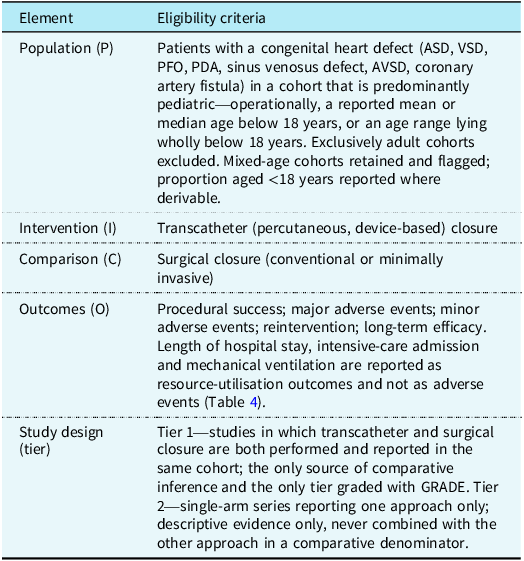
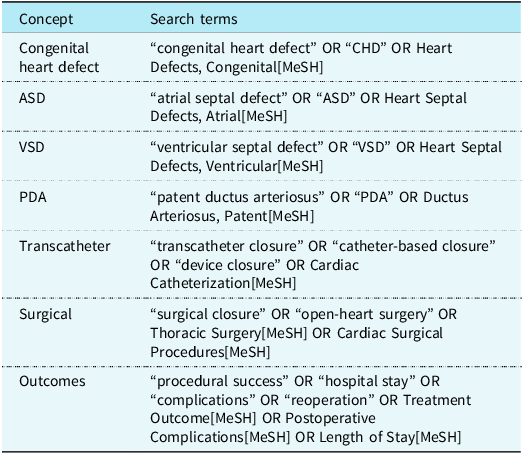

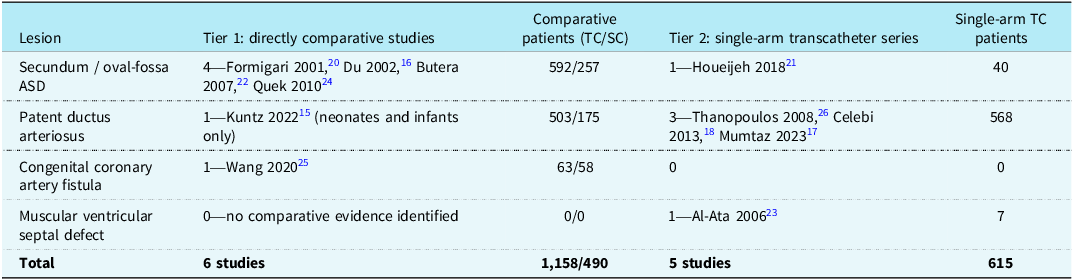
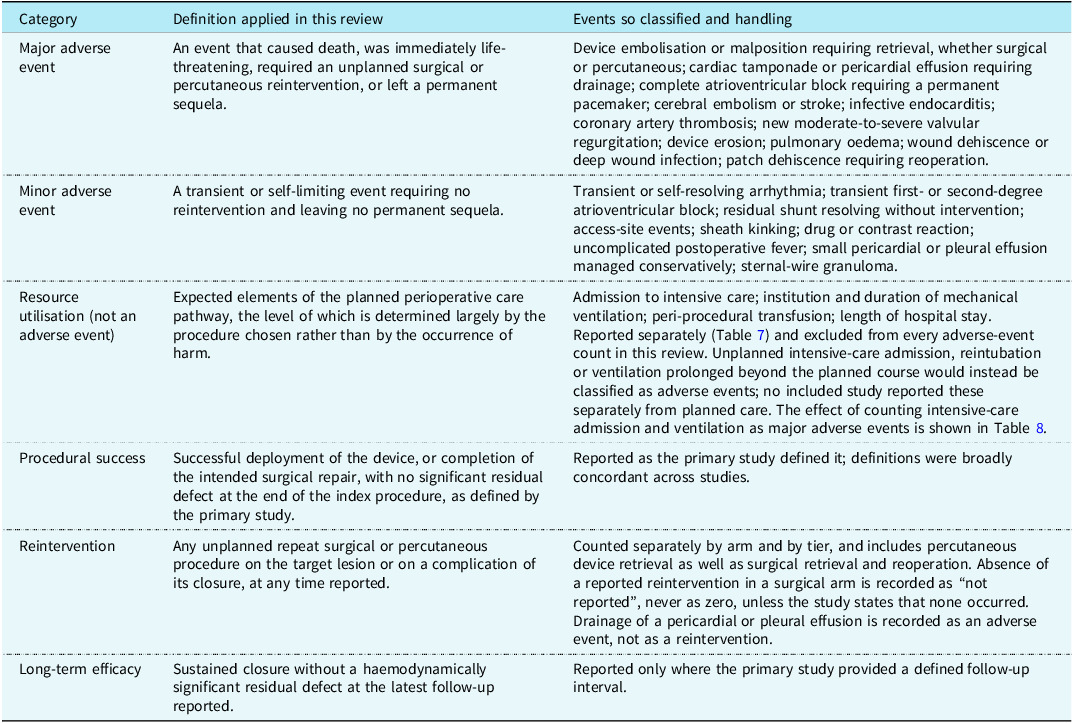
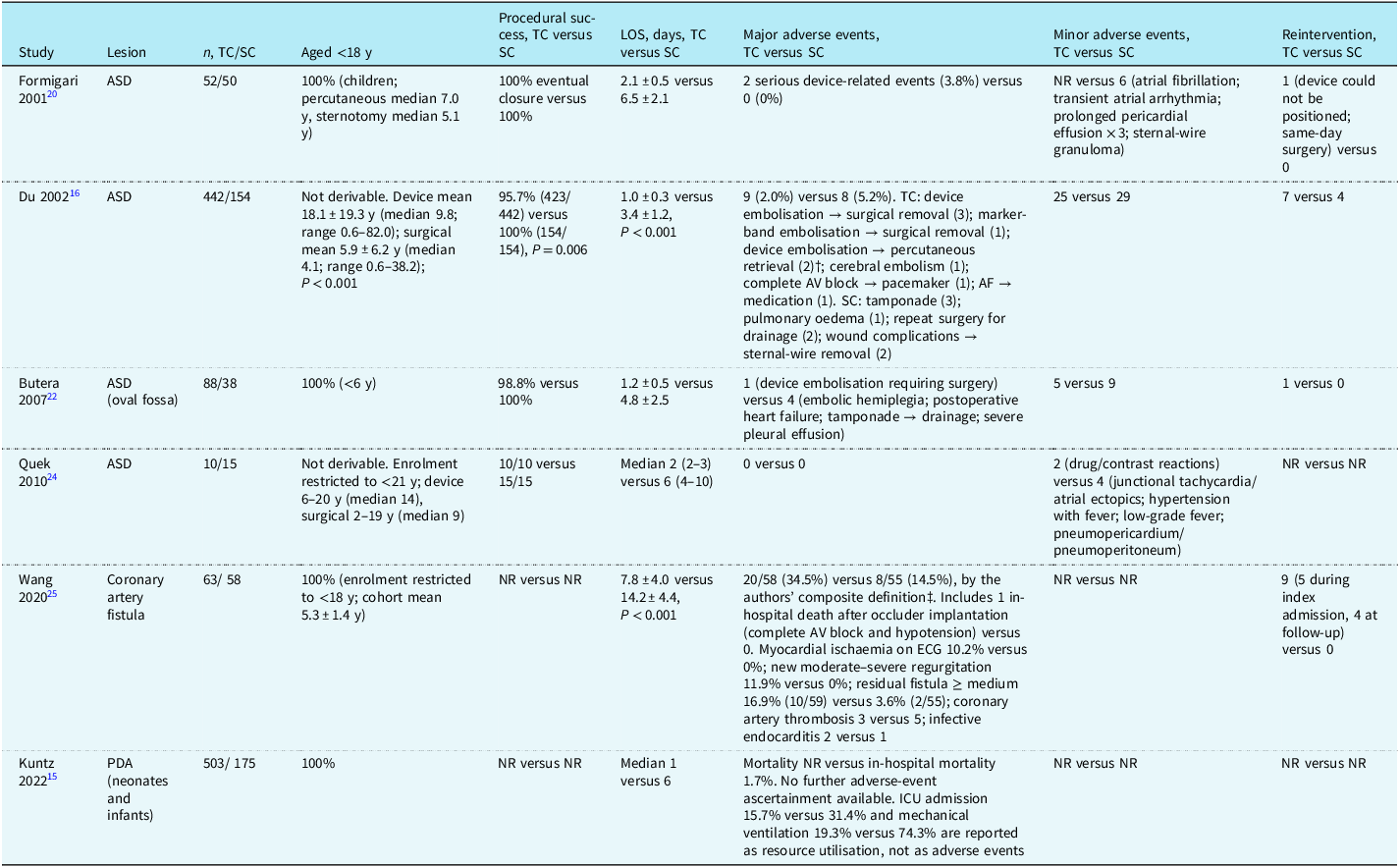
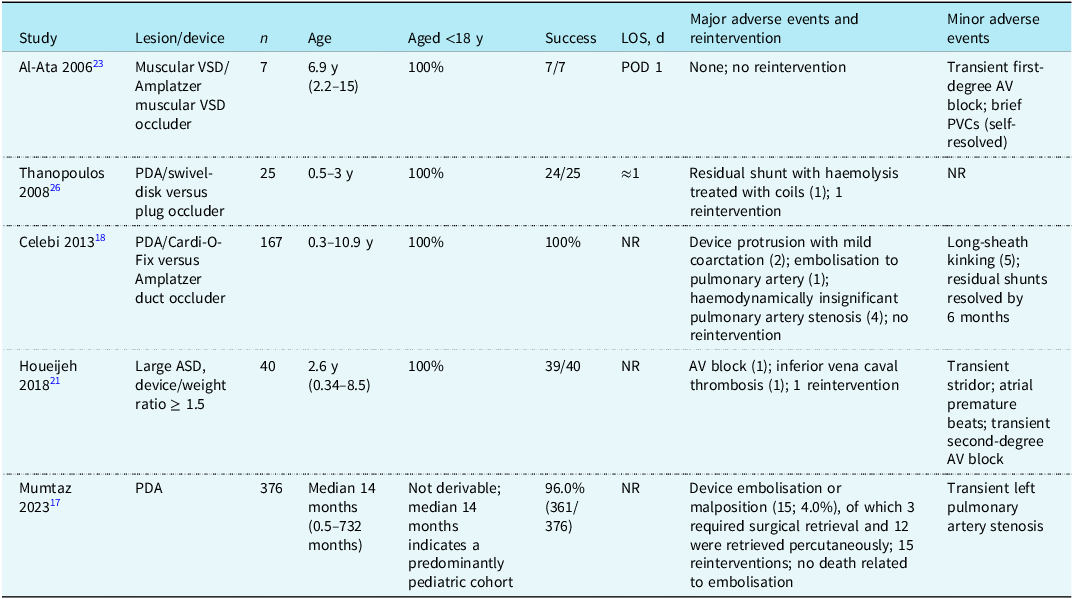

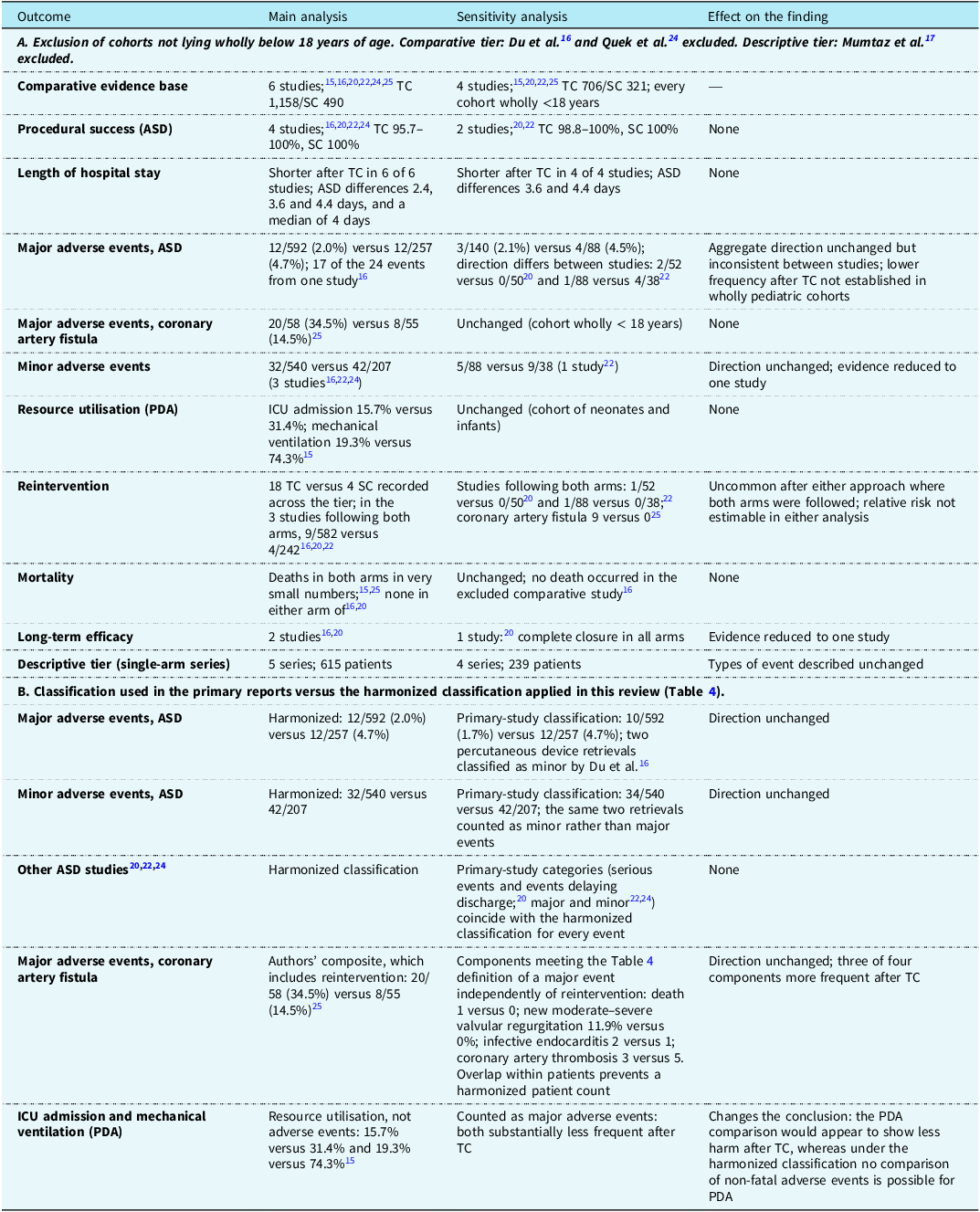

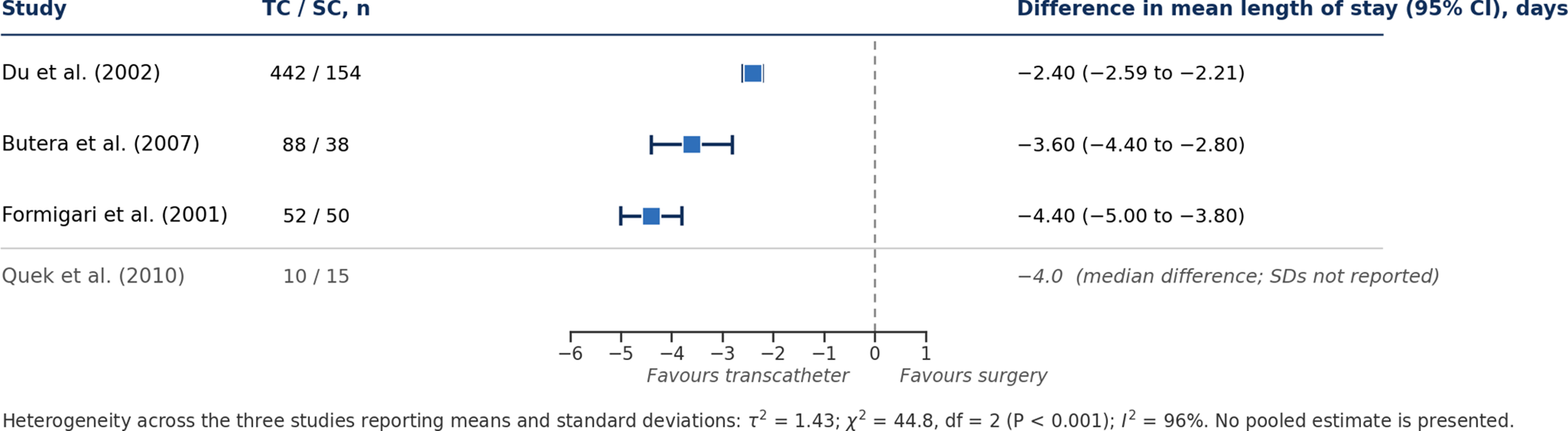
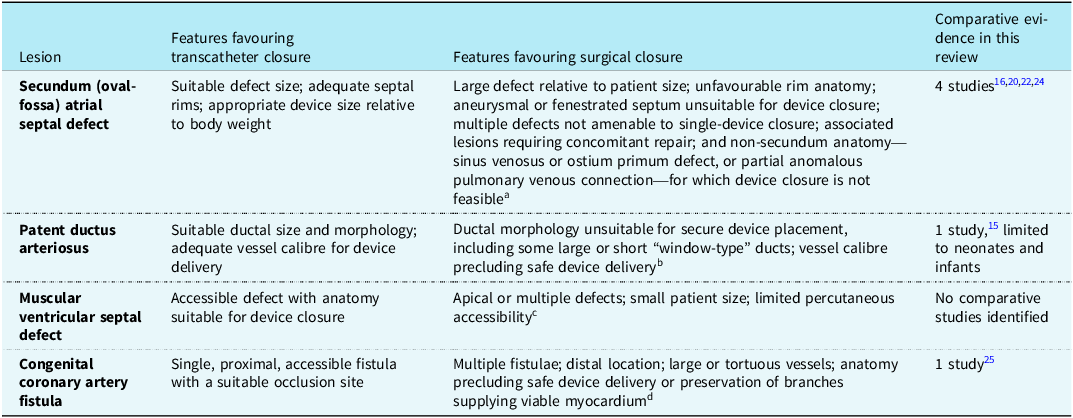

 Open access

