





Impact statement
Training Non-Specialist Providers (NSPs) to deliver PRO-ACT (Psychoeducation, Relaxation, Problem-solving, Activation, and Cognitive Coping Therapy), a brief, structured transdiagnostic intervention based on cognitive behavioral therapy (CBT) techniques, was associated with improvement in foundational helping competencies among NSPs, and reduced anxiety and depression symptoms among adolescents. This study adds evidence that trained and supervised NSPs could expand access to psychological care for adolescents. The findings also suggest that sustained clinical supervision may be particularly important for building non-specialist competency. Results provide preliminary evidence that can inform future development and evaluation of task-sharing approaches to strengthen community-based youth mental health services. Further research is needed to determine appropriate feedback mechanisms to improve competency-based training and supervision approaches, and to better understand the relationship between NSP competency acquisition and clinical outcomes.
Introduction
Globally, approximately one in six adolescents (people aged 10–24) live with a mental health condition (GBD 2023 Mental Disorder Collaborators, 2026), with 35% of mental health conditions occurring before age 14 and nearly 50% before age 18 (Solmi et al., Reference Solmi, Radua, Olivola, Croce, Soardo, Salazar de Pablo, Il Shin, Kirkbride, Jones, Kim, Kim, Carvalho, Seeman, Correll and Fusar-Poli2022), making adolescence a critical period for early intervention and care. Approximately 12% of Kenyan adolescents (10–17-year-olds) in rural and urban settings lived with a mental health condition in 2021, with anxiety most prevalent (5.6%) (Erskine et al., Reference Erskine, Maravilla, Wado, Wahdi, Loi, Fine, Li, Ramaiya, Wekesah, Odunga, Njeri, Setyawan, Astrini, Rachmawati, Hoa, Wallis, McGrath, Shadid, Enright, Blondell, Lawrence, Fisher, Whiteford, Vinh, Wilopo, Kabiru, Blum and Scott2024). In another study, more than 75% of the conditions identified in the past year were also present in the past 4 weeks, suggesting symptom persistence over time (Byansi et al., Reference Byansi, Musyoka, Baidoo, Okumu, Mutavi, Mbwayo, Mulwa, Kyalo and Mathai2025). In a hospitalized sample, Kenyan youth with any mental health condition in the past year had seven-fold greater odds of self-harm, reinforcing the urgency of addressing youth mental health needs (Njoroge et al., Reference Njoroge, Gitau, Onchari, Ongeri, Khakali, Khan, Merali, Atwoli and Shah2025).
At present, only three child psychiatrists and an uncertain number of child psychologists provide care in Kenya (Kamau et al., Reference Kamau, Osuga and Njuguna2017). Yet, an estimated 52% of Nairobi County’s population is under 25 years of age and exposed to significant adversity. Large numbers of youth live in informal settlements with poor infrastructure, high crime rates, and frequent adverse childhood experiences (Kenya National Bureau of Statistics, 2019). Studies suggest that with support, non-specialists can expand access to care through delivery of psychological interventions, yielding outcomes like those achieved by specialists (Van Ginneken et al., Reference Van Ginneken, Tharyan, Lewin, Rao, Romeo and Patel2011; Connolly et al., Reference Connolly, Vanchu-Orosco, Warner, Seidi, Edwards, Boath and Irgens2021). Task-sharing is a collaborative approach in which specific evidence-based tasks traditionally performed by highly trained professionals are delivered by people with more abbreviated training, like non-specialist providers (NSPs) (Patel, Reference Patel2012). Yet, an evidence gap persists for adolescent mental health (Rose et al., Reference Rose, Jack, Wan, Toloza, Bhattiprolu, Ragunathan, Schwartz and Magidson2025). Ensuring the quality and appropriateness of psychological care delivery remains a need and a priority.
Prior research demonstrates the effectiveness of cognitive behavioral therapies (CBT) for youth mental health conditions across multiple contexts, and there is a growing evidence base for transdiagnostic, or multi-condition interventions globally (Jordans et al., Reference Jordans, Kohrt, Sangraula, Turner, Wang, Shrestha, Ghimire, Hof, Bryant and Dawson2021; Kane et al., Reference Kane, Sharma, Murray, Chander, Kanguya, Skavenski, Chitambi, Lasater, Paul, Cropsey, Inoue, Bosomprah, Danielson, Chipungu, Simenda and Vinikoor2022). In Kenya and East Africa, there is a growing evidence base for Trauma-Focused CBT (TF-CBT) for children and adolescents, demonstrating CBT effectiveness (Murray et al., Reference Murray, Skavenski, Kane, Mayeya, Dorsey, Cohen, Michalopoulos, Imasiku and Bolton2015; Dorsey et al., Reference Dorsey, Lucid, Martin, King, O’Donnell, Murray, Wasonga, Itemba, Cohen, Manongi and Whetten2020). Combining broader-reaching transdiagnostic, multi-condition interventions with task-sharing could help to optimize youth mental health care in Nairobi.
However, to sustain and expand a non-specialist workforce, non-specialist providers (NSPs) must have general, cross-cutting foundational helping competencies for safe service delivery, and only recently has there been an established global standard for how to assess them. Developed and tested through collaborative multi-country research, the World Health Organization (WHO) and the United Nations Children’s Fund (UNICEF) launched the Ensuring Quality in Psychosocial and Mental Health Care (EQUIP) digital resource platform in 2022 (www.equipcompetency.org). EQUIP offers tools, resources and the current standard for how to define, select, and assess competency, and to integrate a competency-based approach to training and supervision. The tools include both foundational and treatment-specific competencies with defined and validated competency benchmarks for ensuring safe, supportive engagement during client-facing interactions. The Enhancing Assessment of Common Therapeutic Factors (ENACT) tool is a competency tool that assesses 15 foundational helping competencies, such as verbal and non-verbal communication, empathy, assessment of harm, collaborative goal setting, and promoting hope (Kohrt et al., Reference Kohrt, Jordans, Rai, Shrestha, Luitel, Ramaiya, Singla and Patel2015, Reference Kohrt, Pedersen, Schafer, Carswell, Rupp, Jordans, West, Akellot, Collins, Contreras, Galea, Gebrekristos, Mathai, Metz, Morina, Mwenge, Steen, Willhoite, van Ommeren, Underhill, Akhtar, Bryant, Concepcion, el Marsi, Elnasseh, Hemmo, Kasujja, Manolova, Maslovskiy, Mbwayo, Moran, Munthali-Mulemba, Mutamba, Mutavi, Raji, Rangel, Sangraula, Sepulveda, Tol, van t’Hof and Yurtaev2025). These foundational helping competencies are based on common factors, involve behaviors that strengthen the relationship between helpers and the people they are helping, and build trust and support emotional well-being (Pedersen et al., Reference Pedersen, Lakshmin, Schafer, Watts, Carswell, Willhoite, Ottman, van’t Hof and Kohrt2020, Reference Pedersen, Shrestha, Akellot, Sepulveda, Luitel, Kasujja, Contreras, Galea, Moran and Neupane2023).
Our pilot study, EQUIP Nairobi, which trained NSPs in Psychoeducation, Relaxation, Problem-solving, behavioral Activation, and Cognitive coping therapy (PRO-ACT) and assessed NSP foundational helping competencies and initial clinical outcomes, was embedded within the 2018–2020 multi-country EQUIP consortium, a group of teams operating in seven LMICs with experience delivering diverse psychological interventions. The consortium was created to inform the development of the EQUIP platform. All teams implemented a shared protocol (Kohrt et al., Reference Kohrt, Pedersen, Schafer, Carswell, Rupp, Jordans, West, Akellot, Collins, Contreras, Galea, Gebrekristos, Mathai, Metz, Morina, Mwenge, Steen, Willhoite, van Ommeren, Underhill, Akhtar, Bryant, Concepcion, el Marsi, Elnasseh, Hemmo, Kasujja, Manolova, Maslovskiy, Mbwayo, Moran, Munthali-Mulemba, Mutamba, Mutavi, Raji, Rangel, Sangraula, Sepulveda, Tol, van t’Hof and Yurtaev2025). A consortium objective was to evaluate the feasibility and acceptability of using ENACT across various manualized interventions. In EQUIP Nairobi, our intervention was PRO-ACT, a CBT-based transdiagnostic, modular intervention for adolescent depression and anxiety, designed to be delivered in 4–6 sessions. Our team provided training for NSPs on foundational helping skills and PRO-ACT, with follow-on weekly supervision.
The study was grounded in longstanding Kenyan-US university partnerships, close collaboration with the Nairobi City County Mental Health and Psychosocial Support Unit (NCC Mental Health), and Kenyan organizations and initiatives serving youth mental health (Mathai et al., Reference Mathai, Mbwayo, Concepcion, Mutavi, Njeru, Waruinge, Dorsey, Schafer, Pedersen, Sinha, Kohrt and Collins2023). In our pilot, we used a pre-post design to obtain proof-of-concept/early preliminary evidence that NSPs could develop foundational helping competencies, as measured by ENACT, and adolescents in Nairobi County could experience some clinical benefit from PRO-ACT, when delivered by NSPs.
Methods
Study site
The study was conducted in Nairobi, the capital city of Kenya, with a population of 3.5 million (Kenya National Bureau of Statistics, 2019). Recruitment and care occurred in the Mukuru kwa Njenga (Mukuru) informal settlement in Nairobi. We partnered with the Mukuru Promotion Center, a local NGO run by the Catholic Church that serves the informal settlement, offering educational, health, vocational, and social services.
Study sample
NSP participants
The Nairobi City County Department of Health identified NSPs from the Mukuru Promotion Center. The NSPs work in the health sector as part of the community health workforce and are supervised by Community Health Assistants. They typically conduct outreach in the community, including nutritional assessment, health education, client follow-up for public health services, and perinatal health services. The NCC Mental Health team leader informed the NSPs of the study and guided their selection in collaboration with the study team. The team determined that eligible NSPs should be registered as NSPs with the local primary health care facility through NCC, actively engaged in health-related activities in Mukuru, and in possession of a smartphone. Interested NSPs gave their telephone numbers to the study team. The study team interviewed each NSP to assess previous involvement in mental health activities and their capacity to deliver psychosocial interventions. The study team recruited 18 NSPs, and one dropped out for non-study-related reasons.
Adolescent participants
NSPs identified adolescents for study participation through routine interactions with families and health facility staff, and they visited individuals and families of young people known to be experiencing distress. Adolescents aged 12–20 years who lived and attended schools near the study sites in Mukuru were eligible. Trained assessors on the study team met with parents and prospective youth participants in person to obtain informed consent and child assent, and to assess adolescents for eligibility. Eligibility criteria included scoring 5–14 on the Patient Health Questionnaire-9 (PHQ-9), indicating mild to moderate depression (Tele et al., Reference Tele, Carvajal-Velez, Nyongesa, Ahs, Mwaniga, Kathono, Yator, Njuguna, Kanyanya, Amin, Kohrt, Wambua and Kumar2023). Individuals with PHQ-9 scores ≥15 or with PHQ-9 scores >10 combined or any endorsement of item 9 were referred to NCC Mental Health for further assessment. All client-reported outcomes (RCADS; PHQ-9) were collected and recorded in Kenyan English. All study measures were administered verbally, with the assessor recording responses on paper.
Intervention and provider training
Psychoeducation, Relaxation, Problem-solving, behavioral Activation, and Cognitive coping Therapy (PRO-ACT) is a cognitive behavioral transdiagnostic/multi-problem intervention that allowed for streamlined training and delivery given the onset of the COVID-19 pandemic and study timing. It is modular in nature and designed for delivery in 4–6 sessions. PRO-ACT includes the 5 modules in its name, as well as a safety module used when indicated and a final module focused on review and relapse prevention. PRO-ACT builds on the effectiveness of other CBT interventions delivered by NSPs in Kenya and the region, including TF-CBT and the Common Elements Treatment Approach (CETA) (Dorsey et al., Reference Dorsey, Lucid, Martin, King, O’Donnell, Murray, Wasonga, Itemba, Cohen, Manongi and Whetten2020; Kane et al., Reference Kane, Glass, Bolton, Mayeya, Paul, Mwenge and Murray2021). Sessions involved NSPs teaching and practicing skills with adolescents, adolescent practice at home, and practice review in subsequent sessions. The brevity and flexibility of PRO-ACT met the situational needs of adolescents in the Mukuru community during the pandemic. PRO-ACT allows phone or in-person delivery.
NSPs from Mukuru were trained to deliver PRO-ACT by four bachelor’s-level therapists experienced in the delivery of culturally-adapted TF-CBT in Kenya. The training occurred during the pandemic and was delivered through a mobile-phone-based, interactive, and practice-oriented program over 5 half-days in 1 week (20 hours), where NSPs could attend morning (4 hours) or afternoon (4 hours) training to allow for schedule flexibility (Mbwayo et al., Reference Mbwayo, Mathai, Mutavi, Waruinge, Triplett, Concepcion, Collins and Dorsey2024). PRO-ACT content for morning and afternoon sessions was the same, allowing NSPs to choose the most convenient time and make up sessions missed due to disruptions in power or network connections. The structure also permitted smaller training groups and enhanced interaction between trainers and trainees. One-on-one telephone support allowed coverage of missed sessions, an essential resource for remote training when internet access is not consistently reliable. Before the PRO-ACT training, all NSPs also received 1 day of didactic training (8 hours) on ENACT foundational helping competencies, led by coauthor MM. Trainings were conducted using Jitsi (https://meet.jit.si/), a popular low-bandwidth, open-source video conferencing and messaging app. All NSPs joined successfully and shared positive reactions in a dedicated group WhatsApp chat.
After training, and prior to seeing any clients, all NSPs participated in a practice period, where they role-played PRO-ACT delivery (with client vignettes) to build PRO-ACT skills. Once they began delivering PRO-ACT, all NSPs received weekly PRO-ACT supervision with PRO-ACT trainers and additional support through the WhatsApp group chat. Supervision provided an opportunity to address challenges NSPs encountered during sessions and supported PRO-ACT fidelity to the intervention protocol. In supervision meetings, trainers gave NSPs feedback on what they were doing right, suggested ways to improve, and prepared for upcoming sessions using role-plays, with the trainer acting as the client and the NSP acting as the therapist. Role-playing exercises strengthened skills building. Each session closed with additional positive feedback.
Data collection
Providers
ENACT competency assessments were conducted at three time points: pre-training (T0), immediately post-training (T1), and after a period of supervised practice with delivery of the full PRO-ACT intervention (T2). We conducted assessments through structured role plays with the aid of trained actors who played the role of clients while NSPs played the role of therapists. Clinical psychology students with clinical experience and two researchers not involved in NSP training received training to rate NSPs using ENACT. They scored the structured competence role plays using the ENACT tool on the digital EQUIP platform (www.equipcompetency.org). We used multiple raters (n = 2–3) per NSP at each assessment; to obtain a single level score (Level 1, 2, 3, 4) per item, we averaged item scores across multiple raters and rounded down.
Adolescents
Clinical psychology master’s students attended a 4-hour training session with AM, TM and MM to learn about the outcome assessments and their administration. These assessors conducted baseline and post-intervention symptom assessments for adolescents.
Outcome measures
We used the ENACT tool as our primary outcome measure for NSPs (Kohrt et al., Reference Kohrt, Jordans, Rai, Shrestha, Luitel, Ramaiya, Singla and Patel2015). There are 15 competency items. Each item is rated across four ordinal levels: Level 1- any unhelpful behavior, Level 2 – some, but not all basic skills, Level 3- proficiency in all basic skills, and Level 4 – proficiency in all basic skills plus any advanced skill (Supplementary File 1). The ENACT tool was tailored to the local context with the help of trainers and study staff during the pre-study pilot phase (Kohrt et al., Reference Kohrt, Pedersen, Schafer, Carswell, Rupp, Jordans, West, Akellot, Collins, Contreras, Galea, Gebrekristos, Mathai, Metz, Morina, Mwenge, Steen, Willhoite, van Ommeren, Underhill, Akhtar, Bryant, Concepcion, el Marsi, Elnasseh, Hemmo, Kasujja, Manolova, Maslovskiy, Mbwayo, Moran, Munthali-Mulemba, Mutamba, Mutavi, Raji, Rangel, Sangraula, Sepulveda, Tol, van t’Hof and Yurtaev2025). English words not in common use locally were changed; some concepts were reworded for clarity.
The PHQ-9 is a nine-item measure of depression severity recently validated for use with adolescents in Kenya (Tele et al., Reference Tele, Carvajal-Velez, Nyongesa, Ahs, Mwaniga, Kathono, Yator, Njuguna, Kanyanya, Amin, Kohrt, Wambua and Kumar2023). Scores range from 0 to 27. A score of 5 (mild depression) or more was used for selection in this study. In the English-language-validated Kenyan version of the PHQ-9 for adolescents, a cut-off of 5 or more has a sensitivity of 1.00 (95% CI 0.82–1.00) and a specificity of 0.42 (95% CI 0.35–0.49). Although validated versions of the tool existed in English and Swahili, all assessments were conducted in English, the preferred language of the adolescents. Based on the validation study with Kenyan adolescents, a score of 5–9 has a 5% probability of depression at the level of a clinical diagnosis; a score of 10–14 has a 12% probability of clinical depression; and a score of 5 or above has a 35% probability of clinical depression (Tele et al., Reference Tele, Carvajal-Velez, Nyongesa, Ahs, Mwaniga, Kathono, Yator, Njuguna, Kanyanya, Amin, Kohrt, Wambua and Kumar2023).
The Revised Children’s Anxiety and Depression Scale (RCADS) is a 25-item measure comprising depression and anxiety scales (Chorpita et al., Reference Chorpita, Ebesutani and Spence2021). The RCADS was translated and culturally adapted in Kenya guided by rigorous qualitative methods, including cognitive interviews and youth and parental focus groups (Nyongesa et al., Reference Nyongesa, Kathono, Mwaniga, Yator, Madeghe, Kanana, Amugune, Anyango, Nyamai, Wambua, Chorpita, Kohrt, Ahs, Idele, Carvajal and Kumar2022). We used standard scoring descriibed by Chorpita and colleagues for the Kenyan study sample.
In addition to their psychometric properties, we used the PHQ-9 and RCADS to permit data harmonization across EQUIP consortium sites and studies in alignment with recommendations of mental health research agencies.
Statistical analysis
We conducted descriptive analyses using frequencies with percentages for categorical data and means with standard deviations (SD) or medians with interquartile ranges (IQR) for continuous data. Statistical significance was defined as α = 0.05. All analyses were conducted using R (version 4.5.1). Given the study design and small sample size, all analyses were intended to generate preliminary evidence; therefore, the results should be interpreted as indicative rather than conclusive. The study was not pre-registered; however, statistical analyses were guided by an analysis plan developed by the EQUIP consortium, with some adaptations made. The cutoffs for PHQ-9 and RCADS were based on established scoring guidelines and validated thresholds (Tele et al., Reference Tele, Carvajal-Velez, Nyongesa, Ahs, Mwaniga, Kathono, Yator, Njuguna, Kanyanya, Amin, Kohrt, Wambua and Kumar2023), rather than on thresholds derived from study data.
Provider competency assessment
In alignment with previous research on ENACT competency measures (Pedersen et al., Reference Pedersen, Shrestha, Akellot, Sepulveda, Luitel, Kasujja, Contreras, Galea, Moran and Neupane2023), we calculated a total count of Level 1 scores and a total count of Level 3/Level 4 scores per trainee at each timepoint. We then used paired t-tests to compare mean number of ENACT items scored at these levels (Level 1 and Level 3/4) between pre-training, post-training, and post-supervision assessments. We compared these differences across all ENACT items and by sub-domain (“Engage,” “Support,” “Understand”). Finally, we evaluated the proportion of NSPs that scored at a Level 1 or a Level 3/4 by each ENACT competency item and across assessment timepoints. Statistical tests were evaluated using a significance level of α = 0.05.
Adolescent symptom assessment
We compared adolescents’ pre- and post-test scores using paired t-tests to assess within-subject changes between timepoints. To examine potential interactions between test time (pre vs. post) and characteristics such as gender, age, and NSP competency level, we applied a difference-in-differences approach using generalized linear models with random intercepts. Given our small sample size, the difference-in-differences analyses were conducted to explore whether pre–post changes differed across subgroups, with results interpreted as exploratory and hypothesis-generating.
Ethical considerations
Ethical clearance for this study was received from the World Health Organization’s ethics committee (ERC.0003437), the University of Nairobi Ethics Committee, the KNH-UON Research and Ethics Committee (P793/09/2019), the Children’s Department, Nairobi County, and the University of Washington Institutional Review Board (STUDY00008841). All hard-copy data collected throughout the study were securely stored in locked file cabinets at the University of Nairobi Department of Psychiatry Research Resource Center. A computer designated for study use housed all databases used in the project, including qualitative data. Access to all electronically stored study data was restricted to designated study personnel.
Results
Provider training outcomes
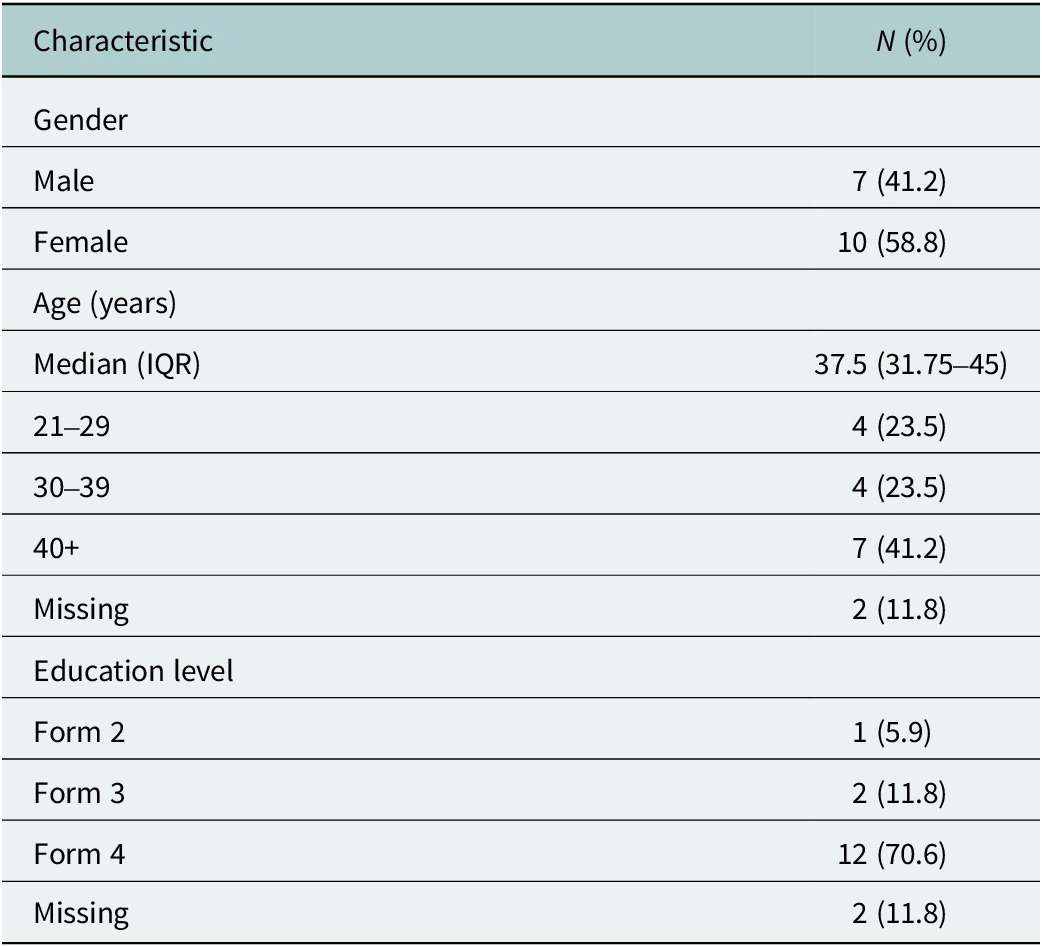
Seventeen NSPs were recruited and participated in the ENACT (one-day) and PRO-ACT (weeklong, five half-day) training. All 17 (100%) completed pre-training ENACT assessments (T0) and post-training assessments (T1), while 16 (94%) completed post-supervision assessments (T2). The NSPs were predominantly female (n = 10, 58.8%) and had completed Form 4 education (n = 12, 70.6%), with a median age of 37.5 years (IQR: 31.75–45) (Table 1).
Socio-demographic characteristics of NSPs trained in Nairobi, Kenya. (N = 17)

Table 1. Long description
Table showing socio-demographic characteristics (e.g., age, gender, and education level) of the 17 non-specialist providers who completed training in Nairobi, Kenya
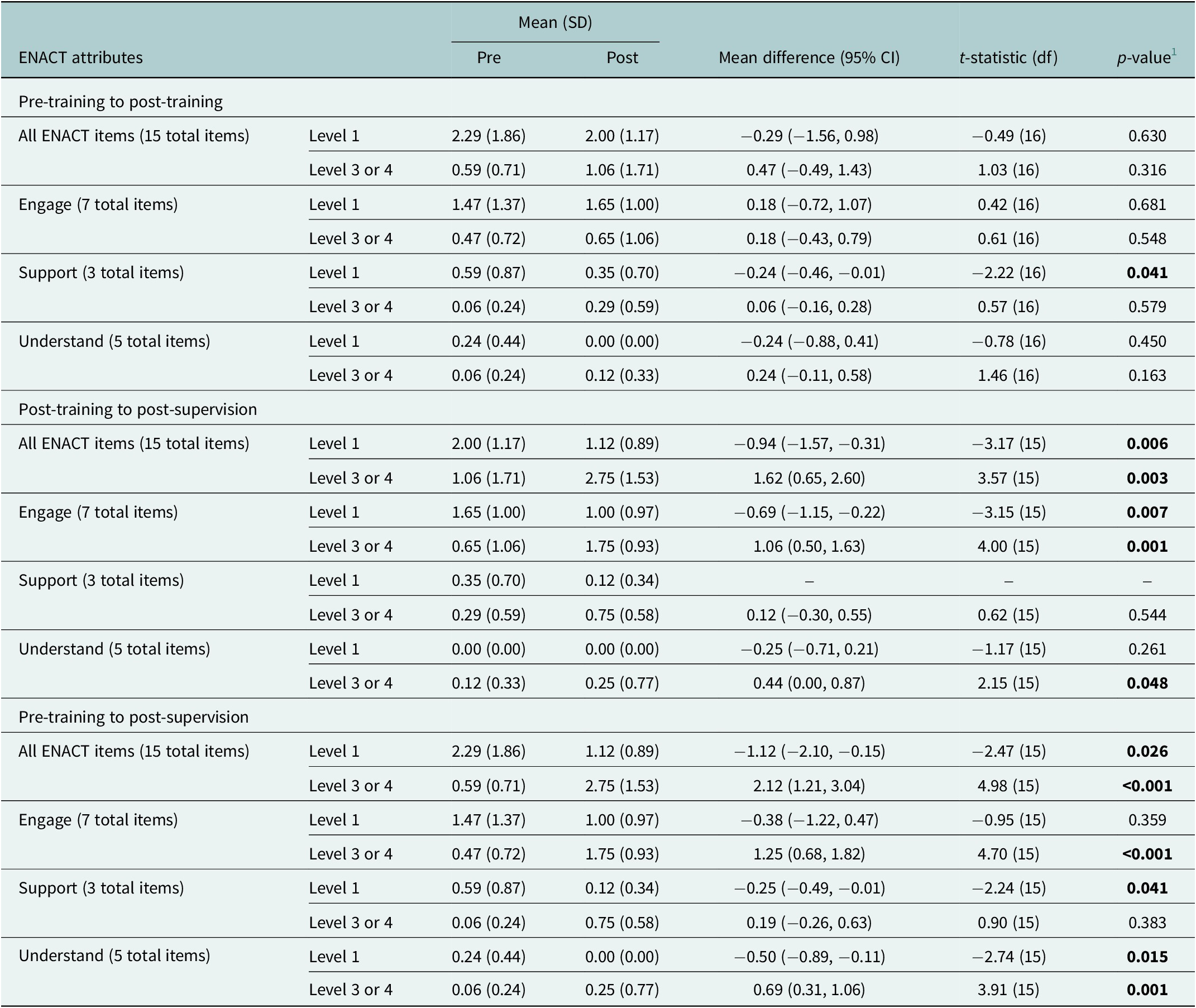
Table 2 shows the change in total counts of harmful behaviors (Level 1) and competency at Levels 3 and 4. There was significant movement from the number of ENACT items rated at Level 1 (“potentially harmful”) and Level 3 (“basic competency”) or 4 (“advanced competency”) between post-training and post-supervision timepoints, as well as between pre-training and post-supervision timepoints. NSPs had an average of 1.12 fewer ENACT items scored at a Level 1 (95% CI: −2.10, −0.15; p = 0.026) between pre-training and post-supervision timepoints and an average of 2.12 more ENACT items scored at Level 3 or 4 (95% CI: 1.21, 3.04; p < 0.001) between these same timepoints. There was no difference in the number of items rated at Levels 1, 3, or 4 between the pre- and post-training timepoints.
Comparison of total number of items at ENACT Level 1 (“potentially harmful”) and Levels 3 or 4 (“basic or advanced competency”), between pre-training, post-training, and post-supervision timepoints

Table 2. Long description
The table is organized into three primary comparison blocks. Each block lists four E N A C T attributes: All E N A C T items (15 total), Engage (7 total), Support (3 total), and Understand (5 total). For each attribute, data is split into Level 1 (potentially harmful) and Level 3 or 4 (basic or advanced competency). Columns include Mean (S D) for Pre and Post timepoints, Mean difference (95% C I), t-statistic (d f), and p-value.
* Pre-training to post-training: Significant improvement was only seen in Support Level 1 (p = 0.041), decreasing from 0.59 to 0.35.
* Post-training to post-supervision: Significant improvements occurred across most categories. All E N A C T items Level 1 decreased from 2.00 to 1.12 (p = 0.006), while Level 3 or 4 increased from 1.06 to 2.75 (p = 0.003). Engage Level 1 decreased from 1.65 to 1.00 (p = 0.007) and Level 3 or 4 increased from 0.65 to 1.75 (p = 0.001). Understand Level 3 or 4 increased from 0.12 to 0.25 (p = 0.048).
* Pre-training to post-supervision: All categories showed significant improvement except Engage Level 1 and Support Level 3 or 4. All E N A C T items Level 1 decreased from 2.29 to 1.12 (p = 0.026) and Level 3 or 4 increased from 0.59 to 2.75 (p < 0.001). Engage Level 3 or 4 increased from 0.47 to 1.75 (p < 0.001). Support Level 1 decreased from 0.59 to 0.12 (p = 0.041). Understand Level 1 decreased from 0.24 to 0.00 (p = 0.015) and Level 3 or 4 increased from 0.06 to 0.25 (p = 0.001).
1 Paired t-test. Bold text: p < 0.05
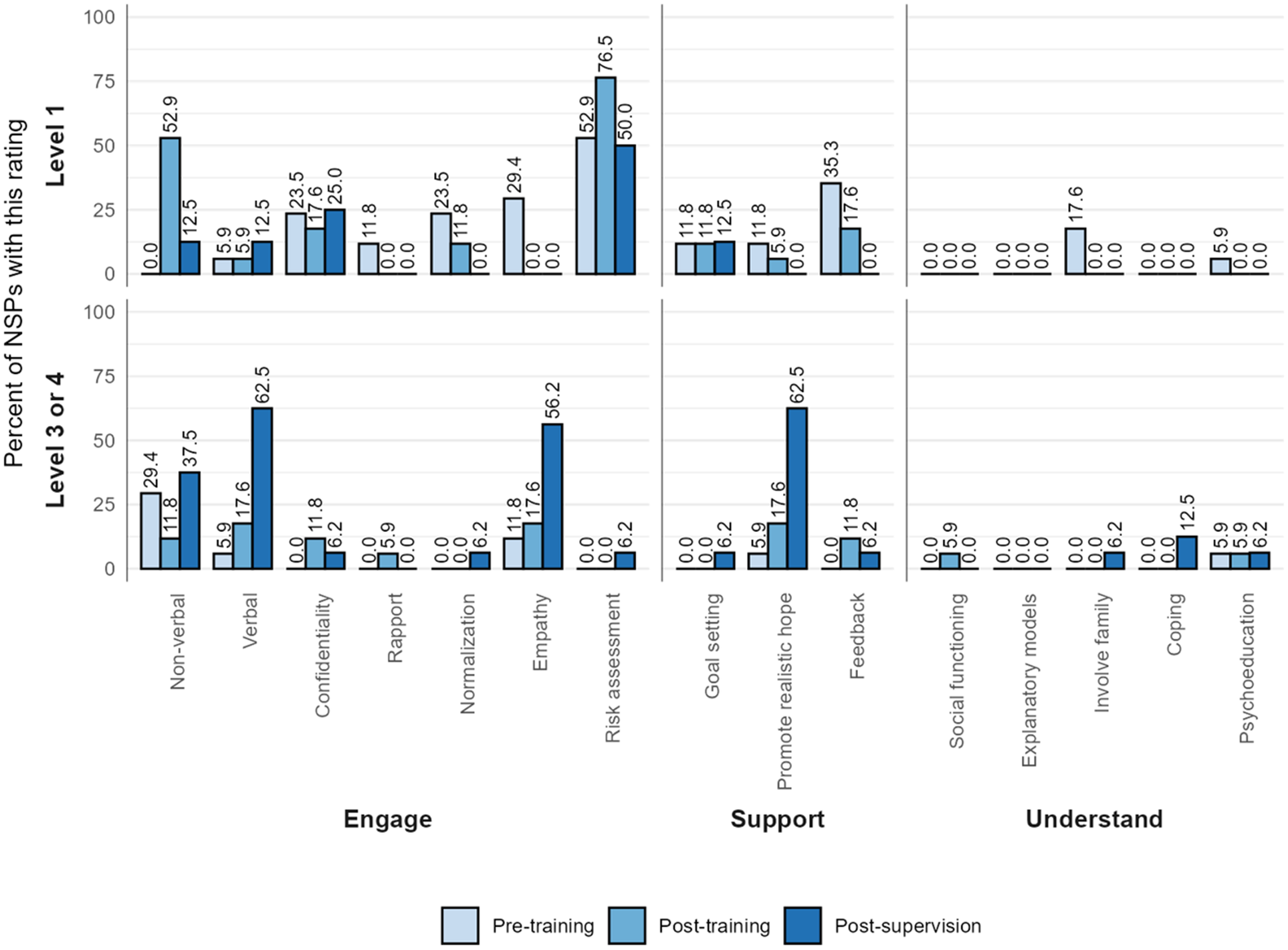
There were substantial differences in improvement by ENACT item. “Verbal skills,” “Empathy,” and “Promote realistic hope” showed the greatest improvement, with 5.9%, 11.8%, and 5.9% (respectively) of trainees scoring at Level 3 or 4 pre-training and 62.5%, 56.2%, and 62.5% (respectively) of trainees scoring at these levels post-supervision (Figure 1). In contrast, trainees demonstrated the greatest challenge with “Risk assessment”: 52.9% scored a Level 1 in this competency pre-training, and 50.0% scored at this level post-supervision. The domain of “Understand,” which includes “Social functioning,” “Explanatory models,” “Involve family,” “Coping,” and “Psychoeducation,” saw no substantial improvement (movement from Level 1 or Level 2 to Level 3 or 4 scores) or regression (increase in Level 1 scores), indicating most trainees started and remained at Level 2.
Frequency of Level 1 and Level 3/4 ENACT competency scores among NSPs, by ENACT item and assessment timepoint.

Figure 1. Long description
Bar chart comparing the percentage of non-specialist providers rated as low-competency (Level 1) versus high-competency (Level 3 or 4) on the ENACT (Enhancing Assessment of Common Therapeutic Factors) scale, broken down by individual competency item and by assessment time point.
Client intervention outcomes
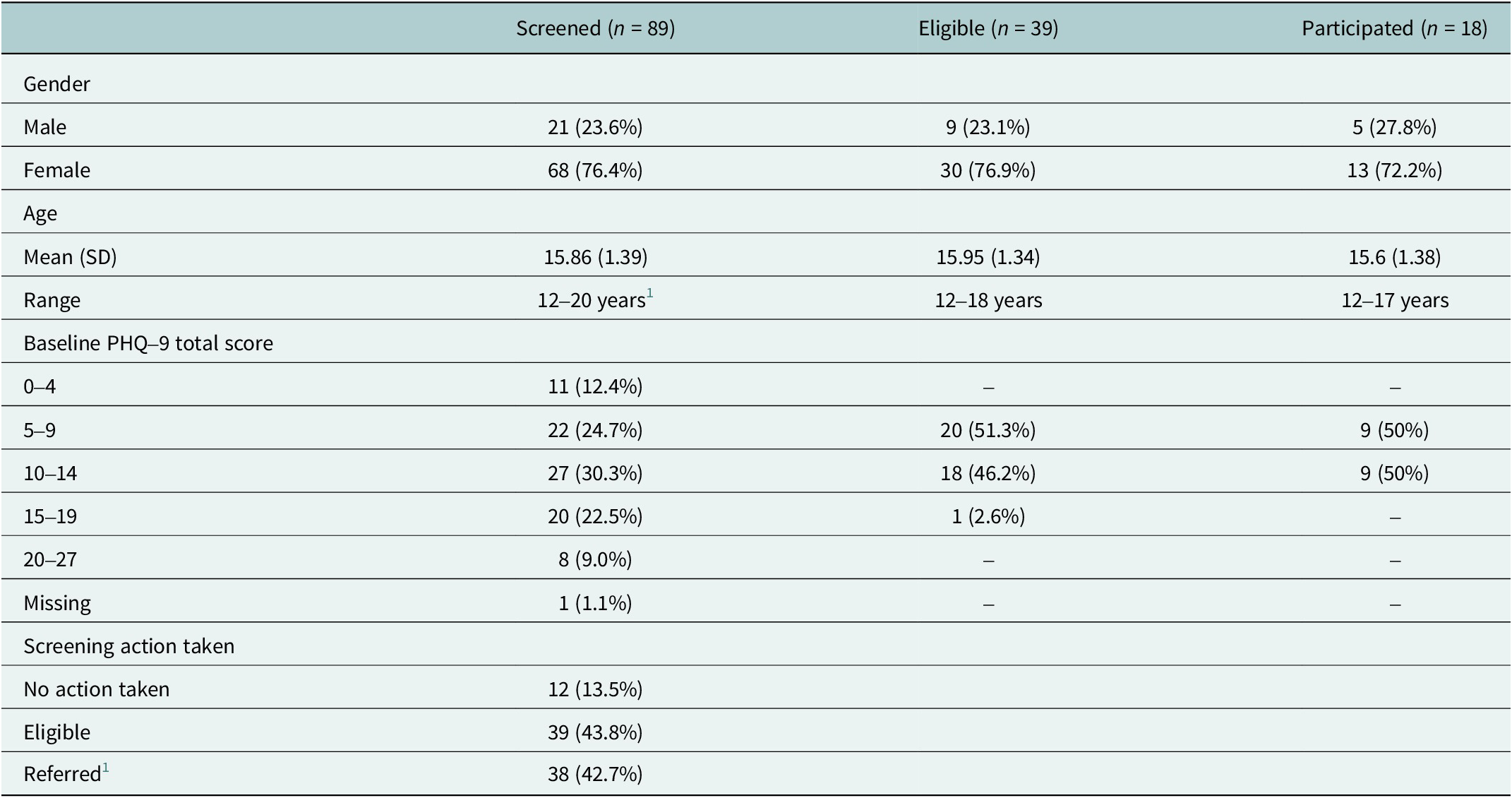
Eighty-nine participants were screened, of whom 39 met the study eligibility criteria. A majority of ineligible adolescents (56.2%) were excluded due to PHQ-9 scores below (n = 12) or above (n = 38) the clinical cut-offs, with the latter referred for further psychological support. Of the 39 eligible adolescents, 19 agreed to participate in the intervention; one was lost to follow-up. The sample that received PRO-ACT comprised 18 adolescents. Among these participants, 72.2% (n = 13) were female; the mean age was 15.6 years (SD = 1.38; range: 12–17 years). Baseline PHQ-9 scores are shown in Table 3.
Socio-demographic and baseline characteristics of screened, eligible, and participating adolescents in Nairobi, Kenya

Table 3. Long description
Table showing socio-demographic and baseline characteristics (e.g., age, gender, baseline screening score for Patient Health Questionnaire [PHQ]-9 questionnaire) of adolescents in Nairobi, Kenya, comparing those who were screened, those who met eligibility criteria, and those who ultimately participated in the study
1 The study age eligibility criteria were for adolescents aged 12–20, but eligible participants were between 12 and 18 years old, with adolescents 12–17 years old ultimately participating.
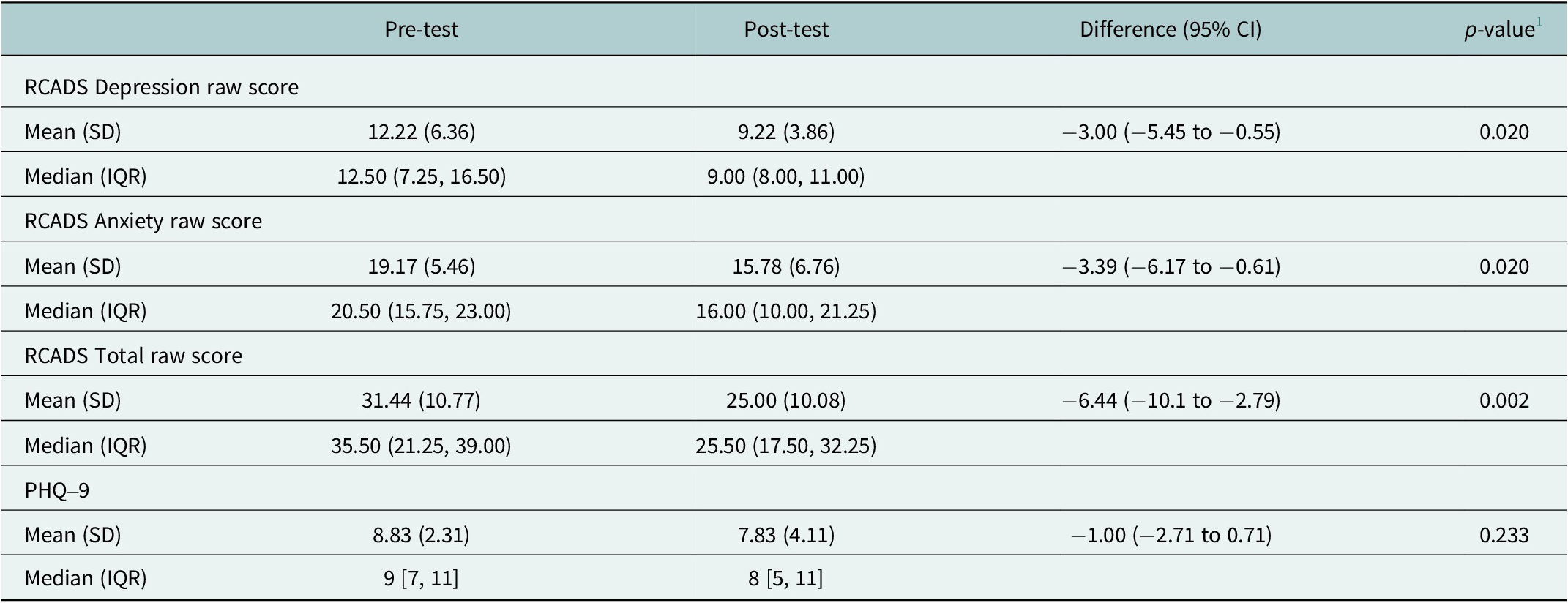
The average scores of the PHQ-9 and RCADS were lower post-intervention than pre-intervention (Supplementary File 4); however, the reduction in the mean PHQ-9 score was not statistically significant (1.00 point lower (95% CI: −2.71 to 0.71, p = 0.233). Post-intervention, the average RCADS depression score was 3.0 points lower (95% CI: −5.45 to −0.55, p = 0.020), RCADS anxiety score was 3.39 points lower (95% CI: −6.17 to −0.61, p = 0.020), RCADS total score was 6.44 points lower (95% CI: −10.10 to −2.79, p = 0.002) (Table 4).
Pre- and post-test screening scores for anxiety and depression (n = 18)

Table 4. Long description
A table comparing anxiety and depression screening scores before and after the intervention, which is measured using the Revised Child Anxiety and Depression Scale (RCADS) and Patient Health Questionnaire-9 (PHQ-9), among 18 participants
1 Paired t-test.
The difference-in-difference analysis showed that male adolescents experienced a smaller decrease in average scores between pre- and post-test compared to female adolescents on the RCADS anxiety subscale (4.97, 95% CI: −0.90 to 10.84, p = 0.092), RCADS total score (5.05, 95% CI: −2.98 to 13.07, p = 0.201), and PHQ-9 (2.22, 95% CI: −1.55 to 5.98, p = 0.230) (Supplementary File 5). There was no gender difference for the RCADS depression subscale (p > 0.999). None of the difference-in-differences results were statistically significant at the α = 0.05 level. There was no significant difference in outcomes by age for any of the measures between time points.
We also explored whether the NSPs’ competency levels mediated improvements in adolescent outcomes. We found no significant difference in outcomes among adolescents who had an NSP with high competency (≥3 ENACT items at Level 3 or 4). Adolescents who had a NSP with high competency scored an average of 3.38 points lower on the RCADS depression subscale (95% CI: −13.73 to 6.97, p = 0.504), 4.94 points lower on the RCADS anxiety subscale, 95% CI: −16.62 to 6.73, p = 0.387), 9.08 points lower on the total RCADS score (95% CI: −25.07 to 6.91, p = 0.248), and 0.14 points higher on the PHQ-9 (95% CI: −6.58 to 6.87, p = 0.966).
Discussion
This study evaluated the foundational helping competencies of NSPs trained to deliver PRO-ACT to adolescents with anxiety and depressive symptoms and assessed outcomes for adolescents receiving the intervention. Our pilot findings suggest that structured training and clinical supervision effectively improved NSPs’ foundational helping competencies. Additionally, most adolescents showed symptom improvement, with statistically significant symptom reductions observed on the RCADS, with no significant changes for PHQ-9 scores.
Provider training
The EQUIP platform’s ENACT assessment tool was effectively used to evaluate trainees’ competencies. Notably, the improvements observed in NSP competencies were largely attributable to supervised practice and clinical supervision supplementing training and not training alone. The role-plays and interactive didactics provided during the training are reinforced by rehearsal of the problem-solving skills that occur during the post-training supervision period. This is congruent with other studies showing that supervision promotes skill development among NSPs and facilitates quality delivery of treatment in task-sharing (Bradley and Becker, Reference Bradley and Becker2021; Venturo-Conerly et al., Reference Venturo-Conerly, Roe, Wasil, Osborn, Ndetei, Musyimi, Mutiso, Wasanga and Weisz2022; Barnett et al., Reference Barnett, Puffer, Ng and Jaguga2023; Giusto et al., Reference Giusto, Vander Missen, Kosgei, Njiriri, Puffer, Kamaru Kwobah, Barasa, Turissini, Rasmussen, Ott, Binayo, Rono and Jaguga2023; Andrejek et al., Reference Andrejek, Ravitz, Mikelsteins, La Porte, Kim, Schiller, Reyes-Rodríguez, Barker, Dennis and Silver2025).
NSPs may require different competencies for working with children and adolescents. There is emerging research for the ENACT-derived tool for child and adolescent psychosocial care, Working with Children – Assessment of Competencies Tool (WeACT). In Gaza, WeACT demonstrated good reliability, detected significant pre-post improvements in provider competencies, and provided insight into training needs--useful for both competency monitoring and supervision (Jordans et al., Reference Jordans, Steen, Koppenol-Gonzalez, El Masri, Coetzee, Chamate, Ghatasheh, Pedersen, Itani and El Chammay2022). In a proof-of-concept child intervention study in Lebanon, a competency-based training using WeACT assessment showed an 18% increase in adequate competency compared to training as usual. This supports the use of ENACT/WeACT as structured competency tools to strengthen both training and supervision (Jordans et al., Reference Jordans, Steen, Koppenol-Gonzalez, El Masri, Coetzee, Chamate, Ghatasheh, Pedersen, Itani and El Chammay2022).
The use of phone-based training to deliver PRO-ACT was an important implementation adaptation and strength of this study. The COVID-19 pandemic necessitated the transition to mobile phone-based training, and we describe the procedures elsewhere (Mbwayo et al., Reference Mbwayo, Mathai, Mutavi, Waruinge, Triplett, Concepcion, Collins and Dorsey2024). Briefly, smartphone-based training of community health volunteers was feasible when supported by practical implementation steps, including collaboratively selecting a virtual platform for training and practice, providing internet bundles to reduce participant costs, problem-solving and practicing each step of joining an online training, and establishing WhatsApp groups for ongoing communication (Mbwayo et al., Reference Mbwayo, Mathai, Mutavi, Waruinge, Triplett, Concepcion, Collins and Dorsey2024). This approach may be useful in settings where in-person training, computer access, or high-bandwidth internet is limited (Mbwayo et al., Reference Mbwayo, Mathai, Mutavi, Waruinge, Triplett, Concepcion, Collins and Dorsey2024). Relatedly, a study of guidelines for implementation of mobile phone-based supervision of lay counselors in Kenya highlighted the importance of setting expectations for phone supervision, explaining logistics, and increasing user comfort, among other strategies (Triplett et al., Reference Triplett, Mbwayo, Kiche, Liu, Silva, AlRasheed, Johnson, Amanya, Munson, Weiner, Collins and Dorsey2023). Using a combination of training delivery modalities could also be applicable to larger-scale training efforts in resource-limited settings.
Notably, NSP competencies did not seem to influence adolescent outcomes in our small pilot study, but this in no way diminishes the importance of these skills for NSP clinical practice. NSPs appreciated acquiring the skills, and the rights of people receiving services must always be protected by having competently trained providers. Characterizing the relationships among specific competencies and quality of care merits further study.
Adolescent mental health outcomes
Although NSP skill did not seem to influence adolescent outcomes in our small pilot study, adolescent demographics did. First, the majority of the sample comprised girls and young women, 72.2% (n = 13). This was comparable to other Kenyan and international studies (Mutavi et al., Reference Mutavi, Obondo, Kokonya, Khasakhala, Mbwayo, Njiri and Mathai2018; Baseke et al., Reference Baseke, Kilonzo, Ngesa, Mwende and Osborn2026) (Vancampfort et al., Reference Vancampfort, Mugisha, Ward and Van Damme2026) and may be indicative of greater engagement in health services by girls and women or more visible expression of distress among girls and young women, shaping recruitment in Mukuru. Second, for boys and young men, the RCADS depression scores decreased, but PHQ-9 scores increased slightly, making it difficult to interpret the true direction of change. Girls and young women also demonstrated greater reduction in RCADS anxiety scores. The PHQ-9 has been validated in Kenya (Tele et al., Reference Tele, Carvajal-Velez, Nyongesa, Ahs, Mwaniga, Kathono, Yator, Njuguna, Kanyanya, Amin, Kohrt, Wambua and Kumar2023), and we observed significantly less change in the symptom profile on the PHQ-9 compared to the RCADS. Given the broad age (and developmental-stage) range in our sample, the use of the RCADS ensured we administered an assessment tailored to younger adolescents. Tele and colleagues (Tele et al., Reference Tele, Carvajal-Velez, Nyongesa, Ahs, Mwaniga, Kathono, Yator, Njuguna, Kanyanya, Amin, Kohrt, Wambua and Kumar2023) demonstrated that the Kenyan PHQ-9 performs less effectively among 10–14-year-olds compared to 15–19-year-olds.
We noted stable symptom scores or score increases for a small group of clients. Among those with worsening RCADS scores, adolescents with higher depressive symptoms remained within the non-clinical range after treatment. In contrast, adolescents showing elevated anxiety scores post-treatment tended to move into the borderline clinical range. Interestingly, stability in scores sometimes occurred in youths with low baseline scores, leaving little room for improvement (e.g., RCADS anxiety). Since we did not track these adolescents over time, determining the stability of post-treatment scores is challenging.
An important concern is the high rate of suicidality among screened adolescents, with two out of five participants excluded due to suicide risk based on the PHQ-9. This aligns with evidence from Nairobi, Kenya, showing a high prevalence of active suicidal ideation (19.9%) and suicidal behavior (3.6%) among youth (Ndetei et al., Reference Ndetei, Wasserman, Mutiso, Bhui, Shanley, Musyimi, Winter, Nyamai, Walusaka, Onyango, Jeremiah, Osborn, Swahn, Sourander and Mamah2026). It underscores the need to expand the safety component in PRO-ACT or to integrate PRO-ACT with a complementary suicide prevention approach. Qualitative studies on adolescents’ perspectives on suicidality and the relevance of preventive interventions for suicide risk reduction could further inform PRO-ACT adaptation and design of a future trial.
Our pilot results align with emerging literature in Kenya that suggests that NSPs can deliver structured mental health interventions with promising symptom reduction. Among Kenyan adolescents, randomized trials of group interventions, including “Shamiri,” delivered by lay providers, have led to reductions in depression and anxiety symptoms (Osborn et al., Reference Osborn, Wasil, Venturo-Conerly, Schleider and Weisz2020). In an early trial, Shamiri reduced depressive and anxiety symptoms compared to the control, while a subsequent trial found greater symptom reductions among intervention recipients, but also noted attrition and non-significant results at follow-up (Osborn et al., Reference Osborn, Wasil, Venturo-Conerly, Schleider and Weisz2020; Osborn et al., Reference Osborn, Venturo-Conerly, Arango G, Roe, Rodriguez, Alemu, Gan, Wasil, Otieno, Rusch, Ndetei, Wasanga, Schleider and Weisz2021). Additionally, a pilot cohort study in Kenya assessed a problem-solving therapy intervention delivered via a mobile application by community health workers that yielded improvements in symptoms (Doukani et al., Reference Doukani, van Dalen, Valev, Njenga, Sera and Chibanda2021). A randomized clinical trial in Kenya and Tanzania showed that lay counselor-delivered TF-CBT was more effective than usual care for posttraumatic stress in urban and rural Kenya, with differences maintained at 12-month follow-up in the Kenyan sites (Dorsey et al., Reference Dorsey, Lucid, Martin, King, O’Donnell, Murray, Wasonga, Itemba, Cohen, Manongi and Whetten2020). We contribute to this literature by demonstrating promising competency acquisition among NSPs trained via smartphones to deliver a brief psychological intervention. Most adolescents experienced a reduction in anxiety symptoms post-intervention, although they did not move into lower severity categories. The effects on depression were weaker, both in terms of symptom severity and severity categories.
Limitations
Our study has several limitations. We used a quasi-experimental design without a control group, studying a small participant sample. The measures were self-reported with the possibility of social desirability bias. Adolescent outcomes were measured only at post-treatment, which limited our ability to follow symptoms over time. The research staff was not blinded to intervention delivery, which potentially introduced bias. Nonetheless, the assessors were trained to administer the tools and were not involved in the intervention. NSP familiarity with families may have led to oversampling of adolescents whose psychosocial needs were more visible, and adolescents with milder symptoms may have been less likely to be identified or referred. Stigma related to mental illness may have also been a barrier to enrollment, particularly for boys and young men. These factors limit the generalizability of our findings. While supervisors clinically assessed fidelity and provided supports for high-fidelity delivery, we do not include formal fidelity assessment rating scores in this analysis; nor did we provide NSPs with specific feedback on their competency scores.
Despite these limitations, our study had several strengths. Weekly supervision of NSPs served as a quality assurance mechanism. We successfully trained a group of NSPs in the foundational helping skills that likely support delivery of evidence-informed interventions – like PRO-ACT--during a time of great adversity for providers and clients. We measured NSP training outcomes and adolescent clinical outcomes to examine the relationship between the two. Most clients exhibited improved or stable symptoms.
Conclusion
Our findings support the feasibility of improving foundational helping skills among NSPs with training and supervision in ENACT competencies and PRO-ACT. They reinforce the importance of clinical supervision for acquisition of foundational skills competencies. Moreover, preliminary clinical outcomes for this mobile phone-based training in a 4–6 session intervention appear promising, warranting a fully powered confirmatory trial of PRO-ACT. Based on the study findings, we propose the following research and clinical recommendations.
Research recommendations
-
1. Examine provider competencies as potential mediators or moderators of client outcomes.
-
2. Evaluate the effectiveness of the combined training and intervention approach on client outcomes with a rigorous study design.
-
a. Incorporate qualitative assessments to understand adolescents’ perspectives on suicidality and potential interventions to respond to it.
-
b. Identify and validate contextually relevant screening and outcome tools beyond the PHQ-9 and RCADS.
-
Clinical recommendations
-
1. Encourage hybrid training approaches that combine in-person and mobile/virtual-based learning to increase training accessibility and maintain quality, especially in low-resource settings.
-
2. Implement and sustain clinical supervision for task-sharing mental health providers like NSPs throughout the delivery of care, as they showed the most significant competency improvements during supervised practice.
-
3. Use competency assessments, role plays and competency-based feedback during and post-training to strengthen training outcomes and provide competency-based feedback to tailor supervision.
-
4. Integrate ongoing competency assessment and competency-based feedback into routine supervision to maintain and enhance NSP skills after initial training. This should include regular monitoring of both foundational helping skills and intervention-specific competencies.
-
5. Strengthen bidirectional referral pathways and partnerships between NSPs and mental health specialists.
-
6. Adapt the intervention package to include a suicide risk reduction component, given the observation of the high proportion (43%) of screened adolescents being excluded in this study due to suicidality.
Open peer review
To view the open peer review materials for this article, please visit http://doi.org/10.1017/gmh.2026.10273.
Supplementary material
The supplementary material for this article can be found at http://doi.org/10.1017/gmh.2026.10273.
Data availability statement
Study data are not publicly available due to participant confidentiality and ethical restrictions. Hard-copy materials were stored in locked cabinets at the University of Nairobi Department of Psychiatry Research Resource Center, and electronic databases (including qualitative data) were maintained on a study-designated computer with access limited to authorized study personnel. De-identified data will be available from MM upon request and approval, where applicable.
Acknowledgements
The authors are grateful for the contributions of psychosocial supervisors: Ms. Chombalelo Mukunta, Ms. Kezia Anunda, Ms. Lucy Mwaura, Ms. Sheila Nderitu, Ms. Daisy Okoth, and Ms. Anne Omariba for their contributions to this work.
Author contribution
Conceptualization: T.M., T.C., S.D., P.Y.C., M.M., A.M.; Data curation: M.M., A.M., T.C.; Formal analysis: T.C., T.M.; Funding: P.Y.C., S.D., M.M.; Investigation: T.M., A.M., M.M., S.D., P.Y.C., T.C.; Methodology: S.D., P.Y.C., M.M., T.C., A.M., B.A.K., A.S., G.A.P.; Original draft: T.M., T.C., M.R.; Project administration: M.M., P.Y.C.; Resources: P.Y.C., M.M., S.D., B.A.K., G.A.P., A.S.; Supervision: M.M., P.Y.C., S.D.; Visualization: T.M., T.C.; All authors (T.M., T.C., A.M., S.W., M.R., S.D., B.A.K., G.A.P., A.S., M.M., and P.Y.C.) reviewed and edited the manuscript.
Financial support
This study was supported through funding from the US Agency for International Development (USAID), which the World Health Organization disseminated to the Kenya implementation site (PIs: Collins and Mathai). Study authors T.M., T.C., M.M., A.M., S.D., B.A.K., and P.Y.C. received salary support. Co-Impact and Pivotal Ventures provided additional funding for this study.
Competing interests
The authors report no conflicts of interest. The authors report no financial relationships with commercial interests. The authors alone are responsible for the views expressed in this article, and they do not necessarily represent the views, decisions, or policies of the funders nor the institutions with which the authors are affiliated.
Ethics statement
Ethical approval for this study was received from the World Health Organization’s ethics committee (ERC.0003437), the University of Nairobi Ethics Committee, the KNH-UON Research and Ethics Committee (P793/09/2019), the Children’s Department, Nairobi County, and the University of Washington Institutional Review Board (STUDY00008841). Written informed consent was obtained from all participants before data collection. All study procedures were conducted in accordance with relevant ethical guidelines and regulations.


 Open access


Comments
02/01/2026
Chief Editor
Cambridge Prisms: Global Mental Health
Dear Chief Editor,
Please consider our manuscript, “An evaluation of non-specialist training and delivery of a brief cognitive-behavioral therapy-based transdiagnostic intervention for adolescents with depression and anxiety in Nairobi, Kenya,” for publication as an Original Research Article in the Cambridge Prisms: Global Mental Health journal.
Adolescents in low-resource settings have limited access to evidence-based mental health care, and there is an urgent need for scalable approaches that can be delivered within existing community and primary care settings. In this study, community health promoters were trained to deliver a brief, manualized transdiagnostic cognitive-behavioral therapy–based intervention (Psychoeducation, Relaxation, Problem-solving, Activation, and Cognitive Coping Therapy). We evaluated changes in provider helping skills following structured training and clinical supervision, and changes in adolescent symptoms of anxiety and depression following delivery of the intervention.
Our findings show that non-specialist providers demonstrated significant improvements in foundational helping skills after training and supervised practice. Adolescents receiving the intervention experienced meaningful reductions in anxiety symptoms and improvements in one of the measures of depression used. These results add practical evidence that clinical supervision is a key component in strengthening the acquisition and application of helping skills among non-specialists delivering structured, evidence-informed psychological care. The work directly supports policy and program action by informing how task-sharing models can be strengthened and scaled to expand access to adolescent mental health services in low-resource settings.
The manuscript is original and, to the best of our knowledge, has not been published elsewhere and is not under consideration by another journal. No abstract or other substantial part of the manuscript has been posted online (for example, as a preprint, conference proceeding, report, or unpublished paper). In addition, the manuscript is within the journal’s recommended word length, and the tables and figures are within the journal’s limits. There are no deviations from the recommended guidelines listed for manuscript publication.
Thank you for your consideration.
Pamela Y. Collins
Bloomberg Centennial Professor and Chair | Department of Mental Health
Bloomberg School of Public Health
Professor | Department of Psychiatry & Behavioral Sciences
The Johns Hopkins University School of Medicine