





Suicide remains a major global public health challenge, causing over 720 000 deaths annually and ranking as the third leading cause of mortality among individuals aged 15–29 years. 1 It is shaped by social, cultural, psychological and environmental factors across the lifespan. 1 In Arab countries of the Middle East and North Africa (MENA) region, suicidal behaviour is more prevalent among middle-aged women, often linked to family or interpersonal stress, and reflects a complex interplay of cultural, religious and stigma-related factors that shape help-seeking and underreporting. Reference El Halabi, El Hayek, Kahil, Nofal and El Hayek2 A recent review found negative attitudes towards formal mental healthcare, with preference for informal support from family, friends or religious figures. Common barriers included privacy concerns, language barriers and low mental health literacy. Reference Khatib, Alyafei and Shaikh3 In Qatar, suicide mortality rate is estimated at 5.8 per 100 000, with an annual incidence of suicide attempts at 14.2 per 100 000 in the general population. 4,Reference AlAbdulla, Reagu, Hassan, Elhassan, Sayed and Makki5 Approximately one-quarter of emergency department presentations for mental health problems involve suicidal behaviour. Reference AlAbdulla, Reagu, Hassan, Elhassan, Sayed and Makki5 Within this context, early identification, comprehensive assessment, timely intervention and structured follow-up are central to effective prevention. 6
Crisis helplines
Crisis helplines, first introduced in the 1950s, are now widely used in suicide prevention, offering immediate emotional support and linking individuals in acute distress or at risk of self-harm to appropriate care. Reference Middleton, Gunn, Bassilios and Pirkis7 Evidence suggests that helpline contact can reduce distress, suicidal ideation and hopelessness, although long-term outcomes remain less certain. Reference Acosta, Ramchand, Jaycox, Becker and Eberhart8–Reference Zeinoun, Yehia, Khederlarian, Yordi, Atoui and Chammay10 Helplines act as a safety net within the continuum of care, bridging gaps between community services and emergency departments. Helpline callers remain at elevated risk of suicide despite intervention, with the highest risk occurring within the first week after contact, highlighting the need for more intensive follow-up support. Previous studies reported that most patients were managed in the community, with only a small proportion requiring psychiatric hospital admission. Helplines often act as gateways to more intensive care, with high-risk callers requiring emergency intervention, specialist assessment or referral to community or hospital services. Understanding factors associated with suicidality and admission may therefore improve risk stratification and facilitate timely access to appropriate care. Reference Fernández-Montalvo, Villanueva and Arteaga11,Reference Alabdulla, Iqbal, Mohamed, Shinith, Buenaventura and Smith12
Across the Gulf region, interest in telepsychiatry and helpline services has grown, particularly since the COVID-19 pandemic. Several Arab countries have established phone-based or online mental health initiatives. Reference El Hayek, Nofal, Abdelrahman and Adra13–Reference Wadoo, Khan, Latoo, Khan, Chandra and Iqbal15 In Qatar, the National Mental Health Helpline (NMHH) was launched in April 2020 to enhance access to mental health services during the COVID-19 pandemic and beyond. Reference Wadoo, Latoo, Reagu, Amro, Masoodi and Alabdulla16 It offers confidential, multilingual care within a biopsychosocial framework and provides assessments and brief interventions across all age groups. Its objectives include bridging service gaps, supporting individuals at risk of self-harm and reducing unnecessary hospital admissions. Reference Alabdulla, Iqbal, Mohamed, Shinith, Buenaventura and Smith12
Yet, despite the expansion of helpline services and the recognition of existing challenges, evidence from the MENA region remains limited regarding the sociodemographic and clinical characteristics of service users, as well as factors associated with crisis severity and outcomes.
Study aims
This study aimed to identify independent factors associated with high-risk triage categorisation and in-patient admission among callers to Qatar’s NMHH over a 3-year period and to describe their sociodemographic and clinical profiles.
Method
Country profile
Qatar is a peninsula located midway along the western coast of the Arabian Gulf. The country has a population of approximately 3.1 million and ranks among the world’s wealthiest nations by per capita gross domestic product (GDP). 17 The prevalence of mental health conditions in Qatar is comparable to global figures. Reference Khaled, Alhussaini, Alabdulla, Sampson, Kessler and Woodruff18 Healthcare services for both citizens and migrants are delivered through government-funded primary care centres and hospitals. Reference Wadoo, Ahmed, Reagu, Al Abdulla and Al Abdulla19 Over the years, multiple initiatives and legislative reforms have aimed to improve access to mental healthcare. Reference Khan, Wadoo, Ahmed, Hassan, Chandra and Al Abdulla20–Reference Alabdulla, Latoo, Khan, Iqbal, Hamad and Wadoo22
Hamad Medical Corporation (HMC), the principal provider of government-funded healthcare services, including mental health services, has seen extensive adoption of telehealth across community and out-patient settings. Despite Qatar’s expanding healthcare infrastructure, there remains a shortage of specialist mental health professionals and a need for stronger integration between primary and mental healthcare. Reference Wadoo, Ahmed, Reagu, Al Abdulla and Al Abdulla19 Public awareness efforts continue, although persistent gaps in education and understanding of mental illness still contribute to delays in seeking help.
Study setting
The study was conducted within the NMHH in Qatar. The service is delivered by a multidisciplinary team that includes trained triage clinicians, psychiatric nurses, psychologists and psychiatrists. Calls are received through a dedicated number (16000) and are initially handled by triage clinicians. Following triage, callers may receive virtual clinical assessments from a charge nurse, psychologist or psychiatrist. Based on the assessment, individuals may be offered psychoeducation, brief psychological interventions or medication advice. Follow-up appointments with community mental health services are arranged when appropriate. Where a significant risk of harm to self or others is identified, referral to the emergency department or recommendation for in-patient admission is made. Reference Alabdulla, Iqbal, Mohamed, Shinith, Buenaventura and Smith12
Study measures
Triage clinicians assess urgency using a structured triage framework adapted from the Australian State of Victoria’s Statewide Mental Health Triage Scale. 23 Calls are categorised as low, moderate or high priority based on risk of harm to self or others, severity of psychiatric symptoms, aggressive behaviour and protective factors.
Validated tools, such as the Patient Health Questionnaire-9 (PHQ-9) and Generalized Anxiety Disorder-7 scale (GAD-7), were adminstered when appropriate to assess for depressive and anxiety symptoms.
Suicide risk assessment was based on clinical judgement informed by history taking and mental state examination, including evaluation of suicidal ideation, intent, planning, previous attempts, psychiatric history, substance use, psychosocial stressors and protective factors. Standardised tools, including Victoria’s Statewide Mental Health Triage Scale and the PHQ-9, were used to support the assessment. The information elicited was documented in clinical records and subsequently extracted during the chart review.
Psychiatric diagnosis was documented during the consultations based on the clinical assessment by mental health professionals and, where available, from the national electronic healthcare record.
Psychosocial stressors documented in the clinical records included relationship difficulties, family conflict, work-related stress, financial problems and limited social support.
Clinical communication and documentation followed the Situation, Background, Assessment and Recommendation (SBAR) framework, supported by prompt questions. Reference Alabdulla, Iqbal, Mohamed, Shinith, Buenaventura and Smith12
Study design
This study employed a cross-sectional chart review design across the NMHH in Qatar using data extracted from the secure NMHH electronic database. The review included all patient contacts between 1 April 2020 and 31 March 2023. Reporting adhered to the Strengthening the Reporting of Observational Studies in Epidemiology (STROBE) guidelines for observational studies and Transparent Reporting of a Multivariable Prediction Model for Individual Prognosis or Diagnosis (TRIPOD) recommendations for multivariable prediction models.
Participants and sampling
Inclusion criteria encompassed all individuals, regardless of age, who contacted the NMHH during the study period and were assigned a low, moderate or high priority level during triage. During this period, over 50 000 calls were registered. Records with incomplete clinical documentation or missing key variables required for analysis were excluded. Using the secure NMHH electronic database, all cases within these three triage categories were identified.
To ensure representation across the full spectrum of clinical urgency and throughout the study period, a stratified random sampling approach was employed. Cases were first stratified according to triage priority level (low, moderate, high) and month of contact. Within each stratum, cases were randomly selected using computer-generated random numbers.
A total of 698 cases were selected for detailed chart review. This sample size was considered sufficient to ensure representation across triage categories and time periods while remaining feasible for manual data abstraction from detailed clinical records. Equal numbers of cases were sampled from each triage category across months to minimise temporal bias and capture variation in clinical severity. The sampling process resulted in a balanced stratified analytic sample across triage categories and months. No additional demographic variables were used for stratification prior to random selection. Analyses were conducted on the sampled cohort and should not be interpreted as population prevalence estimates.
Data collection
Data were extracted using a standardised form developed for this study. Six trained researchers conducted data abstraction under supervision, with regular calibration meetings held to ensure interrater consistency. Any uncertainties were resolved through discussion with two experienced team members (Y.I. and F.K.) overseeing the data collection. A subset of cases was independently reviewed by these senior investigators to ensure consistency in data abstraction. Formal interrater reliability statistics were not calculated. The extracted variables were demographic details, prior mental health service contact, psychiatric history, suicidal or self-harming behaviours, substance misuse, current symptoms, diagnosis, psychosocial stressors, occupational status and interventions offered.
Statistical analysis
Descriptive statistics summarised sample characteristics. Categorical variables were expressed as frequencies and percentages, and comparisons between qualitative variables were conducted using Pearson’s chi-squared or Fisher’s exact tests. Univariate and multivariate logistic regression analyses were performed to identify predictors of (a) high-risk categorisation and (b) in-patient admission recommendation. Stepwise logistic regression, considered a robust technique for constructing regression models, was employed in multivariate analysis. Stepwise regression involves adding or removing predictor variables from a model one at a time in a stepwise manner until there is no justifiable reason to enter or remove any more predictor variables. For the model to be accurate, all actual predictors of the response must be included among the candidate variables; otherwise, the resulting regression model will be underspecified and imprecise. Model diagnostics were performed to evaluate specification, discrimination and calibration using pseudo-R 2 estimates, the area under the receiver operating characteristic (ROC) curve, and the Hosmer–Lemeshow goodness-of-fit test statistic. Results are reported as odds ratios with 95% confidence intervals (CIs). A two-sided p-value <0.05 denoted statistical significance. Analyses were performed using SPSS version 29.0 for Windows (IBM Corp, Armonk, New York, USA; https://www.ibm.com/support/pages/downloading-ibm-spss-statistics-29) and STATA version 16.0 for Windows (Stata, Texas, USA; https://www.stata.com/support/updates/stata16.html).
Ethics
The authors assert that all procedures contributing to this work comply with the ethical standards of the relevant national and institutional committees on human experimentation and with the Helsinki Declaration of 1975, as revised in 2013. All procedures involving human subjects/patients were approved by Hamad Medical Corporation Institutional Review Board (MRC-01-23-247).
The requirement for informed consent was waived owing to the retrospective nature of the study and anonymisation of data before analysis.
Results
During the 3-year study period, the NMHH received 50 803 calls. Older adults and children/adolescents accounted for 4.5 and 4.2% of total calls respectively, indicating accessibility across all age groups. A further 1.6% of calls were from clinicians seeking well-being support. Of all calls, 1% were classified as high, 4% as moderate and 95% as low priority.
A total of 698 calls were included in the analytic sample following stratified random sampling. The distribution across triage levels was balanced, with 31.8% high-, 34.7% moderate- and 33.5% low-priority cases (Table 1).
Sociodemographic and clinical features of participants (n = 698)

Table 1 Long description
A table summarizing sociodemographic and clinical features of participants in a study involving 698 calls. The table has 12 rows and 3 columns. The columns are labeled Characteristic, n, and %. The table includes the following data: Row 1: Gender, Male, 344, 49.9. Row 2: Gender, Female, 346, 50.1. Row 3: Ethnicity, Qatari, 168, 24.1. Row 4: Ethnicity, Non-Qatari, 529, 75.9. Row 5: Age, <=30 years, 302, 43.9. Row 6: Age, 30-40 years, 219, 31.8. Row 7: Age, >40 years, 167, 24.3. Row 8: Language, English, 248, 35.5. Row 9: Language, Arabic, 418, 59.9. Row 10: Language, Other, 32, 4.6. Row 11: Priority, High, 222, 31.8. Row 12: Priority, Moderate, 242, 34.7. Row 13: Priority, Low, 234, 33.5. Row 14: Patient known to HMC Mental Health Services, 324, 46.4. Row 15: Type of risk identified, History of self-harm, 306, 43.8. Row 16: Type of risk identified, History of suicide attempt, 80, 11.5. Row 17: Type of risk identified, History of suicidal ideation, 94, 13.5. Row 18: Type of risk identified, History of harm to others, 20, 2.9. Row 19: Type of risk identified, Aggression, agitation, health deterioration, 23, 3.3. Row 20: Type of risk identified, Recent history of substance use, 42, 6.0. Row 21: Occupation, Employed, 141, 53.6. Row 22: Occupation, Unemployed, 56, 21.3. Row 23: Occupation, Student, 66, 25.1.
HMC, Hamad Medical Corporation.
a. Owing to missing data for these variables, percentages are based only on the available data.
Sociodemographic characteristics
The sample was gender-balanced (49.9% male, 50.1% female). The median age was 29 years (mean 32 years; range 8–85 years), with 43.9% under the age of 30. Most callers were non-Qatari (75.9%, versus 24.1% who were Qatari nationals). The most common primary languages were Arabic (59.9%) and English (35.5%).
Clinical characteristics
Nearly half of callers (46.4%) were previously known to local mental health services. A history of self-harm was present in 43.8%, and 13.5% reported previous suicidal ideation. Of the 698 participants, only 144 (20.6%) were recommended for in-patient admission.
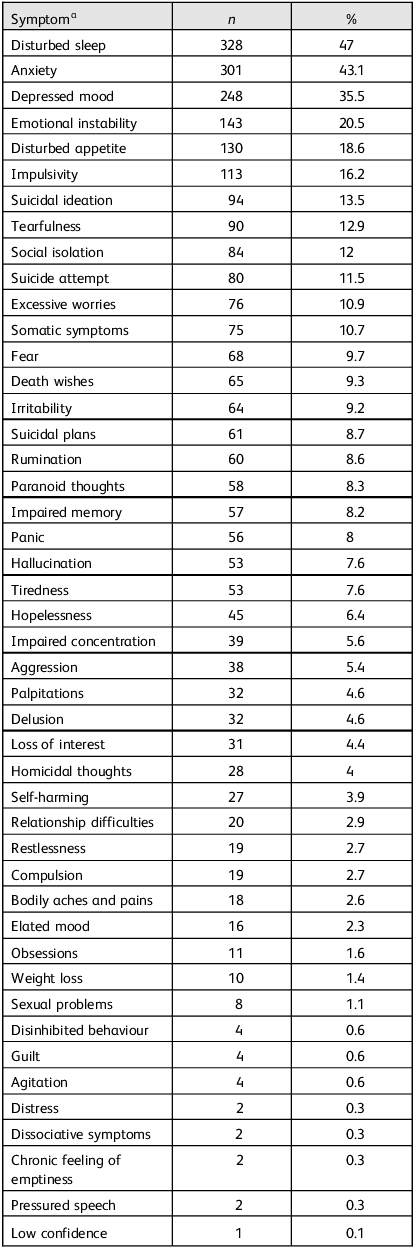
The most frequent symptoms were disturbed sleep (47%), anxiety (43.1%) and depressed mood (35.5%), followed by emotional instability (20.5%), disturbed appetite (18.6%) and impulsivity (16.2%) (Table 2).
Most common symptoms reported by participants (n = 698)

Table 2 Long description
A table listing common symptoms reported by participants. The table has 2 columns and 48 rows. The columns are labeled Symptom and n and %. The rows list various symptoms and their corresponding frequency and percentage among participants. Row 1: Disturbed sleep, 328, 47 percent. Row 2: Anxiety, 301, 43.1 percent. Row 3: Depressed mood, 248, 35.5 percent. Row 4: Emotional instability, 143, 20.5 percent. Row 5: Disturbed appetite, 130, 18.6 percent. Row 6: Impulsivity, 113, 16.2 percent. Row 7: Suicidal ideation, 94, 13.5 percent. Row 8: Tearfulness, 90, 12.9 percent. Row 9: Social isolation, 84, 12 percent. Row 10: Suicide attempt, 80, 11.5 percent. Row 11: Excessive worries, 76, 10.9 percent. Row 12: Somatic symptoms, 75, 10.7 percent. Row 13: Fear, 68, 9.7 percent. Row 14: Death wishes, 65, 9.3 percent. Row 15: Irritability, 64, 9.2 percent. Row 16: Suicidal plans, 61, 8.7 percent. Row 17: Rumination, 60, 8.6 percent. Row 18: Paranoid thoughts, 58, 8.3 percent. Row 19: Impaired memory, 57, 8.2 percent. Row 20: Panic, 56, 8 percent. Row 21: Hallucination, 53, 7.6 percent. Row 22: Tiredness, 53, 7.6 percent. Row 23: Hopelessness, 45, 6.4 percent. Row 24: Impaired concentration, 39, 5.6 percent. Row 25: Aggression, 38, 5.4 percent. Row 26: Palpitations, 32, 4.6 percent. Row 27: Delusion, 32, 4.6 percent. Row 28: Loss of interest, 31, 4.4 percent. Row 29: Homicidal thoughts, 28, 4 percent. Row 30: Self-harming, 27, 3.9 percent. Row 31: Relationship difficulties, 20, 2.9 percent. Row 32: Restlessness, 19, 2.7 percent. Row 33: Compulsion, 19, 2.7 percent. Row 34: Bodily aches and pains, 18, 2.6 percent. Row 35: Elevated mood, 16, 2.3 percent. Row 36: Obsessions, 11, 1.6 percent. Row 37: Weight loss, 10, 1.4 percent. Row 38: Sexual problems, 8, 1.1 percent. Row 39: Disinhibited behaviour, 4, 0.6 percent. Row 40: Guilt, 4, 0.6 percent. Row 41: Agitation, 4, 0.6 percent. Row 42: Distress, 2, 0.3 percent. Row 43: Dissociative symptoms, 2, 0.3 percent. Row 44: Chronic feeling of emptiness, 2, 0.3 percent. Row 45: Pressured speech, 2, 0.3 percent. Row 46: Low confidence, 1, 0.1 percent.
a. As the listed symptoms represent clinical features and are not mutually exclusive, individual patients may report more than one symptom.
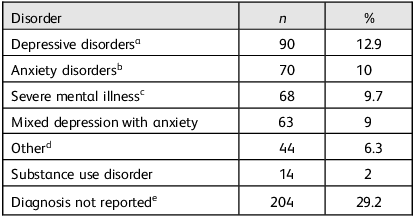
The most common diagnostic categories were depressive disorders (12.9%), anxiety disorders (10%) and severe mental illness (9.7%) (including schizophrenia, bipolar disorder and schizoaffective disorder). Mixed anxiety–depression presentations accounted for 9% of cases (Table 3).
Prevalence of the most common psychiatric disorders among participants (n = 698)

Table 3 Long description
The table presents the prevalence of various psychiatric disorders among participants. It has two columns and eight rows. The columns are labeled Disorder and n and percent. The rows are labeled with different types of disorders and their corresponding counts and percentages. Row 1: Depressive disorders, 90, 12.9 percent. Row 2: Anxiety disorders, 70, 10 percent. Row 3: Severe mental illness, 68, 9.7 percent. Row 4: Mixed depression with anxiety, 63, 9 percent. Row 5: Other, 44, 6.3 percent. Row 6: Substance use disorder, 14, 2 percent. Row 7: Diagnosis not reported, 204, 29.2 percent. The table shows the most common diagnostic categories among participants, with depressive disorders being the most prevalent.
a. Major depressive disorder, dysthymia, postpartum depression.
b. Illness anxiety disorder, generalised anxiety disorder, panic disorder, social phobia.
c. Schizophrenia, bipolar disorder, schizoaffective disorder, severe personality disorder.
d. Other reported disorders included obsessive–compulsive disorder, sexual dysfunction, eating disorders, attention-deficit hyperactivity disorder, neurological disorders, tic disorder, adjustment disorder, neurodevelopmental disorders, acute stress disorder and post-traumatic stress disorder.
e. Diagnosis not reported/not mentioned/not specified/not documented.
Comparison of factors by risk category and admission recommendation
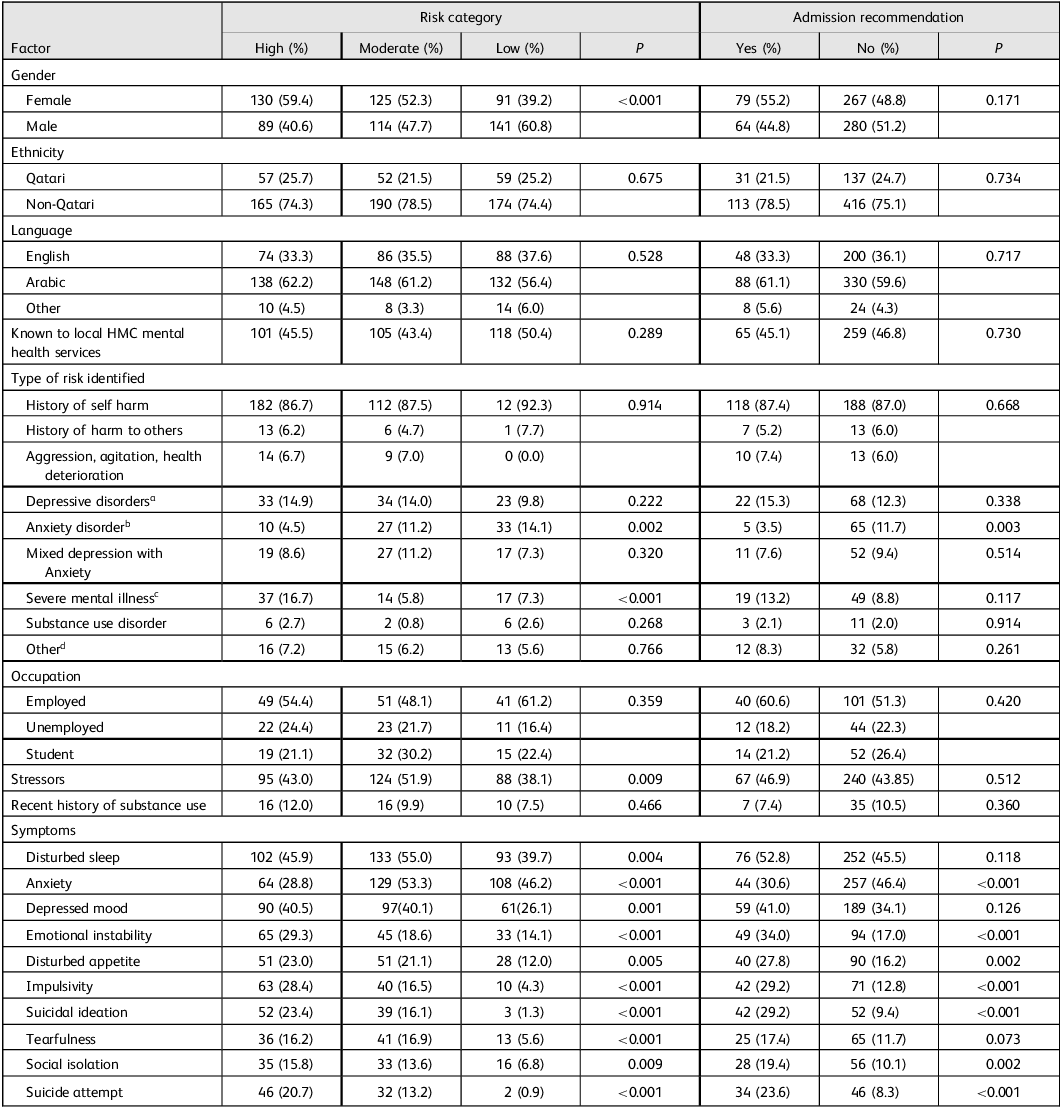
Risk category differed significantly by gender, with females more frequently represented in the high-risk group (p < 0.001). Severe mental illness was more common among individuals in the high-risk group (p < 0.001), whereas anxiety disorders were more frequent in lower risk categories (p = 0.002). Psychosocial stressors also differed across risk groups (p = 0.009).
Several symptoms were significantly associated with higher risk categorisation, including depressed mood, emotional instability, disturbed appetite, impulsivity, suicidal ideation, social isolation and suicide attempts.
With regard to admission recommendation, emotional instability, disturbed appetite, impulsivity, suicidal ideation, social isolation and suicide attempts were significantly associated with admission, whereas anxiety symptoms and anxiety disorders were less common among those recommended for admission (Table 4).
Comparison of factors by risk category and admission recommendation (n = 698)

Table 4 Long description
A table comparing factors by risk category and admission recommendation for 698 individuals. The table has 18 rows and 12 columns. The columns are labeled as follows: Factor, High (%), Moderate (%), Low (%), P, Yes (%), No (%), and P. The rows are labeled with various factors such as Gender, Ethnicity, Language, Known to local HMC mental health services, Type of risk identified, Occupation, Recent history of substance use, and Symptoms. Each row provides percentages for different categories and admission recommendations. Notable trends include significant associations between emotional instability, disturbed appetite, impulsivity, suicidal ideation, social isolation, suicide attempts, and admission recommendations. Anxiety symptoms and anxiety disorders were less common among those recommended for admission.
HMC, Hamad Medical Corporation.
a. Major depressive disorder, dysthymia, postpartum depression.
b. Illness anxiety disorder, generalised anxiety disorder, panic disorder, social phobia.
c. Schizophrenia, bipolar disorder, schizoaffective disorder, severe personality disorder.
d. Other reported disorders included obsessive–compulsive disorder, sexual dysfunction, eating disorders, attention-deficit hyperactivity disorder, neurological disorders, tic disorder, adjustment disorder, neurodevelopmental disorders, acute stress disorder and post-traumatic stress disorder.
Factors associated with triage categorisation
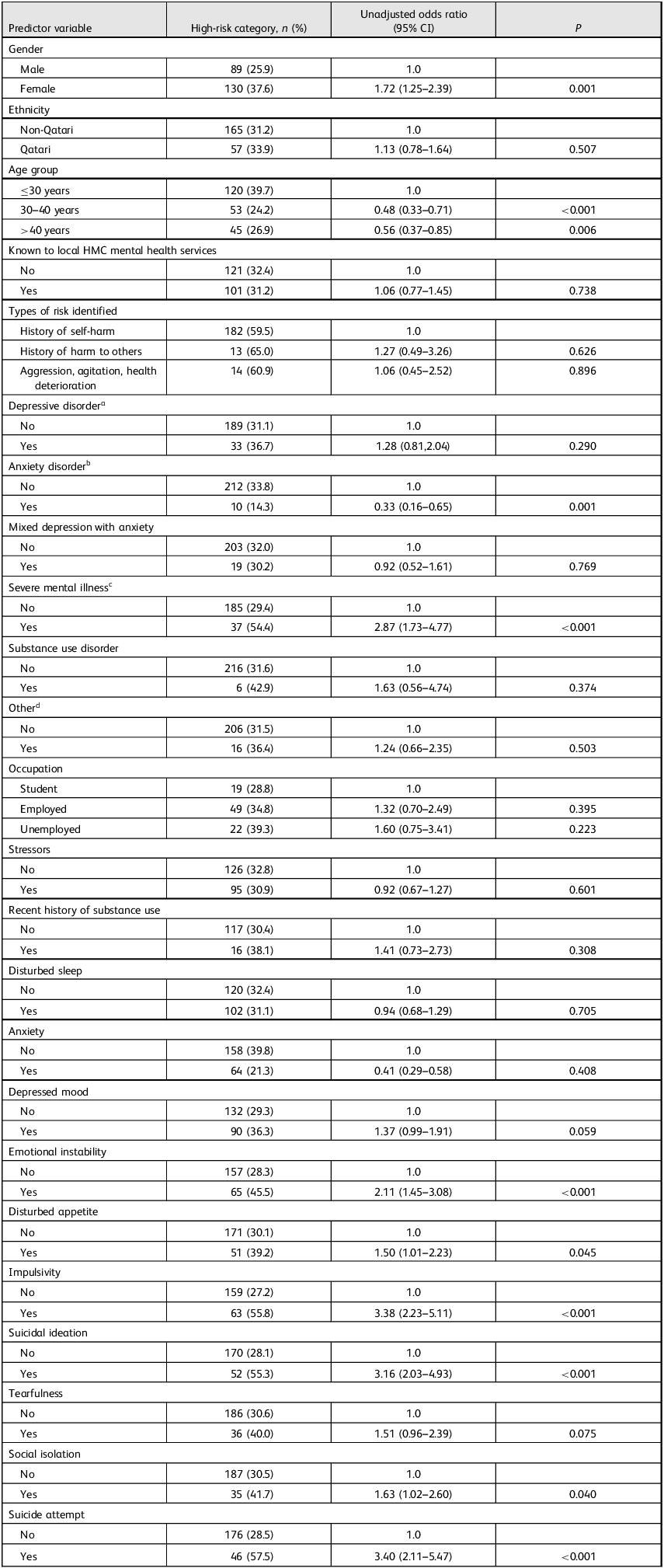
On univariate analysis, high-risk classification was associated with female gender (odds ratio = 1.72, p = 0.001), severe mental illness (odds ratio = 2.87, p < 0.001), emotional instability (odds ratio = 2.11, p < 0.001), impulsivity (odds ratio = 3.38, p < 0.001), suicidal ideation (odds ratio = 3.16, p < 0.001) and suicide attempt (odds ratio = 3.40, p < 0.001). In contrast, age 30–40 years (odds ratio = 0.48, p < 0.001) and anxiety disorder (odds ratio = 0.33, p = 0.001) were protective (Table 5).
Univariate logistic regression analysis for the outcome ‘high-risk category’

Table 5 Long description
A table summarizing univariate logistic regression analysis for high-risk category classification. The table has 25 rows and 4 columns. The columns are labeled Predictor variable, High-risk category, n, Unadjusted odds ratio, and P. The rows list various predictor variables such as gender, ethnicity, age group, and known to local HMC mental health services. Each row provides the number of individuals in the high-risk category, the unadjusted odds ratio with 95 percent confidence interval, and the p-value. Notable findings include higher odds ratios for female gender, severe mental illness, emotional instability, impulsivity, suicidal ideation, and suicide attempt, indicating these factors are associated with high-risk classification. Conversely, age group 30-40 years and anxiety disorder show lower odds ratios, suggesting a protective effect.
HMC, Hamad Medical Corporation.
a. Major depressive disorder, dysthymia, postpartum depression.
b. Illness anxiety disorder, generalised anxiety disorder, panic disorder, social phobia.
c. Schizophrenia, bipolar disorder, schizoaffective disorder, severe personality disorder.
d. Other reported disorders included obsessive–compulsive disorder, sexual dysfunction, eating disorders, attention-deficit hyperactivity disorder, neurological disorders, tic disorder, adjustment disorder, neurodevelopmental disorders, acute stress disorder, and post-traumatic stress disorder.
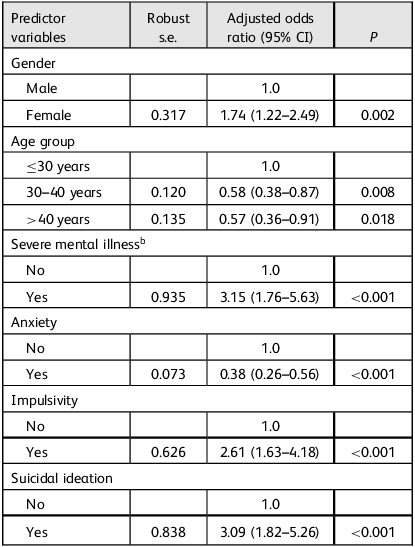
In the multivariate model, female gender (adjusted odds ratio (aOR) = 1.74, p = 0.002), severe mental illness (aOR = 3.15, p < 0.001), impulsivity (aOR = 2.61, p < 0.001) and suicidal ideation (aOR = 3.09, p < 0.001) remained independent predictors of high-risk categorisation (Table 6).
Multivariate logistic regression analysis for the outcome ‘high-risk category’ a

Table 6 Long description
A table titled ‘Multivariate logistic regression analysis for the outcome high-risk category’ with six rows and five columns. The columns are labeled ‘Predictor variables’, ‘Robust s.e.’, ‘Adjusted odds ratio (95% CI)’, and ‘P’. The rows are labeled with predictor variables: Gender, Age group, Severe mental illness, Anxiety, Impulsivity, and Suicidal ideation. Each row contains values for the respective predictor variables. For Gender, Male is the reference with an adjusted odds ratio of 1.0, while Female has a robust s.e. of 0.317, an adjusted odds ratio of 1.74 (1.22–2.49), and a P value of 0.002. For Age group, ≤30 years is the reference with an adjusted odds ratio of 1.0, 30–40 years has a robust s.e. of 0.120, an adjusted odds ratio of 0.58 (0.38–0.87), and a P value of 0.008, and >40 years has a robust s.e. of 0.135, an adjusted odds ratio of 0.57 (0.36–0.91), and a P value of 0.018. For Severe mental illness, No is the reference with an adjusted odds ratio of 1.0, while Yes has a robust s.e. of 0.935, an adjusted odds ratio of 3.15 (1.76–5.63), and a P value of <0.001. For Anxiety, No is the reference with an adjusted odds ratio of 1.0, while Yes has a robust s.e. of 0.073, an adjusted odds ratio of 0.38 (0.26–0.56), and a P value of <0.001. For Impulsivity, No is the reference with an adjusted odds ratio of 1.0, while Yes has a robust s.e. of 0.626, an adjusted odds ratio of 2.61 (1.63–4.18), and a P value of <0.001. For Suicidal ideation, No is the reference with an adjusted odds ratio of 1.0, while Yes has a robust s.e. of 0.838, an adjusted odds ratio of 3.09 (1.82–5.26), and a P value of <0.001.
a. Area under the receiver operating characteristic curve: 0.755 (95% CI 0.72–0.79); Hosmer–Lemeshow goodness-of-fit test (χ 2 = 20.7, p = 0.011); pseudo-R 2 = 0.14.
b. Schizophrenia, bipolar disorder, schizoaffective disorder, severe personality disorder.
Evaluation of model diagnostics: multivariate logistic regression model for the outcome ‘high-risk category’
Model diagnostics were conducted to assess specification, discrimination and calibration. The link test indicated that both the predicted value (hat, p < 0.001) and its squared term (hatsq, p = 0.012) reached statistical significance, which may indicate the presence of some unmeasured predictor variables. The model discrimination (model’s ability to differentiate between risk groups) was measured by the area under the ROC curve (AUC), which reached 0.755 (95% CI 0.72–0.79) and suggests an acceptable level of discrimination. For calibration, the Hosmer–Lemeshow goodness-of-fit test produced a statistically significant result (χ² = 20.7, p = 0.011), indicating that there is evidence the model might not fit the observed data outcome as closely as expected (Table 6 and Fig. 1(a)).
Receiver operating characteristic (ROC) curves using predictive probabilities derived from multivariate logistic regression analysis using outcome variables (a) high-risk category and (b) in-patient admission recommendation.

Factors associated with in-patient admission
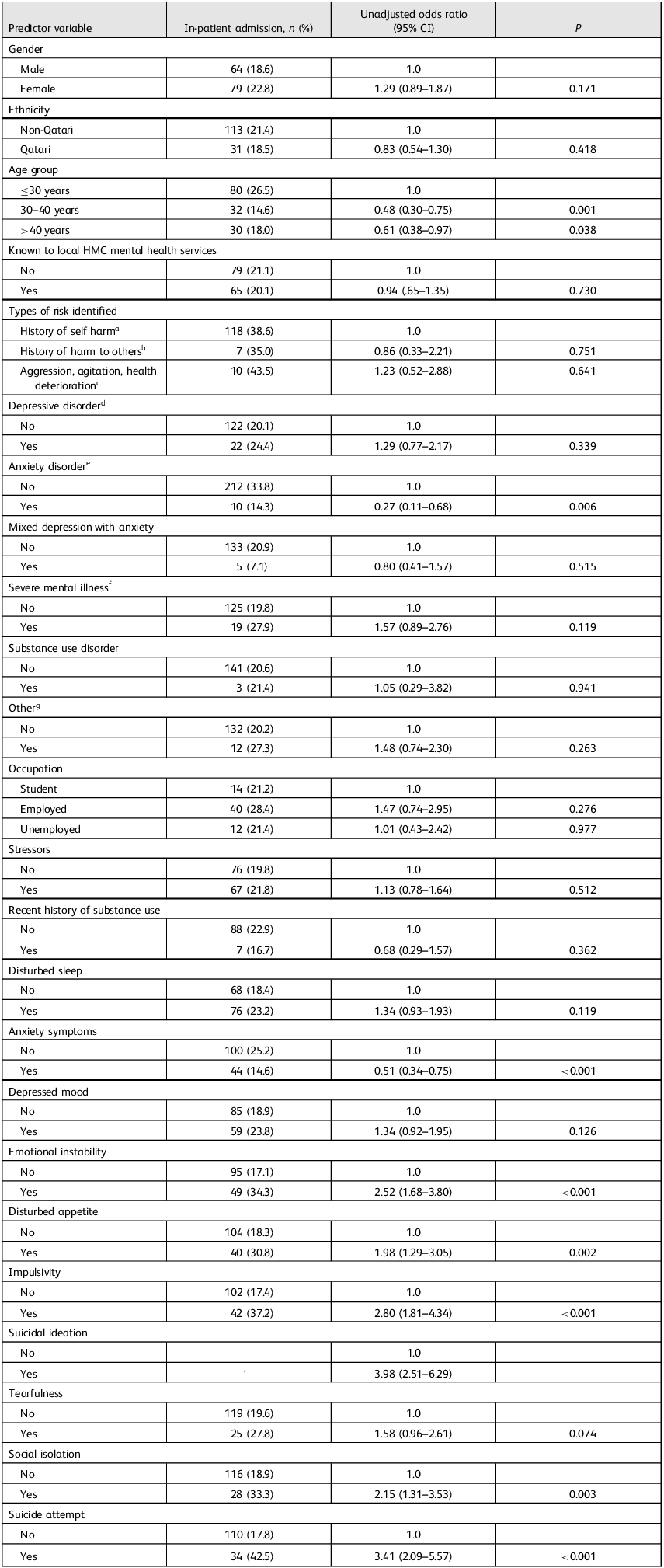
Univariate analysis identified emotional instability (odds ratio = 2.52, p < 0.001), disturbed appetite (odds ratio = 1.98, p = 0.002), impulsivity (odds ratio = 2.80, p < 0.001), suicidal ideation (odds ratio = 3.98, p < 0.001), social isolation (odds ratio = 2.15, p = 0.003) and suicide attempt (odds ratio = 3.41, p < 0.001) as significant predictors of admission, whereas anxiety symptoms (odds ratio = 0.51, p < 0.001) were associated with reduced odds (Table 7).
Univariate logistic regression analysis for the outcome ‘in-patient admission’

Table 7 Long description
A table titled Univariate logistic regression analysis for the outcome in-patient admission. The table has 31 rows and 4 columns. The columns are labeled Predictor variable, Inpatient admission, n (%), Unadjusted odds ratio (95% CI), and P. The table lists various predictor variables and their corresponding inpatient admission counts, unadjusted odds ratios with 95% confidence intervals, and p-values. The predictor variables include gender, ethnicity, age group, knowledge to local HMC mental health services, types of risk identified, depressive disorder, anxiety disorder, mixed depression with anxiety, severe mental illness, substance use disorder, occupation, stressors, recent history of substance use, disturbed sleep, anxiety symptoms, depressed mood, emotional instability, disturbed appetite, impulsivity, suicidal ideation, tearfulness, social isolation, and suicide attempt. Notable findings include significant predictors of admission such as emotional instability with an odds ratio of 2.52 and p-value less than 0.001, disturbed appetite with an odds ratio of 1.98 and p-value of 0.002, impulsivity with an odds ratio of 2.80 and p-value less than 0.001, suicidal ideation with an odds ratio of 3.98 and p-value less than 0.001, social isolation with an odds ratio of 2.15 and p-value of 0.003, and suicide attempt with an odds ratio of 3.41 and p-value less than 0.001. Anxiety symptoms were associated with reduced odds of admission with an odds ratio of 0.51 and p-value less than 0.001.
HMC, Hamad Medical Corporation.
a. Major depressive disorder, dysthymia, postpartum depression.
b. Illness anxiety disorder, generalised anxiety disorder, panic disorder, social phobia.
c. Schizophrenia, bipolar disorder, schizoaffective disorder, severe personality disorder.
d. Other reported disorders, included obsessive–compulsive disorder, sexual dysfunction, eating disorders, attention-deficit hyperactivity disorder, neurological disorders, tic disorder, adjustment disorder, neurodevelopmental disorders, acute stress disorder, and post-traumatic stress disorder.
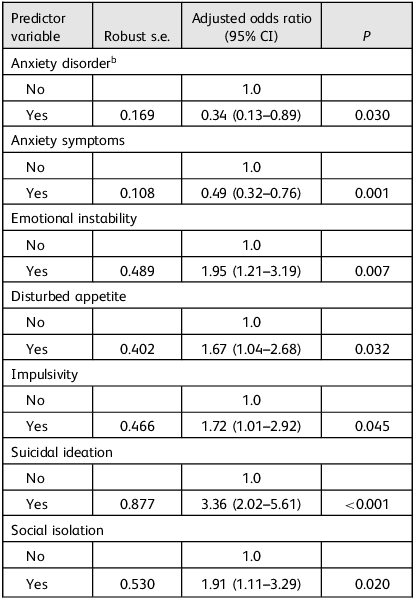
In the multivariate model, emotional instability (aOR = 1.95, p = 0.007), disturbed appetite (aOR = 1.67, p = 0.032), impulsivity (aOR = 1.72, p = 0.045), suicidal ideation (aOR = 3.36, p < 0.001) and social isolation (aOR = 1.91, p = 0.020) remained independently associated with admission, whereas anxiety symptoms (aOR = 0.49, p = 0.001) and anxiety disorder (aOR = 0.34, p = 0.030) remained protective (Table 8).
Multivariate logistic regression analysis evaluates the effect of various potential predictors and risk factors associated with in-patient admissiona

Table 8 Long description
A table showing the adjusted odds ratio of various predictor variables for in-patient admission. The table has 8 rows and 4 columns. The columns are labeled Predictor variable, Robust s.e., Adjusted odds ratio (95% CI), and P. The rows are labeled with different predictor variables and their corresponding values. Row 1: Anxiety disorder, Robust s.e. No 1.0, Adjusted odds ratio (95% CI) 0.169 0.34 (0.13-0.89), P 0.030. Row 2: Anxiety disorder, Robust s.e. Yes 1.0, Adjusted odds ratio (95% CI) 0.169 0.34 (0.13-0.89), P 0.030. Row 3: Anxiety symptoms, Robust s.e. No 1.0, Adjusted odds ratio (95% CI) 0.108 0.49 (0.32-0.76), P 0.001. Row 4: Anxiety symptoms, Robust s.e. Yes 1.0, Adjusted odds ratio (95% CI) 0.108 0.49 (0.32-0.76), P 0.001. Row 5: Emotional instability, Robust s.e. No 1.0, Adjusted odds ratio (95% CI) 0.489 1.95 (1.21-3.19), P 0.007. Row 6: Emotional instability, Robust s.e. Yes 1.0, Adjusted odds ratio (95% CI) 0.489 1.95 (1.21-3.19), P 0.007. Row 7: Disturbed appetite, Robust s.e. No 1.0, Adjusted odds ratio (95% CI) 0.402 1.67 (1.04-2.68), P 0.032. Row 8: Disturbed appetite, Robust s.e. Yes 1.0, Adjusted odds ratio (95% CI) 0.402 1.67 (1.04-2.68), P 0.032. Row 9: Impulsivity, Robust s.e. No 1.0, Adjusted odds ratio (95% CI) 0.466 1.72 (1.01-2.92), P 0.045. Row 10: Impulsivity, Robust s.e. Yes 1.0, Adjusted odds ratio (95% CI) 0.466 1.72 (1.01-2.92), P 0.045. Row 11: Suicidal ideation, Robust s.e. No 1.0, Adjusted odds ratio (95% CI) 0.877 3.36 (2.02-5.61), P <0.001. Row 12: Suicidal ideation, Robust s.e. Yes 1.0, Adjusted odds ratio (95% CI) 0.877 3.36 (2.02-5.61), P <0.001. Row 13: Social isolation, Robust s.e. No 1.0, Adjusted odds ratio (95% CI) 0.530 1.91 (1.11-3.29), P 0.020. Row 14: Social isolation, Robust s.e. Yes 1.0, Adjusted odds ratio (95% CI) 0.530 1.91 (1.11-3.29), P 0.020.
a. Area under the receiver operating characteristic curve: 0.736 (95% CI 0.69–0.78); Hosmer–Lemeshow goodness-of-fit test (χ² = 3.05, p = 0.695); pseudo-R 2 = 0.12.
b. Illness anxiety disorder, generalised anxiety disorder, panic disorder, social phobia.
Evaluation of model diagnostics: multivariate logistic regression model for the outcome ‘in-patient admission’
The link test showed a statistically significant predicted value (hat, p = 0.001) and a non-significant squared predicted value (hatsq, p = 0.284), indicating no logit link function misspecification. Model discrimination, measured by the area under the ROC curve, was 0.736 (95% CI 0.69–0.78), showing an acceptable distinction between those advised for in-patient admission and those not. Model calibration was assessed with the Hosmer–Lemeshow goodness-of-fit test, which yielded a non-significant result (χ² = 3.05, p = 0.695), indicating strong concordance between observed and predicted outcomes among in-patient admission groups (Table 8 and Fig. 1(b)).
Discussion
This study is the first in the MENA region to systematically examine factors associated with mental health helpline triage and admission outcomes, and detailed sociodemographic profiles offering key insights for service development and future research.
Demographics and stigma
Although the demographic profile of NMHH callers reflects individuals seeking support from a crisis helpline, rather than the general population, it remains informative to examine which groups are more likely to seek help. Although older adults comprise only 1–2% of Qatar’s total population, they accounted for 4.5% of all helpline calls over 3 years. This overrepresentation underscores both the accessibility and relevance of the service for this group. Evidence indicates that telephone-based support is particularly well-suited for older adults, given that frailty and social isolation are prominent risk factors for mental health problems in later life. Reference Courtin and Knapp24,Reference Gheorghe, Bălășescu, Hulea, Turcu, Amariei and Covaciu25
Children and adolescents accounted for 4.2% of all helpline calls, indicating modest yet meaningful engagement from younger individuals in a context where those under 18 represent a substantial proportion of the population. 26 Some calls were initiated by parents or carers rather than the young person themselves. This comparatively lower proportion of youth engagement may reflect limited awareness of the service, stigma or a preference among adolescents for digital, text-based and anonymous modes of support.
Although men constitute approximately 71% of Qatar’s population, they accounted for only half of helpline callers, mirroring global trends in gendered help-seeking behaviour. Evidence suggests that traditional masculine norms like stoicism and self-reliance contribute to heightened mental illness stigma among men, resulting in reduced help-seeking and increased risk of untreated psychological distress. Another contributing factor may be the higher proportion of migrant men in Qatar, who may seek help less frequently. These findings highlight the need for culturally informed interventions to improve access by challenging gender-specific stigma through targeted outreach, education and services tailored to how men express mental health difficulties. Reference Chatmon27
Women were overrepresented among high-risk callers, consistent with international literature on the gender paradox of suicidal behaviour, wherein women more often engage in non-fatal attempts whereas men are more likely to die by suicide. Reference Schrijvers, Bollen and Sabbe28 Gender differences in psychosocial stress, psychiatric comorbidity, help-seeking and choice of suicide method contribute to this disparity.
Multicultural context
Qatar’s diverse population presents unique mental health challenges. Although the majority of NMHH callers were non-Qataris, nationals were overrepresented relative to their population share. 29 This may indicate greater awareness and access among Qatari citizens, or differing stigma and help-seeking attitudes compared with expatriates.
Expatriate populations often face additional barriers to care, including language difficulties, limited awareness of available healthcare services, financial pressures and fears of job loss or income loss if they take time off work to see support. Reference Latoo, Wadoo, Iqbal, Khan, Amin and Ouanes30,Reference Latoo, Wadoo, Iqbal, Khan, Amin and Ouanes31 International studies show that migrant workers can be at increased risk of suicide. Reference Dervic, Amiri, Niederkrotenthaler, Yousef, Salem and Voracek32 The NMHH’s multilingual, confidential and free service effectively addresses many of these obstacles.
These findings reinforce the importance of culturally competent, linguistically diverse service delivery and highlight the need for outreach programmes targeting both migrant communities and employers to encourage timely help-seeking and reduce suicide risk in multicultural societies. Reference Wadoo, Latoo, Iqbal, Naeem and Alabdulla33
Improving access and addressing stigma
Over half (53.6%) of callers were not previously engaged with mental health services, underscoring the NMHH’s role as both a first point of contact and a safety net for those already within the care system. The helpline’s confidential design, separate from the national electronic medical record, likely encourages individuals who fear stigma or breaches of privacy. A satisfaction survey reported that more than 90% of callers would recommend the service, reflecting high acceptability. 34
By providing timely and equitable access to care and promoting public awareness, the NMHH helps reduce stigma. Reference Alabdulla, Iqbal, Mohamed, Shinith, Buenaventura and Smith12,Reference Evans-Lacko, Brohan, Mojtabai and Thornicroft35
Presenting symptoms and psychiatric disorders
The most frequently reported symptoms were disturbed sleep, anxiety and depressed mood, consistent with international helpline data. The most frequent diagnostic categories were depressive and anxiety disorders, followed by severe mental illnesses (schizophrenia, bipolar and schizoaffective disorders). These patterns are consistent with published literature indicating that mood and anxiety disorders represent a large proportion of help-seeking presentations in crisis services. Reference Alabdulla, Iqbal, Mohamed, Shinith, Buenaventura and Smith12
Substance use was reported by 6% of callers, lower than in some global cohorts, but remains clinically relevant given its established association with suicidality. This reinforces the need for early detection and integrated management of comorbid depression and substance misuse. Reference McLean, Maxwell, Platt, Harris and Jespon36,Reference McClatchey, Murray, Rowat and Chouliara37
Factors associated with high-risk categorisation and in-patient admission
The strongest independent predictors of high-risk classification were female gender, severe mental illness (schizophrenia, bipolar disorder, schizoaffective disorder), impulsivity and suicidal ideation. The most salient predictors of in-patient admission included emotional instability, disturbed appetite, impulsivity, suicidal ideation and social isolation. These factors highlight acute behavioural and affective symptoms, often reflecting profound functional breakdown, requiring immediate intervention.
These findings are clinically plausible and align with broader literature, which consistently identifies suicidal thoughts, prior suicide attempts, severe psychiatric disorders, substance misuse and hopelessness as enduring predictors of suicidal behaviour and indicators for immediate risk escalation. Reference McClatchey, Murray, Rowat and Chouliara37–Reference Moore, Doughty, Neumann, McClelland, Allott and O’Connor39 Collectively, these patterns underscore the need to embed structured suicide risk assessments within helpline and crisis protocols and to train clinicians to recognise dynamic behavioural markers alongside static diagnoses. A recent suicide hotline study highlighted that being 25–35 years of age, mental illness, psychological stress, social isolation and relationship problems were associated with higher odds of suicidal ideation and behaviour, underscoring the importance of age-responsive interventions that target social isolation, financial stress and relationship difficulties. Reference Farran, Haj, Zarzour, Chamoun, Kazazian and Posbic40
A notable and clinically significant observation was that anxiety disorders and anxiety symptoms were associated with lower odds of high-risk categorisation and admission. These findings should be interpreted cautiously. Evidence suggests that chronic anxiety may still confer later risk for suicidal behaviour. Reference Sareen, Cox, Afifi, de Graaf, Asmundson and ten Have41
Optimising resource allocation and risk assessment
Only 144 of the 698 cases were recommended for admission, indicating that the virtual model effectively managed risk for approximately 80% of callers. This may be multifactorial, reflecting psychological and psychiatric interventions delivered by the NMHH, facilitation of access to urgent out-patient services, and other crisis interventions, highlighting its role within the wider healthcare system.
The helpline also undertook proactive outreach to front-line clinicians, monitoring well-being and providing psychological support. This was critical during the COVID-19 pandemic, when approximately one-third of healthcare workers in Qatar themselves reported suboptimal well-being, underscoring the need for accessible and confidential mental health services. Reference Wadoo, Latoo, Iqbal, Chandrappa, Chandra and Masoodi42 Furthermore, in-patient suicides during COVID-19 treatment highlighted the elevated risk of self-harm in non-psychiatric settings, reinforcing the importance of integrating crisis helplines into healthcare systems. Reference Alabdulla and Kumar43
The NMHH experience demonstrates that validated assessment tools, structured communication frameworks and multidisciplinary collaboration are essential for safe, efficient care and for embedding suicide prevention into routine practice. This approach aligns with NHS England’s Staying Safe from Suicide guidance, which advocates formulation-based assessments and recognises that suicidal thoughts fluctuate, making static prediction unreliable. 44
Embedding NMHH within the organisation’s crisis care pathway has streamlined service delivery and strengthened continuity of care, including referral management, follow-up and admissions.
Limitations
As a retrospective chart review, the study relied on the quality and completeness of clinical documentation. The study primarily examined the duration patients remaining under NMHH care, rather than long-term follow-ups. Future prospective studies with follow-up outcomes could provide greater insight into long-term effectiveness. In certain cases, especially where psychiatrists were not involved, a clear diagnosis was not established. Nonetheless, the large sample size, standardised triage process and use of robust statistical methods strengthen the validity of findings.
Clinical and policy implications and future research
As a confidential and easily reachable entry point, the NMHH supports individuals across age groups with diverse mental health needs, including those at risk of self-harm, while helping to reduce stigma around help-seeking. It has made a significant contribution to suicide prevention and improved accessibility to mental health services in Qatar.
A recent global survey of suicide helplines identified persistent budgetary constraints, staffing shortages and training gaps, underscoring the need for sustained investment to maintain service quality and responsiveness. Reference Jamir, Vadivel and Philip45 In contrast, the NMHH model, integrated into Qatar’s national healthcare system, effectively mitigates these challenges by providing a coordinated continuum of care linking telephonic triage, multidisciplinary assessment, specialist follow-up, in-patient management and alignment with the broader healthcare system.
To further improve outcomes, service development should prioritise advanced training in clinical formulation, dynamic safety planning and routine data integration across helpline, community and hospital systems. Integrating chat-based support and decision-aid algorithms may enhance access and efficiency, provided that human oversight is maintained. Future research should examine longitudinal outcomes, cost-effectiveness, caller satisfaction and subgroup analyses (e.g. nationality or language) to refine predictive accuracy and cultural adaptability. Collectively, these efforts can consolidate the role of helplines as a cornerstone of modern, inclusive mental healthcare.
Data availability
The data are not publicly available owing to ethical restrictions.
Acknowledgements
We thank Iain Francis Tulley and Raed Ahmad Assi Amro for their leadership, and all of the NMHH staff for their hard work and dedication in the course of this study.
Author contributions
M.A., Y.I., O.W. and F.K. conceptualised the study. All authors contributed to the design of the study. K.A.W.S., M.C.P.V. and B.M.P. contributed to data cleaning and data management. A.A.A.E., A.M.A, Y.B.I., Z.S., A.O.Y.M. and R.A.B. collected the data under the supervision of F.K. and Y.I. Data were analysed by P.C., F.K. and Y.I. All authors contributed to writing the manuscript.
Declaration of interest
None.



 Open access


eLetters
No eLetters have been published for this article.