I. INTRODUCTION
Additive manufacturing (AM) is a manufacturing process where objects are built up layer-by-layer. Formerly, AM was also referred to as rapid prototyping (RP) or solid free form fabrication (SFF). In popular science, the term 3D printing is used as a synonym for AM. According to ASTM, AM is a “process of joining material to make objects from 3D model data, usually layer upon layer”. 1 Today, AM of polymers is state-of-the-art. In the field of metals, more and more materials can be processed as well. For processing ceramic materials, the technical application of AM technologies has been limited so far. However, ceramic materials have been studied in AM processes ab initio with the development of the different AM technologies since about 25 years. All established AM technologies have also been tested for ceramic materials. AM technologies can be classified according to the state of the material that is used Reference Chartier, Badev and Somiya2 – powder materials, liquid materials, and solid materials.
Conventional stereolithography (STL), for example, was applied for alumina, Reference Pham-Gia, Rossner, Wessler, Schäfer and Schwarz3,Reference Chartier, Duterte, Delhote, Baillargeat, Verdeyme, Delage and Chaput4 zirconia, Reference Chartier, Duterte, Delhote, Baillargeat, Verdeyme, Delage and Chaput4 silicon nitride, Reference Griffith and Halloran5 and silica Reference Griffith and Halloran5 as well as for ZTA-ceramics. Reference Licciulli, Esposito Corcione, Greco, Amicarelli and Maffezzoli6 In this STL-process, a photopolymerizable ceramic slurry (liquid material) is cured by an UV-laser. Based on the principal approach of using photopolymerizable binders in the ceramic slurry or paste, specific AM techniques have been developed for the production of ceramic green bodies. So, UV curable inks with high Al2O3 loading are used in a robocasting process. Reference de Hazan, Thanert, Trunec and Misak7 Binders that are cured under visible blue light are applied in direct light processing (DLP), which allows to produce complex-shaped dense alumina parts. Reference Felzmann, Gruber, Mitteramskogler, Tesavibul, Boccaccini, Liska and Stampfl8
Selective laser sintering (SLS) is an AM process that uses powder materials. SLS was tested for a number of ceramic materials. Reference Lenk, Nagy, Richter and Techel9–Reference Goodridge, Lorrison, Dalgarno and Wood13 Laser sintering has an exceptional position as the ceramic material can be directly sintered during the AM process. However, ceramic materials that are sintered by a solid-state sintering process cannot be consolidated into a pure single-phase material by laser sintering. The ceramic powder densification requires a liquid phase during laser sintering. Therefore, it is necessary to add a liquid phase forming material to reach a powder consolidation by laser sintering. In this case, a laser induced melting process of the binding phase (e.g., glass) occurs and a sintering in its intrinsic physical sense does not proceed. It is also possible to use a eutectic composition of two ceramic phases to melt this mixture at laser impact. Reference Hagedorn, Wilkes, Meiners, Wissenbach and Poprawe11 This melting process naturally does not result in a sintered microstructure. Another way is that the SLS process is only used as a shaping process for the green body and the ceramic microstructure is formed by a subsequent conventional thermal process. Reference Lenk, Nagy, Richter and Techel9
3D powder bed printing is the most commonly used AM process for powder materials. Typical application of 3D powder bed printing is focused on the production of porous ceramic components because of the little compacted powder layers; the green density is too low to reach high density (>99%) after sintering. However, high densities are not required, e.g., for bioactive scaffold structures. So bioactive components based on calcium phosphates were produced by 3D powder bed printing. Reference Gbureck, Hoelzel, Biermann, Barralet and Grover14–Reference Dombrowski, Caso, Laschke, Klein, Guenster and Berger19 In addition, porous glass-ceramic scaffolds were manufactured by 3D powder bed printing. Reference Zocca, Gomes, Bernardo, Muller, Gunster and Colombo20 Another way to utilize the relative simple 3D-powder bed printing technique is the infiltration of the 3D printed and sintered porous ceramic component with liquid metal, which is shown in Ref. Reference Melcher, Travitzky, Zollfrank and Greil21. It is also possible to use a ceramic particle filled ink in powder bed printing to adjust the composition and the green density of the printed sample. Reference Polsakiewicz and Kollenberg22
In general, when using AM methods for the production of samples with high sintered density, it is necessary to use a suspension or paste with a high powder volume content instead of a dry powder bed. This was shown early for example in SLS where instead of powder layers suspension layers were deposited and consolidated (after short drying) by laser beam. Reference Günster, Engler and Heinrich23 Furthermore, the direct printing of suspensions was shown as a promising way to produce dense ceramic materials by AM. Reference Cappi, Oezkol, Ebert and Telle24,Reference Ebert, Özkol, Zeichner, Uibel, Weiss, Koops, Telle and Fischer25 Of course, only highly dispersed nano- or submicro-powders can be processed by direct printing using customary print heads.
Conventional fused deposition modeling (FDM) uses a thermoplastic ceramic feedstock (solid material at room temperature) that is liquefied by heating and extruded through a fine nozzle – that means, in heated stage, a suspension in physical sense is used as well. For example, functional ceramic materials Reference Allahverdi, Danforth, Jafari and Safari26 and alumina Reference Bose, Darsell, Hosick, Yang, Sarkar and Bandyopadhyay27 were processed using FDM. However, the effort for the preparation of the thermoplastic ceramic feedstock in the form of spooled filaments limits the FDM application for ceramics.
The robocasting process which is a computer-controlled deposition of colloidal pastes or slurries is similar to FDM. In contrast to original FDM and other generative extrusion processes, the carrier fluid is a volatile solvent (water or organic liquid). In robocasting, highly dispersed ceramic suspensions are used for AM of complex ceramic structures. Reference Schlordt, Schwanke, Keppner, Fey, Travitzky and Greil28,Reference Stuecker, Cesarano and Hirschfeld29,Reference Cai, Roman-Manso, Smay, Zhou, Osendi, Belmonte and Miranzo30
Independently from the applied AM process, in case of the production of dense ceramic components the material properties need to be critically compared with the material properties of conventionally processed ceramics. Moreover, from the view of potential user of additive manufactured ceramic components, material properties are expected that fit the properties of conventionally produced ceramics. Anyway, apart from the manifold geometric facilities, which will not be discussed here, some AM techniques have the potential to be used for the production of multicomponent materials with three-dimensional space-resolved properties. Reference Polsakiewicz and Kollenberg31
Furthermore, our approach aims at the fabrication of two-component parts with high material density. The above-mentioned DLP process has high potential for producing monolithic dense ceramics. However, the production of composite materials seems to be very difficult with DLP equipment. Furthermore, the material variety is limited because the powder must not absorb light of the wave length that initiate the photopolymerization of the binder. Only white or bright powders can be processed. The light absorption of dark powders, e.g., metal powders, prevent the penetration of the light radiation even in thin layers and the photopolymerization cannot start.
The method, presented in this study, combines FDM and robocasting. We use molten, thermoplastic feedstocks that are processed in a dispensing unit with xyz positioning. The thermoplastic feedstocks are based on compositions that are known from low-pressure injection molding. Reference Cetinel, Bauer, Mueller, Knitter and Hausselt32,Reference Gorjan, Dakskobler and Kosmac33 The melting temperature is relatively low (approximately 100 °C) and the viscosity is also relatively low as compared to thermoplastic feedstocks that are used in conventional FDM. In FDM, molten feedstocks with considerably higher viscosity are used, comparable with thermoplastic feedstock for high pressure injection molding of ceramics. In the present work, we use a liquid, molten feedstock (= suspension) can be simply dispensed via a thin nozzle due to its relatively low viscosity. In principle, a similar equipment can be used as in robocasting, although no volatile solvent is used. This thermoplastic 3D-printing concept has the advantages that, on the one hand there are no restrictions concerning the applied powder materials and, on the other hand, the composite materials can be produced by using two or more dispensing heads. Basically, it is possible to process all materials that can be dispersed in the molten feedstock.
In the present study, the application of this AM process focuses on steel–ceramic composite material. Owing to the combination of steel and ceramic innovative, multifunctional properties in two dimensions and in three dimensions can be achieved, such as hard and ductile, electrically or thermally conductive and insulating, magnetic and nonmagnetic. To obtain a steel–ceramic composite, it is an essential requirement to successfully co-sinter the paired powders in the composite material. As the sintering of the components has to proceed at the same temperature and atmosphere, it is essential that both materials (steel and ceramic) have a comparable sintering temperature. For avoiding critical mechanical stress during cooling, it is also important that the coefficient of thermal expansion of the ceramic and steel material is approximately equal. Concerning these two afore-mentioned aspects, zirconia and stainless steel are well suited for the composite, which has been verified for example in Refs. Reference Yeo, Jung and Choi34–Reference Dourandish and Simchi36. It is given that AM technologies have to be used to produce steel–ceramic composites with high geometric complexity and additionally with the option of three-dimensional graded material properties. In a first step, a principal study is presented to evaluate thermoplastic 3D printing for producing steel–zirconia composites.
II. EXPERIMENTAL
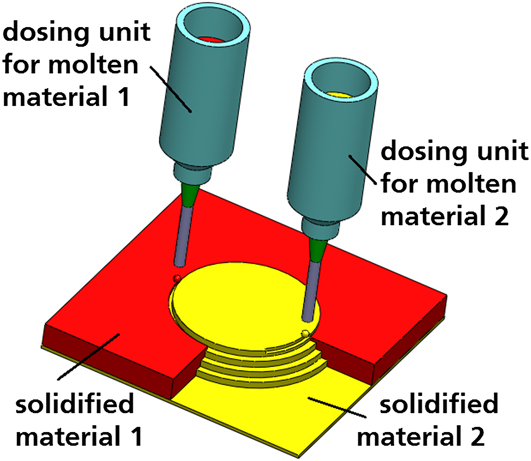
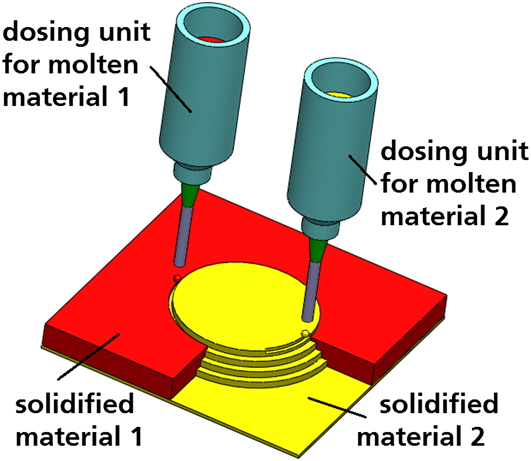
The principal setup for thermoplastic 3D printing is shown in Fig. 1. The suspension is printed layer-by-layer. The suspension immediately solidifies due to cooling because of the fast heat transfer from the printed suspension (= molten feedstock) to the underlying layer or to the surrounding atmosphere. Additionally, it is possible to apply the suspension by microdispensing at particular points and areas. This opens the opportunity to combine different materials or compositions in one layer to achieve a material gradient not only between different layers but also within one layer.
Scheme of thermoplastic 3D printing for two materials.
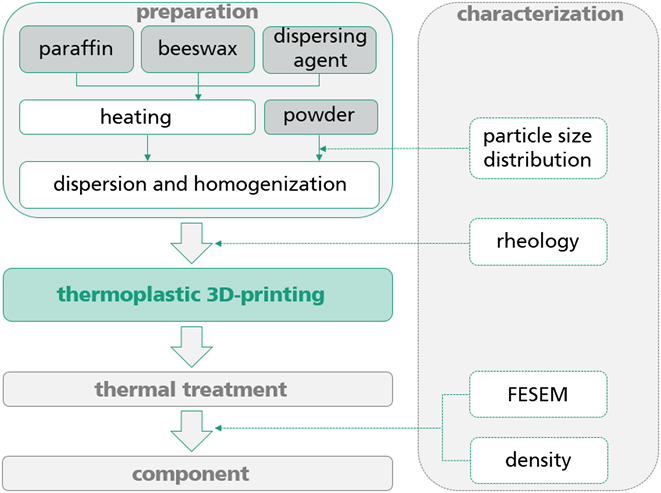
For the metal powder feedstock, the stainless steel powder 17-4PH (from Sandvik Osprey Powders) was used. The particle size of the powder is d 50 = 12.2 µm. A mixture of paraffin and beeswax with a weight ratio of 10 (paraffin) : 3 (beeswax) was used as a binder system. The binder system and a dispersing agent (1.2 wt% referring to powder) were heated up to 100 °C in a heatable dissolver (Dissolver DISPERMAT CA 20-C, VMA-Getzmann GmbH, Reichshof, Germany). Then the metal powder was added and the suspension was homogenized by stirring for 2 h. The powder content was 47 vol%.
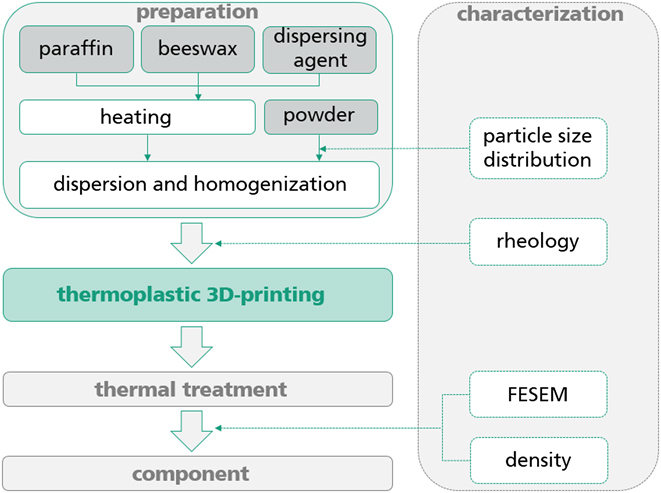
For the zirconia feedstock/suspension, the zirconia powder TZ-3Y-SE (from Tosoh Corporation) with d 50 = 0.3 µm and 94.5 wt% ZrO2 was used. The partially stabilized ZrO2 contains 3 mol% Y2O3 (3Y-TZP). A mixture of paraffin and beeswax was used as a binder system as well. The binder system and a dispersing agent were heated up to 100 °C in a heatable ball mill. Then the zirconia powder was added to the liquid and was dispersed by ball milling at 100 °C for 72 h. The ratio of paraffin and beeswax and the amount of dispersing agent were the same as for the metal powder feedstock. The zirconia powder content was 45 vol%. The process scheme for sample preparation is shown in Fig. 2.
Process scheme for sample preparation.
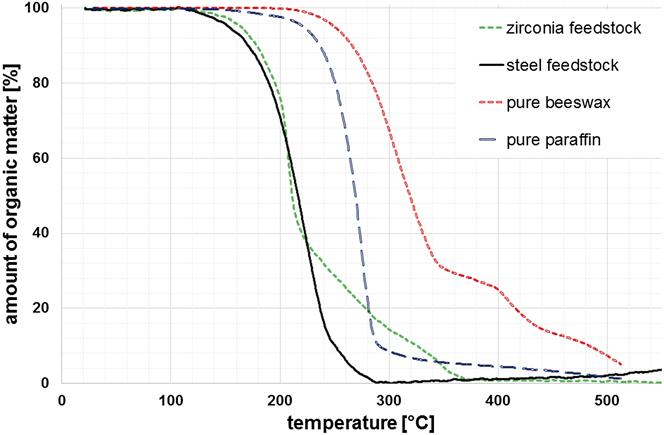
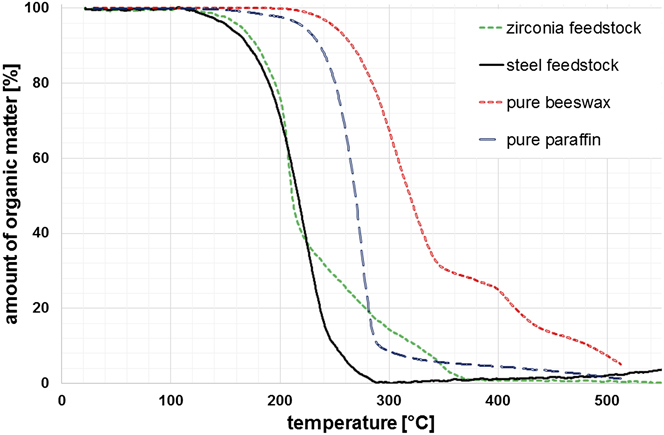
A combination of paraffin and beeswax is used as a binder system because of the low viscosity of the mixture at 100 °C and due to the low, but different decomposition temperatures. Figure 3 shows the thermogravimetric curves of pure beeswax and pure paraffin as well as of zirconia and steel feedstocks. For the thermal decomposition of the pure organic material, a higher temperature is required compared to the feedstock with the ceramic or metallic powder. It is supposed that interactions between the powder and the binder components lower the decomposition temperatures of the organic matter.
Debinding behavior from thermogravimetric studies of feedstocks and pure binder components. (The curves show the relative amount of organic matter.)
To characterize the rheological behavior of the steel and zirconia feedstock, a rheometer (Modular Compact Rheometer MCR 302, Anton Paar GmbH, Graz, Austria) which can be adjusted from −25 to 200 °C with a plate/plate measuring system was used. The flow behavior was analyzed with an increasing shear stress (0–1000 Pa) and at varying temperatures between 40 and 120 °C.
The laboratory equipment for thermoplastic 3D printing uses a xyz-actuating unit with a cartridge fitting. The cartridge can be moved in x-y-z direction over a fixed platform. For the experiments, heated cartridges and fitting dosage needles were used to deposit (extrude) the suspensions on a metal tape or a glass slide as a substrate. The uniform heating of the cartridge, feedstock as well as needle is very important as the viscosity of the molten feedstock (= suspension) strongly depends on the temperature. A separate cooling of the platform is not required. At room temperature, the suspension solidifies immediately after printing on the substrate. The feedstock was heated up to a temperature of about 80 °C. Needles with a diameter of 0.8 mm were used and a pressure of 0.4 bar was applied to press the molten feedstock out of the needles. If plastic needles were used, the temperature of the suspension decreased significantly within the needle and the viscosity of the suspension was increased resulting in clogging of the needle. By using metal needles with a good thermal conductivity, the energy of the molten feedstock inside the cartridge was also conducted to the top of the needle and clogging was avoided. In the beginning, relatively simple samples were produced which consist of several layers of both feedstocks. For both feedstocks, no shrinking was observed after solidification.
The debinding of the feedstocks exhibits a high challenge. Because of the thermoplastic behavior of the green samples, very low heating rate is required to avoid the deformation of the samples. The debinding can be supported by a powder bed, which additionally stabilizes. However, the samples have to be separated from the powder bed after the debinding step. Therefore, the strength of the sample has to be high enough to avoid damaging during the removal from the powder bed.
In principle, for complete debinding, oxidic atmosphere (air) is preferred. Otherwise, the steel powder is oxidized in air atmosphere at a temperature above 360 °C. Thus, different thermal treatments were used for the debinding of the different feedstocks. In a first step, all green samples were debinded in a powder bed at a very low heating rate under air up to 270 °C (heating rate 4 K/h). At that temperature, the majority of the organic matter was decomposed (Fig. 3) but the mechanical strength was still high enough to handle the samples. The second debinding step was performed after the separation from the powder bed. The pure steel samples and steel zirconia composites were processed under Ar atmosphere up to 800 °C (15 K/h), and sintered in another furnace under Ar-atmosphere at 1350 °C (60 K/h) for 3 h. Pure zirconia samples were debinded under air with a dwell time of 1 h at 600 °C and sintered under air at 1350 °C for 3 h or at 1500 °C for 2 h.
To estimate the density of the sintered samples, Archimedes' principle and FESEM images were used. The FESEM images were converted into binary images, all pores were converted into black pixels and the ceramic particles into white pixels. The used open source software is called Image J. The software compares the number of black and white pixels and calculates the porosity in the cross-sectional area.
Energy dispersive x-ray spectroscopy (EDX) was used to characterize the different phases and precipitations close to the interface between the different materials and in the interior of the steel.
III. RESULTS AND DISCUSSION
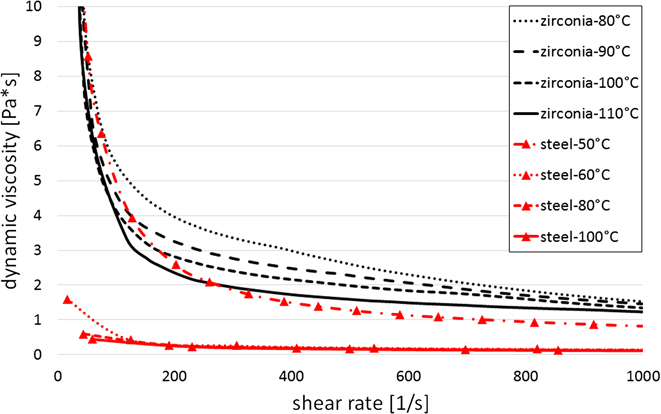
Figure 4 shows the rheological behavior curves of the steel and zirconia suspensions at different temperatures. Independent of the material and of the temperature, the suspensions show a pseudoplastic behavior. The dynamic viscosity decreases with increasing temperature and increasing shear rate, which means that the molten feedstocks maintain their shape after deposition during the short time up to solidification. The molten feedstock can flow at high shear rates induced by pressure and after the printing it is fixed on a defined position. Furthermore, if the temperature is increased, a lower pressure (shear rate) is required to reduce the viscosity. In general, zirconia suspensions with smaller particles and therefore a higher specific surface area show a higher viscosity as compared to the steel powder suspensions.
Dynamic viscosity of steel and zirconia suspensions (molten feedstocks) plotted over the shear rate; powder volume content of the feedstocks: 47 vol% steel and 45 vol% zirconia.
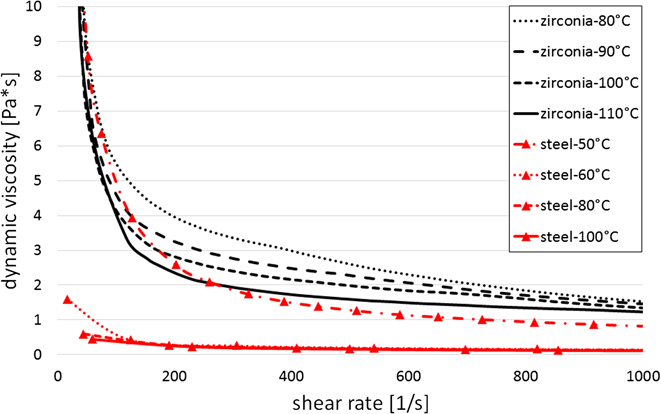
For the steel feedstock, the viscosity decreases significantly in a temperature range between 50 and 60 °C. At higher temperatures, the viscosity varies only at very low shear rates.
Summarizing the rheological investigation, it is shown that the developed process will work with different material systems, because the viscosity of the feedstocks decreases to values between 0.5 and 3 Pa*s (shear rate higher than 200 s−1). This is important to produce structures with a high resolution. Furthermore, the curves help to adjust the temperature as an essential parameter to handle the process in an optimal range.
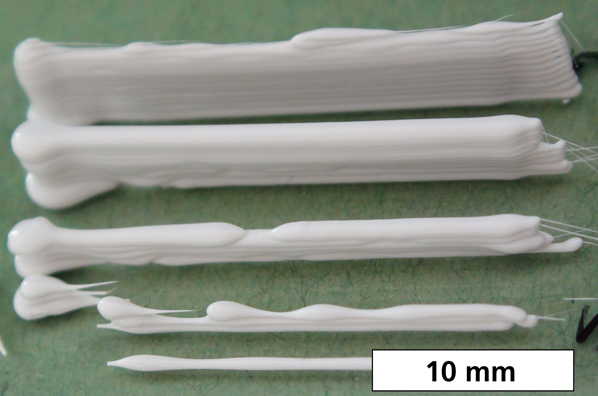
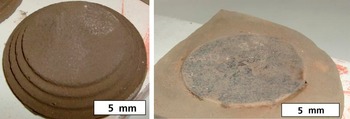
Produced samples with different geometries are shown in Fig. 5 (green sample) and Fig. 6 (after separating from the powder bed after the first debinding step). A complete bond between the printed layers was observed in green state and after debinding being the prerequisite for sintering without layer separation.
Zirconia green samples.
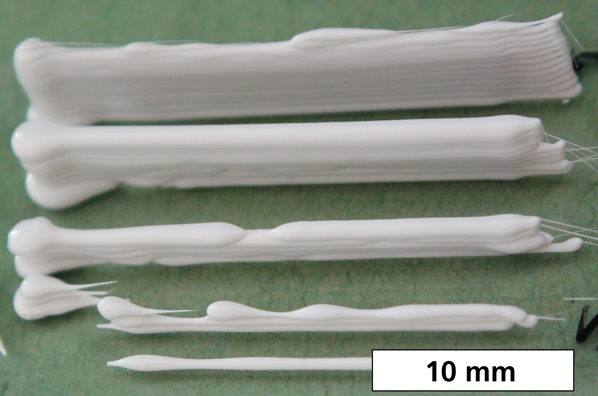
Zirconia–steel green samples, debinded under Ar atmosphere and in a powder bed.

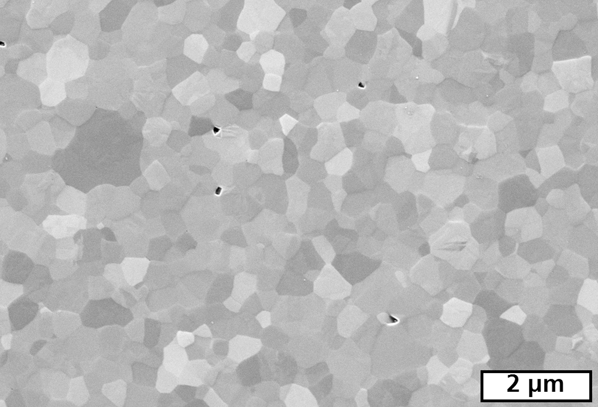
Figures 7 and 8 and Figs. 9 and 10 present the FESEM images of cross-sections of the zirconia section of the steel–zirconia samples sintered at 1350 °C and 1500 °C, respectively. The samples sintered at the lower temperature show a higher porosity and smaller grains.
FESEM image of zirconia section in steel–zirconia sample after sintering at 1350 °C, overview.

FESEM image of zirconia section in steel–zirconia sample after sintering at 1350 °C, detail.

FESEM image of pure zirconia sample after sintering at 1500 °C, overview.

FESEM image of pure zirconia sample after sintering at 1500 °C, detail.
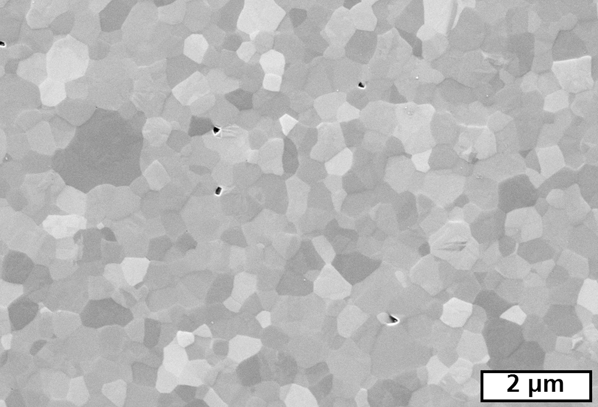
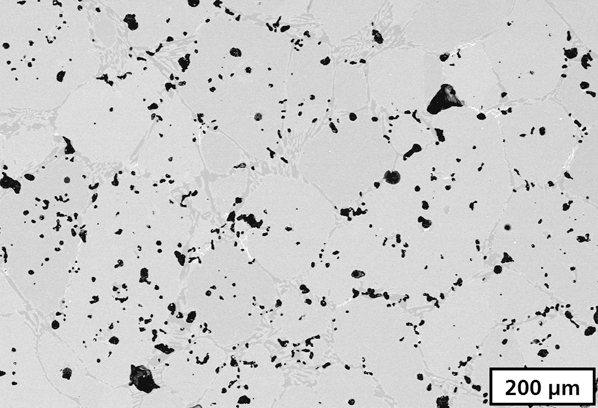
For a zirconia section of the steel–zirconia sample sintered at 1350 °C, an apparent density of 4.9 g/cm³ was measured by Archimedes' principle. The measured open porosity is about 14%. The optical investigation of eleven FESEM images of different samples showed a mean porosity of 5.6 ± 1.1%. The estimated mean grain size is 0.46 µm. The pure zirconia samples sintered at 1500 °C have a dense microstructure. The open porosity measured by Archimedes' principle is about 2%. The optical investigation of eight images of different samples showed a mean porosity of 0.03 ± 0.02%. The estimated mean grain size is 0.96 µm.
The steel part of the steel–zirconia sample sintered at 1350 °C has also a dense microstructure. The optical investigation of one FESEM image shows a porosity of about 0.7% but the many precipitations within the steel make it difficult to characterize the porosity by this optical method.
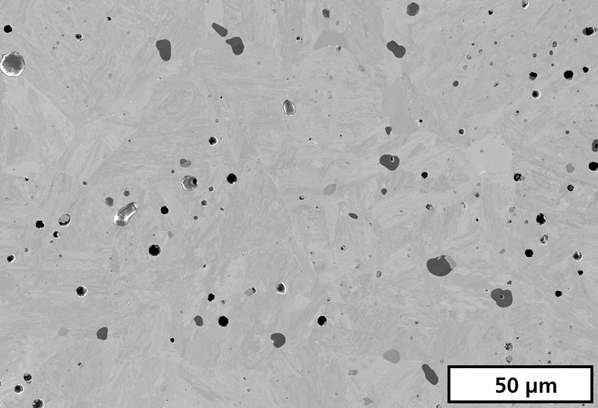
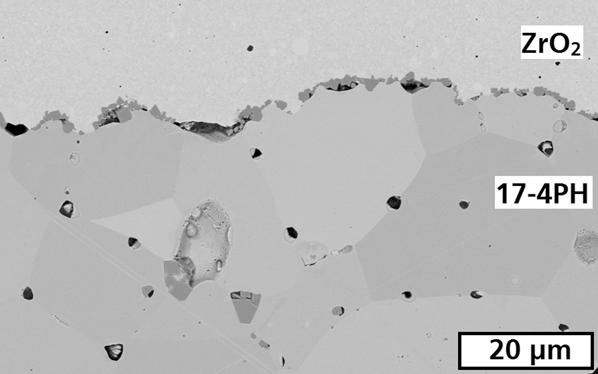
Figure 11 shows an overview of the 3Y-ZrO2/17-4PH composite after sintering at 1350 °C. A clear boundary between the two materials is visible. The zirconia has a relatively dense microstructure. The 17-4PH steel shows greater density near the interface and at its layer surface. Large pores were formed in the zone near the boundary. Inside the steel, there seems to be a high porosity with smaller pores, but Fig. 12 with a higher magnification shows that the dark areas are mostly precipitated phases.
FESEM image of the interface ZrO2/17-4PH in the zirconia–steel composite.

FESEM image of 17-4PH section, dark areas are mostly no pores but precipitations of other phases.
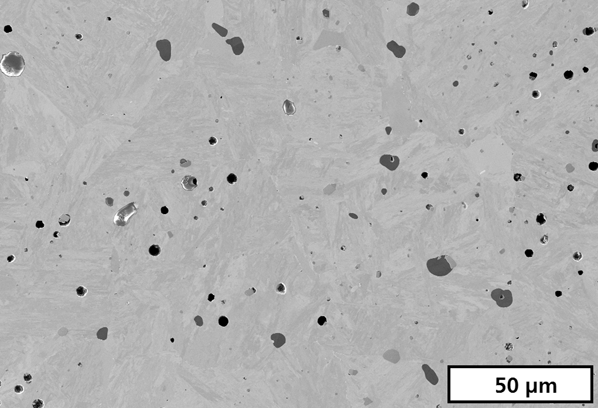
Additionally, the almost linear boundary between the materials is blurred on closer inspection. This mixing of the particles can be attributed to the forming process in which the starting materials are applied on top of each other as flowable suspensions. As a result, a through-mixing of the upper layer, here about 20 µm deep, can occur. In addition to this phenomenon, further precipitations are still visible in Fig. 13. Figure 14 shows the interior of the steel layers. Similar precipitates along the grain boundaries and another phase, which partially fills the pores, can be observed.
FESEM image showing phase formation and precipitations in the steel close to the interface between steel and zirconia.

FESEM image showing phase formation and precipitations in the steel in the interior of the steel material.
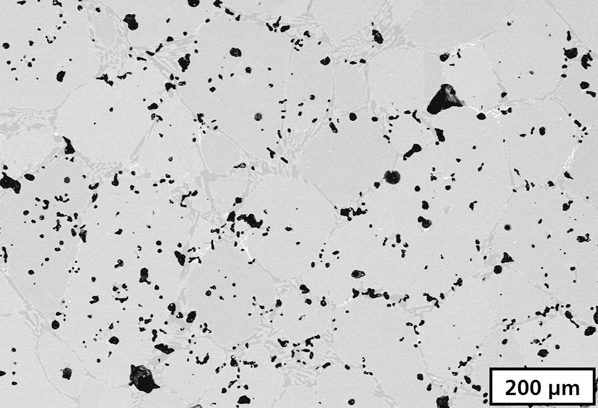
Sintering takes place at temperatures close to the melting temperature of the steel and the overall heat treatment under different partially oxygen-rich atmospheres. Based on these parameters, some of the alloying elements of the steel precipitate. These benefit from the supply of oxygen in the oxide ceramic. Furthermore, the residual oxygen in the predominant atmosphere can contribute to their formation. Preferably, chromium carbides are formed with the residual carbon from the debinding step. Other alloying elements of the steel, such as manganese, silicon, aluminum, and chromium oxide formed compounds in the steel matrix and in the interface. The quantity of these precipitates cannot be determined adequately.
The EDX analysis of both of the investigated regions in the composite layer confirms the formation of several new phases. These are mostly oxides and carbides, which primarily precipitate along the grain boundaries of the steel and the grown pore spaces. In the steel layer, light and dark gray areas can be observed (Fig. 15). The light gray phase mostly contains iron and chromium, so that is approximately the original composition of the 17-4 PH steel composition. In contrast, the dark gray phase is composed of chromium, carbon, and small amounts of iron. It is specifically for high-chromium carbides with the thermodynamically desired Cr23C7 stoichiometry, which lead according to chromium depletion theory to intergranular corrosion of the steel. Reference Bargel and Schulze37 At high temperatures, the chromium of the steel diffuses through to the after debinding remaining carbon particles. These are located primarily at grain boundaries, so there is a chromium depletion along these. The absence of Cr content leads to an incomplete protective layer of chromium oxide, which in turn reduces the corrosive properties of the steel and must be avoided by the adaption of heat treatment.
FESEM image of phase formations and precipitations in the steel in the interior of the steel material and areas for EDX spectra (left) and EDX spectra in the interior of the steel material (right).

The black precipitates in the microstructure (Fig. 15) are identified as SiO2 or complex mixed oxides with selfsame main components (Si–Al–Mn oxides) by EDX. Furthermore, Fig. 16 shows a large white precipitate, which turns out to be niobium. This is an alloying element of the steel, with 0.29 wt% and it precipitates due to heat treatment.
FESEM image of phase formation and precipitations in the steel close to the interface between steel and zirconia and areas for EDX spectra (left) and EDX spectra close to the interface between steel and zirconia (right).

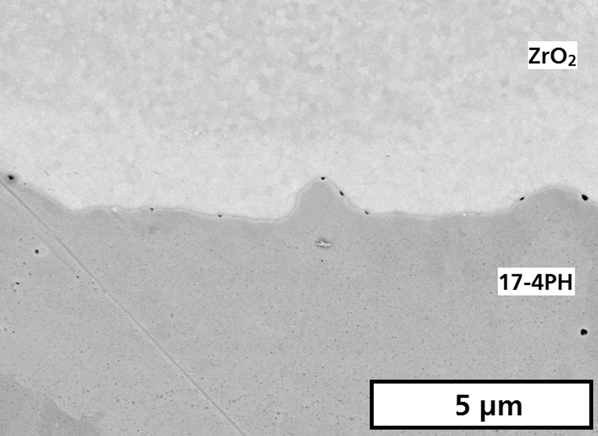
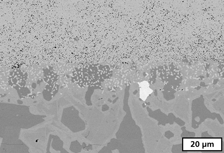
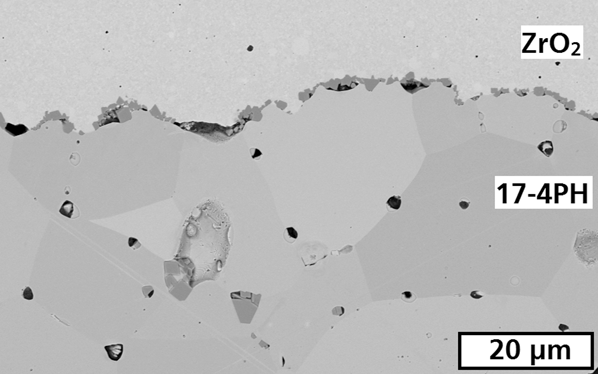
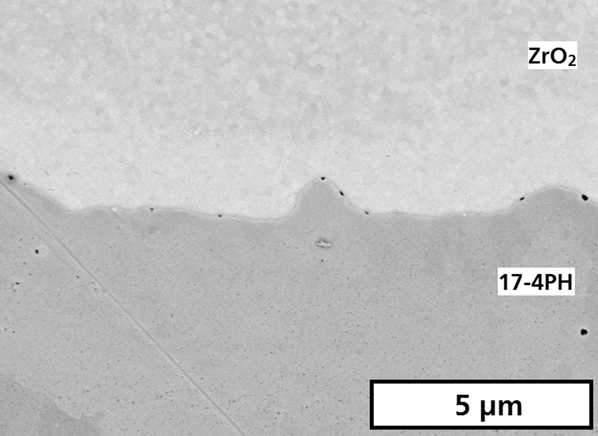
A phase formation along the interface has not been clearly established. The diffusion of elements can be adjusted by the appropriate selection of debinding and sintering parameters. The sintering atmosphere and the thermodynamic properties of the elements have special influence on the formation of phase precipitates. The second debinding step under argon atmosphere at 800 °C may have led to the described phase formation phenomena. It has been already observed in other studies on composite formation between zirconia and steel made. Reference Bergner, Moritz and Michaelis38 After heat treatment in pure argon atmosphere, many precipitations are formed at the interface (Fig. 17). The samples sintered in Ar/H2 atmosphere show only few pores and no precipitations (Fig. 18). Further heat treatment step should take place in an Ar/H2 atmosphere to minimize the phase precipitates or to prevent them.
FESEM image of interface of zirconia stainless steel layer composites after heat treatment (debinding + sintering) under Ar atmosphere. Reference Bergner, Moritz and Michaelis38
FESEM image of interface of metal–ceramic layer composites after heat treatment (debinding + sintering) under Ar/H2 atmosphere (80/20 vol%).
IV. CONCLUSION
The application of thermoplastic 3D printing with two components is demonstrated in principle for stainless steel–zirconia composites. The bonding of the particular layers in steel/zirconia as well as in pure zirconia samples is verified. The microstructure shows undesirable secondary phase formation and precipitations. This can be overcome by adjusting the heat treatment atmosphere. The adapted AM method offers new possibilities for producing multimaterial components: not only the presented steel–zirconia composite but also any other combination of materials that can be processed to a paraffin-based thermoplastic feedstock and that can be co-sintered.
ACKNOWLEDGMENT
The authors would like to thank Mr. Stockmann and Mr. Bedrich for the preparation of the thermoplastic suspensions as well as Mrs. Jungnickel and Mrs. Fischer for the metallographic specimen preparation and the FESEM images.