




No CrossRef data available.
Article contents
Cysteine proteinase activity is required for survival of the parasite in experimental acute amoebic liver abscesses in hamsters
Published online by Cambridge University Press: 10 June 2004
Abstract
Axenic trophozoites of Entamoeba histolytica strain HM1-IMSS grown in vitro in the presence of E-64, a potent irreversible inhibitor of cysteine proteinases, preserved their viability, their rate of replication, their resistance to complement, their haemolytic capacity and their ability to destroy target cells, despite complete inhibition of total cysteine proteinase activity. On the other hand, their erythrophagocytic capacity and their ability to decrease TER of MDCK cells was partially decreased. The same trophozoites injected into the portal vein of hamsters receiving a maintaining dose of E-64 failed to cause tissue damage and were rapidly eliminated. Our results suggest that amoebic cysteine proteinase activity is not required for amoebic functions in in vitro conditions, but that it becomes necessary for survival of trophozoites in in vivo conditions, whatever other role (if any) it may play in the parasite's virulence.
Information
- Type
- Research Article
- Information
- Copyright
- © 2004 Cambridge University Press
INTRODUCTION
Currently Entamoeba histolytica cysteine proteinases (EhCP1-19; EhCP112) are considered some of the major molecules responsible for the extensive cell and tissue damage produced by the parasite in both human and experimental infections (Que & Reed, 2000; Stanley & Reed, 2001; Bruchhaus, Loftus & Hall, 2003). The evidence supporting this view may be summarized as follows. (1) In in vitro experiments, (a) purified amoebic EhCPs cause a cytopathic effect on monolayers of HeLa cells (Lushbaugh, Hofbauer & Pittman, 1985), of BHK cells (Keene et al. 1986), and of human fibroblasts (Luaces & Barrett, 1988); (b) purified amoebic 30 kDa EhCP shows a cytolytic effect on dead rat and hamster hepatocytes, inhibitable with E-64 (Montfort, Pérez-Tamayo & González, 1993); (c) decreased expression of EhCP5 induced in E. histolytica by antisense mRNA correlates with decreased phagocytosis although the cytopathic effect and haemolytic activity remain unchanged (Ankri, Stolarsky & Mirelman, 1998) and (d) enhanced expression of EhCP2 by transfection in both E. histolytica and E. dispar increase the E-64 inhibitable cytopathic effect produced by both parasite species on CHO cells, but does not augment amoebic liver abscess formation in gerbils (Hellberg et al. 2001). (2) In in vivo experiments: (a) E. histolytica axenic trophozoites grown in the presence of E-64 (Stanley, Zhang & Rubin, 1995), or laminin (Li et al. 1995) show decreased ability to produce liver abscesses in SCID mice; (b) lysates of virulent E. histolytica decrease transepithelial electrical resistance (TER) in the gerbil's caecum, and this effect is inhibited by E-64 (Navarro-García et al. 1995) and (c) decreased expression of EhCP5 induced in E. histolytica by antisense mRNA correlates with decreased ability to induce experimental amoebic liver abscesses in hamsters (Ankri et al. 1999), and with decreased inflammation, decreased production of IL-2 and IL-8, and decreased ability of amoebae to convert proIL-1 to IL-1 in human intestine transplanted to SCID mice (Zhang et al. 2000). Although this is impressive evidence suggesting an important role of EhCPs in cell and tissue damage in amoebiasis, it fails to discriminate between a direct proteolytic effect on extracellular matrix proteins, several of which are known substrates of EhCPs, and a permissive role of such enzymes whose primary function would be to preserve the viability of the parasite, allowing EhCPs and perhaps other molecular mechanisms to damage cells and tissues. In our laboratory, we have purified EhCP2 from axenically grown trophozoites of E. histolytica strain HM1-IMSS and raised an anti-EhCP2 polyclonal antibody, which allowed immunohistochemical staining of amoebae in sections of 5-day-old experimental amoebic liver abscesses, but no enzyme protein was detected in the surrounding necrotic tissue (Olivos-García et al. 2003).
Using an EhCP1-antibody, Stanley et al. (1995) did find extra-amoebic enzyme in early liver lesions. In addition, purified EhCP2 enclosed within slow-releasing microspheres injected into the portal vein of normal hamsters stimulated a minor inflammatory reaction with little or no tissue damage. In many in vitro experiments inhibition of EhCP activity occurs simultaneously with decreased amoebic growth and viability (De Meester et al. 1990), except when E-64 is used (Stanley et al. 1995). Cysteine proteinases (CPs) are present in many species of protozoa (North, Mottram & Coombs, 1990; Sajid & McKerrow, 2002) and when their activity is blocked by inhibitors, their respective life-cycles and metabolism are severely altered (Engel et al. 1998), suggesting that CP activities play essential roles in the protozon's physiology and are required for their survival.
In the present work we report a series of in vitro and in vivo experiments on the effect of EhCP inhibition with E-64 on the parasite viability, replication, complement resistance, cytotoxicity, TER decrease, erythrophagocytosis, haemolytic capacity, virulence and survival. Our results suggest that whatever the role of EhCP activities in the production of tissue damage in amoebic disease, their primary contribution to the host–parasite relation is to allow the survival of the parasite, which then is able to use EhCPs and perhaps other more subtle mechanisms to damage cells and extracellular structures.
MATERIALS AND METHODS
Parasites
E. histolytica trophozoites strain HM1-IMSS were axenically cultured in plastic bottles at 36·5 °C in 50 ml of TYI-S-33 medium (Diamond et al. 1978). In some experiments they were harvested after 72 h, washed twice in 15 mM phosphate buffer with 0·15 M NaCl, pH 7·2 (PBS) and their viability determined by Trypan blue exclusion. Rate of replication was measured as the number of amoebae obtained after 72 h of culture.
Culture of E. histolytica trophozoites in the presence of E-64
E-64 (L-trans-epoxysuccinyl-leucylamido(4-guanidino)butane) was added initially at a final concentration of 500 μM in culture medium of axenic in vitro cultures of trophozoites from the time of seeding.
Erythrophagocytosis
Phagocytic activity of control and E-64-axenically grown trophozoites was compared in 72 h cultures by incubating 5×10⁵ washed amoebae with 5×10⁷ hamster fresh red blood cells for 15 min in PBS in the presence of 250 μM E-64. Phagocytosis was stopped by addition first of 0·4 ml of distilled water and immediately after of 1·0 ml of 0·4% formaldehyde in PBS, and trophozoites were centrifuged at low speed and suspended in PBS. The average number of trophozoites with more than 5 cytoplasmic erythrocytes (high phagocytosis) present in triplicate counts of 100 parasites in 6 separate experiments was determined in both groups. In addition, erythrophagocytic activity was measured by the technique described by Keller et al. (1988), comparing the absorbances in 4 separate experiments.
Haemolytic activity of axenic trophozoites
Hamster blood cells were obtained in the presence of heparin and rinsed with PBS before used. The assay was performed as described by Ankri et al. (1998) in the presence of 250 μM E-64 comparing haemoglobin absorbances, it was made in duplicate in 3 separate experiments, with control and axenically grown trophozoites with E-64.
Measurement of TER
Damage to the MDCK-cell monolayers was assessed by the measurement of changes in TER 30 min after the addition of E-64-axenically grown trophozoites in the presence of 500 μM E-64 at a 5[ratio ]1 cell[ratio ]amoeba ratio on an Ussing chamber as previously described by López-Vancell, Montfort & Pérez-Tamayo (2000). It was measured in 8, 8, and 9 samples in 3 independent experiments and expressed as ohms.cm2.
Complement resistance
Amoebae grown for 72 h with E-64 were exposed to 100% fresh hamster serum (1×10⁶/ml) in the presence of 250 μM E-64 and incubated at 37 °C for 2 h, and their viability was determined by Trypan blue exclusion. Survival of amoebae in the presence of 100% fresh hamster serum depended on the number of parasites used in the test. Less than 1×10⁶/ml were almost completely lysed, whereas 2×10⁶/ml survived more than in the PBS control. At 1×10⁶/ml the average survival of amoebae was 64%. Results were compared with untreated amoebae and in duplicates in 7 independent experiments.
Cytotoxicity
Cytotoxic activity of axenic trophozoites grown in the presence of E-64 was tested in vitro with 2 different types of target cells: Jurkat cell line, and polymorphonuclear leukocytes (PMNs) freshly obtained from the peritoneal cavity of hamsters previously (6 h) injected with 1·0 ml of 1% glycogen in PBS. The assay was performed by incubating 1×10⁵ amoebae with 5×10⁵ Jurkat cells and 1×10⁵ amoebae with 2·5×106 PMNs in TYI-S-33 medium with 250 μM E-64 for 3 h at 37 °C, and then counting viability of target cells by Trypan blue exclusion. This assay was preferred to the cytopathic effect described by Keene et al. (1986) because cysteine proteases, although probably not directly involved in cell killing (Luaces & Barrett, 1988), could be required to activate or facilitate other molecular mechanisms of cytotoxicity present in the living parasite. Results were compared with controls run with untreated amoebic trophozoites. The assay was made in duplicate in 3 independent experiments.
E-64-inhibitable proteolytic activity assay
Freeze-thawed lysates (5×10⁵) of control and E-64-axenically grown trophozoites were washed 4 times with PBS and incubated with 0·4 ml of azocasein (2·5 mg/ml), 5 mM EDTA, 5 mM DTT for 3 h at 37 °C. The reaction was stopped, with 0·6 ml of cold 10% trichloroacetic acid, centrifuged for 10 min at 4500 g and the absorbance was determined at 366 nm (Pérez-Montfort et al. 1987).
Zymograms
Control and E-64-grown amoebae were harvested, washed with PBS in sterile conditions and incubated for different periods (2.5 to 48 h) with TYI-S-33 medium. Whole amoebic (2·5×105) homogenates prepared in PBS were electrophoresed in 12% gels by SDS–PAGE (Laemmli, 1970), and the gels were laid on top of other gels containing 10% acrylamide, 0·2% gelatin, 5 mM EDTA, 5 mM DTT and incubated at 37 °C for 12 h, fixed and stained overnight at room temperature with 0·1% Coomassie brilliant blue R-250 in 20% methanol and 10% acetic acid and destained with the same solution without the dye.
Detection of intracellular CP activity in intact amoebic trophozoites
Arg-Arg-4-methoxy-2-naphthylamide peptide (AMNP), a substrate of CPs, yields a fluorescent insoluble adduct with 5-nitro-2-salicylaldehyde (NSA) after being enzymatically split. When added to a culture of amoebic trophozoites, AMNP and NSA freely enter their cytoplasm and the presence of CP activity is detected as multiple fluorescent granules (Scholze & Tannich, 1994). The observations were made at different periods (3 to 24 h) after adding 5 mM AMNP and 2·5 mM NSA in 0·1 ml of PBS to an axenic culture of 1×10⁵ untreated or E-64-treated amoebic trophozoites washed with PBS.
Acute amoebic liver abscesses in hamsters
Experimental acute amoebic liver abscesses were induced in 4 separate groups, each of eight 100 g hamsters of either sex, following a technique previously described (Pérez-Tamayo et al. 1992). Briefly, 5×10⁵ axenic E. histolytica trophozoites were injected in 0·2 ml of PBS into the portal vein of anaesthetized hamsters. After 5 days the animals were sacrificed by an ether overdose, the liver was removed and fixed for 48 h in buffered 10% formaldehyde, pH 7·0. After blocking and paraffin embedding, 4-6 μm thick sections were cut from random blocks, which included all liver lobules, and were stained with H&E and with Periodic-acid Schiff (PAS). Two groups of hamsters thus treated were also injected intraperitoneally twice daily with 2 mg of E-64, since it has been established (Katunuma & Kominami, 1995) that the half-life of active E-64 injected into rodents is 12 h.
Four experimental groups of acute amoebic liver abscesses were prepared and studied (see Table 1). In addition, 4 more animals were added to group 4, two of which were sacrificed 8 h and the other two 20 h after the injection of amoebae.

Isolation of hepatocytes
Fresh hepatocytes were obtained as described by Montfort et al. (1993) from 1 normal hamster and 1 hamster from group 4 (treated for 5 days), and intracellular CP activity was detected in living hepatocytes with AMNP substrate, as described above.
RESULTS
Axenically grown amoebic trophozoites, either in the absence or in the presence of 500 μM E-64 showed minor variations in viability, growth rate, complement resistance, haemolytic activity, erythrocyte-phagocytic capacity with the absorbance method, and cytotoxic activity after 72 h (Fig. 1). No decrease of erythrocyte phagocytosis was observed when E-64 was added to the assay with normal amoebae, but amoebae grown in E-64 were less phagocytic (29% by counting). In addition, the capacity of amoebae to decrease TER in MDCK monolayers was also diminished to almost half of the initial value, while untreated amoebae caused the entire loss of TER. On the other hand, total CP activity of whole amoebic homogenates was variously inhibited at the end of 72 h of culture in the presence of E-64, in a time-response curve. Such a quantitative result correlated both with the detection of CP activity in the zymograms, which was observed to be much decreased (Fig. 2A, B1 and B2), as well as with the microscopic detection of intracytoplasmic CP activity in individual intact trophozoites. When visualized with the AMNP technique, with increasing concentrations of E-64, there was a corresponding general decrease in the number of cytoplasmic fluorescent granules, and an increase in the number of completely negative amoebae (data not shown). When aliquots of amoebic cultures, in which total CP activity had been inhibited by incubation with E-64 for 72 h, were washed and incubated in the absence of E-64, 50% CP azocaseinase activity was recovered in approximately 24–48 h (Fig. 2A).

Fig. 1. Effect of growing axenic Entamoeba histolytica trophozoites in the presence of E-64 for 72 h on various in vitro functions. For techniques of the assays and units in which the results are expressed see Materials and Methods section. Mean results and standard deviation are shown for all tests, except complement resistance and high erythrocyte phagocytosis, in which experiments and controls were compared with the Student's t-test.

Fig. 2. (A) CP activity determined by azocasein in amoebic homogenates after various periods of incubation in the presence of E-64 and after washing and culturing in E-64-free medium. CP activity disappears after 4 h incubation with E-64, and begins to reappear 12 h after removal of the inhibitor. Notice the discontinuity in the time-scale. (B1) Zymogram of amoebic homogenates of control. (B2) Recovery of amoebic proteolytic activity; faint proteolytic activity is already visible with this technique 6 h after washing the inhibitor.
Gross and microscopic development of experimental acute amoebic liver abscesses were indistinguishable in groups 1, 2 and 3: all animals in each group showed multiple lesions detectable grossly as early as 24 h after injection of trophozoites, and after 5 days there were fully developed abscesses with many well-preserved trophozoites. On the other hand, no lesions were observed in any animal of group 4 and their hepatocytes did not show intracellular CP activity (Fig. 3A, B). Also, no amoebae were detected microscopically on tissue sections prepared from random blocks. In the animals specially prepared to detect lesions and amoebae at earlier periods in group 4, there were small groups of PMNs with few poorly preserved amoebae still present 8 h after the injection. Furthermore, no amoebae were seen at 20 h; only debris of PMNs (‘nuclear dust’) and occasional giant cells were present in the involuting lesions (Fig. 4B, D).

Fig. 3. CP activity in liver cells revealed by AMNP technique. (A) Normal hepatocytes (control). (B) hepatocytes from an animal from group 4 (5 days continuous treatment with E-64). Complete absence of CP activity in liver cells derived from the treated animal.

Fig. 4. Liver histology in animals of group 4 (continuous treatment with E-64+amoebae grown in the presence of E-64). (A) 8 h control. (B) Acute inflammation with PMNs and amoebic debris, (8 h). (C) 20 h control. (D) Minimal liver cell damage and fragmentation of PMNs; no amoebae are present (20 h). Arrows point to amoebae. PAS stain.
DISCUSSION
It is generally believed that E-64 fails to enter live cells, but this seems to be true only during short in vitro exposures (1 h), because after longer periods the inhibitor does penetrate within cells, probably by pinocytosis (Wilcox & Mason, 1992). In experiments in vivo it has been shown that E-64 is incorporated into the liver cytosol (Katunuma & Kominami, 1995). Our results may be summarized by stating that complete inhibition of total CP activity of axenic trophozoites of E. histolytica grown in vitro in the presence of E-64, and for as long as 72 h, as determined by 3 different techniques, has minor effects on viability, growth curve (Stanley et al. 1995), cytotoxicity, haemolytic capacity (Ankri et al. 1998) and complement resistance. On the other hand, erythrocyte phagocytosis measured by cell counts and absorbance, and TER of MDCK monolayers, were somewhat decreased. Decrease of erythrocyte phagocytosis by amoebae treated with an antisense mRNA that blocks CP synthesis has been observed by Ankri et al. (1998) who used only the absorbance technique. The exposure of axenic trophozoites to E-64 1 h prior to examining their effect on TER of MDCK monolayers was found to have no influence on the rapid decrease on TER caused by amoebae (López-Vancell et al. 2000). However, in those experiments total CP activity was not determined, and we have observed that after 1 h of exposure to E-64 approximately 25% total CP activity remains.
Preservation of viability and other properties of amoebae in vitro despite the complete and prolonged absence of CP activity, suggest that the culture medium must contain all the elements required for their normal metabolism. On the other hand, CP activity appears to be an absolute requirement for survival of amoebae in in vivo conditions, at least in the experimental situation examined in this work, namely the production of acute liver abscesses. We have no data on the actual cause of amoebic disappearance. However, it is suspected to occur very rapidly, within a few hours after injection, on the basis of the results in group 2 (untreated hamsters+amoebae grown in E-64), which developed lesions similar to group 1 (control), suggesting rapid recovery of CP activity. Injection of the parasites into the portal vein is equivalent to removing the inhibitor present in the culture medium, thus allowing the progressive recovery of CP activity by amoebae in the next 3–24 h (detected by AMNP), as was observed in vitro when amoebae grown in E-64 were placed in medium free of the CP inhibitor.
Group 3 (hamsters continuously treated with E-64+untreated amoebae) also developed lesions very similar to group 1 (control), and this result may require a more elaborate explanation, which would include at least 2 elements. (1) The inability of E-64 to affect the cytotoxic capacity of amoebae when the inhibitor is added to the culture at time 0 or throughout the 72 h of culture, demonstrated in in vitro experiments of co-incubation with target cells. (2) The early development of ischaemia in even very small experimental amoebic liver lesions (Pérez-Tamayo et al. 1992) which would prevent the contact of amoebae with the CP inhibitor present in the blood. It is suggested that the combined effect of these two elements would explain the survival of parasites and the development of tissue damage in our group 3. The possible role of amoebic CPs on the direct causation of liver lesions becomes less clear, since E-64 is present in the liver, as shown by the almost complete absence of CP activity in intact liver cells surrounding the edge of the growing abscess.
Amoebic trophozoites grown in the presence of E-64 and injected into the portal vein of hamsters treated continuously with the same CP inhibitor (group 4) produce small and rapidly involuting liver lesions that disappear from the tissue in about 20 h. The absence of amoebae and of tissue lesions in group 4 would suggest that CP activity is directly related to the initiation of inflammation and of tissue damage, since in its absence no lesions develop. But this simple view ignores the fact that full inhibition of CP activity has no influence on amoebic cytotoxicity in vitro and on initial inflammation in vivo, and also fails to explain the rapid disappearance of amoebae when there is no cell and tissue destruction. An alternative explanation would be that CP activity is primarily necessary for amoebic survival in in vivo conditions, and that amoebic survival is necessary for the development of tissue damage caused by various molecular mechanisms, which may very well include CP activity.
Our results also suggest that the development of amoebic lesions may be necessary for amoebic survival, since through the early ischaemia mentioned above, liver abscesses rapidly create the anaerobic conditions that trophozoites require to grow in vitro, and simultaneously isolate the parasite from possibly harmful serum components, such as complement. This possibility is currently being pursued in our laboratory.
We gratefully acknowledge the excellent technical help of Pedro Balderas Flores and Marco E Gudiño Zayas as well as the professional animal care of Ricardo Vargas Orozco and Daniel Sánchez Almaraz. This work includes part of the doctoral dissertation of A.O.-G., and was supported by CONACyT grants 30831-M and 25119-M, and by DGAPA grant No. IN-244202.
References
REFERENCES
ANKRI, S.,
STOLARSKY, T.,
BRACHA, R.,
PADILLA-VACA, F. &
MIRELMAN, D.
(1999).
Antisense inhibition of expression of cysteine proteinases affects Entamoeba histolytica-induced formation of liver abscess in hamsters.
Infection and Immunity
67, 421–422.Google Scholar
ANKRI, S.,
STOLARSKY, T. &
MIRELMAN, D.
(1998).
Antisense inhibition of expression of cysteine proteinases does not affect Entamoeba histolytica cytopathic or haemolytic activity but inhibits phagocytosis.
Molecular Microbiology
28, 777–785.CrossRefGoogle Scholar
BRUCHHAUS, I.,
LOFTUS, B. J.,
HALL, N. &
TANNICH, E.
(2003).
The intestinal protozoan parasite Entamoeba histolytica contains 20 cysteine protease genes, of which only a small subset is expressed during in vitro cultivation.
Eukaryotic Cell
2, 501–509.CrossRefGoogle Scholar
DE MEESTER, F.,
SHAW, E.,
SCHOLZE, H.,
STOLARSKY, T. &
MIRELMAN, D.
(1990).
Specific labeling of cysteine proteinases in pathogenic and nonpathogenic Entamoeba histolytica.
Infection and Immunity
58, 1396–1401.Google Scholar
DIAMOND, L. S.,
HARLOW, D. R. &
CUNNICK, C. C.
(1978).
A new medium for the axenic cultivation of Entamoeba histolytica and other Entamoeba.
Transactions of the Royal Society of Tropical Medicine and Hygiene
72, 431–432.CrossRefGoogle Scholar
ENGEL, J. C.,
DOYLE, P. S.,
PALMER, J.,
HSIEH, I.,
BAINTON, D. F. &
McKERROW, J. H.
(1998).
Cysteine protease inhibitors alter Golgi complex ultrastructure and function in Trypanosoma cruzi.
Journal of Cell Science
111, 597–606.Google Scholar
HELLBERG, A.,
NICKEL, R.,
LOTTER, H.,
TANNICH, E. &
BRUCHHAUS, I.
(2001).
Overexpression of cysteine proteinase 2 in Entamoeba histolytica or Entamoeba dispar increases amoeba-induced monolayer destruction in vitro but does not augment amoebic liver abscess formation in gerbils.
Cellular Microbiology
3, 13–20.CrossRefGoogle Scholar
KATUNUMA, N. &
KOMINAMI, E.
(1995).
Structure, properties, mechanisms, and assays of cysteine protease inhibitors: cystatins and E-64 derivatives.
Methods in Enzymology
251, 382–397.CrossRefGoogle Scholar
KEENE, W. E.,
PETITT, M. G.,
ALLEN, S. &
McKERROW, J. H.
(1986).
The major neutral proteinase of Entamoeba histolytica.
Journal of Experimental Medicine
163, 536–549.CrossRefGoogle Scholar
KELLER, F.,
WALTER, C.,
LÖHDEN, U.,
HANKE, W.,
BAKKER-GRUNWALD, T. &
TRISSL, D.
(1988).
Pathogenic and non-pathogenic Entamoeba: pore formation and hemolytic activity.
Journal Protozoology
35, 359–365.CrossRefGoogle Scholar
LAEMMLI, U. K.
(1970).
Cleavage of structural proteins during the assembly of the head of bacteriophage T4.
Nature, London
227, 680–685.CrossRefGoogle Scholar
LI, E.,
YANG, W. G.,
ZHANG, T. &
STANLEY, S. L.
(1995).
Interaction of laminin with Entamoeba histolytica cysteine proteinases and its effect on amebic pathogenesis.
Infection and Immunity
63, 4150–4153.CrossRefGoogle Scholar
LÓPEZ-VANCELL, R.,
MONTFORT, I. &
PÉREZ-TAMAYO, R.
(2000).
Galactose-specific adhesion and cytotoxicity of Entamoeba histolytica.
Parasitology Research
86, 226–231.CrossRefGoogle Scholar
LUACES, A. L. &
BARRETT, A. J.
(1988).
Affinity purification and biochemical characterization of histolysin, the major cysteine proteinase of Entamoeba histolytica.
The Biochemical Journal
250, 903–909.CrossRefGoogle Scholar
LUSHBAUGH, W. B.,
HOFBAUER, A. F. &
PITTMAN, F. E.
(1985).
Entamoeba histolytica: Purification of cathepsin B.
Experimental Parasitology
59, 328–336.CrossRefGoogle Scholar
MONTFORT, I.,
PÉREZ-TAMAYO, R.,
GONZÁLEZ, C. A.,
GARCÍA DE LEÓN, M. C.,
OLIVOS, A. &
TELLO, E.
(1993).
Role of cysteine proteinases of Entamoeba histolytica on the cytopathogenicity of axenic trophozoites on rat and hamster hepatocytes in vitro.
Journal of Parasitology
79, 98–105.CrossRefGoogle Scholar
NAVARRO-GARCÍA, F.,
CHÁVEZ-DUEÑAS, L.,
TSUTSUMI, V.,
POSADAS DEL RIO, F. &
LÓPEZ-REVILLA, R.
(1995).
Entamoeba histolytica: increase of enterotoxicity and of 53- and 75-kDa cysteine proteinases in a clone of higher virulence.
Experimental Parasitology
80, 361–372.CrossRefGoogle Scholar
NORTH, M. J.,
MOTTRAM, J. C. &
COOMBS, G. H.
(1990).
Cysteine proteinases of parasitic protozoa.
Parasitology Today
6, 270–275.CrossRefGoogle Scholar
OLIVOS-GARCÍA, A.,
GONZÁLEZ-CANTO, A.,
LÓPEZ-VANCELL, R.,
GARCÍA DE LEÓN, M. C.,
TELLO, E.,
NEQUIZ-AVENDAÑO, M.,
MONTFORT, I. &
PÉREZ-TAMAYO, R.
(2003).
Amebic cysteine proteinase 2 (EhCP2) plays either a minor or no role in tissue damage in acute experimental amebic liver abscess in hamsters.
Parasitology Research
90, 212–220.CrossRefGoogle Scholar
PÉREZ-MONTFORT, R.,
OSTOA-SALOMA, P.,
VELÁZQUEZ-MEDINA, L.,
MONTFORT, I. &
BECKER, I.
(1987).
Catalytic classes of proteinases of Entamoeba histolytica.
Molecular and Biochemical Parasitology
26, 87–98.CrossRefGoogle Scholar
PÉREZ-TAMAYO, R.,
MONTFORT, I.,
TELLO, E. &
OLIVOS, A.
(1992).
Ischemia in experimental acute amebic liver abscess in hamsters.
International Journal for Parasitology
22, 125–129.CrossRefGoogle Scholar
QUE, X. &
REED, S. L.
(2000).
Cysteine proteinases and the pathogenesis of amebiasis.
Clinical Microbiology Reviews
13, 196–206.CrossRefGoogle Scholar
SAJID, M. &
McKERROW, J. H.
(2002).
Cysteine proteases of parasitic organisms.
Molecular and Biochemical Parasitology
120, 1–21.CrossRefGoogle Scholar
SCHOLZE, H. &
TANNICH, E.
(1994).
Cysteine endopeptidases of Entamoeba histolytica.
Methods in Enzymology
244, 512–523.CrossRefGoogle Scholar
STANLEY, S. L. &
REED, S. L.
(2001).
Microbes and microbial toxins: paradigms for microbial mucosal interactions VI. Entamoeba histolytica: parasite–host interactions.
American Journal of Physiology, Gastrointestinal and Liver Physiology 280, G1049–G1054.Google Scholar
STANLEY, S. L.,
ZHANG, T.,
RUBIN, D. &
LI, E.
(1995).
Role of the Entamoeba histolytica cysteine proteinase in amebic liver abscess formation in severe combined immunodeficient mice.
Infection and Immunity
63, 1587–1590.Google Scholar
WILCOX, D. &
MASON, W.
(1992).
Inhibition of cysteine proteinases in lysosomes and whole cells.
Biochemistry Journal
285, 495–502.CrossRefGoogle Scholar
ZHANG, Z.,
YAN, L.,
WANG, L.,
SEYDEL, K. B.,
LI, E.,
ANKRI, S.,
MIRELMAN, D. &
STANLEY, S. L.
(2000).
Entamoeba histolytica cysteine proteinases with interleukin-1 beta converting enzyme (ICE) activity cause intestinal inflammation and tissue damage in amoebiasis.
Molecular Microbiology
37, 542–548.CrossRefGoogle Scholar
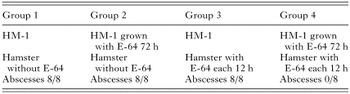
Table 1. E-64 effect in experimental acute amoebic liver abscesses in hamsters (5 days)
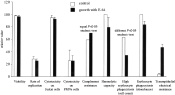
Fig. 1. Effect of growing axenic Entamoeba histolytica trophozoites in the presence of E-64 for 72 h on various in vitro functions. For techniques of the assays and units in which the results are expressed see Materials and Methods section. Mean results and standard deviation are shown for all tests, except complement resistance and high erythrocyte phagocytosis, in which experiments and controls were compared with the Student's t-test.
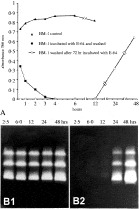
Fig. 2. (A) CP activity determined by azocasein in amoebic homogenates after various periods of incubation in the presence of E-64 and after washing and culturing in E-64-free medium. CP activity disappears after 4 h incubation with E-64, and begins to reappear 12 h after removal of the inhibitor. Notice the discontinuity in the time-scale. (B1) Zymogram of amoebic homogenates of control. (B2) Recovery of amoebic proteolytic activity; faint proteolytic activity is already visible with this technique 6 h after washing the inhibitor.
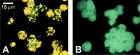
Fig. 3. CP activity in liver cells revealed by AMNP technique. (A) Normal hepatocytes (control). (B) hepatocytes from an animal from group 4 (5 days continuous treatment with E-64). Complete absence of CP activity in liver cells derived from the treated animal.
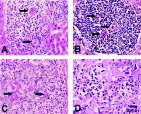
Fig. 4. Liver histology in animals of group 4 (continuous treatment with E-64+amoebae grown in the presence of E-64). (A) 8 h control. (B) Acute inflammation with PMNs and amoebic debris, (8 h). (C) 20 h control. (D) Minimal liver cell damage and fragmentation of PMNs; no amoebae are present (20 h). Arrows point to amoebae. PAS stain.
 You have
Access
- 22
- Cited by