INTRODUCTION
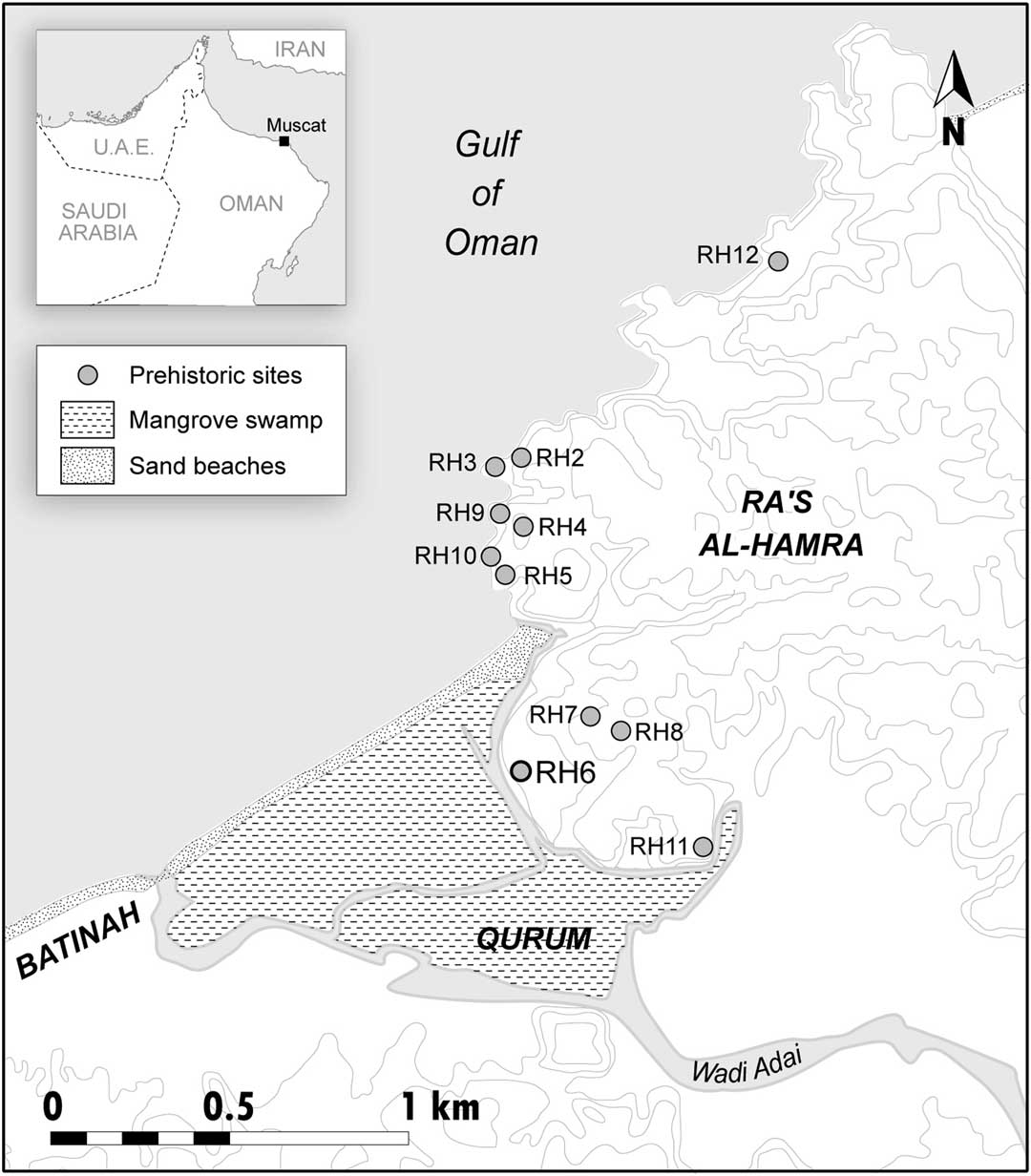
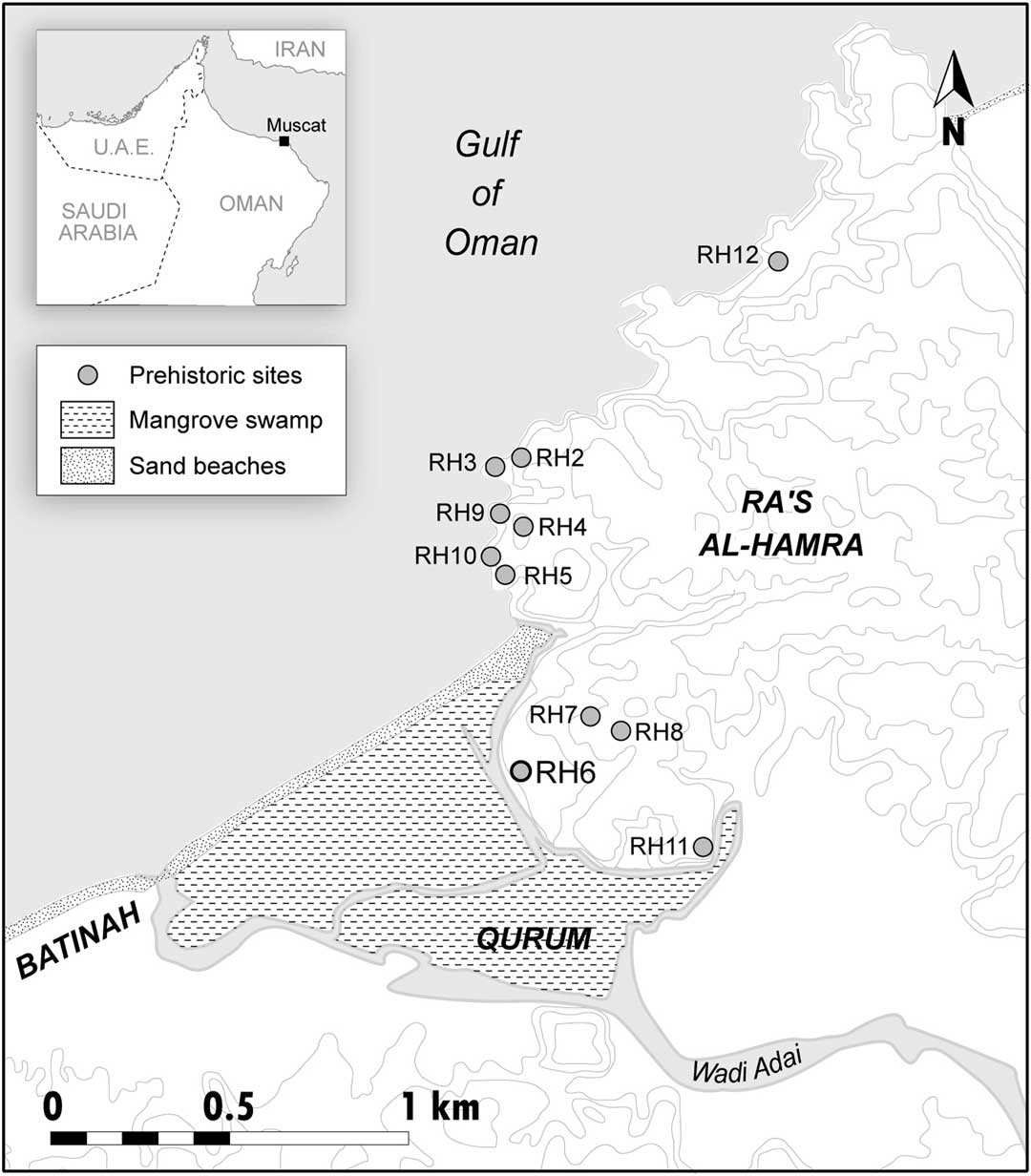
Ra’s al-Hamra 6 (RH-6) belongs to a set of prehistoric settlements distributed on the headland of Ra’s al-Hamra and the adjacent Qurum mangrove swamp in the Muscat Capital area (Sultanate of Oman) (Figure 1). Among the 12 archaeological sites surveyed in the 1970s, RH-6 is, together with the neighboring site of RH-5, the only site surviving the massive urbanization of the capital area (Tosi Reference Tosi1975; Marcucci et al. Reference Marcucci, Badel, Genchi, Munoz, Todero and Tosi2014). This shell midden provided significant activity and domestic evidence and a burial ground that shed light on the way of life of ancient fisher-herders-gatherers from eastern Arabia. Despite extensive research focusing on the material culture (Biagi Reference Biagi1985; Biagi and Nisbet Reference Biagi and Nisbet1999) and the exploitation of the local environment (Biagi and Travers Reference Biagi and Travers1985; Biagi and Nisbet Reference Biagi and Nisbet1992, Reference Biagi and Nisbet1999) by the communities that settled in the Ra’s al-Hamra area at that time, the chronology of occupation of the site remains poorly constrained. Based on the limited number of radiocarbon dates available for RH-6 so far, the site could have been occupied for about 700 yr, between the middle of the 6th and the beginning of the 5th millennium cal BC, approximately 1 millennium before the nearby site of RH-5 (Biagi Reference Biagi1994). This makes RH-6 one of the oldest stratified sites in the Arabian Peninsula. 14C dates, however, were mainly obtained before the advent of AMS 14C dating, and suffer from large uncertainties (±70 yr on average). Carbon isotope values were not measured, and the dates were not corrected for isotopic fractionation. Moreover, most dates were obtained on marine (Anadara sp.) and mangrove (Terebralia palustris) shells. Marine artifacts (sea shells, fish bones) provide an abundant source of carbon, which is technically easy to date, but 14C dates cannot be directly used to infer calendar ages because of the so-called “marine reservoir effect.” Dates need to be corrected for local variations from the global average marine 14C reservoir age (MRA). Because this value is likely to change over time, it is not possible to apply a modern value to previous time intervals. The standard procedure for determining local reservoir ages in archaeological sites is to compare the age measured between coeval terrestrial and marine pairs that have no inbuilt age. This proved difficult in Oman and there is currently no consensus value for the MRA at that time in the area. Previous estimates of the MRA based on associated shells and charcoal vary by about 400 14C yr and this was a serious limitation to the establishment of a precise chronology in the area based on marine material (Uerpmann Reference Uerpmann1991; Biagi Reference Biagi1994; Zazzo et al. Reference Zazzo, Munoz, Saliège and Moreau2012).
Location of Ra’s al-Hamra 6 (RH-6) and other prehistorical sites in the area of Ra’s al-Hamra and Qurum (Muscat, Oman).
The dating of the graveyard also is problematic. In the absence of datable associated material, only one individual was dated and this returned an age of ~2000 cal BC, suggesting that RH-6 was still occupied during the Bronze Age (Hedges et al. Reference Hedges, Pettitt, Bronk Ramsey and Van Klinken1997; Biagi Reference Biagi1999). The 14C date was allegedly obtained on bone collagen, but previous work at RH-5 showed that bone collagen is not preserved in Omani sites from the Neolithic due to harsh climatic conditions, suggesting that recent contamination, instead of pure collagen, could have been dated. Furthermore, the stratigraphic evidence, the typology of the graves, the position of the individuals, and the total absence of material datable to the Bronze Age (e.g. metal) in association with the grave or on the site suggest that the graves are likely contemporaneous with the latest phases of the settlement occupation, that is, the 5th millennium cal BC (Munoz Reference Munoz2014).
Recent excavations led by the Italian archaeological mission have provided the opportunity to redate this important site with three main objectives: (1) to establish a precise and reliable chronology for the formation of the shell midden; (2) to calculate the marine reservoir age for the period of interest by 14C dating coeval marine and terrestrial ecofacts in layers ranging from the bottom to the top of the stratigraphy; and (3) to redate the burials found at RH-6 using the mineral fraction of bones (bioapatite) as a dating material. Recent work has shown that bone apatite can substitute as a reliable dating material and an alternative to bone collagen in arid environments (Zazzo and Saliège Reference Zazzo and Saliège2011; Zazzo Reference Zazzo2014). Several new graves were found during the 2012–2013 excavation campaigns (Marcucci et al. Reference Marcucci, Badel, Genchi, Munoz, Todero and Tosi2014), offering the opportunity to integrate the graveyard into a reliable chronology. These new dates will help us understand the dynamics of occupation and the abandonment of the site and will be integrated into the broader context of human occupation of the Qurum mangrove and its surroundings during the Neolithic.
MATERIAL AND METHODS
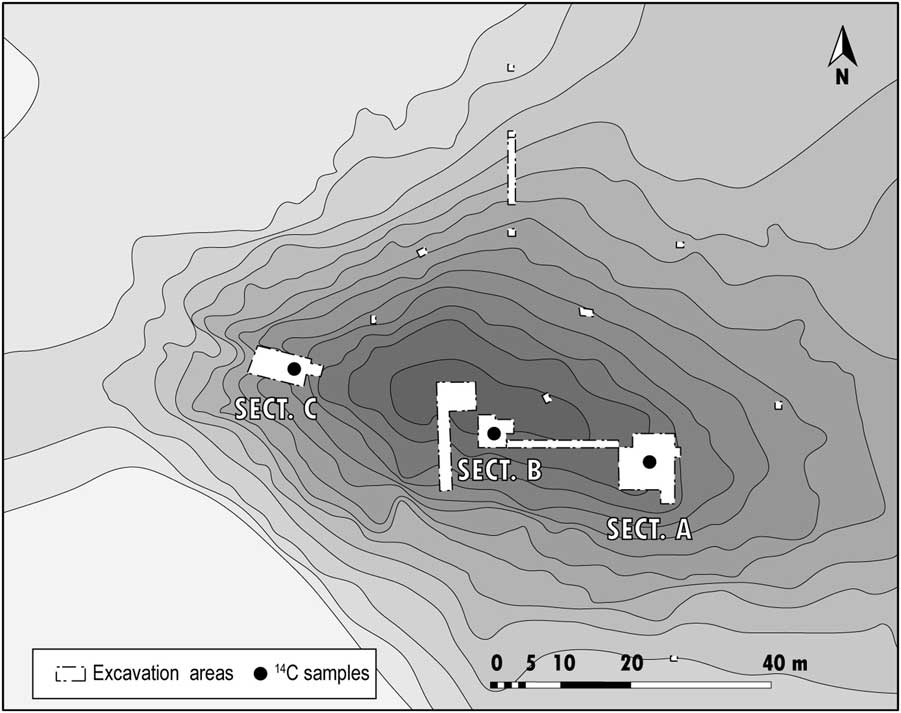
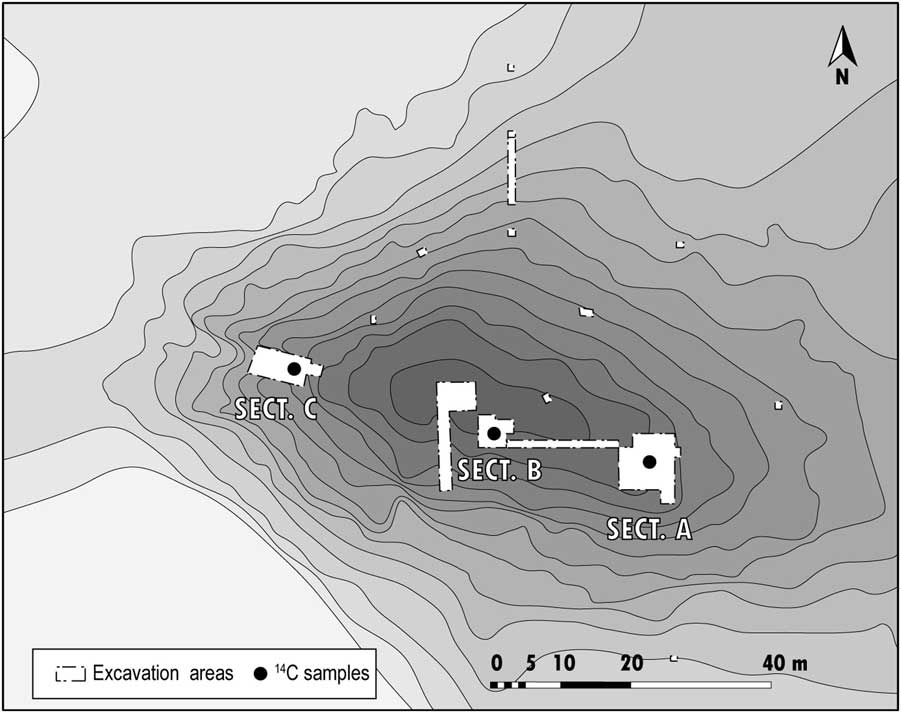
Thirty-eight samples of charcoal, shells, and human bones were selected for 14C dating. Samples come from three different areas (sectors A, B and C) excavated by the Italian archaeological mission (Figure 2) (Marcucci et al. Reference Marcucci, Badel, Genchi, Munoz, Todero and Tosi2014). Sector A is a settlement area located at the eastern limit of the anthropic deposit, where the stratigraphic sequence does not exceed a height of 45 cm. It provided one charcoal sample located in a posthole (SU 69) just above the bedrock. This posthole is related to the construction of HUT A2 (Marcucci et al. Reference Marcucci, Badel, Genchi, Munoz, Todero and Tosi2014). The three dated burials come from Sector B. This sector is located west of Sector A, at the top of the midden. The dated burials are located just under the surface of the midden and are primary deposits of adult individuals lying in a crouched position on their side. Three human bone samples (fragments of femur and tibia) together with two shells from Grave 2 were dated. One of the dated shells (Amiantis umbonella) was complete and placed on the right hand of the individual. This deposit evokes a well-known practice at RH-5, where several individuals were deposited with a Callista sp. valve in the hand or close to the face (Salvatori Reference Salvatori2007). The other shell (Anadara sp.) was found in the outer limit of the pit showing a dip. Dating of this sample will provide insight into the amount of time elapsed between sediment accumulation and the digging of the grave. Most of the dating effort (32/38 dates) was concentrated on Sector C, which displays the deepest stratigraphic sequence (1.70 m). This sector is located in the western slope of the midden and corresponds broadly to the trench opened in 1975 (Tosi Reference Tosi1975) and later studied by Biagi during the 1980s (Biagi et al. Reference Biagi, Torke, Tosi and Uerpmann1984; Biagi Reference Biagi1985). Most of the samples dated by Biagi come from two excavation areas (square X and Y) located at the southeastern end of the trench, where 14 stratigraphic layers were identified. During the 2012 excavation, the trench was refreshed and enlarged, and a new 2×2 m excavation called Test Trench Z (TT-Z) was opened from the southwest section of the 1981 Trench. Among the 190 stratigraphic units (SU) identified, six (SU 2, SU 57, SU 117, SU 161, SU 164 and SU 185) were selected for 14C dating. These units were selected because (1) they provided charcoal samples (with the exception of SU 2); (2) they were undisturbed; and (3) they spanned most of the sequence, allowing to estimate the change in MRA through time. Up to four charcoal and four shells were selected in each level. Charcoal and shells were identified to the genus or species level. Most of the charcoal belongs to the mangrove dwelling trees Rhizophora sp. and Avicennia marina. The bivalve mollusks are from Anadara antiquata and Amiantis umbonella. They were selected in priority because they are suspension feeders living in the sandy-muddy intertidal zone. The levels are briefly described here, from the uppermost to the lowermost layers. SU 2 was a sandy layer of greyish color that contained some broken shells (mainly Anadara sp.) and was cut by a large pit (PIT C2). Some beads made of Dentalium sp. and Pinctada sp. and a large worked gastropod (Lambis truncate sebae) have been found. SU 57 was a living floor cut by two postholes (TP C4 and C5) and one pit (PIT C4). It was a carbonaceous layer of darkish color that contained whole shells (Ostrea sp. and Anadara sp.) and other fragmentary ones (Terebralia palustris and Pinctada sp.). Many fish bones have been recovered, as well as a few mammalian and turtle remains. Objects discovered include a shell fish-hook, a bone point, a shell scraper (Veneridae), and few beads made of shell (Dentalium sp. and Engina mendicaria). SU 117 was a sandy layer of darkish color that contained broken shells (mainly Ostrea sp. and some Terebralia palustris, Anadara sp., Pinctada sp./Isognomon sp.) and many fish bones. Some objects and tools related to fishing activity have been found such as net sinkers, flat stones maybe used as cutting tools, and a bone fish-hook. It is worth mentioning that a few other daily life objects have also been recovered: a bone tool that may be a needle, a few fragments of large worked gastropods, a coloring stone (ochre), and beads made of shell (Dentalium sp. and Naticidae/Trochidae). SU 161 was a darkish sandy layer that contained many burnt fish bones and some fragmentary shells (Ostrea sp. and Terebralia palustris). This layer is closely linked to the upper one named SU 160, which was composed of ash. Both layers correspond to a combustion area that covered SU 164, which was a living floor made of small gastropods (Umbonium vestiarium) and round beach gravels. This layer was cut by TP C17, and covered by two combustion areas, SU160/SU161 being one of them. Some beads made of shell (Dentalium sp. and Engina mendicaria) along with three bone tools (needles) and a flat stone (maybe a cutting tool) have been found. Finally, SU 185 was a sandy layer covering the bedrock, which contained very few shells (Ostrea sp. and Terebralia palustris). Charcoal found in SU 185 was grouped with charcoal found near trench TT-Z in postholes picked at the basis of trench 81 and 86.
Location of the three areas (Sector A, B, C) excavated by the Italian archaeological mission at RH-6.
Sample preparation was conducted at the radiocarbon laboratory of the Museum national d’histoire naturelle (MNHN) in Paris. Because charcoals in arid environments are fragile, they were pretreated using a modified version of the acid-base-acid (ABA) method, using a diluted (4×10⁻³ N) NaOH solution for 20 min at room temperature. The outer part of the shells (sample size 0.25–0.5 g) was etched in 10% HCl for 60 s. This treatment caused a weight loss of 40±10%. Human bones lacked collagen and the AMS date was performed on the inorganic (bioapatite) fraction of compact (femur or tibia) bone samples. Bone samples (1–2 g) were finely powdered (<160 μm), then pretreated in 1N acetic acid for 19 hr under vacuum at room temperature. This treatment caused a weight loss of 47±6%. Bleaching was not necessary because these bones lacked organic matter. Shell and bone samples were then hydrolyzed in 100% orthophosphoric acid for 10–20 min at 70°C and charcoal was combusted for 20 min at 800°C in the presence of oxygen. CO2 was cryogenically trapped in sealed tubes. Graphitization and AMS measurement were conducted at the LMC14 laboratory (Saclay, France) and 14C dates were corrected for isotopic fractionation.
RESULTS
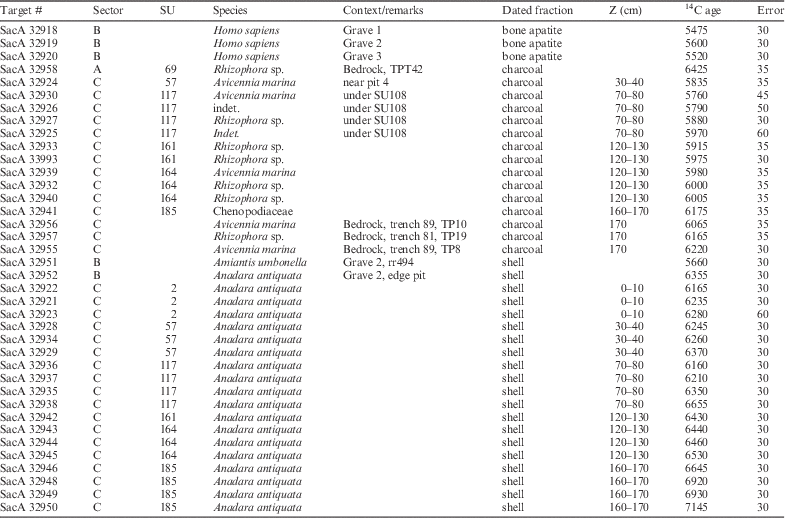
Results are presented in Table 1. Charcoal dates range from 6425±35 to 5760±45 BP. The oldest charcoal date comes from Sector A and the youngest from the upper level SU 57 in Sector C. Shell dates range from 7145±30 to 5660±40 BP. The oldest shell comes from the lowermost level in Sector C, while the youngest is the bivalve (Amiantis umbonella) in direct association with the buried individual from Grave 2. This shell is much younger than the one originating from the sediment filling the pit (6355±30 BP). Human bones returned the youngest ages, ranging from 5475±30 to 5600±30 BP.
Radiocarbon measurements of the RH-6 samples.

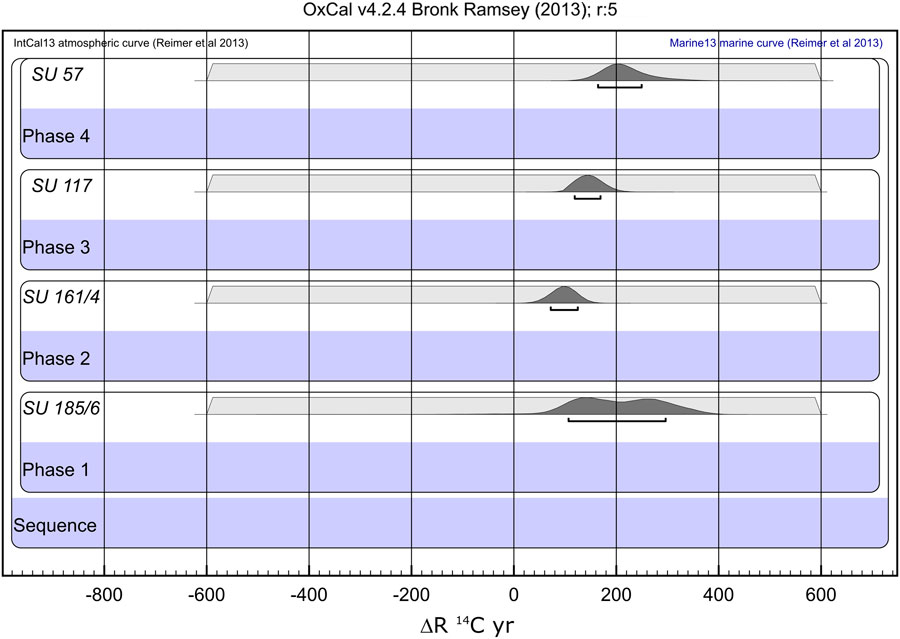
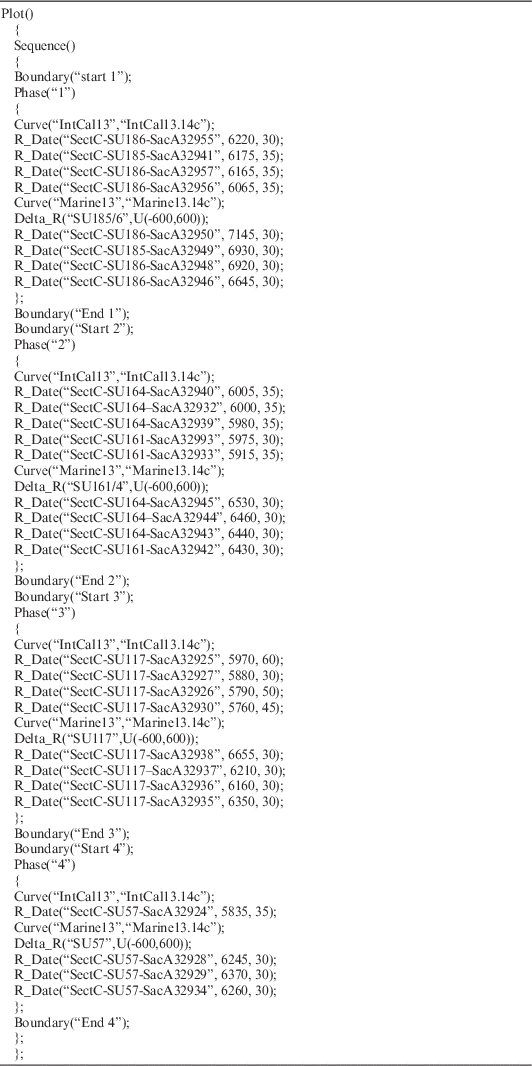
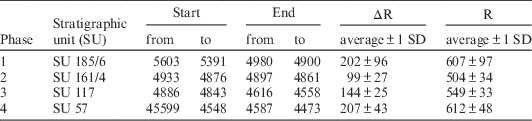
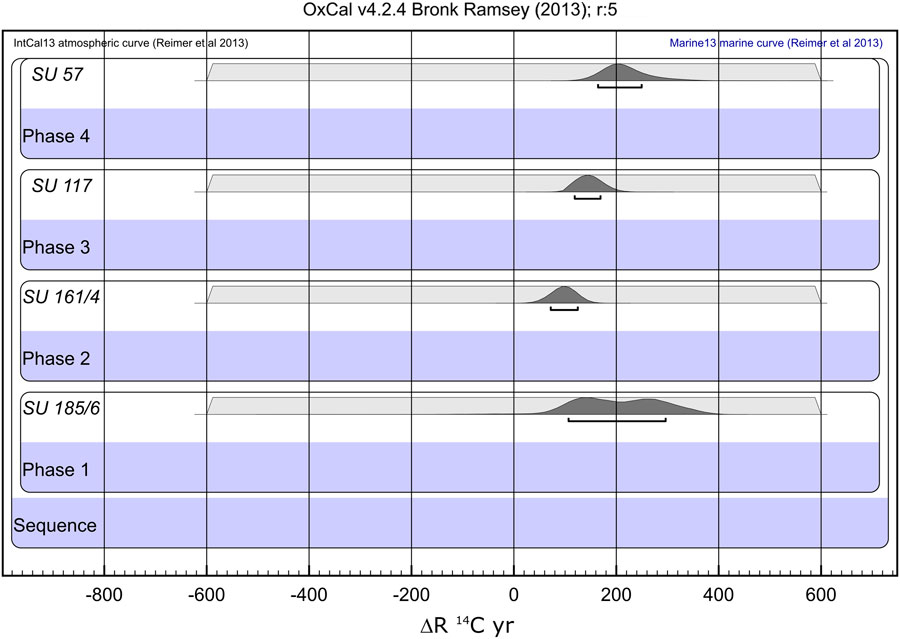
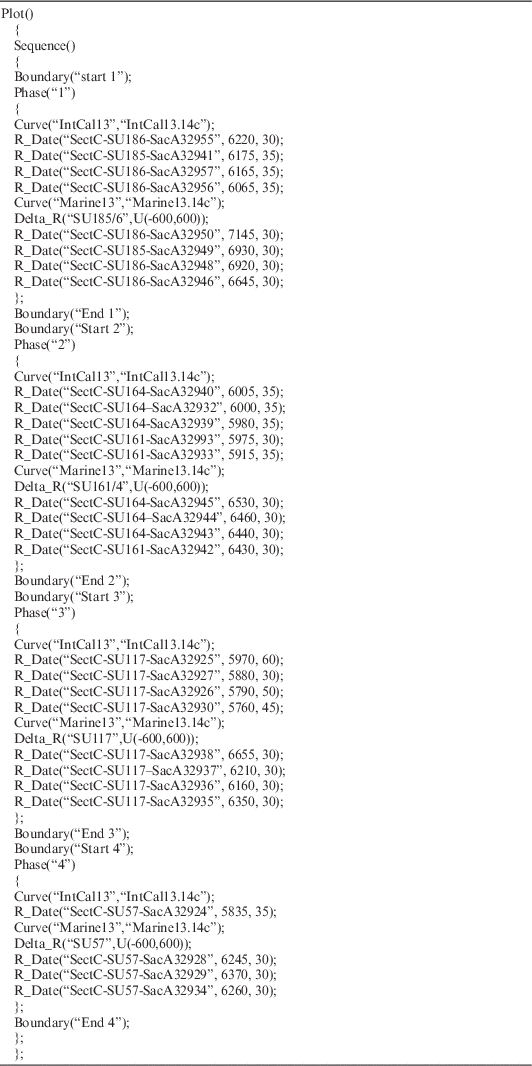
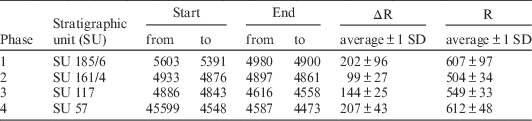
In order to evaluate the chronology of shell-midden formation, as well as changes in MRA through time, we used the OxCal v 4.2.3 calibration software and grouped the charcoal and shell dates from Sector C in four successive phases (Bronk Ramsey Reference Bronk Ramsey2009). 14C dates were calibrated using the IntCal13 and Marine13 calibration curves (Reimer et al. Reference Reimer, Bard, Bayliss, Beck, Blackwell, Bronk Ramsey, Grootes, Guilderson, Haflidason, Hajdas, Hatté, Heaton, Hoffmann, Hogg, Hughen, Kaiser, Kromer, Manning, Niu, Reimer, Richards, Scott, Southon, Staff, Turney and van der Plicht2013). We followed the approach outlined in Bronk Ramsey and Lee (Reference Bronk Ramsey and Lee2013) in order to evaluate the offset between the calibrated dates and left the ΔR value undetermined in the model with a possible range from –600 to 600 14C yr. The code of the model is shown in Table 2. Table 3 summarizes the main outputs of the model, including the beginning and end of each phase and the modeled ΔR and MRA values R in the 1σ range. R values were calculated considering the global average offset of oceanic 14C with respect to the atmosphere of 405±22 14C yr. The agreement value is high (Amodel=96), suggesting a robust model. The modeled distribution result indicates that RH-6 formation started during the mid-6th (5603–5391) and ended during the mid-5th (4587–4473) millennium cal BC. Positive ΔR values are calculated throughout the entire sequence, ranging from 99±27 (SU 161/4) to 207±43 (SU 57) 14C yr (Figure 3). ΔR value is poorly constrained at the bottom of the shell midden (202±95 14C yr), possibly due to some mixing. In contrast, ΔR values calculated for the intermediate layers (SU 161/4 and SU 117) are well constrained. An average ΔR value of 163±51 14C yr was calculated based on the four estimates, corresponding to a local MRA correction R value of 568±56 14C yr.
Probability distribution (at 1σ) for the ΔR values of the four phases of the Bayesian model obtained from the modeled dates.
OxCal code for RH-6 phase model with undetermined ΔR with a –600 to 600 14C yr range.
Probability distribution (at 1σ) for the beginning and the end of the four phases, as well as the ΔR and R values obtained from the modeled dates, using OxCal v 4.2.3 (Bronk Ramsey Reference Bronk Ramsey2009) and marine data from Reimer et al. (Reference Reimer, Bard, Bayliss, Beck, Blackwell, Bronk Ramsey, Grootes, Guilderson, Haflidason, Hajdas, Hatté, Heaton, Hoffmann, Hogg, Hughen, Kaiser, Kromer, Manning, Niu, Reimer, Richards, Scott, Southon, Staff, Turney and van der Plicht2013).
In the absence of terrestrial material associated with the human burials, establishing the chronology of occupation of the graveyard is not straightforward. Furthermore, the likely contribution of marine resources in the diet of the RH-6 population does not allow us to use the human dates directly to estimate the period of occupation of the cemetery. However, it is possible to use the Amiantis umbonella date obtained in Grave 2 since this shell likely was deposited live in the hand of the buried individual. The date was calibrated using the average ΔR value of 163±51 14C yr calculated above, providing an age range of 3996–3830 cal BC. A sensitivity test was also performed, using the minimum and maximum ΔR values, but this had a minor impact (<50 yr) on the age range. This suggests that there is a 500–700 yr hiatus between the formation of the midden and its later use as a graveyard. Using the Amiantis date and the average R value of 568±56 14C yr calculated above, we determined that the diet of the individual buried in Grave 2 was comprised 89% of marine food. The same approach could not be performed in Grave 1 and 3 because they did not provide contemporary charcoal or shell in association with the human remains. However, their proximity (both in terms of stratigraphy and of 14C age) also suggests a marine-dominated diet for these individuals.
DISCUSSION
Chronology of Site Occupation
The base level of RH-6 dates to the mid-6th millennium cal BC and is contemporary with that of Suwayh 1, another shell-midden located further south along the Ja’alan coast (Charpentier et al. Reference Charpentier, Marquis and Pellé2003). At that time, the sea level and the coastal landscape are similar to those today. The bulk of the shell-midden formation occurs between 4800–4400 cal BC, at a time of sea-level rise corresponding to the maximum postglacial transgression observed elsewhere in the Makran and the Persian Gulf (Berger et al. Reference Berger, Charpentier, Crassard, Martin, Davtian and Lopez-Saez2013; Biagi Reference Biagi2013). This period corresponds to the second humid phase of the Holocene in the Arabian Peninsula, a time during which mangrove ecosystems were widely exploited by the Neolithic groups along the coasts of the Ja’alan and Indus delta. The most recent charcoal dates available for the shell midden (4700–4500 cal BC) seem to correspond to the peak of sea-level rise (+2–3 m). Bayesian modeling of the 14C dates obtained at RH-6 suggests that there appears to be no human presence at the site during the second half of the 5th millennium BC. It is impossible to discount the presence of people at other sites in the Ra’s al-Hamra Peninsula, but RH-6 was abandoned for several centuries. Today, RH-6 is 7 m above sea level. A 2–3 m rise in sea level would induce major coastline shifts and would probably have surrounded the archaeological deposit. Although it is also not impossible that the upper part of the RH-6 sequence is missing due to erosion, this suggests that the abandonment of the site could have been triggered by the flooding of the plain around the midden. Interestingly, this period fits with the installation of human populations at the nearby coastal site of RH-5. The oldest charcoal date published for the site is 5480±60 BP (4457–4176 cal BC) (Biagi and Nisbet Reference Biagi and Nisbet1989). RH-5 is located on the tertiary limestone promontory of the Ra’s al Hamra headland, 12 m above the water line, and would not have been affected by sea-level rise as much as RH-6. This succession in time seems to indicate permanent occupation of human groups in the area. The second period of occupation of RH-6, corresponding to its use as a cemetery, occurred at the beginning of the 4th millennium cal BC, at a time when sea level was slightly higher (+1 m) than today, but less than during the mid-5th millennium BC. This could be related to the second optimum of mangrove development attested between 3800–3500 cal BC in the Ja’alan and the Indus Delta (Berger et al. Reference Berger, Charpentier, Crassard, Martin, Davtian and Lopez-Saez2013; Biagi Reference Biagi2013). No burials dating from the early 4th millennium cal BC are known at RH-5 (Salvatori Reference Salvatori2007) and individuals buried at RH-6 may be the ones that inhabited RH-5 in its earliest phase. As in RH-5, we lack the graves corresponding to the initial period of installation of the RH-6 population. This could be explained by practical issues (the bedrock is too hard to dig and the graves are not located on site), taphonomic issues (in absence of overlying sediment, mortuary disposals would have been more susceptible to be eroded), or funerary practices that do not leave traces. In this regard, Kutterer (Reference Kutterer2010) found charred human bones dating to the 6th millennium cal BC in a cave at Fay-NE10 (central region of Sharjah, UAE), which suggest funerary treatment involving cremation. If such cremation practices were widespread throughout the Oman Peninsula before the 5th millennium cal BC, it could explain the absence/lack of human remains for this period, as charred bones could have been easily dispersed, and/or not recognized/identified as human remains during excavation among domestic refuses.
Marine Reservoir Age
The calibration of marine Omani shells has been an open question for many years. Previous estimates come from (1) 14C dating of sediments from a marine core located on the continental margin off Pakistan (Staubwasser et al. Reference Staubwasser, Sirocko, Grootes and Erlenkeuser2002); and (2) terrestrial-marine pairs collected in shell middens from the 5th to 4th millennia cal BC along the coast of northern Oman (Uerpmann Reference Uerpmann1991; Biagi Reference Biagi1994; Zazzo et al. Reference Zazzo, Munoz, Saliège and Moreau2012, Reference Zazzo, Munoz and Saliège2014). Published evidence derived from the marine core indicates that the MRA in the Arabian Sea is not only higher than the average ocean but also variable through time. For the period immediately preceding RH-6 (5695–6405 cal BC), the reservoir age is high (1010 14C yr; range: 950–1250) and relatively well constrained (Staubwasser et al. Reference Staubwasser, Sirocko, Grootes and Erlenkeuser2002). No precise marine-based estimate exists for the period corresponding to RH-6 shell-midden formation, which seems to correspond to a period of change in the MRA. For the period following RH-6 shell-midden formation (4560–3550 cal BC), reservoir ages are not as well constrained and modeled reservoir ages cluster around two values (640 and 980 14C yr) of comparable likelihood. A reservoir age of 640±120 14C yr (range: 520–740) was chosen, but the authors note that this value should be viewed with caution. No consensus value seems to emerge either from the 14C dating of terrestrial-marine pairs collected in shell middens along the coast of northern Oman. 14C dates measured by Biagi (Reference Biagi1994) on associated charcoals and shells found at RH-6, once corrected from isotopic fractionation (assuming a δ13C value of zero for shell samples), suggest a MRA between 460 and 630 14C yr during the 5th millennium. Similar low values were found for the 4th millennium BC at RH-5 by the same author and were later confirmed by Zazzo et al. (Reference Zazzo, Munoz, Saliège and Moreau2012, Reference Zazzo, Munoz and Saliège2014). A much higher value of 800 yr was proposed by Uerpmann (Reference Uerpmann1991), but this high MRA remains doubtful for two reasons: (1) it is based on only 2 out of the 6 pairs analyzed, while the remaining four span a wide range between 945 and 5240 14C yr; and (2) ash, not charcoal, was selected for most (5 out of 6) of the pairs and could have been subjected to contamination. Our results, obtained from a secure context (a stratified shell midden), suggest a much lower and consistent value comprised between about 500 and 600 14C yr and confirm the previous estimates by Biagi (Reference Biagi1994) and Zazzo et al. (Reference Zazzo, Munoz, Saliège and Moreau2012, Reference Zazzo, Munoz and Saliège2014). This result seems fairly well supported, especially in the intermediate layers (SU 161/4 and SU 117) where charcoal and shell ages are consistent. Finally, we note that our MRA estimate for the mid-6th millennium cal BC (612±48 14C yr) is not significantly different than the modern pre-bomb value of 631±49 14C yr measured in the Muscat area (Southon et al. Reference Southon, Kashgarian, Fontugne, Metivier and Yim2002). This observation suggests stability of the MRA in the Arabian Sea since the mid-6th millennium BC. Further work on more recent assemblages are required to confirm this conclusion.
Human Diet and Mobility
The 14C dates obtained on contemporary human bone and shell in Grave 2 gave us a unique opportunity to precisely estimate the paleodiet of this individual. The two dates are only separated by 60 14C yr, suggesting a high proportion of marine and mangrove resources in the diet of this individual. Using the average MRA calculated for the period comprised between the 6th and the 5th millennium BC (568 14C yr), we calculated that 89% of this individual’s diet derived from marine resources. Although the MRA value might have changed during the course of the 5th millennium BC, sensitivity tests indicate that the reconstructed proportion of marine foods in this individual’s diet is not strongly affected by this parameter. An uncertainty of ±100 14C yr on the MRA value would only affect the marine proportion in the diet by 4% (87–91%) and would not fundamentally alter our conclusion. Such a high proportion of marine resources in the diet implies low mobility, or mobility restricted to the coast for the population of RH-6. This finding confirms previous archaeozoological and archaeobotanical observations showing the overwhelming presence of marine and mangrove dwelling species in the faunal and charcoal assemblage of the shell midden (Biagi and Travers Reference Biagi and Travers1985; Uerpmann and Uerpmann Reference Uerpmann and Uerpmann2003; Wilkens Reference Wilkens2005). This is also consistent with the results of the analysis of the raw materials used for lithic industry at Ra’s al-Hamra (Maggi and Gebel Reference Maggi and Gebel1990) indicating that most of the employed materials (quartz, chert, flint, olivine, steatite) were available less than 7 km away from the sites, as wadi gravels with nodules or outcrops. This mobility pattern can be easily explained by the large variety of resources offered by the local environment (Biagi and Nisbet Reference Biagi and Nisbet2006). A similar conclusion was reached for the population living a few centuries later in the nearby coastal site of RH-5 (Zazzo et al. Reference Zazzo, Munoz and Saliège2014). Whatever the motivation of the habitat move from RH-6 to RH-5 may be, it seems that the group settled at RH-5 succeeded in adapting to the new constraints since the dense occupation of the site continued for more than 20 centuries. Despite possible changes in their social organization highlighted by differences in funerary practices, both groups share a marine-dominated diet showing some continuity in the heavy dependence to the coastal resources between the 6th and the 4th millennium cal BC.
ACKNOWLEDGMENTS
We thank Camille Senelet for identification of the charcoal and shell samples, the CNRS-INSHS for access to the Artemis facility, the team of the LMC14 for the graphitization and 14C measurement of the CO2 samples, and Kita Macario for her help with the Bayesian modeling. We are grateful to the CNRS-INEE (PEPS “paléomangrove”) and the Ministry of Heritage and Culture of the Sultanate of Oman for their financial support. This manuscript received constructive comments from Todd Braje, Paolo Biagi, and two other anonymous reviewers.