Adolescence is a period marked by increases in risk taking, sensation seeking, and emotion dysregulation. Neurobiological models of adolescent development propose that lagging development in brain regions associated with affect and behavior control compared to regions associated with reward and emotion processing may underlie these behavioral manifestations (Casey, Jones, & Somerville, Reference Casey, Jones and Somerville2011; Crews & Boettiger, Reference Crews and Boettiger2009; Mills, Goddings, Clasen, Giedd, & Blakemore, Reference Mills, Goddings, Clasen, Giedd and Blakemore2014; Somerville, Jones, & Casey, Reference Somerville, Jones and Casey2010; Spear, Reference Spear2011; Steinberg, Reference Steinberg2007; van Duijvenvoorde, Achterberg, Braams, Peters, & Crone, Reference van Duijvenvoorde, Achterberg, Braams, Peters and Crone2016). Previous findings suggest a mix of biological vulnerabilities and psychosocial risk factors contributes to heavy alcohol consumption and problematic use in adolescence including genetic (Hardee et al., Reference Hardee, Weiland, Nichols, Welsh, Soules and Steinberg2014), social (Chein, Albert, O'Brien, Uckert, & Steinberg, Reference Chein, Albert, O'Brien, Uckert and Steinberg2011; Smith, Chein, & Steinberg, Reference Smith, Chein and Steinberg2013), and experiential (e.g., early onset of drinking and substance use; Norman et al., Reference Norman, Pulido, Squeglia, Spadoni, Paulus and Tapert2011; Wetherill, Squeglia, Yang, & Tapert, Reference Wetherill, Squeglia, Yang and Tapert2013) factors. Maturation processes in brain regions involved in affective, cognitive, and self-regulation (Crews, He, & Hodge, Reference Crews, He and Hodge2007; Crews & Boettiger, Reference Crews and Boettiger2009) likely underlie the behavioral phenotypes observed in adolescence. Understanding how brain development during this critical period contributes to the risk for substance use and psychopathology is a key focus of recent developmental research.
Adolescent brains are negatively affected by alcohol and drug use (Bava & Tapert, Reference Bava and Tapert2010; Jacobus & Tapert, Reference Jacobus and Tapert2013), but mounting evidence suggests that deficits or developmental delays may represent vulnerabilities for the emergence of alcohol and drug use problems (Cheetham et al., Reference Cheetham, Allen, Whittle, Simmons, Yücel and Lubman2014; Squeglia et al., Reference Squeglia, Rinker, Bartsch, Castro, Chung and Dale2014). Binge drinking, defined as four or more drinks on a single occasion for females and five or more for males (NIAAA, 2004), is common, as one in five high school seniors report binge drinking in the last 2 weeks (Johnston, O'Malley, Miech, Bachman, & Schulenberg, Reference Johnston, O'Malley, Miech, Bachman and Schulenberg2015). Binge drinking is a critical behavioral target due to the negative consequences associated with this pattern of underage drinking (Miller, Naimi, Brewer, & Jones, Reference Miller, Naimi, Brewer and Jones2007). The biological vulnerabilities underlying binge drinking and other substance use, however, appear to overlap with propensity for externalizing (Beauchaine & McNulty, Reference Beauchaine and McNulty2013; Zucker, Heitzeg, & Nigg, Reference Zucker, Heitzeg and Nigg2011) and internalizing disorder symptoms (Hussong, Jones, Stein, Baucom, & Boeding, Reference Hussong, Jones, Stein, Baucom and Boeding2011). Therefore, approaching adolescent substance use from a developmentally informed perspective requires models that examine common neurodevelopmental pathways and their association to emerging phenotypes over time.
Examinations of brain development have highlighted a number of functional networks that mature over adolescence and are critical for regulation of affect and behavior. For example, the orbitofrontal cortex–amygdala network, associated with inhibitory control and reward processing, is associated with externalizing behaviors in adolescent samples (Albaugh et al., Reference Albaugh, Ducharme, Collins, Botteron, Althoff and Evans2013; Ameis et al., Reference Ameis, Ducharme, Albaugh, Hudziak, Botteron and Lepage2014). The anterior cingulate–frontoinsular network has been associated with salience processing (Seeley et al., Reference Seeley, Menon, Schatzberg, Keller, Glover and Kenna2007; Zielinski, Gennatas, Zhou, & Seeley, Reference Zielinski, Gennatas, Zhou and Seeley2010), is important in substance-related risk-taking behaviors, and has been identified as a key network in alcohol cue reactivity (Schacht, Anton, & Myrick, Reference Schacht, Anton and Myrick2013; Schacht et al., Reference Schacht, Anton, Randall, Li, Henderson and Myrick2011). Finally, the dorsolateral frontoparietal network has been associated with executive control (Walhovd et al., Reference Walhovd, Tamnes, Bjørnerud, Due-Tønnessen, Holland and Dale2014; Zanto & Gazzaley, Reference Zanto and Gazzaley2013), and the maturation of these regions appears associated with greater ability to resist impulsive, risk-taking behavior (Seeley et al., Reference Seeley, Menon, Schatzberg, Keller, Glover and Kenna2007; Zielinski et al., Reference Zielinski, Gennatas, Zhou and Seeley2010). Research has only begun to examine the relationship of brain structures involved in such functional circuitry in predicting subsequent substance use and psychopathology (Cheetham et al., Reference Cheetham, Allen, Whittle, Simmons, Yücel and Lubman2014; Squeglia et al., Reference Squeglia, Rinker, Bartsch, Castro, Chung and Dale2014). Identifying brain maturation patterns that convey vulnerability for developing these adolescent-onset problems will help delineate specific mechanisms of risk and targets of prevention efforts.
We used a longitudinal design to examine whether structural brain measures prospectively predicted alcohol use and internalizing and externalizing disorder symptoms. Specifically, we extracted surface area and cortical thickness for six regions of interest selected on the basis of association with the functional brain networks described above. Three prefrontal cortex (PFC) regions (dorsolateral PFC [DLPFC], inferior frontal gyrus [IFG], and orbitofrontal cortex) and three regions with important connections to the PFC (anterior cingulate cortex, insular cortex, and parietal cortex) were included to encompass the primary cortical nodes of the salience network, the inhibitory control network, and the executive control network. Cortical surface area and cortical thickness were used as predictors in the current analyses because they develop differentially and may reflect different genetic influences on cortical development (Hogstrom, Westlye, Walhovd, & Fjell, Reference Hogstrom, Westlye, Walhovd and Fjell2013; Panizzon et al., Reference Panizzon, Fennema-Notestine, Eyler, Jernigan, Prom-Wormley and Neale2009; Wierenga, Langen, Oranje, & Durston, Reference Wierenga, Langen, Oranje and Durston2014). It was expected that smaller surface area and thinner cortices would be associated with more binge drinking, as well as externalizing and internalizing disorder symptoms, after controlling for age, sex, and family history of alcohol use disorders effects.
Methods
Participants
The sample was obtained from a larger ongoing neuroimaging study of 295 youth with and without identified environmental risk factors and genetic liability for substance use disorder. Participants were recruited through flyers sent to households of students attending local middle schools. Informed consent and assent were obtained and included approval for adolescents and parents to be contacted for follow-up interviews and brain imaging. Eligibility criteria information, substance use history, family history of substance use, developmental data, and mental health functioning data were obtained from the adolescent and a biological parent. The study protocol was approved by the University of California, San Diego, Human Research Protections Program and executed in accordance with the ethical standards defined in the Declaration of Helsinki.
Participants were healthy 12- to 14-year-olds at baseline. Extensive screening and background information were obtained from the youth and their biological parent at baseline, and participants were required to be substance-naïve. Exclusionary criteria for project entry included prior experience with alcohol or drugs (≥10 total days in their life on which alcohol use had occurred, or >2 drinks in a week; ≥3 lifetime experiences with marijuana and any use in the past 3 months; ≥5 lifetime cigarette uses; and any history of other intoxicant use); any suggestion of prenatal alcohol (>2 drinks during a given week) or any illicit drug exposure; premature birth (i.e., born prior to 35th gestational week); history of any neurological or DSM-IV Axis I disorder, determined by the NIMH Diagnostic Interview Schedule for Children—Version 4.0, head trauma or loss of consciousness (>2 min), chronic medical illness, learning disability, or mental retardation, or use of medications potentially affecting the brain; contraindication to magnetic resonance imaging (MRI; e.g., braces); inadequate comprehension of English; and noncorrectable sensory problems.
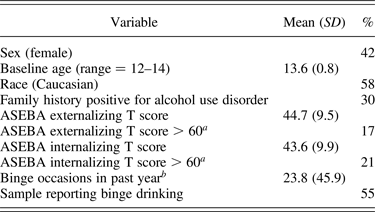
This ongoing longitudinal study began in 2002 with imaging conducted on a 1.5-Tesla GE scanner that was replaced with a 3-Tesla GE system in 2005. Attempts to merge data across field strengths were unsatisfactory (Squeglia et al., Reference Squeglia, Tapert, Sullivan, Jacobus, Meloy and Rohlfing2015), so only participants who had valid 3-Tesla scans were included in this study. The participants were 265 adolescents (see Table 1) with between 1 and 6 3-Tesla brain scans over the course of the study and at least one future follow-up report on substance use/psychopathology, for a total of 564 scans. The majority of the sample (63%) had >1 usable MRI scan paired with future outcomes (42% = 2 scans, 18% = 3 scans, and 3% = 4 or more scans). Participants in the current study had been followed for up to 13 years and ages ranged from 12 to 27.
Demographic description of sample (n = 265)
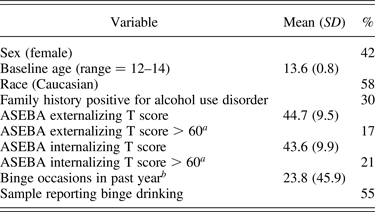
Note: ASEBA, Achenbach System of Empirically Based Assessment.
a Percentage of 224 with at least one T score above 60, which is the threshold for elevated ASEBA internalizing/externalizing scales.
b Mean of nonzero observations (i.e., 48.2% of the observations that reported a binge drinking episode).
Measures
Substance use measures
At each baseline and follow-up assessment point, the Customary Drinking and Drug Use Record (Brown et al., Reference Brown, Myers, Lippke, Tapert, Stewart and Vik1998) was administered to obtain quantity and frequency of lifetime and recent (past-year) alcohol, marijuana, and other drug use; withdrawal/hangover symptoms; and DSM-IV substance use disorder criteria. Substance use information was updated annually via phone or in-person after the participant's baseline assessment. Urine toxicology screens and parent or informant (sibling, friend, or roommate) report of youth substance use were collected to corroborate self-report. Binge drinking occasions reported in the past year was the primary outcome examined for the current study as one of the most critical indicators of problematic drinking behavior (Masten, Faden, Zucker, & Spear, Reference Masten, Faden, Zucker and Spear2008; Miller et al., Reference Miller, Naimi, Brewer and Jones2007).
Family history of alcohol problems
At baseline, the Family History Assessment Module (Rice et al., Reference Rice, Reich, Bucholz, Neuman, Fishman and Rochberg1995) ascertained familial density of alcohol and drug use disorders in first- and second-degree relatives. Individuals were coded as family history positive (FH+) for alcohol use problems if they reported alcohol use problems among: one or more parent, or one or more aunt/uncle as well as one or more grandparents on the same side of the family. Participants who reported no first- or second-degree relatives with alcohol problems were coded as family history negative (FH–). Individuals reporting only one second-degree relative with alcohol use problems were coded as family history indeterminate (FH-IND), as an intermediate category. Because problems with alcohol among family members emerged over the course of the longitudinal data collection, the most recent assessment was used to classify each participant.
Psychopathology symptom assessment
At baseline and follow-up, the Achenbach System of Empirically Based Assessment (ASEBA) was used to assess symptoms of internalizing and externalizing disorders (Achenbach & Rescorla, Reference Achenbach and Rescorla2001, Reference Achenbach and Rescorla2003). The Child Behavior Checklist (completed by parents of children under age 18) and the Adult Self-Report (completed by participants over age 18) provided age- and sex-normed continuous measures of internalizing and externalizing psychopathology. The T scores from the externalizing and internalizing scales were used in the present analyses.
Follow-up procedures
At baseline, substance-naive 12- to 14-year-old youth completed a baseline interview and structural neuroimaging session. Phone or in-person interviews assessed current substance use and psychiatric functioning, including ASEBA scales, annually. Participants were invited back for MRI scans every 1 to 3 years. Extensive procedures were utilized (cf. Twitchell, Hertzog, Klein, & Schuckit, Reference Twitchell, Hertzog, Klein and Schuckit1992) to ensure excellent retention rates. When participants missed planned assessments, efforts were made to collect data at the following annual assessment, allowing us to maintain excellent retention rates (96%) over more than a decade.
Procedures
Image acquisition
High-resolution anatomical and functional images were collected at the University of California at San Diego Center for Functional MRI on a 3-Tesla CXK4 short bore Excite-2 MR system (General Electric, Milwaukee, WI) with an eight-channel phase-array head coil. Participants were positioned on the scanner table, and the head was stabilized within the head coil using foam cushions to help minimize movement (NoMoCo, La Jolla, CA). Scan sessions involved a 10-s scout scan to assure good head placement and slice selection covering the whole brain followed by a high-resolution T1-weighted sequence using a sagittally acquired spoiled gradient recalled sequence (field of view = 24 cm, 256 × 256 × 192 matrix, 0.94 × 0.94 × 1 mm voxels, 176 slices, repetition time = 20 ms, echo time = 4.8 ms; flip angle 12°, acquisition time = 7:26 min).
Data analysis
Structural image processing
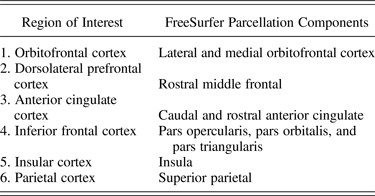
FreeSurfer (Version 5.3, http://www.surfer.nmr.mgh.harvard.edu) was used for cortical surface reconstruction and cortical thickness and surface areas estimations (Dale, Fischl, & Sereno, Reference Dale, Fischl and Sereno1999; Fischl, Sereno, & Dale, Reference Fischl, Sereno and Dale1999) of the high-resolution T1-weighted MR data. The FreeSurfer program utilizes a series of automated imaging algorithms to produce measures of cortical thickness and surface area. Independent raters, blind to participant characteristics, followed the reconstruction procedures (http://surfer.nmr.mgh.harvard.edu/fswiki/RecommendedReconstruction) to identify and correct any errors made during the cortical reconstruction. Following inspection, an automated parcellation procedure divided each hemisphere into 32 independent cortical regions based on gyral and sulcal features described by the Desikan–Killiany atlas (Desikan et al., Reference Desikan, Segonne, Fischl, Quinn, Dickerson and Blacker2006), which were then combined into regions of interest (ROIs) in each hemisphere. See Table 2 for a list of parcellated brain regions combined for ROIs. Cortical thickness estimates were averaged across constituent parcellation regions, and surface area estimates were summed across constituent parcellation regions.
Regions of interest for predictive models
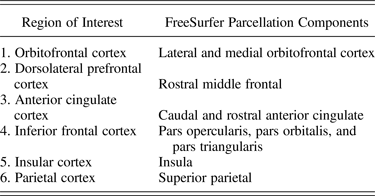
Note: Cortical thickness and surface area were extracted by combining parcellation regions indicated (average values for thickness, and sum values for surface area) for left and right hemispheres separately.
Statistical analyses
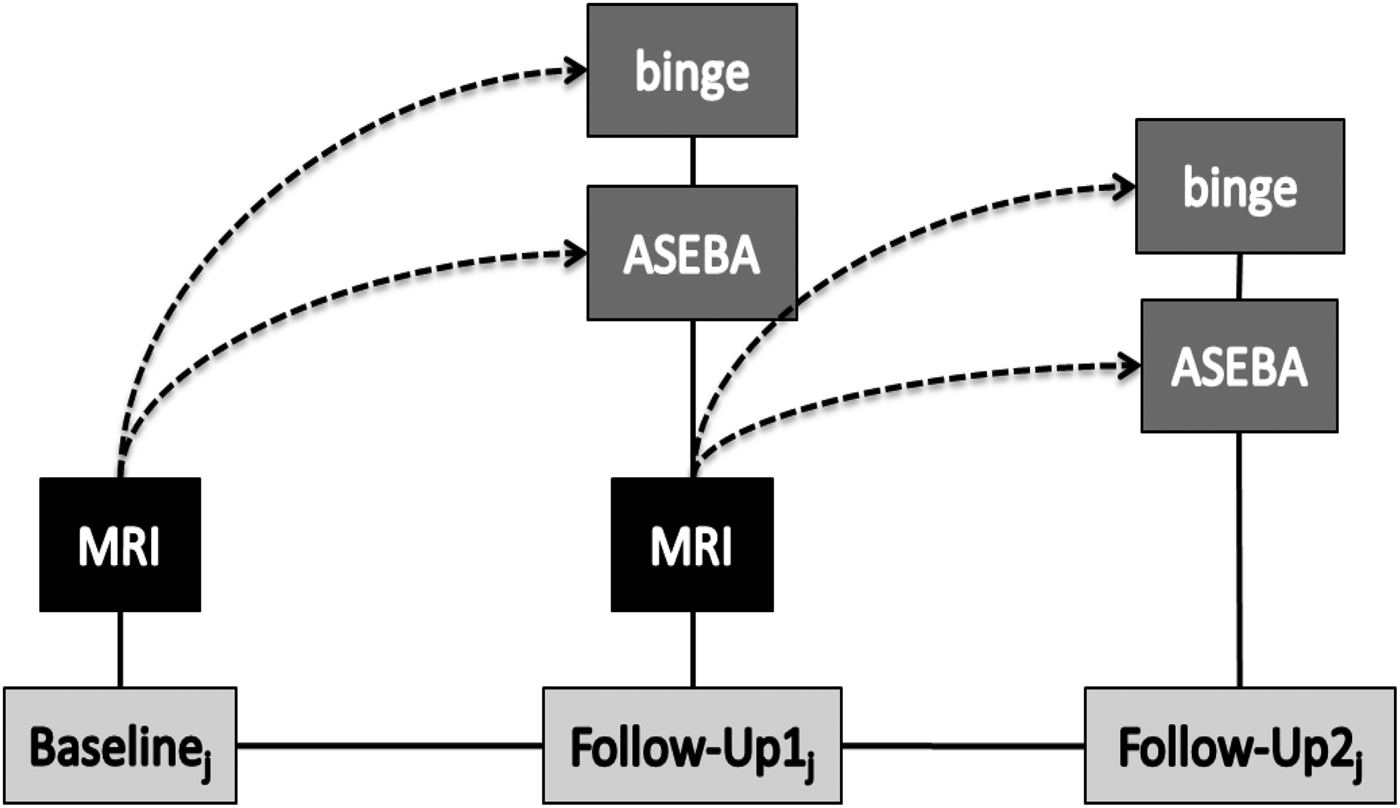
Multilevel models were used to examine the predictive effects of structural markers on substance use outcomes, externalizing symptoms, and internalizing symptoms. All time-varying measures were nested within individuals, and models included person-level intercepts to account for within-person clustering of observations. Missing data were treated as missing at random, and all available data were included via maximum-likelihood estimation, which is a preferred method of estimation with hierarchical data when data are assumed to be missing at random (Schafer & Graham, Reference Schafer and Graham2002). All models included time-invariant predictors (i.e., sex and family history) as well as time-varying predictors (i.e., age and structural markers). Time-varying structural markers were incorporated as lagged predictors, with prior observations of structural markers paired with future observations of the outcome variables in the multilevel models (see Figure 1). All available follow-ups with a previous usable scan were included, and scans were only paired with the next available outcome assessment. Across the sample, participants had between one and six follow-ups included in the analyses (M = 2.1; one = 36.6%, two = 35.9%, three = 11.7%, four = 10.2%, five = 3.4%, and six = 0.4%).
Schematic depicting lag-prediction for participant j. Brain structure magnetic resonance imaging variables were used to predict subsequent drinking (binges per year), and internalizing and externalizing disorder symptoms (Achenbach System of Empirically Based Assessment scales). Magnetic resonance imaging data were used to predict the next available drinking and Achenbach System of Empirically Based Assessment variables (ranging from 1 to 7 years later). Multiple observations were included for participants when available, and observations were nested within participants. Baseline and follow-up time points were based on available data.

Because of intermittent missing time points and the desire to include all available data, lagged time periods spanning more than one assessment wave were allowed, such that the length of time between structural markers and outcomes varied according to timing of the next available follow-up visit. The most common duration between scans and outcomes was 1 year (64.5%), followed by 2 years (19.7%), 3 years (7.3%), and 4 or more years (8.5%). Preliminary models did not detect any significant impact of follow-up duration on the results, supporting the inclusion of all available scan–outcome pairings. Covariates for all models included sex, time-varying age at follow-up, and family history of alcohol use disorders. Models for past-year binges also included a statistically significant nonlinear age effect, which improved overall model fit. Additional analyses were conducted adding internalizing, externalizing, or past-year binges to models predicting the other outcomes (i.e., internalizing and externalizing to predict future binge drinking, or internalizing and past-year binges to predict future externalizing).
Linear multilevel models were used for internalizing and externalizing symptoms. Due to significant positive skew, negative binomial models were used for past-year binges. Negative binomial models are appropriate for analysis of variables that are skewed and overdispersed (i.e., variance greater than the mean), which is often the case with substance use count variables, particularly in adolescent samples. They are an extension of the Poisson model that estimates an additional parameter to explicitly model the severity of overdispersion in the data. Those models yield incidence rate ratios (IRRs), which can be interpreted as the increase in the rate of incidents (e.g., number of binges) associated with a one-unit increase in the predictor variable (e.g., standard deviation in ROI volume) relative to the rate of incidents for the referent (e.g., mean ROI volume). For example, an IRR = 0.50 would indicate a 50% lower rate of binge episodes (e.g., 6 vs. 12 episodes). Visual inspection of all models revealed no violations of multilevel model assumptions (Raudenbush & Bryk, Reference Raudenbush and Bryk2002). All analyses were performed in Stata 14.0.
Results
A total of 265 participants (42% female) had valid MRI data paired with a future follow-up assessment for the prospective prediction models. Sample sizes for specific models varied due to 3 participants missing any follow-up data for binge drinking models (n = 262) and 41 participants missing any follow-up data for internalizing/externalizing models (n = 224). Follow-up ages ranged from 13 to 27, and the average time between MRI data and predicted outcome (i.e., past year binge drinking occasions, internalizing symptoms, or externalizing symptoms) was 1.7 years (range = 1–7 years).
The majority of the sample had ASEBA scale scores in the normal range (Table 1), but 17% endorsed elevated scores in the subclinical range (i.e., T score > 60) of externalizing symptoms and 21% for internalizing symptoms. In a mixed model analysis, male and female participants did not significantly differ on externalizing symptoms, male M = 45.2 (SD = 9.8); female M = 44.6 (SD = 9.7), b = 0.09, SE = 1.21, p = .94, or internalizing symptoms, male M = 42.4 (SD = 9.7); female M = 2 and 43.9 (SD = 10.1), across the study.Footnote 1 Externalizing symptoms correlated with internalizing symptoms (r = .58, p < .001), and 11% of the sample endorsed both elevated internalizing and externalizing symptoms
The sample was recruited to exclude any history of binge drinking prior to baseline, and 52% of follow-up observations included in the current analyses remained zero for binge drinking. Over the course of the study, 55% of the sample endorsed at least one episode of binge drinking, and for those who endorsed any binge drinking during the study, the number of episodes varied widely with an average of 23.8 (SD = 45.9). Across the study, male participants reported more binge drinking episodes per year than female participants (male: M = 16.4, SD = 41.7; female: M = 12.8, SD = 32.1), but this difference was not statistically significant. Externalizing symptoms were significantly correlated with binge drinking (r = .26, p < .05) but internalizing symptoms were not (r = .08). Individuals who endorsed both elevated internalizing and externalizing scores (T score > 60) reported more binge drinking (M = 31.2, SD = 18.8) than those who endorsed elevations on either domain alone (M = 11.5, SD = 20.6), and than those who endorsed no elevated psychopathology symptoms (M = 11.9, SD = 21.5).
Thirty percent of the sample were FH+ (n = 79), 38% were FH– (n = 100), and 32% were FH-IND (n = 76). Individuals with FH+ reported significantly more binge drinking than FH– even after accounting for age and sex effects, F (1, 174) = 5.4, p < .05. Similarly, FH+ reported more externalizing, F (1, 174) = 22.0, p < .001, and internalizing, F (1, 174) = 9.0, p < .01, symptoms than FH–.
Prospective prediction of binge drinking
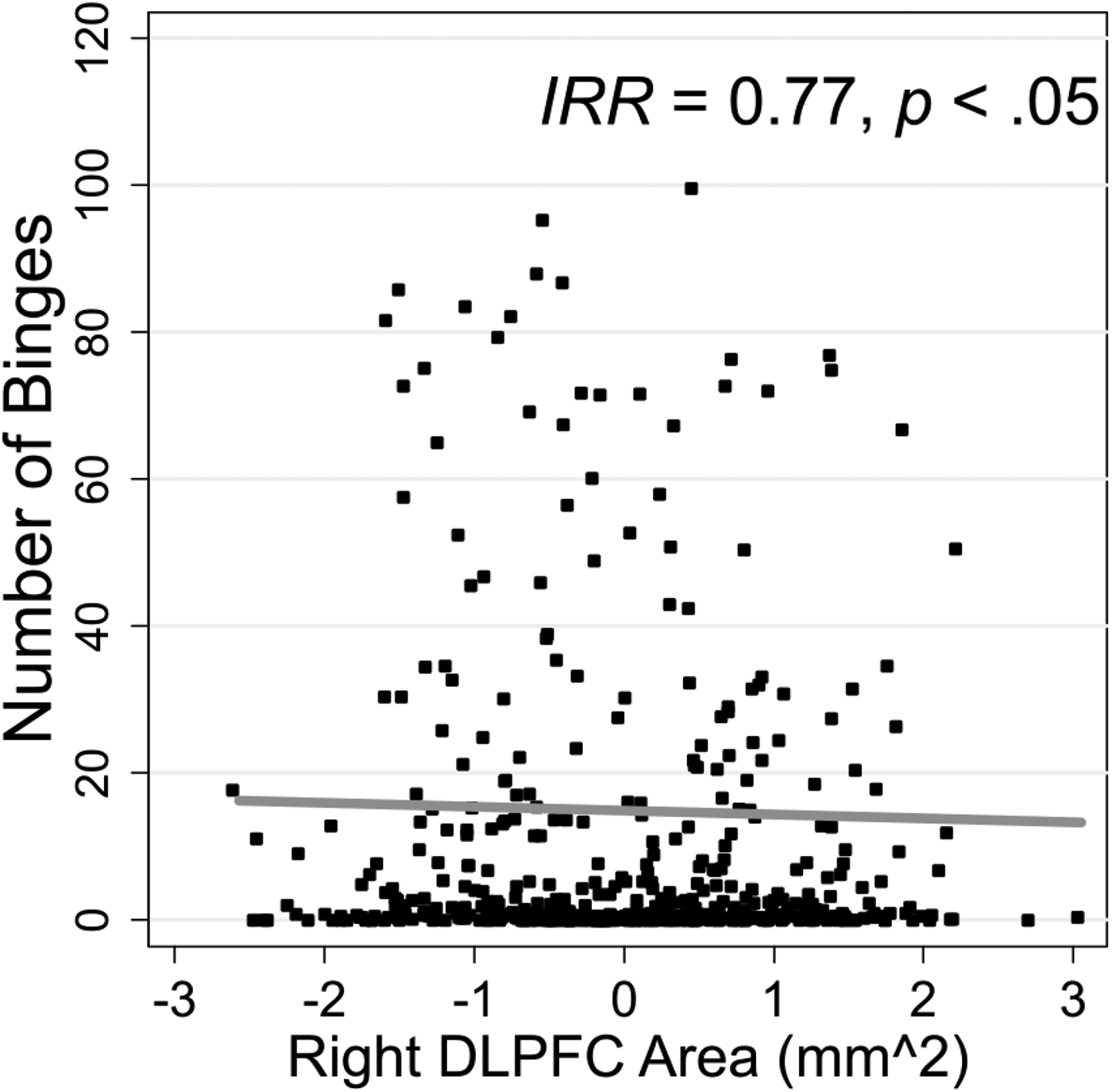
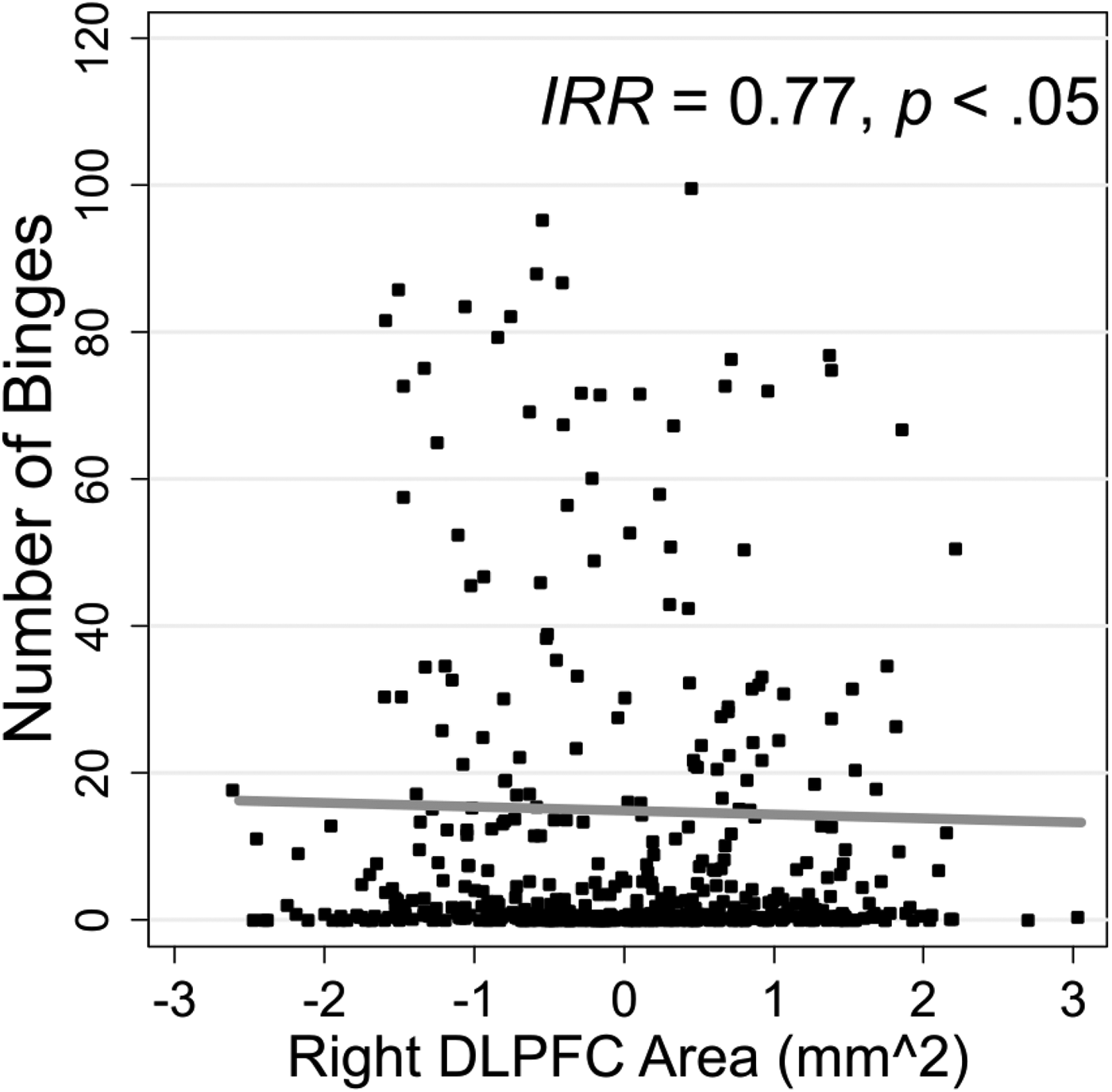
The surface area of the right DLPFC significantly predicted the number of subsequent binge drinking occasions, with smaller surface areas associated with more binge drinking, IRR = 0.77 (0.10), z = –2.0, p < .05 (Figure 2). Further, older age, IRR = 86.1 (40.9), z = 9.4, p < .001, and FH+ status, IRR = 3.3 (1.2), z = 3.3, p < .001, also significantly predicted more binge drinking occasions, while sex was not a significant predictor. No other ROI significantly predicted binge drinking. When internalizing symptoms and externalizing symptoms were added as predictors, neither significantly predicted future binge drinking.
Scatterplot of right dorsolateral prefrontal cortex surface area (z scores) with binge drinking occasions per year reported in the subsequent assessment (Future Binges). For visual presentation, data are censored to present endorsement of ≤100 binges in the past year (96% of observations). All observations were included in the analysis. Data represent adjusted values estimated from multilevel models. IRR, Incident rate ratio.
Prospective prediction of externalizing symptoms
The thickness of the left IFG significantly predicted subsequent externalizing symptoms, with a thinner cortex in this region associated with more symptoms, b = –0.89 (0.44), z = –2.0, p < .05 (Figure 3). Older age, b = 0.41 (0.17), z = 2.4, p < .05, and FH+, b = 2.5 (1.2), z = 2.1, p < .05, significantly predicted more subsequent externalizing symptoms. The surface area of the left hemisphere of the anterior cingulate cortex was marginally related to future externalizing symptoms, but here, larger surface areas predicted more externalizing symptoms, b = 0.81 (0.43), z = 1.9, p = .06. Older age, b = 0.41 (0.17), z = 2.4, p < .05, and FH+, b = 2.5 (1.2), z = 2.1, p < .05, predicted more future externalizing symptoms. No other ROI significantly predicted externalizing symptoms. Neither internalizing nor past-year binges predicted future externalizing symptoms when added to the model.
Scatterplot of left inferior frontal gyrus (IFG) thickness (z scores) and externalizing T scores. IFG thickness significantly predicts future externalizing symptoms with thinner IFG related to more externalizing. Data represent adjusted values estimated from multilevel models.

Prospective prediction of internalizing symptoms
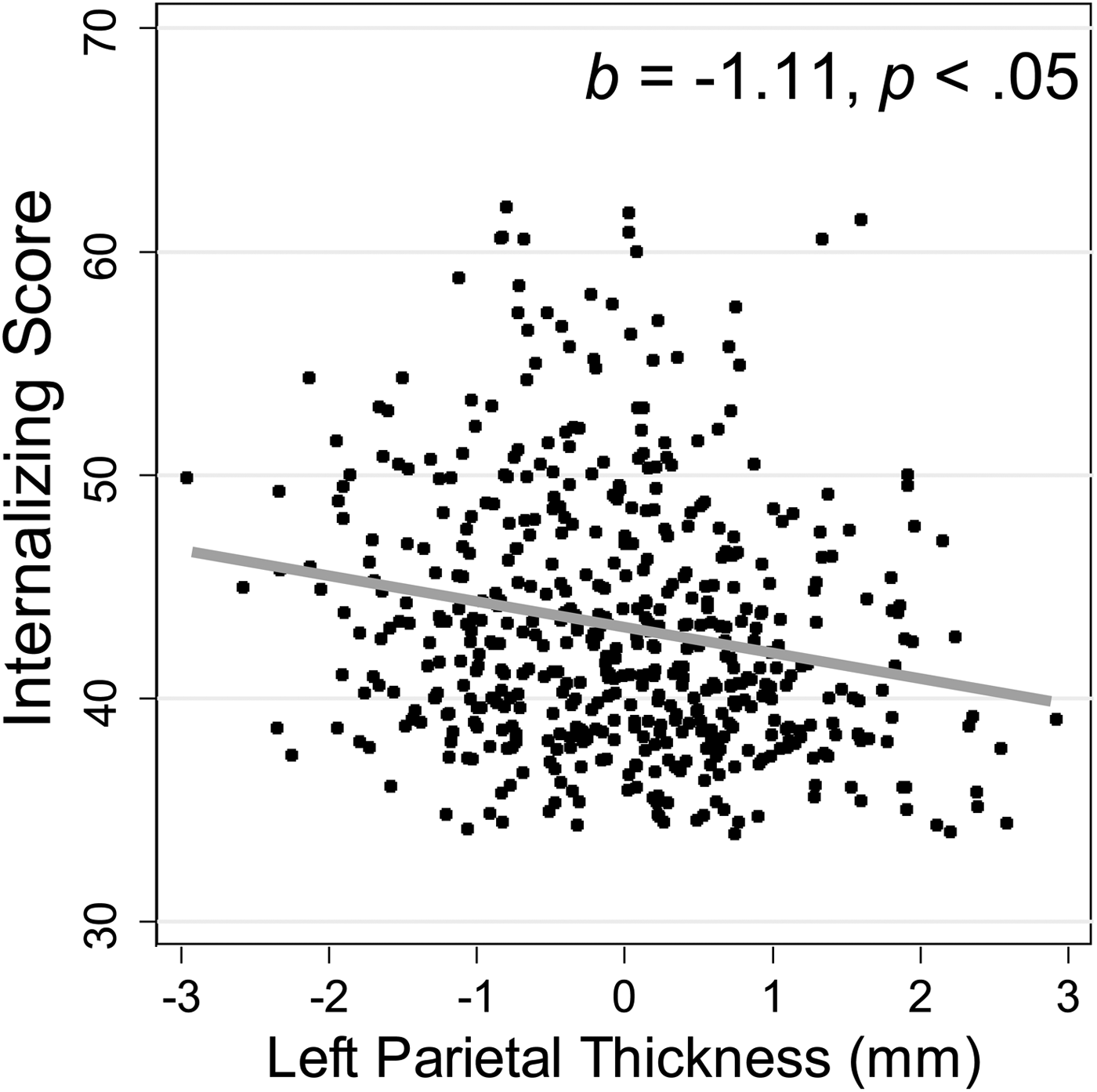
Thickness in the left parietal cortex significantly predicted internalizing symptoms, such that thinner cortices were associated with more subsequent internalizing symptom endorsement, b = –1.11 (0.49), z = –2.3, p < .05 (Figure 4). Neither age nor FH+ predicted internalizing symptoms in this model. No other ROIs predicted internalizing symptoms, and neither past-year binges nor externalizing predicted future internalizing symptoms
Scatterplot of left parietal cortex thickness (z scores) and internalizing T scores. Thicker left parietal cortex is associated with fewer internalizing symptoms. Data represent adjusted values estimated from multilevel models.

Discussion
In this prospective model using MRI measures of brain structures to predict alcohol use and externalizing and internalizing problems, several of the targeted brain regions exhibited significant relationships to subsequent outcomes. Thinner and smaller prefrontal regions (DLPFC and IFG) were predictive of more alcohol use and externalizing, while the thinner parietal cortex was predictive of more internalizing. This study provides evidence of the predictive value of brain regions crucial to functional brain networks involved in behavioral and affective regulation. The large longitudinal sample of the current study provided sufficient power to detect differences based on brain-based measures even after controlling for age and genetic predisposition for drinking and externalizing (i.e., family history of alcohol use disorders), both of which significantly predicted binge drinking and externalizing disorder symptoms.
We included brain regions previously identified as key structures in functional networks that have been shown to be involved in behavior and affective control, including the orbitofrontal cortex–amygdala network (Albaugh et al., Reference Albaugh, Ducharme, Collins, Botteron, Althoff and Evans2013; Ameis et al., Reference Ameis, Ducharme, Albaugh, Hudziak, Botteron and Lepage2014), the anterior cingulate–frontoinsular network (Seeley et al., Reference Seeley, Menon, Schatzberg, Keller, Glover and Kenna2007; Zielinski et al., Reference Zielinski, Gennatas, Zhou and Seeley2010), and the dorsolateral frontoparietal network (Walhovd et al., Reference Walhovd, Tamnes, Bjørnerud, Due-Tønnessen, Holland and Dale2014; Zanto & Gazzaley, Reference Zanto and Gazzaley2013). The majority of our findings centered on the brain regions associated with the executive control network that is associated with top-down cognitive control (Hampshire, Chamberlain, Monti, Duncan, & Owen, Reference Hampshire, Chamberlain, Monti, Duncan and Owen2010; Lee & D'Esposito, Reference Lee and D'Esposito2012; Zanto & Gazzaley, Reference Zanto and Gazzaley2013), and in these areas, thinner or smaller cortical structures were associated with greater risk for subsequent alcohol use and psychopathology symptoms. While there is a natural thinning of cortices during adolescence and into adulthood (Lenroot & Giedd, Reference Lenroot and Giedd2006; Pfefferbaum et al., Reference Pfefferbaum, Mathalon, Sullivan, Rawles, Zipursky and Lim1994, Reference Pfefferbaum, Rohlfing, Rosenbloom, Chu, Colrain and Sullivan2013), it is possible that exhibiting an earlier or steeper decline in cortical thickness is a marker for increased risk. Cortical surface area also exhibits a decrease over adolescence and young adulthood (Raznahan et al., Reference Raznahan, Shaw, Lalonde, Stockman, Wallace and Greenstein2011), though the influences on decreases in surface area are likely different from those of cortical thickness (Panizzon et al., Reference Panizzon, Fennema-Notestine, Eyler, Jernigan, Prom-Wormley and Neale2009). Thus, examining both structural morphometric indices, as in the current study, could provide additional insight into the dynamic changes in brain structure and function that lead to increased vulnerability.
While the outcomes of externalizing and internalizing disorders appear distinct on the behavioral level, it is likely that there are shared underlying vulnerabilities. In the current study, internalizing and externalizing symptoms were strongly correlated (r = .58), and genetic risk for alcohol use problems (FH+) was associated with higher endorsement of both symptom clusters. However, these associations are present in a largely nonclinical sample in which the majority of participants endorsed symptoms in the normal range, and effects may be more robust in clinical samples (e.g., Farmer et al., Reference Farmer, Gau, Seeley, Kosty, Sher and Lewinsohn2016), because it is quite likely that some of the shared variance is associated with common susceptibilities. For example, functional brain networks associated with salience and emotion processing have been shown to be dysregulated in samples with major depressive disorder (Kaiser, Andrews-Hanna, Wager, & Pizzagalli, Reference Kaiser, Andrews-Hanna, Wager and Pizzagalli2015) as well as in samples with externalizing disorders (Ameis et al., Reference Ameis, Ducharme, Albaugh, Hudziak, Botteron and Lepage2014) and in substance using samples (Heitzeg et al., Reference Heitzeg, Nigg, Hardee, Soules, Steinberg and Zubieta2014). In addition, the inferior frontal gyrus, which is made up of the pars triangularis, pars opercularis, and pars orbitalis, has been associated with inhibitory control functioning broadly (Ridderinkhof, van den Wildenberg, Segalowitz, & Carter, Reference Ridderinkhof, van den Wildenberg, Segalowitz and Carter2004), and specifically in samples with substance use and externalizing psychopathology (Chambers, Garavan, & Bellgrove, Reference Chambers, Garavan and Bellgrove2009; Tabibnia et al., Reference Tabibnia, Monterosso, Baicy, Aron, Poldrack and Chakrapani2011). The current study lends further support to the hypothesis that brain structures critical to functional networks convey risk across a range of outcomes associated with poorer cognitive control.
This study provides a number of advantages including a large, longitudinal sample with a baseline assessment prior to the initiation of substance use, a wide range of outcomes representing a normally developing sample, as well as a well-informed theoretical model based on a large body of research on functional brain networks. Limitations include that the outcomes of interest were spaced over time and development, and the period of prospective prediction was not consistent across participants. That is, in some cases the outcome was only 1 year removed from the MRI while in other cases it was 5 years removed. While this is more naturalistic and allowed us to utilize a larger number of data points, rather than choosing only those that fell within a small time window, it is possible that the variation in prospective time prediction was not fully accounted for by controlling for age in models. In addition, we chose brain regions associated with particular functional networks, but because our study examines only structural MRI data, we cannot specifically address how differences in brain structure specifically affect functioning of these networks. Finally, our sample included internalizing and externalizing scores primarily in the normal range. While this is potentially useful for considerations of adolescent risk for alcohol use, it is possible that the current sample was underpowered to consider comorbidity in the clinical sense (Farmer et al., Reference Farmer, Gau, Seeley, Kosty, Sher and Lewinsohn2016). Future studies should continue to build on these data and take a systematic approach to addressing both structure and function within the same longitudinal samples and with a greater range of symptom severity (Casey, Reference Casey2015).
In summary, the present study suggests that brain structures undergoing substantial changes during adolescence may be prospective markers of risk for the development of substance use and externalizing and internalizing disorders symptoms. The current data indicate that these brain predictors convey risk in addition to known risk factors, such as the genetic load carried by a family history of alcohol use disorders. Thinner cortices and smaller cortical surfaces in prefrontal regions, after accounting for age and sex differences, were associated with greater binge drinking and externalizing disorder symptoms, and thinner parietal cortices were associated with more internalizing disorder symptoms. Continued research in this domain will help disentangle such premorbid predictors of risk from changes in brain structure and function that follow alcohol and substance use onset.