Introduction
Autism spectrum disorder (ASD) is a clinically heterogeneous collection of neurologic diseases characterized by deficits in social and communication interactions, understanding, the presence of stereotyped or repetitive behaviors, restricted interests, and immune dysregulation. ASD can be diagnosed before the third year of childhood (Ramsey et al., Reference Ramsey, Guest, Broek, Glennon, Rommelse, Franke and Bahn2013). ASD risk is likely to be multifactorial, with many different genetic variants and environmental factors contributing to liability, and still other sex-differential genetic and hormonal factors acting to potentiate risk to males and/or attenuate risk to females (Werling & Geschwind, Reference Werling and Geschwind2013). Many factors were shown to play an important role in the pathophysiology of ASD including mitochondrial dysfunction, abnormality in fatty acid metabolism, exposure to environmental factors during pregnancy (such as heavy metals, alcohol, pesticides, air pollution, valproic acid, vitamin B deficiency ), and maternal diseases (Fujiwara, Morisaki, Honda, Sampei, & Tani, Reference Fujiwara, Morisaki, Honda, Sampei and Tani2016; Gentile et al., Reference Gentile, Zappulo, Riccio, Binda, Bubba, Pellegrinelli and Bravaccio2017).
It has been suggested that gaze to the mouth in particular may be useful in predicting individual differences in language development (Young, Merin, Rogers, & Ozonoff, Reference Young, Merin, Rogers and Ozonoff2009). ASD can also be diagnosed by some techniques including eye-tracking, electro encephalography (EEG), and magnetic resonance imaging (MRI) (Gurau, Bosl, & Newton, Reference Gurau, Bosl and Newton2017). ASD has several criteria including autism, fragile X syndrome (FXS), Asperger syndrome (AS), Rett syndrome (RTT), Timoty syndrome (TS), Praderwilli, and Angelman syndromes (Ornoy, Weinstein-Fudim, & Ergaz, Reference Ornoy, Weinstein-Fudim and Ergaz2016).
Many genes have been shown to play important roles in synaptic function and brain development. Genes including chromodomain helicase DNA binding protein 8 (CHD8), dual specificity tyrosine phosphorylation regulated kinase 1A (DYRK1A), contactin-associated protein-like 2 (CNTNAP2), monoamine oxidases, oxytocin receptor gene, and matrix metalloproteinase-9 (MMP-9) were shown to be associated with ASD (Wen, Binder, Ethell, & Razak, Reference Wen, Binder, Ethell and Razak2018).
Metalloproteinases were shown to play role in the regulation of neurogenesis, axon guidance, and synaptogenesis as well as in neurodegeneration (Saftig & Bovolenta, Reference Saftig and Bovolenta2015). MMPs play a crucial role not only in the normal development of the central nervous system (CNS) but also in a number of key pathologic processes including inflammation and cancer. MMPs can contribute to the etiopathology of ASD through several pathways. MMPs can modulate neuroplasticity and neurogenesis and contribute to a hyperplasticity state associated with ASD (Abdallah & Michel, Reference Abdallah and Michel2013). The MMP-9 gene, also called Gelatinase B, is one of the MMP superfamily which is zinc-dependent endopeptidases and is expressed in astrocytes, glia, and microglia (Xu et al., Reference Xu, Wang, Zhi, Qi, Zhang and Li2017). The localization of MMP-9 has been shown within the hippocampus, cerebellum, and cerebral cortex (Bronisz & Kurkowska-Jastrzębska, Reference Bronisz and Kurkowska-Jastrzębska2016). MMP-9 is an enzyme that plays a critical role in synaptic plasticity and brain development (Stawarski, Stefaniuk, & Wlodarczyk, Reference Stawarski, Stefaniuk and Wlodarczyk2014). MMP-9 contains 12 introns and 13 exons (Niu, Li, Xiong, & Wang, Reference Niu, Li, Xiong and Wang2013) and in human MMP-9 comprises 7,654 bases and is located on chromosome 20 (20q11.2-q13.1) (Farina & Mackay, Reference Farina and Mackay2014). According to its structure, MMP-9 has many substrates including cell surface receptors, gelatin, growth factors precursors, adhesion molecule, procollagen type II, tissue inhibitors of metalloproteinases (TIMPs) specially TIMP-1, and laminin, which is capable of connecting with them (Bronisz & Kurkowska-Jastrzębska, Reference Bronisz and Kurkowska-Jastrzębska2016).
MMP-9 has many physiological functions including tissue remodeling, cell migration, cell–cell contact, cellular differentiation, axon regeneration, and myelination and also plays a central role such as synaptic plasticity, learning and memory, adult brain neurogenesis, postnatal development, and cortical plasticity (Reinhard, Razak, & Ethell, Reference Reinhard, Razak and Ethell2015). Deficits in MMP-9 function were demonstrated to play an important role in multiple sclerosis, stroke, Parkinson's disease, Huntington's disease, Down syndrome, and ASD (Vafadari, Salamian, & Kaczmarek, Reference Vafadari, Salamian and Kaczmarek2016). Increased serum MMP-9 levels were shown to be correlated with some neurological disorders such as multiple sclerosis, acute ischemic stroke (IS), amyotrophic lateral sclerosis (ALS), migraine without aura, and epilepsy (Romi, Helgeland, & Gilhus, Reference Romi, Helgeland and Gilhus2012).
Genetic polymorphism plays a key role in the susceptibility to a disease (Abdallah & Michel, Reference Abdallah and Michel2013). As MMP-9 was shown to be important in synaptic plasticity and pathogenesis of ASD, and one of the most important polymorphisms identified within the promoter of the MMP9-1562C/T gene is rs3918242, which may regulate the MMP-9 expression, we aimed to study the relationship of MMP-9 gene polymorphism and its serum concentration with ASD in Iranian population.
Method
Samples
One hundred ASD patients (8 ± 3.8 years) and 120 control subjects (6.3. ± 3.7 years) were enrolled in this study. Controls were also evaluated to rule out neurological disorders. The parents of both patients and controls signed the informed consent form. The study was approved by the University of Guilan Ethics Committee and has been carried out in accordance with the Code of Ethics of the World Medical Association (Declaration of Helsinki).
The diagnosis of autism was made according to the fifth edition of Diagnostic and Statistical Manual of Mental Disorders (DSM-5) criteria for ASD patients (Frazier et al., Reference Frazier, Youngstrom, Speer, Embacher, Law, Constantino and Eng2012). Parents of children visiting the Iran clinic, Iran, for a routine checkup and who were without a history or diagnosis of ASD were also asked whether their children could participate and donate blood for the study. These subjects were considered healthy controls. The parents of both patients and controls signed the informed consent form. Controls were investigated to determine whether they or their first-degree relatives had psychiatric disturbances or previous psychiatric treatment through personal interviews. Only unaffected subjects with no psychiatric disorder or family history were regarded as controls.
Genotyping
Peripheral blood samples (2 ml) were collected in ethylenediaminetetraacetic acid (EDTA) contained venojects and genomic DNA was extracted using the Triton X100 extraction method and was stored at −70 °C for genotyping. Polymerase chain reaction (PCR) was performed to amplify a 500 bp fragment containing the target single nucleotide polymorphism (SNP) using specific primers. Primers used were designed by means of Oligo primer analysis software. The following primers were used to amplify a 500-bp fragment containing the loci: forward (F) primer: 5′-TAGGCCCTTTAAATACAGCTT-3′; reverse (R) primer: 5′-TCTCCAGCCCCAATTATCACA-3′. In each reaction 20 μl containing (10 μl of Master mix, 1 μl of F primer, 1 μl of R primer, 4 μl of deionized H2O and at the end 4 μl of template) was added to each reaction.
The PCR conditions were as follows: initial denaturation at 94 °C for 5 min, denaturation at 94 °C for 45 s, annealing at 56 °C for 45 s, extension at 72 °C for 45 s, and the final extension was done at 72 °C for5 min. Finally the PCR products were separated on 2% agarose gel and stained with safe stain and visualized under UV light. Restriction enzyme digestion was carried out using SphI which cuts the wild-type sequence into 500-bp fragment. Digestion was carried out using1 μl of buffer; 2.8 μl deionized water, 0.2 unit SphI enzyme and added to 4 μl of PCR product, incubated at 37 °C for at least 4 h. Digested products were visualized after electrophoresis on a 2% agarose gel with safe stain. At least 10% of samples were randomly selected for repeat analysis, yielding 100% concordance.
MMP-9 serum concentration using enzyme-linked immunosorbent assay (ELISA)
Human MMP9 ELISA Kit (cat no. ab246539) (Abcam, Cambridge, UK) was used for measurement of MMP-9 serum concentration according to the manufacturer's instructions. It is based on measuring a fluorescent product of B-galactosidase, the quantity of which is equivalent to the amount of MMP-9 and therefore the amount of antibody bound to it. In brief, microtiter plates were first coated with 50 ng primary anti-MMP-9 antibody per well in 0.2 M Tris buffer. After overnight incubation, the plates were blocked with enzyme immunoassay (EIA) buffer (50 mM Tris, pH 7.5, 0.2 M NaCl, 0.1% Triton X-100, 1% bovine serum albumin (BSA), and 1% gelatin). The samples and standards were placed in triplicate wells and incubated overnight at room temperature. After washing, a mouse anti-MMP9 biotinylated antibody (8 ng/ml) was added to each well and incubated for overnight at room temperature. β-Galactosidase coupled to Avidin was then added and washed with water after two hours. Finally 200 μMol 4-methylumbelliferyl-β-D-galactoside (Sigma, Poole, UK) in 40 mM sodium phosphate and 10 mM MgCl2 buffer were added and the amount of fluorescence was measured after 30 min incubation at 37 °C using a fluorimeter (Dynatech).
Statistical analysis
Statistical analysis was done using χ² by Med Calc ver. 12.1.4 Software (Mariakerke, Belgium) in order to predict the association or absence of association between polymorphism rs3918242 of MMP-9 gene and the risk of ASD in children. Odds ratios were calculated together with their 95% confidence intervals (CI). Data were analyzed by chi square test, analysis of variance (ANOVA), and by calculating odds ratio (OR) and 95% CI. A P value of less than 0.05 was considered statistically significant.
Results
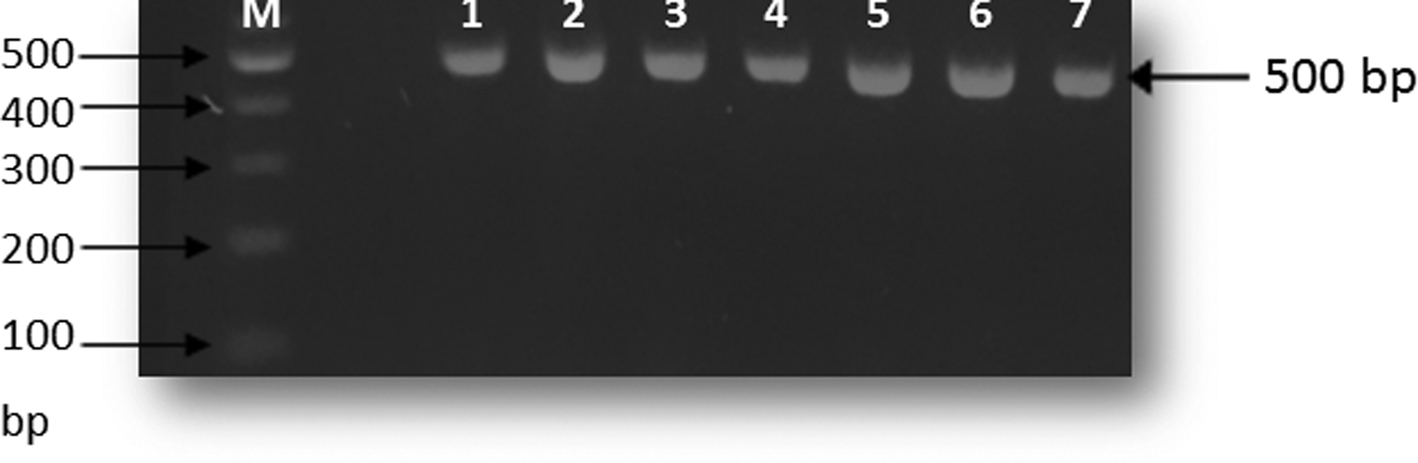
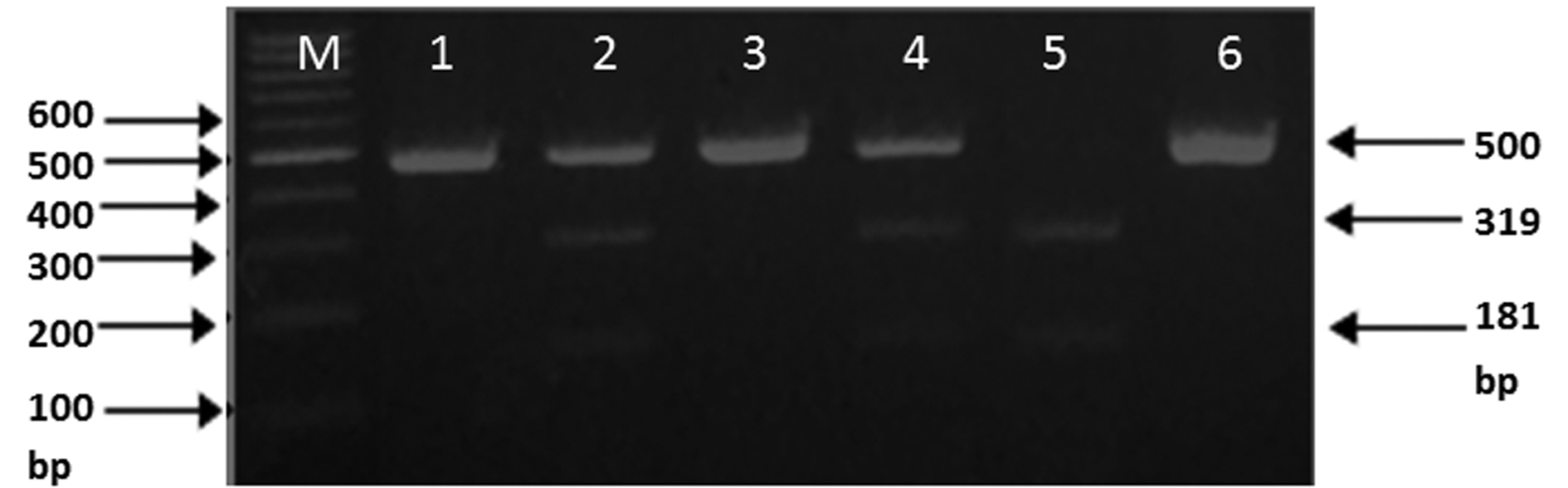
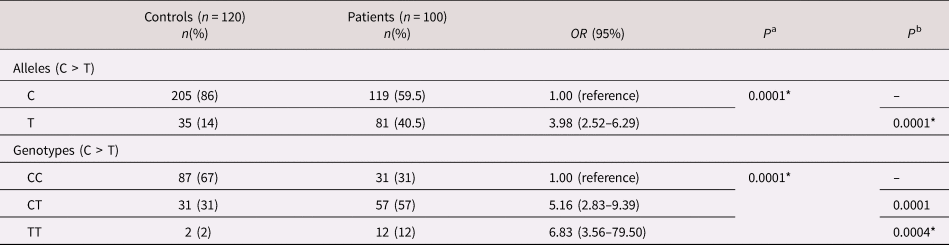
In this study, we analyzed 100 patients with ASD and 120 normal subjects without a specific disease. Based on the results of the undigested PCR for MMP-9 rs3918242, the product size was 500 bp (Figure 1). The undigested PCR product size was 500 bp for MMP-9 rs3918242 in patients and healthy individuals without mutation (genotype C/C), and for the C/T genotype PCR products have three bands including 500 bp and 319 bp and 181 bp. Moreover for the TT genotype there were two bands that were 319 bp and 181 bp (Figure 2). The allele and genotype frequencies of the MMP-9 rs3918242 polymorphism were analyzed in controls and ASD patients. All information about allele and genotype frequencies and associated ORs (95% CI) for ASD and the control groups is presented in Table 1.
Agarose gel electrophoresis stained by safe stain after polymerase chain reaction (PCR) amplification of matrix metalloproteinase-9 (MMP-9) rs3918242. “M” represents marker. The size of PCR product was 500 bp.

Agarose gel electrophoresis of the matrix metalloproteinase-9 (MMP-9) gene polymerase chain reaction restriction fragment length polymorphism (PCR-RFLP) amplification products. CC homozygote had a single band (1, 3, 6) of 500 bp. TC heterozygote had three bands of 500, 319, and 181 bp (2, 4) and TT homozygote had a two fragment of 319 and 181 bp (5).

Allele and genotype frequencies of rs3918242 polymorphism among autism spectrum disorder (ASD) patients and healthy controls

* – significant at 5% level of significance (P < .05); P a = p value for χ2 test, P b = p value for crude OR and 95% CI. Abbreviations: OR, odds ratio; CI, confidence interval; n, number of subjects (case, control).
Statistical analysis showed that the frequencies of the C/C, C/T, and T/T genotypes of MMP-9 rs3918242C/T in patients were 31%, 57%, and 12%, and in the controls were 72%, 26%, and 2%, respectively. Statistical analysis showed that there is a significant relationship in genotype frequency between ASD and the controls (P = .0004; OR = 16.83, 95% CI = 3.56–79.50). Furthermore, the frequencies of C and T allele were 59.5%, 40.5% in ASD patients and in controls were 86% and 14%, respectively (P = .0001). The results showed that there is a significant difference in allele frequencies between the two groups. Moreover the T allele was shown to be associated with the increased risk of autism (OR = 3.98, CI = 2.52–6.29).
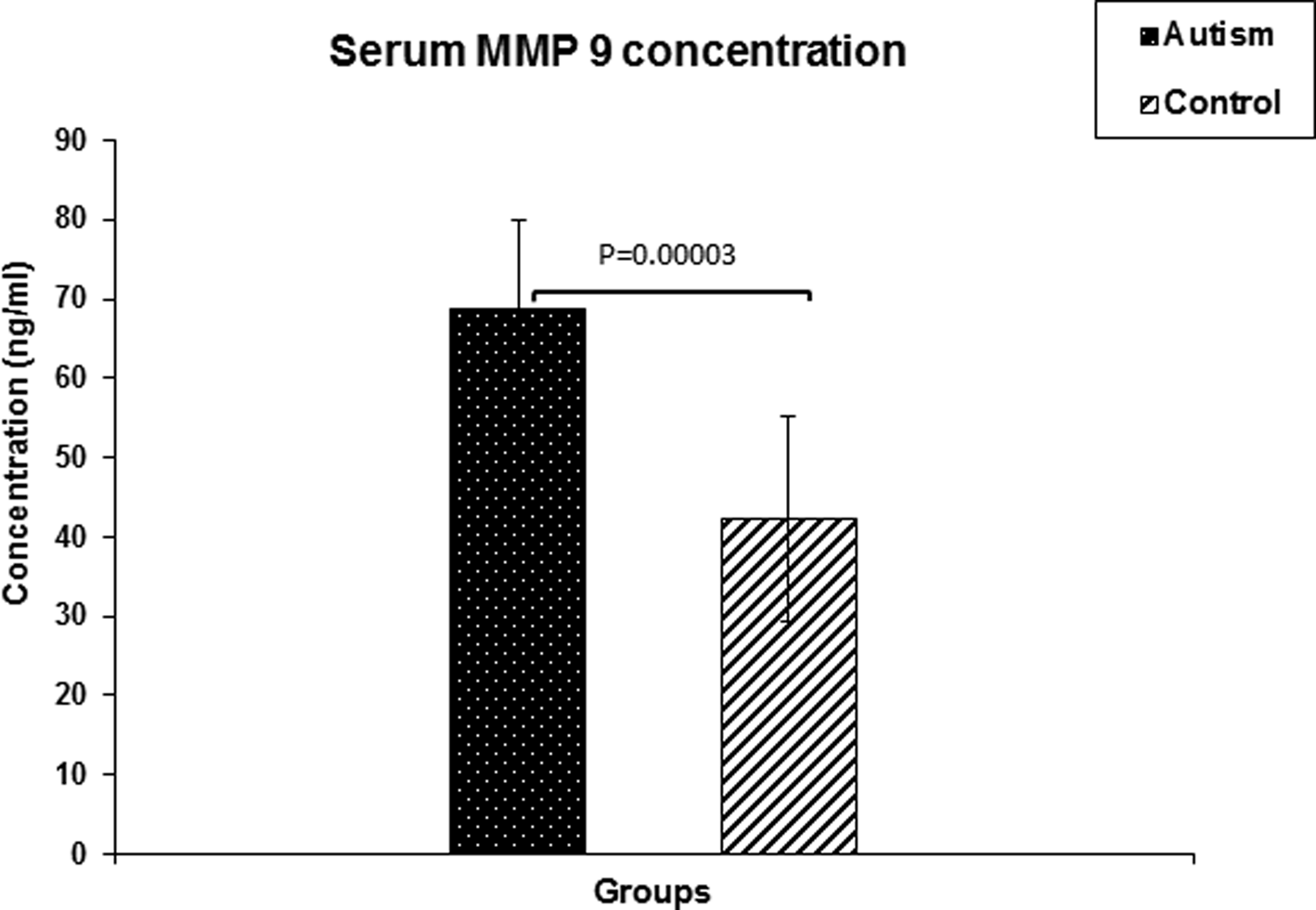
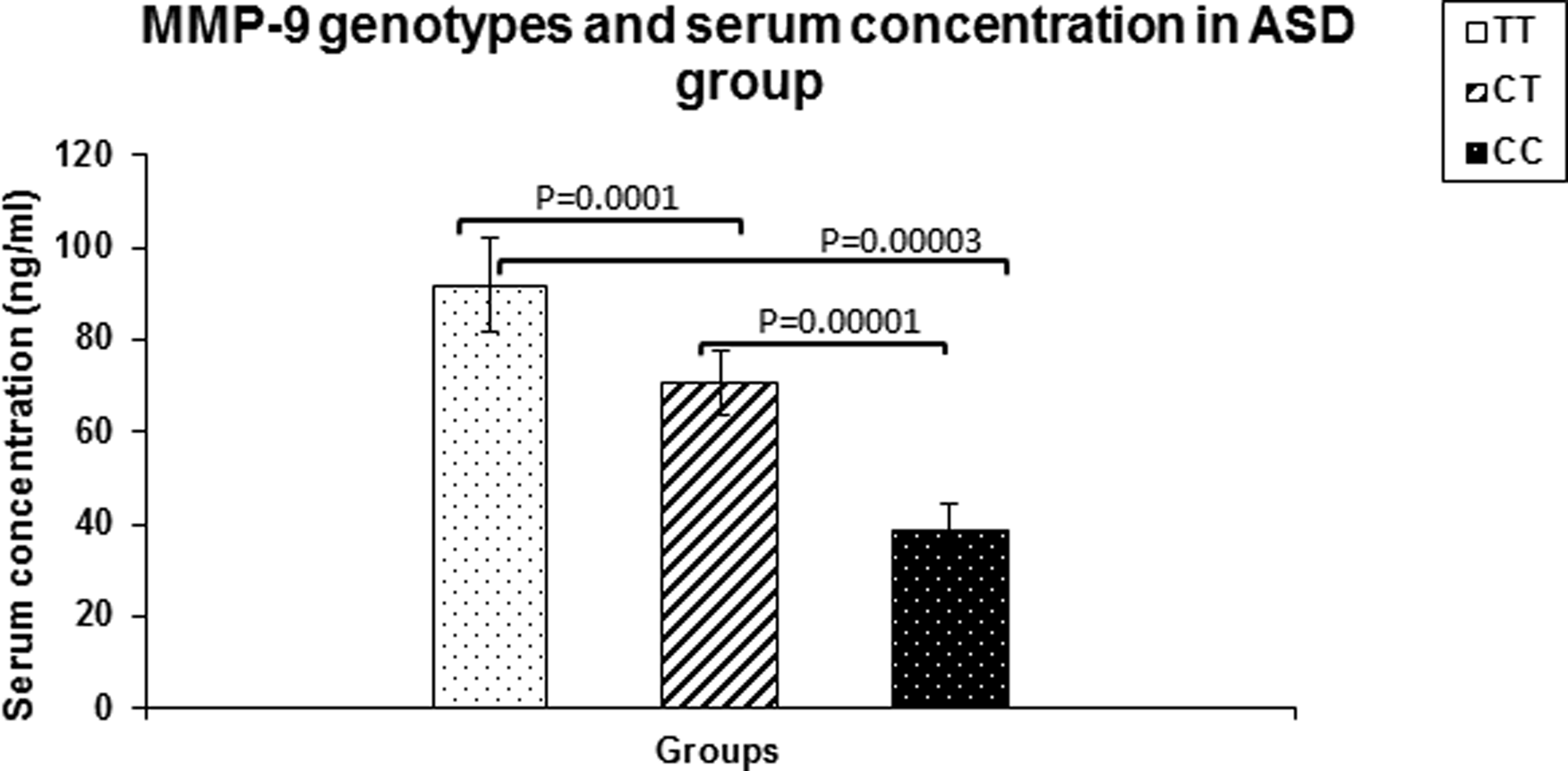
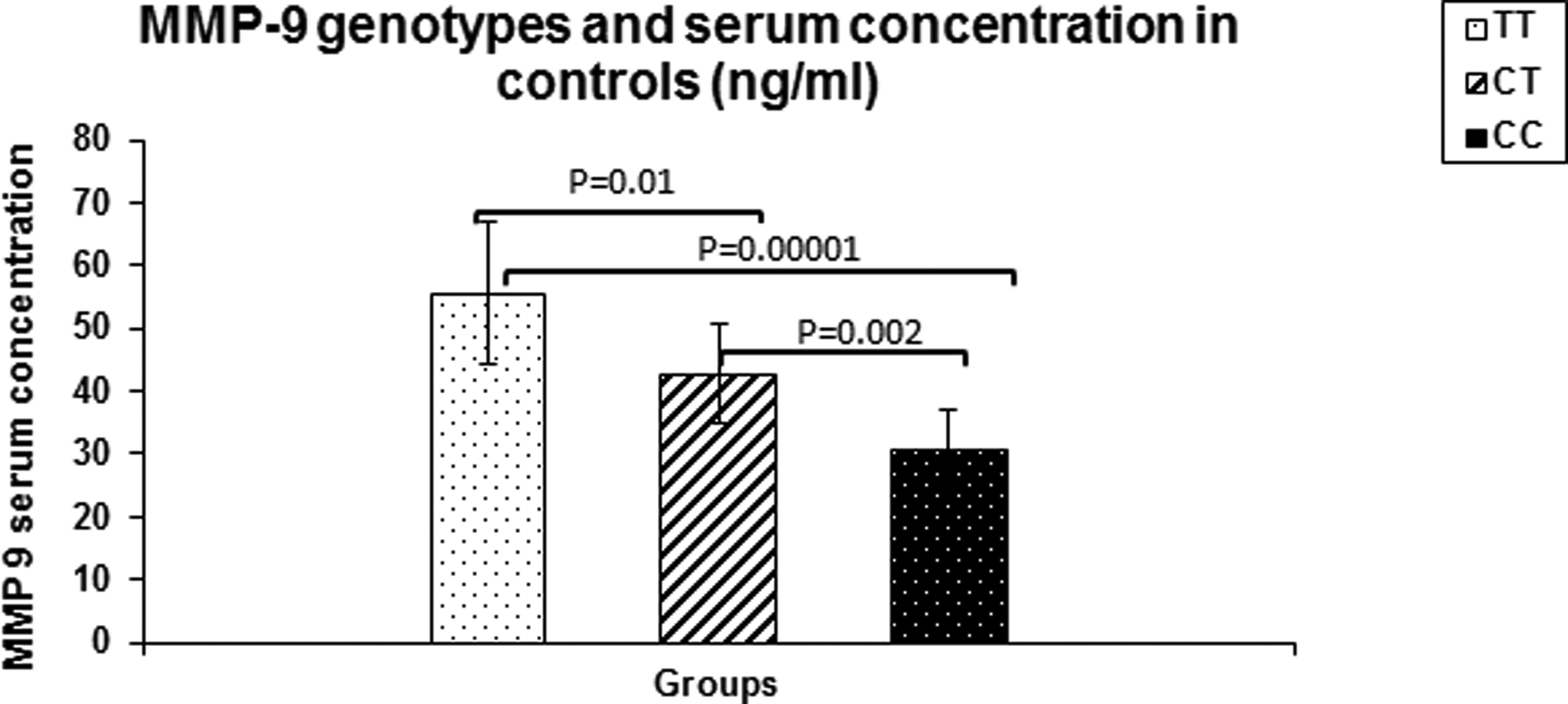
We have also analyzed MMP-9 serum concentration by ELISA. The mean ± SEM (standard error of the mean) for MMP-9 serum concentration in normal subjects was 42.37 ± 12.92 ng/ml and in ASD was 68.83 ± 11.13 ng/ml (P = .001) (Figure 3). We have also shown that the TT genotype is significantly associated with increased serum MMP-9 expression levels in ASD patients (TT, CT, and CC serum levels were 91.77 ± 10.53, 70.66 ± 7.21, and 38.66 ± 5.52 ng/ml, respectively) (Figure 4) and in the control group the serum concentrations of MMP-9 in the TT, CT, and CC carriers were 55.55 ± 11.39, 42.66 ± 7.85, and 30.55 ± 6.34 ng/ml, respectively (Figure 5).
Matrix metalloproteinase-9 (MMP-9) serum level in the controls and patients with autism spectrum disorder (ASD) (ng/ml). Significant increase in serum MMP-9 level has been seen in the patient's samples as compared with control group (P < .001).

Association of matrix metalloproteinase-9 (MMP-9) serum concentration and genotypes in autism spectrum disorder (ASD) patients. TT genotype is associated with increased MMP9 expression in ASD (TT, CT, and CC serum levels were 91.77 ± 10.53, 70.66 ± 7.21, and 38.66 ± 5.52 ng/ml, respectively).

Association of matrix metalloproteinase-9 (MMP-9) serum concentration and genotypes in controls. TT genotype is associated with increased MMP9 expression in controls (TT, CT, and CC serum levels were 55.55 ± 11.39, 42.66 ± 7.85, and 30.55 ± 6.34 ng/ml, respectively).

Discussion
In this study we investigated the association of MMP-9 serum levels and its genetic polymorphism rs3918242 (-1562C/T) in patients with ASD. We showed that there is a significant difference in genotype frequency and serum concentration of MMP-9 in ASD patients when compared with normal controls. We have also showed that the T allele may be associated with the risk of ASD. Our results showed that the TT genotype is associated with increased MMP-9 expression and may play as risk factor for ASD.
The association of many genes including SHANK3, methionine synthase (rs1805087), Contactin associated-like 2 (CNTNAP2), Neuropilin-2, MTHFR, and 5-HTTLPR gene polymorphism has been demonstrated (Zare, Mashayekhi, & Bidabadi, Reference Zare, Mashayekhi and Bidabadi2017; Hosseinpour, Mashayekhi, Bidabadi, & Salehi, Reference Hosseinpour, Mashayekhi, Bidabadi and Salehi2017; Delshadpour, Mashayekhi, Bidabadi, Shahangian, & Salehi, Reference Delshadpour, Mashayekhi, Bidabadi, Shahangian and Salehi2017; Haghiri, Mashayekhi, Bidabadi, & Salehi, Reference Haghiri, Mashayekhi, Bidabadi and Salehi2016; Laplante et al., Reference Laplante, Simcock, Cao-Lei, Mouallem, Elgbeili, Brunet and King2019). MMP-9 known as gelatinase B plays an important role in the plasticity and development of the nervous system and is expressed in both the peripheral nervous system and CNS. Studies showed that MMP-9 plays a key role in the progression of neurologic disorders such as neuro-inflammation, epilepsy, fragile X syndrome, schizophrenia, bipolar disorder, autoimmune disorders, and ASD (Reinhard et al., Reference Reinhard, Razak and Ethell2015; Lepeta & Kaczmarek, Reference Lepeta and Kaczmarek2015). MMP-9 has been shown to be one of the most abundant MMPs in the brain (Ethell & Ethell, Reference Ethell and Ethell2007). Up-regulation of MMP-9 has been observed during brain damage (Young et al., Reference Young, Merin, Rogers and Ozonoff2009), and it has the ability to disrupt the blood–brain barrier (BBB) (Rosenberg & Yang, Reference Rosenberg and Yang2007). Altered BBB integrity and function has been seen in ASD. Moreover, the elevated MMP-9 expression in ASD patients supports the hypothesis of an impaired BBB, probably related to neuroinflammation (Fiorentino et al., Reference Fiorentino, Sapone, Senger, Camhi, Kadzielski, Buie and Fasano2016). A number of studies showed that MMP-9 induces BBB disruption and this is a key step in the development of inflammatory diseases of the nervous system (Kandagaddala, Kang, Chung, Patterson, & Kwon, Reference Kandagaddala, Kang, Chung, Patterson and Kwon2012; Chiu & Lai, Reference Chiu and Lai2014), as it would leave the CNS more susceptible to harmful molecules from the systemic circulation that may play a direct role in the pathogenesis of ASD.
Some evidence showed that there is an association between MMP-9 gene rs3918242 and neurological disorders such as Parkinson's disease, amyotrophic lateral sclerosis, bipolar disorder, and schizophrenia (Vafadari et al., Reference Vafadari, Salamian and Kaczmarek2016). It was also reported that there is an association between the T allele in the -1562 C/T polymorphism of the MMP-9 gene and the risk of some neurologica disorders including multiple sclerosis and IS (Valado et al., Reference Valado, Leitão, Martinho, Pascoal, Cerqueira, Correia and Baldeiras2017; Barkhash et al., Reference Barkhash, Yurchenko, Yudin, Ignatieva, Kozlova, Borishchuk and Romaschenko2018). MMP-9 activities elevate in the plasma and brains of stroke patients and are identified as mediators of tight junction disruption associating with brain edema and hemorrhagic transformation (del Zoppo et al., Reference del Zoppo, Milner, Mabuchi, Hung, Wang, Berg and Koziol2007; Sandoval & Witt, Reference Sandoval and Witt2008). MMP-9 has the ability to breakdown of the basal lamina (Barr et al., Reference Barr, Latour, Lee, Schaewe, Luby, Chang and Warach2010) and plays a critical role in the CNS via breakdown of the BBB, demyelination, axonal injury, and activation of inflammation via tumor necrosis factor-alpha (TNF-a) and macrophages (Power et al., Reference Power, Henry, Del Bigio, Larsen, Corbett, Imai and Peeling2002). MMP-9 can directly cause programmed neuronal death and brain damage (Rempe, Hartz, & Bauer, Reference Rempe, Hartz and Bauer2016).
Furthermore several studies suggested the possible relationship of other MMP-9 variants and neurological disorders (Buraczynska, Kurzepa, Ksiazek, Buraczynska, & Rejdak, Reference Buraczynska, Kurzepa, Ksiazek, Buraczynska and Rejdak2015). A study on the northeastern population in China showed that the serum level of MMP-9 in cerebrospinal fluid (CSF) was increased in tick-borne encephalitis. It has been suggested that there is a correlation between MMP-9 serum levels and the severity of symptoms in the attention deficit/hyperactivity disorder and hyperkinetic disorder (ADHD/HKD) (Kadziela-Olech, Cichocki, Chwiesko, Konstantynowicz, & Braszko, Reference Kadziela-Olech, Cichocki, Chwiesko, Konstantynowicz and Braszko2015). Increased concentration of MMP-9 in the serum of patients with cognitive impairment, independently of established conventional risk factors in the short-term phase of IS has also been reported (Zhong et al., Reference Zhong, Bu, Xu, Guo, Wang, Zhang and Chen2018).
It was reported that the MMP-9 gene may increase the risk of IS in a Chinese population and may play a role in the IS pathogenesis (Gao et al., Reference Gao, Guo, Luo, Tu, Niu, Yan and Xia2019). MMP-9 polymorphism was demonstrated to play a key role in HIV-associated neurological diseases (HAND) (Singh, Nain, Krishnaraj, Lata, & Dhole, Reference Singh, Nain, Krishnaraj, Lata and Dhole2019). It was shown that MMP-9 rs3918242 variants (T allele, TT, and CT genotypes) play an important role in the risk of IS in the Chinese population (He, Wang, Wang, Deng, & Sun, Reference He, Wang, Wang, Deng and Sun2017).The association of MMP-9 (-1562) C/C genotype with pituitary adenoma (PA) development has been demonstrated (Glebauskiene et al., Reference Glebauskiene, Liutkeviciene, Vilkeviciute, Kriauciuniene, Jakstiene, Zlatkute and Zaliuniene2017). It has been suggested that MMP-9-1562 C/T polymorphisms may not be associated with the susceptibility to adult astrocytoma in the Chinese population (Lu et al., Reference Lu, Cao, Wang, Zhang, Zhang, Wang and Zhang2007).
The results of this study showed that there is significant difference in allele and genotype distribution of MMP-9 rs3918242 (-1562C/T) between the ASD patients and the controls. We have also shown that there is a significant increase in serum concentration of MMP-9 in ASD patients when compared with normal controls.
It is thus concluded that there is a significant association between rs3918242 MMP-9 gene polymorphism and serum levels of MMP-9 with ASD in the studied population. We also suggest that TT genotype is associated with increased serum MMP-9 expression in ASD. It is also concluded that MMP-9 may play a role in pathophysiology of ASD. Larger studies with more patients and controls are needed to confirm the results.
Financial Support
This research received no specific grant from any funding agency, commercial or not-for-profit sectors.
Conflicts of Interest
None.