The impact of adverse experiences early in life has been found to reach into adulthood. Epidemiological studies have shown robust links between exposure to childhood trauma, such as abuse and neglect, and the presence of general mental health problems (e.g., Allen, Reference Allen2008; Anda et al., Reference Anda, Whitfield, Felitti, Chapman, Edwards, Dube and Williamson2002; Chapman et al., Reference Chapman, Whitfield, Felitti, Dube, Edwards and Anda2004; Edwards, Holden, Felitti, & Anda, Reference Edwards, Holden, Felitti and Anda2003; Putnam, Reference Putnam2003). From an intergenerational perspective, studies have been conducted on the impact of adverse childhood experiences (ACEs) on women's adaptation to parenthood. A growing body of literature has evaluated the first year of parenthood as an important period in which new parents are confronted with major challenges, which may trigger positive feelings of well-being and life satisfaction (Cowan & Cowan, Reference Cowan and Cowan2000; Dyrdal & Lucas, Reference Dyrdal and Lucas2013; Nelson, Kushlev, & Lyubomirsky, Reference Nelson, Kushlev and Lyubomirsky2014). The challenges of parenthood may also give rise to stress, leading to deterioration in parents’ cognitive, emotional, and behavioral functioning. Parents with childhood trauma may be especially vulnerable. Childhood trauma was found to predict perinatal mood symptoms (e.g., Alvarez-Segura et al., Reference Alvarez-Segura, Garcia-Esteve, Torres, Plaza, Imaz, Hermida-Barros and Burtchen2014; McDonnell & Valentino, Reference McDonnell and Valentino2016), maladaptive parenting cognitions (e.g., Gibb, Reference Gibb2002), and problematic parenting of own children, including abuse and neglect (e.g., Berlin, Appleyard, & Dodge, Reference Berlin, Appleyard and Dodge2011; Dixon, Browne, & Hamilton-Giachritsis, Reference Dixon, Browne and Hamilton-Giachritsis2005; Egeland, Jacobvitz, & Sroufe, Reference Egeland, Jacobvitz and Sroufe1988). However, questions remain on how effects of childhood adversity on later parental functioning come about (Liu, Reference Liu2017; McLaughlin, Reference McLaughlin2016). Experimental animal studies (Meaney & Szyf, Reference Meaney and Szyf2005; Sanchez, Ladd, & Plotsky, Reference Sanchez, Ladd and Plotsky2001) point to the role of stress reactivity and regulation as a possible mechanism in the transmission of childhood trauma. Human studies, linking stress reactivity to both childhood trauma and mental health outcomes such as depression, also suggest this mechanism (Heim, Newport, Mletzko, Miller, & Hemeroff, Reference Heim, Newport, Mletzko, Miller and Nemeroff2008; Heim, Plotsky, & Nemeroff, Reference Heim, Plotsky and Nemeroff2004), but mediation has not been formally tested. The current study tested reactivity of the autonomic nervous system (ANS) as a potential mediating mechanism to explain the impact of ACEs on the adaptation to parenthood of first-time pregnant women.
Effects of Childhood Adversity on Parental Functioning
Parents with a history of childhood adversity are at risk for developing problematic parenting behavior in relation to their own offspring, including abuse and neglect (Cort, Toth, Cerulli, & Rogosch, Reference Cort, Toth, Cerulli and Rogosch2011; Dixon et al., Reference Dixon, Browne and Hamilton-Giachritsis2005; Egeland et al., Reference Egeland, Jacobvitz and Sroufe1988; Pears & Capaldi, Reference Pears and Capaldi2001), although rates of intergenerational continuity vary (Berlin et al., Reference Berlin, Appleyard and Dodge2011). As hypothesized by Bowlby (Reference Bowlby1973), early experiences with parents and significant other caregivers in early childhood may disrupt emotional and cognitive functioning as a parent. John Bowlby hypothesized that individuals exposed to rejection or neglect by attachment figures are prone to view themselves as incompetent, helpless, and not deserving affection or support, compared to individuals with positive experiences of early nurturing care. Consistent with this, associations were found between experiences of childhood abuse or rejection and depressive symptoms among women in the first year of parenthood (Alvarez-Segura et al., Reference Alvarez-Segura, Garcia-Esteve, Torres, Plaza, Imaz, Hermida-Barros and Burtchen2014; McDonnell & Valentino, Reference McDonnell and Valentino2016; Ross & Dennis, Reference Ross and Dennis2009). Some studies also examined the association between early adversity and anxiety symptoms, suggesting that anxiety symptoms in the postpartum period may be more strongly related to adversity than depressive symptoms (Chorpita & Barlow, Reference Chorpita and Barlow1998; Gartland et al., Reference Gartland, Woolhouse, Giallo, McDonald, Hegarty, Mensah and Brown2016) or related to different types of adversity (Madigan et al., Reference Madigan, Wade, Plamondon, Vaillancourt, Jenkins, Shouldice and Benoit2014).
Childhood trauma has also been found to be associated with parental cognitive functioning (Gibb, Reference Gibb2002), such as negative attributions, lack of self-control, and low self-esteem (Crockenberg & Leerkes, Reference Crockenberg and Leerkes2003). Across the transition to parenthood, childhood trauma was found to be associated with lower parenting self-efficacy (Cole, Woolger, Power, & Smith, Reference Cole, Woolger, Power and Smith1992; Ehrensaft, Knous-Westfall, Cohen, & Chen, Reference Ehrensaft, Knous-Westfall, Cohen and Chen2015), defined as “the expectations caregivers hold about their ability to parent successfully” (Coleman & Karraker, Reference Coleman and Karraker1998; Jones & Prinz, Reference Jones and Prinz2005). Derived from social cognitive theory (Bandura, Reference Bandura1977), parenting self-efficacy has emerged as a useful concept for prevention and intervention programs for parents because of its associations with parenting competence and child developmental outcomes (Schuengel & Oosterman, Reference Schuengel, Oosterman and Bornsteinin press). According to Bandura (Reference Bandura1977), individuals with high self-efficacy trust in their abilities and tend to perceive environmental demands as surmountable. Individuals with low expectations of their abilities tend to avoid taking on environmental challenges or quit soon after trying. In the case of low expectations of parenting abilities, they may invest less effort and attention in parenting (Jones & Prinz, Reference Jones and Prinz2005). Harsh discipline, a proxy measure of physical abuse (Gershoff, Reference Gershoff2002), was found associated with low parenting self-efficacy (e.g., Beaulieu & Normandeau, Reference Beaulieu and Normandeau2012). In sum, childhood adversity undermines emotional, cognitive, and behavioral adjustment to parenthood perpetuating negative childhood experiences in the next generation.
ANS Regulation as Mediator
Dysregulation of biological stress response systems may underlie the transmission of stressful early life experiences to adult functioning (e.g., De Bellis, Reference De Bellis2002; De Bellis & Zisk, Reference De Bellis and Zisk2014; Heim et al., Reference Heim, Newport, Mletzko, Miller and Nemeroff2008). The hypothalamic–pituitary–adrenal (HPA) axis system and the ANS are two major physiological stress systems. Most studies on the relationship between early life adversity and stress regulation focused on the HPA axis (Tarullo & Gunnar, Reference Tarullo and Gunnar2006) whereas the role of the ANS is less frequently studied (Bernstein, Measelle, Laurent, Musser, & Ablow, Reference Bernstein, Measelle, Laurent, Musser and Ablow2013; Leitzke, Hilt, & Pollak, Reference Leitzke, Hilt and Pollak2015). The ANS is regulated by the same neural circuitry that underlies the HPA axis response to stress, but is a more quick-acting physiological response system (Cacioppo, Uchino, & Berntson, Reference Cacioppo, Uchino and Berntson1994) and is therefore more likely to influence direct behavioral and cognitive responses to environmental challenges. The ANS facilitates rapid responses to stress (i.e., fight or flight) by suppressing the parasympathetic nervous system and engaging the sympathetic nervous system to initiate physiological arousal, such as increases in heart rate and blood pressure. When environmental demands are low, the parasympathetic nervous system is activated to reduce cardiac output and to promote calm states or homeostasis. Beauchaine (Reference Beauchaine2001) developed an integrated model of sympathetic and parasympathetic functioning in relation to psychological maladjustment in children and adults. According to this model, low basal levels of parasympathetic activity as well as weaker suppression (low reactivity) of the parasympathetic nervous system during stress reflect dysregulation of emotional processes. High reactivity of the parasympathetic nervous system indicates that this system is active in regulating emotional input by suppressing other needs. Beauchaine, Gatzke-Kopp, and Mead (Reference Beauchaine, Gatzke-Kopp and Mead2007) argued that when the parasympathetic nervous system is compromised, for example as a result of childhood adversity, response strategies may shift to sympathetic nervous system mediated fight/flight responses, creating a broad range of psychosocial problems. This model with ANS reactivity as mediator of the link between childhood adversity and adult psychological problems has not directly been tested in previous studies (Quigley & Moore, Reference Quigley and Moore2018). With regard to mood symptoms, indirect evidence for mediation was found by Heim et al. (Reference Heim, Newport, Heit, Graham, Wilcox, Bonsall and Nemeroff2000). They reported increased heart rate (HR) in response to a psychosocial stressor in depressed adults who experienced childhood abuse but not in depressed adults without these ACEs. Although mediation studies are scarce, several previous studies examined ANS responses to psychosocial stress in adults with a background of childhood adversity. In contrast to findings of increased HR reactivity in clinical samples, these studies found links between ACEs and attenuated HR responses to psychosocial stress (see Lovallo, Reference Lovallo2013, for a review; Voellmin et al., Reference Voellmin, Winzeler, Hug, Wilhelm, Schaefer, Gaab and Bader2015). However, although HR is well accepted as a physiological marker of ANS functioning (Hamilton & Alloy, Reference Hamilton and Alloy2016), adding separate markers of sympathetic and parasympathetic reactivity is crucial to better understand ANS functioning in response to stress (Berntson, Cacioppo, & Quigley, Reference Berntson, Cacioppo and Quigley1991). Specific markers of the sympathetic branch of the ANS that were used in previous studies include systolic blood pressure (SBP), skin conductance (SC), and pre-ejection period (PEP), whereas respiratory sinus arrhythmia (RSA) or vagal tone has been used as specific indicator of parasympathetic reactivity. Sympathetic markers have been examined most often in response to challenges, while RSA typically has been measured during resting or emotionally neutral tasks, and to a limited extent during challenging tasks.
Several studies found associations between blunted sympathetic reactivity in response to a variety of stressors in adults (Bernstein et al., Reference Bernstein, Measelle, Laurent, Musser and Ablow2013; Ginty, Masters, Nelson, Kaye, & Conklin, Reference Ginty, Masters, Nelson, Kaye and Conklin2017; Winzeler et al., Reference Winzeler, Voellmin, Hug, Kirmse, Helmig, Princip and Wilhelm2017) and adolescents (Leitzke et al., Reference Leitzke, Hilt and Pollak2015; McLaughlin, Sheridan, Alves, & Mendes, Reference McLaughlin, Sheridan, Alves and Mendes2014; Murali & Chen, Reference Murali and Chen2005) with a history of childhood adversity. Bernstein et al. (Reference Bernstein, Measelle, Laurent, Musser and Ablow2013) showed, for example, blunted SC habituation over the course of a trauma survey completion in women exposed to emotional abuse during childhood. Recently, Winzeler et al. (Reference Winzeler, Voellmin, Hug, Kirmse, Helmig, Princip and Wilhelm2017) found that the link between ACEs and increased HR reactivity was mediated by SBP, but not by RSA reactivity, which suggests that ACEs may in particular lead to alterations in the sympathetic nervous system. However, other studies found reduced parasympathetic reactivity as well as lower cardiac vagal tone in adults and adolescents exposed to childhood adversity (Miskovic, Schmidt, Georgiades, Boyle, & MacMillan, Reference Miskovic, Schmidt, Georgiades, Boyle and MacMillan2009). Meyer, Albrecht, Bornschein, Sachsse, and Herrmann-Lingen (Reference Meyer, Albrecht, Bornschein, Sachsse and Herrmann-Lingen2016) found blunted parasympathetic reactivity in hospitalized posttraumatic stress disorder patients as compared to healthy individuals in response to a crying infant stressor but not in response to a mental arithmetic test, which suggests that aberrant parasympathetic responses may particularly be observed in response to social stimuli.
To summarize, studies investigating the effects of childhood adversity on ANS functioning have found dysregulated physiological reactivity characterized by both hyporeactivity and hyperreactivity responses. The majority of studies, however, point to blunted responses to challenging tasks in women with a history of ACEs. It should be noted that few studies simultaneously recorded parasympathetic and sympathetic reactivity. The current study not only included both ANS branches during baseline but also assessed reactivity to a highly salient social stressor in the transition to parenthood, namely, caretaking in response to baby cries.
ANS Regulation and Parental Functioning
Physiological reactivity is thought to interact with psychological functioning, including mood regulation. Previous studies mostly included heart rate variability (HRV), which can be measured in, respectively, time and frequency domains and indicates parasympathetic nervous system reactivity or a mix of sympathetic and parasympathetic reactivity, depending on the specific measure used (Bassett, Reference Bassett2016). In particular parasympathetic indices, respectively, the root mean square of normal to normal interval differences, as a measure within the time domain, and high-frequency HRV, as a measure within the frequency domain, were found to be lower during rest in participants with major depression as compared to healthy control participants (cf. meta-analyses by Kemp et al., Reference Kemp, Quintana, Gray, Felmingham, Brown and Gatt2010; Rottenberg, Clift, Bolden, & Salomon, Reference Rottenberg, Clift, Bolden and Salomon2007). Hamilton and Alloy (Reference Hamilton and Alloy2016) summarized the evidence on HRV reactivity in response to laboratory-induced stressor tasks in relation to depression on both the symptom and diagnosis level among adults, adolescents, and children. Findings in adults were consistent with previous reviews on resting HRV, showing positive links between current depression and blunted reactivity of the parasympathetic nervous system during challenges. Reviews on depressive and bipolar disorders and other psychiatric disorders have revealed similar findings, namely, reductions in resting HRV as compared to healthy controls, even for medication-free participants (Alvares, Quintana, Hickie, & Guastella, Reference Alvares, Quintana, Hickie and Guastella2016; Bassett, Reference Bassett2016). Reviews that focused on anxiety confirmed this association (Chalmers, Quintana, Maree, Abbott, & Kemp, Reference Chalmers, Quintana, Maree, Abbott and Kemp2014) and reported elevated levels of HR reactivity in response to stress in adults with anxiety problems as compared to healthy controls (Friedman, Reference Friedman2007). Like HRV, HR can reflect sympathetic and parasympathetic activity, and therefore suggests involvement of both parts of the ANS in mood regulation. Increased HR reactivity has also been linked with low efficacy beliefs in adults with phobic disorders (Bandura, Reese, & Adams, Reference Bandura, Reese and Adams1982; Wiedenfeld et al., Reference Wiedenfeld, Bandura, Levine, Oleary, Brown and Raska1990), but not with low prenatal parenting self-efficacy in nonrisk pregnant women (Verhage, Oosterman, & Schuengel, Reference Verhage, Oosterman and Schuengel2013). Physiological reactivity plays a central role in social cognitive theory as a feedback source through which self-efficacy beliefs are shaped (Bandura, Reference Bandura1977). It is therefore likely that effective physiological regulation (parasympathetic reactivity) in the context of caregiving challenges may boost the sense of parenting self-efficacy whereas increased sympathetic reactivity may result in lower parenting self-efficacy. However, this has not been tested previously.
Sympathetic hyperreactivity in response to stressful tasks has also been linked to outcomes such as harsh parenting and child abuse potential. Early studies on this topic found increased HR, SBP, and SC reactivity in response to crying baby stimuli in abusive mothers in contrast to nonabusive mothers (e.g., Casanova, Domanic, McCanne, & Milner, Reference Casanova, Domanic, McCanne and Milner1994; Crowe & Zeskind, Reference Crowe and Zeskind1992; Frodi & Lamb, Reference Frodi and Lamb1980). A recent review and meta-analysis has summarized results of studies on the link between harsh parenting or risk for maltreatment in relation to both basal levels of ANS regulation and ANS reactivity (Reijman et al., Reference Reijman, Bakermans-Kranenburg, Hiraoka, Crouch, Milner, Alink and van IJzendoorn2016). This evidence showed that parents at risk for maltreatment and parents who were identified as perpetrators of child maltreatment showed higher baseline HR activity than nonabusive or control parents. Concerning ANS reactivity during a challenging parenting task, no overall differences between the abusive or potentially abusive parents and nonabusive parents were found. However, only a few studies in this meta-analysis included uncontaminated indices of parasympathetic and sympathetic reactivity. In sum, increased sympathetic activity has been associated with symptoms of anxiety, low self-efficacy, and harsh parenting whereas low basal levels of parasympathetic activity, as well as reduced parasympathetic reactivity, have been related to both anxiety and depression.
This Study
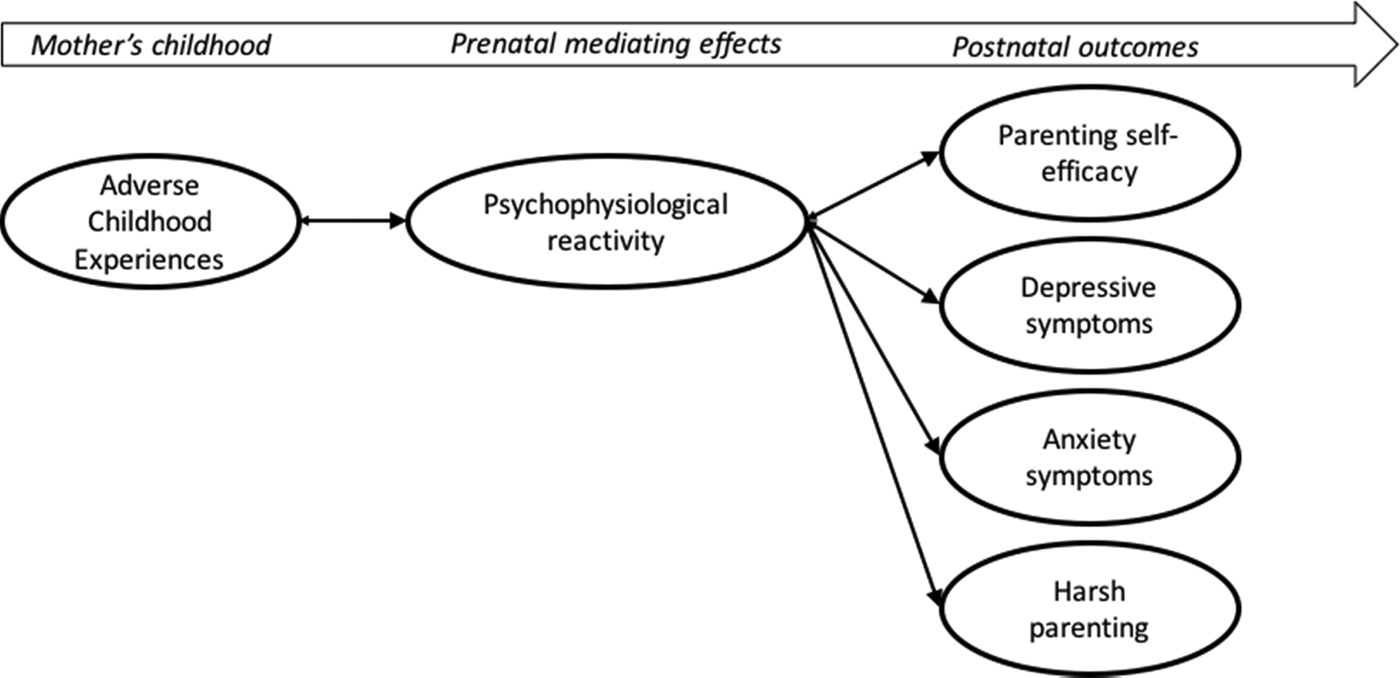
The first aim was to examine the predictive effect of ACEs on mood, parenting self-efficacy, and harsh parenting, which have been found to be involved in intergenerational transmission of risk and resilience for socioemotional development. The second aim was to examine how baseline and reactivity patterns of parasympathetic (as indexed by RSA) and sympathetic (as indexed by PEP) nervous system functioning in at-risk pregnant women during a cry-response task were associated with their ACEs. Having to respond to infant crying sounds is a parenting-relevant social stressor and has been related to psychophysiological arousal in previous studies (e.g., Joosen et al., Reference Joosen, Mesman, Bakermans-Kranenburg, Pieper, Zeskind and van IJzendoorn2013; Out, Pieper, Bakermans-Kranenburg, & van IJzendoorn, Reference Out, Pieper, Bakermans-Kranenburg and van IJzendoorn2010). As a third aim, ANS reactivity to the cry-response task was tested as a predictor of the adaptation to parenthood across the domains of mood, parenting self-efficacy, and harsh parenting. In previous studies, ANS reactivity has been linked to childhood adversity, mental health problems, harsh parenting, and to a lesser extent parenting self-efficacy, but it has not been empirically tested as a mediator explaining the effect of ACEs on outcomes of parental functioning. This study sought to test the following hypotheses (see Figure 1): (a) women who reported a high number of ACEs were expected to report higher anxiety and depression symptoms and lower parenting self-efficacy 1 year after birth as well as higher scores on harsh discipline; (b) women who reported a high number of ACEs were expected to show maladaptive patterns of ANS regulation as indicated by stronger sympathetic baseline activity (indexed by low PEP levels) and stronger sympathetic reactivity (indexed by high PEP reactivity) and reduced parasympathetic baseline activity (indexed by low RSA levels) and reduced parasympathetic reactivity (indexed by low RSA reactivity) to a cry-response task; and (c) the effects of childhood adversity on anxiety, depression, parenting self-efficacy, and harsh discipline were expected to be mediated by increased sympathetic reactivity and reduced parasympathetic reactivity.
Hypothesized links between adverse childhood experiences, psychophysiological reactivity, and outcomes in the adaptation to parenthood.

Method
Participants
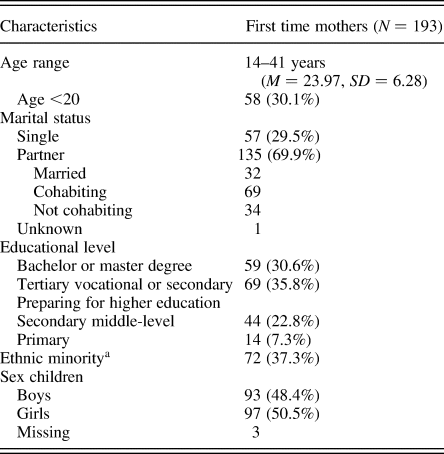
Data were collected in the at-risk focus sample (N = 193) of Generations2, an ongoing longitudinal study in around 1,800 first-time mothers on the development of parenting and mental health with measurements from early pregnancy (12 weeks) into middle childhood (age 7 years). For a detailed description of this population-based longitudinal study as well as recruitment procedures and exclusion criteria, see Kunseler, Willemen, Oosterman, and Schuengel (Reference Kunseler, Willemen, Oosterman and Schuengel2014). The at-risk focus sample was partly (n = 98) selected and recruited with the help of prenatal parenting programs targeting at-risk women and youth care organizations including group homes for teenage mothers or mothers with problematic behavior and their babies. Another group of first-time pregnant women (n = 98) was selected and recruited via the survey study for the at-risk focus sample. If women reported to have had experiences with youth services or other professional support before they were 18 years old, they were approached for additional assessments. A description of the women in terms of age, ethnicity, education level, marital status, and gender of their first-born children is provided in Table 1.
Descriptives of participants

a Mothers who indicated that either one or both of their parents were born in an Asian, African, South American, or Central American country.
Procedure
This study is based on assessments during pregnancy and the first 2 years after birth of the child. Women filled out questionnaires at 12 weeks (Time 1; T1), 22 weeks (Time 2; T2) and 32 weeks (Time 3; T3) of pregnancy as well as 3 months (Time 4; T4), 12 months (Time 5; T5), and 24 months (Time 6; T6) after birth. Participants were sent a reminder E-mail and were contacted several times by telephone when questionnaires were not received. Approximately a quarter of the women completed these questionnaires during scheduled home visits, in order to increase the response rate and to explain the questionnaire instructions if necessary. Enrollment of the 193 women in the at-risk focus group occurred during pregnancy, and women consented to participate up until 1 year after birth (T5). At T6, 12 women actively withdrew from the study. Participation of the 193 women was high during pregnancy: 192 completed at least one of the T2 and T3 questionnaires on parenting self-efficacy, anxiety, and depressive symptoms; the ACE questionnaire was administered in 188 women; and physiological data during the cry-response task were collected and successfully coded in 173 women (see Measures below for more details about the assessments). There were 143 mothers with valid questionnaire data on T5 (74%), and 98 mothers with valid questionnaire data on T6 (51%).
In addition to the questionnaire assessment at T2, women were invited to participate in a computer task involving audio-recorded baby cries, the Cry-Response task (CRT). During this task, data on participants’ electrocardiogram (ECG) and impedance cardiogram (ICG) were acquired while the participant was sitting at a table. The task started with a 6-min rest episode during which guitar music was played and pictures of landscapes appeared on the screen. After baseline, the task exposed participants to two subsequent series of 10 audio-recorded baby cries, simulating the response pattern of a temperamentally easy baby (Baby 1) and a temperamentally difficult baby (Baby 2). Participants were asked to respond to the baby cries by choosing a caregiving response or do nothing. Participants received feedback on their soothing success after each baby cry, indicated by the display of a green smiley face in case of soothing success and a red sad smiley face in case of unsuccessful soothing. Success rates were experimentally manipulated by providing all participants with 80% positive feedback after responding to Baby 1 and only 20% positive feedback after responding to Baby 2. For further details of the CRT see Verhage et al. (Reference Verhage, Oosterman and Schuengel2013). Research procedures were approved by the Medical Ethical Committee of the VU Medical Centre (Registration number: NL24319.029.08) and conducted with adequate understanding and written consent of participants and their guardians when the participants were minor.
Measures
ACEs
During the second or third trimester of pregnancy (T2 or T3, depending on timing of enrollment), mothers filled out the Dutch translation of the Adverse Childhood Experiences (ACE) questionnaire (Felitti et al., Reference Felitti, Anda, Nordenberg, Williamson, Spitz, Edwards and Marks1998). Women were between 20 and 39 weeks pregnant when they filled out the ACE questionnaire (M = 29 weeks, SD = 5.89). The questionnaire contains 28 items and covers 10 different categories of adverse experiences that occurred within the household before the age of 18: psychological abuse (2 items), physical abuse (2 items), sexual abuse (4 items), psychological neglect (5 items), physical neglect (5 items), exposure to interparental violence (4 items), exposure to substance use (2 items), exposure to mental illness (2 items), criminal behavior (1 item), and parental divorce (1 item). All categories of ACEs were assessed and scored according to the criteria described by Felitti et al. (Reference Felitti, Anda, Nordenberg, Williamson, Spitz, Edwards and Marks1998). A positive response to at least one of the items within each category indicated the occurrence of that specific adverse experience. The responses on the different categories of abuse, neglect, and household dysfunction (0 = no; 1 = yes) were summed to obtain a cumulative score indicating the number of ACEs encountered (possible range 0–10). A cutoff score of four or more ACEs indicates increased risk for health problems (Felitti et al., Reference Felitti, Anda, Nordenberg, Williamson, Spitz, Edwards and Marks1998). Therefore, this dichotomized score (0 = cumulative ACE <4; 1 = cumulative ACE ≥ 4) was further used as the independent variable in this study.
ANS reactivity
ECG and ICG data were recorded during the CRT using the VU-AMS (De Geus, Willemsen, Klaver, & Van Doornen, Reference De Geus, Willemsen, Klaver and Van Doornen1995; Willemsen, De Geus, Klaver, Van Doornen, & Carroll, Reference Willemsen, De Geus, Klaver, Van Doornen and Carroll1996) connected with seven lead wires to AG/AGCI electrodes. The VU-AMS interactive software was used to graphically display average ICG waveforms for the three defined time labels (baseline, Baby 1, and Baby 2). The following three points were scored and marked on the average dZ/dt waveform: B-point or upstroke, dZ/dt (min), and X-point or insicura. Each dZ/dt waveform was checked and corrected when automated scoring revealed B-points that were morphologically inconsistent (Riese et al., Reference Riese, Groot, Van Den Berg, Kupper, Magnee, Rohaan and De Geus2003). Based on these points PEP was calculated, which is defined as the time between the onset of ventricular depolarization (Q wave onset) and the onset of left ventricular ejection of blood in the aorta (B-point).
Custom software for continuous measurement of ECG R-wave to R-wave intervals and thoracic impedance was used to correct the respiration signal. The respiration signal was obtained from filtered (0.1–0.4 Hz) thoracic impedance signal. The beginning and end of inspiration and expiration was detected by an automatic scoring algorithm. RSA was derived by the peak-trough method (Grossman, Van Beek, & Wientjes, Reference Grossman, Van Beek and Wientjes1990), which combines the respiratory time series and the interbeat intervals (IBI) to calculate the shortest IBI during HR acceleration in the inspiration phase, and the longest IBI during deceleration in the expiration phase (De Geus et al., Reference De Geus, Willemsen, Klaver and Van Doornen1995). RSA was defined as the difference between the longest and the shortest IBI. Scoring of the respiration signal and the IBI was done automatically.
In the current study, PEP was included as an indicator of sympathetic reactivity and RSA was included as an indicator of parasympathetic reactivity of the ANS (Sherwood et al., Reference Sherwood, Allen, Fahrenberg, Kelsey, Lovallo and Van Doornen1990; Willemsen et al., Reference Willemsen, De Geus, Klaver, Van Doornen and Carroll1996). Because RSA measures were positively skewed (skewness values ranged between 1.77 to 2.18 and kurtosis values ranged between 4.09 and 8.46 across three conditions), we applied log-transformations (which reduced skewness values to range between –0.30 and –0.20, and kurtosis values between 0.46 and 1.06).
Parenting self-efficacy
Parenting self-efficacy was assessed with the Self-Efficacy in the Nurturing Role questionnaire, consisting of 16 items about women's expected (prenatal version) or perceived (postnatal version) parenting competence (Pedersen, Bryan, Huffman, & Del Carmen, Reference Pedersen, Bryan, Huffman and Del Carmen1989; Dutch translation described in Verhage et al., Reference Verhage, Oosterman and Schuengel2013). Answer categories to the 16 items ranged from 1 (not at all representative of me) to 7 (strongly representative of me). Responses to negatively formulated items were recoded. Scores were then computed for the prenatal and postnatal assessments (possible range of scores 16 to 112). For this study, the postnatal sum scores from T5 (12 months after birth) were used as a dependent variable. The average of the two prenatal assessments at T2 and T3 (22 and 32 weeks pregnancy) was included to adjust for prenatal differences in parenting self-efficacy. Cronbach's αs in this sample were 0.84 (T2), 0.80 (T3), and 0.83 (T5).
Depressive symptoms
Depressive symptoms were measured with the Dutch version of the Beck Depression Inventory, second edition (BDI-II; Beck, Ward, Mendelson, Mock, & Erbaugh, Reference Beck, Ward, Mendelson, Mock and Erbaugh1961; Van der Does, Reference Van der Does2002). The BDI-II consists of 21 items measuring cognitive, somatic, and affective symptoms of depression over the last 2 weeks. Items are rated on a 4-point scale, ranging from 0 (absence of symptoms) to 3 (severe symptoms). An example item is “sad feelings,” consisting of the following statements: 0 = “I do not feel sad,” 1 = “I feel sad,” 2 = “I am sad all the time and I can't snap out of it,” 3 = “I am so sad or unhappy that I can't stand it.” Sum scores were calculated as the sum of all individual item scores and may range from 0 to 63, with a score of 14 or higher indicative of mild to severe depression. For this study, the postnatal sum scores from T5 (12 months after birth) were used as a dependent variable. The average of the two prenatal assessments at T2 and T3 (22 and 32 weeks pregnancy) was included to adjust for prenatal differences in depressive symptoms. The psychometric properties of the BDI-II are well evaluated, with high internal consistency (Cronbach's αs ranging from 0.83 to 0.96; see Wang & Gorenstein, Reference Wang and Gorenstein2013). In the current study, Cronbach's αs were 0.89 for T2, 0.87 for T3, and 0.89 for T5. The BDI-II has shown to be reliable and valid for both pregnant and nonpregnant women (Ji et al., Reference Ji, Long, Newport, Na, Knight, Zach and Stowe2011), although physical symptoms during pregnancy may lead to overestimation of depression compared to pregnancy-specific instruments (Bennet, Einarson, Taddio, Koren, & Einarson, Reference Bennett, Einarson, Taddio, Koren and Einarson2004).
Trait anxiety symptoms
This study included the Dutch translation of the trait questions of the State Trait Anxiety Inventory (Van der Ploeg, Defares, & Spielberger, Reference Van der Ploeg, Defares and Spielberger1980) to measure women's prenatal and postnatal feelings of anxiety (Spielberger, Gorsuch, & Lushene, Reference Spielberger, Gorsuch and Lushene1970). The trait anxiety scale consists of 20 items measured on a 4-point Likert scale, ranging from 1 (not at all) to 4 (very much so). Example items are “I worry too much over something that really doesn't matter” and “I am a steady person.” Positive items were recoded, and scores on the individual items were summed to obtain a total score ranging from 20 to 80, whereby higher scores are indicative of higher anxiety symptoms, with a score above 40 suggesting clinically significant levels of anxiety (Barnett & Parker, Reference Barnett and Parker1985). In this study, the postnatal sum scores from T5 were used as a dependent variable, and the average of the two prenatal assessments at T2 and T3 was used to adjust for prenatal levels. In the current study, Cronbach's αs were 0.92 for T2 and T5 and 0.91 for T3.
Harsh discipline
Harsh discipline was assessed with the four items from the harsh punishment subscale of the abbreviated version of the Parental Behavior Scale (“Verkorte Schaal Ouderlijk Gedrag”; Van Leeuwen & Vermulst, Reference Van Leeuwen and Vermulst2004, Reference Van Leeuwen and Vermulst2010). The items are “I spank my child when he/she is disobedient,” “I slap my child when he/she has done something wrong,” “I shake my child when we have a fight,” and “I spank my child when he/she doesn't obey rules.” Items are rated on a 5-point scale: 1 = (almost) never, 2 = seldom, 3 = sometimes, 4 = often, and 5 = almost always. As expected based on the highly skewed response patterns, Cronbach's α was 0.42. Sum scores were computed over the four items (possible range 4–20). Most women answered (almost) never to all items, and only a small group of women answered with either seldom or sometimes. Therefore, a dichotomous variable was created and included in the analyses, with 0 reflecting a sum score of 4 (answering (almost) never to all four items) and with 1 reflecting a sum score higher than 4 (answering seldom or sometimes to at least one item).
Statistical analyses
Descriptive and preliminary analyses were carried out in SPSS version 24. First, the distributions of ACEs, the physiological variables, and postnatal parenting self-efficacy, anxiety, depressive symptoms, and harsh discipline were examined. Second, the associations between demographic variables age, marital status, educational level, and ethnicity with the aforementioned study variables were examined. Third, associations among all study variables were explored. Independent-sample t tests were performed to examine differences in anxiety, depressive symptoms, and postnatal parenting self-efficacy between mothers with ACE scores below 4 and ACE scores of 4 or higher. A chi-square test of independence was conducted for the association between the ACE cutoff score and harsh discipline. Univariate repeated measures analyses of variance were conducted to explore how PEP and RSA change during the CRT, and how change in PEP and RSA relates to the ACE cutoff score (entered as between-subjects factor in the model). A similar analysis was performed but then with harsh discipline as between-subjects factor in the model. Associations between psychophysiological reactivity and anxiety, depressive symptoms, and parenting self-efficacy were explored by means of Pearson correlations.
Subsequently, mediation analyses were conducted in Mplus version 7. Because harsh discipline was analyzed as a dichotomous outcome variable and the other continuous outcome variables were somewhat skewed, weighted least squares mean variance adjusted was used as the estimator in most models. Only in models without the adaptation to parenthood variables (i.e., path models of Step 2, see below), robust maximum likelihood was used as the estimator. Simulation studies have shown that both methods perform well and yield similar estimates (DiStefano & Morgan, Reference DiStefano and Morgan2014; Li, Reference Li2016). The hypothesized mediation by psychophysiological reactivity of the relation between ACEs and the adaptation to parenthood outcome variables was tested with four subsequent steps (Hayes, Reference Hayes2009; MacKinnon, Fairchild, & Fritz, Reference MacKinnon, Fairchild and Fritz2007). In the first step, the associations between the ACE cutoff score (independent variable) and anxiety, depressive symptoms, parenting self-efficacy, and harsh discipline (dependent variables) were tested in a path model. In the second step, the association between the ACE cutoff score and the psychophysiological reactivity during the CRT was tested. Psychophysiological reactivity (i.e., changes in PEP and RSA during the three conditions of the CRT) was modeled with latent growth curve modeling. A univariate latent growth curve model was fitted for the three repeated measures of either PEP or RSA, and a multivariate growth model was fitted for both PEP and RSA, allowing their intercept and slope factors to correlate. The resulting PEP and RSA intercept and slope factors were regressed on the ACE cutoff score. As a third step, associations were tested between the intercept and slope factors of PEP and RSA with anxiety, depressive symptoms, parenting self-efficacy, and harsh discipline. Note that the second and third steps are necessary steps in establishing evidence for mediation; the first step is no longer viewed as necessarily required for mediation (Fritz & MacKinnon, Reference Fritz and MacKinnon2007) but included for completeness. In the fourth and final step, the full mediation model was tested, allowing for indirect effects of ACE on the outcome variables via the PEP/RSA intercept and slope factors, as well as a direct effect of ACE on the outcome variables that is independent of PEP/RSA reactivity. Because the focus of this study was on the adaptation to parenthood, and we are primarily interested in change levels across the transition to parenthood, the effects on postnatal anxiety, depressive symptoms, and parenting self-efficacy were adjusted, respectively, for prenatal levels of anxiety, depressive symptoms, and parenting self-efficacy in the models of Steps 1, 3, and 4. For all significance tests an α level of .05 was employed.
Results
Descriptives
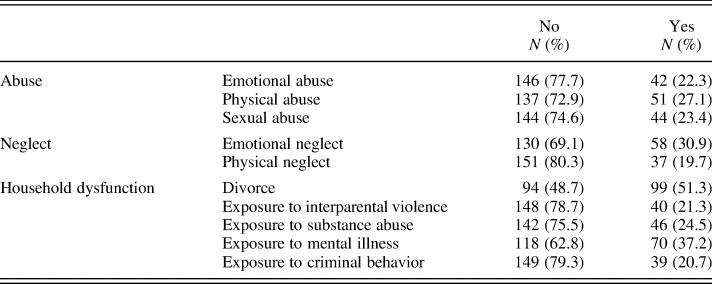
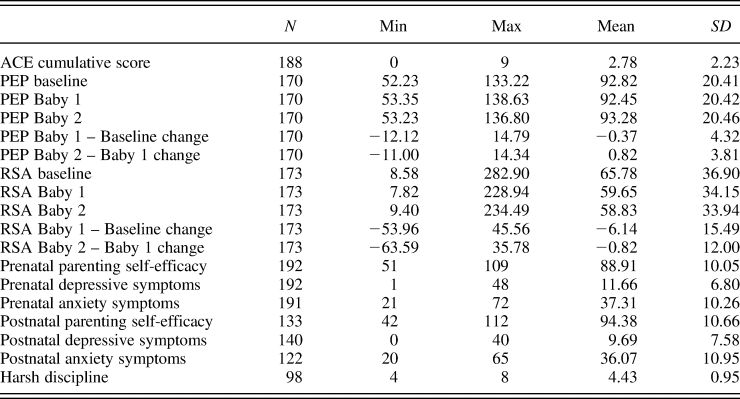
Table 2 lists the distribution of ACEs per category. Table 3 provides descriptive information on dependent and independent variables. Frequencies of the 10 ACE categories ranged between 20% and 51%. About half of the women had experienced divorce by their parents when they were children themselves. Exposure to parental mental illness and emotional neglect were each reported by about one-third of the women. Physical abuse was reported by 27% of the women, and sexual abuse by 23%. The range of cumulative ACE scores was 0–9 in this sample. The majority of women (n = 158; 84%) responded affirmatively on at least one category of adversity. The mean number of ACEs was 2.78 (SD = 2.23). Of the 66 women with a cumulative ACE score of 4 or higher (35%), 15 women had an ACE score of 7, 8, or 9. A minority of women reported using harsh discipline with their own child (20 out of 98 women who filled out this questionnaire; 20%), with sum scores ranging from 5 to 8. Of these 20 women, 7 reported “spanking the child seldom” and 9 “sometimes when the child is disobedient”; 5 reported “slapping the child seldom” and 2 “sometimes when the child did something wrong”; 2 women reported “sometimes shaking their child when having a fight,” and 4 women reported “spanking seldom when the child did not obey rules.” With regard to depression, 30.7% versus 25.7% scored 14 or higher during or 1 year after pregnancy, respectively, indicating mild to severe depression. Regarding anxiety, 32.5% versus 36.1% scored above the threshold of 40, suggesting clinically relevant levels of anxiety.
Frequency of adverse childhood experiences in the high-risk focus sample (N = 193) of Generations2

Note: Of the 193 mothers in the at-risk focus sample, 188 filled out the ACE questionnaire.
Descriptives of study variables

Note: Untransformed values of respiratory sinus arrhythmia (RSA) are reported here, but log-transformed values are used in all subsequent analyses.
Preliminary analyses
Associations between demographic variables and study variables were first examined. Age of the mother, marital status, educational level, and ethnicity were not significantly associated with anxiety, depressive symptoms, or postnatal parenting self-efficacy (p > .05). Ethnicity was significantly associated with PEP in all three conditions during the CTR (p < .001). Women of ethnic minorities showed on average lower levels of PEP than women of Dutch descent. Ethnicity was also significantly related to both ACE, χ2 (1) = 8.18, p = .004, and harsh discipline, χ2 (2) = 12.5, p < .001. Compared to women of Dutch descent, women of ethnic minorities reported more harsh discipline (46% vs. 12%) and more often an ACE score of 4 or higher (48% vs. 27%). Education level was significantly associated with ACE cutoff score, χ2 (2) = 6.30, p = .04, and harsh discipline, χ2 (2) = 12.67, p = .002. Women who finished primary education, secondary education, or vocational tertiary education reported more harsh discipline toward their child (32%) than women who finished a bachelor or master degree in higher education (5%). Similarly, women who finished vocational tertiary education or lower more often reported an ACE score of 4 or higher (41%) than women who finished a bachelor or master degree in higher education (23%). Marital status was also significantly associated with harsh discipline, χ2 (1) = 3.92, p = .05. Women who were single reported more harsh discipline (37%) than women who were married or cohabiting (17%). Therefore, results of the path models including harsh discipline as an outcome variable (Models 1, 3 and 4) are presented with and without adjustment for marital status, educational level, and ethnicity. Similarly, results of path models 2 and 4 with PEP variables included as dependent variables are presented with and without adjustment for ethnicity.
Next, associations among study variables were explored. High ACE was significantly related to trait anxiety, t (117) = –2.29, p = .002, depressive symptoms, t (57.25) = –2.90, p = .005, and harsh discipline, OR = 3.61; χ2 (1) = 6.05, p = .01, but not to parenting self-efficacy. Significant changes in both PEP, F (2, 338) = 3.36, p = .04, and RSA, F (2, 344) = 29.60, p < .001, during the CRT were found. High ACE was not significantly associated with changes in PEP, F (2, 326) = 0.14, p = .87, but high ACE was significantly associated with changes in RSA, F (2, 332) = 3.53, p = .03. Women who reported fewer than 4 ACEs had on average higher RSA levels during baseline and declined more sharply in RSA levels during the three conditions than women who reported 4 or more ACEs. This decrease in RSA levels in the two groups followed a linear pattern, F (1, 166) = 6.14, p = .01. Harsh discipline was not significantly associated with repeated measures of PEP, F (2, 158) = 0.03, p = .97, or RSA, F (2, 164) = 2.16, p = .12, during the CRT. Mean PEP and RSA levels in each condition of the CRT were not significantly related to anxiety, depressive symptoms, and postnatal parenting self-efficacy. The correlations between prenatal and postnatal assessments of, respectively, anxiety, depressive symptoms, and parenting self-efficacy ranged from .50 to .54.
Path analyses
Latent growth models were fitted to the data on PEP and RSA. Because these models are fully saturated for three repeated measures, model fit was perfect. For PEP, there was significant intercept variance (20.20; z = 13.90, p < .001) but not slope variance (0.04; z = 0.13, p = .89). Therefore, in subsequent models testing mediation, only the intercept of PEP was tested in relation to ACE and postnatal outcomes. For RSA, both intercept variance (0.26; z = 6.89, p < .001) and slope variance were significant (0.01; z = 3.93, p < .001). The residual variance of RSA during the Baby 2 condition was nearly zero, and therefore constrained to zero in the model. To examine how PEP and RSA were associated across the CRT, we additionally fitted a multivariate latent growth model, allowing PEP intercept, RSA intercept, and RSA slope to correlate. These correlations ranged between 0 and 0.02 and were nonsignificant.
Next, growth models with intercept for PEP and intercept and slope for RSA were implemented in two separate path models to test for mediation of PEP or RSA reactivity in the link between ACE and postnatal outcomes. In the first step, the associations between ACE and anxiety, depressive symptoms, postnatal parenting self-efficacy (adjusted for their respective prenatal assessments), and harsh discipline were tested. The association between ACE and postnatal depressive symptoms was significant (b = 2.94, SE = 1.13, p = .009), as well as the association between ACE and harsh discipline (OR = 2.00, SE = 0.33, p = .03). The associations between ACE and postnatal parenting self-efficacy and anxiety were not significant (b = –0.49, SE = 1.95, p = .80 and b = 2.06, SE = 1.75, p = .24, respectively). Women reporting high ACEs scored on average 2.94 points higher on depressive symptoms and had a twofold increase in odds for reporting harsh discipline than women exposed to low ACEs. After adjusting for marital status, educational level, and ethnicity, the association between ACE and harsh discipline was no longer significant (OR = 1.77, SE = 0.37, p = .12).
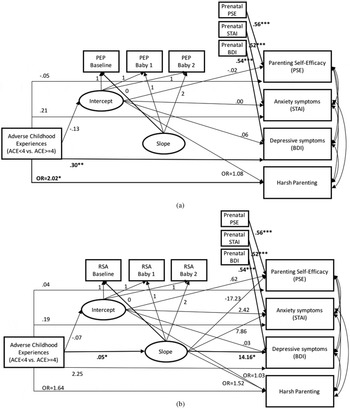
In the second step, two models were run: one linking ACEs to PEP intercept, and one linking ACE to RSA intercept and slope across the prenatal CRT. ACEs were not significantly associated with PEP intercept (b = –2.78, SE = 3.26, p = .39), also not when adjusting PEP for ethnicity. ACEs were not associated with RSA intercept (b = –0.07, SE = 0.08, p = .39), but were associated with RSA slope (b = 0.05, SE = 0.02, p = .01). RSA decreased less strongly during the CRT in women reporting high ACEs than women reporting low ACEs.
In the third step, the associations between PEP intercept and RSA intercept and slope with postnatal outcome variables were modeled, adjusting for respective prenatal levels. The path from RSA slope to depressive symptoms was significant (b = 15.02, SE = 4.80, p = .002). A less sharp decrease in RSA levels during the CRT predicted higher depressive symptoms scores. Other paths including PEP and RSA intercept were not significantly related to the outcome variables.
In the fourth step, the full mediation model with either PEP or RSA reactivity as a mediator was tested. The results of these models are displayed in Figure 2. In the PEP mediation model, the path from ACE to PEP intercept was not significant, nor was the path from PEP intercept to postnatal outcomes. Results did not change when adjusting PEP levels for ethnicity and harsh discipline for marital status, education, and ethnicity, except that the direct path from ACEs to harsh parenting was no longer significant. In the RSA mediation model, the path from ACEs to RSA slope was significant (b = 0.05, SE = 0.02, p = .02), as well as the path from RSA slope to depressive symptoms (b = 14.16, SE = 6.38, p = .03), but not from RSA slope to parenting self-efficacy, anxiety, and harsh discipline. Paths from and toward RSA intercept were also not significant. The significant associations between ACEs and RSA slope and between RSA slope and depressive symptoms suggest that the link between ACEs and depressive symptoms was mediated by the response in RSA as measured during prenatal exposure to baby cry sounds. The total effect (direct plus indirect effects) was significant (b = 2.94, SE = 1.13, p = .009). Teasing the total effect apart, the indirect effect from ACEs to depressive symptoms via RSA slope, according to the Sobel test, fell short of statistical significance (b = 0.69, SE = 0.37, p = .06), as did the direct effect from ACEs to depressive symptoms independent of RSA (b = 2.25, SE = 1.17, p = .05). The significance of the total, indirect, and direct effects did not change when using bootstrapped standard errors rather than the Sobel test.
Estimated mediation models for PEP during (a) CRT and (b) RSA during CRT as potential mediators in the link between adverse childhood experiences and outcomes in the adaptation to parenthood. Unstandardized path coefficients are reported, PEP levels were unadjusted for ethnicity, and harsh discipline was unadjusted for marital status, education, and ethnicity. Model fit of PEP mediation model (a): χ2 (29) = 26.28, p = .61; RMSEA = .00; CFI = 1.00; TLI = 1.03. Model fit of RSA mediation model (b): χ2 (25) = 28.85, p = .27; RMSEA = .03; CFI = .99; TLI = .97. Note that the latent growth curve models on PEP and RSA are displayed in a simplified manner (omitting residual variances, intercept and slope [co]variances, intercepts, and factor means). PEP, pre-ejection period. CRT, Cry-Response task. RSA, respiratory sinus arrhythmia.

Discussion
In line with previous findings, ACEs differentiated at-risk women who adjusted well to the transition to parenthood from women who showed problematic adjustment, in terms of symptoms of depression, anxiety, and harsh discipline. Relevant to the issue of underlying mechanisms was that blunted parasympathetic nervous system reactivity to a caregiving-related stressor linked ACEs and postnatal increases in depressive symptoms, although it remains inconclusive whether blunted reactivity actually mediates this association. Sympathetic nervous system reactivity was not involved in any of the links between ACEs and adjustment to parenthood.
The findings for depressive symptoms aligned with a priori expectations more closely than for other aspects of parental functioning. While women who reported high ACEs also reported more anxiety symptoms, anxiety did not worsen more as these women transitioned into parenthood. It is therefore not surprising that ANS reactivity was not involved in changes in anxiety. The role of ACEs in predicting harsh parenting could not be disentangled from concurrent risk factors (young age, migrant background, or single parenthood); therefore, these results should be interpreted with caution. ACEs were not directly nor indirectly linked to course of parenting self-efficacy.
The mechanism of a blunted parasympathetic response to challenges linking ACEs and changes in depressive symptoms in the first year of parenthood fits well in a broader literature on childhood trauma and parasympathetic reactivity (Meyer et al., Reference Meyer, Albrecht, Bornschein, Sachsse and Herrmann-Lingen2016; Miskovic et al., Reference Miskovic, Schmidt, Georgiades, Boyle and MacMillan2009), and literature linking parasympathetic reactivity and depression (e.g., Hamilton & Alloy, Reference Hamilton and Alloy2016). Findings may underlie a model of parental caregiving that contributes to allostatic load (Lovallo, Reference Lovallo2011; McEwen, Reference McEwen1998). Allostatic load can take the direction of either hyperactivity, that is, a failure to shut down the stress system, or hyporeactivity, that is, a failure to mobilize a stress response, resulting in a blunted pattern of responses. In this study, we found evidence for the latter, consistent with other studies reporting blunted RSA or HRV responsiveness during distress interaction with own infants (Groh et al., Reference Groh, Propper, Mills-Koonce, Moore, Calkins and Coxin press; Leerkes, Su, Calkins, O'Brien, & Supple, Reference Leerkes, Su, Calkins, O'Brien and Supple2017; Schechter, Moser, McCaw, & Myers, Reference Schechter, Moser, McCaw and Myers2014). While in the current study no support was found for a mechanism that involved the sympathetic nervous system, it may be premature to dismiss its role. Alternative pathways may be considered, including, for example, links between prenatal ANS reactivity and prenatal mental health, which could subsequently impact postnatal mental health. This would require analyses that are able to tease out the reciprocal effects between the ANS system and mental health across pregnancy.
In contrast to previous research on the link between childhood adversity and ANS reactivity (e.g., Bernstein et al., Reference Bernstein, Measelle, Laurent, Musser and Ablow2013; Ginty et al., Reference Ginty, Masters, Nelson, Kaye and Conklin2017; Winzeler et al., Reference Winzeler, Voellmin, Hug, Kirmse, Helmig, Princip and Wilhelm2017), the current study used a cardiac measure (PEP) for reactivity in the sympathetic nervous system. Cardiac measures reflect different response subsystems than other markers, such as skin conductance or systolic blood pressure (Cacioppo et al., Reference Cacioppo, Uchino and Berntson1994). Further, there has been increasing attention for the interaction between the two branches of the ANS (Bauer, Quas, & Boyce, Reference Bauer, Quas and Boyce2002; Del Giudice, Ellis, & Shirtcliff, Reference Del Giudice, Ellis and Shirtcliff2011; Quigley & Moore, Reference Quigley and Moore2018). According to several theories and conceptual models a co-influence between the parasympathetic and the sympathetic system may take several forms (see El-Sheikh et al., Reference El-Sheikh, Kouros, Erath, Cummings, Keller and Staton2009, for an overview). Among the first is Berntson's model on autonomic space (Berntson & Cacioppo, Reference Berntson, Cacioppo, Malik and Camm2004; Berntson et al., Reference Berntson, Cacioppo and Quigley1991), which describes multiple patterns of reciprocal and nonreciprocal activation (e.g., coinhibition and coactivation). Findings on these patterns, especially in young children, suggest that reciprocal sympathetic activation, in which sympathetic activation is combined with parasympathetic or vagal withdrawal, is the most common response pattern in children and is associated with most adaptive outcomes (El-Sheikh et al., Reference El-Sheikh, Kouros, Erath, Cummings, Keller and Staton2009). Recently, Quigley and Moore (Reference Quigley and Moore2018) have proposed a cardiac autonomic balance model, which describes the balance between the sympathetic and the parasympathetic nervous system as mediating the links between early experiences of adversity, mental health problems, and physical outcomes in adulthood. Given these strong propositions of interactions between the two autonomic branches, the lack of a significant association between measures of sympathetic and parasympathetic reactivity during baseline and stressor among the participating pregnant women may be of interest. Future studies may combine advanced longitudinal models with a person-oriented approach to delineate patterns of complex interactions between the parasympathetic nervous system and the sympathetic nervous system in relation to early environmental predictors as well as outcomes later in life (Quigley & Moore, Reference Quigley and Moore2018).
Findings of the current study should be considered in the context of the nature of the experimental stressor. The CRT was specifically designed to simulate emotionally charged situations involving social engagement with an infant. Although the largest change in ANS reactivity occurred in response to the first series of baby cries (Baby 1), RSA further decreased in response to the second series of cries (Baby 2), which suggests that the experimental manipulation was effective. Only one previous study on childhood adversity and ANS reactivity included a similar task involving listening to baby cries, yielding findings consistent with the current study (Meyer et al., Reference Meyer, Albrecht, Bornschein, Sachsse and Herrmann-Lingen2016). Due to the lack of a contrasting, noncaretaking stressor, it remains for future research to determine whether the underlying mechanism involves stressor-specific parasympathetic reactivity or whether links between ACEs and parenting are mediated by reactivity to a broader class of stressors.
The need to differentiate the mechanisms underlying intergenerational effects applies not only to the physiological response systems but also to aspects of parenthood. The current study did not support involvement of ANS responses to a caregiving challenge as mechanisms linking ACEs to anxiety, harsh parenting, and parenting self-efficacy. Psychobiological theories emphasize the association between the parasympathetic nervous system and the regulation of attention and emotion (Beauchaine, Reference Beauchaine2001; Porges, Doussard-Roosevelt, Portales, & Greenspan, Reference Porges, Doussard-Roosevelt, Portales and Greenspan1996). Although these regulatory systems may be compromised in both anxiety and depression, different environmental stimuli may co-opt these systems to differentially impact anxiety or depression (Alloy, Kelly, Mineka, & Clements, Reference Alloy, Kelly, Mineka, Clements, Maser and Cloninger1990; Mineka, Watson, & Clark, Reference Mineka, Watson and Clark1998). With regard to parenting self-efficacy, the theoretically proposed feedback loop between emotional arousal and self-efficacy (Bandura, Reference Bandura1977) may apply to physiological reactivity in the context of experiences with own children rather than prenatally assessed reactivity to a simulated baby. Future studies could address this by adding parent–child interaction tasks, so that differences in physiological reactivity to a simulated baby task can be examined as well as differential links with aspects of parental functioning.
This study joins other reports on linkages between ACEs and harsh discipline or other forms of problematic parenting and maltreatment (Berlin et al., Reference Berlin, Appleyard and Dodge2011; Chung et al., Reference Chung, Mathew, Rothkopf, Elo, Coyne and Culhane2009; Cort et al., Reference Cort, Toth, Cerulli and Rogosch2011; Dixon et al., Reference Dixon, Browne and Hamilton-Giachritsis2005; Egeland et al., Reference Egeland, Jacobvitz and Sroufe1988). The association in the current study did, however, not remain after controlling for ethnicity, age, and marital status, which were associated with both childhood adversity and harsh discipline. Young, single mothers of ethnic minorities more often reported to use harsh discipline toward their children (e.g., spanking), similar to other studies (MacKenzie, Nicklas, Brooks-Gunn, & Waldfogel, Reference MacKenzie, Nicklas, Brooks-Gunn and Waldfogel2011). Of note, the current study focused on self-report of just four concrete forms of physical punishment. Findings with regard to mechanisms may be different if reactive and coercive disciplining are taken into account as well as other adverse forms of parenting, such as emotional abuse and neglect. In addition, observational measures are needed to exclude the possibility that associations between reports of childhood experiences and parenting are caused by response set.
Strengths and limitations
The prospective design of this study and the assessment of a possible mechanism component during pregnancy eliminated potential confounders, in particular the possibility that child functioning may shape maternal ANS responses. Because the study did not include measurement of ANS responses to caregiving for the mothers’ own children, it remains to be established to what extent the paradigm elicited responses that also occur in real caregiving interactions. However, blunted parasympathetic responses to actual child distress have been found to be associated with both maternal posttraumatic stress disorder (Schechter et al., Reference Schechter, Moser, McCaw and Myers2014) and insecure parent–infant attachment (Groh et al., Reference Groh, Propper, Mills-Koonce, Moore, Calkins and Coxin press; Leerkes et al., Reference Leerkes, Su, Calkins, O'Brien and Supple2017), supporting blunted parasympathetic nervous system reactivity as part of mechanisms linking adversity in caregiving experiences to the socioemotional context of children's development.
The current study employed robust methods for testing indirect effects, within a sample with considerable variation and of sufficient size. Nevertheless, the power may have been low for distinguishing mediated from nonmediated effects (MacKinnon, Warsi, & Dwyer, Reference MacKinnon, Warsi and Dwyer1995). Power may be increased by harmonizing the paradigms used to measure ANS responses to caregiving stressors and combine individual participant data across studies (Riley, Lambert, & Abo-Zaid, Reference Riley, Lambert and Abo-Zaid2010), or by employing intervention designs in which ANS responsivity is altered, for example, by modification of a negative cognitive bias toward infant distress.
Conclusion
Current findings contribute to a differentiated view on the involvement of the two branches of the ANS in adjustment to parenthood and in the linking of adverse socioemotional experiences across generations. Psychophysiological reactivity in response to caregiving-related stressors is relevant for understanding the replicated predictive associations between ACEs and emotional, cognitive, and behavioral functioning as parents. The different findings also warrant caution against unitary models of branches and components of ANS as well as parenting outcomes subserved by these systems. Differentiating ANS responses provides an additional insight into environmental and biological mechanisms in the intergenerational transmission of childhood trauma (e.g., epigenetics; Buss et al., Reference Buss, Entringer, Moog, Toepfer, Fair, Simhan and Wadhwa2017). The increasing interest in interventions focused on stress regulation, including mindfulness and biofeedback (Hofmann, Sawyer, Witt, & Oh, Reference Hofmann, Sawyer, Witt and Oh2010; Van der Zwan, De Vente, Huizink, Bögels, & De Bruin, Reference Van der Zwan, De Vente, Huizink, Bögels and De Bruin2015), require equivalent studies to provide more solid insight into which specific stress responses should be targeted in intervention programs for parents at risk for depression and anxiety. The theoretical and emerging empirical support for the role of the parasympathetic nervous system suggests that in particular this system may help to prevent the emergence of depression in the transition to parenthood, which would ultimately contribute to interrupting transgenerational risk and promote resilience of at-risk families.