Introduction
Over the past few decades, the combination of two processes – ‘demographic ageing’ and ‘international migration’ – have given rise to significant changes in the age and ethnic composition of national populations, causing an increase in middle-aged and older immigrants in Europe (Warnes et al. Reference Warnes, Friedrich, Kellaher and Torres2004). Because of the growing proportion of ageing immigrants in Europe, their ethnic diversity and different socio-economic background, immigrants' health may have an impact on national welfare systems in terms of increasing health-care costs and social support. This is particularly true for older immigrants who, in contrast with the overall population of immigrants, are particularly at risk of health deterioration, since most changes in health occur in middle and old age. In light of the above, it is important for policy makers to know whether differences in health status between immigrant and non-immigrant populations – and also among immigrants – do exist, so that clearly defined policy measures can be adopted to improve their health.
This paper examines aspects of the health and wellbeing of people aged 50 and older who are resident in Western and Northern European countries, focusing on those whose life circumstances have been strongly influenced by international migration. We define immigrants as people born in a country different from that of their residence, who may have acquired citizenship in the new host country. We thus attempt to ascertain the existence of differences in self-perceived health and depression between native-born and immigrant people by examining the effect of country of origin, length of time in the host country and citizenship on the perceived health of adults in each country investigated. Despite the ‘subjective’ character of self-rated health, this indicator includes multiple dimensions of health (Simon et al. Reference Simon, De Boer, Joung, Bosma and Mackenbach2005), is robust in predicting mortality (Burstrom and Fredlund Reference Burstrom and Fredlund2001) and expectations of health services (Prohaska and Clark Reference Prohaska and Clark1994). Late-life depression is a common disorder affecting a large proportion of people in older age (Beekman et al. Reference Beekman, Deeg, Braam, Smit and Van Tilburg1997), especially immigrants, who may undergo a psycho-social process of loss and change and cultural shock due to the migratory experience (Bhugra Reference Bhugra2004; Carta et al. Reference Carta, Bernal, Hardoy and Haro-Abad2005). Data were obtained from the first wave (2004) of the Survey of Health, Ageing and Retirement in Europe (SHARE, Release 3).Footnote 1 Eight European countries were examined in the analysis taken from the dataset: Austria, Belgium, Denmark, France, Germany, Sweden, Switzerland and The Netherlands, which became the most important European receiving countries after the Second World War.Footnote 2
The selective role of migration towards healthier immigrants (the ‘healthy immigrant effect’) is now an accepted phenomenon (Kennedy, McDonald and Biddle Reference Kennedy, McDonald and Biddle2006), although many studies have also emphasised the fact that immigrants may lose this initial health advantage over time. The adoption of new health behaviours and health-related norms (acculturation) in the host country has also been speculated to play a substantial role in worsening health (Biddle, Kennedy and McDonald Reference Biddle, Kennedy and McDonald2007; Pérez Reference Pérez2002). Although we have no information about immigrants' health on arrival, by comparing immigrants' health with that of the native-born in later life, we can examine whether immigrant health differs from that of natives and, if so, try to identify the role of immigration status. In analysing immigrant health profiles, we allow for differences across immigrants from different countries of birth and with different lengths of immigration, since many research papers have reported that health differences between natives and immigrants are strongly influenced in a complex way by country of origin and destination of migrants (Khlat and Courbage Reference Khlat and Courbage1996; Pudaric, Sundquist and Johansson Reference Pudaric, Sundquist and Johansson2003; Sundquist and Li Reference Sundquist and Li2006). In order to estimate accurately the effects of both origin and destination countries, some interaction variables between immigrants' countries of origin and residence were created, since individuals are nested in both. The role of immigration was also analysed by considering the intersection between duration of immigration and citizenship status, to account for heterogeneous (time-dependent) differences among health issues. The main explicative variable is the immigration status of the person, and a set of demographic and socio-economic variables was also included, in order to test the robustness of our estimations.
Interest in studying this particular group of migrants may be explained in several ways. First, the number of middle-aged and older immigrants living in Europe is growing rapidly, as a result of the ageing of immigrants who were recruited during the 1950s and 1960s in the countries where they are now living, in their early working years, when Europe was undergoing an intense period of migration after the Second World War. Indeed, the foreign-born people over 50 examined in this study, who have retired or are now approaching retirement age, generally consist of immigrants who moved either from south to north or from east to west within Europe, mainly for economic or political reasons and limited opportunities in their country of origin. Although it was assumed that many immigrants would return to their countries of origin in later life, in fact most of them have aged in their host country once their initial plans to return to their country of origin failed, and generally for complex economic, social and cultural reasons (Warnes and Williams Reference Warnes and Williams2006). Many immigrants came from areas of severe agriculture decline in Southern Europe (Italy, Spain, Portugal) and political crises in Eastern Europe (Poland, Czechoslovakia, Hungary); others came from regions of similarly restricted opportunities such as North Africa (Algeria and Morocco, in the case of France) and South-East Asia after the independence of former colonies (Fassmann and Münz Reference Fassmann and Münz1992).Footnote 3
Second, a growing body of research conducted in some European countries has also shown that some immigrant groups have poorer health with respect to indigenous people. In particular, several studies on older migrants living in Northern and Western European countries, such as Great Britain, Sweden, Germany and France, demonstrate a health disadvantage in some groups with respect to native-born people (Jusot et al. Reference Jusot, Solva, Dourgnon and Sermet2009; Leão et al. Reference Leão, Sundquist, Johansson and Sundquist2009; Pudaric, Sundquist and Johansson Reference Pudaric, Sundquist and Johansson2003; Silveira and Ebrahim Reference Silveira and Ebrahim1998; Silveira et al. Reference Silveira, Skoog, Sundh, Allebeck and Steen2002) or a severe deterioration in their health satisfaction in Germany (Ronellenfitsch and Razum Reference Ronellenfitsch and Razum2004). Migration may influence people's health negatively in many ways, from breakdown of family ties and social relations to economic difficulties, limited access to health-care systems, and aspects related to diet, climate and culture (Biddle, Kennedy and McDonald Reference Biddle, Kennedy and McDonald2007; Silveira and Ebrahim Reference Silveira and Ebrahim1998). In addition, many ageing migrants entered a country with little education and were employed in low-skilled and low-paid manual work. So, when compared with the host population, they were more likely to undergo social exclusion, deprivation, economic constraints and poor health care (Warnes et al. Reference Warnes, Friedrich, Kellaher and Torres2004). Also, as maintained by the jeopardy theory, other important factors such as racism and cultural discrimination may account for health inequalities among the older members of migrant groups (Norman Reference Norman1985). Some features associated with the condition of nativity often fall into the set of variables which may be important in explaining persistent inequalities in health status, e.g. level of knowledge of the language of destination. Greater proficiency in the destination language is known to facilitate communication with health-care providers and a proper understanding of information concerning medication (Julian and Easthope Reference Julian, Easthope and Grbich1996).
There is also another issue that should be emphasised. While the special needs of older labour migrants are increasingly being recognised, data about immigrants are still scarce in all countries. Information about international migration within Europe by country of origin and citizenship are ‘poorly captured by routine official data collection inquires’ (Warnes et al. Reference Warnes, Friedrich, Kellaher and Torres2004).Footnote 4 This is mainly due to the particular system of collecting health data in most European countries, which does not provide for migrant status or ethnic group.Footnote 5
A selective literature review on immigrants' health inequalities
As mentioned above, some studies have shown that immigrants and minority groups in later life tend to have a lower health status than the majority population. However, the link between migration and health is highly complex: it operates in both directions and is mediated by many interacting factors. The ‘healthy immigrant effect’ theory states that the health status of immigrants at the time of arrival is usually better than that of native-born people, because of the selection effect operated by international migration (Jasso et al. Reference Jasso, Massey, Rosenzweig, Smith and Anderson Norman2004; Marmot, Adelstein and Bulusu Reference Marmot, Adelstein and Bulusu1984). Only people who are healthier and more resilient can afford to migrate, although this initial health advantage is lost over time. As the length of residence increases, immigrants undergo a deterioration in health, due to the adoption (i.e. acculturation) of mainstream native-born beliefs and lifestyle behaviours (Biddle, Kennedy and McDonald Reference Biddle, Kennedy and McDonald2007). This strand of literature has focused on health disparities between foreign and native-born people living in the United States of America (USA) and Canada (Newbold and Danforth Reference Newbold and Danforth2003; Newbold and Filice Reference Newbold and Filice2006), the main poles of attraction for many immigrants from various countries. Immigrants may initially be healthier than might be expected, given their generally lower social status (Jasso et al. Reference Jasso, Massey, Rosenzweig, Smith and Anderson Norman2004) with respect to the native population, but their health status may deteriorate quickly. Other studies have concentrated on the racial and ethnic composition of the immigrant stream into the USA. In particular, Hispanics tend to have better health outcomes than blacks and similar health outcomes compared with non-Hispanic whites (Hajat, Lucas and Kington Reference Hajat, Lucas and Kington2000), whereas immigrants from Mexico have better health than non-immigrants (Palloni and Arias Reference Palloni and Arias2004). The relatively good health of the Hispanic immigrant population is known as the ‘Hispanic paradox’, and arises from the fact that a population of low socio-economic status has a level of health as good as that of the native population.
In Europe, despite the interest in studying the health status of immigrants, research on this issue is still scarce. Studies conducted in Sweden have examined various health aspects in older people and found that most immigrant groups are more likely to report worse overall health than native-born (Leão et al. Reference Leão, Sundquist, Johansson and Sundquist2009; Pudaric, Sundquist and Johansson Reference Pudaric, Sundquist and Johansson2003). The relative importance of heterogeneity of immigrants according to their country of origin in explaining health differentials has been highlighted by Vaillant and Wolff (Reference Vaillant and Wolff2010) for France. These authors showed that male immigrants from Asia and Southern Africa and female immigrants from Northern Southern Europe and Asia have better health, while immigrants from Eastern Europe have poorer health. Other research focuses on the importance of socio-economic characteristics in influencing individual health status and wellbeing, such as education, employment and economic resources. Ringbäck et al. (Reference Ringbäck, Gullberg, Hjern and Rosén1999) found that the lower socio-economic status of immigrants with respect to that of the population in which they move, plays an important role in accounting for disparities in health status. However, a recent study demonstrated the rapidly deteriorating health status of immigrants from Eastern Europe to Germany, which occurred independently of improvements in their socio-economic status (Ronellenfitsch and Razum Reference Ronellenfitsch and Razum2004).
A systematic review of the literature on the mental health of immigrants across European countries has emphasised the fact that some migrants have a higher risk of depression with respect to native-born people (Carta et al. Reference Carta, Bernal, Hardoy and Haro-Abad2005). Bhugra and Jones (Reference Bhugra and Jones2001) argue that migrants tend to perceive higher levels of depression, mainly caused by the psycho-social process of change which an individual undergoes with migration. The process of immigration itself is stressful and upsetting, and may involve financial constraints and economic difficulties, employment problems or the lack of a social support network, all of which may contribute to increasing depression. Silveira and colleagues (Silveira and Ebrahim Reference Silveira and Ebrahim1998; Silveira et al. Reference Silveira, Skoog, Sundh, Allebeck and Steen2002) conclude that the marked variation in mental health may be explained by socio-economic differences, acting adversely for immigrants rather than ethnicity. They also found that worse health may be due to many other factors, such as the psychological stress of living in a new environment, lack of social and familiar relationships, housing conditions, a low weekly income and poor physical health. Lastly, some studies examine the extent to which nativity – being foreign-born as opposed to native-born – accounts for differences in depressive symptoms and general health status. Angel, Buckley and Sakamoto (Reference Angel, Buckley and Sakamoto2001), studying nativity as an important risk factor in undermining physical and emotional health, found that foreign-born individuals were at higher risk of poor health than their native-born counterparts. The role of ethnic factors in the risk of mental illness was emphasised in a study in Norway by Dalgard and Thapa (Reference Dalgard and Thapa2007), confirming that nativity is a significant factor for a high level of mental illness. In addition, the level of psychological distress in the immigrant group increased as their stay in Norway lengthened. Health conditions are also connected with full access to the services (private and/or public) of a new country's health system. Carrasquillo, Carrasquillo and Shea (Reference Carrasquillo, Carrasquillo and Shea2000) argue that foreign-born people are less likely to have adequate health-care coverage or familiarity with and established connections to health-care systems. Health behaviours may also partially explain population health differences; immigrants may have healthier or less healthy lifestyles than native-born members of the population, considering that immigrant lifestyle factors depend on country of origin and destination in complex ways (Carrasco-Garrido et al. Reference Carrasco-Garrido, Gil, Hernández and Jiménez-García2007).
The influence of length of residence on immigrants' health is not clear a priori. On the one hand, the theory of cumulative disadvantage (Dowd and Bengtson Reference Dowd and Bengtson1978) suggests a negative association between length of residence and health. The successive addition of adverse circumstances as social and economic disadvantages may underlie the fact that adult immigrants report worse overall health than native-born people. According to this theory, effects are cumulative over time and longer length of residence does not necessarily lead to migrants' increased integration. On the other hand, duration of residence may be a good proxy of assimilation in the host country, as the health disadvantage for immigrants is reduced with increasing time spent in the host country. Thus, the assimilation theory suggests a positive correlation between self-rated health and length of residence – that is, immigrants with long tenure in the host country assume health profiles similar to those of natives (Angel, Buckley and Sakamoto Reference Angel, Buckley and Sakamoto2001).
Measures and method
Binary logistic regression models are specified below for estimating effects on the health status of ‘being an immigrant’, as opposed to ‘being a native’. The base logistic model (Model 1) accounts for the relative likelihood of immigration-related variables on ‘poor self-perceived health’ and ‘depressive symptoms’ – which represents the focus of our statistical test – controlling for demographic variables. Then, we extend the model to include socio-economic effects (Model 2). The formal specification is given as:


where y ij with j=1,2 represents the probability of a response of poor health status and depression with respect to the covariates. In order to capture the complexity of immigrants' characteristics related to their country of origin and the destination countries to which they migrated, we considered both dimensions simultaneously to analyse differences in health outcomes. Specifically,  is a vector which separately includes the interaction between country of origin and country of residence, or the interaction variable between length of residence in the host country and citizenship status. In addition, a vector of individual control variables
 =[Gender, Age, Type of Household] was entered into the models as a possible confounder. In Model 2, we also included education, occupation and economic resources (
 ) which are found in the literature to influence health outcomes strongly. In addition, when the key exposure of interest was duration of residence, we incorporate a vector of country dummy variables. The inclusion of country-fixed effects in the analyses of health by duration of residence implies the possibility of assessing how poor health status and depression are affected by mean variations in the explanatory variables relative to one country reference. Instead, in analysing the effect of country of origin on health disparities, the choice to model health differences of foreign-born within European countries by the country-specific interaction variables is largely justified by the heterogeneous migration history of European countries.
Many risk factors, such as being female, having low education and having financial difficulties, may have a negative impact on health status. Socio-economic status may affect health status directly or indirectly by, for example, increasing the ability to purchase medical care or health insurance or reducing the probability of living or working in hazardous settings. People with higher levels of schooling may benefit from greater knowledge, have better decision-making skills and be able to make greater capital investments in health care, due to a higher income. In addition, higher incomes are more likely to cover health insurance in those countries with private or semi-public health-care systems. Thus, by investigating income conditions, we assume worse health responses for people with few economic resources. Regarding couple status, it has been found that couples living together tend to have better health, for several reasons (Pol and Thomas Reference Pol and Thomas1992; Waite and Gallagher Reference Waite and Gallagher2000): one reflects selection into marriage, e.g. sick people tend to be excluded from marriage, or are less likely to stay in couples or to remarry if a first marriage ends. It is also assumed that those who are married are more likely to receive health support if nursing or personal care is needed; households with married couples have greater economic resources than other households; and the presence of a spouse implies monitoring of health, social support for healthier living and, lastly, the transmission of information on health.
Data and descriptive analysis
This study is based on data obtained from the first wave of SHARE collected in 2004–05; we used the third release (SHARE 2.3.0) which also contains information on birthplace, and were thus able to test the different impact of country of origin on health inequalities. SHARE is a multidisciplinary and cross-national panel database of micro-data, providing information on health, socio-economic status, and social and family networks of individuals aged 50 and over. To ensure harmonisation of this cross-national design study, rigorous guidelines and programmes were provided to each participating country, which conducted its own national survey by means of a common questionnaire translated into the appropriate languages. This set-up allowed each country to use exactly the same underlying structure and questionnaire and to obtain datasets containing comparable indicators of disease, disability and functioning. The average household response rate was 63.3 per cent, ranging from 38 per cent in Switzerland to 81 per cent in France. The main variable, which allowed immigrant people to be identified, was the question regarding country of birth. Survey respondents indicated whether they had been born in the country of residence where the interview was taking place. Their responses were used to divide the residents of each country into native-born and foreign-born or immigrants. Individuals born outside the country in which they were interviewed were also asked in what year they had come to the country and to indicate their country of birth. Because of the age structure of the population, small percentages of foreign-born people suffered from disabilities (activities of daily living and instrumental activities of daily living) and we therefore decided to focus exclusively on variations of the following two indicators of health problems: self-perceived health and depressive symptoms. Self-rated health, one of the most widely used health measures and recommended by the World Health Organisation, is a comprehensive measure which incorporates multiple dimensions of health (Burstrom and Fredlund Reference Burstrom and Fredlund2001) and has been found to be a good measure of health status among older people (Mitrushina and Satz Reference Mitrushina and Satz1991). Since evidence suggests that a poor health response category is highly correlated with mortality (Idler and Benyamini Reference Idler and Benyamini1997), self-perceived health, assessed in all countries on a five-point scale ranging from ‘very good’ to ‘very bad’, was then collapsed into two groups: ‘positive’ (good, very good) and ‘negative’ health perception (less than good). Each of the health indicators was coded as a dichotomous variable, 0 for positive self-perceived health and 1 for negative (or poorer) health perception. Depression was measured by the self-report of a diagnosis, and individuals were asked to indicate whether they were suffering from any of the following symptoms: sad or depressed mood, lack of concentration, sleeping disorder, fatigue, no energy, no appetite, thoughts of suicide. Individuals' answers were recoded according to the EURO-D scale, and then summarised in two categories: three or more symptoms (modality 1) and less than three (modality 0). This cut-off point had been validated in an earlier cross-European study of depression prevalence (EURODEP) against other clinically significant indicators. People reporting three or more depressive symptoms were likely to be diagnosed as suffering from depression, for which medical intervention would be desirable (Prince et al. Reference Prince, Reischies, Beekman, Fuhrer, Jonker, Kivelä, Lawlor, Lobo, Magnússon, Fichter, van Oyen, Roelands, Skoog, Turrina and Copeland1999a, Reference Prince, Reischies, Beekman, Fuhrer, Jonker, Kivelä, Lawlor, Lobo, Magnússon, Fichter, van Oyen, Roelands, Skoog, Turrina and Copeland1999b).
A full range of individual and social control variables was considered. We characterised individual controls as gender (reference category male), age (the reference category included cohorts born between 1900 and 1924) and type of household (couples living together as reference). Due to the large heterogeneity of immigrants, we subdivided our sample into seven immigrant groups, according to cultural affinities, geographic vicinity and statistical consistence, with native-born people serving as the reference. Because most immigrants aged 50+ were from Europe, we distinguished those born in Western, Northern, Eastern and Southern Europe. The other three categories were immigrants from Asia, Africa and Americas/Oceania.Footnote 6 In order to estimate simultaneously both the effects of origin and destination countries, interaction variables between immigrants' countries of origin and residence were created. Since each country has specific immigrant patterns according to migration history, a residual group called ‘Others’, which included foreigners from other not statistically important countries of birth, was created. We also included an interaction variable which considered both citizenship status in the country of residence, and length of time in the host country since immigration (less than 10 years, 10–20 years, 20–30 years, 30–50 years, more than 50 years). In this way, we distinguished between immigrants who had or had not acquired the citizenship of the destination country, as a measure of level of integration. In choosing these classes of duration of residence, we tried to capture the main patterns and trends of migration towards Europe.
In order to examine how socio-economic status (SES) influences health status, we controlled for educational level and occupational status. Educational level was based on self-reporting of the highest level of education and reclassified with the UNESCO International Standard Classification of Education (ISCED) to homogenise the varying education systems across countries (UNESCO 1997). The original ISCED was recoded into three broader education levels: ‘low’ (pre-primary to lower secondary education), ‘medium’ (upper secondary and post-secondary, non-tertiary education), and ‘high’ (first and second stages of tertiary education). The last was used as modality reference. We examined the current labour force situations by grouping respondents into three categories: employed, distinguishing between people employed in physically demanding work and those who were not, and people not in the labour force (reference modality). We also considered the perceived economic conditions of households, created from responses to the question: ‘Is your household able to make ends meet?’ which included four decreasing modalities of difficulties encountered in meeting needs with respect to monthly income. This categorical variable was then reclassified into three modalities of perceived economic resources: high (reference category), intermediate and low.
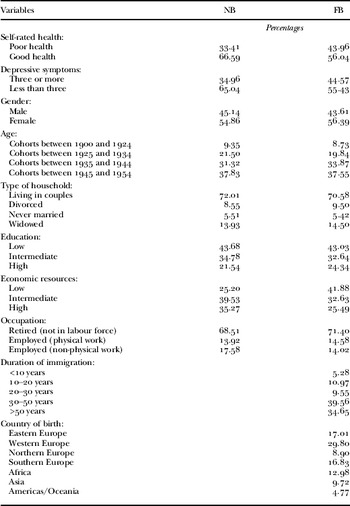
The data used for this analysis include information from 20,591 individuals living in the eight European countries: of these, foreign-born people represented 10.6 per cent (2,183) of the total. The descriptive statistics for the two indicators of health problems and the independent variables used in the multivariate analyses are listed in Table 1. The data compared immigrants with native-born people and showed that immigrants had a lower degree of health satisfaction, in terms of poor self-rated health and depression. Immigrants' self-rated health was less than good for 44 per cent of the sample, as opposed to 33.4 per cent of native-born people. Foreign-born people also reported a higher frequency of depression, and about 45 per cent of them appeared to suffer from depressive symptoms, whereas the percentage for the native-born counterpart was ten points lower. Among immigrants, we indicate the length of residence in the host country: most of them were long-term immigrants (duration longer than 30 years).
Descriptive statistics for native-born (NB) and foreign-born (FB) in eight European countries

Source: SHARE 2004, 20,591 individuals aged 50 and over (18,408 native-born and 2,183 foreign-born).
An analysis by country of birth showed that the majority of migration flows had occurred within Europe. Taking into account individual variables, the sample was characterised by a higher proportion of women than men in the two sub-groups.
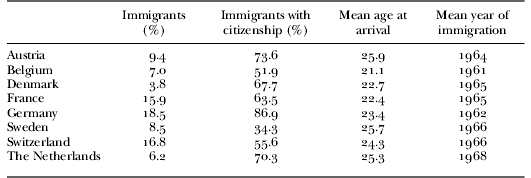
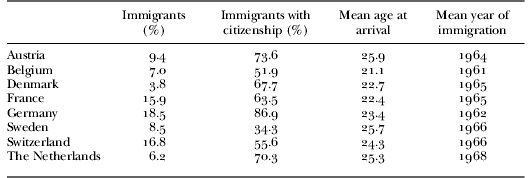
Since we were studying a population aged over 50, it is plausible that the preponderance of women reflected mortality differences more than past differences in immigration. Although the sample ranged in age from 50 to 104, the average age of the entire sample was 65. The differences among countries in mean age between immigrants and native-born populations ranged from five years to less than one year. About 30 per cent of the people answered that they were still employed, whereas about 43 per cent reported a low educational level. A large difference was shown regarding economic resources. Indeed, the data revealed an important result in the relationship between education and financial resources in the two subgroups: in particular, the percentage of native-born with high education level was slightly smaller, but at the same time the proportion of native-born reporting high perception of their economic resources was ten points higher than the foreign-born (35.3 versus 25.5 per cent). As regards the other variables in Table 1, no large differences were found between native-born and immigrants. In order to show the cross-country variability of native/immigrant health differences among the European countries, we first listed in Table 2 the percentage distribution of foreign-born people in each country. The share of immigrants aged 50 and over ranged from 18.5 per cent in Germany to 3.8 per cent in Denmark. Ranking the countries, the highest percentages were recorded in Western European countries such as Germany, France and Switzerland.Footnote 7 The mean age on arrival and the mean year of migration are also listed in Table 2. The data confirm that our sample was made up of immigrants who, in the mid-1960s, when they were aged about 21–26, began to move towards countries with flourishing economies, a great demand for labour and high wage levels (Warnes et al. Reference Warnes, Friedrich, Kellaher and Torres2004).
Characteristics of immigrants by country of residence
Source: SHARE 2004, 20,591 individuals aged 50 and over (18,408 native-born and 2,183 foreign-born).
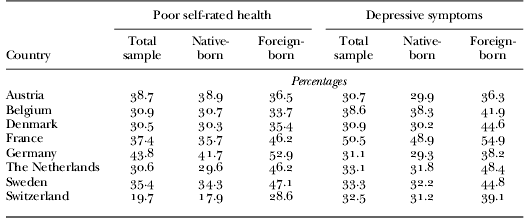
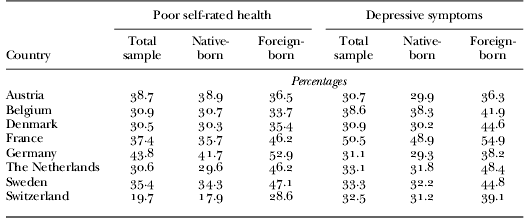
Table 3 compares native-born with foreign-born on the health measures considered and examines variability across the eight European countries. Foreign-born immigrants report worse physical health than their counterparts in all countries except Austria. We note that migrants' health status was particularly precarious in countries with the highest percentages of immigrants, such as France, Germany and Switzerland, where the percentages were more than ten points higher than those of the native-born, in addition to The Netherlands and Sweden. Table 3 also suggests the existence of large differences in reporting ‘depressive symptoms’ between native-born and foreign-born. The data reveal that, compared with the native-born, the foreign-born were more likely to suffer from depressive symptoms in all countries, values ranging from 36.3 per cent in Austria to 54.9 per cent in France, with differences as great as 16 points in The Netherlands.
Share of health problems in total sample by country of residence and nativity
Source: SHARE 2004, 20,591 individuals aged 50 and over (18,408 native-born and 2,183 foreign-born).
Results
Effects of country of origin on poor self-rated health and depression
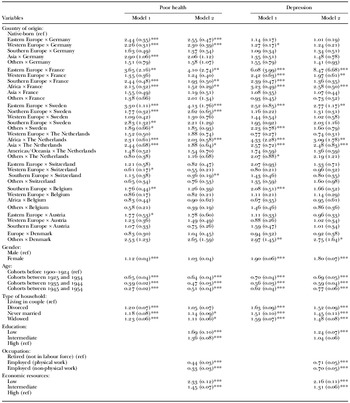
Table 4 shows the logistic regression results of the effect of being foreign-born on poor self-perceived health and depression, examined through the interaction variable ‘country of origin × country of residence’. Whereas the reference group consisted of native-born people, odds ratio (OR) coefficients above 1 indicated poorer health.
Binary logistic regression models: odds ratio for poor health and depression by country of origin

Notes: Standard errors are reported in brackets. ref: reference category.
Source: SHARE 2004, 20,591 individuals aged 50 and over.
Significance levels: * p<0.1,
** p<0.05,
*** p<0.01.
In each country studied, most of the immigrant groups reported worse perception of their health with respect to the reference group. The striking result is that immigrants born in Eastern Europe living in Germany (OR=2.44), France (OR=3.65) and Sweden (OR=3.30) were most likely to report poor self-rated health. Adjustment for socio-economic variables in Model 2 did not reduce these estimates and remained significant. This result reinforces findings in previous literature for Germany, which emphasise that immigrants from Eastern Europe living in Germany were more likely to perceive poor health, notwithstanding improvements in their socio-economic condition (Ronellenfitsch and Razum Reference Ronellenfitsch and Razum2004). In addition, immigrants born in Western Europe living in Germany had significantly higher odds ratios of reporting poor self-perceived health in comparison with natives, as this category includes mainly people born in the former territories of Eastern Germany before reunification, who were at greater risk of being in poor health. Lastly, immigrants born in Asia living in Germany stress their poorer health with respect to the native-born, although the effect declined and was no longer significant when socio-economic factors were controlled for.
Examining France, we note that immigrants born in Southern Europe and Africa were more than twice as likely to report poor health with respect to the native-born. It is worth noting that, in Model 2, the effect of migration did not disappear but did decline significantly. Specifically, the effect of being born in Southern Europe on poor self-rated health fell from 2.44 to 1.93, whereas the ORs for immigrants born in Africa changed from 2.15 to 1.52. This means that the socio-economic explanatory variables included in Model 2 contributed towards lowering the risk of perceiving poor health. A similar pattern was revealed for immigrants born in Southern Europe living in Belgium and Sweden. In the latter country, immigrants from Northern Europe – most of them Finnish – had significantly higher ORs than natives. In The Netherlands, Asian immigrants – mostly from former colonies – were more than twice as likely to rate their health as ‘less than good’ (OR=2.44), which fell in Model 2 (OR=1.88). Conversely, the high risk of poor health for African people resident in The Netherlands, in comparison with natives, remained when SES was included in the model.
Each of the explanatory variables of the model revealed the expected magnitude of the ORs and were statistically significant at the usual level of 5 per cent. Confirming that health worsens with age, the relative risk was much stronger for people not living in couples, retired and with low education. In addition, people who perceived ‘low economic resources’ tended to rate a poor health status, which was more than twice that of people in a better economic state. Comparing estimates with the descriptive statistics of Table 1, in which immigrants tended to report low economic resources, we impute the prevalence of poor health status to immigrants. This may be the result of self-rationing of health-care spending by immigrants in accessing higher-quality medical services for prevention, diagnosis and treatment. Interestingly, women were at a statistically significant risk for poor self-rated health, but only when socio-economic variables were not controlled for.
The results for depressive symptoms showed that most of the immigrant groups had higher rates of depressive symptoms. The same explanatory variables used in the previous models were included. Specifically, the relative risk was much stronger for all immigrants – except Asians – living in France. The probability of rating depressive symptoms was particularly higher for people born in Eastern Europe and Africa (OR=6.08 and 3.23, respectively), whereas immigrants born in Western and Southern Europe were more than twice as likely to suffer from depression than natives. The inclusion of socio-economic indicators did not change the significance of the ORs for people born in Western Europe and Africa living in France but, interestingly, it does cause changes in the magnitude of the ORs. Specifically, the effect of being born in Western Europe on depression falls from 2.42 to 1.97, whereas the ORs for immigrants born in Africa change from 3.23 to 2.58. Socio-economic conditions erased the effect of immigration only for Southern Europeans resident in France. It is worth noting that immigrants born in Eastern Europe and living in France and Sweden were still much more likely to report depressive symptoms, even after socio-economic factors had been taken into account.
Model 2 also shows that the health disadvantage of immigrants, in terms of depression, was not erased by including SES indicators for African and Asian immigrants living in The Netherlands, who had ORs of 3.09 and 2.48, respectively. Conversely, estimates from the logistic model for immigrants originating from extra-European countries (‘Others’) and living in Sweden, and from Southern Europe living in Belgium, indicate that the probability of rating depression declined markedly when socio-economic indicators were controlled for, but was no longer significant. This implies that the addition of SES variables may explain disparities in depression differentials between natives and immigrants. A similar pattern was found for those born in Western Europe living in Germany and immigrants included in the residual category ‘Others’ living in The Netherlands and Denmark, although less statistically significant. All demographic control variables, such as age, gender and type of household, displayed consistent results across both models. We found a negative association between age and depression. Gender was a discriminant variable for depression, women being almost twice as likely to report depressive symptoms than men. As expected, the probability of reporting depressive symptoms was higher for people not living in couples. Not surprisingly, having a low educational level, poor economic security measured by perceived economic resources as ‘low’ and not being in the labour force were all closely associated with depression.
Effects of length of residence and citizenship on poor self-rated health and depression
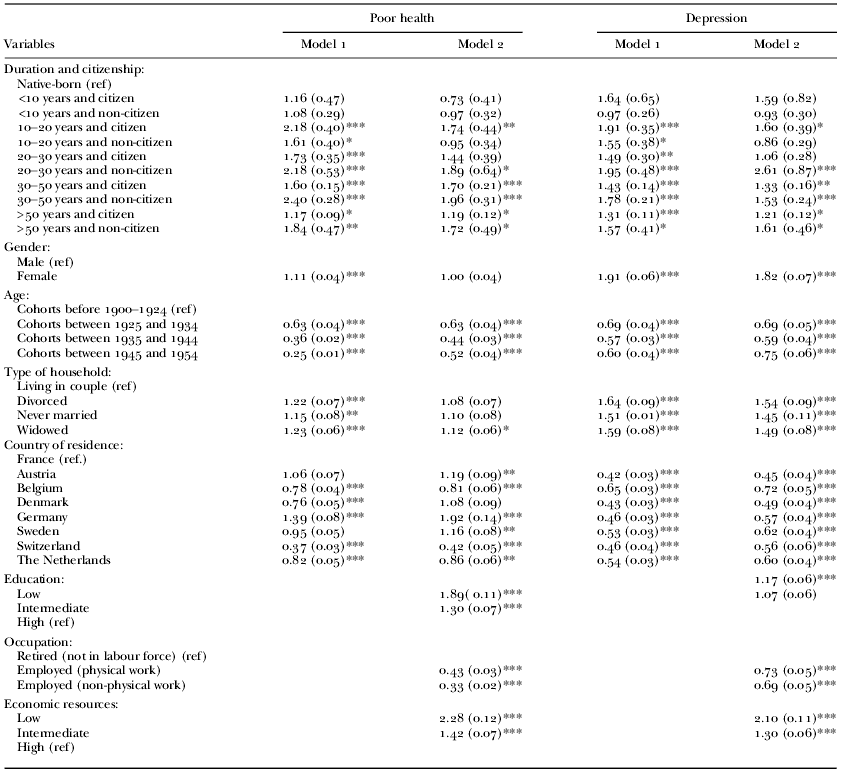
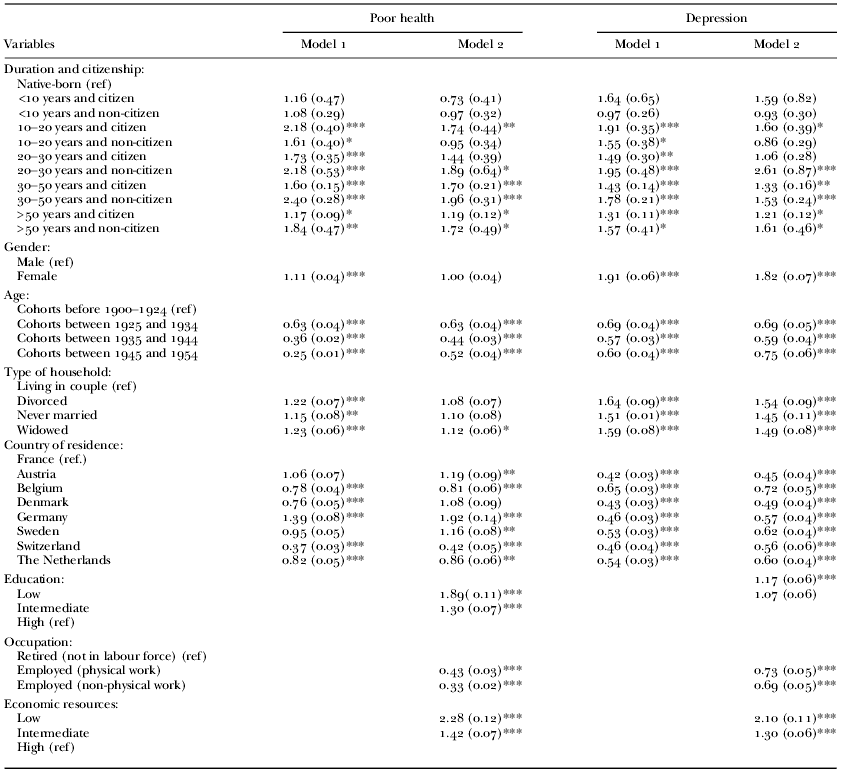
Logistic regression was separately applied to examine in detail the relationship between immigrant status, evaluated by duration of residence and citizenship, and health, and adjusting for socio-economic variables in Model 2 (Table 5).
Binary logistic regression models: odds ratio for poor health and depression by duration of residence and citizenship
Notes: Standard errors are reported in brackets. ref: reference category.
Source: SHARE 2004, 20,591 individuals aged 50 and over.
Significance levels: * p<0.1,
** p<0.05,
*** p<0.01.
The results of Model 1 confirm the hypothesis that the probability of perceiving ‘a poor health status’ is higher for immigrants than for the native-born, with higher ORs for non-citizens who had been residing for more than 10 years. Specifically, ranking respondents from native-born people, short-term and long-term migrants, poor health profiles emerged, especially for non-citizen immigrants who had moved 20–30 years previously (OR=2.18), 30–50 years (OR=2.40) and immigrants with more than 50 years of residence (OR=1.84). Among short-term migrants, we observed higher and significant odds of reporting poor health only for those recording residence between 10 and 20 years, with respect to natives. Under the assumption that the demographic characteristics of migrants and non-migrants are the same and controlling for country of residence, we found that short-term immigration, i.e. lasting less than 10 years, was not statistically significant. The inclusion of socio-economic effects did not substantially change the significance of the ORs, but it is interesting to note that it gave rise to changes in the magnitude of ORs referring to the main explicative interaction variable ‘duration of residence × citizenship’. Specifically, the probability of perceiving poor health for non-citizen foreign-born people who had been residing in the host country for 20–30 years fell from 2.18 to 1.89, whereas the ORs for non-citizen immigrants with residence of 30–50 years changed from 2.40 to 1.96. Also, the odds of reporting poor health decreased for immigrants who had been residing in the host country for more than 50 years and non-citizen and short-term migrants (10–20 years), irrespective of citizenship status. In Models 1 and 2, results for demographic variables are in the expected direction and significant. The well-known inverse correlation between the various indicators of SES and self-perceived health were also evident. The probability of the response variable ‘rating poor health’ was significantly higher for immigrants with lower educational and economic resources and retired. These effects were consistent with the associations outlined above. Note that the ORs for country of residence indicated that people living in Germany had the highest and most significant risk of perceiving poor health status. In summary, there is an apparent gradient between poor self-rated health and duration of immigration; the relative risk is higher for immigrants and increases with length of residence, although the ORs highlight a non-linear pattern between stratified duration classes and poor health.
The estimated ORs of the model specifications for depressive symptoms confirmed the previous results. The probability of having depressive symptoms was higher for almost all immigrants and significant with respect to the native-born. The inclusion of socio-economic effects in estimating the probability of perceiving depressive symptoms did not change the results significantly, except for immigrants who had moved 10–20 years previously, irrespective of citizenship, and citizens with immigration times between 20 and 30 and more than 50 years. Indeed, comparing the estimates of the two models, we can see that noteworthy gains were made in decreasing the likelihood that foreign-born people would report more depressive symptoms than natives. However, the results show also that all disparities in depression are not fully explained, since non-citizen immigrants with duration of residence between 20 and 30 years were still more likely to fall into a depressive state, even after controlling for SES variables. Similarly, the higher risks of depression for the subcategory of immigrants who had been residing in the host country for 30–50 years, which means that they arrived between 1954 and 1974, could not be explained by the socio-economic factors included in Model 2. Lastly, the probability of having depressive symptoms was lower in all countries of residence than in the country of reference ‘France’, supporting the results presented in the descriptive statistics.
Discussion and policy implications
This paper highlights the ‘health vulnerability’ of immigrants aged 50 and over living in Northern and Western Europe. Clearly, the results show that there are differences in self-perceived health and depression between natives and immigrants, but that they are strongly influenced by the related immigration variables as well as by socio-economic characteristics. In each country studied, most of the immigrant groups reported worse perception of their health and had higher rates of depressive symptoms. Nativity, analysed through the interaction between origin and destination countries, duration of residence and citizenship status, clearly contributed in explaining health disparities between immigrants and natives. These results also emphasise that, for particular immigrant groups, the effect of being foreign-born on self-perceived health and depression operates largely through socio-economic characteristics. This implies that immigrants' health disadvantage may diminish as they reach higher socio-economic levels, not very different from those of native-born people, and this consequently explains why the inclusion of socio-economic indicators lessens and in some cases eliminates the predictive values of nativity.
We found that the fact of being born and living in a specific country, in addition to duration of residence and citizenship, determines an increased risk for health status in specific immigrant groups. In particular, people born in Eastern Europe living in Germany, France and Sweden have the highest ORs of poor health with respect to natives, even after controlling for SES, which is in line with several studies (Pudaric, Sundquist and Johansson Reference Pudaric, Sundquist and Johansson2003; Ronellenfitsch and Razum Reference Ronellenfitsch and Razum2004; Vaillant and Wolff Reference Vaillant and Wolff2010). One plausible explanation is that the Eastern European immigrant population was made up of a large number of refugees, asylum-seekers and displaced persons, for whom migration was accomplished in highly adverse conditions, associated with traumatic experiences. This finding may reflect their unfavourable health conditions before leaving their countries of origin, and the high prevalence of risk factors to which these immigrants were exposed in Eastern Europe (Ronellenfitsch and Razum Reference Ronellenfitsch and Razum2004). In France, immigrants born in Southern Europe and Africa seem to encounter more health problems than the native-born, in terms of self-perceived health, although these differences declined when SES were included in the model. As in other studies which have shown that foreign-born people in Sweden rate poor health with respect to natives, we found that immigrants from Northern Europe – most of them Finnish – have significantly higher ORs than natives (Pudaric, Sundquist and Johansson Reference Pudaric, Sundquist and Johansson2003; Sundquist and Johansson Reference Sundquist and Johansson1997). Matching results in the international literature, Asian immigrants – mostly from former colonies – living in The Netherlands reported the worst health situation (Uniken Venema, Garretsen and Van der Maas Reference Uniken Venema, Garretsen and Van der Maas1995), followed by Africans, who reported worse health with respect to natives.
Almost the same pattern was found for depressive symptoms. Even after controlling for differences in SES, we still found significant differences in reporting depressive symptoms for some immigrant groups with respect to natives. For instance, the higher risks of depression for Eastern and Western people and African immigrants in France could not be explained by the socio-economic factors in the models. In addition, Eastern European people living in Sweden, and African and Asian immigrants living in The Netherlands still had higher risks of depressive symptoms than natives.
It is a fact that, from the moment when young immigrants arrive in their country of destination, they undergo a process of acculturation in a new society and are obliged to adapt to living in a new cultural context, which sometimes disrupts their social, cultural and economic connections with their country of origin. Although immigrants are a heterogeneous group, they may have undergone disadvantaged conditions throughout their lives, due to their ‘otherness’ by living in a foreign country, as regards differences in culture, traditions and health beliefs, as well as socio-economic factors. In this sense, their nativity status may be considered a risk factor for poor health. In addition, the past life histories of many migrants may have been characterised by economic difficulties, poverty, discrimination and war, all representing stress factors undermining physical and emotional health. The picture emerging from this study, which shows that immigrants born in Eastern Europe had the highest ORs of poor health and depression, confirms the above description.
Lastly, we found that respondents immigrating after the 1970s (time of immigration between 10 and 30 years) had a greater risk of being in poor health and depression with respect to the native-born. The disadvantaged condition is explained by the fact that immigrants who arrived in the host country 10–30 years ago – that is, from 1974 to 1994 – faced a period characterised by restrictions on immigration imposed by the host government after the energy crisis. Immigrants may have found restricted opportunities because of the sudden halt in recruitment of foreign labour on the part of Western European governments after the recession following the 1973 oil price shock. We also found that immigrants, mostly labour migrants, who made up the mass-migration flows from the 1950s to the 1970s (length of immigration 30–50 years) were also likely to have poorer health than native-born. This group of immigrants, who have now reached old age, arrived and settled in the host country after the Second World War, when the most industrialised countries in Western and Northern Europe welcomed labour migrants who were recruited by local enterprises. According to our model, worse health outcomes for labour migrants are due to the fact that ‘this group includes some of the most disadvantaged and socially excluded of Western Europe's older people’ (Warnes and Williams Reference Warnes and Williams2006).
These results suggest the need for a mix of policy interventions. Since health inequalities may partly be attributed to socio-economic factors, public programmes aimed at reducing health inequalities should aim at compensating for differences among groups in situations such as education, employment, health-care provision, etc. In this sense, we found that economic disadvantages are markedly stronger for the foreign-born, indicating adverse health circumstances for individuals with few economic resources. Correa and Namkoong (Reference Correa and Namkoong1992) have emphasised the effects of socio-economic conditions as the main determinants of the health status of a population, so that health policies aimed at reducing these disparities are even more important than promoting health insurance or services. However, our results indicate that the poorer health status of some immigrant groups is associated with being a foreign-born person, so that culturally based constraints may arise, and efforts simply to expand the availability of health services or gains in socio-economic level may produce little in reducing health inequalities. The situation is further aggravated by the fact that immigrants often find it difficult to receive social protection services because of a lack of information regarding how the host country's administrative procedures actually function, together with difficulty in providing proof of past employment, denial of pension rights, or problems in transferring their pension and social security rights to their country of origin. This interpretation is supported by empirical studies showing that, in comparison with the native-born, immigrants encounter problems in receiving health assistance (Weitzman and Berry Reference Weitzman and Berry1992) and are less likely to have health insurance, while the probability of being employed in low-paying occupations is higher (Borjas and Bronnars Reference Borjas and Bronnars1990).
To sum up, bearing in mind our findings regarding the poorer health status of some older immigrant groups compared with that of the native-born, social planning to understand how immigration will affect the sustainability of the social support and health-care systems is becoming increasingly important. It is a fact that older immigrants now constitute a large and significant group in European countries, and there are strong indications that their numbers will increase, in view of the demographic trends towards an ever-growing aged population. These ‘new potentially fiscal burdens’ represent a new challenge for European policy makers although, in line with the results reported here, we suggest that health inequalities do not affect immigrant groups in equal measure. Therefore, solutions such as increasing and targeting social services and provision of health care to the more disadvantaged groups of immigrants should be implemented.
Acknowledgements
We are grateful to the two journal anonymous referees for their insightful comments. Since this paper was partly based on work carried out during a visiting of Donatella Lanari to the Institut National d'Etudes Démographiques (INED) in Paris, the authors wish to thank Aline Désesquelles (INED) for her valuable suggestions on an earlier version of the manuscript. This research was funded by ‘Consorzio Università – Terni’.