Introduction
Although sleep and circadian rhythm are inherent to human body, in recent history, sleep problems have increased and it will keep this trend. The globalisation process and technological advances have led to a 24/7 society and the increasing night-time use of TV, internet and mobile phones prone to inadequate and interrupted sleep (Ferrie et al., Reference Ferrie, Kumari, Salo, Singh-Manoux and Kivimäki2011). Historically, evidence have shown an association between sleep deprivation and/or fragmentation and bad learning capacity and academic performance (Curcio et al., Reference Curcio, Ferrara and De Gennaro2006), and also with public health issues like motor vehicle crashes with high economic impact (Durmer and Dinges, Reference Durmer and Dinges2005; Pandi-Perumal et al., Reference Pandi-Perumal, Verster, Kayumov, Lowe, Santana, Pires, Tufik and Mello2006). All these findings have led medical society to try to establish the association between short sleep duration and medical entities, suggesting that it is associated with increased risk of stroke (Leng et al., Reference Leng, Cappuccio, Wainwright, Surtees, Luben, Brayne and Khaw2015), coronary heart disease (Cappuccio et al., Reference Cappuccio, Cooper, Delia, Strazzullo and Miller2011), metabolic syndrome (Xi et al., Reference Xi, He, Zhang, Xue and Zhou2014), hypertension (Wang et al., Reference Wang, Xi, Liu, Zhang and Fu2012), central adiposity (Sperry et al., Reference Sperry, Scully, Gramzow and Jorgensen2015), obesity (Wu et al., Reference Wu, Zhai and Zhang2014), type 2 diabetes mellitus (Shan et al., Reference Shan, Ma, Xie, Yan, Guo, Bao, Rong, Jackson, Hu and Liu2015) and a rapid decline in renal function (McMullan et al., Reference McMullan, Curhan and Forman2016). However, short sleep duration is not the only factor related with them. Actually, recent evidence suggests that long sleep duration plays an important role as well, relating it with increased risk of stroke (Leng et al., Reference Leng, Cappuccio, Wainwright, Surtees, Luben, Brayne and Khaw2015), coronary heart disease (Cappuccio et al., Reference Cappuccio, Cooper, Delia, Strazzullo and Miller2011), colorectal cancer (Lu et al., Reference Lu, Tian, Yin, Shi and Huang2013), type 2 diabetes mellitus (Gottlieb et al., Reference Gottlieb, Punjabi, Newman, Resnick, Redline, Baldwin and Nieto2005; Shan et al., Reference Shan, Ma, Xie, Yan, Guo, Bao, Rong, Jackson, Hu and Liu2015), impaired glucose tolerance (Gottlieb et al., Reference Gottlieb, Punjabi, Newman, Resnick, Redline, Baldwin and Nieto2005) and even a cross-sectional observational study suggest that the altered (above or below the median of 7–8 h) usual sleep duration is associated with an increased prevalence of hypertension (Gottlieb et al., Reference Gottlieb, Redline, Nieto, Baldwin, Newman, Resnick and Punjabi2006).
Additionally, sleep duration has been associated with mortality (Youngstedt and Kripke, Reference Youngstedt and Kripke2004; Cappuccio et al., Reference Cappuccio, D'Elia, Strazzullo and Miller2010; Shen et al., Reference Shen, Wu and Zhang2016). Youngstedt and Kripke warned about the U-shaped relationship between the sleep duration and the risk of death and furthermore exposed alternative explanations for this kind of association (Youngstedt and Kripke, Reference Youngstedt and Kripke2004). Later this hypothesis was supported by a systematic review (SR) that indicated that both short sleep duration and long sleep duration are predictors of all-cause mortality among adults (Cappuccio et al., Reference Cappuccio, D'Elia, Strazzullo and Miller2010). More recently, in a meta-analysis (MA) from prospective cohort studies about this issue, the authors found a U-shaped relationship; therefore, they commented that 7 h/day of sleep duration should be recommended to prevent premature death among adults (Shen et al., Reference Shen, Wu and Zhang2016).
Although there are multiple published studies, there is still a lack of high-quality evidence to establish this association as a real one. Furthermore, there are new studies that have not been included in previous SR; therefore, we developed this study which aims to determine the association between the sleep duration and the risk of all-cause mortality in adults.
Methods
We performed this review according to the recommendations of the Cochrane Collaboration and following the PRISMA Statement. The PROSPERO registration number is CRD42017076461.
Eligibility criteria
We included both retrospective and prospective cohort studies, which included adults – no pregnant women. The primary outcome was all-cause mortality determined by each study. For all outcomes, studies should have at least 12 months duration for follow-up and the outcome. There were no setting or language restrictions.
Information sources
Literature search was conducted in accordance to recommended (Robinson, Reference Robinson2002). We used medical subject headings (MeSH), Emtree language, Decs and text words related to sleep duration and mortality. We searched MEDLINE (OVID), EMBASE, LILACS and the Cochrane Central Register of Controlled Trials (CENTRAL). To ensure literature saturation, we scanned references from relevant articles identified through the search, conferences, thesis databases, opengray, Google scholar and clinicaltrials.gov, among others. We contacted authors by e-mail in case of missing information.
Data collection
We reviewed each reference by title and abstract. Then we scanned full texts of relevant studies, applied pre-specified inclusion and exclusion criteria and extracted the data. Disagreements were resolved by consensus.
We independently extracted the following information from each article using a standardised form: study design, geographic location, authors names, title, objectives, inclusion and exclusion criteria, number of patients included, losses to follow-up, timing, definition of short, regular and long sleep duration, method to measure sleep duration, definitions of outcomes, outcomes and association measures, sleep duration and funding source.
Risk of bias
The assessment of the risk of bias for each study was made using a modified Cochrane Collaboration tool for assessing the risk of bias, which covers: selection of participants (selection bias), comparability between groups (selection bias), conflict of interest, confounding control, statistical methods, selective reporting (detection and information bias), assessment of the outcome, follow-up long enough and lost to follow-up. Two independent researchers judged about the possible risk of bias from extracted information, rated as ‘high risk’, ‘low risk’ or ‘unclear risk’.
Data analysis/synthesis of results
The statistical analysis was performed using Review Manager 5.3 (RevMan® 5.3). For categorical outcomes, we reported information about risk differences (RD) with 95% confidence intervals (CI), and we pooled the information with a random-effect MA according to the heterogeneity expected. The results were reported in forest plots of the estimated effects of the included studies with a 95% CI. Heterogeneity was evaluated using the I 2 test. For the interpretation, it was determined that the values of 25, 50 and 75% in the I 2 test correspond to low, medium and high levels of heterogeneity, respectively.
Publication bias
An evaluation was conducted to identify reporting or publication bias using the funnel plot.
Sensitivity analysis
We performed sensitivity analysis extracting weighted studies and running the estimated effect to find differences.
Subgroup analysis
• Gender
• Intervals of sleep duration
• Short or long sleep duration
Results
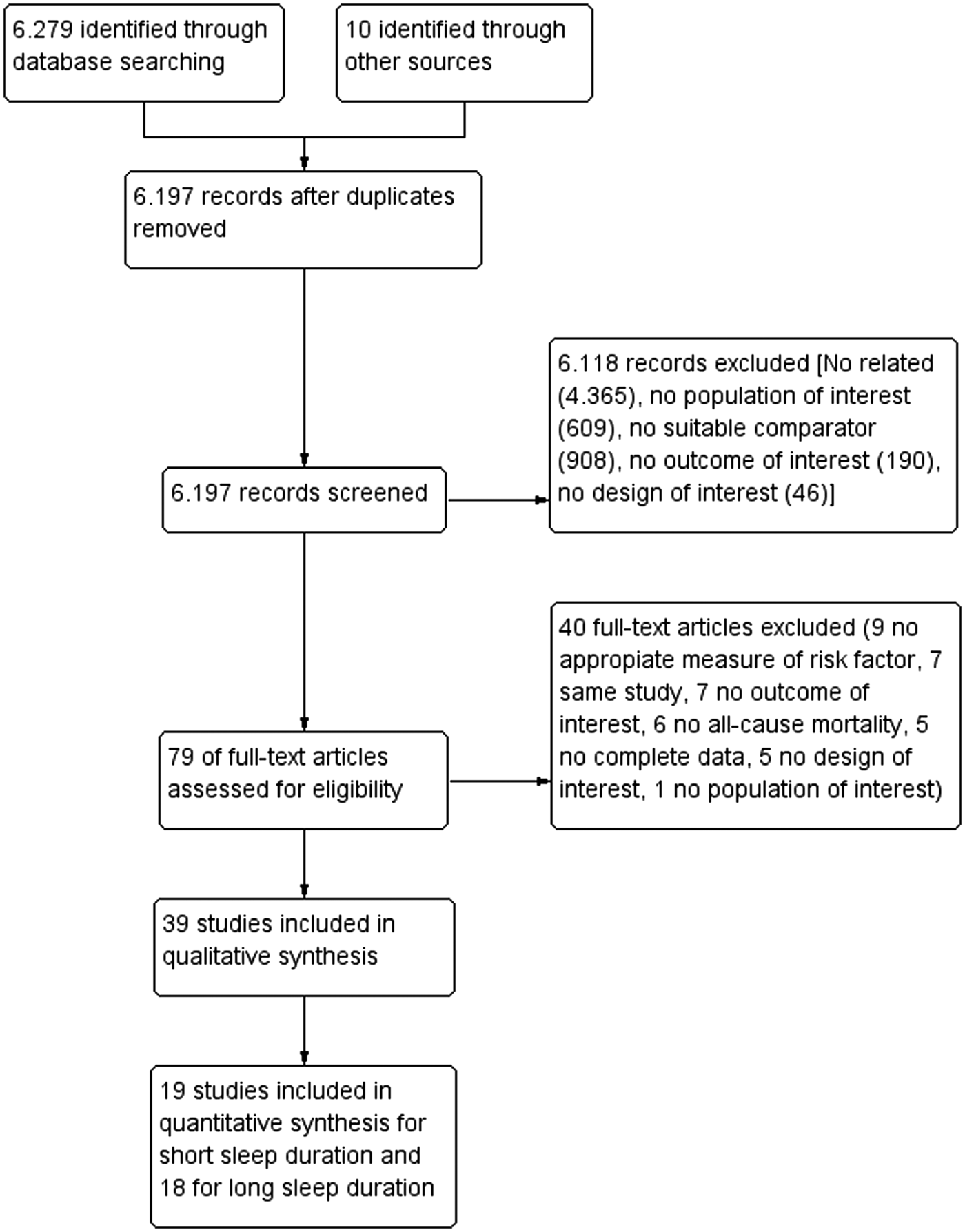
A total of 6289 studies were found with the designed search strategies, with a total of 6197 after duplicates were removed. Finally, 39 studies were included in our SR; however, to perform an MA, we grouped data into three different groups – <7 h, 7–9 h (reference) and more than 9 h – due to the heterogeneity between studies. We excluded the studies that overlapped these intervals from the MA; thus, 19 studies were included in <7 v. 7–9 h MA, and 18 studies in the >9 v. 7–9 h MA (Fig. 1).
Flow chart of included studies.

Included studies
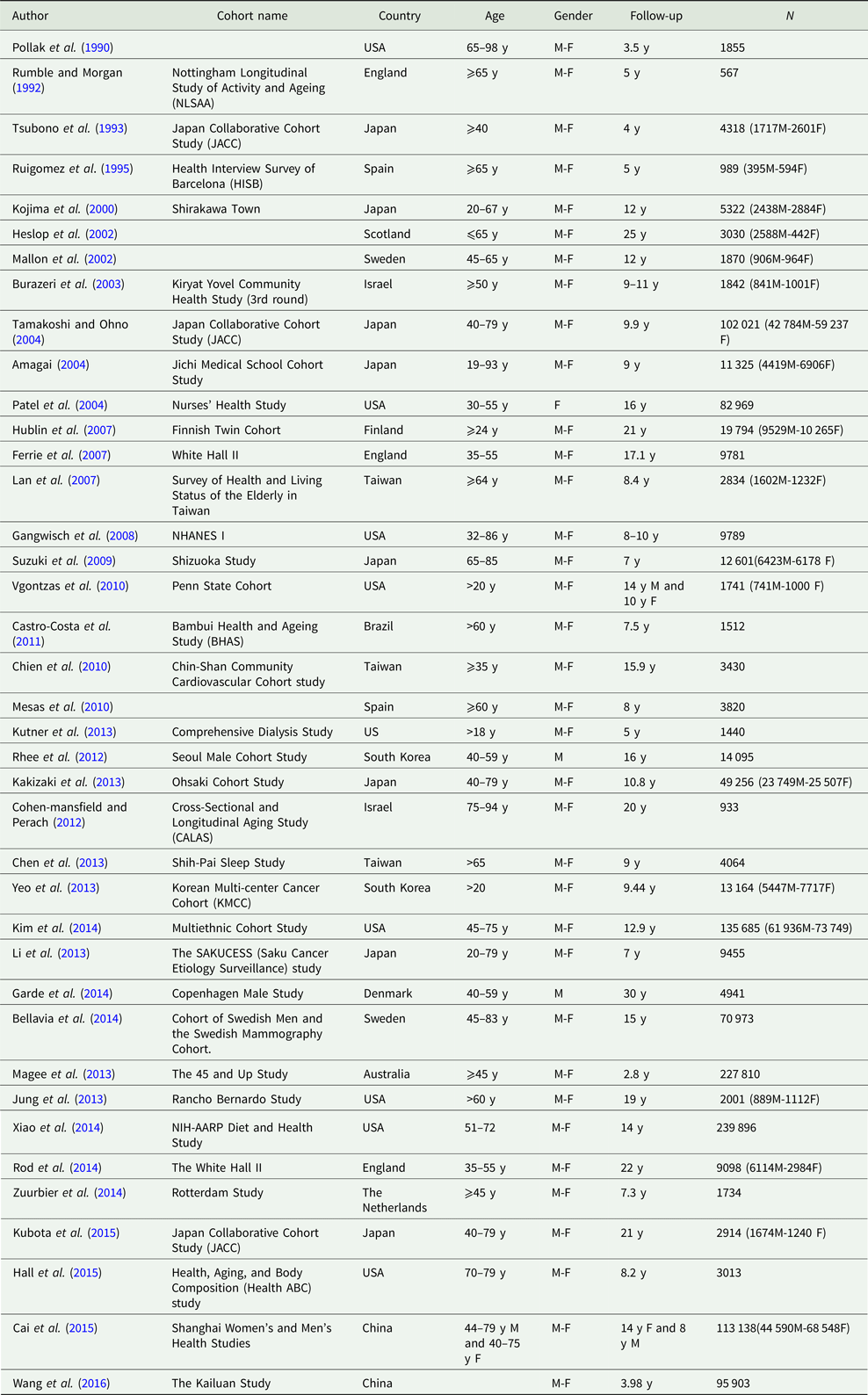
Although our starting inclusion criterion was to include clinical trials additionally to cohort studies, none of them was found (Fig. 1). Thirty-nine studies were included in our SR; the reference for normal sleep duration was heterogeneous and the definition for short and long sleep duration varies between studies. Other characteristics were also heterogeneous, for instance included patients that vary from 567 to 135.685, follow-up durations going from 2.8 to 30 years and Africa was the only continent without representation in our study (Table 1). Furthermore, three studies excluded the deaths within 2 years after baseline (Tamakoshi and Ohno, Reference Tamakoshi and Ohno2004; Lan et al., Reference Lan, Lan, Wen, Lin and Chuang2007; Castro-Costa et al., Reference Castro-Costa, Dewey, Ferri, Uchôa, Firmo, Rocha, Prince, Lima-Costa and Stewart2011), and in these cases, these data were included; other study (Heslop et al., Reference Heslop, Smith, Metcalfe, Macleod and Hart2002) made two measurements and reported the results for who did not change the sleep duration, and in this case, these data were included.
Characteristics of included studies

y, years; M, male; F, female.
We excluded Gale and Martyn's study because the risk to measure was time in bed, and no sleep duration was reported (Gale and Martyn, Reference Gale and Martyn1998). Other studies were excluded because they did not report the sleep duration adequately (scales or short and long sleep duration pooled together) (Wingard, Reference Wingard1982; Wingard et al., Reference Wingard, Berkman and Brand1982; Martínez-Gómez et al., Reference Martínez-Gómez, Guallar-Castillón, León-Muñoz, López-García and Rodríguez-Altalejo2013; Ding et al., Reference Ding, Rogers, van der Ploeg, Stamatakis and Bauman2015; Stamatakis et al., Reference Stamatakis, Rogers, Ding, Berrigan, Chau, Hamer and Bauman2015).
Risk of bias
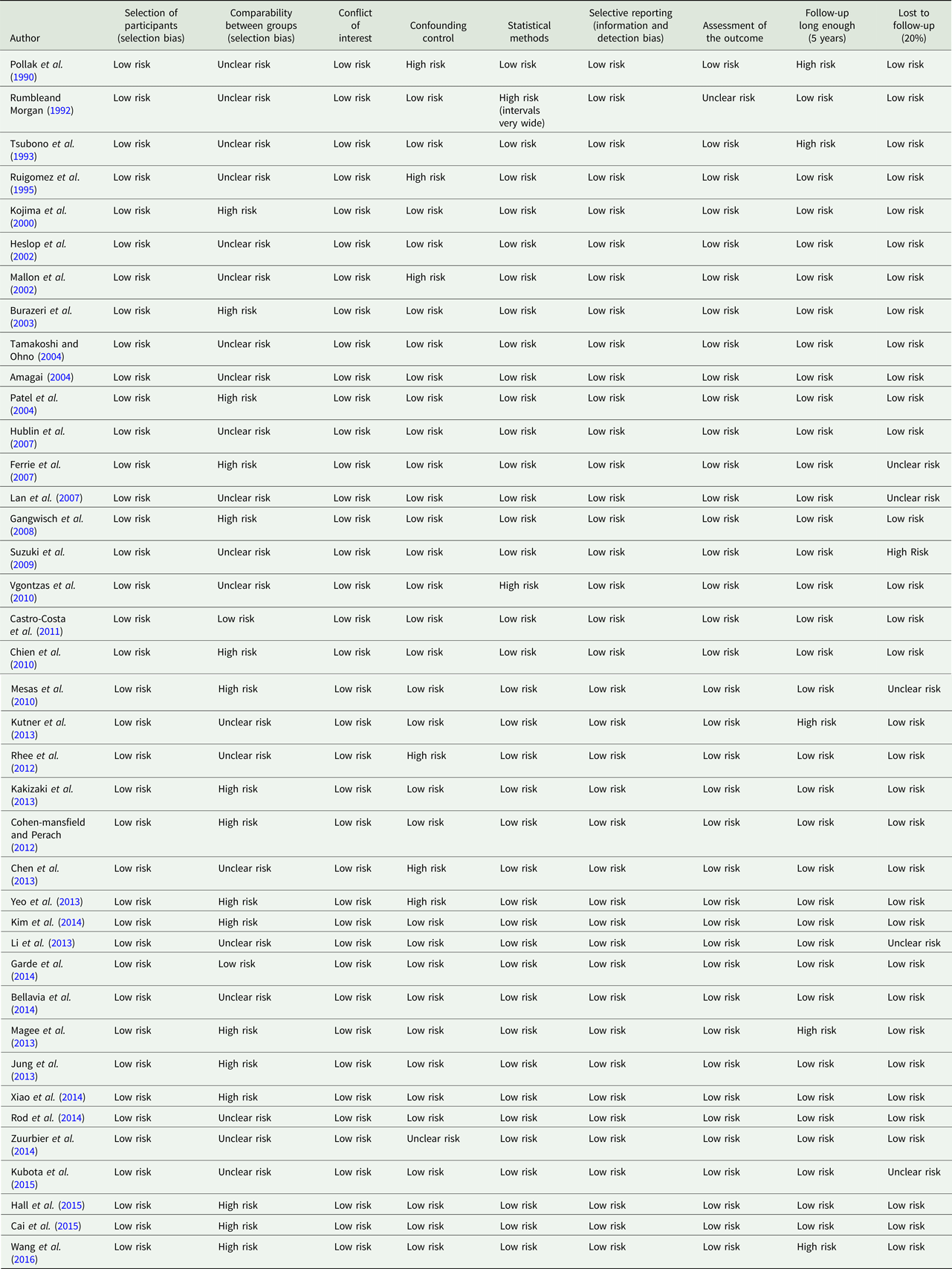
The risk of bias was assessed with a modified Cochrane Collaboration tool (explained above). Although the item for comparability between groups was warning, we have to remark the control they offered for confounding; besides a multivariate analysis in almost all the studies. The assessment of the outcome was graded as low risk in almost all the studies, since they used a good strategy to identify mortality within each population; furthermore, low risk was predominant in remaining items (Table 2).
Risk of bias assessment of included studies

Sleep duration and all-cause mortality
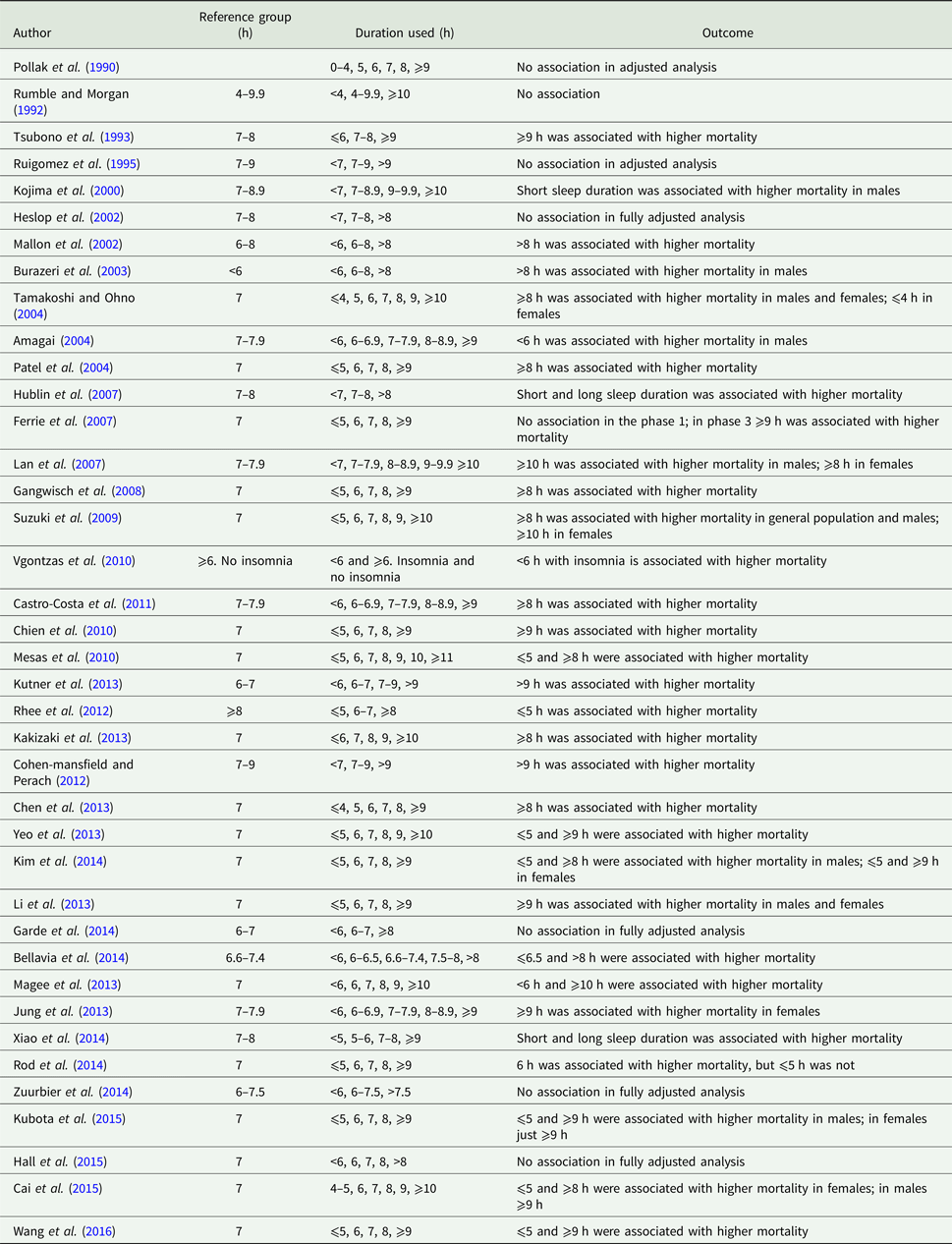
The results varied among studies, but most of them reported a higher mortality in long sleep duration groups, while short sleep duration was more controverted (Table 3). Tsubono et al. (Reference Tsubono, Fukao and Hisamichi1993) and Kubota et al. (Reference Kubota, Iso, Ikehara and Tamakoshi2015) had the same cohort (Japan Collaborative Cohort Study), both showed the basic data; however, Kubota et al. (Reference Kubota, Iso, Ikehara and Tamakoshi2015) had more participants and longer follow-up period; therefore, we excluded Tsubono et al.’s (Reference Tsubono, Fukao and Hisamichi1993) data from our MA. Additionally Ferrie et al. (Reference Ferrie, Shipley, Cappuccio, Brunner, Miller, Kumari and Marmot2007) and Rod et al. (Reference Rod, Kumari, Lange, Kivimäki, Shipley and Ferrie2014) also had the same cohort (The White Hall II), but in this case, Ferrie et al. (Reference Ferrie, Shipley, Cappuccio, Brunner, Miller, Kumari and Marmot2007) did not show the basic data, thus this (Ferrie et al., Reference Ferrie, Shipley, Cappuccio, Brunner, Miller, Kumari and Marmot2007) was the excluded study.
Results within studies

h, hours.
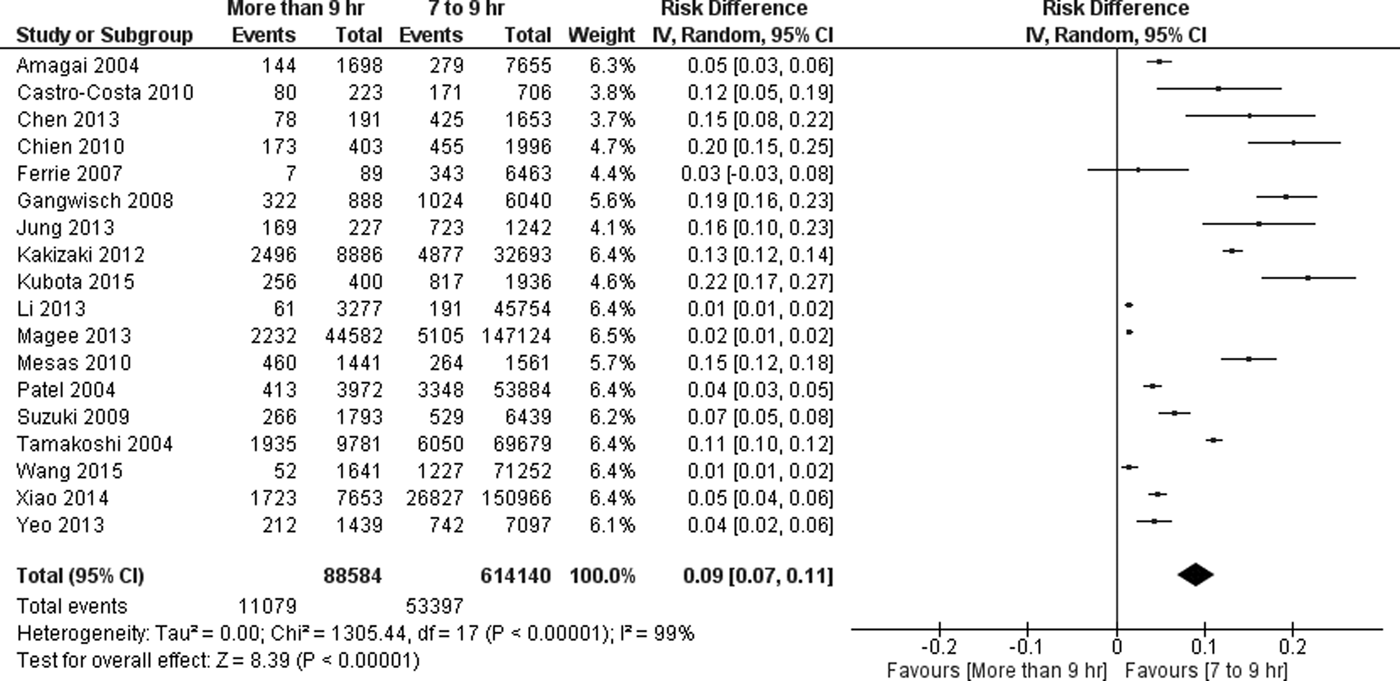
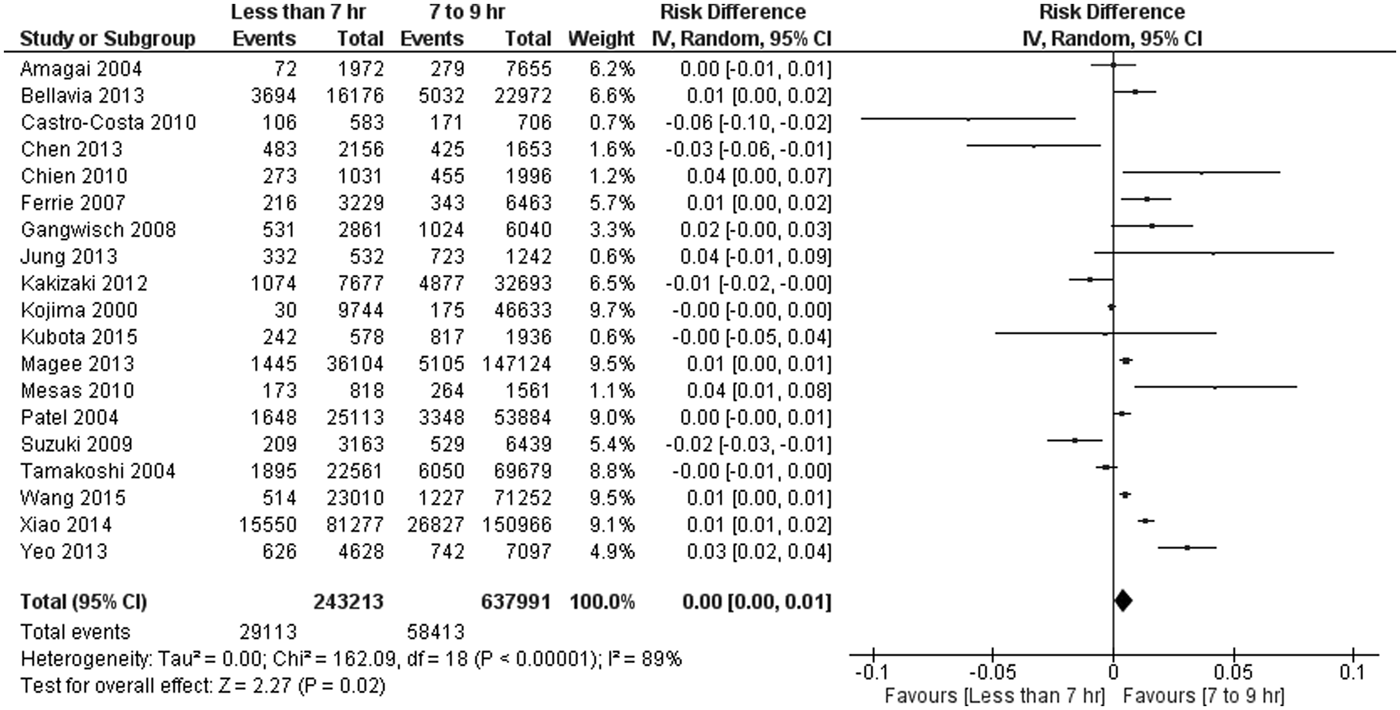
We found an overall RD of 0.09 (95% CI 0.07–0.11) (Table 4) (Fig. 2) favouring mortality in the >9 h group. In contrast, no differences were found between the <7 h and the reference sleep duration groups (RD 0.00, 95% CI 0.00–0.01) (Fig. 3). Similar outcomes were found in the subgroup gender analysis (Table 4).
Meta-analysis of included studies for long sleep duration. Outcome: mortality.

Meta-analysis of included studies for short sleep duration. Outcome: mortality.

Subgroup analysis

h, hours; Ref, reference.
*Statistically significant.
Discussion
Summary of the main results
All-cause mortality
Previous SR and MA showed a U-shaped association between sleep duration and mortality (Cappuccio et al., Reference Cappuccio, D'Elia, Strazzullo and Miller2010; Shen et al., Reference Shen, Wu and Zhang2016); however, in our study, we did not find a real association with short sleep duration. We might say that it was an unexpected finding but a really interesting one. Regarding previous SR, Cappuccio et al. in their MA (Cappuccio et al., Reference Cappuccio, D'Elia, Strazzullo and Miller2010) did not establish a well-defined parameter for short or normal sleep duration; thus, the comparison was made with many different definitions depending on each study; on the other hand, long sleep duration results were reproducible in our study. Shen et al. in a recent MA (Shen et al., Reference Shen, Wu and Zhang2016) found an association with both short and long sleep duration, but for longer duration, the association is clearly stronger, and for short duration, the association might be questioned, since it may have occurred for overlapping hours. Therefore, we grouped the studies according to definitions, by exact hours of sleep to prevent overlapping.
Long sleep duration
It is notable that in spite of long sleep duration seems a predictor of mortality, causality is unlikely. We cannot establish if there is any condition that predisposes to greater sleep duration. Magee et al. (Reference Magee, Holliday, Attia, Kritharides and Banks2013) found a higher mortality in the <6 and ⩾10 h durations in the entire cohort, but additionally they performed a healthy and unhealthy groups analysis. In the healthy group, no association was found, meaning that sleep duration would be influenced by other conditions, which are the real reasons of higher mortality; however, other studies found association regardless of health status (Patel et al., Reference Patel, Ayas, Malhotra, White, Schernhammer, Speizer, Stampfer and Hu2004; Mesas et al., Reference Mesas, López-García, León-Muñoz, Guallar-Castillón and Rodríguez-Artalejo2010). It is also possible that in this study, long sleep duration group has a greater number of old people; however, most of included studies in our analysis had adjusted analysis with a large number of variables – including age – and association was more consistent with this group. Therefore, these results suggested that long sleep duration should be an independent predictor of all-cause mortality.
The explanations to this association are still in theoretical field. Proposed mechanisms for mortality associated with long sleep include (Grandner and Drummond, Reference Grandner and Drummond2007; Shen et al., Reference Shen, Wu and Zhang2016): (1) long sleep is linked to increased sleep fragmentation that is associated with a number of negative health outcomes; (2) long sleep is associated with feelings of fatigue and lethargy that may decrease resistance to stress and disease; (3) changes in cytokine levels associated with long sleep increase mortality risk; (4) long sleepers experience a shorter photoperiod that could increase the risk of death in mammalian species; (5) a lack of physiological challenge with long sleep decrease longevity; (6) underlying disease processes mediate the relationship between long sleep and mortality.
Some patients with neurologic and/or systemic alterations, which modify the quality of dream, could compensate with an increase in total sleep duration, being a marker of disease and, indirectly at least from a theoretical point of view, of mortality.
Short sleep duration
Alterations in the circadian cycle including sleep restriction have been documented in various mammalian and non-mammalian animal models as a risk factor for mortality (Snyder et al., Reference Snyder, Molk and Treuting2013).
Sleep restriction has been associated with different metabolic alterations. The reduction of total sleep duration increases blood pressure, induces insulin resistance and is associated with weight gain and obesity (Grandner et al., Reference Grandner, Jackson, Gerstner and Knutson2014). Consequently, sleep restriction is a recognised risk factor for cerebrovascular disease, an important cause of mortality (Eguchi et al., Reference Eguchi, Pickering, Schwartz, Hoshide, Ishikawa, Ishikawa, Shimada and Kario2008). Sleep restriction has also been associated with dysfunction of the immune system, negative nitrogen balance and protein catabolism (Friese, Reference Friese2008). In addition, chronic sleep deprivation is fatal in humans, as is the case in patients suffering from fatal familial insomnia, a degenerative brain disorder that results in death between 6 and 24 months from the onset (Manetto et al., Reference Manetto, Medori, Cortelli, Montagna, Tinuper, Baruzzi, Rancurel, Hauw, Vanderhaeghen and Mailleux1992). In this study, no increased risk was identified in the group of <7 h of sleep, with boundary hours to 7 being unlikely to represent a risk and to be part of the variability of normal sleep time in the general healthy population. The observed effect of increased risk of mortality with sleep deprivation is best identified with lower total sleep time (<5 h). However, with <4 h of sleep, there are no differences, probably in association with the low number of studies.
Strengths and limitations
The main strength of our study was the well-defined comparison groups. Previous studies used the particular definition from each study to determine the association between sleep duration and mortality; however, we have noticed that many patients were lost to analysis since they were in groups that overlapped with our definition, or – in some studies – the data were shown with measures of association, and the number of patients was not provided. Although all the studies were cohorts, it is unlikely that clinical trials could be performed on this topic due to ethic and methodological issues. Additionally, we suggest that more studies must be performed to evaluate sleep quality, sleep disturbances and other dimensions because sleep duration is just one of sleep-related variables and perhaps molecular studies would be important trying to explain this outcome and the association with mortality.
Conclusion
According to the results, we found a probable association of long sleep duration and higher mortality; however, it could reflect an underlying systemic or neurological disease that causes sleep fragmentation, deterioration in quality and micro-awakenings. We recommend further high-quality studies to establish a well-defined association between sleep duration and mortality since we found many gaps in the literature.
Supplementary material
The supplementary material for this article can be found at https://doi.org/10.1017/S2045796018000379.
Data
Data have not been published. The authors could share it if anybody requests it.
Acknowledgement
We thank every men and women involved in cohorts included in our research.
Financial support
None.
Conflict of interest
None.
Ethical standards
This systematic review and meta-analysis accomplishes all the ethics requirements according to Helsinki declaration and all international statements.