Introduction
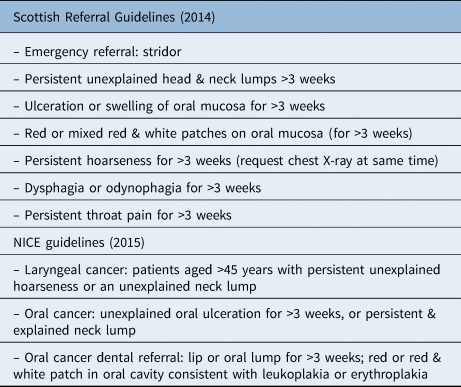
Patients are referred for urgent assessment when they have a cardinal ‘red flag’ symptom of head and neck cancer. In the UK, these red flags are reported in either the National Institute for Health and Care Excellence ‘Suspected cancer: recognition and referral’ guidelines (2015)1 or the Scottish Referral Guidelines for Suspected Cancer (2014)2 (Table 1). The head and neck urgent referral cancer pick-up rate is low, at 8–10 per cent, when compared to other specialties such as urology (50 per cent) and colorectal cancer (23 per cent).Reference Mathew and Desai3,Reference Hamilton and Sharp4
Referral guidelines for suspected head and neck cancer

NICE = National Institute for Health and Care Excellence
The reasons for this are multifactorial, and include patients’ demographics, patients’ expectations, primary care education and local services. Public awareness of head and neck cancer symptoms is low.Reference Luryi, Yarbrough, Niccolai, Roser, Reed and Nathan5 Public awareness campaigns have focused on oral cancer, but this has failed to translate into improved cancer pick-up rates from the two-week wait referral route in England or the ‘urgent suspicion of cancer’ route in Scotland.
Patient knowledge surrounding cancer presentation is important, and literature calls for studies into patient education and understanding of symptoms.Reference Megwalu6,Reference Beitler, Chen, Jacobson, Owens, Edwards and Johnstone7 The value of this is not clear given the low cancer pick-up rate for current red flag symptoms. If referral criteria are suboptimal, then patient symptom knowledge is also likely to be lacking. Previous evidence shows that only 60 per cent of ‘urgent suspicion of cancer’ appointments are compliant with referral guidelines, suggesting that there is a lack of knowledge in the referral process for red flag symptoms also.Reference Fingland, Carswell, Tikka, Douglas and Montgomery8
It is less well understood which symptoms out-patients have concerns about, and what their expectations are. Expectation management in the out-patient setting can improve patient satisfaction following consultation.Reference Crosbie, McKendrick, Corson, Lowit and MacKenzie9 Decreased health literacy is associated with later disease presentation and avoidance of presentation to health services.Reference Morris, Field, Wagner, Cutrona, Roblin and Gaglio10
This study aimed to gain knowledge about which symptoms patients have concerns about, and what patients’ expectations of attending an ‘urgent suspicion of cancer’ referral appointment are.
Materials and methods
A total of 250 consecutive new patients referred to the ‘urgent suspicion of cancer’ clinic were asked to complete a questionnaire prior to being seen by the head and neck surgeon (Appendix 1). Data were collected over a three-month period (1st October 2017 to 31st December 2017) in the Queen Elizabeth University Hospital, Glasgow. Responses were recorded anonymously. The questionnaire comprised open and closed questions, and qualitative responses were grouped into themes. Significance testing was performed with the Stats Pad version 2.02 analysis package (Consensio Works, Boise, Idaho, USA), using the t-test for continuous data and the chi-square test for categorical data.
Ethical considerations
Research ethics committee advice was sought using the online tool from the National Health Service Health Research Authority and Medical Research Council, and ethical approval was not required.11
Results
Demographics and diagnostic groupings
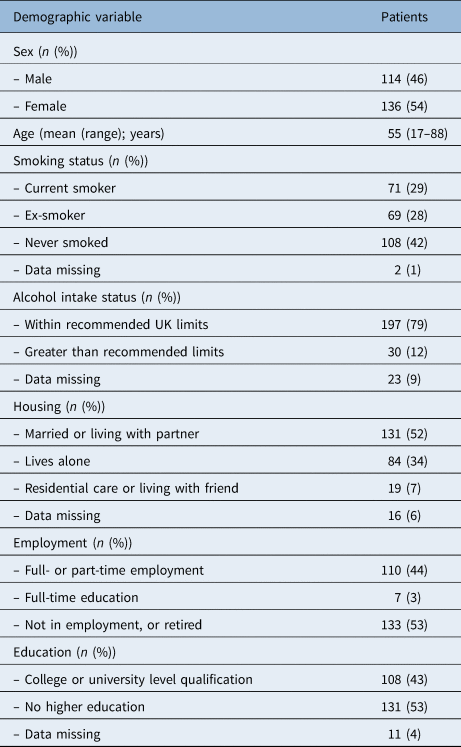
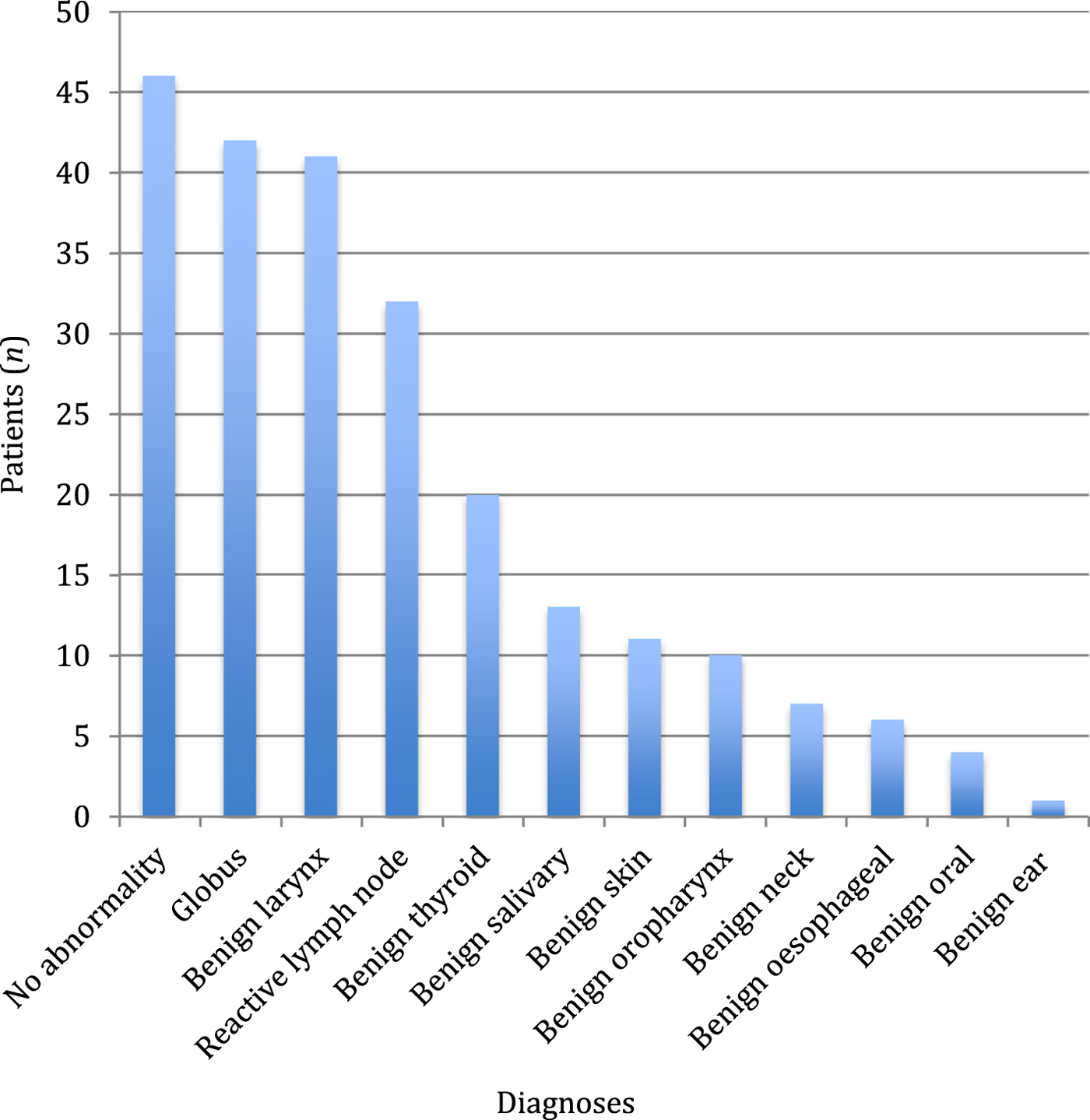
Demographic data are shown in Table 2. Of the 250 patients, 233 (93 per cent) did not have cancer and 17 (7 per cent) had a diagnosis of cancer. Of the 233 non-cancer patients, the most frequent diagnosis, in 46 patients (20 per cent), was ‘no abnormality detected’, followed by ‘globus sensation’ in 42 patients (18 per cent) (Figure 1). Of the 17 patients diagnosed with cancer, 9 had head and neck cancer, 6 had lymphoma, 1 had lung cancer and 1 had malignant skin cancer.

Chart of non-cancer diagnoses.

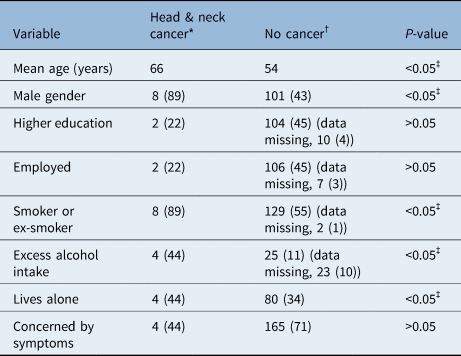
When the patients without cancer were compared to the head and neck cancer patients, the non-cancer patients were significantly younger, more likely to be female, more likely to have attended higher education institutes, less likely to smoke and less likely to drink alcohol to excess. These results are tabulated in Table 3.
Comparison between head and neck cancer and non-cancer patients

Data represent numbers (and percentages) of patients, unless indicated otherwise. *n = 9; †n = 233. ‡Indicates statistical significance
Presenting symptoms
For analysis purposes, ‘red flag’ symptoms were grouped according to the Scottish Referral Guidelines for head and neck cancer, with the addition of globus. Globus was recorded as a category in light of its frequency.
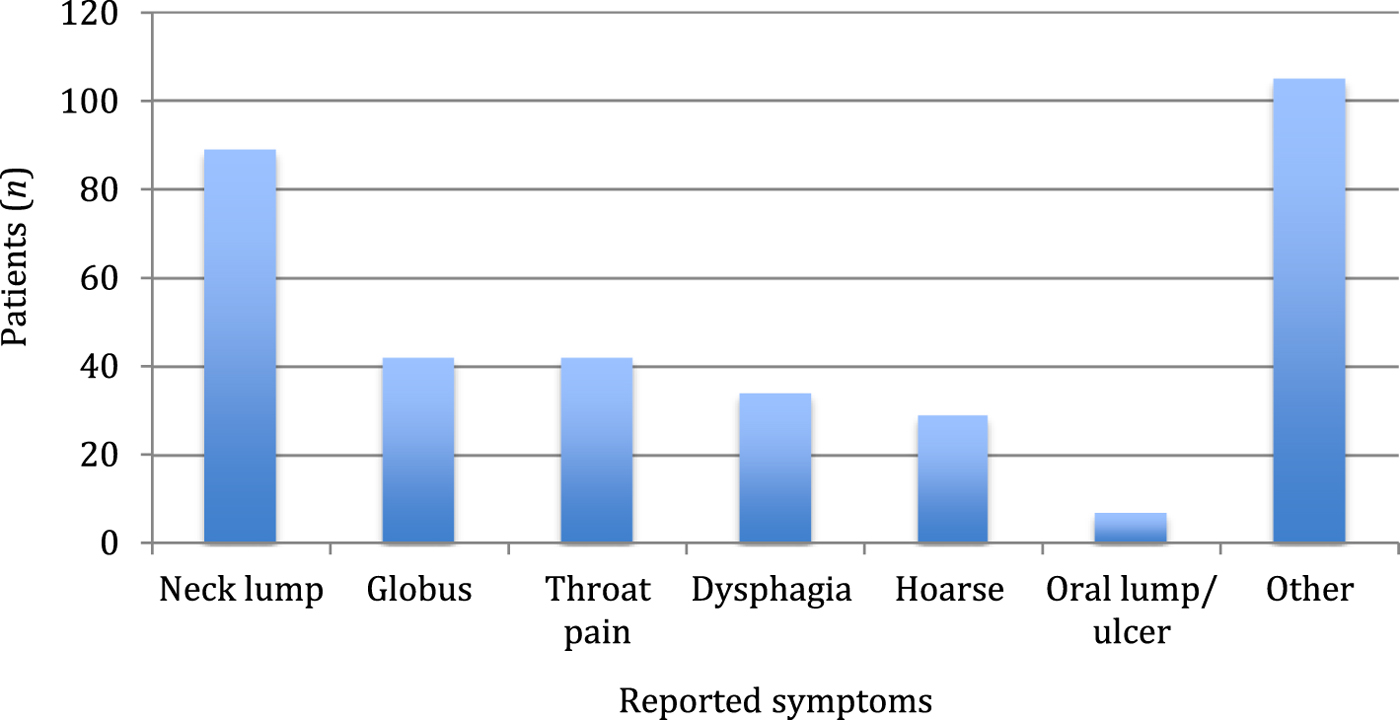
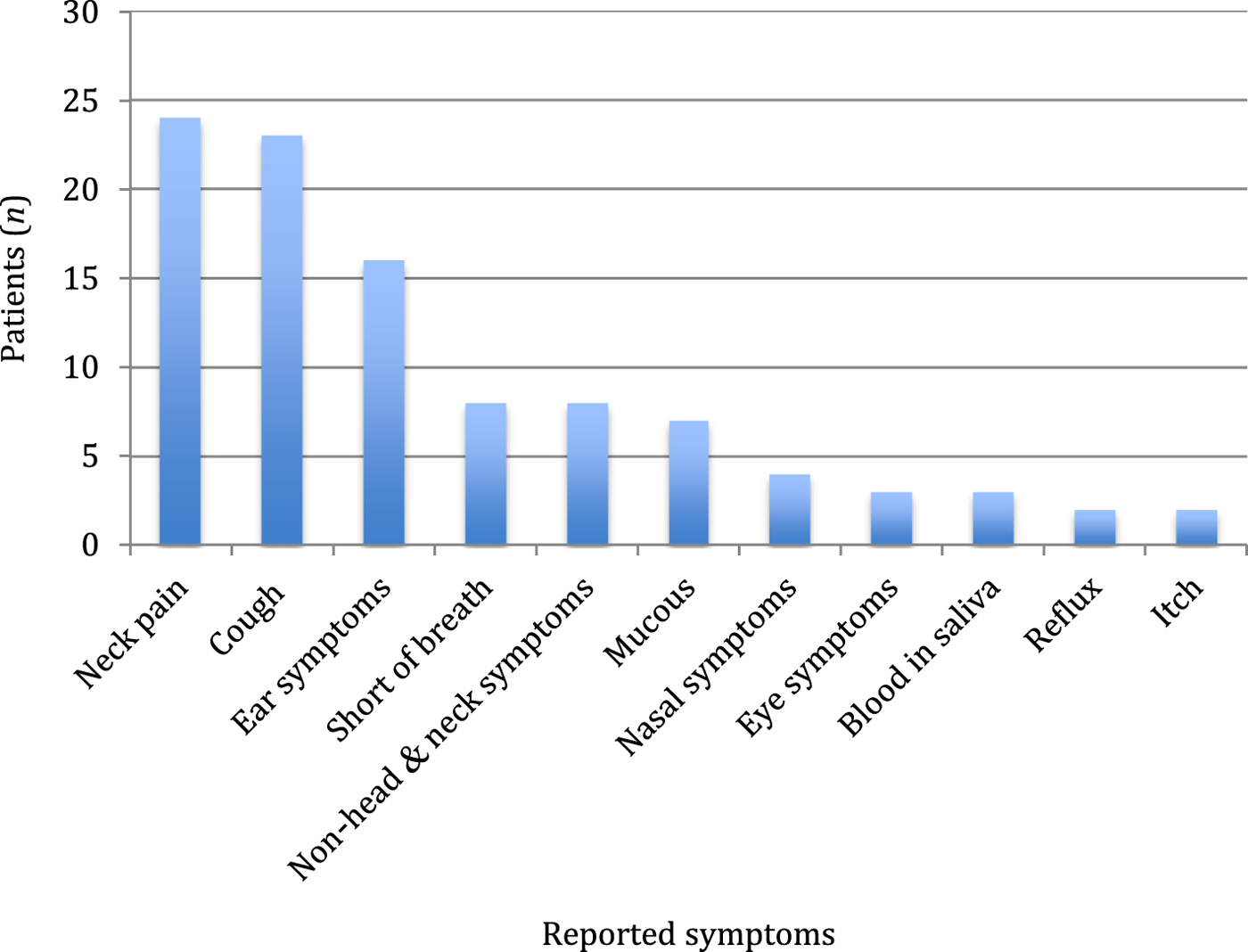
Seventy-eight patients (31 per cent) reported non-red flag symptoms. The single most reported red flag symptom was ‘neck lump’, in 89 patients (35 per cent) (Figure 2). A final category of ‘other’ was also recorded. This covered a multitude of symptoms (Figure 3). Most patients presented with one symptom (n = 152, 61 per cent) and the remainder had multiple symptoms (n = 98, 39 per cent). Virtually all cancer diagnosis patients (16 out of 17) self-reported a red flag symptom, apart from one patient, who did admit to a neck lump during the history-taking process.
Patient-reported symptoms.

Non-‘red flag’ patient-reported symptoms.

Symptoms associated with concern
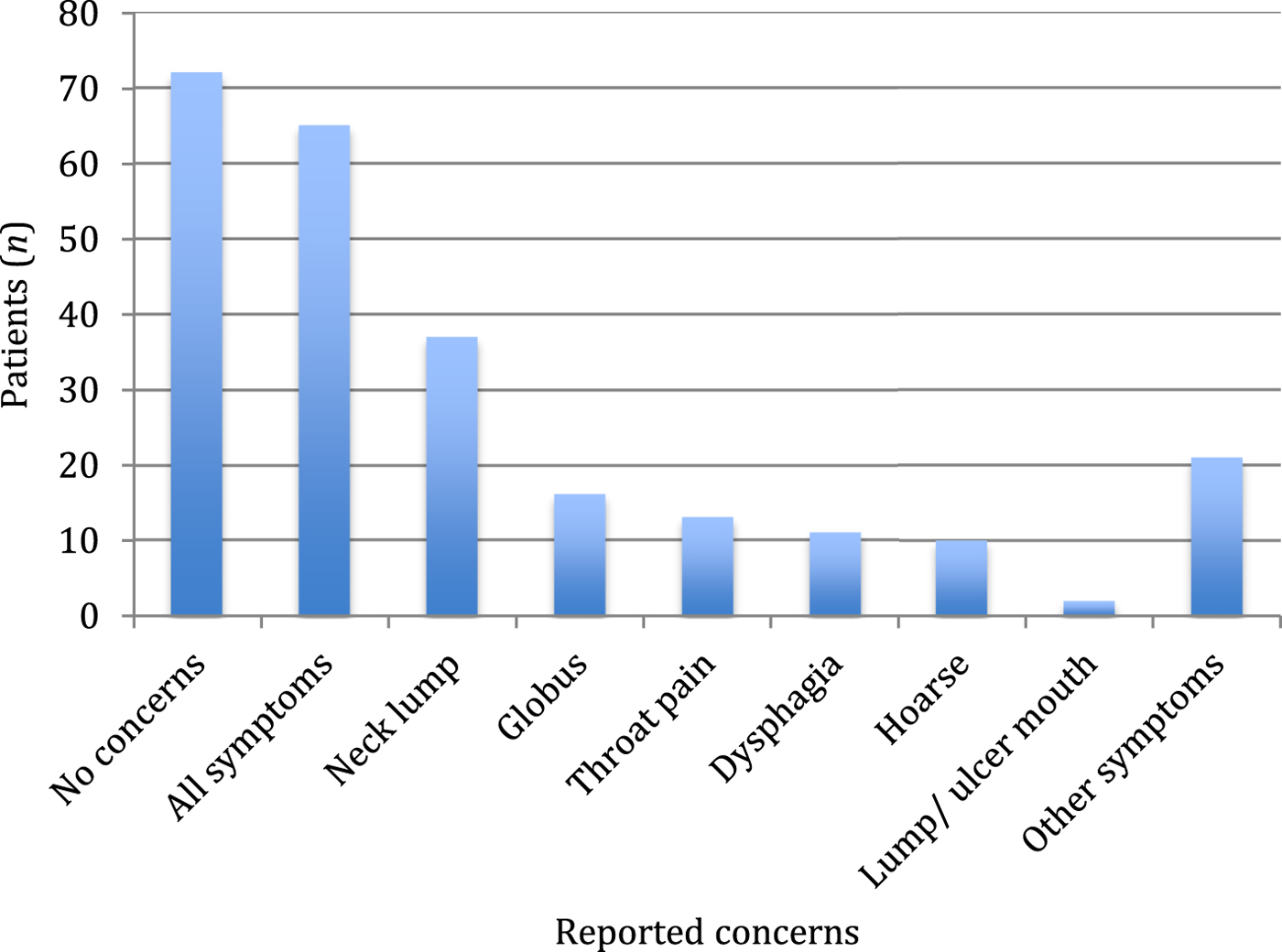
Patients were asked ‘which symptoms if any cause them concern’. For analysis, their answers were grouped into themes (Figure 4). The most common response was ‘no concerns’, with 72 patients (29 per cent) reporting this. Sixty-five patients (26 per cent) reported ‘all symptoms’ as a cause for concern. Neck lump was a symptom that caused concern in 37 patients (17 per cent); however, this represents less than half of the 89 patients who presented with a neck lump.
Concerns of patients attending clinic.

Of the 65 patients who felt concerned about all of their symptoms, 47 (72 per cent) had a red flag symptom and 18 (28 per cent) expressed concern about non-red flag symptoms. Of the 17 patients (7 per cent) who presented with cancer, one-third (n = 6, 35 per cent) reported that they had no concerns or worries about their symptoms.
Patients’ expectations
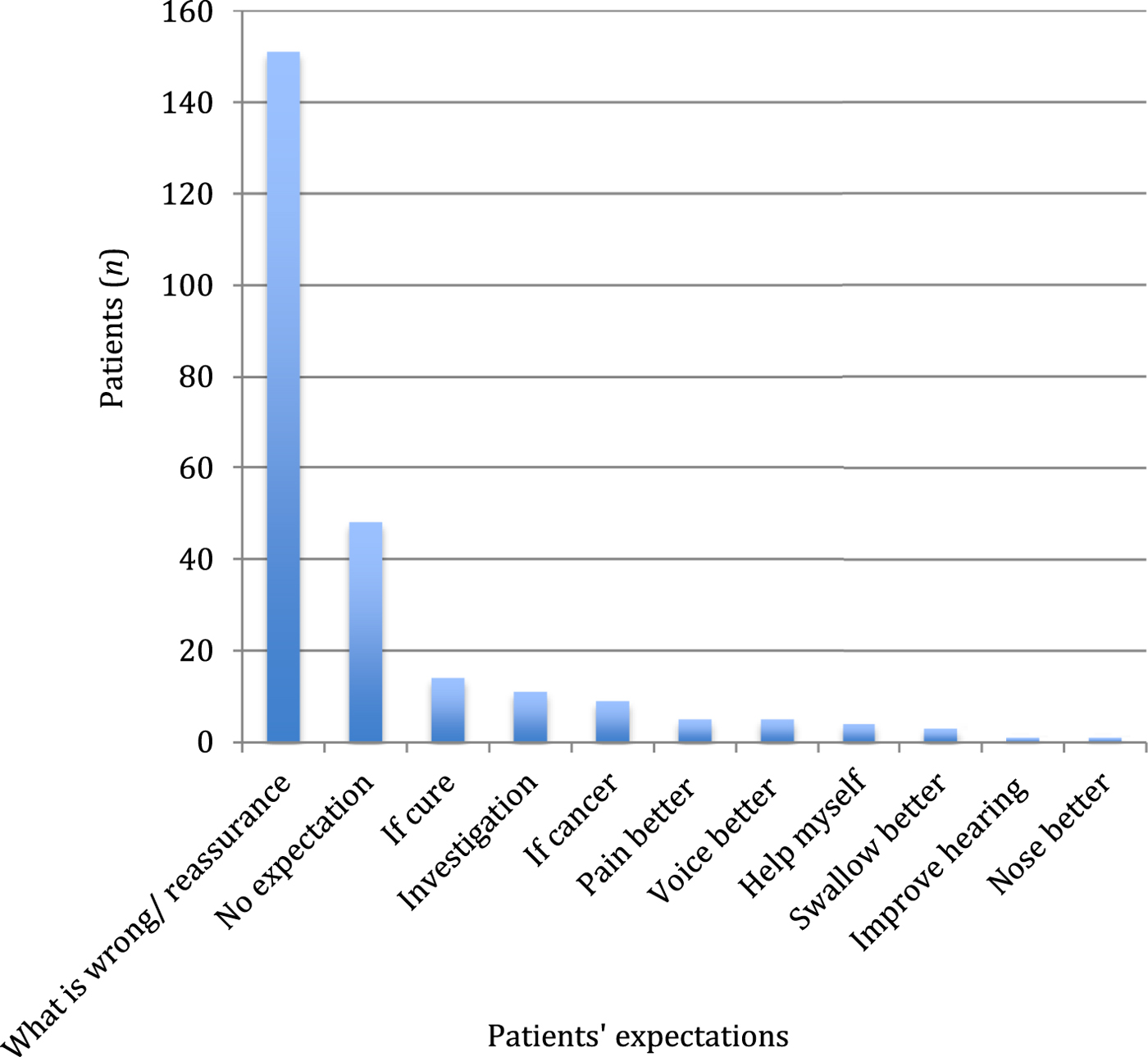
Patients’ expectations of the urgent clinic appointment was the final issue questioned; for analysis, the answers were grouped into themes. The vast majority of patients (60 per cent) wanted to know what was wrong and to have reassurance. Twenty per cent of patients had no expectation of the clinic appointment and the remainder wanted to improve specific symptoms (Figure 5).
Patients’ expectations of clinic appointment.

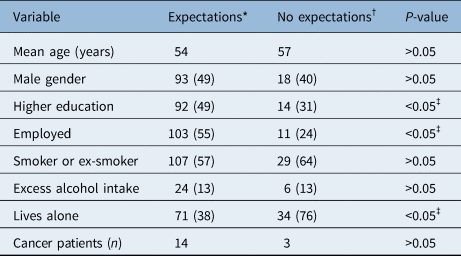
A comparison was performed between the patients with no expectations and those with expectations of the consultation (Table 4). Patients who had no expectations were significantly more likely to have no higher education, be unemployed and live alone.
Comparison between patients with and without expectations

Data represent numbers (and percentages) of patients, unless indicated otherwise. *n = 188; †n = 45. ‡Indicates statistical significance
Discussion
Main findings
This study examined a large sample of patients attending an ‘urgent suspicion of cancer’ head and neck clinic, in which patients’ presenting symptoms, knowledge, concerns and expectations were assessed. Several papers have called for such examination, but evidence is lacking, particularly in the UK.Reference Megwalu6,Reference Beitler, Chen, Jacobson, Owens, Edwards and Johnstone7 Many patients report ‘red flag’ symptoms, but do not report concerns or expectations. This would suggest that health messages in this population are not reaching the target audience of patients at highest risk of developing head and neck cancer.
Demographics
Referral patterns consistently show that more females are referred for cancer investigation, yet more males are diagnosed with head and neck cancer.Reference Zeitler, Fingland, Tikka, Douglas and Montgomery12 Most patients referred to clinic are in their sixth decade, with cancer occurring most frequently in the seventh decade.
Home circumstances are important in head and neck cancer.Reference van Deudekom, Schimberg, Kallenberg, Slingerland, van der Velden and Mooijaart13 The majority of patients in this study lived at home with a partner. However, almost half (44 per cent) of patients with head and neck cancer lived alone. This is concerning, as social isolation is linked to late presentation.Reference Olsen, Boje, Kjaer, Steding-Jessen, Johansen and Overgaard14 In addition, the majority of patients were not working. Previous data from Scotland have demonstrated that unemployment is associated with head and neck cancer.Reference Conway, McMahon, Smith, Black, Robertson and Devine15
Presenting symptoms
Symptoms were recorded in the patients’ own words, by asking open questions. Questionnaires were completed prior to entering the clinic, to capture patients’ initial thoughts. Neck lump, a strong positive predictor for malignancy, was the most frequently reported red flag. The next most common symptom recorded was globus, often reported as ‘lump in the throat’ or ‘feeling in the throat’, and was noticeably distinct from the symptom of ‘dysphagia’.
Previous analysis of ‘urgent suspicion of cancer’ referrals revealed that globus is frequently referred under the dysphagia category.Reference Zeitler, Fingland, Tikka, Douglas and Montgomery12 Currently, the non-red flag symptoms most commonly associated with patient concern are globus and pain in the neck area. Globus sensation tends to be referred as dysphagia. Despite this, patients are able to articulate the sensation of globus when asked in a questionnaire. This suggests a role for primary care education.
Overall, the most common group of symptoms was classified as ‘other’. These were a variety of non-red flag symptoms. The fact that these symptoms dominate referrals would suggest a general lack of knowledge about which symptoms are important for head and neck cancer. Although these patients come through the ‘urgent suspicion of cancer’ pathway, 42 per cent can be managed with simple reassurance in one appointment.Reference Douglas, Carswell and Montgomery16 This highlights the need for further refinement of the referral guidelines, to try and improve the streaming of such patients, so that they do not take up limited ‘urgent suspicion of cancer’ clinic appointments. Patients tend to have better knowledge surrounding the presentation of other cancers, such as colorectal cancer.Reference Moreno, Jarrett, Vey, Mittal, Krupinski and Roberts17 This is important, as patient knowledge about symptoms can lead to earlier presentation to healthcare.
Symptoms associated with concern
In this study, one-third of patients had ‘no concern’ when attending an ‘urgent suspicion of cancer’ clinic appointment. Furthermore, one-third of the patients eventually diagnosed with cancer had ‘no concern’ about their symptoms. This suggests that patients may not be being advised by the primary referrer about their concerns regarding cancer and the need to be seen within two weeks. However, while patients may report ‘no concerns’ because they genuinely do not recognise that their symptom is a risk factor for cancer, they may also report this because of genuine fear at facing a cancer diagnosis.Reference Macleod, Mitchell, Burgess, Macdonald and Ramirez18 Lower health literacy is associated with a lack of higher level education. The majority (53 per cent) of this group had not attended college or university.
There is also some evidence that the available online patient information about such symptoms is difficult to understand and may cause more confusion, highlighting the difficulty that patients can have in interpreting healthcare information.Reference Varela-Centelles, Ledesma-Ludi, Seoane-Romero and Seoane19 In addition, online material relies on the ability of patients to be able to access and use the internet. It has previously been reported that poorer patient knowledge arises in older patients who have no form of higher education,Reference Protheroe, Whittle, Bartlam, Estacio, Clark and Kurth20 and in patients with higher rates of smoking and alcohol intake.Reference Stewart, Adams, Cano, Correa-Fernandez, Li and Waters21
• Public awareness of ‘red flag’ symptoms for head and neck cancer is low
• Cancer pick-up rates through urgent referral pathways are low
• Many patients referred have no concerns about their symptoms
• Patients’ expectations of urgent referral appointments are low
• The red flag and urgent referral system need improvement, to increase effectiveness for patients and the National Health Service
Half of the patients with globus sensation felt concern about their symptom. Of the patients with globus, most were female, their mean age was 50 years, the majority lived at home with a partner or spouse, a higher percentage were in employment, and half had attended higher education institutes. The majority were non-smokers (85 per cent), but 60 per cent drank alcohol to excess. Although globus is often attributed to depression and anxiety, evidence surrounding this is often from research containing small numbers of patients.Reference Deary and Wilson22 Globus is not a red flag symptom and should not be referred as such. This also indicates that the current ‘urgent suspicion of cancer’ pathway is being saturated with the ‘worried well’ who are concerned about their symptoms, when the focus should be on those that have genuine red flag symptoms but may not be aware of it.
Patients’ expectations
Satisfying a patient's expectation in the out-patient clinic setting is important, and enables patients to leave the clinic feeling that the particular episode is over.Reference Berhane and Enquselassie23 The majority of patients simply want to know ‘what is wrong’ and be provided with reassurance. This is well within the remit of healthcare providers. Engaging with, creating rapport with and attempting to satisfy a patient with no expectations is more difficult. Telling a patient with no expectations they have cancer can impair shared decision making. This difficulty has been recognised in patients with low literacy skills.Reference McCaffery, Smith and Wolf24
Evidence from studies of other forms of cancer suggests that methods to improve awareness about cancers should include those very patients who have limited knowledge of their symptoms.Reference Kim, Knight, Tomori, Colella, Schoor and Shih25 Measuring expectations of this group is challenging; evidence remains scarce and further investigation is required.
Challenges to cancer pathways
The results of this analysis suggest a lack of knowledge regarding head and neck cancer symptoms for both the patient and the primary referrer to the ‘urgent suspicion of cancer’ clinic. Patient education of red flag symptoms is difficult because of the often non-specific nature of these symptoms. Although patient education seems like the obvious solution, previous studies in oral cancer have shown an increase in non-cancer referrals seen, illustrating the groups that respond to such public health initiatives. Red flag symptoms require greater description (such as persistent and progressive dysphagia, or persistent dysphonia), to avoid oversaturation of a pathway with patients who are very unlikely to have cancer. In the UK, most patients with cancer do not come through the most urgent pathway available; they come through more routine means.Reference Lyons, Philpott, Hore and Watters26,Reference Langton, Siau and Bankhead27
Conclusion
This is the first study to investigate the concerns of patients attending urgent clinic appointments for suspected head and neck cancer, with particular emphasis on patient-reported symptoms, concerns and expectations. It highlights a lack of performance of the ‘urgent suspicion of cancer’ pathway, and indicates that patients with non-cancer symptoms are frequently referred with suspected cancer. Patients with ‘red flag’ symptoms are not aware of their significance, and they have low expectations of the healthcare system to which they have been referred.
Acknowledgement
The authors would like to thank Mrs Susan Lauder (ENT secretary) for data collection.
Competing interests
None declared
Appendix 1. Sample questionnaire
Questions for patients who have been urgently referred.
Please circle/complete the answers.
Male Female
How old are you?_______________
Who do you live with?
Living with partner/married Living alone
Do you work?
Yes No Student
What is your job? __________________________
Have you previously attended college or university?
Yes No
Are you a smoker?
Yes Never smoked Ex-smoker
How much alcohol do you drink per week?
Less than 14 units More than 14 units
1. What symptoms do you have? Please list below.
2. Which of these symptoms, if any, cause you worry or concern?
3. We would like to know what you want from the clinic today; what is important to you?
Thank you, please hand questionnaire back to staff member.