





Anorexia nervosa is one of the leading causes of mortality among other mental disorders, with a standardised mortality ratio of up to 5.06. Reference Lai, Lai, Wong, Wong, Cheng and Cheng1 In high-risk cases, compulsory treatment may be deemed necessary for the treatment of anorexia nervosa. 2 There have been several systematic reviews relating to clinical risk factors associated with compulsory treatment for eating disorders. Reference Clausen and Jones3–Reference Touyz, Aouad, Carney, Ong, Yager and Newton7 These reviews included studies from the UK, Europe, Australia, the USA and Japan. The differential findings were a lower body mass index (BMI) on admission, a lower minimum lifetime BMI Reference Di Lodovico, Duquesnoy, Dicembre, Ringuenet, Godart and Gorwood8 and a longer duration of illness, with longer previous admissions in patients receiving compulsory treatment compared with those voluntarily admitted. Reference Atti, Mastellari, Valente, Speciani, Panariello and De Ronchi4 A history of self-harm, Reference Ayton, Keen and Lask9 bulimic symptoms, Reference Forney, Buchman-Schmitt, Keel and Frank10 depression Reference Atti, Mastellari, Valente, Speciani, Panariello and De Ronchi4 and higher rates of childhood physical and sexual abuse Reference Ayton, Keen and Lask9 was also more common.
One study in France reported that patients with severe anorexia who underwent compulsory admission had smaller increases in BMI at discharge (2.6 kg/m2 compared with 4.4 kg/m2 in the voluntary treatment group at 2.7-year follow-up Reference Abry, Gorwood, Hanachi and Di Lodovico11 ). One study in the UK reported that patients under compulsory admission had a higher mortality rate at 5.7-year follow-up (12.7 v. 2.56%), mostly associated with the consequences of severe malnutrition. Reference Ramsay, Ward, Treasure and Russell12 However, when followed up to 20 years later, survival rates between the compulsory and voluntary groups were similar (χ 2 = 52.563, p = 0.109). Reference Ward, Ramsay, Russell and Treasure13
Past studies on compulsory treatment in anorexia nervosa have largely focused on patients’ physical health outcomes and eating disorder core symptoms. Based on theoretical models of illness maintenance, Reference Treasure, Willmott, Ambwani, Cardi, Clark Bryan and Rowlands14 this study aims to replicate and expand previous findings, including the assessment of caregivers’ characteristics and outcomes over time. Patients with severe anorexia nervosa require continued support, and family members carry most of the caregiving burden to the point that they frequently experience high levels of psychological and financial distress. Reference Duclos, Piva, Riquin, Lalanne, Meilleur and Blondin15,Reference Shaw, Ranceva and Langdon16 Based on the available, albeit limited, literature, it is plausible to hypothesise that patients admitted for compulsory treatment or their caregivers will present with characteristics associated with greater illness severity (e.g. lower BMI, longer duration of illness, higher frequency of previous compulsory treatments, higher levels of caregivers’ psychological distress) and that they will benefit less from standard eating disorder intensive treatment compared with voluntarily admitted patients.
The aim of this study was to characterise the clinical and individual differences between patients admitted for compulsory treatment and those admitted voluntarily (with or without a history of compulsory admission), and their caregivers. Data were analysed from one of the largest available data-sets on intensive treatment outcomes in anorexia nervosa: that from the Transition Care in Anorexia Nervosa Through Guidance Online from Peer and Carer Expertise (TRIANGLE) trial. Reference Treasure, Rowlands, Cardi, Ambwani, McDaid and Lord17
Method
The authors assert that all procedures contributing to this work comply with the ethical standards of the relevant national and institutional committees on human experimentation, and with the Helsinki Declaration of 1975 as revised in 2013. All procedures involving human subjects/patients in the TRIANGLE trial were approved by the London-Camberwell St Giles Research Ethics Committee (reference no. 16/LO/1377). Reference Treasure, Rowlands, Cardi, Ambwani, McDaid and Lord17
Participants
Patients and their caregivers were recruited from 31 eating disorder services across the UK between 2017 and 2020. Written informed consent was obtained from participants before randomisation. Patients’ inclusion criteria were age 16 years or over, a diagnosis of anorexia nervosa or atypical anorexia nervosa based on the criteria of DSM-5, 18 a current admission (within 1–2 months) for specialised intensive eating disorder treatment and access to an electronic device and the internet. An additional inclusion criterion was that the patient was willing to invite a caregiver to also join the study, and that this offer was accepted. Exclusion criteria were severe mental or physical comorbidities, pregnancy and prior use of the self-help materials tested in the trial.
The subsets of patients considered for this study were those voluntarily admitted for hospital care and without a prior history of compulsory admission (‘voluntary’ group), those voluntarily admitted with a previous compulsory admission (‘previous compulsory’ group) or those compulsorily admitted to the hospital under the Mental Health Act (MHA) (‘current compulsory’ group). At the time of the study, in England and Wales, compulsory treatment was governed by the MHA 1983 as amended by MHA 2007, 2 whereas in Scotland the Mental Health (Care and Treatment) (Scotland) Act 2003 was used 19 and in Northern Ireland the Mental Health (Northern Ireland) Order 1986. 20
Of the 370 participants included in the TRIANGLE trial, 91 were excluded because they were admitted to a day programme rather than to an in-patient unit, and 5 had missing data. We excluded participants in the day programme to maintain the focus of this paper on the in-patient patient–caregiver dyads. This resulted in a final sample of 274 patient–caregiver dyads: 62 in the current compulsory group, 48 in the previous compulsory group and 164 in the voluntary group (Supplementary Fig. 1 available at https://doi.org/10.1192/bjo.2026.12118).
Study design
Patients enrolled in the TRIANGLE trial were assessed at baseline and at 3, 6, 9, 12 and 18 months using digital self-report questionnaires. In this study, we analysed data collected at baseline, at 3–6 months and at 9–12 months. Data from the 18-month assessment were excluded due to a high rate of missing data (41.2–56.2%). At the 3- to 6-month assessment period, 78 (33.2%, 39 missing) patients were still in hospital and, at the 9- to 12-month assessment period, only 19 patients (8.1%, 39 missing) were still receiving hospital care.
Measures
Supplementary Fig. 2 shows the measures administered at baseline and over time to patients and caregivers.
Baseline measures
At baseline, the following variables were compared between patient groups: gender, age, anorexia nervosa onset age, illness duration, ethnicity, education, marital status, comorbidities (such as a reported diagnosis of depression, anxiety, obsessive–compulsive disorder (OCD), attention-deficit hyperactivity disorder (ADHD), autism), scores on Autism Spectrum Quotient-10 Reference Allison, Auyeung and Baron-Cohen21 and Obsessive–Compulsive Inventory-Revised (OCI-R Reference Foa, Huppert, Leiberg, Langner, Kichic and Hajcak22 ) and total in-patient days. The total number of in-patient days was recorded, to establish bed days prior to inclusion in the study and between 9 and 12 months. Scores on the Depression Anxiety and Stress Scales-21 (DASS Reference Lovibond and Lovibond23 ), the Work and Social Adjustment Scale (WSAS Reference Mundt, Marks, Shear and Greist24 ), motivation and confidence to change, Reference Adamson, Cardi, Kan, Harrison, Macdonald and Treasure25 the Eating Disorder Examination Questionnaire (EDE-Q Reference Fairburn and Bèglin26 ) and BMI were compared between groups. Caregivers were compared on gender, age, ethnicity, education and marital status, and on levels of psychological distress (measured through DASS Reference Lovibond and Lovibond23 and caregiving skills (through the Caregiver Skills Scale (CASK))). Reference Hibbs, Rhind, Salerno, Lo Coco, Goddard and Schmidt27
Longitudinal outcome measures
Clinical outcomes for the patients included scores on DASS, Reference Lovibond and Lovibond23 WSAS, Reference Mundt, Marks, Shear and Greist24 motivation and confidence to change, Reference Adamson, Cardi, Kan, Harrison, Macdonald and Treasure25 EDE-Q Reference Fairburn and Bèglin26 and BMI. The number of deaths that occurred throughout the study was recorded. Caregiver longitudinal outcome measures included scores on both DASS Reference Lovibond and Lovibond23 and CASK. Reference Hibbs, Rhind, Salerno, Lo Coco, Goddard and Schmidt27 In accordance with the TRIANGLE trial, DASS is the main outcome of our study.
Statistical analyses
Baseline comparisons
All available cases at each assessment point were analysed. Demographic and clinical baseline characteristics were compared between groups using analysis of variance (ANOVA), with eta square (η 2) effect sizes or the Kruskal–Wallis test with epsilon square (ϵ 2) effect sizes (small, 0.01; medium, 0.06; large, 0.14). Least significant difference post hoc testing was conducted for significant ANOVA results with Cohen’s d (small, 0.20; medium, 0.50; large, 0.80), and Dunn’s post hoc test was conducted for significant Kruskal–Wallis test results, with r (small, 0.10; medium, 0.30; large, 0.50 Reference Cohen28 ). Chi-square tests were used to compare proportions across groups. For groups with 20% of cells having expected counts of less than 5, Fisher’s Freeman-Halton test was used. We report Cramér’s V (small, 0.07; medium, 0.21; large, 0.35). Post hoc pairwise comparisons were conducted at the p < 0.017 level (p < 0.050 divided by 3 groups) with φ (small, 0.10; medium, 0.30; large, 0.50). Reference Cohen28 Statistical significance was defined with p < 0.050.
Longitudinal outcome analysis
The median in-patient days for months 9–12 was analysed using the Kruskal–Wallis test.
Missing data were addressed by analysing potential baseline predictors of missingness. We conducted binomial logistic regression to model missingness for our primary outcome, DASS at months 9–12. We found that anxiety diagnosis was the baseline missingness predictor for patients, whereas for caregivers it was education and marital status. We also conducted a sensitivity analysis to test the assumption of missingness. Detailed information on missing data and missingness sensitivity analyses is provided in Supplement 4 and in Supplementary Table 1A–C.
To evaluate between-group differences over time, linear mixed-effects models were used. In both patient and caregiver models, we included their baseline DASS total scores, group (current compulsory versus previous compulsory versus voluntary), time (baseline, months 3–6 and months 9–12) and group-by-time interactions. Age of onset was included as a covariate in all patient outcome analyses, given its documented impact on clinical outcomes and significant baseline differences. Reference Grilo and Udo29 Participant identity was included as a random coefficient. We did not include the treatment site as a random coefficient due to model instability. Models were fitted by restricted maximum likelihood, which allows for the inclusion of cases with partially missing data, given the assumption of missing at random. Given the observational and descriptive nature of our study, although we identified other baseline differences we included only baseline DASS total scores, group, group-by-time, missingness predictor (i.e. anxiety) and age at illness onset in our primary analysis model. This was carried out to provide a clearer clinical perspective and avoid overfitting. To maintain robustness, we conducted an exploratory sensitivity analysis. This addressed whether differences in participant characteristics across groups had influenced our outcomes. Supplement 5 and Supplementary Table 2A,B provide further details on the analysis.
All parameters of interest are presented with 95% confidence intervals and p-values, with significance set at p < 0.050. The post hoc correction significance was p Bonferroni < 0.050. Standardised coefficients β for linear mixed-effects models and standardised effect sizes for post hoc tests were calculated following Hodsoll et al Reference Hodsoll, Rhind, Micali, Hibbs, Goddard and Nazar30 and Hopkins. Reference Hopkins and Rowlands31 Standardised effect sizes were interpreted as small (0–0.39), moderate (0.40–0.59) or large (0.60–1.00 Reference Hodsoll, Rhind, Micali, Hibbs, Goddard and Nazar30 ). Statistical analyses were conducted in Jamovi 2.6.44 and IBM SPSS Statistics version 25 for Windows.
Results
Patients
Patient baseline characteristics
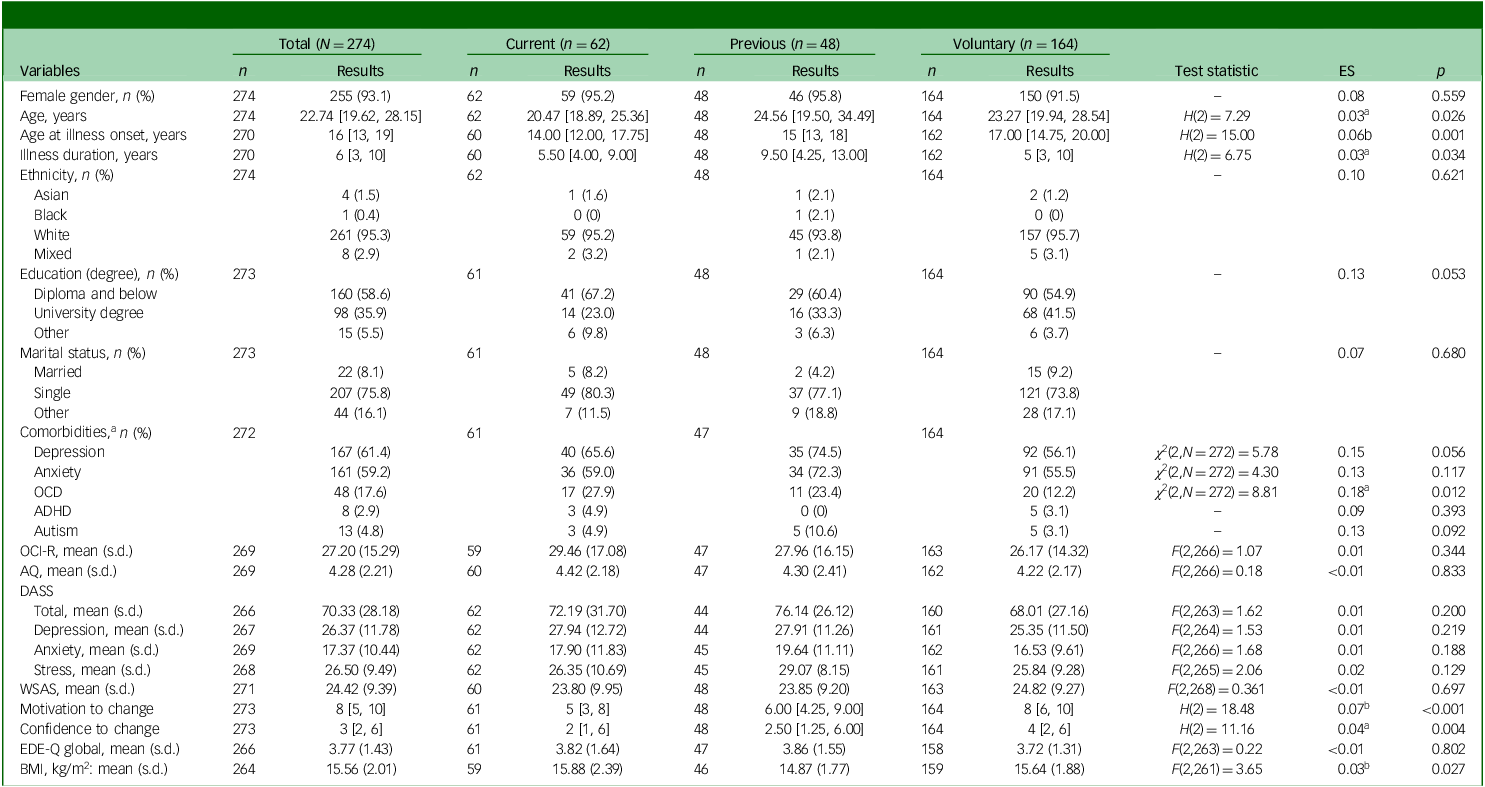
Patient baseline characteristics are reported in Table 1, service use in Supplementary Table 3 and post hoc analyses in Supplementary Table 4.
Patient baseline characteristics

Table 1 Long description
The table presents baseline characteristics of patients categorized into Total, Current, Previous, and Voluntary groups. It includes 274 patients in total, with 62 in the Current group, 48 in the Previous group, and 164 in the Voluntary group. The table has 12 rows and 10 columns, with column headers including Variables, Total (N = 274), Current (n = 62), Previous (n = 48), and Voluntary (n = 164). Each row provides specific characteristics such as gender, age, age at illness onset, illness duration, ethnicity, education level, marital status, and various health conditions. Notable trends include variations in age, education level, and health conditions across the different groups. The table also includes statistical test results for comparisons between groups.
ES, standardised effect size; OCD, obsessive–compulsive disorder; ADHD, attention-deficit hyperactivity disorder; OCI-R, Obsessive Compulsive Inventory – Revised; AQ, Autism Spectrum Quotient; DASS, Depression Anxiety Stress Scale; WSAS, Work and Social Adjustment Scale; EDE-Q, Eating Disorder Examination Questionnaire; BMI, body mass index.
a. Small effect.
b. Moderate effect.
Self-reported mental health comorbidities: yes/no questions based on previous diagnoses.
Data are presented as median [interquartile range], unless otherwise specified.
Patients were mostly female (93.1%) and of White ethnicity (95.3%). Depression and anxiety were the most commonly reported mental health comorbidities among patients (61.4 and 59.2%, respectively). Between groups, there were no significant differences in gender, ethnicity, education, marital status, depression, anxiety, ADHD, autism, Autism Spectrum Quotient scores, DASS scores and WSAS scores.
Current compulsory group
Most patients in the current compulsory group had had previous compulsory admissions (95.2%), with most having a history of two prior admissions (42.4%) (Supplementary Fig. 3). They had an earlier illness onset (small effect) and longer in-patient days (small effect) than the voluntary group.
More patients in the current compulsory group had a diagnosis of OCD (small effect), had lower motivation to change (small effect) and had lower confidence to change (small effect) compared with the voluntary group. There were no significant differences between groups in OCI-R scores, indicating similar levels of current obsessive–compulsive symptoms despite the higher prevalence of formal OCD diagnoses in the current compulsory group.
Previous compulsory group
Most participants (62.2%) in the previous compulsory group had a history of one prior compulsory admission. They had a longer illness duration than the voluntary group (small effect) and were older than the current compulsory group (small effect). They had the lowest BMI compared with other groups (versus current compulsory, medium effect; versus voluntary, small effect).
Patient longitudinal outcomes
Based on the sensitivity analysis of missingness, we found that the most robust findings were observed for WSAS. More caution is needed for other outcomes, particularly BMI and EDE-Q (Supplementary Table 1B). The DASS total score became non-significant following adjustment for illness duration and BMI (Supplementary Table 2A).
The longitudinal outcomes by groups and timepoints are presented in Fig. 1, and the clinical outcomes at each timepoint are shown in Supplementary Table 5. Linear mixed-effects model findings for patient and caregiver outcomes are presented in Supplementary Table 6, and post hoc analyses are presented in Supplementary Table 7A,B.
Patient and caregiver outcomes by groups and timepoints. (a) Patient total DASS. (b) Patient WSAS. (c) Patient motivation to change. (d) Patient confidence to change. (e) Patient EDE-Q global. (f) Patient BMI. (g) Caregiver total DASS. (h) Caregiver total CASK. DASS, Depression Anxiety Stress Scale; EM, estimated marginal; WSAS, Work and Social Adjustment Scale; EDE-Q, Eating Disorder Examination Questionnaire; BMI, body mass index; CASK, Caregiver Skills Scale.

The linear mixed-effects model showed that distress levels in both the current compulsory and voluntary groups improved at the 3- to 6-month follow-up. At the 9- to 12-month follow-up, no significant trajectory differences were noted between these groups, with the previous compulsory group showing a worse distress trajectory compared with the voluntary group (β = 0.16) (Fig. 1(a)). The subscale analyses showed that this trajectory was driven by depression symptoms (β = 0.49). The current compulsory group showed a worse trajectory in anxiety symptoms compared with the voluntary group in months 9–12 (β = 0.38) (Supplementary Table 6). No significant differences were found between groups in regard to stress symptoms (β = 0.10 and 0.27). Post hoc tests indicated higher depression symptoms in the previous compulsory group at months 9–12 when compared with the voluntary group (large effect) (Supplementary Table 7B).
For the work and social adjustment skills, patients in the previous compulsory and current compulsory groups reported smaller improvements at months 9–12 compared with the voluntary group (β = 0.81 and β = 0.69, respectively) (Fig. 1(b)). No significant differences between groups were observed in the post hoc analysis (small to moderate effects) (Supplementary Table 7B).
Motivation to change in the voluntary group remained relatively stable at each timepoint, whereas the current compulsory and previous compulsory groups showed improvements (Fig. 1(c)). The current compulsory group showed a significantly better improvement trajectory than the voluntary group (β = 0.42) (Supplementary Table 6). Post hoc analyses showed no significant differences between groups at either 3–6 or 9–12 months (small effects) (Supplementary Table 7B). Regarding the confidence to change, there were no significant differences between groups over time (β = 0.19 and 0.23) (Fig. 1(d)).
For the EDE-Q trajectories (Fig. 1(e)), the voluntary group showed better improvement compared with the previous compulsory and current compulsory groups (β = 0.32 and 0.31, respectively) (Supplementary Table 6). Post hoc tests showed no significant differences between groups (small effects) (Supplementary Table 7B).
BMI in the voluntary and current compulsory groups improved significantly over time, with a similar trajectory (Fig. 1(f)). However, the previous compulsory group showed a worse trajectory compared with the voluntary group at months 9–12 (β = −0.51) (Supplementary Table 6). Post hoc tests showed that the differences in BMI between the voluntary and previous compulsory groups were significant at months 9–12 (large effect) (Supplementary Table 7B).
In terms of service use, no significant between-group differences were observed for in-patient days (Supplementary Table 3). There were 3 deaths during the 12-month follow-up: 2 due to medically related complications and one due to psychiatric-related complications.
Caregivers
Caregiver baseline characteristics
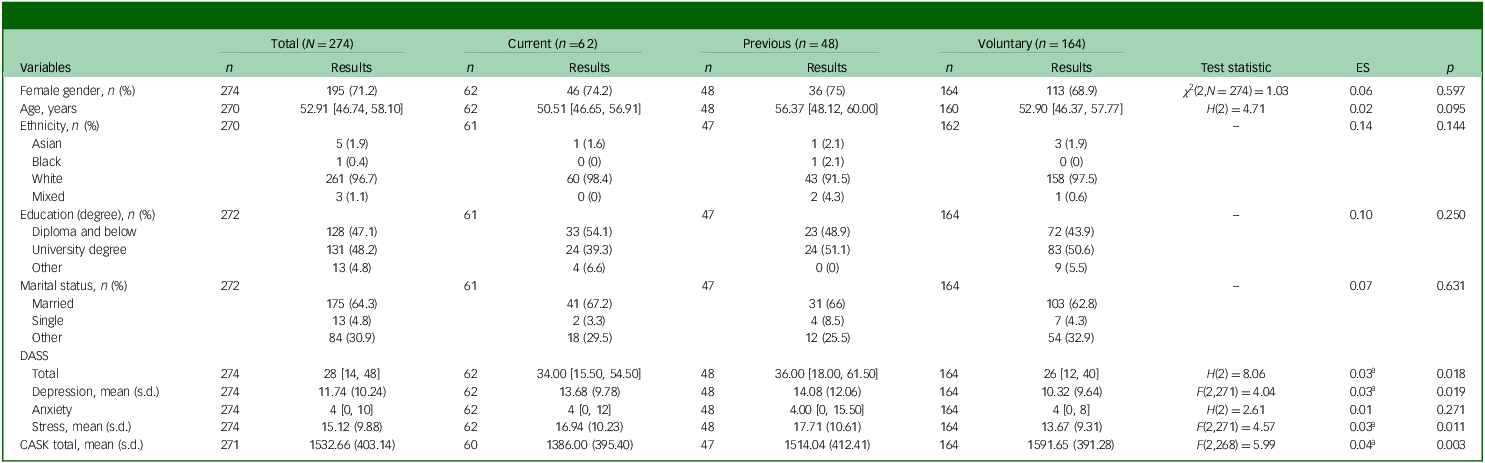
Table 2 presents caregiver baseline characteristics and Supplementary Table 4 presents post hoc analyses.
Caregiver baseline characteristics

Table 2 Long description
The table presents caregiver baseline characteristics across three groups: Current, Previous, and Voluntary. It includes 274 caregivers in total. The table has 12 rows and 10 columns. Column headers are Variables, Total (N = 274), Current (n = 62), Previous (n = 48), Voluntary (n = 164), and Test statistic. Row labels include Female gender, Age, Ethnicity, Education, Marital status, Depression, Anexity, Stress, and CASK total. Each row provides specific data points for each group. Notable trends include the distribution of gender, age, education levels, and mental health metrics across the groups.
ES, standardised effect size; DASS, Depression Anxiety Stress Scale; CASK, Caregiver Skills Scale.
a. Small effect.
Data are presented as median [interquartile range], unless otherwise specified.
Caregivers were mostly female (71.2%), of White ethnicity (96.7%) and married (64.3%). Their median age was 52.91 years. There were no significant between-group differences in demographic characteristics.
Current compulsory group
Caregivers in the current compulsory group had lower CASK scores (moderate effect), higher DASS-depression (small effect) and higher DASS-stress (small effect) compared with the voluntary group.
Previous compulsory group
Caregivers in the previous compulsory group had the highest overall distress (small effect) compared with the other groups, but post hoc tests revealed no significant results. They had higher DASS-depression (small effect) and higher DASS-stress (small effect) compared with the voluntary group.
Caregiver longitudinal outcomes
Based on the sensitivity analysis of missingness, we found that the most robust findings were observed for caregiver DASS scores (total and subscales), and more caution is thus needed in interpreting CASK outcomes (Supplementary Table 1B). No significant changes were observed in DASS results after adjusting for baseline variables (Supplementary Table 2B).
Caregivers in the previous compulsory and current compulsory groups showed better improvement in their overall distress at months 9–12 compared with the voluntary group (β = −0.61 and −0.33, respectively) (Fig. 1(g)), mainly in their depression symptoms. The previous compulsory group also showed better improvement in anxiety and stress symptoms at months 9–12 compared with the voluntary group (Supplementary Table 6). Post hoc analyses showed no significant differences between the groups at 3–6 and 9–12 months (Supplementary Table 7B).
Caregivers of patients in the current compulsory group showed a similar level of caregiving skills trajectory to caregivers in the voluntary group during months 9–12. Caregivers in the previous compulsory group showed a decline in their caregiving skills (Fig. 1(h)). The previous compulsory group showed a significant trajectory difference compared with the voluntary group at months 9–12 (β = −0.62) (Supplementary Table 6). No significant differences were observed between groups at post hoc analyses (Supplementary Table 7B).
Discussion
The first aim of this study was to explore differences in clinical characteristics and outcomes among participants with a current compulsory admission (current compulsory group) and previous compulsory admission (previous compulsory group), and among those with no history of compulsory admission (voluntary group) at baseline and at 9–12 months. At baseline, there were some differences in clinical and demographic characteristics between groups. There was improvement across all groups by the end of the study, mostly showing similar outcomes. However, the results should be interpreted with caution because substantial missing data occurred during follow-up.
Baseline findings
Overall, our baseline findings align with those of Grilo and Udo who found that, based on a national epidemiologic survey in the USA, people with earlier anorexia nervosa onset (<15 years) had more severe anorexia nervosa, marked by longer anorexia nervosa duration, more comorbidities, greater impairment and higher hospitalisation rates compared with those with later adolescent or adult onset. Reference Grilo and Udo29
We found no significant differences between the groups in general distress and eating disorder psychopathology (i.e. DASS, EDE-Q), and in work and social adjustment (i.e. WSAS), at baseline, suggesting that repeated compulsory treatment is not a straightforward indicator of illness severity. Furthermore, this might be explained by our study design, which collected the baseline data at study entry rather than at hospital admission; thus, in some cases, the baseline results may reflect conditions that were already improved through initial compulsory treatment and may not reflect characteristics of patients’ clinical state at the start of their admission.
Current compulsory group
We observed an earlier age of onset in the current compulsory group, and most of them had repeated compulsory admissions. The early onset of anorexia nervosa may have resulted in more disruption in brain maturation and pubertal development, leading to difficulty attaining a stable, non-eating disorder identity, Reference Budde, Wilms, Focker, Dalhoff, Muller and Wessing32 particularly in those with comorbidities. Furthermore, early-onset anorexia nervosa can be harder to recognise because the symptoms initially appear subtle or are misattributed to normal developmental variations, leading to delays in help-seeking and diagnosis. Reference Grilo and Udo29 Delayed treatment resulted in more severe symptoms, which might have led to multiple admissions.
Furthermore, participants in the current compulsory group had a longer in-patient duration compared with the voluntary group. The longer in-patient duration observed may reflect statutory requirements for compulsory treatment, which require patients to remain admitted, rather than greater clinical severity per se. There was variability in the implementation of compulsory admission due to cultural differences that shape legal requirements, patient rights and hospitalisation criteria. Reference Sheridan Rains, Zenina, Dias, Jones, Jeffreys and Branthonne-Foster33 In addition, the duration of hospitalisation also varies between services Reference Kan, Hawkings, Cribben and Treasure34 and hospitalisation may, to some extent, introduce harm to patients. Reference Large and Kapur35 For example, a rigid, strict hospital environment might support patients’ inflexibility and attention to detail. Reference Treasure, Crane, McKnight, Buchanan and Wolfe36 The long-term impact of compulsory admission on patients with anorexia nervosa could be further explored.
The most frequently reported psychiatric comorbidities across all groups were depression and anxiety. Participants in the current compulsory group had a higher prevalence of OCD diagnosis compared with the other groups. However, there were no differences in their OCI-R scores. OCD and anorexia nervosa show a polygenetic overlap, and OCD traits such as cognitive rigidity or harm avoidance may shape the course of the illness Reference Di Luzio, Bellantoni, Bellantoni, Villani, Di Vincenzo and Zanna37 and increase the likelihood of compulsory admission, even when current OCD symptoms are well controlled and therefore not captured by OCI-R scores. OCD has been found to be one of the moderators of psychopathological changes in patients with anorexia nervosa over time, Reference Lo Sauro, Castellini, Lelli, Faravelli and Ricca38 and may contribute to a more severe or enduring anorexia nervosa trajectory even when active symptoms have remitted. Thus, OCD traits may represent a predisposing vulnerability rather than be a result of a state-based condition. Reference Di Luzio, Bellantoni, Bellantoni, Villani, Di Vincenzo and Zanna37 Previous studies have shown that the occurrence of OCD during childhood is associated with a higher risk of developing eating disorders in adulthood. Reference Di Luzio, Bellantoni, Bellantoni, Villani, Di Vincenzo and Zanna37,Reference Micali, Hilton, Nakatani, Heyman, Turner and Mataix-Cols39
Compared with the voluntary group, participants in the current compulsory group had lower motivation and confidence to change. This is expected in the clinical context of compulsory treatment, where compulsory admission may be implemented for patients who refuse treatment.
Previous compulsory group
Participants in the previous compulsory group highlighted more specific cases. They represented more longstanding cases (median illness duration 9.5 years) and were older than the current compulsory group. Although they had similar distress, eating disorder psychopathology, motivation and confidence to change and work and social skills to other groups, they exhibited the lowest BMI. Our findings align with other studies, in which patients with longstanding anorexia nervosa had more prior hospital admissions despite their clinical symptoms being varied. Reference Kiely, Hay and Conti40,Reference Ambwani, Cardi, Albano, Cao, Crosby and Macdonald41 It is hypothesised that, in longstanding anorexia nervosa, exploring treatment experiences (i.e. repeated admissions, duration of untreated eating disorders) may be more relevant than focusing on the severity of their clinical symptoms (i.e. BMI and eating disorder psychopathologies Reference Kiely, Hay and Conti40 ).
Outcome findings
From baseline to 9–12 months, some outcomes showed varying improvement trajectories across groups. At the end of the study, almost all outcomes were not significantly different between groups. This highlighted that, overall, improvements were observed across all groups despite their different trajectories. Our findings on the outcome require cautious interpretation due to missingness during follow-ups and limited participant numbers in the previous compulsory group. The sensitivity analysis showed that plausible assumptions could render the results non-significant, particularly when missingness was related to improvements in their symptoms. The results would remain comparable if the missingness were related to worsening symptoms. Furthermore, our sensitivity analysis found that illness duration and BMI may predict baseline DASS total scores, which warrants further investigation.
Current compulsory group
A notable finding was that participants in the current compulsory group demonstrated a better improvement in motivation to change over time than those in the voluntary group, despite lower baseline scores. This is an important clinical observation, because it challenges the assumption that compulsory treatment inevitably precludes engagement or predicts poor outcome. However, the observational design means that this change cannot be attributed specifically to compulsion itself.
Improved perceptions of compulsory treatment have been reported among patients who showed clinical improvement after receiving the treatment. They had a shift in perspective on its impact and an acknowledgement of its importance to their clinical improvement. They reported improved motivation to change, better coping strategies and greater insights into eating disorders. Reference Touyz, Aouad, Carney, Ong, Yager and Newton7,Reference Clausen42,Reference Rienecke, Dimitropoulos, Duffy, Le Grange, Manwaring and Nieder43 Further studies are needed to explore the potential of timing interventions and development of treatment modules that align with improvements in motivation.
Previous compulsory group
Participants in the previous compulsory group showed a comparable improvement trajectory to the voluntary group in anxiety, stress and motivation and confidence to change, suggesting that engagement may increase throughout treatment even when past admissions had initially occurred under compulsion. However, they showed less improvement in other outcomes (i.e. total DASS, BMI, EDE-Q and WSAS). The small number of participants in this group might limit the interpretability of the findings.
Here, previous repeated compulsory treatment may be causally related to poor outcomes, although this hypothesis requires further empirical testing. A longer follow-up is needed to better understand the nuances, because multiple compulsory treatments might leave lasting negative imprints on patients. Reference Mac Donald, Gustafsson, Bulik and Clausen44 Another possible explanation is related to the longer illness duration among participants in this group. Implementation of compulsory treatment in patients with longstanding anorexia nervosa has its own challenges. Reference Westmoreland, Parks, Lohse and Mehler45 They may exhibit diverse recovery trajectories and require a more personalised approach. Reference Wonderlich, Dodd, Sondag, Jorgensen, Blumhardt and Evanson46 Furthermore, they might not benefit from an admission aimed at weight restoration alone. Reference Touyz, Aouad, Carney, Ong, Yager and Newton7
Caregiver findings
Overall, the caregivers across groups showed low depression and anxiety at baseline. This might be explained by caregivers who manage comparatively well agreeing to take part in a research trial. However, caregivers in the current compulsory group presented with greater distress and lower caregiving skills compared with those in the voluntary group. Compulsory treatment was reported to strain patient–caregiver relationships, Reference Touyz, Aouad, Carney, Ong, Yager and Newton7 which might be reflected by higher distress in this group in our study. Furthermore, there was a correlation between caregiving skills and caregiver distress. Reference Hibbs, Rhind, Salerno, Lo Coco, Goddard and Schmidt27 Thus, lower baseline caregiving skills in the current compulsory group might reflect the distress caregivers experience during the initial compulsory admission rather than describing their caregiving capacity.
Caregivers’ longitudinal outcomes, particularly caregiving skills, should be interpreted carefully. Although the distress outcomes were generally more robust, our sensitivity analysis revealed that caregiving skills were more sensitive to changes.
Over the course of the study, caregivers in the current compulsory group demonstrated greater improvement in distress than those in the voluntary group. Admission to compulsory treatment typically occurs during severe acute crises that affect both the patient and caregiver. This observed improvement might suggest that, over the course of admission, they were able to manage their distress. Improvement in caregiving skills was comparable across the current compulsory and voluntary groups, indicating that both groups benefited similarly from the available support provided.
By contrast, caregivers in the previous compulsory group, despite showing greater improvement in distress than the voluntary group, demonstrated a decline in caregiving skills over the study period. These findings suggest that an intervention for targeting caregiving skills might be needed, particularly for those with prior exposure to compulsory admissions. Additionally, because patients in the previous compulsory group showed a lower BMI at the end of the study, exploring the relationships among changes in patient clinical presentation, care burden and caregiver outcomes may provide a better understanding of the potential mechanisms driving the changes.
At the end of the study, no significant between-group differences were observed for any DASS or CASK outcomes. This might be due to the relatively short follow-up period of our study. A longer-term assessment may be required to better understand the impact on the trajectory changes in caregivers’ distress and caregiving skills.
Clinical implications
Our findings on the earlier onset in the current compulsory group suggest that transitions (i.e. child and adolescent mental health services to adult mental health services, in-patient to community treatment) represent a critical intervention point. Caregivers reported that the transition period was distressing and was often followed by patient relapses. Reference Lockertsen, Holm, Nilsen, Ro, Burger and Rossberg47 Patients in adult eating disorder services who had in-patient experiences during childhood showed lower self-esteem and greater fears in transitioning into adulthood. Reference Ragnhildstveit, Tuteja, Seli, Smart, Uzun and Bass48 This could be a further improvement focus for both voluntary and compulsory admission contexts.
In our study we found a high prevalence of depression and anxiety among participants, and a higher proportion of OCD in participants who were compulsorily admitted. In current clinical practice, treatment for anorexia nervosa is often prioritised over OCD when both conditions are present. The rationale for this may be that malnutrition can impair cognitive function, leading to less effective treatment for OCD. However, the reverse may occur, and rigidity and OCD traits may be an obstacle to refeeding in those with anorexia nervosa. Reference Steinhoff, Massmann and Gilbert49 Further studies are needed to address comorbidities (i.e. depression, anxiety and OCD) early during anorexia nervosa treatment.
Strengths and limitations
This study is one of only a few exploring the characteristics and clinical outcomes of compulsorily treated patients with anorexia nervosa in the UK. We have explored baseline characteristics and differences in outcomes across patient–caregiver dyads with varying histories of compulsory treatment. The TRIANGLE trial represents a large database of patients aged 16 years or older with anorexia nervosa receiving hospital treatment in the UK to date.
This study has certain limitations. The method used is observational data from a randomised controlled trial, which might not be as representative of patients as data from a registry-based study. A high rate of missing data was observed during the follow-up period. Participants provided reasons for discontinuing their participation; these included the time commitment and the wish to move on from eating disorder reminders. Although we have analysed the observable predictors of missingness, there may be unobserved variables that could affect the missingness pattern. Sensitivity analyses showed that the missingness pattern might, to some extent, influence changes in the outcome. Given the level of attrition, especially among caregivers, the possibility of non-random missingness should remain prominent in the interpretation.
Different treatment settings might have different compulsory admission practices. We were unable to adjust for treatment site variability in this analysis due to instability in the statistical model. Thus, interpretation of compulsory admission is framed as reflecting both patient-level clinical characteristics and possible service-level thresholds for detention.
Baseline measurements (i.e. BMI) were taken at study entry rather than at in-patient admission (within 1–2 months following admission). We included in-patient admission measurements during trial design and the early study stage; however, we found that obtaining data from clinical services was impractical and clinicians reported difficulty implementing them, resulting in insufficient data collection. Some of these results might already reflect the effects of treatment and cannot be interpreted as being representative of the clinical state that led to compulsory admission. However, these results suggest that differences persisted between groups at study entry.
The inclusion of only one nominated caregiver in the study, rather than all who share caregiving responsibilities, could limit the interpretability of caregiver outcomes, particularly when caregivers share responsibilities. Furthermore, we recruited patients who had a caregiver to ask or were willing to participate. This could have resulted in some underrepresentation of particularly isolated patients.
Overall, participants with current compulsory admission had lower motivation and confidence to change and had an earlier illness onset compared with those without a history of compulsory treatment. We observed high depression and anxiety comorbidities across all participants, and a higher rate of OCD in the current compulsory admission participants. Earlier illness onset and high rates of comorbid OCD diagnosis in compulsorily admitted patients with anorexia nervosa suggest this as a point of intervention. Participants who had undergone a prior compulsory admission had longer illness duration and lower BMI. Clinical improvement varied across groups, with a notable increase in motivation to change among those compulsorily admitted and a smaller improvement in distress and BMI among those with a previous compulsory admission. At the end of the study most outcomes were similar across groups, with previously compulsorily admitted patients showing higher depression symptoms and lower BMI compared with voluntary patients. The caregivers of current compulsorily admitted patients showed a better distress improvement compared with those in voluntary treatment. Caregivers of previously compulsorily admitted patients exhibited reduced caregiving skills throughout the study. No significant differences were observed between groups at the end of the study. The results should be interpreted with caution due to missingness during follow-up. Further studies are needed to explore the potential mechanism of these observed trajectory differences.
Supplementary material
The supplementary material is available online at https://doi.org/10.1192/bjo.2026.12118
Data availability
The data supporting the findings of this study are available on request from V.C.
Acknowledgements
We acknowledge David McDaid, Jodie Lord, Danielle Clark-Bryan, Pamela Macdonald, Eva Bonin, Ulrike Schmidt, Jon Arcelus, Amy Harrison and Sabine Landau for their contributions to the TRIANGLE study. No generative artificial intelligence tools have been used in the research or writing process for this manuscript.
Author contributions
J.L.T., V.C., S.A. and Y.Y.K. designed this secondary analysis study. K.R., J.L.T., V.C. and S.A. acquired the data. J.L.T., V.C., S.A., Y.Y.K., R.M., K.R. and J.H. analysed the data. J.L.T., V.C., S.A., Y.Y.K., R.M., K.R. and J.H. interpreted the data. J.L.T., V.C., S.A., E.C., R.M. and Y.Y.K. drafted the manuscript. J.L.T., V.C., S.A., K.R., R.M., E.C. and J.H. reviewed the manuscript for important intellectual content. All authors read and approved the final manuscript. The authors ensured that all parts of the work were appropriately investigated and resolved.
Funding
The TRIANGLE trial was funded by the National Institute for Health and Care Research (NIHR) under the Health Technology Assessment Programme (grant reference no. 14/68/09). J.L.T. and J.H. received salary support from King’s College London and the NIHR Biomedical Research Centre (BRC) at South London and Maudsley National Health Service Foundation Trust. R.M. is in receipt of a PhD studentship funded by BRC.
Declaration of interest
None.
Transparency declaration
The lead author and manuscript guarantor affirm that the manuscript is an honest, accurate and transparent account of the study being reported; that no important aspects of the study have been omitted; and that any discrepancies from the study as planned (and, if relevant, registered) have been explained.



 Open access


eLetters
No eLetters have been published for this article.