Introduction
Cancer of the cervix remains one of the most common malignancies in women; it is considered to be the fourth frequent cause of cancer among women.Reference Parkin, Bray, Fertay and Pisani 1 , Reference Kamangar, Dores and Anderson 2
More than three-quarter of cases occur in the developing countries, and cancer of the cervix is the main cause of death among those women. 3 , Reference Jemal, Bray, Center, Ferlay, Ward and Forman 4
Persistent human papilloma virus (HPV) infection is the main cause of cervical cancer.Reference Rodríguez, Schiffman, Herrero, Hildesheim, Bratti and Sherman 5
The frequency of cervical cancer appears to be associated with the high proportion of HPV in the population. In countries with a high incidence of cervical cancer, the presence of chronic HPV is about 10–20%, whereas in the low-incidence countries it is 5–10%.Reference Parkin, Bray, Fertay and Pisani 1 The principal management of early-stage cervical cancer is either by surgery or radiotherapy.Reference Gray 6 Surgery is preferred for the early-stage disease, to ensure fertility-preservation, and smaller lesions, such as stage IA, IB1 and in some stages of IIA. 7
Radical hysterectomy with pelvic and/or para-aortic lymph node dissection allow for proper surgical staging and more accuracy in the delivery of adjuvant therapy.Reference Landoni, Maneo and Colombo 8
Decision-making for adjuvant treatment after surgery depends on surgical findings and pathological staging. Observation is considered for patients with stage IA2, IB1 or IIA1 disease with negative nodes, negative margins, negative parametrial invasion and those who have no cervical risk factors (Sedlis Criteria), which include more than one-third stromal invasion, capillary lymphatic space invasion and cervical tumours more than 4 cm.Reference Sedlis, Bundy, Rotman, Lentz, Muderspach and Zaino 9 Pelvic external beam radiotherapy (EBRT) with or without chemotherapy is recommended for patients with stage IA2, IB1 or IIA1 disease in case of the presence of lymph nodes invasion, close or positive surgical margin, positive parametrium invasion, presence of Sidled Criteria and adenocarcinoma,Reference Rotman, Sedlis and Piedmonte 10 – Reference Marchiole, Buenerd and Benchaib 13 as these factors carry a high incidence rate of recurrence.
A small number of studies evaluated the results of different adjuvant therapies for postoperative patients with intermediate risk factors (greater than one-third stromal invasion, capillary lymphatic space invasion and cervical tumours more than 4 cm) and with negative nodes by comparing those who received standard postoperative EBRT with or without vaginal brachytherapy.Reference Kundargi, Guruprasad and Rathod 14
The aim of this study is to compare between the use of brachytherapy and no brachytherapy after external beam radiotherapy for cervical cancer patients with intermediate risk factors after surgery, regarding long-term outcomes and treatment toxicities.
Materials and Methods
Patients
For this retrospective study, the records were collected for all patients with cervical cancer who received postoperative radiotherapy (PORT) at National Cancer Institute, Cairo, Egypt, between the years 2008 and 2013. From every record, the information regarding the patient’s demography, clinical details, diagnosis, treatment given, brachytherapy details, survival and complications was extracted. The various indications of PORT were as follows: (1) pathologically positive node, (2) positive surgical margins, (3) parametrial infiltration, (4) deep stromal invasion and (5) bulky disease (4·0 cm or more).
In this study, the aim was to compare the effect of brachytherapy for those who had deep stromal invasion and bulky tumour size regarding local control (LC), progression-free survival (PFS) and overall survival (OS).
In this study, 248 patients who had deep stromal invasion and bulky tumour size of 4 cm or more were identified. Of those, 122 patients received pelvic EBRT alone and 126 patients received external beam radiotherapy and intracavitary vaginal brachytherapy.
External beam Radiotherapy (RT)
In all cases, adjuvant radiotherapy was performed within 4–6 weeks after radical surgery. It consisted of a 6–10-MV X-ray delivered by a linear accelerator using the 3–4 fields’ arrangement according to patient separation and dose distribution.
The radiation dose was 50 Gy; it was delivered at a dose of 2·0 Gy fractions once daily for 5 days/week. The fields for pelvic treatment were generally extended superiorly to include L5. When lateral fields were used, the posterior border enclosed S2.
The clinical target volume included the supravaginal portion, cervical stump, paracervical tissue, common iliac lymph nodes, internal and external iliac lymph nodes, obturator lymph nodes and sacral lymph nodes.
Intracavitary Radiotherapy (RT)
Intravaginal brachytherapy (IVBT) was carried out using ovoids to irradiate the vaginal cuff. The dose was prescribed at a depth of 0·5 cm from the surface of the ovoids. A dose of 7 Gy for two fractions separated a week in-between using remote after loading high dose rate brachytherapy using iridium-192.
Follow-up evaluation
After the treatment was completed, patients were evaluated four times per year during the 1st year after treatment, then twice per year during the following 2 years and every year thereafter. During each visit, bimanual examination, physical examination and vaginal cytology were performed to detect the loco-regional recurrence.
Computed tomography (CT) scans of the abdomen and pelvic region or magnetic resonance imaging (MRI) were performed. Biopsy was done for suspicious cases to confirm recurrence if possible.
The end points of the study were LC, PFS, OS and delayed complications.
OS
It was calculated for surviving patients from the date of diagnosis to the date of death or to the date of last follow-up.
Recurrence-free survival (RFS)
It was calculated from the date of surgery to date of recurrence or the date of last follow-up.
PFS
It was calculated from the date of diagnosis to the date of occurrence of disease progression, recurrence, death or the date of last follow-up.
Statistical analysis
Analysis of the data was done by using SPSS win statistical package version 22. Numerical data were summarised as means and standard deviations (SD), whereas qualitative data were described as frequencies and percentages. Comparison between the two groups for numerical variables was done using either Student’s t-test or Mann–Whitney U-test (nonparametric t-test) as appropriate.
Relation between qualitative data was assessed using χ 2 test or Fisher’s exact test as appropriate.
The Kaplan–Meier method was used to calculate OS, RFS and PFS. Differences between groups were analysed using the log-rank statistic. Statistical significance was defined at a level of p<0·05.
Results
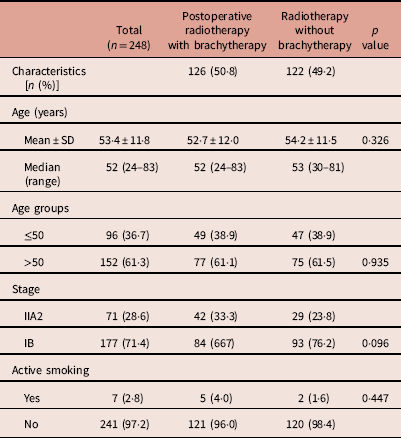
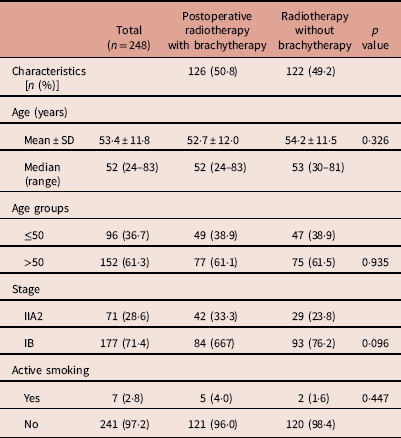
Out of 248 patients, the median age of the patients in postoperative radiotherapy without brachytherapy group was 53 years (range 24–83) and the median age of the patients in the postoperative radiotherapy with brachytherapy group was 52 years (range 30–81).
No statistically significant differences in age, tumour stage or smoking history was found. The clinical and pathological characteristics of the patients are summarised in Table 1.
Clinical and pathological characteristics of the studied group
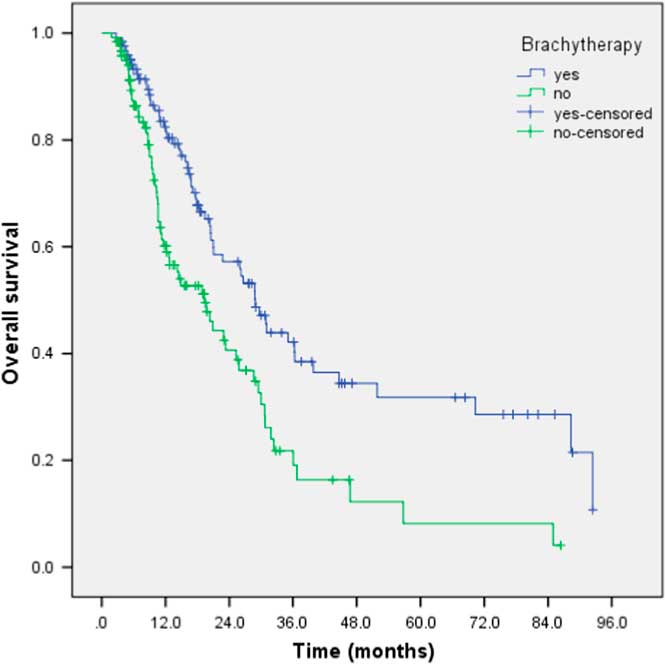
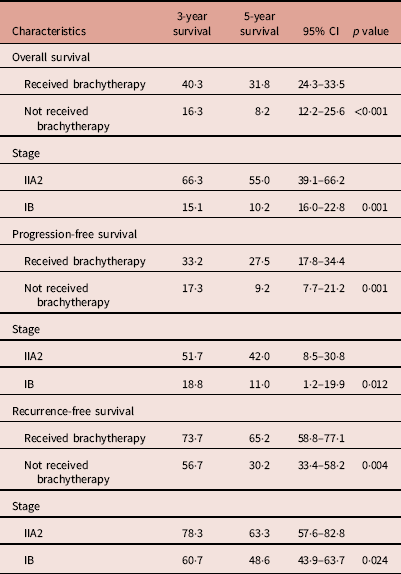
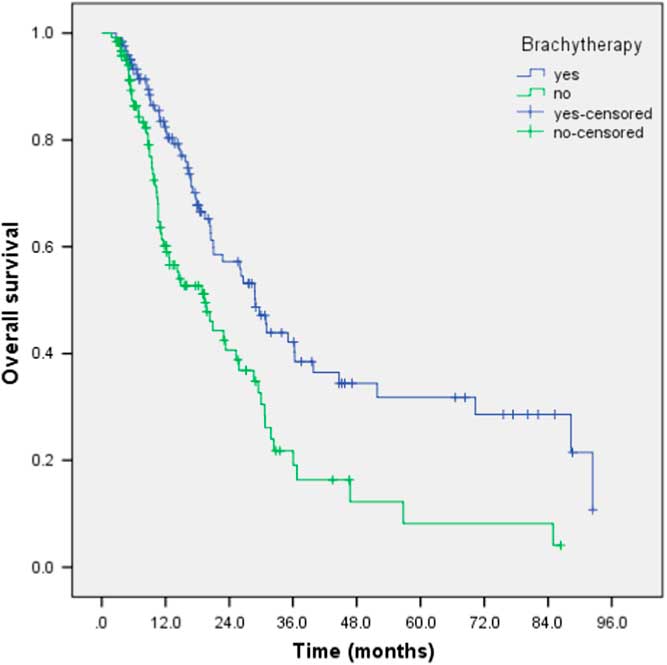
There was a significant difference in OS observed between the different adjuvant treatment groups. The 5-year OS for the patients treated with and without vaginal brachytherapy was 31·8 and 8·2%, respectively, and this difference was considered statistically significant (p<0·001) (Figure 1 and Table 2).
Kaplan–Meier estimates of overall survival according to brachytherapy.
The 3- and 5-year overall survival, progression-free survival and recurrence-free survival
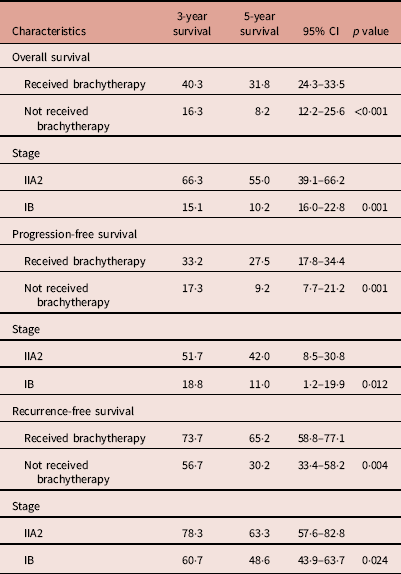
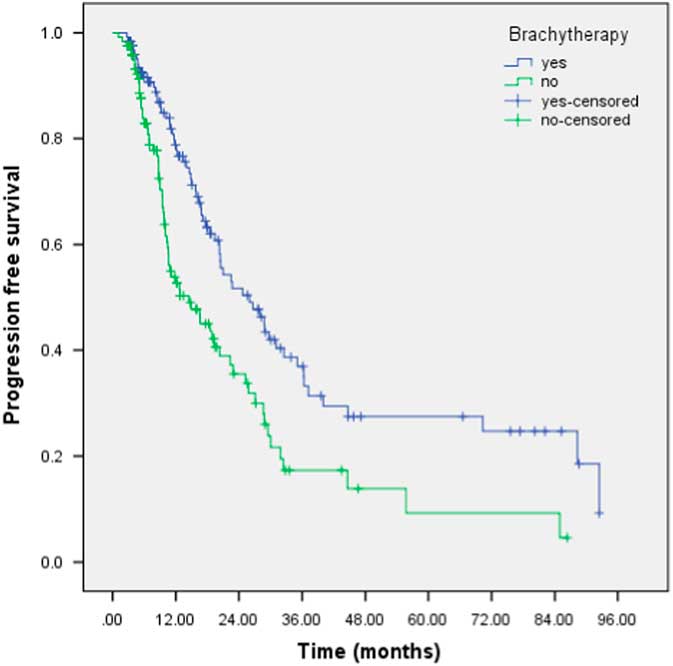
The 5-year PFS rate for the patients treated with and without vaginal brachytherapy was 27·5 and 9·2%, respectively, and this difference was statistically significant (p=0·001) (Figure 2 and Table 2).
Kaplan–Meier estimates of progression-free survival according to brachytherapy.
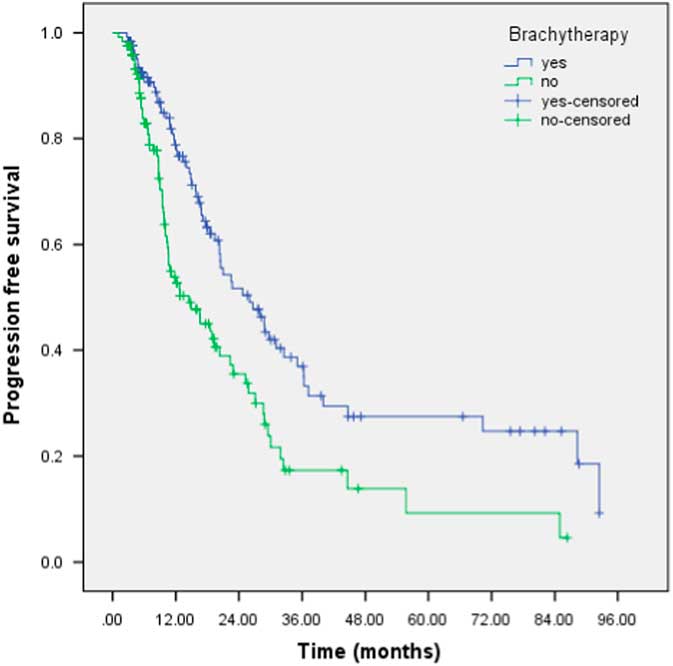
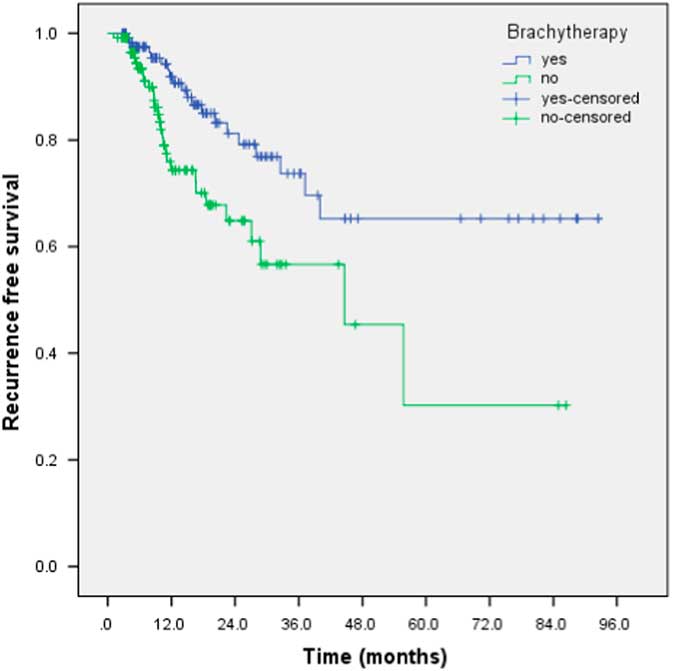
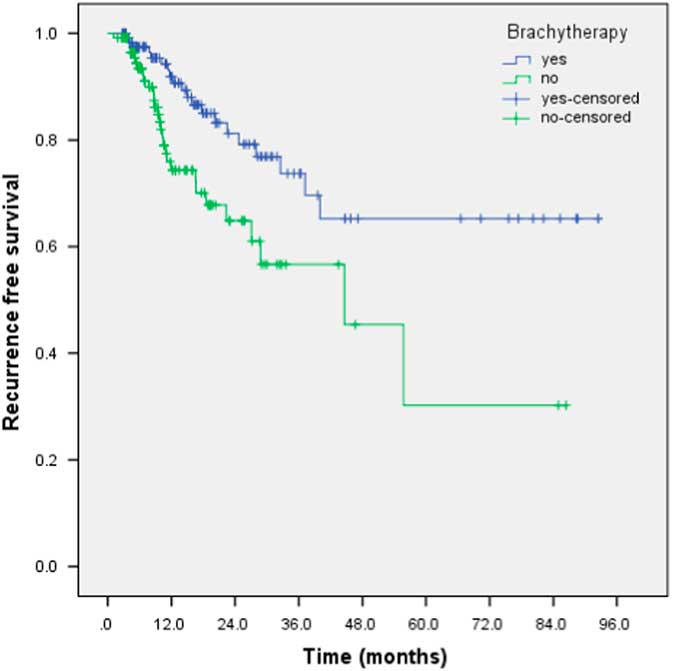
The 5-year RFS rate for the patients treated with and without vaginal brachytherapy was 65·2 and 30·2%, respectively, and this difference was statistically significant (p=0·004) (Figure 3 and Table 2).
Kaplan–Meier estimates of recurrence-free survival according to brachytherapy.
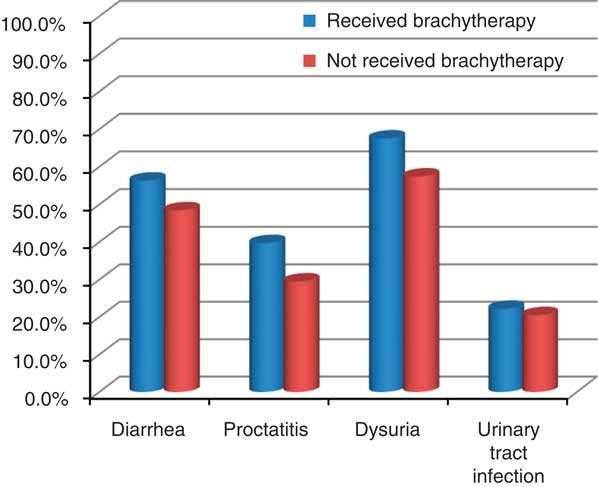
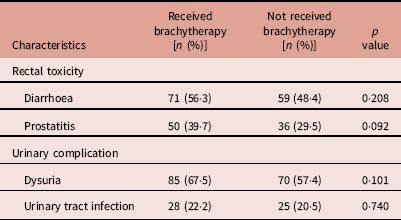
As regards diarrhoea, burning defaecation, dysuria and urinary tract infection, there was no significant difference between the two groups (p=0·208, 0·092, 0·101 and 0·740, respectively), as illustrated in Table 3 and Figure 4.
Toxicity in both groups.
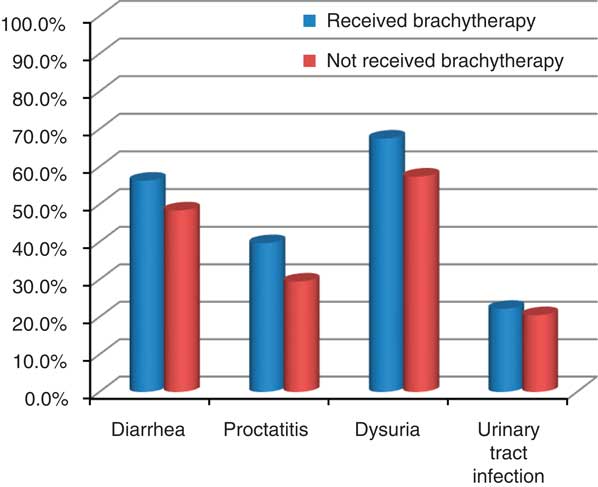
Rectal and urinary toxicity in patients with postoperative radiotherapy with/without brachytherapy

Discussion
Early stage of cancer of the cervix is often treated by panhysterectomy and removal of pelvic lymph nodes with or without para-aortic lymph node dissection.
There are many prognostic factors that determine whether adjuvant treatment is required or not; these factors are classified as high-risk factors, such as the presence of lymph node invasion, positive vaginal margin and parametrium involvement, and the presence of these factors necessitates the use of concurrent chemo-radiotherapy.Reference Peters, Liu and Barrett 15
Whereas there are intermediate risk factors including lymphvascular-space involvement, deep stromal invasion and size of the tumour, the presence of two of these factors indicates the need for adjuvant radiotherapy so as to maximise the LC.Reference Monk, Wang and Im 11
For cervical carcinoma, PORT is indicated for patients having adverse features in the form of EBRT to the whole pelvis. The role of brachytherapy in such patients is not clear as there are a restricted number of studies in the literature. At our institute we always combine pelvic EBRT and IVBT for patients requiring PORT.
This study aims to analyse the clinical outcome of cervical cancer patients with two or more risk factors of Sedlis Criteria who are treated by postoperative IVBT following pelvic EBRT.
In this study, LC, PFS and OS for cervical cancer patients who had intermediate risk factors and received pelvic external beam radiotherapy with brachytherapy postoperatively were compared with those of patients who received pelvic EBRT alone.
Survival analysis using Kaplan–Meier shows that LC, PFS and OS differed significantly between these two groups. The 5-year LC, PFS and OS were greater in patients treated with EBRT integrated with vaginal brachytherapy than in those treated with pelvic EBRT alone with significant p-values (0·004, 0·001 and 0·001, respectively). In addition, our results showed that the toxicity profile was accepted with no significant difference in rectal and bladder complications between the two groups, with a complication rate of about 10% in the form of proctatitis and dysuria.
This is similar to what was reported by Li et al. 2015,Reference Li, Kou, Feng, Zhang, Chao and Wang 16 where the LC and PFS were significantly better for patients with pelvic node invasion who received EBRT and brachytherapy. Patients who developed local recurrence in the brachytherapy arm were a total of six patients, whereas in the group of patients who did not receive brachytherapy 14 of them developed local recurrence. Regarding the PFS, the PFS at 5 years was 71·1% in patients treated by combined therapy and 55·1% in those treated with EBRT alone, with a p-value of 0·044; however, in this study no significant difference was found in OS.
No significant differences were found regarding proctitis and cystitis between the two groups (p=0·671, 0·459 and 0·969, respectively).
Our results concur with those of Sharma et al., 2015,Reference Sharma, Gandhi, Rath, Julka, Haresh and Gupta 17 who demonstrated that the use of postoperative pelvic external beam radiotherapy with intravaginal brachytherapy results in good local control and survival rates with acceptable toxicity rates in cervical carcinoma; also the complication rate of proctatitis and dysuria was about 8%.
Conclusion
The use of intravaginal brachytherapy for postoperative cancer of the cervix patients with intermediate risk factors improves not only local control but also improves the OS for patients with accepted toxicity profiles.
Acknowledgement
None.