At the current rate of technological advancement, 5 years is like 100. Although tongue-in-cheek, this statement might not be hyperbole. For example, computer scientists and engineers only took 5 years to introduce Apache Spark after Apache Hadoop, two open-source frameworks for analyzing big data. Spark runs 100 times faster than Hadoop in memory (Diep, Reference Diep2020). With greater computing power, more robust software, and quicker digital transformations, we agree with White, Ravid, Siderits, and Behrend (Reference White, Ravid, Siderits and Behrend2022) that we need timelier research on how technology affects or moderates psychological phenomena in work settings. However, we feel that the authors stop short of explaining the full extent of the problem, potentially undersell its importance, and miss an essential solution.
White etal. (Reference White, Ravid, Siderits and Behrend2022) mention several viable solutions to speed up research, but we would like to offer another: building and applying conceptual frameworks that anticipate technology’s direct and indirect effects on psychological constructs (Morelli etal., Reference Morelli, Potosky, Arthur and Tippins2017). Adopting this approach will increase research speed and timeliness and have a noticeable influence on technologies and work processes themselves. To make this argument, we’ll summarize Morelli etal. (Reference Morelli, Potosky, Arthur and Tippins2017), refined by Landers and Behrend’s (Reference Landers and Behrend2017) commentary, and show how a conceptual technology framework can set testable hypotheses on technology in a work setting.
Why technology frameworks provide timelier and more influential research
White etal. (Reference White, Ravid, Siderits and Behrend2022) list explanations for why technology research is slow; we noticed several stem from a lack of testable hypotheses. We agree that not having testable hypotheses makes it difficult for researchers and reviewers to evaluate a project’s merit. However, White etal. miss an important underlying reason why hypotheses aren’t formed early on in a technology’s lifecycle: Researchers often study technology as a monolithic exogenous variable (e.g., mobile versus nonmobile; Landers & Behrend, Reference Landers and Behrend2017). This breaks the “typical timeline of a hypothetico-deductive research study” (White etal., p. 23) and has a chilling effect on inductive research conducted on technology fads.
Instead of studying a mainstream technology too late or a possible fad technology that might not have long-term value, frameworks unbundle technologies into features, attributes, or capabilities that interact with psychological processes in testable, generalizable ways. Frameworks help set rational expectations researchers can use to form specific, testable hypotheses about how people interact with technological components (e.g., Arthur etal., Reference Arthur, Keiser and Doverspike2018; Orlikowski & Scott, Reference Orlikowski and Scott2008; Potosky, Reference Potosky2008). Hypothesis tests can then improve frameworks and inform future studies on technologies with similar characteristics whether or not the technology takes off. As a result, research speeds up and becomes more valuable because (a) researchers are not burdened with theory-building requirements and (b) researchers avoid proposing inductive studies that may have minimal perceived value to reviewers and editors.
We advocate that a “framework-first approach” offers a priori hypotheses that motivate and sponsor timelier research for various technologies rather than reactive research of coarsely defined mainstream technologies. Although researchers should study mainstream technologies, we suspect that only studying “valuable” (i.e., widely adopted) technologies misses out on findings that could guide policy or practice in meaningful ways. To make the point, we provide an example of how a technology framework provides a priori hypotheses for a novel yet burgeoning technology: the blockchain.
An example of creating testable hypotheses for new tech: Decentralized autonomous organizations built on blockchain technology
We suspect that industrial-organizational (I-O) psychologists will study a completely new organizational context offered by blockchain technologies and decentralized software protocols over the next decade. Arealistic example of a new technology-enabled organization is a decentralized autonomous organization (DAO). DAOs are blockchain-enabled working arrangements between people who coordinate toward shared goals through democratized governance and decision making (Hsieh etal., Reference Hsieh, Vergne, Anderson, Lakhani and Reitzig2018). DAOs are decentralized organizations in that decision-making authority is distributed to voluntary members who have a stake in the organization through contributions or cryptographic token ownership (Jentzsch, Reference Jentzsch2016). DAOs are autonomous organizations in that code automatically enacts and enforces governance rules and decisions (Hassan & De Filippi, Reference Hassan and De Filippi2021).
The blockchain and the decentralized protocols built on it, like cryptocurrencies, are being adopted at increasing rates. Still, little is known about how these technologies affect work and collaboration or alter the psychological phenomena I-O psychologists have studied for decades (Soda & Zaheer, Reference Soda and Zaheer2012). For example, researchers have studied virtual teams in traditional organizations (Hertel etal., Reference Hertel, Geister and Konradt2005; Hoch & Kozlowski, Reference Hoch and Kozlowski2014; Mesmer-Magnus etal., Reference Mesmer-Magnus, DeChurch, Jiménez-Rodriguez, Wildman and Shuffler2011), but there is no research on the effectiveness of virtual teams in a DAO. Some reasonable research questions could be: How would psychological safety and trust formation among virtual team members at a traditional organization differ from a DAO where teammates might not know the true identities of their coworkers (Feitosa & Salas, Reference Feitosa and Salas2020)? Or, how do individuals on virtual DAO teams communicate, stay motivated, develop work attitudes, or perceive justice when team membership is based on individual contributions or ownership? Usually, researchers would answer these questions through inductive studies with broad research questions that may be hard for reviewers to evaluate. However, with a conceptual technology framework such as the one provided in Potosky (Reference Potosky2008), we can start to create and assess specific, informed research questions and hypotheses.
Potosky’s (Reference Potosky2008) framework describes four technology attributes that facilitate communication between parties (e.g., technology-mediated hiring assessments). These attributes are transparency, the degree to which a medium is noticeable during communication; social bandwidth and interactivity, the amount and pace at which a medium shares information; and surveillance, the degree to which third parties can monitor messages. We recommend reading Potosky’s full paper to understand these attributes better. But we suggest that Potosky’s framework serves as a basis for developing reasonable, proactive hypotheses about how blockchain technology’s characteristics interact with psychological constructs.
DAOs are built on decentralized software protocols such as Ethereum. Ethereum enables smart contracts, which are programmed instructions that transparently record peer-to-peer transactions on the Ethereum blockchain (Ethereum.org, 2021). Thus, the Ethereum blockchain is accessible by anyone with an internet connection making it “permissionless.” The permissionless quality makes the application and enforcement of rules that govern DAO member interactions visible and decentralized. Permissionless, or fully accessible, internet systems also have increased privacy—individuals can join a DAO team anonymously.
Additionally, blockchain technology is “trustless.” Rather than relying on a trusted central authority to record and facilitate transactions, everyone can see and confirm the rules and transaction ledger. Trustlessness means that DAO member interactions and contributions are less censored or controlled by a central human authority. For example, most DAOs make decisions using clearly defined rulesets implemented with voting software.
With conceptual understandings of these feature attributes in mind, we offer three testable hypotheses about how feature attributes affect individual cognitions, behaviors, and attitudes at work via technology-mediated communication and collaboration.
Hypothesis 1: Lower surveillance will increase the importance of shared leadership models for effectiveness among DAO-based teams.
Team leadership behaviors directly influence virtual team effectiveness via a shared leadership model (Hoch & Kozlowski, Reference Hoch and Kozlowski2014; Liao, Reference Liao2017). DAOs operating on permissionless and trustless systems have low surveillance as individuals’ messages, collaborations, and submissions grant members greater privacy and lower censorship or reprisal from central leaders.
Hypothesis 2: Greater interactivity from blockchain-enabled decentralized governance increases procedural justice perceptions, thus increasing engagement and reducing turnover among contributing DAO team members.
Improving procedural justice increases employee engagement, which reduces employee turnover in traditional organizations (Saks, Reference Saks2006). DAO organizational membership and turnover concepts are different from those in traditional organizations. However, we suspect programmatic governance offers higher potential interactivity between members due to how quickly decisions are made and implemented.
Hypothesis 3: Increased social bandwidth (more information) and transparency (less information lost in translation due to hidden transactions) and distributive justice perceptions positively relate to job engagement.
Job engagement is positively related to distributive justice or the perceived fairness of a decision outcome (Saks, Reference Saks2006). Social bandwidth and transparency increase as blockchain-facilitated DAO teams operate under a visible set of rules and a public ledger of interactions, contributions, and rewards.
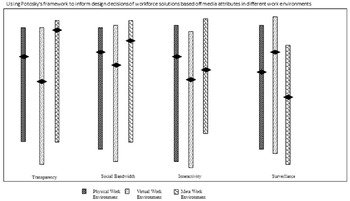
Figure 1 summarizes these technology features classified by Potosky (Reference Potosky2008) and compares them with physical and virtual work environments. Although we believe these hypotheses are more proactive and informed than typical inductive studies or open-ended research questions, blockchain technology is a problematic example to hypothesize about here briefly. Its features and attributes extend beyond the bounds of Potosky’s conceptual framework, which focuses on technology attributes that affect communication between two parties during a selection assessment. Blockchain technology’s features and its applications to work are vast. However, we offer a glimpse of what’s possible on the blockchain (e.g., DAOs) to pique our readers’ interest in this new technology.
Example of Potosky’s (Reference Potosky2008) Framework for Media Attributes in Different Work Environments.
Note. “Meta work environment” is another term for internet-based, decentralized work arrangements such as DAOs.

In sum, we hope to spark more conversation about how conceptual technology frameworks, such as Potosky’s (Reference Potosky2008), can help form proactive hypotheses that make even a daunting technology such as the blockchain more approachable for researchers and reviewers. We envision more approachability and specificity will lead to faster, more-targeted research in which influencers, leaders, and technologists outside of our field take notice. We know that together we can create timelier and more effective research that will further our field’s importance and relevance to the working world we serve.