



1. Introduction and main results
Understanding the symmetry of solutions to partial differential equations has been a topic of interest since the seminal work of Gidas, Ni, and Nirenberg [Reference Gidas8]. In particular, the existence and multiplicity of radial and non-radial solutions and symmetry breaking are currently active areas of research.
In the present paper, we first investigate the existence of radial and non-radial solutions to the problem of Hénon type [Reference Hénon9]:
 \begin{align}
\begin{cases}
-\operatorname{div}\left(a(|x|)|\nabla u|^{p-2}\nabla u+ b(|x|)|\nabla u|^{q-2}\nabla u\right)=|x|^\beta |u|^{m-2}u& \ \text{in } B,\\
u=0 &\ \text{on } \partial B,
\end{cases}
\end{align}
where  $B:=B(0,1)$ is the unit ball in
 ${\mathbb{R}}^N$ (
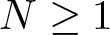 $N\geq 1$),
 $a,b: [0,1)\to [0,\infty)$ are measurable functions, and
 $p,q,\beta,m\in{\mathbb{R}}$ with
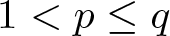 $1 \lt p\leq q$. We have the following result for the existence of nontrivial nonnegative radial solutions to problem (1.1).
Theorem 1.1. Assume that 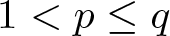 $1 \lt p\leq q$ and there exists a constant C > 0 such that
 \begin{equation*}
a(|x|)\geq C|x|^\alpha,\ b(|x|) \geq C|x|^\gamma,\ \ \text{a.e.}\ x\in B,\end{equation*}
with  $\alpha \gt p-N$ and
 $\gamma \gt q-N.$ Then, problem (1.1) has a nontrivial nonnegative radial solution provided that
 $\beta \gt 1-N$ and
 $q \lt m \lt \max \left\{\frac{(N+\beta)p}{N-p+\alpha},\frac{(N+\beta)q}{N-q+\gamma}\right\}.$
Our next theorem is for the existence of non-radial solutions to problem (1.1). In the following, we denote the integer part of a real number s by  $[s]$ and let
 \begin{equation*}s^*:=\frac{Ns}{N-s}\quad \text{for} \ \ 1 \lt s \lt N.\end{equation*}
Theorem 1.2. Let  $a(|x|)=|x|^\alpha$ and
 $b(|x|)=|x|^\gamma$ for
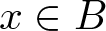 $x\in B$ with
 $\alpha \gt p-N$ and
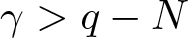 $\gamma \gt q-N$. Assume furthermore that one of the following two conditions holds:
 \begin{align}
\!\!\!\!\!\!\!\!\!\!\!\!\!\!\!\!\!\!\!\!\!\!\!\!\!\!\!\!\!\!\!\!\!\!\!\!\!\!\!\!\!\!\!\!\!\!\!\!\!\!\!1 \lt p\leq q \lt N, q \lt m \lt q^{*}\ {and}\ {\frac{m^{2}(q-p)}{(m-q)(m-p)}} \lt N-1;
\end{align}
 \begin{align}
1 \lt p\leq q\leq \left[\frac{N}{2}\right], q \lt m \lt \frac{\left([\frac{N+1}{2}]+1\right)q}{[\frac{N+1}{2}]+1-q}\ and\ \frac{m^2(q-p)}{(m-q)(m-p)} \lt \left[\frac{N}{2}\right].
\end{align}
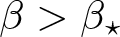
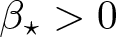 $\beta_\star \gt 0$ such that problem (1.1) admits a nonnegative non-radial solution for any
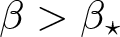 $\beta \gt \beta_\star$.
Next, with a smaller range of m in (A2), we have the following multiplicity result for non-radial solutions.
Theorem 1.3. Let  $a(|x|)=|x|^\alpha$ and
 $b(|x|)=|x|^\gamma$ for
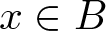 $x\in B$ with
 $\alpha \gt p-N$ and
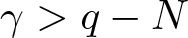 $\gamma \gt q-N$. Then the following assertions hold:
(i) If
 $1 \lt p\leq q\leq [\frac{N}{2}]$,
$q\in{\mathbb{N}}$,
$q \lt m \lt \frac{\left(N-q+1\right)q}{N-2q+1}$, and
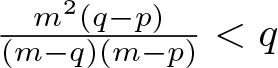
$\frac{m^2(q-p)}{(m-q)(m-p)} \lt q$, then there exists
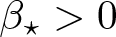
$\beta_\star \gt 0$ such that problem (1.1) admits
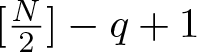
$[\frac{N}{2}]-q+1$ distinct nonnegative non-radial solutions for any
$\beta \gt \beta_\star$.
(ii) If
$1 \lt p\leq q\leq [\frac{N}{2}]$,
$q\notin{\mathbb{N}}$,
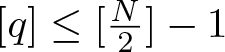
$[q]\leq [\frac{N}{2}]-1$,
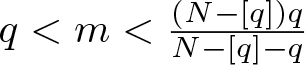
$q \lt m \lt \frac{\left(N-[q]\right)q}{N-[q]-q}$, and
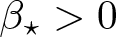
$\frac{m^2(q-p)}{(m-q)(m-p)} \lt [q]+1$, then there exists
$\beta_\star \gt 0$ such that problem (1.1) admits
$[\frac{N}{2}]-[q]$ distinct nonnegative non-radial solutions for any
$\beta \gt \beta_\star$.






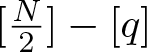

Note that the condition (A2) requires more restrictions on the dimension (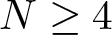 $N\geq 4$) and the main operator but allows the growth of nonlinearities to exceed the Sobolev critical exponent. In order to solve problem (1.1) in this case, we find critical points u of a certain functional satisfying a particular kind of symmetry:
 $u(x)=u(y,z)=u(|y|,|z|)$ with
 $x=(y,z)\in {\mathbb{R}}^\ell\times {\mathbb{R}}^{N-\ell}$, where
 $q\leq N-\ell\leq \ell$. This technique has been used in the papers [Reference Li10] and [Reference Lin12], where it was applied to problems on annuli without weights. In [Reference Badiale and Serra3] and [Reference Badiale and Cappa2], the authors applied this technique to obtain the existence and multiplicity of non-radial solutions for (1.1) when
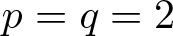 $p=q=2$ and
 $a(\cdot)=b(\cdot)\equiv 1$. The results in [Reference Badiale and Serra3] and [Reference Badiale and Cappa2] were then extended to the weighted p-Laplacian case in [Reference Carrião, de Figueiredo and Miyagaki5] and [Reference Assunção, Miyagaki, de Assis Pereira and Rodrigues1], respectively. However, their extensions seem to have some errors; see Remarks 2.4 and 3.11. Here, we correct these errors and extend the results in [Reference Assunção, Miyagaki, de Assis Pereira and Rodrigues1, Reference Carrião, de Figueiredo and Miyagaki5] to the weighted (p, q)-Laplacian case. Regarding the range of m in (A2) in Theorems 1.2 and 1.3, we note that the condition on m in Theorem 1.2 (resp. Theorem 1.3) can be written as
 \begin{equation*}q \lt m \lt \frac{(\ell+1)q}{\ell+1-q} \ \text{and } \ \frac{m^2(q-p)}{(m-q)(m-p)} \lt N-\ell,\end{equation*}
where  $\ell$ is the smallest integer (resp. the largest integer) satisfying
 $q\leq N-\ell\leq \ell$.
Finally, we study the minimizing problem
 \begin{equation}
\lambda_1(\beta)=\inf_{u\in Y\setminus\{0\}}\frac{\int_B\left(\frac{1}{p}||x|^\alpha|\nabla u|^p+\frac{1}{q}|x|^\gamma|\nabla u|^q\right)\mathrm{d} x}{\left(\int_B \frac{1}{m}|x|^\beta |u|^m\mathrm{d} x\right)^{\frac{t}{m}}}
\end{equation}
under the assumption
(H)
$1 \lt p=t=q \lt N$ or
$1 \lt p \lt t \lt q \lt N$,
$\alpha \gt p-N$,
$\gamma \gt q-N,$
$\max \left\{1,\frac{(N-1)t}{N-1-q+t}\right\} \lt m \lt p^*$ and
$\beta \gt \beta_0(p,q,\alpha,\gamma):=\max\left\{\frac{m(N-p+\alpha)-Np}{p}, \frac{m(N-q+\gamma)-Nq}{q}\right\}$.






Here, Y is the completion of  $C_c^\infty(B)$ with respect to the norm
 \begin{equation*}\|\cdot\|:=\max\left\{\|\nabla \cdot \|_{L^p(|x|^\alpha,B)},\|\nabla \cdot\|_{L^q(|x|^\gamma,B)}\right\}\end{equation*}
(see Section 2 for more details on this space).
In [Reference Smets, Su and Willem14], the authors proved that for 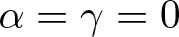 $\alpha=\gamma=0$,
 $1 \lt p=q=t \lt N$, and
 $p \lt m \lt p^*$, there exists
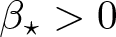 $\beta_\star \gt 0$ such that no minimizer of (1.2) is radial provided
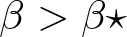 $\beta \gt \beta\star$. Our next theorem extends this result.
Theorem 1.4. Assume that (H) holds. Then the infimum  $\lambda_1(\beta)$ is achieved at some nonnegative function
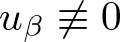 $u_\beta\not\equiv 0$. Moreover, there exists
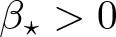 $\beta_\star \gt 0$ such that any minimizer of
 $\lambda_1(\beta)$ is non-radial when
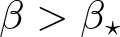 $\beta \gt \beta_\star$.
We have the following corollaries of Theorem 1.4. First, we consider the minimization problem (1.2) for the case 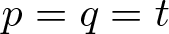 $p=q=t$ and the associated Hénon type problem
 \begin{align}
\begin{cases}
-\operatorname{div}\left(\left(|x|^\alpha+|x|^\gamma\right)|\nabla u|^{p-2}\nabla u\right)= |x|^\beta |u|^{m-2}u& \ \text{in } B,\\
u=0& \ \text{on } \partial B.
\end{cases}
\end{align}
We say that a solution of (1.3) is a ground state if it is also a minimizer for  $\lambda_1(\beta)$ up to a constant factor. We have the following corollary.
Corollary 1.5. Let  $1 \lt p \lt N$,
 $p \lt m \lt p^*$,
 $\alpha \gt p-N$,
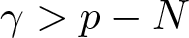 $\gamma \gt p-N$, and
 $\beta \gt \beta_0(p,p,\alpha,\gamma)$. Then problem (1.3) has a nontrivial nonnegative ground state solution. Moreover, there exists
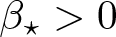 $\beta_\star \gt 0$ such that for any
 $\beta \gt \beta_\star$, any ground state solution of (1.3) is non-radial.
Next, we consider the eigenvalue problem
 \begin{align}
\begin{cases}
-\operatorname{div}\left(|x|^\alpha|\nabla u|^{p-2}\nabla u+ |x|^\gamma|\nabla u|^{q-2}\nabla u\right)=\lambda |x|^\beta |u|^{m-2}u& \ \text{in } B,\\
u=0& \ \text{on } \partial B.
\end{cases}
\end{align}
We have the following corollary.
Corollary 1.6. Let  $1 \lt p \lt q \lt N$,
 $\min\left\{\frac{(N-1)p}{N-1-q+p},q\right\} \lt m \lt p^*$,
 $\alpha \gt p-N$, and
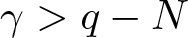 $\gamma \gt q-N$. Then, for β > 0 large, the eigenvalue problem (1.4) has a nonnegative non-radial eigenfunction.
We emphasize that for the case 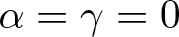 $\alpha=\gamma=0$, it is well known that any (weak) solution u of problem (1.3) or (1.4) is of class
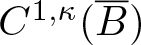 $C^{1,\kappa}(\overline{B})$ for some
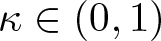 $\kappa\in (0,1)$ (see, e.g., [Reference Lieberman11]). If, in addition, β = 0, then u must be radial (see [Reference Damascelli and Sciunzi7] for the p-Laplacian and [Reference Biagi, Esposito and Vecchi4] for the (p, q)-Laplacian). Thus, Corollaries 1.5 and 1.6 provide some symmetry-breaking information for (p, q) problems of Hénon type (1.3) and (1.4) when β jumps from 0 to a sufficiently large positive number.
2. Preliminaries
Let 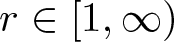 $r\in [1,\infty)$ and let w be a real function which is measurable and positive a.e. in the ball B. Define the weighted Lebesgue space
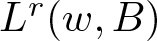 $L^r(w,B)$ as
 \begin{equation*}L^r(w,B):=\left\{u:\, B\to{\mathbb{R}} \ \text{measurable},\, \int_B w(x)|u|^r\mathrm{d} x \lt \infty \right\}
\end{equation*}
endowed with the norm
 \begin{equation*}
\|u\|_{L^r(w,B)}:=\left(\int_B w(x)|u(x)|^r\mathrm{d} x\right)^{\frac{1}{r}}.
\end{equation*}
For p > 1 and  $\alpha \gt p-N$, define
 $\mathcal{D}^{1,p}(|x|^{\alpha},B)$ as the completion of
 $C_c^\infty(B)$ with respect to the norm
 $\|\nabla \cdot\|_{L^p(|x|^{\alpha},B)}$. This space is a separable reflexive Banach space. We also consider the subspace of radially symmetric functions of
 $\mathcal{D}^{1,p}(|x|^{\alpha},B)$ which is denoted by
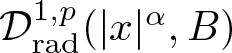 $\mathcal{D}_{\operatorname{rad}}^{1,p}(|x|^{\alpha},B)$. The following compact imbedding on the weighted spaces was proved in [Reference Xuan16, Theorem 2.1] and plays a crucial role in our arguments.
Proposition 2.1. Assume that  $1 \lt p \lt N$,
 $\alpha \gt p-N$,
 $1\leq m \lt p^*$, and
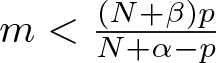 $m \lt \frac{(N+\beta)p}{N+\alpha-p}$. Then, it holds that
 \begin{equation*}
\mathcal{D}^{1,p}(|x|^\alpha,B)\hookrightarrow\hookrightarrow L^{m}(|x|^{\beta},B).
\end{equation*}
On the subspace 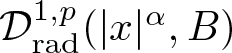 $\mathcal{D}_{\operatorname{rad}}^{1,p}(|x|^{\alpha},B)$, the range of m in the preceding imbedding can be extended as in the next proposition, which is a consequence of [Reference Clément, de Figueiredo and Mitidieri6, Proposition 1.1].
Proposition 2.2. Assume that  $1 \lt p \lt N+\alpha$,
 $\beta \gt 1-N$, and
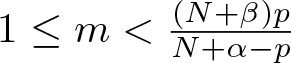 $1\leq m \lt \frac{(N+\beta)p}{N+\alpha-p}$. Then, it holds that
 \begin{equation*}
\mathcal{D}_{\operatorname{rad}}^{1,p}(|x|^{\alpha},B)\hookrightarrow\hookrightarrow L^{m}(|x|^{\beta},B).
\end{equation*}
In order to look for non-radial solutions to problem (1.1) in the case of (A2), we will also need the following imbedding result. For  $\ell\in{\mathbb{N}}$ with
 $1\leq \ell\leq N-1$ we define the following subspace:
 \begin{align*}
&\mathcal{D}_{\ell}^{1,p}(|x|^\alpha,B)\\
&\qquad:=\left\{u\in \mathcal{D}^{1,p}(|x|^\alpha,B):\, u(y,z)=u(|y|,|z|) \ \text{for} \ x=(y,z)\in {\mathbb{R}}^\ell\times {\mathbb{R}}^{N-\ell}\right\}.
\end{align*}
We have the following.
Proposition 2.3. Assume  $1 \lt p\leq N-\ell\leq \ell$,
 $\alpha \gt p-N.$ Define
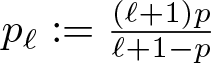 $p_\ell:=\frac{(\ell+1)p}{\ell+1-p}$ and
 $\delta_{p,\ell}:=\frac{Np+(\ell-1)(\ell-1+p)}{\ell+1}$. Then, it holds that
 \begin{equation*}
\mathcal{D}_\ell^{1,p}(|x|^\alpha,B)\hookrightarrow L^m\left(|x|^\beta,B\right)
\end{equation*}
provided
 \begin{equation*}1\leq m\leq p_\ell\ \ \text{and}\ \ \beta \gt \beta_{p,\ell}:=\frac{p_\ell (\delta_{p,\ell}+\alpha)}{p}.\end{equation*}
Moreover, the above imbedding is compact if 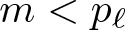 $m \lt p_\ell$ and
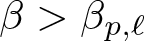 $\beta \gt \beta_{p,\ell}$.
Remark 2.4. It is worth pointing out that Proposition 2.3 is a revision of [Reference Carrião, de Figueiredo and Miyagaki5, Theorem 2.1]. In that result, the authors followed the lines of [Reference Badiale and Serra3, Theorem 2.1], where p = 2 and α = 0, to obtain Proposition 2.3 with  $\beta_{p,\ell}=\frac{p_\ell \delta_{p,\ell}}{p}$. However, we find that their proof was only valid for the case
 $\alpha\leq 0$, see the comment following the proof of Proposition 2.3. Furthermore, we also find that the condition
 $2\leq p$ in [Reference Carrião, de Figueiredo and Miyagaki5, Theorem 2.1] is unnecessary.
Proof of Proposition 2.3
Let  $1\leq m\leq p_\ell$ and
 $\beta \gt \beta_{p,\ell}$. Fix
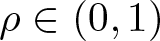 $\rho\in (0,1)$ and define
 $\Omega_j:=\left\{x\in{\mathbb{R}}^N: \rho^j \lt |x| \lt \rho^{j-1}\right\}$ for
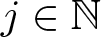 $j\in{\mathbb{N}}$. As in [Reference Carrião, de Figueiredo and Miyagaki5, Proof of Lemma 2.1] we have
 \begin{align}
\int_{\Omega_j}|x|^{\alpha}(|\nabla u|^p+|u|^p)\mathrm{d} x\geq C(\rho)\rho^{j(\delta_{p,\ell}+\alpha)}\left(\int_{\Omega_j}|u|^{p_\ell}\mathrm{d} x\right)^{p/p_\ell},\quad\forall u\in \mathcal{D}_\ell^{1,p}(|x|^\alpha,B).\nonumber\\
\end{align}
Here and in the following,  $C(\rho)$ denotes a positive constant independent of j and may vary from line to line. Note that to obtain Eqns (5) and (6) of [Reference Carrião, de Figueiredo and Miyagaki5, Proof of Lemma 2.1], we use the estimate
 $|x|^{\alpha}\geq \rho^{(j-1)\alpha}$ for the case
 $\alpha\leq 0$ and the estimate
 $|x|^{\alpha}\geq \rho^{j\alpha}$ for the case α > 0. Let
 $u\in \mathcal{D}_\ell^{1,p}(|x|^\alpha,B)$ be arbitrary. We have
 \begin{equation*}
\int_B|x|^\beta|u|^{p_\ell}\mathrm{d} x=\sum_{j=1}^\infty\int_{\Omega_j}|x|^\beta|u|^{p_\ell}\mathrm{d} x\leq \sum_{j=1}^\infty\rho^{(j-1)\beta}\int_{\Omega_j}|u|^{p_\ell}\mathrm{d} x.
\end{equation*}
Combining (2.1) with the preceding estimate yields
 \begin{align*}
\int_B|x|^\beta|u|^{p_\ell}\mathrm{d} x&\leq C(\rho) \sum_{j=1}^\infty\rho^{(j-1)\beta-\frac{j(\delta_{p,\ell}+\alpha)p_\ell}{p}}\left(\int_{\Omega_j}|x|^\alpha\left(|\nabla u|^p+|u|^p\right)\mathrm{d} x\right)^{p_\ell/p}\\
&\leq C(\rho) \sum_{j=1}^\infty\rho^{(j-1)\beta-\frac{j(\delta_{p,\ell}+\alpha)p_\ell}{p}}\left(\int_{B}|x|^\alpha\left(|\nabla u|^p+|u|^p\right)\mathrm{d} x\right)^{p_\ell/p}.
\end{align*}
Since  $\beta \gt \beta_{p,\ell}$, we have
 $\sum_{j=1}^\infty\rho^{(j-1)\beta-\frac{j(\delta_{p,\ell}+\alpha)p_\ell}{p}}=C(\rho)$. Thus,
 \begin{align*}
\int_B|x|^\beta|u|^{p_\ell}\mathrm{d} x
&\leq C(\rho)\left(\int_{B}|x|^\alpha\left(|\nabla u|^p+|u|^p\right)\mathrm{d} x\right)^{p_\ell/p}.
\end{align*}
Applying Proposition 2.1, we get from the preceding estimate that
 \begin{align*}
\int_B|x|^\beta|u|^{p_\ell}\mathrm{d} x
&\leq C(\rho)\left(\int_{B}|x|^\alpha|\nabla u|^p\mathrm{d} x\right)^{p_\ell/p}.
\end{align*}
The rest of the proof is the same as that of [Reference Carrião, de Figueiredo and Miyagaki5, Theorem 2.1]. The proof is complete.
In [Reference Carrião, de Figueiredo and Miyagaki5], the authors obtained Proposition 2.3 with  $\beta_{p,\ell}=\frac{p_\ell \delta_{p,\ell}}{p}$ by deriving (2.1) and then estimating
 $\rho^{j(\delta_{p,\ell}+\alpha)}\geq C(\rho)\rho^{j\delta_{p,\ell}}$ for all j, which is impossible for the case α > 0 since
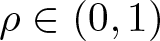 $\rho\in (0,1)$ is fixed, see [Reference Carrião, de Figueiredo and Miyagaki5, Proof of Lemma 2.1].
3. Existence of radial and non-radial solutions
In this section, we prove Theorems 1.1-1.3 for the existence of radial and non-radial solutions of problem (1.1).
3.1. Existence of radial solutions
Let  $1 \lt p\leq q$ and let
 $\beta \gt 1-N$. Assume that
 \begin{equation*}a(|x|)\geq C|x|^\alpha,\ b(|x|) \geq C|x|^\gamma,\ \ \text{a.e.}\ x\in B,\end{equation*}
where C > 0 is a constant and  $\alpha,\gamma\in{\mathbb{R}}$ satisfy
 $\alpha \gt p-N,$
 $\gamma \gt q-N.$ Note that
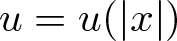 $u=u(|x|)$ is a radial solution to problem (1.1) if
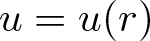 $u=u(r)$ is a solution to the following ODE:
 \begin{align}
\begin{cases}
-\left(r^{N-1}\left(a(r)|u'|^{p-2}u'+b(r)|u'|^{q-2}u'\right)\right)'=r^{N-1+\beta} |u|^{m-2}u \ \text{in } (0,1),\\
u'(0)=u(1)=0.
\end{cases}
\end{align}
Denote by  $AC[0,1]$ the set of all functions
 $u:[0,1]\to{\mathbb{R}}$ which are absolutely continuous. Consider the spaces
 \begin{equation*}X_{p,\alpha}:=\left\{u\in AC[0,1]:\ u'(0)=u(1)=0,\ \text{and}\ \int_0^1 r^{N-1+\alpha}|u'|^p\mathrm{d} r \lt \infty \right\},\end{equation*}
 \begin{equation*}X_{q,\gamma}:=\left\{u\in AC[0,1]:\ u'(0)=u(1)=0,\ \text{and}\ \int_0^1 r^{N-1+\gamma}|u'|^q\mathrm{d} r \lt \infty \right\},\end{equation*}
and we define the solution space of (3.1) as
 \begin{align*}X& :=\bigg\{u\in AC[0,1]:\ u'(0)=u(1)=0,\ \text{and}\\ &\quad \left.\int_0^1 r^{N-1}\left(a(r)|u'|^p+b(r)|u'|^q\right)\mathrm{d} r \lt \infty \right\}\end{align*}
endowed with the norm
 \begin{equation*}
\|u\|_X:=\max\left\{\|u'\|_{L^p(r^{N-1}a(r),(0,1))}, \|u'\|_{L^q(r^{N-1}b(r),(0,1))}\right\}.
\end{equation*}
Thus,
 \begin{equation}
X\hookrightarrow X_{p,\alpha}\ \ \text{and}\ \ X\hookrightarrow X_{q,\gamma}.
\end{equation}
Under the assumption of Theorem 1.1 it holds that  $m \lt \frac{(N+\beta)p}{N-p+\alpha}$ or
 $m \lt \frac{(N+\beta)q}{N-q+\gamma}$. Thus, by [Reference Clément, de Figueiredo and Mitidieri6, Proposition 1.1] we have
 \begin{equation}
X_{p,\alpha} \hookrightarrow \hookrightarrow L^m(r^{N-1+\beta},(0,1))\ \ \text{or}\ \ X_{q,\gamma} \hookrightarrow \hookrightarrow L^m(r^{N-1+\beta},(0,1)).
\end{equation}
From (3.2) and (3.3) we obtain
 \begin{equation}
X\hookrightarrow \hookrightarrow L^m(r^{N-1+\beta},(0,1)).
\end{equation}
In particular, we find 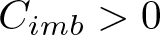 $C_{imb} \gt 0$ such that
 \begin{equation}
\|u\|_{L^m(r^{N-1+\beta},(0,1))}\leq C_{imb}\|u\|_X,\quad \forall u\in X.
\end{equation}
We will determine nonnegative solutions to problem (3.1) by applying the Mountain Pass Theorem to the functional  $I:\, X\to{\mathbb{R}}$ given by
 \begin{align*}
I(u):=\frac{1}{p}\int_0^1 r^{N-1}a(r)|u'|^p\mathrm{d} r+\frac{1}{q}\int_0^1 r^{N-1}b(r)|u'|^q\mathrm{d} r& -\frac{1}{m}\int_0^1 r^{N-1+\beta}(u^+)^m\mathrm{d} r,\\ &\qquad\qquad\qquad\qquad u\in X,
\end{align*}
where  $u^+:=\max \{u,0\}$. By (3.4),
 $I\in C^1(X,{\mathbb{R}})$ and a critical point of I is a nonnegative solution to problem (3.1) and hence, a nonnegative radial solution to problem (1.1).
Lemma 3.1. I satisfies the  $(\textrm{PS})$ condition.
Proof. Let  $\{u_n\}$ be a
 $(\textrm{PS})$ sequence for I, i.e.,
 \begin{equation}
\begin{cases}
\underset{n\in{\mathbb{N}}}{\sup}\, |I(u_n)|=:M \lt \infty,\\
I'(u_n)\to 0 \ \ \text{as}\ \ n\to\infty.
\end{cases}
\end{equation}
We claim that  $\{u_n\}$ is bounded in X. Indeed, from (3.6), we have that for n large,
 \begin{align*}
M+1+\|u_n\|_X&\geq I(u_n)-\frac{1}{m}\langle I'(u_n),u_n\rangle\\
&\geq \left(\frac{1}{q}-\frac{1}{m}\right)\int_0^1 r^{N-1}\left(a(r)|u_n'|^p+b(r)|u_n'|^q\right)\mathrm{d} r\\
&\geq \left(\frac{1}{q}-\frac{1}{m}\right)\left(\|u_n\|_X^p-1\right).
\end{align*}
Thus,  $\{u_n\}$ is bounded since p > 1. Up to a subsequence we have
 \begin{equation}
u_n\rightharpoonup u \ \ \text{in}\ \ X
\end{equation}
and
 \begin{equation}
u_n\to u \ \ \text{in}\ \ L^m(r^{N-1+\beta},(0,1)).
\end{equation}
Using the Hölder inequality we have
 \begin{align*}
\left|\int_0^1 r^{N-1+\beta}(u_n^+)^{m-1}(u_n-u)\mathrm{d} r\right|
&\leq \int_0^1 r^{N-1+\beta}|u_n|^{m-1}|u_n-u|\mathrm{d} r\\
&\leq \|u_n\|_{L^m(r^{N-1+\beta},(0,1))}^{m-1}\|u_n-u\|_{L^m(r^{N-1+\beta},(0,1))}.
\end{align*}
Combining this with (3.8) gives  $\int_0^1 r^{N-1+\beta}(u_n^+)^{m-1}(u_n-u)\mathrm{d} r \to 0$ as
 $n\to \infty$. This fact together with the boundedness of
 $\{u_n\}$ in X and (3.6) yield
 \begin{align*}
& \int_0^1 r^{N-1}\left(a(r)|u_n'|^{p-2}+b(r)|u_n'|^{q-2}\right)u_n'(u_n'-u')\mathrm{d} r\\ &\qquad =\langle I'(u_n),u_n-u\rangle+\int_0^1 r^{N-1+\beta}(u_n^+)^{m-1}(u_n-u)\mathrm{d} r \to 0 \ \ \text{as}\ \ n\to \infty.
\end{align*}
From this and (3.7) we have
 \begin{align*}
& \int_0^1 r^{N-1}a(r)\left(|u_n'|^{p-2}u_n'-|u'|^{p-2}u'\right)(u_n'-u')\mathrm{d} r\\
&\qquad +\int_0^1 r^{N-1}b(r)\left(|u_n'|^{q-2}u_n'-|u'|^{q-2}u'\right)(u_n'-u')\mathrm{d} r\to 0\quad \text{as}\ \ n\to\infty.
\end{align*}
Then, by an argument similar to that in [Reference Sim and Kim13, Proof of Lemma 3.2], we obtain
 \begin{equation*}
\int_0^1 r^{N-1}a(r)|u_n'-u'|^p\mathrm{d} r
+\int_0^1 r^{N-1}b(r)|u_n'-u'|^q\mathrm{d} r\to 0\quad \text{as}\ \ n\to\infty.
\end{equation*}
Thus, 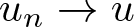 $u_n\to u$ in X as
 $n\to\infty$; that is, I satisfies the
 $(\textrm{PS})$ condition. The proof is complete.
Lemma 3.2. There exist 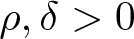 $\rho,\delta \gt 0$ such that
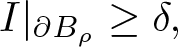 $I|_{\partial B_\rho}\geq \delta,$ where
 $B_\rho:=\{u\in X: \|u\|_X \lt \rho\}$ with boundary
 $\partial B_\rho$.
Proof. Since  $1 \lt p\leq q \lt m$, we find
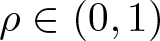 $\rho\in (0,1)$ such that
 \begin{equation*}
\delta:=\frac{1}{q}\rho^q-\frac{C_{imb}^m}{m}\rho^m \gt 0,
\end{equation*}
where Cimb is as in (3.5). Thus, for 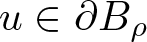 $u\in \partial B_\rho$ we have
 \begin{align*}
I(u)\geq \frac{1}{q}\|u\|_X^q-\frac{C_{imb}^m}{m}\|u\|_X^m= \frac{1}{q}\rho^q-\frac{C_{imb}^m}{m}\rho^m=\delta \gt 0,
\end{align*}
and the proof is complete.
Lemma 3.3. There exists  $e\in X\setminus \overline{B}_\rho$ such that
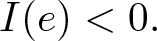 $I(e) \lt 0.$
Proof. Let 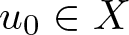 $u_0\in X$ be such that
 $\int_0^1 r^{N-1+\beta}(u_0^+)^m\mathrm{d} r=1$. Thus, for t > 0 we have
 \begin{align*}
I(t u_0)= \left(\frac{1}{p}\int_0^1 r^{N-1}a(r)|u_0'|^p\mathrm{d} r\right)t^p+ \left(\frac{1}{q}\int_0^1 r^{N-1}b(r)|u_0'|^q\mathrm{d} r\right)t^q-\frac{1}{m}t^m.
\end{align*}
Since  $1 \lt p\leq q \lt m$ we deduce from the last equality that
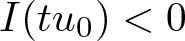 $I(tu_0) \lt 0$ for t > 0 large. Thus, by letting
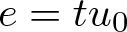 $e=t u_0$ for such a large t we obtain the desired conclusion.
We end this subsection by completing the proof of Theorem 1.1.
Proof of Theorem 1.1
In view of Mountain Pass Theorem, from Lemmas 3.1-3.3 we infer that I has a critical point u in X with
 \begin{equation*}
I(u)\geq \delta \gt 0.
\end{equation*}
Thus, u is a nontrivial nonnegative radial solution to problem (1.1). The proof is complete.
3.2. Estimates of least energies and existence of non-radial solutions
Let  $a(|x|)=|x|^\alpha$ and
 $b(|x|)=|x|^\gamma$ for
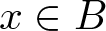 $x\in B$ with
 $\alpha \gt p-N$ and
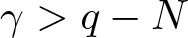 $\gamma \gt q-N$. In this subsection, we obtain the existence of non-radial solutions for problem (1.1) by proving Theorem 1.2. In order to do this, we first obtain estimates in term of β for the global least energy and the least energy restricted on the subspace of radial functions. From these estimates, we infer that the aforementioned least energies are different; hence, the existence of non-radial solutions follows as a consequence.
For the clarity of our argument, we distinguish the following two cases.
3.2.1. Estimates of least energies in the case of (A1)
Let (A1) be satisfied. We look for solutions to problem (1.1) in the space
 \begin{equation*}Y:=\mathcal{D}^{1,p}(|x|^\alpha,B)\cap \mathcal{D}^{1,q}(|x|^\gamma,B)\end{equation*}
endowed with the norm
 \begin{equation*}\|u\|:=\max\left\{\|\nabla u \|_{L^p(|x|^\alpha,B)},\|\nabla u\|_{L^q(|x|^\gamma,B)}\right\}.\end{equation*}
Obviously, Y is a separable reflexive Banach space. We also consider the following closed subspace of  $Y:$
 \begin{equation*}Y^{\textrm{rad}}:=\{u\in Y: u\,\, \text{is radial}\}.\end{equation*}
By Propositions 2.1 it holds that
 \begin{equation}
Y\hookrightarrow\hookrightarrow L^m(|x|^\beta,B)
\end{equation}
provided
 \begin{equation}
\beta \gt \beta_1:=\max\left\{\frac{(N-q+\gamma)m}{q}-N,0\right\}.
\end{equation}
We define the energy functional 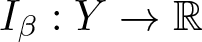 $I_\beta: Y\to{\mathbb{R}}$ as
 \begin{equation*}
I_\beta(u):=\frac{1}{p}\int_B|x|^\alpha|\nabla u|^p\mathrm{d} x+\frac{1}{q}\int_B|x|^\gamma|\nabla u|^q\mathrm{d} x-\frac{1}{m}\int_B|x|^\beta|(u^+)^m\mathrm{d} x,\ \ u\in Y,
\end{equation*}
For 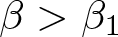 $\beta \gt \beta_1$, it holds
 $I_\beta\in C^1(Y,{\mathbb{R}})$ in view of (3.9), and thus, we can define the following Nehari manifolds:
 \begin{equation*}
N:=\left\{u\in Y\setminus\{0\}: \langle I'_\beta(u),u\rangle=0\right\}
\end{equation*}
and
 \begin{equation*}
N^{\textrm{rad}}:=\left\{u\in Y^{\textrm{rad}}\setminus\{0\}: \langle I'_\beta(u),u\rangle=0\right\}.
\end{equation*}
It is not difficult to see that 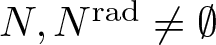 $N,N^{\textrm{rad}}\ne \emptyset$. Indeed, let
 $\phi\in Y^{\textrm{rad}}$ with ϕ > 0 a.e. in B, and define
 $\psi\in C(0,\infty)$ as
 \begin{equation*}
\psi(t):=t^p\int_B|x|^\alpha|\nabla \phi|^p\mathrm{d} x+t^q\int_B|x|^\gamma|\nabla \phi|^q\mathrm{d} x-t^m\int_B|x|^\beta\phi^m\mathrm{d} x,\ \ t \gt 0.
\end{equation*}
Since  $1 \lt p\leq q \lt m$ we have that
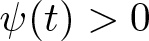 $\psi(t) \gt 0$ for t > 0 and small while
 $\psi(t) \lt 0$ for t > 0 and large. Thus, we find
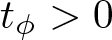 $t_\phi \gt 0$ such that
 $\psi(t_\phi)=0$. This yields
 $t_\phi\phi\in N^{\text{rad}}\subset N$.
We define the following least energies:
 \begin{equation*}
m_\beta:=\inf_{u\in N} I_\beta(u)
\end{equation*}
and
 \begin{equation}
m_{\beta,\text{rad}}:=\inf_{u\in N^{\text{rad}}} I_\beta(u).
\end{equation}
In the following, we will estimate these least energies in term of β when β is large enough.
Proposition 3.4. Let (A1) be satisfied. Then there exists 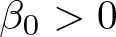 $\beta_0 \gt 0$ such that
 \begin{equation}
m_{\beta,\text{\rm rad}}\geq C_1\beta^{\frac{m(p-1)+p}{m-p}}, \quad \forall \beta \gt \beta_0,
\end{equation}
where C 1 is a positive constant independent of β.
To prove Proposition 3.4 we need to obtain several auxiliary results. Denote
 \begin{equation}
\alpha_0:=\frac{N-p}{1+\epsilon_0}\ \ \text{and} \ \ \gamma_0:=\frac{N-q}{1+\epsilon_0},
\end{equation}
where 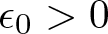 $\epsilon_0 \gt 0$ is fixed and chosen so small that
 \begin{equation}
Nq \gt \frac{(N-q)m\epsilon_0}{1+\epsilon_0}.
\end{equation}
Define
 \begin{equation*}
H:=\left\{v\in Y^{\textrm{rad}}:\, \int_B|x|^{-\alpha_0}|\nabla v|^p\mathrm{d} x+\int_B|x|^{-\gamma_0}|\nabla v|^q\mathrm{d} x \lt \infty\right\}
\end{equation*}
endowed with the norm
 \begin{equation*}\|u\|_H:=\max\left\{\|\nabla u \|_{L^p(|x|^{-\alpha_0},B)},\|\nabla u\|_{L^q(|x|^{-\gamma_0},B)}\right\}.\end{equation*}
By (3.14), we have
 \begin{equation}
\mathcal{D}_{\textrm{rad}}^{1,q}(|x|^{-\gamma_0},B)\hookrightarrow\hookrightarrow L^m(B)\ \ \text{and}\ \ H \hookrightarrow\hookrightarrow L^m(B)
\end{equation}
in view of Proposition 2.2. In particular, we find a positive constant C 0 such that
 \begin{equation}
\|u\|_{L^{m}(B)}\leq C_0\|\nabla u\|_{L^{q}(|x|^{-\gamma_0},B)},\quad \forall u\in H.
\end{equation}
Define
 \begin{equation*}
J(v):=\frac{1}{p}\int_B|x|^{-\alpha_0}|\nabla v|^p\mathrm{d} x+\frac{1}{q}\int_B|x|^{-\gamma_0}|\nabla v|^q\mathrm{d} x-\frac{1}{m}\int_B(v^+)^m\mathrm{d} x,\ \ v\in H,
\end{equation*}
and
 \begin{equation*}
N_*:=\left\{v\in H\setminus\{0\}: \langle J'(v),v\rangle=0\right\}.
\end{equation*}
By the same argument as that leads to 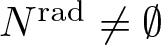 $N^{\textrm{rad}}\ne \emptyset$, it is clear that
 $N_*\ne\emptyset$. Therefore we can define
 \begin{equation}
m_*:=\inf_{u\in N_*} J(u).
\end{equation}
We have the following.
Lemma 3.5. It holds that
 \begin{equation}
m_*\geq C_0^{-\frac{mq}{m-q}} \left(\frac{1}{q}-\frac{1}{m}\right),
\end{equation}
where C 0 is given by (3.16).
Proof. Let 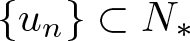 $\{u_n\}\subset N_*$ be a minimizing sequence for
 $m_*$ in (3.17). We have
 \begin{align*}
m_*=\lim_{n\to\infty}\left[\left(\frac{1}{p}-\frac{1}{m}\right)\int_B|x|^{-\alpha_0}|\nabla u_n|^p\mathrm{d} x+\left(\frac{1}{q}-\frac{1}{m}\right)\int_B|x|^{-\gamma_0}|\nabla u_n|^q\mathrm{d} x\right].
\end{align*}
From this, we easily obtain the boundedness of  $\{u_n\}$ in H. Thus, in view of (3.15), up to a subsequence we have
 \begin{equation}
u_n\rightharpoonup u_* \ \ \text{in}\ \ H
\end{equation}
and
 \begin{equation}
u_n\to u_* \ \ \text{in}\ \ L^m(B).
\end{equation}
Using the fact that  $u_n\in N_*$ we have
 \begin{align*}
J(u_n)=\left(\frac{1}{p}-\frac{1}{m}\right)\int_B|x|^{-\alpha_0}|\nabla u_n|^p\mathrm{d} x+\left(\frac{1}{q}-\frac{1}{m}\right)\int_B|x|^{-\gamma_0}|\nabla u_n|^q\mathrm{d} x
\end{align*}
and
 \begin{align*}
\left(\frac{1}{q}-\frac{1}{m}\right)\int_B|u_n|^m\mathrm{d} x\leq J(u_n)\leq\left(\frac{1}{p}-\frac{1}{m}\right)\int_B|u_n|^m\mathrm{d} x.
\end{align*}
Combining these facts with (3.19) and (3.20) we obtain
 \begin{equation}
\left(\frac{1}{p}-\frac{1}{m}\right)\int_B|x|^{-\alpha_0}|\nabla u_*|^p\mathrm{d} x+\left(\frac{1}{q}-\frac{1}{m}\right)\int_B|x|^{-\gamma_0}|\nabla u_*|^q\mathrm{d} x
\leq m_*
\end{equation}
and
 \begin{equation}
\left(\frac{1}{q}-\frac{1}{m}\right)\int_B|u_*|^m\mathrm{d} x\leq m_*\leq\left(\frac{1}{p}-\frac{1}{m}\right)\int_B|u_*|^m\mathrm{d} x.
\end{equation}
On the other hand, for any 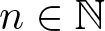 $n\in{\mathbb{N}}$ we have
 \begin{equation*}
\int_B|x|^{-\alpha_0}|\nabla u_n|^p\mathrm{d} x+\int_B|x|^{-\gamma_0}|\nabla u_n|^q\mathrm{d} x=\int_B|u_n|^m\mathrm{d} x.
\end{equation*}
Invoking (3.16) we deduce from the last equality that
 \begin{equation*}
\int_B|u_n|^m\mathrm{d} x\geq C_0^{-q}\left(\int_B|u_n|^m\mathrm{d} x\right)^{\frac{q}{m}},
\end{equation*}
i.e.,
 \begin{equation}
\int_B|u_n|^m\mathrm{d} x\geq C_0^{-\frac{mq}{m-q}}.
\end{equation}
Passing to the limit as  $n\to\infty$ in (3.23) and utilizing (3.20) and (3.22) we obtain (3.18) and the proof is complete.
Let 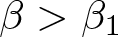 $\beta \gt \beta_1$, where β 1 is given in (3.10). Let
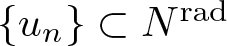 $\{u_n\}\subset N^{\textrm{rad}}$ be a minimizing sequence for
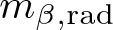 $m_{\beta,\text{rad}}$ in (3.11). Arguing as the proof of Lemma 3.5 in which H and
 $L^m(B)$ are, respectively, replaced by Y rad and
 $L^m(|x|^\beta,B)$ and taking into account (3.9), up to a subsequence, we have
 \begin{equation}
u_n\rightharpoonup u_\beta \ \ \text{in}\ \ Y \ \ \text{and} \ \
u_n\to u_\beta \ \ \text{in}\ \ L^m(|x|^\beta,B)
\end{equation}
for some 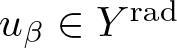 $u_\beta\in Y^{\textrm{rad}}$. Moreover, similar arguments to those leading to (3.21) give
 \begin{equation}
\left(\frac{1}{p}-\frac{1}{m}\right)\int_B|x|^{\alpha}|\nabla u_\beta|^p\mathrm{d} x+\left(\frac{1}{q}-\frac{1}{m}\right)\int_B|x|^{\gamma}|\nabla u_\beta|^q\mathrm{d} x
\leq m_{\beta,\text{rad}}.
\end{equation}
Moreover, from (3.24) and the relation
 \begin{equation*}
\int_B|x|^\alpha|\nabla u_n|^p\mathrm{d} x+\int_B|x|^\gamma|\nabla u_n|^q\mathrm{d} x=\int_B|x|^\beta|u_n|^m\mathrm{d} x, \quad\forall n\in{\mathbb{N}},
\end{equation*}
we obtain
 \begin{equation}
\int_B|x|^\alpha|\nabla u_\beta|^p\mathrm{d} x+\int_B|x|^\gamma|\nabla u_\beta|^q\mathrm{d} x\leq\int_B|x|^\beta|u_\beta|^m\mathrm{d} x.
\end{equation}
By replacing uβ with  $|u_\beta|$ if necessary, we may assume
 $u_\beta(x)\geq 0$ for a.e.
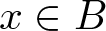 $x\in B$. Define
 \begin{equation}
v_\beta(x)=v_\beta(\rho):=u_\beta(\rho^s),
\end{equation}
where 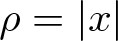 $\rho=|x|$ and
 \begin{equation}
s=s(\beta):=\frac{N}{N+\beta}.
\end{equation}
Thus, 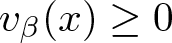 $v_\beta(x)\geq 0$ for a.e.
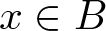 $x\in B$ and
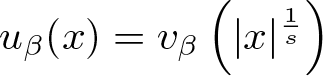 $u_\beta(x)=v_\beta\left(|x|^{\frac{1}{s}}\right)$. Hence,
 \begin{equation*}\frac{\partial u_\beta}{\partial x_i}=s^{-1}\frac{x_i}{|x|}|x|^{\frac{1}{s}-1}v_\beta'(|x|^{\frac{1}{s}})\quad (i=1,\cdots,N).\end{equation*}
Consequently,
 \begin{equation*}
|\nabla u_\beta|^p=s^{-p}|x|^{p\left(\frac{1}{s}-1\right)}\left|v_\beta'(|x|^{\frac{1}{s}})\right|^p.
\end{equation*}
Utilizing this we have
 \begin{align*}
\int_B|x|^\alpha |\nabla u_\beta|^p\mathrm{d} x&=s^{-p}\int_B|x|^{p\left(\frac{1}{s}-1\right)+\alpha}\left|v_\beta'(|x|^{\frac{1}{s}})\right|^p\mathrm{d} x\\
&=s^{-p}\omega_{N-1}\int_0^1r^{N-1+p\left(\frac{1}{s}-1\right)+\alpha}\left|v_\beta'(r^{\frac{1}{s}})\right|^p\mathrm{d} r\\
&\overset{\rho=r^{\frac{1}{s}}}{=}s^{-p}\omega_{N-1}\int_0^1\rho^{s\left(N-1+p\left(\frac{1}{s}-1\right)+\alpha\right)}\left|v_\beta'(\rho)\right|^ps\rho^{s-1}\mathrm{d} \rho\\
&=s^{-p+1}\omega_{N-1}\int_0^1\rho^{s(N+\alpha)+p(1-s)-N}\left|v_\beta'(\rho)\right|^p\rho^{N-1}\mathrm{d} \rho\\
&=s^{-p+1}\int_B|x|^{s\alpha+(p-N)(1-s)}|\nabla v_\beta|^p\mathrm{d} x.
\end{align*}
Here and the following  $\omega_{k-1}$ denotes the area of the unit sphere in
 ${\mathbb{R}}^k$. Similarly, we have
 \begin{align*}
\int_B|x|^\gamma |\nabla u_\beta|^q\mathrm{d} x=s^{-q+1}\int_B|x|^{s\gamma+(q-N)(1-s)}|\nabla v_\beta|^q\mathrm{d} x.
\end{align*}
Moreover, by (3.28) we have
 \begin{align*}
\int_B|x|^\beta |u_\beta(x)|^m\mathrm{d} x&=\int_B |x|^\beta \left|v_\beta\left(|x|^{\frac{1}{s}}\right)\right|^m\mathrm{d} x\\
&=\omega_{N-1}\int_0^1 r^{N-1+\beta}\left|v_\beta\left(r^{\frac{1}{s}}\right)\right|^m\mathrm{d} r\\
&\overset{\rho=r^{\frac{1}{s}}}{=} \omega_{N-1}s\int_0^1 \rho^{s(N-1+\beta)}\left|v_\beta\left(\rho\right)\right|^m\rho^{s-1}\mathrm{d} \rho\\
&=\omega_{N-1}s\int_0^1 \rho^{s(N+\beta)-N}\left|v_\beta\left(\rho\right)\right|^m\rho^{N-1}\mathrm{d} \rho\\
&=s\int_B \left|v_\beta\left(x\right)\right|^m\mathrm{d} x.
\end{align*}
Thus, we have obtained
 \begin{equation}
\int_B|x|^\beta u_\beta^m\mathrm{d} x=s\int_B v_\beta^m\mathrm{d} x,
\end{equation}
 \begin{equation}
\int_B|x|^\alpha|\nabla u_\beta|^p\mathrm{d} x=s^{1-p}\int_B|x|^{-\alpha_1}|\nabla v_\beta|^p\mathrm{d} x,
\end{equation}
and
 \begin{equation}
\int_B|x|^\gamma|\nabla u_\beta|^q\mathrm{d} x=s^{1-q}\int_B|x|^{-\gamma_1}|\nabla v_\beta|^q\mathrm{d} x,
\end{equation}
where
 \begin{equation}
\begin{cases}
\alpha_1:=(N-p)(1-s)-\alpha s,\\
\gamma_1:=(N-q)(1-s)-\gamma s.
\end{cases}
\end{equation}
It is clear that we find  $\beta_2=\beta_2(\epsilon_0) \gt 0$ such that
 \begin{equation}
\alpha_1 \gt \alpha_0,\,
\gamma_1 \gt \gamma_0,\quad \forall \beta \gt \beta_2.
\end{equation}
Define
 \begin{equation*}
H_s:=\left\{v\in Y^{\textrm{rad}}:\, \int_B|x|^{-\alpha_1}|\nabla v|^p\mathrm{d} x+\int_B|x|^{-\gamma_1}|\nabla v|^q\mathrm{d} x \lt \infty\right\},
\end{equation*}
 \begin{equation*}
J_s(v):=\frac{1}{p}\int_B|x|^{-\alpha_1}|\nabla v|^p\mathrm{d} x+\frac{1}{q}\int_B|x|^{-\gamma_1}|\nabla v|^q\mathrm{d} x-\frac{1}{m}\int_B(v^+)^m\mathrm{d} x,\ \ v\in H_s,
\end{equation*}
and
 \begin{equation*}
N_s:=\left\{v\in H_s\setminus\{0\}: \langle J_s'(v),v\rangle=0\right\}.
\end{equation*}
As before, it is clear that 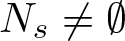 $N_s\ne\emptyset$, and therefore we can define
 \begin{equation*}
m_s:=\inf_{u\in N_s} J_s(u).
\end{equation*}
Lemma 3.6. It holds that
 \begin{equation}
m_s\geq m_*.
\end{equation}
Proof. Let 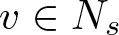 $v\in N_s$. We have
 \begin{align}
\int_B|x|^{-\alpha_0}|\nabla v|^p\mathrm{d} x+\int_B|x|^{-\gamma_0}|\nabla v|^q\mathrm{d} x
\end{align}
 \begin{align*} \lt \int_B|x|^{-\alpha_1}|\nabla v|^p\mathrm{d} x+\int_B|x|^{-\gamma_1}|\nabla v|^q\mathrm{d} x=\int_B(v^+)^m\mathrm{d} x \lt \infty.
\end{align*}
This means 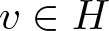 $v\in H$. Define
 $g\in C(0,\infty)$ as
 \begin{equation*}
g(t):=t^p\int_B|x|^{-\alpha_0}|\nabla v|^p\mathrm{d} x+t^q\int_B|x|^{-\gamma_0}|\nabla v|^q\mathrm{d} x-t^m\int_B(v^+)^m\mathrm{d} x,\ \ t \gt 0.
\end{equation*}
Since  $1 \lt p\leq q \lt m$ we have that
 $g(t) \gt 0$ for t > 0 and small. On the other hand, we have
 \begin{equation*}
g(1)=\int_B|x|^{-\alpha_0}|\nabla v|^p\mathrm{d} x+\int_B|x|^{-\gamma_0}|\nabla v|^q\mathrm{d} x-\int_B(v^+)^m\mathrm{d} x \lt 0
\end{equation*}
in view of (3.35). Thus, there exists  $t_s\in (0,1)$ such that
 $g(t_s)=0$, i.e.,
 $t_sv\in N_*$. This implies that
 \begin{align*}
m_*&\leq J(t_sv)=\left(\frac{1}{p}-\frac{1}{m}\right)t_s^p\int_B|x|^{-\alpha_0}|\nabla v|^p\mathrm{d} x+\left(\frac{1}{q}-\frac{1}{m}\right)t_s^q\int_B|x|^{-\gamma_0}|\nabla v|^q\mathrm{d} x\\
&\leq \left(\frac{1}{p}-\frac{1}{m}\right)\int_B|x|^{-\alpha_1}|\nabla v|^p\mathrm{d} x+\left(\frac{1}{q}-\frac{1}{m}\right)\int_B|x|^{-\gamma_1}|\nabla v|^q\mathrm{d} x=J_s(v).
\end{align*}
Since the last inequality holds for all  $v\in N_s$, the estimate (3.34) follows.
Remark 3.7. Note that in the proofs of Lemmas 3.5 and 3.6, we can easily take  $\alpha_0=\gamma_0=0$. However, we choose α 0 and γ 0 as in (3.13) to provide a similar proof for Proposition 3.9.
We are now in a position to prove Proposition 3.4.
Proof of Proposition 3.4
Let  $\beta \gt \beta_0:=\max\{\beta_1,\beta_2\}$, where β 1 and β 2 are given in (3.10) and (3.33), respectively. Let vβ be as in (3.27). Define
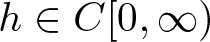 $h\in C[0,\infty)$ as
 \begin{equation*}
h(t):=t^p\int_B|x|^{-\alpha_1}|\nabla v_\beta|^p\mathrm{d} x+t^q\int_B|x|^{-\gamma_1}|\nabla v_\beta|^q\mathrm{d} x-t^m\int_Bv_\beta^m\mathrm{d} x,\ \ t\geq 0.
\end{equation*}
Since  $1 \lt p\leq q \lt m$ we have that
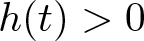 $h(t) \gt 0$ for t > 0 and small. On the other hand, utilizing (3.29)-(3.31) and (3.26) we have
 \begin{align*}
h(1)&=\int_B|x|^{-\alpha_1}|\nabla v_\beta|^p\mathrm{d} x+\int_B|x|^{-\gamma_1}|\nabla v_\beta|^q\mathrm{d} x-\int_Bv_\beta^m\mathrm{d} x\\
&=s^{p-1}\int_B|x|^\alpha|\nabla u_\beta|^p\mathrm{d} x+s^{q-1}\int_B|x|^\gamma|\nabla u_\beta|^q\mathrm{d} x-s^{-1}\int_B |x|^\beta u_\beta^m\mathrm{d} x\\
&\leq \left(s^{p-1}-s^{-1}\right)\int_B|x|^\alpha|\nabla u_\beta|^p\mathrm{d} x+\left(s^{q-1}-s^{-1}\right)\int_B|x|^\gamma|\nabla u_\beta|^q\mathrm{d} x\\
&\leq 0.
\end{align*}
Thus, we find  $t_\beta\in (0,1]$ such that
 $h(t_\beta)=0,$ i.e.,
 $t_\beta v_\beta\in N_s$; hence,
 \begin{equation*}
t_\beta^p\int_B|x|^{-\alpha_1}|\nabla v_\beta|^p\mathrm{d} x+t_\beta^q\int_B|x|^{-\gamma_1}|\nabla v_\beta|^q\mathrm{d} x=t_\beta^m\int_Bv_\beta^m\mathrm{d} x.
\end{equation*}
From this and (3.26) we have
 \begin{align*}
t_\beta^{m-p}&\leq \frac{\int_B|x|^{-\alpha_1}|\nabla v_\beta|^p\mathrm{d} x+\int_B|x|^{-\gamma_1}|\nabla v_\beta|^q\mathrm{d} x}{\int_Bv_\beta^m\mathrm{d} x}\\
&=\frac{s^{p-1}\int_B|x|^{\alpha}|\nabla u_\beta|^p\mathrm{d} x+s^{q-1}\int_B|x|^{\gamma}|\nabla u_\beta|^q\mathrm{d} x}{s^{-1}\int_B |x|^\beta u_\beta^m\mathrm{d} x}\\
&\leq s^p,
\end{align*}
which leads to
 \begin{equation*} t_\beta\leq s^{\frac{p}{m-p}}.
\end{equation*}
Using (3.29)-(3.31), the preceding estimate and (3.25), we have
 \begin{align*}
m_s&\leq J_s(t_\beta v_\beta)=\left(\frac{1}{p}-\frac{1}{m}\right)t_\beta^p\int_B|x|^{-\alpha_1}|\nabla v_\beta|^p\mathrm{d} x+\left(\frac{1}{q}-\frac{1}{m}\right)t_\beta^q\\ &\quad\times\int_B|x|^{-\gamma_1}|\nabla v_\beta|^q\mathrm{d} x\\
&\leq \left(\frac{1}{p}-\frac{1}{m}\right)s^{\frac{p^2}{m-p}}s^{p-1}\int_B|x|^{\alpha}|\nabla u_\beta|^p\mathrm{d} x+\left(\frac{1}{q}-\frac{1}{m}\right)s^{\frac{pq}{m-p}}s^{q-1}\\ &\quad\times\int_B|x|^{\gamma}|\nabla u_\beta|^q\mathrm{d} x\\
&\leq s^{\frac{p^2}{m-p}+p-1}\left[\left(\frac{1}{p}-\frac{1}{m}\right)\int_B|x|^{\alpha}|\nabla u_\beta|^p\mathrm{d} x+\left(\frac{1}{q}-\frac{1}{m}\right)\int_B|x|^{\gamma}|\nabla u_\beta|^q\mathrm{d} x\right]\\
&\leq s^{\frac{p^2}{m-p}+p-1}m_{\beta,\text{rad}}.
\end{align*}
Combining this with Lemmas 3.5 and 3.6, noticing the definition (3.28) of s, we arrive at
 \begin{equation*}
m_{\beta,\text{rad}}\geq \left(\frac{1}{q}-\frac{1}{m}\right)N^{-\frac{m(p-1)+p}{m-p}}C_0^{-\frac{mq}{m-q}}\beta^{\frac{m(p-1)+p}{m-p}},
\end{equation*}
and thus, (3.12) follows. The proof is complete.
Next, we estimate the least energy on the whole Y. We have the following.
Proposition 3.8. Let (A1) be satisfied. Then there exists  $\bar{\beta}_0 \gt 0$ such that
 \begin{equation}
m_{\beta}\leq C_2\beta^{\frac{Nq-m(N-q)}{m-q}}, \quad \forall \beta \gt \bar{\beta}_0,
\end{equation}
where C 2 is a positive constant independent of β.
Proof. Fix  $\phi\in C_c^\infty(B)$ with
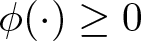 $\phi(\cdot)\geq 0$ and
 $\phi\not \equiv 0$. Let
 $\beta\geq 1$ be arbitrary and define
 \begin{equation*}w_\beta(x):=\phi (\beta(x-x_\beta)),\ \ x\in{\mathbb{R}}^N,\end{equation*}
where  $x_\beta=\left(1-\frac{1}{\beta},0,\cdots,0\right)$. For
 $x=(x_1,\cdots,x_N)\in{\mathbb{R}}^N$ with
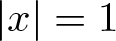 $|x|=1$, we have
 \begin{align*}
\left|\beta(x-x_\beta)\right|^2&=\left|\left(\beta x_1-(\beta-1),\beta x_2,\cdots,\beta x_N\right)\right|^2\\
&=\beta^2 x_1^2-2\beta(\beta-1)x_1+(\beta-1)^2+\beta^2\sum_{i=2}^{N}x_i^2\\
&= \beta^2 x_1^2+(\beta-1)^2-2\beta(\beta-1)x_1+\beta^2(1-x_1^2)\\
&=2\beta(\beta-1)(1-x_1)+1\\
&\geq 1.
\end{align*}
Thus,
 \begin{equation*}w_\beta(x)=0,\quad \forall x\in\partial B,\end{equation*}
and hence, 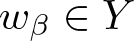 $w_\beta\in Y$. By the change of variable
 $y=\beta(x-x_\beta)$ we obtain
 \begin{align}
\int_B |x|^\beta w_\beta^m\mathrm{d} x&=\int_B|x|^\beta \left|\phi(\beta(x-x_\beta))\right|^m\mathrm{d} x
\end{align}
 \begin{align*}
&=\beta^{-N}\int_{\Omega_\beta}\left|\frac{1}{\beta}y+x_\beta\right|^\beta|\phi(y)|^m\mathrm{d} y,
\end{align*}
 \begin{align}
\int_B |x|^\alpha \left|\nabla w_\beta\right|^p\mathrm{d} x&=\int_B|x|^\alpha \beta^p\left|\nabla\phi(\beta(x-x_\beta))\right|^p\mathrm{d} x
\end{align}
 \begin{align*}
&=\beta^{p-N}\int_{\Omega_\beta}\left|\frac{1}{\beta}y+x_\beta\right|^\alpha|\nabla\phi(y)|^p\mathrm{d} y,
\end{align*}
and
 \begin{align} \int_B |x|^\gamma \left|\nabla w_\beta\right|^q\mathrm{d} x&=\int_B|x|^\gamma\beta^q \left|\nabla\phi(\beta(x-x_\beta))\right|^q\mathrm{d} x
\end{align}
 \begin{align*}
&=\beta^{q-N}\int_{\Omega_\beta}\left|\frac{1}{\beta}y+x_\beta\right|^\gamma|\nabla\phi(y)|^q\mathrm{d} y,
\end{align*}
where
 \begin{align*} \Omega_\beta&:=\left\{y=\left(\beta x_1-(\beta-1),\beta x_2,\cdots,\beta x_N\right):\, (x_1,\cdots,x_N)\in B\right\}\\
&=\left\{\left(y_1-(\beta-1),y_2,\cdots,y_N\right):\, (y_1,\cdots,y_N)\in B(0,\beta)\right\}.
\end{align*}
Note that for  $x=(x_1,\cdots,x_N)\in B$, by setting
 $x_1=y_1-(\beta-1), x_i=y_i$ (
 $i=2,\cdots,N$) we have
 \begin{align*} \sum_{i=1}^{N}y_i^2=\sum_{i=2}^{N}x_i^2+(x_1+(\beta-1))^2&\leq 1+2x_1(\beta-1)+(\beta-1)^2\\
&\leq 1+2(\beta-1)+(\beta-1)^2=\beta^2
\end{align*}
and thus,  $x\in\Omega_\beta$. That is,
 \begin{equation}
B\subset \Omega_\beta.
\end{equation}
From (3.37)-(3.40) we obtain that for any  $\beta\geq 1$,
 \begin{equation}
\begin{cases}
\int_B |x|^\beta w_\beta^m\mathrm{d} x=\beta^{-N}\int_{B}\left|\frac{1}{\beta}y+x_\beta\right|^\beta|\phi(y)|^m\mathrm{d} y,\\
\int_B |x|^\alpha \left|\nabla w_\beta\right|^p\mathrm{d} x=\beta^{p-N}\int_{B}\left|\frac{1}{\beta}y+x_\beta\right|^\alpha|\nabla\phi(y)|^p\mathrm{d} y,\\
\int_B |x|^\gamma \left|\nabla w_\beta\right|^q\mathrm{d} x=\beta^{q-N}\int_{B}\left|\frac{1}{\beta}y+x_\beta\right|^\gamma|\nabla\phi(y)|^q\mathrm{d} y.
\end{cases}
\end{equation}
Note that for  $\beta\geq 1$ we have
 \begin{equation}
1-\frac{2}{\beta}\leq |x_\beta|-\frac{1}{\beta}|y|\leq\left|\frac{1}{\beta}y+x_\beta\right|\leq |x_\beta|+\frac{1}{\beta}|y|\leq 1,\quad \forall y\in B.
\end{equation}
We claim that for  $\beta\geq 1$ sufficiently large, there exits
 $\tau_\beta \gt 1$ such that
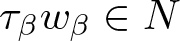 $\tau_\beta w_\beta\in N$. Indeed, consider
 $\xi_\beta\in C[0,\infty)$ given by
 \begin{equation*}
\xi_\beta(\tau):=\tau^p\int_B|x|^\alpha|\nabla w_\beta|^p\mathrm{d} x+\tau^q\int_B|x|^\gamma|\nabla w_\beta|^q\mathrm{d} x-\tau^m\int_B|x|^mw_\beta^m\mathrm{d} x,\ \ \tau \gt 0.
\end{equation*}
Clearly, we have 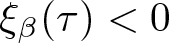 $\xi_\beta(\tau) \lt 0$ for τ > 0 and large. On the other hand, we have that for
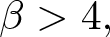 $\beta \gt 4,$ by (3.41) it holds
 \begin{align*}
\xi_\beta(1)=&\int_B|x|^\alpha|\nabla w_\beta|^p\mathrm{d} x+\int_B|x|^\gamma|\nabla w_\beta|^q\mathrm{d} x-\int_B|x|^mw_\beta^m\mathrm{d} x\\
=&\beta^{p-N}\int_{B}\left|\frac{1}{\beta}y+x_\beta\right|^\alpha|\nabla\phi(y)|^p\mathrm{d} y+\beta^{q-N}\int_{B}\left|\frac{1}{\beta}y+x_\beta\right|^\gamma|\nabla\phi(y)|^q\mathrm{d} y\\
&-\beta^{-N}\int_{B}\left|\frac{1}{\beta}y+x_\beta\right|^\beta|\phi(y)|^m\mathrm{d} y\\
\geq&\left(\min\{1,2^{-\alpha}\}\int_{B}|\nabla\phi(y)|^p\mathrm{d} y\right)\beta^{p-N}\,{+}\,\left(\min\{1,2^{-\gamma}\}\int_{B}|\nabla\phi(y)|^q\mathrm{d} y\right)\beta^{q-N}\\
&-\left(\int_{B}|\phi(y)|^m\mathrm{d} y\right)\beta^{-N}.
\end{align*}
This implies that there exists 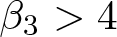 $\beta_3 \gt 4$ such that
 \begin{equation}
\xi_\beta(1) \gt 0,\quad \forall \beta \gt \beta_3.
\end{equation}
Thus, for each 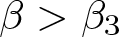 $\beta \gt \beta_3$ we find
 $\tau_\beta\in (1,\infty)$ such that
 $\xi_\beta(\tau_\beta)=0,$ i.e.,
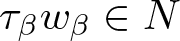 $\tau_\beta w_\beta\in N$. It follows that
 \begin{align*}
m_\beta\leq& I_\beta(\tau_\beta w_\beta)\\ =&\left(\frac{1}{p}-\frac{1}{m}\right)\tau_\beta^p\int_B|x|^\alpha|\nabla w_\beta|^p\mathrm{d} x+\left(\frac{1}{q}-\frac{1}{m}\right)\tau_\beta^q\int_B|x|^\gamma|\nabla w_\beta|^q\mathrm{d} x\\
=&\left(\frac{1}{p}-\frac{1}{m}\right)\tau_\beta^p\beta^{p-N}\int_{B}\left|\frac{1}{\beta}y+x_\beta\right|^\alpha|\nabla\phi(y)|^p\mathrm{d} y\\
&+\left(\frac{1}{q}-\frac{1}{m}\right)\tau_\beta^q\beta^{q-N}\int_{B}\left|\frac{1}{\beta}y+x_\beta\right|^\gamma|\nabla\phi(y)|^q\mathrm{d} y.
\end{align*}
Using (3.42), the preceding inequality gives
 \begin{align}
m_\beta\leq\alpha_2\tau_\beta^p\beta^{p-N}+\gamma_2\tau_\beta^q\beta^{q-N},\quad \forall \beta \gt \beta_3,
\end{align}
where
 \begin{equation*}
\alpha_2:=\left(\frac{1}{p}-\frac{1}{m}\right)\max\{1,2^{-\alpha}\}\int_{B}|\nabla\phi(y)|^p\mathrm{d} y
\end{equation*}
and
 \begin{equation*}
\gamma_2:= \left(\frac{1}{q}-\frac{1}{m}\right)\max\{1,2^{-\gamma}\}\int_{B}|\nabla\phi(y)|^q\mathrm{d} y.
\end{equation*}
On the other hand, we have
 \begin{equation*}
\tau_\beta^p\int_B|x|^\alpha|\nabla w_\beta|^p\mathrm{d} x+\tau_\beta^q\int_B|x|^\gamma|\nabla w_\beta|^q\mathrm{d} x=\tau_\beta^m\int_B|x|^\beta|w_\beta|^m\mathrm{d} x.
\end{equation*}
Equivalently,
 \begin{align*}
\tau_\beta^p\beta^{p-N}& \int_{B}\left|\frac{1}{\beta}y+x_\beta\right|^\alpha|\nabla\phi(y)|^p\mathrm{d} y+\tau_\beta^q\beta^{q-N}&\int_{B}\left|\frac{1}{\beta}y+x_\beta\right|^\gamma|\nabla\phi(y)|^q\mathrm{d} y\\
&\quad =\tau_\beta^m\beta^{-N}\int_{B}\left|\frac{1}{\beta}y+x_\beta\right|^\beta|\phi(y)|^m\mathrm{d} y.
\end{align*}
Combining this and (3.42) yields
 \begin{align*}
&\tau_\beta^{m-p}\left(1-\frac{2}{\beta}\right)^\beta\int_{B}|\phi(y)|^m\mathrm{d} y \\ &\quad\leq \beta^{p}\max\{1,2^{-\alpha}\} \int_{B}|\nabla\phi(y)|^p\mathrm{d} y+\tau_\beta^{q-p}\beta^{q} \max\{1,2^{-\gamma}\} \int_{B}|\nabla\phi(y)|^q\mathrm{d} y.
\end{align*}
Since 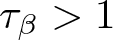 $\tau_\beta \gt 1$ and
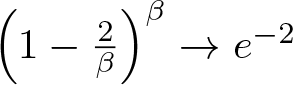 $\left(1-\frac{2}{\beta}\right)^\beta\to e^{-2}$ as
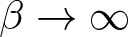 $\beta\to\infty$, we find
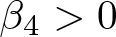 $\beta_4 \gt 0$ such that
 \begin{equation*}
\tau_\beta^{m-p} \leq C_3\tau_\beta^{q-p}\beta^{q},
\quad \forall \beta \gt \beta_4,
\end{equation*}
where
 \begin{align*}
C_3&:= 20 \max\{1,2^{-\alpha},2^{-\gamma}\}\left(\int_{B}|\phi(y)|^m\mathrm{d} y \right)^{-1}\max\\ &\quad\times\left\{\int_{B}|\nabla\phi(y)|^p\mathrm{d} y,\int_{B}|\nabla\phi(y)|^q\mathrm{d} y\right\} \gt 0.
\end{align*}
As a result, we obtain
 \begin{equation}
\tau_\beta^{m-p}\leq C_3\tau_\beta^{q-p}\beta^{q} \iff \tau_\beta\leq C_3^{\frac{1}{m-q}}\beta^{\frac{q}{m-q}},\quad \forall \beta \gt \beta_4.
\end{equation}
Plugging (3.45) into (3.44) gives
 \begin{align*}
m_\beta\leq C_4\beta^{\frac{pq}{m-q}+p-N}+C_5\beta^{\frac{q^2}{m-q}+q-N}&\leq (C_4+C_5)\beta^{\frac{q^2}{m-q}+q-N},\\ &\quad \forall \beta \gt \bar{\beta}_0:=\max\{\beta_3,\beta_4\},
\end{align*}
where C 4 and C 5 are positive constants independent of β. The proof is complete.
3.2.2. Estimates of least energies in the case of (A2)
Let (A2) be satisfied. In the following, we will take 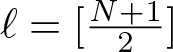 $\ell=[\frac{N+1}{2}]$, then we can rewrite (A2) as
 \begin{equation}
1 \lt p\leq q\leq N-\ell\leq\ell,\ q \lt m \lt \frac{(\ell+1)q}{\ell+1-q}\ \ \text{and}\ \ \frac{m^2(q-p)}{(m-q)(m-p)} \lt N-\ell.
\end{equation}
Denote
 \begin{equation*}
Y_\ell:=\left\{u\in Y:\, u(y,z)=u(|y|,|z|)\ \text{for} \ x=(y,z)\in {\mathbb{R}}^\ell\times {\mathbb{R}}^{N-\ell}\right\}.
\end{equation*}
By Proposition 2.3 it holds that
 \begin{equation}
Y_\ell\hookrightarrow\hookrightarrow L^m(|x|^\beta,B)
\end{equation}
provided
 \begin{equation}
\beta \gt \beta_{q,\ell}:=\frac{q_\ell (\delta_{q,\ell}+\gamma)}{q},
\end{equation}
where  $q_\ell:=\frac{(\ell+1)q}{\ell+1-q}$ and
 $\delta_{q,\ell}:=\frac{Nq+(\ell-1)(\ell-1+q)}{\ell+1}$.
Let 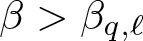 $\beta \gt \beta_{q,\ell}$ and define the functional Iβ and
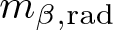 $m_{\beta,\text{rad}}$ as in the previous subsection (note that
 $I_\beta\in C^1(Y_\ell,{\mathbb{R}})$ due to (3.47)). We now consider the following Nehari manifold:
 \begin{equation*}
N_\ell:=\left\{u\in Y_\ell\setminus\{0\}: \langle I'_\beta(u),u\rangle=0\right\}.
\end{equation*}
As before, we have 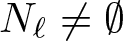 $N_\ell \ne \emptyset$, and therefore we can define the following least energy:
 \begin{equation*}
m_{\beta,\ell}:=\inf_{u\in N_\ell} I_\beta(u).
\end{equation*}
Similarly to Proposition 3.4 we have the following.
Proposition 3.9. Let (A2) be satisfied. Then there exists 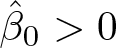 $\hat{\beta}_0 \gt 0$ such that
 \begin{equation*}
m_{\beta,\text{rad}}\geq C_6\beta^{\frac{m(p-1)+p}{m-p}}, \quad \forall \beta \gt \hat{\beta}_0,
\end{equation*}
where C 6 is a positive constant independent of β.
For the least energy on the whole  $Y_\ell$, we have the following upper bound.
Proposition 3.10. Let (A2) be satisfied. Then, there exists 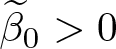 $\widetilde{\beta}_0 \gt 0$ such that
 \begin{equation}
m_{\beta,\ell}\leq C_7\beta^{\frac{m(q-1)+q}{m-q}-N+\ell}, \quad \forall \beta \gt \widetilde{\beta}_0,
\end{equation}
where C 7 is a positive constant independent of β.
Proof. The proof is based on that of [Reference Carrião, de Figueiredo and Miyagaki5, Theorem 4.2] (see also [Reference Assunção, Miyagaki, de Assis Pereira and Rodrigues1, Proposition 4.2]). Denote
 \begin{equation*}
D:=\{(\lambda,t)\in\mathbb{R}^2:\, \lambda,t\geq 0,\ \lambda^2+t^2 \lt 1\}.
\end{equation*}
For 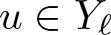 $u\in Y_\ell$, we have
 \begin{equation*}
u(x) = u(y,z)=u(|y|,|z|),
\end{equation*}
where  $x=(y,z)\in{\mathbb{R}}^\ell\times{\mathbb{R}}^{N-\ell}$. Thus, by the change of variable
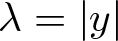 $\lambda=|y|$ and
 $t=|z|$ it holds that
 \begin{equation}
\int_B|x|^\alpha|\nabla u|^p\mathrm{d} x=c_0\int_D(\lambda^2+t^2)^{\frac{\alpha}{2}}|\nabla u(\lambda,t)|^p\lambda^{\ell-1}t^{N-\ell-1}\mathrm{d}\lambda\mathrm{d} t,
\end{equation}
 \begin{equation}
\int_B|x|^\gamma|\nabla u|^q\mathrm{d} x=c_0\int_D(\lambda^2+t^2)^{\frac{\gamma}{2}}|\nabla u(\lambda,t)|^q\lambda^{\ell-1}t^{N-\ell-1}\mathrm{d}\lambda\mathrm{d} t,
\end{equation}
and
 \begin{equation}
\int_B|x|^\beta|u|^m\mathrm{d} x=c_0\int_D(\lambda^2+t^2)^{\frac{\beta}{2}} |u(\lambda,t)|^m\lambda^{\ell-1}t^{N-\ell-1}\mathrm{d}\lambda\mathrm{d} t,
\end{equation}
where  $c_0:=\omega_{\ell-1}\omega_{N-\ell-1}$. We will estimate (3.50)-(3.52) by using polar coordinates in
 ${\mathbb{R}}^2$:
 \begin{equation*}\lambda=\rho\sin\theta\ \ \text{and}\ \ t=\rho\cos\theta.\end{equation*}
The set D is equivalent to the following set in polar coordinates:
 \begin{equation*}
A=\left\{(\rho,\theta): 0\leq\rho \lt 1,\ 0\leq \theta\leq\frac{\pi}{2}\right\}.
\end{equation*}
Corresponding  $u\in Y_\ell$ above, define
 $v:\, [0,1)\times [0,\pi/2]\to{\mathbb{R}}$ as
 \begin{equation*}
v(\rho,\theta):=u(\rho\cos\theta,\rho\sin\theta).
\end{equation*}
Then, we have
 \begin{equation}
\int_D(\lambda^2+t^2)^{\frac{\alpha}{2}}|\nabla u(\lambda,t)|^p\lambda^{\ell-1}t^{N-\ell-1}\mathrm{d}\lambda\mathrm{d} t=\int_A \rho^{N-1+\alpha}H(\theta)\left(v_\rho^2+\frac{1}{\rho^2}v_\theta^2\right)^{\frac{p}{2}}\mathrm{d}\rho\mathrm{d}\theta,
\end{equation}
 \begin{align}
\int_D(\lambda^2+t^2)^{\frac{\gamma}{2}}|\nabla u(\lambda,t)|^q\lambda^{\ell-1}t^{N-\ell-1}\mathrm{d}\lambda\mathrm{d} t=\int_A \rho^{N-1+\gamma}H(\theta)\left(v_\rho^2+\frac{1}{\rho^2}v_\theta^2\right)^{\frac{q}{2}}\mathrm{d}\rho\mathrm{d}\theta,\nonumber\\
\end{align}
and
 \begin{equation}
\int_D(\lambda^2+t^2)^{\frac{\beta}{2}} |u(\lambda,t)|^m\lambda^{\ell-1}t^{N-\ell-1}\mathrm{d}\lambda\mathrm{d} t=\int_A \rho^{N-1+\beta}H(\theta)|v|^m\mathrm{d}\rho\mathrm{d}\theta,
\end{equation}
where
 \begin{equation}
H(\theta):=\left(\cos\theta\right)^{\ell-1}\left(\sin\theta\right)^{N-\ell-1}.
\end{equation}
Define
 \begin{equation*}
\widetilde{A}=\left\{(\rho,\theta): \frac{1}{4} \lt \rho \lt \frac{3}{4},\ \frac{\pi}{6} \lt \theta \lt \frac{\pi}{3}\right\}
\end{equation*}
and as before,
 \begin{equation}
s=s(\beta):=\frac{N}{N+\beta}.
\end{equation}
Fix  $\psi\in C_c^\infty({\mathbb{R}}^2)\setminus\{0\}$ with
 $\operatorname{supp}(\psi)\subset \widetilde{A}$ and
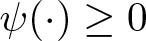 $\psi(\cdot)\geq 0$. For β large, we define
 $v_s:\, [0,1)\times [0,2\pi)\to{\mathbb{R}}$ as
 \begin{equation*}v_s(\rho,\theta)=\psi\left(\rho^{\frac{1}{s}},\frac{\theta}{s}\right).\end{equation*}
Then, let  $u_s:\, B\to {\mathbb{R}}$ be defined by
 \begin{equation*}u_s(x)=u_s(y,z)=u_s(|y|,|z|)\ \ \text{for}\ x=(y,z)\in B\end{equation*}
and in polar coordinates,
 \begin{equation*}u_s(\rho\cos\theta,\rho\sin\theta)=v_s(\rho,\theta).\end{equation*}
Clearly,  $u_s\in C_c^\infty(B)\cap Y_\ell$ and
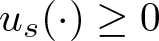 $u_s(\cdot)\geq 0$. Utilizing (3.50)-(3.55) with
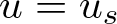 $u=u_s$
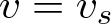 $v=v_s$ and then using ψ above and the change of variable
 $r=\rho^{\frac{1}{s}}$ and
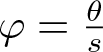 $\varphi=\frac{\theta}{s}$ we obtain
 \begin{equation}
\int_B|x|^\alpha|\nabla u_s|^p\mathrm{d} x=c_0s^{2-p}\int_{\widetilde{A}}r^{s(N-p+\alpha)+p-1}H(s\varphi)\left(\psi_1^2+\frac{1}{r^2}\psi_2^2\right)^{\frac{p}{2}}\mathrm{d} r\mathrm{d} \varphi,
\end{equation}
 \begin{equation}
\int_B|x|^\gamma|\nabla u_s|^q\mathrm{d} x=c_0s^{2-q}\int_{\widetilde{A}}r^{s(N-q+\gamma)+q-1}H(s\varphi)\left(\psi_1^2+\frac{1}{r^2}\psi_2^2\right)^{\frac{q}{2}}\mathrm{d} r\mathrm{d} \varphi,
\end{equation}
and
 \begin{equation}
\int_B|x|^\beta|u_s|^m\mathrm{d} x=c_0s^2\int_{\widetilde{A}}r^{s(N+\beta)-1}H(s\varphi)|\psi(r,\varphi)|^m\mathrm{d} r\mathrm{d} \varphi,
\end{equation}
where 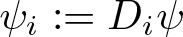 $\psi_i:=D_i\psi$
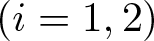 $(i=1,2)$ are partial derivatives of ψ.
We claim that there exists 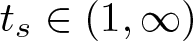 $t_s\in (1,\infty)$ such that
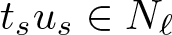 $t_su_s\in N_\ell$. Indeed, define
 $k\in C[0,\infty)$ as
 \begin{equation*}
k(t):=t^p\int_B|x|^{\alpha}|\nabla u_s|^p\mathrm{d} x+t^q\int_B|x|^{\gamma}|\nabla u_s|^q\mathrm{d} x-t^m\int_B|x|^\beta u_s^m\mathrm{d} x,\ \ t \gt 0.
\end{equation*}
Since  $1 \lt p\leq q \lt m$ we have that
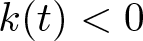 $k(t) \lt 0$ for t > 0 sufficiently large. On the other hand, from the definition (3.56) of H and the fact that
 $s\downarrow 0$ as
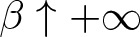 $\beta\uparrow +\infty$ we find
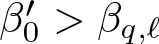 $\beta_0' \gt \beta_{q,\ell}$ such that
 \begin{equation}
\frac{1}{2} (s\varphi)^{N-\ell-1}\leq H(s\varphi)\leq 2(s\varphi)^{N-\ell-1},\quad \forall \beta \gt \beta_0',\ \forall \varphi\in \left(\frac{\pi}{6},\frac{\pi}{3}\right).
\end{equation}
Let 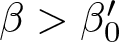 $\beta \gt \beta_0'$. Invoking (3.58)-(3.60) we have
 \begin{align*}
k(1)=&\int_B|x|^\alpha|\nabla u_s|^p\mathrm{d} x+\int_B|x|^\gamma|\nabla u_s|^q\mathrm{d} x-\int_B|x|^\beta u_s^m\mathrm{d} x\\
=&c_0s^{2-p}\int_{\widetilde{A}}r^{s(N-p+\alpha)+p-1}H(s\varphi)\left(\psi_1^2+\frac{1}{r^2}\psi_2^2\right)^{\frac{p}{2}}\mathrm{d} r\mathrm{d} \varphi\\
&+c_0s^{2-q}\int_{\widetilde{A}}r^{s(N-q+\gamma)+q-1}H(s\varphi)\left(\psi_1^2+\frac{1}{r^2}\psi_2^2\right)^{\frac{q}{2}}\mathrm{d} r\mathrm{d} \varphi\\
&-c_0s^2\int_{\widetilde{A}}r^{s(N+\beta)-1}H(s\varphi)|\psi(r,\varphi)|^m\mathrm{d} r\mathrm{d} \varphi.
\end{align*}
From this and (3.61), we obtain
 \begin{equation}
k(1)\geq c_1s^{N-\ell+1-p}+c_2s^{N-\ell+1-q}-c_3s^{N-\ell+1}.
\end{equation}
Here and in the rest of the proof, ci ( $i\in{\mathbb{N}}$) stand for positive constants independent of β. From (3.62) and the definition (3.57) of s, we find
 $\beta_0^{''} \gt \beta_0'$ such that for
 $\beta \gt \beta_0^{''}$ it holds
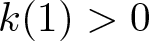 $k(1) \gt 0$. Thus, we find
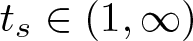 $t_s\in (1,\infty)$ such that
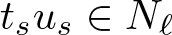 $t_su_s\in N_\ell$, namely,
 \begin{equation}
t_s^p\int_B|x|^{\alpha}|\nabla u_s|^p\mathrm{d} x+t_s^q\int_B|x|^{\gamma}|\nabla u_s|^q\mathrm{d} x=t_s^m\int_B|x|^\beta u_s^m\mathrm{d} x.
\end{equation}
Combining this with (3.58)-(3.61) we derive
 \begin{align*}
t_s^{m-q}&\leq \frac{\int_B|x|^{\alpha}|\nabla u_s|^p\mathrm{d} x+\int_B|x|^{\gamma}|\nabla u_s|^q\mathrm{d} x}{\int_B|x|^\beta u_s^m\mathrm{d} x}\\
&\leq \frac{c_4s^{N-\ell+1-p}+c_5s^{N-\ell+1-q}}{c_6s^{N-\ell+1}},
\end{align*}
which leads to
 \begin{equation}
t_s\leq c_7s^{-\frac{q}{m-q}}.
\end{equation}
By (3.63) and the definition of  $m_{\beta,\ell}$ we obtain
 \begin{align*} m_{\beta,\ell}&\leq I_\beta(t_s u_s)=\left(\frac{1}{p}-\frac{1}{m}\right)t_s^p\int_B|x|^{\alpha}|\nabla u_s|^p\mathrm{d} x+\left(\frac{1}{q}-\frac{1}{m}\right)t_s^q\int_B|x|^{\gamma}|\nabla u_s|^q\mathrm{d} x.
\end{align*}
Combining this with (3.58), (3.59), (3.61) and (3.64) give
 \begin{align*}
m_{\beta,\ell} &\leq c_8s^{-\frac{pq}{m-q}}s^{N-\ell+1-p}+c_9s^{-\frac{q^2}{m-q}}s^{N-\ell+1-q}\\
&\leq c_{10}(s^{-1})^{\frac{q^2}{m-q}+q-1-N+\ell}=c_{10}\left(\frac{N+\beta}{N}\right)^{\frac{m(q-1)+q}{m-q}-N+\ell}.
\end{align*}
Thus, we obtain (3.49) with  $\widetilde{\beta}_0=\max\{\beta_0^{''},N\}$ and
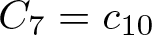 $C_7=c_{10}$. The proof is complete.
3.2.3. Existence of non-radial solutions
Now we exploit the estimates of least energies obtained in the previous subsections to show the existence of non-radial solutions for problem (1.1).
Proof of Theorem 1.2
(i) Let (A1) be satisfied. Then, by  $\frac{m^2(q-p)}{(m-q)(m-p)} \lt N-1$ we find
 $\beta_\star \gt \max\{\beta_0,\bar{\beta}_0\}$ such that
 \begin{equation}
C_1\beta^{\frac{m(p-1)+p}{m-p}} \gt C_2\beta^{\frac{Nq-m(N-q)}{m-q}}, \quad \forall \beta \gt \beta_\star,
\end{equation}
where β 0 and C 1 (resp.  $\bar{\beta}_0$ and C 2) are taken from Proposition 3.4 (resp. Proposition 3.8). Then, we derive from (3.65) and Propositions 3.4 and 3.8 that
 \begin{equation}
m_\beta \lt m_{\beta,\textrm{rad}},\quad \forall \beta \gt \beta_\star.
\end{equation}
Arguing as in [Reference Willem15, Theorem 4.2] we have that mβ is a critical value of Iβ with 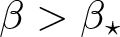 $\beta \gt \beta_\star$. Let
 $u_*$ be a critical point of Iβ corresponding to mβ, then
 $u_*$ is a nonnegative solution to problem (1.1). Moreover,
 $u_*$ is non-radial due to (3.66). This completes the proof of part (i).
(ii) Let (A2) be satisfied and let 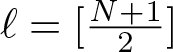 $\ell=[\frac{N+1}{2}]$. By (3.46) we can find
 $\beta_\star \gt \max\{\hat{\beta}_0,\widetilde{\beta}_0\}$ such that
 \begin{equation*}
C_6\beta^{\frac{m(p-1)+p}{m-p}} \gt C_7\beta^{\frac{m(q-1)+q}{m-q}-N+\ell}, \quad \forall \beta \gt \beta_\star,
\end{equation*}
where  $\hat{\beta}_0$ and C 6 (resp.
 $\widetilde{\beta}_0$ and C 7) are taken from Proposition 3.9 (resp. Proposition 3.10). Utilizing this, we obtain from Propositions 3.9 and 3.10 that
 \begin{equation}
m_{\beta,\ell} \lt m_{\beta,\textrm{rad}},\quad \forall \beta \gt \beta_\star.
\end{equation}
As in the part (i), Iβ admits a critical point  $u_*$ on
 $Y_\ell$ for a
 $\beta \gt \beta_\star$ and
 $u_*$ is not radial due to (3.67). Note that since Iβ is invariant under the action of the group
 $O(\ell)\times O(N-\ell)$ used to define
 $Y_\ell$, critical points of Iβ restricted to
 $Y_\ell$ are free critical points of Y.
Proof of Theorem 1.3
As observing in the proof of Theorem 1.2 (ii), for each  $\ell\in{\mathbb{N}}$ satisfying (3.46), problem (1.1) has a non-radial solution
 $u_\ell$. Thus, by taking
 $\ell=[\frac{N+1}{2}]$, ⋯, N − q for the case (i) and
 $\ell=[\frac{N+1}{2}]$, ⋯,
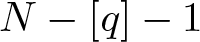 $N-[q]-1$ for the case (ii) we obtain non-radial solutions
 $u_\ell$. Notice that as already observed in [Reference Li10, Lemma 3.3],
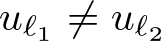 $u_{\ell_1}\ne u_{\ell_2}$ for
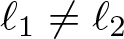 $\ell_1\ne \ell_2$, otherwise
 $u_{\ell_1}$ would be a radial function, which is impossible. The conclusion then follows.
Remark 3.11. The multiplicity of non-radial solutions was also obtained in [Reference Carrião, de Figueiredo and Miyagaki5, Theorem 1.1] for the case p = q. In that result, the authors claimed the existence of 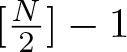 $[\frac{N}{2}]-1$ distinct non-radial solutions by wrongly assuring that there are exactly
 $[\frac{N}{2}]-1$ integers
 $\ell$ satisfying
 $p\leq N-\ell\leq \ell$. Obviously, the number of such integers
 $\ell$ is
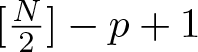 $[\frac{N}{2}]-p+1$ if
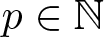 $p\in {\mathbb{N}}$ and is
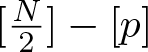 $[\frac{N}{2}]-[p]$ if
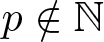 $p\notin{\mathbb{N}}$; hence, Theorem 1.3 with the special case p = q is a correction of [Reference Carrião, de Figueiredo and Miyagaki5, Theorem 1.1].
4. Non-radial minimizers and non-radial ground state solutions
Throughout this section, let assumption (H) hold. Define the spaces Y and  $Y^{\operatorname{rad}}$ as in Subsection 3.2.1. By invoking Proposition 2.1, it is easy to see that under (H) we have
 \begin{equation}
\mathcal{D}^{1,p}(|x|^\alpha,B)\hookrightarrow\hookrightarrow L^{m}(|x|^{\beta},B),\ \mathcal{D}^{1,q}(|x|^\gamma,B)\hookrightarrow\hookrightarrow L^{m}(|x|^{\beta},B).
\end{equation}
In particular,
 \begin{equation}
Y \hookrightarrow\hookrightarrow L^m\left(|x|^\beta,B\right).
\end{equation}
We have the following.
Lemma 4.1.  $\lambda_1(\beta)$ is achieved at some nonnegative function
 $u_\beta\in Y\setminus\{0\}$.
Proof. We distinguish two cases  $p=q=t$ and
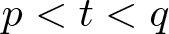 $p \lt t \lt q$.
• Case
$p=q=t$.
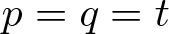
We have
 \begin{equation}
\lambda_1(\beta)=\inf\left\{\frac{m^{\frac{p}{m}}}{p} \int_B (|x|^\alpha + |x|^\gamma) |\nabla u|^p\mathrm{d} x:\, u\in Y,\, \int_B |x|^\beta|u|^m\mathrm{d} x=1\right\}.
\end{equation}
Let  $\{u_n\}$ be a minimizing sequence for
 $\lambda_1(\beta)$ in (4.3). Exploiting the arguments used in the previous section, by (4.2), up to a subsequence we have
 \begin{equation}
u_n\rightharpoonup u_\beta \ \ \text{in}\ \ Y
\end{equation}
and
 \begin{equation}
u_n\to u_\beta \ \ \text{in}\ \ L^m(|x|^\beta,B).
\end{equation}
In particular, we obtain
 \begin{equation}
\int_B |x|^\beta|u_\beta|^m\mathrm{d} x=\lim_{n\to\infty}\int_B |x|^\beta|u_n|^m\mathrm{d} x=1.
\end{equation}
On the other hand, from (4.4) we have
 \begin{align}
\frac{m^{\frac{p}{m}}}{p}&\int_B |x|^\alpha|\nabla u_\beta|^p\mathrm{d} x+\frac{m^{\frac{p}{m}}}{p}\int_B |x|^\gamma|\nabla u_\beta|^p\mathrm{d} x\nonumber\\
&\leq \liminf_{n\to\infty}\left[\frac{m^{\frac{p}{m}}}{p}\int_B |x|^\alpha|\nabla u_n|^p\mathrm{d} x+\frac{m^{\frac{p}{m}}}{p}\int_B |x|^\gamma|\nabla u_n|^p\mathrm{d} x\right]=\lambda_1(\beta).
\end{align}
From (4.6) and (4.7), we infer that uβ is a minimizer for  $\lambda_1(\beta)$. By replacing uβ with
 $|u_\beta|$ we may assume
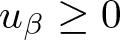 $u_\beta\geq 0$ and by (4.6),
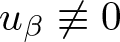 $u_\beta\not\equiv 0$.
• Case
$p \lt t \lt q$.

Set
 \begin{equation}
R(u):=\frac{\frac{1}{p}\int_B |x|^\alpha|\nabla u|^p\mathrm{d} x+\frac{1}{q}\int_B |x|^\gamma|\nabla u|^q\mathrm{d} x}{\left(\frac{1}{m}\int_B |x|^\beta|u|^m\mathrm{d} x\right)^{\frac{t}{m}}}
\end{equation}
and in the following, Ci ( $i\in{\mathbb{N}}$) denote positive constants depending only on the data. We claim that
 \begin{equation}
\lim_{\|u\|\to\infty} R(u)=\infty
\end{equation}
and
 \begin{equation}
\lim_{\|u\|\to 0} R(u)=\infty.
\end{equation}
Indeed, let any 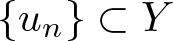 $\{u_n\}\subset Y$ with
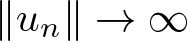 $\|u_n\|\to\infty$. If, up to a subsequence,
 $\{\|\nabla u_n\|_{L^q(|x|^\gamma, B)}\}$ is bounded, then by (4.1) we also have that
 $\{\|u_n\|_{L^m(|x|^\beta, B)}\}$ is bounded. Meanwhile,
 $\|\nabla u_n\|_{L^p(|x|^\alpha, B)}\to \infty$ as
 $n\to\infty$. Thus,
 $R(u_n)\to \infty$ as
 $n\to\infty$. For the other case,
 $\|\nabla u_n\|_{L^q(|x|^\gamma, B)}\to\infty$, by (4.1) again we have
 \begin{align*}
R(u_n)\geq \frac{\frac{1}{q}\int_B |x|^\gamma|\nabla u_n|^q\mathrm{d} x}{C_1\left(\int_B |x|^\gamma|\nabla u_n|^q\mathrm{d} x\right)^{\frac{t}{q}}}=\frac{1}{qC_1}\|\nabla u_n\|_{L^q(|x|^\gamma, B)}^{q-t}.
\end{align*}
This clearly infers that  $R(u_n)\to \infty$ as
 $n\to\infty$. Thus, we have shown (4.9). To see (4.10), let
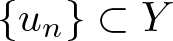 $\{u_n\}\subset Y$ be a sequence converging to 0. Using (4.1) once more, we have
 \begin{align*}
R(u_n)\geq \frac{\frac{1}{p}\|\nabla u_n\|_{L^p(|x|^\alpha, B)}^p}{C_2\|\nabla u_n\|_{L^p(|x|^\alpha, B)}^t}= \frac{1}{pC_2}\|\nabla u_n\|_{L^p(|x|^\alpha, B)}^{p-t}.
\end{align*}
Since 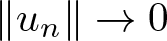 $\|u_n\|\to 0$, we have
 $\|\nabla u_n\|_{L^p(|x|^\alpha, B)}\to 0$ and hence, the preceding estimate infers (4.10).
Next, let  $\{u_n\}$ be a minimizing sequence for
 $\lambda_1(\beta)$. By (4.9),
 $\{u_n\}$ is bounded in Y. Thus, up to a subsequence we have
 \begin{equation}
u_n\rightharpoonup v_\beta \ \ \text{in}\ \ Y
\end{equation}
and
 \begin{equation}
u_n\to v_\beta \ \ \text{in}\ \ L^m(|x|^\beta,B).
\end{equation}
We claim that 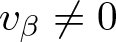 $v_\beta\ne 0$. Indeed, if this is not the case, i.e.,
 $v_\beta=0$, then we have
 $u_n\to 0$ in Y; otherwise, we find
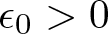 $\epsilon_0 \gt 0$ and
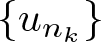 $\{u_{n_k}\}$ such that
 \begin{equation*}
\|u_{n_k}\|\geq \epsilon_0,\ \ \forall k\in{\mathbb{N}}.
\end{equation*}
Thus, by (4.12) we get that
 \begin{equation*}
R(u_{n_k})\to \infty \ \ \text{as}\ \ k\to\infty,
\end{equation*}
this contradicts to the fact that  $ R(u_{n_k})\to \lambda_1(\beta)$ as
 $k\to\infty$. That is,
 $u_n\to 0$ in Y. However, this and (4.10) also lead to a contradiction. In other words, we have shown that
 $v_\beta\ne 0$. Set
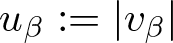 $u_\beta:=|v_\beta|$, then by using (4.11) and (4.12) we have
 \begin{align}
R(u_\beta)&\leq \frac{\liminf_{n\to\infty}\left[\frac{1}{p}\int_B |x|^\alpha|\nabla u_n|^p\mathrm{d} x+\frac{1}{q}\int_B |x|^\gamma|\nabla u_n|^q\mathrm{d} x\right]}{\limsup_{n\to\infty}\left(\frac{1}{m}\int_B |x|^\beta|u_n|^m\mathrm{d} x\right)^{\frac{t}{m}}}\leq \liminf_{n\to\infty}R(u_n)\nonumber\\ &=\lambda_1(\beta).
\end{align}
Hence, uβ is a nontrivial nonnegative minimizer for  $\lambda_1(\beta)$ and the proof is complete.
In order to show the non-radial symmetry of minimizers for  $\lambda_1(\beta)$, we will use the same approach as in Section 3.2. Precisely, we will show that
 $\lambda_1(\beta) \lt \lambda_{1,\operatorname{rad}}(\beta)$ for β sufficiently large, where
 \begin{equation*}\lambda_{1,\operatorname{rad}}(\beta):=\inf_{u\in Y^{\operatorname{rad}}\setminus\{0\}}\, R(u).\end{equation*}
This will be done through the estimates for  $\lambda_1(\beta)$ and
 $\lambda_{1,\operatorname{rad}}(\beta)$ in term of β as follows.
Lemma 4.2. There exist positive constants C 3, C 4,  $\widetilde{\beta}_\star$ and
 $\bar{\beta}_\star$ such that
 \begin{equation}
\lambda_{1,\operatorname{rad}}(\beta)\geq C_3\beta^{-1+t+\frac{t}{m}},\quad \forall\beta \gt \widetilde{\beta}_\star
\end{equation}
and
 \begin{equation}
\lambda_1(\beta)\leq C_4\beta^{q-N+\frac{Nt}{m}},\quad \forall\beta \gt \bar{\beta}_\star.
\end{equation}
Proof. First, we are going to prove (4.13). Let  $u\in Y^{\operatorname{rad}}\setminus\{0\}$ and define
 \begin{equation*}v(x):=u(|x|^{s}),\end{equation*}
where
 \begin{equation}
s=s(\beta):=\frac{N}{N+\beta}.
\end{equation}
As shown in (3.29)-(3.31) we have
 \begin{align}
\int_B|x|^\beta |u(x)|^m\mathrm{d} x=s\int_B \left|v\left(x\right)\right|^m\mathrm{d} x,
\end{align}
 \begin{align}
\int_B|x|^\alpha |\nabla u|^p\mathrm{d} x=s^{1-p}\int_B|x|^{-\alpha_1}|\nabla v|^p\mathrm{d} x
\end{align}
and
 \begin{align}
\int_B|x|^\gamma |\nabla u|^q\mathrm{d} x=s^{1-q}\int_B|x|^{-\gamma_1}|\nabla v|^q\mathrm{d} x,
\end{align}
where
 \begin{equation}
\begin{cases}
\alpha_1:=(N-p)(1-s)-\alpha s,\\
\gamma_1:=(N-q)(1-s)-\gamma s.
\end{cases}
\end{equation}
Thus,
 \begin{equation*}
u\in Y^{\operatorname{rad}} \ \ \text{if and only if}\ \ v\in \mathcal{D}^{1,p}(|x|^{-\alpha_1},B)\cap \mathcal{D}^{1,q}(|x|^{-\gamma_1},B)\ \ \text{and}\ \ v(x)=u(|x|^s).
\end{equation*}
Combining (4.8) and (4.16)-(4.18) gives
 \begin{align}
R(u)=\frac{\frac{1}{p}s^{1-p}\int_B|x|^{-\alpha_1}|\nabla v|^p\mathrm{d} x+
\frac{1}{q}s^{1-q}\int_B|x|^{-\gamma_1}|\nabla v|^q\mathrm{d} x}{s^{\frac{t}{m}}\left(\frac{1}{m} \int_B\left|v\left(x\right)\right|^m\mathrm{d} x\right)^{\frac{t}{m}}}.
\end{align}
From the definitions of  $s,$ α 1 and γ 1 given by (4.15) and (4.19), we find
 $\widetilde{\beta}_\star \gt 0$ such that
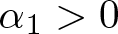 $\alpha_1 \gt 0$ and
 $\gamma_1 \gt 0$ for all
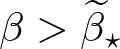 $\beta \gt \widetilde{\beta}_\star$. Let
 $\beta \gt \widetilde{\beta}_\star$, then by (4.20) we obtain
 \begin{align}
R(u)\geq \frac{\frac{m^{\frac{t}{m}}}{q} s^{1-\frac{t}{m}}\left[s^{-p}\int_B|\nabla v|^p\mathrm{d} x+s^{-q}\int_B|\nabla v|^q\mathrm{d} x\right]}{\left(\int_B\left|v\left(x\right)\right|^m\mathrm{d} x\right)^{\frac{t}{m}}}.
\end{align}
We have
 \begin{equation*}
\left(\int_B|\nabla v|^p\mathrm{d} x\right)^{\frac{1}{p}}\geq C_p \left(\int_B\left|v\left(x\right)\right|^m\mathrm{d} x\right)^{\frac{1}{m}}
\end{equation*}
and
 \begin{equation*}
\left(\int_B|\nabla v|^q\mathrm{d} x\right)^{\frac{1}{q}}\geq C_q \left(\int_B\left|v\left(x\right)\right|^m\mathrm{d} x\right)^{\frac{1}{m}},
\end{equation*}
where Cp and Cq are the imbedding constants independent of u and v. Combining the last two inequalities with (4.21) gives
 \begin{align}
R(u)\geq \frac{m^{\frac{t}{m}}}{q} s^{1-\frac{t}{m}}\frac{\left(s^{-1}C_p \kappa\right)^p+\left(s^{-1}C_q \kappa\right)^q}{\kappa^t},\quad \forall u\in Y^{\operatorname{rad}}\setminus\{0\},
\end{align}
where  $\kappa:=\left(\int_B\left|v\left(x\right)\right|^m\mathrm{d} x\right)^{\frac{1}{m}} \gt 0$ with
 $v(x)=u(|x|^s)$.
Let  $\delta\in (0,1)$ be such that
 $t=\delta p+(1-\delta)q$. Then by the Young inequality we have
 \begin{align*}
\left(s^{-1}C_p \kappa\right)^p+\left(s^{-1}C_q \kappa\right)^q&=\delta \left[\delta^{-\frac{1}{\delta}}\left(s^{-1}C_p \kappa\right)^{\delta p}\right]^{\frac{1}{\delta}}+(1-\delta) \\ &\quad\times\left[(1-\delta)^{-\frac{1}{(1-\delta)}}\left(s^{-1}C_q \kappa\right)^{(1-\delta)q}\right]^{\frac{1}{1-\delta}}\\
&\geq \delta^{-\frac{1}{\delta}}(1-\delta)^{-\frac{1}{(1-\delta)}}s^{-t}C_p^{\delta p}C_q^{(1-\delta)q}\kappa^t.
\end{align*}
From this and (4.22) we derive
 \begin{align*}
R(u)\geq C_\delta s^{1-t-\frac{t}{m}}=C_\delta\left(\frac{N+\beta}{N}\right)^{-1+t+\frac{t}{m}}&\geq C_\delta N^{1-t-\frac{t}{m}}\beta^{-1+t+\frac{t}{m}},\\ &\qquad\quad \forall u\in Y^{\operatorname{rad}}\setminus\{0\}.
\end{align*}
where  $C_\delta:= \frac{m^{\frac{t}{m}}}{q} \delta^{-\frac{1}{\delta}}(1-\delta)^{-\frac{1}{1-\delta}}C_p^{\delta p}C_q^{(1-\delta)q}$. Thus, we arrive at
 \begin{equation*}
\lambda_{1,\operatorname{rad}}(\beta)\geq C_3\beta^{-1+t+\frac{t}{m}},\quad \forall\beta \gt \widetilde{\beta}_\star,
\end{equation*}
where  $C_3:=C_\delta N^{1-t-\frac{t}{m}}$ is independent of β. Thus, we have proved (4.13).
Next, we are going to prove (4.14). To this end, we fix 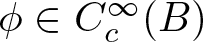 $\phi\in C_c^\infty(B)$ with
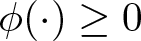 $\phi(\cdot)\geq 0$ and
 $\phi \not \equiv 0$. Then, let
 $\beta \ge 1$ be arbitrary and define
 \begin{equation*}w_\beta(x):=\phi (\beta(x-x_\beta)),\ \ x\in{\mathbb{R}}^N,\end{equation*}
where  $x_\beta:=\left(1-\frac{1}{\beta},0,\cdots,0\right)$. As shown in the proof of Proposition 3.8, it holds that
 $w_\beta\in Y\setminus\{0\}$,
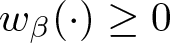 $w_\beta(\cdot)\geq 0$ and
 \begin{equation}
\begin{cases}
\int_B |x|^\beta w_\beta^m\mathrm{d} x=\beta^{-N}\int_{B}\left|\frac{1}{\beta}y+x_\beta\right|^\beta|\phi(y)|^m\mathrm{d} y,\\
\int_B |x|^\alpha \left|\nabla w_\beta\right|^p\mathrm{d} x=\beta^{p-N}\int_{B}\left|\frac{1}{\beta}y+x_\beta\right|^\alpha|\nabla\phi(y)|^p\mathrm{d} y,\\
\int_B |x|^\gamma \left|\nabla w_\beta\right|^q\mathrm{d} x=\beta^{q-N}\int_{B}\left|\frac{1}{\beta}y+x_\beta\right|^\gamma|\nabla\phi(y)|^q\mathrm{d} y.
\end{cases}
\end{equation}
Moreover, we have
 \begin{equation}
1-\frac{2}{\beta}\leq\left|\frac{1}{\beta}y+x_\beta\right|\leq 1,\quad \forall y\in B.
\end{equation}
Thus, we infer from (1.2), (4.23) and (4.24) that for β > 2 large,
 \begin{align}
\lambda_1(\beta)\leq\frac{\frac{\beta^{p-N}}{p}\int_B|\nabla \phi|^p\mathrm{d} y+\frac{\beta^{q-N}}{q}\int_B|\nabla \phi|^q\mathrm{d} y}{\frac{\beta^{-\frac{Nt}{m}}}{m^{\frac{t}{m}}}\left(1-\frac{2}{\beta}\right)^{\frac{\beta t}{m}} \left(\int_B |\phi(y)|^m\mathrm{d} y\right)^{\frac{t}{m}}},\ \forall\beta \gt 2.
\end{align}
Note that  $p\leq q$ and
 $\left(1-\frac{2}{\beta}\right)^\beta\to e^{-2}$ as
 $\beta\to\infty$. Thus, we find
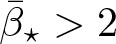 $\bar{\beta}_\star \gt 2$ such that
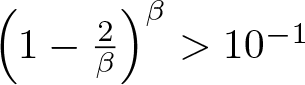 $\left(1-\frac{2}{\beta}\right)^\beta \gt 10^{-1}$ and
 $\frac{\beta^{p-N}}{p}\int_B|\nabla \phi|^p\mathrm{d} y\leq \frac{\beta^{q-N}}{q}\int_B|\nabla \phi|^q\mathrm{d} y$ for all
 $\beta \gt \bar{\beta}_\star$. Thus, we deduce from (4.25) that
 \begin{align*}
\lambda_1(\beta)\leq\frac{\frac{2\beta^{q-N}}{q}\int_B|\nabla \phi|^q\mathrm{d} y}{\frac{\beta^{-\frac{Nt}{m}}}{m^{\frac{t}{m}}}10^{-\frac{t}{m}} \left(\int_B |\phi(y)|^m\mathrm{d} y\right)^{\frac{t}{m}}}\leq C_4\beta^{q-N+\frac{Nt}{m}},\ \forall\beta \gt \bar{\beta}_\star,
\end{align*}
where  $C_4:=2 (10m)^{\frac{t}{m}} q^{-1}\int_B|\nabla \phi|^q\mathrm{d} y\left(\int_B |\phi(y)|^m\mathrm{d} y\right)^{-\frac{t}{m}}$. That is, we have just obtained (4.14) and the proof is complete.
We are now in a position to prove Theorem 1.4 and its corollaries.
Proof of Theorem 1.4
(i) By Lemma 4.1,  $\lambda_1(\beta)$ is achieved at some
 $u_\beta\in Y\setminus\{0\}$ with
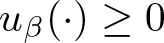 $u_\beta(\cdot)\geq 0$.
(ii) By (H) we have
 \begin{align*}
\frac{(N-1)t}{N-q+t-1} \lt m\ \ \text{and}\ \ N-q+t-1 \gt 0.
\end{align*}
This yields
 \begin{equation*}q-N+\frac{Nt}{m} \lt t+\frac{t}{m}-1.\end{equation*}
Hence, we find  $\beta_\star \gt \max\left\{\widetilde{\beta}_\star,\bar{\beta}_\star\right\}$ such that
 \begin{equation*}
C_4\beta^{q-N+\frac{Nt}{m}} \lt C_3\beta^{t+\frac{t}{m}-1},\quad \forall \beta \gt \beta_\star,
\end{equation*}
where  $\widetilde{\beta}_\star$,
 $\bar{\beta}_\star$, C 3 and C 4 are given in Lemma 4.2. This combining with (4.13) and (4.14) infers
 \begin{equation*}\lambda_1(\beta) \lt \lambda_{1,\operatorname{rad}}(\beta),\quad \forall \beta \gt \beta_\star.\end{equation*}
Let  $\beta \gt \beta_\star$ and let uβ be any minimizer for
 $\lambda_1(\beta)$ in (1.2). We have
 \begin{equation*}
R(u_\beta)=\lambda_1(\beta) \lt \lambda_{1,\operatorname{rad}}(\beta)=\inf_{u\in Y^{\operatorname{rad}}\setminus\{0\}}\, R(u).
\end{equation*}
Consequently, uβ is non-radial. The proof is complete.
Proof of Corollary 1.5
Let 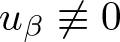 $u_\beta\not\equiv 0$ be a nonnegative minimizer for
 $\lambda_1(\beta)$ in (1.2). Write
 \begin{equation*} R(u)=\frac{Z(u)}{N(u)},\end{equation*}
where
 \begin{equation*}Z(u):=\frac{1}{p}\int_B |x|^\alpha|\nabla u|^p\mathrm{d} x+\frac{1}{q}\int_B |x|^\gamma|\nabla u|^q\mathrm{d} x\end{equation*}
with p = q, and
 \begin{equation*}N(u):=\left(\frac{1}{m}\int_B |x|^\beta|u|^m\mathrm{d} x\right)^{\frac{t}{m}}.\end{equation*}
For a given  $v\in Y$, we have
 \begin{equation*}
\frac{\mathrm{d}}{\mathrm{d} s}R(u_\beta+sv)\bigg|_{s=0}=0,
\end{equation*}
i.e.,
 \begin{equation}
N(u_\beta)\langle Z'(u_\beta),v\rangle=Z(u_\beta)\langle N'(u_\beta),v\rangle.
\end{equation}
Equivalently,
 \begin{align}
\int_B \left(|x|^\alpha+|x|^\gamma\right)|\nabla u_\beta|^{p-2}\nabla u_\beta\cdot\nabla v\mathrm{d} x&=\lambda_1(\beta) \left(\frac{1}{m}\int_B |x|^\beta u_\beta^m\mathrm{d} x\right)^{\frac{t}{m}-1}\frac{t}{m}\nonumber\\ &\quad\times \int_B |x|^\beta u_\beta^{m-1} v\mathrm{d} x\nonumber\\
&=\beta_1 \int_B |x|^\beta u_\beta^{m-1} v\mathrm{d} x,
\end{align}
where
 \begin{equation*}\beta_1:=\lambda_1(\beta)\left(\frac{1}{m}\int_B |x|^\beta u_\beta^m\mathrm{d} x\right)^{\frac{t}{m}-1}\frac{t}{m}.\end{equation*}
Taking 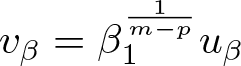 $v_\beta=\beta_1^{\frac{1}{m-p}}u_\beta$, we have that
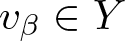 $v_\beta\in Y$,
 $v_\beta\geq 0$,
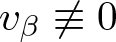 $v_\beta\not\equiv 0$ and by (4.27),
 \begin{align*}
\int_B \left(|x|^\alpha+|x|^\gamma\right)|\nabla v_\beta|^{p-2}\nabla v_\beta\cdot\nabla v\mathrm{d} x=\int_B |x|^\beta v_\beta^{m-1} v\mathrm{d} x,\ \ \forall v\in Y.
\end{align*}
That is, vβ is a nonnegative ground state solution to problem (1.3) with  $\beta \gt \beta_\star$, where
 $\beta_\star$ is determined by Theorem 1.4 corresponding to the current data. Now, let u be any ground state solution to (1.3). Thus,
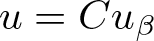 $u=Cu_\beta$, where uβ is a minimizer for
 $\lambda_1(\beta)$ in (1.2) and C is a constant. By Theorem 1.4, uβ is non-radial; hence, so is u. The proof is complete.
Proof of Corollary 1.6
Since  $\min\left\{\frac{(N-1)p}{N-1-q+p},q\right\} \lt m$, we get m > 1, and we can take
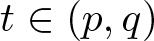 $t\in (p,q)$ with t sufficiently close p (resp. q) when
 $\frac{(N-1)t}{N-1-q+p} \lt m$ (resp. q < m) such that
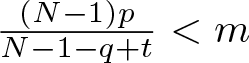 $\frac{(N-1)p}{N-1-q+t} \lt m$. Thus, (H) is fulfilled with these
 $p,q,m,t$. Let uβ be a nonnegative minimizer for
 $\lambda_1(\beta)$ in (1.2). By Theorem 1.4 for β sufficiently large, uβ is non-radial. Using the same notations as in the proof of Corollary 1.5, we have from (4.26) that
 \begin{equation*}
N(u_\beta)\langle Z'(u_\beta),v\rangle=Z(u_\beta)\langle N'(u_\beta),v\rangle,\quad \forall v\in Y.
\end{equation*}
Equivalently,
 \begin{align*}
\int_B |x|^\alpha|\nabla u_\beta|^{p-2}\nabla u_\beta\cdot\nabla v\mathrm{d} x&+\int_B |x|^\gamma|\nabla u_\beta|^{q-2}\nabla u_\beta\cdot\nabla v\mathrm{d} x\\
&=\lambda_1(\beta) \left(\frac{1}{m}\int_B |x|^\beta u_\beta^m\mathrm{d} x\right)^{\frac{t}{m}-1}\frac{t}{m}\int_B |x|^\beta u_\beta^{m-1} v\mathrm{d} x,\\ &\qquad\qquad\qquad\qquad\qquad\qquad\qquad\qquad\qquad\qquad \forall v\in Y.
\end{align*}
That is, uβ is a non-radial eigenfunction to the eigenvalue problem problem (1.4) with
 \begin{equation*}\lambda= \frac{\lambda_1(\beta)t}{m}\left(\frac{1}{m}\int_B |x|^\beta u_\beta^m\mathrm{d} x\right)^{\frac{t}{m}-1} \gt 0.\end{equation*}
The proof is complete.
Acknowledgement
The first author was supported by the University of Economics Ho Chi Minh City (UEH), Vietnam. The third author was supported by the National Research Foundation of Korea Grant funded by the Korean Government (MEST) (NRF-2021R1I1A3A0403627011).


