




No CrossRef data available.
Article contents
- Abstract
- INTRODUCTION
- THE TRANSACTIONAL FRAMEWORK OF STRESS AND COPING
- THE VALUE OF THE TRANSACTIONAL MODEL IN CONCEPTUALIZING THE FAMILY CAREGIVER EXPERIENCE
- THE MODIFIED STRESS-COPING MODEL
- CRITICAL VARIABLES FOR FAMILY CAREGIVER RESEARCH AND INTERVENTION DEVELOPMENT
- MODEL FOR CONCEPTUALIZING SUPPORTIVE INTERVENTIONS FOR FAMILY CAREGIVERS
- CONCLUSION
- References
A conceptual model and key variables for guiding supportive interventions for family caregivers of people receiving palliative care
Published online by Cambridge University Press: 01 December 2003
Article contents
- Abstract
- INTRODUCTION
- THE TRANSACTIONAL FRAMEWORK OF STRESS AND COPING
- THE VALUE OF THE TRANSACTIONAL MODEL IN CONCEPTUALIZING THE FAMILY CAREGIVER EXPERIENCE
- THE MODIFIED STRESS-COPING MODEL
- CRITICAL VARIABLES FOR FAMILY CAREGIVER RESEARCH AND INTERVENTION DEVELOPMENT
- MODEL FOR CONCEPTUALIZING SUPPORTIVE INTERVENTIONS FOR FAMILY CAREGIVERS
- CONCLUSION
- References
Abstract
According to the World Health Organization, the patient and family should be viewed as the “unit of care” when palliative care is required. Therefore family caregivers should receive optimal supportive care from health professionals. However, the impact of supporting a dying relative is frequently described as having negative physical and psychosocial sequalae. Furthermore, family caregivers consistently report unmet needs and there has been a dearth of rigorous supportive interventions published. In addition, comprehensive conceptual frameworks to navigate the family caregiver experience and guide intervention development are lacking. This article draws on Lazarus and Folkman's seminal work on the transactional stress and coping framework to present a conceptual model specific to family caregivers of patients receiving palliative care. A comprehensive account of key variables to aid understanding of the family caregiver experience and intervention design is provided.
Information
- Type
- REVIEW ARTICLES
- Information
- Copyright
- © 2003 Cambridge University Press
INTRODUCTION
According to the World Health Organization (2002), families should be receiving supportive care from health professionals alongside people with life-threatening illness. The needs of family caregivers of dying people are well described (Hinds, 1985; Decker & Young, 1991; Clark, 1993; Cheng et al., 1994; Hudson, 1998; Kristjanson et al., 2003). Unfortunately, few rigorous interventions focused on support for families within the domain of palliative care have been published (Barg et al., 1998; Stajduhar & Davies, 1998; Hudson et al., in press; Kelly et al., 1999; Yates, 1999; McCorkle & Pasacreta, 2001; Harding & Higginson, 2003). In addition, a comprehensive account of a conceptual framework to guide interventions for family caregivers of dying people has not been undertaken.
The transactional stress and coping framework proposed in the seminal work of Lazarus and Folkman (1984) has been widely used and advocated in family caregiver research (Yancey et al., 1990; Lawton et al., 1991; Nolan et al., 1996; Steele & Fitch, 1996; Grant et al., 1998; Nijboer et al., 1998; Pot et al., 1998; Biegel & Schulz, 1999; Yates & Stetz, 1999; Kinsella et al., 2000). This article provides an overview of the transactional stress and coping framework and details a modified structure for conceptualizing families' response to supporting a dying person. A major component of this discussion focuses on key variables to be considered in an attempt to better understand the family caregiver experience. The aim is to provide health care professionals and researchers with a conceptual model to inform intervention development for enhancing care for family caregivers of patients receiving palliative care.
THE TRANSACTIONAL FRAMEWORK OF STRESS AND COPING
Lazarus and Folkman (1984, p. 21) define psychological stress as a “relationship between the person and the environment that is appraised by the person as taxing or exceeding his or her resources and endangering his or her well-being.” They maintain that the interaction is transactional as the person and the environment are in a dynamic and reciprocal relationship. The transactional model of stress and coping incorporates two processes, cognitive appraisal and coping, and regards these as critical mediators of stressful person–environment association and their short- and long-term outcomes (Folkman et al., 1986). Through cognitive appraisal, a person evaluates whether an encounter with the environment is relevant to his or her well-being. There are two types of cognitive appraisal. The process of primary appraisal determines if the nature of this encounter is likely to be benign, beneficial, harmful, or a challenge. This decision is formulated via a range of personality characteristics including goals, commitments, values, and beliefs. Secondary appraisal involves the person identifying what, if anything, can be done to overcome the situation, minimize harm, or increase the likelihood of benefit (Folkman et al., 1986).
Coping relates to the “person's cognitive and behavioral efforts to manage (reduce, minimize, master, or tolerate) the internal and external demands of the person–environment transaction that is appraised as taxing or exceeding the person's resources” (Folkman et al., 1986, p. 572). Lazarus and Folkman (1984) emphasize that defining coping in this way avoids the problem of confounding coping with outcome. There are two preeminent types of coping, problem-focused and emotion-focused. These processes are not always conscious and readily accessible (Lazarus & Folkman, 1984). Problem-focused strategies aim to change the vexed person–environment relationship by acting on oneself or the environment through behaviors such as seeking information, whereas the purpose of emotion-focused coping is to change the manner in which the relationship with the environment is attended, via vigilance or avoidance, for example, or to change the relational meaning of the experience to ease the stress (Lazarus, 1993). There has been a strong trend toward viewing problem-focused coping strategies as superior. This notion is problematic, as, in some cases, problem-focused strategies may not be applicable or may even be harmful. This appears to be evident where events are not amenable to change, and efforts to search for a new meaning or to deal with the effects of the stress may be more appropriate (Nolan et al., 1996). In fact, most people utilize multiple coping strategies when confronted with stressful transactions (Lazarus & Folkman, 1984). Indeed, people use both problem- and emotion-focused coping in nearly all stressful encounters (Folkman et al., 1986).
THE VALUE OF THE TRANSACTIONAL MODEL IN CONCEPTUALIZING THE FAMILY CAREGIVER EXPERIENCE
Nolan et al. (1996) propose that the transactional approach is a powerful tool for explaining diverse stress responses among sizable samples, but it also serves as a vehicle for examining individual caregiver needs. In addition, these authors propose that an admirable quality of this model is that it does not presuppose that certain events in an individual's life must necessarily be viewed as stressful; rather the individual evaluates an issue in relation to his or her own resources. Hence, it is the subjective understanding of events and not their objective features that best determine stress. Therefore, the reaction to the stressful event does not rely solely on the demands of the situation or on the resources available to the person, but on the relationship between the demands and resources as perceived by the person. Consequently, the premise underlying this theory is that caregivers' responses to their situation are more adequately explained in terms of their unique perceptions than through sociodemographic variables (Nijboer et al., 1998). Lazarus and Folkman's conceptual approach serves as a guide for interpreting relations between caregiving aspects and overall outcomes of health (Nijboer et al., 1998). The stress-coping model is a valuable research framework through which to operationalize key constructs (Lawton et al., 1991). Kinsella et al. (1998) claim research may profit from adopting the stress-coping model as it offers a means of accounting for positive and negative effects of caregiving and an understanding of mediator variables. Furthermore, these authors promote the advantages of this model as having implications for operationalization and measurement and urge palliative care researchers to use the model to explicate theoretical linkages. In addition, exploration of caregiver appraisal processes may assist in intervention development (Pot et al., 1998).
There does not appear to be a suitable alternative model sophisticated enough to challenge the applicability of the stress-coping model to the context of the family caregivers of dying patients. Andershed and Ternestedt (2001) developed a theoretical framework related to relatives' involvement in the care of the dying, but acknowledge that it should not be viewed as an explanatory model. Nolan et al. (1995) developed a typology of family caregiving, but concede its limited external validity. Nonetheless, utilization of the stress-coping model within the context of family caregiving research has been criticized. Some have expressed concern that the reappraisal elements appear difficult to differentiate from appraisal processes. In defense of this criticism, Lawton et al. (1989) note that Lazarus and Folkman (1984) suggest there is a continuing reinterpretation between perceived threat and the efficacy of coping strategies. Furthermore, the processes of primary appraisal, secondary appraisal and reappraisal should not be considered mutually exclusive. In a multifaceted situation such as family caregiving, these appraisals might be expected to occur simultaneously or they may overlap. The appraisal process therefore is dynamic and perpetual and changes occur in response to alterations in the stressor, evaluation of coping resources, and strategies (Oberst et al., 1989).
THE MODIFIED STRESS-COPING MODEL
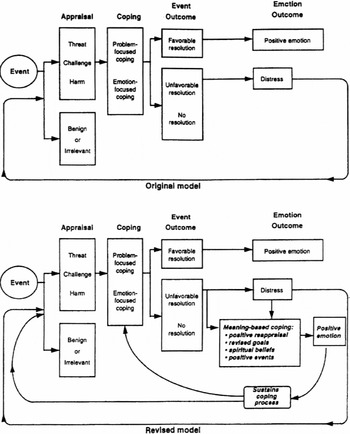
Susan Folkman (1997), who assisted Lazarus in developing the original model, conducted research with family caregivers of people dying of AIDS and in response promoted a refinement of the stress-coping model (see Fig. 1). Folkman's modification relates to the event outcome component of the original framework. Folkman argues that according to the original theory, a satisfactory event outcome should lead to positive emotion and the cessation of the coping pursuit. Unfavorable outcomes, such as unresolved resolution, as typified in cases of an ongoing stressful event, lead to distress and additional coping activities. Folkman advocates that, at this point, the model should integrate positive psychological states. She asserts that the earlier model associated positive emotion with the completion of the stressful condition, which may be expressed as a positive emotion such as relief. In her study, however, the stressful conditions associated with caring for a dying relative or friend did not cease, they continued. Nonetheless, caregivers still reported positive emotions.

Refinement of Lazarus and Folkman's (1984) original stress and coping model. Reprinted from Folkman (1997) with permission of Elsevier Science.
The modification to the model incorporates positive psychological states via the inclusion of three pathways. The first details positive psychological states, which relate to meaning-based processes that people use to cope with the stressful event. Within the study, Folkman (1997) found that these processes involved: (1) using positive reappraisal through which the carers found meaning in terms of their values and beliefs, (2) fostering meaning by goal-directed problem-focused coping to obtain control, and (3) augmenting existential meaning through activation of spiritual beliefs via both emotion-focused and problem-focused functions. Within the second pathway, coping is described as a reaction to distress rather than to the circumstances that created the distress. “The negative psychological states associated with significant and enduring stress may actually motivate people—consciously or unconsciously—to search for and create positive psychological states in order to gain relief, if only momentary, from the distress” (Folkman, 1997, p. 1216). The caregivers in the study not only received respite from this process, but, perhaps, it also assisted in the restoration of psychosocial resources including perceived levels of self-esteem and social support. The final pathway continues on from positive emotion and back to appraisal and coping. Positive emotions and the coping processes that activate them are proposed to assist in the maintenance of renewed emotion and problem-focused coping efforts when responding to an ongoing stressor (Folkman, 1997).
Folkman (1997) acknowledges that caution must be taken with regard to the generalizability of her research findings to the wider caregiver population, as participants were caring for partners with AIDS. However, she also asserts that the research was one of the largest prospective studies of caregiving and bereavement. She contends that more research is required to uncover coping processes that sustain positive emotions and the role of personality variables. However, this remodeling of the stress-coping theory was presumably not solely based on this research (Folkman, 1997), but also in response to others who have noted the importance of positive reactions within the context of caregiving (Lawton et al., 1989; Given et al., 1993; Kurtz et al., 1995; Nolan et al., 1996; Kramer, 1997; Toseland & McCallion, 1997). The point is, however, that Folkman takes the extra, all important conceptual leap of applying positive psychological states within an already well-utilized stress-coping framework (Lazarus & Folkman, 1984) and adapts the prototype accordingly.
In summary, this revised model is directly applicable to the role of caring for a dying relative or friend. It offers a framework for planning strategies, which may mediate responses to this potentially stressful process. In addition, it provides a logical rationale for understanding how caregivers of dying people react and attempt to manage their role during the dying process and into bereavement. Finally, the revised model accommodates a clearer conceptualization of how the event outcome relates to appraisal within a chronic demanding scenario.
CRITICAL VARIABLES FOR FAMILY CAREGIVER RESEARCH AND INTERVENTION DEVELOPMENT
The following discussion explores the key variables that should be considered to further explain responses to the family caregiver experience and for intervention development. Following this review, a framework linking these variables will be presented to demonstrate a suitable means of conceptualizing the caregiver experience specific to the domain of palliative care.
There appear to be conflicting reports regarding what variables within the caregiving literature may be considered mediators and which should be considered moderators (Aneshensel et al., 1995; Kinsella et al., 2000; Pot et al., 2000). Moreover, it is not uncommon for researchers to inappropriately use the terms moderator and mediator interchangeably (Baron & Kenny, 1986). However, a variable can function as a mediator in some situations and a moderator in others (Burns & Grove, 2001). Consequently, the variables discussed herewith may act as moderators and/or mediators.
Preparedness
Preparedness, which originated within role theory, refers to how ready caregivers perceive they are for the tasks and demands of the role. Preparedess is an assessment of the caregiver's readiness to provide care in contrast to their adequacy to provide care (Schumaker et al., 1998). Caregivers who perceive they are well prepared where they have the relevant support, skills, and knowledge have been shown to also have decreased levels of depression. Conversely, carers who perceive they are inadequately prepared are prone to greater levels of burden including increased strain and tension (Archbold et al., 1990; Nolan et al., 1996, p. 122).
Mastery
Mastery is a concept that refers to the control a person perceives they have over an important event in their lives (Aneshensel et al., 1995). A sense of mastery over a stressor may occur through the development of new capabilities, modification of the environment, and/or finding a sense of meaning or purpose that transcends the difficult experience. The core elements of mastery are a sense of control, enhanced self-esteem, and discovery of alternative sources of satisfaction. If mastery is achieved, then the individual is perceived as more efficacious and stronger, with more endurance and a more positive outlook. Conversely, if a sense of mastery is not acquired, a state of stress is maintained, as the individual perceives a discrepancy between the demands of the experience and the adequacy of their available resources (Younger et al., 1995). Mastery has been shown to be negatively related to depression and sense of well-being and is a useful predictor of role strain (Aneshensel et al., 1995; Miller et al., 1995; Yates et al., 1999). Miller et al. concluded that mastery may represent secondary appraisal, and supported efforts to operationalize this concept through further research. In particular, they valued a more explicit account of the ways in which a sense of mastery differed from self-efficacy and other similar variables. A measure of mastery provides an outcome criterion for interventions aimed at reducing stress, promoting health, and enhancing quality of life (Younger, 1993).
Competence
Competence refers to the perceived adequacy of an individual's performance as a caregiver. Caregivers who have previous caregiving experience and/or have a professional caregiving background are likely to adapt more quickly. Those without this experience are more likely to take on the role in a trial-and-error fashion (Nolan et al., 1996). As with mastery, competence may be regarded as a component of the self-concept. However, contrary to mastery, which is an overarching or global component of the self-concept, competence relates to the caregiver's perception of self specifically as a caregiver (Schumaker et al., 1998). Both competence and mastery are therefore important mediating factors within the context of caregiving (Nolan et al., 1996). The direct relationship of competence to other caregiving variables appears to be underexplored (Nolan et al., 1996).
Self-efficacy
Self-efficacy relates to people's belief that they can initiate courses of action to manage a situation. Self-efficacy differs from global concepts such as self-confidence or self-esteem. It is concerned with an individual's ability to manage specific situations. “Self-efficacy is posited to determine whether coping behaviors will be initiated, how much energy will be expended, and how long they will be sustained in the face of obstacles and aversive experiences” (Zeiss et al., 1999, p. 222). Self-efficacy theory suggests that individuals act if they believe that a particular behavior is likely to lead to desirable results and if they are fairly confident in their ability to perform the task or behavior. Because self-efficacy is not a general personality trait, it is reactive to change and can be enhanced. The aim of self-efficacy training is to shift individuals from feeling powerless to feeling in control. Research shows that self-efficacy is a powerful predictor of actual behavior (Schmall, 1995, p. 159).
Self-efficacy within the context of caregiving relates to how well the carers perceive they are managing certain elements of the role. In a fashion similar to caregiving mastery, self-efficacy stems from cognitive appraisal theories of stress and coping and mediates the relationships between stressors and outcomes. A pivotal difference between caregiving mastery and self-efficacy, however, relates to specificity. Mastery deals with an overall evaluation of how caregivers perceive they are managing, whereas self-efficacy relates to the caregivers' belief in how they are dealing with specific caregiving tasks and problems (Schumaker et al., 1998). According to self-efficacy theory, various tasks associated with the caregiving role will be taken on if individuals perceive they have a high sense of care-taking efficacy. Furthermore, high self-efficacy should be a key predictor of persistence in the caregiving role without the development of debilitating emotional reactions (Zeiss et al., 1999).
Depression, anxiety, low self-esteem, helplessness, and pessimistic thoughts are associated with a low sense of self-efficacy. A strong sense of self-efficacy, however, encourages individuals to take on more challenging tasks, enhances motivation and effort, and allows people to continue in the pursuit of meeting desired goals (Shaw, 1999). Caregivers with higher self-efficacy report less depression and lower burden (Zeiss et al., 1999).
The concept of self-efficacy is so well supported that it is considered a crucial component of any theory aimed at explaining health behavior. It is also regarded as a key variable in clinical, developmental, social, educational, personal, and health psychology (Shaw, 1999). Self-efficacy is viewed as one of the most valued self-report instruments in research (Schumaker et al., 1998) and is recommended as a key variable in future studies assessing the impact of caring (Lovett & Gallagher, 1988).
Anxiety, Depression, and Psychological Distress
A variety of negative psychological sequelae among caregivers has been identified and include depression, reduced self-esteem, feelings of isolation, mental fatigue, guilt, anticipatory grief, and anxiety (Cheng et al., 1994; Kinsella et al., 1998). Rates of psychological distress for spouses of palliative care patients have ranged between 18% and 35%, and, moreover, this distress has occurred for up to 18 months (Kissane, 2000). Payne et al. (1999) interviewed 39 caregivers and identified that 33 of them (84%) scored above a predetermined threshold for psychosocial distress.
During the final year of a cancer patient's life the prevalence of anxiety and depression among caregivers is considerable, albeit variable. A study in Ireland involving 508 family members of patients referred for palliative care revealed that at the time of referral, 32% of participants were experiencing severe or overwhelming anxiety. During the last week of care, anxiety was still severe for 26% of participants (Hodgson et al., 1997). A study of anxiety and depression in 120 spouses of patients with a primary cancer diagnosis showed that 18% had significant anxiety and 6% had significant levels of depression (Glasdam et al., 1996). Addington-Hall et al. (1992) reported that 39% of palliative caregivers (N = 118) were considered to be depressed and 46% were deemed to be anxious. Aranda and Hayman-White's (2001) research involving 33 caregivers of cancer patients dying at home revealed that 21% were confronted with moderate to severe depression. Anxiety levels were higher than population norms and did not tend to decrease over time.
Depression has also been shown to be higher among caregivers than in general populations. Furthermore, depression is higher among women, who make up a clear majority of the caregiving population (Yates et al., 1999). Fifty percent of caregivers of hospice patients (N = 80) were identified as being in the clinically depressed range (Haley et al., 2001). Borneman (1998) posits that caregiver depression may occur as a result of the constant and intense nature of caregiving, where there is little reprieve and a common loss of a meaningful future complicated by a lack of knowledge about how to minimize stress levels. Unrelieved patient symptoms may be associated with caregiver depression (Given et al., 1992). Caregivers often feel very helpless, despite their best efforts, if symptoms persist (Ferrell, 1998).
Ramirez et al. (1998) suggest that anxiety may be minimized if caregivers are well informed, postulating a relationship between level of information and level of anxiety, as they are able to make educated decisions about managing the physical, emotional, and social aspects of their experience. Family caregiver depression and anxiety should be assessed, for if it is ignored, the effect of supportive interventions may be compromised.
Social Support
Social support can be defined as “the existence or availability of people on whom we can rely, people who let us know that they care about, value and love us” (Saranson et al., 1983, p. 127). While definitions vary, it is generally accepted that social support is a multidimensional concept (Bloom, 2000). Categories of social support include (1) informational support: whereby the provision of knowledge lessens the impact of a previously perceived harmful or threatening event, (2) instrumental support: specific assistance from others which is viewed as helpful, (3) emotional support: being able to share thoughts and feelings, and (4) esteem support: whereby a person's sense of self-worth is bolstered by other people (Bloom, 2000).
Social support can be considered a mediator of secondary appraisal. It is generally accepted that people with high levels of social support tend to have greater capacity to mentally and physically respond to stressful events (Shaw, 1999). Social support assists with positive adjustment and personal development and provides a buffer against the impact of stress (Saranson et al., 1983). Saranson et al.'s research revealed that those individuals with perceived high levels of availability and satisfaction with social support reported greater self-esteem and more positive events in their life and perceived a more optimistic outlook than those with low levels of social support. Studies related to caregivers of cancer patients also identify an association between perceived levels of social support and psychological and physical adjustment (Kinsella et al., 2000). It is likely that social support, both during and after the patient's terminally ill phase, is conducive to grief resolution for surviving family members and friends (Yancey et al., 1990)
Understandably, close personal relationships may not always produce positive outcomes. Within the context of caregiving, caregivers and patients may lack congruence in their appreciation of what constitutes support. Maybe the advantages of social support have been exaggerated, as families themselves are potential causes of stress (Nolan et al., 1996). This argument fits neatly within the stress-coping model, as it reinforces the power of an individual's appraisal of circumstances.
Information
The aforementioned definition of social support recognizes that information can be considered as a key element of support. Derdiarian (1989) promotes the importance of information in the coping process using Cohen and Lazarus' (1979) framework. Derdiarian elucidates the tenets of this theory and applies them to the cancer caregiving context. Derdiarian reported that information seeking is considered the most primary of coping modes when a person is confronted with an unfamiliar situation. Through information seeking, the individual assesses potential problems and identifies what needs to be done to deal with them. Derdiarian posits the view that information provision increases motivation to make decisions and assists an individual to prepare for coping with stressful events. Thus, if information needs are met, then caregivers may cope much more effectively.
People are likely to feel disempowered when they lack adequate information on which to base their decisions (Small & Rhodes, 2000, p. 71). Nolan et al. (1996) revealed that 85% of carers of Alzheimer patients reported finding as much information as possible about the problem was the most useful strategy to assist them in responding to their role. Information is an important aspect of coping for home caregivers of terminally ill family members. It helps decrease anxiety and increase control (Tringali, 1986; Grbich et al., 2000). Information provision may not be a helpful coping resource if delivered in a manner that is not best suited to the individual's needs (Lilja et al., 1998). The potential negative effects of information provision to family caregivers appear to be underexplored.
Rewards
To adequately determine how and why caregivers respond in certain ways, an assessment of the potential benefits or positive aspects of the role is advised (Lawton et al., 1989; Nolan et al., 1996; Folkman, 1997; Kramer, 1997). Otherwise there is a danger of pathologizing caregiving and inadvertently socializing caregivers to expect burden (Gaugler et al., 2000). Intervention studies have focused almost exclusively on lessening negative aspects of caregiving. It may be that interventions do as much to increase satisfaction derived from caregiving as they do to reduce problems (Toseland & McCallion, 1997).
Many studies, (predominantly aged care/dementia populations) indicate that at least 80% of caregivers experience some elements of caregiving as satisfying (Nolan, 2001). Scott (2001) reported that only 2 subjects from a sample of 24 family caregivers of patients with life-threatening illness could not report any satisfaction associated with the role. Haley et al. (2001) revealed that the majority of caregivers (N = 80) of cancer and dementia hospice patients reported positive consequences of caregiving. The term gain is also utilized to represent “any positive affective or practical return that is experienced as a direct result of becoming a caregiver” (Kramer, 1997, p. 219). Satisfactions, gains, and/or rewards are considered to be powerful mediators as they are postulated to protect caregiver well-being. Common types of satisfactions posited include seeing the patient contented and happy, giving pleasure to the patient, receiving love and affection from the patient, helping the patient overcome difficulties, and obtaining competence and mastery associated with caregiving (Nolan et al., 1996).
Meaningfulness
If a caregiver perceives the role as meaningful, whereby it is considered to be a worthy investment or challenge, then this may play an important part in enhancing the caregiver's ability to deal with the situation at hand. Meaning in response to caregiving may originate from pathways, including creative routes (perhaps through development of new skills), attitudinal routes (via an inquiry into personal beliefs and values), and experiential routes (via feelings and relationships; Nolan et al., 1996). Meaning may also be created through the pursuit and attainment of goals (Folkman, 1997). Existential beliefs allow some people to construct meaning and maintain hope in unfavorable circumstances (Lazarus & Folkman, 1984). “Personal meanings are the most important aspects of psychological stress with which the person must cope, and they direct the choice of coping strategy” (Lazarus, 1993, p. 244).
Positive Emotions
Folkman (1997) explains this feeling state in terms of positive reappraisal, whereby cognitive strategies are employed to reframe the stressful situation in a positive vein. Folkman's research confirms that, despite caregivers being confronted with an extremely stressful encounter, many will experience positive emotions. Some participants early in her study actually advised the researchers to ensure that they asked about the positive aspects in order to obtain a more accurate picture of how they coped. Positive meaningful events were acknowledged in 99.5% of 1794 interviews. Half of these events were planned and the remainder unplanned. Examples of positive meaningful events included having a meal, appreciative feedback from a peer, and acknowledging a beautiful flower. Events such as these were turned into positive experiences not only momentarily but also stored in participants' memories. Caregivers who cannot identify any positive aspects associated with their role are likely to be at a breaking point and hence should be targeted for appropriate interventions (Nolan, 2001).
Optimism
Some caregivers may view their role through the eyes of an optimist, whereby the experience is viewed in more sanguine terms. Optimism buffers some potentially negative aspects related to caregiving. Furthermore, this concept may prove to be a powerful predictor of which caregivers are more likely to respond favorably to the role (Given et al., 1993; Kurtz et al., 1995). It seems, however, that optimism is a general characteristic, that is, optimists are generally optimistic and their positive outlook is not necessarily dependent upon certain circumstances or settings (Scheir & Carver, 1985).
Mutuality
Mutuality within the context of caregiving describes the degree to which a caregiver finds gratification and meaning within their relationship with the patient. It also encompasses the caregivers' perception of the patient reciprocating by virtue of their existence. Mutuality appears to be a stable concept, and so low levels of mutuality may be irreversible (Archbold et al., 1990).
High levels of mutuality assist caregivers to cope and continue caregiving despite objectively arduous situations. Conversely, low mutuality is associated with poor caregiving reactions even when objectively the scenario appears unproblematic (Archbold et al., 1990; Nolan et al., 1996). Furthermore, caregivers with high mutuality report less role strain (Archbold et al., 1990). Archbold et al. believe that health professionals providing home care should include the quality of the caregivers' relationship to the patient in their assessment and, where low mutuality is detected, they should help the family explore alternatives to direct care provision. Similarly, Nolan (2001) proposes that mutuality should routinely be assessed and believes that, where mutuality is very low, a review of the appropriateness of the ongoing caregiver role should be undertaken.
Respite
If caregivers believe that their social interactions will be threatened by their role, then they are more likely to perceive the role as stressful. Encouraging caregivers to get involved in activities outside of the role can be a more powerful stress-reduction strategy than physical aid or instrumental support. Approaches that involve maintenance of interests external to caring, relaxation, and time for oneself may be very helpful (Nolan et al., 1996).
Cultural Factors
There is inadequate research within the context of caregiving in palliative care to make propositions about the cultural issues associated with caregiving (Pasacreta & McCorkle, 2000). However, evidence with caregivers of other patient populations suggests that cultural background may play an important role in family stress and coping processes (Kinsella et al., 2000).
Caregiver Burden and Health
In studies on caregiving outcomes, two general dimensions of health are distinguished, namely psychological and physical health (Nijboer et al., 1998). A relationship between poorer health status, burden, and depression has also been established (Kinsella et al., 2000). Not surprisingly, those caregivers with existing stressors in their lives may be most susceptible to the demands of caregiving and are at greatest risk of negative psychosocial consequences (Sales et al., 1992). It is also presumed that those caregivers who have ongoing physical or psychological difficulties prior to commencing the carer role may be potentially disadvantaged. Caregiver burden refers to psychological, emotional, physical, financial, or social problems experienced by families or friends (Given et al., 1992).
Choice and Commitment
People who acknowledge a genuine choice in becoming a caregiver have reported less burden (Nolan et al., 1996). This is not surprising as, presumably, few people would respond favorably to caring for a dying relative or friend on a day-to-day basis if they had no say in the matter. As noted in the discussion on mutuality, it is acknowledged that choice with regard to caregiving is probably highly influenced by the relationship between the caregiver and care recipient. Those who choose to involve themselves in caregiving often do so with a strong commitment to the role. Lazarus and Folkman (1984) highlight the relevance of level of commitment to appraisal, arguing that commitment affects appraisal by guiding people into or away from situations that threaten, harm, or benefit them.
Patient's Disease Status, Level of Dependency, and Duration of Illness
There is much debate as to whether or not the potential distress associated with caregiving relates to the nature and extent of the patients' impairments (Zeiss et al., 1999). The site of cancer, for example, may not be overly important. Although studies of caregivers of brain cancer patients have shown considerable family disturbance, this may be attributable to the severity of symptoms and not necessarily the cancer itself (Sales et al., 1992). Whereas some studies reveal that illness duration is associated with increasing strain, others failed to find this association (Sales et al., 1992).
If the patient is adjusting well, then less psychological disturbance may be experienced by family caregivers (Sales et al., 1992). Similarly, as patients' needs lessen, caregivers tend to perceive fewer burdens associated with caregiving (Kurtz et al., 1995; Miaskowski et al., 1997) and may need fewer formal supports (Winslow, 1997). However, caregiving reactions may have less to do with the actual tasks, amount of care, or patient dependency and more to do with the appraisal of these tasks by the caregiver and the meaning attached to the caregiving situations (Yates et al., 1999; Aranda & Hayman-White, 2001; Cameron et al., 2002). There is emerging evidence that the number of new caregiving demands rather than the total number of caregiving demands may have greater influence on depression (Given et al., 1999). These latter perspectives accommodate the theory of appraisal processes referred to previously.
Caregiver Age, Gender, and Sociodemographic Status
Aging family members tend to have more trouble dealing with the tasks and physical demands of their spouses' illness, whereas the greatest difficulties of younger caregivers are in the affective domains (Sales et al., 1992). However, there is currently insufficient evidence from which to draw accurate conclusions (Kinsella et al., 1998).
Evidence related to the impact of gender on the appraisal process appears to be contradictory. Some studies document greater distress in female family members (Sales et al., 1992), whereas others suggests that male caregivers have a higher risk of experiencing burden than female caregivers (Schumacher et al., 1993). Also, Nolan et al. (1995) note that, although the literature is underdeveloped and equivocal, it is the received wisdom that men are generally seen to cope more effectively. However, their results suggest that such “truisms” do not stand up to empirical scrutiny. One answer may be that men and women react differently to aspects of the caregiving role or express burden and distress in different ways. Men may tend to be more concerned about finances and role changes. Once again, more research in this area is required (Kinsella et al., 2000).
Families with low socioeconomic status and those with less education may feel more threatened by the patient's illness (Sales et al., 1992). Research with caregivers of people with dementia suggests that those with lower socioeconomic status may be less aware of and less likely to take up health care services (Kinsella et al., 2000). It seems that employment demands can be attributable to negative outcomes in some circumstances and result in positive sequelae for others. Caregivers who maintain their employment may view this experience as a form of respite (Kinsella et al., 2000).
The foregoing overview identifies the key factors influencing the manner in which caregivers respond to their experience. It is probably the caregivers' unique comprehension of the meaning attributable to the caregiving situation that is more likely to define responses than demographic, personality, or patient characteristics (Oberst et al., 1989). It would be inappropriate, however, to discount the potential influences of these factors. Caregivers who view their situation as a challenge rather than a harmful experience are less likely to be overburdened (Nolan et al., 1996). The variables likely to influence the appraisal process in terms of a challenging rather than harmful response include caregivers' levels of self-efficacy, social support, competence, and mastery (Aneshensel et al., 1995; Lazarus & Folkman, 1984; Nolan et al., 1996). Caregivers who identify positive emotions despite the sometimes demanding implications of caring also appear to perceive their experience as less harmful (Folkman, 1997).
In summary, there are numerous and diverse coping strategies employed by caregivers (Nolan et al., 1996). An appraisal of the caregiving situation in positive terms is likely to be heavily influenced by the caregiver's perception of control over his or her environment, a sense of support, and a perception that they have the necessary skills to confront problematic situations. In addition, caregivers who can find a sense of purpose or meaning associated with their experience are less likely to be overburdened. Therefore, to lessen the negative implications of caregiving, these particular variables should be considered when health care professionals design new supportive family caregiver interventions.
MODEL FOR CONCEPTUALIZING SUPPORTIVE INTERVENTIONS FOR FAMILY CAREGIVERS
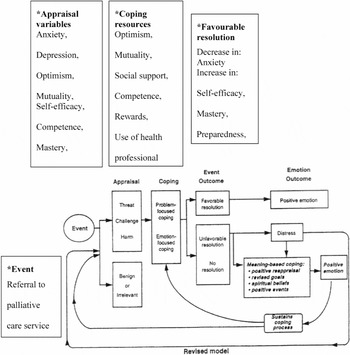
Figure 2 represents the proposed model for conceptualizing a supportive intervention for family caregivers of dying people. The framework is underpinned by Folkman's (1997) adapted stress-coping model and key variables from the aforementioned review are applied. An asterisk in Figure 2 highlights the appendages to Folkman's model. The “event” in this context is the referral to a palliative care service, which will confirm the impending death of a family's relative or friend. The consequences of this event are an ongoing and dynamic interchange of multiple smaller events, including such factors as role changes, financial and social burdens, and existential issues.

Conceptual model for a supportive intervention for family caregivers of dying cancer patients.
The appraisal variables outlined in Figure 2 represent those factors that a caregiver uses to assess the potential impact of the event(s). Other factors such as beliefs, customs, and values are not represented here but are thought to influence appraisal. The appraisal variables highlighted in Figure 2 are not mutually exclusive from the coping resources outlined. For example, when caregivers assess the possible impact of commencing caring for a dying relative, they may view the experience as less harmful because they have high levels of mutuality. The caregivers may love and respect their family member so much that they wish to help them as much as possible, viewing the caregiving role as a means of expressing that love. In responding to the day-to-day caring demands, the caregiver may use this high regard as a coping resource. “It's terribly frustrating at times but I love him so much and I know he'd do the same for me,” is the type of comment that exemplifies this contention. Another example of a variable used for both appraisal and coping resource purposes is competence. Caregivers may appraise their experience as less harmful because they have the necessary knowledge and skills to undertake the caregiving role. Furthermore, they will use their knowledge and skills as coping resources to manage the caregiving role. Family caregivers may utilize their own internal resources (e.g., optimism) in addition to services offered by health care professionals and support from family members or friends.
The optimal outcomes associated with caring for a dying family member reflect those variables conceivably influenced by an intervention and may have an impact within a reasonably short time frame, that is, months rather than years. It is not considered feasible, for example, within a short period of time to lessen a caregiver's depression, enhance their physical health, level of optimism, or impact upon the patient's level of dependency: factors requiring different resources and expertise.
CONCLUSION
A case has been made for the use of the stress-coping model, as originally conceptualized by Lazarus and Folkman (1984) and redeveloped by Folkman (1997), to guide interpretation of families' responses when faced with the task of caring for a dying relative. The exploration of key variables should aid the development of support family interventions. Although it may be achievable to determine treatment effects related to the dependent variables outlined and describe the caregiver experience in accordance with the aforementioned appraisal variables, future research is required to establish which variables act as moderators versus mediators. In summary, the stress-coping model (Lazarus & Folkman, 1984) is a more than adequate heuristic implement for enhancing our understanding of caregiving (Nolan et al., 1996). Key variables commensurate with the transactional stress-coping model must now be tested via intervention studies to meet the supportive needs of family caregivers of dying people.
References
REFERENCES
Addington-Hall, J.,
MacDonald, L.,
Anderson, & H.,
et al.
(1992).
Randomised controlled trial of effects of coordinating care for
terminally ill cancer patients.
British Medical Journal,
305.Google Scholar
Andershed, B. &
Ternestedt, B.
(2001).
Development of a theoretical framework describing relatives'
involvement in palliative care.
Journal of Advanced Nursing,
34,
554–562.Google Scholar
Aneshensel, C.,
Pearlin, L.,
Mullan, & J.,
et al.
(1995).
Profiles in Caregiving.
San Diego, CA:
Academic Press.
Aranda, K. &
Hayman-White, K.
(2001).
Home caregivers of the person with advanced cancer: An Australian
perspective.
Cancer Nursing,
24,
300–307.Google Scholar
Archbold, P.,
Stewart, B.,
Greenlick, & M.,
et al.
(1990).
Mutuality and preparedness as predictors of role strain.
Research in Nursing and Health,
13,
375–384.Google Scholar
Barg, F.,
Pasacreta, J.,
Nuamah, & I.,
et al.
(1998).
A description of a psychoeducational intervention for family
caregivers of cancer patients.
Journal of Family Nursing,
44,
394–413.Google Scholar
Baron, R. &
Kenny, D.
(1986).
The moderator-mediator variable distinction in social psychological
research: Conceptual, strategic and statistical considerations.
Journal of Personality and Social Psychology,
51,
1173–1182.Google Scholar
Biegel, D. &
Schulz, R.
(1999).
Caregiving and caregiver interventions in aging and mental illness.
Family Relations,
48,
345–354.Google Scholar
Bloom, J.
(2000).
The role of family support in cancer control. In
Cancer and the Family,
2nd ed.,
L. Baider,
C. Cooper, &
A. De-Nour (eds.), pp.
55–67.
Chichester, UK:
John Wiley and Sons.
Borneman, T.
(1998).
Caring for cancer patients at home: The effect on family caregivers.
Home Health Care Management Practices,
10,
25–33.Google Scholar
Burns, N. &
Grove, S.
(2001).
The Practice of Nursing Research: Conduct Critique and Utilization,
4th ed.
Philadelphia:
W.B Saunders.
Cameron, J.,
Franche, R.,
Cheung, & A.,
et al.
(2002).
Lifestyle interference and emotional distress in family caregivers
of advanced cancer patients.
Cancer,
94,
521–527.Google Scholar
Cheng, W.,
Schuckers, P.,
Hauser, & G.,
et al.
(1994).
Psychosocial needs of family caregivers of terminally ill patients.
Psychological Reports,
75,
1243–1250.Google Scholar
Clark, D.
(1993).
Evaluating the needs of informal caregivers.
Progress in Palliative Care,
1,
3–5.Google Scholar
Cohen, F. &
Lazarus, R.
(1979).
Coping with the stress of illness. In
Health Psychology,
G. Stone,
F. Cohen, &
N. Adler (eds.), pp.
247–254.
San Francisco, CA:
Jossey-Bass.
Decker, S. &
Young, E.
(1991).
Self-perceived needs of primary caregivers of home-hospice clients.
Journal of Community Health Nursing,
8,
147–154.Google Scholar
Derdiarian, A.
(1989).
Effects of information on recently diagnosed cancer patients'
and spouses' satisfaction with care.
Cancer Nursing,
12,
285–292.Google Scholar
Ferrell, B.
(1998).
The family. In
Oxford Textbook of Palliative Medicine,
2nd ed.,
D. Doyle,
G. Hanks, &
N. MacDonald (eds.), pp.
909–917.
Oxford:
Oxford University Press.
Folkman, S.
(1997).
Positive psychological states and coping with severe stress.
Social Science Medicine,
45,
1207–1221.Google Scholar
Folkman, S.,
Lazarus, R.,
Gruen, & R.,
et al.
(1986).
Appraisal, coping, health status, and psychological symptoms.
Journal of Personality and Social Psychology,
50,
571–579.Google Scholar
Gaugler, J.,
Kane, R., &
Langlois, J.
(2000).
Assessment of family caregivers of older adults. In
Assessing Older Persons: Measures, Meaning and Practical
Applications,
R. Kane &
R. Kane (eds.), pp.
321–359.
New York:
Oxford University Press.
Given, C.,
Given, B.,
Stommel, & M.,
et al.
(1999).
The impact of new demands for assistance on caregiver depression:
Tests using an inception cohort.
The Gerontologist,
39,
76–85.Google Scholar
Given, C.,
Given, B.,
Stommel, & M.,
et al.
(1992).
The caregiver reaction assessment (CRA) for caregivers to persons
with chronic physical and mental impairments.
Research in Nursing and Health,
15,
271–283.Google Scholar
Given, C.,
Stommel, M.,
Given, & B.,
et al.
(1993).
The influence of cancer patients' symptoms and functional
states on patients' depression and family caregivers'
reaction and depression.
Health Psychology,
12,
277–285.Google Scholar
Glasdam, S.,
Bonde Jensen, A.,
Lindegaard Madsen, & E.,
et al.
(1996).
Anxiety and depression in cancer patients' spouses.
Psycho-Oncology,
5,
23–29.Google Scholar
Grant, G.,
Ramcharan, P.,
McGrath, & M.,
et al.
(1998).
Rewards and gratifications among family caregivers: Towards a
refined model of caring and coping.
Journal of Intellectual Disability Research,
42,
58–71.Google Scholar
Grbich, C.,
Parker, D., &
Maddocks, I.
(2000).
Communication and information needs of care-givers of adult family
members at diagnosis and during treatment of terminal cancer.
Progress in Palliative Care,
8,
345–350.Google Scholar
Haley, W.,
LaMonde, L.,
Han, & B.,
et al.
(2001).
Family caregiving in hospice: Effects on psychological and health
functioning among spousal caregivers of hospice patients with lung
cancer or dementia.
The Hospice Journal,
15,
1–18.Google Scholar
Harding, R. &
Higginson, I.
(2003).
What is the best way to help caregivers in cancer and palliative
care? A systematic review of interventions and their effectiveness.
Palliative Medicine,
17,
63–74.Google Scholar
Hinds, C.
(1985).
The needs of families who care for patients with cancer at home:
Are we meeting them?
Journal of Advanced Nursing,
10,
575–581.Google Scholar
Hodgson, C.,
Higginson, I.,
McDonnell, & M.,
et al.
(1997).
Family anxiety in advanced cancer: A multicentre prospective study
in Ireland.
British Journal of Cancer,
76,
1211–1214.Google Scholar
Hudson, P.
(1998).
The educational needs of lay carers.
European Journal of Palliative Care,
5,
183–186.Google Scholar
Hudson, P.
(In press).
A critical review of supportive interventions for family caregivers of
palliative stage cancer patients.
Journal of Psychosocial Oncology.
Kelly, B.,
Edwards, P.,
Synott, & R.,
et al.
(1999).
Predictors of bereavement outcome for family carers of cancer
patients.
Psycho-Oncology,
8,
237–249.Google Scholar
Kinsella, G.,
Cooper, B.,
Picton, & C.,
et al.
(1998).
A review of the measurement of caregiver and family burden in
palliative care.
Journal of Palliative Care,
14,
37–45.Google Scholar
Kinsella, G.,
Cooper, B.,
Picton, & C.,
et al.
(2000).
Factors influencing outcomes for family caregivers of persons
receiving palliative care: Toward an integrated model.
Journal of Palliative Care,
16,
46–54.Google Scholar
Kissane, D.
(2000).
A model of family-centred intervention during palliative care and
bereavement: Focused family grief therapy. In
Cancer and the Family,
L. Baider,
C. Cooper, &
A. De-Nour (eds.), pp.
175–192.
Chichester, UK:
John Wiley and Sons.
Kramer, B.
(1997).
Gain in the caregiving experience: Where are we? What next?
The Gerontologist,
37,
218–232.Google Scholar
Kristjanson, L.,
Hudson, P., &
Oldham, L.
(2003).
Working with families in palliative care. In
Palliative Care Nursing: A Guide to Practice,
2nd ed.,
M. O'Connor &
S. Aranda (eds.), pp.
271–283.
Melbourne:
Ausmed.
Kurtz, M.,
Kurtz, J.,
Given, & C.,
et al.
(1995).
Relationship of caregiver reactions and depression to cancer
patients' symptoms, functional states, and depression—A
longitudinal view.
Social Science Medicine,
40,
837–846.Google Scholar
Lawton, P.,
Kleban, M.,
Moss, & M.,
et al.
(1989).
Measuring caregiver appraisal.
Journal of Gerontology: Psychological Sciences,
44,
61–71.Google Scholar
Lawton, P.,
Moss, M.,
Kleban, & M.,
et al.
(1991).
A two-factor model of caregiving appraisal and psychological
well-being.
Journal of Gerontology,
46,
181–189.Google Scholar
Lazarus, R.
(1993).
Coping theory and research: Past, present, and future.
Psychosomatic Medicine,
55,
234–247.Google Scholar
Lazarus, R. &
Folkman, S.
(1984).
Stress, Appraisal, and Coping.
New York:
Springer Publishing Co.
Lilja, Y.,
Ryden, S., &
Fridlund, B.
(1998).
Effects of extended preoperative information on perioperative
stress: An anaesthetic nurse intervention for patients with breast
cancer and total hip replacement.
Intensive and Critical Care Nursing,
14,
276–282.Google Scholar
Lovett, S. &
Gallagher, D.
(1988).
Psychoeducational interventions for family caregivers: Preliminary
efficacy data.
Behaviour Therapy,
19,
321–330.Google Scholar
McCorkle, R. &
Pasacreta, V.
(2001).
Enhancing caregiver outcomes in palliative care.
Cancer Control,
8,
36–45.Google Scholar
Miaskowski, C.,
Kragness, L.,
Dibble, & S.,
et al.
(1997).
Difference in mood states, health status, and caregiver strain
between family caregivers of oncology outpatients with and without
cancer-related pain.
Journal of Pain and Symptom Management,
13,
138–147.Google Scholar
Miller, B.,
Campbell, R.,
Farran, & C.,
et al.
(1995).
Race, control, mastery and caregiver distress.
Journal of Gerontology: Social Sciences,
50B,
S374–S382.Google Scholar
Nijboer, C.,
Tempelaar, R.,
Sanderman, & R.,
et al.
(1998).
Cancer and caregiving: The impact on the caregiver's health.
Psycho-Oncology,
1,
3–13.Google Scholar
Nolan, M.
(2001).
Positive aspects of caring. In
Chronic and Terminal Illness: New Perspectives on Caring and
Carers,
S. Payne &
C. Ellis-Hill (eds.), pp.
22–44.
Oxford:
Oxford University Press.
Nolan, M.,
Grant, G., &
Keady, J.
(1996).
Understanding Family Care.
Buckingham, UK:
Open University Press.
Nolan, M.,
Keady, J., &
Grant, G.
(1995).
Developing a typology of family care: Implications for nurses and
other service providers.
Journal of Advanced Nursing,
21,
256–265.Google Scholar
Oberst, M.,
Thomas, S.,
Gass, & K.,
et al.
(1989).
Caregiving demands and appraisal of stress among family caregivers.
Cancer Nursing,
12,
209–215.Google Scholar
Pasacreta, V. &
McCorkle, R.
(2000).
Cancer care: Impact of interventions on caregiver outcomes. In
Annual Review of Nursing Research,
Vol. 18, J. Goeppinger (ed.), pp.
127–148.
New York:
Springer Publishing Company.
Payne, S.,
Smith, P., &
Dean, S.
(1999).
Identifying the concerns of informal carers in palliative care.
Palliative Medicine,
13,
37–44.Google Scholar
Pot, A.,
Deeg, D., &
van Dyck, R.
(2000).
Psychological distress of caregivers: Moderator effects of
caregiver resources?
Patient Education and Counselling,
41,
235–240.Google Scholar
Pot, A.,
Deeg, D.,
van Dyck, & R.,
et al.
(1998).
Psychological distress of caregivers: The mediator effect of
caregiver appraisal.
Patient Education and Counselling,
34,
43–51.Google Scholar
Ramirez, A.,
Addington-Hall, J., &
Richards, M.
(1998).
The carers. In
ABC of Palliative Care,
M. Fallon &
B. O'Neill (eds.), pp.
208–211.
London:
BMJ Books.
Sales, E.,
Schulz, R., &
Biegel, D.
(1992).
Predictors of strain in families of cancer patients: A review of
the literature.
Journal of Psychosocial Oncology,
10,
1–26.Google Scholar
Saranson, I.,
Levine, H.,
Basham, & R.,
et al.
(1983).
Assessing social support: The social support questionnaire.
Journal of Personality and Social Psychology,
44,
127–139.Google Scholar
Scheir, M. &
Carver, C.
(1985).
Optimism, coping, and health: Assessment implications of
generalized outcome expectancies.
Health Psychology,
4,
219–247.Google Scholar
Schmall, V.
(1995).
Family caregiver education and training: Enhancing self efficacy.
Journal of Case Management,
4,
156–162.Google Scholar
Schumacher, K.,
Dod, M., &
Paul, S.
(1993).
The stress process in family caregivers of persons receiving
chemotherapy.
Research in Nursing & Health,
16,
395–404.Google Scholar
Schumaker, K.,
Stewart, B., &
Archbold, P.
(1998).
Conceptualisation and measurement of doing family caregiving well.
Image Journal of Nursing Scholarship,
30,
63–69.Google Scholar
Scott, G.
(2001).
A study of family carers of people with a life-threatening illness
2: The implications of the needs assessment.
International Journal of Palliative Nursing,
7,
323–330.Google Scholar
Shaw, C.
(1999).
A framework for the study of coping, illness behaviour and outcomes.
Journal of Advanced Nursing,
29,
1246–1255.Google Scholar
Small, N. &
Rhodes, P.
(2000).
Too Ill to Talk: User Involvement in Palliative Care.
London:
Routledge.
Stajduhar, K. &
Davies, B.
(1998).
Death at home: Challenges for families and directions for the
future.
Journal of Palliative Care,
14,
8–14.Google Scholar
Steele, R. &
Fitch, M.
(1996).
Coping strategies of family caregivers of home hospice patients
with cancer.
Oncology Nursing Forum,
23,
955–960.Google Scholar
Toseland, R. &
McCallion, P.
(1997).
Trends in caregiving intervention research.
Social Work Research,
21,
154–164.Google Scholar
Tringali, C.
(1986).
The needs of family members of cancer patients.
Oncology Nursing Forum,
13,
65–70.Google Scholar
Winslow, B.
(1997).
Effects of formal supports on stress outcomes in family caregivers
of Alzheimer's patients.
Research in Nursing & Health,
20,
27–37.Google Scholar
World Health Organization.
(2002).
WHO Definition of Palliative Care.
Geneva.
Yancey, D.,
Greger, H., &
Coburn, P.
(1990).
Determinants of grief resolution in cancer death.
Journal of Palliative Care,
6,
24–31.Google Scholar
Yates, M.,
Tennstedt, S., &
Chang, B.-H.
(1999).
Contributors to and mediators of psychological well-being for
informal caregivers.
The Journals of Gerontology,
54B,
12–22.Google Scholar
Yates, P.
(1999).
Family coping: Issues and challenges for cancer nursing.
Cancer Nursing,
22,
63–70.Google Scholar
Yates, P. &
Stetz, K.
(1999).
Families' awareness of and response to dying.
Oncology Nursing Forum,
26,
113–120.Google Scholar
Younger, J.
(1993).
Development and testing of the mastery of stress instrument.
Nursing Research,
42,
68–73.Google Scholar
Younger, J.,
Marsh, K., &
Grap, M.J.
(1995).
The relationship of health locus of control and cardiac
rehabilitation to mastery of illness-related stress.
Journal of Advanced Nursing,
22,
294–299.Google Scholar
Zeiss, A.,
Gallagher-Thompson, D.,
Lovett, & S.,
et al.
(1999).
Self-efficacy as a mediator of caregiver coping: Development and
testing of an assessment model.
Journal of Clinical Geropsychology,
5,
221–230.Google Scholar
Refinement of Lazarus and Folkman's (1984) original stress and coping model. Reprinted from Folkman (1997) with permission of Elsevier Science.
Conceptual model for a supportive intervention for family caregivers of dying cancer patients.
 You have
Access
- 83
- Cited by