Introduction
Terrorism remains a major threat and concern in many countries around the world. The spectrum of attack modalities used ranges from conventional firearms, explosives, and incendiary weapons to high-grade explosives, chemical and biological agents, Reference Tin, Kallenborn, Hart, Hertelendy and Ciottone1 as well as novel and emerging weapons such as drones, cyberthreats, and the use of artificial intelligence. Reference Tin, Margus and Ciottone2 The pediatric subgroup represents approximately 30% of the world population, and in the event of terrorist attack, can either be primary targets, to include the possibility of abduction, or unintended victims. Reference Hamele3–Reference Milwood Hargrave, Pearce, Mayhew, Bull and Taylor5 They are unique in their vulnerabilities Reference Aharonson-Daniel, Waisman, Dannon and Peleg4 and necessitate special care requirements when critically ill or injured. They also pose unique mental health challenges. Reference Adamkiewicz and Goldhagen6–Reference Jaffe and Peleg8 Despite numerous studies describing the vulnerabilities of this population to terrorism-related attacks, there is little in the way of published articles attempting to quantify the number of killed or injured pediatric individuals as a result of such events. This study is a semi-quantitative, epidemiological analysis of all terrorism-related pediatric fatalities, injuries, and abductions occurring from 1970 through 2019.
Methods
Data collection was performed using a retrospective database search through the Global Terrorism Database (GTD). 9 This database is open access, with publicly available data collection methodology utilizing artificial intelligence that identifies events from news media around the world and confirms them through human examination by the National Consortium for the Study of Terrorism and Responses to Terrorism (College Park, Maryland USA). The GTD defines terrorist attacks as “the threatened or actual use of illegal force and violence by a non-state actor to attain a political, economic, religious, or social goal through fear, coercion, or intimidation.” The GTD does not include acts of state terrorism, contains no personal identifiers for victims, and links most specific events to open-source news articles.
The GTD was searched using the internal database search functions for all events which occurred from January 1, 1970 - December 31, 2019. Years 2020 and 2021 were not yet available at the time of the study.
Results were exported into an Excel spreadsheet (Microsoft Corp.; Redmond, Washington USA) for analysis by two independent data extractors. Ambiguous events (this field is only systematically available with incidents occurring after 1997) were excluded when there was uncertainty as to whether the incident met one of the criteria for GTD inclusion as a terrorist incident. Attacks met inclusion criteria if they fulfilled all of the following terrorism-related criteria, as determined by the GTD.
These criteria are set within the database and not by the authors:
-
Criterion I: The act must be aimed at attaining a political, economic, religious, or social goal.
-
Criterion II: There must be evidence of an intention to coerce, intimidate, or convey some other message to a larger audience (or audiences) than the immediate victims.
-
Criterion III: The action must be outside the context of legitimate warfare activities (ie, the act must be outside the parameters permitted by international humanitarian law, particularly the admonition against deliberately targeting civilians or non-combatants).
The GTD does not provide a specific breakdown or category detailing the involvement of children and infants. However, events are provided with a brief summary that details any involvement of children (and infants) based on the associated grey literature (as determined by the GTD). The authors were able to identify and isolate such events using an advanced search with the terms: “child,” “children,” “infant,” “boy,” “girl,” “teen,” “pediatric,” “juvenile,” “baby,” “minor,” “kid,” “toddler,” and “youth.” Event descriptions including more than one search term were only counted once to avoid duplications. Summaries of events including the search terms were individually reviewed to only include those describing the deaths, injuries, or abductions of pediatric population. Results were tallied where deaths, injuries, or abductions were quantified. The events were further subclassified based on the region of perpetration and by the attack method (as categorized by the GTD).
Results
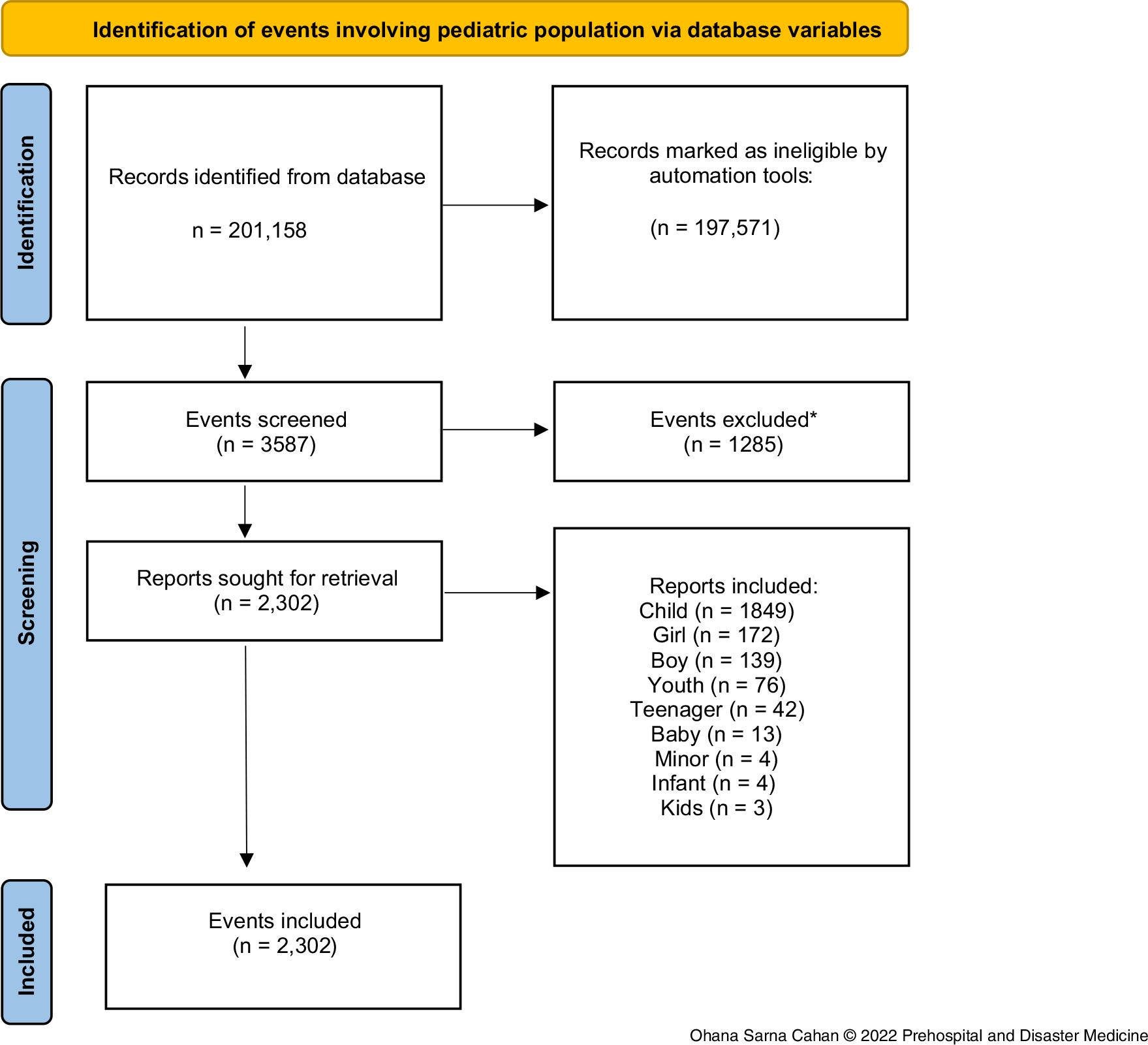
The GTD contained 201,158 global terrorism events from 1970 through 2019. A total of 3,587 event descriptions were included based on the search terms.
In total, 2,302 terror events were included after removal of duplicates and application of exclusion criteria (Figure 1). This represented 1.14% of the total number of terrorist events which involved the death, injury, or abduction of a child.
Methodology Flow Chart.
Note: Researchers individually reviewed to only include those describing the deaths, injuries, or abduction of children. Following researcher review of events, the search term “child” was found in 1,849 (80.3%) event descriptions, followed by “girl” in 172 (7.4%), “boy” in 139 (6.0%), “youth” in 76 (3.3%), “teenager” in 42 (1.8%), “baby” in 13, “minor/minors” in 4, “infant” in 4, and “kids” in 3 event descriptions. The terms “pediatric,” “juvenile,” and “toddler” returned no results.

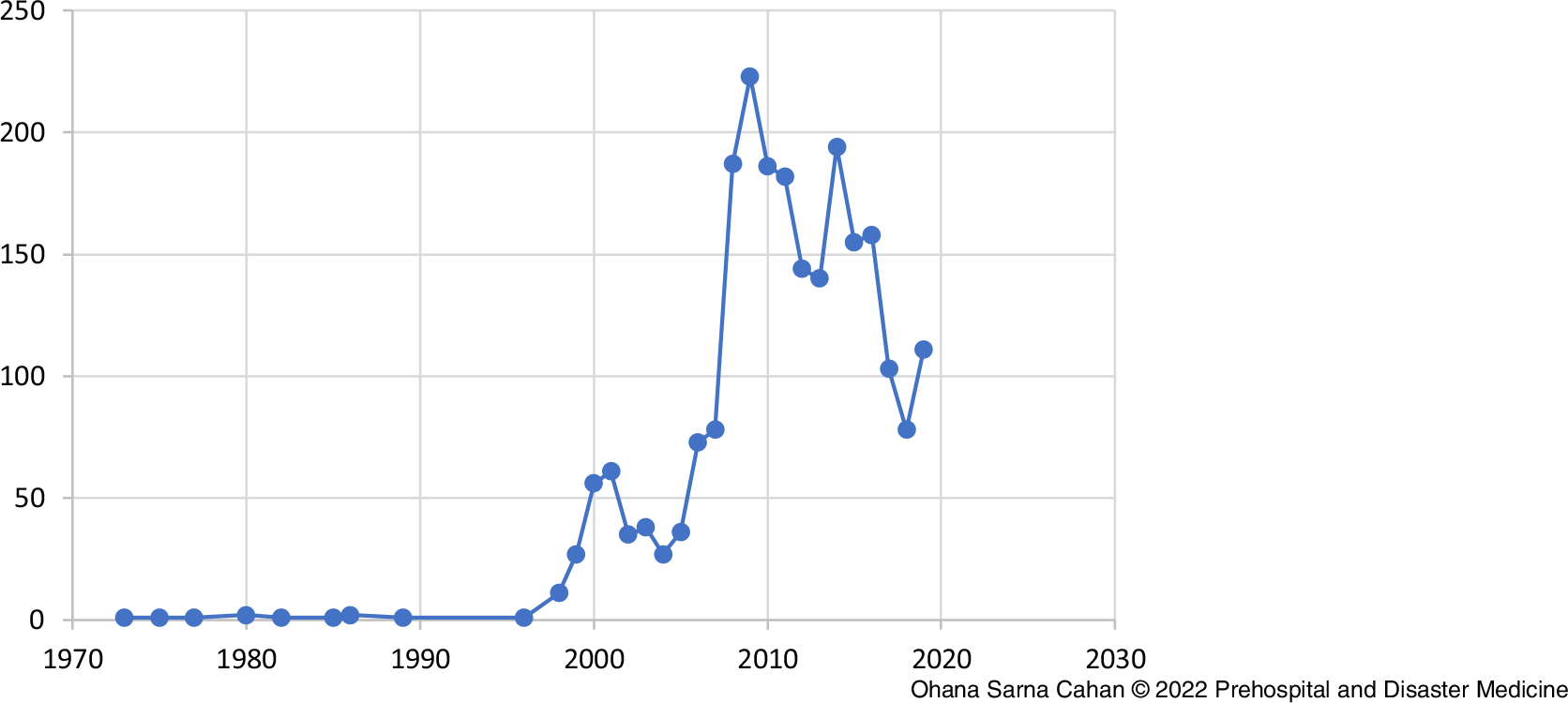
From 1970 to the early 2000s, the number of terror events involving pediatric population was relatively constant, ranging from one to 27 attacks per year. There was an increase in the number of events from 2005 to 2014, as described in Figure 2. The highest number of reported terror incidents involving the pediatric population occurred in the following regions (n, %): South Asia (1,020; 44.3%), Middle East/North Africa (714; 31.0%), Sub Saharan Africa (273; 11.9%), Southeast Asia (128; 5.6%), South America (61; 2.6%), Eastern Europe (49; 2.1%), and Western Europe (38; 1.7%); other regions with the lowest number of events (<1%) included North America, Central Asia, and East Asia with 0.5%, 0.3%, and 0.1%, respectively.
Number of Events Involving Pediatric Population.

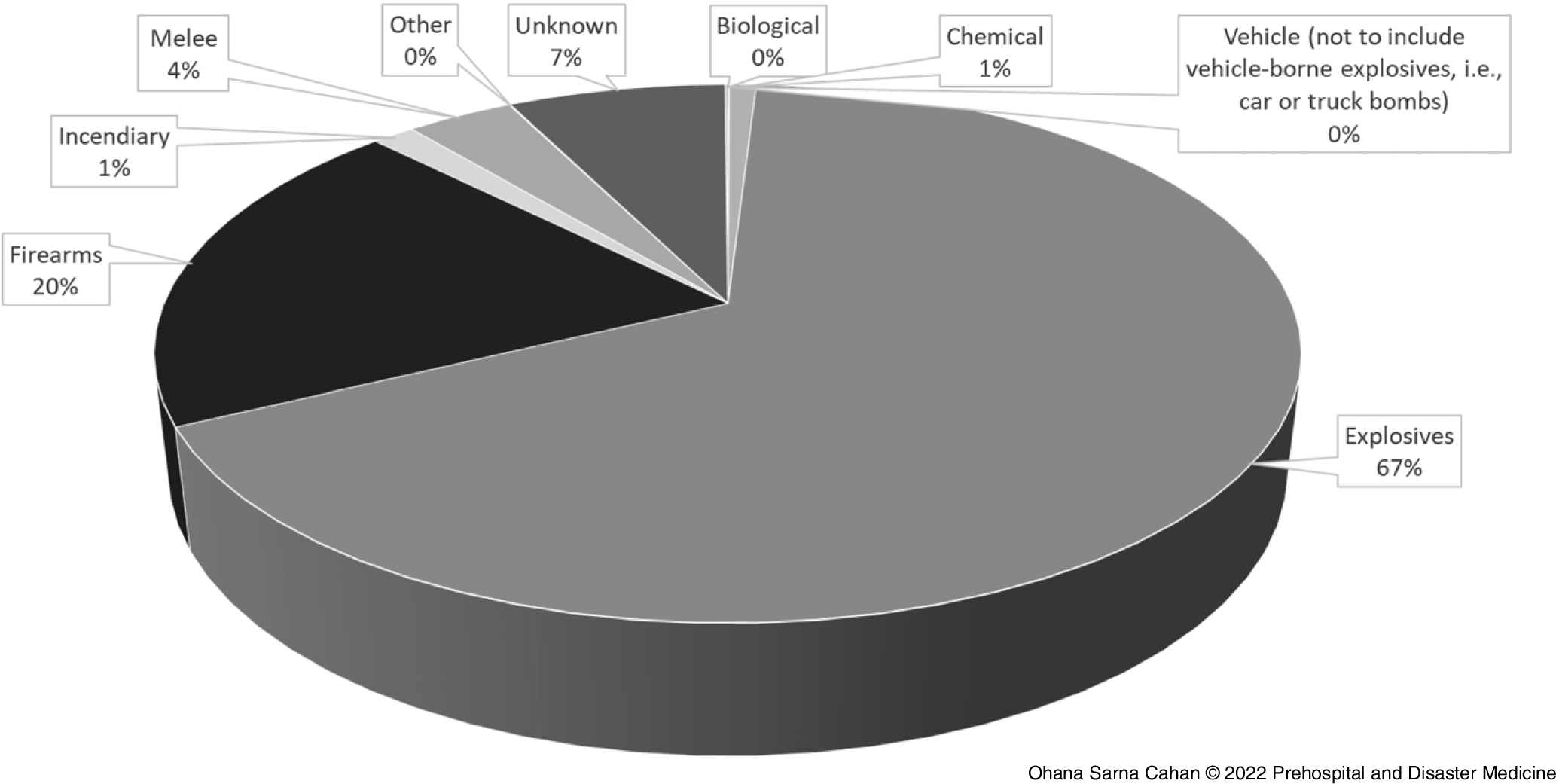
The most common weapons used were explosives (1,539 [66.8%]), firearms (543 [23.5%]), unknown (169 [7.3%]), and melee (attacks that include the use of blunt objects, hands, feet and fists, knives, and other bladed weapons, rope, or other strangling devices and suffocation; 83 [3.6%]; Figure 3).
Terror Event by Attack Type Involving Pediatric Population.

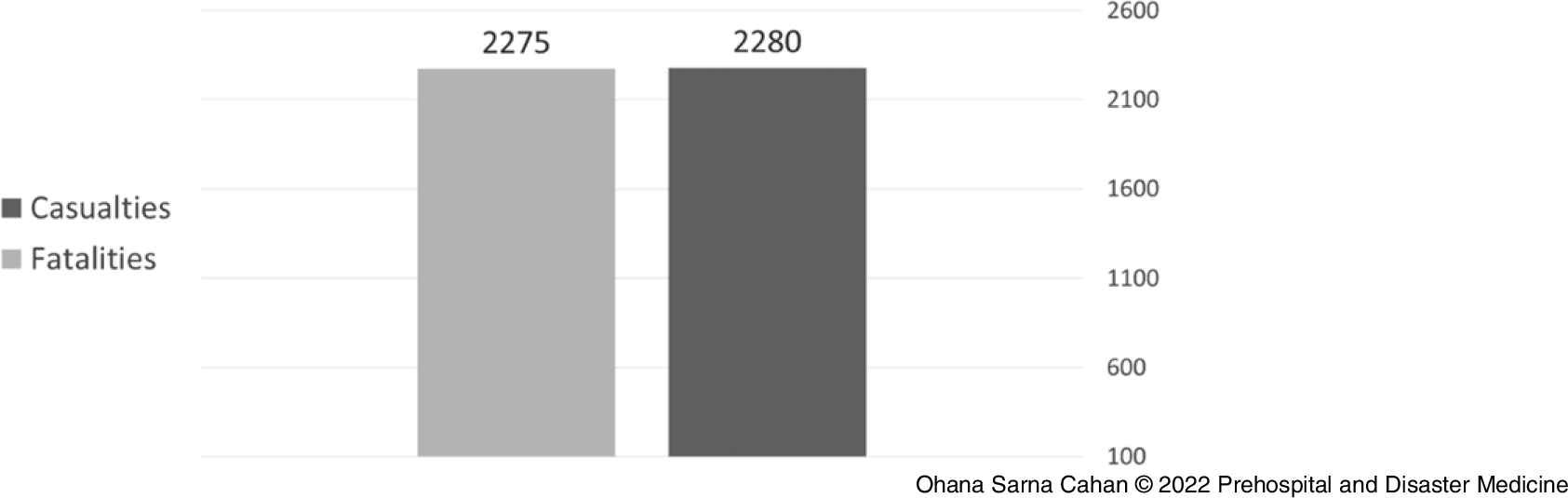
Out of the 2,302 events, a total of 2,275 pediatric fatal injuries (FI) were recorded, as well as 2,280 pediatric non-fatal injuries (NFI); Figure 4. Bombings/explosions inflicted the most FI (1,461; 64.2%), followed by armed assaults (404; 17.1%) and abduction attacks (263; 11.5%).
Pediatric Casualties and Fatalities in Terror Events.

An additional 53 of the 2,302 events described pediatric casualties and fatalities but did not specify the attack type.
In total, 275 of the 2,302 events were related to abductions, with 71 of the cases involving the abduction of 10 pediatric individual or more.
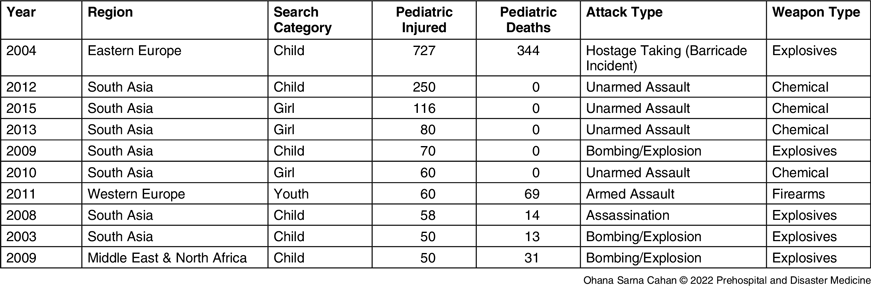
Table 1 depicts the 10 largest terrorist events involving the pediatric population summarized by location, attack method, injuries, and fatalities reported.
Ten Largest Terrorist Events Included in the Study

Discussion
Pediatric casualty numbers relating to terrorist events are low overall, but the impact of terrorism can extend far beyond a simple casualty total. Psychological injuries as a result of trauma exposure can impact an entire generation of children, with potential long-term health, social, and economic consequences. Reference Waisman, Aharonson-Daniel, Mor, Amir and Peleg10
Child-specific vulnerabilities include a closer proximity to the ground and increased minute ventilation, both of which can magnify their exposure to inhaled agents. In addition, low physiologic reserves can lead to rapid and sudden deterioration when faced with life-threatening blood loss. Rapid dehydration in the event of physiologic stress is also often magnified, and increased body surface area to mass ratio makes them prone to hypothermia during evacuation, field treatment, and decontamination. Reference Hamele3
Other vulnerabilities in younger children include a lack of knowledge and awareness of danger, as well as an impaired ability to flee. The inability to communicate their symptoms can contribute to delays in diagnosis of conventional injuries as well as delays in toxidrome recognition in chemical attacks. Reference Hamele3
Pediatric victims are more likely to suffer from head trauma compared to adults, and are prone to complex injuries (face, eyes, trunk, vasculature, extremities, or burns) requiring prolonged admissions, multiple surgeries, and intensive and expert multidisciplinary care. Reference Milwood Hargrave, Pearce, Mayhew, Bull and Taylor5 It is estimated that 30% of all patients who present to the emergency department (ED) as a result of a terror-related injury are hospitalized, Reference Aharonson-Daniel, Waisman, Dannon and Peleg4 thus increasing load on the health care system (ie, surgeries, pediatric intensive care unit/PICU beds, and rehabilitation). Age is an important predictor of injuries and their outcomes, especially in the pediatric population. Reference Spinella, Borgman and Azarow7,Reference Jaffe and Peleg8,Reference McGuigan, Spinella and Beekley11 The anatomic and physiologic variations in age groups influence the nature and severity of injury, hospitalization, and survival. Reference Jaffe and Peleg8,Reference Morrison, Arbelaez, Fackler, De Maio and Paidas12,Reference Demetriades, Murray and Martin13
A number of studies have shown that children suffer adverse psychological reactions from being victims or observers of terrorist acts. Reference Adamkiewicz and Goldhagen6 A child’s reaction to trauma can have specific symptomatology that may include anxiety due to separation from parents, preoccupation with unwarranted fears, and manifestation of somatic complaints. Reference Waisman, Aharonson-Daniel, Mor, Amir and Peleg10,Reference Stuber, Fairbrother, Galea, Pfefferbaum, Wilson-Genderson and Vlahov14 Pediatric victims have also been shown to develop depression, anger, and behavioral problems in response to trauma with an estimated 28% to 50% developing posttraumatic stress disorder/PTSD as a result. Reference Demetriades, Murray and Martin13 Furthermore, parents’ reactions to terrorist acts have also been shown to directly contribute to the development of symptoms in their children. Reference Shechory-Bitton15
The pediatric population is particularly vulnerable to abduction, and in some regions, they are also forced into carrying out attacks. This is not a new concept as child soldiers have long been used in conflict areas in many regions around the world. 16 Children have also been used by terrorist groups to carry out bombing attacks. Kids can be forced or coerced into joining terrorist organization, or may join after experiencing loss of family members in the conflict, displacement, oppression, and harassment, or believing the organizational propaganda. Reference Markovic17,Reference Somasundaram18 Many groups have recruited children in the past. The Real Irish Republican Army (Real IRA) recruited children as young as 14 in the 1990s, Reference Singer19 while other groups recruited even younger. Once recruited, there are numerous examples of terrorist groups using children to carry out attacks, such as Boko Haram, Revolutionary Armed Forces of Colombia, Sri Lankan Tamil Tigers, Lord’s Resistance Army, Al Qaeda, and the Taliban to name a few. Reference Markovic17,Reference Singer19
Tactically, the children can be used in various ways, including to transport or plant bombs. In 2003, for example, the Revolutionary Armed Forces of Colombia (FARC) used a 10-year-old boy to successfully deliver a bomb on a bicycle to a military checkpoint. He was killed in the subsequent explosion. 16 In most cases, children are used to carry out bombings because they arouse less suspicion. As an example, Boko Haram uses young children, particularly girls, to carry out suicide bombings in Nigeria. 16 According to Pearson, Reference Pearson20 in cases where exact age of child bomber was unknown in Nigeria, the bomber was described as “teenagers” in 136 bombings, and in 29, they were described as “young girls.” In interviews, many of the girls revealed they were kidnapped and assigned to carry out a suicide mission. Reference Searcey21 In rare cases in Nigeria, in order to avoid suspicion at checkpoints, women used infants strapped to their back to carry out a suicide bombing. Reference Markovic22
Pediatricians and related child health organizations have critical roles to play in advocating for and implementing policies and practices that prevent and mitigate harm to children involved in such events. Reference Adamkiewicz and Goldhagen6
The subspecialty of Counter-Terrorism Medicine Reference Tin, Margus and Ciottone2 (CTM) addresses the health care impacts of intentional, man-made events and terrorist events. Reference Ciottone, Tin and Court23 Despite the lessons learned in mass-casualty events involving pediatric victims throughout the world, pediatric preparedness for disasters and man-made events remains lacking. Reference Gilchrist and Simpson24
Medical responders have long identified the need for better education and preparedness against intentional attacks, but pediatric-specific guidelines and training remains widely variable. Reference Bobko, Lai, Smith, Shapiro, Baldridge and Callaway25 Children, like adults and other vulnerable population groups, are exposed to a myriad of terror-related injuries, but their physiological differences necessitate special considerations such as unique pediatric triage algorithms, which remain contentious today. Reference Bobko, Lai, Smith, Shapiro, Baldridge and Callaway25–Reference Chung, Baum and Nyquist27
The better training and background Emergency Medicine-trained physicians have, the higher chance of success of an ED, hospital, and community when faced with any level of disaster. Reference Smith, Levy, Hsu and Levy28
There are currently major gaps necessitating the identification of the most effective educational method for training health care providers treating the pediatric population. While further research is needed in this emerging subspecialist field, there are clear needs for pediatricians to be involved in the continued development of CTM.
Limitations
The GTD is a comprehensive record of global terrorist events. It is maintained by the National Consortium for the Study of Terrorism and Responses to Terrorism and is the basis for other terrorism-related measures, such as the Global Terrorism Index (GTI). Reliance wholly on the GTD is partially mitigated by confirmation with other lay sources and searches for other online searches, but if there are incidents not reported in the GTD, this could limit the veracity of the findings. Furthermore, the lack of a universally agreed-upon definition of the term terrorism can create inconsistencies between databases in the labelling of such events, and moreover, the GTD does not include acts of state terrorism. Clear and detailed documentation of terrorist events is further hindered by restrictions on reporting, the lack of independent corroboration, and the lack of transparency within government sources. The use of pre-existing databases such as the GTD as a data source inherently introduces potential challenges such as miscoding or data entry errors and a reliance on the accuracy of open-source information.
Authors also relied on the summaries and grey literature sources as provided by the GTD to attempt to quantify the involvement of pediatric population all attacks. The age cut-off for a “child” is thus determined by the individual grey literature sources and not by the GTD. Furthermore, the reliability of grey literature sources can be widely variable and certain summaries failed to quantify the number of children injured, killed, or abducted.
Conclusion
Pediatric casualties in terrorist events represent a small proportion of overall victims, however casualties in this vulnerable cohort can cause long-term physical, psychosocial, and community impacts. More collaborative research and discussions are needed amongst Disaster Medicine, CTM, and pediatric specialists around mitigation strategies and health impacts of terrorism events on children.
Conflicts of interest/funding
All authors have no conflicts of interest to disclose. No funding was secured for this study.
Author Contribution
Dr. Lea Ohana Sarna Cahan and Prof. Derick Tin equally contributed to concept and design of the study, drafted the initial manuscript, and reviewed and revised the manuscript.
Drs. Kane, Issa, and Markovich, as well as Mr. Ciottone, designed the data collection instruments, collected data, carried out the initial analyses, and reviewed and revised the manuscript.
Drs. Ciottone, Hart, and Weiner conceptualized and designed the study, coordinated and supervised data collection, and critically reviewed the manuscript for important intellectual content.
All authors approved the final manuscript as submitted and agree to be accountable for all aspects of the work.