INTRODUCTION
Size and age at maturity are key life history traits for any species, and their optimal values are attained through a complex balance of the costs and benefits of maturation at different ages and sizes (Stearns, Reference Stearns1992). Most species do not mature at a fixed size or age; instead, maturity could be described along a size-age reaction norm (i.e. the different combinations of age and size at maturity displayed by the same genotype in different environments; Schlichting & Pigliucci, Reference Schlichting and Pigliucci1998). In the context of the evolution of life history theory, early maturation entails a fitness advantage since early maturing organisms have a higher probability of surviving to maturity (Stearns, Reference Stearns1992). On the other hand, if delaying maturity permits further growth and fecundity increases with size, then delayed maturity leads to higher initial fecundity outweighing the advantages of early maturation.
Growth rates and juvenile mortality are primary determinants of maturation evolution (Stearns, Reference Stearns1992). Growth rates define the relationship between size and age and are closely linked to ecological conditions, e.g. resource availability and predation risk, thus variation among populations of a given species is common (reviewed by Dmitriew, Reference Dmitriew2011). Regarding maturity across a range of growth rates, Stearns (Reference Stearns1992) proposed three basic rules or reaction norms: rule one is to mature always at the same size, even at the risk of dying before reproduction; rule two is to mature always at the same age at the cost of a diminished size and fecundity; rule three is a compromise between age and size at maturity that results from the evolutionary trade-offs between these risks and costs. Early life stages of marine invertebrates are usually more susceptible than adults to environmental conditions, as shown by the relatively high mortality rates, c. 90% (Gosselin & Qian, Reference Gosselin and Qian1997). However, the effect of juvenile mortality on age at maturity varies according to the reproductive strategy of the species. For example, in a review of 92 marine benthic invertebrates, Gosselin & Qian (Reference Gosselin and Qian1997) noted that juvenile mortality is an important determinant only in species showing an early maturity, i.e. species maturing within 4 months after beginning juvenile life, but not in late-maturing ones.
The intertidal whelk Buccinanops globulosus provides a good model for exploring the relationships between growth rates and maturity patterns. This species shows great variation in individual growth patterns among populations (Narvarte et al., Reference Narvarte, Willers, Avaca and Echave2008; Avaca et al., Reference Avaca, Narvarte and Martín2013) which is most likely related to food availability as in other nassariid species (e.g. McKillup & McKillup, Reference McKillup and McKillup1997; Morton & Chan, Reference Morton and Chan2004). Like other nassariid species, B. globulosus lies quiescent in the sediment but rapidly emerges when detecting carrion (Daleo et al., Reference Daleo, Escapa, Isaacch, Ribeiro and Iribarne2005, Reference Daleo, Alberti, Avaca, Narvarte, Martinetto and Iribarne2012). Fishermen take advantage of this behaviour to collect individuals of this species in North Patagonia where an artisanal diving fishery has been developed (e.g. in Golfo San Matías; Narvarte, Reference Narvarte2006). The patterns of variation in size-age at maturity among populations are particularly interesting in exploited species, given its potential effects on population dynamics, catches and fishery management strategy (e.g. Shelmerdine et al., Reference Shelmerdine, Adamson, Laurenson and Leslie2007; Stoner et al., Reference Stoner, Mueller, Brown-Peterson, Davise and Booker2012; McIntyre et al., Reference McIntyre, Lawler and Masefield2015).
The main goal of our study was to document the variation on female size-age at maturity, and the reproductive effort for three populations of B. globulosus characterized by different growth rates (slow, moderate and rapid). To meet this goal, we assessed female maturity over a wide range of shell sizes and ages. Two approaches were used: (1) histological evaluation of gonad tissues, and the input of these data into logistic models to estimate the female size (TL 50) and age (A 50) at maturity at each population, and (2) study of size and age of females carrying egg capsules. The different estimators of maturity obtained and the published female growth model for each population were used to propose a set of size-age at maturity reaction norms for this species. Determining whether intra-specific variation in size-age at maturity occurs across the populations studied is important to understand the evolution of this life history trait. A supplementary benefit of this study is to contribute with the management of this whelk fishery, since accurate estimates of female size-age maturity could be used in size-structured models to examine the population dynamics of stocks.
MATERIALS AND METHODS
Study species and study sites
Buccinanops globulosus is a small-sized species (up 62 mm total shell length) with a short lifespan (8 years; Narvarte, Reference Narvarte2006; Narvarte et al., Reference Narvarte, Willers, Avaca and Echave2008; Avaca et al., Reference Avaca, Narvarte and Martín2013), commonly found as an endemic component of soft bottom communities of the Southwestern Atlantic Ocean (Pastorino, Reference Pastorino1993). Like other Buccinanops, this species is gonochoristic, with internal fertilization and direct development (Averbuj et al., Reference Averbuj, Bigatti and Penchaszadeh2010). Egg capsules are deposited by each female on its own shell and, at oviposition, they are filled with nurse eggs that provide nutritional support to a single developing embryo (Avaca et al., Reference Avaca, Narvarte and Martín2012; Averbuj et al., Reference Averbuj, Rocha and Zabala2014). Crawling juveniles emerge from the egg capsules and settle soon in the maternal environment. This species is sensitive to tributyltin (TBT) contamination along the Patagonia shoreline because females may be imposex-affected, i.e. characteristics of males superimposed onto females (Bigatti et al., Reference Bigatti, Primost, Cledón, Averbuj, Theobald, Gerwinski, Arntz, Morriconi and Penchaszadeh2009). All the events of female gametogenic activity and the deposition of egg capsules have been observed in imposex-affected females of B. globulosus thus imposex does not appear to compromise the reproductive activity of this species (Narvarte et al., Reference Narvarte, Willers, Avaca and Echave2008; Avaca et al., Reference Avaca, Narvarte and Martín2012, Reference Avaca, Martín, van der Molen and Narvarte2015).
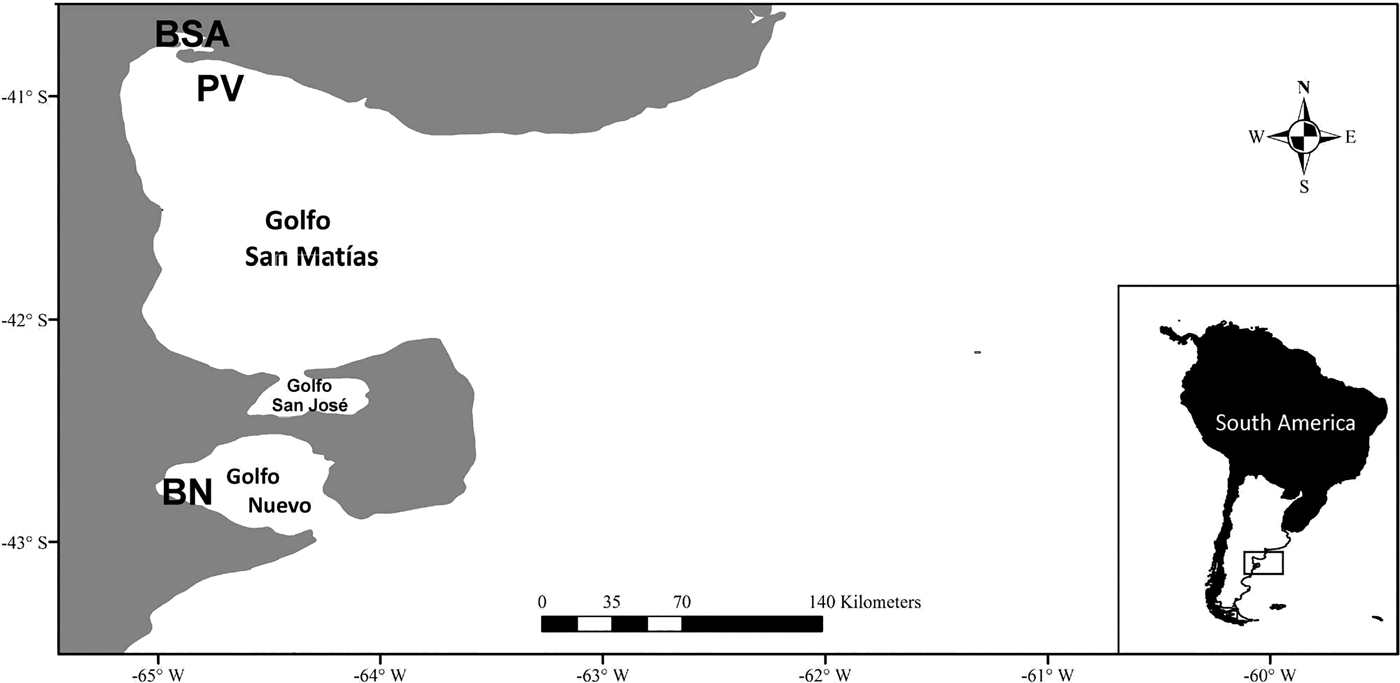
The present study was conducted in soft bottoms from northern Patagonia, Argentina. Two sampling sites were located in Golfo San Matías (GSM; Bahía San Antonio, [BSA]: 40°29′S 63°01′W and Playa Villarino [PV]: 40°45′S 64°40′W) and one in Golfo Nuevo (Bahía Nueva; [BN]: 42°46′S 65°02′W) (Figure 1). These sites are separated from each other along the South Atlantic Ocean coast by at least 50 km, and the two most distant sites, PV and BN, are 300 km apart potentially allowing divergence of traits such as size-age at maturity. At these sites other studies on B. globulosus growth, morphometrics and gonad cycle have been carried out previously (Narvarte et al., Reference Narvarte, Willers, Avaca and Echave2008; Avaca et al., Reference Avaca, Narvarte and Martín2013, Reference Avaca, Martín, van der Molen and Narvarte2015).
North Patagonia: location of the three Buccinanops globulosus populations examined in this study. The two most distant sites, PV and BN, are 300 km apart; the two closest sites, BSA and PV, are 50 km apart. BSA, Bahía San Antonio; BN, Bahía Nueva; PV, Playa Villarino.

Buccinanops globulosus were collected monthly between September 2006 and August 2008 in the intertidal-shallow subtidal area of the three sites studied. Specimens were attracted with biological baits (mainly discarded fish) and collected by scuba diving or handpicking, at high and low tides, respectively. This method showed to be efficient to catch individuals of all sizes at each sampling site, including females carrying egg capsules (Narvarte et al., Reference Narvarte, Willers, Avaca and Echave2008). Attracted whelks were carried to the laboratory in containers filled with seawater. A subsample was maintained alive for histological analysis of the gonad and the remaining was frozen at −18°C for further studies.
Laboratory techniques
At the laboratory, total shell length (TL, mm) was measured from the apex to the tip of the siphonal canal with a digital caliper (±0.01 mm), and the total body weight (TW, g) was recorded with an analytical scale (±0.01 g). When present, egg masses were carefully detached from the female's shell and the weight of the egg mass (EW, g) was also recorded. In this study, only female whelks were used. After removing the shell, females were identified on the basis of the presence of accessory glands (capsule and albumen) because of the presence of imposex-affected females in two of the populations studied (BSA and BN; Bigatti et al., Reference Bigatti, Primost, Cledón, Averbuj, Theobald, Gerwinski, Arntz, Morriconi and Penchaszadeh2009; Avaca et al., Reference Avaca, Martín, van der Molen and Narvarte2015).
For histological analyses, a total of 7–25 individuals per month covering the whole range of size distribution of each population were studied. The total shell length of these individuals ranged from 10.6 to 31.8 mm for BSA (N = 223), 13.5 to 67.2 mm (N = 224) for PV and 12.5 to 46.3 mm for BN (N = 248). According to the individual size at each site, the whole body, the entire gonad or only a section was fixed in Davidson's fluid for 24 h at 4°C and subsequently stored in 70% ethanol. Tissues were dehydrated using an ascending series of ethanol concentrations and then embedded in paraffin. Sections were cut at 5 μm with a microtome, stained with hematoxylin-eosin and observed under a light microscope. These sections were also used in the description of the gametogenic cycle of this species (Avaca et al., Reference Avaca, Martín, van der Molen and Narvarte2015).
For age determination, the operculum was detached from the foot of each individual. Opercula were then rinsed and stored in dry conditions for later analyses. The number of rings of each operculum occurring on the ventral face was counted under a stereomicroscope (Narvarte, Reference Narvarte2006). Only those opercula without damage and clear rings were taken into account. The annual pattern of deposition in operculum was validated for this species by Narvarte (Reference Narvarte2006) and Avaca et al. (Reference Avaca, Narvarte and Martín2013).
Maturity assessment
Gonad sections were classified into immature and mature. Immature individuals were characterized by either no differentiation of gonadal tissue or a small gonadal bulk, which in females was composed of oogonia and primary oocytes but without vitellogenic or degenerating oocytes. The criteria used for maturity were the presence of vitellogenic oocytes in abundance or, when there were few mature oocytes, the presence of degenerating ones and other gametogenic remains (at: Growth II, Pre-evacuation, Evacuation and Post-evacuation; Avaca et al., Reference Avaca, Martín, van der Molen and Narvarte2015). Additionally, females carrying egg capsules on their shells were considered mature.
Size and age at maturity
Size-age at first gonadal maturity was defined at the individual level as the minimum female size (TL) or age at which gonad matures at each population, and at the population level as the total shell length or age at which 50% of the population is mature (TL 50 and A 50). To estimate TL 50 and A 50, the percentage of mature individuals were combined by 4 mm TL size classes and 1 year classes, respectively, and were modelled using the logistic equation,
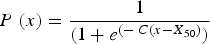 $$P\; (x) = \displaystyle{1 \over {(1 + e^{( - \; C(x - X_{50} )} )}}$$
where P is the proportion of mature females at size or age class x, C is a parameter defining the shape of the curve and X 50 is the total shell length (TL 50) or age (A 50) at which 50% of the females in the population are mature. The parameters (X 50 and C) were estimated following the maximum likelihood method (Aubone & Wöhler, Reference Aubone and Wöhler2000). Logistic models obtained were compared between populations by likelihood ratio tests (Cerrato, Reference Cerrato1990), under different null hypotheses, H 01: X 50(1) = X 50(2); H 02: C (1) = C (2) and H 03: Θ(1) = Θ(2), where 1 and 2 indicate different populations, and Θ is the vector of model parameters (X 50 and C).
The median TL and the minimum age of females carrying egg capsules were also considered as alternative estimators of female maturity for each population. Numbers of females carrying egg capsules studied were 41 in BSA, 26 in PV and 190 in BN for size and 13, 5 and 34 for age, respectively. Since the data did not meet ANOVA assumptions, even after data transformation, a non-parametric Kruskal–Wallis test was used to compare the size of females carrying egg capsules among populations. In contrast, the mean age of females carrying egg capsules among populations was compared by one-way ANOVA. No transformations of the data were necessary since the assumptions of the ANOVA model were met. All statistical analyses were conducted using Statistica 7.0 software.
Reproductive effort
To seek for biological significance of the different maturity patterns, we estimated an index of reproductive effort using the equation of the weight-specific reproductive effort (WRE) proposed by Perron (Reference Perron1982) with some modifications. This measure is a proxy of reproductive effort, which should be determined as the proportion of assimilated energy which is allocated to reproduction (e.g. Hughes & Roberts, Reference Hughes and Roberts1980). The equation used was,
 $${\rm WRE} = R \times {\rm TW}^{( - {\rm 1})} $$
where R is the reproductive output measured as the mean weight of egg masses and TW is mean female's body weight. Only females with egg masses in early and mature stages of development (Avaca et al., Reference Avaca, Narvarte and Martín2012) were included in these calculations (BSA: 10, PV: 11 and BN: 112). Results were expressed as means of females at each population. The mean RE was compared among populations by one-way ANOVA; data were arcsine-transformed to meet the assumptions of the ANOVA model.
Reaction norm models
The different estimators of maturity obtained and the female growth model for each population were used to graphically represent the variability in size and age at maturity in this species; i.e. reaction norm. Female growth models were taken from Narvarte et al. (Reference Narvarte, Willers, Avaca and Echave2008) for Golfo San Matías populations and from Avaca et al. (Reference Avaca, Narvarte and Martín2013) for Golfo Nuevo. In all these studies, growth curves were obtained by fitting von Bertalanffy equations to data obtained from the opercula reading (Table 1).
Buccinanops globulosus. Growth parameters of von Bertalanffy curves (VBG) and growth performance (P) for female whelks from populations studied. VBGF,  $TL(t) = T{L_\infty }({\rm 1} - {e^{ - k(t - {t_0})}})$, and
 $P = \log (KTL_{_\infty } ^3 )$.
RESULTS
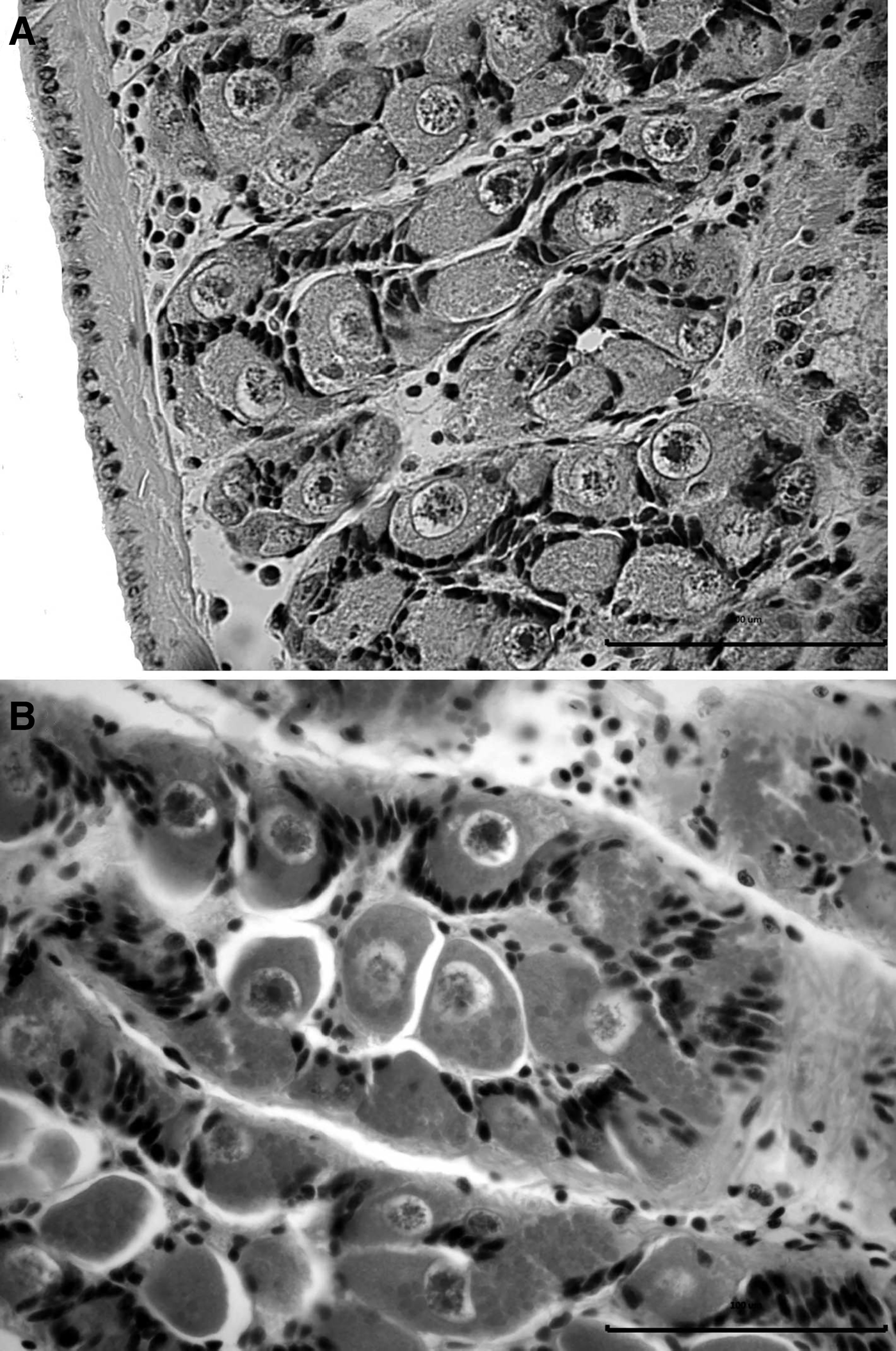
A total of 695 histological sections were studied. Histological examination showed immature and mature gonads in the three populations studied (Figure 2). Despite the presence of imposex-affected females in two of the studied populations, the maturity status could be easily attributed to all individuals. The number of mature females observed was similar between populations (BSA: 147, PV: 128 and BN: 179). Based on these observations, the size of the smallest mature female was 15.6 mm in BSA, 38.7 mm in PV and 19.8 mm in BN. The largest immature individual was 25.0 mm in BSA, 44.07 mm in PV and 30.1 mm in BN. The minimum age of a female with a mature gonad was 4 years in BSA and PV and 2 years in BN. The oldest immature females were 6, 5 and 4 years in PV, BSA and BN, respectively.
Buccinanops globulosus. (A) Immature ovary of a 25.8 mm total shell length female from Bahía Nueva; (B) mature ovary of a 50 mm total shell length female from Playa Villarino. Scale bar: 100 μm.
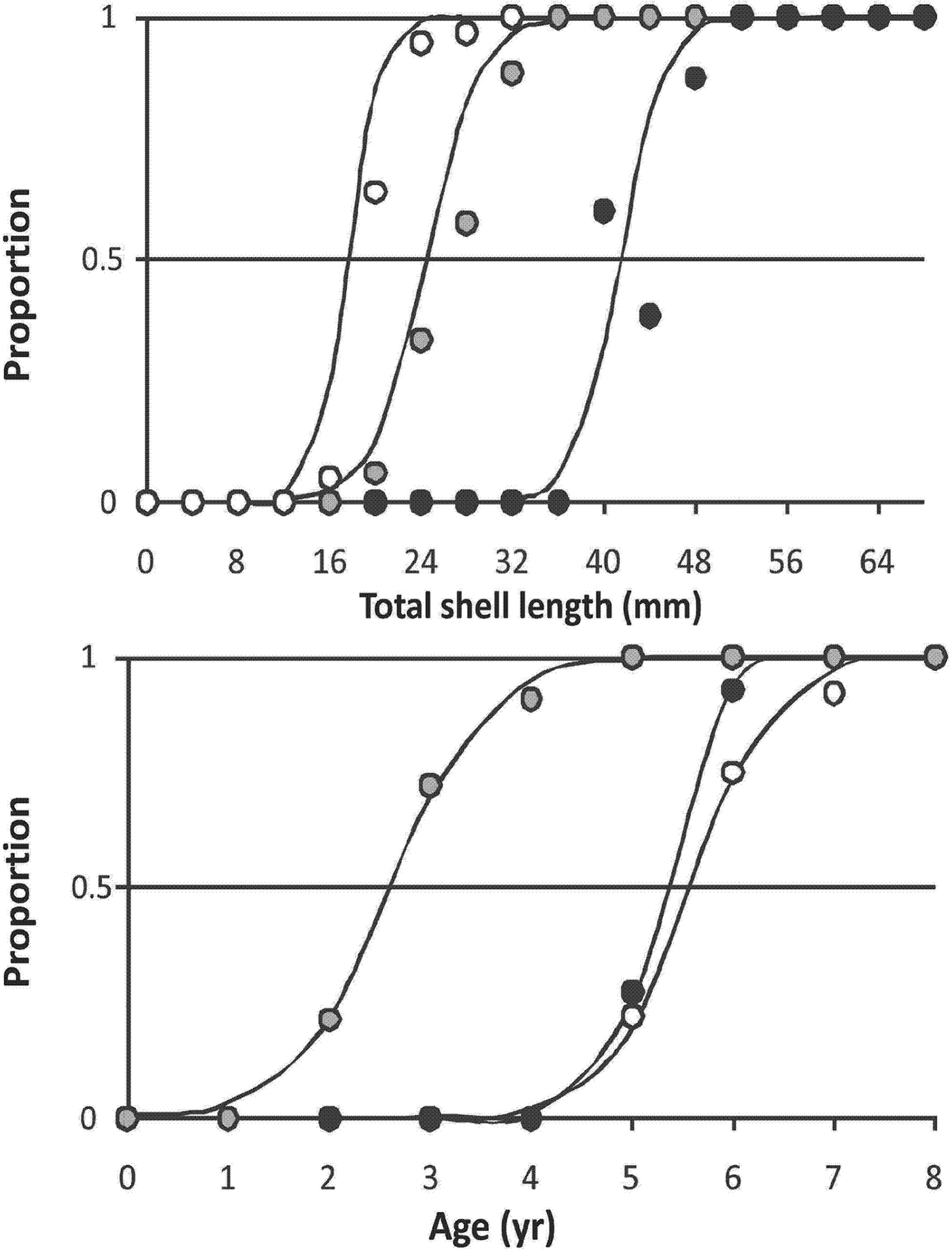
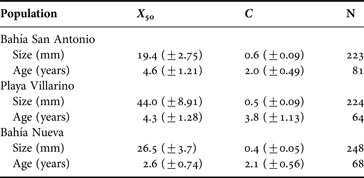
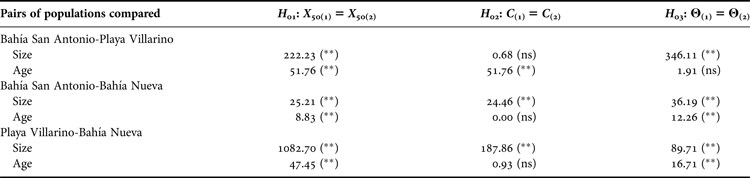
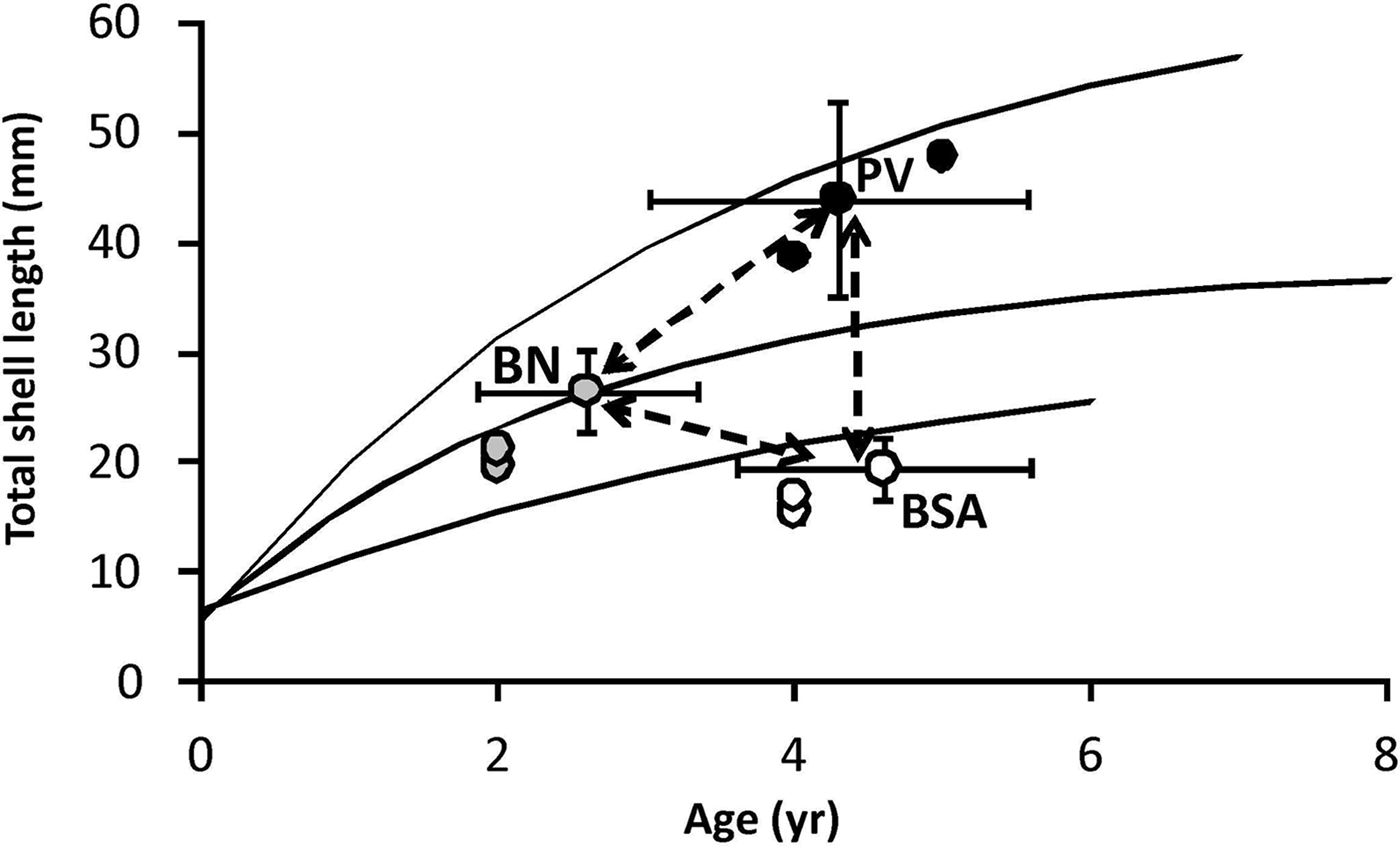
The percentage of mature females as a function of size (TL) and age (A) for each population shows good fit to the logistic curve (Figure 3). Comparisons of pairs of maturity models for the three populations (Table 2) indicated that in most cases there were statistically significant differences between the maturity parameters (Table 3). Playa Villarino and Bahía San Antonio females had the smallest and largest TL 50, respectively (mean ± SE, 44.0 ± 8.91 and 19.4 ± 2.75 mm, respectively), whereas Bahía Nueva females had intermediate TL 50 (26.5 ± 3.7 mm). No significant differences were apparent between BSA and PV in the parameter C of the size at maturity model. Regarding age, Bahía Nueva and Bahía San Antonio females had the youngest and oldest A 50, respectively (2.6 ± 0.74 years and 4.6 ± 1.21 years, respectively) whereas PV females had intermediate A 50 (4.3 ± 1.28 years). However, no significant differences were found between PV and BSA females in the vector of age model parameters.
Logistic curves fitted to the proportion of mature females by size (total shell length, top) and age (bottom) to estimate sexual maturity (TL 50 and A 50) at each population studied. Bahía San Antonio (white circles); Playa Villarino (black circles); Bahía Nueva (grey circles).
Buccinanops globulosus. Mean (±SE) maturity parameters (X 50, C) of logistic curves for female whelks from the studied populations. X 50, represents total shell length or age at which the 50% of the females in the population is mature; C, curve shape; N, sample size.
Buccinanops globulosus. Likelihood ratio tests for comparison of pairs of logistic parameters between populations. X 50, represent total shell length or age at which the 50% of the females in the population is mature; C, curve shape; Θ, vector of model parameters. **Highly significant differences.
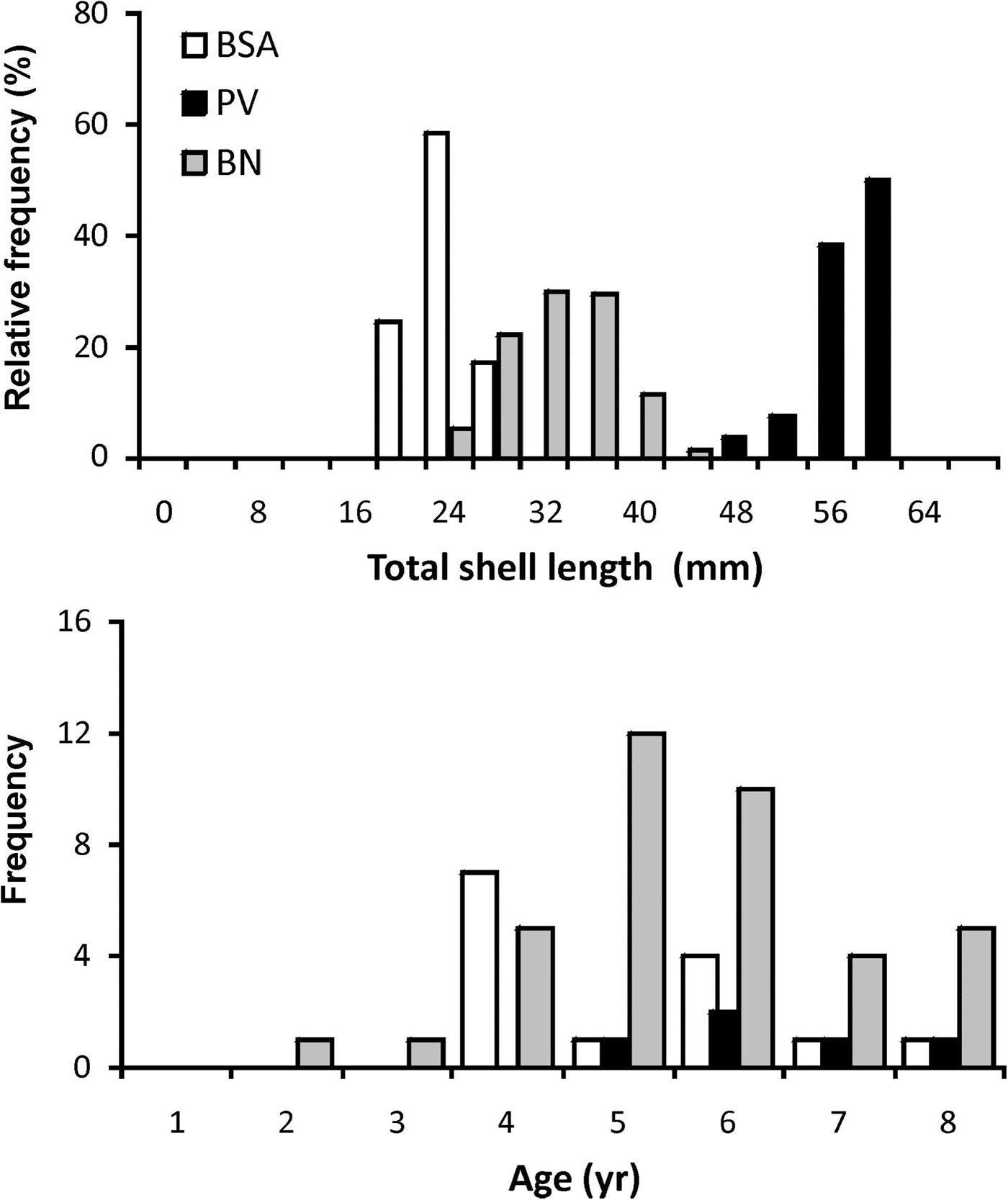
The size of females carrying egg capsules varied among populations (Kruskal–Wallis, H 2 = 142.3, P = 0.000) (Figure 4). The median shell length of females carrying egg capsules was 22.3 in BSA (range: 17.0–26.1 mm), 56.4 mm in PV (47.9–59.8 mm) and 31.4 mm in BN (21.2–43.0 mm). The age of the youngest female carrying egg capsules was 4 years in BSA, 5 years in PV and 2 years in BN. However, no significant differences were found in the mean age of females carrying egg capsules between populations (ANOVA, F 2,54 = 1.6, P = 0.22 untransformed data).
Size (top) and age (bottom) distributions of Buccinanops globulosus females carrying egg capsules. BSA, Bahía San Antonio; PV, Playa Villarino; BN, Bahía Nueva.
The mean RE was significantly different among populations (ANOVA, F 2,130 = 5.8, P = 0.004 arcsine- transformed data), PV females had the lowest RE (mean ± SD, 0.08 ± 0.04) whereas BSA and BN females had a similar RE (0.20 ± 0.10, 0.14 ± 0.08, respectively).
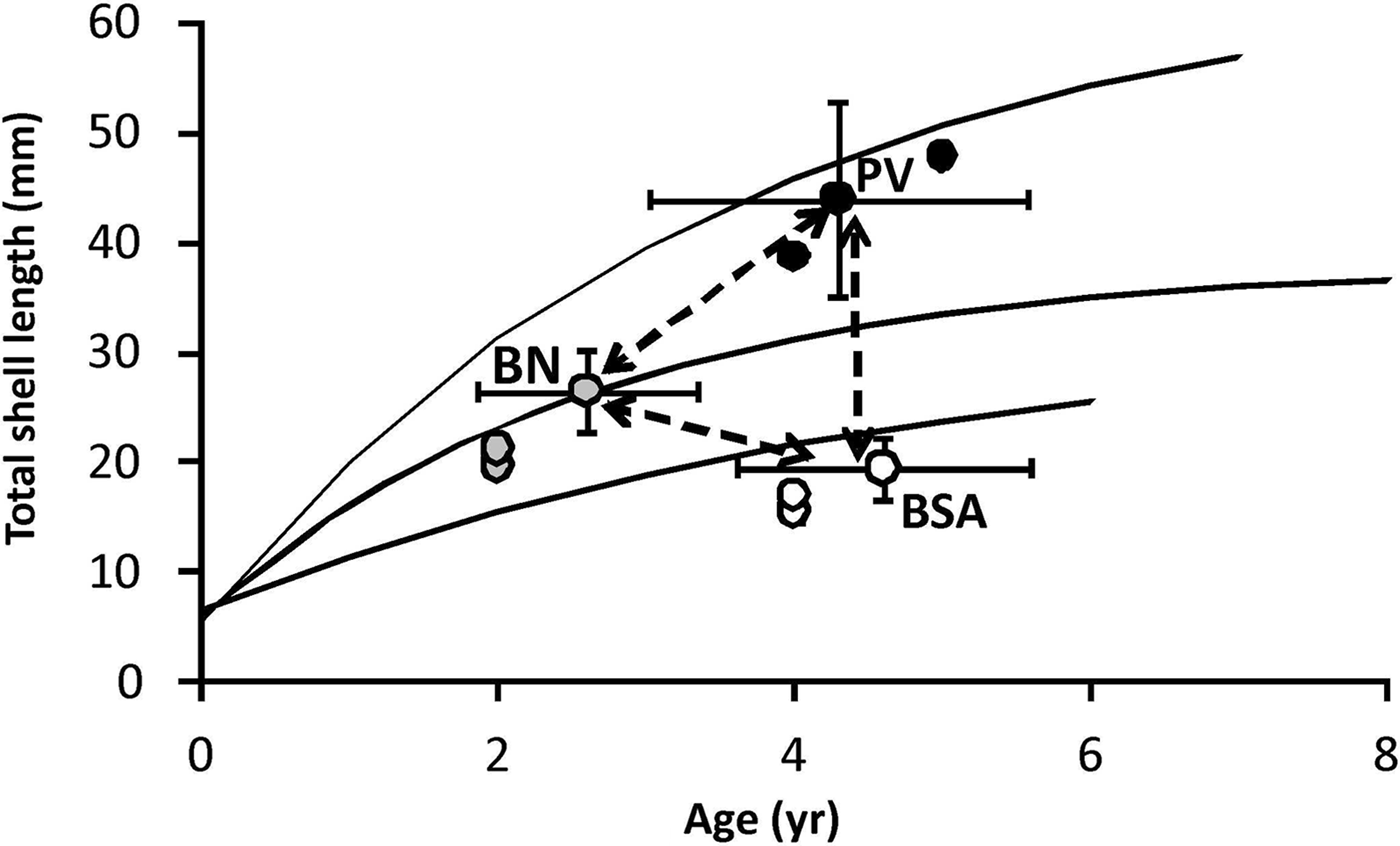
Based on the growth model of females for each population previously published and the different estimates of maturity obtained in this study, a set of possible reaction norms are presented in Figure 5. Our results do not seem to support a single and parsimonious reaction norm for size and age at maturity in the three populations of B. globulosus. Even though females from BSA and PV showed different growth models, and have different mean sizes, they mature at the same age. The overall growth rate of BN is intermediate between PV and BSA but BN females attain maturity 2 years earlier than the other two populations.
Mean growth curves (solid lines) and three hypothetical reaction norms for size and age at female maturity (arrows) of B. globulosus. Symbols: different estimates of female maturity, including the minimum measures for which maturity was observed on gonadal samples, for which the 50% of the population sampled was sexually mature (TL 50, A 50) and the minimum size and age for females carrying egg capsules (see text). Bars indicate one SE. Females' von Bertalanffy growth models are presented in Table 1.
DISCUSSION
We found that female size and age at maturity were variable and site-specific in Buccinanops globulosus; each population has its own maturity pattern. Size at maturity estimates varied among populations, ranging from 19.4 mm (females at Bahía San Antonio) to 44.0 mm (females at Playa Villarino). Differences in age at maturity were also detected, females in the population with moderate growth mature at a younger age (2 years) than females in the rapid- and the slow-growing populations (4.3 and 4.6 years, respectively). The different estimators used in this study were useful to support these findings. The reproductive effort also varied between populations; it was lower in the population with relatively faster growth. The results obtained here are difficult to reconcile with a single reaction norm for a single genotype in the populations studied. The alternative explanations seem to be that two different genotypes or gene pools are present (probably Golfo San Matías (BSA + PV) vs Golfo Nuevo) or that there is a single genotype and we are observing its reactions norms to different environmental cues (e.g. food availability, exposure and water temperature).
For the two neighbouring populations from Golfo San Matías, it seems clear that the reaction norm fits Stearn's rule 2, since they mature at the same age and in the slow-growing population (BSA), females sacrifice size at maturity and show a higher reproductive effort, probably due to the risk of never attaining maturity; in fact females of BSA never reach the PV size at maturity (44.0 mm) since their asymptotic size is 33.1 after c. 4 years of post-maturity growth. On the other hand, comparing BN and BSA, the females mature at almost the same size in both populations but in the faster-growing one (BN) they mature earlier than in BSA (2 years of age vs 4). This reaction norm seems to conform to Stearns’ rule 1 in which slow-growing females prioritize fecundity at the cost of delayed maturity and of dying before reproduction. For the populations of PV and BN, females from BN mature earlier and at a lower size than those of PV. The earlier maturation of BN in terms of age and size only seems explainable in terms of a higher mortality risk in this location, which resulted in the evolution to a different optimum for these parameters (e.g. high predation). The earlier maturation entails a higher reproductive effort in this population, in which the weight of the egg capsules represents c. 14% of the female weight whereas it is around 8% in PV. This probably results in the stunted post-maturity growth observed in BN compared with the PV females. The onset of sexual maturity is accompanied by a cessation or decrease in growth in many species, for example Nassarius reticulatus (Tallmark, Reference Tallmark1980; Barroso et al., Reference Barroso, Moreira and Richardson2005). In the context of life history theory, an increased reproductive effort and an earlier maturation are favoured when adult survival is low in relation to juvenile survival (Stearns, Reference Stearns1992; Hutchings, Reference Hutchings1993).
The gonad maturity shows differences in the size range over which females mature among populations. Sizes at first maturity were about 16, 20 and 39 mm total shell length in BSA, BN and PV, respectively. The sizes at which 50% of the females are mature, are obviously larger (mentioned above). The lower size at maturity in B. globulosus from Bahía San Antonio may be the result of energy being allocated to other components of fitness (i.e. growth or survivorship) at the expense of reproduction. The reduction in reproductive allocation in favour of somatic allocation has been postulated to be adaptive for scavengers since they face periods of starvation or low-food availability (Cheung & Lam, Reference Cheung and Lam1999). However, the females from the three populations do not mature before reaching 50% of maximum individual growth, thus suggesting the existence of a body size constraint to achieve successful reproduction (female asymptotic sizes; BSA: 33 PV: 65, BN: 38 mm; Narvarte et al., Reference Narvarte, Willers, Avaca and Echave2008; Avaca et al., Reference Avaca, Narvarte and Martín2013). In a review of abundant experimental data, Roff (Reference Roff2000) found that, typically, maturity is initiated when an individual exceeds a critical size during development, as seems to occur in this nassariid species. Positive relationships between body size and fitness, e.g. fecundity and mating success, occur across a variety of taxa (see Andersson, Reference Andersson1994). Our model species shows a positive correlation between the number of egg capsules as a proxy of fecundity and the typical body size (Narvarte et al., Reference Narvarte, Willers, Avaca and Echave2008; Avaca et al., Reference Avaca, Narvarte and Martín2012) of each population in line with these findings.
Females of B. globulosus attained sexual maturity at different ages, c. 2–5 years. Thus, it seems that each female is able to pass through a different number of reproductive seasons in its lifetime (8 years) depending on the population it belongs to. Among other neogastropods, reports on age at maturity are diverse: females of the red whelk Neptunea antiqua mature at 6–9 years and live up to 12 years, whereas N. arthritica mature at 4.6–6 years and live up to 10 years (Power & Keegan, Reference Power and Keegan2001; Miranda et al., Reference Miranda, Fujinaga and Nakao2008). Several Volutid species with longer potential lifespan than B. globulosus were also studied in the Argentine Sea: Adelomelon beckii lives for 29 years and attains maturity at 14 years whereas Adelomelon brasiliana, Zidona dufresnei and Odontocymbiola magellanica, although having lifespans varying from 12 to 20 years, mature at about the same age, 7 to 8 years (Giménez & Penchaszadeh, Reference Giménez and Penchaszadeh2003; Bigatti et al., Reference Bigatti, Marzinelli and Penchaszadeh2008; Arrighetti & Penchaszadeh, Reference Arrighetti and Penchaszadeh2010). For other species there are reports on size but not on age at maturity, for example females of Buccinanops cochlidium reach maturity at 80 mm and their maximum shell length is 108 mm (Averbuj et al., Reference Averbuj, Bigatti and Penchaszadeh2010).
Differences in size-age at maturity among marine gastropod populations are most likely related to local ecological conditions and not to latitudinal trends or the mode of development, e.g. direct or indirect development. For example, the direct-developer Buccinum undatum in the northern Gulf of St Lawrence reaches sexual maturity at 7–8 cm in shell length whereas in England at 5 cm and in Quebec at 6.0–6.5 cm (Martel et al., Reference Martel, Larriveé and Himmelman1986; Gendron, Reference Gendron1992; Kideys et al., Reference Kideys, Nash and Hartnoll1993). Moreover, differences in size at maturity may occur even at smaller scales such as among close populations of B. undatum located in the English coast (McIntyre et al., Reference McIntyre, Lawler and Masefield2015). Regarding the age at maturity, B. undatum also showed marked differences among the Magdalen Islands and sites located in the northern part of the Gulf of St Lawrence (Gendron, Reference Gendron1992). Among indirect-developers species, abalone species (Haliotis spp.) exhibit different sizes at maturity both at small (1–1000 m) and large geographical scales (several km) (Prince, Reference Prince2003 and references therein). On the other hand, despite differences among populations of the netted whelk Nassarius reticulatus (indirect-developer) in their maximum age and sizes, females reach maturity at about 4–5 years through Europe (Tallmark, Reference Tallmark1980; Barroso et al., Reference Barroso, Moreira and Richardson2005).
Exposed sandy beaches and tidal flats represent a large proportion of open shores; the most noticeable feature of soft-sediment invertebrate communities is that individual abundances, biomass and species composition vary greatly with both time and space (Lenihan & Micheli, Reference Lenihan, Micheli, Bertness, Gaines and Hay2001). Also, growth conditions for organisms may change along their distribution giving rise to different growth patterns. Empirical evidence suggests that low-stress environments may promote the rapid growth of individuals whereas in high-stress environments or when resources become limiting, individuals may benefit from growing more slowly (Monro & Marshall, Reference Monro and Marshall2014). Studies performed on other intertidal nassariids have related variation in different life history traits, including growth rates and size at maturity, with food availability, water temperature, exposure and predation pressure (e.g. McKillup & McKillup, Reference McKillup and McKillup1997; Morton & Chan, Reference Morton and Chan2004; Chatzinikolaou & Richardson, Reference Chatzinikolaou and Richardson2008). Our study system encompasses exposed sandy beaches (PV and BN) and a tidal flat (BSA). The whelks living in the tidal flat (slow growth) fed mainly on carcasses of crab species, Cyrtograpsus angulatus and Neohelice granulata, and the small mussel Brachidontes rodriguezi (Daleo et al., Reference Daleo, Escapa, Isaacch, Ribeiro and Iribarne2005) which probably had a low nutritional value. Also at this site, the tidal amplitude (maximum tidal amplitude: 9.7 m) and the semidiurnal tidal regimes cause a prolonged exposure period for the individuals, about 4–5 h twice a day. These characteristics allow us to classify this site as high-stress for this whelk species. In contrast, whelks living in PV fed mainly on the venerid clam, Amiantis purpurata (personal observation) which may have high nutritional or energy value which supports the faster growth of this population, such as occurs with other venerid species (Cheung et al., Reference Cheung, Gao and Shin2006). Also, at this beach, individuals are distributed from the intertidal to the low-subtidal zone, thus the exposure period for the individuals during the low tides is low or null. Thus, we can think of PV as a low-stress habitat for this whelk species that here shows a larger body size and size at maturity. Finally, the other beach (BN, moderate growth) probably represents a more stable environment than BSA with less exposure (maximum tidal amplitude: 6.1 m) but with a different thermal regime than the Golfo San Matías population (Avaca et al., Reference Avaca, Narvarte and Martín2013). Although the causal mechanisms that determine patterns can only be detected by experimentation, our observational study based on abundant data may serve to propose those hypotheses that could be experimentally tested.
The results found in this study could be of potential interest for fishery management purposes. It has long been recognized that several life history traits of marine snails (e.g. slow growth rates, late maturity and low dispersal capability) make them prone to local extinction and overharvesting when fished (reviewed by Leiva & Castilla, Reference Leiva and Castilla2002). To ensure that a proportion of the population could reproduce before recruitment into the fishery, the establishment of minimum legal sizes (MLS) above the size at sexual maturity has been recommended (e.g. Gendron, Reference Gendron1992; Shelmerdine et al., Reference Shelmerdine, Adamson, Laurenson and Leslie2007; Eversole et al., Reference Eversole, Anderson and Isely2008; Stoner et al., Reference Stoner, Mueller, Brown-Peterson, Davise and Booker2012). Females have a major role in stock-recruitment relationships because of their higher reproductive potential compared with males (Valentinsson, Reference Valentinsson2002). Thus, management measures are mainly focused on female reproductive biology. The only commercial fishery developed on B. globulosus is located at Playa Villarino (Golfo San Matías), where the maximum shell sizes are reached. In light of our results, the MLS for that fishery should be 45 mm of total shell length. Preliminary results on male size-age at maturity indicated that male maturity is achieved at smaller size-age than females owing to their lower growth rates (Narvarte et al., Reference Narvarte, Willers, Avaca and Echave2008; Avaca et al., unpublished data). As the maximum male shell length is 55 mm (Narvarte, Reference Narvarte2006), the establishment of a safe MLS for the overall population (i.e. to also prevent the harvest of immature males) should be considered for management purposes. In this framework, other management actions should be proposed and further investigated to attain sustainability in the B. globulosus fishery (e.g. forbidding the collection of females carrying egg capsules, regulation of fishery licences, and establishment of no-take reserves in appropriate locations). Sizes at maturity of exploited resources may vary in time and space (e.g. Torroglosa & Giménez, Reference Torroglosa and Giménez2010; McIntyre et al., Reference McIntyre, Lawler and Masefield2015), thus it is necessary to follow the performance of the established MLSs over time. Also, if new stocks of B. globulosus start being exploited the existence of differences among populations should be taken into account for the establishment of any management action.
Overall, our study shows that size-age at maturity patterns in this intertidal whelk with direct development are not solely explained by the variation in growth rates. Further research is needed to elucidate the underlying mechanisms (i.e. genetic or environmental) of the variation observed, and their possible consequences on the evolutionary biology of this species with direct development and under fishing pressure.
ACKNOWLEDGEMENTS
We thank ‘Kelo’ Camarero for technical support in the field and Roxana Soler for histological assistance.
FINANCIAL SUPPORT
This work was partially supported by the following projects financed by the Agencia Nacional de Promoción Científica y Tecnológica (ANPCyT): PID #371 and PICT CONAE-CONICET #042010. The authors are members of CONICET.