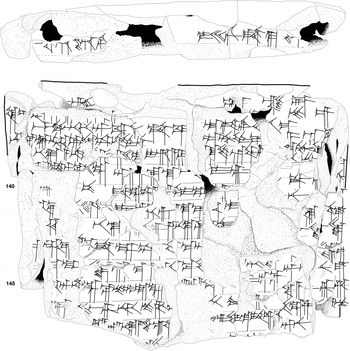
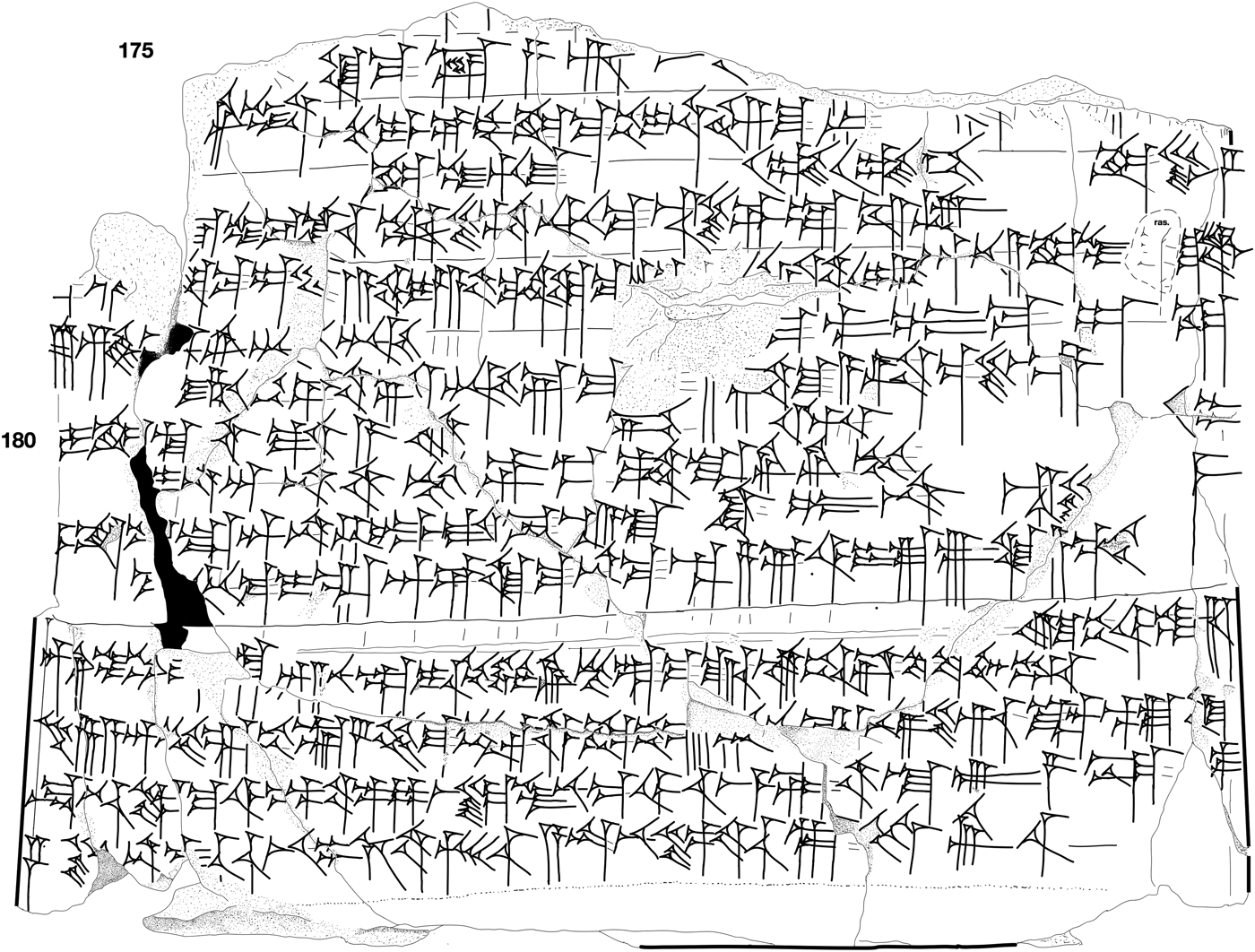
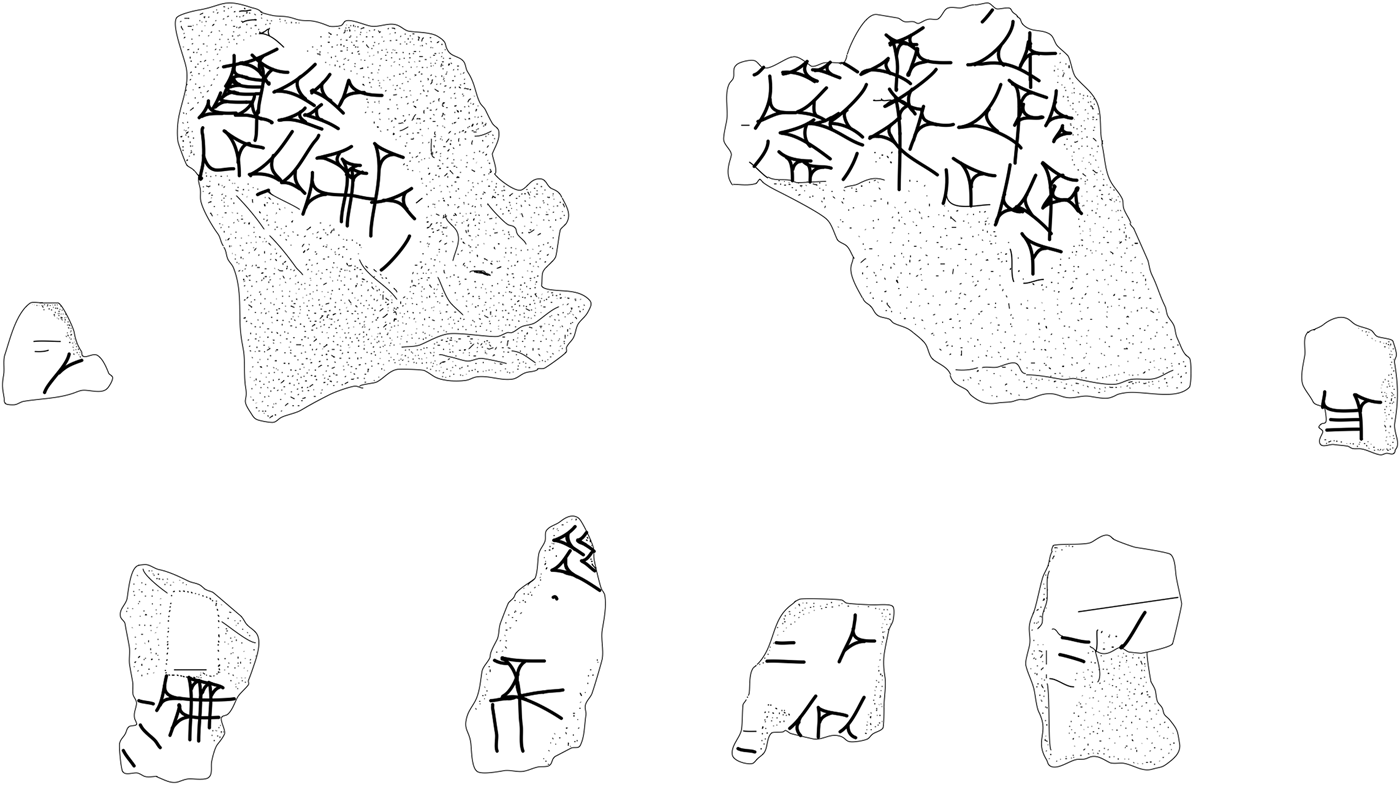
The tablet edited here preserves the opening and closing lines of Tablet IV of Lugal-e on the obverse and reverse respectively.Footnote 1 The obverse features the address of Šarur, Ninurta's divine weapon, to Ninurta. The reverse recounts the Asag's attack. This manuscript contributes towards the reconstruction of the text, particularly lines 144–147 and 175–179. In the case of at least three lines (147, 176 and 179), an improved reconstruction leads to important changes in sense. The manuscript is also of interest for subtle variations it introduces between the late manuscripts; examples include the variation in Sumerian grammatical forms in line 138, or the use of an alternative Akkadian verbal form in line 177. The tablet is also of interest for its fully preserved colophon, which includes the direction for the tablet to be returned to its owner within half a day, or possibly “at midday”. BM 48053 belongs to the 1881-11-03 collection of the British Museum. This consignment includes tablets excavated by Rassam at Babylon, Borsippa and Dilbat.Footnote 2 The script is Late Babylonian. The colophon indicates that it was copied from a Borsippa master copy. Based on similar occurrences of this formula, our tablet is likely to come from Borsippa. This is suggested by the reference to Nabû in the colophon, together with the precise form and writing of the colophon on the reverse (Fig. 2), which is comparable to similar examples from Borsippa (see below). The tablet has been glued together from numerous fragments. In addition, it is accompanied by a group of small fragments, which are at present not physically attached. I have situated five of these small fragments in my copy of the obverse, where they are marked by dotted lines (Fig. 1). The remaining small fragments are copied for completeness (Fig. 3), but I have been unable to confirm these fragments as belonging to BM 48053.Footnote 3 Most likely, the present state of the tablet and associated fragments is due to damage resulting from baking. The process of baking may have resulted in the fracturing of the tablet, followed by a museum conservator's partial reconstruction.Footnote 4 The primary edition of Lugal-e remains van Dijk (Reference van Dijk1983). Manuscripts published after van Dijk are listed in Seminara (Reference Seminara2001: 24). Late Babylonian manuscripts published after Seminara (Reference Seminara2001) are Maul (Reference Maul, Spar and Lambert2005; Tablet VII) and Geller (Reference Geller, Baker, Robson and Zólyomi2010; Tablet II).Footnote 5 I know of no new sources for lines parallel to those preserved in BM 48053. In the following edition, line numberings follow the edition of van Dijk (Reference van Dijk1983), as do text sigla. Newly attested lines or partial lines are underlined. Exclamation marks refer to readings known from this manuscript which result in revised readings, in partially damaged parallel manuscripts. The translation is based solely on the late bilingual version.
BM 48053: obverse (including 5 loose fragments) and upper edge

BM 48053: reverse

BM 48053: unplaced fragments

BM 48053
Upper Edge
Footnote 136. ˹ina tam-ḫu-uṣ˺ kak-[ki] i-sin-˹ni˺ eṭ-lu-˹tu˺
Obverse
Footnote 136. [ĝeštukul sàg-sà]g-ge ˹ezen˺ nam-guruš-[a]
From the clash of weapons, the festival of young men,
Footnote 137. ešemen(KI.˹E.NE.DI˺) ˹dinana-ta á-zu˺ [ba]-˹ra˺-mu-un-[gi]
ina me-lul-ti d iš-tar id-k[a] la ta-né-˹e ’-am˺-ma
from the play of Ištar, do not turn back (lit: turn back your arm)!
Footnote 138. ˹en˺-e mè mah-e-ne ĝen-na ĝìri na-ab-ul4 ĝìri-z[u ki]-a si-b[í-íb]
be-lu a-na ˹ta-ḫa-zi˺ ṣ[i]-i-ri a-li[k l]a tuš-te-˹ep˺-pi-i[r šēpka] ˹ina˺ erṣeti([k]i-tim) ki-[in]
O lord, go to the supreme battle (Sum: battles), (but) do not hurry!
Place your foot firmly on the ground!
_________________________________________________
139. [d]˹nin-urta á-sàg˺-e ˹kur˺-ra ˹ĝìri mu-e˺-[ši-íb-g]ub
d˹min a˺-sak-ku ina šadî(k[ur]-i) ú-[qa-a-k]a
Ninurta, the Asakku awaits you in the mountain!
_________________________________________________
140. [ur-saĝ] ˹men˺-[na] [ga]l-bi sig7-˹ga˺-[n]a
qar-ra-du ˹šá˺ [ina a]-˹gi˺-i ra-[bi]-˹iš˺ [ba-nu]-˹u˺
Hero, who with a tiara is very handsome,
_________________________________________________
141. [dumu de]n-lí[l-lá h]i-˹li-bi˺ nu-[til-l]a
mār(˹dumu˺) ˹d en-líl šá˺ ku-z[u-ub]-šú la [qatû]
son of Enlil, whose sexual allure is without end,
_________________________________________________
142. [en zi] ˹en˺-[ra nun-a] ˹ù˺-t[u]-ud-da
be-lu ˹kun-nu˺-ú šá ˹ana˺ be-lu r[u-b]a-˹tum˺ [uldūšu]
steadfast ruler, whom the queen (Ninlil) has borne for the lord (Enlil),
_________________________________________________
143. [ur-sa]ĝ dsuen(˹d˺+EN.Z[U])-˹na-gim˺ [s]i m[ú]-mú
qar-ra-d[u] ˹šá ki˺-ma ˹d˺[sîn qarnī banû]
hero, who grows horns like Sîn,
_________________________________________________
144. [lugal] ˹kalam˺-[m]a-r[a] ˹ti˺-[la u4] ˹sù-da˺
˹ šar-ri ma -a-ti˺ ba-la[ṭ ūmī ru]-˹qu-tu˺
who is life of long days for the king of the land,
_________________________________________________
Footnote 145. [usu ma]h an-na-ra an b[ad-b]ad-da
e-mu-qan ṣi- ˹ ra-a-ti šá d˺ a- ˹ nim ! pe-tu-ú˺ šamê(an-e)
who, (being) the supreme strength of Anu, opens the sky,
_________________________________________________
Footnote 146. [a-ur4-r]a-˹ke4˺ peš10 ˹ì˺-ur4-ur4
˹ bu ˺ -tuq-ti mu-ḫa -a[m-mi-m]at ki[b]-˹ ri˺
the flood which makes the banks gather together,
_________________________________________________
Footnote 147. [dnin-urta en ní-huš] ri-a kur-ra sa[ĝ] ˹nu-sum˺-mu
d min be-lu šá pu-luḫ-tú [ezzetu ra]-mu-ú šadî(kur -i) la i-ḫi-iš- ˹ šú ˺ -šú
Ninurta, lord who is imbued with [angry] fearsomeness,
towards whom the mountains do not rush,
_________________________________________________
148. [ ] an-nu-[ ]
[ ] ˹…˺ [ ] ˹…˺
Reverse
174. [ ]
[ ] ˹…˺ [ ]
_________________________________________________
Footnote 175. [muš-saĝ-kal-gim kalam-ma šeg10 bí-in-gi4]
ki-ma ṣar-ṣa-ri ˹ ina ˺ mātu(k[ur]) [išgum]
He (Asakku) roared like a great snake in the land;
_________________________________________________
Footnote 176. [kur-ra mi]-ni-íb-lah [ĝeš]˹šinig˺ [mi-ni-íb]-˹ùr˺
ina šadî(kur -i) me-e ub-bil-ma bi-i-na im-šu !-˹ur˺
he dried out the mountains, and dragged away the tamarisks;
_________________________________________________
Footnote 177. [ki-a su-bi] bí-íb-dar GIG gig-[g]a bí-in-ĝar
[er-ṣ]e-tum zu-˹mur˺-šú il-le-ti-ma sim- < mi > mar-ṣi iš-kun
the body of the earth became split, and he created severe wounds
(to appear on the earth's surface);
_________________________________________________
178. ˹ĝeš-gi˺ [i]zi ba-ab-˹sum˺ an úš-a bí-íb-(ras.)-tu5
ana a-pi i-šá-a-tú id-di-ma šamê(˹an-e˺) ˹da-mu ur˺-tam-mi-ik
he set fire to the reed-beds, and bathed the sky in blood;
_________________________________________________
Footnote 179. [š]à-ge-˹túm˺ ì-˹bal˺-bal [kalam-m]a ság ba-ab-du11
qer !-˹ bé ˺!-e-tú uš-bal-kit-ma ˹ma-a-ta˺ šu-a-ta is-pu-un
he fomented rebellion in the environs, and flattened that land.
Footnote 180. i-ne-éš u4-da a-˹šà˺-ga ùh ĝi6
i-na-an-na u 4 -mu e-qel id-ra-ni ṣal-mu
Now, on this day, (that land was) a field of black potash (Sum: scum).
Footnote 181. me-˹dè úr˺-ra an-na síg-hé-me-da-gim sa5-šè ur5 hé-na-nam-me
m[a-t]i-ma i-šid šamê(an -e) ki-ma na-ba-si ṣa-rip ši-i lu-ú ki-a-am
Forever, the horizon was as red as dyed wool. It was truly so!
_________________________________________________
Catchline:
Footnote 182. an-né íb dú[b-ba]-šè šà šu-bi ši-íb-[r]i
d a-nu-um i-gu-ug ir-mu-um-ma qātī(šu.2)-šú ina lìb-bi-šú uš-˹te-te˺-’i-il
As Anu became furious and trembled, he wrung his hands over his heart,
Colophon:
46.àm ˹mu˺.šid.bi dub.4.kam.ma ˹lugal-e˺ u4 me-lám-bi ˹nir-ĝál˺ ˹úl˺ qati(˹al˺.til) gaba.ri bár.sipa ˹ki˺ | kīma(gim) labirī(sumun)-šú šaṭir(sar)-ma bari(igi.tab) pa-liḫ nabû(d+AK) ina sar -tum là inaššī(ĝeš-ši)-šú ina me-˹reš˺-tú la ú-šá-ka-áš | šá i[n]-na-˹áš˺-šú-šú ina mi-šil ūmī(u 4.meš)-šú a-na be-li-šú ˹lu-te˺-er-šú
46 is its line-count, Tablet IV of Lugale-u-melambi-nirĝal. (The series) is not finished. Master copy from Borsippa, written and checked according to its original. He who fears Nabû must not dishonestly take it, or deliberately allow it to go missing. He who takes it away must return it to its owner in half a day/at midday.