
Introduction
Wir nennen diese Fazies Madrasien [We call these facies Madrasien]. (Menghin Reference Menghin1931: 119)
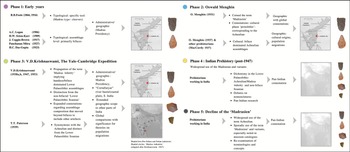
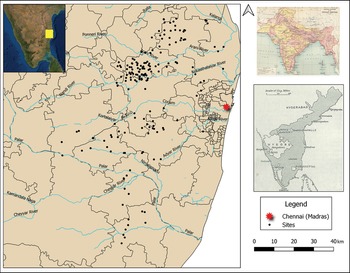
The cultural nomenclature we impose on prehistory influences our perceptions of the past, often introducing evolutionary trajectories and acquiring subtly different sets of meaning in different spatial and temporal contexts. The earliest taxonomic systems were intertwined with concepts of culture history, diffusion and the migration of populations, influencing the classification of regional prehistoric records. Individual scholars from diverse backgrounds with distinct networks and varied ideologies advanced taxonomies, which often developed unique trajectories in different regions of the world (e.g. Murray & Evans Reference Murray and Evans2008; Trigger Reference Trigger2008; Chakrabarti Reference Chakrabarti2009; Paddayya Reference Paddayya2016). Here, we focus on the unusual term ‘Madrasien’ and its variants (e.g. Madrasian, Madras industry, Madras handaxe tradition), which correspond to the now widely used Acheulian. The term Madrasien is derived from the Madras Presidency, which was a British administrative subdivision in southern India—a region rich in prehistoric sites, such as Attirampakkam (near Chennai, formerly Madras; Akhilesh et al. Reference Akhilesh2018) (Figures 1 & 2). The Madrasien is closely connected with two scholars separated by nationality and ideology, yet united by terminological choices: Oswald Menghin (Reference Menghin1931), who coined the term, and V.D. Krishnaswami (Reference Krishnaswami1947), who propagated it. Scholarly acceptance of the term during the mid twentieth century is to be understood in the context of the then-dominant archaeological concepts of diffusionism or hyperdiffusionism (Trigger Reference Trigger2008; Storey & Jones Reference Storey, Jones, Jones, Storey, Matisoo-Smith and Ramirez-Aliaga2011). Menghin's work, which emphasised variants of the culture-historical approach, whilst rejecting cultural evolutionary theories (Kohl & Perez-Gollan Reference Kohl and Gollán2002; Trigger Reference Trigger2008: 219), reflects the development of the Vienna School of Anthropology and its associated concepts of migration and complex cultural ‘mingling’. The diffusionist notion that the cultural replacement of ideas and artefacts was to be explained by migration, rather than multiple independent innovations, found favour with early pioneers in Indian prehistory, such as Krishnaswami. To him, Menghin's Madrasien, or as he termed it, the Madras industry, was a Lower Palaeolithic Abbevillian–Acheulian handaxe facies in south India, notably around Madras (Krishnaswami Reference Krishnaswami1947: 34). In turn, Krishnaswami's popularisation of the Madrasien formed the nucleus around which regional cultural identities in Indian prehistory were progressively constructed, even acquiring global acceptance. Subsequently, however, the term has been gradually replaced by the currently preferred Acheulian lexicon (Figure 1). Here, we trace the development of the Madrasien in India, from its origins through to its wider acceptance and subsequent demise. Our investigation leads to a wider discussion of archaeological terminologies and highlights the need for periodic reflection on their origins and connotations.
A simplified summary of conceptual approaches related to the Madrasien terminology and variants of the same (figure by the authors).

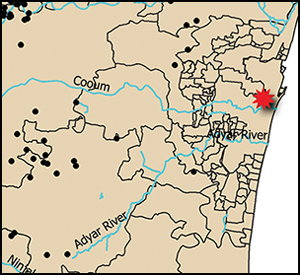
Map showing location of prehistoric sites in the vicinity of Chennai (formerly Madras), northern Tamil Nadu, constituting part of the Madras Presidency (inset maps adapted by the authors from Meyer et al. Reference Meyer, Burn, Cotton and Risley1909; Thurston Reference Thurston1914: fig. 1, no. 2).

Connotations of ‘Madras’ in early Indian prehistory
The foundations of the Madrasien lie in Robert Bruce Foote's discoveries of the first Palaeolithic artefacts in and around Madras (Foote Reference Foote and King1866, Reference Foote and King1916; Pappu Reference Pappu, Petraglia and Allchin2007) (Figure 2). Foote used the term ‘Madras’ both in the sense of an administrative/geographical division and in terms of a tool type (Foote Reference Foote and King1866). Whilst following John Evans's lithic typologies, Foote also identified new Indian tool forms, which he termed the ‘Madras type’, with a ‘guillotine’ sub-type—today recognised as cleavers (Foote Reference Foote and King1866, Reference Foote and King1916: 9–10). During the early twentieth century, scholars continued to use Madras as both a geographical term and a typological descriptor for lithic tools (see Logan Reference Logan1906), and it was still used with these connotations into the 1930s, when Menghin published Weltgeschichte der Steinzeit (Menghin Reference Menghin1931; see also Das-Gupta Reference Das-Gupta1933). Menghin (Reference Menghin1931: 118–19), for example, cited not only some of Foote's original publications, but also Seton-Karr's (Reference Seton-Karr1909: 137) description of such tools from north of Madras and Coggin-Brown's (Reference Coggin-Brown1917: 1–2) reference to axe- and cleaver-like forms, including “Madras”, “Guillotine types” and discoidal forms. Menghin (Reference Menghin1931: 118) also referred to Mitra (Reference Mitra1927), who used Madras in the sense of Foote's guillotine-type coup de poing and as an administrative/geographic unit. The term was also used to refer to geographic features, such as the “Madras cave” deposits (today comprising the Kurnool cave complex) of the Madras Presidency (Das-Gupta Reference Das-Gupta1923: 24).
Oswald Menghin and the ‘Madrasien’
Menghin obtained his doctorate in prehistory from the University of Vienna and, in 1914, founded the Wiener Prähistorische Gesellschaft; he served as a professor of prehistory at the University of Vienna, before moving to the University of Egypt, Cairo (1930–1933) (for details, see Kohl & Pérez Gollán Reference Kohl and Gollán2002). Subsequently, he briefly served as minister for culture and education in the Seyß-Inquart cabinet, before returning to take up a professorship at the University of Vienna. Following World War II, he moved to Argentina, where he served as a distinguished extraordinary professor at the University of Buenos Aires, founded the Centro Argentino de Estudios Prehistóricos in 1957, and became Professor titular de Prehistoria at the Universidad Nacional de La Plata, until retirement (Urban Reference Urban1997; Kohl & Pérez Gollán Reference Kohl and Gollán2002; Rebay-Salisbury Reference Rebay-Salisbury, Roberts and Linden2011). Menghin's controversial ideological leanings and research, however, were relatively unknown in India (for details, see Urban Reference Urban1997; Kohl & Pérez Gollán Reference Kohl and Gollán2002; Rebay-Salisbury Reference Rebay-Salisbury, Roberts and Linden2011; Mader Reference Mader, Modl and Peitler2020).
In 1931, during his tenure at the University of Egypt, Menghin published Weltgeschichte der Steinzeit. This volume “applied the Kulturkreis concept of the Vienna ethnographers to Palaeolithic materials and attempted to write a universal history of the ‘Old Stone Age’” (Kohl & Pérez Gollán Reference Kohl and Gollán2002: 562). Rebay-Salisbury (Reference Rebay-Salisbury, Roberts and Linden2011: 43–44), while discussing the Kulturkreislehre as an explanatory theory in the Viennese School of Ethnology, observed that:
cultural elements, in particular material culture, were compared in terms of form, quantity and constancy, and on the basis of this comparison, relations between cultures were established. Groups of matching forms were called Kulturkreise, which would ideally be paralleled with language (‘Sprachkreise’) and brought into a historical sequence.
It was anti-evolutionary and, rather than parallel innovations, cultural contacts were key factors in understanding the diffusion of cultural elements. Menghin drew on this theory in his prehistoric research, wherein from a primary culture he created “a world system of cultural circles for prehistory, pointing out the links between culture, language and ‘race’” (Rebay-Salisbury Reference Rebay-Salisbury, Roberts and Linden2011: 47–48). It is in these cultural circles that South Asia found an important position in world prehistory. Following its publication, Menghin was appointed as corresponding fellow to the Prehistoric Society of Great Britain in 1937 and his views were well known to V.G. Childe, who was often quoted by Indian prehistorians (Childe Reference Childe1935; Misra Reference Misra1962; Kohl & Pérez Gollán Reference Kohl and Gollán2002: 562–63).
Menghin's views were influenced by the Vienna School of Culture History and he sought to extend its philosophical ideas back into the Palaeolithic. Kohl and Pérez Gollán (Reference Kohl and Gollán2002) have explored Menghin's belief that, as one progressed further back in time through the Stone Age, greater similarities in race, language and culture could be observed, and thus greater admixtures of these components that nevertheless retained some distinct features of their inheritance. In this context, we should note that Nicholas Conard (commenting on Kohl and Pérez Gollán's (Reference Kohl and Gollán2002: 575) article in an accompanying response) states that “although Menghin was wrong in most of his interpretations, he did offer a coherent paradigm addressing global issues in prehistory, and his methods and ideas are still relevant today”.
Two important aspects of Menghin's ideas that influenced Indian prehistory are his concepts of hyperdiffusionism and networks of interaction at a global scale (Kohl & Pérez Gollán Reference Kohl and Gollán2002). Thus, Menghin's classification of three geographically distinct Palaeolithic cultural circles—Klingenkulturen (blade cultures), Faustkeilkulturen (handaxe cultures) and Knochenkulturen (bone cultures)—were connected through diffusion or migration to a common origin (Menghin Reference Menghin1925, Reference Menghin1931; Kohl & Pérez-Gollán Reference Kohl and Gollán2002; Rebay-Salisbury Reference Rebay-Salisbury, Roberts and Linden2011: 49).
Weltgeschichte der Steinzeit
The term Madrasien appears in the chapter ‘Die protolithischen Kulturen', in section three (“Faustkeilkulturen”) of Weltgeschichte der Steinzeit (Menghin Reference Menghin1931: 113–19). Menghin preferred the term ‘protolithic’ to Early Palaeolithic, stating:
Im vorderindischen Faustkeilprotolithikum stellt das Madrasien eine scharf umrissene Fazies dar. Es waren sicher noch andere, auch acheuléenartige Kulturen vorhanden, doch kann man sie noch nicht näher erfassen [In the handaxe-protolithic of the Indian peninsula, the Madrasien presents a sharply circumscribed facies. Other Acheulean-like cultures also certainly existed; however, one cannot yet comprehend them more closely]. (Menghin Reference Menghin1931: 113)
Menghin developed these ideas early in his career (Menghin Reference Menghin1925), and, by 1929, V. Gordon Childe (Reference Childe1929: 144) observed that “Menghin reminds us of those broken fragments from a chain of cultures preserving Lower Palaeolithic traditions, detected both in Somaliland and India. They were characterized by hand-axes.” Menghin (Reference Menghin1931: 118–19) discusses the Vorderindische Faustkeilkulturen [Handaxe culture of the Indian subcontinent], stating that the Indian subcontinent was primarily noted for having a handaxe culture, thus its protolithic authenticity was unquestionable. Based on publications by R.B. Foote, H.W. Seton-Karr, J. Coggin-Brown and P. Mitra, he observed that south India featured many sites located in areas of alluvium and in the laterite soils of the coastal region (Menghin Reference Menghin1931: 118–19). In addition to his discussion of the Acheulian, a section on Indische Klingenkulturen indicates an awareness of studies of microlithic assemblages by J.H. Rivett-Carnac, R.B. Foote, W.T. Blandford, A.C. Carlyle and J.A. Brown (Menghin Reference Menghin1931: 197). Menghin's observations on diffusion thus extended from the Madrasien to these ‘Milolithic’/microlithic and blade cultures of India, including comparisons with African and Central Asian industries (Menghin Reference Menghin1931).
Defining the Madrasien
Menghin coined a term for this handaxe culture, stating “Wir nennen diese Fazies Madrasien” (Menghin Reference Menghin1931: 119), yet noting the difficulty of establishing a stratigraphic framework for these industries. In his view, Indian tools were typologically more primitive than those from Europe and Africa; they were minimally finished and comparable with “rough Challosien-axes” (this being a short-lived term used to define certain types of Palaeolithic bifaces) (Menghin Reference Menghin1931: 119). Their crudeness, he argued, was not a result of the nature of the raw material but, instead, represented the most primitive forms of handaxe of which he was aware (Menghin Reference Menghin1931: 119). Significantly, the assemblage seemed to comprise ‘primitive’ core-tools and lacked flakes, something which he believed was the case in both Seton-Karr's and Foote's collections (the latter observation being erroneous; Foote Reference Foote and King1866, 1916). Thus, for Menghin, the earliest stage of the Madrasien was a pure handaxe culture, in which small, unifacial tools played a minor role. The Madrasien also encompassed more ‘advanced’ forms comparable with the European Early and Late Acheulian, along with other small tools. To this latter group, he attributed the cleaver form, using Foote's terminology—‘the Madras type’—for artefacts with rectangular and ‘guillotine’/oblique cutting edges.
On tropical origins
Menghin went on to speculate about the nature of cultural contacts dating to the Acheulian, stating:
Man kann sich schwer vorstellen, daß alle diese Ähnlichkeiten der Entwicklung zwischen Südasien, Afrika und Westeuropa ohne unmittelbaren Zusammenhang der Kulturarea wenigstens bis zum älteren Acheuleen möglich gewesen wären [One cannot readily imagine that all these similarities in development between South Asia, Africa and Western Europe would have been possible without a direct connection between these cultures, at least up to the older Acheulean]. (Menghin Reference Menghin1931: 119)
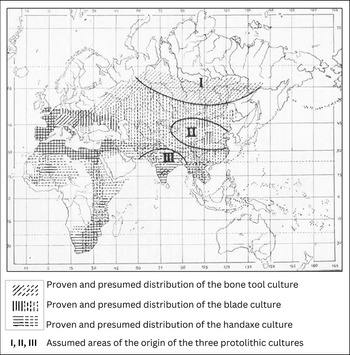
Acknowledging the difficulty of assessing the origin of these ‘protolithic cultures’ and the paucity of non-European data, Menghin (Reference Menghin1931: 129–31) set out a number of tentative conclusions. For him, Europe was not the origin of these global cultures (Figure 3). Instead, early handaxe cultures, which also included wooden tools, originated in regions of tropical forest, such as South Asia and Central Africa, which were rich in wood and bamboo. Handaxes would have been well suited for slicing vegetation, cutting trees and hunting, using methods distinct from those associated with traditional spears. Therefore, Menghin believed that South Asia was one region where such a handaxe culture was to be found (Menghin Reference Menghin1931: 131–32). The presence of this handaxe culture in India was in contrast to its absence in other parts of Asia, and was influenced by proximity to raw materials and suitable resource-rich environments. His discussions also encompassed other cultural facies and debates about the dispersal of handaxe cultures into Europe, as well as Central and South Africa, with observations on the Victoria West, Stellenbosch and Fauresmith industries.
Illustration by O. Menghin, depicting presumed areas in which the three major ‘protolithic’ cultures originated (adapted and enhanced by the authors from Menghin Reference Menghin1931: 300–301, map 1).

Menghin and the ‘Early Man’ symposium
Menghin attended the conference on ‘Early Man as depicted by leading authorities’ at the International Symposium, held in Philadelphia in March 1937 (MacCurdy Reference MacCurdy1937). The conference was also attended by H. de Terra (Reference de Terra and MacCurdy1937), an influential figure in Indian prehistory, whose role in the Yale-Cambridge Expedition in South Asia set the agenda for introducing new cultural taxonomies and theories (de Terra & Paterson Reference de Terra and Paterson1939; Dennell Reference Dennell1990). In his paper, Menghin (Reference Menghin and MacCurdy1937: 303–304) noted that he had examined all the protolithic stone industries of the Old World in Weltgeschichte der Steinzeit, based on published examples and museum collections, and divided them into the two major groups that had been established for Europe by Obermaier: that is, flake cultures vs those featuring handaxes. Despite the paucity of data from Asia, this region was, in his view, the “cradle of the evolution of human culture” (Menghin Reference Menghin and MacCurdy1937: 308). He could now refer to the results of de Terra and Paterson's expeditions (de Terra & Teilhard de Chardin Reference de Terra and Teilhard de Chardin1936; de Terra et al. Reference de Terra, Teilhard de Chardin and Paterson1936), noting that their cultural series began with a pebble culture similar to the Kafuan of East Africa and continued into what they termed the ‘Soan’ Culture (Menghin Reference Menghin and MacCurdy1937: 308). He observed that the earlier Soanian, produced on pebbles, could be compared to similar industries in Egypt, but was associated with assemblages featuring handaxes and cleavers of Abbevillian and Acheulian types (Menghin Reference Menghin and MacCurdy1937: 309). In Menghin's view, the late Soanian was comparable to the Aurignacian and could potentially be Late Palaeolithic (Menghin Reference Menghin and MacCurdy1937: 309). He predicted that the Soanian probably comprised a number of different industries and that while it apparently did not belong to the handaxe group it was “somehow connected with, or influenced by, it” (Menghin Reference Menghin and MacCurdy1937: 309). He also referred to other Indian publications, such as Cammiade and Burkitt's (Reference Cammiade and Burkitt1930) classic construction of four cultural phases, or ‘Series’, correlated with climatic changes in south India across the broader Madras region. Menghin observed that the series of tools from this region of the Eastern Ghats, in south-east India, were ‘primitive handaxes’ that were thought to be related to assemblages with cleavers and Victoria West proto-Levallois cores (Menghin Reference Menghin and MacCurdy1937: 309). He also observed that assemblages collected by de Terra and his team contained protolithic handaxes from the Narbadda (Narmada) Valley (central India) and Madras (south India).
India was therefore “a stronghold of handaxe cultures” (Menghin Reference Menghin and MacCurdy1937: 309), originating in the south, and standing in contrast to the flake cultures of Central Asia. Given that very ‘primitive’ handaxes existed in India, the question arose as to whether either Africa or India might be the origin of the handaxe cultures, or whether “the whole range of countries from India to Africa might not be its cradle” (Menghin Reference Menghin and MacCurdy1937: 310). The sparse data available at the time left this question unresolved, but the southern origin of the handaxe cultures was deemed to be “a certainty” (Menghin Reference Menghin and MacCurdy1937: 310), and hence integral to questions regarding the origin and evolution of handaxes (Menghin Reference Menghin and MacCurdy1937: 310–11). It is here that we also note his strong advocacy for using local rather than imported European terminologies for cultures in Africa or elsewhere; he believed that this aided in obtaining clearer insights into local cultural evolution (Menghin Reference Menghin and MacCurdy1937: 307), potentially explaining his preference for the term ‘Madrasien’.
Function, forests and food
To Menghin, the origins of the various stone tool industries were rooted in functionality and influenced by environmental factors. He continued to argue that the handaxe originated in a southern tropical or subtropical country, where forests and nutritious tubers occurred (Menghin Reference Menghin and MacCurdy1937: 311). Contrary to scholarly opinion, he believed that primordial plant cultivation was carried out by the people of the “protolithic handaxe culture”, based on analogies with the lives of what he termed “modern primitives” (Menghin Reference Menghin and MacCurdy1937: 311; for his perspectives on race, see Kohl & Pérez Gollán Reference Kohl and Gollán2002). In contrast to handaxes, he posited that the flake culture originated somewhere in Central Asia, China or Turkestan.
Menghin disagreed with Leakey's view of the East African pebble industries preceding, and leading to, the handaxe cultures. As evidence, he cited data from the Soanian of South Asia and from other industries in Egypt, observing that pebble tools often occurred along with flake tools or were related to a “Levalloisian-Mousterian relationship under handaxe influence” (Menghin Reference Menghin and MacCurdy1937: 312). Alternately, these pebble tool industries could have been totally unrelated, with the use of similar raw materials creating impressions of connections (Menghin Reference Menghin and MacCurdy1937: 312). In addition to the southern handaxe cultures and the central flake cultures, Menghin added another term, the northern ‘bone cultures’, completing the three belts of “protolithic civilisation of the old world” (Menghin Reference Menghin and MacCurdy1937: 313).
Networks and the Early Man symposium
The Early Man symposium succeeded in its aims of bringing together leading prehistorians from across the world, stimulating future collaborations and furthering the correlation of important discoveries. This success is seen not only in terms of the participants and their papers (MacCurdy Reference MacCurdy1937: 8), but also in reviews of the symposium. Childe (Reference Childe1937) refers to a round-table discussion on Asiatic chronology, wherein tentatively proposed correlations of the Indian, Javanese and Chinese sequences were considered to be potentially epoch-making. J.G.D. Clark (Reference Clark and MacCurdy1939: 124), who later worked in India, highlighted the global range of Palaeolithic studies, environments and chronologies presented, which were suggestive of the universality of human history. F.E. Zeuner (Reference Zeuner1938), another key figure in Indian prehistory, was also aware of Menghin's views on the probable origin and development of the Early Palaeolithic cultures, and the original zones of handaxes and flake cultures. Despite these newly established networks, however, Menghin was relatively ignored in India, and his work tended to be indirectly referenced in later publications; Misra (Reference Misra1962), for example, quoted Childe (Reference Childe1956: 86–87) when referring to Menghin's ideas.
V.D. Krishnaswami: ‘Madras industries’
In the 1930s, pioneering work in south-east India established early cultural and stratigraphic sequences of Palaeolithic industries (Cammiade & Burkitt Reference Cammiade and Burkitt1930; Richards et al. Reference Richards, Cammiade and Burkitt1932). Around this time, the rapid destruction of sites near the city of Madras spurred L.A. Cammiade to appeal to Madras University to conduct urgent research to preserve them. Krishnaswami, who had initiated research in this region in 1935, was assigned to this task (Krishnaswami Reference Krishnaswami1938a: 60–61, Reference Krishnaswami1938b). Krishnaswami was an influential personality, who went on to serve as the first official prehistorian working for the Archaeological Survey of India, and to hold other important positions (Soundara Rajan Reference Soundara Rajan1970–71; Datta et al. Reference Datta, Ghosh and Margabandhu1995). F.H. Gravely, of the Madras Museum, sent the young Krishnaswami to join the Yale-Cambridge Expedition in the north and north-western parts of the subcontinent. Paterson (also part of the Expedition) visited the Madras region where Krishnaswami was working and proposed a sequence of correlated river terraces and evolving cultures (de Terra & Paterson Reference de Terra and Paterson1939; Paterson Reference Paterson, de Terra and Paterson1939; Pappu Reference Pappu, Petraglia and Allchin2007), using the term ‘Madras’ in the context of a specific group of regional Palaeolithic assemblages, as exemplified by his writing (Paterson Reference Paterson, de Terra and Paterson1939). These lithic collections were later taken to Cambridge and studied by both Paterson and Krishnaswami, setting the stage for a more global acceptance of the term ‘Madras’. Krishnaswami was influenced by the Yale-Cambridge Expedition, as well as by M.C. Burkitt, Abbé Breuil, H. Movius, L. Leakey, and von Koenigswald, among others, during his subsequent visit to Europe (Krishnaswami Reference Krishnaswami1938a: 60–61, Reference Krishnaswami1938b, 1947). Krishnaswami was aware of Menghin's work, stating that:
Oswald Menghin has applied for this the term Madras Industry, as fairly typical of the rest of India from the remarkable uniformity in shape of the bifaces, ignoring the local variation inherent in such a vast land as India. (Krishnaswami Reference Krishnaswami1947: 34)
Based on the results of his own research, Krishnaswami called for the Kortalayar (modern Kushasthalayair) River Basin in the Madras region, with such famous sites as Attirampakkam (Pappu et al. Reference Pappu2011; Akhilesh et al. Reference Akhilesh2018), to become the Mecca of Indian Palaeolithic archaeologists (Krishnaswami Reference Krishnaswami1938a: 89, Reference Krishnaswami1938b: 108). ‘Madras’, used in its administrative/geographical sense, was applied to the region that occupied a “premier position in India, as being the first place in whose neighbourhood stone implements were found” (Krishnaswami Reference Krishnaswami1938b: 86). Krishnaswami (Reference Krishnaswami1947: 34–35) proceeded to describe the Lower Palaeolithic facies of Abbevillio-Acheulian stages, which he now termed the Madras industry:
This name is given to the great Handaxe Culture characteristic of South India; it was around Madras, the type-locality of this culture, that Bruce Foote discovered the first handaxe of the Lower Palaeolithic. Hence Madras industry means the coup-de-poing industry of South India, as Stellenbosch typifies that for South Africa. (Krishnaswami Reference Krishnaswami1947: 48)
Techno-typological (the Madras industry or Abbevillio-Acheulian) and geographical (the coastal plain of Madras) interpretations of the term thus became merged (Krishnaswami Reference Krishnaswami1947: 25 & 32). Krishnaswami now called for the formal adoption of the term, stressing that “it is high time that the term ‘Madras industry’ was appropriated to the coup-de-poing industry of South India, as Stellenbosch typifies that for South Africa” (Krishnaswami Reference Krishnaswami1947: 34–35). In his view, the Yale-Cambridge Expedition had already coined the term ‘Sohan’ for a north Indian flake-chopper facies, and thus ‘scientific brevity’ called for the use of the Madras industry for biface assemblages. He adopted the handaxe as a type-fossil for the south Indian Lower Palaeolithic Culture Complex (Krishnaswami Reference Krishnaswami1947: 35).
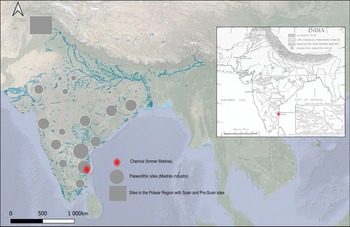
For Krishnaswami, there were two distinct industries: the Sohan (Soan/Soanian), occurring in the north and consisting of pebble choppers, flakes and cores of ‘Clacto-Levalloisian’ types, and the ‘core-tool’ or handaxe tradition, which was found in peninsular India, especially around Madras, and was related to European or African biface industries (Figure 4). These handaxe industries were correlated with the African Victoria West, Stellenbosch, Nanyukian, and Fauresmith, citing Van Riet Lowe's views on the possible common origins of the quartzite industries of Madras and South Africa (Krishnaswami Reference Krishnaswami1947: 41). These differed from the Sohanian, which had affinities to the ‘Far East’. The Abbevillio-Acheulian nomenclature was used but made “innocuous” [sic] by using the prefix Madras to denote an Indian facies, as in the example of the Rhodesian African-Abbevillian (Krishnaswami Reference Krishnaswami1947: 43). Use of the term ‘innocuous’ possibly reflected Krishnaswami's caution in the uncritical use of African or European terminology. It allowed for the assumption of cultural affinities while describing ‘technological similarities’, given that the Indian sequence presented its own characteristics (Krishnaswami Reference Krishnaswami1947).
Distribution of sites belonging to the Madras industry as of 1947 (adapted by the authors after Krishnaswami Reference Krishnaswami1947: 29, fig.4; inset original map).

Krishnaswami also discussed the Patjitanian of Java, quoting the views of von Koenigswald and Callenfels concerning the ‘handaxes’ of Java; these were believed to resemble those from “Madras, the Madrasien Culture (of Menghin)” (von Koenigswald Reference von Koenigswald1936; Krishnaswami Reference Krishnaswami1938a: 89). Von Koenigswald (Reference von Koenigswald1936) had also used the term Madrasien while discussing handaxes from Java, describing them as resembling those from the Madrasien Culture (of Menghin), albeit with some differences in types and assemblage composition (von Koenigswald also attended the Early Man conference in 1937, and was thus well aware of Menghin's ideas). Krishnaswami felt that the notion of a Madrasien Culture as defined by Menghin would need to be changed, and that whatever was represented by a “complete Chellean of Java” would be found in Madras as well, presumably refuting presumed differences in these widely spaced assemblages (Krishnaswami Reference Krishnaswami1938a: 89). Subsequently, his views shifted towards the notion that the Patjitan cultures occurred as a separate facies, and any resemblance to the Madras industry was possibly a result of convergence, as these industries were absent in the intervening regions, thereby negating any “genetic migrational connection with South India” (Krishnaswami Reference Krishnaswami1947: 42). Krishnaswami's influential position in Indian archaeology eventually led to the widespread acceptance and use of the term ‘Madras industry’ and variants that dominated contemporary and later South Asian prehistory.
Conclusion: the decline of the Madrasien and beyond
From the 1950s onwards, debates around the definition of cultural taxonomies increased. Proposals to switch to a modified African taxonomy—Early (Sohan vs Madras), Middle and Late Stone Ages—drew on differences between Indian, African and European assemblages seeking to divest Indian assemblages from European affiliation (Subbarao Reference Subbarao1958; Allchin Reference Allchin1963). At the First International Congress on Asian Archaeology in 1961 (Sankalia Reference Sankalia1963; Ghosh Reference Ghosh, Agrawal and Chakrabarti1979), varied schemes were proposed, and it was felt that a committee was needed to examine terminologies. This committee comprised V.D. Krishnaswami, F.E. Zeuner, H.D. Sankalia, F.R. Allchin, R.V. Joshi and B.B. Lal, who ratified the Early, Middle and Late terminologies, with R.J. Braidwood dissenting (Ghosh Reference Ghosh, Agrawal and Chakrabarti1979). In a subsequent symposium (Agrawal & Ghosh Reference Agrawal and Ghosh1973), dissenting views were expressed (e.g. S.C. Malik's support for Braidwood's subsistence-based taxonomy, and H.D. Sankalia's preference for a Lower and Middle Palaeolithic and microlithic terminology; Ghosh Reference Ghosh, Agrawal and Chakrabarti1979). Overall, it was recognised that confusion prevailed in the choice of terminologies, with an urgent need for standardisation (Ghosh Reference Ghosh, Agrawal and Chakrabarti1979). Two influential books by Sankalia (Reference Sankalia1963, Reference Sankalia1964) reflect this uneasy compromise between the use of European and African nomenclature. V.N. Misra (Reference Misra1962) strongly critiqued the unstructured usage of South African and European terminologies and the use of the numerical ‘Series’ concepts. He rejected African taxonomies, advocating for a shift to European terminology (Lower and Middle Palaeolithic and Mesolithic), which he believed to be precise and globally intelligible. Yet Misra (Reference Misra1962: 122), while referring to Menghin's grouping of Lower and Middle Palaeolithic cultures as ‘protolithic’ and ‘Archaeolithic’, supported terms that highlighted “the cultural individualities of different areas, as has been done by Menghin in the case of Madrasian”. These debates were further reflected at a conference held to resolve terminological and other issues in prehistory (Misra & Mate Reference Misra and Mate1965), while other publications highlighted problems of definition and obsessions with universality, especially in the application of European terminologies (Malik Reference Malik1968: 37–38). In addition to these debates, from the early twentieth century onwards, multiple interpretations were advanced for the dichotomy between the non-biface Soanian and the Madrasien/Acheulian cultures (Krishnaswami & Soundar Rajan Reference Krishnaswami and Rajan1951; Krishnaswami Reference Krishnaswami1953). These included ideas of distinct yet occasionally intermixing ‘groups’, ecological and functional interpretations, and the recent status of the Soanian being a post-Acheulian phenomenon (for a review, see Gaillard & Mishra Reference Gaillard, Mishra, Sémah, Falguères, Grimaund-Hervé and Sémah2001).
By the 1970s, European terminologies were increasingly adopted owing to preferences of leading prehistorians (e.g. H.D. Sankalia, G.R. Sharma and V.N. Misra) (Ghosh Reference Ghosh, Agrawal and Chakrabarti1979) and with the confirmation of Upper Palaeolithic assemblages that had no distinct correlations with African sequences (Misra Reference Misra1962, Reference Misra and Bordes1971; Murty Reference Murty1969). Alternate taxonomies were rare (Ghosh Reference Ghosh, Agrawal and Chakrabarti1979), while African terminologies were adopted by those who had experience working in this region (Corvinus Reference Corvinus1983). Simultaneous use of regional nomenclatures (e.g. Madrasien, Sagileru I–IV, Wainganga A and B, Damin) continued, with the Madrasien gradually yielding to the handaxe-culture/Acheulian lexicon (Sankalia Reference Sankalia1963, Reference Sankalia1979; Misra Reference Misra and Bordes1971, Reference Misra1990). It was argued that the term Madrasien was becoming invalid due to the growing number of sites discovered beyond the initially suggested geographical limits of the industry, with the term ‘Madras’ or ‘Madras complex’ being retained only at a local or regional level (Paddayya Reference Paddayya and Muller-Karp1984). Thereafter, the Madrasian and its variants fell into disuse, with sporadic references in publications (Pappu Reference Pappu2001), and noted in the classification of Indian artefacts in museum catalogues, where stone tools were often listed as coming from the ‘Madras’ region (Petraglia & Potts Reference Petraglia and Potts2004; Hicks & Stevenson Reference Hicks and Stevenson2013).
Globally, the history of cultural taxonomies reflects complex processes of classification and communication including: a) establishing consensus on what were originally regional terminologies (e.g. Acheulian); b) the fluctuating fortunes of terms with narrow geographical identities (e.g. European Upper Palaeolithic); c) the declining popularity of regional nomenclatures that acquired wide acceptance (e.g. Madrasien); and d) divergences from existing classifications (e.g. in Southeast and East Asia) (Shea Reference Shea2013; Bar-Yosef Reference Bar-Yosef2015; Reynolds & Riede Reference Reynolds and Riede2019; Sauer & Riede Reference Sauer and Riede2019). ‘Type-fossil’ concepts, particularly those relating to bifaces, dichotomies between biface and flake industries, or between the Acheulian and Clactonian, dominated discussion of much of early European prehistory (Monnier Reference Monnier2006). These concepts diffused through networks of prehistorians across Europe, Africa and Asia, acquiring new manifestations in the ‘Madrasien–Soanian’ and other local expressions in early Indian prehistory. Whether locally evolved, borrowed from the West, and/or adapted to suit local prehistoric contexts, Indian nomenclatures have influenced views on cultural evolutionary trajectories, migrations and hominin behaviour in South Asia. One example of this is the conceptualisation of Acheulian endings and the origins of the Indian Middle Palaeolithic, wherein the traditional use of bifaces as type-fossils for defining cultural phases has been critiqued, emphasising the requirement for a holistic study of assemblages focusing on behavioural changes (Akhilesh et al. Reference Akhilesh2018). Within this vast conceptual landscape, current Indian prehistoric nomenclatures reflect a medley of African, European and Southeast Asian influences, with sparse use of the Mode concept and rare calls for re-evaluation (Mishra Reference Mishra2021). Achieving consensus on terminologies through periodic theoretical and methodological re-assessments is a necessity, although the way ahead may require sacrificing familiarity for new perspectives on the past.
Acknowledgements
We thank Kamakshi Murti for German translations and discussion; Yanni Gunnell and Michael Petraglia for critical comments; Prachi Joshi and Sutonuka Bhattacharya for suggestions; P. Bose for producing Figure 2; and Ulrike Schuh and Subho Roy for facilitating access to important publications.
Funding statement
This research received no specific grant from any funding agency or from commercial and not-for-profit sectors.