INTRODUCTION
Merluccius merluccius smiridus (Rafinesque, 1810) is a demersal, widely distributed and economically important fish species, inhabiting the Mediterranean Sea and the eastern Atlantic Ocean, from Norway to the Gulf of Guinea (Casey & Pereiro, Reference Casey, Periero, Alheit and Pitcher1995). Merluccius merluccius appears to be fully or over-exploited in both Atlantic and Mediterranean waters (Murua, Reference Murua2010 and references therein; Colloca et al., Reference Colloca, Cardinale, Maynou, Giannoulaki, Scarcella, Jenko, Bellido and Fiorentino2013 and references therein).
Although several aspects of M. merluccius's biology, such as diet and growth in the Mediterranean, have been addressed (Bozzano et al., Reference Bozzano, Recasens and Sartor1997; Cartes et al., Reference Cartes, Rey, Lloris and Gil de Sola2004; Morales-Nin & Moranta, Reference Morales-Nin and Moranta2004; Carpentieri et al., Reference Carpentieri, Colloca, Cardinale, Belluscio and Ardizzone2005; Courbin et al., Reference Courbin, Fablet, Mellon and de Pontual2007; Gancitano et al., Reference Gancitano, Cusumano, Badalucco, Rizzo, Comparetto, Sabatella and Fiorentino2007; Lloret et al., Reference Lloret, Demestre and Sanchez-Pardo2008; Mellon-Duval et al., Reference Mellon-Duval, de Pontual, Metral and Quemener2010; Khoufi et al., Reference Khoufi, Elleboode, Bellamy, Ben Meriem, Romdhane and Mahe2012), only a few studies have addressed its reproductive traits (Perez-Villarreal & Howgate Reference Perez-Villarreal and Howgate1987; Tornaritis et al., Reference Tornaritis, Peraki, Georgulli, Kafatos, Charalambakis, Divanack, Kentouri, Yiannopoulos, Frenaritou and Argyrides1993, Soriguer et al., Reference Soriguer, Serna, Valverde, Hernando, Martín-Reyes, Soriguer, Pareja, Tinahones and Esteva1997; Recasens et al., Reference Recasens, Lombarte, Morales-Nin and Torres1998, Reference Recasens, Chiericoni and Belcari2008; Lloret et al., Reference Lloret, Demestre and Sanchez-Pardo2008) especially in the Central Mediterranean area: Strait of Sicily (Garofalo et al., Reference Garofalo, Bel Hassen, Jarboui, Zgozi, Gristina, Fiorentino, Ragonese and Camilleri2008), Algeria (Bouaziz et al., Reference Bouaziz, Sermoud, Djabalil and Maurin1998; Belhoucine et al., Reference Belhoucine, Bouderbala, Flower, Francour and Boutiba2012), Libya (Mugahid & Hashem, Reference Mugahid and Hashem1982), Egypt (Absawy, Reference Absawy and Abd.2010) and Tunisian waters (Bouhlal, Reference Bouhlal1973). Information on reproductive traits, such as spawning behaviour and reproductive strategies, are basic prerequisites for the establishment of suitable measures for managing fish stocks (Marshall et al., Reference Marshall, O'Brien and Tomkiewicz2003; Joaquim et al., Reference Joaquim, Matias, Lopes, Arnold and Gaspar2008; Butler & Rowland, Reference Butler and Rowland2009; Reñones et al., Reference Reñones, Grau, Mas, Riera and Saborido-Rey2010). Length at first maturity and sex-ratio estimations are also lacking in the south Mediterranean along the Tunisian coasts (study area), despite their fundamental roles in determining the reproductive potential and spawning pattern of fish species (Coleman et al., Reference Coleman, Koenig and Collins1996; Trippel, Reference Trippel1999).
In terms of its reproductive biology, M. merluccius is a batch-spawner species, with indeterminate fecundity (Murua & Motos, Reference Murua and Motos2006). The spawning activity of this species has been registered all year round, but with different peaks in Mediterranean (Recasens et al., Reference Recasens, Lombarte, Morales-Nin and Torres1998) and in Atlantic waters (Murua, Reference Murua2010). Otherwise, it is known from the literature that different reproductive behaviour is determined by different geographical habitat for M. merluccius and other Gadiforms species. Particularly, the timing and the duration of the spawning peak vary among the different species and their respective area of distribution (Recasens et al., Reference Recasens, Lombarte, Morales-Nin and Torres1998; Vallisneri et al., Reference Vallisneri, Scapolatempo and Tommasini2006; Metĭn et al., Reference Metĭn, Türker Ĭlkyaz and Kinacigĭl2008; Domínguez-Petit & Saborido-Rey, Reference Domínguez-Petit, Saborido-Rey and Medina2010).
The identification of the sexual maturity phases has traditionally been undertaken by macroscopic assignment, based on visual inspection of gonads. Although this method is rapid and cheap (Tomkiewicz et al., Reference Tomkiewicz, Morgan, Burnett and Saborido-Rey2003), it is not accurate (Costa, Reference Costa2009), mainly because M. merluccius, similar to many other teleostean fish, shows an asynchronous oocyte development (Hunter et al., Reference Hunter, Lo and Leong1985; Murua & Motos, Reference Murua and Motos2006). It is impossible to detect the presence of post-ovulatory follicles (POF) or atretic phenomena using visual inspection (Hunter & Macewicz, Reference Hunter and Macewicz1985; Murua et al., Reference Murua, Kraus, Saborido-Rey, Witthames, Thorsen and Junquera2003). Microscopic evaluation, using histological analysis, enables a more precise classification of the gonad developmental phase than does macroscopic evaluation, making it possible to establish a more reliable maturity classification, spawning period determination and length-at-maturity estimation (Hunter & Macewicz, Reference Hunter and Macewicz1985; Murua et al., Reference Murua, Kraus, Saborido-Rey, Witthames, Thorsen and Junquera2003; Stratoudakis et al., Reference Stratoudakis, Bernal and Uriarte2004; Vitale et al., Reference Vitale, Svedang and Cardinale2006; Ferreri et al., Reference Ferreri, Basilone, D'Elia, Traina, Saborido-Rey and Mazzola2009).
The International Commission for the Exploration of the Sea (ICES) by means of an expert working group on Maturity of M. Merluccius (WKMOG-ICES, 2008) strongly suggests the adoption of the recommendations for collecting maturity data and estimating proportion mature, established during the workshop. Two among the most important recommendations are identified as follows: (1) ‘Macroscopic maturity scales used should be validated, either histologically or by another appropriate way’; and (2) ‘Maturity data from market samples should be collected during the spawning season (for indeterminate species)’. In the present paper maturity data of M. merluccius from Tunisian waters were also used to test such ICES recommendations on trawling fishery data.
To evaluate the accuracy of L 50 estimation the obtained values were compared with other literature studies, also taking into account sources of variability such as sampling selection and data analysis. Another important source of variability often disregarded is represented by the geographical location with respect to its latitude; despite its importance very little literature existed on that topic for M. Mercluccius. To overcome this lack of knowledge for comparison purposes, in the present study were examined the relevant literature on M. merluccius from different areas and latitudes, in order to highlight possible latitudinal effects on the variability of L 50.
The aim of this study is to improve knowledge about the reproductive biology of M. merluccius in the central Mediterranean area. Biological and reproductive data of the target species were collected throughout one year in Tunisian waters and were also analysed to address aspects related to the seasonal evolution of energy reserves and their allocation between somatic and gonadic production. Histological ovary preparation also provides useful information for validation of macroscopic scales and also for length at first maturity estimation and management recommendations.
MATERIALS AND METHODS
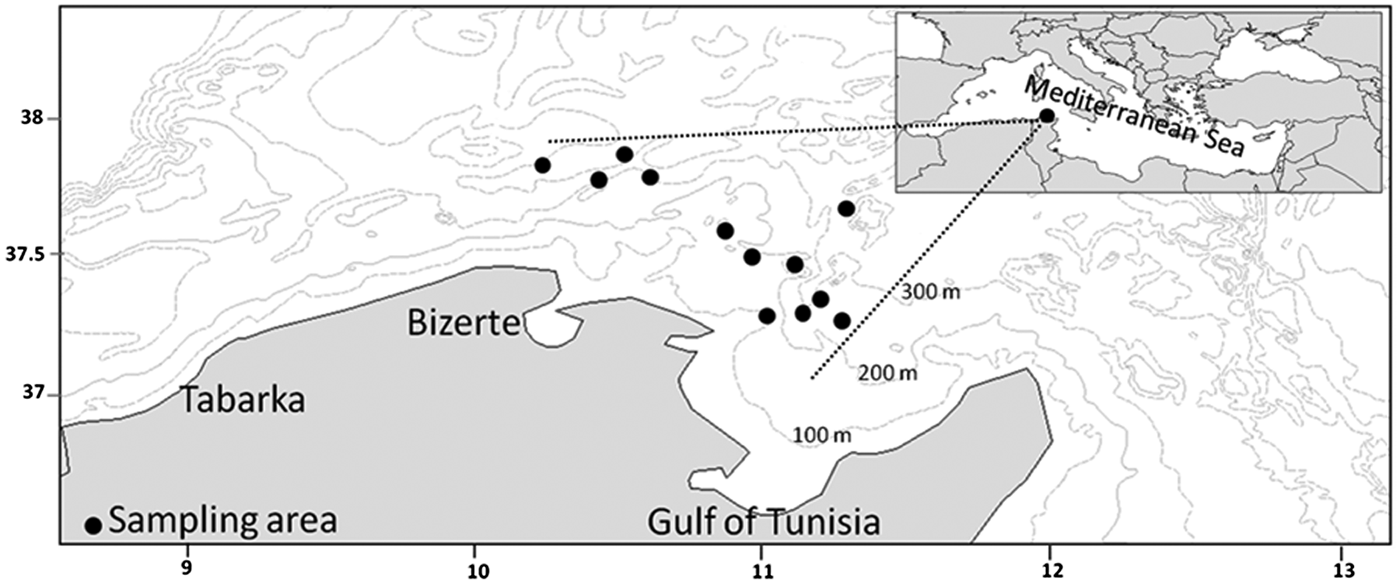
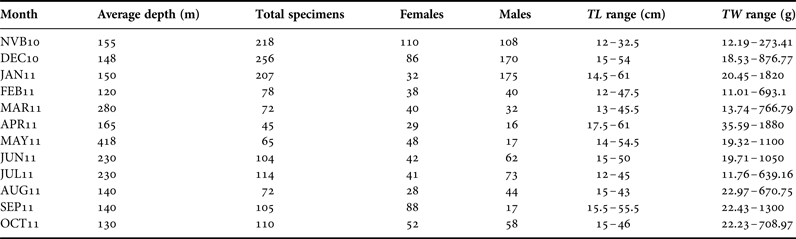
Samples were collected from a commercial trawler-fishing vessel operating along the Tunisian coast at depths between 120 and 420 m (Figure 1). The bottom trawl was selected because of its capability to collect a wide range of individuals, including juveniles and adults. Bottom trawl exploits mainly small specimens (Martín et al., Reference Martín, Sartor and Garcia-Rodriguez1999) and the presence in the trawl landings of bigger specimens is rather infrequent or restricted to certain periods of the year (Sartor et al., Reference Sartor, Sbrana, Reale and Belcari2003). A total of 634 females and 812 males of M. merluccius were collected from November 2010 to October 2011. Sampling was conducted on a monthly basis, except in March, May and September.
Sampling area with main bathymetry and spatial distribution of sampling stations off the North Tunisian coast (•, one monthly sample).

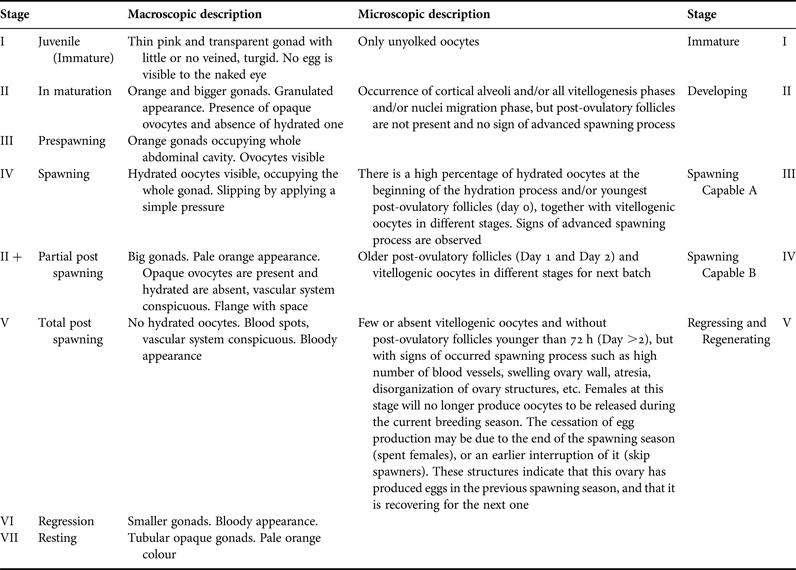
For each fish, total length (TL) (±0.5 cm), total weight (TW) (±0.1 g) and eviscerated weight (EW) (±0.1 g), sex, macroscopic maturity stage, gonad weight and liver weight (±0.001 g) were recorded. A subsample (five specimens per 1 cm size-class) of 234 ovaries was preserved in 10% buffered formaldehyde and histologically processed, using standard paraffin embedding and haematoxylin–eosin staining techniques; the slide thickness was 5 µm. Reproductive phases were assigned macroscopically according to the method of Sarano (Reference Sarano1986) as modified by Recasens et al. (Reference Recasens, Chiericoni and Belcari2008), and microscopically according to Domínguez-Petit et al. (Reference Domínguez-Petit, Saborido-Rey and Medina2010), modified by the authors, separating stage IV from stage V and using the standardized terminology proposed by Brown-Peterson et al. (Reference Brown-Peterson, Wyanski, Saborido-Rey, Macewicz and Lowerre-Barbieri2011) for each reproductive phase (Table 1). The length–weight relationship (LWrel) of M. merluccius was obtained for the separate sexes using the equation:
 $$TW = a \bullet T{L^b}$$
where TW is the total weight, TL is the total length, a is the intercept and b is the slope.
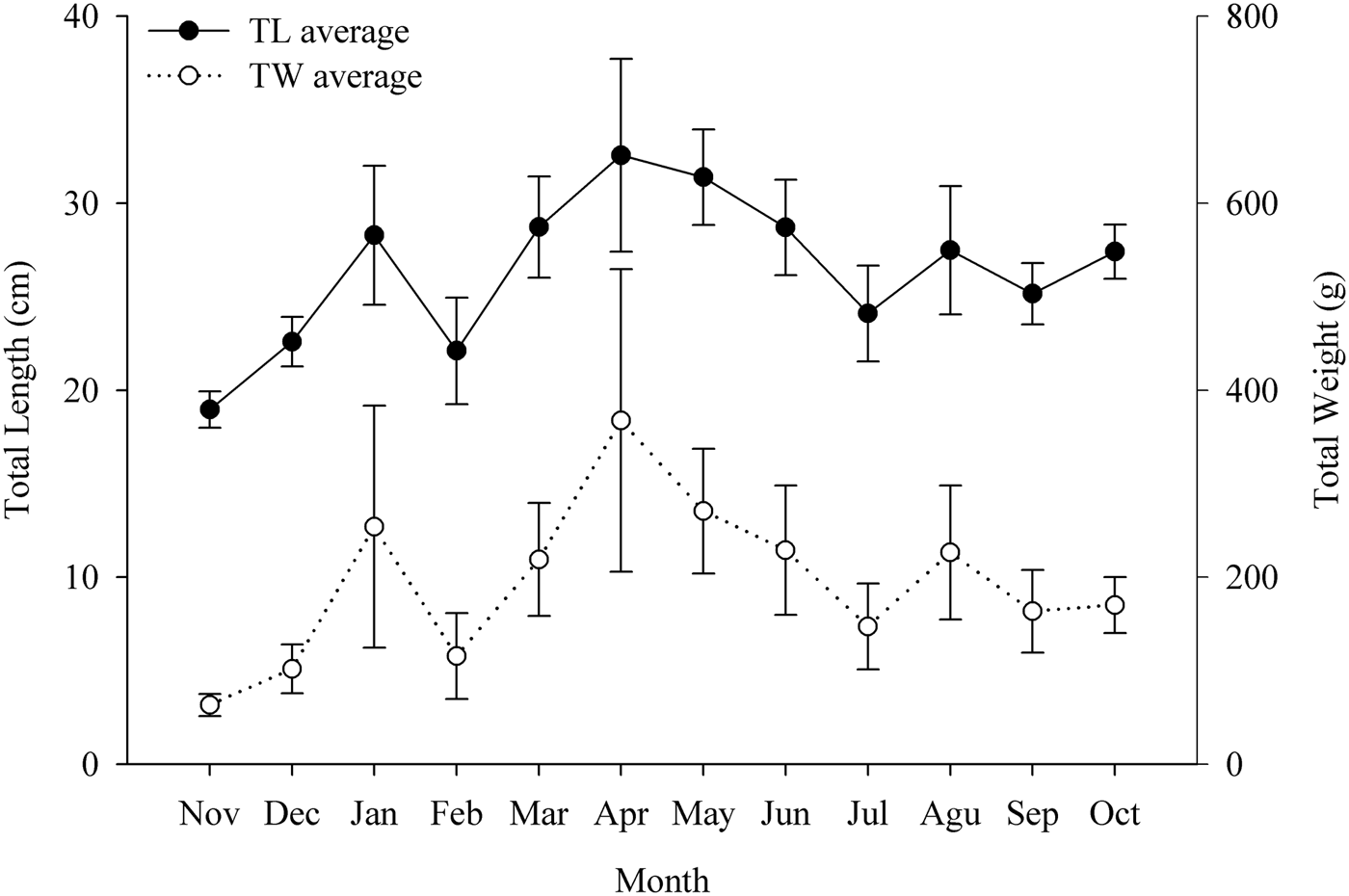
Monthly variation of average length (TL) and weight (TW). Vertical bars denote 95% confidence intervals.
Macroscopic (Sarano, Reference Sarano1986; Recasens et al., Reference Recasens, Chiericoni and Belcari2008) and microscopic (Dominguez-Petit et al., Reference Domínguez-Petit, Saborido-Rey and Medina2010 and Brown-Peterson et al., Reference Brown-Peterson, Wyanski, Saborido-Rey, Macewicz and Lowerre-Barbieri2011, modified by authors. See Materials and Methods section) classification of Merluccius merluccius ovaries.
The monthly average sex-ratio (SR) was obtained by dividing the number of females by the total number of individuals .
The monthly evolution of somatic conditions was also estimated using the relative condition factor (CF) (Le Cren, Reference Le Cren1951):
 $$CF = TW/a \bullet T{L^b}$$
where a and b are the length–weight relationship parameters obtained from the length–weight relationship.
The monthly evolution of the proportion of each reproductive phase, obtained by microscopic classification, was considered to identify the M. merluccius spawning peaks.
The timing and peak of spawning were also evaluated using the gonadosomatic index (GSI):
 $$GSI = GW/EW \bullet 100$$
and the hepatosomatic index (HSI):
 $$HSI = LW/EW \bullet 100$$
where GW is the gonad weight and LW is the liver weight. Eviscerated weight was used instead of TW to reduce the seasonal cycles of weight by three different organs: stomach, gonads and liver. They may be out of synchrony with each other. In addition, the diel patterns of feeding and oocyte maturation would appear as random noise if the fish were collected at all times of day and night.
The use of GSI and CF as reliable estimates of fish reproductive conditions has been criticized without the preventive validation of some basic assumptions (de Vlaming et al., Reference de Vlaming, Grossman and Chapman1982). The GSI has to be size-independent (West, Reference West1990) and the relationship between gonad and fish mass has to be isometric (de Vlaming et al., Reference de Vlaming, Grossman and Chapman1982; Somarakis et al., Reference Somarakis, Palomera, Garcia, Quintanilla, Koutsikopoulos, Uriarte and Motos2004). These assumptions were met in the case of M. merluccius (Murua, Reference Murua2006).
The length at which 50% of specimens were mature (L 50) was estimated using an analytical method based on a logistic regression model. Logistic models fitted by generalized linear modelling (GLM) are the most popular approach to model maturity data, and a binomial GLM with logit link is current standard practice (WKMOG-ICES, 2008).
The two adopted maturity classification methods were compared to evaluate the proportion of agreement. Thus, the length at first maturity was estimated using data from both the macroscopic and microscopic reproductive phase assignment. Furthermore, according to the ICES guidelines on maturity ogive estimation for fish species of indeterminate fecundity (WKMOG-ICES, 2008), and according to the results which set the extension of spawning period, the curve was fitted using macroscopic data (390 females) sampled during the spawning period.
Statistical analysis
The non-parametric Kruskal–Wallis H test was carried out to evaluate the significance of differences in monthly averaged TL and TW, for each sex. In order to investigate the existence of a sex effect on the TW–TL relationship it was fitted to a non-linear equation including sex as the factor in the GLM to test its significance.
To evaluate the effect of sex-ratio (or number of females) on the variability in monthly average size, a non-parametric test the Spearman's rank correlation coefficient (Gibbons, Reference Gibbons1985), was carried out between average TW and TL values and sex-ratio values or number of females.
A binomial GLM was adopted to fit maturity data and to evaluate differences between the maturity ogives obtained by the macroscopic inspection and by the histological preparation. The model was also fitted to the data obtained using macroscopic inspection from the whole year and selecting the summer period. The obtained ogives were compared by fitting the GLM to the maturity/immaturity data, taking the length as the independent variable and including the method and the sampling period as factors.
RESULTS
Merluccius merluccius samples were collected at depths between 120 and 418 m (average: 192 ± 86 m) (Table 2). The weight range of sampled adults was between 13.23 and 1880 g (average: 167.01 ± 213.8 g) for females and between 11.01 and 355.54 g (average: 73.35 ± 56.23 g) for males (Table 2). The length range of sampled females was between 10 and 59 cm (average: 25.06 ± 8.76 cm) and between 12 and 37 cm (average: 21.04 ± 4.79 cm) for males (Table 2). In other studies (i.e Bay of Biscay) sampling maximum length has recorded 62–108 cm (Pineiro & Sainza, Reference Piñeiro and Sainza2003), while this species in Mediterranean waters was observed to reach a maximum length of 89 cm (Lloris et al., Reference Lloris, Matallanas and Oliver2003), However commercial landings in the Mediterranean Sea are generally less than 60 cm total length (Fiorentino et al., Reference Fiorentino, Badalamenti, D'Anna, Garofalo, Gianguzza, Gristina, Pipitone, Rizzo and Fortibuoni2008). The non-parametric statistical test (Kruskal–Wallis H test) showed significant monthly differences in average TL and TW throughout the study period (P < 0.001), with a dome-shaped trend increasing from November (minimum) and decreasing from April (Figure 2). The Spearman regression analysis performed on monthly average length and the sex-ratio or with the number of females, showed the lack of any significant relationship (P > 0.1), indicating that the variability in the number of females or in monthly sex-ratio does not affect TL or TW variability. Such analysis does not exclude the presence of spawning migration movements, but suggests that the size differences across the study period are not affected by the proportion of females, which grow faster and reach a greater length than males, as observed in the present study and reported in the literature (Recasens et al., Reference Recasens, Lombarte, Morales-Nin and Torres1998; Mellon-Duval et al., Reference Mellon-Duval, de Pontual, Metral and Quemener2010; El Habouz et al., Reference El Habouz, Recasens, Kifani, Moukrim, Bouhaimi and El Ayoubi2011).
Summary table with the monthly information on samples collected of the number of individuals sampled (total and for both sexes) and of the size of specimens.
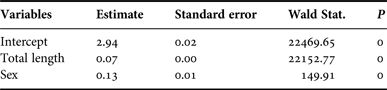
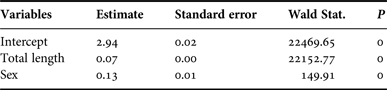
The ANCOVA carried out on TL and log-transformed TW showed significant monthly differences across months (F11,1443 = 14.22; P < 0.001). The GLMs results on the TW–TL relationship showed significant differences between sexes (Table 3).
Comparison by fitting to the data a binomial generalized linear modelling taking the length as independent variable and including the sex as factor.
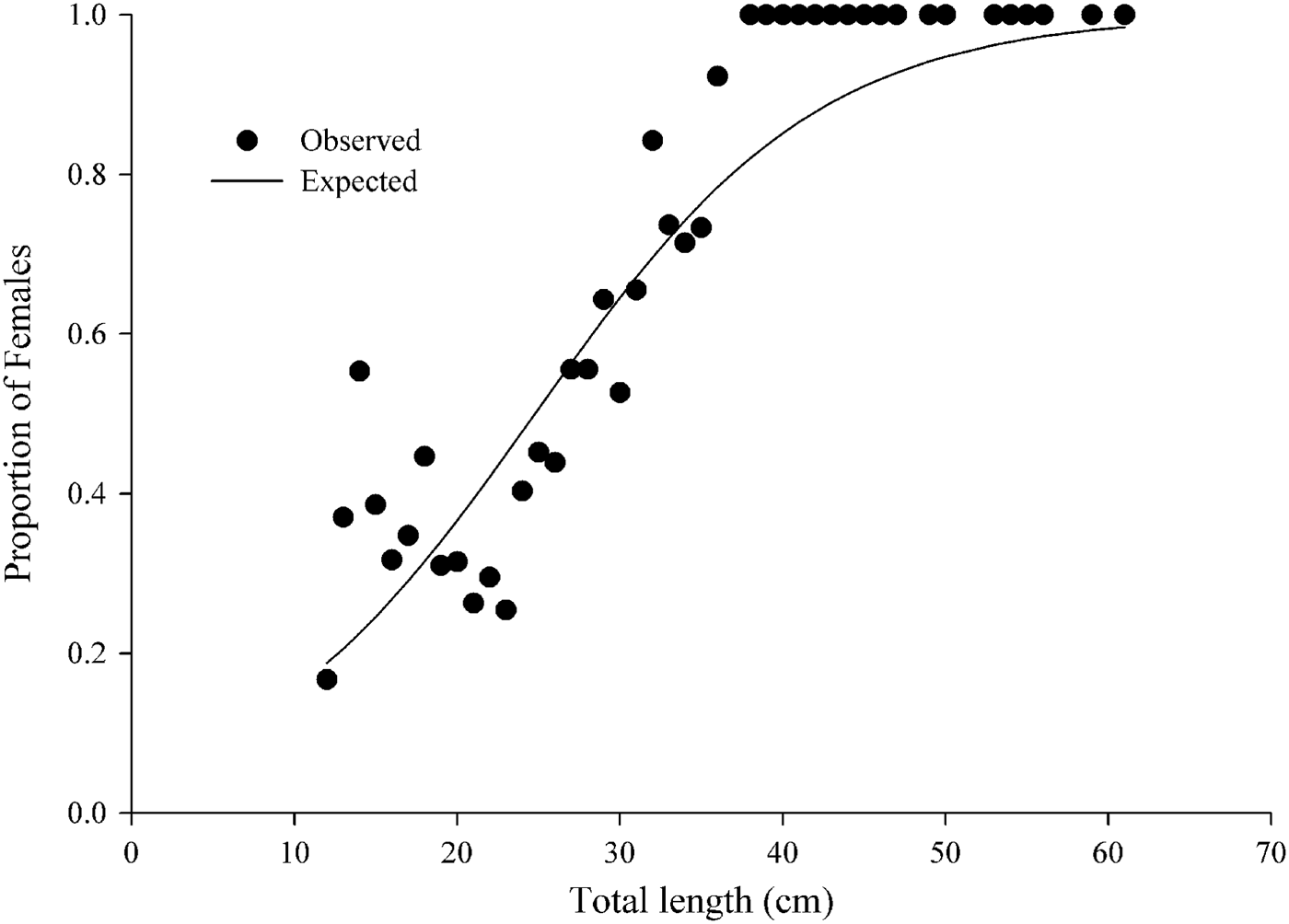
The sex-ratio evolution by length showed a shift from male to female-dominated schools (Figure 3). This increasing trend reached a 1:1 ratio at 24.7 cm, while 99% of individuals larger than 40 cm TL were female. However, a significant female predominance is already recorded for the length-class higher than 30 cm (Figure 3).
Logistic regression model of the proportion of females (sex-ratio) along size.
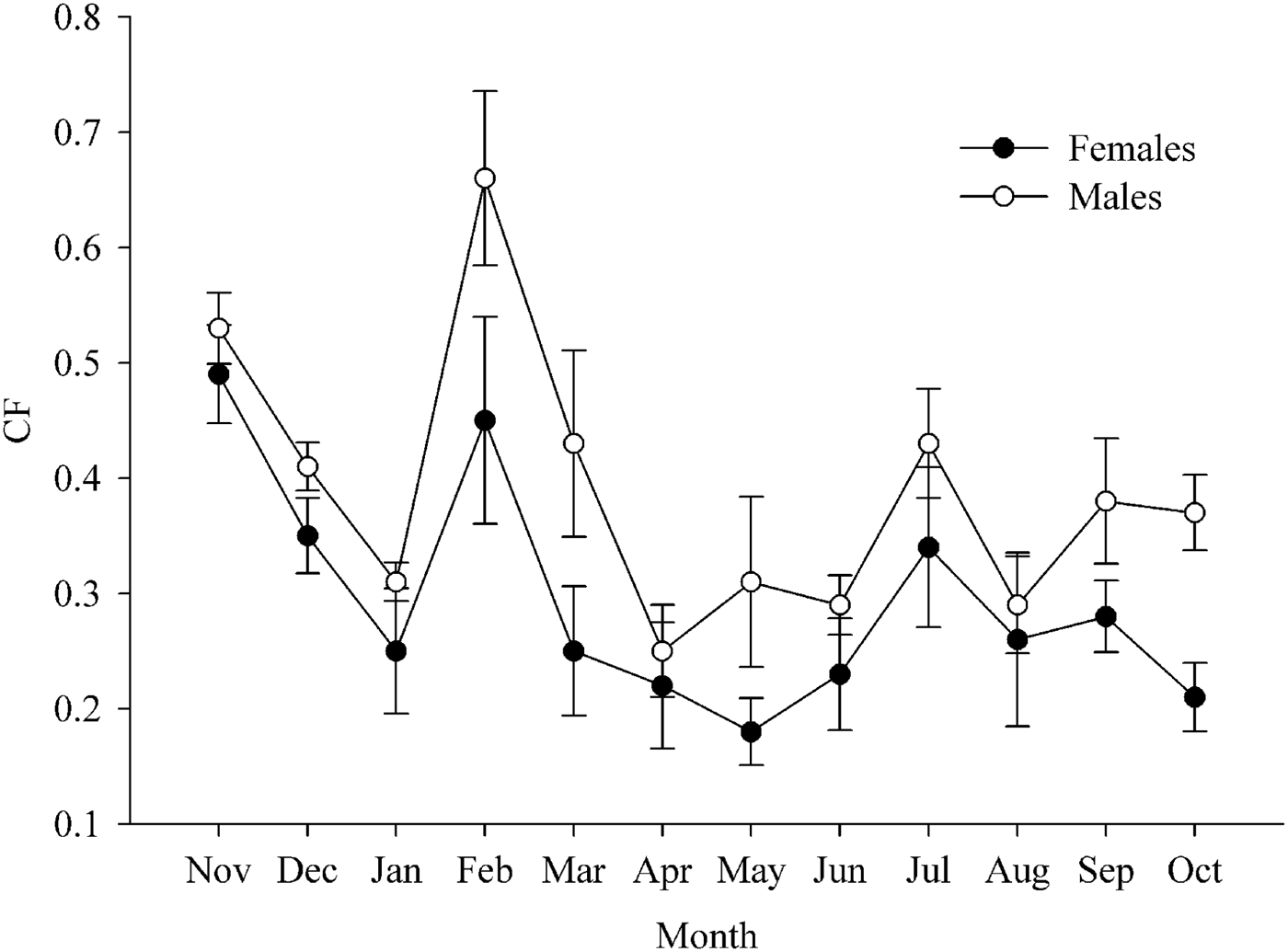
The CF showed similar trends between sexes with a general decreasing trend noticeable mainly from November onwards (Figure 4), although two peaks of high CF values were recorded also in February and July.
Monthly variation of condition factor (CF) obtained for each sex. Vertical bars denote 95% confidence intervals.
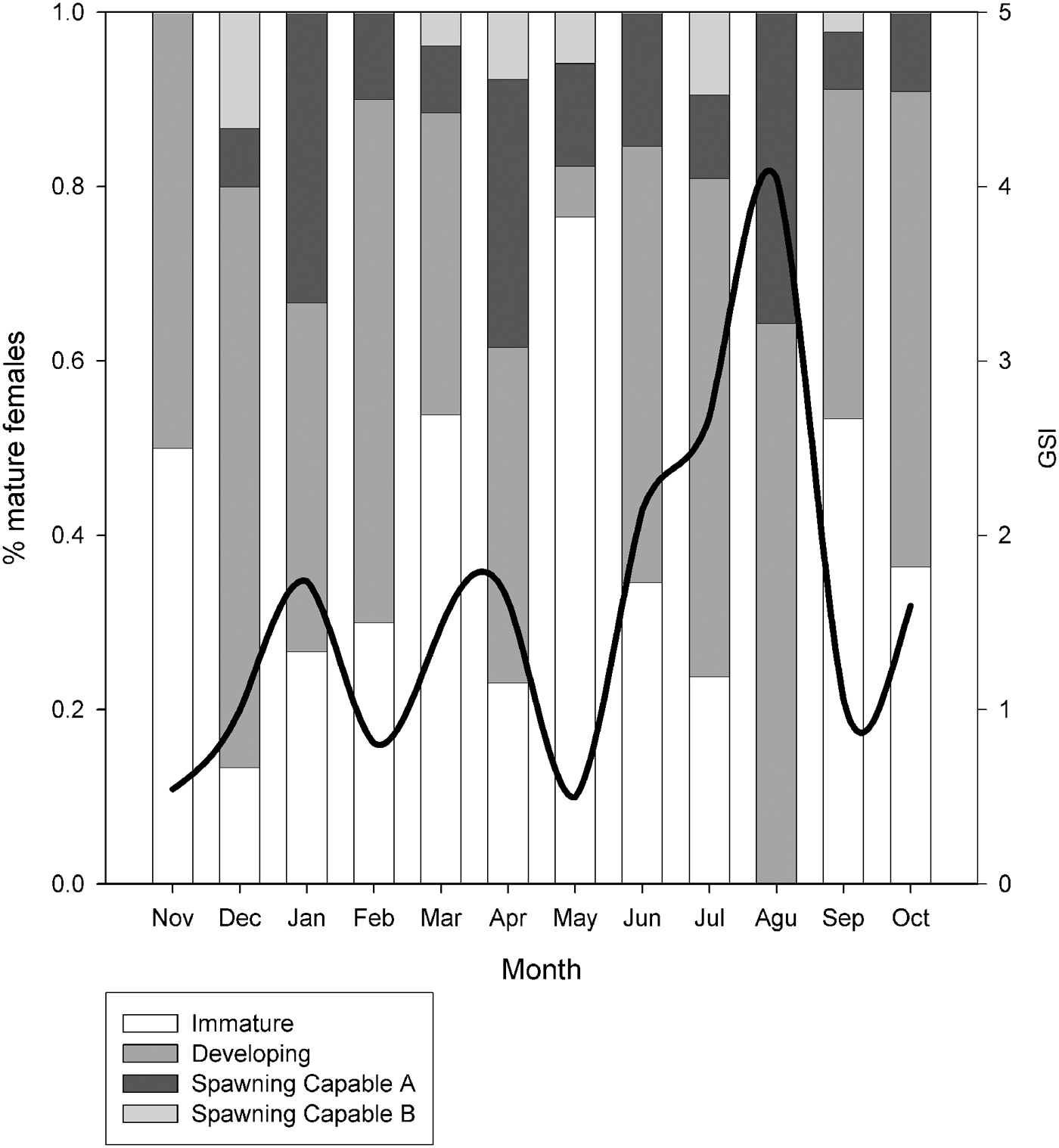
The occurrence of active spawning females was estimated merging the spawning-capable A and B phases (respectively, III and IV phases) into a single group (spawning-capable; Figure 5), in order to highlight the spawning activity during the year. The monthly occurrence of different reproductive phases displayed the presence of active spawning females with hydrated oocytes and/or with new post-ovulatory follicles throughout the year, except in November (Figure 5). These actively spawning specimens showed three peaks during the year: in January (33.33%), April (30.77%) and August (35.71%).
Monthly spawning stages distribution. Histological staging of the hake females: Immature, stage I; Developing, stage 2; Spawning capable A, stages 3 and 4; Spawning capable B, stage 5 (see Table 1 for detailed maturity stage description). Gonadosomatic index values were also plotted referring to the right axis to have more data to evaluate the spawning stage evolution.
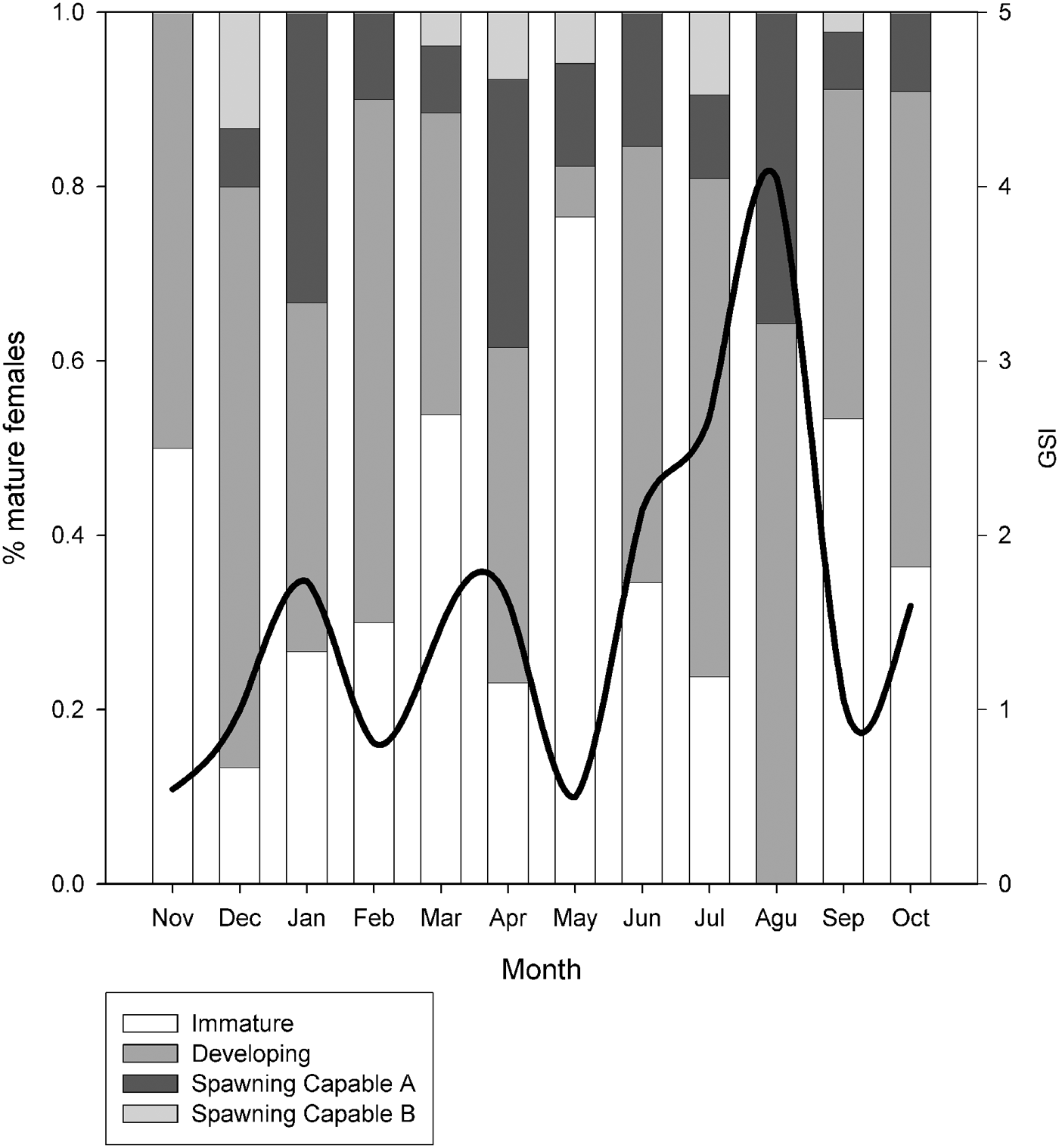
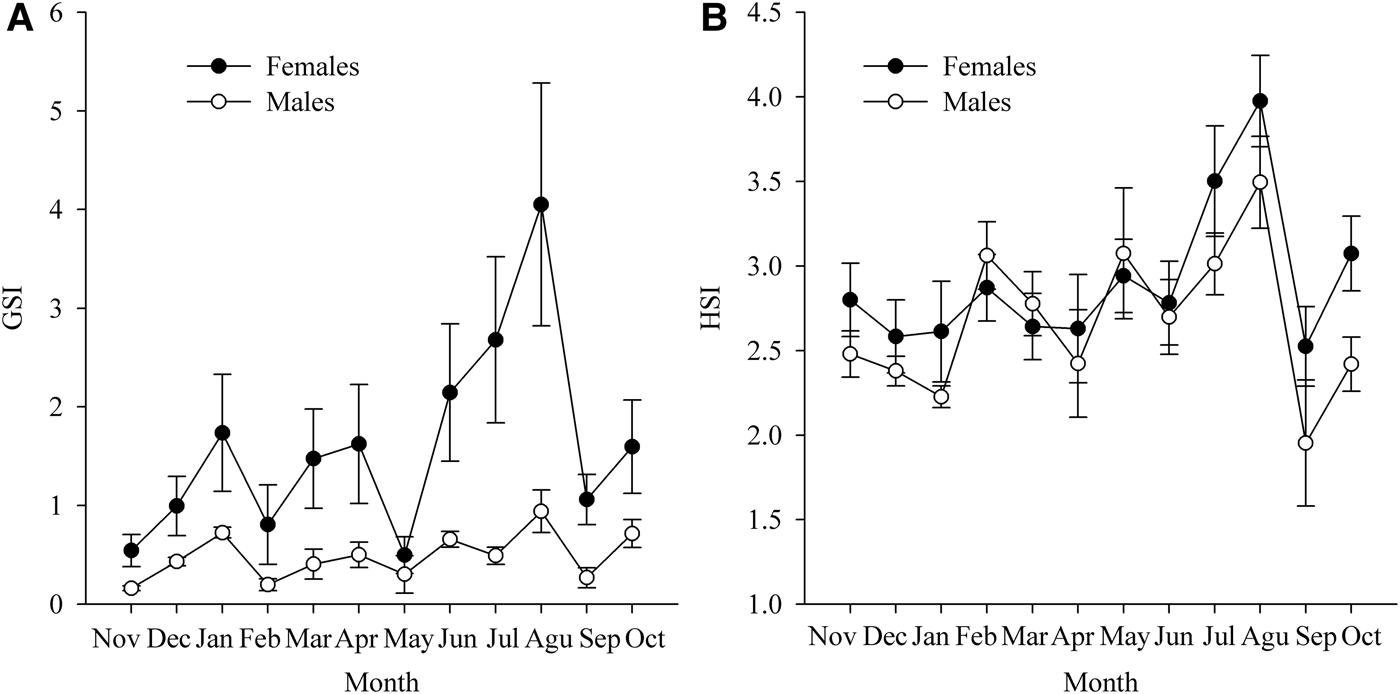
The evolution of the reproductive indices in female of M. merluccius showed that GSI increases progressively from November (0.54) to August (4.05), decreasing abruptly in September (1.06) (Figure 6A). GSI of males was low and did not display a seasonal variation because males invest little energy in developing gonads (Figure 6A). Nonetheless, the HSI showed a similar trend in both sexes, with higher values between May (2.94) and August (3.97) (Figure 6B). A good correlation was observed between HSI and CF (r 2 = 0.42 for females and r 2 = 0.38 for males; P < 0.001), suggesting that HSI could also be representative of body condition.
Monthly variation of gonadic and liver indices in females and males: (A) gonadosomatic index; (B) hepatosomatic index. Vertical bars denote 95% confidence interval.
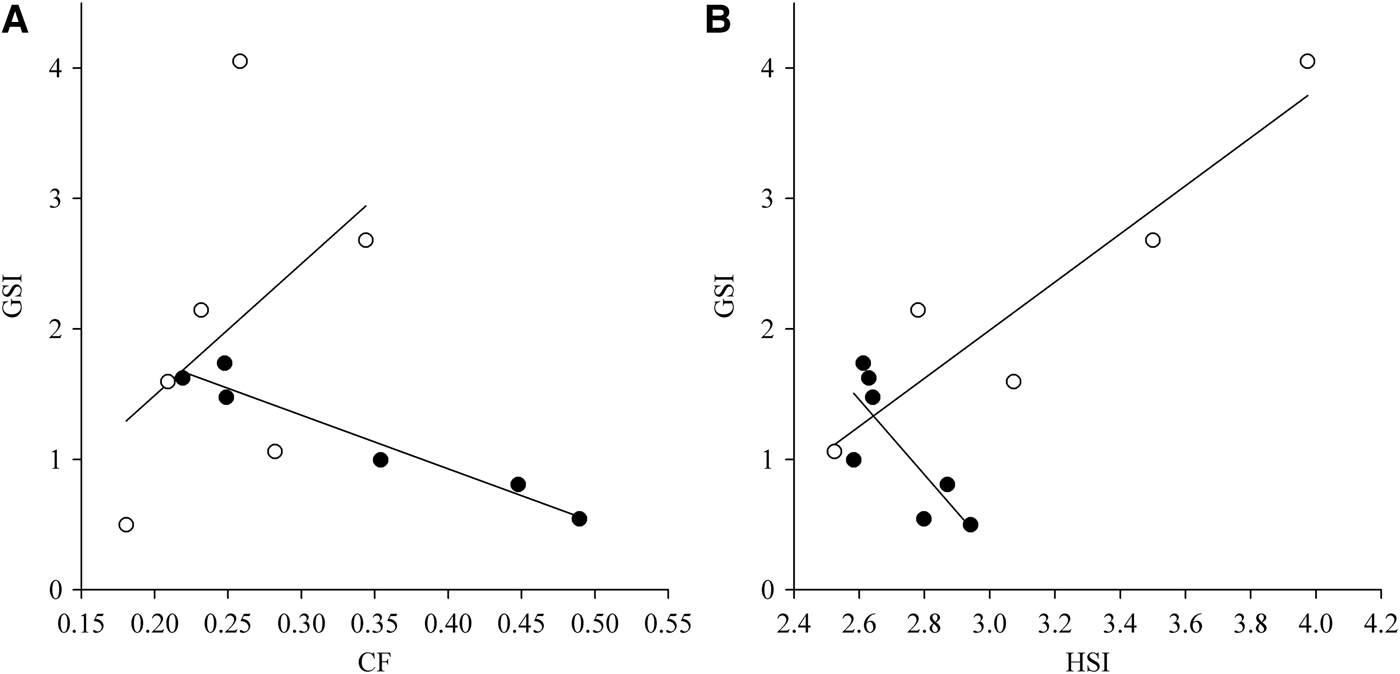
Following the two opposite trends observed in length and weight monthly evolution (Figure 2), the female data were split into two seasonal subsets (Figure 7A). A stronger inverse relationship between CF and GSI in November–April (r 2 = 0.95) and a direct relationship in May–October (r 2 = 0.22) were observed. Separating the dataset as previously (Figure 7B), from November to May the HSI appeared inversely related (r 2 = 0.64) to the GSI, while showing a direct relationship (r 2 = 0.86) from June to October. For males, no significant relationship was observed between the GSI and CF monthly evolution (P > 0.1).
(A) Relationship between the females condition factor (CF) and the gonadosomatic index (GSI), plotting separately the period November 2010–April 2011 (r 2 = 0.95; •) and May–October 2011 (r 2 = 0.22; ○); (B) relationship between the females hepatosomatic index (HSI) and the GSI, plotting separately the period November 2010–May 2011 (r 2 = 0.64; •) and June–October 2011 (r 2 = 0.86; ○).
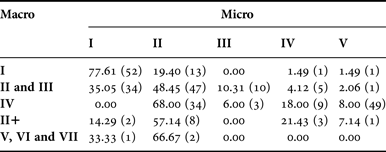
The results of the microscopic classification were used to validate the macroscopic reproductive phase assignment (Table 4). In summary, the phase with hydrated eggs (stage IV macroscopically and stage III microscopically) was easier to recognize with the naked eye. However, the results showed a large misclassification for this reproductive phase: 6% of gonads were correctly classified, whereas 68% of ovaries macroscopically identified as ovulating were indicated as maturing (stage II) when using histological analysis. The immature phase (stage I) seems to be better identified macroscopically than the other maturity phases of ovaries (77.61%).
The overall percentage of correspondence between macroscopic (Macro) and histological examinations (Micro) for each maturity stage; the number of specimens is given in parentheses. In grey the correspondence among corresponding stages.

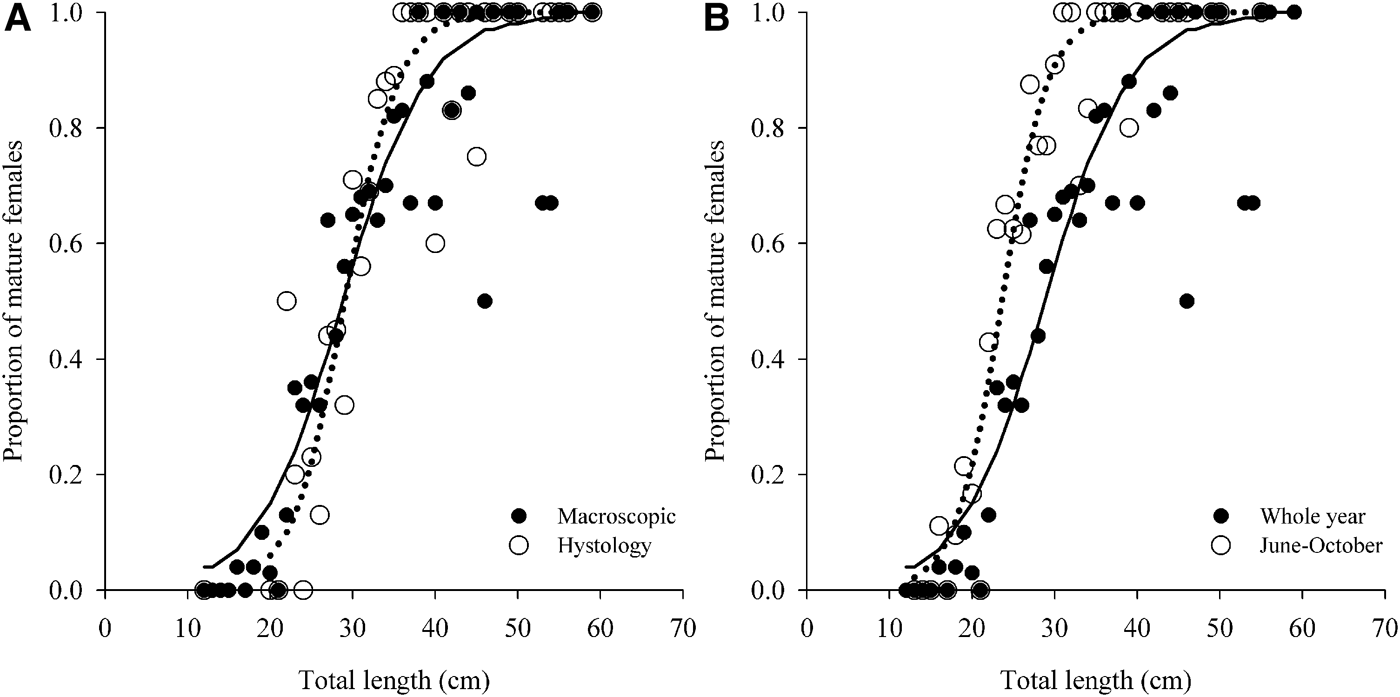
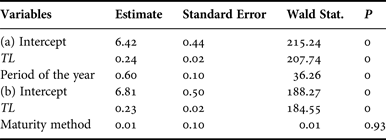
The comparison of maturity ogives and L 50 estimates for M. merluccius females yielded similar values of 28.79 and 29.04 cm, respectively, for macroscopic and histological staging methods (Figure 8A). The binomial GLM carried out on the length taking the method as factor did not show significant differences between ogives obtained by the two aforementioned maturity assignment methods (Table 5). Also, the maturity ogives obtained by macroscopic data from June to October (main spawning period) and from the whole year (Figure 8B) were compared by GLM analysis, showing significant differences between the two datasets (Table 5). Similarly, the L 50 estimate displayed differences in the summer period, with a value of 23.62 cm, smaller than for the whole year (28.79 cm).
Ogive maturity for Merluccius merluccius females: (A) the curves compare the estimates from females evaluated by macroscopic (N = 634) and histological (N = 234) staging of the reproductive phases; (B) the curves compare the estimates from females evaluated by macroscopic staging of the reproductive phases, sampled along the year and only during June–October.
Results of sex-ratio effect on the TW–TL relationship: it was fitted a non-linear equations and including as factor: the selected period of the year (a); the maturity assignment method (b).
DISCUSSION
The reproductive potential of fish stocks is linked to the interactions of several reproductive biological features, such as age and size of spawner, size at maturity, somatic condition and reproductive history (Trippel, Reference Trippel1999). Although males were included in some studies on the reproductive biology of M. merluccius or other species (Tomkiewicz et al., Reference Tomkiewicz, Morgan, Burnett and Saborido-Rey2003; Trippel, Reference Trippel2003; Costa, Reference Costa2013), the maternal condition appears more relevant for reproductive potential assessment (Marshall et al., Reference Marshall, Yaragina, Lambert and Kjesbu1999, Reference Marshall, Yaragina, Adlandsvik and Dolgov2000; Lambert et al., Reference Lambert, Dutil and Ouellet2000, Reference Lambert, Yaragina, Kraus, Marteinsdottir and Wright2003). The presence of males up to 40 cm (TL) in size observed in the sex-ratio vs length pattern is well known in the literature. Although such a size may present minor variations between areas, in other studies similar results have been highlighted for populations both in the Mediterranean (40 cm, Recasens et al., Reference Recasens, Lombarte, Morales-Nin and Torres1998) and in the Atlantic (60 cm, Piñeiro & Saínza, Reference Piñeiro and Sainza2003; 45 cm, El Habouz et al., Reference El Habouz, Recasens, Kifani, Moukrim, Bouhaimi and El Ayoubi2011; 50 cm, Costa, Reference Costa2013). This has been explained in terms of sex differences in growth rate, natural mortality and fishing mortality (El Habouz et al., Reference El Habouz, Recasens, Kifani, Moukrim, Bouhaimi and El Ayoubi2011; Piñeiro, Reference Piñeiro2011), that is, if males grow at a slower rate, especially after the beginning of reproduction, the effect of growth and mortality rate on length will lead to a greater proportion of females having a greater length (Martin, Reference Martin1991). A recent study on M. merluccius growth, using tagging and recapture techniques, demonstrated that females grow faster than males from the second year of life (Mellon-Duval et al., Reference Mellon-Duval, de Pontual, Metral and Quemener2010).
The availability and quality of energy reserves, together with food assimilation, affect the condition of spawners for several reproductive traits (e.g. individual fecundity and egg size) (Tyler & Colow, Reference Tyler and Colow1985), and determine the maturation of individuals (Saborido-Rey & Kjesbu, Reference Saborido-Rey, Kjesbu, Dieckmann, Godø, Heino and Mork2009). To understand the reproductive strategy in terms of energy investment, a requirement is, thus, to assess the seasonal variability of somatic and gonadic conditions.
Seasonal variability of body condition, in terms of weight and length, showed similar trends in both variables, suggesting a period of increasing body size from November to April and a lowering condition period from May onwards. In the former period the gonadic production (GSI) appears clearly linked both to the somatic conditions (CF) than to liver reserves (HIS), while later (May–October) the CF does not appears affected by gonad maturation (r 2 = 0.2). In such a period, although the gonad production increases, similar levels of body condition together with growth of liver mass indicates that other external energy sources (i.e. food) are supporting both gonadic growth and body mass maintenance. The previous observations suggest a seasonal differential use of energy intake, probably depending on the environmental conditions/food availability.
It has been postulated that the fluctuating pattern in CF could be due to the available food intake (Domínguez-Petit, Reference Domínguez-Petit2007). Moreover the hepatic index (HSI) has proved a useful indicator of metabolic state for fishes that store energy reserves in the liver (Shulman, Reference Shulman1974; Crupkin et al., Reference Crupkin, Montecchia and Trucco1988) and appears to be also a good proxy of food intake (Heidinger & Crawford, Reference Heidinger and Crawford1977; Rosenlund et al., Reference Rosenlund, Lund, Sandnes, Braekkan and von der Decken1984). Cartes et al. (Reference Cartes, Hidalgo, Papiol, Massutì and Moranta2009) suggested that greater food consumption by hake may enhance their metabolic condition, as indicated by the increasing trend of stomach fullness with higher HSI.
The inverse relationship between CF and the gonadic indices (GSI and HIS) is reported in the literature for M. merluccius populations inhabiting Atlantic waters (Murua, Reference Murua2006; Domínguez-Petit, Reference Domínguez-Petit2007; Costa, Reference Costa2013). Such a relationship and its variability throughout the year could be explained in terms of intermediate breeding behaviour (capital vs income) of such species in the study area. All total spawners are capital breeders; batch spawners do not exist among extreme capital breeders, but are interspersed along the capital–income continuum (McBride et al., Reference McBride, Somarakis, Fitzhugh, Albert, Yaragina, Wuenschel, Alonso-Fernandez and Basilone2013). Based on its reproductive biology (batch spawner, indeterminate fecundity), in Tunisian waters the seasonal variability of the relationships between somatic condition (CF) and gonadic production (GSI and HIS) indicate that M. merluccius may have an intermediate position between the two extremes. Such species would store energy in the soma mainly during November–May, to be used both for concurrent spawning events (one month later) and for the forthcoming main spawning period (June–October). During latter months, most of the stored energy had already been used for maturing gonads; however, specimens continue to increase their energy investment into gonad weight, indicating other sources of energy intake (i.e. food or mobilization from other somatic reserves). In other studies it was observed that females feed during the breeding season even if ingestion rates increase during recovery (Bowman, Reference Bowman1984; Velasco & Olaso, Reference Velasco and Olaso1998). In general, pre-spawning females seemed to expend more energy on reproductive activities, since they presented lower liver lipid reserves than juveniles and maturing individuals, thus suggesting that lipids stored in the liver of M. merluccius specimens during the maturing phase are later (during breeding) mobilized towards the gonads in order to supply energy to the ovaries for intensive generative synthesis, and to supply essential nutrients, such as fatty acids and lipid soluble nutrients (Chelappa et al., Reference Chelappa, Huntingford, Strang and Thomson1989; Wiegand, Reference Wiegand1996; Brooks et al., Reference Brooks, Tyler and Sumpter1997; Adams, Reference Adams, Arts and Wainman1999; Morris & Culkin, Reference Morris, Culkin and Ackman2000; Okuda, Reference Okuda2001; Lloret et al., Reference Lloret, Demestre and Sanchez-Pardo2008). Moreover Crupkin et al. (Reference Crupkin, Montecchia and Trucco1988) suggest that low values of HSI may reflect not only the energy expenditure for the gonadic growth but also feeding reduction.
In Tunisian waters the persistence of good CF and HSI levels during June–October, indicates that feeding resource availability provides energy both for somatic and gonadic growth. After the main spawning peak, when GSI values decrease, the HSI increases, suggesting that M. merluccius adults do not arrive exhausted at the end of the spawning season.
Merluccius merluccius ovary stages, together with the reproductive indices of monthly evolutions, show a protracted spawning period with defined seasonal peaks. The main spawning peak has been recorded during June–October, with minor peaks in January and April. According to the literature, in the Mediterranean the M. merluccius breeding season shows a certain degree of variability, and the present results are within this variability range. Previous studies undertaken along the northern Tunisian coasts recorded a maximum spawning peak in winter, but two smaller ones were observed also in spring and late summer (Bouhlal, Reference Bouhlal1973). In the Adriatic Sea, the spawning period was established during spring (Alegría-Hernández & Jukić, Reference Alegría-Hernandez and Jukić1992), in winter (February–March) and in late summer (September) in the Ligurian and Tyrrhenian Seas (Orsi-Relini et al., Reference Orsi-Relini, Cappanera and Fiorentino1989; Biagi et al., Reference Biagi, Cesarini, Sbrana and Viva1995); in autumn in the Gulf of Lion (Recasens et al., Reference Recasens, Lombarte, Morales-Nin and Torres1998; Morales-Nin & Moranta, Reference Morales-Nin and Moranta2004); in winter–early spring (between February and May) in the north-western Mediterranean (Lleonart, Reference Lleonart2001). In the North Atlantic waters (Bay of Biscay and Galician Shelf), M. merluccius has defined spawning peaks between January and April (Lucio et al., Reference Lucio, Murua and Santurtun2000; Alvarez et al., Reference Alvarez, Fives, Motos and Santos2004; Murua & Motos, Reference Murua and Motos2006; Domínguez-Petit, Reference Domínguez-Petit2007). Moving southward along the Portuguese coast, spawning peaks were observed in March, May and August (Costa, Reference Costa2013), and finally in southern Atlantic regions (Moroccan waters) the main period is in winter, with a secondary peak in summer (El Habouz et al., Reference El Habouz, Recasens, Kifani, Moukrim, Bouhaimi and El Ayoubi2011). The latter observations may suggest that a latitude effect may modulate the onset and extension of spawning period for M. merluccius (Recasens et al., Reference Recasens, Lombarte, Morales-Nin and Torres1998; El Habouz et al., Reference El Habouz, Recasens, Kifani, Moukrim, Bouhaimi and El Ayoubi2011) and for other species of the same genus. Several populations show differences in timing and duration of spawning season in relation to their proximity to the equator (M. senegalensis, Wysokinski, Reference Wysokinski1986; M. albidus, Cohen et al., Reference Cohen, Inada, Iwamoto and Scialabba1990; M. capensis, Bianchi et al., Reference Bianchi, Carpenter, Roux, Molloy, Boyer and Boyer1993; M. hubbsi, Pájaro & Macchi, Reference Pájaro and Macchi2001). Several populations of Trisopterus minutus show a protracted spawning season, but differ in extension and peaks in different areas (Metĭn et al., Reference Metĭn, Türker Ĭlkyaz and Kinacigĭl2008 and references therein). Also, for M. merlangus population in Atlantic and Mediterranean waters, the differences in reproductive season and peaks have been attributed to latitude (Vallisneri et al., Reference Vallisneri, Scapolatempo and Tommasini2006 and references therein). However, more detailed study will be necessary to discriminate changes due to latitude from those due to habitat variability. Several environmental features (such as temperature and food availability) influence reproductive behaviour and traits of fish populations (Recasens et al., Reference Recasens, Lombarte, Morales-Nin and Torres1998; Dominguez-Petit & Saborido-Rey, Reference Domínguez-Petit, Saborido-Rey and Medina2010). For instance, the reproductive period extension may change within the same species and across Gadiforms according to latitude (Vallisneri et al., Reference Vallisneri, Scapolatempo and Tommasini2006). Other observations suggest that environmental and biological factors may lead to interannual variation in reproductive features (Murua, Reference Murua2006), as has also been observed in other species with indeterminate fecundity (e.g. Engraulis mordax (Hunter & Leong, Reference Hunter and Leong1981) and E. encrasicolus (Somarakis et al., Reference Somarakis, Palomera, Garcia, Quintanilla, Koutsikopoulos, Uriarte and Motos2004; Basilone et al., Reference Basilone, Guisande, Patti, Mazzola, Cuttitta, Bonanno, Vergara and Maneiro2006)). In light of these differences with other species and among different areas, M. merluccius could be considered as adopting an opportunistic life strategy, which is an unusual behaviour for a gadoid and demersal species, raising several questions about M. merluccius biology and ecology that need further investigation (Murua, Reference Murua2010). Taking into account such high variability, more data will be necessary to provide conclusive results on the reproductive ecology of the investigated stock.
Despite the differences in the ogive shapes, the L 50 estimation showed fairly similar results using both macroscopic and microscopic maturity data. This result is probably due to the high percentage of correct classification of immature females when the macroscopic evaluation was applied. Generally, macroscopic analysis is not satisfactory for distinguishing between immature, maturing and resting females (Murua et al., Reference Murua, Kraus, Saborido-Rey, Witthames, Thorsen and Junquera2003; Domínguez-Petit, Reference Domínguez-Petit2007; Vitale et al., Reference Vitale, Svedang and Cardinale2006; Recasens et al., Reference Recasens, Chiericoni and Belcari2008; Ferreri et al., Reference Ferreri, Basilone, D'Elia, Traina, Saborido-Rey and Mazzola2009); however, in our study we observed a good correspondence of immature females between macroscopic and histological reproductive phase identification, confirming the skill of the operators.
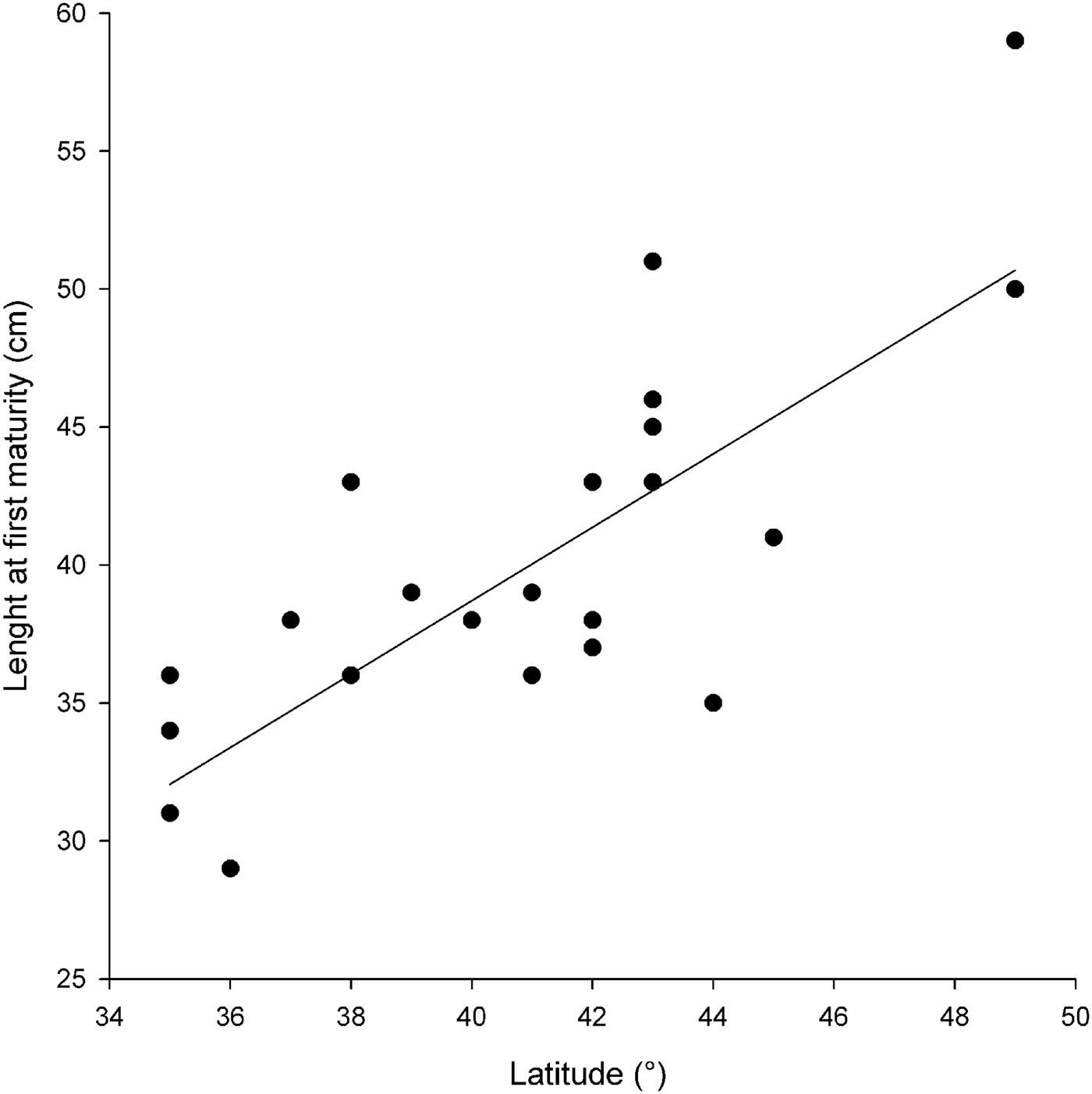
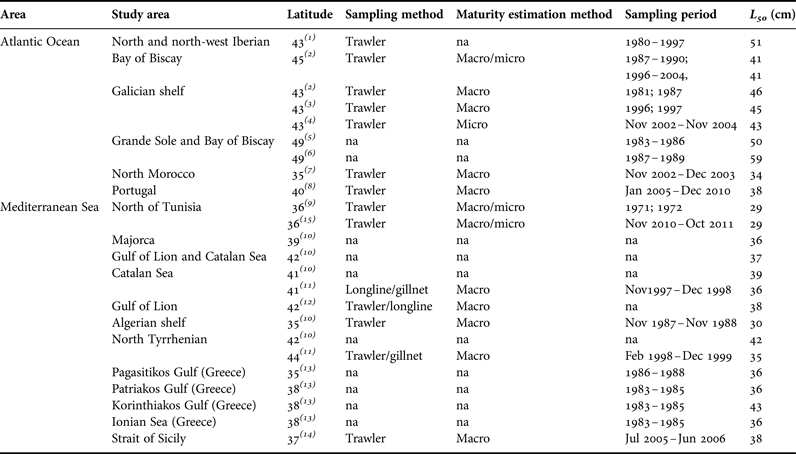
The L 50 values confirmed the results obtained by Bouhlal (Reference Bouhlal1973) for Tunisian M. merluccius populations from about forty years ago. Results obtained by several studies carried out on Atlantic and Mediterranean M. merluccius populations show a decrease in L 50 over the decades, in particular when the stock is over-exploited (Table 3), although this was not evident from our data in Tunisian waters. In the present study, another source of relevant variability of L 50 estimates was identified, in the latitudinal variation of sampling areas. It was observed that the values of L 50 estimates appear directly related to latitude (Table 6; Figure 9) (Spearman correlation coefficient: r = 0.73; P < 0.001). Different results were obtained when the WKMOG-ICES (2008) recommendations for accurate evaluation were applied.
Relationships between L 50 estimations and latitude of the sampling areas, for different populations of M. merluccius, in Mediterranean Sea and Atlantic Ocean. The data are shown in Table 6.
Length at first maturity (cm) for Merluccius merluccius from different regions, respective assessment method, sampling method and period. The latitude was derived by the information available in each study; na, information not available.
(1)Average value from ICES reports (http://www.ices.dk/Pages/default.aspx); (2)Domínguez-Petit et al., Reference Domínguez-Petit, Korta, Saboridorey, Murua, Sainza and Piñeiro2008; (3)Piñeiro & Saínza, Reference Piñeiro and Sainza2003; (4)Domínguez-Petit, Reference Domínguez-Petit2007; (5)Anonymous, 1986; (6)ICES, 1990; (7)El Habouz et al., Reference El Habouz, Recasens, Kifani, Moukrim, Bouhaimi and El Ayoubi2011; (8)Costa, Reference Costa2013; (9)Bouhlal, Reference Bouhlal1973; (10)Bouaziz et al., Reference Bouaziz, Sermoud, Djabalil and Maurin1998; (11)Recasens et al., Reference Recasens, Chiericoni and Belcari2008; (12)Recasens et al., Reference Recasens, Lombarte, Morales-Nin and Torres1998; (13)Stergiou et al., Reference Stergiou, Christou, Georgopoulous, Zenetos, Souvermezoglou, Ansell, Gibson and Barnes1997; (14)Gancitano et al., Reference Gancitano, Cusumano, Badalucco, Rizzo, Comparetto, Sabatella and Fiorentino2007; (15)Present study.
The accuracy of the L 50 estimation becomes more critical, considering that an error could lead to an underestimation of spawning stock biomass (SSB), resulting in inadequate management options (WKMOG-ICES, 2008). One of the basic goals of fisheries management is to conserve sufficient reproductive potential within a stock to allow for sustainable exploitation. For this reason, stocks are generally managed based on maintaining certain levels of SSB, on the assumption that this is an indicator of stock ‘viability’. Both the assessment and management of fish populations, therefore, currently rely on correctly estimating the SSB (Hilborn & Walters, Reference Hilborn and Walters1992), which is based on an accurate length-at-maturity estimate for the population.
ACKNOWLEDGEMENTS
This work was the fruit of a Tunisian–Italian collaboration between the INSTM (National Institute of Science and Technologies Marines) and INAT (National Institute of Agronomy in Tunisia) and IAMC-CNR (Istituto Ambiente Marino Costiero–Consiglio Nazionale delle Ricerche). We express our thanks to the staff of the ‘Kerkenah’ and ‘El Mostakbel’ commercial ships for help and for providing fresh samples.
FINANCIAL SUPPORT
We gratefully acknowledge financial support from the MEDSUDMED project to do the histological analyses in IAMC-CNR.