Introduction
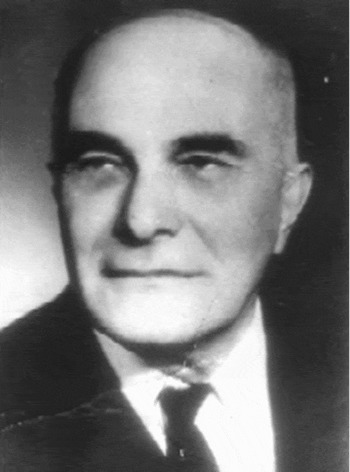
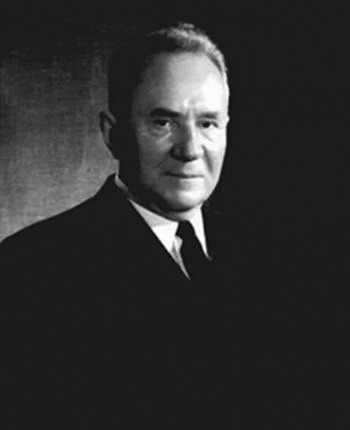
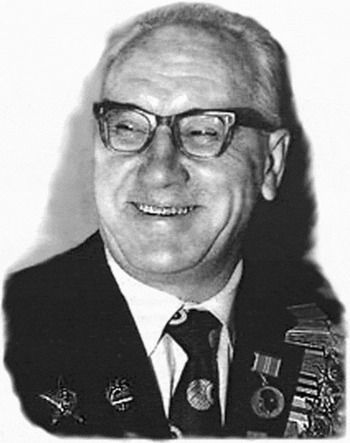
The distinguished American academic Christopher Joyner once wrote that ‘[t]he Soviet Union's polar policies are products of its national interests. As such, they mirror the Soviet government's foreign policy objectives and international priorities’ (Joyner Reference Joyner and Brigham1991: 298). Soviet foreign policy objectives in regard to the North Polar region were most forcefully set out in a report in 1945 by the first deputy director of the then Arctic Research Institute (ARI) Igor Maksimov (1910–1977) (Fig. 1) to the deputy chief and head of the political department of the Glavsevmorput [Northern Sea Directorate] Valerian Novikov, in which Maksimov stresses the importance of preserving the priority of Soviet research and exploration in that area. He saw this priority as being under threat from ‘powerful and active competitors’ in northern America who were displaying a ‘rapidly growing interest’ in the Arctic (Maksimov Reference Maksimov1945: 196). During the mid 1940s these competitors, specifically the US and Canada, were already in the process of organising the Arctic Institute of North America (AINA) which was to be based in Montreal, Canada (MacDonald Reference MacDonald2006: 440).
Igor Maximov (http://www.aari.aq/default_en.html).

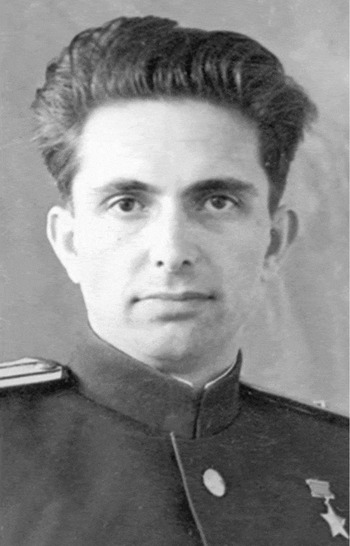
While concentrating attention on practical aspects of Arctic research, especially with regard to developing different methods of transport, the director of the ARI Viktor Buinitski (1911–1980) (Fig. 2) recognised that a wider study of both polar regions would lead to a greater understanding of the earth's atmospheric processes. To this end, at a meeting at the ARI in November 1945 dedicated to the 25th jubilee of its foundation, he proposed that ‘Soviet scientists (should) embark on systematic research in the Antarctic by establishing a permanent geophysical observatory, particularly in the area of the South Pole’ (Buinitski Reference Buinitski1945: 13). At the time, Buinitski's bold proposal fell on barren ground, since the USSR's polar policy was much more focussed on expanding the economic potential of the Soviet Arctic: it had not yet given serious consideration to the South Polar region, although the commencement of operations of the Soviet Slava whaling flotilla in the southern ocean in 1946 demonstrated that the possibility of obtaining economic benefits from that region was certainly recognised. This paper will examine Soviet policy in regard to the South Polar region, which was being shaped in the concluding months of the IGY when intersecting proposals for continuing international scientific cooperation and an international political regime for the Antarctic were being debated. Soviet government policy as outlined by the deputy chairman of the USSR council of ministers and member of the central committee of the Communist Party of the Soviet Union (CPSU) Aleksei Kosygin, and the aims of Soviet Antarctic scientists as envisaged by the deputy director of the newly renamed Arctic and Antarctic Research Institute (AARI) Mikhail Somov, did not always coincide. The paper illustrates these different perspectives and demonstrates that post IGY Antarctic policy was ultimately shaped by a compromise between the two viewpoints.
Viktor Buinitski (http://www.aari.aq/default_en.html).

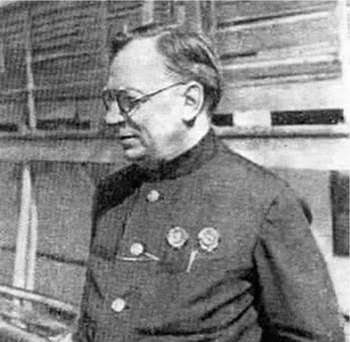
S. Wolk, writing in the Bulletin of the institute for the study of the Soviet Union in 1958, argues that the commencement of operations of the Slava flotilla was in fact ‘the first practical Soviet step towards getting a foothold in the Antarctic after the ratification on 20 November 1946 of a new international convention on whaling’ (Wolk Reference Wolk1958: 44). The flotilla consisted of fifteen vessels: ten whale hunting vessels, four to tow the carcasses and one, Gorbach (Russian: humpback whale) fitted out for conducting biological, oceanographic and meteorological research (Tryoshnikov Reference Tryoshnikov1963: 394). ‘A group of scientists from the All-Union Research Institute of Marine Fishery and Oceanography (VNIRO) has accompanied [the flotilla], studying, in addition to problems peculiar to the whaling industry, the natural features and climate of the Antarctic’ (Wolk Reference Wolk1958: 44). Although scientific research was already being carried out on the whaling flotilla in the southern ocean, according to the perverse stalinist logic of the time, Buinitski's ‘fantastic plans of an expedition . . . to the Antarctic’ to conduct research and establish an observatory were alleged to be an avenue for his own self aggrandizement (Timofeyev Reference Timofeev1947: 17). After the end of World War II when relations between the USSR and the west rapidly deteriorated, Stalin made a decision to abolish all interactions of Soviet citizens with countries outside the eastern bloc. The Ministry of State Control was instructed to ensure that all government institutions complied with the new edict, to which end, in September 1947, the ministry conducted an audit of the ARI in Leningrad. The audit revealed that Buinitski and other ARI staff had divulged scientific data ‘which were considered to be state secrets’ and had corresponded and exchanged publications with western colleagues. Based on these revelations, the USSR council of ministers ordered that Buinitski stand trial in a communist party ‘court of honour’ to answer the charges against him (Timofeyev Reference Timofeev1947: 14–15). Predictably, the court found Buinitski guilty as charged, relieved him of his position as director of the ARI and as a final humiliation, his manuscripts were burned (Boiko Reference Boiko2007). However, his ideas for Antarctic research were conveniently remembered by Professor Vladimir Vize (1886–1954) (Fig. 3) on 10 February 1949 at a meeting of the USSR All-Union Geographical Society (AUGS). Buinitski's proposal for an observatory on the icy continent was used as evidence of the USSR's continuing interest in the region when the society was deliberating on how to react to the US proposal for an international regime for the Antarctic which attempted to exclude the participation of the USSR (Berg Reference Berg1949: 145).
Vladimir Vize (http://www.aari.aq/default_en.html).

The US attempt to exclude the USSR was the catalyst that drove the Soviet government into giving serious consideration to its foreign policy objectives in regard to the Antarctic. First and foremost, these objectives were directed at gaining a voice in the formation of such an international regime, and, in the initial stages, Soviet scientists were at the forefront of formulating and directing this policy (Gan Reference Gan2009 in press a). The meeting of the AUGS on 10 February 1949 helped develop the argument for the priority of Russian discoveries in the Antarctic and attempted to demonstrate the continuity of that interest from the time of Bellingshausen's expedition in 1819–1821. The resolution adopted by the meeting was mirrored in the note of the Soviet government of 7 June 1950 to the Argentine, Australian, British, French, New Zealand, Norwegian and the US governments, which insisted on the right of the USSR to participate in the discussion and solution of all problems relating to the Antarctic (USSR Reference Bush1949; USSR Reference Bush1950; Wolk Reference Wolk1958: 45). Later, during preparations for the International Geophysical Year (IGY) of 1957–1958, the USSR Academy of Sciences and many other scientific research institutions were recruited to help draw up and contribute to the national Antarctic research programme. Towards the latter part of the IGY, however, the parlous state of the Soviet living standards and economy was such that the government felt it necessary to undertake a reassessment of its whole national economic and agricultural policy by calling for an extraordinary congress of the CPSU which was to take place on 27 January – 5 February 1959. Antarctic policy, though not high on the list of priorities, was one of the questions addressed during preparations for the congress. As Boleslaw Boczek correctly pointed out, ‘at the political level, Soviet Antarctic activities are coordinated and supervised by superior government and party organs’ (Boczek Reference Boczek1984: 844). Consequently, on about 29 September 1958, Kosygin wrote (presumably to the interdepartmental committee on Antarctic research) a set of instructions outlining the USSR government's view on the question of Soviet Antarctic activities, which will be discussed later in the present paper.
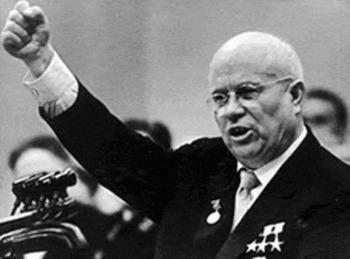
Soviet planning and economic organs were instructed to prepare a draft plan for a seven year period, from 1959 to 1965, which was presented to a one day plenum of the central committee on 12 November 1959 at which they were approved and later published as ‘theses’ for a report by the Soviet leader Nikita Khruschev (1894–1971) (Fig. 4) to the XXIst congress of the CPSU (Conquest Reference Conquest1961: 360). The ‘theses’ made the ideological point that ‘the seven-year plan for the development of the national economy of the USSR for 1959 – 1965 will represent a decisive stage in the creation of the material and technical basis of communism’ (Conquest Reference Conquest1961: 361) and emphasised greater economic competition with the west, particularly the US. An economic victory for the socialist system was seen as a guarantor of world peace and international relations were to be systematically directed towards a peaceful foreign policy, reducing international tension and strengthening socialism and friendship between the socialist bloc countries (Pravda (Moscow) 28 January1959). This much more specifically national economic interest, together with the desire for ‘peaceful foreign policy’, which, at least in relation to Antarctica, was made more likely by the positive experience of international cooperation of the IGY, was becoming apparent when the Soviet government turned its attentions to the future of its activities in the southern continent.
Nikita Khrushchev (http://www.gopb.ru/library/exibition/20s.htm).

At this time, political questions regarding an international regime for Antarctica were very much at the forefront of the Soviet government's Antarctic agenda, as was the desire to maintain a scientific presence in the region. Wolk contends that ‘[t]here appears little reason to doubt that the motive for the newly found interest in Antarctica is not economic or scientific, but political, especially in view of the region's military and strategic importance in the event of a major conflict with the West’ (Wolk Reference Wolk1958: 48). The documentary evidence suggests that while the political factor was indeed of primary importance, there is nothing to suggest that the Soviets had any intention of using the Antarctic for military purposes, although they certainly did recognise its strategic significance. They were keenly aware of the fact that the US, by keeping them out of the region and playing a leading role in any international Antarctic regime, would unquestionably gain a strategic and military advantage. That the militarisation of the Antarctic was not ruled out by the American's defence forces is shown by the studies conducted in defence educational institutions by military personnel. Examples are L. Beall's, thesis ‘Strategic importance of the Antarctic’, submitted to the Air War College (AWC) in April 1959 and H. Croswell's ‘Antarctica: strategic asset or political liability?’ submitted to the same institution in May 1958 (Mann Reference Mann1974: 88, 90). However, active and extensive Soviet participation in the IGY was making the possibility of excluding it from involvement in any decision making process regarding an international regime for the Antarctic more and more remote (see Hall Reference Hall1994, Gan Reference Gan2009). This reality was now recognised by the US, and its note of the 2 May 1958 ‘to the Foreign Ministers of each of the 11 other countries participating in the IGY activities in Antarctica: Argentina, Australia, Belgium, Chile, France, Japan, New Zealand, Norway, South Africa, the USSR, and the United Kingdom’ (United States Reference Bush1958: 474) inviting them to participate in a conference on Antarctica confirmed that the USSR was now being taken seriously as an interested party. The purpose of the conference ‘to join together in the conclusion of a treaty’ to assure freedom of scientific investigation and ‘to ensure that Antarctica be used for peaceful purposes only’ (United States Reference Bush1958: 474) was consistent with the desires of the USSR. In its reply of 2 June 1958 (USSR Reference Bush1958a), the USSR agreed in principle with the aims of such a conference and, understandably, accepted the invitation, since this was exactly the outcome that it had been seeking. A discussion of preparations for the Antarctic conference is beyond the scope of this paper, but a comprehensive and well researched analysis of the events leading up to the US invitation and the progress towards an Antarctic treaty can be found in Robert Hall's dissertation entitled ‘International regime formation and leadership: the origins of the Antarctic Treaty’ (Hall Reference Hall1994).
Intersecting with the US proposal for an Antarctic conference was the proposal to extend international Antarctic scientific cooperation after the conclusion of the IGY. At previous international scientific gatherings, Soviet scientists had indicated a strong interest in continuing Antarctic research and supported the US IGY national committee telegramme of December 1956 asking ‘whether participating nations believe the IGY Antarctic program should be continued for an additional year to realise the full scientific benefit’ (Annals of the IGY 1958: 474; Gan Reference Gan2009). As a result, on 11 July 1958 the USSR council of ministers issued a decree according to which the USSR interdepartmental committee suggested to the Comité Spécial de l'Année Géophysique Internationale (CSAGI), which was to meet in Moscow from 30 July–9 August 1958 of that year, to extend the IGY for one year (from 1 January until 31 December 1959). The decree also directed the minister of the merchant fleet Viktor Bakaev (1902–1987) to take into budgetary consideration the new obligations that were taken on by the USSR during the IGY extension. The direction was passed down the line by the acting chief of the Glavsevmorput Vasily Burhanov (1908–1982) who wrote to the acting director of the AARI Pavel Gordienko (1913–1982) instructing him to start planning the implementation of the new commitments (Burhanov Reference Burhanov1958). The CSAGI decision to extend the IGY by one year and name it the year of International Geophysical Cooperation (IGC) was seen by the ‘official historian of the AARI’ Belov (Hanessian Reference Hanessian1962: 22) as, in effect, extending research for a period much longer than one year, that is until the International Quiet Sun Year of 1964–1965 (Belov Reference Belov and Tostikov1969: 91). This is significant in that the extension of the IGY and the American proposal for a conference on Antarctica were international developments favourable to Soviet interests. These latest realities now needed to be incorporated into government discussions about new opportunities opening up for Soviet Antarctic strategy, particularly in view of the government's seven year plan which was to be presented at the XXIst congress of the CPSU in early 1959.
Kosygin's instructions
In the process of preparing the seven year plan, Kosygin (Fig. 5) asked the interdepartmental committee to ‘prepare a comprehensive memorandum about our Antarctic operations’ which would formulate long term plans for Antarctic research and specify allocations for each year ‘at least until 1965’. The memorandum was to:
indicate what had been achieved in 1958, what plans were submitted to international bodies and what was envisaged for 1959;
provide a basic outline of long term plans, which stations were to be maintained and which stations wound down; and
provide information about the operations of other countries in Antarctica and the sub-Antarctic, their expenditure and the extent and thrust of their operations.
Aleksei Kosygin (http://www.pravda.ru/photo/report/kosigin-80/0/).

The committee was also asked to prepare a draft of a decree of the central committee of the CPSU on the question of further Antarctic research endorsing the seven year operations plan as well as ‘the long term maintenance of our stations in Antarctica’. The instructions indicated the issues that were to be considered in drafting the memorandum and decree and directed that ‘this information should be provided to comrade Kosygin within one week, i.e. by the 6th October [1958]’ (Kosygin Reference Kosygin1958: 2). Kosygin was insistent that the key issue to be considered was the Soviet national interest: the Antarctic should not be viewed solely through the prism of Soviet IGY commitments, ‘because in the future, operations in Antarctica will have a 60%-70% bearing on the sovereignty of the Soviet Union and its right to take part in political discussions about the Antarctic’ (KosyginReference Kosygin1958: 3). He suggested that the committee, when considering the direction of Antarctic research, should bear in mind ‘operations necessary for our nation, irrespective of whether they are part of the IGY programme. . . It is not strictly necessary to fulfil all our IGY commitments. The interests of our own country should be uppermost, whatever other countries may say of us’ (KosyginReference Kosygin1958: 3). Kosygin further suggested that Soviet operations should be relocated to ice free areas of exposed rock in locations ‘which could be of interest’ such as Queen Maud Land and the Bellingshausen Sea coast, particularly since the Federal Republic of Germany and Italy were intending to conduct research in Queen Maud Land. Due to the fact that Soviet Antarctic operations had such strong international political ramifications, those responsible for implementing the Soviet Antarctic programme were to ‘liaise with the Ministry of Foreign Affairs regarding operation plans and the establishment and maintenance of new stations’ (Kosygin Reference Kosygin1958: 1, 3).
Joyner asserted that ‘[s]ince 1958, the Soviet Union has worked steadily to bolster and firm up the legal basis for a claim in Antarctica, if someday that development were to become warranted’ (Joyner Reference Joyner and Brigham1991: 296). That this was indeed the case can be construed from the fact that one of the Soviet aims was to establish bases that covered ‘the entire continent’ with a view to building up ‘a legal basis for a possible future territorial claim. This time it would rest not just on discovery, but on extensive exploratory, scientific and similar activities, which [were spreading] from the initial bases in the Australian sector to all other parts of the continent’ (Boczek Reference Boczek1984: 842). Joyner's reasoning was based on post IGY Soviet Antarctic activities which had ‘taken on a multifaceted character through more extensive and enhanced scientific, exploratory and research-related activities throughout the continent’ (Joyner Reference Joyner and Brigham1991: 296). Frank G. Klotz considered that, paradoxically, it seemed that the IGY ‘gentleman's agreement’ between those participants having Antarctic territorial claims and those who had not made a claim (under which their IGY activities were to have no bearing on any future claims) had in fact given ‘the claimants – as well as the United States and the Soviet Union – greater legal ammunition for asserting title to the Antarctic territory’ (Klotz Reference Klotz1990: 30). To add to this ‘legal ammunition’, Kosygin urged that Soviet researchers concentrate their attention ‘on the applied practical goals of their research: in the first instance to conduct aerial photography of the entire coast in order that the Soviet Union obtain a reliable map of the coastline with its bays, inlets, mountain ranges, submarine contours and the hydrological and biological characteristics of Antarctic waters’ (Kosygin Reference Kosygin1958: 2). The question of mapping the Antarctic continent and its waters was one which was seen by the Soviets as ‘reinforcing the leading role of [our] researchers in Antarctic exploration’ (Lebedev Reference Lebedev1960) and as a consequence, reinforcing any legal rights that may accrue from such exploration. The practical thrust of the proposed activities led Joyner to conclude that the USSR was also motivated by ‘the prospects that these multifaceted activities will enhance the Soviet Union's future opportunities in securing access to hard minerals and hydrocarbons in the Antarctic, if indeed any are ever discovered and subsequently developed’ (Joyner Reference Joyner and Brigham1991: 297).
Joyner's analysis is probably closer to the mark than Wolk's. Wolk, after all, wrote his paper prior to the conference on Antarctica and the signing of the Antarctic Treaty, which excluded the possibility of militarisation of the region. An article written by Vsevolod Polushkin, an engineer from the department of marine expeditions, and Sergei Ushakov, a member of the council for Antarctic research, which appeared in the Soviet magazine Tekhnika Molodezhi in March 1956, intimated that if any economically viable mineral or oil deposits were discovered in the Antarctic, there ‘is no doubt that they will be developed’ (Polushkin and Ushakov Reference Polushkin and Ushakov1956: 8). Although a note from the chief of the Glavsevmorput Burhanov and deputy chief Tolstikov to the central committee of the CPSU criticised the article on the basis that it may lead to a distorted view of Soviet Antarctic policy overseas (Burhanov and Tolstikov Reference Burhanov and Tolstikov1956), which resulted in a ban being placed on the dissemination of the magazine, it seems that after the enthusiastic international scientific cooperation of the IGY, the USSR was altering the course of its Antarctic research. Just as prior to the IGY the ‘pursuit of expedition objectives that might substantiate national interests were major reasons for exploration activities in Antarctica’ (Smith Reference Smith1969: 36), after the conclusion of the IGY the USSR was realigning its own activities in line with these national interests. The change from ‘pure’ science to a more practical approach is clearly evident in Kosygin's instructions, which note with approval the whale studies conducted by the Soviet marine expedition (the Soviet Antarctic expedition (SAE) in 1955–1958 consisted of continental and marine components). Kosygin praises the help rendered to the Slava whaling flotilla by the expedition ship Ob’ in locating areas with large whale populations and recommends that such close collaboration continue in the future.
More importantly, he emphasises the necessity of compiling not only geographical, but also geological maps of ice free areas which would identify ‘useful resources’. The results of this more practical research were to be used solely for the benefit of the USSR, and for that reason Kosygin displays certain sensitivity about sharing the results of Soviet research with other nations involved in the Antarctic. He suggests that Soviet scientists ‘[p]ay particular regard to collecting reciprocal data so that our publications contain data equivalent to that received by our country’ and raises the question of processing and publishing data ‘bearing in mind our international obligations as well as the interests of our country’, concluding that ‘perhaps we shouldn't publish geological findings and characteristics, especially if we don't receive others’ work in return’ (Kosygin Reference Kosygin1958: 2, 3). This policy of quid pro quo was more or less consistently applied in the exchange of data with other countries and on occasion was a source of frustration for other national expeditions attempting to extract information from the Soviets about the research results of their Antarctic programme. However, other countries also applied such a policy in regard to the Soviets when they did not receive equivalent data. For example, the Australian department of external affairs reminded Dr Fred. Jacka, chief scientist of the Australian Antarctic Division that ‘[y]ou will be aware of the Prime Minister's circular memorandum of 1956 relating to exchange with Iron Curtain countries, and the instruction that information may only be transmitted from Australia when there is reciprocal exchange which is equal in value. The evident reluctance of the Russians to meet your request must necessarily result in a curtailment in data supplied by Australia’ (Birch Reference Birch1961). Kosygin had urged Soviet scientists to ‘thoroughly research the set-up of similar foreign observatories, expeditions and stations, analyse their operations, review their programmes in relation to ours and apply what is rational in their technology and organization to our observatories and stations’ (Kosygin Reference Kosygin1958: 4). This, of course, was not an unusual practice for Antarctic researchers of all countries: the director of the Australian Antarctic programme, Phillip Law also ‘asked all members of the [Australian] Expeditions (sic) to write short reports at the end of a visit to the Soviet Mirny station ‘on subjects in which they were competent’ (Law Reference Law1959). Earlier, the Australians had drawn on the experience of the first Soviet traverse into the interior of the continent; the officer in charge of the Australian Mawson station in 1957, Keith Mather, wrote that the Australians were able ‘to draw on Russian experience with long-distance heavy tractor transport on the Antarctic plateau’ which ‘proved useful when we undertook our inland journey several months later’ (Mather Reference Mather1957; Gan in press b). From their side, the Soviets showed interest in the construction of the Australian station which ‘was built from light, fireproof alloys and very well equipped’ (Afanasiev Reference Afanasiev1962).
An additional concern for Kosygin was to reduce thesubstantial government funding required to continue the Soviet presence in the Antarctic. During the IGY, the USSR government placed ‘virtually no financial restrictions’ on the Soviet Antarctic expedition (Bouchier Reference Bourchier1956; Gan in press b). However, the parlous state of Soviet agriculture and the reassessment of economic priorities in the new seven year plan necessitated a tightening of purse strings. The USSR had by that time also embarked on extensive and very expensive research and development of its space programme and various types of military ballistic missiles (Khozikov Reference Khozikov2004). In addition, it had resumed nuclear weapons tests after a short hiatus in response to ‘a long series of tests’ conducted by the US and Great Britain in the summer of 1958 (Sakharov Reference Sakharov and Lourie1990: 207–209), which measures required a huge government outlay and were considered to have a greater significance for national security than Antarctic scientific research. Kosygin called for the committee to ‘come to the conclusion about the necessity of curtailing the extent of Soviet [Antarctic] operations and the corresponding outlay’ (KosyginReference Kosygin1958: 1). He was quite specific in his recommendations about how this was to be done. The committee was to:
reconsider the necessity of the USSR's IGY commitment of establishing Sovetskaya station [at the pole of inaccessibility];
consider winding up the continental stations and reducing operations at Mirny observatory;
decrease the size of the expedition considerably, possibly to about 145–150 people;
press ahead with more active seasonal work in the favourable summer period and have fewer people wintering, no more than the Americans (80–84 people);
reconsider the advisability of undertaking a transantarctic traverse;
change over to air transport in the future with shipping only being used for heavy cargo;
restrict expenditure on the Antarctic to no more than 50 million roubles for 1959, 45 million roubles for 1960 and 35 million roubles or even 25 million roubles for the following years; and
transfer Soviet stations intended for closure to Eastern bloc countries such as Poland and Czechoslovakia if they were willing to take them (Kosygin Reference Kosygin1958: 1, 3–4).
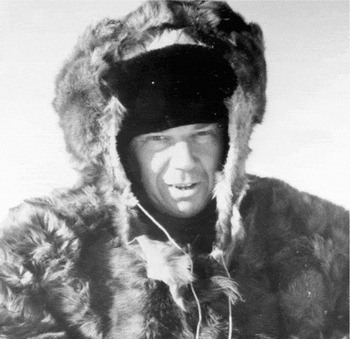
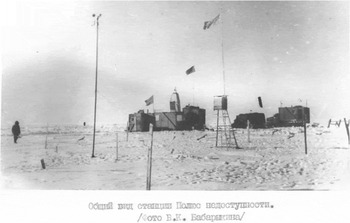
The interdepartmental committee's reply to Kosygin's instructions was not found in the archives, but by examining the directions that Soviet research was taking in the Antarctic, it is possible to gauge the effect of his instructions on future Soviet Antarctic activity. The interdepartmental committee had already confirmed the Soviet plans at the international CSAGI assembly and associated SCAR meeting in Moscow on 4–11 August 1958 (see Gan Reference Gan2009) prior to receiving Kosygin's instructions. Although the instructions broadly supported the thrust of the plans agreed to by the USSR national committee, they appeared to be steering the scientists to adopt a more frugal and less international slant to their research. However, the scientists, notwithstanding their communist party membership and obligation to follow party directives, demonstrated no great enthusiasm to curtail research or deviate from their international scientific obligations in the Antarctic. The deputy director of the AARI Somov, who was responsible for Antarctic research, shrewdly resisted Kosygin's suggestion to discontinue observations at the inner continental stations using both scientific and political counterarguments. From the perspective of scientific enquiry, Somov argued that Vostok station, which was located at the south geomagnetic pole, was ‘one the most important locations for studying the geophysical phenomena of our planet’ and followed up with the politically fraught observation that its closure ‘would be a blow to the prestige of the Soviet Union in Antarctic research, since the USA will continue observations on both its inner continental stations’ (Somov Reference Somov1959) (Figs. 6, 7). He acknowledged the necessity of an extensive geographical and geological investigation of the Antarctic in order to discover areas suitable for future Soviet operations and made the observation that by postponing exploration of the Bellinghausen Sea, the USSR would lose its priority acquired by Bellingshausen's expedition and leave it open for the USA to entrench itself there (Somov Reference Somov1959). Likewise, the national prestige gained in being the first expedition to reach the pole of inaccessibility and being true to its international scientific commitments was instrumental in the SAE being able to continue with its formidable task of building an ‘official’ IGY station and conducting observations in this remotest of locations (Avsiuk Reference Avsiuk1979; Bertram Reference Bertram1957: 16; Gordienko and Burdikina Reference Gordienko and Burdikina1958; Tolstikov Reference Tolstikov1980: 122, 127). The ‘unprecedentedly difficult assault on the Pole of Relative Inaccessibility’ (Savatyugin Reference Savatyugin2007) resulted in opening the station on 14 December 1958 at a location 82° 06’ S, 54° 58’ E, at which meteorological, actinometrical and glaciological observations were conducted for the last two weeks of the IGY (Fig. 8). The fact that the station was actually opened, albeit for a short period of time, and that Somov's argument for continuing operations at Vostok station ultimately prevailed over Kosygin's suggestions, was indicative of the pivotal role that scientists played in Soviet Antarctic policy.
Igor Ruban. At Vostok station. Work at temperature –80°C (http://www.ruban.ru/paintry/38.html).

Mikhail Somov (photograph from the personal collection of L. M. Savatyugin).

Pole of Inaccessibility station (Photo by V. Babarykin from the AAD Library).

Impact on further Soviet Antarctic expeditions
However, despite the lack of enthusiasm of the scientists for the suggestion to curtail their activities in the Antarctic, Kosygin's instructions could not go unheeded. Prior to the instructions being issued, the acting chief of Glavsevmorput, Burhanov, wrote to the acting director of the AARI, Gordienko, on 23 August 1958, asking him to start planning the implementation of the new international obligations during the 1959 fourth SAE. These recommended that all participant countries maintain the same level of research in 1959 as that attained in 1958 as decided at the fifth assembly of the CSAGI (Burhanov Reference Burhanov1958). On 19 November 1958, immediately prior to the departure of the fourth SAE from Kaliningrad, plans were modified in line with Kosygin's instructions. The chief of Glavsevmorput, Alexandr Afanasiev (1903–1991) ordered that ‘in consideration of the cutbacks of the marine Antarctic expeditions and the reduced manpower of the continental Antarctic expedition’, measures be taken to sort through all the equipment, specialised clothing and other materials which were ready to be loaded and return the excess to the AARI for use in the Arctic (Afanasiev Reference Afanasiev1958). Structural changes had resulted in the expedition no longer having a separate marine component as was the case in the first three expeditions. The marine expedition had now been reduced to an oceanographic unit headed by the partially rehabilitated Buinitski on board the Ob’. Another consequence of the cutbacks was the decommissioning of the Oasis station in the Bunger Oasis on 17 November 1958 and its transfer to the Polish academy of sciences on 23 January 1959 (Lukin Reference Lukin, Kornilov and Dmitriev2006: 435). Observations were continued on the all year stations, the coastal Mirny and Vostok at the south geomagnetic pole. Komsomolskaya station (used as an intermediate base in the Soviet effort to reach the pole of inaccessibility and the south geomagnetic pole) was transformed from an all year station to a summer one, and the other intermediate stations Sovetskaya, Pionerskaya as well as the Pole of Inaccessibility station were closed. A new station, Lazarev in an area previously explored by the Russian expedition, which had approached the Antarctic ice shelf as close as 69° 21’ S on 16 January 1820 (old style) was built in Queen Maud Land on the Princess Astrid Coast close to the Wohlthat Massif and the ice free Schirmacher Oasis at a position 69° 58’ S, 12° 55' E (USSR 1963: 219–220). It would seem that the intention in building the new station was both to assert priority of discovery and to conduct geological exploration aimed at evaluating the possible economic potential of these mountainous and ice free areas of Antarctica (USSR 1958b). Although not all of Kosygin's instructions were implemented by the fourth SAE of 1958–1960 in the year of IGC, their effect was certainly starting to be felt.
The first explicit mention of the fact that an expedition was being organised in accordance with the seven year plan for Antarctic research (1959–1965) was made by Somov in his explanatory note about plans for the fifth SAE, which was to continue and expand Soviet observations in the Antarctic (Somov Reference Somov1959). He gives an overview of what has been accomplished thus far: a total of two coastal and six inner continental stations were built at which meteorological, glaciological and geophysical research was carried out. The two coastal stations, Mirny and Lazarev and the inner continental station Vostok were continuing operations. Somov argues that it was essential that operations at Mirny be kept at their current levels since it was the main Soviet base, and that the location of Vostok at the south geomagnetic pole and the fact that the Americans were retaining their inner continental station required that the USSR maintain operations at its only permanent inner continental station. Lazarev, too, should continue operations mainly because it was to be the base for exploring the large ice free areas of Queen Maud Land, as well as being the terminal point of a seismo-glaciological survey route. It was envisaged that Lazarev would later become the main base instead of Mirny. Half of east Antarctica had been explored by air and a large section of its coastline had been photographed (from 45° to 168° E) with geographical, geological and glaciological work being undertaken at various sites on the ground. Draft plans for the fifth SAE took into account the stipulation of the minister of the merchant fleet, Bakaev, regarding the ‘need for wide geographical and geological exploration of Antarctica with the aim of determining regions suitable for further attention of the Soviet Union’ by including a geologic/geographic team of eight men who were to conduct reconnaissance work in ice free areas of the continent. The shores of the Bellingshausen Sea were also to be explored using the expedition ship, since reports from the Slava whaling flotilla in March 1959 had indicated that the ice conditions in the area were favourable. Somov conveyed a sense of urgency for exploring the Bellingshausen Sea area, since the Americans had indicated at the SCAR meeting in Canberra on 2–6 March 1959 that they too were interested in exploring the same area: the USSR should be there first to shore up its priority of discovery of the area by Bellingshausen's expedition in 1819–1821. Somov concluded by noting that after the end of the IGY, ‘the range of activities conducted by the SAE has been drastically curtailed’: total expenses incurred by the third SAE (1957–1959) constituted 83 million roubles and it had a wintering party (excluding the aviation team) of 147 men and 112 summer personnel whereas the fourth SAE (1958–1960) had incurred expenses of 35 million roubles and had a wintering party of 93 and 30 men during the summer season. These figures differ from the ones quoted by Savatyugin in the table below and are different again from those quoted by Lukin in his book published in 2006 Soviet and Russian Antarctic expeditions – facts and figures (Lukin Reference Lukin, Kornilov and Dmitriev2006: 420). Further significant savings could have been made only by cancelling exploration of the Bellingshausen Sea or closing Vostok or Lazarev, but the ‘impelling need for conducting work in all these areas is evident’ (Somov Reference Somov1959).
Somov, in his capacity as deputy director of the AARI responsible for Antarctic research, put forward compelling reasons against the financial restrictions imposed by Kosygin, and even attempted to obfuscate the issue of the numbers of men who were left to winter in Antarctica. The proposed budget for the fifth SAE (1959–1961) was 34 million roubles with a wintering party of 83, although due to the amount of work required to be done by the geology/geography team, which was meant to be seasonal, it was more appropriate that the eight members of the team stay for the winter, thus making the wintering party only two fewer than the previous year (Somov Reference Somov1959). The summer seasonal team however was reduced to eight (nine according to Savatyugin Reference Savatyugin2004 and Lukin Reference Lukin, Kornilov and Dmitriev2006). ‘Further decrease in the complement of the expedition would be inappropriate, since it would not significantly reduce the cost of the expedition, but would substantively affect the extent of observations and damage the prestige of Soviet science and of the Soviet government in general in Antarctic research’. He concludes with the observation that the fifth SAE should continue with exploration of east Antarctica and begin exploration of west Antarctica ‘in order to determine over the next 2–3 years the most promising areas for further investigation’ (Somov Reference Somov1959). Somov continued to push the boundaries of the limits imposed on Antarctic research by the financial restrictions to the point where his draft plans for the sixth SAE (1960–1962) were rejected by the deputy chief of the Glavsevmorput, Tolstikov, who wrote that Somov's plans ‘according to the new scheme’ should have led to a significant reduction in the winter personnel of the expedition and ‘[o]nly in that case could the plans be considered appropriate for realization’ (Tolstikov Reference Tolstikov1960). Apparently, Somov was also seeking greater freedom in decision making during the expedition, under which the expedition leaders would develop plans on the move as it were, taking into consideration local Antarctic conditions. Tolstikov advised Somov that, on the contrary, plans should be ‘firm, concrete, practicable and worked out by the AARI, the leaders of the Fifth SAE and other interested institutes. In Antarctica, the plans should be strictly adhered to. . .’ (Tolstikov Reference Tolstikov1960).
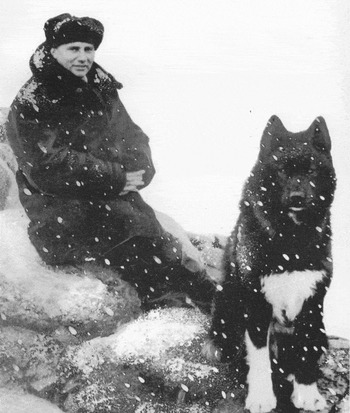
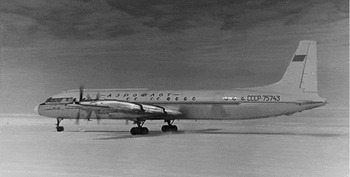
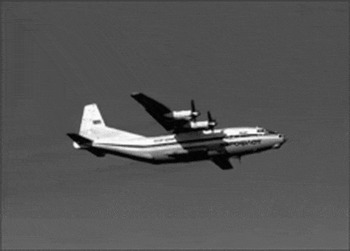
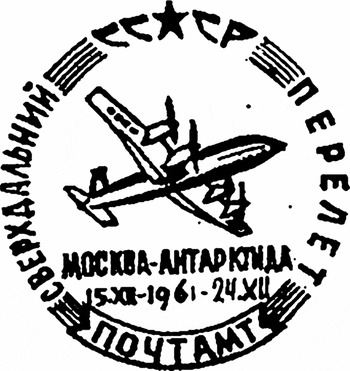
Further evidence that the Soviet Antarctic programme was adopting Kosygin's instructions were the plans for trial flights of IL-18 and AN-12 aircraft from Moscow to Antarctica with the view of utilising these aircraft for operational support of the SAE as drafted by the director of the AARI Aleksei Tryoshnikov (1914–1991) (Figs. 9, 10, 11, 12). Both aircraft were to leave Moscow simultaneously in December 1961 carrying equipment and members of a traverse which was to depart from Vostok station as well as a team of specialists to carry out meteorological, actinometrical and high altitude observations from on board the AN-12. On arrival at Mirny, the AN-12 was to change its landing gear to skis and begin supply flights to Vostok, whereas the IL-18 was to return to Moscow with the previous year's wintering party (Tryoshnikov Reference Tryoshnikov1961a). These historic Moscow–Antarctica–Moscow flights were viewed by the leader of the seventh SAE Alexander Dralkin (1911– 2007) as a ‘new glorious page in the evolution of Soviet aviation opening up prospects for a permanent air link between the capital of our motherland Moscow with the distant new continent Antarctica’ (Dralkin Reference Dralkin1962). Dralkin went on to wish his comrades ‘new remarkable successes in their work for the benefit of the motherland in the name of communism’ (Dralkin Reference Dralkin1962) (Fig. 13).
Aleksei Tryoshnikov (photograph from the personal collection of L. M. Savatyugin).

Ilyushin Il-18 (http://af1461.livejournal.com/121131.html).

Antonov An-12 (http://www.airshow.ru/photos/an-12.htm).

Postal stamp. Long range flight Moscow-Antarctica (http://www.ivki.ru/kapustin/stempel/page_01.htm).

Alexandr Dralkin (photograph from the personal collection L. M. Savatyugin).

Conclusion
From the above, it can be seen that there were both differences and similarities between the Soviet government's and the Soviet scientists’ view of the thrust of Soviet research in the Antarctic. Several of Kosygin's instructions were carried out, others were disregarded:
All permanent inner continental stations except Vostok ceased operations, although operations at Mirny were not significantly reduced, which was a compromise solution.
Whereas the first three SAE had a high number of personnel, only the fifth, sixth and seventh SAE had numbers in line with Kosygin's instructions as seen in the table below (based on Savatyugin Reference Savatyugin2004: 31)

A trial flight directly from Moscow to Antarctica via Tashkent, Delhi, Rangoon, Jakarta, Darwin, Sydney, Christchurch, McMurdo, Bunger Oasis on to Mirny and return, was accomplished from 15 December 1961 to 2 February 1962 at the beginning of the seventh SAE (Savatyugin and Preobrazhenskaya Reference Savatyugin and Preobrazhenskaya1999: 114) as recommended by Kosygin.
A transantarctic traverse from the intermediate Komsomolskaya station to Amundsen–Scott base at the South Pole was completed in November 1959 (4th SAE) and a Mirny–Komsomolskaya–Vostok traverse completed in October 1960 (5th SAE), under which the desire of the scientists prevailed over Kosygin's recommendation.
Expenditure for the third SAE was 83 million roubles, reduced to 35 million for the fourth, and Somov's projected costs for the fifth SAE were 34 million roubles (Somov Reference Somov1959).
Oasis station was transferred to Poland on 23 January 1959 and renamed Dobrovolski.
The last two points were also in line with Kosygin's instructions. Clearly, government policy and the associated financial constraints were making it more difficult for the scientists to conduct research in the Antarctic to the extent that they may have wished. Nonetheless, Somov's persuasive line of reasoning had the definite effect of retaining a number of Soviet research initiatives that may otherwise have come to an end.
In August 1961, Antarctic operations ‘for the benefit of the motherland in the name of communism’ acquired an even more long ranging perspective than Kosygin's seven year plan. Once again, the country's political leaders were preparing for the next party congress, the XXIInd, which was held from the 17–31 October 1961. In the USSR under Nikita Khrushchev, while ‘the business of administration was on the whole left to the machinery of the state, there was no doubt that the direction of policy. . . fell upon the shoulders of the party’ (Schapiro Reference Schapiro1963: 605).This time, the party was in the process of formulating a programme and setting a goal for making a transition from socialism to a fully fledged communist society by the year 1980. ‘The current decade (1961–1970) is to be occupied in building the material base for this happy event: in the following decade, by 1980, Soviet society will be approaching communism’ (Schapiro Reference Schapiro1963: 606). Soviet policy on the Antarctic was also addressed in the lead up to the XXIInd congress. The interdepartmental committee of the USSR academy of sciences for Antarctic research submitted new plans for investigations in the Antarctic for a twenty year period, from 1961 to 1980, in accordance with the time frames for attaining the ‘happy event’ of a communist society in which the principle of ‘from each according to his ability, to each according to his needs’ would be implemented. The USSR's Antarctic plans, which were confirmed by Afanasiev, on 11 August 1961, were far less nebulous than the hope for a communist society. In the main, they focussed on scientific studies in the fields of glaciology, hydro and aero meteorology, geophysics and geology. Special note was made of the geological exploration carried out in the area of Novolazarevskaya station (its predecessor, Lazarev, was built on moving ice and had to be relocated to a more stable site) which had shown promising signs of valuable mineral deposits as well as of the importance of Antarctica for satellite tracking (Tryoshnikov Reference Tryoshnikov1961b). On 12 April 1961, Yuri Gagarin became the first man to be propelled into space and consequently extensive satellite tracking facilities were a high priority for the USSR space programme. The plans raised the possibility of regular aircraft flights over the Antarctic continent and merchant ship movements in sub-Antarctic and Antarctic waters, which would require research of a more practical nature to ensure the safety of any such operations. The rapid decline in the numbers of whales in the southern ocean put forward research prospects for finding ways of extracting oil directly from other biomasses available in Antarctic waters. Overall, this ‘huge expanse of the globe should be studied in as much detail, and as comprehensively as that of other regions of our planet’ (Tryoshnikov Reference Tryoshnikov1961b). As a result of the ratification of the Antarctic Treaty, this particular region had become a zone of peace, and Soviet participation in international scientific programmes opened the way for developing wide contacts and regular scientific exchange with other countries. In 1963, the administration of the AARI was transferred from the Glavsevmorput, which was dissolved in 1964, to the chief administration of the hydrometeorological service under the council of ministers of the USSR (now the federal service of Russia for hydrometeorology and the monitoring of the environment [RosHydroMet]). During the period of the seven year plan of 1959–1965, the Soviet Antarctic programme had in many ways adopted a more nationally focussed direction as demonstrated by the interplay of political and scientific interests outlined above and was ready for a new even longer term phase in its development.
Acknowledgements
My sincere gratitude is due to L.M. Savatyugin from the AARI for his willingness to share his extensive knowledge of Soviet polar history, the staff at the Australian Antarctic Division library and the document delivery service at the University of Tasmania.