Introduction
The definition of an at-risk mental state (ARMS) for psychosis is based on the observation that a full-blown psychotic episode is usually preceded by a prodromal period characterized by the presence of attenuated psychotic symptoms accompanied by a cognitive (Fusar-Poli et al. Reference Fusar-Poli, Deste, Smieskova, Barlati, Yung, Howes, Stieglitz, Vita, McGuire and Borgwardt2012d) and functional decline (McGlashan & Johannessen, Reference McGlashan and Johannessen1996; Yung & McGorry, Reference Yung and McGorry1996a). Although the emphasis of most clinical assessment instruments has been on the presence of attenuated psychotic symptoms to define the ARMS, recent research has shown that ARMS criteria lack specificity and the majority of individuals who meet ARMS criteria will not go on to develop psychosis (Simon et al. Reference Simon, Velthorst, Nieman, Linszen, Umbricht and de Haan2011). A recent meta-analysis of more than 2500 high-risk subjects indicated that the transition risk to psychosis is only 18% after 6 months, 22% after 1 year, 29% after 2 years and 36% after 3 years (Fusar-Poli et al. Reference Fusar-Poli, Bonoldi, Yung, Borgwardt, Kempton, Valmaggia, Barale, Caverzasi and McGuire2012a). Such a high proportion of ‘false positives’ undermines the power of positive symptoms to predict the transition to psychosis from an ARMS. In fact, previous latent class analysis studies of first-episode schizophrenia patients found three subtypes of these patients (neurodevelopmental, paranoid and schizo-affective), with distinctive pre-morbid, phenomenological and outcome characteristics (Sham et al. Reference Sham, Castle, Wessely, Farmer and Murray1996). Positive symptoms in the ARMS can be transient and often remit spontaneously within 1 year from presentation to prodromal services (Cornblatt et al. Reference Cornblatt, Lencz, Smith, Correll, Auther and Nakayama2003; van Os et al. Reference van Os, Linscott, Myin-Germeys, Delespaul and Krabbendam2009; Simon & Umbricht, Reference Simon and Umbricht2010; Yung et al. Reference Yung, Nelson, Thompson and Wood2010; Velthorst et al. Reference Velthorst, Nieman, Klaassen, Becker, Dingemans, Linszen and de Haan2011). Positive symptoms per se are not good predictors of longitudinal outcomes: ARMS subjects who do not convert to overt psychosis can still experience significant levels of general symptomatology and impaired functioning, and have a clear need for care at presentation (Morrison et al. Reference Morrison, French, Parker, Roberts, Stevens, Bentall and Lewis2007; Phillips et al. Reference Phillips, McGorry, Yuen, Ward, Donovan, Kelly, Francey and Yung2007; Riecher-Rossler et al. Reference Riecher-Rossler, Gschwandtner, Aston, Borgwardt, Drewe, Fuhr, Pfluger, Radu, Schindler and Stieglitz2007; Yung et al. Reference Yung, Yuen, Berger, Francey, Hung, Nelson, Phillips and McGorry2007). Negative and cognitive symptoms may be more predictive of developing schizophrenia than positive symptoms and recent finding suggest that negative symptoms, cognitive impairments and a decline in functioning at baseline (Cannon et al. Reference Cannon, Cadenhead, Cornblatt, Woods, Addington, Walker, Seidman, Perkins, Tsuang, McGlashan and Heinssen2008; Fusar-Poli et al. Reference Fusar-Poli, Meneghelli, Valmaggia, Allen, Galvan, McGuire and Cocchi2009, Reference Fusar-Poli, Byrne, Valmaggia, Day, Tabraham, Johns and McGuire2010; Riecher-Rossler et al. Reference Riecher-Rossler, Pflueger, Aston, Borgwardt, Brewer, Gschwandtner and Stieglitz2009; Ruhrmann et al. Reference Ruhrmann, Schultze-Lutter, Salokangas, Heinimaa, Linszen, Dingemans, Birchwood, Patterson, Juckel, Heinz, Morrison, Lewis, von Reventlow and Klosterkotter2010; Velthorst et al. Reference Velthorst, Nieman, Linszen, Becker, de Haan, Dingemans, Birchwood, Patterson, Salokangas, Heinimaa, Heinz, Juckel, von Reventlow, French, Stevens, Schultze-Lutter, Klosterkotter and Ruhrmann2010; Demjaha et al. 2010) are strongly associated with higher risk of transition to psychosis at follow-up. To date, studies addressing the clinical predictors of transition to psychosis have used simple or complex regression models (Riecher-Rossler et al. Reference Riecher-Rossler, Pflueger, Aston, Borgwardt, Brewer, Gschwandtner and Stieglitz2009; Ruhrmann et al. Reference Ruhrmann, Schultze-Lutter, Salokangas, Heinimaa, Linszen, Dingemans, Birchwood, Patterson, Juckel, Heinz, Morrison, Lewis, von Reventlow and Klosterkotter2010; Seidman et al. Reference Seidman, Giuliano, Meyer, Addington, Cadenhead, Cannon, McGlashan, Perkins, Tsuang, Walker, Woods, Bearden, Christensen, Hawkins, Heaton, Keefe, Heinssen and Cornblatt2010; Klosterkotter et al. Reference Klosterkotter, Schultze-Lutter, Bechdolf and Ruhrmann2011), assuming that the risk of developing psychosis is homogeneously distributed in the ARMS group considered as a whole. However, such an assumption may not be correct. Indeed, recent neuroimaging evidence indicates different levels of risk within the ARMS group, directly related to specific neurobiological alterations and to different probabilities of developing a psychotic episode over time (Smieskova et al. Reference Smieskova, Allen, Simon, Aston, Bendfeldt, Drewe, Gruber, Gschwandtner, Klarhoefer, Lenz, Scheffler, Stieglitz, Radue, McGuire, Riecher-Rossler and Borgwardt2011).
In the present investigation we tested the hypothesis that the ARMS group is composed of different classes of risk, each characterized by different clustering of symptoms. We adopted, for the first time, a latent class cluster analysis (LCCA) statistical approach in a large sample of ARMS individuals. LCCA assumes that data are generated by a mixture of probability distributions and can identify distinct risk classes given the presence/absence of several symptoms, thereby enabling us to clarify which constellation of symptoms is most associated with transition to psychosis. We specifically aimed to identify the number, size and symptom profiles of these risk classes.
Method
Definition of ARMS
According to the Personal Assessment and Crisis Evaluation (PACE) criteria, an individual can meet ARMS criteria in at least one of three ways: (1) a recent decline in function coupled with either schizotypal personality disorder or a first-degree relative with psychosis; (2) ‘attenuated’ positive psychotic symptoms; and (3) a brief psychotic episode of duration less than 1 week that resolves without antipsychotic medication (Yung et al. Reference Yung, Phillips, McGorry, McFarlane, Francey, Harrigan, Patton and Jackson1998).
Samples
In total, 318 ARMS subjects were collected at baseline from consecutive referrals to two community prodromal teams over a period of 5 years: 101 participants who were seen by the Outreach and Support in South London Service (OASIS) in London, UK and 217 who were assessed and treated by the PACE team in Melbourne, Australia. All referrals to the services were included in the current analysis.
OASIS
OASIS is a clinical service located in Lambeth, South London (Fusar-Poli et al. Reference Fusar-Poli, Byrne, Badger, Valmaggia and McGuire2012c) that offers treatment to individuals between 14 and 35 years of age who meet the ARMS criteria for psychosis assessed by the Comprehensive Assessment of the At-Risk Mental States (CAARMS; Yung et al. Reference Yung, Yuen, McGorry, Phillips, Kelly, Dell'Olio, Francey, Cosgrave, Killackey, Stanford, Godfrey and Buckby2005). OASIS accepts self-referrals, and also referrals made by relatives or health professionals. All referrals are contacted by telephone for an initial screening focused around the inclusion criteria of the service (age, address of client, prior psychiatric history). Within 10 days from referral, individuals are seen for an assessment with one of the clinical psychologists or psychiatrists of OASIS. Clients who meet ARMS criteria are provided with a comprehensive 2-year intervention package. Those who do not meet ARMS criteria are referred to a mental health service appropriate for their needs or are referred back to the referrer with advice.
PACE
The PACE team is a specialist youth mental health service covering the western metropolitan region of Melbourne, Australia. PACE provides a clinical service to people aged between 15 and 25 years who are at high risk of psychotic disorder, as assessed by the ARMS criteria (using the CAARMS). Referrals to the PACE Clinic come from general practitioners, teachers and university health services, drug and alcohol services, youth support organizations such as homeless services, and other mental health services. All referrals are screened at a triage service and those who meet ARMS criteria are allocated a case manager (a clinical psychologist) and a doctor (either a psychiatrist or a trainee psychiatrist) generally within 2 weeks.
Measures
Inter-rater reliability was not formally assessed; however, assessors in PACE and OASIS were trained in administering the CAARMS using the CAARMS Training DVD and Manual. This complete training package consists of an instructional DVD and supporting workbook. Trainees learn how to use the CAARMS through case scenario interviews and self-assessment practice vignettes.
The CAARMS (Phillips et al. Reference Phillips, Yung and McGorry2000; Yung et al. Reference Yung, Yuen, McGorry, Phillips, Kelly, Dell'Olio, Francey, Cosgrave, Killackey, Stanford, Godfrey and Buckby2005) is a semi-structured interview designed to assess attenuated psychotic symptoms in people at high risk for psychosis. The scale has a total of 27 items that are clustered in seven subscales: Positive Symptoms (disorders of thought content, perceptual abnormalities, disorganized speech); Cognitive Change, Attention and Concentration (subjective experience and observed cognitive change); Emotional Disturbance (subjective emotional disturbance, observed blunted affect, observed inappropriate affect); Negative Symptoms (alogia, avolition/apathy, anhedonia), Behavioural Change (social isolation, impaired role functioning, disorganizing/odd/stigmatizing behaviour, aggression/dangerous behaviour), Motor/Physical Changes (complaints of impaired motor functioning, complaints of impaired bodily sensation, complaints of impaired autonomic functioning); and General Psychopathology [mania, depression, suicidality and self-harm, mood swings/liability, anxiety, obsessive–compulsive disorder (OCD) symptoms, dissociative symptoms, impaired tolerance to normal stress]. Scores on each item range from 0 = absent to 6 = extreme. For example, Perceptual Abnormalities can be rated from 0 = ‘No abnormal perceptual experiences’ to 6 = ‘Psychotic and severe. True hallucinations which the subject believes are true at the time of, and after, experiencing them. May be very distressing’. Social Isolation can be scored from 0 = ‘No change in level of social activity’ to 6 = ‘Isolated from others from extended periods (i.e. days)’.
The general level of functioning and the reduction in functioning were assessed using the Global Assessment of Functioning (GAF) scale (APA, 1994). The GAF scale enables the rater to score current functioning and the highest level of functioning in the past year. Scores range from 1 to 100. The decline in functioning is calculated by subtracting the current GAF score from the highest GAF score in the past year.
Transition to psychosis was defined as the onset of frank psychotic symptoms (hallucinations, delusions or formal thought disorder) that did not resolve within 1 week (Yung et al. Reference Yung, Phillips, McGorry, McFarlane, Francey, Harrigan, Patton and Jackson1998). The CAARMS criteria for a full-blown psychotic episode require the occurrence of at least one fully positive psychotic symptom (variably assessed on the hallucination scale, unusual thought content/suspiciousness scale, suspiciousness, conceptual disorganization scale) several times a week for more than 1 week.
Age, gender and employment status at presentation were also recorded. Employment was coded as ‘unemployed’ for people who were out of work; ‘student’ for individuals attending school, college courses or university; and ‘partially? employed’ for people with part-time or full-time employment. Students who had occasional employment were coded as ‘students’.
Statistical analysis
LCCA is a model-based cluster analysis method used to identify subtypes of related cases (latent classes) from categorical, ordinal and continuous multivariate data (Lazarsfeld Henry, Reference Lazarsfeld and Henry1968; Muthén & Muthén, Reference Muthén and Muthén2000; Vermunt & Parkinson, Reference Vermunt and Parkinson2002). It comprises both latent class and latent profile analysis (Vermunt & Parkinson, Reference Vermunt and Parkinson2002). LCCA assumes k latent groups or latent classes underlying the data set and that each case is thought to belong to one group. The number of classes and their sizes are not known a priori. Unlike classical cluster analysis, such as k-means clustering, latent class clustering is a model-based technique that assumes that the data are generated by a mixture of probability distributions (Vermunt & Parkinson, Reference Vermunt and Parkinson2002). Associations among observed (manifest) variables are explained through hypothesized latent categorical variables. Manifest variables are therefore assumed to be independent within each latent class (local independence). LCCA can be seen as a categorical analogue of factor analysis. However, factor analysis is concerned with the structure of items (manifest variables) whereas LCCA is more concerned with the structure of cases. LCCA acknowledges classification uncertainty and provides estimates of the posterior probabilities of a case's membership in each latent class. A case can then be assigned to the class with the highest posterior probability of association (modal assignment). LCCA has several advantages over other statistical clustering methods: (a) it can separate groups even if there is some overlap; because LCCA is based on a statistical model, statistics such as likelihood ratio tests (LRTs) or information criteria are available to determine the number of classes objectively; (b) LCCA is scale independent and data do not need to be standardized, it allows full case analysis by including data that are missing and it can be used to analyse continuous, ordinal and categorical data; and (c) LCCA is a type of latent variable modelling methodology (Skrondal & Rabe-Hesketh, Reference Skrondal and Rabe-Hesketh2004), and therefore allows flexible modelling such as including covariates in the model.
Multinominal regression analysis was performed to confirmed class membership. Kaplan–Meier survival analysis was used to examine transition rates to psychosis at 2 years from referral. ANOVA, t tests and χ 2 tests were used for comparison of two or more independent groups.
Model selection
To determine the number of classes underlying the sample we compared the fit of models with an increasing number of classes. Akaike's Information Criteria (AIC) and the Bayesian Information Criteria (BIC) were used to choose the optimal number of classes (Lin & Dayton, Reference Lin and Dayton1997). Lower AIC and BIC values suggest better-fitting models. Differences between information criteria values leads to an evaluation of the strength of evidence of the best model compared to other candidate models. We applied the parametric bootstrapped LRT to compare n with n – 1 classes (McLachan & Peel, Reference McLachlan and Peel2000). A significant test suggests that an n-class solution is better than an (n – 1)-class solution. We also compared the entropy, a measure of how well a model predicts class membership. The entropy measure ranges from 0 (no predictive power) to 1 (perfect prediction). We present the mean (posterior) probabilities of cases to belong to each class. A good-fitting model would have a high individual probabilities to one class only. We used Mplus version 4.1 to run the latent class analysis (Muthén & Muthén, Reference Muthén and Muthén2006).
Results
Sample characteristics of the study population
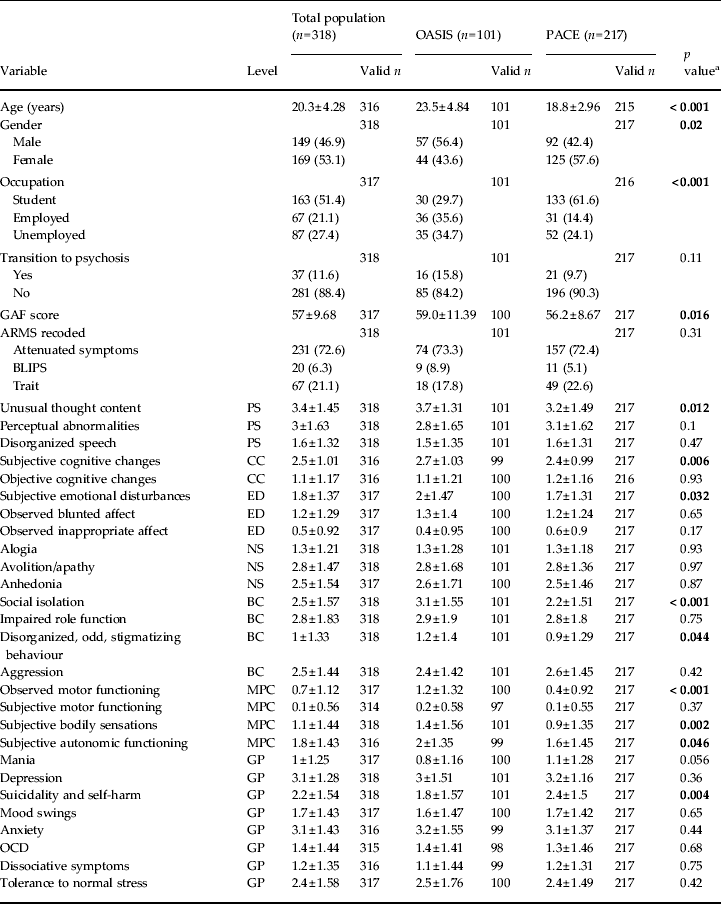
The baseline characteristics for the total sample, stratified by clinic (OASIS and PACE), are shown in Table 1. Comparison of the two groups reveals that subjects in the OASIS clinic were, on average, about 4.5 years older, had a higher proportion of males and a smaller proportion of students compared to PACE. Subjects from OASIS also had slightly higher GAF scores. There were no significant differences with regard to the transition rate or the type of ARMS [i.e. attenuated psychotic symptoms, trait group, the brief, limited intermittent psychotic symptoms (BLIPS) group] at presentation. Table 1 shows that the two clinic groups differed significantly on nine of the 27 clinical ARMS variables: higher scores were reported in the OASIS sample for unusual thought content, subjective cognitive changes, subjective emotional disturbances, social isolation, disorganized, odd, stigmatizing behaviour, observed motor functioning, subjective bodily sensation, and subjective autonomic functioning. PACE subjects had higher scores for suicidality and self-harm.
Baseline and sample characteristics of total study population and stratified by site/clinic (OASIS and PACE)

OASIS, Outreach and Support in South London Service; PACE, Personal Assessment and Crisis Evaluation; GAF, Global Assessment of Functioning; ARMS, at-risk mental state; BLIPS, brief, limited intermittent psychotic symptoms; OCD, obsessive–compulsive disorder; PS, positive symptoms; CC, cognitive change, attention/concentration; ED, emotional disturbance; NS, negative symptoms; BC, behavioural change; MPC, motor/physical changes; GP, general psychopathology.
Bold values indicate significant difference p<0.05.
Data are given as mean ± standard deviation or n (%).
a Results of χ 2 tests for categorical variables or t tests for continuous variables to assess differences between the two study sites.
LCCA
Latent class model selection
Table 2 reports the fit indices from the latent class analysis. A four-class model was considered the best model. This model has the lowest AIC and BIC values and a significant bootstrap LRT, which suggests that the four-class solution is better than a lower-class solution. LCCA with five or more classes had lower AIC and BIC values but did not result in convergence to any meaningful underlying model, even after increasing the number of iterations and using different starting values. In the four-class solution most cases could easily be assigned to just one class, with high mean posterior probabilities of class membership ranging from 94.9% to 100%, indicating that the quality of classification was high. In addition, the entropy of the five-class model was 0.90, a good overall certainty in classification of patients into classes.
Fit indices and class sizes for the latent class analysis of CAARMS symptom scores
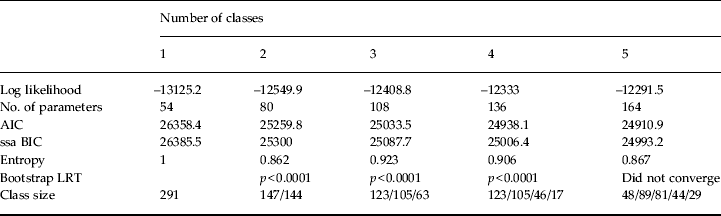
CAARMS, Comprehensive Assessment of At-Risk Mental States; AIC, Akaike's Information Criteria; ssa BIC, sample size-adjusted Bayesian Information Criteria (smaller information criteria suggest a better model); Entropy, an overall measure of how well a model predicts class membership, ranging from 0 (no predictive power) to 1 (perfect prediction); LRT, parametric bootstrapped likelihood ratio test to compare n with n – 1 classes. A significant test suggests that the n-class solution is better than an (n – 1)-class solution; Class size, estimated class size based on most likely class membership. Model 5 did not result in any meaningful solution.
Characteristics of the four-class solution
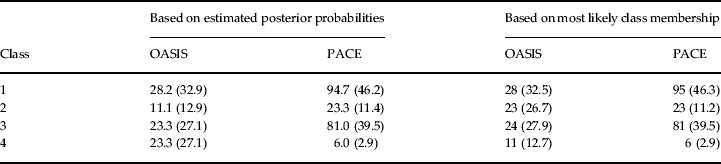
Table 3 summarizes the latent class membership, based on the estimated posterior probability. Class 1 (mild) is the largest class with 123 patients, followed by class 3 (moderate–severe) with 105, class 2 (moderate) with 46 and class 4 (severe) with only 17 patients.
Latent class membership based on the estimated posterior probability
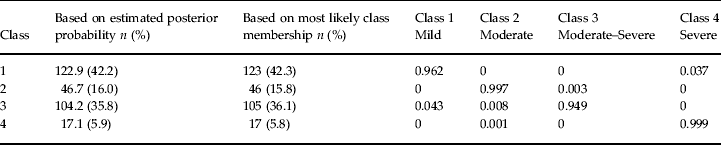
The first column shows the membership based on the mean posterior probability for each class. The second column shows the number of subjects (%) classified in a given class based on their most likely average latent class membership (row) by latent class (column). For example: the estimated average posterior probability of belonging to class 1 is 42.2%, corresponding to an estimated sample size of 122.9 subjects in this class. A total of 42.3% of the subjects were classified into class 1 based on their highest posterior probability (most likely class membership). Their average posterior probability for membership of class 1 was 96.2% whereas their probability of belonging to class 2, 3 or 4 was 0, 0 and 0.037% respectively.
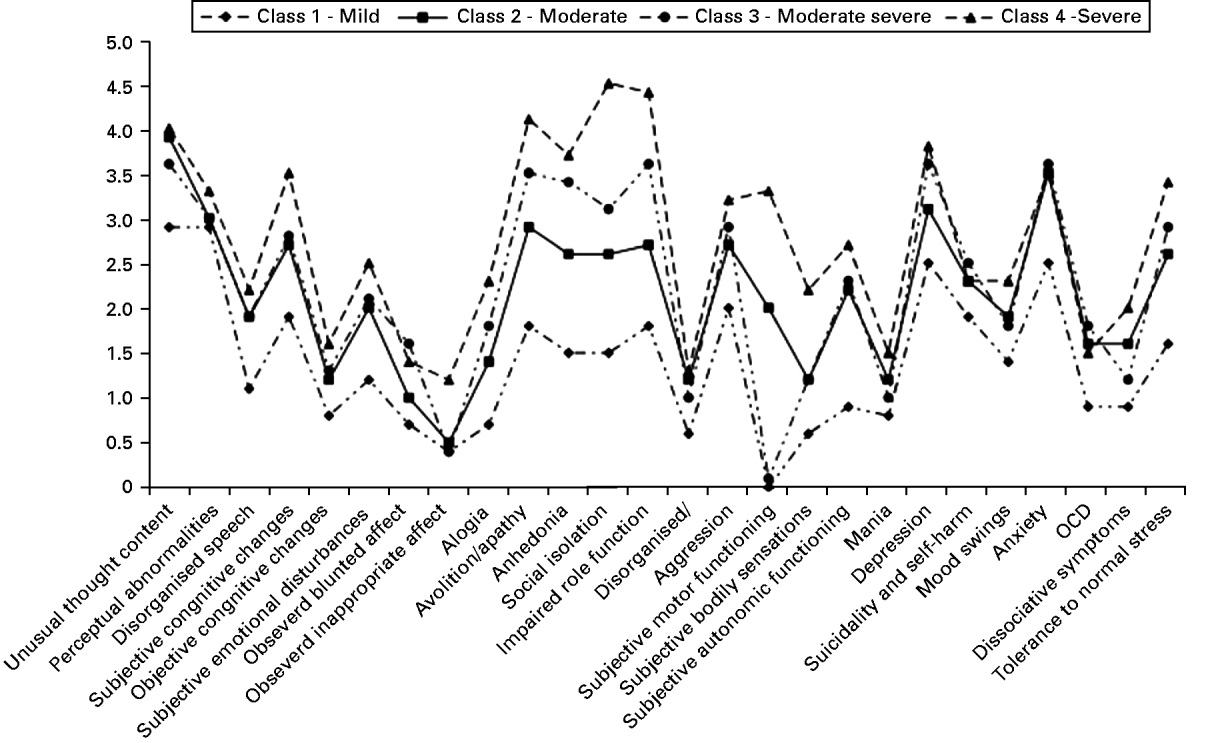
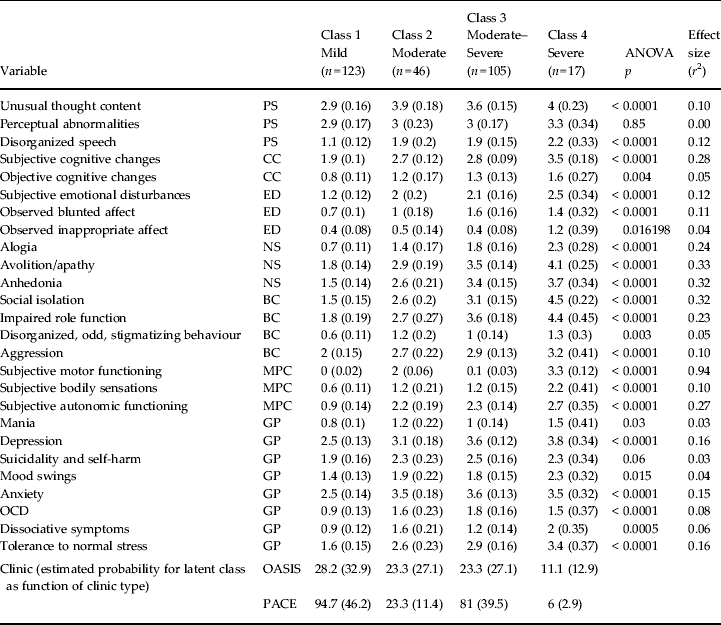
Table 4 presents the results of the LCCA and Fig. 1 shows the latent class profile for the four classes. To assess the importance of the variables in the clustering process, we estimated for each variable the explained variance using univariate ANOVAs (Table 4). Based on this assessment, the variables motor and physical changes, behavioural changes and negative symptoms were considered to be the most influential for the latent class clustering process.
Four-class item profiles for Comprehensive Assessment of At-Risk Mental States (CAARMS) symptoms. Estimated sample means of each item for the four-class model of CAARMS symptoms.
Latent class analysis: estimated parameters for the four-class solution
OCD, Obsessive–compulsive disorder; OASIS, Outreach and Support in South London Service; PACE, Personal Assessment and Crisis Evaluation; PS, positive symptoms; CC, cognitive change, attention/concentration; ED, emotional disturbance; NS, negative symptoms; BC, behavioural change; MPC, motor/physical changes; GP, general psychopathology.
Estimated parameter estimates and standard errors for each latent class (controlled for clinic type) are provided for Comprehensive Assessment of At-Risk Mental States (CAARMS) variables and estimated number of cases (%) for each latent class as a function of clinic type.
The results of the univariate ANOVA and explained variance estimates based on cases classified in most likely class are presented to indicate the importance of the variable in the clustering process.
Overall, a clear pattern emerged: subjects in class 4 (severe) were distinguished from those in the other classes by showing the highest scores on all variables, subjects in class 1 (mild) exhibited the lowest scores on almost all items, and subjects in class 2 (moderate) and class 3 (moderate–severe) scored in between classes 1 and 4. All four classes were clearly separated by differences on the negative symptoms (alogia, avolition/apathy and anhedonia) and on two of the four behavioural change variables (social isolation and impaired role functioning). On all five of these symptom variables, class 4 (severe) scored highest, followed by class 3 (moderate–severe), class 2 (moderate) and then class 1 (mild).
Closer examination revealed that subjects in class 1 (mild) and class 3 (moderate–severe) scored showed very low scores on subjective motor functioning, which separated these two classes from the other two, class 2 (moderate) and class 4 (severe). Members of class 2 (moderate) scored lower on subjective motor functioning than subjects in class 4 (severe). In addition, classes 2 (moderate) and 4 (severe) were separated by differences on subjective bodily sensations. Subjects in class 2 (moderate) scored lower than subjects in class 4 (severe) on this variable.
Moderators analysis
Type of prodromal clinic
Type of clinic was included as a covariate in the LCCA. Table 5 shows (a) the results of the categorical latent variable regression of class on clinic type, and (b) the estimated latent class membership based on the estimated posterior probability. OASIS subjects were more likely to be classified in classes 2 (moderate) and 4 (severe) and less likely to be classified in classes 1 (mild) and 3 (moderate–severe) than subjects from PACE.
(a) Results of the categorical latent variable regression of class on clinic type Latent class membership based on the estimated posterior probability based on latent variable regression analysis Parameterization using class 1 (mild) as the reference class. The independent variable of the categorical latent variable ‘class’ is clinic type with 1 = OASIS and 0 = PACE. Values given as n (%). OASIS, Outreach and Support in South London Service; PACE, Personal Assessment and Crisis Evaluation; s.e., standard error.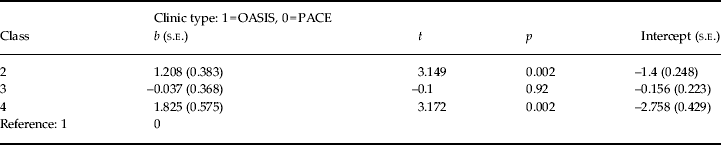
Demographic factors
Table 6 shows the results of univariate analyses of the association between the four latent classes and demographic and clinical factors, which were not used for the LCCA. There were significant differences in age and occupation between the four classes. Patients in class 1 (mild) were younger and more likely than expected by chance to be students, and less likely than expected to be unemployed. There were more employed people and fewer students in class 2 (moderate) than expected by chance. Patients of class 4 (severe) were more likely to be unemployed and less often than expected students.
The association between demographic and clinical factors and classes
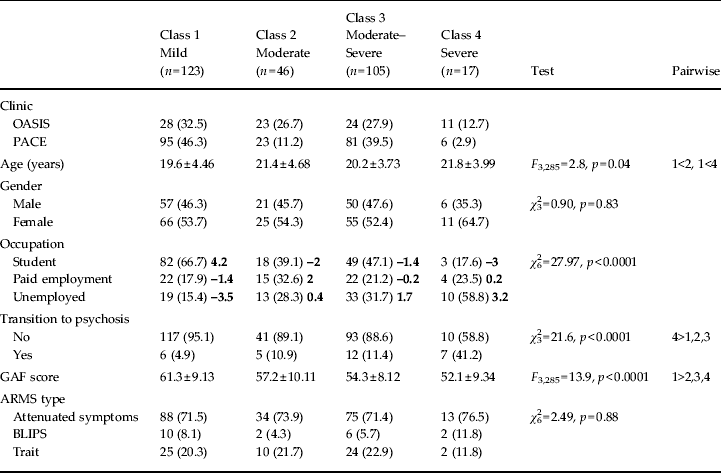
OASIS, Outreach and Support in South London Service; PACE, Personal Assessment and Crisis Evaluation; GAF, Global Assessment of Functioning; ARMS, at-risk mental state; BLIPS, brief, limited intermittent psychotic symptoms.
Data are given as mean ± standard deviation or n (%).
Figures in bold are the adjusted standardized residuals. The larger the absolute value of the residual, the larger the difference between the observed and expected frequencies. Absolute values > 2 are significant at an α level of 5%.
GAF scores
GAF scores were significantly associated with classes, with subjects in class 1 (mild) having significantly higher GAF scores than subjects in the other three classes. GAF scores between classes 2 (moderate), 3 (moderate–severe) and 4 (severe) were not significantly different.
Risk of transition to psychosis
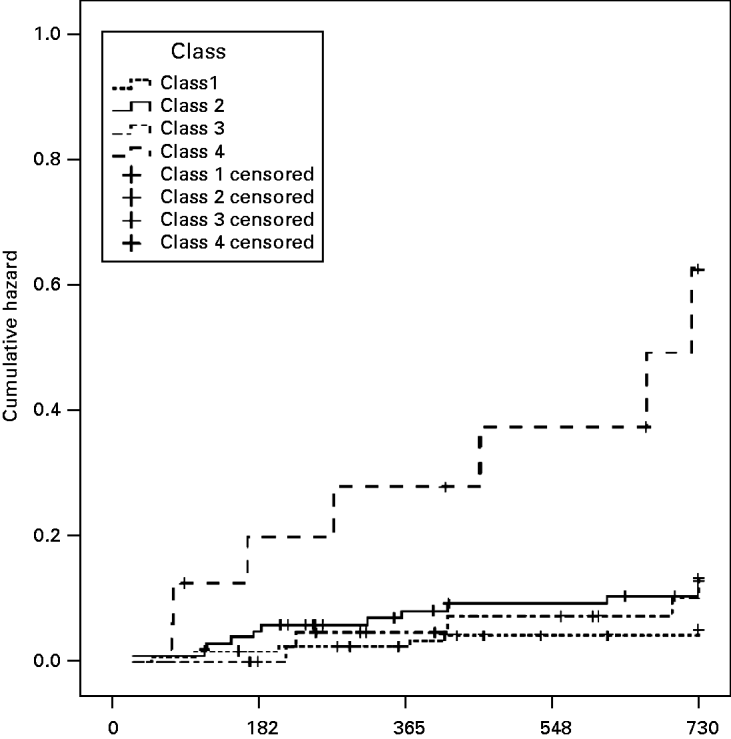
As shown in Table 1, the overall transition rate at 2 years was 11.6%; there was no significant difference in the transition rate between the two sites (PACE 15.8%, OASIS 9.7%, p = 0.11). Transition risk to psychosis at 2 years from referral was significantly associated with all four classes (Table 6). Pairwise comparisons revealed that transition to psychosis was more likely in subjects in class 4 (severe) than in any other class. Class 4 (severe) had a transition risk of 41.2%. There were no significant differences between class 1 (mild; transition risk 4.9%), class 2 (moderate; transition risk 10.9%) and class 3 (moderate–severe; transition risk 11.4%) (χ 23 = 21.6, p < 0.0001). Figure 2 illustrates the results of the Kaplan–Meier survival analysis.
Kaplan–Meier survival analysis of the transition to psychosis within 2 years from referral.
Confirmation of class membership
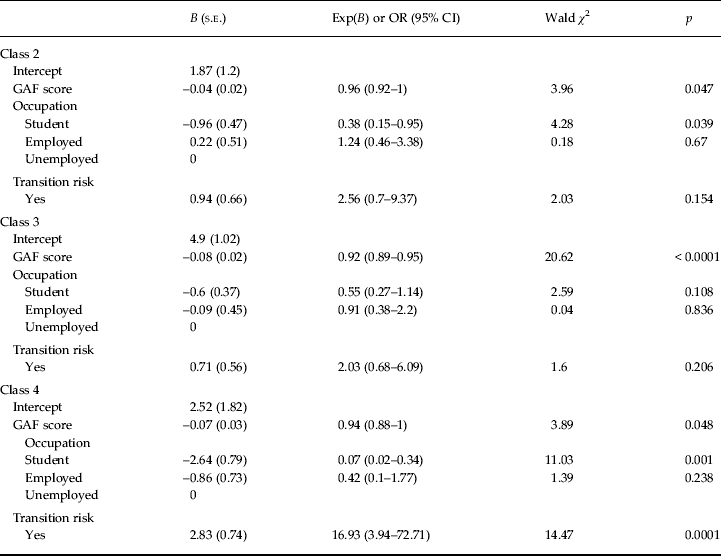
To determine the set of variables that best predicted class membership, we performed a multinomial regression analysis with class membership as the dependent variable and entering the potentially moderator factors identified as independent variables: occupation, gender, age, type of ARMS, GAF score and transition risk to psychosis (Table 7). The best model based on stepwise model selection included occupation, transition to psychosis and GAF score (overall model: χ 2LRT(12) = 69.34, p < 0.0001, occupation χ 2 = 19.95, p = 0.003, risk of transition to psychosis χ 23 = 14.84, p = 0.002, GAF score χ 23 = 24.22, p < 0.0001, n = 288). The results were similar to the univariate analyses: people with a transition to psychosis were more likely to belong to class 4 (severe) in comparison to the other classes. People with higher GAF scores were more likely to belong to class 1 (mild). Occupation had a similar influence as in the univariate analysis.
Class membership: results of the multivariate regression analysis
GAF, Global Assessment of Functioning; OR, odds ratio; CI, confidence interval; s.e., standard error.
Class 1 (mild) is the reference group. The standard interpretation of a multinomial logit model is that, for one unit change or change from one category to another of the independent variable, the logit of the outcome relative to the reference group (class 1 mild) is expected to change by the respective parameter estimate B. A positive regression coefficient B implies that the probability of belonging to the reference group (class 1 mild) decreases. The interpretation of the OR is analogous to logistic regression.
The overall model likelihood ratio test (LRT) χ 2 was 69.34, p < 0.0001, occupation: χ 2 = 19.95, p = 0.003, transition to psychosis χ 23 = 14.84, p = 0.002, GAF score χ 23 = 24.22, p < 0.0001 (n = 288).
Discussion
The core aim of the present investigation was to determine whether the ARMS group is composed of different classes of psychosis risk. We used LCCA to examine a large ARMS sample and clarify the number of these classes and their psychopathological profiles. We then sought to clarify which constellation of symptoms was most likely to precede a transition to psychosis, controlling for potential moderators. We found four risk classes: class 1 (mild) was characterized by relatively low scores on all CAARMS items. Subjects in this group were younger, more likely to be students, had a higher score on the GAF and the lowest transition risk (4.9%). Subjects in class 2 (moderate) scored moderately on all CAARMS items and were more likely to be in employment (transition risk 10.9%) Those in class 3 (moderate–severe) scored moderately severe on negative symptoms, social isolation and impaired role functioning (transition risk 11.4%). Class 4 (severe) was the smallest group and was associated with the most impairment: subjects in this class scored highest on all items of the CAARMS, had the lowest GAF score and were more likely to be unemployed than employed. This group was also characterized by the highest transition risk (41.2%).
Baseline differences
Despite the similarities between the PACE and OASIS clinics and the fact that both centres use the same inclusion criteria, screening and assessment instruments, several differences distinguished the two centres at baseline. OASIS patients were older and scored higher at baseline on several items and were more likely to belong to class 2 (moderate) and class 4 (severe), whereas PACE had younger service users who were more likely to be female, scored higher on suicidality and self-harm and were more likely to belong to either class 1 (mild) or class 3 (moderate–severe).
Our analysis of the potential confounding effect of centre on transition risk showed no significant differences in transition risks between the centers at 2 years; nevertheless, the differences at baseline between the two centres are likely to affect psychosis conversion. Of course, class membership is not rigid and an individual's symptomatology can change over time (French & Morrison, Reference French and Morrison2004; Yung et al. Reference Yung, Phillips and McGorry2004; McGlashan et al. Reference McGlashan, Addington, Cannon, Heinimaa, McGorry, O'Brien, Penn, Perkins, Salokangas, Walsh, Woods and Yung2007). Research has shown that, in younger individuals, less severe symptoms can resolve and disappear over time (Meng et al. Reference Meng, Schimmelmann, Koch, Bailey, Parzer, Gunter, Mohler, Kunz, Schulte-Markwort, Felder, Zollinger, Burgin and Resch2009; van Os et al. Reference van Os, Linscott, Myin-Germeys, Delespaul and Krabbendam2009), and it is therefore possible that some of the individuals in class 1 (mild) will improve with time.
It is also important to consider the gender difference between centres as they could be important for symptom presentation and conversion risk. Negative symptoms have been strongly associated with male sex in patients with schizophrenia (McGlashan & Fenton, Reference McGlashan and Fenton1992; Castle et al. Reference Castle, Sham, Wessely and Murray1994; Schultz et al. Reference Schultz, Miller, Oliver, Arndt, Flaum and Andreasen1997; Roy et al. Reference Roy, Maziade, Labbe and Merette2001; Cornblatt et al. Reference Cornblatt, Lencz, Smith, Correll, Auther and Nakayama2003), with schizotypy (Raine, Reference Raine1992), and in the general population (Maric et al. Reference Maric, Krabbendam, Vollebergh, de Graaf and van Os2003), whereas an affective pathway to psychosis has been suggested for women (Myin-Germeys & van Os, Reference Myin-Germeys and van Os2007). The difference in gender between the two centres could result is different pathways to psychosis.
Differences between risk classes
The four risk classes were best separated from one another by differences in negative symptoms (alogia, avolition/apathy and anhedonia) and on two of the four behavioural change variables (social isolation and impaired role functioning). The finding that negative rather than positive symptoms can significantly impact the transition from an ARMS to frank psychosis and its long-term outcome has been reported in previous studies (Yung & McGorry, Reference Yung and McGorry1996a,Reference Yung and McGorryb; Miller et al. Reference Miller, Zipursky, Perkins, Addington, Woods, Hawkins, Hoffman, Preda, Epstein, Addington, Lindborg, Marquez, Tohen, Breier and McGlashan2003; Larsen et al. Reference Larsen, Friis, Haahr, Johannessen, Melle, Opjordsmoen, Rund, Simonsen, Vaglum and McGlashan2004; Lencz et al. Reference Lencz, Smith, Auther, Correll and Cornblatt2004; Yung et al. Reference Yung, Nelson, Thompson and Wood2010; Velthorst et al. Reference Velthorst, Nieman, Klaassen, Becker, Dingemans, Linszen and de Haan2011; Demjaha et al. Reference Demjaha, Valmaggia, Stahl, Byrne and McGuire2012). It has also long been demonstrated that negative symptoms are strongly related to social isolation and impaired role functioning and are strong predictors of long-term poor outcome (McGlashan & Fenton, Reference McGlashan and Fenton1992; Cornblatt et al. Reference Cornblatt, Lencz, Smith, Correll, Auther and Nakayama2003).
Marked differences were found with regard to subjective motor functioning and subjective bodily sensations. In particular, the latter are subtle subjective changes reported by an individual that are not usually detectable by clinical observation. Previous studies have highlighted the importance of subjective phenomenological changes during the putative prodromal phases of psychosis and the need for more precise identification of subjective psychopathological domains (such as time and self-perception) in the ARMS (Parnas & Handest, Reference Parnas and Handest2003; Davidsen, Reference Davidsen2009; Nelson et al. Reference Nelson, Fornito, Harrison, Yücel, Sass, Yung, Thompson, Wood, Pantelis and McGorry2009a,Reference Nelson, Sass and Skodlarb; Parnas, Reference Parnas2011; Raballo & Laroi, Reference Raballo and Laroi2011; Masillo et al. Reference Masillo, Day, Laing, Howes, Fusar-Poli, Byrne, Bhattacharyya, Fiori Nastro, Girardi, McGuire and Valmaggia2012). Finally, it is important to note that the entire ARMS sample reported high scores on depression, anxiety and tolerance to normal stress, not only suggesting a need for assessment and treatment of these symptom but also reflecting the help-seeking nature of individuals seen by the prodromal services. This is particularly striking in the light of recent epidemiological findings suggesting that anxiety and depressive symptoms and intolerance to stress are enriching the transition risk associated with isolated attenuated psychotic symptoms (Fusar-Poli et al. Reference Fusar-Poli, Nelson, Valmaggia, Yung and McGuire2012e; Lataster et al. Reference Lataster, Valmaggia, Lardinois, van Os and Myin-Germeys2012; van Os & Linscott, Reference van Os and Linscott2012).
Transition
Most predictive of transition were GAF scores, occupational status and class membership. Overall transition risk was 11.6%, but in class 4 (severe) it was 41.2%. These findings should be interpreted with some reservations as cluster 4 was relatively small (n = 17).
Unsurprisingly, transition was the highest in class 4 (severe), which scored higher on all CAARMS items and had the lowest GAF score and highest number of unemployed individuals. No significant differences in transition risk were found in the remaining three classes despite the differences in symptoms and level of functioning.
Social and role functioning impairments were present in all four classes and have previously been associated with a higher risk of transition to psychosis (Phillips et al. Reference Phillips, Yung, Yuen, Pantelis and McGorry2002; Amminger et al. Reference Amminger, Leicester, Yung, Phillips, Berger, Francey, Yuen and McGorry2006; Cornblatt et al. Reference Cornblatt, Auther, Niendam, Smith, Zinberg, Bearden and Cannon2007; Cannon et al. Reference Cannon, Cadenhead, Cornblatt, Woods, Addington, Walker, Seidman, Perkins, Tsuang, McGlashan and Heinssen2008; Fusar-Poli et al. Reference Fusar-Poli, Byrne, Valmaggia, Day, Tabraham, Johns and McGuire2010). Although our findings seem to confirm that transition to psychosis can be preceded by presentation of a variety of symptoms and it is much more likely to occur in people with impaired social functioning, all classes had low GAF scores (GAF total score ⩽ 61). Recent papers have discussed the concept of a pluripotent risk syndrome, suggesting that ARMS status indicates a heightened risk not only for developing psychosis but also for other mental health problems (Fusar-Poli et al. Reference Fusar-Poli, Borgwardt, Bechdolf, Addington, Riecher-Rossler, Schultze-Lutter, Keshavan, Wood, Ruhrmann, Seidman, Valmaggia, Cannon, Velthorst, de Haan, Cornblatt, Bonoldi, Birchwood, McGlashan, Carpenter, McGorry, Klosterkotter, McGuire and Yung2012b; Yung et al. Reference Yung, Woods, Ruhrmann, Addington, Schultze-Lutter, Cornblatt, Amminger, Bechdolf, Birchwood, Borgwardt, Cannon, de Haan, French, Fusar-Poli, Keshavan, Klosterkotter, Kwon, McGorry, McGuire, Mizuno, Morrison, Riecher-Rossler, Salokangas, Seidman, Suzuki, Valmaggia, van der Gaag, Wood and McGlashan2012). The core role played by social functioning in determining the longitudinal course of the ARMS points to the importance of addressing outcomes other than psychosis transition. This would also allow a better understanding of the proportion of ARMS subjects who will not convert to overt psychosis but will still present psychosocial impairment and need of support.
Limitations
As mentioned earlier, there were differences between the groups at baseline, and our results are limited to help-seeking individuals, which could explain the high levels of anxiety, depression and impaired stress tolerance. A further limitation is that, despite the number of participants included in the study, class 4 (severe) was relatively small (n = 17). It should also be noted that the overall reliability of the LCCA results may be affected by the low prevalence of some of the symptoms; however, the use of multivariate regression analysis to confirm class membership was an advantage. The study did not investigate the differences in treatment received in the 2 years from referral. We cannot exclude the possibility that there may be differences between the two sites that could affect transition rates and changes in symptomatology. Finally, the total sample size did not allow cross-validation to assess the predictive power on a different data set.
Conclusions
Overall, our results support a dimensional approach to studying, assessing and treating the ARMS group. For example, despite the predictive value of negative symptoms and role impairments, they rarely form the target of treatment interventions in the ARMS. We join other authors who have advocated the potential benefits of a more symptom-focused approach (Bentall et al. Reference Bentall, Jackson and Pilgrim1988; Andreasen & Carpenter, Reference Andreasen and Carpenter1993; Buchanan & Carpenter, Reference Buchanan and Carpenter1997; Garety et al. Reference Garety, Kuipers, Fowler, Freeman and Bebbington2001; Herbener & Harrow, Reference Herbener and Harrow2004; Fusar-Poli et al. Reference Fusar-Poli, Valmaggia and McGuire2007; Turkington & Morrison, Reference Turkington and Morrison2012), targeting these domains in particular.
Acknowledgements
We thank the staff and service users of OASIS. Dr Valmaggia was supported by a National Alliance for Research on Schizophrenia and Depression (NARSAD) Young Investigator Award, a Peggy Pollack Research Fellowship from the Psychiatry Research Trust and the Guy's and St Thomas' Charitable Foundation. We also thank the National Institute for Health Research (NIHR) Biomedical Research Centre for Mental Health at the South London and Maudsley National Health Service (NHS) Foundation Trust and the Institute of Psychiatry, King's College London for their financial support.
Declaration of Interest
None.