




No CrossRef data available.
Article contents
Current subjective state of health, and longitudinal psychological well-being over a period of 10 years, in a cohort of adults with congenital cardiac disease
Published online by Cambridge University Press: 22 April 2005
Abstract
Objective: To examine the current subjective state of health, and the longitudinal course of psychological well-being, in adult patients with congenital cardiac malformations. Methods: Our study concerns the second follow-up of a cohort of patients with congenital cardiac malformations. We examined 362 consecutive patients, aged from 20 to 46 years, who underwent surgical procedures for treatment of congenital cardiac disease between 1968 and 1980, specifically for treatment of atrial and ventricular septal defects, tetralogy of Fallot, transposition, and pulmonary stenosis. The patients were submitted to extensive medical and psychological examination. During psychological examination, in which all patients were seen by the same psychologist (EvR), patients filled in questionnaires concerning their current subjective state of health, using the 36-item Short Form Health Survey (SF-36), and psychological well-being, answering the Heart Patients Psychological Questionnaire. The data we acquired at their first follow-up was used to measure the longitudinal course of psychological well-being over the intervening period of 10 years. Results: When compared to a reference group, the patients assessed their state of health less favourably concerning physical functioning, but more favourable with regard to social functioning, bodily pain, and limitations of role due to emotional problems. Younger female patients reported more limitations of role due to physical functioning than did the female patients who were older. Patients with transposition showed a negative trend for their subjective state of health, but reported the least bodily pain. Within the overall group of patients, displeasure had increased, while social inhibition had decreased, over the intervening period of 10 years. Conclusion: Extra attention should be paid to the subjective experiences of young female patients with congenital cardiac disease. The patients with transposed arterial trunks seem overall to experience poorer physical health.
Keywords
Information
- Type
- Original Article
- Information
- Copyright
- © 2005 Cambridge University Press
Since a population of adults with congenital cardiac disease can be considered as rather new in medical practice, their state of health is self-evidently of great interest.1–5 Such a state of health, however, should not only be measured by medical standards. The way patients themselves subjectively experience and evaluate their health can be a major determining feature for their well-being.6–8
This phenomenon is generally referred to as quality of life. The definition for such quality of life as given by the World Health Organisation includes the areas of physical, mental, and social well-being.9 In the concept of quality of life, distinction should be made between the subjective state of health, in other words the perception by the patient of his or her state of abilities, as opposed to the health-related quality of life, this being the personal feelings of the patient about these states of abilities.8 Our study has focussed on the subjective state of health.
Previously, poor as well good subjective states of health have been reported in adults with congenital cardiac malformations.6, 8, 10, 11 The role of the severity of the cardiac malformation on the subjective state of health is currently ambiguous. Ternestedt et al.7 found that patients with tetralogy of Fallot rated their quality of life higher than did patients with atrial septal defect, the latter lesion generally considered to be anatomically less severe. In a sample of adults with various lesions, Lane et al.12 found the poorest subjective state of health among the patients with inoperable and cyanotic conditions but, paradoxically, also in those deemed surgically cured.
Until now, there has been limited research carried out in consecutive series of patients with congenital cardiac malformations. In this study, we assessed the cross-sectional subjective state of health, and the longitudinal psychological well-being, in a large consecutive series of patients, with 5 specific congenital cardiac malformations, having a large range of age in adulthood, and with a high rate of response to questionnaires.
Our aims were:
- to compare the current subjective state of health by adults with operated congenital heart disease with that of the normal population
- to identify the role of gender, age, and cardiac diagnosis on subjective state of health
- to examine the longitudinal course of psychological well-being in the adult patients over a period of 10 years
- to identify the role of gender and cardiac diagnosis on this longitudinal course of psychological well-being.
Materials and methods
Criterions for inclusion
During our first follow-up of the patients examined in this study, which took place over the period 1989 through 1991, we enrolled all consecutive patients who had undergone their first open heart surgical procedure for treatment of their congenital cardiac malformation between 1968 and 1980 in the Erasmus Medical Centre, and who were younger than 15 years at the time of surgery. We have described the population of patients in detail elsewhere.13–15
The target population of our second follow-up, conducted in 2000 and 2001, was the entire cohort of 498 patients who completed the first follow-up. From these patients, we excluded 61 patients who had miscellaneous cardiac diagnoses, consisting of small numbers with lesions such as aortic stenosis, discrete subaortic stenosis, atrioventricular septal defect, pulmonary atresia, tricuspid atresia, totally anomalous pulmonary venous connection, common arterial trunk, and other miscellaneous diagnoses. We also excluded 11 patients who had died, 26 who could not be traced, and 1 who had undergone cardiac transplantation.
Sample of patients
Of the 399 eligible patients, 37 refused to participate. The remaining 362 patients participated in the psychological examination of this study. The overall response rate, corrected for those who had died, and those lost to follow-up, was 90.7 percent.
Subjective state of health.
Of the 362 participating patients, 11 patients who were mentally retarded, along with 1 patient who had problems with language, were unable to complete the questionnaire used to assess the subjective state of health. In addition, 1 patient participated by mail and telephone, but did not return the questionnaire. This meant that usable questionnaires were received from 349 (87.5 percent) of those eligible to participate, of whom 189 were male and 160 were female. The mean age of the sample was 30 years, with a range from 20 to 46 years. In terms of diagnosis, 93 patients had undergone closure of an atrial septal defect, 92 patients had undergone closure of ventricular septal defects, 72 patients had received corrective surgery for tetralogy of Fallot, Mustard's procedure had been performed in 55 patients with concordant atrioventricular and discordant ventriculo-arterial connections (transposition), and valvotomy had been performed in 37 patients with pulmonary stenosis. The mean ages in these diagnostic groups were 33, 30, 30, 26 and 32 years, respectively. The medical history, and physical condition, of these patients at the time of the first and second follow-up have been described elsewhere.1–5
Psychological well-being.
At the second follow-up, 8 mentally retarded patients, and the patient having problems with language, were unable to complete the questionnaire. The patient who participated by mail and telephone also neglected to return this questionnaire, whilst another patient did not complete it entirely. This resulted in usable questionnaires being returned from almost nine-tenths of the sample of eligible patients. Because of longitudinal comparisons, we included only those patients for whom we had data regarding psychological well-being from both the first and second follow-ups. This data was available for 243 patients, of whom 125 were male and 118 were female. They had a mean age of 33 years, with a range from 26 to 46 years. With regard to diagnosis for this questionnaire, atrial septal defects had been closed in 86 patients, ventricular septal defects in 56 patients, 48 patients had undergone corrective surgery for tetralogy of Fallot, Mustard's procedure had been performed in 26 patients with transposition, and valvotomies in 31 patients with pulmonary stenosis. We did not include any patients currently younger than 26 years, since these patients did not complete the questionnaire concerning psychological well-being at the first assessment, because it was not then fitted for their age ranges.
Reference group
Subjective state of health.
We derived normative data from a nationwide, and population-based survey of the health of the Dutch.16 The total sample was made up of 1,742 participants, with ages ranging from 16 to 94 years, of whom 56 percent were male and 44 percent were female. A selection of this sample, namely participants with ages ranging from 16 to 40 years, was used as the reference group for the present study.
Psychological well-being.
Since longitudinal comparisons were performed within our group of patients with congenital cardiac disease, we did not use any reference data. The original purpose of the questionnaire regarding psychological well-being was to assess well-being in adults with cardiac disease, most of whom suffer from acquired heart disease. We had no recent age-compatible normative data from the general population.
Instruments
Subjective state of health.
For this purpose, we used the 36-item short form health survey.17 The survey consists of 36 questions with standardised choices for response. The 36-item survey takes note of 8 scales, namely physical functioning when performing varied physical activities, limitations of role due to physical problems of health at work, or problems with other daily activities as a result of physical health, social functioning in terms of interference with normal social activities due to physical and emotional problems, bodily pain, general mental health, limitations of role due to emotional problems encountered at work, or limiting other daily activities, vitality in terms of feeling either tired or worn out all the time as opposed to being full of energy, and general perceptions in terms of believing personal health is either poor and likely to get worse, as opposed to being excellent. We used a standard version of the 36-item form, which requires completion of the questionnaire as applicable to the period of 4 weeks preceding the psychological examination. Both good reliability, and validity, have been reported when the Dutch version of the 36-item survey has previously been used.16
Psychological well-being.
So as to assess psychological well-being, we used the Heart Patients Psychological Questionnaire,18 which contains 52 items. The potential responses are either “true”, “do not know”, or “not true”. Psychological well-being is measured on the scales of well-being, relating to feeling happy, satisfied and relaxed, feelings of being disabled, which concerns discrepancies between desired and real abilities, displeasure in terms of negative moods and emotions, and social inhibition, which accounts for feeling unpleasant when amongst other people. Satisfactory reliability and validity has also been reported for the use of this questionnaire.18
Procedures for assessment
All patients were traced, approached uniformly, and signed an informed consent before participating. During their visit to the Erasmus Medical Centre, patients were interviewed and tested by a psychologist (EvR), and examined medically by a cardiologist. Of those included, 28 could not visit the hospital for practical or emotional reasons. These patients all filled in the questionnaires at home, and returned them by mail.
Statistical analyses
One sample t-tests, based on 95 percent confidence intervals, were used to test differences between the patients and their reference group for the 36-item survey. To identify the role of gender, age, and cardiac diagnosis within the patients with congenital cardiac disease, we used univariate analyses of variance, based on 95 percent confidence intervals, for all scales within the 36-item survey. The longitudinal comparisons using the psychological questionnaire were analysed in a one factor repeated measures design, with gender and diagnosis as within-subject variables. The variable for age was excluded, since we had not included any patient younger than 26 years. In order to correct for multiple comparisons in these analyses, we applied Bonferroni corrections. Since, after such correction, socioeconomic state showed significant main effects on only 2 out of the total 12 scales from the two questionnaires, and we failed to establish any significant differences in socioeconomic status between the diagnostic categories, we chose not to correct for socioeconomic state.
Results
Subjective state of health
The mean scores for the patients on the 36-item survey, and their age-compatible reference group, are shown in Table 1. The scores for the patients are less favourable for physical functioning when compared to the reference group, indicating more impairment in physical activity for those with congenital cardiac disease. The patients, however, obtained more favourable scores in terms of social functioning, bodily pain, and limitations in their role due to emotional problems than did their normal peers. This means that patients with congenital cardiac malformations reported less experience of bodily pain, less interference with normal social activities due to physical and emotional problems, and less problems with work or other daily activities as a result of emotional problems, than did their peers drawn from the normal population. These effects remained significant after Bonferroni correction for 8 comparisons.
Table 1. Mean scores of our sample of patients with congenital cardiac disease and their normal peers using the scales of the short form-36 survey.

Effects of gender, age, and diagnosis
When we analysed for variance on the scale scores within the 36-item survey, males with congenital cardiac disease scored better than females in terms of physical functioning, social functioning, general mental health and vitality. None of these effects, however, except for the effect on physical functioning, remained significant after Bonferroni corrections for 8 comparisons.
We failed to discover any significant main effect for age. A significant interaction between gender and age, however, was found with regard to limitations of role due to physical functioning (p equal to 0.033). Males aged from 20 to 29 years with congenital cardiac disease scored more favourably in this respect than did those with congenital cardiac disease aged 30 to 46, whereas younger females with congenital cardiac disease reported greater limitations of role because of physical functioning compared to their older counterparts with congenital cardiac disease. The interaction, nonetheless, again failed to remain significant after Bonferroni correction for 8 comparisons.
In Table 2, we show the mean scores achieved using the scales within the 36-item survey for the groups of patients with different cardiac diagnoses. We failed to find any significant main effect or interaction according to cardiac diagnosis.
Table 2. Mean scores of the groups with different diagnoses amongst our patients as assessed using the scales of the short form-36 survey.

Longitudinal course of psychological well-being
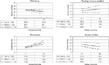
When we analysed repeated measures using the scores for the scales within the Heart Patients Psychological Questionnaire, we found significant changes over time between the first and second follow-up of the patients in terms of displeasure and social inhibition. Over the intervening period of 10 years, displeasure had increased, while social inhibition had decreased. Both effects continued to be significant after Bonferroni correction for 4 comparisons (Fig. 1).

Figure 1. Longitudinal course of our sample of patients, aged from 26 to 46 years, with congenital cardiac disease on the scales of the Heart Patient Psychological Questionnaire. In terms of the measurements, T1 describes the period from 1989 through 1991, while T2 is the second period of follow-up from 2000 through 2002. For well-being, high scores indicate favourable psychological well-being, whereas in terms of feelings of being disabled, displeasure and social inhibition, high scores indicate poor psychological well-being.
Effects of gender and diagnosis
Over time, we found that gender produced a significant effect in terms of well-being, with males showing an increase over the period of 10 years, but females showing a decrease in the same period, albeit that this effect failed to remain significant after Bonferroni correction for 4 comparisons. We also failed to find any significant effects for cardiac diagnosis.
Discussion
Subjective state of health
Despite considering themselves more greatly impaired in terms of physical functioning, our patients with congenital cardiac disease reported themselves to be less bothered by physical and emotional problems in social activities, to have less problems with work or other daily activities as a result of emotional problems, and to experience less bodily pain than their peers drawn from the normal population.
The more favourable results in terms of social functioning and limitations due to emotional problems, which imply less interference of emotional and/or physical problems on daily life, might indicate adequate coping with the disadvantageous consequences of the congenital cardiac malformation. Overcompensation, however, along with denial of problems associated with the congenital cardiac disease, have also been suggested as strategies used by adult patients in coping with their congenital cardiac malformations.7, 14, 19 Indications for the mechanisms of denial used by adults with congenital cardiac disease were previously described for those in our present cohort in respect to sick-leave and psychopathology.20, 21 Except for less active problem-solving in our female patients, the styles used for coping by adults with congenital heart disease seemed similar in general to those used by their peers in the normal population.22 It seems difficult, therefore, to distinguish between adequate coping, in other words not being overly bothered by physical and/or emotional problems, as opposed to denial of the problems and their consequences. Since we have also identified poorer physical functioning by our patients, however, wishful thinking and exaggerations of positive outcome do not seem in general to be the most likely explanations. It is possible that, whilst growing up with their congenital cardiac malformation, these adult patients have learned not to be overly restrained by their emotional or physical problems. Such an interpretation is in keeping with results previously found in our cohort, namely the overall capacity of leading normal lives, and motivating themselves to make optimal use of their abilities.20
Since we found greater degrees of impairment in physical functioning reported by our patients, coupled with the fact that they previously reported increased numbers of somatic complaints,21 it is remarkable that they also report a low experience of bodily pain. In a study of adults with functionally univentricular hearts, Saliba et al.23 also found favourable outcomes in terms of perception of pain, again while the patients were describing physical problems. In a study of adults having a large spectrum of various cardiac diagnoses, Lane et al.,12 using the same instrument for subjective assessment of the state of health, namely the 36-item survey, found less favourable experiences in terms of bodily pain when compared to the normal population to be reported only by those patients with the worst inoperable conditions. Experiences with treatment and surgery, therefore, may well lead to higher thresholds for pain in patients with congenital cardiac disease. In judging their experience of pain, adults with congenital cardiac disease might well use different frames of reference than do the normal population. This assumption is strengthened by the finding that, though no significant differences were found when considered for all diagnostic categories, those patients with tetralogy and transposition, generally considered the most severe malformations, reported by far the most favourable scores for experience of bodily pain. Medical experiences must presumably put bodily pain in a different perspective.
Effects of gender, age, and diagnosis
The males in our cohort reported better performance for physical activities, less interference with normal social activities due to physical and emotional problems, better mental health, and better vitality compared to their female counterparts. These results are in line with differences between the genders found in the normal population.16
Psychological examination of our cohort had previously revealed higher levels of psychopathology among the young females when compared to their normal peers.21 When seeking to explain this finding, we suggested that uncertainties concerning sexual relationships and off-spring related to the malformation might have a greater impact on the lives of young females, since these issues involve their own bodily functioning. This might also explain why, in the present study, younger females reported more limitations due to problems with physical health than did older females. Older females might feel less restricted by physical problems once they have overcome these uncertainties, and established stable relationships and family life.
Although we have found no significant effect for diagnosis, we noted that, when compared to the other diagnostic categories, the patients with transposition reported the poorest subjective state of health on nearly all scales, except for limitations due to physical functioning and experiencing bodily pain. Previous studies8, 10 have similarly reported the poorest outcomes for patients with transposition compared to other diagnostic categories in terms of physical functioning, vitality and perceptions of general health. This might indicate that such patients do experience some disadvantageous consequences of the congenital cardiac malformation on their physical well-being.
Longitudinal course of psychological well-being
Over the period of 10 years, we observed a decline as well as some improvements in the course of the psychological well-being of our patients. There was an increase in feelings of displeasure, such as negative moods and emotions, while social inhibitions, such as feeling unpleasant among other people, decreased over time. This means that, in the transition from young to middle adulthood, although negative emotions might become somewhat more apparent, adults with congenital heart disease, as they age, feel more secure in their social situations. Since the increase in displeasure was located near the lower limit of the scorings range, it might also be partly attributed to regression to the mean.
Effects of gender and diagnosis
At both this and the initial follow-up, our female patients scored less favourably on all scales of the Heart Patients Psychological Questionnaire when compared to our male patients. It is only in respect of well-being that the change over time can be considered different for the genders, since our male patients reported an increase in well-being, whereas the females reported feeling less well. It is perhaps remarkable that we found no significant differences in the longitudinal course of psychological well-being between the different diagnostic categories, not even for feelings of being disabled.
Limitations
Our cohort is the first of those from the Erasmus Medical Centre who, during childhood, underwent open heart surgery for treatment of their congenital cardiac malformations. Because of this, the results may not be fully applicable to the present generation of children undergoing surgery. In addition, medical treatment, as well as the support provided for patients and parents, has been changed. It will be interesting in the future to compare this older cohort with more contemporary samples.
Except for the cardiac diagnosis, further ongoing medical problems were, for reasons of clarity, not included in this particular study. In this same cohort, aspects of the present medical state, such as maximum exercise capacity and restrictions imposed by physicians, have already been identified as significant predictors for adult psychopathology.24 For future research, it will be worthwhile to examine the relationship between state of health as determined medically and the subjective assessment by the patients.
Conclusions
Despite poorer physical functioning, we found overall positive outcomes for the subjective state of health in our cohort of patients with congenital cardiac disease. Although negative emotions increased somewhat during adulthood, the patients became more secure in social situations. Females revealed less favourable state of health than did their male counterparts. Although most differences between the genders were comparable to those found in the normal population, it is striking that experience of limitations due to physical problems with health diminished as the females grew older. This strengthens the assumption that disease-specific uncertainties might trouble young females with congenital cardiac disease. In clinical practice, therefore, attention should thus be paid to the way that young females experience and evaluate their health subjectively. If needed, counselling should be provided.
Although the sizes of the different diagnostic categories might not have been large enough to reveal differences between them, when compared to the other diagnoses, we found that patients with transposition showed a negative trend in their subjective state of health, whilst also reporting the least bodily pain. In the light of these contradicting subjective evaluations, we conclude that this group of patients deserves special clinical attention, since this finding might indicate overcompensation, as well as higher thresholds for, or different evaluations of, pain.
Acknowledgements
We gratefully acknowledge the kind co-operation of all patients, who participated in the study. Without them this study would not have been possible. Also we acknowledge Mr J. van der Ende for his advice in statistical analyses, and Mrs W. van der Bent for her support in the collection of the data. This study was supported financially by grant #99.033 from the Netherlands Heart Foundation.
References
Meijboom F, Hess J, Szatmari A, et al. Long-term follow-up (9 to 20 years) after surgical closure of atrial septal defect at a young age. Am J Cardiol 1993; 72: 1431–1434.Google Scholar
Meijboom F, Szatmari A, Utens E, et al. Long-term follow-up after surgical closure of ventricular septal defect in infancy and childhood. J Am Coll Cardiol 1994; 24: 1358–1364.Google Scholar
Meijboom F, Szatmari A, Deckers JW, et al. Cardiac status and health-related quality of life in the long term after surgical repair of tetralogy of Fallot in infancy and childhood. J Thorac Cardiovasc Surg 1995; 110 (4 Pt 1): 883–891.
Meijboom F, Szatmari A, Deckers JW, et al. Long-term follow-up (10 to 17 years) after Mustard repair for transposition of the great arteries. J Thorac Cardiovasc Surg 1996; 111: 1158–1168.Google Scholar
Roos-Hesselink JW, Meijboom FJ, et al. Excellent survival and low incidence of arrhythmias, stroke and heart failure long-term after surgical ASD closure at young age. A prospective follow-up study of 21–33 years. Eur Heart J 2003; 24: 190–197.Google Scholar
Fekkes M, Kamphuis RP, Ottenkamp J, et al. Health-related quality of life in young adults with minor congenital heart disease. Psychology and Health 2001; 16: 239–250.Google Scholar
Ternestedt BM, Wall K, Oddsson H, Riesenfeld T, Groth I, Schollin J. Quality of life 20 and 30 years after surgery in patients operated on for tetralogy of Fallot and for atrial septal defect. Pediatr Cardiol 2001; 22: 128–132.Google Scholar
Kamphuis M, Ottenkamp J, Vliegen HW, et al. Health related quality of life and health status in adult survivors with previously operated complex congenital heart disease. Heart 2002; 87: 356–362.Google Scholar
World Health Organization. Constitution of the World Health Organization basic documents. World Health Organization, Geneva, 1948.
Greenwood R. Living with heart: a study of health-related quality of life in adults with congenital heart disease. Dissertation Abstracts International: Section B: the Sciences & Engineering 2000; 60 (12-B): 6020.Google Scholar
Gersony WM, Hayes CJ, Driscoll DJ, et al. Second natural history study of congenital heart defects. Quality of life of patients with aortic stenosis, pulmonary stenosis, or ventricular septal defect. Circulation 1993; 87 (2 Suppl): I52–I65.Google Scholar
Lane DA, Lip GYH, Millane TA. Quality of life in adults with congenital heart disease. Heart 2002; 88: 71–75.Google Scholar
Utens EMWJ, Verhulst FC, Meijboom FJ, et al. Behavioural and emotional problems in children and adolescents with congenital heart disease. Psychological Medicine 1993; 23: 415–424.Google Scholar
Utens EMWJ, Verhulst FC, Erdman RAM, et al. Psychosocial functioning of young adults after surgical correction for congenital heart disease in childhood: a follow-up study. Journal of Psychosomatic Research 1994; 38: 745–758.Google Scholar
Utens EM, Versluis-Den Bieman HJ, Verhulst FC, Meijboom FJ, Erdman RA, Hess J. Psychopathology in young adults with congenital heart disease. Follow-up results. Eur Heart J 1998; 19: 647–651.Google Scholar
Aaronson NK, Muller M, Cohen PDA, et al. Translation, validation, and norming of the Dutch language version of the SF-36 Health Survey in community and chronic disease populations. J Clin Epidemiol 1998; 51: 1055–1068.Google Scholar
Ware JE Jr, Sherbourne CD. The MOS 36-item short-form health survey (SF-36). I. Conceptual framework and item selection. Med Care 1992; 30: 473–483.Google Scholar
Erdman RAM. Manual for the Heart Patient Psychological Questionnaire. Handleiding bij de Medisch Psychologische Vragenlijst voor Hartpatienten. Swets & Zeitlinger B.V.; 1982.
Utens EMWJ, Verhulst FC, Erdman RAM, Meijboom FJ, Duivenvoorden HJ, Hess J. Psychosociaal functioneren van jeugdigen en jong-volwassenen 9 jaar en langer na operatieve behandeling van een aangeboren hartafwijking op de kinderleeftijd. Ned Tijdschr Geneeskd 1996; 140: 1126–1130.Google Scholar
van Rijen EHM, Utens EMWJ, Roos-Hesselink JW, et al. Psychosocial functioning of the adult with congenital heart disease: a 20–33 years follow-up. Eur Heart J 2003; 24: 673–683.Google Scholar
van Rijen EHM, Utens EMWJ, Roos-Hesselink JW, et al. Longitudinal development of psychopathology in an adult congenital heart disease cohort. Int J Cardiol, in press.
van Rijen EHM, Utens EMWJ, Roos-Hesselink JW, et al. Styles of coping and social support in a cohort of adults with congenital heart disease. Cardiol Young 2004; 14: 122–130.Google Scholar
Saliba Z, Butera G, Bonnet D, et al. Quality of life and perceived health status in surviving adults with univentricular heart. Heart 2001; 86: 69–73.Google Scholar
van Rijen EHM, Utens EMWJ, Roos-Hesselink JW, et al. Medical predictors for psychopathology in adults with operated congenital heart disease. Eur Heart J 2004; 25: 1605–1613.Google Scholar
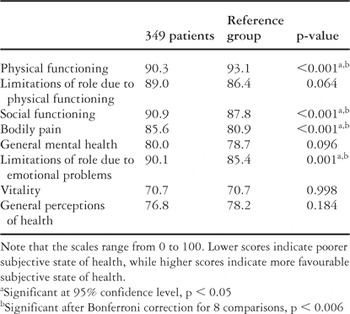
Table 1.
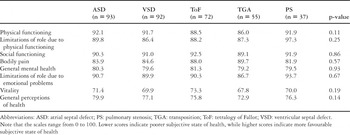
Table 2.
Longitudinal course of our sample of patients, aged from 26 to 46 years, with congenital cardiac disease on the scales of the Heart Patient Psychological Questionnaire. In terms of the measurements, T1 describes the period from 1989 through 1991, while T2 is the second period of follow-up from 2000 through 2002. For well-being, high scores indicate favourable psychological well-being, whereas in terms of feelings of being disabled, displeasure and social inhibition, high scores indicate poor psychological well-being.
 You have
Access
- 29
- Cited by