

Introduction
Representative democracy demands that citizens form political preferences informed by accurate perception of real-world conditions (Berelson, Reference Berelson1952; Dahl, Reference Dahl1998). For example, a reliable picture of social reality is necessary for citizens to judge the quality of past government performance or to estimate the consequences of alternative policy proposals. Alarmingly, however, citizens’ political perceptions commonly fail to satisfy this minimum criterion of democratic competence. In particular, the perception of a diverse range of politically important social and economic conditions is suffused with so-called partisan bias: all other things being equal, those identifying with the party of the incumbent tend to perceive conditions in a manner favourable to the incumbent's re-election, while those identifying with opposition parties tend to judge conditions in ways that justify “throwing the rascals out” (for example, Bartels, Reference Bartels2002; Berelson et al., Reference Berelson, Lazarsfeld and McPhee1954).Footnote 1 That said, while partisan effects on political judgment are “ubiquitous” (Bartels, Reference Bartels2002), numerous factors moderate these effects (see, for example, Gaines et al., Reference Gaines, Kuklinski, Quirk, Peyton and Verkuilen2007; Hetherington, Reference Hetherington2001; Jerit and Barabas, Reference Jerit and Barabas2012; Matthews, Reference Matthews, Bittner and Koop2013). Whereas some conditions (for example, high levels of general political knowledge) are especially likely to magnify partisan effects, other conditions (for example, a high degree of partisan agreement on a given issue at the elite level) favour the erosion, or even elimination, of partisan effects in political judgment.
The possibility that certain conditions may reduce partisan perceptual bias is highly felicitous from a democratic perspective; unfortunately, most of the important facilitators of partisan effects are either unlikely to yield to conscious human intervention (at least in the short run) or constitute features of democratic politics that are otherwise desirable (for example, a competitive party system). That said, one potential moderator of partisan perceptual bias is a plausible target of conscious intervention: the availability of perceptually relevant political information in the media. Perceptual relevance, in this sense, refers to information that is objectively diagnostic with respect to perception of a given social, economic or political object. For perception of economic change, for example, unemployment statistics are perceptually relevant. In theory, a population of rational learners would, given certain conditions, converge on a common perception of real-world conditions in the presence of reliable information relevant to that perception (Bartels, Reference Bartels2002). Average citizens, of course, may not be rational learners (see, for example, Achen and Bartels, Reference Achen and Bartels2016). Further, with a few exceptions (for example, Baum and Groeling, Reference Baum and Groeling2010; Jerit and Barabas, Reference Jerit and Barabas2012), the empirical record is sparse in relation to the impact of information on perceptual bias. Referring to scholarship in both political science and psychology, Jerit and Barabas conclude that “existing work … says little about how partisan-motivated reasoning is affected by the ebb and flow of information” (Reference Jerit and Barabas2012: 673).
Accordingly, we investigated the impact of variation in the volume of perceptually relevant information in the media on partisan bias in political perception. Drawing on a dataset combining survey and media data from five Canadian general elections (1993–2006), we have considered this issue in relation to perception of national economic conditions, where partisan bias means that incumbent partisans perceive economic conditions more favourably than opposition partisans.Footnote 2 Perceptual bias in the economic domain is especially troubling, given the importance of economic judgments to voting behaviour.Footnote 3 Furthermore, partisan bias in economic perception is perceptual bias where it seems least likely to occur, given that the media supply a steady diet of economic information featuring a host of “hard” economic indicators (see Bartels, Reference Bartels2002: 124–5). Our results suggest that increases in economic news can have diverse effects, sometimes eroding, sometimes magnifying and sometimes having no effect on partisan bias in economic perceptions. Our evidence is not consistent with the view that these effects are systematically conditioned by the negativity of prevailing economic conditions; however, the pattern of results across elections is consistent with possible moderating roles for the extremity of economic conditions and features of political context.
Partisan Bias, Information and Economic Perceptions
Previous empirical work on the impact of perceptually relevant information on partisan bias in political perception is limited. The major theoretical approaches to partisan bias imply that high levels of perceptually relevant information may narrow the scope for bias. Furthermore, some recent research provides evidence consistent with this view, including with respect to the economic domain. At the same time, one of the few explicit treatments of the impact of information on partisan bias concludes just the opposite—that increased information exacerbates partisan bias in political perception. We now review these arguments and findings.
Early scholars, such as Berelson et al. (Reference Berelson, Lazarsfeld and McPhee1954), tended to theorize partisan bias in political perception in terms compatible with cognitive dissonance theory (Festinger, Reference Festinger1957). The argument, in short, was that partisans filter political information and bend their political perceptions in the direction of existing beliefs to minimize the psychic stress associated with inconsistency, or “dissonance,” in one's belief system. More recently, political scientists have tended to recast partisan bias in terms of the theory of motivated reasoning (for example, Taber and Lodge, Reference Taber and Lodge2006), a more general account of social perception that includes dissonance-reduction motivation as a special case (Kunda, Reference Kunda1990: 483–4). In this approach, partisan bias is understood to reflect the perceiver's desire to reach conclusions compatible with the perceiver's partisan commitments, rather than to achieve cognitive consistency, per se. Motivated-reasoning theorists also emphasize particular cognitive processes as critical to sustaining the partisan's worldview, particularly confirmation bias and disconfirmation bias. Confirmation bias is a tendency to evaluate favourably (and, where possible, to seek out) information that conforms with one's existing views. Disconfirmation bias, conversely, refers to the practice of applying disproportionate scrutiny to information that is incongruent with relevant attitudes (Lord et al., Reference Lord, Ross and Lepper1979). As Taber and Lodge (Reference Taber and Lodge2006) put it, motivated reasoners tend to “bolster” attitude-congruent arguments and “counter argue” attitude-incongruent ones.
In both of these theoretical accounts, the informational context of perception is important. Festinger, for one, was careful to specify conditions under which existing attitudes would change in response to dissonant information, emphasizing, among other things, whether “ignoring or counteracting the real situation” to which the attitude corresponded was a possibility open to the perceiver (Reference Festinger1957: 21 and see, more generally, 18–28). In one memorable passage he writes, “If a person is standing in the rain and rapidly getting soaked, he [sic] will almost certainly continue to have the cognition that it is raining no matter how strong the psychological pressures are to eliminate that cognition” (Reference Festinger1957: 21). A similar idea is conveyed by Berelson et al., who claim that “[d]eviation or misperception requires a certain degree of ambiguity in the objective situation being perceived” (Reference Berelson, Lazarsfeld and McPhee1954: 220). For both Festinger and Berelson et al., the underlying sense is that biased perception is less likely in the context of objective conditions that are perceptually intrusive and subjectively clear, in other words, when the “objective situation” is not ambiguous. The facilitating role of ambiguity in perceptual bias is also prominent in research on motivated reasoning. The seminal work of Lord et al. on confirmation bias, for instance, begins with a telling restriction on its analytical domain to situations involving “mixed or inconclusive evidence” (Reference Lord, Ross and Lepper1979: 2099).Footnote 4 More generally, Kunda (Reference Kunda1990) and Taber and Lodge (Reference Taber and Lodge2006) emphasize that, in addition to “directional” or “partisan” motivations, the social perceiver is motivated by a desire for accuracy. Kunda states clearly the implications of this premise:
People motivated to arrive at a particular conclusion attempt to be rational and to construct a justification of their desired conclusion that would persuade a dispassionate observer. They draw the desired conclusion only if they can muster up the evidence necessary to support it. (Reference Kunda1990: 482–83, emphasis added; see also Taber and Lodge Reference Taber and Lodge2006: 756)
Put differently, biased perception is possible just to the extent that the perceiver can draw upon a convincing store of attitude-congruent information. An important implication is that, as the availability of objectively diagnostic information that is clear and credible increases, the scope for partisan-biased perception decreases. Under the right informational conditions, that is, even the most partisan perceiver will eventually get “soaked”.
Some recent work in political science is consistent with this argument. In a study of American support for the war in Iraq from 2003 to 2007, Baum and Groeling (Reference Baum and Groeling2010) find that the capacity of partisan elites to shape public attitudes declined as information about the “reality” of the war (specifically, the level of Iraqi civilian and U.S. military casualties) accumulated over time. Further evidence that information constrains partisan bias (specifically in the economic domain) can be found in research on economic perception during the Great Recession. In particular, Johnston et al. (Reference Johnston, Thorson and Gooch2010) find that partisan bias in American economic perceptions was significantly eroded following the saturation coverage of the emerging financial crisis in September 2008 (particularly following the collapse of Lehman Brothers). The effect was an elimination of roughly three-quarters of the perceptual difference between Democratic and Republican partisans, mostly reflecting a negative shift in the latter group (see Johnston et al., Reference Johnston, Thorson and Gooch2010: figure 4). Similarly, Chzhen et al., (Reference Chzhen, Evans and Pickup2014) find that partisan conditioning of economic perceptions in the United Kingdom disappeared during the election cycle immediately following the dramatic disruption of 2008.Footnote 5
In stark contrast to the view that an accumulation of perceptually relevant information constrains partisan bias, Jerit and Barabas (Reference Jerit and Barabas2012) propose that partisan bias actually increases with levels of information. These scholars’ conclusions are noteworthy, in part, because their study is one of the few to directly examine the relationship between information and the reduction of partisan bias. Two key propositions support Jerit and Barabas’ argument. The first is the intuitive idea that it is “easy to learn politically congenial facts, and this tendency only becomes greater as media coverage of a topic increases” (Reference Jerit and Barabas2012: 674, emphasis in the original). Consequently, Jerit and Barabas reason, as media coverage increases the supply of information relevant to a given perception, partisans are able to build up their stock of “politically congenial facts.” The second premise of Jerit and Barabas is that politically uncongenial facts are generally resisted: “individuals,” they argue, “scrutinize, counterargue and reject such [politically uncongenial] information flows” (Reference Jerit and Barabas2012: 674). While this premise is resonant with standard findings in the literature on motivated reasoning (in particular, disconfirmation bias: see, for example, Taber and Lodge, Reference Taber and Lodge2006), Jerit and Barabas claim that the political perceiver treats uncongenial information not merely with skepticism, but with, in effect, categorical disbelief. Indeed, on the basis of both observational and experimental evidence, they conclude that “levels of knowledge for politically uncongenial facts are all but impervious to the amount of news coverage” (Jerit and Barabas, Reference Jerit and Barabas2012: 679).
The implications of Jerit and Barabas’ “impervious partisans” argument are noteworthy. This view anticipates, ironically, that the beliefs of a partisan exposed to a “two-sided” stream of information on a topic—a distribution of information that supports divergent political perspectives—will become more “one-sided” as a result. The most troubling implication of the impervious-partisans view, from a democratic perspective, is what happens when a partisan is exposed to an information stream composed entirely of politically uncongenial messages: nothing at all. In other words, in general, the partisan will resist the politically uncongenial information and “little (or no) learning” will occur (Jerit and Barabas, Reference Jerit and Barabas2012: 674). While Jerit and Barabas allow for the possibility that unbiased learning may occur in the presence of “extraordinary levels of media coverage” with regard to a particular perceptual object, their analysis suggests that partisan bias in political perception is typically magnified, not reduced, by increased information (see also Nyhan and Reifler, Reference Nyhan and Reifler2010).
Analytical Approach and Data
Do citizens respond to economic information as rational learners, revising their economic judgments (at least to some degree) in light of new evidence, or are they impervious partisans, strongly resistant to information incompatible with their existing attitudes? We investigated this question by combining survey data collected during five Canadian general elections with a large-scale content analysis of media coverage of economic topics during these elections. Our analysis centres on how changes in the volume of economic coverage affect the size of the difference between incumbent partisans and other partisans in average economic perceptions.
Importantly, in focusing on partisan difference, we cannot speak directly to the effects of information on the level (or partisan distribution) of error in economic perceptions. To do so, we would require a clear standard against which to assess the accuracy of the perception in question. As noted in the following section, however, we analyzed subjective perceptions of an economic object, “the general economic situation,” that lacks a straightforward objective referent. Even if we did possess an obvious objective measure of the general economic situation, the mapping of the response categories in our survey item to the objective measure would be problematic (Matthews, Reference Matthews, Anderson and Stephenson2010: 217). In principle, the effects of information on perceptions of well-measured economic quantities, such as unemployment and inflation rates, could be analyzed; however, these were not consistently available in our survey data. Nevertheless, an erosion of perceptual differences between partisans is, at the very least, a necessary condition for the elimination of perceptual error rooted in partisanship.
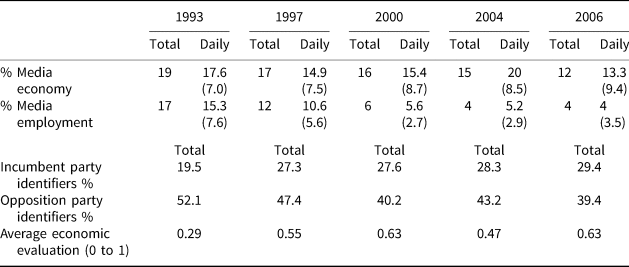
For our survey data, we used the pre-election waves of the Canadian Election Study surveys from 1993 to 2006. These data consist of rolling cross-section surveys conducted during the formal election period of each campaign.Footnote 6 The rolling cross-section methodology produces approximately random samples of respondents for each day of the campaign (Johnston and Brady, Reference Johnston and Brady2002). For each of the five election campaigns, daily sample sizes were roughly 100, increasing to approximately 150 per day at the end of each campaign. Thus, these data permitted careful treatment of questions concerning campaign dynamics, including the dynamics of partisan bias in national economic perceptions (for examples of previous work on campaign effects utilizing rolling cross-sectional data, see, Box-Steffensmeier et al., Reference Box-Steffensmeier, Darmofal and Farrell2009; Johnston et al., Reference Johnston, Thorson and Gooch2010; Matthews, Reference Matthews, Anderson and Stephenson2010; Matthews and Johnston, Reference Matthews and Johnston2010). We measured perceptions of national economic conditions ( $NEC_{i_t}$) with a standard retrospective item, scaled to the unit interval (1 = most positive evaluation), and we captured party identification with a pair of dummy variables,
 $INCPID_{i_t}$ and
 $OPPPID_{i_t}$, which identified partisans of the incumbent and any (major) opposition party, respectively. Summary statistics, by election, for the economic perception and party identification measures are reported in Table 1. For details on these measures, see online Appendix A. This appendix also describes the set of control variables included in the analysis. In the model, below, respondent i's value on control j on campaign day t is represented by
 $x_{j,i_t}$.
Summary Statistics

Note: Standard deviations for certain quantities are reported in parentheses. Statistics in the upper two major rows derive from the automated analysis of media content described in the text. Statistics in the lower three major rows derive from the first waves of the Canadian Election Study surveys.
The second data source was an extensive analysis of media content during the five elections. These data derived from a large database of all election news stories (some 24,000) appearing during the campaigns from 1993 to 2008Footnote 7 in five English-language newspapers: The Globe and Mail, Calgary Herald, Montreal Gazette, Toronto Star and The Vancouver Sun. The database includes, along with other variables, extensive automated coding of the topics covered in each story; the coding was performed using Lexicoder software (Daku et al., Reference Daku, Soroka and Young2011). The coding protocol assigns each story to 1 of 15 different policy domains, or “topic codes,” based on the relative frequencies of sets of words, according to a dictionary designed for the coding of policy-related topics (Albaugh et al., Reference Albaugh, Sevenans and Soroka2013). The topic codes include such areas as agriculture, energy, foreign affairs and, of course, the economy.Footnote 8
Using the topic-coded media data, we constructed, for each day of each of the five election campaigns, various measures of the informational environment. Most importantly, we captured the proportion of the day's election news (as represented in the five newspapers) assigned to two of the database's topic codes: economy and employment. We focused on coverage in these two domains on the assumptions that they have the most immediate relevance to citizen perception of national economic conditions and that they capture types of economic news that are likely to be easier for citizens to absorb than news regarding more abstract or technical economic phenomena, such as trade and finance (see also Carmines and Stimson, Reference Carmines and Stimson1980). We modelled daily changes in coverage of the economy (ΔEc) and employment (ΔEm). This decision was driven by our choice of transition equation for the time-varying coefficients model, described below. Summary statistics for these variables are presented in Table 1. Importantly, we observed considerable daily variation in the proportion of coverage devoted to these two topics (for further discussion, see online Appendix B).
From the media database we also derived an indicator of change in the intensity of overall election news coverage. The measure records dynamics in the total number of words contained in election stories on a given day (ΔInt). Capturing the intensity of coverage is an important control, given the general expectation that changing levels of political information during election campaigns influence the salience of partisan considerations in political judgments (for example, Gelman and King, Reference Gelman and King1993).
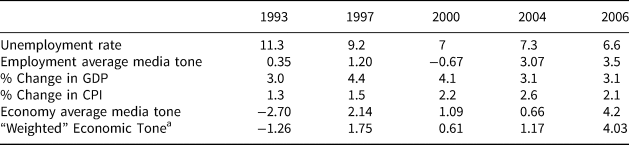
Finally, we also coded the valence or tone of each story topic-coded to economy or employment. The tone of a story was calculated as the difference between the number of positive and negative words in the story, where word valence is assigned according to an established sentiment dictionary (Young and Soroka, Reference Young and Soroka2012). The coding was performed using Lexicoder (Daku et al., Reference Daku, Soroka and Young2011). While the number of stories per campaign day (within our two topics) was not sufficient to produce a reliable dictionary-based measure of daily changes in economic tone, there were enough stories over each campaign to produce a measure of overall economic tone for each election. These measurements are relevant to our discussion of the results (see “The Role of Economic and Political Contexts” below). We report, in Table 3, the average tone of stories topic-coded to economy and employment for each election.
Modelling
We analyzed the data described above by estimating a time-varying coefficients model. The principal benefit of this modelling approach is that we were able to properly account for and model the sources of change in partisan bias over time. Time-varying coefficient models are not common in political science, but a range of approaches are available (for an overview of many of these approaches, see Beck, Reference Beck1983). The simplest method is to simply interact the covariate of interest with some function of time (and potentially other covariates). Such models have the advantage of being estimable with familiar techniques, such as ordinary least squares (OLS) and maximum-likelihood estimation (MLE). The disadvantage of this approach is that it requires the coefficient to vary deterministically as a function of time in a way that is known to the researcher.
Of the approaches that allow coefficients to vary stochastically, the two most common are (a) models estimated using the prediction error decomposition form likelihood, where the prediction errors are calculated based on a Kalman filter (Commandeur and Koopman, Reference Commandeur and Jan Koopman2007) and (b) the dynamic conditional correlations generalized autoregressive conditional heteroscedasticity approach. The first of these approaches is often referred to as the Kalman filter approach, and examples of its application in political science are provided by McAvoy (Reference McAvoy2006) and Bond et al. (Reference Bond, Fleischer and Wood2003). The second approach is often referred to as the dynamic conditional correlations (DCC) approach, and it is exemplified in political science by Lebo and Box-Stefensmeier (Reference Lebo and Box-Steffensmeier2008) and Kellstedt et al. (Reference Kellstedt, Linn and Lee Ha2015).
The DCC approach has an advantage in that it may better account for changes in volatility in the series (Lebo and Box-Stefensmeier, Reference Lebo and Box-Steffensmeier2008); however, when it comes to explaining time variance in the coefficients, the DCC approach has certain disadvantages. In particular, the method models the time variance in the coefficients in a second step that does not allow the uncertainty in the first step to carry over. Using the Kalman filter approach, by contrast, the covariates driving the variation in the coefficients can be included in the main model, thereby estimating all effects in a single step. However, we are unfamiliar with any previous application of this specific approach in the political science literature that includes covariates to explain variation in the coefficients.
Kalman filtering is implicitly Bayesian from the perspective that the posterior for the parameters at a given point in time t is a function of a prior based on data up to time t − 1 plus the observation at time t (Meinhold and Singpurwalla, Reference Meinhold and Singpurwalla1983). The “Kalman gain” determines the degree to which the parameter is updated based on the new observation. Since this approach is implicitly Bayesian, it is natural to translate it into an explicitly Bayesian environment; we followed Parker-Stephen (Reference Parker-Stephen2013) in doing just this.Footnote 9
The Bayesian model we employed is hierarchical, with individuals nested within campaign days. Unlike the typical multilevel setup, however, our approach permitted explicit modelling of dynamic time-series processes at the second level (that is, campaign time). In particular, as detailed below, we incorporated time-varying components in the modelling of partisan bias.
The statistical model is defined as follows. First, we assume that our dependent variable, national economic perceptions ( $NEC_{i_t}$), is normally distributed with time-varying mean
 $\mu _{i_t}$ and constant variance σ 2:
 $$NEC_{i_t}\sim N\lpar {\mu_{i_t},\sigma^2} \rpar $$
Thus, the level-1 errors are assumed to be distributed normally with variance σ 2.Footnote 10 Next, we model the mean ( $\mu _{i_t}$) as a linear function of the party identification dummies,
 $INCPID_{i_t}$ and
 $OPPPID_{i_t}$, multiplied by their associated time-varying coefficients, and a time-varying intercept (note that the final term in this equation includes individual-level control variables):
 $$\mu _{i_t} = \alpha _{1,t} + \alpha _{2,t}\; INCPID_{i_t} + \alpha _{3,t} \; OPPPID_{i_t} + \mathop \sum \nolimits_{\,j = 4}^{12} \alpha _jx_{\,j,i_t}$$
Equations (1a) and (1b) define the first level of the model. The influence of the information environment on partisan bias is captured in the model's second level, which defines relationships between, on the one hand, ΔEc, ΔEm and ΔInt and, on the other hand, the coefficients on  $INCPID_{i_t}$ and
 $OPPPID_{i_t}\ndash \alpha _{2,t}$ and α 3,t – and the level-1 intercept, α 1,t. We assume that these parameters are normally distributed with time-varying means and constant variances as follows:
 $$\alpha _{1,t}\sim N\lpar {\gamma_{1,t},\omega_1^2} \rpar $$
 $$\alpha _{2,t}\sim N\lpar {\gamma_{2,t},\omega_2^2} \rpar $$
 $$\alpha _{3,t}\sim N\lpar {\gamma_{3,t},\omega_3^2} \rpar $$
Finally, the means of the α’s on a given campaign day are modelled as a function of the mean on the previous campaign day plus the effect of any changes in the information environment:
 $$\gamma _{1,t} = \gamma _{1,t - 1} + \beta _{1,1}{\rm \Delta} Ec + \beta _{1,2}{\rm \Delta} Em + \beta _{1,3}{\rm \Delta} Int$$
 $$\gamma _{2,t} = \gamma _{2,t - 1} + \beta _{2,1}{\rm \Delta} Ec + \beta _{2,2}{\rm \Delta} Em + \beta _{2,3}{\rm \Delta} Int$$
 $$\gamma _{3,t} = \gamma _{3,t - 1} + \beta _{3,1}{\rm \Delta} Ec + \beta _{3,2}{\rm \Delta} Em + \beta _{3,3}{\rm \Delta} Int$$
Equations (2a) to (4b) model the γ’s as time-varying dynamic processes and are known as transition equations. A transition equation defines how a coefficient evolves over time. As Beck (Reference Beck1983) highlights, one must choose the amount of structure to place on a transition equation. More structure means greater power to detect time variation in a parameter and the causes of that variation, but it also means more assumptions, some of which may not be plausible. Ideally, as little structure on the transition equation as possible is desired, while still retaining sufficient power. Like McAvoy (Reference McAvoy2006), our transition equations are modelled as random walks. Among the alternatives, this approach implies the least structure, with the exception of the Swamy (Reference Swamy1971) random coefficients model (Beck, Reference Beck1983). In our case, the random coefficients transition equation would be 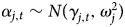 $\alpha _{j,t}\sim N\lpar {\gamma_{j,t},\omega_j^2} \rpar $; γ j,t = β j,1ΔEc + β j,2ΔEm + β j,3ΔInt. This equation implies that the weight of an individual's partisan identity today is unrelated to the weight the individual placed on that identity on the previous day. To us, this seems implausible. A random walk transition equation, by contrast, is consistent with a rational learning model. In this view, an individual rationally updates a personal “framework” for evaluating the economy as information becomes available, reducing the weight of partisanship in that framework as the environment provides more information about the economy. The unit-root process, with the change in media information on the right-hand side, implies that if there is no change in the information environment, then there is no change in the weights.Footnote 11 (To investigate the robustness of our assumptions, in online Appendix C, we examined the performance of two alternative models. In all cases, the specification described here fits as well as or better than the alternatives.)
The hierarchical model described in Equations (1a) to (4b) allows straightforward tests of the influence of our measures of the information environment on the magnitude of partisan differences in perceptions of national economic conditions. To address the question of whether increases in the proportion of news coverage focused on the economy or employment reduce, increase or have no effect on partisan bias in economic perception, we must inspect differences between the estimates of β 2,1, β 2,2, β 3,1 and β 3,2. B ias reduction, predicted by the rational learning perspective, is indicated when β 2,1 minus β 3,1 and/or β 2,2 minus β 3,2, is negative, implying that an increase in the coverage of the economy and/or employment reduces the difference between incumbent and opposition identifiers. Similarly, bias increase is implied when β 2,1 minus β 3,1, and/or β 2,2 minus β 3,2, is positive. Notably, the time-varying intercept α 1,t captures changes in perceptions of nonpartisans, which ensures that the estimate of partisan bias (the difference in perceptions of incumbent and opposition identifiers) does not change simply because of a shift in nonpartisan perceptions.
Our priors for the model are:  $\sigma ^2 \sim U\lpar {0,\; 100} \rpar $;
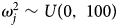 $\omega _j^2 \sim U\lpar {0,\; 100} \rpar $, j = 1, 2, 3;
 $\alpha _{j,0} \sim N\lpar {0,{\rm \; \;} 0.0001} \rpar $, j = 1, 2, 3;
 $\alpha _j \sim N\lpar {0,{\rm \; \;} 0.0001} \rpar $, j = 4, 5, 6, …, 12 (these are the time-invariant coefficients on the individual level control variables); and
 $\beta _{j,k} \sim N\lpar {0,{\rm \; \;} 0.0001} \rpar $, j = 1, 2, 3 and k = 1, 2, 3. These priors have very large variances and contain little information. This means that our estimates of the model parameters place little to no weight on our prior expectations for those parameters. We estimated the model using the Markov Chain Monte Carlo (MCMC) method.Footnote 12 For each model, we checked estimation convergence using the Gelman and Rubin statistic. Convergence was assessed by comparing the estimated between-chain and within-chain variances for each model parameter. Large differences between these variances indicated nonconvergence (Brooks and Gelman, Reference Brooks and Gelman1997; Gelman and Rubin, Reference Gelman and Rubin1992). Table D1 in online Appendix D reports these statistics. All cases showed no evidence of nonconvergence. Further, the estimated posterior distributions (not shown) were unimodal.
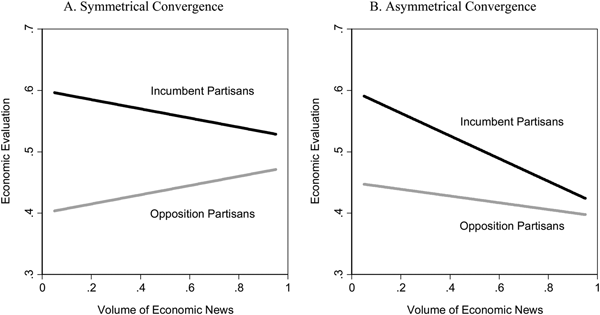
Notably, our empirical model allowed bias reduction and bias increase to manifest in a variety of ways. Figure 1 depicts two salient possible types of bias reduction.Footnote 13 The plots in both panels assume, consistent with the literature, that partisans of the incumbent government have more favourable evaluations than opposition partisans. The plots also assume that the economic evaluations of incumbent and opposition partisans converge as the volume of economic news increases. However, the plots differ in the nature of perceptual change within partisan groups. Panel A captures symmetrical convergence: here, increases in economic news move incumbent and opposition partisans towards neutrality (from positions of moderate favourability and unfavourability, respectively) and the rate (but not the direction) of perceptual change is equal across the two groups. Panel B, on the other hand, depicts asymmetrical convergence: while opposition partisans are little affected by the volume of economic news, incumbent partisans react relatively strongly to increasing information, shifting from moderate positivity to a negative evaluation of the economy that differs little from that of opposition partisans. In the next section, we return to these theoretical possibilities when interpreting the statistical results.
Two Types of Bias Reduction.

Rational Learners or Impervious Partisans?
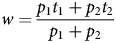
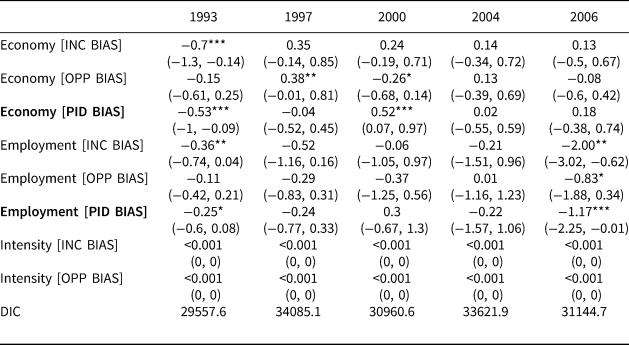
Table 2 presents, by election, estimates of the impact of increases in the proportion of economy- and employment-focused news coverage on the magnitude of partisan effects on economic evaluations; that is, we report estimates of β 2,1 and β 2,2 in Equation (3b) and β 3,1 and β 3,2 in Equation (4b). For each media quantity, these are labelled INC BIAS and OPP BIAS, respectively. Of greatest interest, however, is the impact of the news coverage on the evolution of the difference in economic evaluation between opposition and incumbent partisans, which, as noted, is captured in the following differences: β 2,1 − β 3,1 and β 2,2 − β 3,2. For each media quantity, these are labelled PID BIAS. Negative values reflect reductions in bias, and positive values imply bias increases. Furthermore, we report the effect, separately for incumbent and opposition partisans, of changes in the intensity of election-news coverage (β 2,3 and β 3,3). Note that intensity is included only as a control and that we had no theoretical expectations for its effects.
Media Coverage Effects

Notes: ***95% CI, **90% CI, *80% CI. Models include control variables, described in the appendix. DIC = deviance information criterion, which is used to compare models with alternate specifications in the appendix.
INC BIAS, OPP BIAS, and PID BIAS are defined in the main text (see section “Rational Learners or Impervious Partisans?”).
For each coefficient and difference, we report 95 per cent credible intervals, which are roughly analogous to the confidence intervals used in frequentist statistics. A 100 × (1 − α)% equal-tailed credible interval is the interval centred on the median of the posterior that supports the proportion 1 − α of the probability under the posterior. We also indicate when at least 80 per cent, 90 per cent, and 95 per cent of the total mass under the posterior fell to one or the other side of zero. This provides weak (80%) to very strong (95%) evidence of a nonzero coefficient. Obviously, a cautious interpretation must be taken when only 80 per cent of the posterior falls to one side of zero, but we justify giving consideration to such results on the basis that time varying coefficient models are typically low in power (Beck, Reference Beck1983).
To summarize, the results are mixed. In two elections (1993 and 2006), our findings show that increasing levels of economic news eroded partisan bias in economic perceptions. In one election (2000), by contrast, our findings show increases in economic news increasing partisan bias in economic judgments. In the remaining two elections (1997 and 2004), partisan differences in economic evaluations were seemingly unaffected by changes in the volume of economic news. Overall, of the 10 tests (that is, five elections times two media quantities) of the impact of economic news on the magnitude of the partisan difference in economic evaluations, three supplied evidence of bias reduction, while one indicated bias increase.
Regarding bias reduction, the strongest evidence appeared in the 1993 estimates. Here, clear evidence indicates that differences between incumbent and opposition partisans were narrowed by increasing levels of coverage of the economy. The coefficient (the median of the posterior) estimate in the top-left interior cell of Table 2 implies that a shift from an information environment containing no stories topic-coded to the economy category to one entirely consumed by such stories produced a 0.7 reduction in the effect of incumbent partisanship on economic perceptions, that is, a reduction equivalent to 70 per cent of the range of the economic perception measure. With greater than 95 per cent probability that the effect was not zero, the effect was both substantively large and highly credible. At the same time, we observed a tiny effect of increasing economy-topic–coded coverage on partisan effects among opposition partisans, and less than 80 per cent of this coefficient's posterior was on one or the other side of zero. The overall pattern of effects implies asymmetrical convergence in economic evaluations (consistent with Figure 1, panel B): incumbent partisans became less positive (relative to nonpartisans) as coverage of the economy increased, while opposition partisans were, on average, unmoved by changing coverage (relative to nonpartisans). Jointly, these estimates imply that, with greater than 95 per cent probability, the gap between partisan groups was reduced by increasing economic news. The estimated magnitude of the decrease in partisan bias due to a shift from no economic coverage to all economic coverage was a drop representing 53 per cent of the range of the economic perception measure.
We observed an additional reduction in partisan bias in 1993 as a result of increasing levels of coverage of employment, and again, the pattern was one of asymmetrical convergence. The evidence suggests that, with at least 90 per cent probability, a shift from no coverage of employment to saturation coverage of the topic produced a drop in the effect of incumbent partisanship on economic perception. Among opposition partisans, once again, there was little evidence of a shift in partisanship's effect in response to the changing pattern of election news coverage. Together, the coefficient estimates imply that the perceptual gap between partisans was narrowed by coverage of employment, a shift of roughly one-quarter of the range of the economic perception measure. Notably, however, the evidence suggests only an 80–90 per cent probability that this effect is nonzero.
The 2006 election also generated evidence of bias reduction in response to changes in the information environment. Furthermore, the dynamics were, once again, consistent with asymmetrical convergence of evaluations. With greater than 95 per cent probability, there was a drop in the effect of incumbent partisanship on national economic perceptions in response to increasing coverage of the employment topic. With between 80 and 90 per cent probability, opposition partisans were also moved, relative to nonpartisans, by the changing coverage, but to a much smaller degree. The overall pattern implies that the difference between partisan groups in perception of economic conditions was substantially reduced by increasing coverage of employment. The probability that this effect was nonzero, furthermore, exceeded 95 per cent.
Regarding the evidence of bias increase in the 2000 election, the key dynamic involves opposition partisans, among whom an increase occurred, in absolute terms, in the influence of partisanship on economic perceptions in response to increasing coverage of the economy topic. That is, the effect of opposition partisanship on economic evaluations was more negative as the share of economy-topic coverage increased. The probability that the relevant coefficient was nonzero is greater than 80 per cent. Among incumbent partisans, however, there was no detectable change in the effect of partisanship in response to economic coverage. This noneffect among incumbent partisans, combined with the negatively signed estimate among opposition partisans, implies that the perceptual gap between partisans increased with the proportion of economy-topic–coded stories in the information environment. The probability that this effect was nonzero is greater than 95 per cent. Furthermore, the magnitude of the effect was not trivial, covering approximately one-half of the range of the dependent variable.
Estimates for the 1997 and 2004 elections imply that levels of partisan bias in economic perception were unaffected by changes in the proportions of economy- and employment-focused news. This is not to say that there was no evidence of changes in partisan effects in response to economic news in these elections. In particular, the evidence suggests, with approximately 90 per cent probability, that coverage of economic news shifted the effect of opposition partisanship in 1997. However, incumbent identifiers appear to have been affected to roughly the same degree and direction, resulting in no overall change in partisan bias.
Notably, the intensity of election news coverage has no (net) influence on partisan bias: all of the coefficient estimates were small in magnitude, with little evidence of being different from zero. The absence of effects here may reflect the fact that citizens’ “budgets” for political news consumption were fairly constant over the campaign, or in any case, were unrelated to the volume of coverage available on any given day.
The Role of Economic and Political Contexts
Looking across the elections, the final tally of results has an equivocal bearing on the question of how levels of perceptually relevant information influence the degree of partisan bias in economic perceptions. Is it possible to account for the pattern of effects in terms of varying features of the economic or political context in which these elections occurred?
First, we considered evidence regarding the economic context. Table 3 summarizes national economic conditions, by election, in terms of key indicators and the tone of economic-news coverage (higher values of tone indicate more positive news). Two election years stand out from the others. In 1993, unemployment was at its highest, gross domestic product (GDP) growth and the inflation rate were at their lowest, and the average tone of economy-topic–coded news stories was, by a wide margin, at its lowest. At the other extreme of economic conditions, in 2006, unemployment was at its lowest and the tone of both employment- and economy-focused news was at its most positive. Little distinguished the remaining elections: with the possible exceptions of unemployment and inflation in 1997, all economic and media statistics were middling or better. Notably, the tone of coverage in the elections of 1993 and 2006 was even more distinctive when we combined the tone measures in a way that weights for the relative proportion of news concerning the two topics. As indicated in the last row of Table 3, 1993 places nearly two and a half points below and 2006 places nearly three points above the interelection median of this weighted economic tone measure.Footnote 14
National Economic Conditions and Average Media Tone

Note: GDP, gross domestic product; CPI, consumer price index; aMeasure described in text.
Did this variation in economic conditions have an impact on the relationship between economic news and partisan bias in economic perceptions? One possibility derives from the well-established negativity bias, which implies that citizens attend more closely to negative than to positive information (Baumeister, et al., Reference Baumeister, Bratslavsky, Finkenauer and Vohs2001; Soroka, Reference Soroka2014). It may be that the effect of increases in perceptually relevant information is greatest when that information is most negative and, thus, attracts relatively more attention from citizens. This argument does not sort the present set of results very well: while we observed bias reduction under the worst economic conditions (1993), we also saw it under the best economic conditions (2006).
Another possibility involves not the valence of economic conditions but their extremity, that is, whether things are especially good or especially bad, as opposed to relatively neutral. For instance, Parker-Stephen (Reference Parker-Stephen2013), based on an analysis of 25 years of American economic evaluations, argues that partisan bias in economic perception is easiest to sustain when economic indicators are mixed, for example, when GDP growth is strong but unemployment is rising. Conversely, when economic conditions are uniformly positive or negative—when circumstances are, in Parker-Stephen's parlance, “glorious” or “abysmal”—the partisan-motivated reasoner should find it relatively difficult to support biased economic judgments (see also Chzhen et al., Reference Chzhen, Evans and Pickup2014).
This extremity-based argument aligns somewhat well with our results. We observed bias reduction in the “abysmal” setting of 1993 and the “glorious” circumstances of 2006. Conversely, bias increase was observed solely in 2000, a year that saw economic conditions that were rather good, by historical standards, but that did not attract strongly positive economic news (at least relative to the other elections in our sample). That said, if we confine our assessment of the economic environment to objective (non–media-based) indicators, as does Parker-Stephen (Reference Parker-Stephen2013), then 1997 had the more clearly mixed setting (that is, relatively high unemployment, but strong GDP growth and low inflation), but we detected no change in partisan bias.
What about the role of the broader political context? Focusing on aspects of the political environment that might shape the strength of partisan bias, the overall (that is, economic and noneconomic) informational context varied significantly across the elections. In particular, the treatment of the incumbent party in media coverage was considerably less favourable in 1993 and 2006, when incumbents were defeated, than in the other elections, in which incumbents returned to power. Bélanger and Soroka's analysis of the “incumbent advantage” in the tone of election coverage in these elections indicates that, by election day, the incumbent's disadvantage on media tone was roughly twice as large in 1993 and 2006 than in 1997, 2000 or 2004 (Reference Bélanger and Soroka2012: 709, fig. 3).Footnote 15 These relatively inhospitable media environments may, in turn, have weakened incumbent partisanship in 1993 and 2006, thus reducing incumbent partisans’ propensity to distort their perceptions of economic information.Footnote 16 Accordingly, we observed reductions in partisan bias in response to economic news in 1993 and 2006 but either a null (1997, 2004) or an increasing (2000) effect of economic information on bias in the other elections.
In summary, based on comparative analyses of the elections, we find suggestive evidence of the influence of both economic and political contexts in facilitating the reduction of partisan-biased economic perception in response to economic news. Importantly, our capacity to assess arguments about moderation at the election level is very limited: with just five election-level cases, we were unable to convincingly rule out confounding relationships.
Conclusion
Whether judging the performance of governments, arriving at policy attitudes based on reasonable beliefs about relevant conditions and causal processes, or evaluating the qualifications and experience of candidates for elected office, the citizen's democratic role frequently turns on sound knowledge of real-world conditions. The pervasive influence of partisanship on political perception thus presents a fundamental challenge. Accordingly, the possibility that simply increasing the level of perceptually relevant information available to citizens might mitigate partisan perceptual bias merits careful investigation.
In the present study, we focused on the capacity of increasing coverage of economic topics during elections to erode partisan differences in perception of economic conditions. Learning about the economy should, we argue, be relatively easy, especially compared with rendering judgment on candidates’ performance qualities or issue positions. The results in this article, however, provide mixed support for this optimistic view of the potential for citizens to learn about the economy. We found evidence of reduction in partisan bias in response to increasing coverage of the economy in two of our five cases. Notably, the reductions in bias we observed always conformed to a pattern of asymmetrical convergence, whereby the economic evaluations of partisans of the incumbent government deteriorated quickly (relative to non-partisans) in response to increased economic news. In contrast, already relatively negative evaluations of opposition partisans shifted (relative to non-partisans) in the same direction more slowly or not at all. For all that, in two other cases, changing coverage had no detectable impact on partisan bias; and, in one case, increasing economic news coverage increased partisan bias in economic perceptions.
More tentatively, we conclude that the pattern of effects across elections may reflect features of economic and political context. More information may pose the greatest challenge to biased economic perception when the objective context is relatively extreme (that is, when the economy is doing very well or very poorly) or when overall political circumstances are especially difficult for the incumbent party. Regarding the latter situation, one possible (but, at this stage, fairly speculative) interpretation is that a broad critique of incumbent performance is necessary to render incumbent partisans more open to learning with regard to economic conditions.
Supplementary material
To view supplementary material for this article, please visit https://doi.org/10.1017/S0008423918000501