


1. Introduction
Physicalism, the thesis that the physical facts fix all the facts,Footnote 1 enjoys near universal acceptance in the philosophy of biology. However, despite this agreement, philosophers of biology are divided about whether biological properties and processes are autonomous from physical ones. Most philosophers of biology hold that biology is autonomous from physical science, while a minority deny this claim. Both parties to this dispute face difficulties, however.
The antireductionist claim that biology is autonomous from physical science requires that its general theories (if any) not be at very least reducible to those of molecular biology. This denial has an epistemic and a metaphysical version. The former is not controversial even among reductionists; it is the latter, ontological version of the claim, however, that antireductionists are committed to.
Epistemic antireductionism begins with reasonable assumptions about the presuppositions, interests, cognitive characteristics, and background knowledge of informed inquirers, in this case, biologists. It holds that in the light of these assumptions, for these inquirers’ questions, non-molecular, biological answers are adequately explanatory, and need no completion or correction by information from molecular biology. However, this claim is too weak to express the thesis in dispute between reductionists and antireductionists. The reductionist can embrace this thesis and go on to observe that the absence of molecular details from many biological explanations simply reflects temporary or merely anthropocentric limitations on biological inquiry.Footnote 2 The antireductionist replies that the autonomy of the biological from the molecular reflects the existence of biological natural kinds and generalizations about these kinds that obtain independent of our knowledge or beliefs about them.Footnote 3 The dispute is thus not epistemic but ontological; as Kitcher writes, “Antireductionism construes the current division of biology not simply as a temporary feature of our science stemming from our cognitive imperfections but as the reflection of levels of organization in nature.”Footnote 4 It is this metaphysical thesis—that there are facts, kinds, and generalizations that a molecular biological approach would miss—that is in dispute between reductionists and antireductionists.Footnote 5
The antireductionists’ ontological thesis is, however, difficult to reconcile with physicalism.Footnote 6 If the direction of fact-fixing is exclusively from the physical to the biological, neither downward causation nor the causal-mereological independence of the biological from the physical seems possible.
If antireductionism is burdened by claims difficult to reconcile, so is reductionism. Unlike an eliminativist about biology, reductionists are committed to the existence and scientific significance of biological facts, natural kinds, and generalizations that link them. They are also committed to grounding these generalizations in fundamental physical law (perhaps by combination with initial conditions). However, owing to the universally recognized supervenience of the biological on the physical, reductionists have been unable to convert this commitment into very many (or perhaps any) actual reductions.Footnote 7 Of course, the (ontological) reductionist can preserve the distinctive contribution of biology by embracing epistemic antireductionism, and treating biological theory as an explanatory tool indispensable for cognitive agents of our powers and limits, responsive to the questions we ask, against the background information available to us.Footnote 8 It is because this epistemic second best is too weak for both the reductionist and the antireductionist that the dispute between them persists.
In this paper we provide an analysis of biological theory that passes between the horns of both the physicalist antireductionist's and the physicalist reductionist's difficulties. The analysis concludes that on the one hand biology relies on a theory that is not reducible to more fundamental physical theory, and on the other hand that the theory on which it relies should give no pause to the physicalist reductionist. That is, the autonomy of biological theory from physics and chemistry to be established here raises no suspicions whatever of an implicit or explicit commitment to metaphysical, ontological differences from physics which reductionists suspect must lurk in a truly autonomous biology. And yet the argument also establishes that the processes characteristic of biology are not the consequences of laws and initial conditions familiar from physics and chemistry.
Whether the biological is autonomous from the physical hinges on the role of natural selection and Darwinian theory in the constitution and characterization of biological systems. Biological explanations implicitly or explicitly invoke what Mayr (Reference Mayr1982, 67–69) has called “ultimate,” adaptational causes, by contrast with physical sciences's “proximate” mechanistic causes. Equally, natural selection is widely and rightly held to be responsible for the functional kinds in which biology trades.Footnote 9 In light, then, of the literal truth of Dobzhansky's (Reference Dobzhansky1973, 125) dictum that “nothing in biology makes sense except in the light of evolution,” the strongest grounds for the autonomy of the discipline and its subject matter will rest on the irreducibility of this theory to physical science. However, this irreducibility will have to be established in a manner consistent with physicalism if it is to vindicate a defensible autonomy of biology.
The theory of natural selection tells us that if there is phenotypic variation in hereditary traits, and these traits have differential fitness, then (probably) there is descent with modification (i.e., evolution). Among candidates for the most central and important nomological generalization at the core of this theory is the following Principle of Natural Selection (PNS):
(x)(y)(E)[If x is fitter than y in environment E at generation n, then probably there is some future generation
 $n^{\prime }$
, after which x has more descendants than y.]
where x, y, and E range over reproducing systems and environments. For reasons that will be clear below, we do not specify further the range over which x, y, and E quantify. One may treat PNS as implicitly specifying its range.
The PNS or some more complicated variant of itFootnote 10 certainly can make some claim to being a law, according to the standard analysis of this notion (i.e., in terms of universality, qualitative predicates, support for counterfactuals, high degree of confirmation, etc.). The PNS has been traditionally identified as the core of the theory at least to the extent that conceptual connections between fitness and reproduction, which threaten it with unfalsifiability, are alleged to undermine Darwinism altogether. Such charges have led more than one philosopher to argue that the PNS should be shorn of its quantifiers and treated as a schema for a large number of highly restricted generalizations about particular biological systems instantiating particular comparative fitness specifications in particular environments.Footnote 11 Whether the fully quantified PNS is innocent of the charge of unfalsifiability is a matter that must be (and has been) taken up elsewhere.Footnote 12 In any case, the claims of the present paper can easily be accommodated to the notion that the PNS is a schema for specific spatiotemporally-restricted evolutionary generalizations. For simplicity we will treat the PNS as a fully quantified law.
In considering the relation between the PNS and physical science, three alternatives suggest themselves:
a. The PNS is an underived law about biological systems, and is emergentFootnote 13 from purely physical processes. This alternative would vindicate the autonomy of all of biology, following Dobzhansky's (Reference Dobzhansky1973) dictum, but leave biological phenomena physically unexplained and/or emergent.
b. The PNS is a derived law; it is derivable from some laws of physics and/or chemistry. This alternative would vindicate the reductionist vision of a hierarchy of scientific disciplines and theories, with physics at the foundations.
c. The PNS is an underived law about physical systems (including non-biological ones),Footnote 14 and from it the evolution of biological systems can be derived so that the principle we recognize operating at the biological level is also an underived basic law of physical science. This is an alternative no one has canvassed, and one which we shall defend here.
Physicalists might wish to defend the second alternative (b), but for reasons which are detailed below no such derivation is possible. This, one may suspect, is part of the reason many physicalists hold that there are no laws in biology. After all, if there are no laws, then physicalism has no need to show a systematical relationship between biological theory and physical science. Defending the first alternative (a) is an option so daunting to the physicalist antireductionist consensus in the philosophy of biology, that instead of facing it, most either deny that there are any biological laws of the sort recognized in physical science (Mitchell Reference Mitchell2000; Kitcher Reference Kitcher1993), or redefine the notion of law so that mathematical truths, statements of local invariance and relatively weak ceteris paribus generalizations will count as laws (See Lange Reference Lange1995, Sober Reference Sober1993, and Woodward Reference Woodward1997 for examples). Footnote 15 Some also deny that the theory of natural selection has a distinctive nomological component at all. Rather, they treat the theory as a historical claim about the “tree of life” on the Earth.Footnote 16 Thus, the physicalist antireductionist avoids the problem of explaining away emergent biological laws by denying there are any such laws. The fundamental trouble with these approaches to biology in general and the theory of natural selection in particular is that they require us to surrender a fundamental commitment to the need for nomological force in scientific explanation, without providing an alternative. Matters would be simpler if we could accept the nomological force of some principle of natural selection and reconcile it with physicalism.
The obstacles facing the first and second alternatives make the third alternative (c) an alternative worth exploring. However, it is more than that; it is an alternative that shows us how to reconcile physicalism and the autonomy of biology.
2. Can the PNS Be an Underived Biological Law?
The principle of natural selection is not supposed to be a merely “local” truth—what happened on the Earth over approximately 3.5 billion years—owing to the operations of fundamental physical laws on the initial conditions which obtained here at (or prior to) the time of life's origin. The initial conditions might well have been quite different, and therefore might have resulted in nothing properly identified as evolution, without this undermining the principle of natural selection. It is certainly a part of Darwin's theory that all biological systems on the Earth share common descent, and that their particular traits are largely the result of adaptation through natural selection. However, in addition to these claims, Darwinism includes the claim that natural selection is at least the most significant causal mechanism of evolutionary change instantiated by lineages on Earth's phylogenetic tree. Darwinism must hold that the process could be instantiated elsewhere and “else when”, like any causal process. It follows that the principles describing this general process must have some nomological force, independent of the operation of physical laws on distinctive initial conditions. Of course, as with any law, the principle's actual instantiation does require that the right initial conditions actually obtain.
It is difficult for the physicalist to accept that the biologist's principle of natural selection is a basic underived law of nature, whose truth is not contingent on more fundamental laws, in particular those of physical science. For one thing, the history of science has strongly encouraged the view that the existence of and generalizations about larger aggregations of matter, such as biological systems from the HIV virus to the Blue Whale, can be explained by generalizations about the smaller aggregations of matter that compose them. Surely natural selection is a process that operates on aggregations of matter larger than their physically or chemically characterized component subsystems. Furthermore, neither chemistry nor physics seems to have any explanatory need of the principle of natural selection. Accordingly, if it were an underived basic law about biological systems, the biologist's principle of natural selection would be quite different from all the other basic laws, which work together to explain physical processes. This is a conclusion that holists, organicists, and others uncomfortable with physicalism would gladly embrace and one that physicalist antireductionists must wrestle with. If the physical facts fix all the facts, how is it that, once biological systems arise, an underived law not dependent on any particular nomological facts about chemistry and physics comes to be instantiated? As noted above (cf. footnote 1) the physicalist's thesis that the physical facts fix all the facts cannot merely be the claim that once physical laws are fixed, so are all the laws, if any, of other sciences. Physicalism must include the thesis that the obtaining of these particular laws, as opposed to other possible laws, can be shown in principle to be the causal and/or mereological outcome of the operation of physical laws. The physical facts cannot just fix all the facts by fiat; the fixing must reveal the physical character of the fixed facts. Otherwise, physicalism is compatible with epiphenomenalism about non-physical facts (e.g., biological, psychological, social laws) which are fixed by the physical facts, but which are distinct from them. This would be a physicalism even some Cartesians would accept.
It might be held that an argument for the underived basic character of the PNS can be constructed on the basis of a feature of the principle identified by Dennett (Reference Dennett1995): its “substrate neutrality.” The principle of natural selection is substrate-neutral in the sense that it can operate on an indefinitely large number of different objects, differently composed. It would be true almost no matter what the domain of natural selection was. Aside from requiring hereditary variation of traits, perhaps the only other requirement the principle makes of its objects is that they be concrete tokens, and not abstract types. As such, the principle is indifferent to changes in, for example, the standard model of microphysics, or the acceptance of the periodic table of the elements in chemistry. It can, therefore, hardly depend on such laws for its foundations.
If the content of the principle of natural selection is unaffected by actual or plausible changes anywhere in fundamental microphysics, then unlike laws in chemistry, there may be reason to suppose it is not dependent on such laws. Likewise, if its form and content would be unaffected by changes in chemistry—even ones as profound as the overthrow of the periodic table—then again it may well be supposed that the principle is not derivable from more basic laws in chemistry either.
The substrate neutrality of the PNS would be a good reason to treat the principle as an underived basic law of nature, if it were not for the fact that there is at least one other undoubted law which appears to share the same property of substrate-neutrality and yet which few suppose to be an underived basic law of nature. This is the second law of thermodynamics:
(x)(y)[If x and y are two states of a closed thermodynamic system and x obtains later than y, then, probably, x has greater entropy than y.]
The second law of thermodynamics is, like the principle of natural selection, substrate neutral. Thermodynamic systems can be composed of any concrete objects whatsoever. What is more, the formulation and the nomological status of the second law seems impervious even to such vast changes in physics as the shift from Newtonian determinism to quantum mechanical indeterminism.
However, since its establishment, physicists have sought to ground the second law on considerations more fundamental than Newtonian dynamics. They have been entirely unwilling to treat the second law as a basic underived law of nature. Why not? The answer seems to be something like this: thermodynamic systems are composed of concrete constituents with mass and velocity. Newtonian mechanics tells us that the past and future behaviors of such constituents are entirely fixed by their present positions (relative to all other bodies) and momenta. Accordingly, the behavior of every aggregation of concrete constituents should be explainable by disaggregation into the behavior of the aggregation's constituent members. This commitment was vindicated early on in the case of thermodynamics by the derivation of the ideal gas law from the assumption that gas molecules honored Newton's law and the hypothesis that the temperature of a gas (in degrees Kelvin) is equal to the mean kinetic energy of the molecules. It remains true that physics has not succeeded in providing a completely successful grounding for the second law of thermodynamics, but few physicists have any doubt that the principle is a derived and not a basic one. This is evidently owing to the physicists’ commitment to physicalism, or more narrowly, mechanism, as the thesis not merely that mechanical facts fix the thermodynamic facts, but as a thesis about how they fix the facts.Footnote 17
Substrate neutrality is, therefore, not by itself a sufficient reason to accept that the principle of natural selection is an underived law. Indeed, from the point of view of physicalism, arguments suggesting that the second law of thermodynamics should be a derived law of physics, have equal force for the conclusion that the substrate neutral principle of natural selection should also be a derived law. After all, the behaviors of the concrete constituents it deals with are also in principle described by physical theory. Accordingly, if the biologist's PNS describes the behavior of some of the same constituents and/or aggregations of them, then either it must be incompatible with and compete with physical theory to explain their behavior, or somehow be derivable from physical theory. The independence from and compatibility of the PNS and fundamental physical theory is the one alternative a physicalist would find difficult to accept.
One reason little effort has been made to ground the principle of natural selection on more fundamental nomological considerations is its great obviousness, a fact about it so widely recognized as to lead many to treat the principle as a definitional truth. Those so tempted of course need to identify some other nomological generalizations to do the explanatory work of the theory of natural selection, and philosophers of biology have not been shy to attempt to do so.
3. Could the PNS Be a Derived Physical Law?
Dennett has also more controversially suggested that the principle of natural selection is an algorithm. What Dennett wanted to emphasize by so treating it is the “mindless,” purely “mechanical” (Reference Dennett1995, 59) character of natural selection, in order to reflect its freedom from teleology, and its “automatic” implementation innocent of any need for “intelligence.” The mindless, mechanical character, the complete absence of purposeful intelligence in its operation, would indeed follow if the PNS were derivable from physical law alone.
For the PNS to be derived from more fundamental laws of physics and/or chemistry, we need something like a derivation of the PNS's consequent ‘probably, there is some future generation
 $n^{\prime }$
, after which x has more descendants than y’ from premises that include some set of physical and/or chemical laws, along with the antecedent of the PNS, ‘if x is fitter than y in E’. In effect this would be a conditional proof of the truth of the PNS from premises in physical science.
Proponents of physicalism should feel the attraction of such a derivation. After all, if the physical facts fix all the facts, then they fix the biological facts, including the biological laws. Moreover, the physicalist can even identify the particular physical processes that realize variation, heredity, and selection on the Earth. Doing so is in fact a large part of the revolutionary developments in molecular biology over the last half-century. If natural selection is a physical process, surely it must be physically explicable.
For the most well known of reasons, however, such a derivation (even merely in principle) faces serious difficulties. In order to derive the PNS from physics, we need to connect the relation, ‘x is fitter than y in E’, to some purely physical facts about x, y, and E. Compare the explanation of the ideal gas law (
 $PV=nRT$
) by derivation from Newton's laws applied to gas particles. It requires that the pressure of the gas on the container (P), the volume of the container (V), and the temperature in degrees Kelvin (T), be connected to Newtonian properties of the constituent particles of the gas and the container, such as the equality,
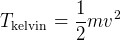 $T_{\mathrm{kelvin}\,}=\frac{1}{2}mv^{2}$
. However, owing to the multiple realizability of the comparative fitness relation, no such connections can be established.
The same supervenience relationship obtains for variation, heredity and selection. Even if the physical mechanism of heredity on Earth is limited to only one or two general processes (the replication of nucleic acids and, more controversially, prions), its specific details are quite diverse (DNA replication, RNA-virus replication by reverse transcriptase, and arguably, prion replication). Similarly, variation in the hereditary material employed by creatures on this planet will include a vast and heterogeneous disjunction of different physical processes. As for the way in which the environmental filters among hereditary variations, the diversity of physical mechanisms it employs is beyond contemplation. Plainly, no derivation of the PNS can actually be effected from laws that govern the physical processes on which it supervenes.
No actual derivation may be effected, owing to the famous “many-one” relation between the physical supervenience base and the biological properties to which the PNS adverts. Elsewhere, one of us has argued that though this is an obstacle for creatures of our cognitive and computational limitations, a finite sized supervenience base would make such a derivation at least in principle possible (Rosenberg Reference Rosenberg1985, Reference Rosenberg1993). An omniscient cognitive agent, who knows all the ways nature can skin the cat, all the physically possible ways that biological properties can be realized, would be able to effect a derivation of the PNS. This claim is at best cold comfort for the physicalist. To begin with it would be deemed question begging if the only grounds for the claim were the physicalist's conviction that since the physical facts fix all the facts, they must fix the PNS as well. Second, for all we know, the number of physically possible alternatives that realize biological properties are infinite, owing to the range of possibly continuous values biologically significant physical properties can realize. If there is no way finitely to express the range of continuous values, the derivation of biological laws from physical ones will be at best “schematic,” or otherwise tendentious.
The physicalist may respond to this last problem with a tu quo que. If the PNS is not derivable from the laws of physics owing to the infinitude of the alternative physical arrangements that will realize a given biological state of affairs, then the PNS's relation to the laws of physics is no different from that of the second law of thermodynamics. After all, we know that the obstacle to reducing the entropy of a gas, for example, to the dynamic properties of the particles that compose it is quite similar; any quantity of entropy is compatible with an infinite set of equiprobable arrangements of particle positions cum momenta. The problem is simply as yet no one has identified a non-arbitrary measure that will enable us to rank these infinite membered sets for size. Until we find such a measure, larger quantities of entropy cannot actually be identified with larger infinitely membered sets of such arrangements. It is for this reason that thermodynamics cannot provide a complete reduction of entropy to particle motion or consequently the second law to Newtonian mechanics.Footnote 18 Nevertheless, there is no disquieting suggestion in physics that the second law of thermodynamics is “emergent” or “autonomous” from mechanics.
If the PNS is no worse off when it comes to reduction than the second law of thermodynamics, this tu quo que is therefore hardly convincing. Physicists know that the problem facing a reduction of the second law of thermodynamics to mechanics is the “technical” problem about the arbitrariness of alternative measures of the size of infinite sets. They recognize how in principle the reduction of thermodynamics to mechanics should run. It is pretty clear that the situation is quite different in the case under consideration here. We do not have the slightest idea how the reduction of the PNS to fundamental laws of physics might even in principle proceed. Accordingly, the physicalist's tu quo que is of limited force.
4. Can the PNS Be an Underived Law of Chemistry?
We have suggested that physicalists should be uncomfortable accepting the PNS as an underived biological law. However, no physicalist—antireductionists or otherwise—has explored the possibility that the PNS may be an underived law of chemistry or physics, and therefore unproblematic from a physicalist point of view. Let us examine this option.
Consider the following scenario: begin with a set of atoms interacting in accordance with the laws of chemical stochiometry to compose molecules of various kinds, which themselves interact chemically to compose other larger molecules. In a given molecular milieu some of these resultant molecules will be more stable than others, owing to the nature of their bonds; some molecules will find themselves in chemical environments energetically and otherwise more favorable to their persistence than others. Those molecules that are more stable in a given environments have a greater likelihood to persist for longer than other molecules, provided the environment persists. As the interactions among atoms continues, the number of these more stable molecules will increase over time until local conditions change and begin to favor the chemical synthesis of some other molecules. Among the molecules which emerge from atomic interaction, and subsequently from molecular interaction, some will have chemical properties that result in the appearance of more molecules of the same structure as their own. Perhaps, these molecules are catalysts for some reactions that, in the circumstances and given the available substrates, lead to the production of more copies of themselves (more tokens of their types). Or perhaps, they provide templates for such copying or their increased concentration shifts other chemical reactions away from equilibria and towards production of some substrate needed for more copies of themselves. Or all of the above. Call molecules that (sometimes by the aid of other molecules acting catalytically or otherwise) foster the appearance of more tokens of their chemical types “self-replicating.” Of course, stability and replicability are matters of degree, and molecules will have both properties to varying degrees, but assume for the moment that the self-replicating molecules are unstable and stable molecules are non-replicating.
Given a locally finite supply of substrate atoms and molecules out of which both self-replicating and stable molecules are synthesized, the two kinds of molecular products must eventually exhaust the stock of substrate. If stability and self-replication are incompatible and the molecular environment lasts long enough, the number of stable molecules will almost certainly increase, while the number of self-replicating ones will eventually fall. For every time a stable molecule is synthesized, some substrate atom or molecule necessary for replication will be tied up and become unavailable. As replicating molecules break up, owing to their instability, they will provide substrates for both new stable molecules and new replicating ones. But the stable molecules will not provide substrate for the replicating ones. In the end, if stability is great enough only stable ones will be left. Of course, when the molecular environment changes or more substrate appears, proportions may begin to change again. On the other hand, if the rate of replication is high enough and the half-life of stable molecules is low enough, then the long-term result may be either an equilibrium distribution of both kinds or even the swamping of stable molecules by self-replicating ones.
However, given the laws of chemical synthesis, the distribution of substrate atoms and molecules, and the molecular environment there may arise different molecules that combine stability and self-reproduction in varying proportions. Obviously, some will more closely approximate an environmentally optimal combination of stability and replication so that given a finite stock of substrate atoms and molecules, these closest to optimally stable-and-replicating molecules will predominate. And, of course, if the environment (the local chemical milieu) changes, which molecule will come closest to the optimal combination will change as well.
There are, in our scenario, a large number of strategies of chemical synthesis competing to bind together available substrate into molecules of varying degrees of stability, reproduction, and combinations thereof. In a constant environment, one or more of these strategies must “win” (i.e., after a certain point all the molecules will be one kind, either all stable without replication, or all highly unstable and constantly self-replicating, or there will turn out to be some one or more than one process of synthesis which combine varying quantities of stability and reproduction to produce approximately the same number of molecules of each type at the end of each period, given the initial substrate conditions). Or, more likely, there will be “ties” for first place among several strategies.Footnote 19 The result is of course the selection of the fittest molecules (types as well as tokens). In effect our scenario suggests that molecules can realize a principle of natural selection, or equivalently, that there is a PNS among the laws of chemistry, and that it is not itself derivable from other laws of chemistry.Footnote 20 If the same sort of scenario obtains for the constituents of atoms, we would have reason to embrace a principle of natural selection as among the fundamental laws of physics. What prevents us finding such a law among the leptons and hadrons is, of course, that these particles are either highly stable or highly unstable but, either way, never replicate themselves. Accordingly, there is no scope in microphysics for differences in “fitness” along the lines that molecules exemplify. Thus, the PNS is not an underived law of physics, but of chemistry.
Well, if there is a PNS among the laws of chemistry, why has it never been noted by chemists? Is it an objection to the claim that such a law obtains among the basic laws of chemistry that no chemist has hitherto explicitly recognized it? Perhaps. But, it is also evident that the law is not one chemists ever needed to invoke to explain salient chemical processes. It is a law which only acquires explanatory and predictive application when the chemist turns to explaining the distribution of molecules of various types in various locations over long time scales, and this is something chemists scarcely ever concern themselves with. Chemists are certainly interested in stability of molecules; indeed, this has long been a matter of grave importance in research on the synthesis of new molecules. And in recent years, a number of chemists have interested themselves in the synthesis of self-replicating molecules as well.Footnote 21 Moreover, catalysis has always been a concern among chemists and the properties of molecules as templates or support for the synthesis of other molecules has taken on importance especially in chemical engineering. Despite these considerations, “pure” chemistry has not traditionally interested itself in the process of “selection for effects” by which an environment filters for stability, self-replication, or combinations of these two traits of molecules. This is an area of chemical inquiry to be found among chemical engineers, petrologists, and geologists interested in the distribution of chemicals on the Earth. It is therefore little wonder that a PNS for molecules is not likely to be found in the basic text-book presentation of chemistry, along with the periodic table, the laws of stoichiometry, the gas laws, or the law of mass action equilibrium. Add to this the obviousness of the PNS, which has led repeatedly throughout its history in biology to the charge of tautology, and the invisibility of this law among the laws of chemistry should be no surprise.
The PNS for molecules reflects selection of molecules for stability, replicability, and various combinations thereof, depending on the environment. Selection for molecules, of course, results in selection of larger compounds, again for the stability and replicability they confer on their constituent molecules. But the only way compounds can do this is via their own stability cum replicability. The result is a PNS for compounds, grounded in part on the PNS for molecules. There are other ways that ensembles of molecules arise besides via covalent bonds. Compounds also result from van derWaals forces, ionic or electrovalent bonds; additionally, non-compound aggregations of molecules result from non-polar bonds and (especially important in biology) hydrophobic interactions which produce solids and layers of lipid molecules. The result, at each level of chemical aggregation, is the instantiation of another PNS, grounded in (or at least in principle derivable from) the molecular interactions that follow the PNS in the environment, operating at one or more lower levels of aggregation.
As the size and complexity of the compound molecules increase, we can begin to identify the distinct and different contributions which their various parts make to their stability cum replicability. These parts may be molecules that survived in the previous environment long enough to constitute the substrates for novel chemical synthesis in the current one. After a certain point, large molecules will come to have distinct components, which provide active sites or allosteric sites for catalysis, or make for a favorable local pH, or protect a nucleic acid from deamination, and so on. These components will not themselves be either very stable or replicate. However, they may come to be shuffled around and attached to molecules that will enhance their stability and replication. When such molecules, which aid stability and replication of other molecules, become available, fitness will shift from simply being a matter of stability-and/or-replication to stability-and/or-replication-and/or-fostering the attachment of molecules that accelerate replication and increase stability.Footnote 22
According to this view, at each level of the organization of matter there turns out to be a PNS, and each one should be in principle derivable from the PNS for the immediately lower level or some other lower level(s), all the way back down to the PNS for molecules.Footnote 23 The only reason the PNS does not reach down into physics, on this picture, is that the environment that builds microphysical particles only selects for stability, not also for replicability. Indeed, calling the PNS a law of chemistry is just a picturesque way of drawing attention to the fact that selection for effects only begins to operate at the level of chemical reactions, and through its operation here, it also does so with larger aggregations of matter. Similarly, we call the second law of thermodynamics a law of physics, even though it obtains for all systems—physical, chemical, biological—since it is at the level of the physical that it begins to operate. The real point is not that the PNS is a chemical law properly so-called, but that it describes a well understood and purely physical process.
Repeated cycles of such a process on this planet subsequently produced RNA and amino acids.Footnote 24 The rest is natural history. The subsequent instantiation of natural selection for molecules and other aggregations of matter that combine stability and replication more optimally than others, produces the biological systems that we know.
5. Applications
The physicalist should accept that the principle of natural selection is an underived law of physical science (and in particular of chemistry, if a more exact location is needed). More important, the physicalist should hold that its operation at higher levels of the aggregation of matter is a consequence of the operation of the underived PNS for molecules together with the rest of physical law. Physicalism requires that at any given level of the organization of matter, all the way from the lipid bi-layer to the group of interacting organisms, the operation of the PNS is grounded (in part) on its operation at one or more lower levels of organization of matter, and always on its operation at the level of the molecule. We may apply this approach to elucidate how the physical facts can fix all the facts, including the appearance of “downward causation” in biology, and multi-level selection, without incurring the obligation to embrace ontological antireductionism.
Let's consider an antireductionist's argument for downward causation and from it to the autonomy of biology. In “1953 and all that,” Kitcher argues that the geometrical structure of the cells in a developing chick-limb—a non-molecular fact—will have a molecular explanandum (e.g., lowering the density-gradient of a molecular gene-product below a threshold, and so explaining the formation or mal-formation of the wing). Kitcher notes that “[r]eductionists may point out, quite correctly, that there is some very complex molecular description of the entire situation,” but that “[h]owever this is realized at the molecular level, our explanation must bring out the salient fact that the presence of a gap between cells that are normally adjacent explains the nonexpression of the genes” (Reference Kitcher1984, 372). Of course, it is also the spatial contiguity of the cells in the normal case that explains why the genes are expressed in the “right” order and development proceeds. There are thus, “examples in which claims at a more fundamental level (specifically, claims about gene expression) are to be explained in terms of claims at a less fundamental level (specifically, descriptions of the relative positions of pertinent cells)” (Reference Kitcher1984, 371).
Substitute the relation of causation for Kitcher's relation of explanation since the issue, as Kitcher sees it, is one of ontological antireductionism (cf. footnote 3): We would, Kitcher holds, “fail to identify the causally relevant properties … by using the vocabulary and reasoning patterns of molecular biology” (Reference Kitcher1984, 371). Thus understood, the thesis is that non-physical, biological facts about spatial relations among biological items cause non-biological, physical facts about the density gradient of a macromolecule across the space of those cells.
It is hard to see how we could reconcile the claim that the direction of causation runs from the biological “down” to the physical with physicalism's commitment to physics’ fixing all the facts (see footnote 5 above for one way to put the difficulty). Locating the PNS among the underived laws of physical science will not make “down-ward causation” possible. However, it will help us see clearly where the appearance of downward causation in biology comes from.
Consider how the causal process Kitcher describes came about. The story is something like this: At some earlier evolutionary time environmental factors operating at the level of macromolecules made adaptive the spatial arrangement of molecules into organelles, then into cells and eventually into tissues. That is, the chemical milieus first at the time of organelle-formation, then at the time of cellularization, and eventually tissue-formation made them successively available as attainable solutions to successive problems of stability cum reproduction for the nucleic acids (and their molecular products). Subsequently, the physical geometry of the tissue-structure, together with the chemical density gradient of certain molecules (in Drosophila it would be the maternally secreted bicoid-protein mRNA) provided an environment in which the resulting differential expression of nucleic-acid-molecule sequences is selected for, owing to its developmental effects. In extant organisms, the gradual diffusion of a chemical through the space of this tissue, turning some genes off and others on, depending on its concentration, is a purely physical process. Note that it is the physical geometry of the structure that is causally relevant here and not the fact that the structure is composed of tissues, or composed of cells for that matter. Any contained space of the same dimensions will do. As a result of all these selection processes, given the right geometry and chemical gradient, ceteris paribus, normal embryological development ensues. The spatial distance between nucleotide sequences and the gradient of spatial distribution of the maternal protein, are jointly causally sufficient in the circumstances of normal embryological development to repress and stimulate a variety of gene-sequences that make for development of the chick wing. Note, this latter part of the story—in which the causal responsibility is borne by diffusion and spatial separation of molecules—is wholly physical. There is nothing less physically “fundamental” (to employ Kitcher's term) in the cause than the effect. Appearances to the contrary result from the biologists’ descriptive vocabulary of organelles, cells, tissues, etc.; functional terms which reflect the fact that the current proximate physical causes were fixed long ago by natural selection operating at the level of macromolecules. Not so long ago, Donald Davidson (Reference Davidson1967, 195) noted that we should not mistake deletions from the description of causes for deletions from the causes themselves. The same advice should be kept in mind when it comes to additions to these descriptions.
Like other biological explanations, developmental ones, give the appearance of downward causation from the biological to the physical for three principal reasons. First, they do so in part because some of the causes they identify are described biologically even though their causally relevant properties are purely physical ones. Second, they do so because the physical structures that produce their molecular (or other physical) effects were put in place by natural selection, which has not hitherto been recognized as a wholly physical process. And finally, our ignorance of “all the gory details” makes epistemic antireductionism inevitable. Fortunately for physicalist reductionism the appearance of “downward causation” is just that—mere appearance.
The same perspective will enable the physicalist to accommodate another apparently antireductionist thrust of contemporary biological theory. This is the claim that biological systems, such as groups, have properties not explainable by the properties of their individual component parts, and so must be accorded existence irreducible to the existence of their immediate component parts. Among the most important examples of this sort of argument is due to Sober and Wilson (Reference Sober and Wilson1996), who argue for the autonomous existence of groups by showing that selection for traits of groups in which altruists predominate can be opposite in direction and stronger than selection for individuals with the same (or competing) traits. Evidently, in such cases, the operation of the PNS at the level of groups cannot be accounted for by the operation of the PNS at the level of individuals who compose them. Ontological reduction is thus supposedly blocked, since it would purportedly require that group traits depend on traits of the individuals who compose them.
However, with the addition of the PNS to the stock of physical laws, physicalism may countenance a much more complicated relationship between parts, wholes and their respective properties than this argument against ontological reduction supposes. The substrate-neutral PNS can operate at various levels of organization, moving in different and indeed opposite directions within larger biological systems and the smaller ones they contain, owing to its operation at the level of molecules. To see how, consider the operation of that other substrate-neutral physical principle, the second law of thermodynamics. A thermodynamic system, the Earth for example, whose entropy is increasing may consist of subsystems or components some of whose entropy is not increasing or is even decreasing (as, for example, when biological systems decrease their entropy at the expense of that of their local environments, with a net increase in total entropy). The second law assures the improbability of “local” decreases in entropy unless made good by increases elsewhere, and prohibits permanent local decreases in entropy. Apparent local violations of the second law are reconciled when we take a wider (less local) view of changes in the distribution of matter—the distribution that fixes all the thermodynamic facts about the whole system. Thus, there is no difficulty about reconciling the second law's demand for net or global increases in the entropy of an aggregate with local increases in the entropy of one or more of its components. What the second law requires to allow for persistent local entropy decrease is compensating local entropy increase elsewhere in the aggregate, so that the aggregate honors the second law.
Much the same can be said for the PNS, though interestingly here the relevant quantity—fitness—must globally increase (up to fixity) at the level of components even as it may decrease at the level of some aggregates they compose (this is just the opposite of the second law's requirement for entropy increase at the level of aggregates). Groups of biological individuals may experience fitness increases at the expense of fitness decreases among their individual members for periods of time that will depend on the size and composition of the group and the fitness effects of their traits. What the PNS will not permit is long-term fitness changes at the level of groups without long-term fitness changes in the same direction among some or all of the individuals composing them. The physicalist will explain this in much the same way as the second law of thermodynamics is reconciled to temporary local departures from global entropy increase.
In Sober and Wilson's model for group selection, groups with higher proportions of altruists grow larger in total population from generation to generation than groups with lower proportions of altruists, even as the proportion of altruists within each group declines from generation to generation (owing to the free-riding of the selfish among them). Thus, in a large population divided into such groups over a certain number of generations, the total number of altruists will rise even though altruism is individual fitness-reducing (when free-riding is unchecked), while the proportion of altruists in the total population must decline, in accordance with the PNS. At least temporarily, groups composed mainly of altruists will have higher fitness than groups composed mainly of selfish members, as measured by the total numbers within each group, even as the comparative fitness of altruists declines in each group, as measured by the comparative reproductive success of selfish and altruistic members within each group. But, as Sober and Wilson recognize, left alone, this process cannot persist indefinitely.
The local departure from individual fitness maximization that the PNS countenances is like the local departure from entropy increase that the second law countenances. In neither case will the laws allow for permanent departure. The second law will not allow for permanent departure because the closer we come to the global perspective of matter in motion common to all thermodynamic systems, the closer probability of entropy increase approaches 1.0. The PNS will not allow for long-term fitness increases at one level driven by equally long-term fitness decreases at some lower level. And the reason is that, as physicalism requires, selection at the lowest level (together with initial conditions) must in the long run fix selection at higher levels. At the molecular level the probability that fitter alternatives will proliferate approaches 1.0, just owing to the very large numbers of molecules involved. Physicalism requires that the selective environment, so to speak, build everything—the genes, organelles, cells, tissues, individual organism, and groups—out of the molecules through selection on each aggregation. The aggregations can be thought of as “extended phenotypes” that the molecules realize. In some environments for a limited time selection may act in different directions on parts and their wholes at any of these levels of aggregation. But, ceteris paribus, it cannot do so persistently without the eventual extinction of those individuals whose lower fitness makes for the higher fitness of the aggregations of which they are parts. Thus, for example, with the extinction of altruistic individuals, so too altruistic groups must become extinct. Until they do, their separate existence and divergent adaptational fates will be the result of the PNS operating at levels below that of either group or individual member of it. So, at any rate the reductionist must and can hold.
Since the PNS's operation at any level where it does operate is, in part, fixed by the operation of a PNS operating unproblematically unmysteriously at the level of the molecule the physicalist can have no qualms about the PNS's physical foundations. Since the PNS's operation at any level above the molecular is fixed by the operation of (at least) one law that is not reducible to the (other) laws of physics and chemistry, the antireductionist can without discomfort hold that biology is a discipline whose foundations are strictly autonomous from those of physical science (minus the PNS for molecules, of course).
Once it is recognized that the PNS is an underived but physically unproblematical law of chemistry, physicalism and antireductionism become easy to reconcile, and the autonomy of the biological from the physical becomes philosophically uncontroversial. As the exponents of biology's descriptive and explanatory autonomy have held, the functional-kind vocabulary of biology will be irreducible to that of physical science. However, the reason will simply be that the PNS for molecules, whose action “builds” the functional kinds as adaptations, is not reducible to the (other) laws of physics. The reductionist can hold that there is nothing ontologically suspect about these functional kinds since their tokens are “built” by the operation of a physical law—the PNS for molecules.
And, perhaps most importantly, physicalist philosophers of biology will be free to treat the theory of natural selection as a body of nomological generalizations that really vindicate Dobzhansky's dictum that nothing makes sense in biology (including molecular biology) except against the background of evolution.Footnote 25


