Dyslipidaemia is one of the major modifiable risk factors for atherosclerosis, thus contributing to a significant cardiovascular morbidity and mortality in developed countries.Reference Timmis, Townsend and Gale1–Reference Piepoli, Hoes and Agewall4 In Portugal, its prevalence in children is unknown but in adults it is approximately 63.3%.Reference de Saúde2,Reference Cibelle, Antunes, Rato and Bourbon5 A study, in the United States of America, showed that, between the ages of 6 and 19 years, 21.0% had abnormal levels of one or more lipid parameters.Reference Nguyen, Kit and Carroll6
The atherosclerotic process underlying cardiovascular diseases begins in fetal life and progresses slowly throughout life,Reference Daniels and Greer7–Reference Gidding, Rana and Prendergast9 and its severity related with the presence of concomitant cardiovascular risk factors.10 Furthermore, studies show a clear correlation between paediatric dyslipidaemia and the early development of arterial lesions, as shown by in sub-clinical markers of atherosclerosis, such as the carotid intima-media thickness (cIMT).Reference Dalla Pozza, Ehringer-Schetitska, Fritsch, Jokinen, Petropoulos and Oberhoffer8–Reference Raitakari, Juonala and Kahonen17
Dyslipidaemia treatment, in children and adolescents at risk of early atherosclerosis, can significantly reduce the incidence of premature cardiovascular disease in adulthood.10,Reference McCrindle, Urbina and Dennison18 Due to its efficacy and safety, statins are in the forefront of dyslipidaemia management.10,Reference McCrindle, Urbina and Dennison18–Reference Rocha and Santos21 Its benefits on the atherosclerotic process and on endothelial function improvement has been clearly shown.Reference Vuorio, Kuoppala and Kovanen15,Reference Rodenburg, Vissers, Wiegman, Van Trotsenburg, Van Der Graaf and De Groot22 Although its use is not frequent in children, a pharmacological approach may be considered in a case-by-case basis, taking into account serum low-density lipoprotein cholesterol levels, family history of cardiovascular diseases, as well as the presence of other risk factors or diseases with increased cardiovascular risk (Table 1).Reference McCrindle, Urbina and Dennison18,Reference Kavey, Allada and Daniels23,Reference Medeiros, Alves, Aguiar and Bourbon24
Criteria for statins therapy in the paediatric population10

Note: In patients with diabetes mellitus, pharmacological therapy is recommended with LDL-c greater than or equal to 140 mg/dl
BP=blood pressure; BMI=body mass index; HDL-c=high-density lipoprotein cholesterol; HTN=hypertension; LDL-c=low-density lipoprotein cholesterol; mg/dl=milligrams per decilitre; P=percentile(s); pCVD=premature cardiovascular disease; RF=risk factor(s)
* High RF: HTN under antihypertensive therapy (BP ≥ 99th P + 5 mmHg); smoker; obesity with BMI ≥ 97th P; high-risk disease(s) (type 1 and 2 diabetes mellitus; chronic kidney disease/end-stage renal disease/post-renal transplantation; post-surgery cardiac transplantation; Kawasaki disease with maintained coronary aneurysms)
** Moderate RF: HTN that does not require antihypertensive therapy; HDL-c < 40 mg/dl; presence of moderate-risk disease(s) and/or conditions (Kawasaki disease with regressed coronary aneurysms; chronic inflammatory disease; human immunodeficiency virus infection; nephrotic syndrome)
At present, to the best of our knowledge, there is a lack of studies linking the efficacy of statin therapy in children with favourable outcomes in the atherosclerotic process.
This study’s aim is to better characterise children on statin therapy, to identify potential adverse effects, and to evaluate therapeutic outcomes based on the lipid profile and ultrasound markers of early atherosclerosis (cIMT).
Materials and methods
The authors carried out a retrospective and descriptive study of children and adolescents on statin therapy followed up at the Cardiovascular Clinic of Coimbra’s Pediatric Hospital between January, 2012, and May, 2018. Exclusion criteria were less than two consultations; less than 6 months of follow-up; and less than 3 months of statin therapy.
Data collection was carried out during the second half of 2018 and obtained from electronic clinical records (SClínico®), in use at the Hospital. Data confidentiality was assured, and the study has been approved by the Ethics Committee of the Faculty of Medicine of the University of Coimbra.
In order to analyse the effects of statins, demographic (sex and age), clinical, laboratory, and ultrasonographic (cIMT) parameters were analysed pre- and post-therapeutically.
Clinical characterisation
The clinical characterisation of the sample was obtained from the medical history and the physical examination.
Data from the medical history and physical examination included familial dyslipidaemias and history of premature cardiovascular disease; smoking; physical activity; overweight or obesity; hypertension; and insulin resistance.
Cardiovascular risk factors assessment was based on the recommendations of the National Heart, Lung, and Blood Institute (Table 1).10
The existence of premature cardiovascular disease was considered if angina, acute myocardial infarction, myocardial revascularisation (surgery/stent/angioplasty), or sudden cardiac death occurred in the parents, grandparents, or uncles, under 55 years in males, or under 65 years in females.10,Reference McCrindle, Urbina and Dennison18,Reference Kavey, Allada and Daniels23,Reference Medeiros, Alves, Aguiar and Bourbon24 In the absence of consensual values to evaluate physical activity and sedentary lifestyle parameters, it was assumed as a cardiovascular risk factor if the child practised less than 7 hours per week of moderate-to-intensive physical activity and/or screen time of more than 2 hours/day.10
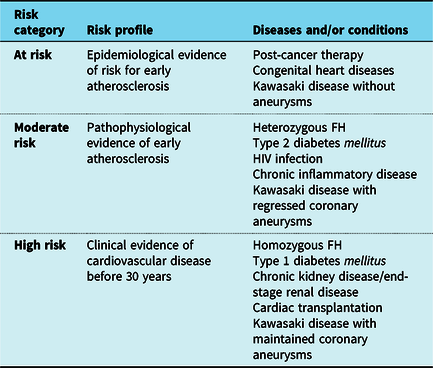
The algorithm recommended by the American Heart Association panel in 2006 (Table 2) was used to stratify cardiovascular risk in the sub-population of patients with paediatric basic high-risk pathology.Reference Kavey, Allada and Daniels23
Stratification of paediatric diseases according to the cardiovascular risk associatedReference Kavey, Allada and Daniels23

FH=familial hypercholesterolaemia; HIV=human immunodeficiency virus
Based on data from evidence-based medicine, these experts distributed the selected nosological entities in three groups, stratifying the risk of premature coronary disease in: high, moderate, and low risk. The simultaneous presence of two or more risk factors implied an automatic increase of the cardiovascular risk to the level above. This new level of risk guided the therapeutic orientations.
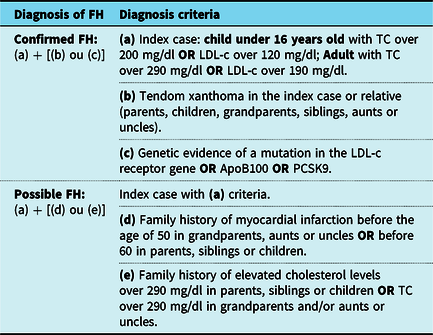
The diagnosis of familial hypercholesterolaemia was based on the Simon Broome Heart Research Trust criteria adapted by the Portuguese Family Hypercholesterolaemia Study (Table 3), and also considering the results of a genetic study performed.Reference Medeiros, Alves, Aguiar and Bourbon24–Reference Bourbon and Rato26
Familial hypercholesterolaemia diagnostic criteriaReference Bourbon and Rato26

ApoB100=apolipoprotein B100; FH=familial hypercholesterolaemia; LDL-c=low-density lipoprotein cholesterol; PCSK9=proprotein convertase subtilisin/kexin type 9; TC=total cholesterol
The percentile (P) and z-score values of body mass index (BMI), adjusted for age and sex, were calculated according to the reference tables of the World Health Organization, based on weight and height.Reference De Onis, Onyango, Borghi, Siyam and Pinol27,28
Blood pressure classification was based on the recommendations of the American Academy of Pediatrics (Table 4).Reference Flynn, Kaelber and Baker-Smith29
Blood pressure classification in paediatric ageReference Flynn, Kaelber and Baker-Smith29

BP=blood Pressure; HTN=childhood hypertension; mmHg=millimetres of mercury; P=percentile
* Absolute BP values presented as systolic BP/ diastolic BP, in mmHg
The risk factors clinical characterisation was complemented by laboratory data on fasting plasma glucose (mg/dl) and insulin (μU/ml). Diabetes was established when plasma glucose values were equal or above 126 mg/d while values greater than or equal to 100 mg/dl and under 126 mg/dl, where considered as an impaired fasting glucose.10,Reference Mayer-Davis, Kahkoska and Jefferies30 The homeostasis model assessment (HOMA) index was calculated by the following equation: [fasting blood glucose (mg/dl) × fasting blood insulin (μU/ml)]/405, and was considered significant whenever ≥3.43, in the absence of cut-off values for the Portuguese paediatric population.Reference Cuartero, Lacalle, Lobo and Vergaz31 Although higher values were described in females and in Tanner IV-V, differences between sexes and/or stages of sexual maturation were not accounted for.Reference Cuartero, Lacalle, Lobo and Vergaz31
Characterisation of therapeutic intervention
The following parameters were included: international common denomination of prescribed statins, age when therapy was initiated, number of times the dose was increased, and/or changes of the statin in use.
Side effects were considered whenever there was associated symptomatology or changes in creatinine kinase and/or transaminases values. The reference values accepted as the limit of normality were creatinine-kinase between 60 and 330 U/L; alanine transaminase between 10 and 35 U/L; and aspartate aminotransferase between 5 and 45 U/L. The threshold established for discontinuing medication was a 10-fold increment in baseline creatinine-kinase or elevated transaminases three times above the upper limit of normality.10
The efficacy of statin therapy was assessed by its effects on the lipid profile, particularly total and low-density lipoprotein cholesterol values, and changes in the cIMT.
The reference values used for the lipid profile serum levels were those of the Expert Panel on Integrated Guidelines for Cardiovascular Health and Risk Reduction in Children and Adolescents.10
Statin therapy was considered successful if the low-density lipoprotein cholesterol was below 100 mg/dl for patients with high-risk baseline diseases, and below 130 mg/dl, for the remaining.10,Reference Kavey, Allada and Daniels23
Pre- and post-therapeutic cIMT was also analysed using carotid ultrasonographic measurements using a General Electric’s Vivid 7 ultrasound machine (General Electric Healthcare, Horten, Norway) and a 10-L linear probe. The ultrasound was placed in the cervical region and oriented over the longitudinal path of the common carotid artery, with the lumen-intima and medium-adventitia interfaces visible over an extension of at least 1 cm. The final value corresponded to the average of at least 50 to 60 measurements in the selected segment, in millimetres. The corresponding z score was calculated according to the age and gender, considering the available reference values for the paediatric population.Reference Cuartero, Lacalle, Lobo and Vergaz31 The protocol used followed current international recommendations.Reference Dalla Pozza, Ehringer-Schetitska, Fritsch, Jokinen, Petropoulos and Oberhoffer8,Reference Simova32
Statistical analysis
The database was constructed using the Microsoft® Office’s software Excel. Descriptive and correlational statistics were performed using IBM-SPSS® (Statistical Package for the Social Sciences), version 24.0 (IBM Corp., Armonk, NY, USA).
Numerical variables were characterised using measures of central tendency (mean) and dispersion (range and standard deviation) according to normality, tested by the Shapiro–Wilk test, for sample sizes less than or equal to 30, and/or test Kolmogorov–Smirnov with the Lilliefor’s correction for samples greater than 30. Categorical variables were characterised by proportions. Student’s t-test was used to compare pre- and post-treatment laboratory and ultrasound averages in cases where the data were compatible with a normal distribution or with a size greater than 30. For samples of reduced size and not compatible with normal distribution, non-parametric tests (related samples Wilcoxon Signed-Rank Test) were used. All analyses were performed considering 95% confidence intervals. Statistical significance was considered when p = 0.05 or less.
The percentile and z-score values of weight, height, BMI, and blood pressure were obtained with an online tool available at https://apps.cpeg-gcep.net/. For individuals under 6 years old, since there is no reference data in the literature, the cIMT z score was computationally extrapolated using the linear regression model, from the available reference values.Reference Cuartero, Lacalle, Lobo and Vergaz31,Reference Doyon, Kracht and Bayazit33,Reference Muñoz, Cajal and Aizpún34
Results
The sample consisted of 66 children and adolescents who met the inclusion criteria, 33 of whom were male (50%). The mean age of the sample was 12.01 ± 2.82 years, ranging from 4 and 17 years, and a median of 12.33 years. The patients were followed up for an average of 3.40 ± 2.06 years, the shortest period being 6 months and the longest 8 years and 8 months.
Clinical, laboratory, ultrasound, and statin therapeutic intervention characterisation are present below in this section. Relevant data are highlighted in the text while the remaining is shown in tables. No statistically significant differences were found between sexes.
Clinical characterisation
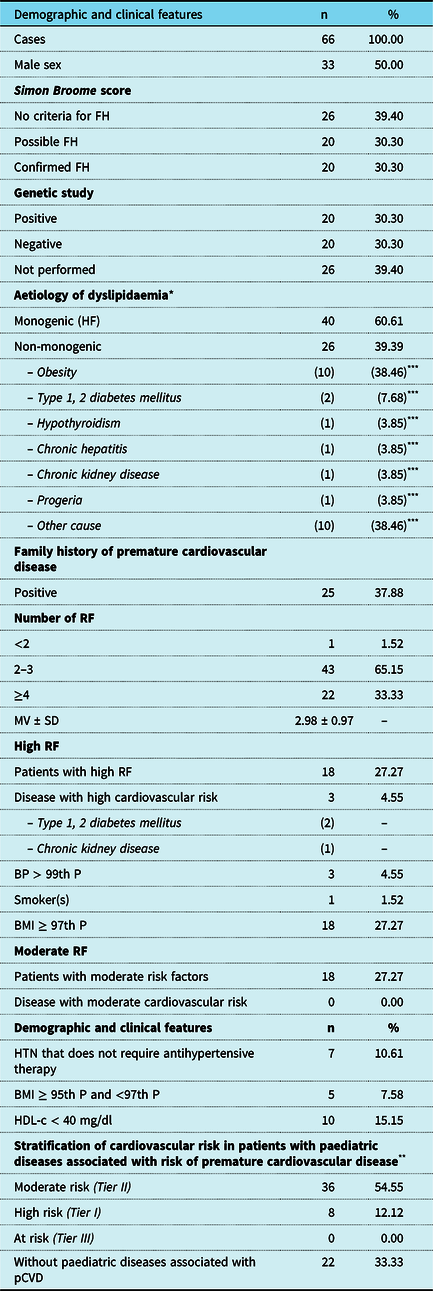
In 60.61% (n = 40), a monogenic aetiology was found. In 39.39% (n = 26) of the cases, the cause of the dyslipidaemia was secondary to another medical disease and/or condition. In the latter group, 38.46% (n = 10), obesity was the main cause. In a similar number of cases, the cause remained unknown.
Of the 66 patients, criteria for diagnosis of possible familial hypercholesterolaemia and diagnosis for confirmed familial hypercholesterolaemia were met in 20 patients each. A total of 40 (60.60%) patients were referred for genetic study under the Portuguese Familial Hypercholesterolaemia Study. Of these, 20 patients (30.30%) had a pathogenic and heterozygous mutation of the low-density lipoprotein receptor confirmed.
When considering the associated cardiovascular risk factors, 37.88% (n = 25) of the sample had a positive premature cardiovascular disease family history. The mean number of risk factors per patient was 2.98, 65.15% (n = 43) had at least two to three cardiovascular risk factors present, and 33.33% (n = 22) had four or more. In 18 patients (27.27%), there was at least one cardiovascular risk factor, all of which had a BMI greater than or equal to 97th percentile. As for moderate cardiovascular risk factors, they were present in the same proportion of the sample (27.27%), with 15.15% (n = 10) of the cases due to low high-density lipoprotein cholesterol values below 40 mg/dl.
The cardiovascular risk stratification in 44 patients (66.67%) with paediatric diseases associated with premature cardiovascular disease risk, revealed that 54.55% (n = 36) carried a moderate risk, and 12.12% (n = 8) carried high risk for premature atherosclerosis, after considering concomitant risk factors. The remaining data can be found in Table 5.
Demographic and clinical characterisation

BP=blood pressure; BMI=body mass index; FH=familial hypercholesterolaemia; HDL-c=high-density lipoprotein cholesterol; HTN=hypertension; MV=mean value; P=percentile; pCVD=premature cardiovascular disease(s); RF=risk factor(s)
* Patients with clinical and/or molecular diagnosis of FH were considered in the monogenic aetiology classification of dyslipidaemia
** Cardiovascular risk stratification was performed according to specific algorithm.Reference Rocha and Santos21 In addition to patients with FH, diabetes mellitus and chronic kidney disease, 1 case of progeria was included. Although the stratification algorithm used was not included due to its rarity, its association with CVD risk was categorised as high risk in this study
*** Values of the relative percentages in the sub-group with non-monogenic dyslipidaemia
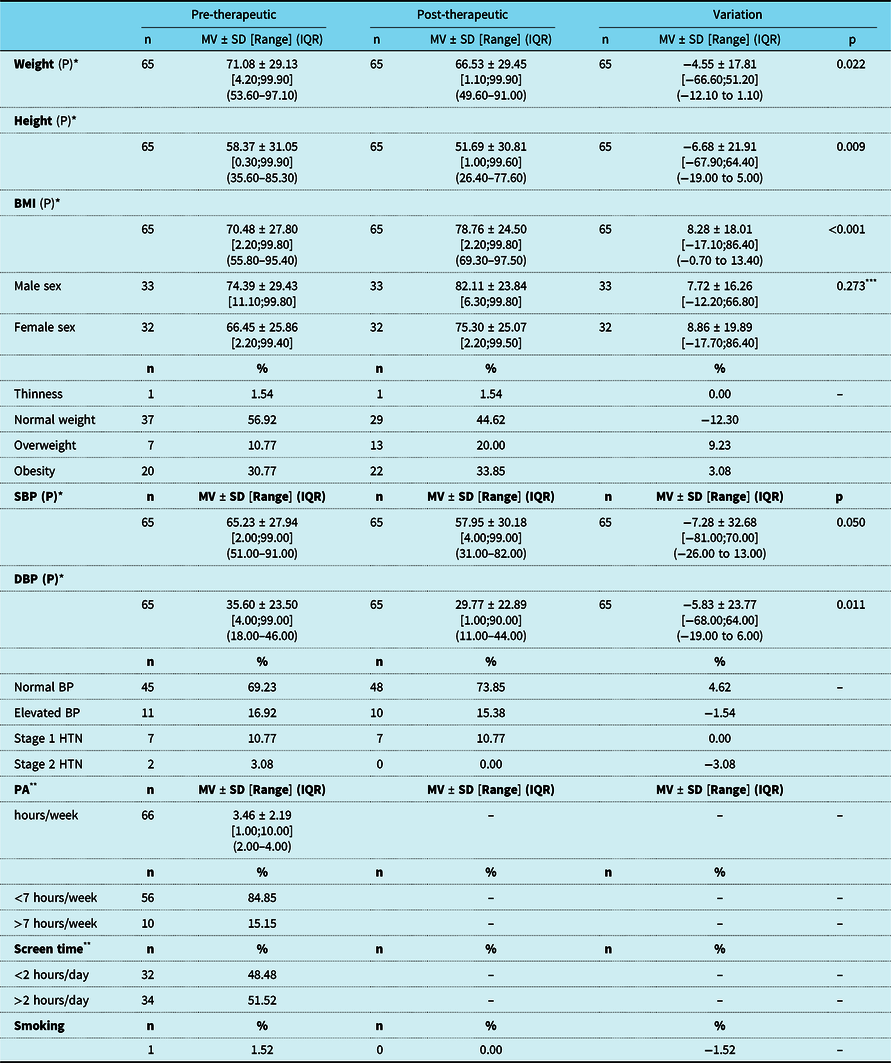
Some risk factors were analysed in two phases: pre- and post-statin introduction (Table 6). The BMI was evaluated in 65 patients, with a pre-therapeutic percentile mean of 70.48 ± 27.80 (74.39 ± 29.43 in males and of 66.45 ± 25.86 in females), 27 cases (41.54%) met criteria of overweight and/or obesity. The final BMI percentile values increased to 78.76 ± 24.50, 53.85% (n = 35) of which were overweight and/or obese patients. The mean BMI percentile variation between the pre- and post-therapeutic periods was 8.28 ± 18.01 (p < 0.001), with an increase of 8.86 ± 19.89 for boys and 7.72 ± 16.26 for girls (p = 0.273).
Cardiovascular risk factors characterisation

BP=blood pressure; BMI=body mass index; DBP=diastolic blood pressure; HTN=hypertension; IQR=interquartile range; MV=mean value; P=percentile; PA=physical activity; p=p-value; SD=standard deviation; SBP=systolic blood pressure
* Excluded one patient for presenting anthropometric values, BMI and BP extreme and out of range (p < 0.1)
** No data available for post-treatment evaluation
*** Value of statistical significance of the comparison of variation in BMI according to sex
Blood pressure was evaluated in 65 patients. The mean pre-therapy percentiles were 35.60 ± 23.50 for diastolic and 65.23 ± 27.95 for systolic blood pressure, with 16.92% (n = 11) with elevated blood pressure and 13.85% (n = 9) with hypertension. During therapy with statins, 15.38% (n = 10) had elevated blood pressure and 10.77% (n = 7) being classified with hypertension. The mean percentile blood pressure variation, after therapeutic intervention, corresponded to a statistically significant decrease of 5.83 ± 23.77 for diastolic blood pressure, and 7.28 ± 32.68 less for systolic blood pressure.
Regarding lifestyle, the mean number of physical activity hours during the week was 3.46 ± 2.19, with only 15.15% (n = 10) exercising for 7 or more hours per week. In the assessment of sedentary lifestyle, 34 (51.52%) had a screen time greater than 2 hours/day. Smoking habits were recorded in only one patient (1.51%).
Laboratory characterisation of the lipid profile
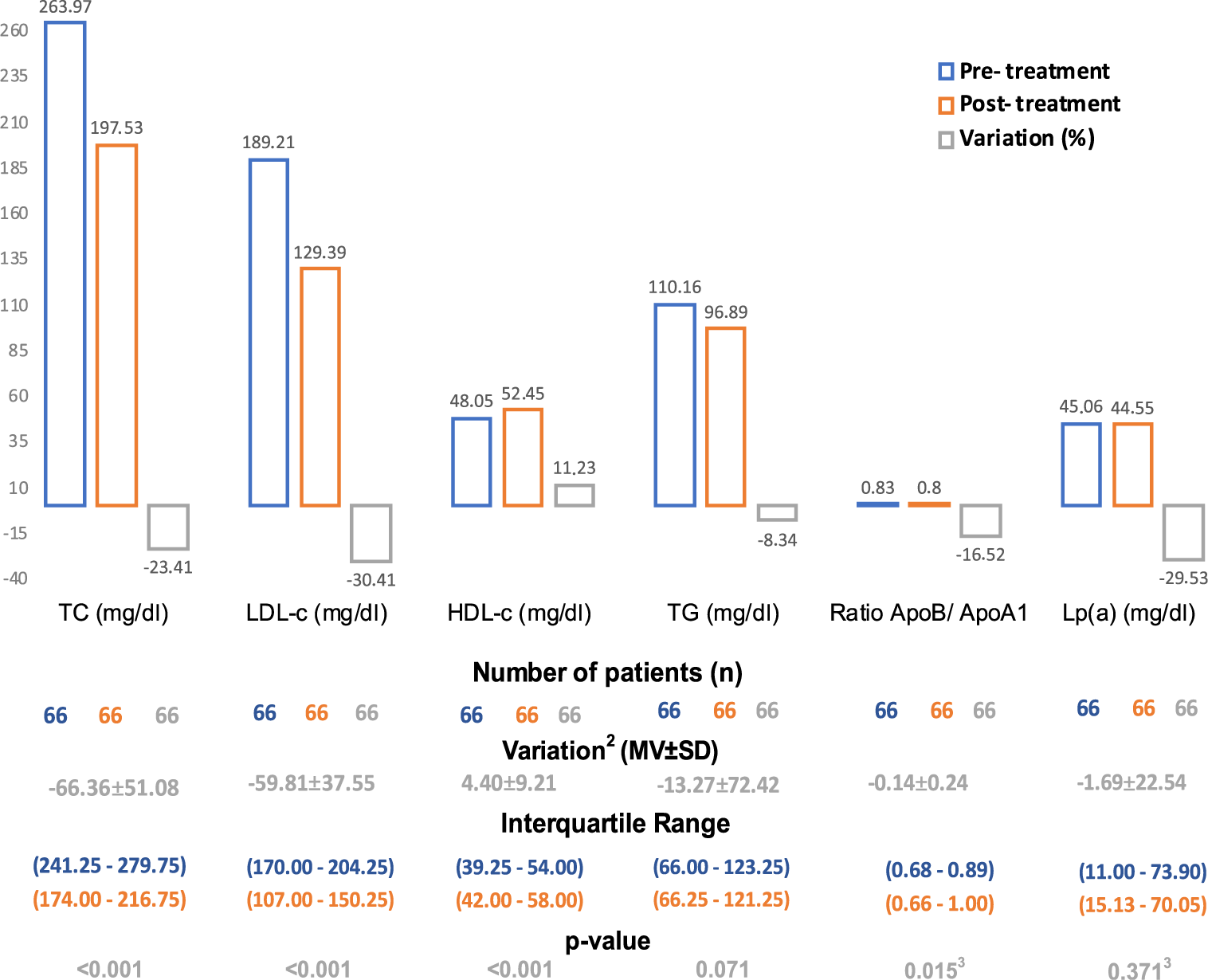
The laboratory characterisation of lipids profile revealed a mean pre-therapeutic low-density lipoprotein cholesterol value of 189.21 ± 36.75 mg/dl, with a minimum value of 139.00 mg/dl and a maximum value of 368.00 mg/dl. When comparing the mean pre-therapeutic low-density lipoprotein cholesterol value between patients with familial hypercholesterolaemia and non-monogenic dyslipidaemia, a mean value of 198.94 ± 38.42 mg/dl and 174.23 ± 28.70 mg/dl (p = 0.02) was obtained, respectively. After the introduction of statin, this parameter registered a statistically significant decrease of 59.81 ± 37.55 mg/dl, which corresponded to a reduction of 30.41 ± 17.71%.
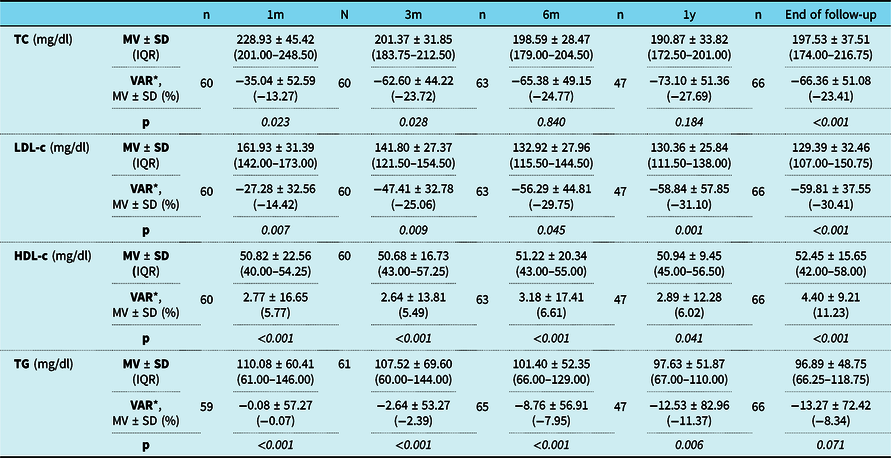
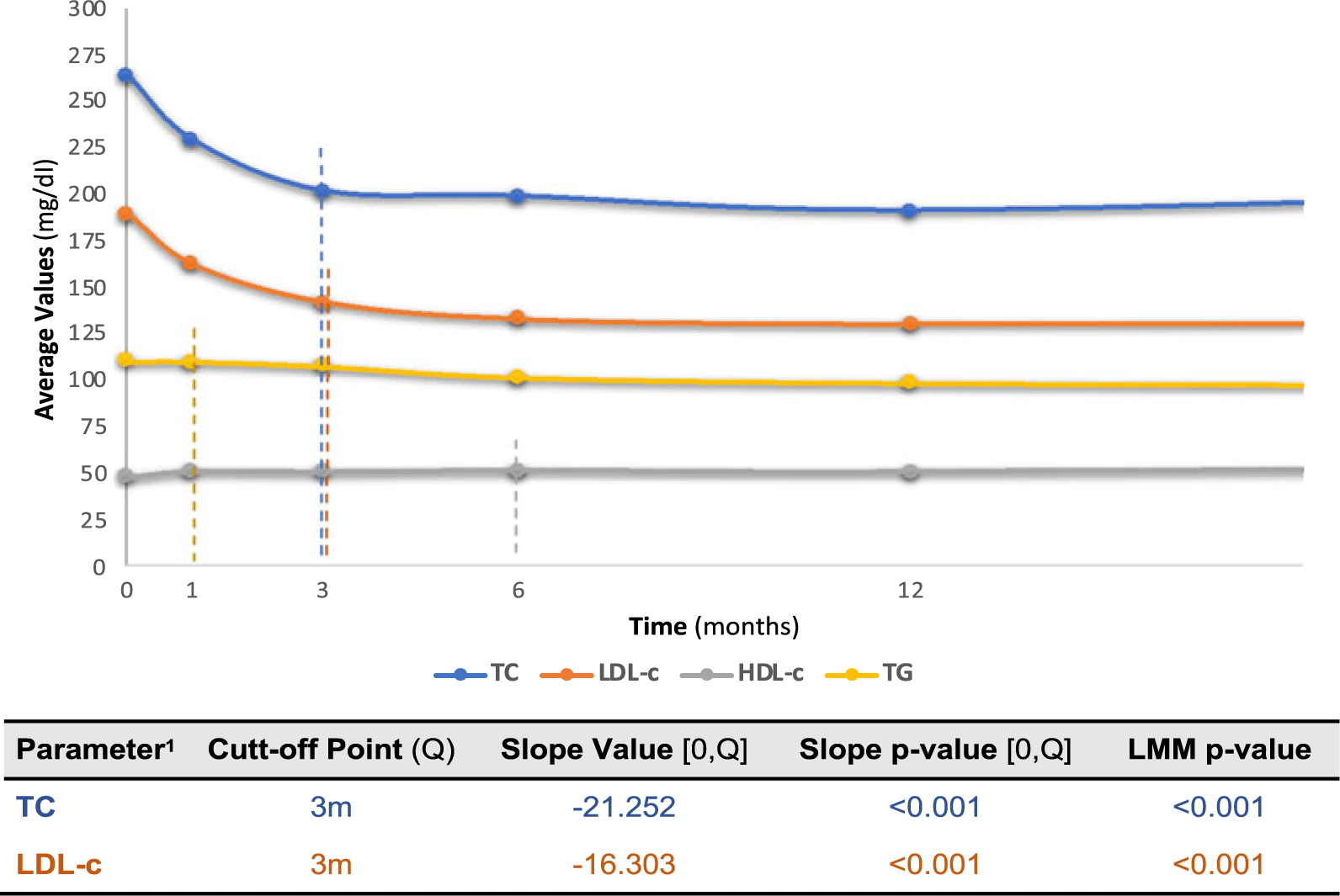
In relation to the mean values of variation of total cholesterol and triglycerides after statin therapy, there was a percentual decrease of 23.41 ± 18.42 (p < 0.001) and 8.34 ± 59.40 (p = 0.71), respectively. Regarding high-density lipoprotein cholesterol, there was an increase of 11.23 ± 20.60 mg/dl (p < 0.001) after initiation of therapy. The laboratory values of the other parameters are shown in Figure 1, and the evolution of the lipid profile during the follow-up period can be seen in Table 7 and Figure 2.
Laboratory characterisation of the lipid profile and atherogenic parameters. ApoA1=apolipoprotein A1; ApoB=apolipoprotein B100; HDL-c=high-density lipoprotein cholesterol; Lp(a) =lipoprotein (a); LDL-c=low-density lipoprotein cholesterol; max=maximum value; MV=mean value; min=minimum value; Post-T=post-treatment; Pre-T=pre-treatment; SD=standard deviation; TC=total cholesterol; TG=triglycerides. (1) The normal laboratory reference values of ApoB/ApoA1 ratio between 0.35 and 1.00 and Lp(a) between 0.00 and 30.00 mg/dl. (2) The variation of the lipid parameters was calculated by subtracting the pre-therapeutic mean values to the post- therapeutic and standard deviation. (3) Values without normal distribution, so that non-parametric tests were performed (related samples Wilcoxon Signed-Rank Test).

Laboratory characterisation of the lipid profile evolution under statin therapy

HDL-c=high-density lipoprotein cholesterol; IQR=interquartile range; LDL-c=low-density lipoprotein cholesterol; MV=mean value; m=month(s); p=p-value; SD=standard deviation; TC=total cholesterol; TG=triglycerides; VAR=variation; y=year(s)
* The variation (VAR) was calculated by difference in percentage and mean post-therapeutic values of baseline on lipid parameters done at 1 month, 3 month, 6 month, 1 year, and last day of follow-up, in eligible patients at each phase
Effect of statin therapy on mean values of the lipid profile since baseline(0) until the end of follow-up. HDL-c=high-density lipoprotein cholesterol; LDL-c=low-density lipoprotein cholesterol; LMM=linear mixed-effects model; m=month(s); TC=total cholesterol; TG=triglycerides. (1)The assessment of the effect of statin therapy on the lipid profile was performed using the LMM. The cut-off points (Q) adjusted for each parameter of the lipid profile are presented, identifying the maximum reductions per time unit.

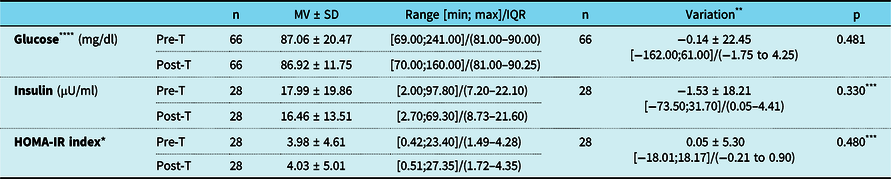
Regarding insulin resistance (Table 8), the HOMA index variation showed an increase of 0.05 ± 5.30 (p = 0.480) in 28 patients evaluated. Of these, 11 (39.29%) were insulin resistant in the pre- and post-therapeutic periods (HOMA index greater than or equal to 3.43).
Laboratory characterisation of insulin resistance

HOMA-IR=homeostasis model assessment-insulin resistance; IQR=interquartile range; max=maximum; MV=mean value; min=minimum; Post-T=post-treatment; Pre-T=pre-treatment; p=p-value; SD=standard deviation
* The insulin resistance index was calculated as HOMA-IR=[fasting blood insulin (μIU/ml) × fasting blood glucose (mg/dl)]/405
** The variation was calculated by subtracting the pre-T mean values to the post-T and standard deviation, with presentation of the minimum value and maximum value and the interquartile range
*** Values without normal distribution, so that non-parametric tests were performed (Related samples Wilcoxon Signed Rank Test)
**** Two cases of diabetic patients: one with type 1 diabetes mellitus with pre-T value of 241 mg/dl and post-T of 160 mg/dl, obesity and hypothyroidism; and one with type 2 diabetes mellitus with Pre-T value of 103 mg/dl and Post-T of 97 mg/dl, obesity, and hypertension stage 1 concomitant
Pre- and post-treatment mean values of fasting glucose were normal, with a decrease of 0.14 ± 22.45 mg/dl (0.481) after introduction of statins. In the pre-therapeutic stage, a total of three cases (4.55%) had impaired fasting glucose profiles (one patient with type 2 diabetes mellitus, and two with obesity), and one case of type 1 diabetes mellitus (1.52%) was registered. In the post-statin introduction period, the patient with type 2 diabetes mellitus normalised fasting his blood glucose, while the two cases (3.03%) of obesity with impaired fasting glucose and the case of type 1 diabetes mellitus remained unchanged.
Ultrasonographic characterisation
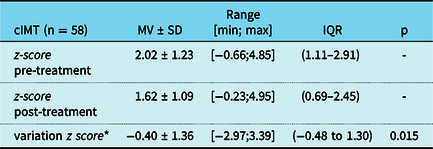
cIMT (expressed as z score for age) decreased from 2.02 (pre-therapy) to 1.62 (post-statin introduction) in the 58 patients who had registries for this parameter (Table 9). This reduction of 0.40 z scores was statistically significant (p = 0.015). No statistically significant correlations were found between the decrease in cIMT z score and the duration of statin therapy or the change in low-density lipoprotein cholesterol.
Ultrasonographic characterisation of the variation of the cIMT, expressed as z scores

cIMT=carotid intima-media thickness; IQR=interquartile range; max=maximum; MV=mean value; min=minimum; p=p-value; SD=standard deviation
* The z-score variation of cIMT was calculated by subtracting the pre-therapeutic to the post-therapeutic values
Characterisation of the therapeutic intervention
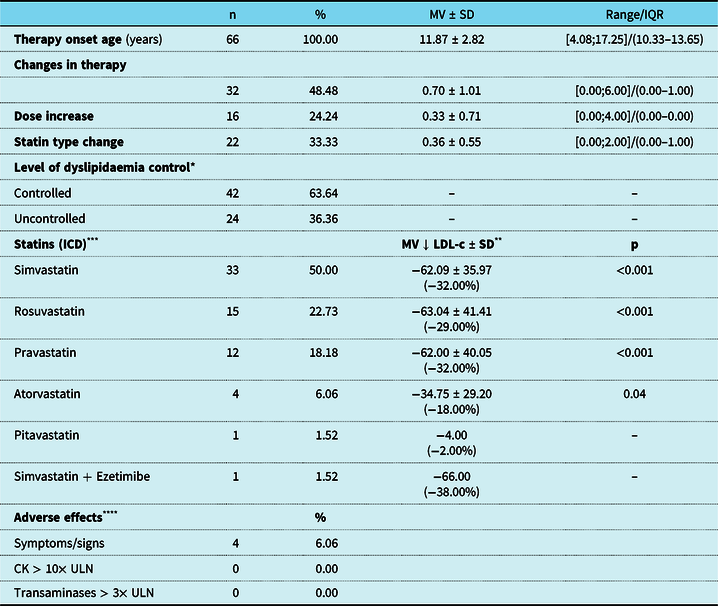
The mean age for initiating statin therapy was 11.87 ± 2.73 years. In 16 patients (24.24%), with familial hypercholesterolaemia, it was necessary to introduce statins before the age of 10 years, with a minimum age for therapeutic initiation of 6 years and 1 month.
Prior to the onset of statin therapy, the mean low-density lipoprotein cholesterol level was 203.00 ± 34.75 mg/dl for children under the age of 10 years (p = 0.04) and 185.00 ± 36.90 mg/dl for children older than 10.
In 48.48% (n = 32), there was a need to increase the dose and/or change the statin type. This occurred on average 0.70 ± 1.01 times per patient, with a maximum of six changes to achieve control of the lipid profile. In addition, 54 patients (81.82%) in the pre-therapy period, along with dietary re-education strategies, were supplemented with omega-3 fatty acids.
Regarding statin efficacy, adequate control was achieved in 63.64% (n = 42) of the patients. In the 24 uncontrolled patients (36.36%), the mean low-density lipoprotein cholesterol difference from the target value was 20.08 ± 6.86 mg/dl, with a minimum of 11.00 mg/dl and a maximum of 34.00 mg/dl.
Comparing patients with controlled and uncontrolled dyslipidaemia, a statistically significant difference (p < 0.01) was found in the BMI percentile variation (Table 6). In the former, there was an increase of 8.08 ± 17.90; while in the latter, the increase was of 8.52 ± 18.43. Regarding lifestyle, having only pre-therapeutic data, the mean number of physical activity hours/week was 3.90 ± 2.44, in the controlled, while in the uncontrolled group it was 2.68 ± 1.41 (p = 0.011). The number of patients with screen time greater than 2 hours/day was 21.95% (n = 9) in the controlled, and 60.00% (n = 15) in the uncontrolled.
The statins prescribed were in accordance with the regulations proposed by the Portuguese National Authority for Medicines and Health Products (INFARMED). Simvastatin (50%; n = 33), rosuvastatin (22.7%; n = 15), and pravastatin (18.2%; n = 12) were the most commonly used statins. When comparing the mean values of low-density lipoprotein cholesterol reduction according with the type of statin used, simvastatin and pravastatin showed a more pronounced decrease (32% with p < 0.01), followed by rosuvastatin (29% with p < 0.001) and atorvastatin (18% with p = 0.04). In only one patient, the association of statin with an inhibitor of intestinal cholesterol absorption (simvastatin/ezetimibe) was used, with a low-density lipoprotein cholesterol reduction of 38%.
Side effects were tracked in all patients in the sample, with four patients (6.06%) reporting transient muscle symptoms (bilateral myalgias), but no associated signs of myositis/myopathy. No elevations in creatinine-kinase and transaminase values were observed in any of the patients. During the follow-up period, no changes in growth and sexual maturation during puberty or pregnancy were reported. More detailed information on the characterisation of therapeutic intervention can be found in Table 10.
Characterisation of the therapeutic intervention with statins

CK=creatinine-kinase; ICD=international common denomination; LDL-c=low-density lipoprotein cholesterol; MV=mean value; IQR=interquartile range; p=p-value; SD=standard deviation; ULN=upper limit normal
* The degree of control of dyslipidaemia was established according to LDL-c values lower than the defined LDL-c target value. The target value considered for patients with a high cardiovascular risk stratification was 100 mg/dl, and the remainder was 130 mg/dlReference Daniels and Greer7,Reference Rocha and Santos21
** Mean values for decreasing LDL-c in mg/dl and in percentage, according to the type of statin used
*** Low-dose statins used to control lipid profile, classified as low-dose statins (simvastatin 5–10 mg, pravastatin 10–20 mg) and of moderate intensity (atorvastatin 10–20 mg, simvastatin 20 mg, rosuvastatin 5–10 mg, atorvastatin 10–20 mg, pitavastatin 1–4 mg)Reference Simova32
**** The reported side effects were muscle symptoms (bilateral myalgias) and signs of myositis/myopathy (proximal muscle weakness with symptoms and elevated CK above normal values) associated with statins use, as well as signs of rhabdomyolysis (increased CK ten times higher than normal) and hepatotoxicity (increase in transaminases three times higher than normal values)Reference Daniels and Greer7
Discussion
In the present study, we found that after 3.40 ± 2.06 years of follow-up of 66 children, statin therapy showed the expected laboratory improvement in lipid profile, particularly in total cholesterol and low-density lipoprotein, with a reduction of approximately 23.4 and 30.4%, respectively. Furthermore, we were capable to show that the use of statins at paediatric age was well tolerated and efficacious with few adverse effects.
We were also able to demonstrate that there was a potential benefit on the atherosclerotic process, based on the cIMT reduction of approximately 0.40 z score at the end of follow-up.
The originality of this study resides, to the best of our knowledge, on the lack of studies showing the efficacy of statin therapy in children with different types of dyslipidaemia (primary and secondary) and its impact on cardiovascular risk factors.
Clinical characterisation
The decision to initiate statins considers, in addition to the premature cardiovascular disease family history and serum low-density lipoprotein cholesterol levels, the evaluation of risk factors and the existence of diseases with increased cardiovascular risk.10,Reference Kavey, Allada and Daniels23 As expected, all patients included in the study, regardless of the aetiology of dyslipidaemia, presented a considerable number of risk factors in association with altered lipid profile.Reference Medeiros, Alves, Aguiar and Bourbon24 At least 65.2% of the individuals had two to three identifiable risk factors. In addition, the prevalence of moderate and high-risk factors was significant (54.5%, n = 36), as well as the existence of family history of premature cardiovascular disease (37.9%; n = 25). It is also worth noting the existence of 44 cases (66.7%) with paediatric diseases associated with cardiovascular diseases, and 36 cases (54.6%) considered to have moderate cardiovascular risk.
With regard to the modifiable risk factors, it is important to highlight the high rate of sedentary lifestyles (51.5%) that, combined with a low rate of physical activity (84.9%), are representative of the Portuguese paediatric population.Reference Medeiros, Alves, Aguiar and Bourbon24
It was also shown that obesity (30.7%) and arterial hypertension (13.8%) in this study were higher than the estimated prevalence (11.7 and 12.8%, respectively) found in the literature.Reference Rito, Sousa, Mendes and Graça35,Reference Sousa Uva, Victorino, Roquette, Machado and Matias Dias36 In fact, although all patients were subjected to multi-disciplinary interventions for the (re)education of lifestyles, for at least 6 months, the high prevalence of obesity and unhealthy lifestyles types remained unchanged.
Among the patients referred for genetic (n = 40), a mutation was confirmed in half (50.0%), confirming familial hypercholesterolaemia. Effectively, a pathogenic and heterozygous mutation in the low-density lipoprotein receptor was confirmed in 30.3% of the cases (n = 20), which reflects the most common mutation in the Portuguese population,Reference Medeiros, Alves, Aguiar and Bourbon24,Reference Medeiros, Alves, Francisco and Bourbon25 based on current clinical criteria (Simon Broome).Reference Medeiros, Alves, Aguiar and Bourbon24
In the sub-group of patients started on statin therapy, the familial hypercholesterolaemia phenotype was already present. Therefore, it is possible to admit the existence of a monogenic cause for dyslipidaemia, with specific mutation(s) not detected in the tests ran by the laboratory. In our study, there were also 15.2% (n = 10) of individuals with an unknown aetiology for their dyslipidaemia. It may be hypothesised that a dyslipidemic pattern combining polygenic and environmental changes exists in these patients, where unhealthy lifestyles are determinant in the phenotypic expression of dyslipidaemia. The latter is the dominant dyslipidemic pattern in our community, in the context of familial dyslipidaemia, obesity, and insulin resistance.Reference Cibelle, Antunes, Rato and Bourbon5,Reference Medeiros, Alves, Aguiar and Bourbon24,Reference Medeiros, Alves, Francisco and Bourbon25 In the remaining patients with non-monogenic aetiology, the cause attributable to dyslipidaemia was mostly secondary to various conditions, most notably obesity (38.5% of cases).
In patients on statin therapy, it was possible to obtain only pre- and post-therapeutic data for BMI and blood pressure. Despite a multi-disciplinary approach, with a particular focus on lifestyle and diet modification, the mean BMI percentile increased, with a concomitant increase in the obese sub-group. As for blood pressure, there was a mean decrease in both systolic and diastolic blood pressure, although, with statistical significance only registered in the latter. In addition to statin therapy, in some cases it was necessary to initiate antihypertensive therapy. The variation in BMI can be explained by the high prevalence of sedentary lifestyle habits, for which the potential impact of corrective actions will have a medium-long-term efficacy.
The data, in spite of being in line with the results of other studies,Reference Mendelson, Regh and Chan19,Reference Medeiros, Alves, Aguiar and Bourbon24 support that the priority should be given to lifestyles modification, in association with pharmacological therapy. Indeed, the correct identification and stratification of children at risk for cardiovascular disease, coupled with increased educational initiatives, followed by the implementation of healthy living habits and early lipid-lowering therapies, will enable a more effective action in reducing the respective cardiovascular risk.Reference Daniels and Greer7,10
Laboratory characterisation and therapeutic intervention
The mean age for statin therapy initiation (11.9 ± 2.7 years) is in line with what is found in the literature.10 In 24.2% of patients, earlier statin introduction was required due to very high low-density lipoprotein cholesterol levels in the context of diseases and/or conditions with high cardiovascular risk (for example, familial hypercholesterolaemia).
Analysing lipid profile variations after introduction of statin, there was a generalised reduction in the total cholesterol, low-density lipoprotein cholesterol, triglycerides, apolipoprotein B/apolipoproteinA1 ratio, and lipoprotein (a) levels. A statistically significant decrease was observed for total cholesterol (66.4 ± 51.1 mg/dl) and low-density lipoprotein cholesterol (59.8 ± 37.6 mg/dl), with a reduction of approximately 23.4 and 30.4%, respectively. The reduction rate in low-density lipoprotein cholesterol was significantly higher in the first 3 months of treatment. However, the maximal decrease in low-density lipoprotein cholesterol (31.1%) was reached between 6 months and 1 year and then remained at this level throughout the follow-up period.
These values are in line with the results of some clinical trials where the percentage of reduction varies between 18.0 and 38.0% and between 23.0 and 49.0% for total cholesterol and low-density lipoprotein cholesterol, respectively.10,Reference Vuorio, Kuoppala and Kovanen15,Reference Mendelson, Regh and Chan19,Reference Avis, Vissers and Stein37
Besides, the mean increase in high-density lipoprotein cholesterol (11.2 ± 20.6%) was quite significant when compared to the results obtained by other studies using the same types of statins (3.0–6.0%).10,Reference Vuorio, Kuoppala and Kovanen15,Reference Mendelson, Regh and Chan19 A decrease in triglycerides levels (8.3 ± 59.4%) was observed, albeit not statistically significant. In fact, this is corroborated by other studies where the reductions found are modest and non-linear, or conversely, increases have been reported.10,Reference Vuorio, Kuoppala and Kovanen15,Reference Mendelson, Regh and Chan19,Reference Avis, Vissers and Stein37
A decrease on atherogenic risk biomarkers was also observed,Reference Piepoli, Hoes and Agewall4,10 namely apolipoprotein B/apolipoprotein A1 ratio and lipoprotein (a), with only the first parameter having a reduction with statistical significance.
The most significant mean changes in low-density lipoprotein cholesterol reduction were obtained with simvastatin and pravastatin (32.0%), as well as rosuvastatin (29.0%), in accordance with the literature.10,Reference Vuorio, Kuoppala and Kovanen15 These were also the three most frequently used drugs in the study population. The use of statins not excreted by the kidney, such as simvastatin or atorvastatin, has been shown to be advantageous in patients with impaired renal function, whereas pravastatin, by not interfering with hepatic metabolising enzymes, has been shown to be a safe therapeutic option to initiate treatment in polymedicated patients.Reference Wiegman, Gidding and Watts38 Most statins are approved for paediatric use only above an age of 10.10,Reference Wiegman, Gidding and Watts38 Therefore, rosuvastatin, which is approved in Europe from the age of 6, appears as an useful alternative when earlier therapy implementation is necessary.Reference Wiegman, Gidding and Watts38
In almost half of the patients, it was necessary to introduce changes to the therapeutic regimen to obtain the low-density lipoprotein cholesterol target value. Most changes regarded the statin type used, followed by dose changes. Despite this, about 60% of the patients reached the low-density lipoprotein cholesterol target value in an average time of 3.5 ± 2.5 years. In patients with uncontrolled dyslipidaemia, the low-density lipoprotein cholesterol difference to the reference target value was low (32.0 ± 26.5 mg/dl).
In our study, lower rates of lipid control were observed as compared to a similar American study, which reported for similar treatment period, control of approximately 85% of patients.Reference Mendelson, Regh and Chan19 However, comparingly, we defined more stringent low-density lipoprotein cholesterol target values and had a higher prevalence of risk factors. In the adult population, reports show a high variability of dyslipidaemia control, between 20 and 70%, depending on the associated cardiovascular risks, target value of low-density lipoprotein cholesterol, race, sex, and age. In fact, greater control of paediatric dyslipidaemia may be attributable to the influence of parental supervision, higher low-density lipoprotein cholesterol target values, and/or a better physiological response. In addition, monitoring by a multi-disciplinary team with nutritional monitoring can translate into better results.
Despite the decrease in serum fasting glucose levels, homeostasis model assessment-insulin resistance (HOMA-IR) index increased, non-significantly, during the follow-up period. This is in line with the increase in BMI present. In both, pre- and post-therapeutic periods, the mean value of HOMA-IR index was above the upper limit of normality.Reference Cuartero, Lacalle, Lobo and Vergaz31 Indeed, these results indicate important metabolic changes in the sample, associated with the development of type 2 diabetes mellitus, cardiovascular diseases and maintenance of insulin resistance in adult life; with the promotion of a healthier lifestyle, these are probably reversible.Reference Cuartero, Lacalle, Lobo and Vergaz31,Reference Peplies, Savva and Buck39
Additionally, the data support the existence of a good safety profile of statins, corroborating the findings in the literature.10,Reference Mendelson, Regh and Chan19–Reference Rodenburg, Vissers, Wiegman, Van Trotsenburg, Van Der Graaf and De Groot22,Reference Avis, Vissers and Stein37,Reference Jacobson40 In fact, no hepatic and/or muscular adverse events were detected in our sample that justified medication termination. Consequently, it seems legitimate to start this medication early in cases of high cardiovascular risk in the paediatric age. However, data regarding sexual maturation and growth in this age group are still lacking and as such careful monitoring is essential.10,Reference Vuorio, Kuoppala and Kovanen15
Ultrasound characterisation
There was a statistically significant reduction in the cIMT z score (p = 0.015) of approximately 0.40. Indeed, this reflects the positive impact of statin therapy on the atherosclerotic process in young patients with dyslipidaemia, with probable reversibility of pre-clinical vascular lesions. Although no studies in Portugal using this vascular marker have been found, similar reductions have been reported in clinical trials abroad.Reference Braamskamp, Langslet and McCrindle11 Despite the lack of consensus regarding the use of this marker, in the monitoring of therapeutic efficacy, several authors recommend its use as a predictive marker of atherosclerosis and premature cardiovascular disease in adulthood.Reference Gidding, Rana and Prendergast9,Reference Juonala, Viikari and Ro13,Reference Davis, Dawson, Riley and Lauer14,Reference Berenson, Srinivasan, Bao, Newman and Tracy16,Reference Raitakari, Juonala and Kahonen17,Reference Halcox, Banegas and Roy41
Limitations of the study
As a retrospective study, the collection of clinical information recorded in electronic clinical processes was used to obtain the data. Thus, there may be some biases in recording data, validity of measurements, and adherence to the therapeutic regimen, as well as bias by the multiplicity of professionals who created the records and their different acuity. Moreover, some patients were excluded from the study because they did not have all the data recorded in the clinical process. The fact that patients with different follow-up and therapy times, as well as patients with familial hypercholesterolaemia and lipid changes secondary to the pathology and/or risk condition have been included in the sample, may influence the interpretation of the therapeutic response to statins.
Future perspectives
It would be of interest in future to discuss a longitudinal follow-up of patients, monitoring their clinical follow-up and maintenance of lipid values at target values, potential development of cardiovascular disease, and long-term adverse effects of statins; the validation of cIMT as a surrogate marker of therapeutic efficacy; and the development of reference values for the Portuguese paediatric population regarding lipid parameters, HOMA-IR, index and cIMT.
Conclusions
The use of statins at paediatric age is associated with few adverse effects and represents an added value in the normalisation of the lipid profile in patients with increased cardiovascular risk factors, with a significant reduction in cIMT, bringing this early marker of atherosclerosis closer to the levels present in the general population.
The follow-up of patients with dyslipidaemia is a demanding process, which presupposes continuous therapeutic optimisation and modification of cardiovascular and dietary risk factors related to diet and lifestyle.
Acknowledgements
None.
Financial Support
This research received no specific grant from any funding agency, commercial or non-profit sectors.
Conflicts of Interest
None.
Ethical Standards
The authors assert that all procedures contributing to this work comply with the ethical standards of the relevant national guidelines on clinical research and have been approved by the Ethics Committee of the Faculty of Medicine of the University of Coimbra.