

4. Sources of known and/or potential pain in farm animals
In pages 297–309 we defined pain and the concepts related to it and in pages 310–318 we discussed methods of measuring it. Now, in pages 319–332, we aim to identify the main sources of pain in farm animals including the specific issues for each type of production before looking, in the last article, at ways of managing pain in animal husbandry. Also, we will analyse for each class of livestock (pigs, ruminants, poultry and fish) the comprehensive list of sources of established or potential pain reported in the literature. This analysis will not include game birds such as pheasants, partridges and wild ducks for which there is very little information to draw meaningful conclusions and which were not part of the expert panel's terms of reference.
In this article we will not only cover the sources of pain associated with the rearing practices of animals but also those related to slaughter, from the transport of the animals up until the time of their being put to death. In addition, we will cover the role of genetic selection in the development of certain painful conditions. We will not be discussing sporadic or unprovoked disease conditions except if their frequency and severity can be related to the conditions in which the animals are reared. However, the way in which they are detected (pages 310–318) and dealt with (pages 333–342) are in no way different and pain linked to these diseases should be handled in a systematic manner. In addition, for some surgical procedures, this article will describe in particular the use or not of local anaesthetic during the operation bearing in mind that analgesia may be used postoperatively. Aspects of pre-, peri- and post-surgical anaesthesia/analgesia will be dealt with more thoroughly in pages 333–342.
4.1. Background to the different types of animal production and their regulation
The system of animal production is one of the vital elements in preventing potential pain in domestic animals. Domestication and then the development of large scale breeding operations have, in effect, given rise to particular practices and activities that have led to known or potential pain and also to pain that is specific to each type of animal production. In general, we will see that populations of animals that have been subject to strong genetic selection specifically for production traits seem to be more susceptible to some health disorders.
The protection of animals within these systems of production is regulated. In general, in Europe, these regulations about animal welfare come from two sources, the Council of Europe and the European Union. The Council of Europe is an intergovernmental organisation of which the European Union as well as its member states form a part. Its permanent committee adopts generalist agreements and clarifies them with specific recommendations. An agreement about the protection of farmed animals was adopted in 1976. Six months after recommendations are adopted they become mandatory for the contracting parties unless they have notified the Permanent Council as to why they are not or are no longer able to implement them. At the level of the European Union, the treaty of Amsterdam (1999) affirmed that animals were sentient beings and that the European Community and its member States were responsible for the welfare of animals. The European commission, or its executive, was made responsible for working out the proposals and how they should be regulated (http://europa.eu/documents/eur-lex/index_fr.htm). One general directive establishing the minimum standards for the protection of animals raised on farms was adopted in 1998 (98/58/CE). The texts adopted at the European level are applicable to each member State after being passed into national law for the directives and immediately for regulations.
4.1.1. Pigs
There are three major systems of rearing pigs: First, breeders who produce piglets and who have only sows, their piglets and sometimes a few boars for detection of heat. Second, fatteners who buy the piglets and rear them to about 186 days of age for a mean live weight of around 116 kg. Third, breeder-fatteners who have both breeding sows and growing pigs. There are a few more that 27 000 commercial piggeries who house nearly 500 animals each on average. Virtually all of the sows and fattening pigs belong to breeder-fatteners. There are around 15 million pigs in France of which about 1.2 million are sows. Annual production of carcasses is around 25 million. Slaughter is done in 182 abattoirs concentrated essentially in the west of France. Almost all production is in ‘conventional’ piggeries since ‘organic’ piggeries contribute only 0.5% of sows and about 0.2% of pig meat. The amount of quality-labelled pig meat is also small, being only about 2% of production.
Most sows and practically all fattening pigs are housed in closed buildings. During pregnancy, sows are run in groups or are held individually mostly on slatted floors in buildings specially designed for breeding or gestation. About 10 days before farrowing the sows are transferred to specialised farrowing houses where they are confined in individual pens with slatted floors. When the sows are raised outside, they are not, of course, totally confined but are housed individually in small pens where they have huts for farrowing. Sows are generally run in ‘batches’, that is, their reproductive cycle is synchronised. This facilitates adoption or ‘cross fostering’ of piglets at farrowing and thorough cleaning and disinfection of the pens between each batch. The piglets stay with their mother until 25 days of age except in ‘organic’ piggeries where they must stay for a minimum of 40 days. At around 30 kg, or 2.5 months, the piglets are transferred into fattening units where they are generally housed on slats in conventional piggeries and on straw in organic or quality-labelled piggeries. Overall, rearing of pigs is very successful from a husbandry point of view because sows average 2.5 farrowings and wean 27 piglets per year. Meat animals are slaughtered at around 6 months of age with a daily weight gain of nearly 680 g per day and a feed conversion ratio of 2.7 (i.e. 2.7 kg feed for every 1 kg gain in live weight) between weaning and slaughter. These figures are not available for organic piggeries but are much poorer.
European legislation imposes certain constraints on the housing and conduct of piggeries (directive 91/630/CEE modified by directives 2001/88/CE et 2001/93/CE). Added to these are the constraints imposed by the law for organic piggeries and by the code of conduct for quality-labelled pork. The present set of rules limits painful interventions in the pig industry. So, directive 2001/93/CE forbids all painful procedures outside of those used for therapy, diagnosis or identification. Nonetheless, there are several exceptions (see Section 1 of the Appendix). Thus, tail docking and teeth reduction by clipping or grinding is allowed during the first 7 days after birth. Also, castration of male pigs by means other than tearing the tissues, which is forbidden, is permitted up to 7 days. These practices can be performed by a veterinary surgeon or a trained and experienced operator using appropriate means and hygienic conditions. Tails may be docked after 7 days of age if anaesthesia using an analgesic is performed by a veterinary surgeon. Teeth clipping and tail docking cannot be carried out routinely but only when there is evidence that the sows’ teats or the ears and tails of other pigs are being injured. In Norway and Sweden the law requires anaesthesia at the time of castration while in other countries like The Netherlands the farmers have committed themselves to using anaesthesia. In these different countries the law or the commitment of the producers has foreshadowed the elimination of castration of pigs in the long term (see pages 333–342). Directive 2001/93/CE also contains a section on nose ringing pigs which is only authorised for out-door rearing systems. This is to limit the degree of soil destruction due to excessive rooting. In France, there are few sows in outdoor piggeries so the effect of inserting nose rings will not be covered further in this document.
European legislation (CE No. 889/2008) on organic animal husbandry of pigs plans to impose compulsory anaesthesia or analgesia for castration from 1 January 2012 (articles 18 and 95), regardless of the age of the piglets. In addition, it will forbid teeth-clipping and tail docking, but will allow possible exceptions for reasons of health of the animals (article 33).
4.1.2. Ruminants
The number of cattle herds has decreased since the end of the 1960s. Agricultural statistics from November 2007 fixes the number of farms running cattle at 208 000. The reduction in the number of herds has been accompanied by an increase in the number of animals per herd. In 2007 there was an average of 92 cattle per farm as opposed to only 38 in 1983. Dairy farms and beef herds with more than 30 cows accounted for 87% of milking cows and 79% of suckling cows. In 2007, in France, there were 19 124 000 cattle of which 3 759 000 were dairy cows (mainly Prim'Holstein, Montbéliarde and Normande) and 4 163 000 suckling cows (mostly Charolaise, Limousine and Blonde d'Aquitaine). The production of beef in France in 2007 rose to 1774 billion tonnes carcass-weight equivalent and the production of milk to 22 229 million litres.
About 50% of heifers are destined to be breeders and these are involved in dehorning. Nine per cent of male calves from dairy herds and 5% from beef herds become steers. It should be noted that there are specific regulations for calves.
The total sheep flock stands at 8.2 million of which there are 5.5 million ewes spread over 75 000 farms. The number of flocks has fallen by 60% in 20 years. Milk production was 256 million litres in 2007. In goats, the total flock was 1.2 million head in 2007, of which 853 000 were does. Dairy goats produced 443 million litres of milk. The production of goat meat reaching the market, either as young goat or culled does, is relatively small.
The conditional requirements for receiving European aid take into account the concept of ‘pain’ and refer to recommendations of The Council of Europe that are available on the site: http://www.coe.int/t/fr/affaires_juridiques.
The main points are:
1. Operations involving the loss of a significant amount of tissue or modification of the bone structure of cattle should be banned, particularly:
• Modification or mutilation of the tongue.
• Dehorning by means other than surgical dehorning.
• Amputation of the tail.
2. Some exceptions to the bans proposed in paragraph 1 could include.
• Operations conducted for the purpose of veterinary medicine.
• The following operations, which can only be done when in the interest of the animal or if it is necessary for the protection of people in contact with the animal and carried out according to paragraphs 3 or 4 below:
○ Destruction or ablation of the horn at an early stage of its development (disbudding) to avoid later dehorning.
○ Dehorning if it done by surgical ablation of the horns.
○ Inserting nose rings in into bulls or cows.
○ For the following operations which should be avoided whenever possible but which can be done if they conform to paragraphs 3 and 4 below and under the following conditions:
▪ Castration of bulls and male calves, preferably by surgical ablation of the testicles, but on condition that the methods used do not impose pain or cause unnecessary or prolonged stress.
▪ Castration of calves for fattening, if it is permitted by national legislation.
▪ Notching or piercing of the ears if it is permitted by national legislation.
3. Operations in which the animals are subject to/ are exposed to/experience/confronted with, or risk being subject to, considerable pain should be done under local or general anaesthetic by a veterinary surgeon or other qualified person conforming to the national legislation. Such operations include castration of cows, dehorning and disbudding of animals over 4 weeks of age.
4. Operations on animals that do not need anaesthesia should be conducted on animals in a way that causes no pain whatsoever nor unnecessary or prolonged stress. Such operations should be done by an experienced person and include, according to the conditions in paragraph 2, above:
• Destruction or ablation of horn buds in animals under 4 weeks of age.
• Inserting nose rings in bulls and cows.
• Notching or piercing ears of animals.
4.1.3. Poultry
There are seven types of poultry making a significant input to production in France. The genus Gallus is the most common in terms of volume of production as much for meat (broilers) as for eggs (laying hens) but they are also the most common in scientific research so there is much more literature about them. Production figures, per year and per type of bird, released by the National Office for Meat and Dairy Products and by the Institut Technique de l'Aviculture (ITAVI, Technical Institute for poultry production) are as follows: broilers, 705 million; laying hens for commercial eggs, 46 million, of which 20% are reared outdoors; turkeys, 73 million; mule ducks 35 million, Muscovy ducks 44 million; guinea fowl, 28 million; and quail, 25 million. Most of the studies that address the potential sources of pain in domestic birds focus logically on broiler birds and laying hens. There are a few studies with ducks and turkeys but there is practically no information on quail and guinea fowl.
We can distinguish two major types of farming alternatives: cage systems v. non-cage systems and confined v. free range systems. On the whole cage systems are those in which humans do not enter to look after the birds while in the non-cage systems humans are involved differently. Each species of poultry is potentially produced in several systems of production but the phenotypes and genotypes are often specifically associated with a particular method of rearing.
‘Cage systems’ are used for the majority of laying hens and 80% of eggs for consumption are produced in this way. Cages are most often laid out in batteries and located within climate-controlled buildings, that is under confined conditions. The genotypes of birds used have anatomical and behavioural characteristics that, in the context of the rearing conditions, renders necessary specific husbandry procedures (beak trimming, decombing, toe-clipping and shortening of spurs). At the selection stage, male and female breeding stock for the lines used to generate commercial genotypes are mostly raised in individual cages, but in France their offspring, which furnish the production stock for commercial farmers, are reared on the floor.
‘Non-cage systems’ are used for the growing period for all meat bird production and for rearing the breeding stock for several species or production types such as broilers, turkeys and ducks. A certain proportion of laying hens of certain genotypes, probably <25% of the total flock, are also raised in these systems. The buildings used for floor-reared laying hens generally have a single level, are equipped with nest boxes and may or may not have access to an outdoor exercise run. Though not very common in France, another system for housing laying hens is the aviary. This system consists of several tiers of platforms and to a certain degree corresponds to a battery system without doors. Meat birds are generally floor-housed for reproduction. The sexes can be mixed (for broiler production) or separated (guinea fowl, turkeys and Pekin ducks for producing mule ducks (Mule ducks are a cross between a common duck and a Muscovy drake) in which case artificial insemination is always used.
With poultry, the European convention of 1976 for the protection of domestic animals has been increasingly strengthened by further recommendations of which several concern the poultry species Gallus (1995), waterfowl (duck and geese species) (1999, three recommendations (T-AP [95/5], [94/3] & [95/20]) and turkeys (2001, T-AP [95/16]). For the poultry industry, special directives have been made about hens raised for table egg laying (88/166/CEE & 99/74/CE) and broiler chickens (2007/43/CE). In addition, directives and non-specific regulations about transport and conditions in abattoirs, feed additives, zoonoses, environment, traceability and organic production (834/2007/CE et 889/2008/CE) have been adopted and can concern poultry species. Any national legislation in force can only be more restrictive than the European regulations, as is the case in certain countries for laying hens.
4.1.4. Fish
Production of farmed fish in France is divided between salmonids farmed in fresh water tanks (mostly rainbow trout), pond fish (carp, roach, pike) and ocean fish (bass, sea bream, sea bass, salmon and turbot) reared in floating cages or in tanks on the seashore. The latest information puts the production of rainbow trout at 35 000 tonnes per year and 60 000 head of ocean fish alevins per year of which more than half is exported. Trout are produced in nearly 600 sites belonging to 400 operators of various sizes: 20% of them produce 80% of the fish. Most of the produce from trout farming is destined for human consumption and the rest is for restocking and for recreational fishing. Farming in ponds takes up 112 000 ha and there are 80 operators who use this form of production solely for fishing or fishing activities associated with recreation and tourism; 12 000 tonnes of pond fish (of which 6000 are carp) are produced annually and of these 9000 tonnes are used to restock the fishing waters. Marine fish culture produces 8500 tonnes per year of which 4200 tonnes are bar and this is more than the amount of bar that derives from commercial fishing. Marine culture is confined to about 50 firms of which about 10 specialise in hatching and 80% of the annual trade of 60 million euros is generated by only 10% of these firms. When the price of these marine species is considered, the sales turnover corresponds to about 50% of that coming from trout production.
The Council of Europe has made a recommendation about aquaculture. European legislation is in the process of being set up and faces a number of challenges. Notably it has to keep the economic sector viable, to guarantee food security and animal welfare, to resolve environmental problems and to stimulate research.
4.2. Sources of known and potential pain associated with the practice and conduct of farming
For each species or group of species (poultry, pork or ruminants) we outline here the main sources of potential pain with which the animals are confronted. We will cover this in conjunction with farming practices, the systems of production and slaughtering as well as with the impacts of genetic selection.
4.2.1. Sources associated with care and identification of the animals
There are some potential causes of pain such as abscesses that develop in some animals as a result of injections (of iron or vaccines) or from tattooing of piglets or ear tagging for identifying animals (pigs, cattle, sheep goats) or inserting nose rings to avoid behaviours that could pose problems for breeders (sucking among bulls or heifers, degradation of fields by sows in open air) but there is little literature and the consequences for pain seem to be minor. Complying with good practice for injecting iron or vaccines can reduce the risk of subsequent abscesses. To reduce pain and wounds following some practices used for identification, other systems using microchip implants are being developed.
Among other potential sources of pain we can identify surgical treatments and practices that are done to care for animals that have particular problems. For example, there are Caesarean operations in the case of cows having calving problems and hoof care involving trimming to cure hoof problems in ruminants. Detection and management of these types of pain enters the medical domain and the possible need for analgesic treatment. Therefore they will not be covered in this report.
4.2.2. Sources associated with handling of the animals by humans
The case of catching poultry
Catching and transport of reproductive animals to another site or of all birds to the abattoir requires capture and carries a strong risk of wounds and fractures as a result of human intervention. As well, laying hens are very susceptible to problems of fracture at the end of their breeding life, particularly when they are removed from their cages. Effectively, they have brittle bones (osteoporosis) which results directly from the heavy metabolic toll associated with laying eggs as well as the cage rearing. The fracture rate can be as high as 25% but this is very variable and depends on whether they are reared in cages or on the ground, the competence of the collection teams and the type of obstructions in the building. Since the 1980s mechanical harvesting of broilers and turkeys has developed wherever the shape of buildings permits. This technique generally means that the harvesting of the animals has a lower level of mortality than when catching is done manually.
The case of force feeding geese and ducks
The consequences of force feeding and the conditions of housing of certain genotypes of fat waterfowl (geese (3%) and ducks (97%)) to produce fois gras and magrets can be a source of pain. Two situations involving stress are envisaged here: (1) the force feeding itself which is practised for 11 or 12 days in the mule duck and 15 to 18 days in the goose. This practice is claimed not to be painful due to anatomical characteristics of the tissue in the wall of the digestive tract of the birds. However it can lead to accidental wounds or encourage pathological dermatological conditions: (2) Hypertrophy of the liver and steatosis (steatosis is lipid storage in the cells of an organ, e.g. in the hepatocytes in the liver where it is called fatty liver. In birds and fish, lipid synthesis takes place overwhelmingly in the liver, whereas it occurs mainly in adipose tissue in mammals.) which is the equivalent of nutritional cirrhosis of the liver with neither tissue damage nor cellular degeneration and is totally reversible. Anatomical studies show that the liver cannot be the source of painful sensations in birds. The average cumulative level of mortality and culling of the ‘weakest’ birds is about 2.5% in force-fed ducks but varies with the rearing conditions and management of the animals. It can be much higher in extreme situations such as heat waves. Further analysis of the causes of mortality and need for culling is necessary to understand better the effects of force-feeding on the physiology of the animal. The existence of painfull stimuli of visceral origin associated with the amount and speed of introduction of the food for force-feeding has not yet been studied.
The case of fish
The protocols for rearing that are currently in use imply that fish are manipulated frequently. They are manipulated in the phases when they are sorted, when their tank or breeding site is changed, when they have veterinary treatment, when they are weighed or when they are taken for slaughter. All of these operations imply that the fish are removed from their breeding environment for a variable amount of time. Techniques presently in use have usually been modernised and use systems that manipulate the fish rapidly while maintaining an aqueous environment at all times. For specific tasks on a small number of individuals, such as applying treatments, removing tissue or marking individual fish, the use of anaesthetic is more or less obligatory for the success of the operation. Where fish production is done under well-run and managed conditions it is unlikely that these sorts of manipulations produce substantial nociception.
4.2.3. Sources associated with the housing and management of the animals
Examples from poultry
The degree of prevalence of often-observed foot lesions, such as dermatitis of the foot (pododermatitis), keratosis or swelling, depends on the rearing system and also on the genotype of the birds and the type of equipment. Pododermatitis is common in poultry species either when raised in fully closed conditions or have free range access. This is also true in poultry that have access to a run. Pododermatitis probably causes little pain when it remains superficial but in an advanced stage, such as when ulcerated, these lesions are often infected and the development of pain is very likely. Certain types of litter favour the development of inflammatory pododermatitis. Thus, moist litter is much more likely than dry litter to induce inflammatory responses in the tissue of feet. The prevalence of pododermatitis has been proposed as an indicator to evaluate the level of welfare within a farm and to establish acceptable densities for individual breeding establishments (European directive on broilers). The relevance of its use as an indicator is still under evaluation.
Joint injuries and locomotive problems are a potential source of pain in poultry. Thus, in broiler, there is little movement by the birds. They spend a lot of their time sitting which is in accordance with the rapid rate of growth that characterises the lines of birds used in this type of production. The incidence of postural problems and lameness is also high. Since the beginning of the 1970s, a regular census of lameness in industrial breeding establishments has confirmed this high prevalence. It shows especially the relationship between conditions of chronic physiological nociception in rearing and the behavioural adaptations that are observed such as lameness and postural problems. This confirmation of distressful conditions or true pain is based on several types of observation: (1) The existence of nociceptors in the feet of poultry, (2) anatomical and anatomo-pathological data on the feet and pelvic joints that show several potential sources of pain related to bone deformation together with stress on the joints and dislocation of the tendons or simple tendonitis and (3) studies of behavioural pharmacology that show positive effects of analgesics or anti-inflammatory substances on posture and locomotion. Nonetheless, it has been shown that cortical decerebration of chickens does not inhibit the protective postural behaviour of leg bending to avoid standing on a foot when it is made sore by intra-plantar injection of urate crystals. This suggests that some of the protective behaviour is controlled at the level of the brainstem, thus, in the absence of any conscious emotional component.
Examples from pigs
A significant source of pain in pig rearing arises from musculoskeletal problems, especially those caused by poor stance and walking difficulties and the resulting lameness. This lameness comes from many sources, including genetic factors in particular but also factors associated with the flooring, especially when it is too hard, with a lack of exercise when there is insufficient space and with the feeding regime when it encourages a rate of growth that is too rapid and hence problems with leg conformation.
Examples from cattle
Among the sources of potential pain many can be associated with:
• restriction of available space for the animal either in stalls or on slats,
• the quality of the ventilation and the density of the animals, factors that predispose animals to infections such as digestive or respiratory disorders in calves,
• the quality of the hygiene of the bedding for the animals – a primary source of pathogens that can cause, for example, intra-mammary infections and diarrhoea in calves,
• the type of flooring which, in cattle, can induce varying frequencies of lameness and foot disorders,
• the quality of the feed and the modalities of its distribution which, if it is rich in fermentable carbohydrates, can lead to subacute ruminal acidosis along with many possible subsequent pathological problems,
• the mode of gathering the animals which can lead to agonistic interactions, more frequent combat and thus wounds and bruising, particularly if the group is large.
Examples from fish
Fish being bred domestically are subject to attack from predators all through their breeding cycle, which causes significant losses. For salmonids bred in fresh water the principal predators are birds such as heron and cormorants, and otters and martens. In a marine environment, seals and birds are the main predators. The consequences of these attacks are multiple. The fish may be killed but also they may only be wounded and thereby made vulnerable to infection. Different methods are used to reduce the activity of predators, for example, the use of nets and cages, installation of acoustic or visual systems to scare the birds or seals.
Fin erosion is a major problem that has been described for several species of bred fish, particularly for salmonids in European and American farms. The term fin erosion covers a variety of tissue problems ranging from a simple crack in the skin to necrosis of the tissue and even, sometimes, haemorrhaging. Affected tissues show signs of inflammation with hyperplasia of the epithelium, thickening and formation of nodules. In addition, as nociceptors have been found in fins it is probable that these conditions cause nociceptive responses. However, there are no exiting studies and targeted research will be necessary to confirm this hypothesis. The main cause of fin erosion would be aggressive biting associated with fighting between individuals and the establishment of a dominance hierarchy. However, other, secondary causes are described in the literature such as handling the fish, abrasive substances in the interior of the rearing tanks, sun burn, exposure to stressful situations or to corticosteroids which can modify the structure of the skin and its capacity to regenerate.
In general though, there is little data available on the prevalence of these afflictions (all species considered) in the different systems of rearing.
4.3. Sources of known or potential pain associated with mutilations
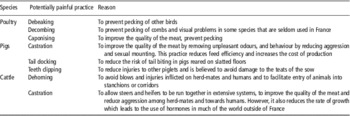
Regardless of the species, poultry, pigs or cattle, one of the principal sources of potential pain on farms comes from the practice of mutilations that are carried out for a variety of reasons (see Table 1). This is particularly the case when the mutilations are done badly.
Examples of frequent practices that may cause pain in domestic animals (other than slaughtering) and the reasons proposed for practising them

4.3.1. Mutilations done to reduce the risk of injuries to animals
The case of teeth clipping of piglets
Teeth clipping/grinding is seen as a means of reducing injuries to the teats or vulva of the sow as well as to other piglets in the litter. It involves clipping or grinding the canine and incisor teeth (needle teeth) of both jaws, making eight teeth in all. These milk teeth, which are very sharp at birth, are clipped with a pair of pliers or ground down with an electric grinder by the breeder on the day of birth or soon after. The proportion of the tooth removed varies between 1% and 31% depending on the operator and the tooth being treated. At the behavioural level, the piglets are seen to be defensive during grinding and display strong chewing movements just after teeth clipping/grinding. By contrast, the interval between the intervention and first sucking is unaffected compared with control animals, similarly to what one sees in other behavioural activities such as lying, standing or activity at the udder. Neither is there any evidence of activation of stress-response systems in the minutes and hours following teeth clipping. Histological analysis of longitudinal sections of clipped teeth at different ages shows anomalies that may be potential sources of pain. In particular, one sees breakages in the pulp cavity, dentine fracture, bleeding, pulpitis, abscesses, osteodentines (deposits of calcium that are similar to scar tissue) and necrosis. In all, the frequency of abnormalities is higher when the teeth are clipped with cutting pliers than when they are ground. In view of the fact that the dental pulp is innervated and that the structure of teeth in pigs is similar to that in man, it is highly likely that these sorts of anomalies induce severe pain.
In summary, the information from the literature suggests that there is mild and moderate pain during, and for some hours after teeth clipping to which we can probably add the later discomfort associated with inflammatory reactions and abscesses. Given that several studies suggest that the benefits of teeth clipping are limited, it has been suggested that this technique, which according to the law is not to be used routinely anyway, be abandoned.
The case of beak trimming poultry
Beak trimming and other mutilations of the beak are the practices that have been most studied and are the most controversial. The reason for these practices is to reduce the prevalence and consequences of pecking which can produce wounding and cannibalism. Pecking behaviour is a potential source of pain in animals that are victims and can also lead in certain cases to high levels of mortality in breeding establishments. Such deaths oblige the farmer to carry out beak trimming later in life and so provoke further pain in the beak trimmed animals. In practice, three techniques are used: (1) cutting the end of the beak, or just the upper jaw for ducks, with small secateurs after immobilising the head, (2) cauterisation using a heated blade, a technique called hot blade beak trimming, (3) infrared beak treatment using a machine that focuses a high intensity IR beam at the tip of the beak. The different terminologies associated with operations on the beak are thus a function of the extent of the amputation, the method used and the age of the animals (early if done before 10 days and late if done after 10 days); debeaking (more than a third of the beak sectioned early by cutting), beak trimming (less than a third of the beak sectioned early by cutting) or IR treatment of the end point of the beak realized at time of hatching (less than a third of the end point of beak will fell down latter).
Behavioural and electrophysiological indicators as well as neurobiological knowledge lead us to believe that there is severe pain particularly in the hours after beak trimming. Debeaking is more traumatic than trimming and IR treatment of the beak particularly if the operation is done at a late stage. In the chicken, discharges are seen in the intramandibular branch of the trigeminal nerve during the first 4 h after trimming. In addition, the long-term risk associated with debeaking is the formation of benign tumours of the nerves which are tissue masses formed by uncontrolled and extensive regrowth of Schwann cells and nerve fibres. These tumours, called neuromas, have been described in humans and can provoke severe pain for the life of the animal. This risk is also higher when the amount of beak removed is greater and when the operation is carried out when the bird is 4 weeks or older. Functionally beak trimming affects the anatomical integrity of the bird and, as a consequence much of its behaviour such as ingestion of food and drink, preening of feathers, gathering material for nest building, attack and defence. A hypothesis of chronic pain similar to ‘phantom pains’ experienced by humans after amputations (see pages 297–309) has been proposed whereby the birds have a ‘phantom beak’ but this has been put to question by recent studies on the anatomical organisation of nerve centres in the brain.
The case of tail docking of piglets
The aim in tail docking piglets is to avoid cannibalism post-weaning or during fattening, a problem encountered especially in piglets reared on slatted floors. Tail docking is a routine practice in a lot of piggeries regardless of the sex of the piglets. In 2007 more than 90% of piggeries in the European Union were involved. The tail is cut on the day of birth or soon after, either with a scalpel, cutting pliers or a cauterising knife. The amount of tail removed varies from a few millimetres (the tip only) to more than three quarters of the length. Physiological and behavioural studies indicate that the cutting itself is very probably a source of pain. The tail is innervated along its whole length in newborn piglets and they react defensively and cry out as the tail is cut. However no activity in the stress-response system has been seen in the minutes and hours after tail docking. We could presume that there would be chronic pain following the removal of the tail similar to that described in humans after amputation (see pages 297–309). Indeed, several studies refer to the presence of tumour-like neuromas, known to cause hyperalgesic phenomena, or phantom pains like those in human amputees but this question is still unresolved since it has not been confirmed by behavioural studies in the pig.
In summary, we can suspect mild pain in the hours that follow tail docking and chronic pain in the days and weeks that follow. However the frequency and intensity of chronic pain from this source suffered by piglets are not known.
The case of dehorning cattle
The main aim in dehorning calves is to minimise the risks of animals causing injury to each other or to humans by horn butting. It also allows easier access to feeders and systems of confinement. Practically all dairy calves that are to be reared are currently dehorned. It is common in France to dehorn beef breed heifers between 16 and 24 months of age. Animals of beef and hardy breeds generally have horns that are bigger than those of dairy breeds because they were mostly bred for pulling yokes. Cultural or aesthetic factors enshrined in breed standards have maintained these characteristics. The methods of dehorning should be adapted to take into account the specific conformation of the horns. Late dehorning is more frequent in France than in many other countries particularly Anglo-Saxon countries which have favoured the rearing of genetically polled cattle such as the Aberdeen Angus or the selection of genetically polled cattle including lines of beef cattle such as the Charolaise or Limousine that originally come from France. Despite the fact that the practice of dehorning is covered by precise recommendations in the European agreement and the code of good farming practice, it seems that very few breeders use local anaesthetic and analgesics (around 20% for anaesthetic and 10% for analgesics, see also pages 333–342). Legislation in France prevents them from obtaining anaesthetics and practicing local anaesthesia. Dehorning without anaesthetic or analgesia is known to be painful for both young cattle and adults. It induces, in particular, a big change in cortisol levels and behaviour. Among the methods used, the technique of dehorning (disbudding) by heat cauterisation seems to be less painful than the use of chemical pastes or crayons which can lead to lesions of the eyes if these products run into them. In turn, these methods would be less painful than dehorning by metal shears.
Overall it appears that for dehorning calves:
Disbudding by cauterisation is the least painful method.
The ideal analgesic protocol is a combination of sedation with α2 agonists like xylazine, a preoperative administration of non-steroidal anti-inflammatory drugs (NSAIDs) and local anaesthesia of the cornual nerve before the operation (cf. pages 333–342).
Regulations for dehorning cattle and goats: recommendations about dehorning of cattle are laid out in a Council of Europe agreement on farm animals but there is, so far, no such regulation in France. The agreement makes clear that dehorning by methods other than surgical excision should be banned with two exceptions: (1) cattle <4 weeks old for which disbudding without anaesthetic by cauterisation or chemical means is possible; (2) for cattle more than 4 weeks old dehorning, destruction or ablation at an early stage of the part producing the horn by surgical methods or by cauterisation is allowed if it is done under anaesthetic by a veterinary surgeon or qualified person. Investigations in France and Canada report various effective field practices carried out by breeders, without systematically resorting to an analgesic protocol. The code of good practice proposed by French professionals recommends dehorning of cattle before 6 weeks of age. For the dehorning of adult animals, it is recommended that an analgesic or, preferably, anaesthetic be used.
The case of removing combs and/or wattles from birds
Several procedures are used in birds: (1) removing the comb, known as dubbing, is not often carried out in France. It is often associated with caponisation or with particular genotypes of laying and broiler breeds in which the comb is excessively large. The comb limits the field of vision and is associated with injuries. It reduces feed intake and interferes with copulation; (2) wattle removal is done for the same reasons in reproducing turkeys (Wattle removal is the act of cutting the protruding portion of the caruncle (or wattle), which is a bright red fleshy membrane that covers the head and extends over part of the beak and neck.); (3) operations on the feet, like declawing and despurring are practices that are designed to prevent wounding during interactions between pen-mates during the growth phase (Muscovy ducks) and during mating during the reproductive phase in certain species.
These practices probably cause pain because some of the tissue removed is richly innervated. However, as far as we know, there are no studies that have analysed the degree to which these practices cause pain.
4.3.2. Mutilations to reduce the risk of outbreak of disease
The case of tail docking in cattle
In France tail docking in cattle was practised to avoid injuries to the tail and consequent gangrene after trampling underfoot particularly when animals were run on slatted floors. In other countries, especially in New Zealand it was practised to avoid contamination of the clusters of milking machines by pathogens. It is almost never practised in cattle any more in France because it has now been shown that it gives almost no advantage to the animal except in certain therapeutic applications. In addition, the removal of the tails is a source of acute and chronic pain particularly associated with the development of necrotic growths where the cut is made, particularly when done on adult animals.
This practice is authorised in France, including by the code of practice for organic agriculture, even though it is banned in many countries such as Switzerland, Germany, Denmark, Sweden, the United Kingdom and several states of Australia.
The case of tail docking in sheep
Tail docking of sheep is practised to (1) reduce soiling of the rear end by faeces and urine and consequently reduce fly-strike and (2) facilitate obstetrical practices and avoid complications at parturition. It is performed most often in lambs under 2 weeks of age and is carried out in three major ways: surgically, by cauterisation or by constriction, usually using rubber rings. It is mainly directed towards future breeding animals and especially maiden ewes for reasons of hygiene and the surveillance of lambing. The information in the literature shows that all the methods used are sources of acute and chronic pain even if they do not lead to death. Constriction by rubber rings appears to be the most painful procedure.
4.3.3. Castration
This is an age-old practice in all species and is found in all systems of rearing whether intensive, organic or quality labelled. It is done for reasons that are connected with the quality of the meat or the behaviour of the animals.
Piglets
The major motivation for castrating piglets is to improve the quality of the meat of male pigs by eliminating male odours in the carcass brought on by sexual hormones. In addition, it makes rearing easier by reducing the amount of aggressive and sexual behaviour of the animals and hence the amount of wounding. In Europe 80% of pigs are castrated by surgical means. In France, as in most other European countries, castration is performed by surgery without anaesthesia or analgesic treatment (see pages 333–342 for the cultural, regulatory and economic constraints that explain in part this situation). Behavioural observations and physiological studies show that this practice is a source of acute pain as the tissues involved are innervated. During castration most piglets scream loudly and at a frequency that is characteristic of painful situations. Just after the castration the HPA axis and the sympathetic nervous system are activated but this activation disappears by the next day. The behaviour of the animals also changes following castration. This happens in the first hours after the operation and is marked by a reduction in movement, isolation, prostration, less time at the udder of the sow, stretching of the hind legs, trembling and spasms. Some of these disturbances continue for several days after the operation, for example, huddling up, showing less synchrony of activities with litter mates, scratching the incision in the rump and tail wagging. Finally, there does not seem to be any clear effect of the age at castration on the outcome in terms of the pain caused by the procedure. Even though healing is better when the piglets are castrated very young, it seems that they have a slower growth rate due to being disadvantaged in the competition for teats which results in their use of the less productive ones.
In summary, castration is a practice that has positive effects in the long term on potential sources of pain in intensive piggeries by limiting aggressive behaviour and thus lesions, wounds, lameness and fractures. However the information in the literature clearly shows that pain is acute during castration, then strong for several hours afterwards, followed by more moderate pain for several days following castration.
Cattle and sheep
Castration of cattle and sheep results principally in a reduction in the level of testosterone. There are a range of reasons for castrating. The first is to allow joint rearing of young females and castrated males (heifers and steers for cattle) on the same pastures in grazing systems. Second, it reduces between animal aggressiveness and sexual activity and improves the docility of the animals. It also results in greater marbling of the meat (increased intramuscular fat), a quality appreciated by the consumer, but leads to a slower rate of growth than in entire males. There are three major methods of castration of calves; crushing of the testicular cord, usually by the Burdizzo clamp, constriction, usually using rubber rings and surgical removal.
Studies into castration of cattle show that it is a source of acute and chronic pain. This is the case regardless of the technique used and/or the age of the animal being castrated. However there are some differences in intensity according to the technique and age. Increases in cortisol levels and the incidence of abnormal behaviours and postures are manifestations of this effect. The existence of chronic pain is inferred from specific behaviours associated with the site of castration and abnormal posture. It seems that the intensity of the pain at the time of castration with the Burdizzo clamp is less strong than with surgical castration, although the Burdizzo is rarely used in France because of its cost, its danger to the operator and the possible failures of the technique. Surgery is the technique that causes the briefest pain. It is as dangerous for the operators as the Burdizzo but is much less onerous. There are no failures or setbacks except for possible post-operative problems. The rubber ring is the means of castration most used by breeders, except in the United Kingdom. It induces chronic pain that is more difficult to detect and to manage than that observed following castration by other methods. Finally, the intensity of the pain is proportional to the age of the animal. Only a minority of breeders use anaesthetics to castrate their calves except in Switzerland where its use is mandatory. In contrast most veterinary surgeons use anaesthetics for castration (see pages 333–342). In sheep, the situation is similar: The Burdizzo method is recognised as being the least painful while the rubber ring method is the most practical for its ease of use. However the practice is not common in France.
In summary, it is evident from the literature that castration of calves should be practised:
• as early as possible; preferably by one week of age and not later than 45 days of age,
• by using the Burdizzo clamp method,
• using an analgesic protocol associating administration of NSAIDs 20 min before the operation with a local anaesthetic by infiltrating 2% lidocaine (about 5 ml) into the distal scrotum. Adding the use of an α2 agonist at or around the time of the operation is also worth considering.
Poultry
Castration of poultry, or caponisation, is mainly practised in chickens and more occasionally in guinea fowl. It has a double purpose: (1) to avoid pecking and the significant mortality that can result and (2) to obtain marbled meat of the desired gustatory quality. Caponising consists of removing the testes, which are internal, by way of one or two lateral incisions, most often on conscious animals without anaesthesia or analgesia. Typical behavioural indicators such as vocalisation and raised blood concentrations of corticosterone indicate a high level of stress from the time of capture and restraint onwards then strong reactions during the surgical act. Combined use of a tranquiliser and an anaesthetic has been proposed. General anaesthetics are difficult to use in poultry because there is a wide variation in the duration of effect of the anaesthetic and the first animals to wake up must be immediately separated from their mates to avoid cannibalism and post-surgical complications resulting from them soiling the wounds of their still-anaesthetised companions (see also pages 333–342).
4.3.4. Non-use of pain relief for mutilations
Even though the mutilations described previously often have many justifications, such as health, decreased risk of wounding and husbandry benefits, it does not make them any less painful and this is exacerbated by the fact that the pain produced is not treated pharmacologically. In pages 333–342 we highlight more explicitly the therapeutic possibilities, but we can note at this point that very few studies are available on ways of implementing the interventions that we have described. We must also emphasise the legal impossibility of having access to certain substances either for use by the breeder (e.g. local anaesthetics) or for their utilisation in commercial animals (cf. pages 333–342). Finally, for some species of fish and poultry there existing chemicals that can be used and the scientific questions about the reality of pain in these species remain unanswered (cf. pages 297–309).
We have available some information that comes from surveys of breeders and veterinary surgeons working in the pig and cattle industries in France and several other countries in Europe (see pages 333–342). For castration in pigs, there is no treatment for pain presently in use in France. In cattle, the practices used by veterinary surgeons in France and the rest of Europe seem similar except for some specific situations like the dehorning of calves, for which the differences can be explained by the legislation in place in the various countries. The main differences for the other mutilations relate not to the use of local anaesthetic, which is used practically universally, but rather to the use of complementary, post-operative treatment with NSAIDs which seem to be used more routinely in the rest of Europe (see pages 333–342) than in France. Some studies report that the cost of substances and the regulations that control their accessibility are the stumbling blocks to their use by breeders. There is general agreement however in these studies on the existence of pain in cattle and on the necessity for pain relief, as much for ethical and medical reasons as for husbandry considerations.
4.4. Known or potential sources of pain associated with genetic selection
From the 1960s onwards, animal selection became organised in breeding programmes for genetic improvement of commercial animals, looking in most cases at the economic viability of animal breeding in the broad sense. The combination of genetic selection for improving production and enhancing the conditions of animal husbandry may have had consequences for the metabolism, reproduction and/or the health of the animals.
4.4.1. Examples in pigs
A significant source of pain concerns locomotor problems, and particularly problems of leg conformation and lameness which follows from them. This lameness is multifactorial but genetic factors are strongly implicated in the weakness of the limbs linked to problems of ossification of the cartilage (osteochondrosis). A well-known example of the negative effect of genetic selection in the pig is a muscular problem, PSE, which develops as a result of an acute stress or exposure to halothane anaesthetic (see pages 333–342) and is characterised by rapid death of the animal.
Certain breeds of pig, particularly the Piétrain, have a high frequency of this syndrome as well as a general muscular fragility. Animals of this genotype often have locomotor problems when being moved (mortality, inability to move, cardiorespiratory trouble) and this is probably associated with pain. However, the Piétrain is only maintained as a pure breed by specialised studs and artificial insemination centres because it is used exclusively as a terminal sire. The relevant genes are recessive, so pigs destined for the abattoirs who carry them are unaffected by the syndrome and do not pass on the anomaly.
Certain behavioural disorders that are multifactorial in their aetiology and are partly heritable, seem to be more frequent in genotypes selected for lean carcasses. A case in point is aggressiveness which is a potential source of social stress and tissue damage due to biting. Similarly, it seems that there is a genetic element to tail biting, with probably a higher risk in genotypes selected for very lean carcasses. A particularly undesirable form of aggression is the behaviour of the sow towards her newborn litter.
Yet another adverse effect of genetics concerns the selection of sows for higher prolificacy which is accompanied by an increase in the mortality of the piglets. In addition, with certain very prolific sows, the number of piglets exceeds the number of teats which forces breeders to carry out cross fostering of piglets or to wean them at a very early age.
4.4.2. Examples in poultry
Selection of poultry for production traits has had significant impact on the appearance of situations involving pain. Furthermore, the practice of genetic selection involves measuring the characteristics of the animals intended for selection on an individual basis, and so they have to be reared in individual cages. This type of accommodation can lead to an increase of the prevalence of foot problems, leg conformation and dermatitis of the foot in meat birds.
The most common selection criteria are: for meat birds (1) selection for growth, which results in an increase in sexual dimorphism in certain species and improvement in the food conversion index, two characters that are genetically linked; (2) selection for increased mass of pectoral muscles which constitute the more valuable meat of the carcass, which leads indirectly to joint problems in the lower limbs in certain genotypes due to the forward displacement of the centre of gravity of the animal; and for laying hens (3) selection for the number of eggs produced, and therefore intense phospho-calcium metabolism which increases the risk of mineral deficiency and with it an increased risk of fractures by the end of the laying life because the skeleton becomes more and more osteoporotic as the animal gets older.
In addition, in certain species genetic selection has been accompanied by behavioural responses that can cause injuries or panic likely to cause suffocation, for instance in the mule duck which has well-established escape reactions when facing humans.
Of course, these potentially-stressful indirect consequences of the selection process should be weighed against the benefits of the possible prevention of much pain by introducing characters which are associated with pain prevention into selection schemes (cf. pages 333–342).
4.4.3. Examples in cattle
Several sources of pain potentially linked to the genetic selection of cattle are described in the literature. Undesirable genetic correlations have been shown between milk production and parameters associated with metabolism and health. The health of the highest producers of milk in dairy breeds seems more fragile than that of the others. In addition, susceptibility to mastitis, respiratory diseases and calving difficulties as well as risks of digestive disorders, lameness or wounds of the limbs and joints are implicated in several studies as genetic factors indirectly linked to selection for criteria that relate to the capacity to produce milk.
In beef cattle, calving difficulties are frequently seen, especially in certain breeds and in young animals, such as those calving at 2 years of age. An example is that of the muscular hypertrophy linked to the presence of the double muscle gene (culard gene) which can cause problems in the limbs and, above all, difficult calving, which leads directly to an increase in the number of Caesarean sections. The procedure is potentially painful if practised without anaesthetic which raises questions about the repetition of Caesareans necessary to extract calves of the Belgian Blue breed of cattle (see pages 333–342).
As far as we know, no study has examined the genetic impact of breeding programmes for beef cattle on aggressive or deviant behaviours. There is reasonable genetic variability for ease of handling and docility. This could have implications not only for the safety of the stockbreeders but also for the frequency of the incidents during handling and therefore on painful events. However no experimental proof yet supports this hypothesis.
4.5. Known or potential sources of pain associated with slaughtering
In France there are about 64 commercial poultry abattoirs and 340 large animal abattoirs of which some are specialised (29 for pork; nine for adult cattle and two for calves). The number of abattoirs has fallen in recent years. About a third of these slaughterhouses are licensed to carry out Halal and Shechita ritual slaughter.
4.5.1. The regulatory framework for slaughtering
The slaughter of commercial animals destined for consumption is regulated by articles R214-63 and R214-72 of the rural law code. We will refer here only to some particularly important points. First, the fact that the measures provided by these articles are not applied in three specific cases:
• technical and scientific experiments which are under the control of veterinary services,
• animals put to death during cultural or sporting occasions,
• game killed in the course of hunting (see article R214-63).
All stages of the slaughter process are covered, starting with transportation and including lairage at the abattoir, immobilisation, stunning and finally killing/slaughtering the animal (note that slaughtering corresponds to causing the death of animals by bleeding). Article R214-67 points out that all sites, installations, and equipment of abattoirs must be designed, constructed, maintained and used so as to spare the animals any avoidable stress, pain and suffering.
Among the most important stages of the process is the stunning of the animals which is compulsory before slaughtering or killing, except in three cases:
• Ritual slaughter.
• Putting farmed game to death when the killing method leads to immediate death. The techniques for killing animals without bleeding them are only permitted for small farmed, feathered game and for fowl for recognised traditional culinary usage (article R214-72).
• Putting animals to death as a matter of great urgency/ emergency slaughter (article R214-70).
For ritual slaughter, special measures are fixed by the rural law code (articles R214-73 to R214-75) which point out that it is mandatory for ritual slaughter to take place in an abattoir, after mechanical immobilisation for sheep, goats and cattle both before and during bleeding. It must, by definition, be carried out by a sacrificer authorised by the recognised religious organisations.
For killing or slaughtering animals outside of slaughterhouses, special rules are fixed by articles R214-77 and 78 of the rural law code and concern only the following cases: the fight against infectious diseases, dangerous or potentially dangerous animals, animals bred for their fur, chickens and embryos that are eliminated at the hatchery level, or certain big farmed game slaughtered or put to death on the farms where they are reared and where hunting is allowed.
The measures for slaughter or killing animals as part of a biosecurity process (e.g. outbreaks of certain epizootic of diseases), are regulated and will not be covered in this review. The killing conditions are defined only for animals with fur and chickens and embryos eliminated at the hatchery level. In addition, euthanasia of animals on the farm by stockbreeders is a currently debated topic (see pages 333–342). We have practically no data on the number of animals put to death on farms by stockbreeders or the conditions under which this is carried out, except for the particular case in rabbits where one study notes that about 7% of young rabbits are eliminated by farmers at birth. It seems that this type of euthanasia is also practised in certain cases by pig farmers but no data are available. This situation has led the Veterinary Academy of France to suggest that this practice be tolerated in particular situations and under precise conditions of practice and regulation.
4.5.2. Pain associated with slaughter of farmed animals
The period before slaughter
This period consists of loading the animals at the farm, transport to the abattoir (with or without passing through a saleyard), unloading at the abattoir and holding them in lairage until it is time to lead them to the stunning area. This period is complicated with several factors that could potentially cause pain. Handling procedures and aggressive interactions between animals are the most frequent reasons for animals having pain. Many steps have been taken by the industry in this domain. The first is the training of the persons associated with transport and handling. The design of trucks has been overhauled and the transport fleet has been improved to a great extent. Handling yards have also been improved considerably to avoid mixing young cattle, to facilitate the movement of animals and to minimise risks for both them and the handlers. It should be pointed out that these improvements concern not only animals being sent to abattoirs but are equally applicable to animals that are transported long distances to change farms. In particular this concerns cattle from dairy herds intended for fattening (young bulls fattened in Italy for instance).
Poultry are gathered either manually or mechanically (see Section 4.2.2.) and transported to the abattoir. At the abattoir, when stunning by electric stunning is in use, the bird is hung upside down by the legs and moved, head down, to an electrified bath. This technique is probably painful, especially if the shackle size is badly adapted to the size of the legs.
Ruminants have to be moved from the lairage area at the abattoir to the stunning box. The most frequently used methods to encourage forward movement of the animals through the facilities comprise not only vocal means, but also include prodding with sticks and electric goads, both of which cause pain. A recent study showed that more than 97% of carcasses of large cattle had contusions, some due to blows with a stick, but also because the animals bash against barriers when being moved or due to fighting among themselves. The frequency and degree of contusions are a function of the density of the animals in trucks, whether or not they have been through a saleyard and the quality of roads and conditions during transport. In the abattoir, these contusions may be due to poorly designed or unsuitable equipment in the raceways and the stunning box (absence of devices for head restraint, swinging rails and anti back-up devices). In slaughter calves, sliding and falling, linked to their being frightened or having spent a long time in transport and waiting at the abattoir, also cause contusions and potential pain.
In pigs, a common practice is to mix several rearing pens of animals together for transport and this leads to fighting between animals, resulting in lesions and wounds.
In fish, the preparation for slaughter requires the animals to be grouped. They are either slaughtered next to the rearing pond, transported a short distance to a slaughter room at the breeding site, or transported over a distance of variable length to a specialised abattoir. All of this requires that the fish be removed from their normal environment and often exposes them to air. At the moment we do not know if exposure of fish to air causes nociception. Nevertheless, harvesting the fish in big nets constrains them and can damage scales or gills, and is a potential source of nociception. Different techniques for loading fish are used depending on the species (by pump, fishnet or conveyor belt). Harvesting and loading result in hormonal changes and behavioural responses that are more or less marked according to the species and the conditions. These responses vary according to the techniques used.
Stunning
Except under exemption, pre-slaughter stunning (either reversible or not) is mandatory. The objective of stunning is to induce rapidly an unconscious state that lasts long enough so as the animal does not regain consciousness during bleeding. The technique itself should not cause pain. The method of choice depends in general on the species. Depending on how the technique is implemented, it may induce psychological stress due to isolation or unfamiliarity with the environment. The main techniques used are: electrical stunning, the captive bolt and stunning by gas.
Bearing in mind the signs covered in pages 310–318 under the heading of slaughter, the source or sources of pain at each of the stages of stunning and/or bleeding were evaluated on the basis of the time taken for the animal to lose consciousness. We will discuss unconsciousness rather than pain, because the state of unconsciousness guarantees the absence of pain.
By passing a current through the brain, electrical stunning consists of inducing a synchronised discharge of the neurones (epileptiform EEG). These neurones no longer function properly until they are repolarised. In addition, the electric stunning causes a release of glutamate and aspartate in the brain which are also partly responsible for the loss of consciousness. Depending on the species (pig, cattle or sheep), and according to the age of the animal, ‘head only’ electric stunning causes epileptiform waves for 25 ± 2 s in calves (250 V for 3 s), or for 65 ±3 s in sheep (200 V for 3 s). We often see a tonic stage then a stage of more or less regular contractions (clonic), of variable length according to species. If a third electrode is put on the breast (‘head-body’ electric stunning), it leads to cardiac fibrillation. Preliminary studies show that ‘head-body’ electric stunning causes cardiac fibrillation that extends unconsciousness and often results in the death of the animal by cardiac arrest. ‘Head-body’ electric stunning therefore seems to augment, in most species, the effectiveness of electric stunning (unconsiousness in 24 ±12 s in sheep), but these results are yet to be confirmed.
In France, electric stunning is used principally for pigs, sheep and poultry. Electric stunning has the advantage of having an instantaneous effect and being employable for all species. One of the major disadvantages of electric stunning, especially when it is automated, is associated with poor handling and difficulties in positioning the electrodes and adjusting the settings. If wrongly used electric stunning can stimulate pain receptors and cause pain without inducing unconsciousness. Depending on the abattoir, the quality of the equipment and the size and shape of the animals, the amount of current passed can be insufficient and painful. Thus, a New Zealand study in 2001 reported extreme values of percentages of unsatisfactory electric stunning varying from 2% to 54% in sheep depending on the circumstances. In these animals, the presence of wool might have contributed to the ineffectual electric stunning.
The second technology for stunning is the captive bolt. The bolt can be penetrating (the most commonly used which produces mechanical tissue damage) or not penetrating. In both cases, the technique produces a percussion, or, in other words, jolts the brain within the skull causing axonal damage. The captive bolt also produces considerable lesions on the skull and in the brain. It can be a reliable and very efficient way of inducing an instantaneous and lasting loss of consciousness. However, in practice, and depending on the type of animal, failure rates may range from 6% to 16% in cattle at commercial abattoirs, and therefore there is a risk of pain.
The third technology is stunning by gas. This comprises immersing the animal in a mixture of gasses, often containing a high concentration of CO2; in general 40% for poultry and at least 70% for pigs. The behavioural responses of the animals, notably agitation and the attempts to escape, strongly suggest that the perception of this gas is unpleasant, or even painful. In poultry, the addition of oxygen reduces the adverse reactions. The time taken to induce loss of consciousness varies with gas concentration, but is around 17 s for the pig (collapse of the animal) and from 32 to 34 s for poultry (closing of the eyes). The technique is widely used in some countries of Northern Europe. In France, several pig abattoirs have recently been equipped with this system (cf. pages 333–342).
Bleeding
The objectives of bleeding are to cause death of the animal and drain the blood from the carcass. There are two choices of incision site from which cattle and sheep can be bled: the throat (severing both carotid arteries and both jugular veins) or the thorax. For the latter in cattle, the jugular groove is first cut at the base of the neck. In sheep and pigs, thoracic bleeding is done with a single stroke. The lowered arterial pressure and blood loss result in a lack of nutriments and oxygen of the tissues. In the brain, these phenomena prolong and deepen the state of unconsciousness finally leading to death.
In calves and adult cattle, the effectiveness of bleeding from the throat is very variable. This variability is explained by the formation of blood clots, which appears to be related to the retraction of the artery within its connective tissue sheath. Impaired blood flow is reported in some studies to occur comparatively often (in up to 16% of adult cattle and 25% of calves). It is especially a problem if the stunning is reversible (electric stunning) or in slaughter without pre-stunning (special case of ritual slaughter, see below). It postpones the death of the animal and can result in its regaining consciousness in the case of reversible unconsciousness. In general, thoracic bleeding is more efficient than bleeding from the throat as it allows better blood flow, but it takes longer and can only be used if the animal is stunned.
Unilateral bleeding gives poorer results in pigs and poultry than bilateral bleeding.
In the special case of ritual slaughter, the animal is not in a stunned state during bleeding. The throat is cut in a single gesture with a very sharp, long knife. The operator cuts the skin, the muscles, the trachea, the carotid arteries, the jugular veins and the vagus nerve, but leaves the spinal cord and the spinal arteries and veins intact. Cutting the arteries causes a loss of arterial pressure which reduces the exchange of nutrients and oxygen between blood and organs, including the brain, resulting in a variable delay in the animal losing consciousness and dying. The effectiveness of ritual slaughter in inducing unconsciousness varies according to the species, but also according to the technical competence of the operator and the equipment used and also according to the individual animal. In sheep, unconsciousness develops rapidly, after 14 s on average. In calves and adult cattle, there is wide variability in the time taken to loss of consciousness, with extremes from 8 s to 11 min, the longest interval being due to the formation of blood clots. In the absence of such blood cots, isoelectric EEG is acquired between 36 and 54 s. A limited number of studies in the field show that blood cots occur in 17% to 18% of the animals during Muslim (Halal) and Jewish (Shechita) slaughter. In addition, in poultry, as in cattle, depending on the abattoir and the effectiveness of the operator, manual bleeding gives very variable results in terms of the time delay until loss of consciousness. For example, in chickens depending on whether bleeding is uni- or bi-lateral, the time taken to loss of consciousness varies from 60 to 120 s.
There are other potential sources of pain during exsanguination in conscious or poorly stunned animals, such as inhalation of blood into the trachea in cattle or technical problems in poultry (e.g. section of the spinal cord during bleeding), but, so far, there are no studies that confirm the existence of pain linked to these practices.
The specific case of slaughter of farmed fish
Farmed fish are slaughtered by different methods, according to species and their habitat.
Bleeding and asphyxiation in air are methods that bring about slow death (several minutes to several hours depending on the temperature and the species).
Percussive stunning by a blow to the head is a technique which, if correctly performed, causes virtually instantaneous death. It can be done manually or, less commonly, with an automatic mechanical stunning system. This automated system has been shown to be useful for several species but its use is still delicate, and can also make bleeding difficult.
Anaesthesia by CO2, achieved by saturating the water with CO2, causes, intense muscular activity in salmon for the first minutes followed by death after 5 min. It is not known if the perception of CO2 is nociceptive for fish, but, in several species, it leads to changes in plasma levels of hematocrit, glucose and cortisol.
For electric stunning an electric current is passed through the water. With the right settings, it can render eel unconscious (lack of response to a nociceptive stimulus) almost instantaneously. In turbot, this electrical stunning induces a short period of unconsciousness, associated with the secretion of a lot of mucus which could be a sign of discomfort. Unconsciousness can be induced in salmonids by using the appropriate settings of voltage and time.
The partial destruction of the brain by inserting a spike (spiking) requires skilled technical ability, but it causes very quick death to sea bream. However if the procedure is badly carried out, signs of nociception and intense muscular activity have been noted.
Immersing fish in a chilling tank of very cold water (around 0°C) can be considered equivalent lethal anaesthesia for some species. This method is widely used for sea bass and sea bream which are temperate water fish species. It is not suitable for turbot or trout and strong stress reactions have been seen in these two species.
The most adapted method of stunning depends mainly on the species because depending on their habitat, certain fish are very resistant to being immersed in a chilling tank or to an increasing shortage of oxygen. For certain species such as the sea bream, the eel and the African mackerel, the morphology of the skull prevents sufficient transmission of a concussive blow to the brain necessary to induce unconsciousness. Because of the level of precision required, ‘spiking’ is only used for species like salmon and tuna that are of sufficient size, >4 kg, and can be handled individually. Finally, in an attempt to optimise the conditions of slaughter, different methods can be used together. Thus, the method of ‘live chilling’, which associates cold anaesthesia in oxygenated sea water at 1°C, with asphyxiation in CO2 at 1°C, followed by bleeding has been developed for salmon with good results. Likewise, it is possible to render eels immediately unconscious and maintain them in an unconscious state until they are killed by combining electric stunning with exposure to a strong concentration of nitrogen in the water.
4.6. Conclusion
Certain practices and conditions in animal husbandry and slaughtering that are carried out for a range of reasons (husbandry, human health and safety and cultural), are painful or potentially painful, notably:
• interventions (mutilations) that are often carried out without analgesia in farming,
• housing conditions, which can be a factor in producing and aggravating problems of lameness, for example,
• all steps in the chain between the farm and slaughter (rounding up, handling, holding, transport, etc.).
In addition, genetic selection based solely on production criteria can lead to an increase in the susceptibility of animals to certain health disorders and therefore to potential pain.
Some mutilations are done to avoid behavioural problems which could be very harmful for the animals. These behavioural problems are multifactorial but very often have a genetic component.
The short-term effects of mutilations are reasonably well enough known, but the long-term effects are still largely unknown, for example, whether or not hyperalgesic phenomena or phantom pains exist. Similarly, the consequences of humans performing these practices on the subsequent relationship between humans and animals have not been sufficiently studied.
There are regulations and recommendations to avoid or restrict painful practices, but sometimes they are not followed. In addition, there is a gap in the law concerning slaughtering outside of abattoirs by stockbreeders themselves (euthanasia), as is the case in pigs for instance among other species.