Introduction
A significant amount of research indicates that hostility and anger, two key concepts in behavioural medicine, are involved in the pathogenesis and progression of coronary artery disease (Smith, Reference Smith1992; Chida & Steptoe, Reference Chida and Steptoe2009), and predict coronary heart disease events (Barefoot et al. Reference Barefoot, Dahlstrom and Williams1983; Gallacher et al. Reference Gallacher, Yarnell, Sweetnam, Elwood and Stansfeld1999). Hostility has even been shown to predict all-cause mortality (Miller et al. Reference Miller, Smith, Turner, Guijarro and Hallet1996; Tindle et al. Reference Tindle, Chang, Kuller, Manson, Robinson, Rosal, Siegle and Matthews2009). Both hostility and anger have been shown to have a genetic background (Rebollo & Boomsma, Reference Rebollo and Boomsma2006; Merjonen et al. Reference Merjonen, Keltikangas-Järvinen, Jokela, Seppälä, Lyytikäinen, Pulkki-Råback, Kivimäki, Elovainio, Kettunen and Ripatti2011a), but it has been suggested that adulthood hostility and anger are strongly rooted in early childhood experiences. Repetti et al. (Reference Repetti, Taylor and Seeman2002) proposed a ‘risky families’ model that described risky families as aggressive and conflictive, and characterized by negative and unsupportive relationships between family members. Parental socio-economic status (SES) has also been shown to be a good marker of family functioning; low SES has been related to most of the risky family characteristics (Chen et al. Reference Chen, Matthews and Boyce2002; Repetti et al. Reference Repetti, Taylor and Seeman2002). Repetti et al. (Reference Repetti, Taylor and Seeman2002) concluded that growing up in a risky family can have a negative influence on children's emotion control and development of emotion expression, social competence, and physical and mental health. The model also predicts that these deficits would contribute to the development of hostility and anger, which manifest themselves later during the life course.
Previous studies have found support for the notion of the risky family, and growing up in families characterized as cold, strict and lacking warmth in parenting has been associated with the development of hostility and anger. In retrospective studies, hostile individuals have recalled that their parents were less approving, and had more strict control and expectations (Houston & Vavak, Reference Houston and Vavak1991). Only a few datasets have been used to examine this issue prospectively, suggesting that negative relationships between parents and children predict children's later hostility (Matthews et al. Reference Matthews, Woodall, Kenyon and Jacob1996). Three longitudinal studies using the same Young Finns dataset that the current study uses have shown that parental behaviour and family environment are associated with levels of hostility in adolescence and early adulthood (Räikkönen et al. Reference Räikkönen, Katainen, Keskivaara and Keltikangas-Järvinen2000; Keltikangas-Järvinen & Heinonen, Reference Keltikangas-Järvinen and Heinonen2003; Merjonen et al. Reference Merjonen, Pulkki-Råback, Lipsanen, Lehtimäki, Rontu, Viikari, Hintsanen and Keltikangas-Järvinen2011b). In the first of those studies, children's temperament and mothers’ child-rearing style predicted hostility over 9 years independently of each other (Räikkönen et al. Reference Räikkönen, Katainen, Keskivaara and Keltikangas-Järvinen2000). In the second study with a 15-year follow-up, it was shown that parental Type A behaviour, parents’ life dissatisfaction and SES predicted adulthood levels of hostility for both sexes (Keltikangas-Järvinen & Heinonen, Reference Keltikangas-Järvinen and Heinonen2003). In the third study, mothers’ care-giving attitudes, i.e. emotional significance of the child, predicted offspring hostility 21 years later (Merjonen et al. Reference Merjonen, Pulkki-Råback, Lipsanen, Lehtimäki, Rontu, Viikari, Hintsanen and Keltikangas-Järvinen2011b).
Thus, associations between risky family characteristics, i.e. poor parenting quality and low SES, and later hostility have been demonstrated, but currently it is not known whether these associations persist as stable differences over the life course, whether they dilute or amplify with age, or whether they are typical of a specific developmental phase. Most studies have concentrated on the consequences of parenting processes in adolescence or early adulthood. In addition, many studies have measured childhood environment retrospectively, which may give biased information because retrospective self-reports may reflect the effects of an individual's hostility as much as the effects of early environment. Neither have previous studies examined the possible age-related accumulation of the risky family environment, i.e. risky family environment × age interaction, and whether this could contribute to the development of hostility and anger over time. On average, expression of anger and negative emotions tend to decrease over time (Galambos et al. Reference Galambos, Barker and Krahn2006; Galambos & Krahn, Reference Galambos and Krahn2008; McAdams & Olson, Reference McAdams and Olson2010), and hostility has been found to decrease from early adulthood to midlife (Siegler et al. Reference Siegler, Costa, Brummett, Helms, Barefoot, Williams, Dahlstrom, Kaplan, Vitaliano and Nichaman2003), suggesting decreasing mean levels of both anger and hostility with age.
In the current study, we examine whether two widely studied markers of risky family environment in childhood and adolescence, i.e. hostile rearing-style and low SES, predicted later hostility and anger trajectories from early to middle adulthood, i.e. over 15 years. Although measures of hostility and anger are moderately correlated, they are conceptually different from each other (Smith, Reference Smith, Siegman and Smith1994), and they may also have different genetic backgrounds (Merjonen et al. Reference Merjonen, Keltikangas-Järvinen, Jokela, Seppälä, Lyytikäinen, Pulkki-Råback, Kivimäki, Elovainio, Kettunen and Ripatti2011a). Thus, we treated hostility and anger as separate outcomes. A hostile child-rearing style contains three different child-rearing components: low emotional significance, low tolerance and strict disciplinary style. Together these components characterize a constellation of ‘hostile child-rearing practice’ (Schaefer, Reference Schaefer1959). In the current study we treat the three components as separate concepts because of their conceptual differences and differences in predicting outcomes in previous studies (Ravaja et al. Reference Ravaja, Katainen and Keltikangas-Järvinen2001; Pulkki et al. Reference Pulkki, Keltikangas-Järvinen, Ravaja and Viikari2003). Based on these and other previous findings (Gershoff, Reference Gershoff2002), we hypothesized that strict disciplinary style would have the largest effect on the trajectories of hostility and anger. We used a population-based Young Finns sample and extended the three previous studies from the same sample (Räikkönen et al. Reference Räikkönen, Katainen, Keskivaara and Keltikangas-Järvinen2000; Keltikangas-Järvinen & Heinonen, Reference Keltikangas-Järvinen and Heinonen2003; Merjonen et al. Reference Merjonen, Pulkki-Råback, Lipsanen, Lehtimäki, Rontu, Viikari, Hintsanen and Keltikangas-Järvinen2011b) by including a longer follow-up for examining the effects of child-rearing style, by using a novel statistical method, multilevel modelling, to analyse the life-course developmental patterns of hostility and anger trajectories over 15 years, and by examining the age-related accumulation of parental factors, i.e. whether parental factors interact with time.
Method
Participants
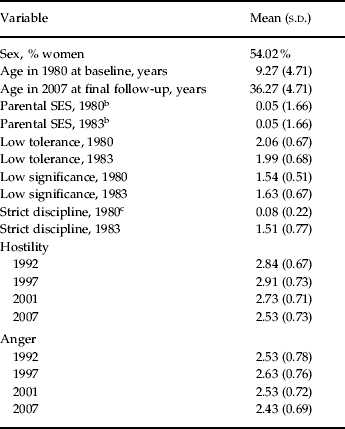
The original sample of the Young Finns (Åkerblom et al. Reference Åkerblom, Uhari, Pesonen, Dahl, Kaprio, Nuutinen, Pietikäinen, Salo, Aromaa and Kannas1991; Raitakari et al. Reference Raitakari, Juonala, Rönnemaa, Keltikangas-Järvinen, Räsänen, Pietikäinen, Hutri-Kähönen, Taittonen, Jokinen, Marniemi, Jula, Telama, Kähonen, Lehtimäki, Åkerblom and Viikari2008) included 3596 randomly selected Finnish children and adolescents from six birth cohorts (aged 3, 6, 9, 12, 15 and 18 years at baseline). Written informed consent was obtained from participants aged ⩾9 years and from their parents if they were younger. After the baseline in 1980, the sample has been resurveyed in seven subsequent follow-up examinations that took place in 1983, 1986, 1989, 1992, 1997, 2001 and 2007. All participants who provided any data at baseline (1980), and at any of the follow-up examinations between 1992 and 2007 were included. Due to attrition and missing data, between 2734 and 3458 participants had any data available from baseline and the first follow-up. From follow-ups in 1992, 1997, 2001 and 2007, adulthood hostility measures were available for 2316, 2096, 2081 and 2041 participants, and adulthood anger measures were available for 2310, 2093, 2090 and 2042 participants, respectively. These participants had at least one hostile maternal child-rearing scale or parental SES measure available from baseline. Altogether, the total number of participants varied between 2041 and 2316, and the total number of person-observations used in multilevel models varied between 6980 and 8315. Descriptive statistics for the study group are shown in Table 1.
Descriptive statistics of the study groupa

s.d., Standard deviation; SES, socio-economic status.
a n = 2041–2316 participants, 6980–8315 participant person-observations.
b Standardized variables.
c Strict discipline scale was dichotomous (yes = 1, no = 0). All the other hostile child-rearing style components were rated with a five-point scale.
Measures
Hostile maternal child-rearing style
The maternal child-rearing style scale was developed based on the Operation Family study (Makkonen et al. Reference Makkonen, Ruoppila, Rönkä, Timonen, Valvanne and Österlund1981). The scale contains three different child-rearing components: low emotional significance, low tolerance and strict disciplinary style. All these dimensions were self-rated with a five-point scale by the mothers twice in 1980 and 1983, except for low tolerance in 1980 when the scale was yes/no. Low emotional significance contains four items (e.g. ‘The child is significant to me’ ranging from 1 = very significant to 5 = not significant); low tolerance contains three items (e.g. ‘In difficult situations, the child is a burden’, ranging from 1 = totally disagree to 5 = totally agree), and strict disciplinary style contains two items (e.g. ‘Disciplinary actions are regularly needed’, 1980: 1 = yes, 0 = no, 1983: from 1 = totally disagree to 5 = totally agree). These three dimensions are closely related to the constellation that has been called ‘hostile child-rearing practice’ and that includes emotional rejection of the child, and perception of the child as exhausting and in regular need of strict disciplinary actions (Schaefer, Reference Schaefer1959).
Parental SES
Parental SES was assessed in 1980 and 1983. Following a method used by Pulkki et al. (Reference Pulkki, Keltikangas-Järvinen, Ravaja and Viikari2003), SES was measured by two indices: (a) the mother's and father's years of education; and (b) the annual income of the household (measured on an eight-point scale). The mean of parents’ years of education was calculated and then standardized. Income was standardized as well, and then added to the standardized years of education. Composite SES variables were formed for 1980 and 1983 and the correlation between them was 0.89.
Anger and hostility
Anger and hostility were measured at four time points (1992, 1997, 2001 and 2007) using self-report instruments. Anger was measured using the Irritability scale of the Buss–Durkee Hostility Inventory (Buss & Durkee, Reference Buss and Durkee1957). The scale consists of seven items (e.g. ‘I lose my temper easily but get over it quickly’), which were answered on a five-point Likert scale. The Cronbach α’s were 0.79, 0.76, 0.77 and 0.78 for the four measurement times, respectively.
Hostility was measured using the cynicism scale derived from the Minnesota Multiphasic Personality Inventory (Comrey, Reference Comrey1957, Reference Comrey1958). The scale consists of seven items (e.g. ‘Most people are honest chiefly through fear of being caught’), which were answered on a five-point Likert scale. The Cronbach α’s were 0.75, 0.78, 0.80 and 0.83 for the four measurement times, respectively.
Analytic procedure
We applied longitudinal multilevel modelling (Singer & Willett, Reference Singer and Willett2003; Rabe-Hesketh & Skrondal, Reference Rabe-Hesketh and Skrondal2008) to test whether parental SES and hostile childhood rearing-style components predicted hostility and anger trajectories over 15 years. Repeated measurements of adulthood hostility and anger were arranged into a multilevel format in which measurements were nested within participants, so that the same participants contributed more than one observation in the dataset. A random-coefficient model with a random slope, i.e. a growth curve model, was used in order to analyse possible changes in hostility and anger trajectories.
First, we built unconditional growth models of hostility and anger, i.e. models where only mean-centred age was used as a predictor, to examine the basic characteristics of the growth models. Second, we separately analysed models for each of the four family factors (three hostile child-rearing-style components and SES) to examine their possible effect on the baseline level. Third, the same model (separately for all family factors) was analysed adding an interaction with age term in order to test the possible effect on the slope. Fourth, the significant interaction effects were illustrated so that the model, which predicted hostility and anger trajectories, was plotted by two selected scores of family factor measures (1 s.d. below the mean and 1 s.d. above the mean). Fifth, new models were introduced where all the hostile child-rearing-style components and significant hostile child-rearing-style component × age interactions were grouped together. Then SES and significant SES × age interaction were added to the second model to analyse whether child-rearing-style components are independently associated with anger and hostility.
Selective attrition may bias results of longitudinal analysis. To adjust the models for attrition patterns, we used the pattern mixture approach developed for multilevel models (Hedeker & Gibbons, Reference Hedeker and Gibbons1997). We created two dummy variables for missingness, one indicating missing data in childhood (0 = no missing data in 1983; 1 = missing data in 1983) and another one indicating missing data in adulthood (0 = no missing data in 1992, 1997, 2001 or 2007; 1 = missing data at any point from 1992 to 2007) and performed additional analyses where these variables were separately included as covariates.
Analyses were carried out separately for baseline (1980) and the first follow-up (1983). Age was centred at 30 years for easier interpretations of the results. Because different birth cohorts were followed over the same time period of time, we decided to adjust the analyses also for possible birth cohort effects. In addition, all models were adjusted for age and sex. Cohort and sex were coded as dummy variables. All statistical analyses were performed using Stata v. 12.1 (StataCorp LP, USA).
Results
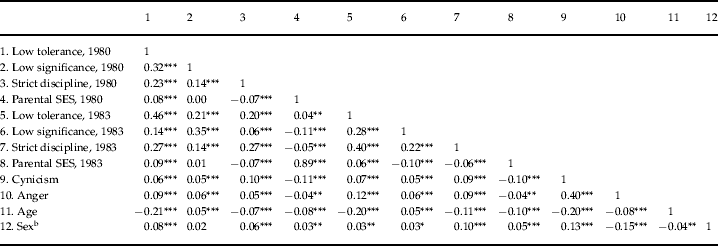
Table 2 presents the bivariate correlations between study variables. The unconditional growth model of hostility showed that individuals varied in their initial level of hostility, i.e. intercept (mean = 2.75, variance = 0.30), and in their rate of change, i.e. slope, of hostility (mean = –0.02, variance = 0.0004). The same results were found in the intercept (mean = 2.53, variance = 0.29) and the slope (mean = –0.01, variance = 0.0005) of the unconditional growth model of anger (all p values <0.001). In these two models, also the variance of the intercept and slope were significant, indicating that there were differences between participants in their initial levels of hostility and anger, and that there was also variability between intra-individual hostility and anger trajectories.
Pearson correlations between study variablesa
SES, Socio-economic status.
a n = 5796 person-observations.
b 0 = female, 1 = male.
* p < 0.05, ** p < 0.01, *** p < 0.001.
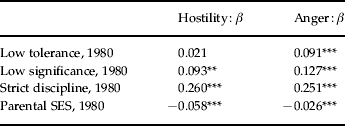
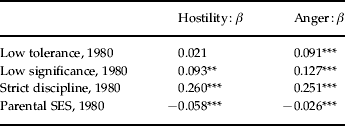
Table 3 presents the results from the separate main effect models for the 1980 family factors. Except the low tolerance in 1980 not predicting hostility, hostile childhood rearing styles, and parental SES predicted hostility and anger trajectories: low significance, low tolerance, strict disciplinary style and low parental SES predicted trajectories characterized by higher hostility and anger. These results were replicated for 1983 for hostile childhood rearing styles and parental SES. Unlike in 1980, in 1983 low tolerance was associated with hostility (Supplementary Table S1).
Hostile child-rearing style components and parental SES predicting mean levels of hostility and anger in adulthooda
SES, Socio-economic status.
a Values are regression coefficients from eight separate multilevel regression analyses: each family factor was analysed separately for both hostility and anger. All analyses were controlled for sex, age and cohort. Parental SES and hostile child-rearing style components were reported by the parents when the participants were aged 3–18 years; hostility and anger were self-reported by the participants at age 15–45 years. Family factors were measured in 1980.
*p < 0.05, ** p < 0.01, *** p < 0.001.
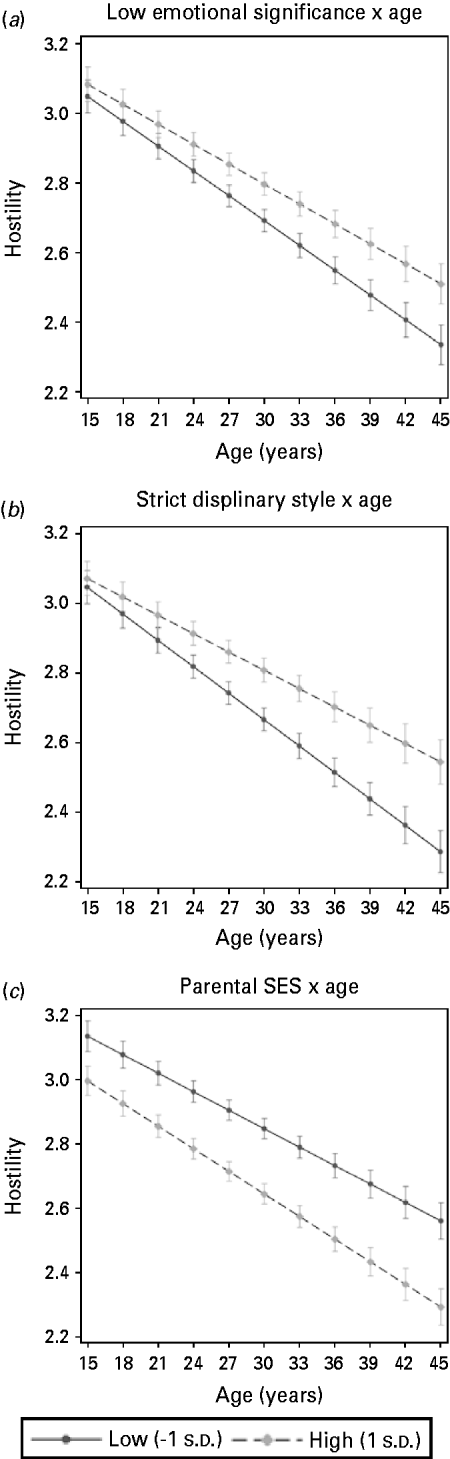
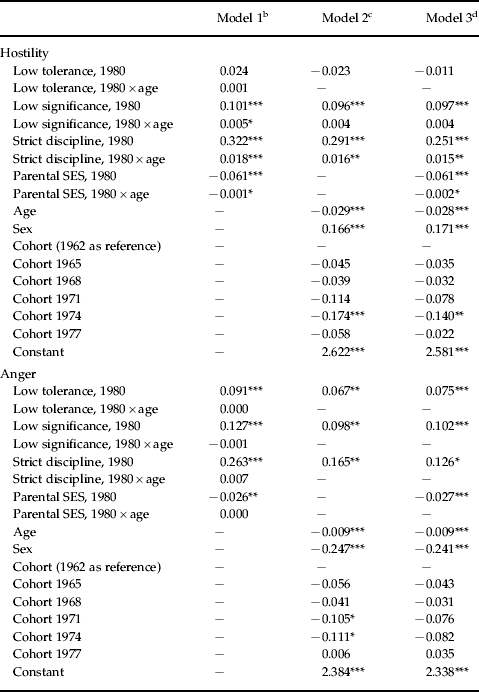
Table 4 (model 1) presents the results from the separate models with interaction effects for year 1980 family factors. There were also interaction effects between age and family factors assessed in 1980 when predicting adulthood hostility: low significance, strict disciplinary style and low parental SES became stronger predictors of hostility with age (Table 4, model 1). One of these interaction effects, parental SES × age was replicated for 1983 measurements (Supplementary Table S2, model 1). No age-dependent associations were observed for anger (Table 4, model 1 and Supplementary Table S2, model 1). Fig. 1 illustrates the strengthening associations between family factors and hostility with age.
Predicted hostility trajectories by (a) low emotional significance, (b) strict disciplinary style and (c) parental socio-economic status, which are plotted respectively. Values are means, with 95% confidence intervals represented by vertical bars (low = 1 s.d. below the mean; high = 1 s.d. above the mean). s.d., Standard deviation.
Hostile child-rearing style components and parental SES and their interactions with age in predicting age-dependent trajectories of hostility and angera
Values are regression coefficients, β.
SES, Socio-economic status.
a Parental SES and hostile child-rearing style components were reported by the parents when the participants were aged 3–18 years; hostility and anger were self-reported by the participants at age 15–45 years. Family factors were measured in 1980.
b Model 1: univariate associations between separate family factor components and their age interaction in predicting adult hostility and anger. All family factors were analysed separately and were controlled for sex, age and cohort. Model 1 contains four separate analyses for hostility and four separate analyses for anger.
c Model 2: mutually adjusted model where all hostile child-rearing-style components were inserted together.
d Model 3: SES and SES × age interaction were added to the mutually adjusted model.
* p < 0.05, ** p < 0.01, *** p < 0.001.
We constructed models by entering hostile child-rearing style components in the first step and parental SES in 1980 in the second step, with hostility and anger as outcome variables in separate models. This was done in order to analyse the potential effect of SES on family factors. Low significance, strict disciplinary style and strict disciplinary style × age interaction predicted development of hostility (Table 4, model 2). Adjusting for parental SES and parental SES × age interaction had a small effect on disciplinary style (a 14% decrease on the regression coefficient), but not on the other regression coefficients (model 3). Parental SES and parental SES × age interaction were both significant. From the 1983 measurements, strict disciplinary style predicted the development of hostility (Supplementary Table S2, model 2). However, from the 1980 measurements the association of low significance predicting hostility was not replicated in 1983 (Supplementary Table S2, model 2). As previously, adjusting for parental SES and parental SES × age interaction also had a small effect on strict disciplinary style (a 14% decrease on the regression coefficient), but not on the other regression coefficients (model 3). Both parental SES and parental SES × age interaction were significant. For anger, low significance, low tolerance and strict disciplinary style predicted the development of anger (Table 4, model 2). Adjusting for parental SES had a small effect on strict disciplinary style (a 12% decrease on the regression coefficient), but it did not substantially affect the other regression coefficients (model 3). From the 1983 measurements, low tolerance and strict disciplinary style predicted the development of anger (Supplementary Table S2, model 2), and adjustment for parental SES had very little if any effect on these two associations (Supplementary Table S2, model 3).
Finally, we examined the effect of selective attrition on hostility and anger trajectories. While some of the dummy covariates of attrition were significant, neither of these covariates substantially changed the associations of interest (data not shown).
Discussion
We examined whether markers of a risky family environment – hostile child-rearing style and low parental SES in childhood and adolescence – predicted 15-year trajectories of offspring's later hostility and anger. We found that all hostile childhood rearing-style components, i.e. low emotional significance, low tolerance towards child's behaviour and strict disciplinary style, predicted the trajectories of both hostility and anger. Parental SES also predicted the trajectories of both hostility and anger. With the exception of low tolerance, these predictive associations were identified from two separate measurement points 3 years apart, which indicates robustness of these findings.
The current results support our earlier findings from the same Young Finns data which showed that a hostile child-rearing style in childhood predicted higher hostility 9 years later in adolescence (Räikkönen et al. Reference Räikkönen, Katainen, Keskivaara and Keltikangas-Järvinen2000), and low parental SES predicted hostility 15 years later in adulthood (Keltikangas-Järvinen & Heinonen, Reference Keltikangas-Järvinen and Heinonen2003). Our results are also in line with other previous studies associating childhood family factors and low parental SES with later hostility (Houston & Vavak, Reference Houston and Vavak1991; Matthews et al. Reference Matthews, Woodall, Kenyon and Jacob1996; Gallo & Matthews, Reference Gallo and Matthews2003). However, all the above-mentioned previous studies have adopted one single hostility-measurement point in adolescence or early adulthood, whereas our study adopted several measurement points several years apart, enabling examination of longitudinal trajectories over time. Our findings suggest that the connection between childhood family factors and adulthood hostility and anger persists over 27 years, if not more. This gives support to family factors having a far-reaching influence on hostility and anger. Hostility and anger have been both shown to have a genetic component (e.g. Smith et al. Reference Smith, McGonigle, Turner, Ford and Slattery1991; Cates et al. Reference Cates, Houston, Vavak, Crawford and Uttley1993), which might be reflected in genetic transmission manifested as parental child-rearing practices and as offspring hostility, and our findings may partly be accounted for by this common effect.
Although we measured theoretically well-based aspects of childhood risk factors, our measurement battery did not cover a number of childhood exposures, such as physical, sexual, or emotional abuse, family violence, or drug use. Most of the families in the current study were not ‘risky families’ in the sense of being exposed to highly adverse childhood environments. Instead, we had a population-based sample of Finnish families with rather subtle differences in child-rearing practices. Our current findings are of value because they suggest that even variations in normal parenting (that is, some parents being more insensitive and more controlling than others) may be associated with offspring levels of hostility and anger in adulthood.
The current study results support earlier findings where expression of both anger and negative emotions, and hostility have been shown to decrease on with age (Siegler et al. Reference Siegler, Costa, Brummett, Helms, Barefoot, Williams, Dahlstrom, Kaplan, Vitaliano and Nichaman2003; Galambos et al. Reference Galambos, Barker and Krahn2006; Galambos & Krahn, Reference Galambos and Krahn2008; McAdams & Olson, Reference McAdams and Olson2010). Similarly, mean levels of agreeableness (indicative of low hostility) tend to increase as people get older (Roberts et al. Reference Roberts, Walton and Viechtbauer2006). We found an age-related accumulation of family factors, i.e. family factors × age interaction, in the development of hostility but not anger. In the current study, individuals whose parents had a hostile child-rearing style (the parents experienced that their child had low significance for them and regularly needed strict disciplinary actions) had lower rates of change in their levels of hostility, i.e. their hostility values stayed higher longer than individuals whose parents did not have a hostile child-rearing style. In addition, among individuals with high parental SES, the levels of hostility declined faster when compared with individuals with low parental SES. Previous studies have not investigated the accumulation of childhood environmental factors according to age, which might be especially important in the case of milder risky forms of common child-rearing practices.
Including all the family factors together in the same regression model made almost no difference compared with the results estimated for each family factor in a separate analysis. This indicates that several family factors may play an independent or equal role. However, it seems that two family factors, i.e. harsh parental disciplinary style and low parental SES, are slightly stronger predictors than the other factors adopted, as far as hostility is concerned. Despite many conceptual similarities, our findings suggest that origins of hostility and anger are slightly different. In addition, it has been shown that hostility and anger have a different genetic background (Merjonen et al. Reference Merjonen, Keltikangas-Järvinen, Jokela, Seppälä, Lyytikäinen, Pulkki-Råback, Kivimäki, Elovainio, Kettunen and Ripatti2011a). Altogether, these findings highlight the importance of treating hostility and anger as separate concepts.
Our results showing the long-term impact of family factors on hostility and anger support the hypothesis of Repetti et al. (Reference Repetti, Taylor and Seeman2002) that posits that early family factors have a strong and far-reaching influence on later health and psychosocial development. Accordingly, previous studies have shown that exposure to poor household functioning and to poor parenting during childhood are connected with poor adulthood somatic health (Felitti et al. Reference Felitti, Anda, Nordenberg, Williamson, Spitz, Edwards, Koss and Marks1998) and to mental health problems, such as depression (Duggan et al. Reference Duggan, Sham, Minne, Lee and Murray1998; Kendler et al. Reference Kendler, Myers and Prescott2000; Gao et al. Reference Gao, Li, Cai, Chen, Shen, Ni, Wei, Qiu, Zhu, Liu, Lu, Chen, Niu, Tang, Yang, Wang, Cui, Xia, Liu, Zhang, Zhao, Guo, Pan, Chen, Luo, Sun, Xiao, Chen, Zhao, He, Lv, Guo, Liu, Li, Shi, Flint, Kendler and Tao2012). It has also been quite consistently found that low SES is associated with many physical and mental health outcomes (Adler et al. Reference Adler, Boyce, Chesney, Folkman and Syme1993; Adler & Ostrove, Reference Adler and Ostrove1999; Stansfeld et al. Reference Stansfeld, Clark, Rodgers, Caldwell and Power2008) and that SES also has a great influence on many aspects of child development (Bradley & Corwyn, Reference Bradley and Corwyn2002; Chen et al. Reference Chen, Matthews and Boyce2002). Our study is one of the few to examine childhood exposures as factors in paving the way for later development of hostility. Regarding the widespread psychosocial and health effects of hostility (e.g. Chida & Steptoe, Reference Chida and Steptoe2009), family factors might influence somatic and psychological health through hostility.
Limitations
Because of the cohort design some of the participants were already 18 years old when their parents answered the hostile child-rearing style questionnaire, thereby reflecting parental attitudes toward their teenage children rather than small children. However, the family environment usually remains rather stable (Repetti et al. Reference Repetti, Robles and Reynolds2011), and the measures taken in late adolescence can be assumed to give relatively accurate information about the earlier childhood family environment. Second, low tolerance was measured with a yes/no scale at the baseline and with a five-point scale at the 3-year follow-up, i.e. a scale comparison problem exists. This might increase the error when results from these two scales are compared over the two measurement points.
Conclusions
In conclusion, our results from the population-based study with a 27-year follow-up indicate that parental child-rearing practices and parental SES have a strong effect on the development of hostility and anger that extends up to middle age. This effect is relevant even regarding normal variation in child-rearing practices, not being limited to adverse childhood environments (e.g. abusive families). For hostility, the effect of child-rearing practices seems to accumulate over time, indicating that individuals’ levels of hostility diverge based on their family factors. Due to known adverse effects of hostility, the importance of early family factors on the development of general well-being over the life-course can be highlighted. Preventive efforts should be targeted at families where early signs of family malfunction are present. Supporting such families may reduce the likelihood of the development of high levels of hostility and anger in adulthood.
Supplementary material
For supplementary material accompanying this paper visit http://dx.doi.org/10.1017/S0033291713000056.
Acknowledgements
This study was financially supported by the Academy of Finland grants no. 12362 (to L.P.-R.), no. 258578 (to M.H.) and no. 258711(to L.K.-J.), the Research Foundation of the University of Helsinki (to C.H.), the Emil Aaltonen Foundation (to M.H.), Ella and Georg Ehrnrooth Foundation (to M.H.), Tampere and Turku University Hospital Medical Funds, Signe and Ane Gyllenberg Foundation (to L.K.-J.), Alli Paasikivi Foundation (to L.K.-J.) and Research Funds of the University of Helsinki (to M.H.).
Declaration of Interest
None.