Introduction
The present-day seed market is very competitive; farmers require seed lots with a germination capacity close to 100% and high vigour. At the same time, one of the problems for seed producers is the lack of reliable, simple molecular markers that can predict after-sowing seed performance and which are faster than assessing germination and vigour using laboratory tests. Such markers could also be used for monitoring seed priming, a pre-sowing treatment commonly used for the enhancement and improvement of germination. Several germination/priming molecular markers, mainly proteins, such as β-tubulin (de Castro et al., Reference de Castro, Zheng, Bergervoet, De Vos and Bino1995), the β-subunit of 11-S globulin and LEA (late embryogenesis abundant) proteins (Job et al., Reference Job, Kersulec, Ravasio, Chareyre, Pepin and Job1997; Capron et al., Reference Capron, Corbineau, Dacher, Job, Côme and Job2000), the AUBE1 (a protein binding to the P1 promoter of the RPL21 gene; Achard et al., Reference Achard, Job and Mache2002) and others (Gallardo et al., Reference Gallardo, Job, Groot, Puype, Demol, Vandekerckhove and Job2001) have been proposed as being of potential value. DNA replication also is an indicator of the transition of the seed to Phase II of germination (Bewley and Black, Reference Bewley and Black1994), and therefore can be considered as an appropriate marker.
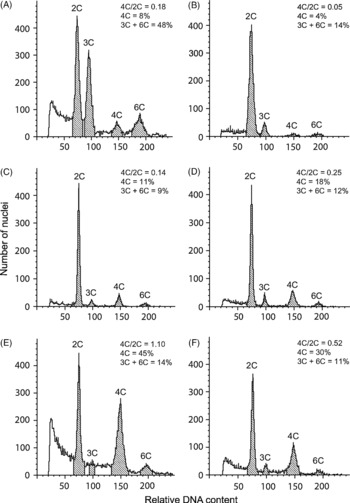
Flow cytometry is a fast and accurate method for estimating nuclear DNA content. It involves preparation of aqueous suspensions of intact nuclei, the DNA of which is stained using a DNA-specific fluorochrome. The result of the analysis is usually displayed in the form of a histogram of the relative fluorescence intensity, representing relative DNA content (see Fig. 1) (for a review see Doležel and Bartoš, Reference Doležel and Bartoš2005). The method can be used to study the cell cycle in seeds by isolating nuclei from the tissues of the embryo and/or endosperm (Bino et al., Reference Bino, Lanteri, Verhoeven and Kraak1993; Sliwinska, Reference Sliwinska, Robinson, Darzynkiewicz, Dean, Orfao, Rabinovitch, Stewart, Tanke and Wheeless2006). The information obtained can be used for determining the physiological state of a seed during its development, maturation, processing and germination, and therefore can be useful for monitoring the production of high-quality commercial seed lots. Different mitotic/endoreduplication activities occur in seeds at different developmental stages. Proliferating cells of the embryo pass through four stages in the mitotic cycle: G1, the period of cell growth during which a nucleus possesses a 2C DNA content (where C = DNA content of a holoploid genome with chromosome number n, irrespective of the degree of plant ploidy); S, DNA replication phase which results in a doubling of DNA content (2C → 4C); G2, a second growth period during which a nucleus retains a 4C DNA content; and M, mitosis, when genetic material is divided into two daughter nuclei (4C → 2C; Bewley and Black, Reference Bewley and Black1994). Non-proliferative cells usually enter the quiescent G0 state from G1 phase of the cell cycle. The endosperm in angiosperms is formed by the fusion of two nuclei from the female gametophyte and one nucleus from the male gametophyte; thus its nuclei in the G1 phase of the cell cycle possess a 3C DNA content and in G2 it is 6C. In addition, usually some of the cells of the endosperm undergo endoreduplication, during which the nuclei go through repeated rounds of DNA replication that are not followed by mitosis (endocycles), resulting in endopolyploid cells (4C → 8C → 16C → 32C, etc.) (Nagl, Reference Nagl1976; Dilkes et al., Reference Dilkes, Dante, Coelho and Larkins2002). Because of the presence of somatic cells with different DNA contents, the endosperm is called a polysomatic tissue. In some species, e.g. bean (Phasoleus vulgaris) and cucumber (Cucumis sativus), the embryo also exhibits polysomaty (Bino et al., Reference Bino, Lanteri, Verhoeven and Kraak1993; Jing et al., Reference Jing, Bergervoet, Jalink, Klooster, Du, Bino, Hilhorst and Groot2000; Sadowski et al., Reference Sadowski, Bartunek and Sliwinska2008).
Flow cytometric DNA histograms of nuclear preparations from sugarbeet seeds. (A) and (B) true seed removed from the pericarp 3 weeks before full maturation, fresh and dried, respectively; (C) and (D) dry mature, whole true seed and radicle, respectively; (E) radicle of the germinated seed, at the transition from Phase II to Phase III (radicle protrusion); (F) radicle of the seed primed for 2 h in water and 2 h in 0.2% (w/v) NaOH. 2C and 4C, embryo nuclei; 3C and 6C, endosperm nuclei.

Seed maturation and cell cycle activity
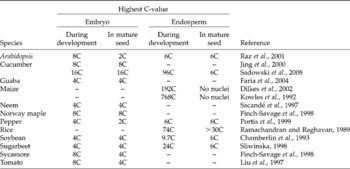
Seed development involves embryo and permanent or temporary extra-embryonic storage tissue formation, and seed maturation (Bewley and Black, Reference Bewley and Black1994). During early embryo and endosperm development high cell cycle activity occurs, while later during maturation it usually becomes gradually arrested (especially in orthodox seeds). Cell cycle activity in the embryo can be identified by the proportion of nuclei with a 4C DNA content. Early in development this proportion can reach 45% in sugarbeet (Beta vulgaris), 30% in pepper (Capsicum annuum) and about 15–20% in soybean (Glycine max) and neem (Azadirachta indica) (Chamberlin et al., Reference Chamberlin, Horner and Palmer1993; Sacandé et al., Reference Sacandé, Groot, Hoekstra, de Castro and Bino1997; Sliwinska, Reference Sliwinska and Małuszyńska1998; Portis et al., Reference Portis, Marzachi, Quagliotti and Lanteri1999). Differential cessation of DNA replication and mitosis during maturation usually leads to an increased proportion of nuclei containing 2C DNA (G0/G1); in some species only 2C cells are present in the mature dry seeds while in the others a small number of 4C, and sometimes also 8C, cells occur (Deltour, Reference Deltour1985; Bino et al., Reference Bino, Lanteri, Verhoeven and Kraak1993) (Table 1). In sugarbeet seeds, the 4C/2C ratio is 0.8 at the beginning of embryo development, decreases up to 24–28 days after pollination (DAP) as the embryo becomes fully morphologically developed, and then is stabilized at about 0.1 in the mature state (containing about 10% 4C nuclei; Sliwinska, Reference Sliwinska, Black, Bradford and Vázquez-Ramos2000). In pepper, nuclear DNA replication in embryonic tissues stops 1–2 weeks after the embryo reaches its final curled morphology, while arrest of nuclear DNA synthesis coincides with the onset of desiccation tolerance; at this stage 4C nuclei are no longer present (Portis et al., Reference Portis, Marzachi, Quagliotti and Lanteri1999). Similarly, in neem embryos, after initial DNA replication, the cell cycle comes to a standstill at maturation, after arresting only 3% of the nuclei at the G2 phase (4C; Sacandé et al., Reference Sacandé, Groot, Hoekstra, de Castro and Bino1997). During Arabidopsis thaliana embryo growth, cell cycle activity increases up to the torpedo/walking-stick stage and becomes gradually arrested at maturation (Raz et al., Reference Raz, Bergervoet and Koornneef2001). Also, in tomato (Lycopersicon esculentum) the cessation of nuclear DNA replication marks the completion of embryo histodifferentiation (de Castro and Hilhorst, Reference de Castro and Hilhorst2006).
The highest C-values in the nuclei of developing and mature seed of selected species

In contrast, recalcitrant seeds of sycamore (Acer pseudoplatanus) and silver maple (Acer saccharinum) contain a high proportion of 4C nuclei, over 30% during development and after maturation is completed (Finch-Savage et al., Reference Finch-Savage, Bergervoet, Bino, Clay and Groot1998; Kazeko and Troyan, Reference Kazeko and Troyan2000). In seeds of another recalcitrant tree, that of the tropical legume guaba (Inga vera ssp. afinis), the proportion of 4C nuclei remains constant (about 20%) during development and maturation (Faria et al., Reference Faria, van Lammern and Hilhorst2004). These and other observations lend support to the hypothesis of Deltour (Reference Deltour1985) that a decline in water content in orthodox seeds during maturation drying causes the inhibition of DNA replication, resulting in the accumulation of nuclei at the pre-synthetic G1 and G0 phases.
There are only a few reports on DNA replication during seed development in species having polysomatic seeds in the mature state, but DNA replication appears to show a different profile and the proportion of the 4C nuclei does not always reflect the progress of maturation. In polysomatic seeds only some of the 4C nuclei are in the G2 stage of the mitotic cell cycle, and other nuclei have just entered first endocycle (having, however, the same DNA content they cannot be distinguished by flow cytometry). Jing et al. (Reference Jing, Bergervoet, Jalink, Klooster, Du, Bino, Hilhorst and Groot2000) found 2C, 4C and 8C DNA in cucumber radicle tip nuclei, but in cotyledons and the nodal region of the embryo only 2C and 4C nuclei were present; no alterations in DNA profiles were detected from 28 to 56 DAP. However, according to recent studies of Sadowski et al. (Reference Sadowski, Bartunek and Sliwinska2008), until 35 DAP the cucumber embryo possesses over 1% 16C nuclei, before declining to none at 56 DAP. By this time the germination capacity of the mature dry seeds has increased from about 40% to over 90%. Thus, it seems that, in this species, the replication of DNA (or lack thereof) during the second endocycle (8C → 16C), and not during the mitotic cycle, is indicative of the physiological state of the seeds. The significance of nuclei in the dry seed being at different stages of the cell cycle is still not clear; studies on seeds containing endoreduplicated nuclei are desirable to find an explanation for this phenomenon (Larkins et al., Reference Larkins, Dilkes, Dante and Coelho2001).
Endosperm development is characterized by three developmental stages: syncytial karyokinesis, and mitosis and endoreduplication (Kowles et al., Reference Kowles, Yerk, Srinc, Phillips and Setlow1992; Dilkes et al., Reference Dilkes, Dante, Coelho and Larkins2002). After initial high mitotic activity, the number of endosperm nuclei undergoing endoreduplication greatly increases, such that the mitotic index falls to nearly zero. Subsequently, in some species, especially in grains of cereals, the starchy endosperm cells undergo programmed cell death. Due to endoreduplication, endosperm nuclei in rice (Oryza sativa) can reach 74C (determined using Feulgen microspectrophotometry and therefore probably underestimated; it is likely to be 96C) and in maize (Zea mays) even 768C, although in other species the highest DNA content is much lower, and at maturity usually only 3C and 6C nuclei are present (Ramachandran and Raghavan, Reference Ramachandran and Raghavan1989; Kowles et al., Reference Kowles, Yerk, Srinc, Phillips and Setlow1992) (Table 1). In gymnosperms, the endosperm is a haploid tissue (generated by proliferation of one meiotic daughter cell), but in addition to 1C nuclei it can also contain endopolyploid ones, e.g. in the endosperms of seeds of some Cupressaceae 1C–6C nuclei are present (Pichot and El Maataoui, Reference Pichot and El Maataoui1997).
In some seeds, the endosperm is completely absorbed at maturity [e.g. pea (Pisum sativum), bean, sugarbeet and other non-endospermic seeds], while in others, it is present after maturation is completed [e.g. maize, wheat (Triticum aestivum), rice, carrot (Daucus carota); endospermic seeds]. Thus, the ratio of endosperm to embryo nuclei or extent of endoreduplication in the endosperm provides information on seed maturity (Sliwinska, Reference Sliwinska, Robinson, Darzynkiewicz, Dean, Orfao, Rabinovitch, Stewart, Tanke and Wheeless2006). In sugarbeet, the ratio between the embryo and endosperm nuclei is about 3:2 in 21-day-old developing seeds, and about 9:1 in 36-day-old (mature) seeds (Sliwinska, Reference Sliwinska and Małuszyńska1998). In Arabidopsis, at the end of the growth phase of the embryo its volume increases about tenfold compared to during early development, while the endosperm is degraded and is reduced to a one-cell-thick layer (Raz et al., Reference Raz, Bergervoet and Koornneef2001). Similarly, in cucumber seeds, the proportion of endosperm nuclei is highest at 21 DAP (45%), decreases to 13% at harvest and to 8% after seed processing (Sadowski et al., Reference Sadowski, Bartunek and Sliwinska2008). In this species, the decrease in endoreduplication in endosperm cells from three endocycles to one (the presence of nuclei with a DNA content not higher than 12C) coincides with a decline in water content from an initial value of almost 90% to about 40%, and with the establishment of a germination capacity of over 90%. However, the decrease in endoreduplication intensity does not mark seed maturity in all cases. In sugarbeet seeds, already by about 3 weeks after pollination (2 weeks before maturity) the endopolyploid (12C and 24C) nuclei are no longer present (Sliwinska, Reference Sliwinska and Małuszyńska1998), and in the endosperms of pepper and Arabidopsis no endoreduplication at all occurs during seed development (Portis et al., Reference Portis, Marzachi, Quagliotti and Lanteri1999; Raz et al., Reference Raz, Bergervoet and Koornneef2001).
Based on the above-mentioned reports it can be concluded that in species producing orthodox seeds the ratio between the embryo/endosperm cell number, together with the proportions of the nuclei containing different DNA contents in the embryo, provide information on seed maturity. For example, if in a dry sugarbeet seed the proportion of 4C nuclei is over 10% and that of the endosperm nuclei is below 10%, it can be assumed that the seed was harvested after completing maturation (Fig. 1C). However, in some species there are no, or only small, changes in cell cycle activity in a fresh seed during maturation drying, which is often an essential stage for the establishment of high germination and vigour. But since seeds of different developmental stages invariably exist in one and the same plant/production field, flow cytometry can help seed producers to fix the most economic harvest date, when the proportion of fully developed seeds is the highest.
Not often, however, do seed growers have access to flow cytometers; they mostly rely on their experience to visually estimate seed maturity. Hence, the seed industry receives partly processed (dried and cleaned) seed lots of different quality from different growers. Can the quality of these lots be determined by flow cytometry? Studies on sugarbeet seeds show that it can be. Sliwinska (Reference Sliwinska2003) analysed fresh and dried seeds collected at five different times during maturation drying, starting from the stage when the embryo was already fully developed. She found that after drying there are significant differences in the proportions of the 4C embryo nuclei, and both 3C and 6C endosperm nuclei, between seeds of different maturities. In seeds dried at an early stage of maturation, the proportion of the 2C embryo nuclei is higher than in those harvested after completing maturation drying (Fig. 1A–C). Probably because of lower tolerance of the nuclei with a higher DNA content to rapid water loss, in early-harvested seeds these nuclei were not able to withstand desiccation (and therefore were not detected during flow cytometric analysis), whereas slow drying on the mother plant (to a water content below 30%) prevented damage during after-harvest drying. Consequently, seeds with a higher 4C/2C ratio (fully mature) exhibited a higher vigour and germination capacity. The same relationship was observed by Sliwinska and Pedersen (Reference Sliwinska and Pedersen1999) and Sliwinska et al. (Reference Sliwinska, Jing, Job, Job, Bergervoet, Bino and Groot1999) when studying sugarbeet seed lots of the same cultivar but of different quality, or harvested at different maturation stages.
DNA replication during germination
Cell cycle arrest in a quiescent seed is reversed during germination (reviewed by Vázquez-Ramos and de la Paz Sánchez, Reference Vázquez-Ramos and de la Paz Sánchez2003). The completion of germination is characterized by cell elongation and, during subsequent seedling growth, cell division resumes (Raz et al., Reference Raz, Bergervoet and Koornneef2001). Replication of DNA is a relatively late event in germination; it does not usually occur until some hours after a seed imbibes water, when DNA damage sustained during developmental drying, or imbibition or both has been repaired and considerable protein synthesis has occurred (Chen and Osborne, Reference Chen and Osborne1970; Osborne, Reference Osborne and Khan1977). The time of commencement of DNA replication can be the indication of seed vigour, since low-quality seeds need longer for DNA repair, and even further degradation of DNA may take place upon imbibition (Osborne, Reference Osborne and Khan1977). Therefore, the 4C/2C ratio has been proposed as a marker for the advancement of seed germination and can be used to estimate seed quality. Since the radicle is considered to be the part of the embryo where the increase in 4C nuclei is predominantly located, the ratio is usually established using this tissue (Bino et al., Reference Bino, de Vries, Kraak and van Pijlen1992, Reference Bino, Bergervoet, De Vos, Kraak, Lanteri, Van Der Burg and Zheng1996) (Fig. 1D–F). However, in some species, e.g. Arabidopsis, the hypocotyl is the organ in which there is intensive DNA replication during germination, accompanying its elongation (Sliwinska, Bassel and Bewley, unpublished). Since the boundary between the radicle and the hypocotyl is hard to discern in the embryo, most probably in some studies the basal part of the hypocotyl has been included along with the radicle during its isolation by dissection, and consequently the increase in 4C nuclei was incorrectly attributed as originating from the radicle only.
An increase in the proportion of nuclei in the G2 phase of the cell cycle (possessing a 4C DNA content) has been detected in germinating seeds of many species, including several reports on changes in nuclear replication activity in tomato (Bino et al., Reference Bino, de Vries, Kraak and van Pijlen1992, Reference Bino, Bergervoet, De Vos, Kraak, Lanteri, Van Der Burg and Zheng1996; Liu et al., Reference Liu, Bergervoet, De Vos, Hilhorst, Kraak, Karssen and Bino1994, Reference Liu, Hilhorst, Groot and Bino1997; de Castro et al., Reference de Castro, Zheng, Bergervoet, De Vos and Bino1995, Reference de Castro, van Lammeren, Groot, Bino and Hilhorst2000). In the radicle of the dry seeds of this species only about 5% of the nuclei are arrested in the G2 phase of the cell cycle and their proportion increases during imbibition, reaching as high as 40% after 48 h, before radicle protrusion, which occurs first after 3 d. Also, in the pepper radicle tip, in which only 2C nuclei are present in the mature dry state, 4C nuclei appear 1–2 d after imbibition in water while radicle emergence starts 2 d later; at this time the proportion of the 4C nuclei is over 50% (Lanteri et al., Reference Lanteri, Bino and Kraak1992; Saracco et al., Reference Saracco, Bino, Bergervoet and Lanteri1995). Thus, DNA replication precedes pepper seedling growth. In maize seeds, the transition from early to late stages of germination is accompanied by a decrease in 2C nuclei and a sizeable increase in 4C nuclei – from 10% in dry seeds to over 30% at 72 h of imbibition, with two periods of substantial increase, between 18 and 30 h, and between 60 and 72 h (Georgieva et al., Reference Georgieva, López-Rodas, Hittmair, Feichtinger, Brosch and Loidl1994). The 4C/2C ratio remains relatively constant (about 0.1) until 12 h, slightly increasing up to 60 h and then increasing fourfold to exceed 1 at 72 h of germination. An increase in 4C nuclei also marks an advancement in germination in jack pine (Pinus banksiana), sugarbeet, coffee (Coffea arabica) and barley (Hordeum vulgare) (Wyman et al., Reference Wyman, Tremblay and Laliberté1996; Sliwinska et al., Reference Sliwinska, Jing, Job, Job, Bergervoet, Bino and Groot1999; da Silva et al., Reference da Silva, Toorop, van Lammeren and Hilhorst2008; Gendreau et al., Reference Gendreau, Romaniello, Barad, Leymarie, Benech-Arnold and Corbineau2008). In contrast, in the nuclei of the radicle and young seedlings (up to an axis length of 2 mm) of barrel clover (Medicago truncatula) there is no nuclear DNA replication but the proportion of 4C nuclei is as high as 45% (Faria et al., Reference Faria, Buitink, van Lammern and Hilhorst2005).
Upon imbibition of some species, beside or instead of an increase in 4C nuclei, the presence of endopolyploid nuclei with higher DNA content has been observed. In the well-known polysomatic species Arabidopsis, between 30 and 48 h of germination (shortly before and at radicle protrusion) a population of 8C nuclei arises (Barrôco et al., Reference Barrôco, van Poucke, Bergervoet, de Veylder, Groot, Inzé and Engler2005; Masubelele et al., Reference Masubelele, Dewitte, Maugham, Collins, Huntley, Nieuwland, Scofield and Murray2005). The percentage of the embryo nuclei in the whole dry seeds of this species exhibiting DNA replication is negligible (0.7%), while following imbibition it increases up to 5–7% (4C+8C nuclei). In germinating seeds of sugarbeet, in contrast, 8C nuclei were observed as early as about 2 d before radicle emergence (after 24 h of imbibition) and, additionally, by 48 h of imbibition a small population (1.5%) of 16C nuclei was present (Sliwinska, Reference Sliwinska1996, Reference Sliwinska, Black, Bradford and Vázquez-Ramos2000). At that time the 4C/2C ratio exceeded 0.5 (being 0.1 in the dry seeds); it reached 1, similar to that in maize and barley (Georgieva et al., Reference Georgieva, López-Rodas, Hittmair, Feichtinger, Brosch and Loidl1994; Gendreau et al., Reference Gendreau, Romaniello, Barad, Leymarie, Benech-Arnold and Corbineau2008), when the radicle became visible, marking the end of germination (Fig. 1E). Another pattern of DNA synthesis has been observed during germination of cabbage (Brassica oleracea) seeds; here the onset of DNA replication precedes visible germination, but 8C and 16C nuclei appear first during protrusion of the radicle tip through the seed coat, or very shortly thereafter (Górnik et al., Reference Górnik, de Castro, Liu, Bino and Groot1997).
Although seeds of different species show different patterns of nuclear DNA synthesis, by observing them it is usually possible to follow the advancement of germination by comparing time necessary to complete Phase II of this process, and thus identify the quality of a certain seed lot. Observations on cell cycle activity also allow determination of the time of transition from germination to seedling growth, which is when seed desiccation tolerance starts to be lost (Côme and Thévenot, Reference Côme, Thévenot and Khan1982; de Castro et al., Reference de Castro, van Lammeren, Groot, Bino and Hilhorst2000). This information is useful for establishing an appropriate seed harvest time, especially when there is rain during the maturation/ripening period that can induce germination of seeds still attached to the mother plant (pre-harvest sprouting) (Sliwinska, Reference Sliwinska, Black, Bradford and Vázquez-Ramos2000).
Flow cytometric analysis can also provide information on seed dormancy. In imbibed dormant tomato seeds, nuclear DNA replication is blocked (the proportion of the 4C nuclei does not increase above that observed in dry seeds) (Groot et al., Reference Groot, de Castro, Liu, Bino, Ellis, Black and Hong1997; de Castro et al., Reference de Castro, Bino, Jing, Kieft and Hilhorst2001). Breakage of dormancy induces an increase in the number of 4C nuclei in the radicle tip, which precedes its protrusion. Similarly, the removal of dormancy from cherry (Prunus avium) and Norway maple (Acer platanoides) seeds by stratification coincides with a change in nuclear DNA content (Finch-Savage et al., Reference Finch-Savage, Bergervoet, Bino, Clay and Groot1998; Pawłowski et al., Reference Pawłowski, Bergervoet, Bino, Hilhorst and Groot2004).
Monitoring seed priming by flow cytometry
Seed quality can be improved by processing and pre-sowing treatments such as priming. These treatments, which are based upon controlled hydration of the seeds (using water or non-osmotic and osmotic solutions), promote germinative metabolism; since this promotion is retained after subsequent dehydration, it leads to rapid and uniform seedling emergence in the field (Bradford, Reference Bradford1986). One of the problems that producers face when applying priming to seeds is that it has to be finished before completion of germination, otherwise there is a decrease in germinability caused by a loss of desiccation tolerance following radicle protrusion. Additionally, there is variation among seed lots, even of the same species, in their response to priming, and thus conditions of the treatment have to be optimized individually for each lot. Depending on the species, laboratory germination tests, which are routinely applied to assess seed quality control, take several to a dozen or more days and therefore slow down the final processing of the seeds, exposing the seed industry to economic losses. Molecular markers of germination that allow an immediate check of priming advancement, including DNA replication, could reduce these losses.
Changes in nuclear replication stages upon priming have been studied by flow cytometry, mostly on pepper, tomato and sugarbeet, species producing orthodox seeds. The effect of osmopriming, which consists of incubating seeds in an osmotic solution, has been followed in pepper and tomato (Bino et al., Reference Bino, de Vries, Kraak and van Pijlen1992; Lanteri et al., Reference Lanteri, Bino and Kraak1992, Reference Lanteri, Kraak, De Vos and Bino1993, Reference Lanteri, Saracco, Kraak and Bino1994, Reference Lanteri, Belletti, Nada and Quagliotti1995, Reference Lanteri, Nada, Belletti, Quagliotti and Bino1996, Reference Lanteri, Belletti, Marzach, Nada, Quagliotti, Bino, Ellis, Black and Hong1997, Reference Lanteri, Quagliotti, Belletti, Scordino, Triglia and Musumec1998, Reference Lanteri, Portis, Bergervoet and Groot2000; Saracco et al., Reference Saracco, Bino, Bergervoet and Lanteri1995; Liu et al., Reference Liu, Bino, van der Burg, Groot and Hilhorst1996; Van Pijlen et al., Reference Van Pijlen, Groot, Kraak, Bergervoet and Bino1996; Gurusinghe et al., Reference Gurusinghe, Cheng and Bradford1999; Özbingöl et al., Reference Özbingöl, Corbineau, Groot, Bino and Côme1999; de Castro et al., Reference de Castro, van Lammeren, Groot, Bino and Hilhorst2000). Osmopriming, even when applied for a prolonged period of time, prevents germination by restraining processes that are involved in radicle elongation and protrusion, but not DNA replication. The rate of DNA replication during priming depends on the seed moisture content as well as on temperature and oxygen availability. In most osmoprimed pepper seed lots there is advancement of embryonic root tip nuclei into S and G2 phases of the cell cycle, as measured by an increase in the percentage of nuclei with 4C DNA content, although DNA replication is retarded compared to that of seeds imbibed in water. The appearance of 4C nuclei in pepper radicle tips is usually first noticeable after about a week of incubation in osmotic solution, and after 2 weeks they exceed 40%. Moreover, the lag period necessary for DNA repair before its replication during subsequent introduction of primed seeds to germination conditions, was reduced to as little as 12 h (from 36 h for untreated seeds similarly imbibed in water), when the osmopriming was applied for 14 or 21 d. Significant correlations were found between the frequency of priming-induced nuclear replication and the improvement of pepper seed vigour, as measured by the reduction in mean germination time. Thus, the 4C/2C ratio can be used to predict seedling performance of this species.
A similar pattern of DNA replication occurs in primed tomato seeds: the proportion of 4C nuclei increases up to fivefold after incubation in − 1.1 MPa polyethylene glycol (PEG) (Bino et al., Reference Bino, de Vries, Kraak and van Pijlen1992; Lanteri et al., Reference Lanteri, Saracco, Kraak and Bino1994; Liu et al., Reference Liu, Bino, van der Burg, Groot and Hilhorst1996; Van Pijlen et al., Reference Van Pijlen, Groot, Kraak, Bergervoet and Bino1996; Özbingöl et al., Reference Özbingöl, Corbineau, Groot, Bino and Côme1999; de Castro et al., Reference de Castro, van Lammeren, Groot, Bino and Hilhorst2000). However, Gurusinghe et al. (Reference Gurusinghe, Cheng and Bradford1999) observed no increase in nuclear DNA content in one seed lot upon priming, although its germination rate response to PEG treatment was similar to that of other similarly treated seed lots that showed an augmented proportion of 4C nuclei. They concluded that the presence of, or increase in, 4C nuclei is not essential for germination advancement, and hypothesized that the greater initial percentage of 4C nuclei in the one seed lot that behaved differently reduced its capacity for additional cell cycle activity. Increases in germination rate without the commencement of DNA replication were observed earlier for some seed lots of pepper; this was explained as being due to a longer lag period being necessary for them to complete any physiological processes that normally precede DNA replication (Lanteri et al., Reference Lanteri, Kraak, De Vos and Bino1993; Saracco et al., Reference Saracco, Bino, Bergervoet and Lanteri1995). These lots, usually of lower vigour, would need longer priming or a higher osmotic potential of the solution used for the treatment to achieve a more advanced stage of germination. A similar phenomenon was observed in primed seeds of cauliflower (Brassica oleracea var. botrytis) differing in vigour (Powell et al., Reference Powell, Yule, Jing, Groot, Bino and Pritchard2000). Priming in PEG led to a clear increase in 4C nuclei in seeds of both high and low vigour; but when priming using aerated hydration was applied, no change in the proportion of the nuclei with 4C DNA occurred in low-vigour seeds. Nevertheless, priming increased the rate of germination of both high- and low-vigour lots of cauliflower (although not to the same extent), even if it was not always accompanied by the accumulation of nuclei in the G2 phase of the cell cycle.
For commercial purposes, sugarbeet seeds are exposed to priming in various non-osmotic solutions that wash out germination inhibitors from the pericarp, control damping off and/or initiate germination (Sliwinska and Babinska, Reference Sliwinska and Babinska1999). Not all of these solutions induce progress in the cell cycle. Redfearn and Osborne (Reference Redfearn and Osborne1997) observed that tetramethyl thiuram-steeping for 6 h did not significantly affect seed nucleic acid content in comparison with untreated seeds; however, following an advancement treatment, involving an additional 88 h of incubation of humid seeds at 25°C, the percentage of root-tip nuclei with 4C DNA and above rose from 2% to 24%. Similarly, a 6-h soaking of sugarbeet seeds in water and a fungicide solution did not influence the 4C/2C ratio, although in treated seeds the rate of DNA replication upon imbibition was faster (Sliwinska et al., Reference Sliwinska, Jing, Job, Job, Bergervoet, Bino and Groot1999). As shown in other reports, the activation of the cell cycle and the commencement of DNA synthesis in sugarbeet seeds by priming depends mainly on the conditions used, especially time of the treatment, but the initial quality of the seed lot and cultivar can also be of importance (Sliwinska and Babinska, Reference Sliwinska and Babinska1999; Sliwinska and Jendrzejczak, Reference Sliwinska and Jendrzejczak2002; Sliwinska and Sadowski, Reference Sliwinska and Sadowski2004). After applying a 2-h soaking in tap water to seed lots of three sugarbeet cultivars, followed by 2 h in 0.2% (w/v) NaOH solution, a significant increase in the 4C/2C ratio was detected in the radicles of seeds of two cultivars (Fig. 1D, F) but not in those of a third one, which initially possessed a higher proportion of 4C nuclei and was of a slightly higher quality (Sliwinska and Babinska, Reference Sliwinska and Babinska1999). Sliwinska and Jendrzejczak (Reference Sliwinska and Jendrzejczak2002) applied up to 14 cycles of 2-, 4- and 8-h hydration–dehydration to seed lots of different vigour and found that the 4C/2C ratio increased faster when longer periods of hydration were applied. The treatments were more beneficial to low-quality seeds, but the pattern of DNA replication was similar for both seed lots. However, an increase of germination of the low-vigour seeds almost to the level of the high-vigour seeds, immediately after the first hydration, suggests that the initial difference in quality between the lots was due to the presence of germination inhibitors in the pericarp, rather than to the status of DNA in the embryo. When some bioactive compounds (algae) were added during hydropriming of the sugarbeet seed lots of different vigour it appeared that their advantageous effects were similar to those obtained after hydration in water. But in three out of four seed lots they negatively influenced the increase of the proportion of the 4C nuclei during priming; and one of the two bioactive compounds used induced a lower than water increase in germination capacity, of seed lots of lower vigour at suboptimal temperature (Sliwinska and Sadowski, Reference Sliwinska and Sadowski2004). The commercial use of these compounds would appear both to be uneconomical and to have a negative effect on early seedling growth.
Large-seeded legume species are susceptible to imbibition injury, and hydropriming is not suitable for the improvement of their seeds; an alternative method of priming, matriconditioning, can be applied. During this treatment seeds are mixed with a solid matrix of particles and water, and allowed to imbibe slowly to reach an equilibrium hydration level just below that required for radicle protrusion (Khan et al., Reference Khan, Miura, Prusinski and Ilyas1990). Flow cytometry has been used to study the cell cycle progression during matriconditioning of lentil (Lens culinaris) seeds (Sadowski and Sliwinska, Reference Sadowski, Sliwinska, Navie, Adkins and Ashmore2007). An increase in the 4C/2C ratio in the radicle tips upon matriconditioning suggests that this method of priming induces germination. The usefulness of flow cytometry to establish the effectiveness of matriconditioning has also been confirmed for melon (Cucumis melo) seeds (Sadowski, Reference Sadowski2007). Commencement of DNA replication was earlier in treated melon seeds of higher quality, and the percentage of nuclei with higher than 2C DNA content increased more when a higher volume of water was applied to a wet vermiculite matrix during matriconditioning. Since melon seeds already show polysomaty in the dry state and the cells undergo up to two endocycles during germination, the 4C/2C ratio does not reflect the onset of DNA replication, whereas the 8C/4C and (8C+16C)/(2C/4C) ratios, as well as the mean C-value, increase during treatment and are therefore the recommended parameters by which to follow the advancement of priming in this species.
Flow cytometry can also be used for establishing germination advancement when, after priming, the seeds are to be stored. In this case, the treatment that is preferable is one that does not affect the nuclear replication stages, but does improve seed performance (Lanteri et al., Reference Lanteri, Kraak, De Vos and Bino1993; Saracco et al., Reference Saracco, Bino, Bergervoet and Lanteri1995). This is because the activation of nuclear DNA replication, together with other processes taking place in cells during Phase II of germination, causes alterations in the mechanisms responsible for resistance to seed deterioration imposed during storage.
Estimation of seed lot purity
Most of the sugarbeet seeds obtainable from European companies are produced in the south of Europe. In these regions seed plants are often exposed to the risk of pollination by their diploid wild relative, Beta vulgaris ssp. maritima. As a consequence, seed lots can be contaminated by so-called weed beets, persistent annual weeds of a sugarbeet crop (Ewans and Weir, Reference Ewans and Weir1981). Since most of the European cultivars are triploid hybrids between a diploid mother plant and a tetraploid pollinator, and weed beets are diploids, they can be easily distinguished by estimating their ploidy. During hybrid seed production in the field there is also the danger of including some seeds with the tetraploid male component. The presence of seeds of other than triploid ploidy can be easily detected by flow cytometry at any developmental stage, also directly in commercial lots of seeds partly processed by growers, using any part of the true seed removed from the pericarp (Sliwinska, Reference Sliwinska, Ellis, Black and Hong1997, Reference Sliwinska, Black, Bradford and Vázquez-Ramos2000). This kind of analysis is already routinely used by seed producers, who control contamination with undesirable ploidies in all seed lots obtained from different growers by eliminating those with a considerable proportion of diploid and/or tetraploid seeds.
Thus, as shown here, the pattern of DNA replication during seed development, maturation and germination is different for different species. Nevertheless, once established, it can be used to estimate the physiological state of the seeds. For example, in sugarbeet it is possible to recognize seed maturity by the ratio between the endosperm and embryo nuclei of fresh and dried seeds, and the proportion of 4C nuclei in a dry seed; this proportion also provides information on the advancement of germination and allows the progress of priming treatments to be followed (Fig. 1). Thus, for this species, in addition to estimating the purity of seed lots, flow cytometry can be used for establishing an optimal harvest time and predicting seed performance in the field. Presently, since the cost of flow cytometers and of sample preparation is relatively low, and even portable cytometers are available, the routine use of this instrument by seed producers/companies to monitor seed quality of different species is worthy of consideration.
Acknowledgements
The author thanks Professor J.D. Bewley (University of Guelph, Canada) for his inspiration and critical comments on the manuscript, and Dr S. P. C. Groot (Plant Research International, Wageningen, The Netherlands) for his thoughtful comments.