Introduction
The term ‘poultry’ refers to domesticated fowl raised for meat or eggs. According to Agricultural Resource Management Study (ARMS), poultry includes chickens, turkeys, ducks, geese, emus, ostriches and game birds. Most poultry operations raise chickens wherein hens are reared to produce eggs for human consumption or for breeding purposes. Others concentrate on raising chickens or turkeys for meat production (Perry et al., Reference PERRY, BANKER and GREEN1999). In poultry production, chicken are the major birds produced. In 2008, chicken meat accounted for 87% where as other birds accounted for 13% only (FAOSTAT, Reference FAOSTAT2009). Globally, the poultry industry attained remarkable transitions in the past 35 years. The increased size and rapid growth of poultry sector causes tremendous production of manure and litter into the environment. Laying hens were estimated to produce an average of 68 g of dry manure/bird/day and there were about 18.4 billion laying hens reported worldwide in 2008 (FAOSTAT, Reference FAOSTAT2009). This can account for the accumulation of about 1.251 million dry metric tonnes of manure/day or 457 million dry metric tonnes of manure/year.
Poultry farm waste includes poultry excreta, bedding materials (if used), dead birds, feathers and spilled food and water (Gilmour et al., Reference GILMOUR, KOEHLER, CABRERA, SZAJDAK and MOORE2004). Normally coir pith, saw dust, rice husk etc are used as bedding materials in poultry operations. Poultry excreta contain all 13 of the essential nutrients that are required by plants. The amount of excreta applied per acre (the application rate) is typically based on the nitrogen needs of the plants or the phosphorous requirement. However, nutrients contained in animal excreta can degrade water quality if they are over-applied to land and they enter water resources through runoff or leaching. The nutrients of greatest water quality concern are nitrogen and phosphorus and poultry excreta is a source of both (USEPA, Reference USEPA2000; Gollehon et al., Reference GOLLEHON, CASWELL, RIBAUDO, KELLOGG, LANDER and LETSON2001; Ribaudo et al., Reference RIBAUDO, GOLLEHON, AILLERY, KAPLAN, JOHANSSON, AGAPOFF, CHRISTENSEN, BRENEMAN and PETERS2003). More than 160 volatile compounds have been identified as contributing to the odour from the poultry and livestock confinement facilities. Livestock and poultry excreta naturally contain a wide range of bacteria, fungi, viruses and protozoa including strains of E. coli, Salmonella sp., Listeria sp., Streptococcus sp., Campylobacter sp., Clostridium sp. that may pose a health risk to humans (Messer et al., Reference MESSER, LOVETT, MURTHY, WEBBY, SCHAFTER and READ1971).
Apart from the use of poultry excreta as fertiliser, literature indicates potential use as a feed and a source of energy and fuel. However, the technological information regarding the various uses or applications of poultry waste and methods of treating or processing the waste remains elusive unless knowledge available in patents and commercial activities are highlighted. Thus, this paper is pointed towards meeting this goal with an in-depth patent analysis of global patents on various aspects of poultry excreta by strategic mining of patents and analyzing the trends. Comprehending the up-to-date patent knowledge and commercial activities will be of immense use to direct further research, patenting and commercialisation for the effective utilisation of poultry excreta. This will also in turn help to minimise the problem of pollution.
Patent analysis
mining of patents
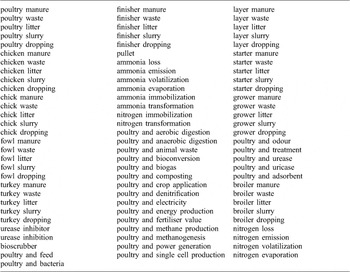
One of the most insightful means of analysing research trends is to examine the concurrent patenting trends. In order to analyze the potentials of Poultry Farm Excreta (PFE), the patent databases of various countries accessible through internet were mined as mentioned earlier (Sekar and Paulraj, Reference SEKAR and PAULRAJ2007; Sekar and Chandramohan, Reference SEKAR and CHANDRAMOHAN2008). These included the United States of America, Japan, Europe, Korea, New Zealand, Australia, Singapore, China, Thailand, Taiwan, Germany, United Kingdom and Canada. Strategic mining of patents was performed by framing search keywords (66 generic key words and 23 specific key words, Table 1) as well as mining data by choosing fields of search. In term of fields of search, all fields, abstracts and claims of the patents were used for United States Patent and Trademark Office (USPTO). Separate search fields were available for title and abstracts in patent databases of Korea, Canada and Taiwan.
Search keywords used.

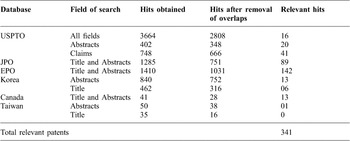
Single search field including both title and abstracts were available in the patent databases of Japan and Europe. The patent hits obtained from each keyword were corroborated with one another and overlaps if present were removed by sorting in MS-Excel software. The resulting patent hits were critically analysed and those found relevant were selected. European Patent Office (EPO), Japan Patent Office (JPO) and United States Patent and Trademark Office (USPTO) contain the vast majority of patent (Table 2).
Search results obtained cumulatively for the entire search key words used.

Using those of 89 major keywords, a total patent of 127 from EPO, 80 from JPO and 74 from USPTO database were obtained. Patent hits from Korea, Canada and Taiwan databases were 19, 13 and 1 respectively. The patent hits obtained from Australia, New Zealand, Singapore and India were found to exist already in EPO patent hits and hence excluded. All the patents are cumulatively categorized into the following seven groups:
• Patents on the conversion of PFE into fertiliser
• Patents on the processing of PFE as a feed
• Patents on the utilisation of PFE as a source of energy/fuel
• Patents on step-wise usage or multiple usage of PFE for fertiliser, feed and fuel
• Patents on the other applications of PFE
• Patents on the methods of reducing odour/ammonia volatilization from PFE
• Patents on the rapid degradation of PFE using microbial consortia
patents on the conversion of pfe into fertiliser
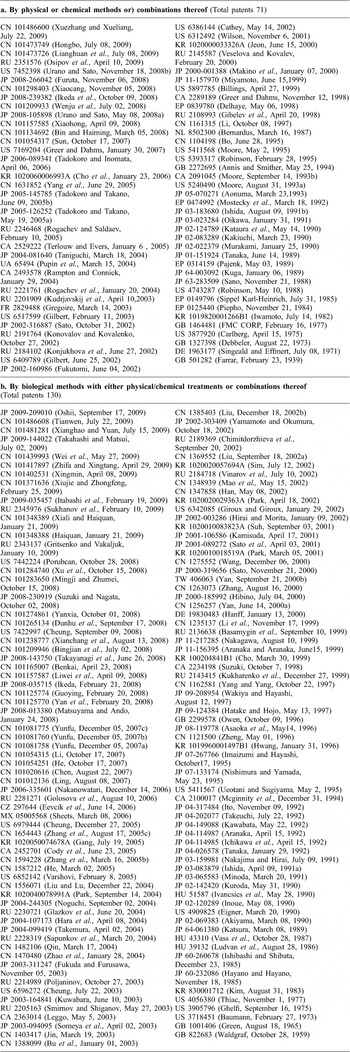
Various treatment methods are available to produce fertiliser from poultry excreta using either physical, chemical and biological methods or their combinations (Table 3).
Patents on the conversion of PFE into fertiliser.

Physical/chemical methods or combinations thereof
There are a number of patents dealing with the conversion of PFE into fertiliser by physical or chemical methods or a combination (Table 3). The following are the salient examples of the methods adopted. Firstly, poultry manure is mixed with fly ash binder in the ratio 20:1 to 1:9 and nitrogenous fertilisers (urea, ammonium nitrate and N-P-K fertiliser) at about 40% by weight (Carlberg, Reference CARLBERG1975). The fertiliser is prepared by mixing the poultry manure with ground bentonite and quicklime, the two last-mentioned substances being apportioned approximately in equal parts to about 80 to 88% poultry manure (Piepho, Reference PIEPHO1984). The waste is dehydrated and thermally decomposed. It is further crushed in to 0.05mm granules and used as fertilisers for golf course and domestic horticulture (Sano, Reference SANO1988).
Poultry excrement is mixed with water and inorganic elements of nitrogen, phosphate, potash and sulphur. It is mixed in a sealed reactor, hydrolyzed using sulphuric or phosphoric acid (pH <1.5) and then blended with anhydrous or aqueous ammonia (final pH 4-7). The finished fertiliser is dried, granulated or liquefied in to pumpable slurry (Robinson, Reference ROBINSON1988). The waste is treated with an acid (sulphuric, nitric, phosphoric, formic, acetic, proprionic and polyphosphoric acid) to a pH of 3-6.5 in fluid bed reactor-granulator. It is retained for 4-20 minutes at a temperature of 70-120ºC to reduce the moisture to 2-25%. It results in a product of hardened particulate agricultural nutrients (Moore, Reference MOORE1993a).
Dried and particulated poultry excretrement is mixed with urea-formaldehyde oligomer liquid reagent using a rotating cylinder device. The reaction is initiated by admixering mineral acid (pH 1.5-6.5) and heating (45ºC-125ºC) for a period of 4-30 minutes. It is then neutralized to a pH of 6-8 and used as a fertiliser (Moore, Reference MOORE1995). The waste is treated with calcium oxide (CaO) and/or calcium magnesium oxide (CaOMgO) or a mixture of both in variable proportion and in a closed container if used as a fertiliser (Delhaye et al., 1998).
The slurry of the poultry waste (1:10 water) is moved in an inclined rack and exposed to UV-light of 253.7 nm and then to 218-220 nm, which results in disinfection and deodorisation. It is further mixed with polyacrylamide cationic co-polymers of acrylamide and acrylic acid. The liquid is removed and used for irrigation or fertilization. The solids are dried and used as a fertiliser (Billings, Reference BILLINGS1999).
A formulation of fertiliser was prepared by mixing 50% of waste (60% water content), 35% peat (26% water content), 13% pulverized coal (0.1 mm) and 2% coral calcium powder. This is further treated with strong acid (2%) as a germicidal solution and frozen-dried. It is crushed in to a lumpy fertiliser (3-5 mm particle size) (Miyamoto, Reference MIYAMOTO1999). The poultry litter is sized to 0.25 inch and mixed with sulphuric acid in the ratio 5-7:1, subsequently pine oil (2-5% by weight) is added and finally dried between 100-105ºC (Wilson, Reference WILSON2001). Absorbent bedding in the form of a sheet is prepared by using waste paper (10-90%), cotton fibre waste (10-90%) and gypsum (2-85%). It can be used as an organic fertiliser after saturation with animal excreta (Cathey, Reference CATHEY2002).
Biological methods with either physical/chemical treatments or as combinations
The following patents are the typical examples of biological treatment methods coupled to physical or chemical treatments (Table 3).
A fertiliser is obtained by mixing urea-formaldehyde resin foam (15%) promoting the microbial fermentation (Baumann, Reference BAUMANN1973).The fermented manure from the poultry waste is added with pre-dried material to reduce the water content to 60-70%. It is then granulated, dried by hot gas at the rate at 50ºC homogenized and finally dried in gas (80-110ºC) to reduce the water content to 10% (Ghelfi, Reference GHELFI1975). An organic soil additive is obtained from mixture of poultry waste and shredded water hyacinth by composting, which is prepared by turning once in seven days. The compost is steamed using a conveyer system and further treated with methyl bromide (Thiac, Reference THIAC1977). Fermented bark compost is prepared using chicken droppings, needle leaf tree bark, sawdust, urea and fermentative bacteria. The nematodes present in the compost destroy the plant parasitic pests and promote growth (Ishibashi and Shibata, Reference ISHIBASHI and SHIBATA1985).
The poultry dung is mixed with zeolite (24 to 48 parts), charcoal powder (15-25 parts) and pyrolignous acid (0.1 parts/100 parts). The mixture is pelletized and dried to obtain granular fertiliser (Katsura, Reference KATSURA1989).
The poultry excreta are treated in a closed cylindrical tank using selective microorganisms with temperature control. The water vapour is evacuated and dried using air steam (Eigner, Reference EIGNER1990). An exothermically fermented fertiliser is obtained by compounding poultry excreta with shochu (low class distilled spirits) lees and mixing with wood-chips in a fermentation tank. It is inoculated with aerobic fermentative bacteria, water content (50-70%) and temperature (55-75ºC) is maintained along with stirring until the completion of fermentation (Aranaka, Reference ARANAKA1992).
An organic fertiliser is produced from poultry excreta with 7-20 parts of concentrated sulphuric acid, 8-24 parts calcium silicate and 13- 40 parts of rubber serum. A two step fermentation wherein the primary fermentation was performed using anaerobic microorganism (Saccharomyces sp. or Pseudominas spp.) followed by a secondary aerobic fermentation (Actinimadura / Actinoplanes / Micromonospora and a nitrate or nitrous bacterium) (Ueotani and Sugiyama, Reference UEOTANI and SUGIYAMA1995). Fertiliser for vegetable and fruit crops is obtained from chicken droppings by mixing with sludge (0.05 -5 parts), bean-curd refuse (0.05-5 parts) and sawdust (0.05-5parts) by fermentation with the water content of 40-80% and stirring at the rate of 55-85ºC (Asaoka et al., Reference ASAOKA, SHIMIZU and HONGO1996).
Another type of fertiliser is produced by mixing poultry waste with other animal wastes and seaweeds (Posidonia sp.). It can be further amended with peat moss, crab shell powder, chitin, bone meal, magnesia, sawdust, feather meal etc (Hatake and Hojo, Reference HATAKE and HOJO1997). Poultry excreta is converted in to soil ameliorants by mixing with, organic fillers, composting with forced aeration in a fermenter with a temperature of 80-85ºC and a moisture content of 40-45%. It is simultaneously exposed to pulsed infrared laser radiation (800-920 nm) and electromagnetic radiation (0.05 millitesla to 1.5 tesla) (Basamygin et al., Reference BASAMYGIN, VASIL, MOKHON and NOVOSELOV1999). Excreta are converted into organic fertiliser by mixing with shochu lees and activated sludge along with a soil conditioner and deodorant. It was crushed, fermented, turned and dried (Kamisuda, Reference KAMISUDA2001). Chicken manure is composted in long rows with periodic turning and intermittent addition of sawdust (Giroux and Giroux, Reference GIROUX and GIROUX2002).
A composite biological fertiliser capable of absorbing heavy metals, degrading pollutants, improving soil quality and promoting plant growth is prepared with chicken excreta, swine waste, straw, husk, mycorrhizal fungi, Klebsiella sp. megabacillus and silicate bacteria (Qin, Reference QIN2004).A biological fertiliser composition comprising of poultry excreta, rock phosphate, apatite, phosphorite, sylvinite, halite camalitite or potassium mica along with yeast cells (Saccharomyces spp.) has been prepared (Cheung, Reference CHEUNG2003, Reference CHEUNG2005). Chicken manure can also be mixed with salts of nitrogen (N), phosphorus (P), potassium (K), calcium (Ca), magnesium (Mg), Iron (Fe), zinc (Zn), manganese (Mn), copper (Cu) and boron (B) along with non-ionic wetting agents, surfactants, silicons and microorganisms like Trichoderma sp., Bacillus subtilis, Penicillium sp., Alternaria sp. to produce a fertiliser for plant nutrition and soil fertility (Varshovi, Reference VARSHOVI2005). To shorten the period of composting of poultry excreta, trihydric alcohol or oil is added (Takayanagi et al., Reference TAKAYANAGI, UMEZAWA and NOMURA2008). Excreta can be mixed with shredded bark of Cryptomera japonica (10% level) and subjected to microbial fermentation followed by drying (Itabashi et al., Reference ITABASHI, HASE and MORITA2009).
A mixed fertiliser consisting of poultry droppings, the plant Stevia and microorganisms consisting of filamentous fungi has been proposed (Oshii, Reference OSHII2009). An organic fertiliser for preventing potato scab and to get potatoes with brighter skin colour and lustre is using composted chicken waste (81.5-91%), super phosphate (5%), sulphur powder (3-6%) and pentachloronitrobenzene powder (0.5-1%) (Xingmin, Reference XINGMIN2009).
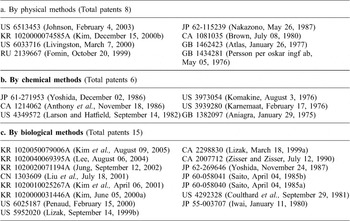
patents on the processing of pfe as a feed
The production of an odourless, pathogen free feed supplement with high nutritional value derived from poultry waste has been patented using physical, chemical and biological means (Table 4).
Patents on the processing of PFE as a feed.

The details of the patents are as follows.
Physical methods
• To obtain a feed having high digestible ratio, preservable for a long period and having low residual oil content, poultry dropping are autoclaved, dehydrated by pressing, charged into hot oil in a cooker, dehydrated and dried by evacuating the cooker in two-steps under agitation. The oil is removed by centrifugation in the evacuated state (Nakazono, Reference NAKAZONO1987).
• To provide a high fat, high protein diet to any animal, particularly ruminants and aquatic animals, the poultry waste is mixed with slaughter house waste and dried in rotary drum dryer (500-900ºF) to a moisture level of less than 15% (Livingston, Reference LIVINGSTON2000).
• Poultry litter is pelletized in to cylindrical plugs for use as feed or bait for marine animals, by blending with fish or shellfish by-products and applying temperature of 200ºF (Johnson, Reference JOHNSON2003).
Chemical methods
• Poultry waste is treated with an acid (phosphoric acid, sulphuric acid, citric acid, acetic acid or propionic acid, pH 5.5-6.0) and formaldehyde (0.3-0.8%) to produce feed stuff for ruminants (Karnemaat, Reference KARNEMAAT1976).
• Feedstuff for domestic animals, fish and fowl is produced by mixing poultry droppings (100 parts), waste portions of animals obtained after the removal of meat (30-40 parts) and ferrous sulphate heptahydrate (10 parts). It is steamed and agitated in a pressurized system for 1-2 hours at a temperature of 250-300ºC (Komakine, Reference KOMAKINE1976).
• Poultry excreta are mixed with liquid aldehydes like formaldehyde (0.1 to 3.0%) to obtain feed (Larson and Hatfield, Reference LARSON and HATFIELD1982).
• Poultry waste is converted in to odour free and ruminant digestible product by reacting with 50% sulphuric acid (pH <2.5) and anhydrous ammonia (pH 5.5) in a rotating drum system. It is then heated to 160ºF (Anthony et al., Reference ANTHONY, SMITH and SHIRLEY1986).
• Feed is obtained by mixing poultry manure with starchy ingredients like wheat flour, cornstarch etc. (Yoshida, Reference YOSHIDA1986).
Biological methods
• The poultry waste is introduced in to a digester provided with an oxygenating gas promoting thermogenic microbial digestion to end up with a feed (Coulthard et al., Reference COULTHARD, TOWNSLEY and SABEN1981).
• To give easily digestible feed with inhibition of abnormal fermentation, the poultry droppings are combined with alcohol waste or molasses. It is cut in to pieces, air is occluded and lactic acid fermentation is promoted (Saito, Reference SAITO1985a).
• Similarly, lactic acid fermentation as indicated above was performed in a range of temperature 30-50ºC using hot water and mixer (Saito, Reference SAITO1985b).
• Feed is prepared from fermented chicken waste using starch coupled with dehydration and drying (Yoshida, Reference YOSHIDA1987).
• Poultry excreta are mixed with wheat straw waste, ammonium sulphate and ammonium chloride with a water content of 65%. It is subjected to two stage fermentation (aerobic and anaerobic) using a consortium of microbes in order to convert cellulose in to microbial proteins and organic acids acting as preservative. It can be used as a fodder or fodder supplement (Lizak, Reference LIZAK1999b).
patents on the utilisation of pfe as a source of energy/fuel
Poultry waste including the mixture of cellulosic bedding material and excreta generated in broiler and turkey production houses can be converted into thermal and/or electrical energy or into liquid fuel as per the following patents (Table 5).
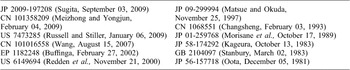
Patents on the utilisation of PFE as a source of energy/fuel (Total patents 12).

The following may be used: the chicken droppings are burnt in a controlled combustion furnace and the energy is obtained using heat exchanges (Oota, Reference OOTA1981) or poultry dung is subjected to anaerobic methane fermentation to obtain gaseous methane as a heat source. The heat generated in the fermentation tank is also utilized (Kageura, Reference KAGEURA1983), poultry droppings are dehydrated up to 70% using hydro-extractor and the liquid is utilized. The dehydrated material is dried using a kiln and burnt in a combustion furnace. The heat energy is used to power the steam turbine to obtain electricity through generators (Morisane et al., Reference MORISANE, KAWABATA, IRIE and YASAKA1989). Poultry waste is mixed with sawdust or paper and heated to 800ºF to yield energy (Redden et al., Reference REDDEN, BUSH, HELTON and TEANEY2000).
patents on step-wise usage or multiple usage of pfe for fertiliser, feed and fuel
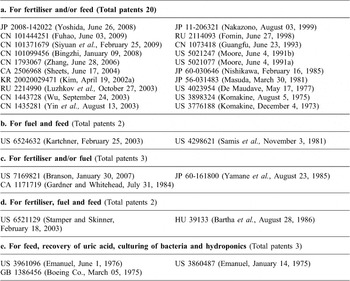
PFE can be utilized to produce more than one end product simultaneously like fertiliser, feed, fuel, etc. (Table 6). The following sections provide details about such patents.
Patents on the step-wise or multiple utilisation of PFE for fertiliser, feed and fuel.

Fertiliser and/or feed
The floor of the poultry house is dusted with powder of ferrous sulphate hepta-hydrate along with powder of fly ash or zeolite for use as fertiliser and feed stuff (Komakine, Reference KOMAKINE1973, Reference KOMAKINE1975).
Fertiliser or bird feed from poultry waste can be obtained by breeding beetles on the manure for a pre-determined period and the stockpile is crushed and dried (De Maudave, Reference DE MAUDAVE1977).
The poultry excrements are granulated at 80-120ºC and converted in to pellets for use as feed stuff or fertiliser (Masuda, Reference MASUDA1981).
The poultry waste is treated with 1-10% of alkali metal hydroxide and granulated at 75-100ºC to obtain fertiliser and animal feed protein supplement (Moore, Reference MOORE1991a, Reference MOORE1991b).
Fuel and feed
The waste is subjected to anaerobic fermentation to obtain methane gas and the fermented solid residue is dried to form a feed product (Samis et al., Reference SAMIS, WAECHTER and JAMES1981).
Similarly, poultry excreta is subjected to anaerobic fermentation to obtain methane gas and the residual slurry is exposed to radio waves (915 MHz-2450 MHz) for use as a compost or feed stuff (Kartchner, Reference KARTCHNER2003).
Fertiliser and/or fuel
A mixture consisting of poultry waste, sawdust or Human faces is processed in to granules or rod shaped particles and charged in oils and fats. The oil used is edible or industrial animal/vegetable oil or mineral oil or their waste oils. The dried product is used as fuel and fertiliser (Yamane et al., Reference YAMANE, TAKADA and NAKAJIMA1985).
Fertiliser, fuel and feed
Poultry manure is subjected to biogas generation by fermentation. The residual solid is used as animal feed or as a fertiliser by mixing with fly ash (15%). The liquid phase is used as a spray fertiliser or as nutrient for worm breeding (Bartha et al., Reference BARTHA, TOEROEK, LEHOCZKY, TORONYI and CSAPLICZKY1986).
The poultry manure is anaerobically digested along with mixing in a digester and the liquid and solid are clarified. The liquid is heated to get ammonia for producing fertiliser. The residual liquid is further used for biogas generation. The solids may be converted to ruminant animal feed (Stamper and Skinner, Reference STAMPER and SKINNER2003).
Feed, recovery of uric acid, culturing of bacteria and hydroponics
The poultry waste is mixed with aqueous sodium hydroxide or potassium hydroxide (1-4%) and clarified. The solid is dried and sterilized for blending with other feed components. The liquid portion is treated with reagents to precipitate uric acid. Further, plant hormones, steroids, urido-compounds, amino acids, carbohydrates, and biliverdins may also be recovered from the liquid phase. Otherwise, the liquid phase may be used for bacterial culture or hydrophonic culture (Boeing Co., Reference BOEING CO.1975).
The poultry faeces are processed through a digester and clarified. The solid is blended with other feed components. The filtrate is chemically treated to recover uric acid as precipitate and the remaining filtrate is used for bacterial culture. The used liquid from bacterial culture is used for hydrophonic culture (Emanuel, Reference EMANUEL1975, Reference EMANUEL1976).
patents on the other applications of pfe
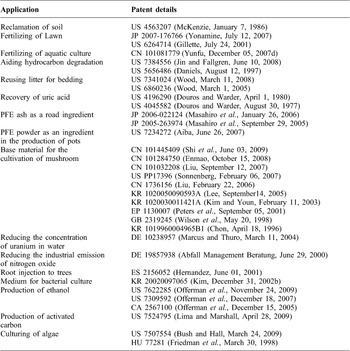
Apart from the major application of PFE as fertiliser, feed and fuel, various patents are available for the following related or novel applications (Table 7).
Patents on the other applications of PFE (Total patents 33).

Reclamation of soil
A clay breaking and fertilizing composition from poultry excreta is made by mixing dried chicken excreta (20-60%), Potassium chloride or Potassium sulphate (6-35%) and a combination of rock phosphate and calcium carbonate in the ratio of 1:4 (20-60%). This has to be spread on clay soil and water (Mckenzie, Reference McKENZIE1986).
Fertilizing lawns
A mixture of poultry excreta with corn gluten containing about 1% animal fat as binder and spores of Bacillus populas to kill beetle grubs in the lawn is used to fertiliser lawn (Gillette, Reference GILLETTE2001).
Fertilizing aquatic cultures
A composite organic fertiliser for aquatic culture is produced by fermenting fresh chicken manure hermetically at 15-40 °C for 10-30 days to decay and storing to produce dry chicken manure with water content less than 10%. Mixing dry chicken manure 86 kg, ammonium carbonate 12.20 kg, concentrated superphosphate 0.80 kg, ferrous sulphate 500 g, manganese sulphate 250 g, cobalt sulphate 125 g and ammonium molybdate 125 g. The composite organic fertiliser has nitrogen:phosphorus weight ratio of 11:1 (Yunfu, Reference YUNFU2007d).
Aiding hydrocarbon degradation
A composition for degrading hydrocarbons is prepared by composting the poultry excreta which reach a temperature of 120ºF and a pH of 5.5-10 followed by mixing and aeration. It is further added with hydrocarbon degrading microbes provided with a temperature of 35ºF to 120ºF according to the tolerance of microorganisms and aerated. This can be applied to an area contaminated by hydrocarbons (Daniels, Reference DANIELS1997).
Systems and methods for co-enhancing contaminant degradation such as LNAPL (light non-aqueous phase liquid) and DNAPL (dense non-aqueous phase liquid) degradation has been presented. Adding adequate amounts of certain substances like nitrogen in the form of poultry manure, electron acceptors in the form of nitrate, oxygen, iron, sulphur etc., bacteria like denitrifying bacteria, iron reducing bacteria, sulphate reducing bacteria, or metal reducing bacteria to the LNAPL and DNAPL-contaminated groundwater enhanced the degradation of LNAPL and DNAPL (Jin and Fallgren, Reference JIN and FALLGREN2008).
Reusing litter for bedding
To achieve this, the poultry waste is heated and compressed using commercial screw-type extruder and used as bedding metrical (Wood, Reference WOOD2005).
Recovery of uric acid
Poultry excreta are dried at 350ºF and then ground, sieved and separated in to two fractions. The first fraction containing the major content of uric acid reacted with aqueous alkaline brain solution which dissolves uric acid. Then about 0.01-2 0% flocculating agent [from alkaline earth metals (calcium, magnesium and barium), zinc, iron and aluminium hydroxide, oxides, halides and acetates and mixtures there of] is mixed and the insoluble impurities are separated. The second fraction is reacted with sulphuric acid (30-95%) to get uric precipitate. The precipitate is extracted with alkaline aqueous solution and further reacted with acid to precipitate pure uric acid. The precipitate is washed and dried (Douros and Warder, Reference DOUROS and WARDER1977, Reference DOUROS and WARDER1980).
PFE ash as a road ingredient and substitute for lime
To enable the proper disposal of the fowl droppings discharged in large quantity every day from poultry farm and their effective utilisation in bulk; it is indicated to use ashes of poultry waste as an equivalent of lime. This is to recycle the fowl droppings ash as a road material or an agglomerating agent or to use the fowl droppings ash as a substitute for lime. This reduces the consumption of lime and thus contributes to environmental betterment.
Chicken dropping ashes were mixed with iron oxide and lime followed by natural soil for use as road ingredient (Masahiro et al., Reference MASAHIRO, GENICHI, HIROTOSHI, TETSUO, YOSHIHISA, KAZUYOSHI, SEIROKU, HIDETO, KENICHI, MUTSUO, TOSHIKI and NAOKO2005).
The poultry dropping ash is mixed with lime powder after ensuring that the grain sizes of both are approximately equal (Masahiro et al., Reference MASAHIRO, GENICHI and YOSHINORI2006).
PFE powder as an ingredient in the production of pots
Raising pots for vegetable seedlings are produced by moulding a mixture including a boiled fibre material (prepared by boiling bamboo fibre with fibre of reed), an auxiliary material from carbonized vegetable material (prepared by carbonizing a tree-free material), a calcium-based waste powder such as bone meal and chicken manure powder with small amount of urea optionally together with silicon dioxide powder (Aiba, Reference AIBA2007).
Base material for the cultivation of mushrooms
Chicken excreta at a rate of 10-15% is mixed with 75-85% of horse excreta, 3-8% of gypsum and water to get a moisture content of 70-80%. It is composted, preferably around 75-80ºC and pasteurized at 50-60ºC. The preparation is inoculated with spawn selected from Agaricus bisporus, A.bitorquis, Lentinus edodes, Coriolus versicolor and Pleurotus spp. (Peters et al., Reference PETERS, VERLINDEN, VESTJENS and BEIJERS2001).
The base material for mushroom cultivation is prepared by mixing dry chicken droppings (37-87.5%), urea (7-23.5%), super phosphate (1.2-14.8%), potassium fertiliser (1.2-7.4%) and gypsum (2.5-22.5%) (Liu, Reference LIU2006).
Reducing the concentration of uranium in water
A composition for reducing hexavalent uranium concentration in running water, flooded uranium mine, waste-heap leachate or ground water comprises a mixture of chicken excreta and feldspar. Hexavalent uranium is present mainly as carbonate, sulphate or hydroxyl complex which is converted into uranium (IV) oxide and uranium (VI) phosphate by means of a mixture of chicken excreta and feldspar and both substances are precipitated in the geochemical barrier (Marcus and Thuro, Reference MARCUS and THURO2004).
Reducing industrial emission of nitrogen oxide
Reduction of nitrogen oxide emissions from industrial boiler installations fired with coal or lignite, is envisaged by admixture with dried animal excreta, particularly straw or wood shaving based poultry litter. The excreta is comminuted to an average particle size of approximately 1-20 mm and fed at a rate of up to 30% w/w of the fuel mixture (Abfall Management Beratung, Reference ABFALL MANAGEMENT BERATUNG2000).
Root injection to trees
The tree treatment technique based on injection into the trunk comprises application of a mixture of liquid sheep and poultry excreta and iron extracts, ammoniacal nitrogen, humic extract in emulsion and organic nitrogen and potassium carbonate, in emulsion. The mixture is injected near the roots of the tree. The mixture is applied at a rate of 150 ml over 24 to 72 hours (Hernandez, Reference HERNANDEZ2001).
Medium for culturing photosynthetic bacteria
Rotting organic waste containing at least 50 wt.% of faeces and urine of poultry were mixed with 5-35 wt. % limestone, 1-10 wt. % dolomitic lime and 5-10 wt. % zeolite to provide a medium material selectively culturing prokaryote, particularly cyanobacteria including Anabaena sp. or Nostoc sp. and photosynthetic bacteria including Rhodopseudomonas sp. or Rhodospirillum sp. (Kim, Reference KIM2002b).
Production of ethanol
In an application, poultry waste is first fermented by anaerobic microorganisms into biogas. The biogas is then converted to synthesis gas consisting primarily of CO and H2. This is typically accomplished by steam reforming or partial oxidation of the methane. The synthesis gas (syngas) is then contacted with a catalyst, such as ruthenium which catalyzes the condensation of CO and H2 to form alcohol, typically mixed alcohols consisting primarily of ethanol. In some cases, a microorganism that reduces ferric iron to ferrous iron is included in the fermentation mixture to enhance the efficiency of the fermentation and the yield of alcohol (Offerman et al., Reference OFFERMAN, HOGEN, LIGHTHART and MCTAVISH2005).
Production of activated carbon
Carbonized poultry excreta are activated using steam which exhibited enhanced activity for metal ion adsorption (Lima and Marshall, Reference LIMA and MARSHALL2009).
Culturing of algae
Ground poultry excreta is mixed with lime powder, calcium hydroxide or magnesium hydroxide for up to 1 hour and it was then mixed with agricultural waste materials, such as straw, sun flower seed shells, cacao bean skin or wood dust. The mix was pressed to get rid of 60-70% moisture. Dry material is heat-sterilized, dried and pressed into briquettes. The liquid part was treated with potassium nitrate and the product is used as a basic material in algae growing (Friedman et al., Reference FRIEDMAN, KOTAI, PAPP, ROHDE and ZOLTAI1998).
patents on the methods of reducing odor / ammonia volatilization from pfe
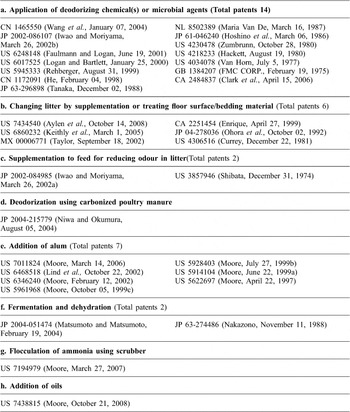
Various methods are patented for the reduction of odour or ammonia volatilization from PFE (Table 8). The salient methods are then discussed below.
Patents on the methods of reducing odour / ammonia volatilization from PFE.

Application of deodorizing chemicals or microbial agents
Chicken manure is treated with 50 – 500 ppm of hydrogen peroxide or peroxyhydrate of an inorganic salt (e.g. NaBO2·H2O2·3H2O or 2Na2CO3·3H2O2) until the odour is no longer objectionable. The treated manure remains odour-free for several hours and may be transported during such time to an open field or a compost station (FMC CORP., Reference FMC CORP.1975).
A mixture of proteolytic enzyme (340,000 proteolytic value units/lb) and a ferrous salt recommended for reducing odour from poultry waste (Van Horn, Reference VAN HORN1977).
Offensive odour in poultry houses is reduced by mixing the poultry waste with cow excreta (5-50% by weight) and composted for six days with thermophilic aerobic bacteria by retaining the temperature at 150ºF (Hackett, Reference HACKETT1980).
A deodorizing composition for treating animal waste including poultry waste consists of hydrogen peroxide (100% H2O2 of 50-500 g/lit), pine oil or sesquiterpenes of turpentine (50-400 ml/lit) and a polyoxyethylene type surfactants (1-10%) (Zumbrunn, Reference ZUMBRUNN1980).
Microbial deodorizer for poultry farm is produced using Alkaligens odorants and or Serratia malcessence (106-108 cells/g) on a carrier of zeolite, perlite and activated carbon (Hoshino et al., Reference HOSHINO, NIITSUMA and KUMAI1986).
Poultry litter is treated with a group of bacteria comprising bacteriocin producer (Propionibacterium jensenii), protease producer (species of Bacillus), starch fermenter (Lactobacillus curvatus) with a water soluble carrier consisting of whey and maltodextrins and balith as moisture binding agents (Rehberger, Reference REHBERGER1999).
A composition consisting of species of Bacillus, one or more enzymes (protease, amylase and lipase) with perlite as carrier is proposed for treating poultry droppings (Logan and Bartlett, Reference LOGAN and BARTLETT2000).
Poultry waste can be disinfected and deodorized by blending with fly ash, coal ash, cement kiln dust, wood ash, limestone, gypsum (30%) and treating with calcium oxide and sodium hydroxide (pH 9.5) for one hour (Faulmann and Logan, Reference FAULMANN and LOGAN2001).
The ammonia odour in the poultry waste can be rapidly decomposed using either spores or cells of the mould Scopulariopsis (Iwao and Moriyama, Reference IWAO and MORIYAMA2002b).
The menace of odour and organisms in the litter can be reduced using clay based particulate absorbents and an aliphatic bromo-nitro-bactericide (Clark et al., Reference CLARK, GURNEY and AYLEN2006).
Changing litter by supplementation or treating floor surface/bedding material
A solid particulate deodorizing litter mixture for application to the floor area of poultry enclosures is prepared using ferrous sulphate hepta hydrate (80-95%), Iron oxide (0.1-3.5%), sulphuric acid (0.1-0.5%), calcium carbonate (0.2-1.5%) and calcium propionate as mould inhibitor (Currey, Reference CURREY1981).
Granular coal ash prepared by adding vegetable oil and fly ash is proposed for usage on the floor surface of poultry houses (Ohora et al., Reference OHORA, OSHIKATA and KANEKO1992).
An improved poultry bedding litter is prepared by reusing the once used bedding material of plant origin with the mixing of dried citrus peels (10-100%) (Keithly et al., Reference KEITHLY, TAGGART and WILSON2005).
Supplementation to feed for reducing odour in litter
An improved feed for domestic animals and poultry consisting of an essential amount of conventional feed and an effective amount (20 to 100 ppm) of a hydroxamic acid selected from the group consisting of acetohydroxamic acid, caprylohydroxamic acid, unsubstituted benzohydroxamic acid, nicotinohydroxamic acid, p-nitrobenzohydroxamic acid, p-chlorobenzo hydroxamic acid, p-methoxybenzohydroxamic acid, p-methylbenzohydroxamic acid, o-methyl benzohydroxamic acid, o-chlorobenzohydroxamic acid and o-methoxybenzo hydroxamic acid have been used to reduce concentration of the ammonia in faeces (Shibata, Reference SHIBATA1974).
The mould-containing feed additive for deodorizing ammonia odour of the livestock, poultry and pets is produced. The method comprises a cultured product, a spore and a microbial cell of the mould having the ability to assimilate and degrade the excreted ammonia and belonging to the genus Scopulariopsis, e.g. Scopulariopsis brevicaulis No.1 strain (FERM P-17829). The feed additive, together with feed is supplied to the livestock, poultry and pets and swallowed. Thereby, the ammonia odour derived from the manure excreted by the livestock, poultry and pets is deodorized. As a result, even the emission of ammonia during the accumulation of the manure of the animals can be suppressed (Iwao and Moriyama, Reference IWAO and MORIYAMA2002a).
Deodorization using carbonized poultry manure
The poultry excreta itself can be used as a deodorizer which is formed by carbonizing the poultry dropping by thermal treatment of 400-1100 °C. The deodorizer containing the carbonized poultry droppings is provided in a malodorous environment to deodorize the environment and then the deodorizer carrying the malodorous component is reused as a fertiliser (Niwa and Okumura, Reference NIWA and OKUMURA2004).
Addition of alum
To inhibit ammonium volatilization in poultry waste, alum (5-25%) is added along with ferrous sulphate or calcium hydroxide (Moore, Reference MOORE1997; Moore, Reference MOORE1999c).
A short-term control of ammonia volatilization from rearing facilities is performed by applying aluminium sulphate to the floor where the waste is dropped (Moore, Reference MOORE1999a).
Similarly, the poultry manure is treated by mixing with alum, 5-25% by weight (Moore, Reference MOORE1999b).
Alum along with a deliquescent salt (1-30%) such as calcium chloride, magnesium chloride, sodium bisulphate, manganese chloride, Zinc chloride, anhydrous ferric chloride, Magnesium nitrate , Calcium nitrate, Potassium acetate or Sodium acetate is proposed (Lind et al., Reference LIND, HURD and BARNES2002).
To reduce the ammonia volatilization, a solution of aluminium chloride or aluminium nitrate (up to 50 parts by weight) can be used with waste slurry (Moore, Reference MOORE2002; Reference MOORE2006).
Fermentation and dehydration
Droppings of domestic fowl are subjected to aerobic fermentation and dehydration was performed at several degrees with fermentation heat. Then these were introduced into a sealed cooker and animal oil or vegetable oil of about 3 – 10 wt. % was added and subjected to dehydration treatment by pressurizing and decompressing them thereby offensive odour was completely removed (Nakazono, Reference NAKAZONO1988).
Flocculation of ammonia using scrubber
Ammonia in the air exhausted from animal containment facilities may be removed by scrubbing the air with a solution of alum. Ammonia may be removed from the air within any enclosed animal building having an air inlet, an outlet, a ventilation system having an air mover effective to draw fresh air into the building through the inlet and exhaust contaminated air through the outlet and an air scrubber in communication with the outlet. Prior to exhausting the air into the environment, the air is passed through the scrubber where it is contacted with a solution of the salt (alum) for flocculating ammonia therein. The flocculated ammonia may then be removed from the solution, which may then be recycled to the scrubber (Moore, Reference MOORE2007).
Addition of oils
Lipids, such as plant oils and animal fats are effective for treatment of animal wastes to inhibit both the emission of ammonia and other odours, and the discharge of particulate matter, microorganisms, and endotoxins. This is affected by application of an effective amount of a lipid containing composition onto the animal wastes (0.1:99.9 to 20:80). Moreover, when used in combination with solutions of salts of acidic proton donors (aluminium chloride, aluminium nitrate, and alum), these lipids significantly improve the effectiveness of the proton donors to inhibit the release of ammonia and reduce phosphorous solubility (Moore, Reference MOORE2008).
patent on rapid degradation of pfe using microbial consortia
Rapid degradation of wastes is an attractive solution to avoid the release of pollutants, breeding of flies and other life forms which may pose a risk. This approach is attempted in PFE employing the introduction of desired microbes (Table 9).
Rapid degradation of PFE using microbial consortia (Total patents 2).

Preparation of rapid chicken excreta fermenting microbes
Fast chicken excreta fermenting microbial preparation which include a mixture of viridin (antifungal agent), actinomycetes and photosynthetic bacterium, thermophilic microbe - Bacillus and mixture of Saccharomyces and Bacillus licheniformis (Zhang et al., Reference ZHANG, WEI and WANG2005a).
Cleansing agent for poultry excreta
Cleansing agent for poultry excreta and human excrements is prepared by mixing 92-95% poultry excreta, 5-7% underground water, 2-3% wheat flour, 1% sugar and salt, with microorganism mixture comprising Torulopsis caliculose, Micrococcus luteus, Pseudomonas fluorescens and Bacillus subtilis (Jong Ik-Yong, Reference JONG IK-YONG1993).
Commercialisation
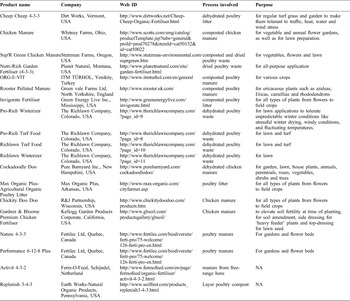
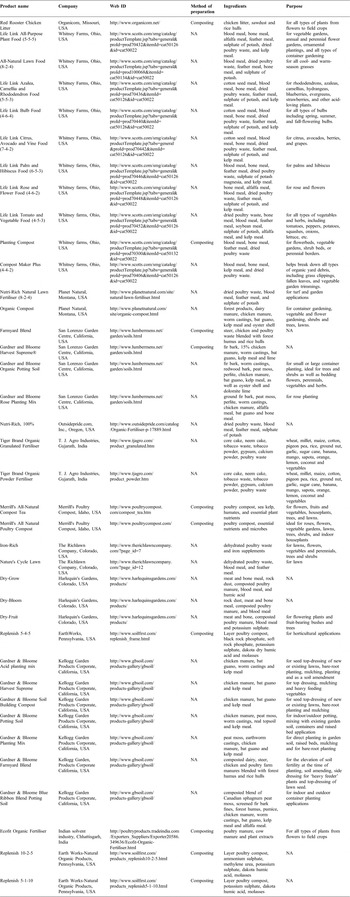
Several companies are marketing organic fertiliser using PFE either as the sole ingredient (Table 10) or as one of the ingredients (Table 11). Firms in USA are marketing either dried or composted poultry excreta (Table 10). Though they are recommended for various crops, most often they are meant for lawns and ornamental flowering plants. It is also interesting to note that this is claimed to confer tolerance to stresses like heat, water and wind (Table 10). However, most of the commercial products use PFE as one of the ingredients (Table 11). In order to increase nutritive value and reduce the leaching problems, the poultry excreta is treated and admixed with other nutrient materials. Various ingredients are mixed with composted or dehydrated poultry excreta to produce high quality organic fertiliser (Table 11). The ingredients include saw dust, alfalfa meal, rice hulls, blood meal, bone meal, feather meal, kelp meal, cotton seed meal, sulphate of potash, worm casting, bat guano, oyster shell, neem cake, lime, fir bark, tobacco waste, gypsum etc. Such formulated fertiliser products are recommended for various crops based on their components rather than the products in which PFE is present as the sole ingredient.
Commercial fertiliser products obtained by using poultry farm excreta as the sole component.

Commercial fertiliser products obtained by using poultry farm excreta as one of the components.

NA = not available
Conclusions
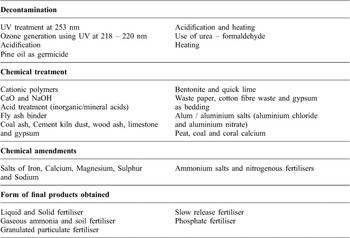
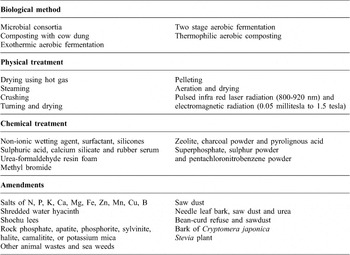
Patent analysis of poultry farm excreta from global open access patent databases can be used to assess the trends and strategies involved. In case of conversion of PFE into fertiliser using physical/chemical methods or combinations thereof (Table 12), a method of decontamination of waste was primarily involved followed by a chemical treatment, then chemical amendments yielding gaseous or liquid or solid fertiliser as the end product. For the conversion of poultry farm excreta into fertiliser using biological methods with either physical/chemical treatment or combinations thereof (Table 13), a variety of microorganisms are exploited. It is further coupled with some physical or chemical treatment followed by the addition of nutritional amendments (Table 13).
Strategies involved in the conversion of PFE into fertiliser using physical or chemical methods or combinations thereof.

Strategies involved in the conversion of PFE into fertiliser using biological methods with either physical/chemical treatments or combinations thereof.

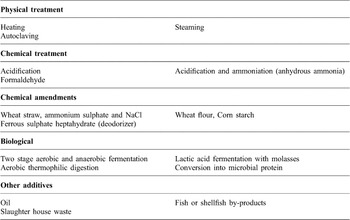
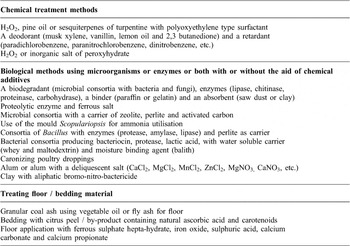
When processing poultry farm excreta as a feed material, physical and chemical treatments were given either to eliminate or to reduce the population of microorganisms present. This was followed by chemical amendment and microbiological treatment (Table 14). Further, to use as a source of energy/fuel, either combustion method or generation of methane by anaerobic fermentation are reported. In order to reduce odour/ammonia volatilization (Table 15), chemical deodorants or biological methods using microorganisms or enzymes or both with or without the aid of chemical additives were employed. The methods involved in treating the floor surface/bedding material are presented.
Strategies involved in the processing of PFE as a feed.

Principle strategies involved in the methods of reducing odour/ammonia volatilization from PFE.

Thus, patent analysis highlighted the strategies involved in the utilisation of poultry farm excreta into fertiliser, feed and fuel. This work can be used as baseline data for researchers and intended patentees to innovate and improve further.
Acknowledgements
Authors acknowledge the financial support in the form of a research grant with research fellowship provided by the Union Grants Commission (UGC), Government of India. Data availed from various patent databases is also acknowledged.