


Highlights
-
• This study synthesizes methods for measuring, valuing, and incorporating patient and caregiver productivity costs by integrating evidence from peer-reviewed literature and international Health Technology Assessment guidance.
-
• We identify twenty-five instruments, but only three capture the information required for valuation using the human capital or friction cost approach and summarize current recommendations for measuring and valuing paid and unpaid labor across jurisdictions.
-
• Our findings highlight the need for valuation-ready instruments, better friction period estimation, and more harmonized guidance to improve the comparability and policy relevance of societal-perspective economic evaluations.
Introduction
Economic evaluations play a central role in informing healthcare decision-making by comparing the costs and consequences of alternative interventions (Reference Brousselle and Lessard1). Beyond health outcomes and direct medical expenditures, illness and treatment can disrupt individuals’ ability to work, reduce productivity while at work, and create demand for unpaid caregiving, all of which carry economic consequences not captured by health outcomes alone (Reference Johannesson, Jonsson, Jonsson, Kobelt and Zethraeus2;Reference Jönsson3). These impacts carry economic consequences that may fall outside the healthcare system (Reference Sittimart, Rattanavipapong and Mirelman4). Recognizing the importance of capturing consequences beyond health, the Second Panel on Cost-Effectiveness in Health and Medicine recommended that economic evaluations adopt a societal perspective in the reference case alongside the health sector perspective (Reference Sanders, Neumann and Basu5). The societal perspective captures health system costs and costs that fall outside the health sector, such as those borne by patients and families, as well as productivity losses from paid and unpaid work (Reference Drummond, Sculpher, Claxton, Stoddart and Torrance6). A key implication of this recommendation is that productivity costs – losses in paid and unpaid work due to illness, disability, treatment, and premature death – should be incorporated directly into the numerator of the cost-effectiveness ratio, that is, as part of the incremental costs considered in analysis (Reference Sanders, Neumann and Basu5).
Productivity costs encompass losses in paid and unpaid work (Reference Brouwer, Verbooy, Hoefman and van Exel7). For paid work, they arise through presenteeism and absenteeism, which refer to reduced productivity at work and absence from work, respectively (Reference Brouwer, Verbooy, Hoefman and van Exel7). For unpaid work, they involve time devoted to informal caregiving or household production that is displaced by illness or treatment (Reference Gelfand, Sou and Sawatzky8). Productivity costs are calculated through the measurement and valuation of productivity losses. Measurement quantifies time lost due to presenteeism and absteeism, using self-report instruments (e.g., Work Productivity and Activity Impairment Questionnaire (WPAI)). Valuation assigns a monetary value to this lost time. For paid work, it is commonly conducted through the human capital approach (HCA), which values all lost time over the full duration of absence at the individual’s wage rate, assuming no replacement of the worker, or the friction cost approach (FCA), which limits costs to the period required to replace a worker (friction period), reflecting labor market dynamics such as replacement of workers and the availability of unemployed labor (Reference Hubens, Krol and Coast9–Reference Zhang, Bansback and Anis12). For unpaid work, valuation methods include the replacement cost approach, which estimates the expense of hiring someone to perform the same tasks, or the opportunity cost approach, which values time based on forgone paid work (Reference Krol, Brouwer and Rutten11).
Despite their recognized importance, considerable variability exists in how productivity costs are measured and valued across economic evaluations (Reference Hubens, Krol and Coast9). Variation exists in which types of losses are included, the instruments used to capture time losses, and the methods applied to assign monetary values (Reference Krol, Brouwer and Rutten11). These differences can substantially affect estimates of cost-effectiveness and limit comparability across studies and jurisdictions. Previous reviews have examined aspects of productivity cost measurement and valuation. Hubens et al. systematically reviewed productivity loss measurement instruments and their suitability for economic evaluation, while Zhang et al. (Reference Zhang, Bansback and Anis12) and Mamiya et al. examined how productivity outcomes are measured and incorporated in randomized controlled trials and economic evaluations (Reference Hubens, Krol and Coast9;Reference Zhang, Bansback and Anis12;Reference Mamiya, Wattanakamolkul and Li14). Building on this work, we aimed to conduct a scoping review of peer-reviewed literature and an environmental scan of guidance documents (e.g., Health Technology Assessment (HTA) reports, national guidelines, white papers, and policy documents) and synthesize existing methods, recommendations, and consensus for measuring, valuing, and incorporating patient and caregiver productivity costs in economic evaluations.
Methods
Study design
We conducted a two-part study comprising a scoping review and an environmental scan to identify and synthesize existing methods and guidance on the measurement and valuation of patient and caregiver productivity costs in the context of economic evaluations. The scoping review focused on peer-reviewed literature and followed a structured framework to map and describe how productivity costs are measured and valued in health economic research. The environmental scan was conducted in parallel to identify guidance on measurement, valuation, and incorporation of productivity costs in economic evaluations from grey literature sources, including policy documents, HTA guidelines, and methodological reports from Canadian and international organizations. Below, we detail the methods for each component.
Scoping review
We followed the six-stage methodological framework developed by Arksey and O’Malley and updated by Levac et al. and the JBI (Reference Levac, Colquhoun and O’brien15;Reference Peters, Godfrey and McInerney16). The scoping review protocol has been registered on Open Science Framework (https://doi.org/10.17605/OSF.IO/FK9D4) and published in BMJ Open (Reference Yeretzian, Sillcox and Loshak17).
Research questions
The review was guided by the overarching research question: How should patient and caregiver productivity be measured, valued, and incorporated into economic evaluations? To address this, we sought literature providing methodological contributions in two main areas: methods for measuring patient and caregiver productivity losses, including changes in paid and unpaid labor due to morbidity, disability, treatment, or mortality and methods for valuing lost productivity, including the HCA and FCA, along with recommendations regarding their application.
Search strategy
The information specialist developed the search strategy using the Population–Concept–Context framework (Reference Peters, Marnie and Tricco18), where the population was patients and caregivers, the concept was productivity costs, and the context was literature on their measurement and valuation. The search targeted peer-reviewed studies on methods for assessing productivity loss (absenteeism, presenteeism, and unpaid labor) and approaches for valuation. Searches were conducted in MEDLINE, Embase, and EconLit for publications from January 1, 1996 through July 9, 2025 (Reference Gold19). The 1996 start date corresponds to the release of the US Public Health Service Panel’s cost-effectiveness guidelines, which established the reference-case framework that continues to shape current economic evaluation methods (Reference Gold19). See Supplementary Appendix 2 for search strategies by database.
Eligibility criteria
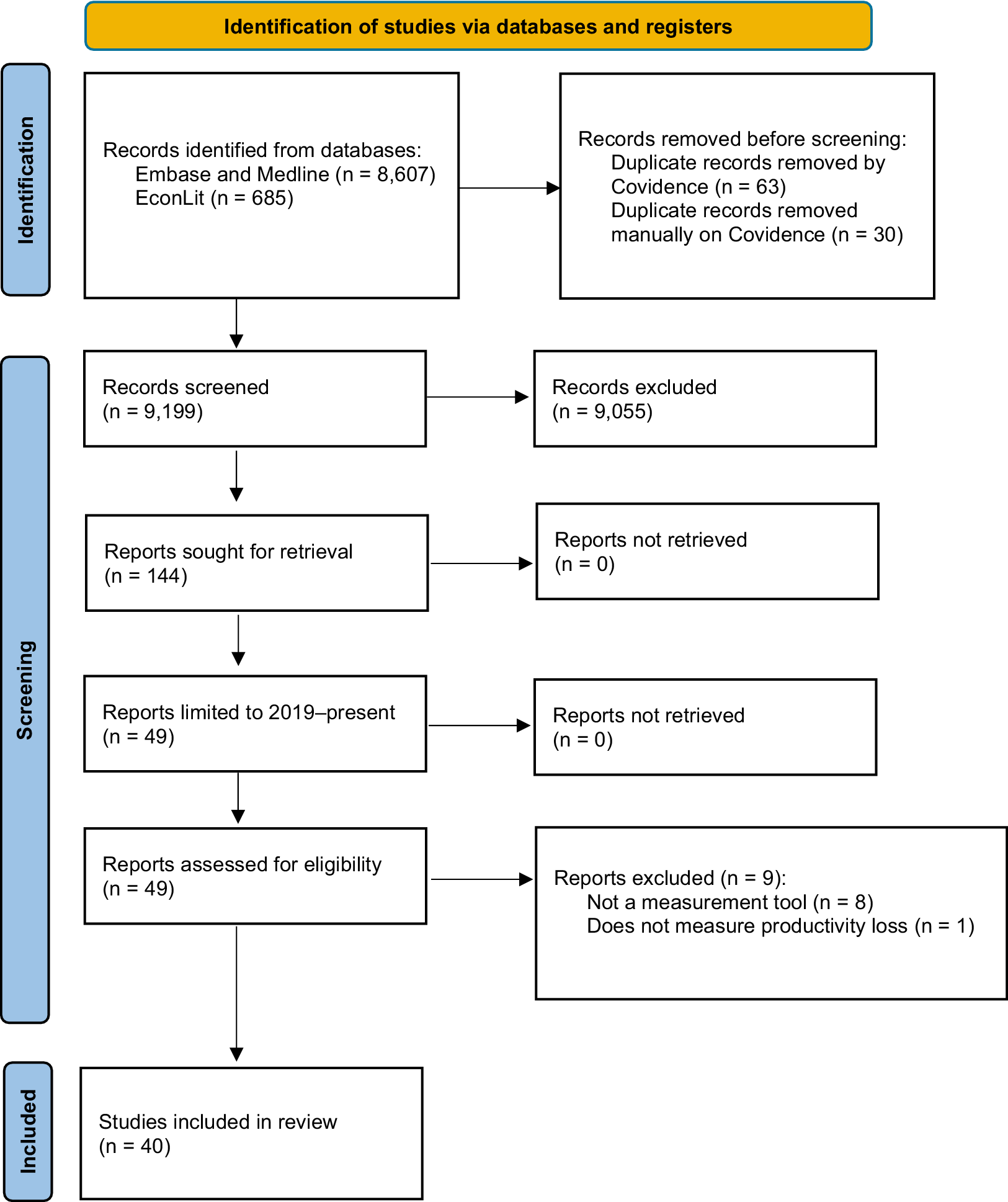
After deduplication, using Ovid deduplication for multifile searches and Endnote, and import to Covidence, pairs of reviewers (CS, AGRB, ES, STY) independently screened titles, abstracts, and full texts against predefined criteria (Reference Gotschall20;21). We included studies that contributed to methods for measuring or valuing productivity costs, such as the development, adaptation, or validation of measurement instruments, or comparisons of valuation approaches. We excluded studies limited to estimating productivity losses in particular disease settings without methodological contribution. During the full-text screening stage, we limited inclusion to reports published from 2019 onward after identifying a comprehensive review of earlier literature by Hubens et al. (Reference Hubens, Krol and Coast9). We excluded applied economic evaluations, as they have been reviewed elsewhere (Reference Hubens, Krol and Coast9;Reference Mamiya, Wattanakamolkul and Li14). However, for completeness, we extracted and summarized instruments identified in those reviews. Disagreements during screening were resolved by discussion amongst the reviewers, with arbitration by a third reviewer (STY, BS) when needed. Reasons for exclusion of full-texts were recorded and presented in the PRISMA flow diagram (see Figure 1).
Preferred reporting items for systematic reviews and extended meta-analyses (PRISMA) 2020 flow diagram.

Figure 1. Long description
A total of 9,292 records were identified from Embase and MEDLINE (8,607 records) and EconLit (685 records). After the removal of 93 duplicate records, 9,199 records were screened, and 9,055 were excluded. Full texts were sought for 144 reports, all of which were retrieved. After restricting eligibility to studies published between 2019 and the present, 49 reports remained and were assessed for eligibility. Nine reports were excluded because they were not measurement tools (n = 8) or did not measure productivity loss (n = 1). A total of 40 studies were included in the review.
Data extraction and summary
We used a standardized data extraction form in Covidence to extract information on bibliographic details (author name, year of publication, country, and study design), study design, and methodological focus (21). For studies on measurement instruments, we extracted information on the measurement instrument (e.g., WPAI, Work Limitation Questionnaire), population (patients or caregivers), assessment of validity and reliability, type of productivity loss (e.g., absenteeism, presenteeism, unpaid labor), the instrument’s ability to quantify productivity loss in time-based units (e.g., hours or days), and suitability for monetary valuation using the HCA or FCA. Instruments were considered suitable for the HCA if they provided information on long-term disability or extended work absence, and for the FCA if they provided information on the frequency and duration of absence episodes, to account for the initiation of friction periods (Reference Hubens, Krol and Coast9). For studies reporting on valuation methods, we extracted information on methods and any recommendations provided regarding their use. The data extraction form was pilot tested and updated iteratively as new concepts emerged. Pairs of reviewers (CS, AGRB, ES, STY) independently extracted data from all included studies, with discrepancies resolved through discussion or arbitration by a third reviewer (STY, BS).
We applied a descriptive analytical approach to summarize and report the findings. We synthesized the extracted data narratively and organized them thematically. We presented measurement instruments and valuation methods separately, highlighted patterns and similarities, and noted areas of divergence to map the current landscape and inform future practice. We reported the results in line with the PRISMA-ScR guidelines (Supplementary Appendix 1) (Reference Tricco, Lillie and Zarin22).
Consultation
We developed the research question and methodological approach in collaboration with partners from Canada’s Drug Agency (CDA-AMC), with expertise in health economics, to ensure alignment with the needs of HTA decision-making and current policy considerations related to the inclusion of productivity costs in economic evaluations. We then conducted a focused consultation with our CDA-AMC partners to assess the policy relevance of our findings. The consultation involved online meetings and review of the manuscript, with iterative feedback on the study design, preliminary results, and interpretation. Discussions focused on clarity, feasibility, and applicability of measurement and valuation methods in evaluations conducted from a societal perspective. We incorporated the feedback to refine the analysis and presentation of findings.
Environmental scan
To complement the scoping review and identify consensus-based guidance, methodological recommendations, and relevance to policy and HTA, we conducted a targeted environmental scan of grey literature sources focused on the measurement, valuation, and incorporation of productivity costs into economic evaluations. We aimed to capture relevant policy documents, technical reports, HTA guidelines, and other nonindexed materials published by HTA bodies, government agencies, international organizations, and academic institutions.
We systematically searched the websites of major national and international HTA organizations known for producing health economic and HTA guidance, such as CDA-AMC and Institute for Clinical and Economic Review (ICER). See Supplementary Appendix 3 for the full list of sources searched. We conducted Google searches (date: July 17, 2025) using combinations of terms such as productivity loss, productivity costs, absenteeism, presenteeism, unpaid work, economic evaluation, HTA, grey literature, and methodological guidance. The first 5 pages of results from each query were screened to identify potentially relevant documents.
Pairs of reviewers (CS, AGRB, ES, STY) independently screened the identified documents for eligibility. Documents were included if they discussed or provided guidance on methods for measuring or valuing productivity costs in the context of health economic evaluations. We excluded documents that focused solely on labor market productivity, workplace efficiency, or unrelated economic impacts outside the health context. Screened documents were reviewed in full text, and relevant content was extracted using the same data extraction form developed for the peer-reviewed literature, with minor adaptations to reflect the structure of policy and guidance documents. Recommendations and rationales were recorded verbatim when available and categorized thematically.
Ethics approval
This review relied exclusively on publicly available literature and did not involve human participants or the use of primary data; therefore, ethics approval was not required.
Results
Study characteristics
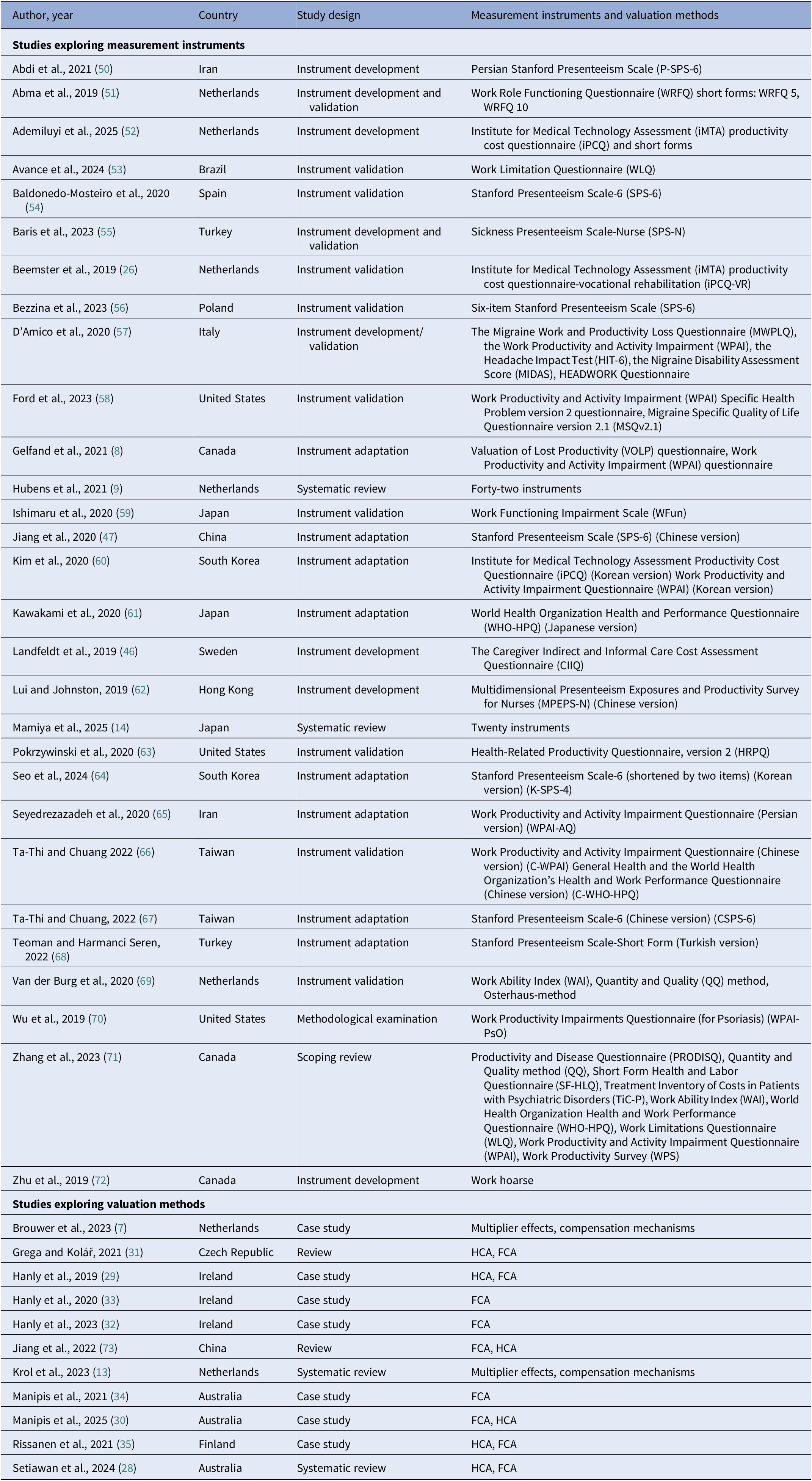
The peer-reviewed literature search yielded 9,292 records. After removing 93 duplicates, 9,199 titles and abstracts were screened, of which 9,055 were excluded. After limiting the records to 2019–present, 49 full-text articles were assessed for eligibility, of which 40 were included in the review. The PRISMA flow diagram is presented in Figure 1. Twenty-six of the included studies reported twenty-five measurement instruments, primarily reporting the development (n = 8), validation (n = 12), or adaptation (n = 8) of instruments for measuring productivity loss. Eleven studies explored valuation methods. Seven studies were reviewed: two were systematic reviews of economic evaluations, two were systematic reviews reporting valuation methods, one was a scoping review of randomized controlled trials measuring and reporting productivity losses, and two were reviews reporting valuation methods. Most studies were conducted in Europe (n = 16), Asia (n = 14), and North America (n = 6). The study characteristics are detailed in Table 1.
Characteristics of included studies

Table 1. Long description
The studies are divided into two sections. The first and larger section contains studies examining productivity cost measurement instruments. These studies include instrument development, validation, adaptation, methodological evaluations, and evidence syntheses. A wide range of productivity instruments are represented. Several studies adapted or validated existing instruments for use in different languages and countries. The second section contains studies examining productivity cost valuation methods. These studies primarily evaluate the human capital approach (HCA) and friction cost approach (FCA), with some also assessing multiplier effects and compensation mechanisms.
Abbreviations: FCA, friction cost approach; HCA, human capital approach; QALY, quality-adjusted life years.
Measurement instruments
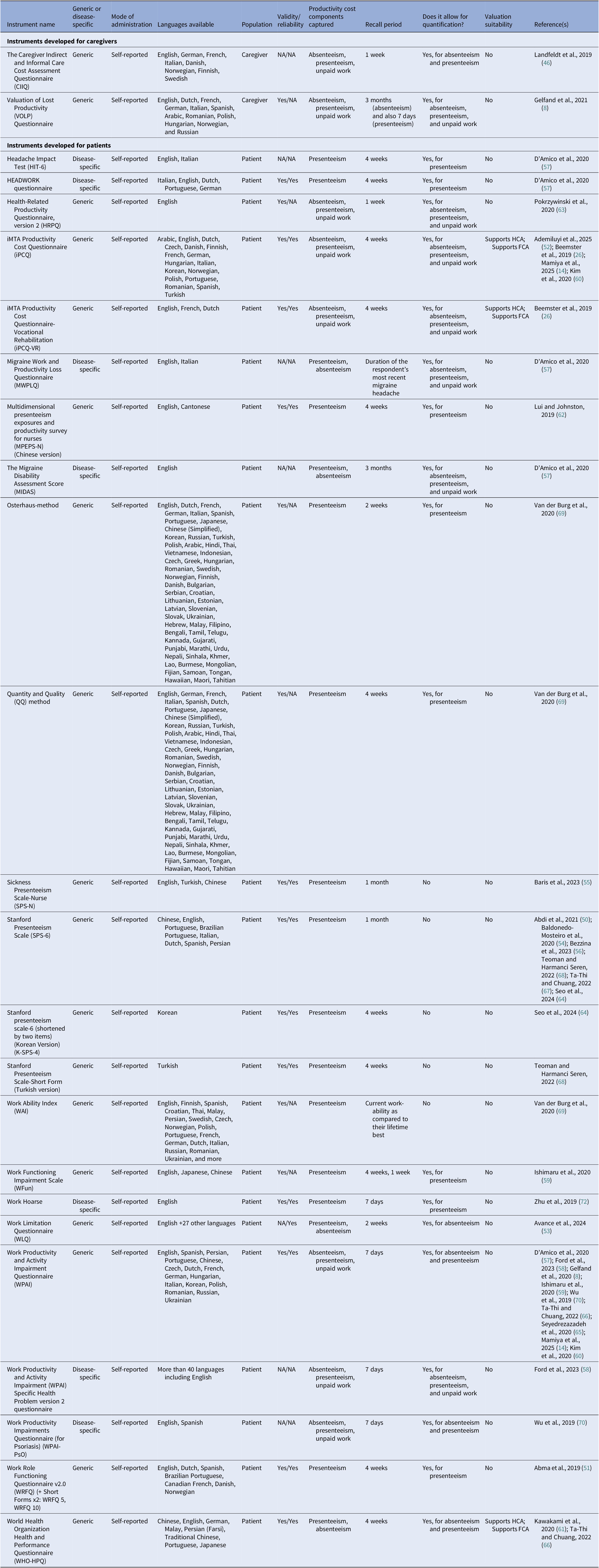
We identified twenty-five unique instruments for measuring productivity loss across forty studies (Table 2). Eighteen were general-use, and seven were disease-specific; most were designed for patients (n = 23), while two were developed for caregivers. All were self-administered, with recall periods ranging from 7 days to 3 months, with a 4-week recall period being the most common (n = 11). Nineteen instruments demonstrated validity, and fourteen demonstrated reliability. All were available in English, and thirteen had translations into three or more languages.
Productivity loss measurement instruments

Table 2. Long description
Most instruments were designed for patients and measured presenteeism, absenteeism, unpaid work, or a combination of these outcomes. Only the iPCQ, iPCQ-VR, and WHO-HPQ were identified as suitable for valuation using both the Human Capital Approach and Friction Cost Approach.
Abbreviations: FCA, friction cost approach; HCA, human capital approach; NA, not applicable.
The most frequently reported instruments were the Work Productivity and Activity Impairment Questionnaire (WPAI) (n = 9), the Stanford Presenteeism Scale (SPS-6) (n = 6), and the Institute for Medical Technology Assessment (iMTA) Productivity Cost Questionnaire (iPCQ), n = 4, often adapted or validated for specific populations (Reference Bouwmans, Krol and Severens23–Reference Koopman, Pelletier and Murray25). Instruments varied in scope: thirteen measured only presenteeism, four captured both presenteeism and absenteeism, and eight addressed all three components (presenteeism, absenteeism, and unpaid work). Twenty instruments allowed time-based quantification of productivity loss (e.g., hours worked at reduced capacity, days absent), while five relied on categorical or subjective assessments (e.g., Likert scales). Three instruments supported valuation of productivity loss using both the HCA and FCA: these were the iMTA iPCQ, its modified version for vocational rehabilitation (iPCQ-VR), and the World Health Organization Health and Performance Questionnaire (WHO-HPQ) (Reference Bouwmans, Krol and Severens23;Reference Beemster, van Velzen, van Bennekom, Reneman and Frings-Dresen26;Reference Kessler, Ames and Hymel27). The three instruments were generic, self-administered for patients, were available in three or more languages, and demonstrated adequate validity and reliability. The iPCQ and iPCQ-VR allowed for quantification of all three components of productivity loss, whereas the WHO-HPQ captured presenteeism and absenteeism only. The remaining twenty-two instruments did not provide sufficient detail for valuation.
Supplementary Appendix 4 presents fifty-six instruments identified in previous reviews. Of these, ten overlapped with instruments we identified in our review, while the remaining forty-six were reported only in the previous reviews. Of these, twenty-six were generic instruments, and twenty were disease-specific. Five instruments were designed for interviewer administration, while the majority (n = 41) were for self-administration. Fifteen instruments were available in three or more languages, supporting broader cross-cultural use. Most instruments were designed for patients (n = 39), two intended for caregivers, three intended for parents, and two applicable to both patients and caregivers. The recall periods varied from as short as 1 day to as long as 2 years. Consistent with the instruments identified in our review, the majority of the additional instruments (n = 39) enabled quantification of at least one component of productivity loss. Of the forty-six instruments, twelve were suitable for monetary valuation using the HCA or FCA. Specifically, nine instruments supported the HCA, one instrument supported the FCA, and two instruments supported both the HCA and FCA. The remaining instruments did not provide sufficient detail for valuation using these approaches, such as inputs on duration, frequency, or wage-related information.
Valuation methods
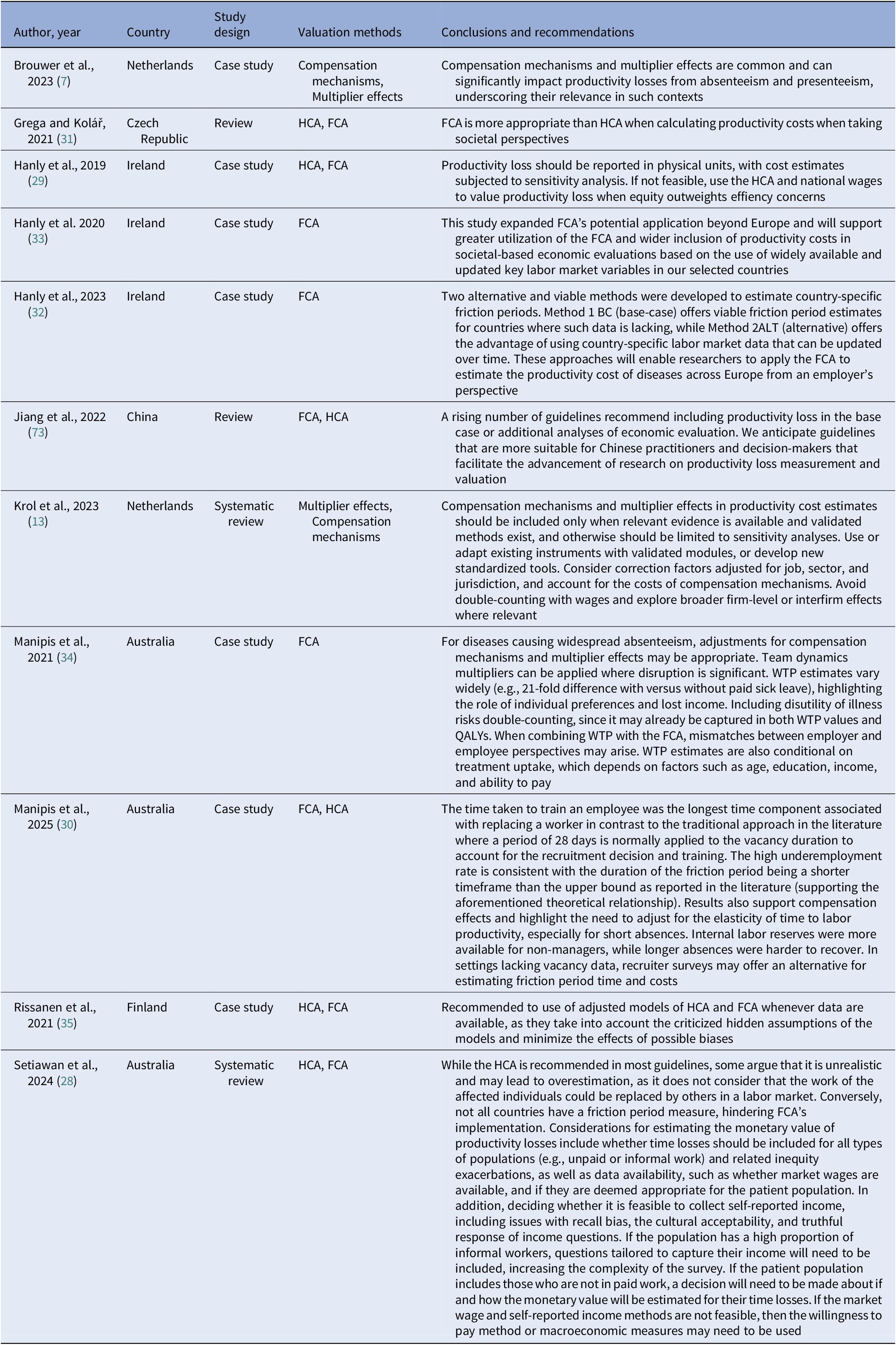
Eleven of the included studies explored valuation methods for productivity costs, primarily through comparisons of commonly used approaches or development of methodological frameworks (Table 3). Study designs included reviews (n = 4) and case studies applying methods in specific jurisdictions or to specific datasets (n = 7). Six studies examined both the HCA and the FCA within the same analysis, three focused exclusively on the FCA, and two explored compensation mechanisms (e.g., colleagues or temporary hires taking over tasks to offset lost work) and multiplier effects (e.g., the absence of one worker reducing the productivity of the entire team). Method choice often depended on data availability, such as market wage data or self-reported income, and on whether unpaid or informal work was considered relevant for the context (Reference Setiawan, Cassidy-Seyoum, Thriemer, Carvalho and Devine28). Two case studies applying both the HCA and FCA found consistently higher productivity costs with the HCA (Reference Hanly, Maguire, Drummond and Sharp29;Reference Manipis, Cronin, Street, Church, Viney and Goodall30). Grega and Kolář concluded that the FCA is more appropriate, emphasizing that the HCA systematically overestimates productivity costs by assuming full employment, while the FCA better reflects labor market dynamics by limiting productivity losses to the friction period (Reference Grega and Kolar31). Similarly, Setiawan et al. noted that HCA can lead to unrealistic overestimates, while the FCA is often constrained by a lack of friction period data, particularly in low- and middle-income countries (Reference Setiawan, Cassidy-Seyoum, Thriemer, Carvalho and Devine28).
Valuation methods identified in peer-reviewed studies

Table 3. Long description
The studies evaluated the Human Capital Approach (HCA), Friction Cost Approach (FCA), compensation mechanisms, and multiplier effects. Several studies compared the HCA and FCA, often concluding that the HCA produces higher productivity cost estimates, while the FCA better reflects labor market dynamics. Other studies highlighted the importance of accounting for compensation mechanisms, multiplier effects, and country-specific labor market conditions when estimating productivity costs.
Abbreviations: FCA, friction cost approach; HCA, human capital approach; QALY, quality-adjusted life years; WTP, willingness-to-pay.
Three studies refined or extended FCA methodologies (Reference Manipis, Cronin, Street, Church, Viney and Goodall30;Reference Hanly, Ortega Ortega, Pearce, de Camargo Cancela, Soerjomataram and Sharp32;Reference Hanly, Ortega Ortega, Pearce, Soerjomataram and Sharp33). Hanly et al. proposed two strategies to estimate friction periods in countries lacking data: benchmarking Dutch vacancy stock and flow data, using routinely updated labor market data (Reference Hanly, Ortega Ortega, Pearce, Soerjomataram and Sharp33). Hanly et al. demonstrated that the FCA could be successfully extended beyond Europe using widely available labor statistics, such as applying Organisation for Economic Co-operation and Development (OECD) vacancy data to estimate the friction period in the US (Reference Hanly, Ortega Ortega, Pearce, de Camargo Cancela, Soerjomataram and Sharp32). Manipis et al. demonstrated that recruitment and training times drive replacement delays more than vacancy durations and emphasized underemployment and labor elasticity as key factors affecting friction periods (Reference Manipis, Cronin, Street, Church, Viney and Goodall30).
Brouwer et al. and Krol et al. emphasized that compensation mechanisms (e.g., task reallocation, overtime) and multiplier effects (e.g., team-level spillovers) are common and can substantially influence productivity loss estimates (Reference Brouwer, Verbooy, Hoefman and van Exel7;Reference Krol, Hosseinnia, Brouwer and van Roijen13). Manipis et al. examined the FCA in the context of mass absenteeism, suggesting that adjustments for team dynamics and multiplier effects may be justified (Reference Manipis, Goodall, Hanly, Viney and Pearce34). Rissanen et al. further recommended using adjusted variants of both the HCA and FCA to mitigate hidden assumptions, proposing modifications that account for unemployment rates, disability-free life expectancy, and work ability decline (Reference Rissanen, Ala-Mursula, Nerg and Korhonen35).
Recommendations for measuring, valuing, and incorporating productivity losses in economic evaluations: environmental scan
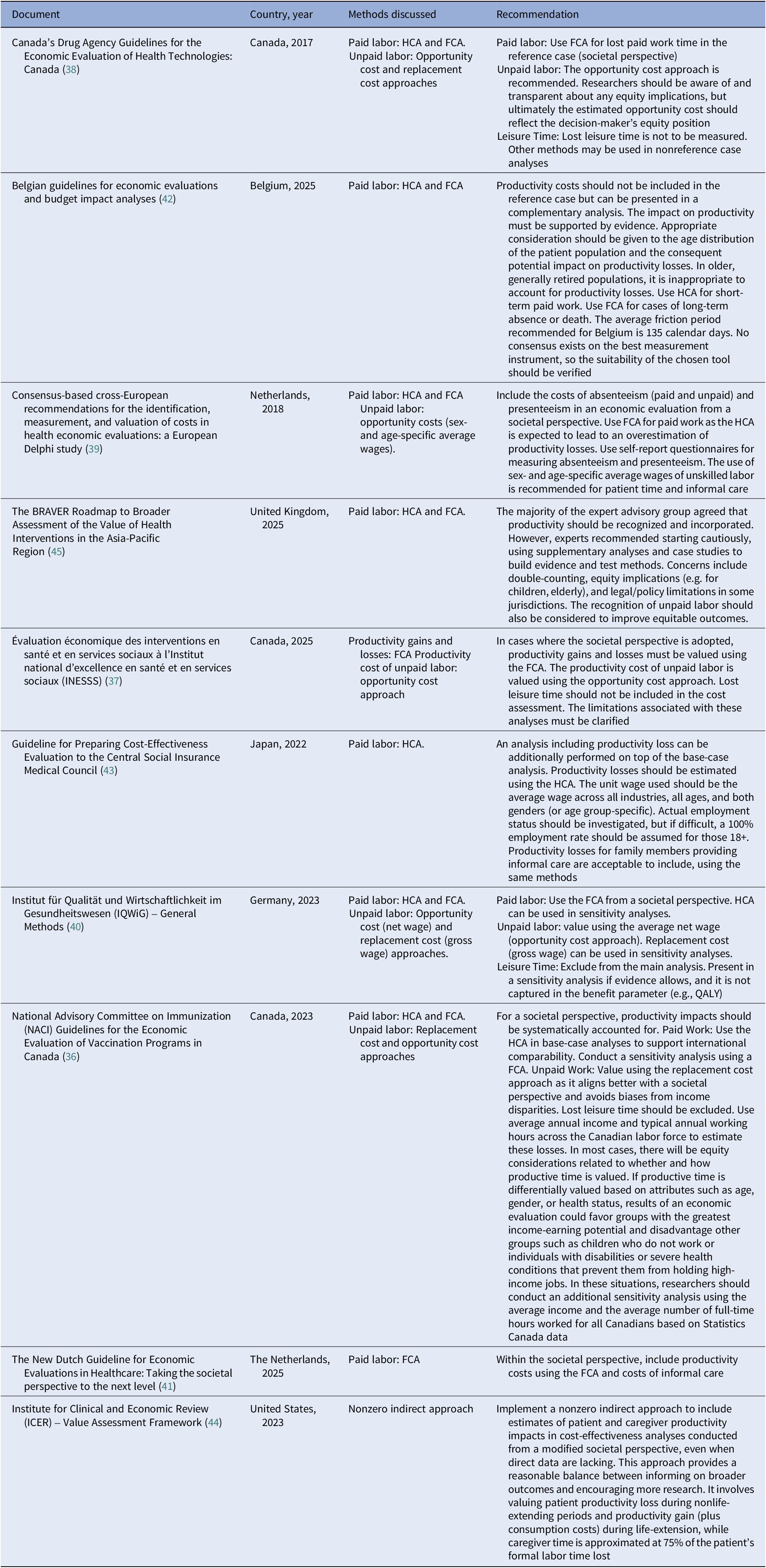
The environmental scan identified ten relevant guidance documents addressing productivity costs in economic evaluations (Table 4). Most endorsed the societal perspective as the appropriate context for incorporating productivity costs. Canada’s National Advisory Committee on Immunization (NACI), CDA-AMC, and Institut National d’Excellence en Santé et en Services Sociaux (INESSS) recommended incorporating productivity in analyses adopting the societal perspective (36–38). Similarly, Germany’s Institute for Quality and Efficiency in Health Care (IQWiG) the cross-European Delphi consensus recommendations, and the New Dutch Guideline for Economic Evaluations in Healthcare recommended including productivity costs within societal perspectives (Reference van Lier, Bosmans and van Hout39–Reference Geuzinge, El Alili and Enzing41). In contrast, the Belgian and Japanese guidelines recommended reporting productivity costs only in supplementary analyses or under certain assumptions, such as when the patient population is of working age and productivity impacts are expected (Reference Neyt, Thiry and Cleemput42;43). The US-based Value Assessment Framework proposed a different approach, recommending a “non-zero indirect” valuation even when direct evidence is unavailable (44).
Results of the environmental scan of guidance on measuring, valuing, and incorporating productivity costs

Table 4. Long description
Most guidelines recommend considering productivity costs when analyses adopt a societal perspective. Recommendations varied regarding the preferred valuation approach, with several guidelines favouring the Friction Cost Approach (FCA), others recommending the Human Capital Approach (HCA), and some advising the use of both approaches in base-case or sensitivity analyses. The table also summarizes guidance on valuing unpaid labor and highlights equity considerations related to productivity cost estimation.
Abbreviations: FCA, friction cost approach; HCA, human capital approach; QALY, quality-adjusted life years.
Measuring and valuing paid labor
No guideline endorsed a specific measurement instrument. Belgium’s guideline recommended choosing methods based on appropriateness, while the cross-European Delphi consensus favored self-report questionnaires for measuring absenteeism and presenteeism (Reference van Lier, Bosmans and van Hout39;Reference Neyt, Thiry and Cleemput42). For the valuation of paid labor, several sources favored the FCA over the HCA. CDA-AMC recommended the FCA to reflect societal opportunity costs, but noted that if the HCA is used, losses should be valued with age- and sex-adjusted wages plus fringe benefits while recognizing HCA’s tendency to overstate losses (38). Similarly, IQWiG identified the FCA as preferred, restricting the HCA to sensitivity analyses to avoid double-counting productivity losses already captured in QALYs (40). The cross-European Delphi consensus recommendations also supported the FCA and cautioned against the HCA (Reference van Lier, Bosmans and van Hout39). In contrast, the Japanese guideline relied solely on the HCA, using average wages across industry, gender, and age categories, while assuming full employment for those aged 18 years and older when employment status is unknown (43). NACI recommended using a naïve HCA in base-case analyses for international comparability, alongside the FCA in sensitivity analyses, and specified wage sources from the Canadian labor force (36). Belgium’s national guidance supported the HCA for short-term productivity loss and the FCA for longer-term absences or mortality, setting a 135-day friction period (Reference Neyt, Thiry and Cleemput42).
Measuring and valuing unpaid labor
Unpaid labor was defined as volunteering, household production (e.g., cooking, cleaning, childcare), and informal caregiving (36;38;Reference Neyt, Thiry and Cleemput42). Guidance documents recommended valuing these losses using opportunity cost or replacement cost approaches. The Belgian guidelines advised measuring unpaid labor by estimating the time required if all patient activities were taken over by others, and reporting the incremental unpaid workdays (Reference Neyt, Thiry and Cleemput42). CDA-AMC and INESSS supported using the opportunity cost approach (38) (37), while IQWiG suggested using net wages (opportunity cost approach) in the base case and gross wages of an adequate replacement (replacement cost approach) in sensitivity analyses (40). NACI favored the replacement cost approach, emphasizing its relevance for equity because it avoids distortions related to wage disparities (36). The US Value Assessment Framework recommended approximating caregiver time at 75 percent of patient labor time lost (44). The cross-European Delphi consensus recommendations panel recommended valuing caregiving with sex- and age-specific average wages, emphasizing the importance of recognizing this cost category in older adults (Reference van Lier, Bosmans and van Hout39). The Japanese guideline recommended valuing caregiver productivity losses using the same HCA framework applied to paid labor (43).
Scope and equity considerations
Several guidelines (n = 4) explicitly advised excluding leisure time from productivity cost calculations. CDA-AMC and INESSS stated that it should not be measured (37;38), while IQWiG permitted inclusion only in sensitivity analyses when not already captured in utility measures (40). NACI similarly discouraged its inclusion to maintain consistency with pharmacoeconomic guidelines that prioritize labor-based valuations (36). Beyond leisure time, documents emphasized equity considerations in defining and valuing productivity. The BRAVER Roadmap cautioned that incorporating productivity costs may disadvantage populations who are not engaged in formal paid work, such as children and older adults, particularly when certain guidelines (e.g., Belgian guideline for economic evaluation) recommend against including losses for retired populations (Reference Neyt, Thiry and Cleemput42;Reference Theakston, Hofer, Garau and Steuten45). Similarly, CDA-AMC highlighted that valuation methods for unpaid work, such as the opportunity cost approach, should reflect the decision-maker’s equity position (38). NACI explicitly warned that differentially valuing productive time by age, gender, or health status may bias evaluations in favor of those with the highest earning potential and recommended sensitivity analyses using population-average wages and working hours to mitigate this risk (36).
Discussion
This scoping review and environmental scan synthesized peer-reviewed and gray literature on the measurement, valuation, and incorporation of patient and caregiver productivity costs in economic evaluations conducted from the societal perspective. We identified twenty-five instruments with wide variation in scope, recall period, and population, alongside additional instruments identified in prior reviews to provide a more comprehensive overview. Most enabled quantification, but only three (iPCQ, iPCQ-VR, WHO-HPQ) collected sufficient information to allow monetary valuation using the HCA or FCA (Reference Bouwmans, Krol and Severens23;Reference Beemster, van Velzen, van Bennekom, Reneman and Frings-Dresen26;Reference Kessler, Ames and Hymel27). Caregiver productivity was especially underrepresented, with only two caregiver-specific instruments, neither suitable for valuation (Reference Landfeldt, Zethraeus and Lindgren46;Reference Jiang, Liu, Liu, Zheng and Chang47). This gap limits the ability of existing tools to generate data appropriate for economic evaluations. Instruments that can quantify components of productivity loss and support valuation through the HCA and FCA, such as the iPCQ and WHO-HPQ, are therefore likely the most convenient for future productivity loss measurement (Reference Bouwmans, Krol and Severens23;Reference Kessler, Ames and Hymel27). However, their practical application also raises feasibility concerns: even where guidelines support inclusion, productivity costs are rarely incorporated in practice, with unpaid labor especially neglected due to methodological and data challenges (Reference Jiang, Liu, Liu, Zheng and Chang47). Further, measuring informal care time involves unresolved issues, such as incremental time, multitasking, and intangible tasks, that complicate data collection (Reference Urwin, Lau, Grande and Sutton48). In contexts where both patient and caregiver labor are affected, a single instrument may not capture the full scope of productivity loss, and the need to combine multiple tools could increase respondent burden. Balancing comprehensiveness and feasibility will be key to improving systematic inclusion of productivity costs in future evaluations.
We identified eleven studies that examined valuation methods and reviewed ten guidance documents from multiple jurisdictions to understand current methodological recommendations. Comparative work highlighted trade-offs between the HCA and FCA: the FCA yields more realistic estimates by restricting losses to the friction period (Reference Setiawan, Cassidy-Seyoum, Thriemer, Carvalho and Devine28;Reference Grega and Kolar31), while the HCA, though internationally comparable, often overestimates losses by assuming continuous employment and ignoring compensation mechanisms (Reference Setiawan, Cassidy-Seyoum, Thriemer, Carvalho and Devine28;Reference van Lier, Bosmans and van Hout39). Reflecting this, agencies such as IQWiG and CDA have endorsed the FCA for paid work, with the HCA relegated to sensitivity analyses (38–40). Yet the FCA’s reliance on friction period data poses challenges in settings where such data are unavailable, leading some jurisdictions to recommend the HCA for the reference case analysis (Reference Hanly, Ortega Ortega, Pearce, de Camargo Cancela, Soerjomataram and Sharp32;36;43). Guidance on unpaid labor was inconsistent: some explicitly recommend the opportunity cost approach (e.g., CDA, INESSS), others support the replacement cost approach (e.g., NACI), (36–38), and IQWiG recommends opportunity cost in the reference case and replacement cost in sensitivity analyses (40). This lack of harmonization hinders international comparability and risks undervaluing caregiving in contexts with high informal care demands.
Limitations and strengths
A key limitation of this study is the exclusion of primary economic evaluations from the review. As a result, we did not directly capture how productivity costs are currently applied in analyses. Second, while we reported on the validity and reliability of identified instruments when these were assessed in the included studies, we did not conduct a broader search for evidence on these properties, which would have required a separate strategy and was outside the scope of this review. Finally, we did not assess other important considerations, such as acceptability to respondents, recall accuracy, and instrument burden, which may also influence instrument selection. Our focus was instead on the instruments’ content and their suitability for quantifying and valuing productivity loss components for use in economic evaluations.
A key strength of this review is its broad scope, which encompassed the peer-reviewed literature and grey literature sources. By integrating methodological studies, systematic and narrative reviews, and national and international guidance documents, we captured not only the range of measurement instruments and valuation approaches reported in the literature but also the recommendations shaping current practice.
Conclusions
While there are many instruments to measure productivity costs, few are suitable for valuation with the HCA and FCA, and even fewer are designed for caregivers. Concensus on valuation methods is lacking: the HCA is simple but overestimates, the FCA is conceptually stronger but data-intensive. Compensation mechanisms and multiplier effects have demonstrated significance in empirical studies, yet remain largely absent from international guidelines. Future research should prioritize the development and use of instruments that capture productivity in a valuation-ready format. Methodological work should refine friction period estimation in diverse labor markets and consider correction factors for compensation and multiplier effects. At the policy level, greater alignment across HTA bodies on core principles, such as when productivity costs are included in the base case analysis and preferred valuation methods, would substantially strengthen comparability and transferability of evaluations conducted from the societal perspective. Finally, future research should assess the extent to which current economic evaluations adhere to existing guidance on the incorporation of productivity costs, identifying specific areas where practice diverges from recommended standards to ensure methodological rigor is not lost in application.
Supplementary material
The supplementary material for this article can be found at http://doi.org/10.1017/S0266462326103882.
Acknowledgments
A preprint version of this manuscript is available at SSRN (Reference Yeretzian, Sillcox and Loshak49).
Funding statement
This work was supported by Canada’s Drug Agency (CDA-AMC) and, in part, by a Canada Research Chair in Economics of Infectious Diseases held by Beate Sander (CRC-2022-00362).
Competing interests
The authors declare no competing financial or personal interests related to this work.
Role of the funder/sponsor
The funder had no role in the interpretation of results, manuscript approval, or the decision to submit this work for publication.


 Open access

